

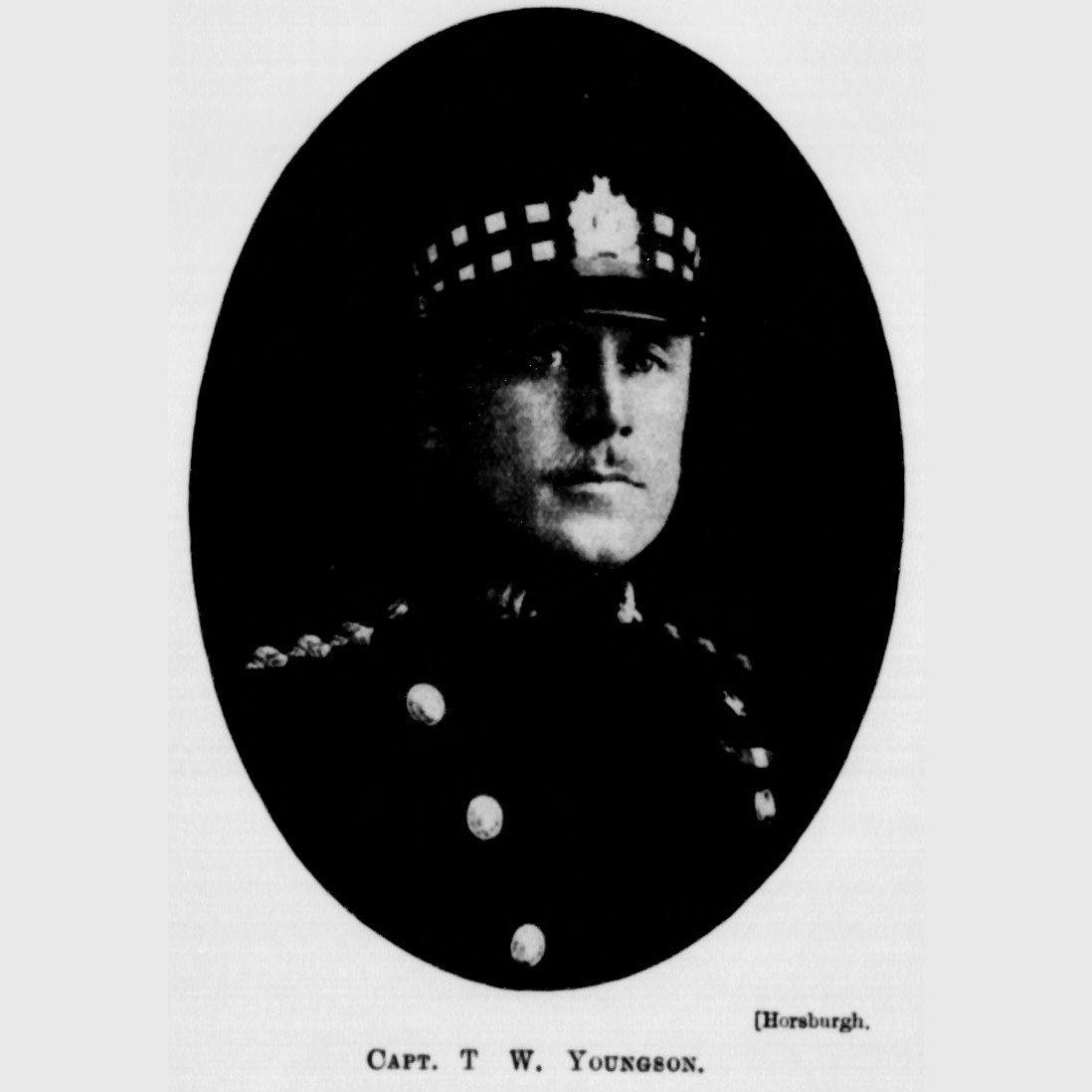
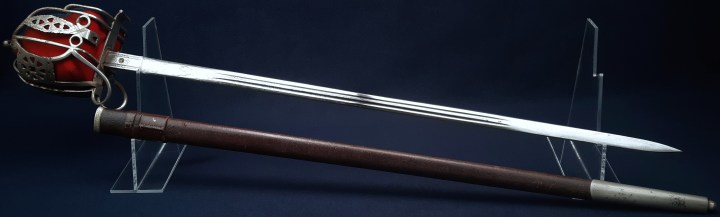
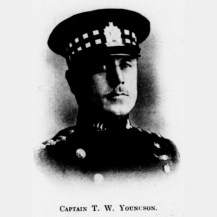
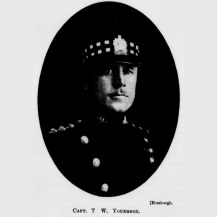
Scottish WW1 & WW2 1828 Pattern Infantry Officer's Basket Hilt Broadsword of Major Thomas William Youngson, King's Own Scottish Borderers and His Son
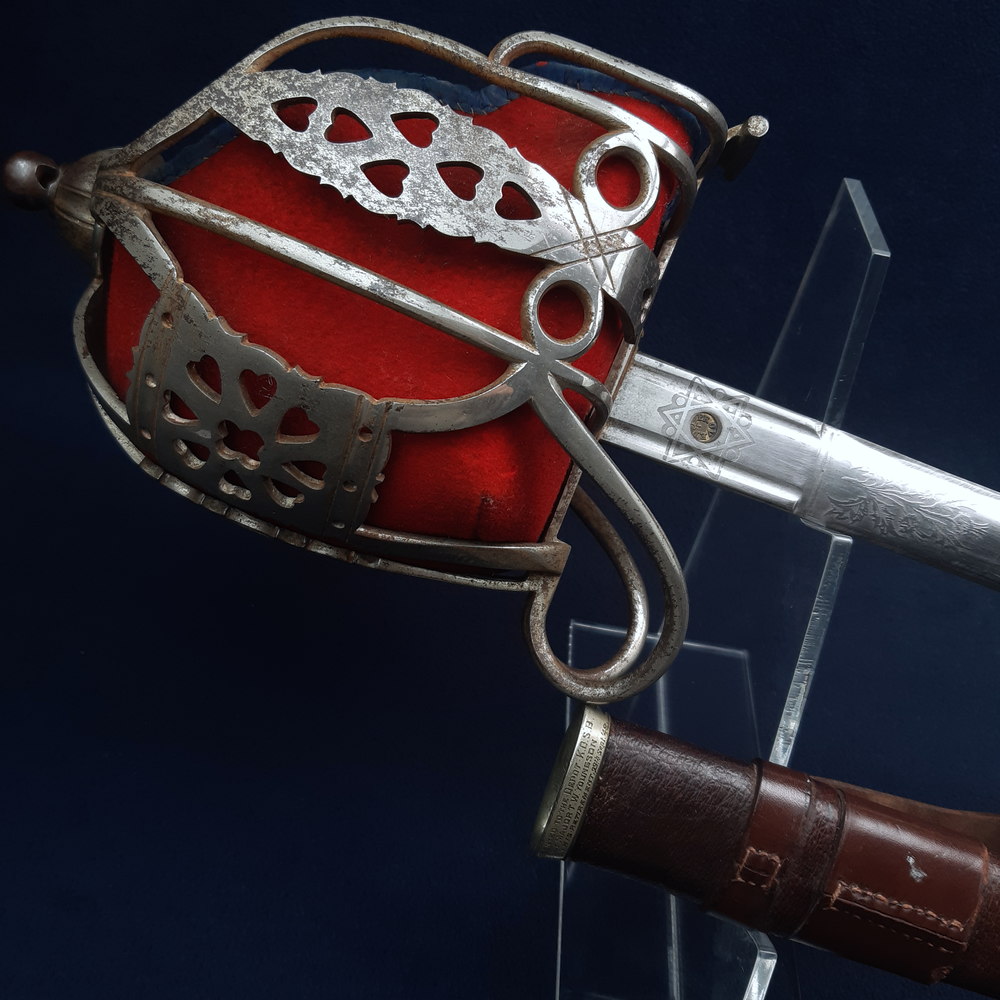
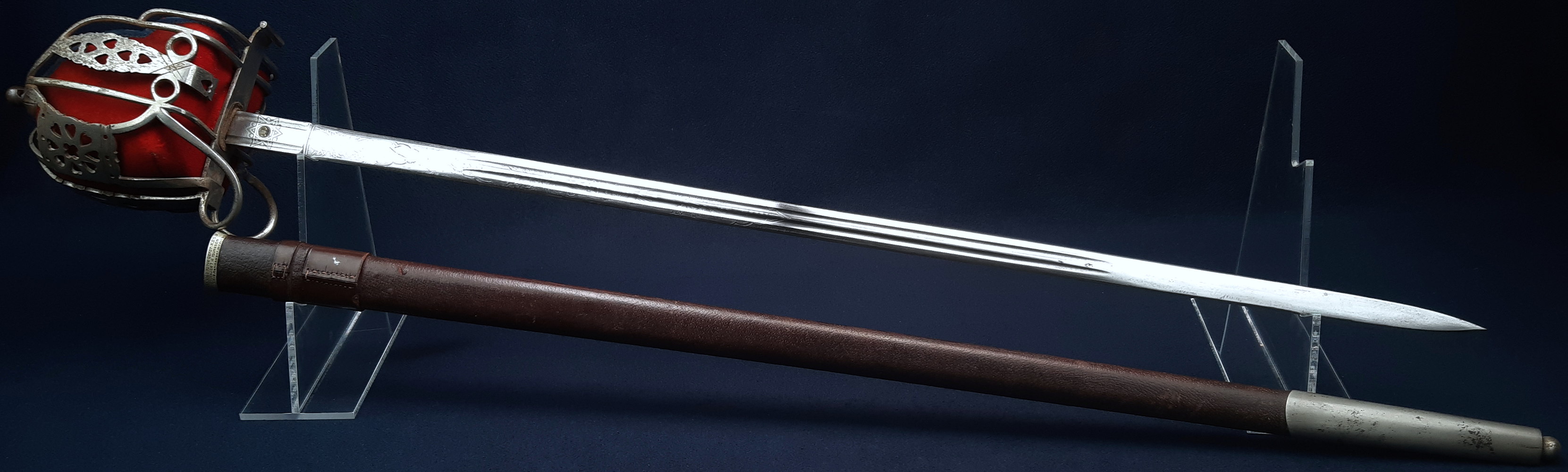
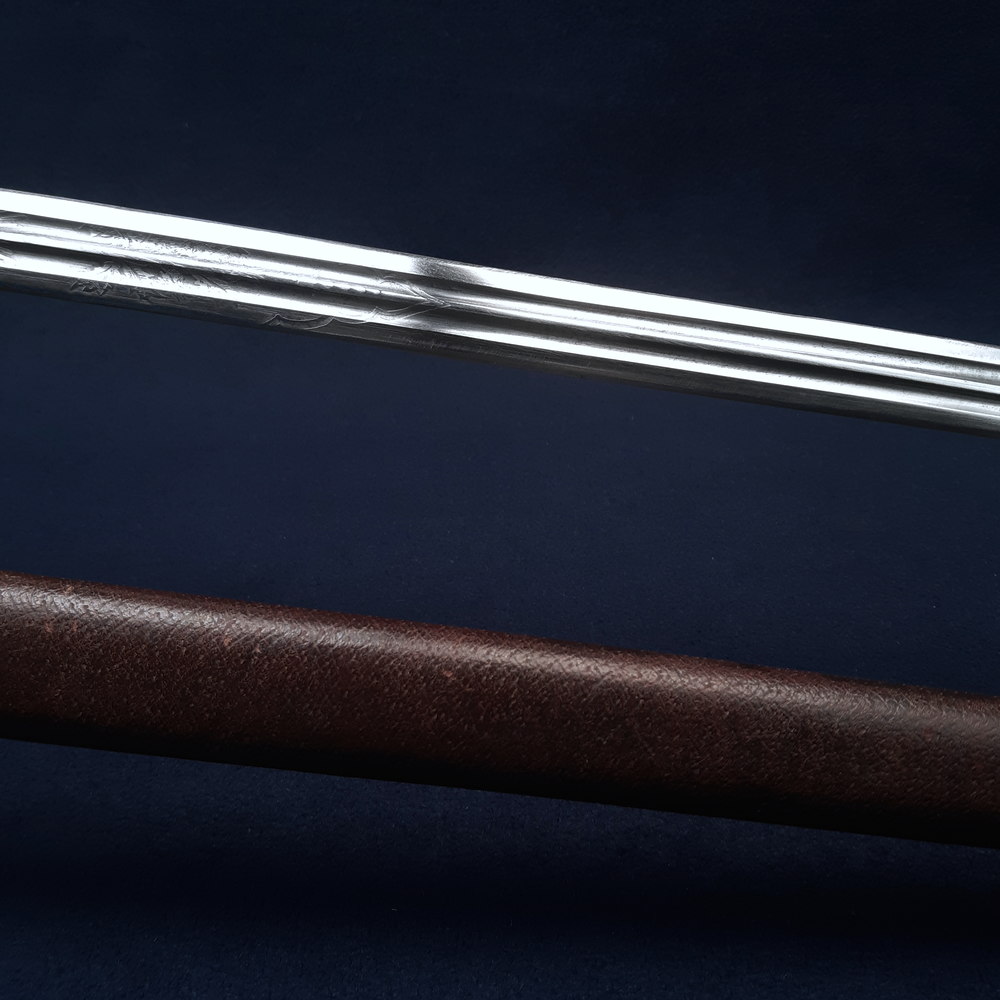
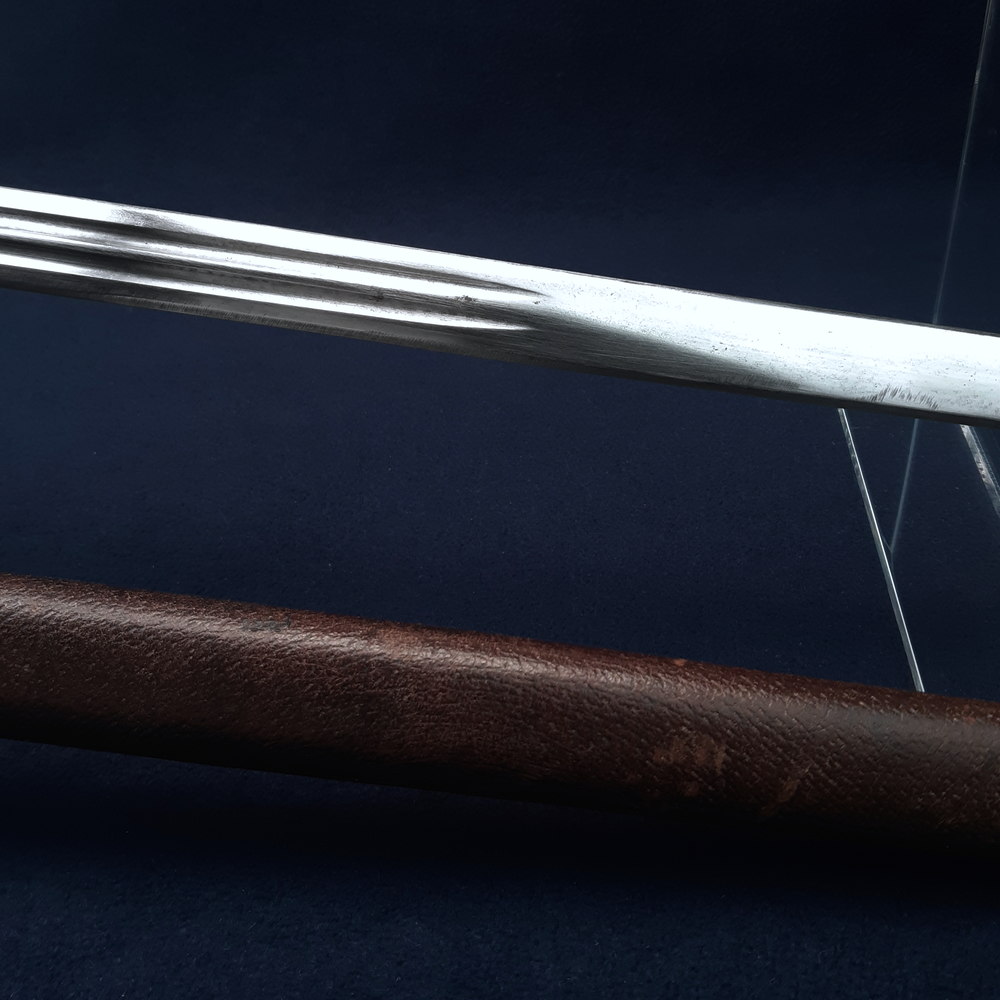
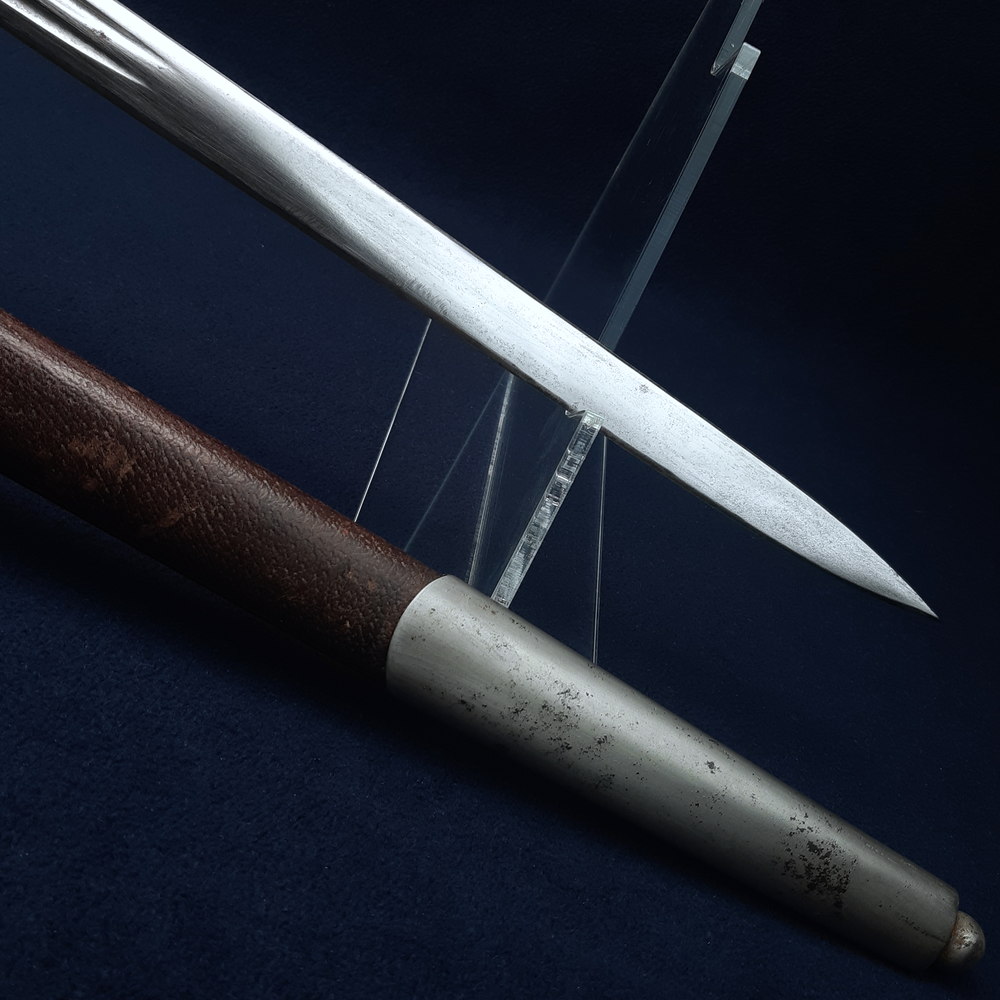
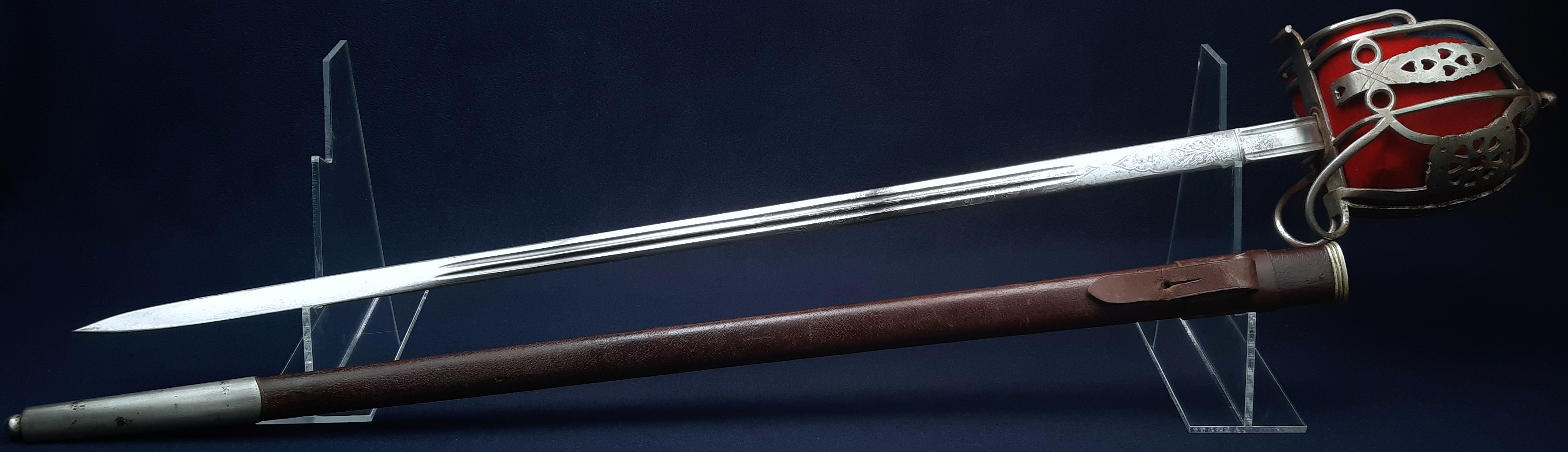
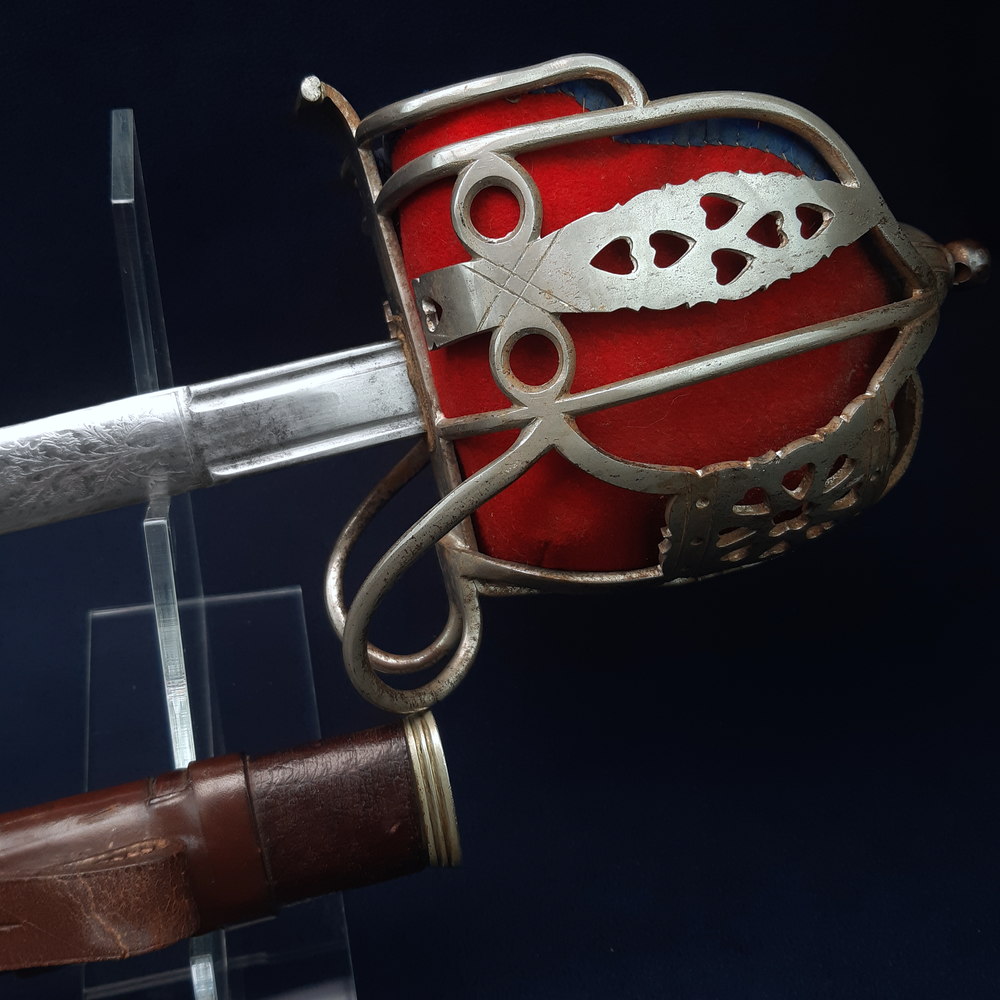
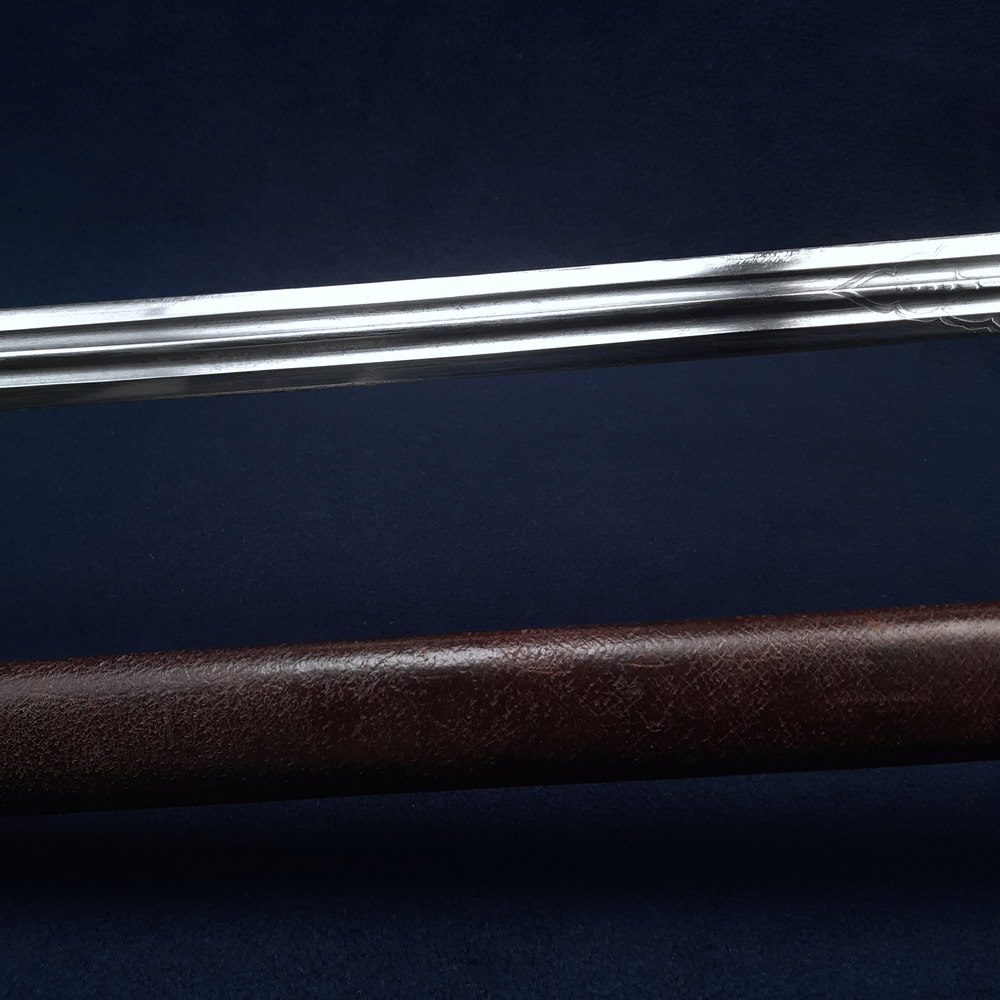
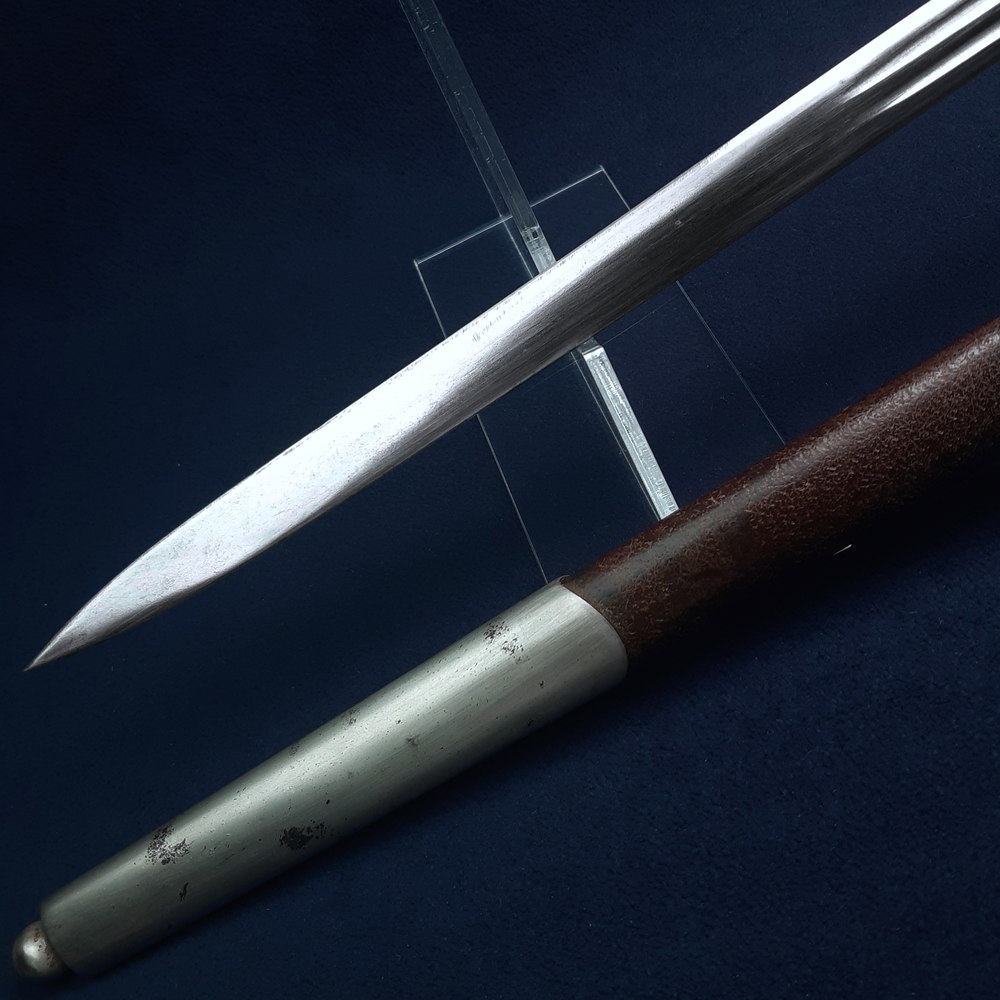
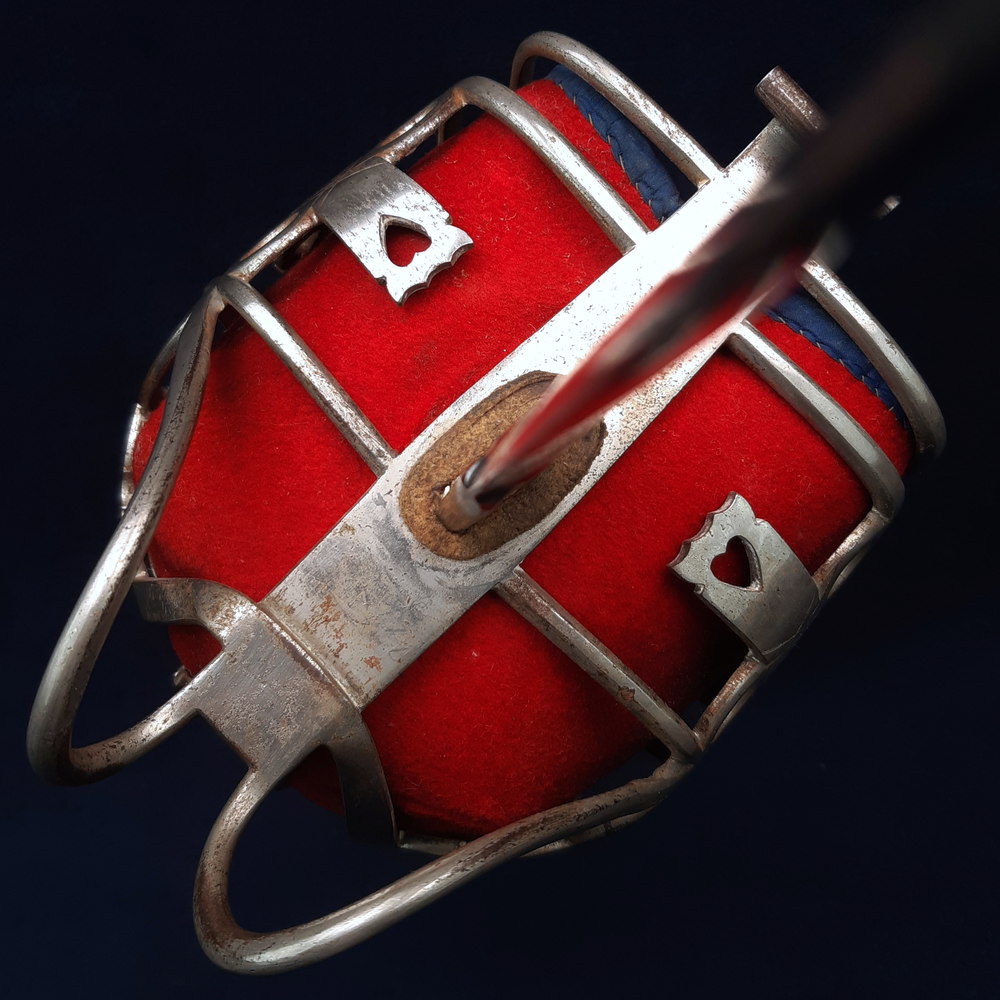
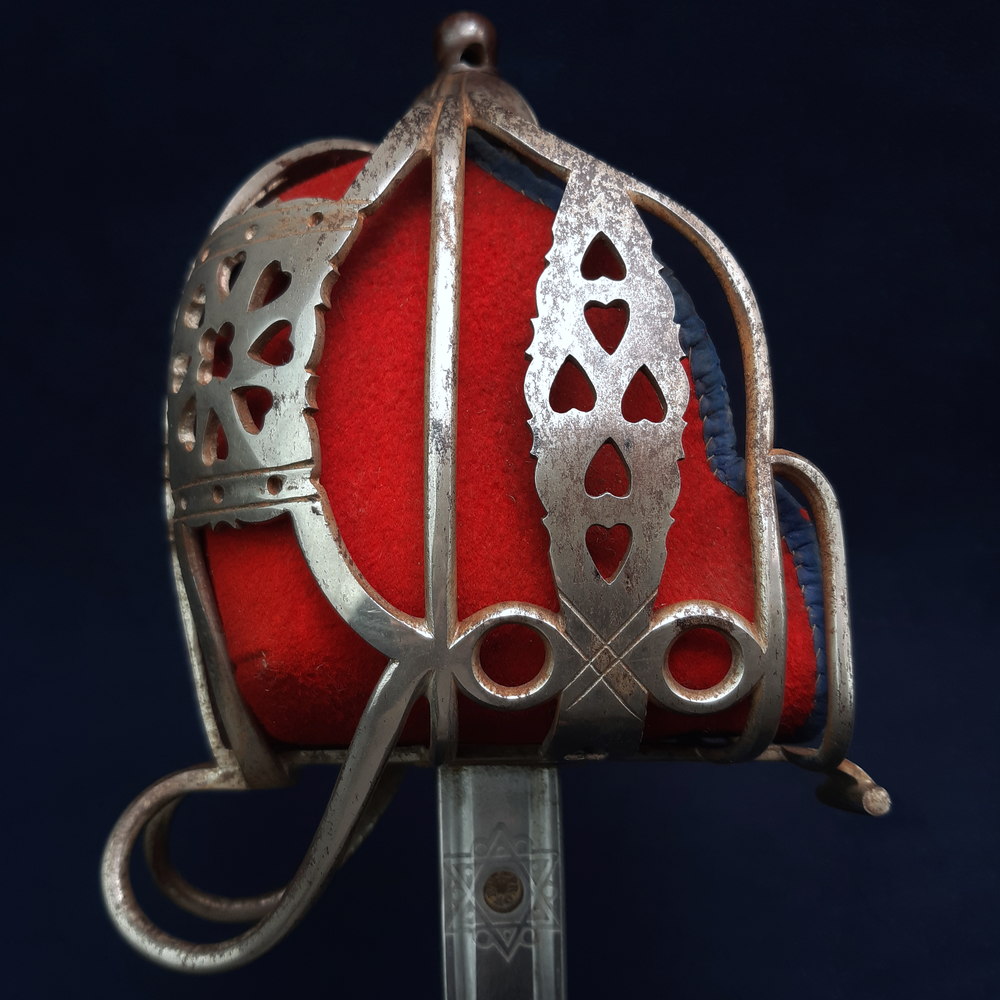
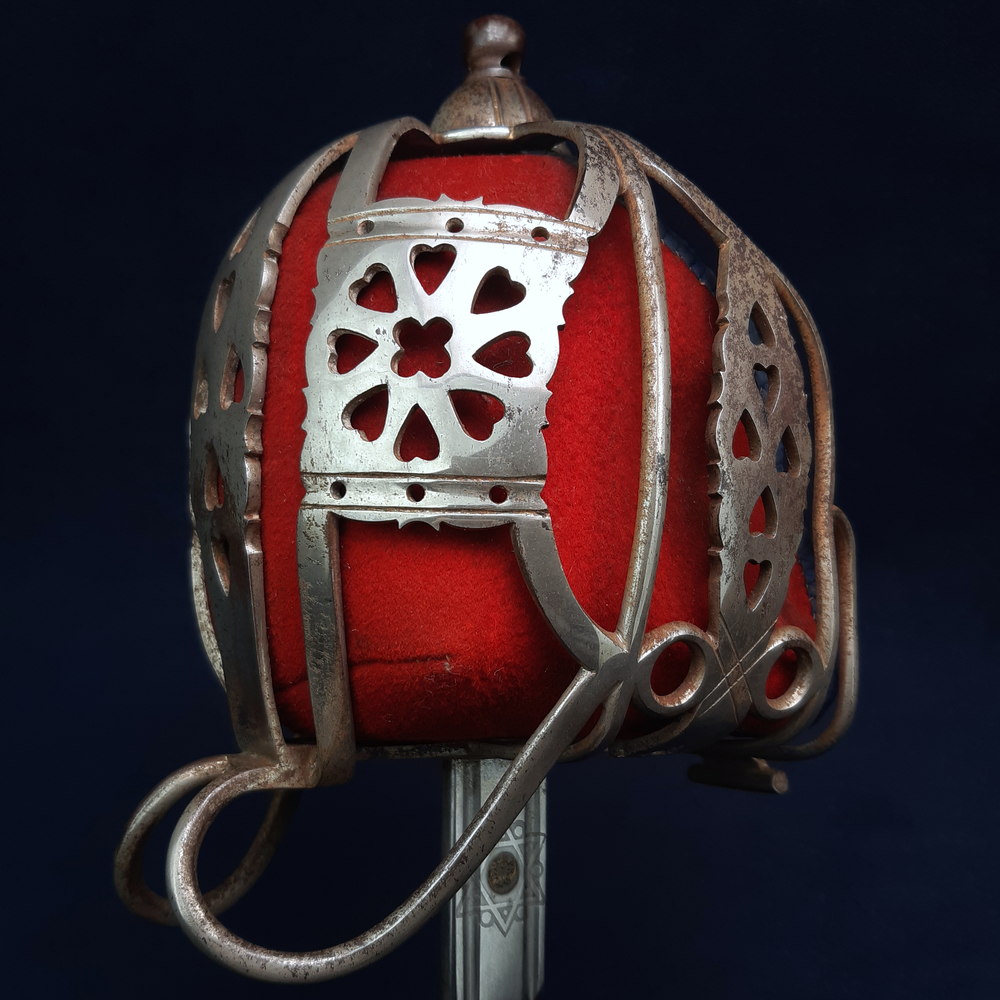
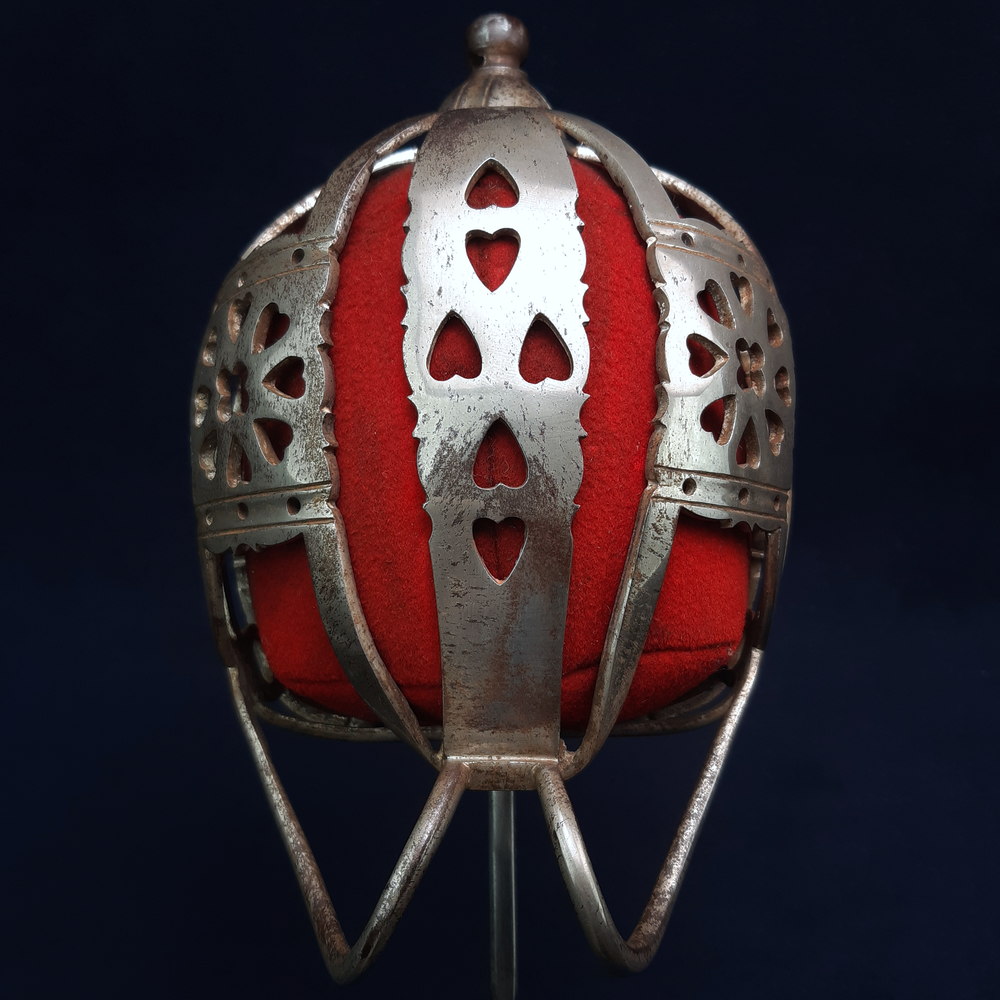
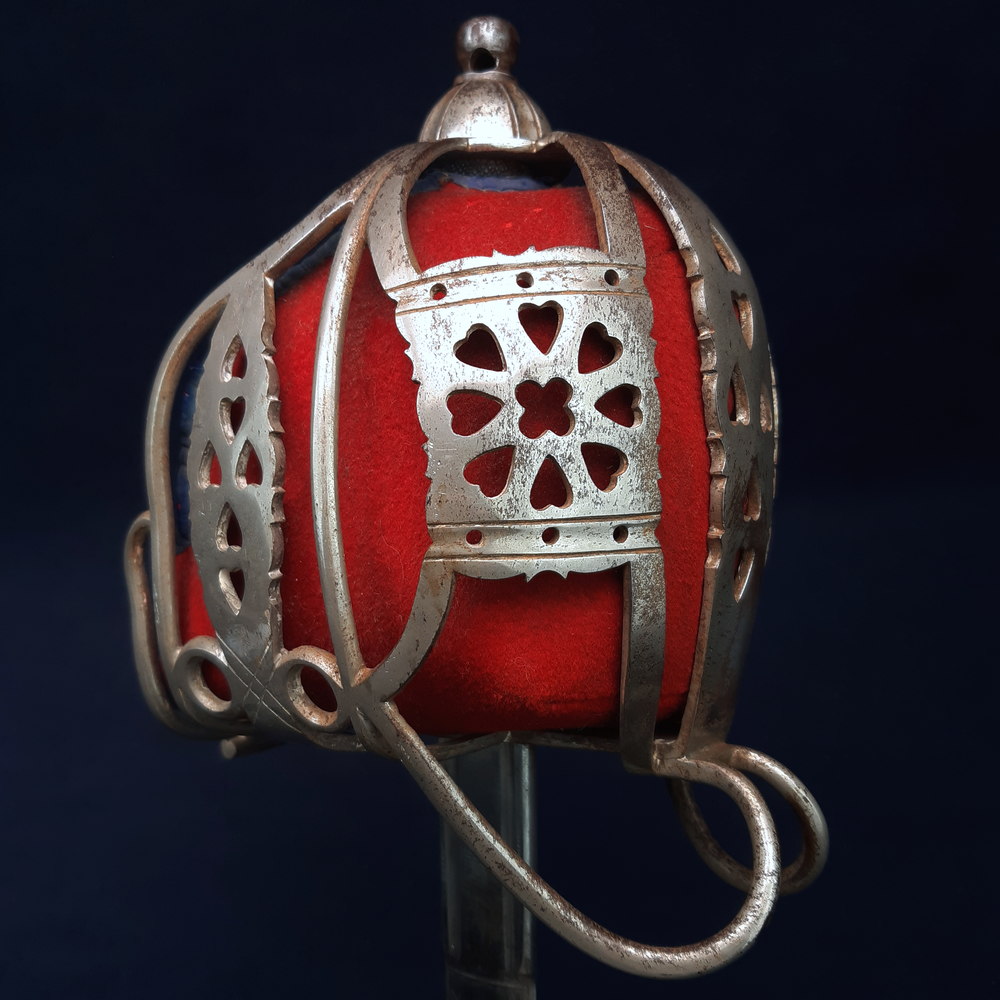
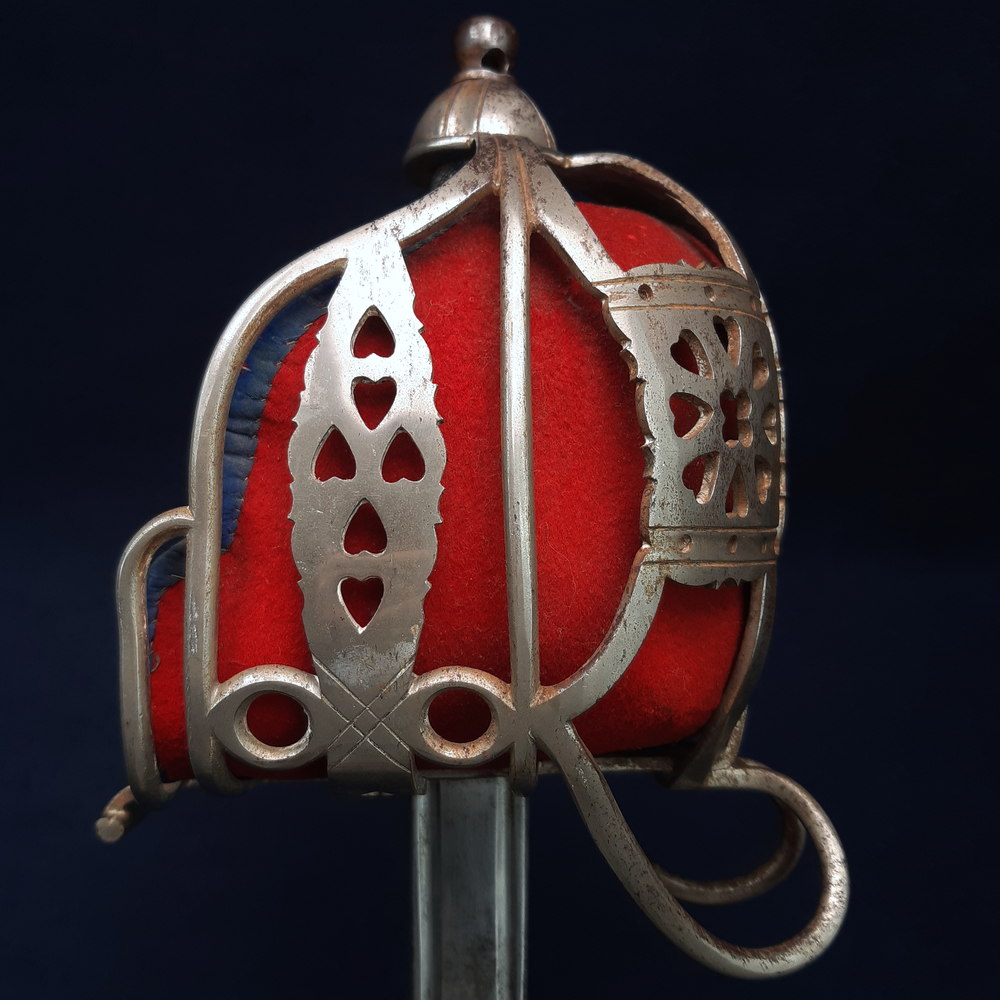
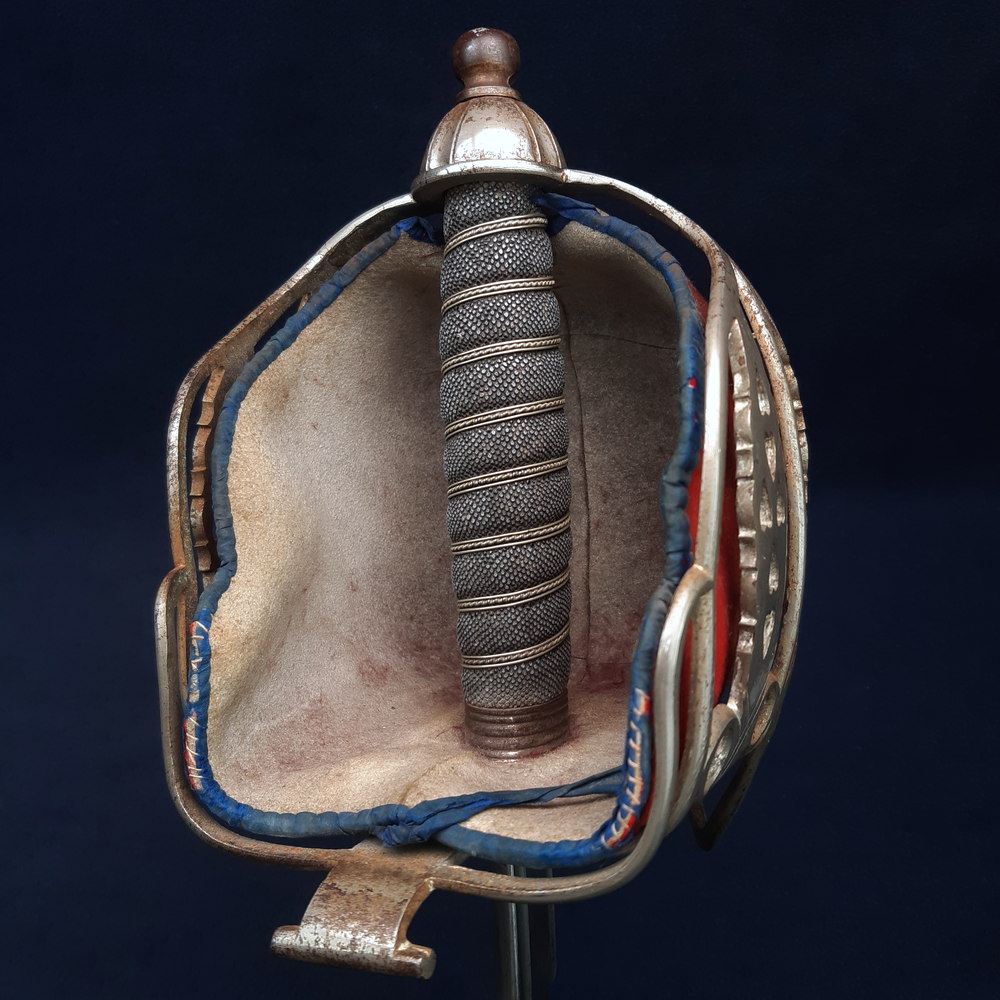
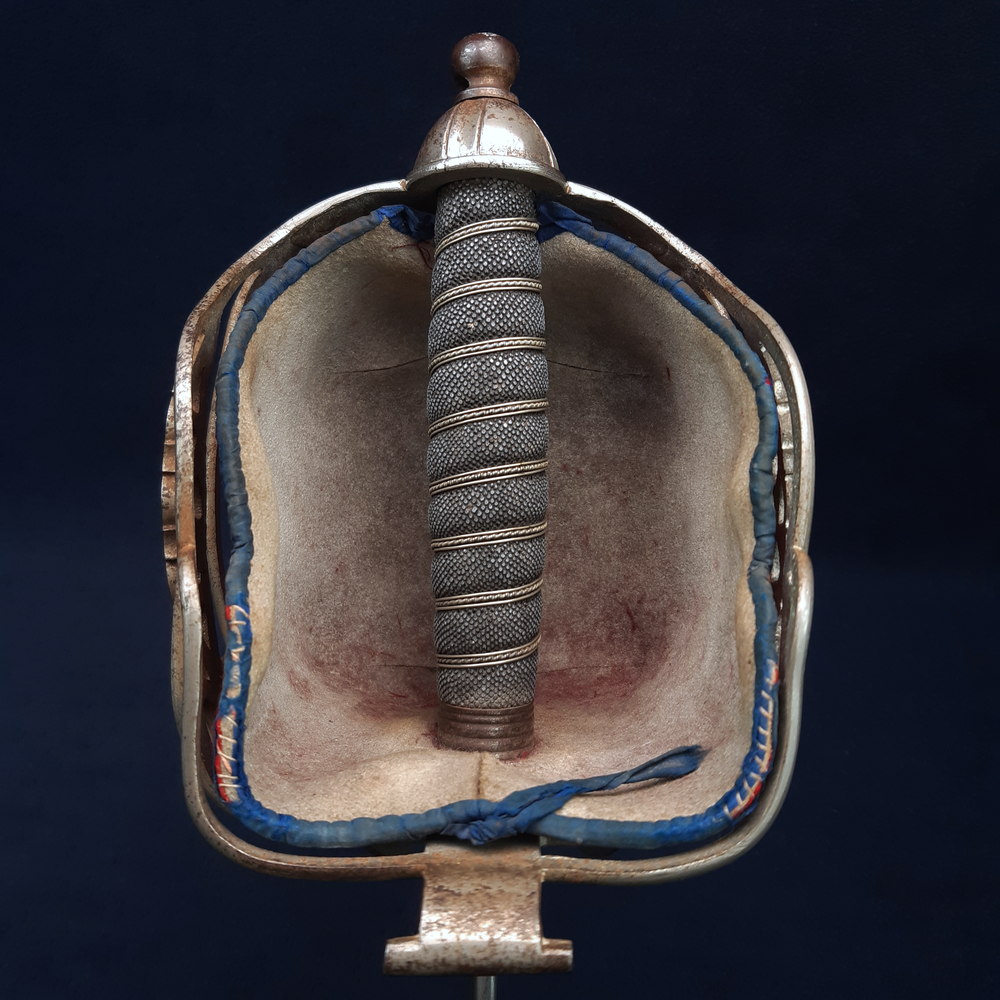
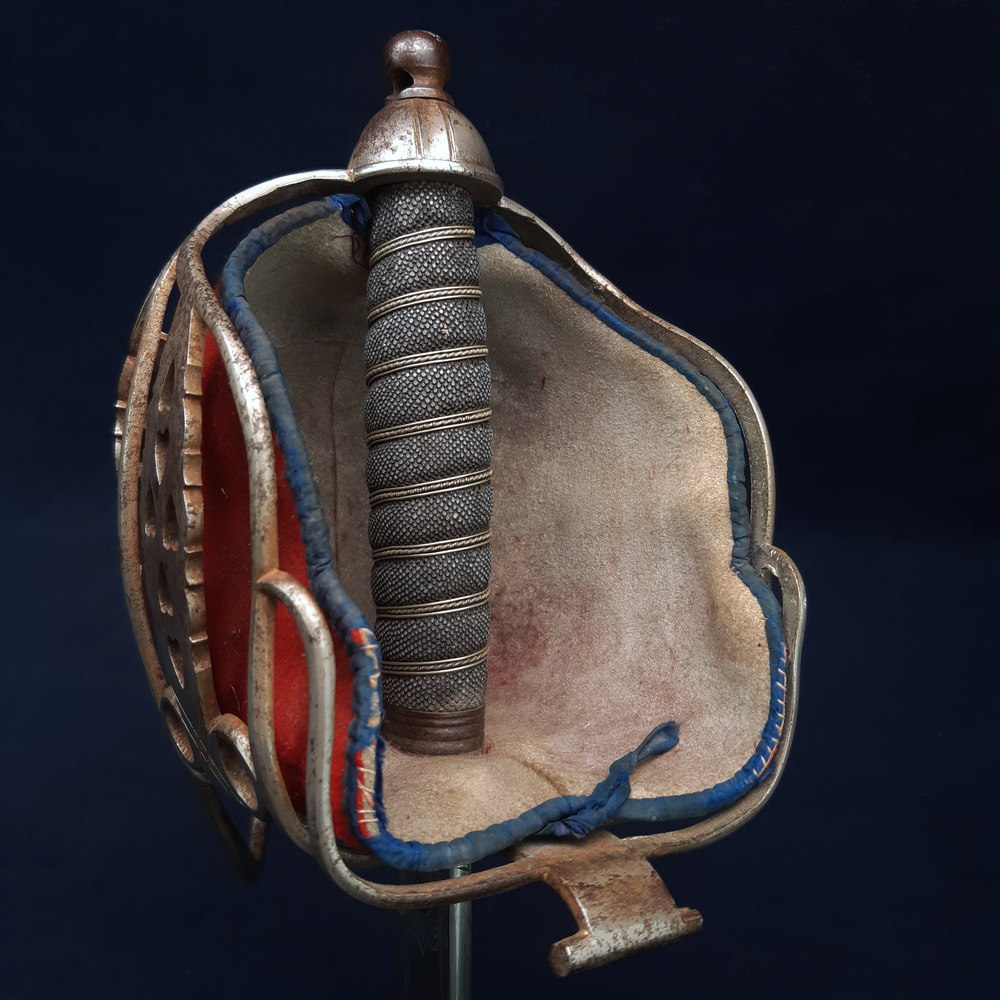
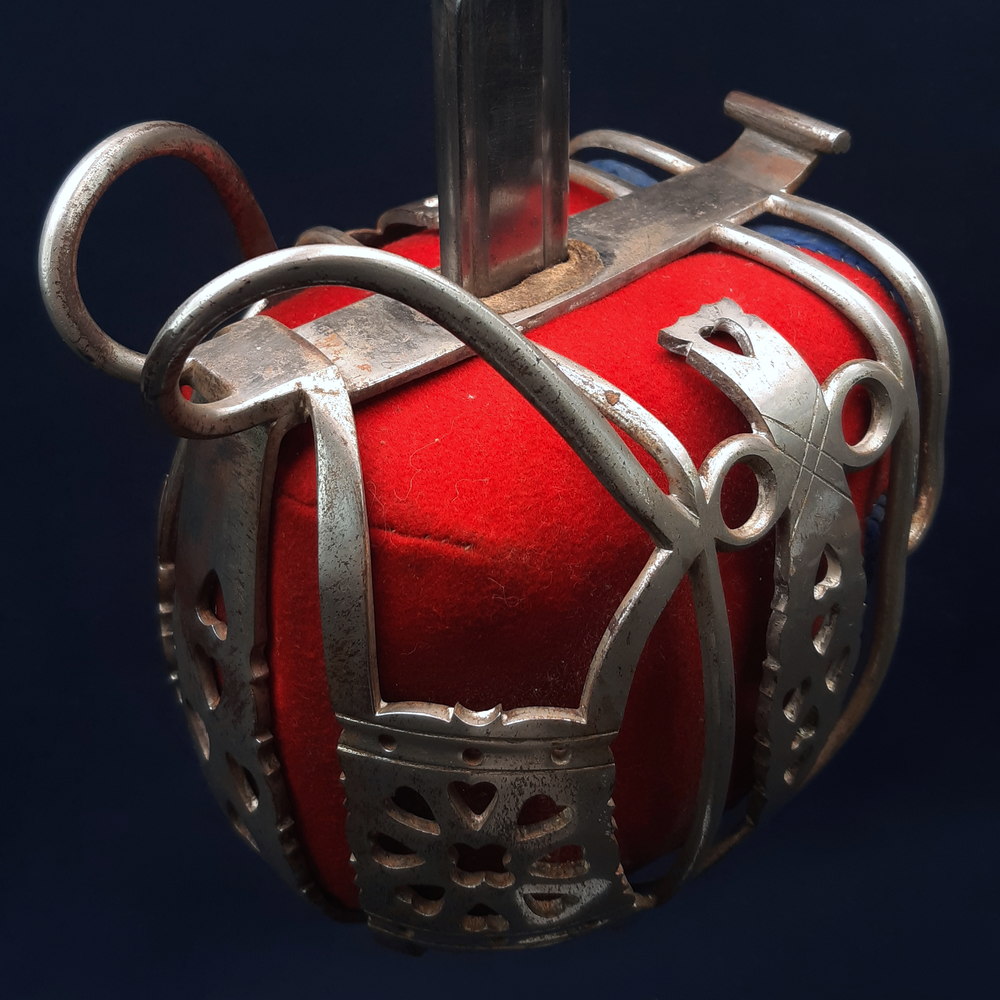
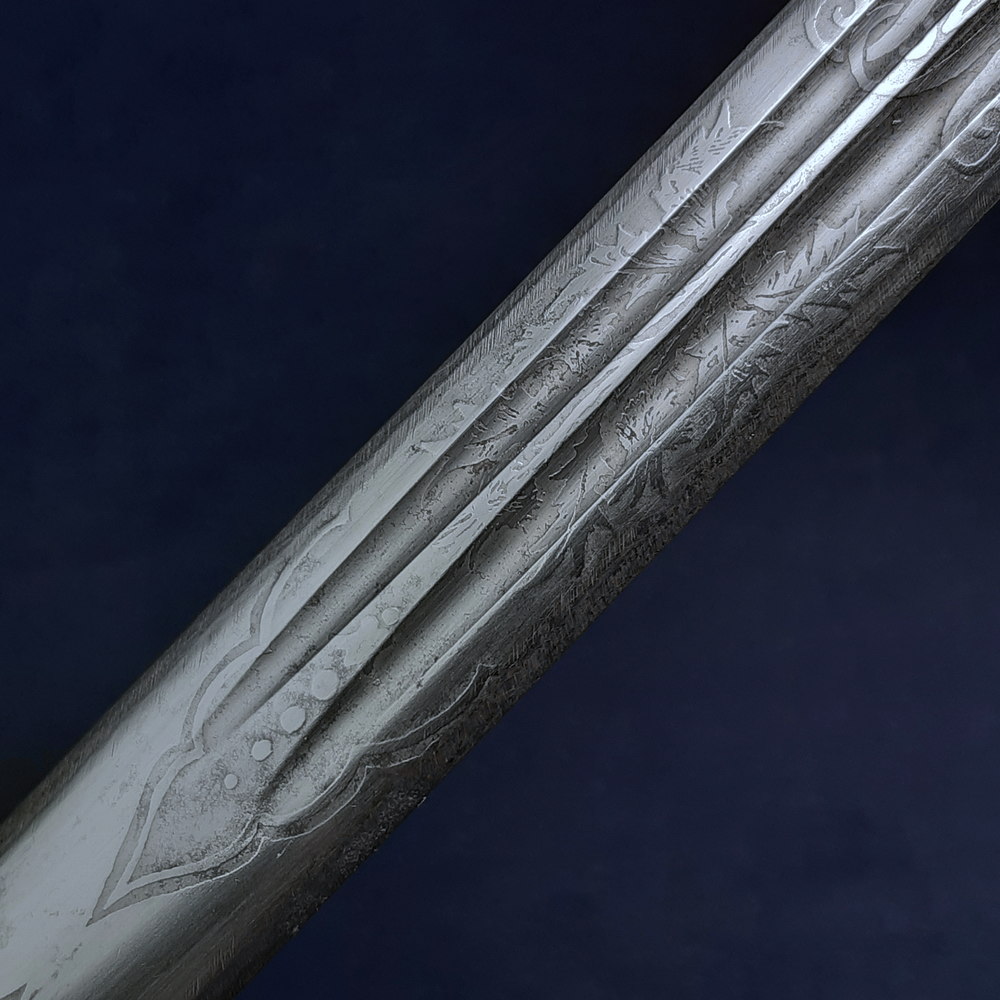
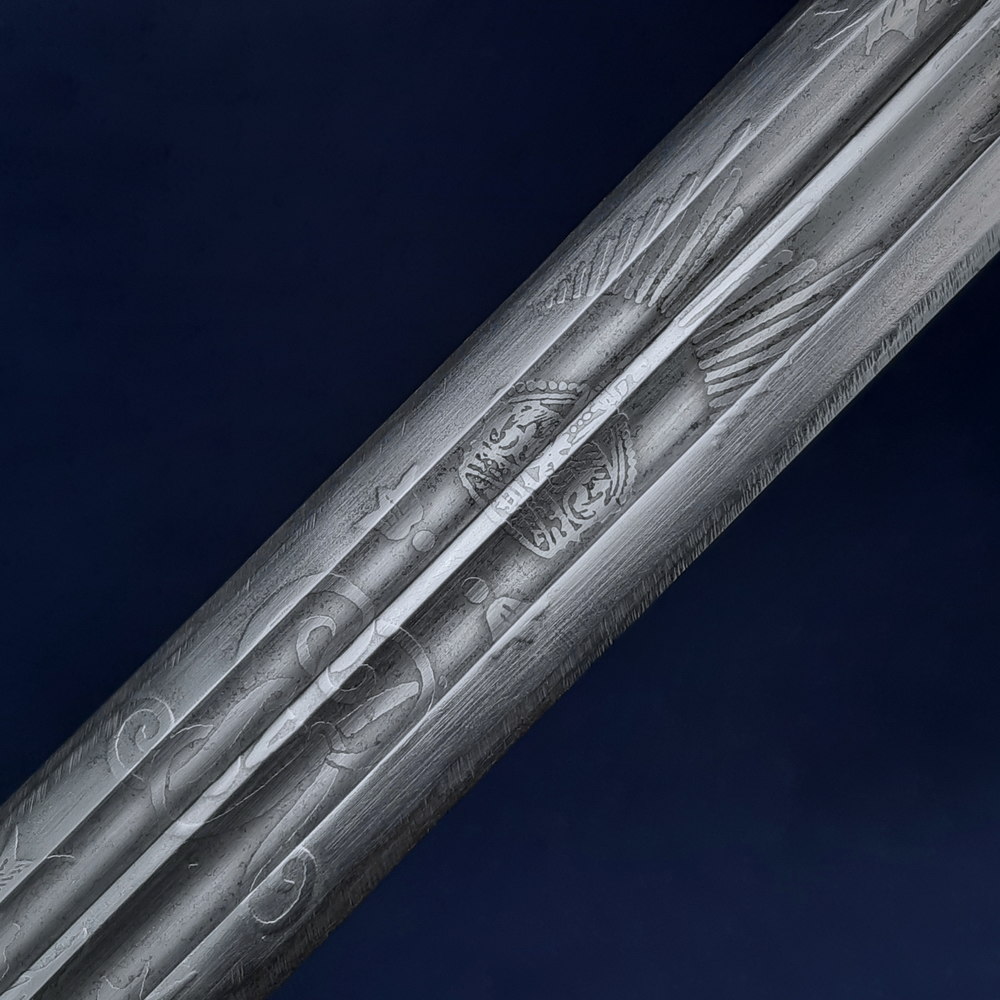
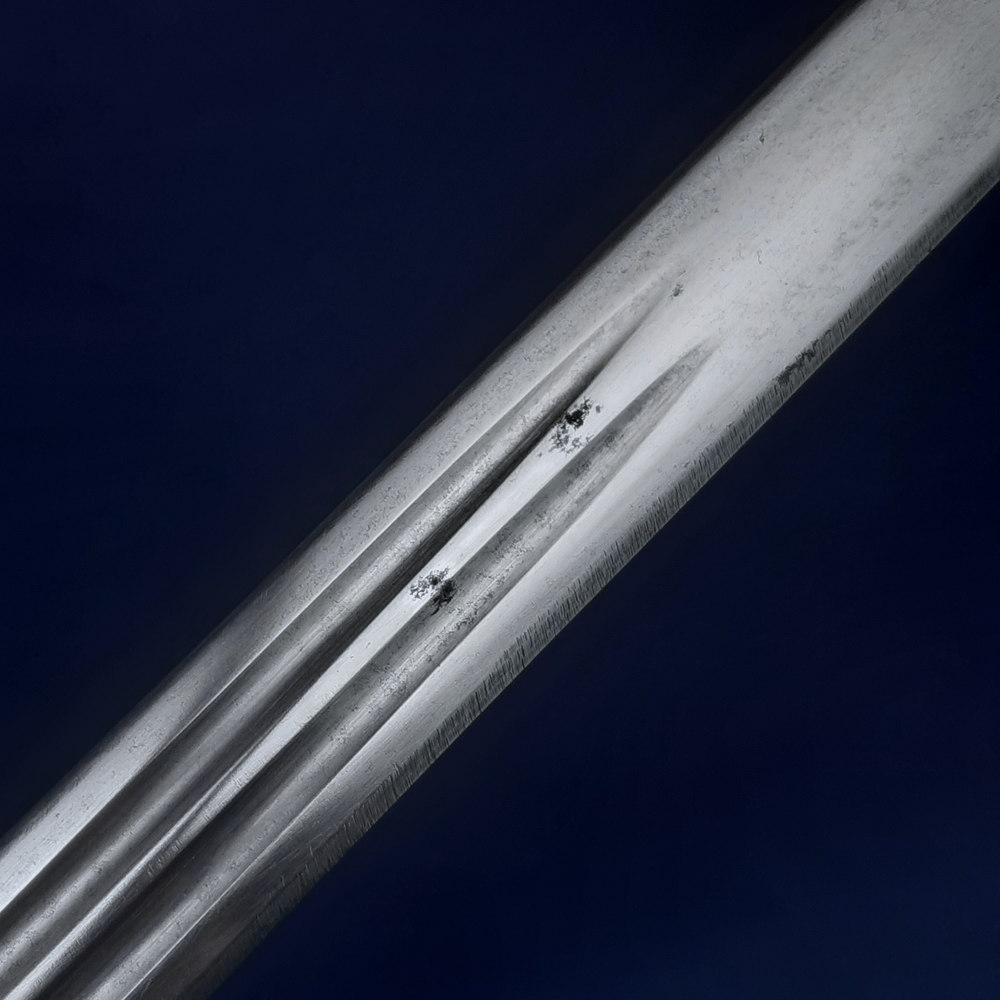
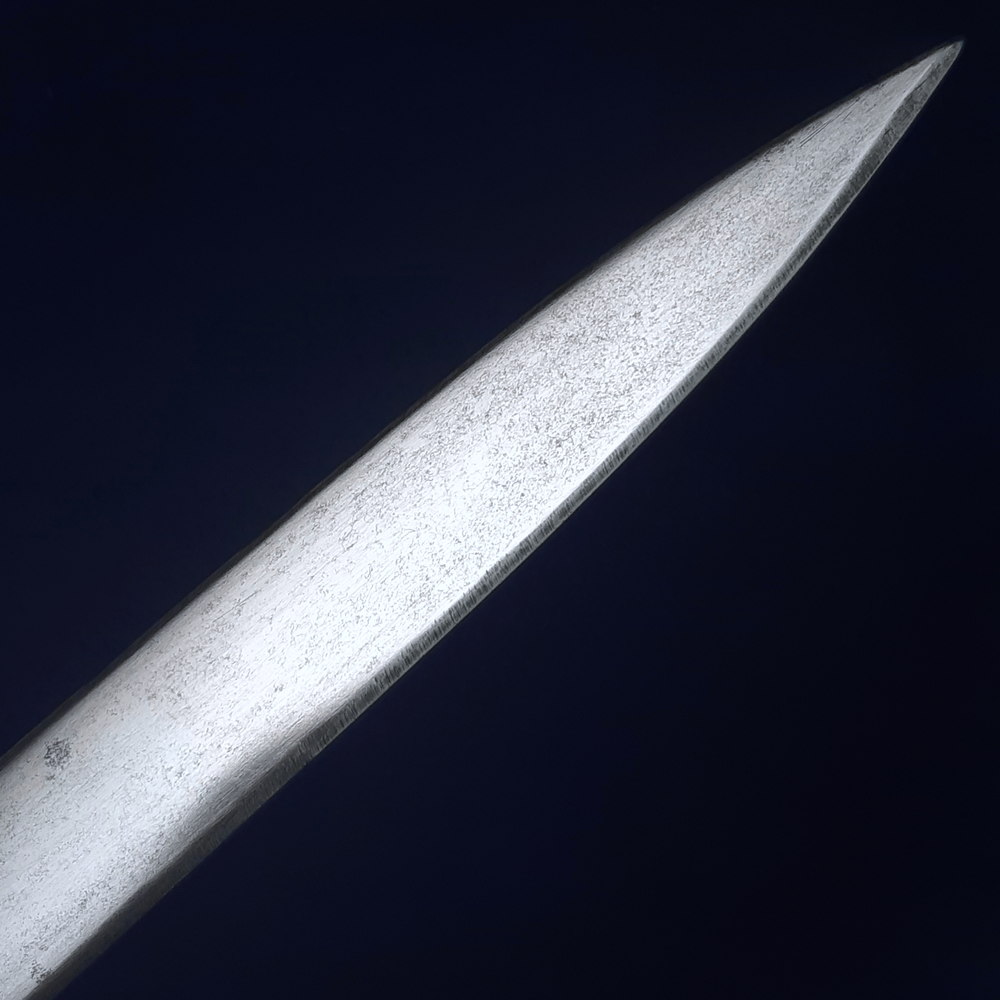
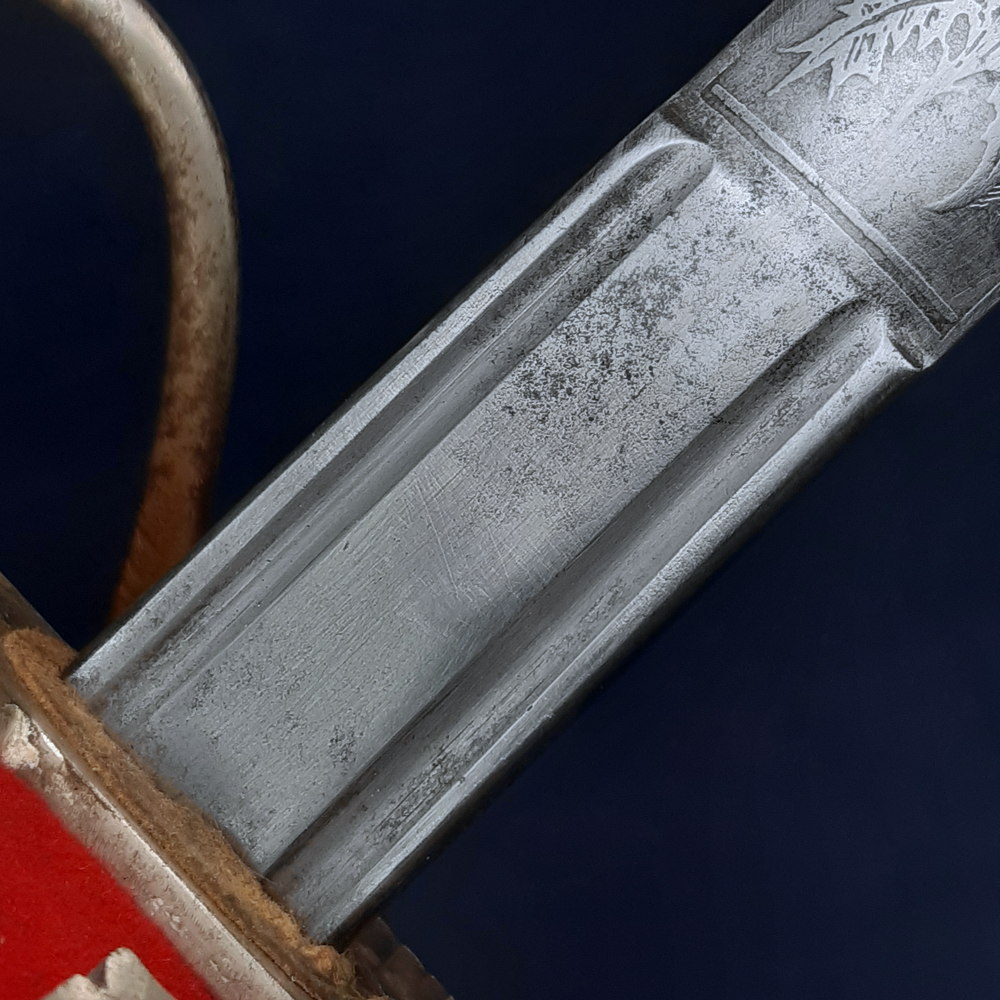
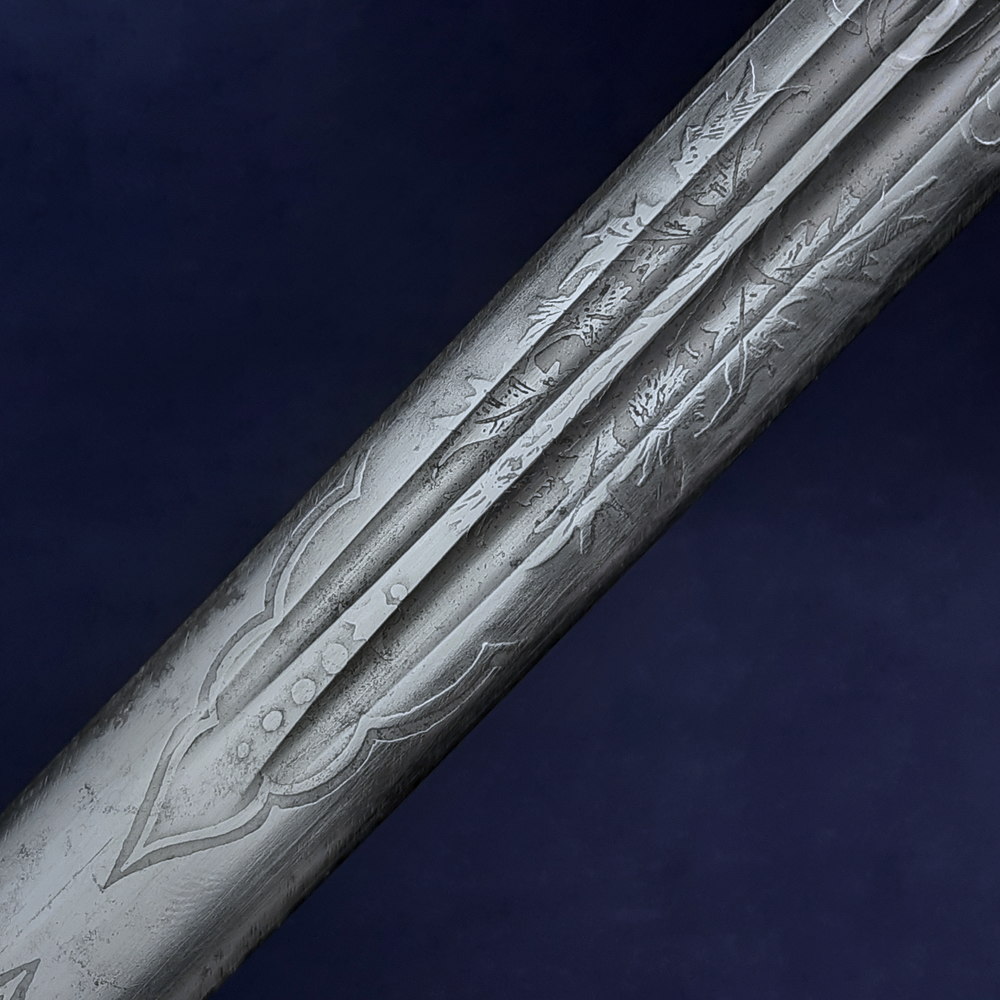
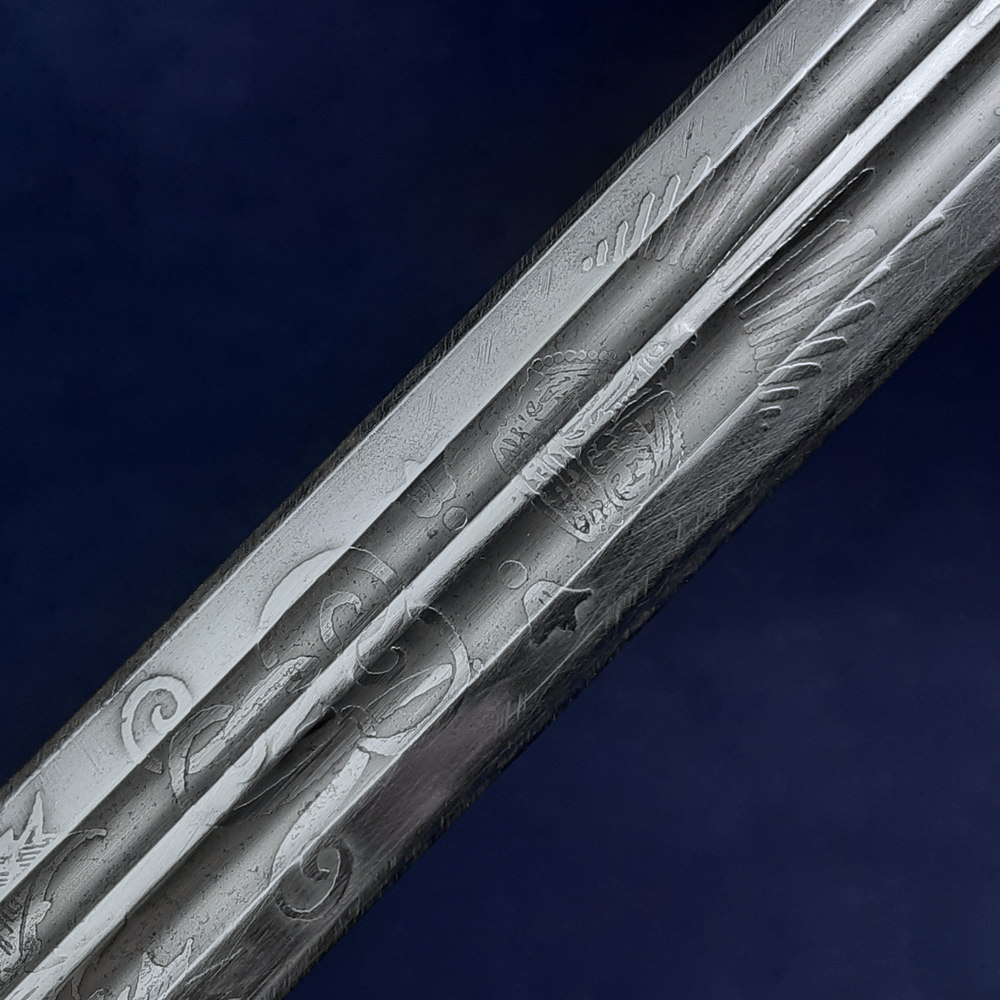
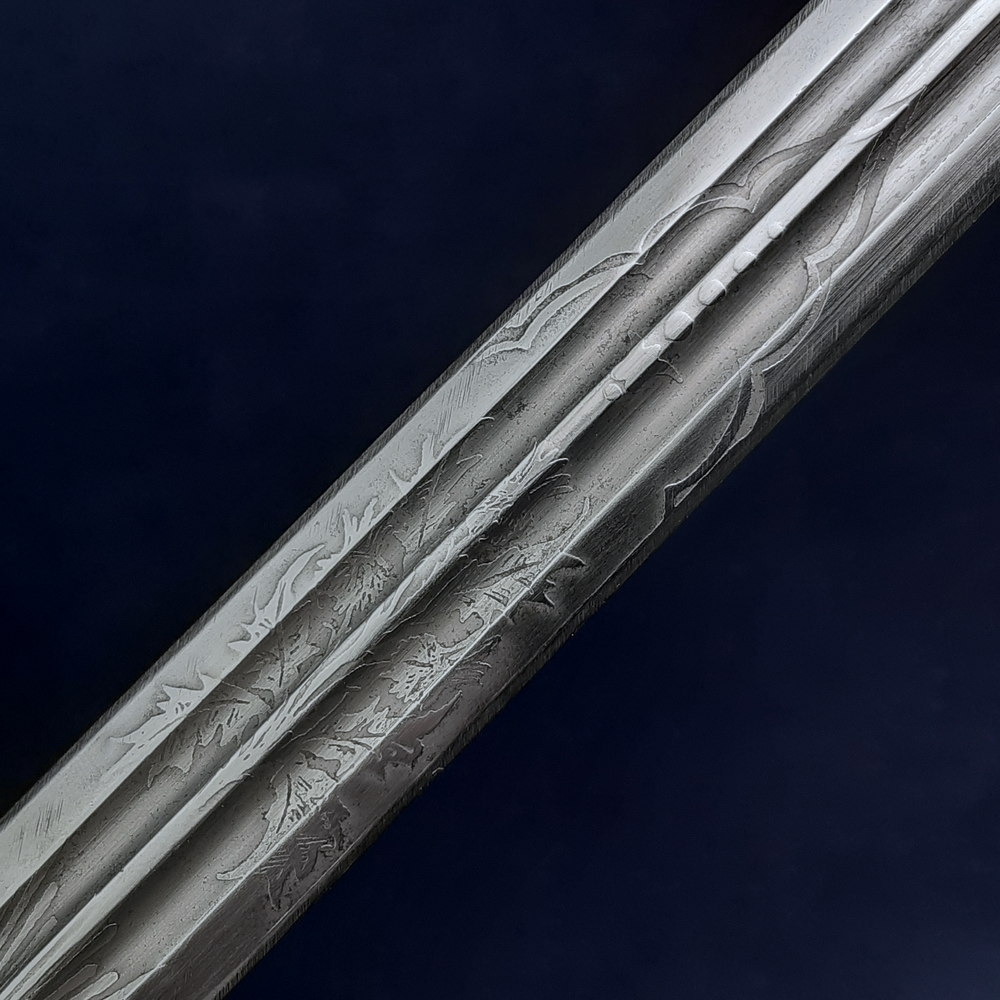
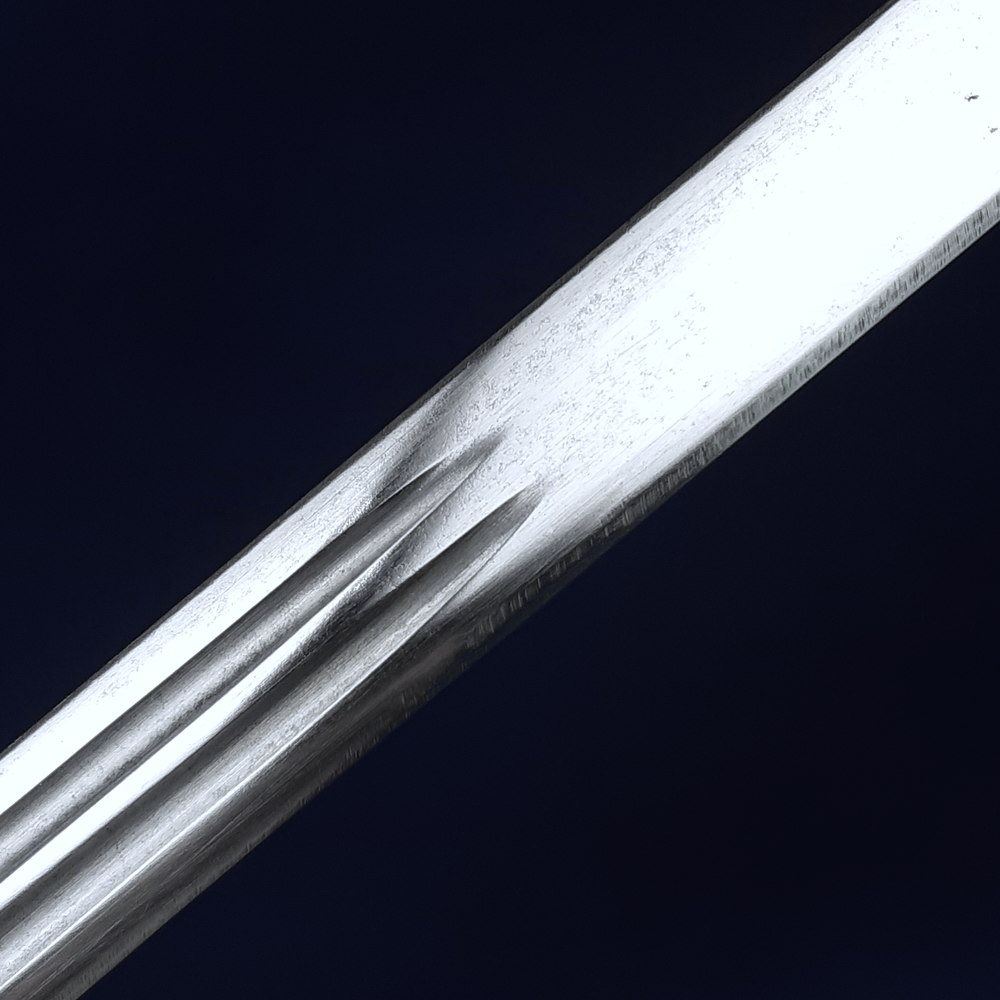
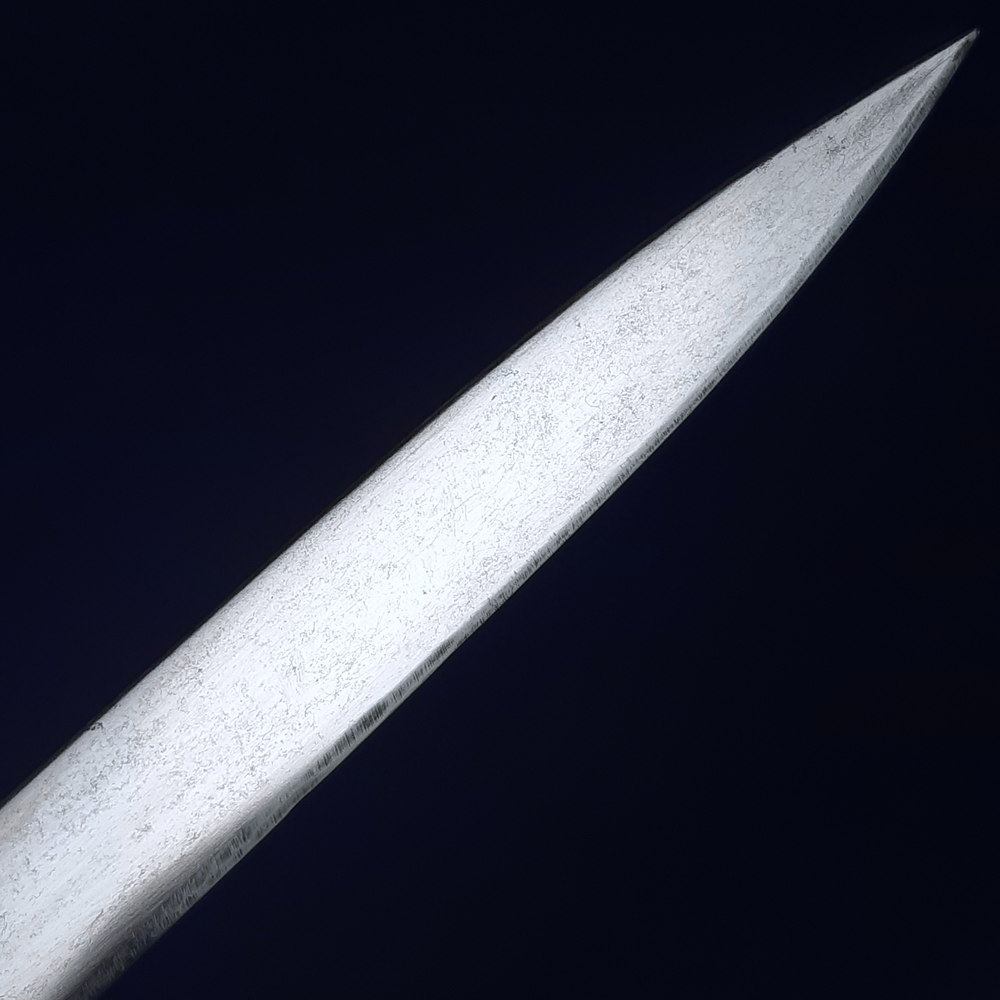
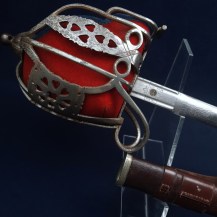
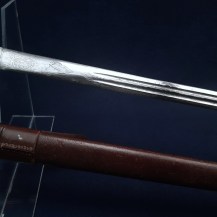
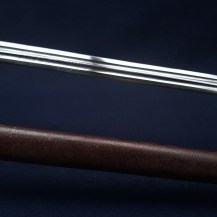
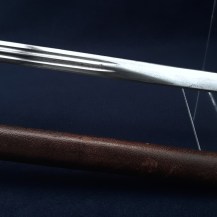
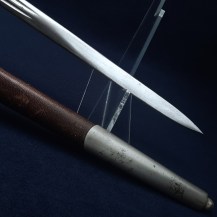
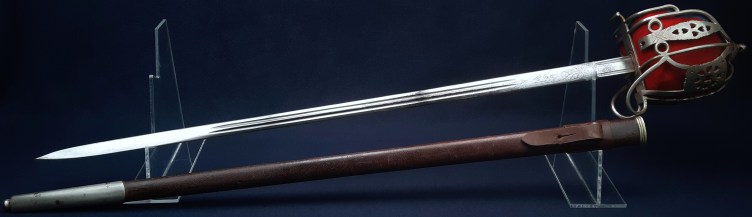
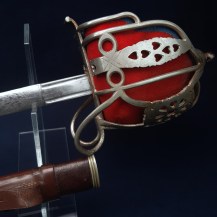
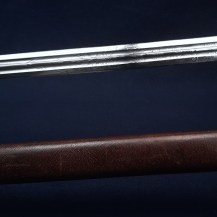
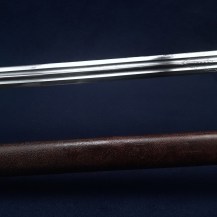
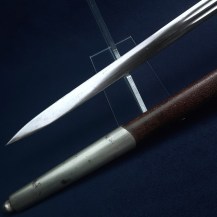
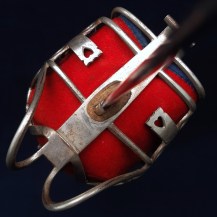
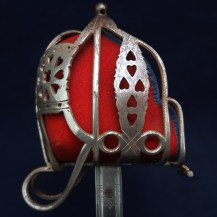
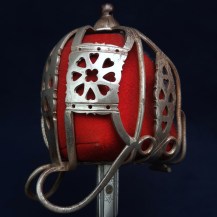
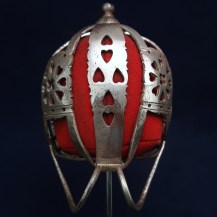
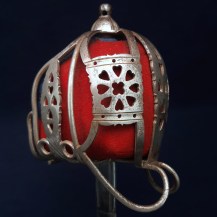
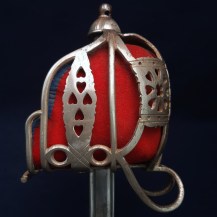
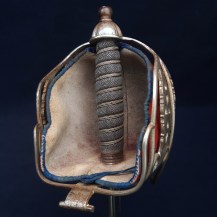
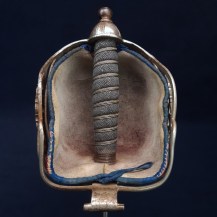
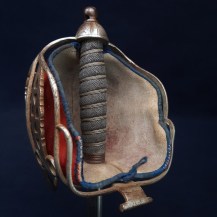
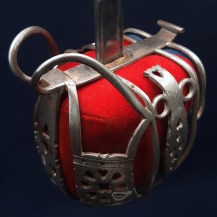
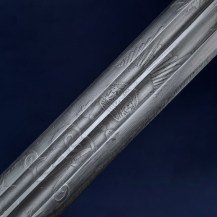
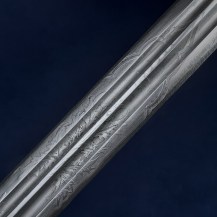
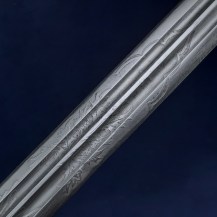
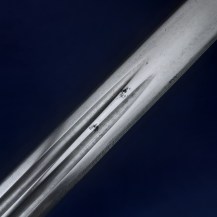
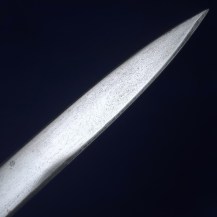
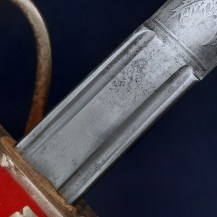
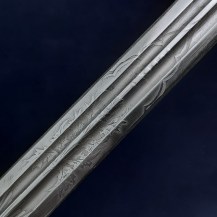
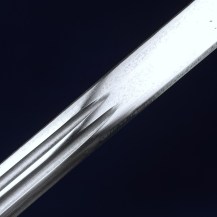
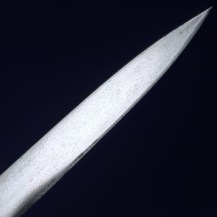
Straight spear-pointed blade with double central fullers and two short fullers at the ricasso. Steel pierced basket hilt, brown leather washer, red fabric hilt liner with white leather inner and blue silk edging. Spiral grip of wood covered with shagreen bound with wire, steel ferrule and pommel. Leather field scabbard with frog strap, nonferrous throat piece, probably brass, and nickel-plated steel chape piece with ball finial. Blade 33 inches in length, the sword 39½ inches overall.
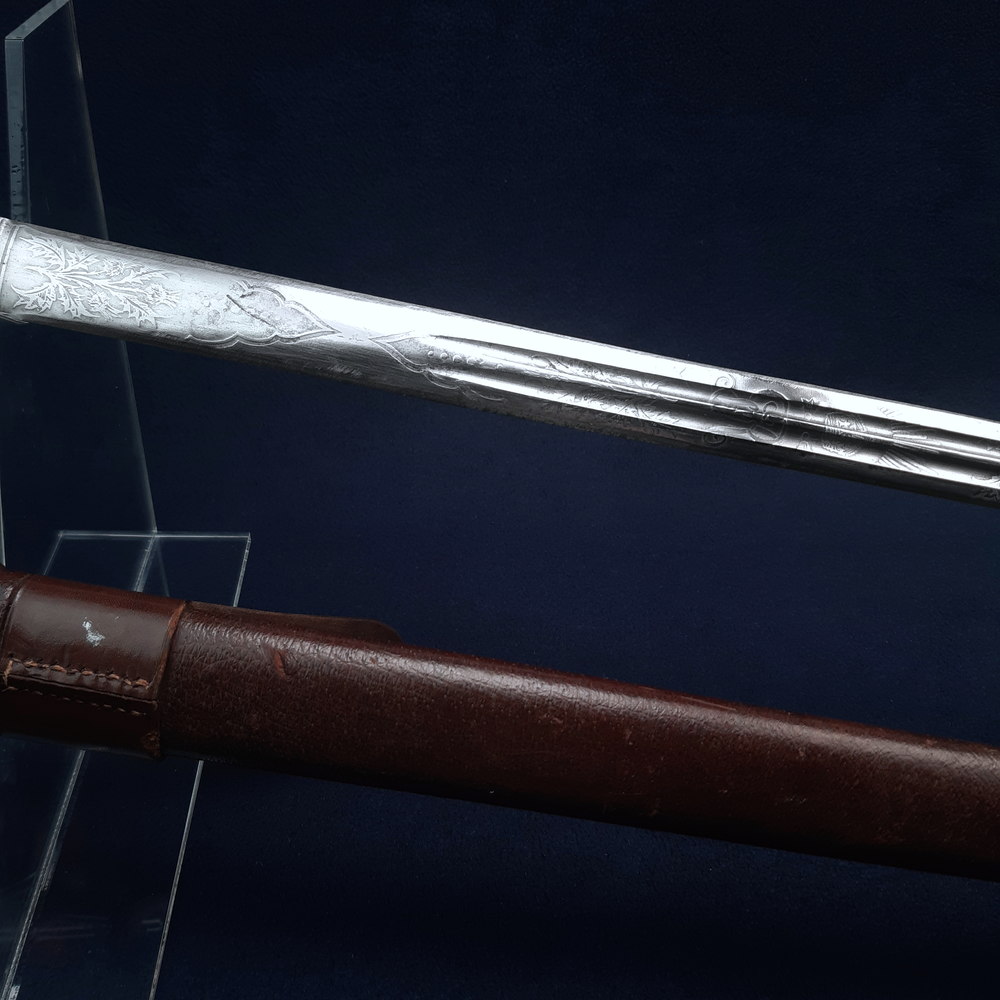
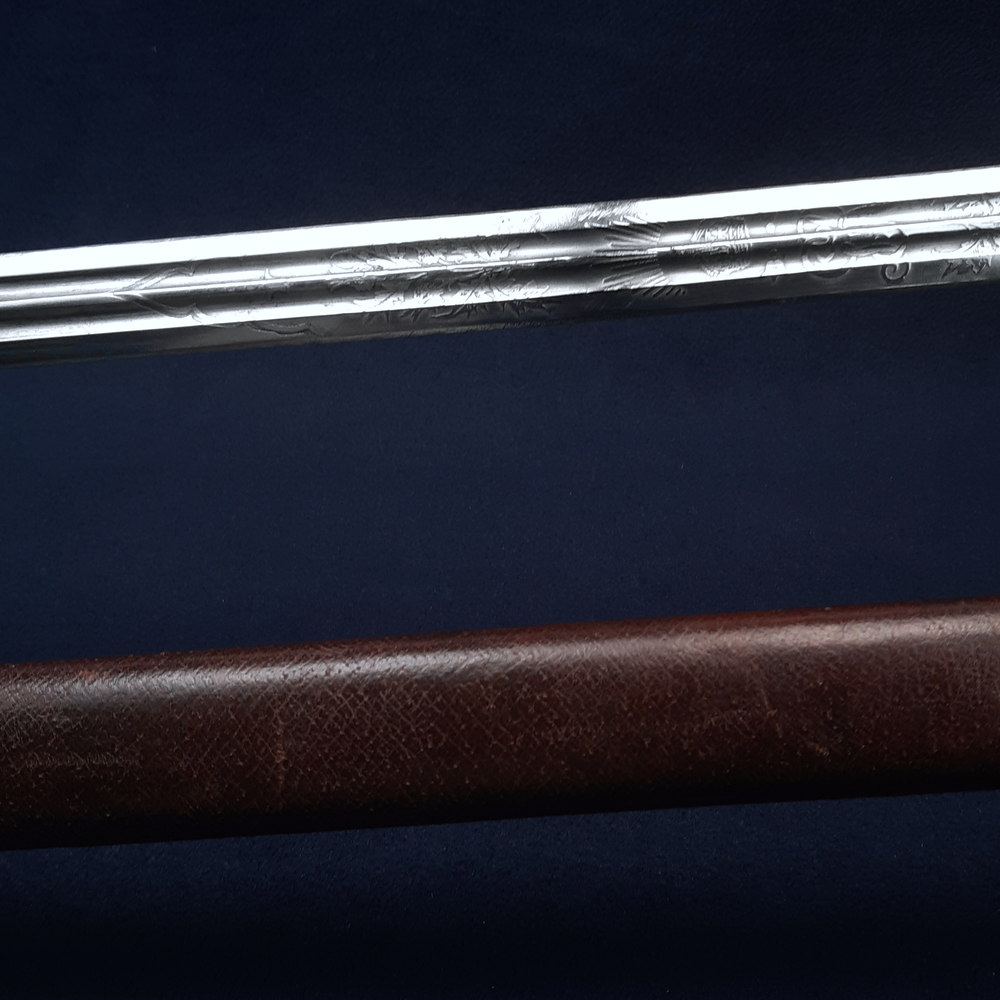
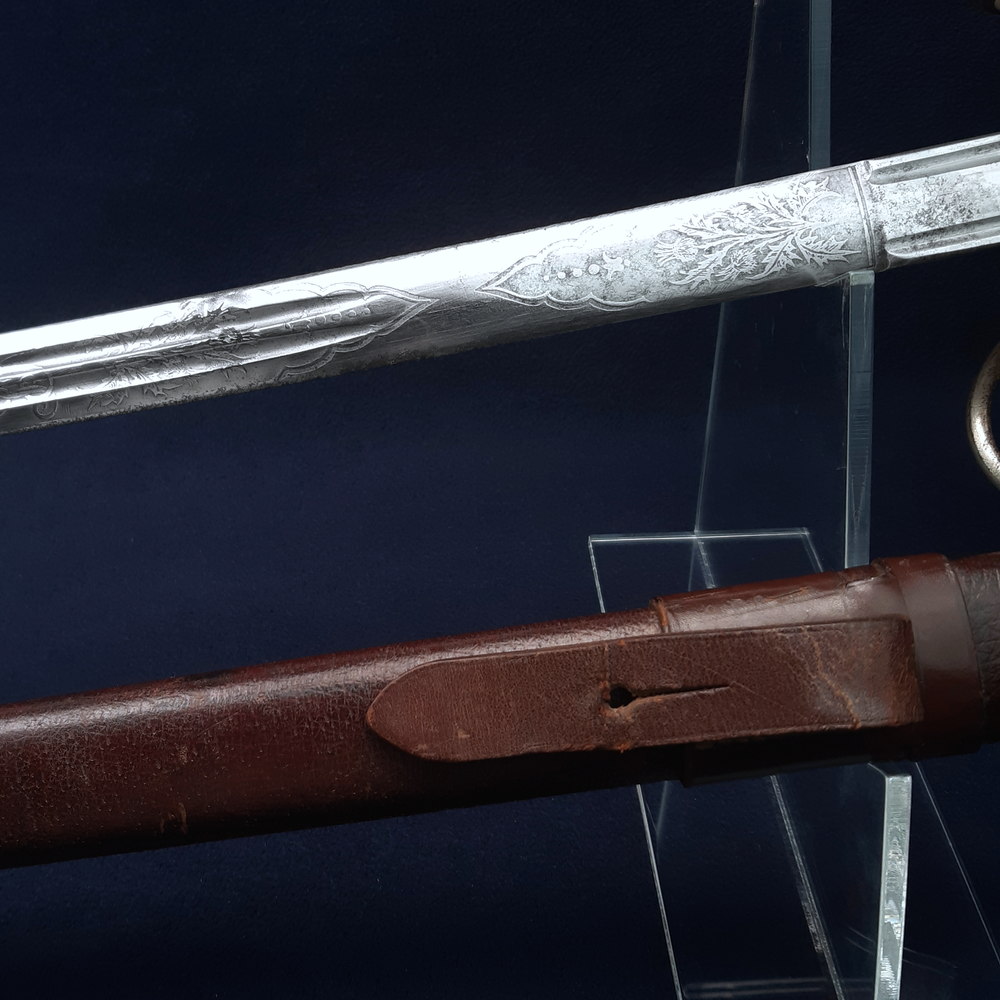
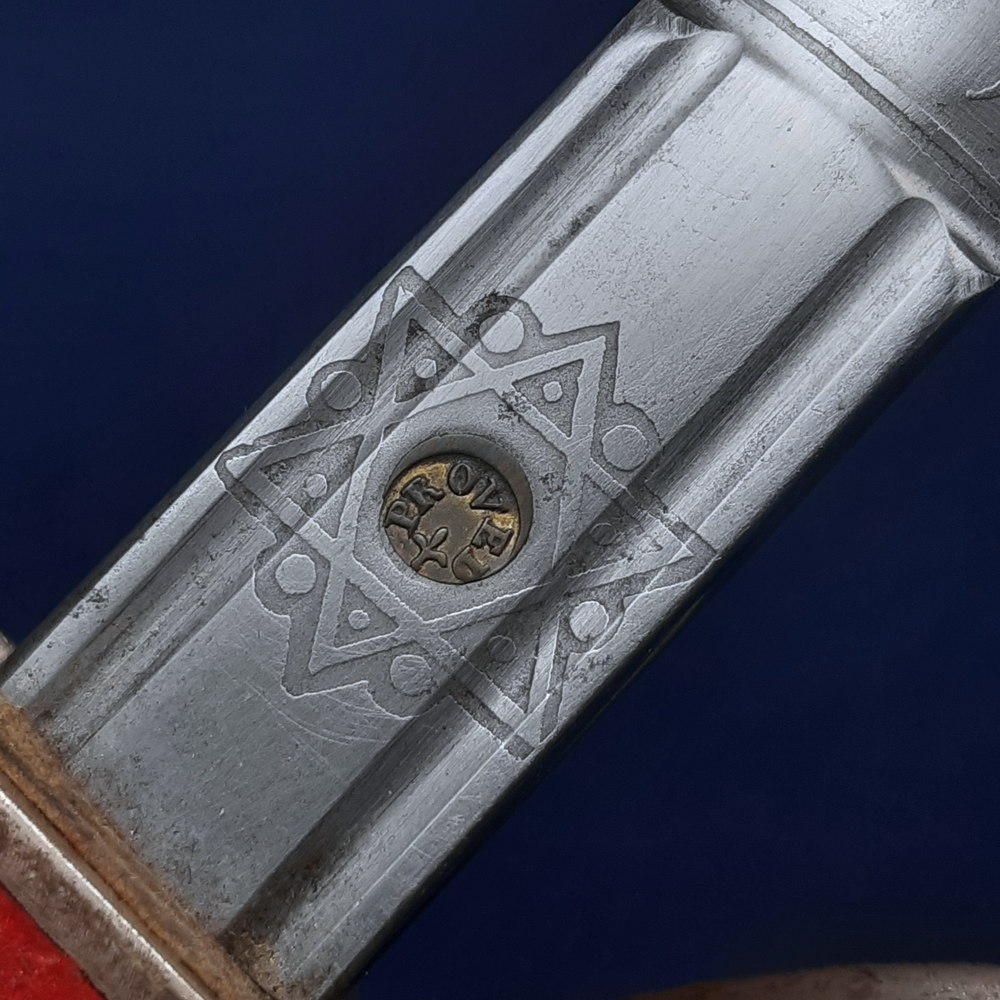
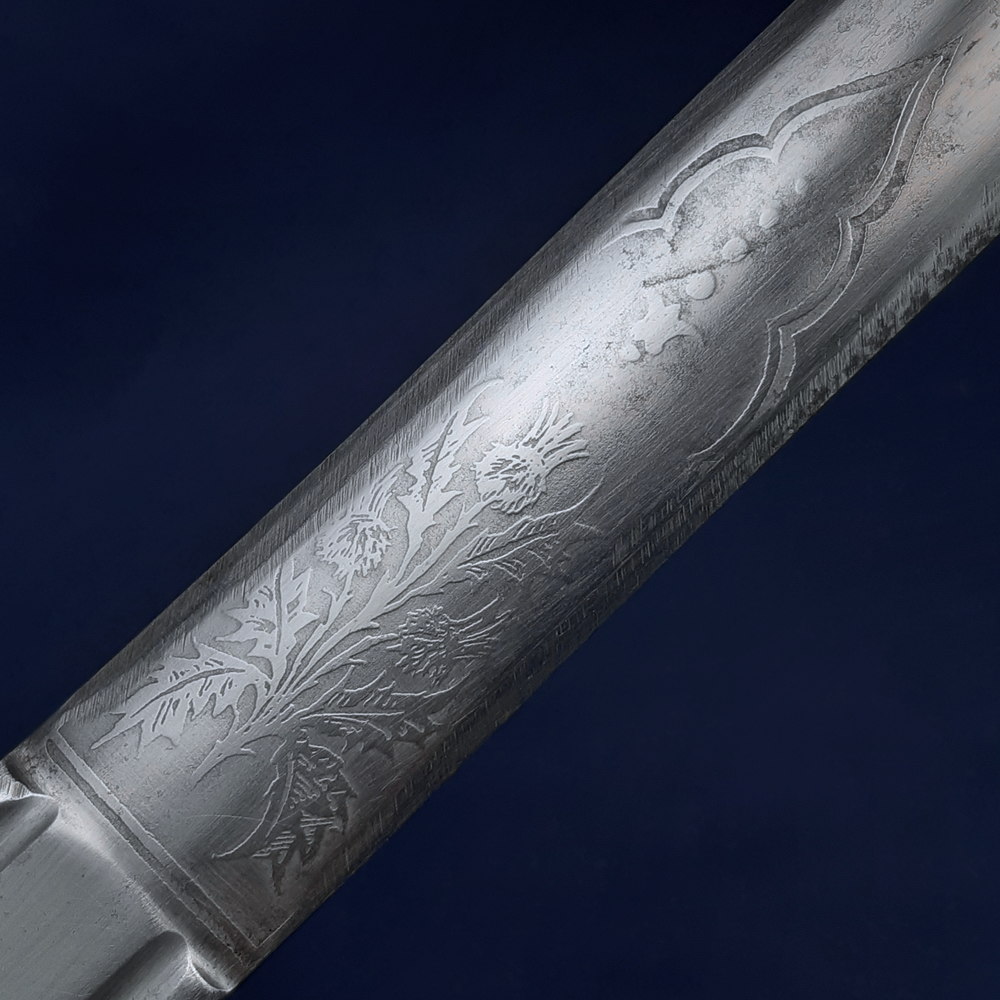
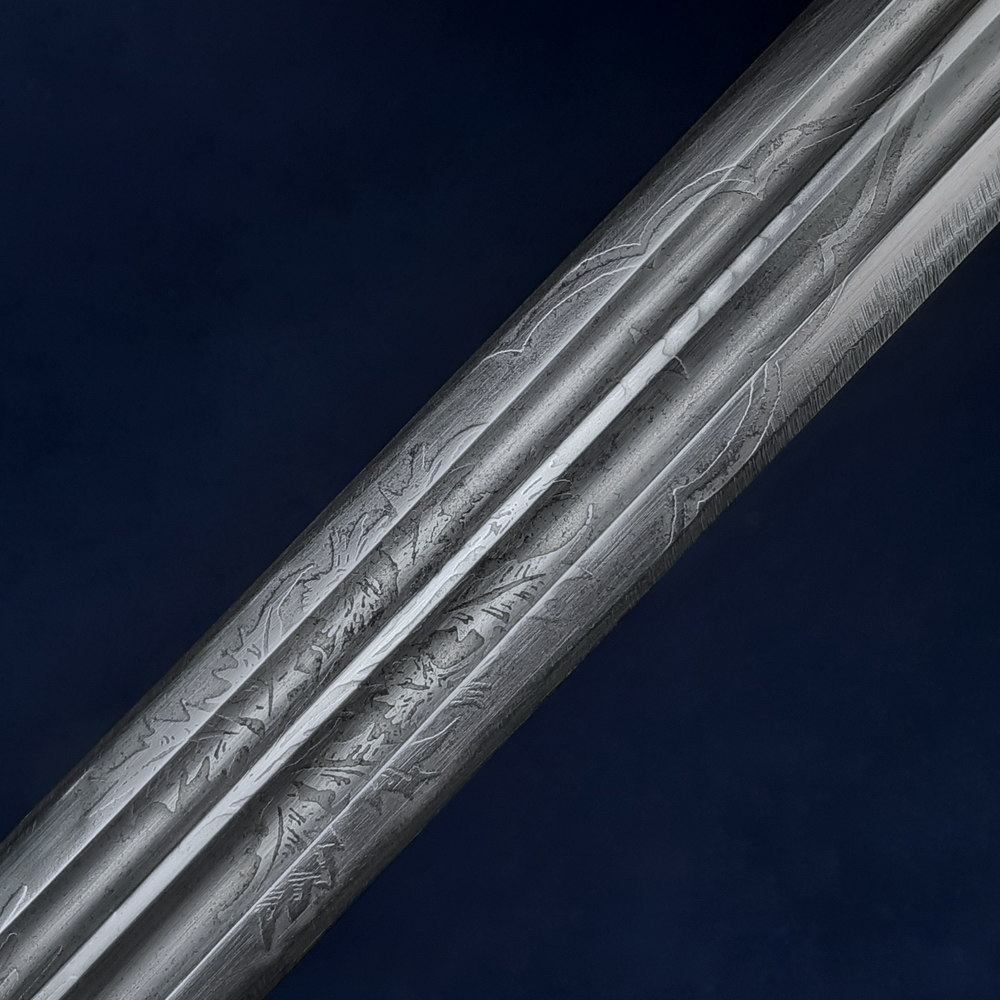
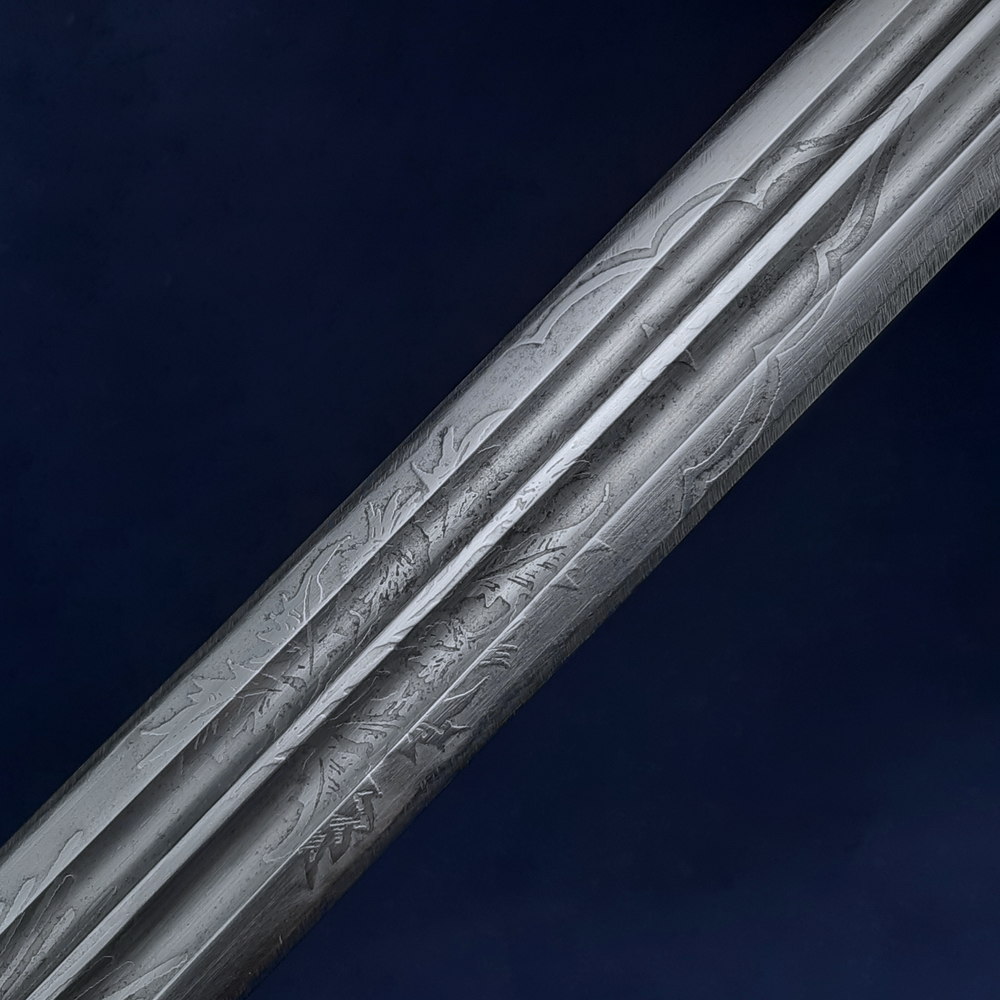
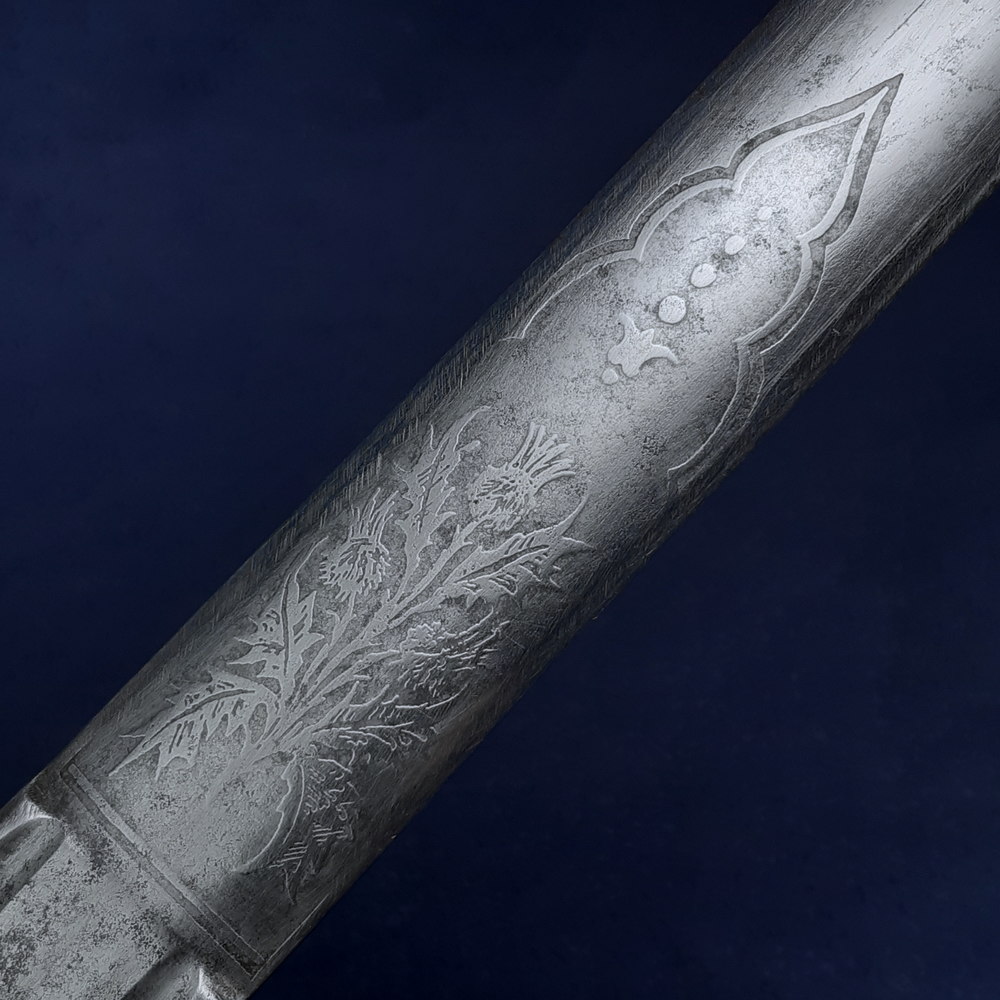
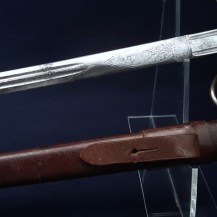
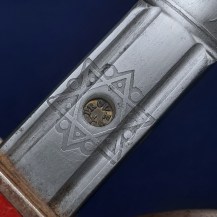
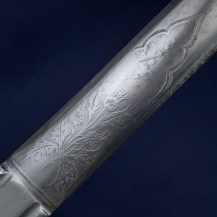
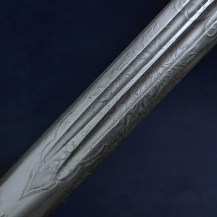
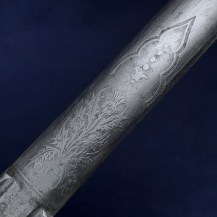
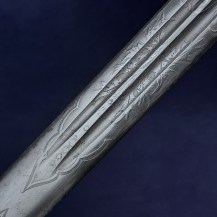
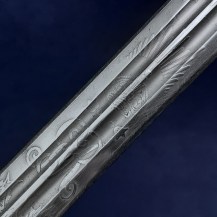
The ricasso on one side of the blade is set with a brass proof slug stamped with ‘PROVED’ and a fleur de lys, the slug surrounded by an etched six-pointed star. The blade is further etched on that side with the crown and cypher of King George V, and thistle motifs.
The ricasso on the other side of the blade, where a maker’s or retailer’s mark would usually be found, is blank with visible polishing marks: anything there originally may have been deliberately removed at some point. The blade is further etched identically to the previous side.
The proof slug on this example has been seen on swords sold by multiple firms including Hawkes & Co and George Thurkle, and it has been suggested that these blades might be German imports. The spine of the blade at the ricasso is stamped with the serial number ‘4467’.
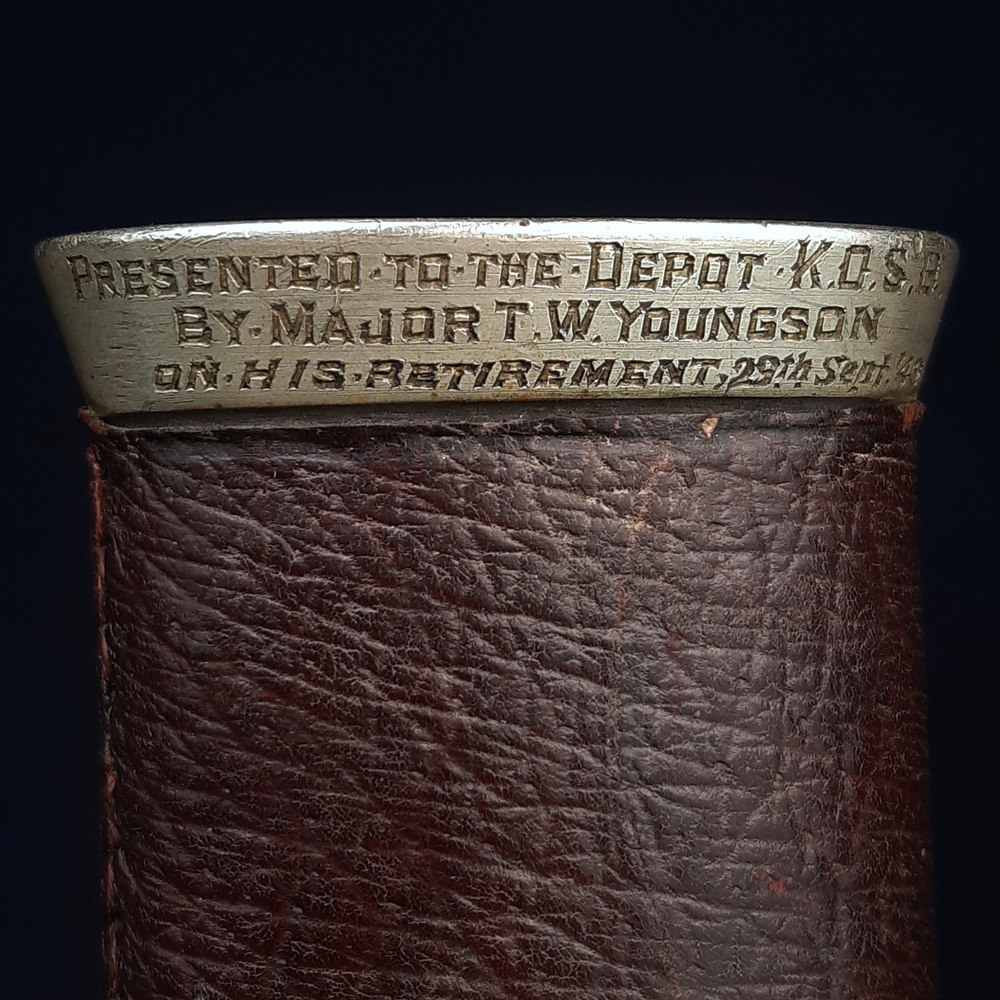
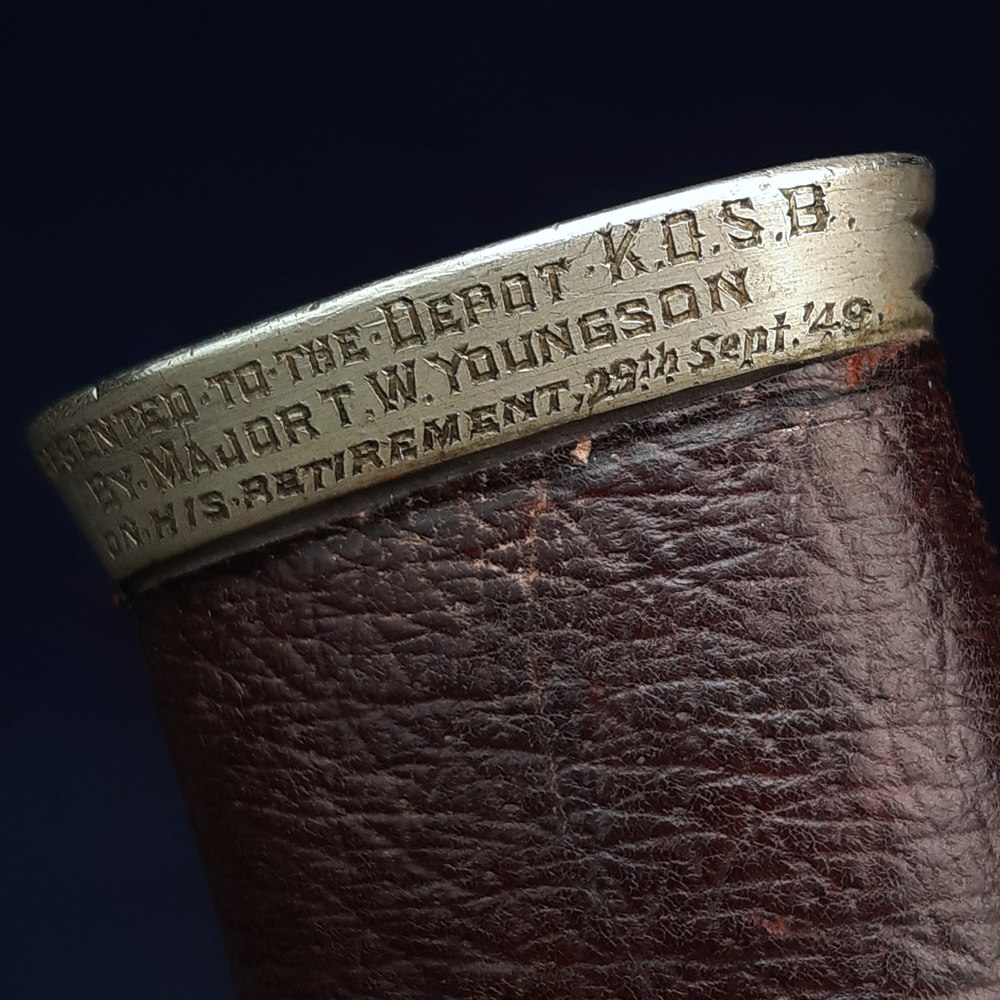
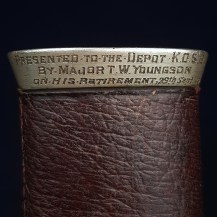
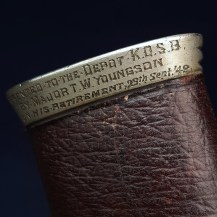
The throat piece of the scabbard is engraved with ‘PRESENTED TO THE DEPOT K.O.S.B. BY MAJOR T.W. YOUNGSON ON HIS RETIREMENT 29th Sept. ‘49’
I think that the ‘T.W. Youngson’ who presented this sword was Thomas William Wilsone Haldane Youngson, nicknamed ‘Tam’, who enlisted for the Second World War in 1939 and retired from the KOSB in 1949. However, the royal cypher on this sword is that of George V, who reigned from 1910-1936 so it must predate his period of service.
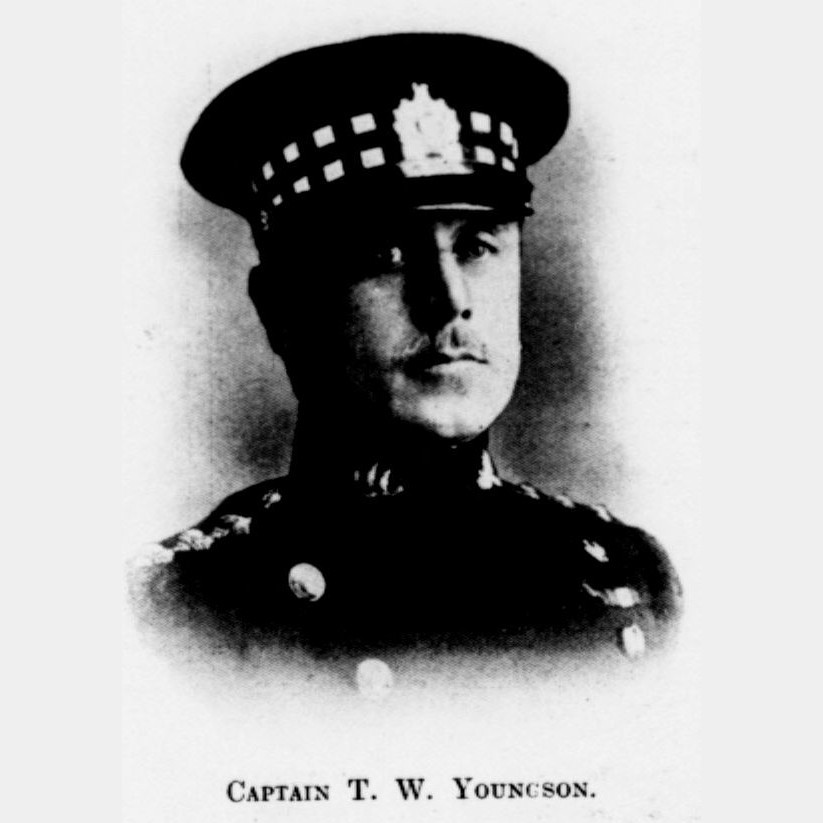
I think it is likely therefore that this is a family sword and that its first owner was his father, Thomas William Youngson, who also served with the KOSB from 1897 until his death in 1922. Because of the similar names of father and son I will hereafter refer to the father as Thomas and the son as Tam.
Thomas was born in 1876 in Banchory, Aberdeenshire, Scotland. His father was Thomas Alexander Wright Andrew Youngson, who was an advocate in the city of Aberdeen and Colonel in command of the 1st Aberdeen Artillery Volunteers between 1873 and 1893.
Thomas enlisted with the King’s Own Scottish Borderers in 1897 and was promoted to Lieutenant in 1899. He served with their 1st Battalion in the Boer War, seeing action in the Orange Free State from February-May 1900 including the Battles of Paardeberg, Poplar Grove, Vet River and Zand River. He was then in the Transvaal from May-June 1900 and February-May 1902. He earned the Queen’s South Africa Medal with clasps for Paardeberg, Johannesburg and Cape Colony, and the King’s South Africa Medal with two clasps.
He was promoted to Captain in 1905 and became Adjutant for the 5th Battalion KOSB. He married Mary Stuart Wilsone in September 1913. He was still in service upon the outbreak of WW1 and deployed to Gallipoli with the 5th Battalion in June 1915, earning the 1914-15 Star. He was promoted to Major in September 1915. The 5th Battalion was withdrawn from Gallipoli in January 1916 and moved to Egypt. Thomas was treated at Catterick Military Hospital in England for dysentery in 1916, suggesting he needed to be evacuated due to illness. Disease was a major problem in the Gallipoli campaign which accounted for more casualties than battle wounds. Dysentery in particular, known as the ‘Gallipoli Gallop’, spread rapidly due to poor sanitation.
He was appointed Brigade Major in June 1916, this being an operational staff officer post at brigade headquarters, subordinate to the commanding Brigadier General.
Thomas remained with the Army and died in March 1922 aged 46 in Port Said, Egypt, probably serving in the British garrison of the Suez Canal Zone. He was survived by his wife and their son Tam. He is commemorated as an officer of the 1st Battalion KOSB on a brass plaque in St Nicholas Church, Aberdeen, erected ‘BY ALL RANKS OF THE BATTALION IN MEMORY OF A TRUE COMRADE’.
Thomas could not have purchased this sword until at least 1910 so it was not, as is common, a purchase for a new officer: possibly it was bought upon the accession of the new King, when some officers might have wished to update the royal cypher, or after his promotion to field rank in 1915.
Tam was born in October 1919, making him only 3 years old when his father died. His mother remarried to Captain W.D.C. Knox of the Royal Scots in 1930, when he was 11.
Upon the outbreak of WW2 Tam followed in his father’s footsteps and enlisted with the KOSB as a 2nd Lieutenant in July 1939, with service number 95607. He was promoted to Lieutenant in January 1941 and was later made a War Substantive Captain, this being a temporary rank to be held for the duration of the conflict but not beyond. In April 1946 he was Mentioned in Dispatches for services in North West Europe, at the rank of Acting Major. He was promoted to Captain in July 1946 allowing him to hold the rank beyond the end of hostilities.
Tam retired from the Army in 1949 and was granted the honorary rank of Major. He had no sons and presumably no further interest in a military career, so made a gift of his sword to the regiment both he and his father had served with.
This was by no means a useless gift: after several years of relaxed wartime regulations, approval had been given in July 1949 for the resumption of the wearing of swords by Army officers on suitable ceremonial occasions. However, for what had become a purely ceremonial item a sword was expensive, at between 9 and 12 guineas (£9 9s - £12 12s, which converts to £433 - £578 today), which was a particular burden upon newly commissioned or short-service officers.
The government dealt with the expense issue by making the new rule permissive and not obligatory, and with the expectation that regiments would “make their own arrangements to provide the swords required”. In practice regiments solved this by creating a small ‘loan pool’ or stock of swords in their armouries. An officer could sign a sword out when he needed one and return it again later.
The existence of loan pools reduced the historic practice of privately purchasing swords, although there was still some convenience in having one’s own equipment and not having to rely on the pool. In this context Major Youngson may have felt his family sword would be more useful going into the new pool for his regiment than gathering dust in his home.
The traditionally-styled Scottish broadsword was carried exclusively by Highland infantry regiments until 1881, when the Lowland regiments adopted Scottish dress and the broadsword along with it (with the exception of the Cameronians aka Scottish Rifles). This example has an interchangeable hilt, the pommel unscrewing to allow disassembly so a crossbar or field officer’s hilt could be swapped onto the same blade (no additional hilts included with this example). This feature dates back to the 1860s but was first officially mentioned in the Dress Regulations of 1883.
Both the true and false edges of the blade have been sharpened with visible sharpening marks. Its finish is bright with one small spot of patination on the sharpened faces of the true edge (extending ~1.5cm). Nothing impacts the etching which is clear and crisp. The shagreen of the grip is all intact with very light handling wear, its wire binding is all present and tight. Some slight rotation movement to the hilt and grip due to the interchangeable construction.
The, hilt, ferrule and pommel have all been nickel plated (but not the pommel nut). This plating is in fair condition with some speckled wear. The outer hilt bar on the right-hand side is slightly bent inwards. The hilt liner has some light staining on the inner leather and its blue edging has worn slightly in two places exposing the stitched join between fabric and leather.
The scabbard has some small scuffs to its leather body and band, its frog strap remains flexible ands strong with only minor surface-level cracking. A few spots of wear to the nickel plating of the chape piece exposing patinated steel. The sword will not completely sheath, becoming very tight in the last few inches.
