

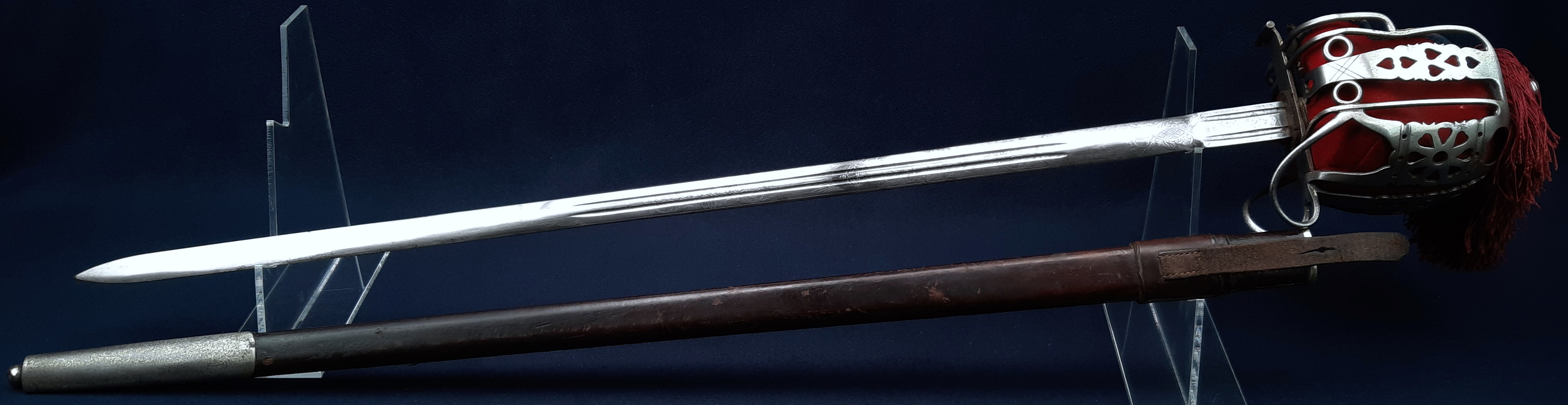
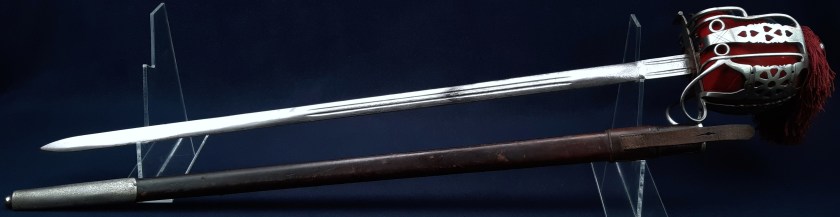
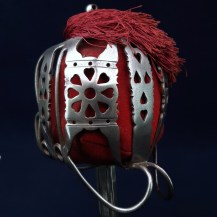
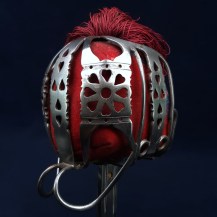
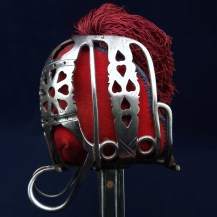
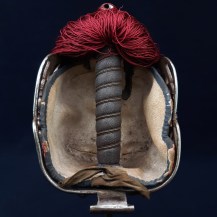
Scottish WW1 1828 Pattern Infantry Officer's Basket Hilt Broadsword of Major Eric Archibald Jeffrey Hunter, Highland Light Infantry and King’s African Rifles
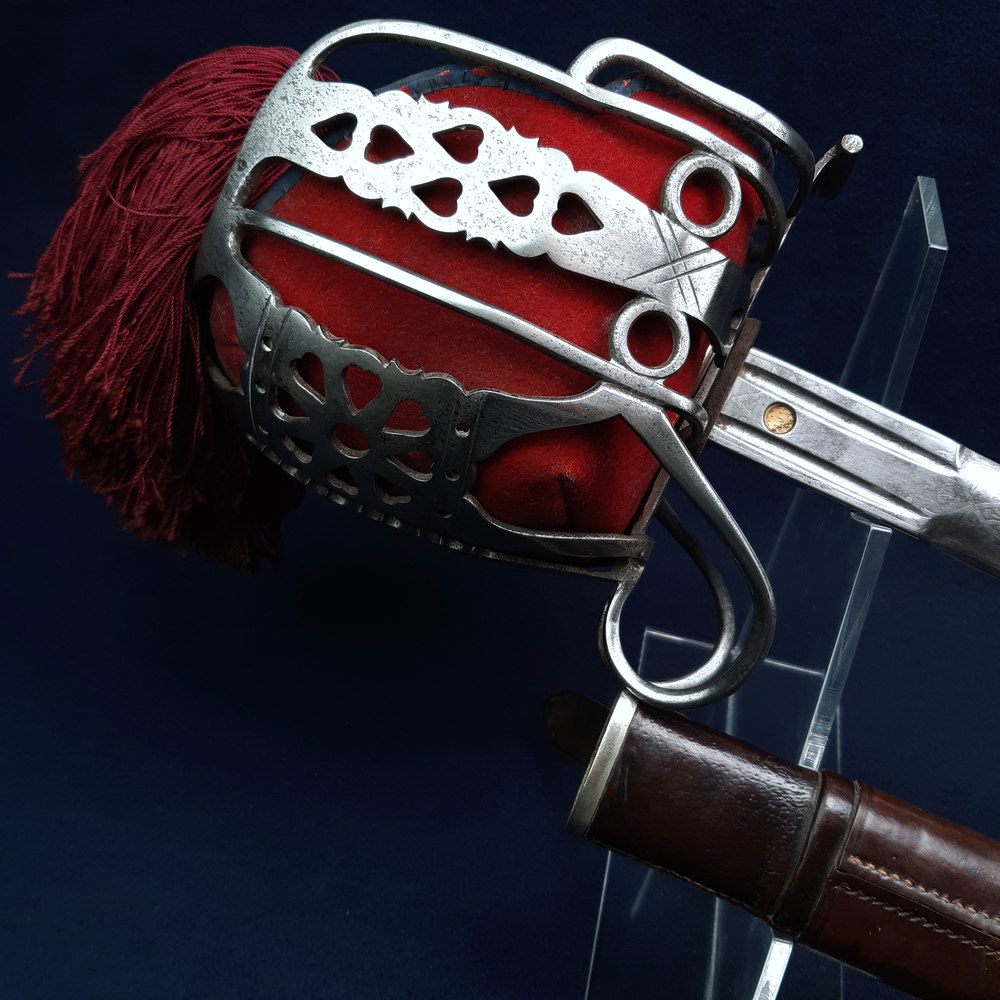
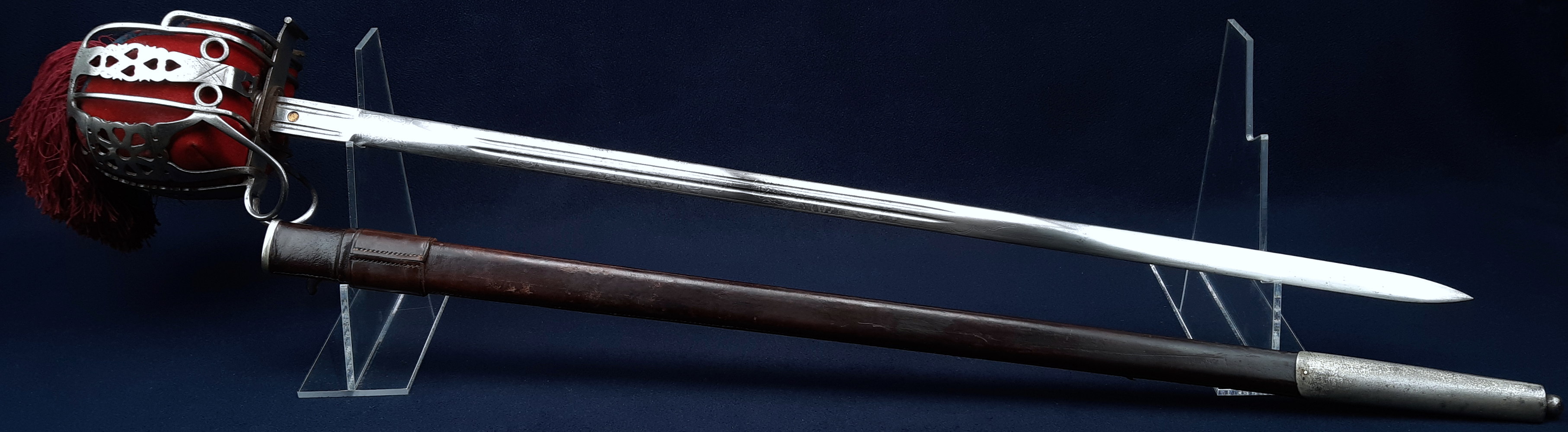
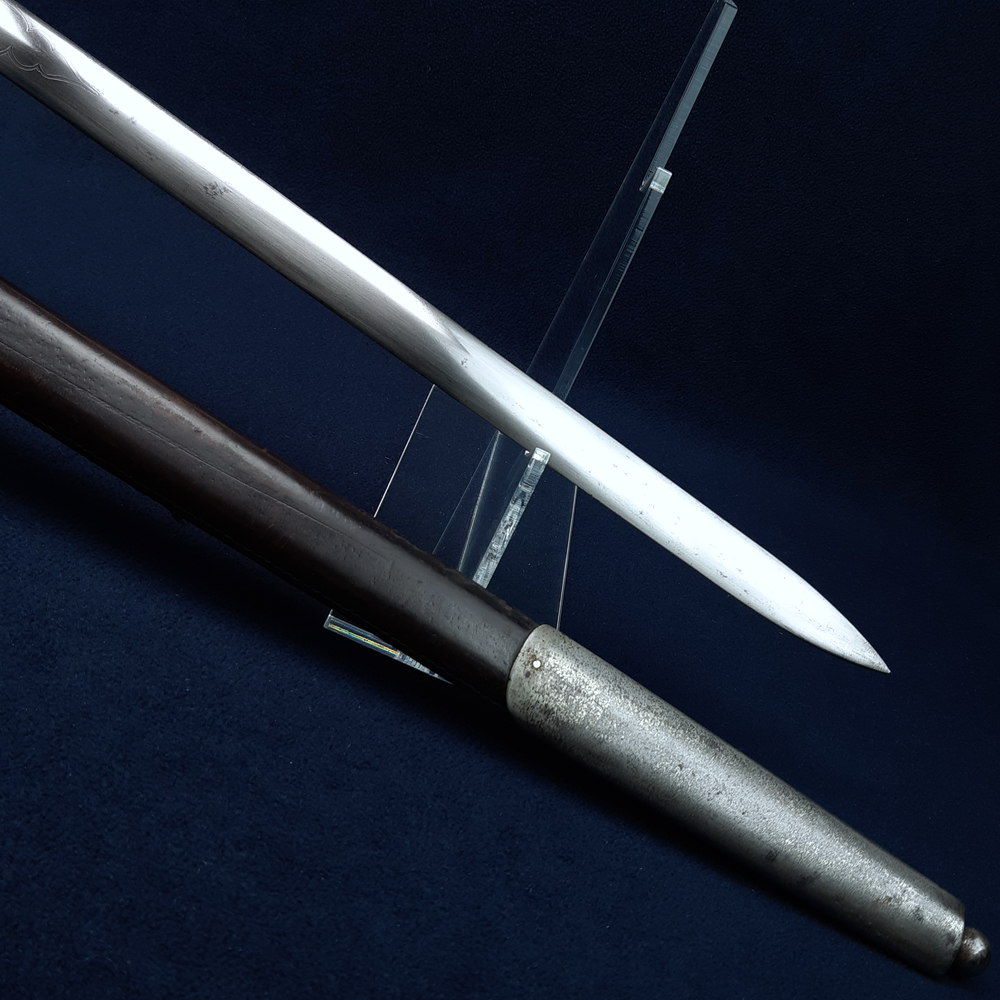
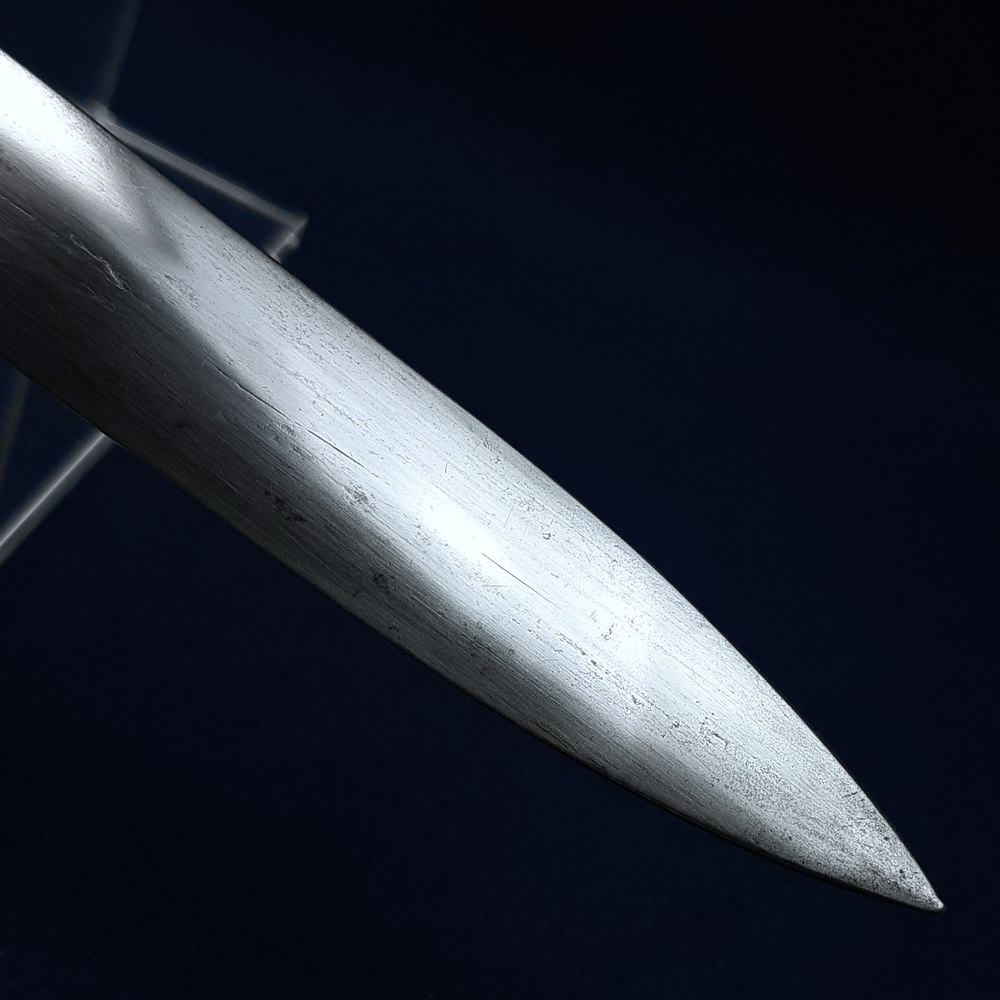
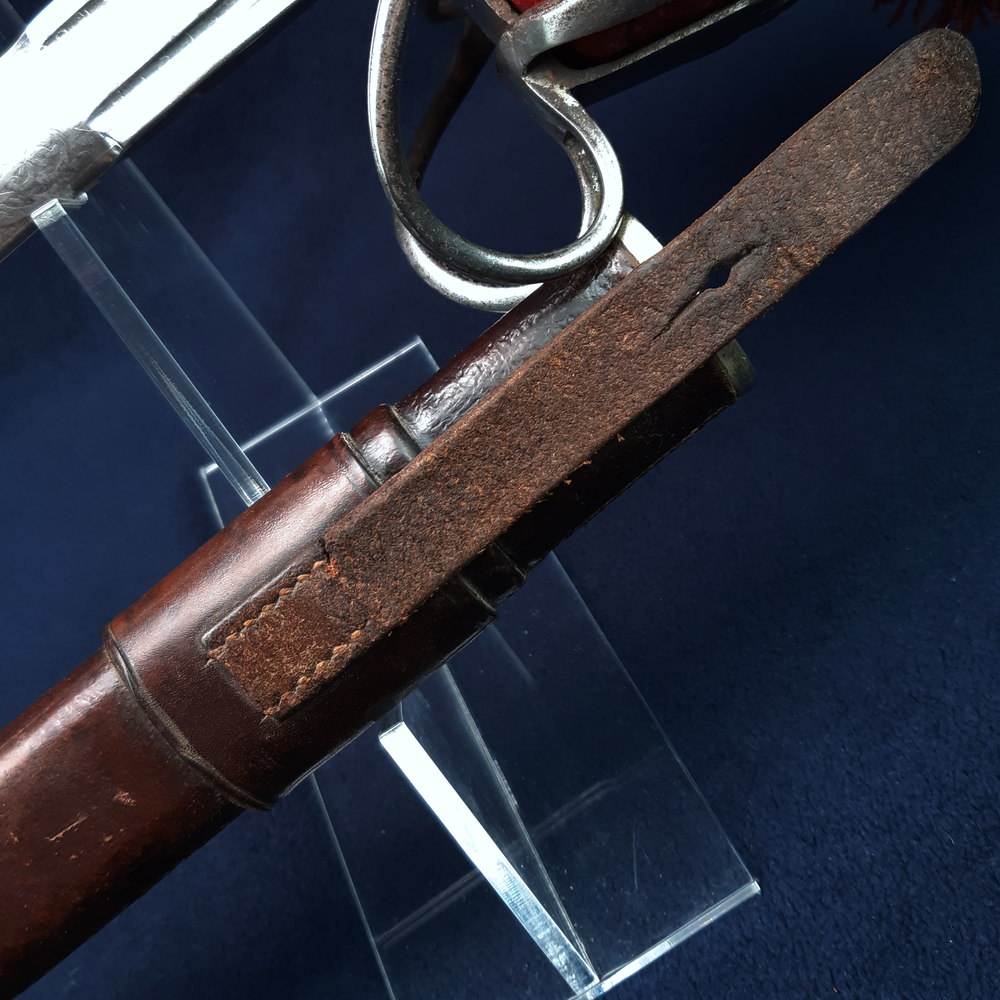
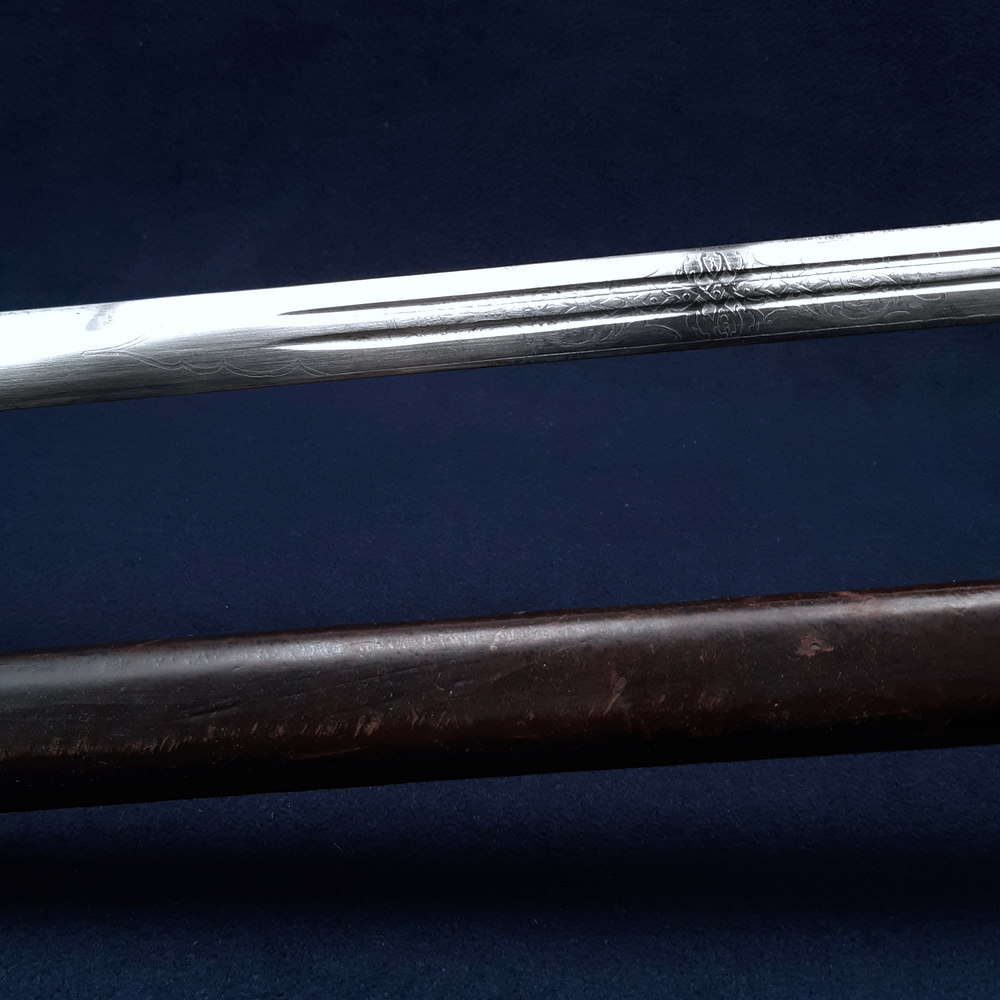
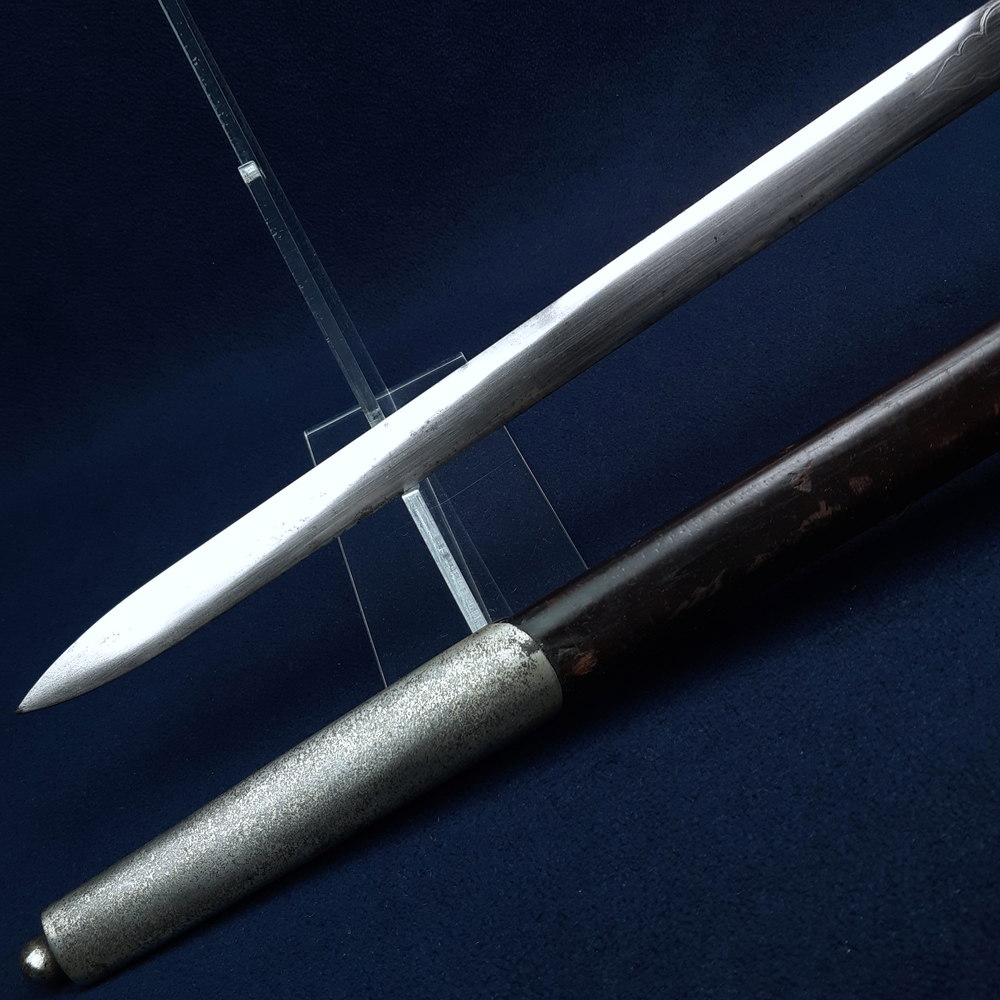
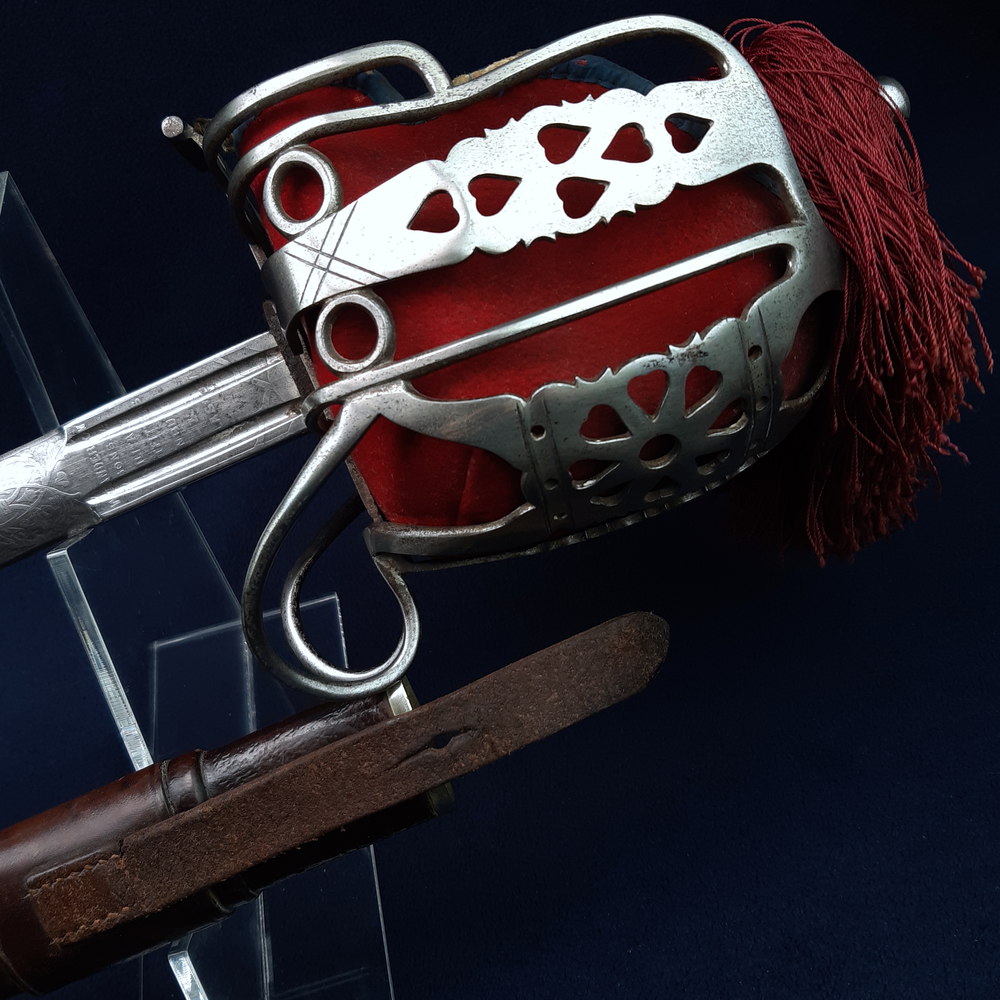
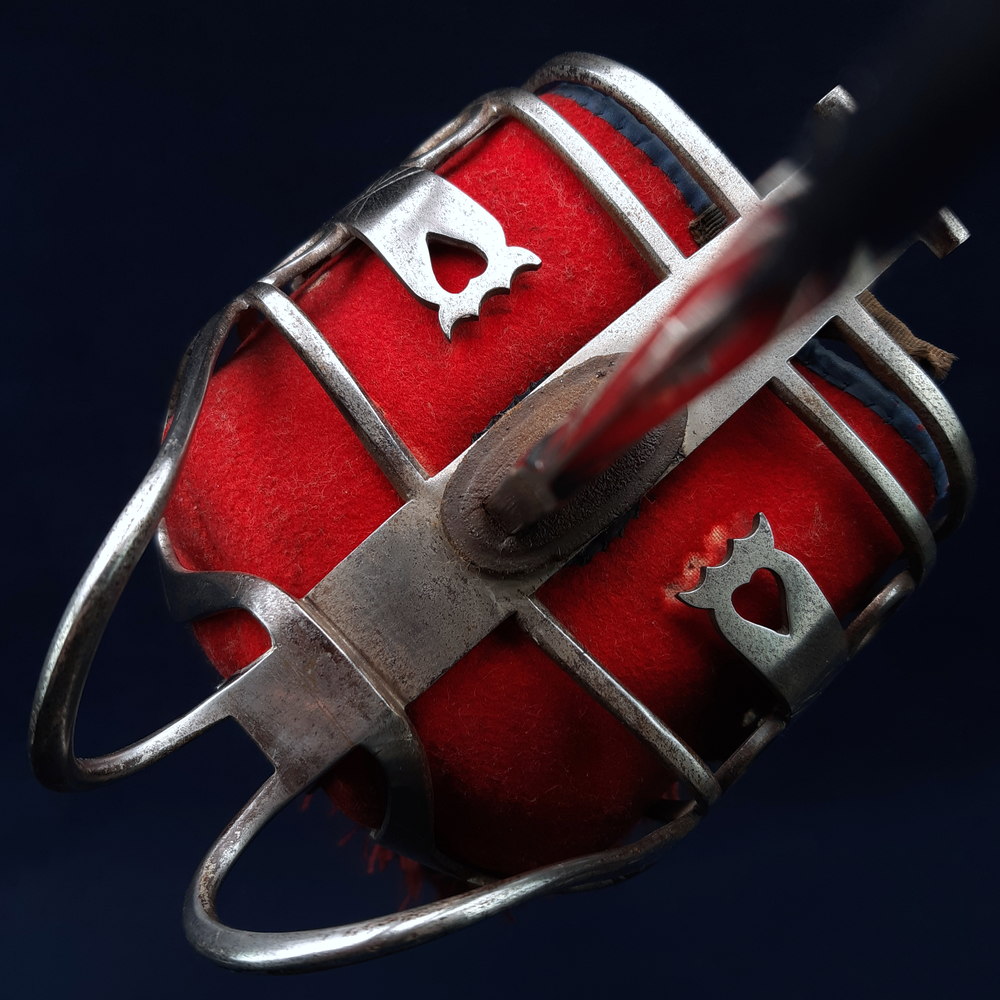
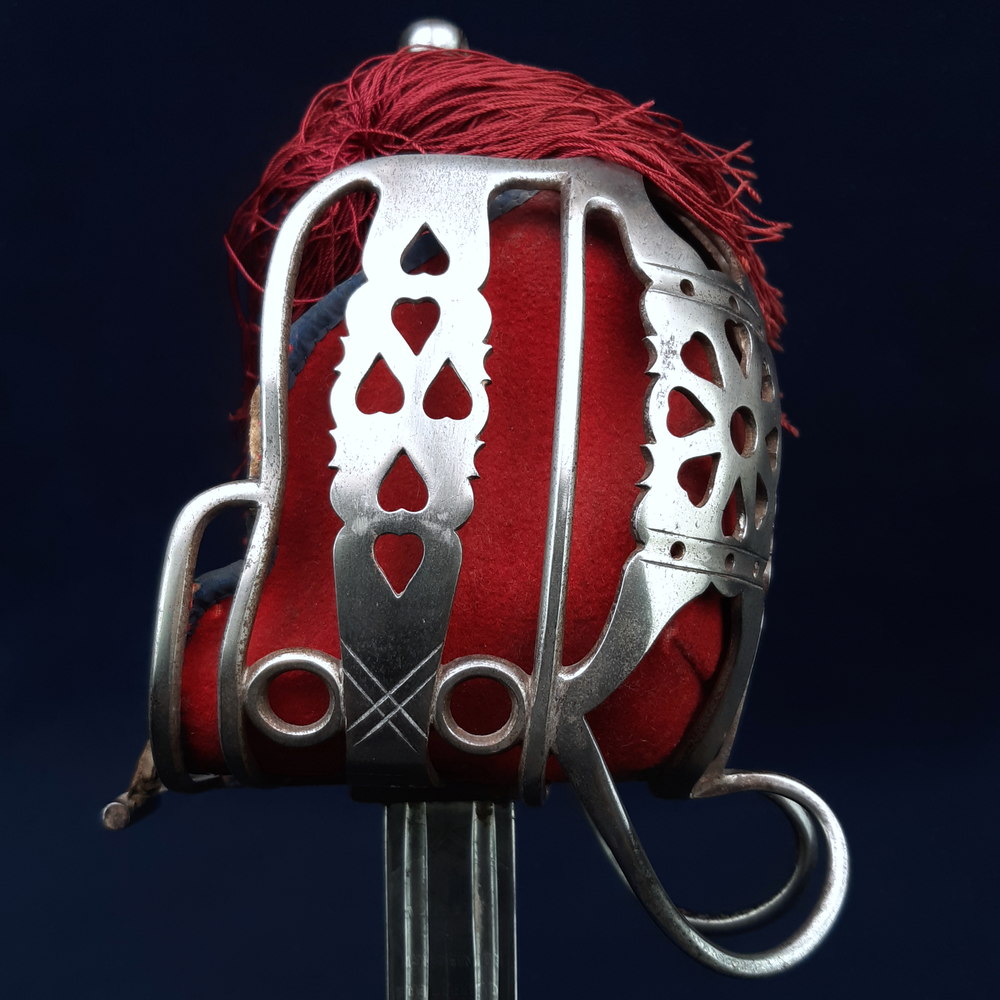
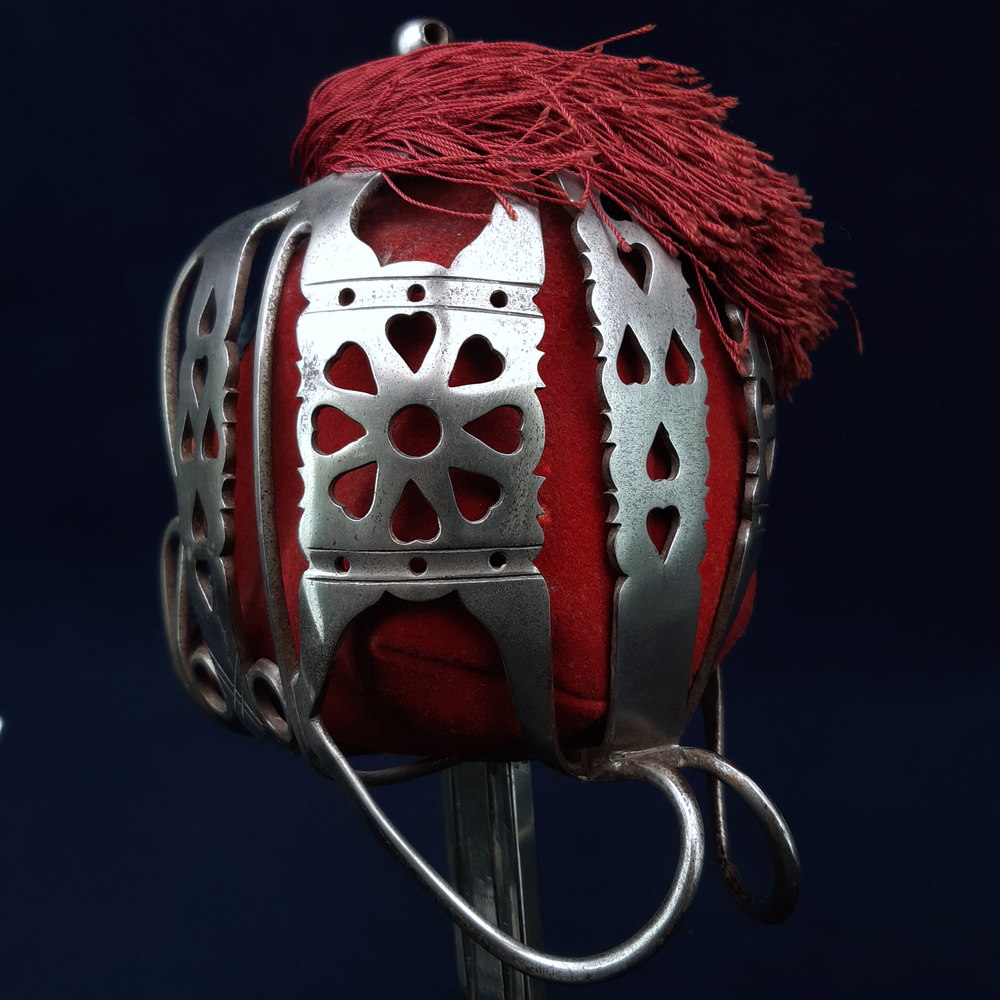
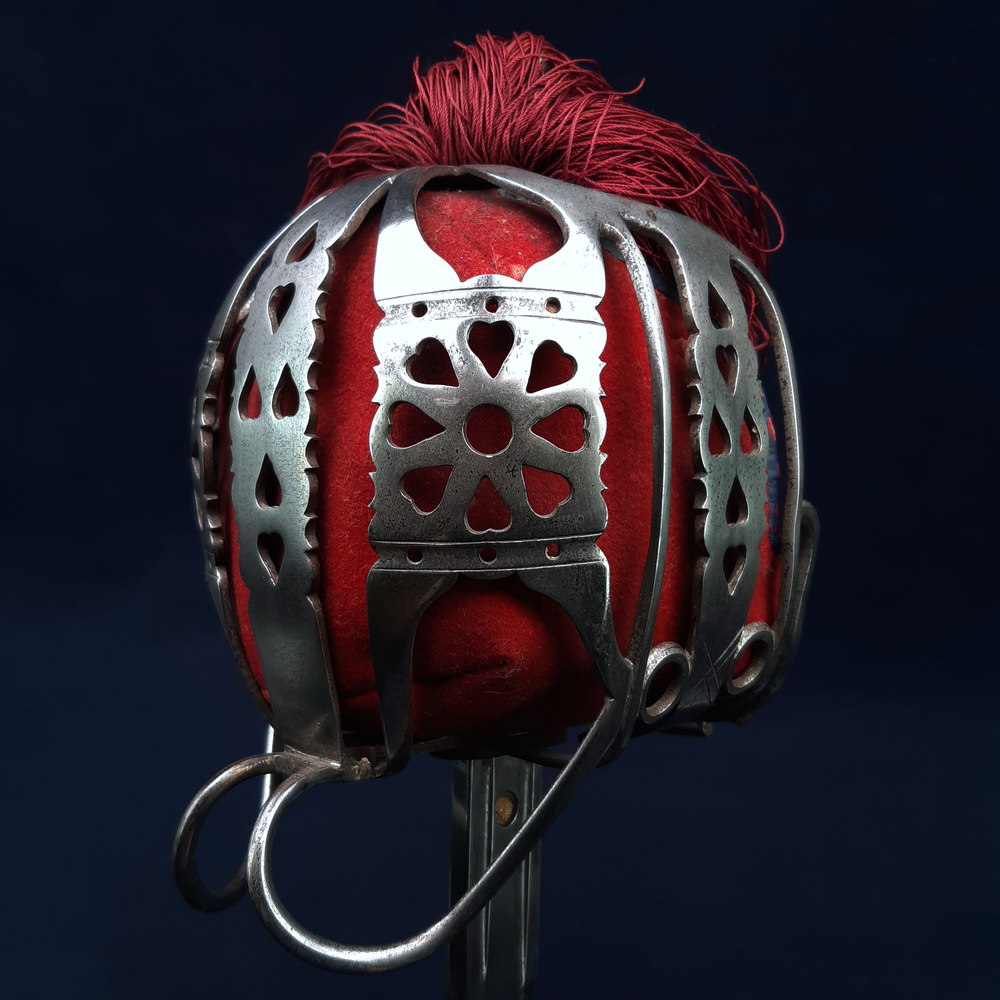
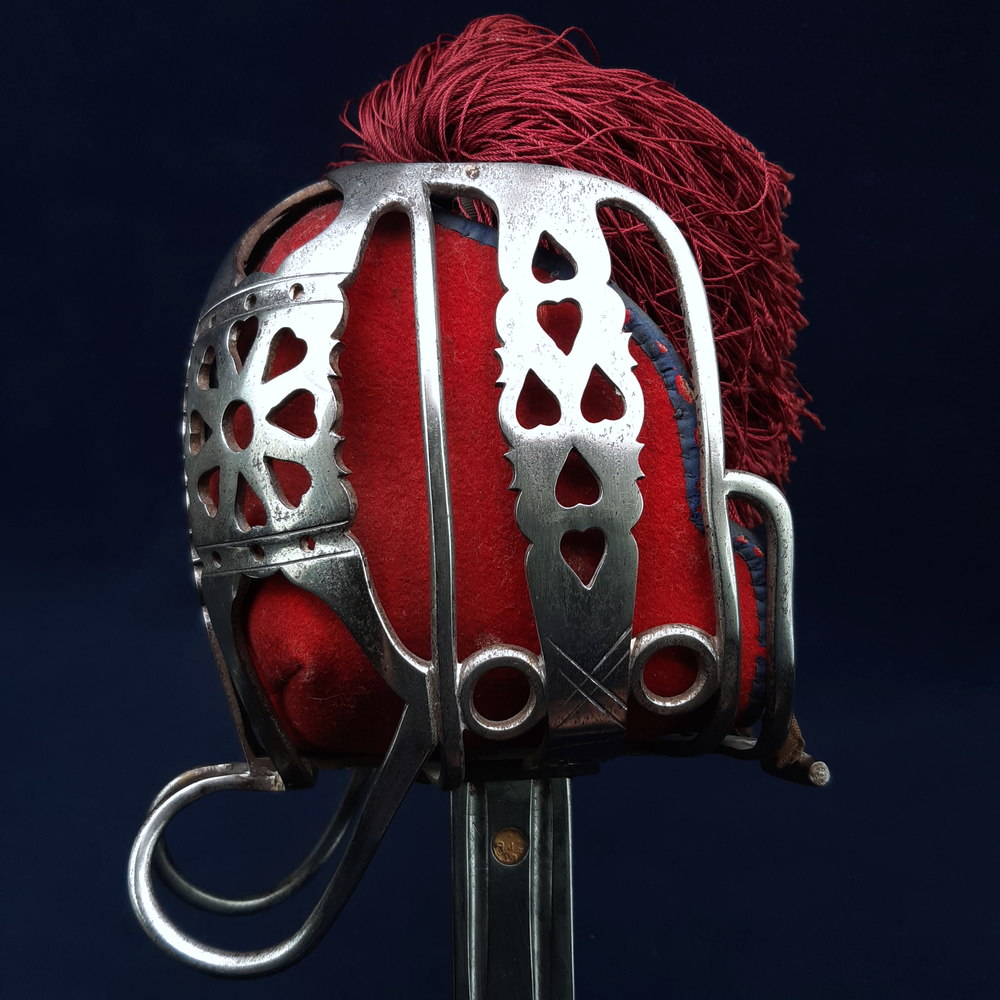
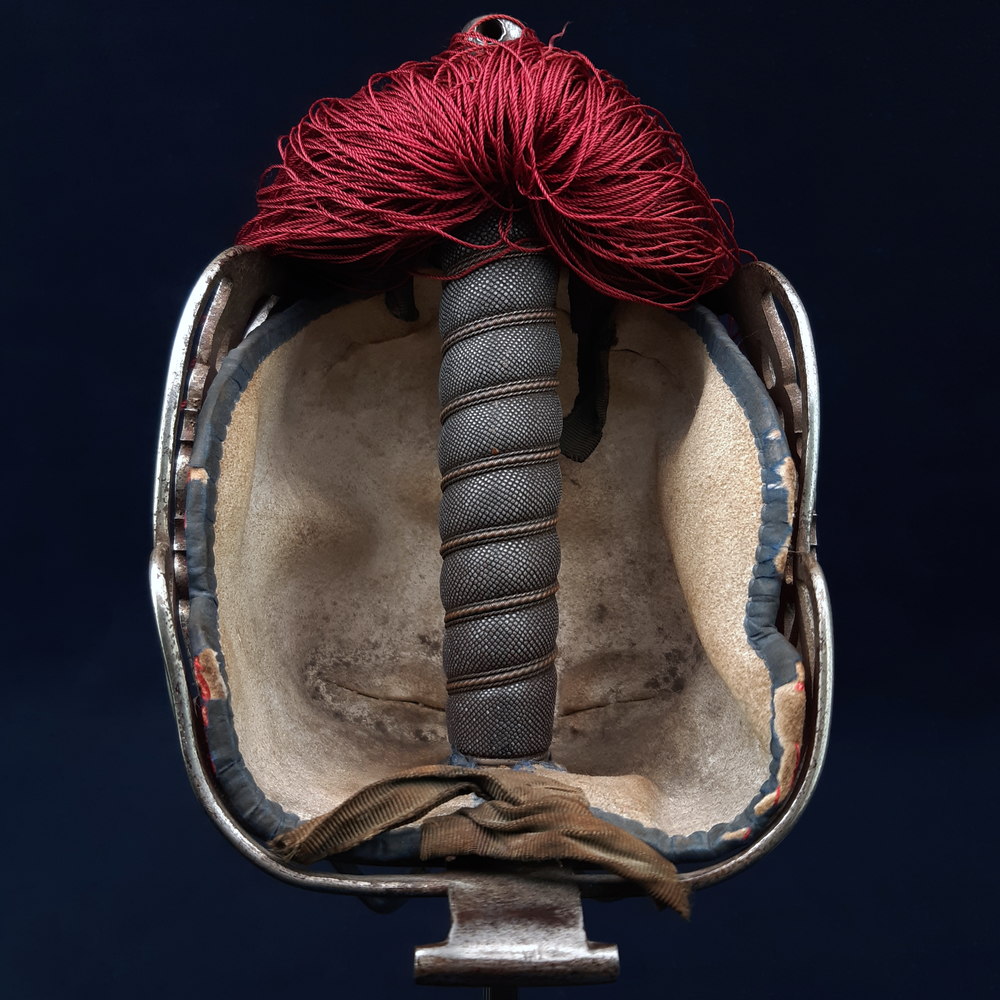
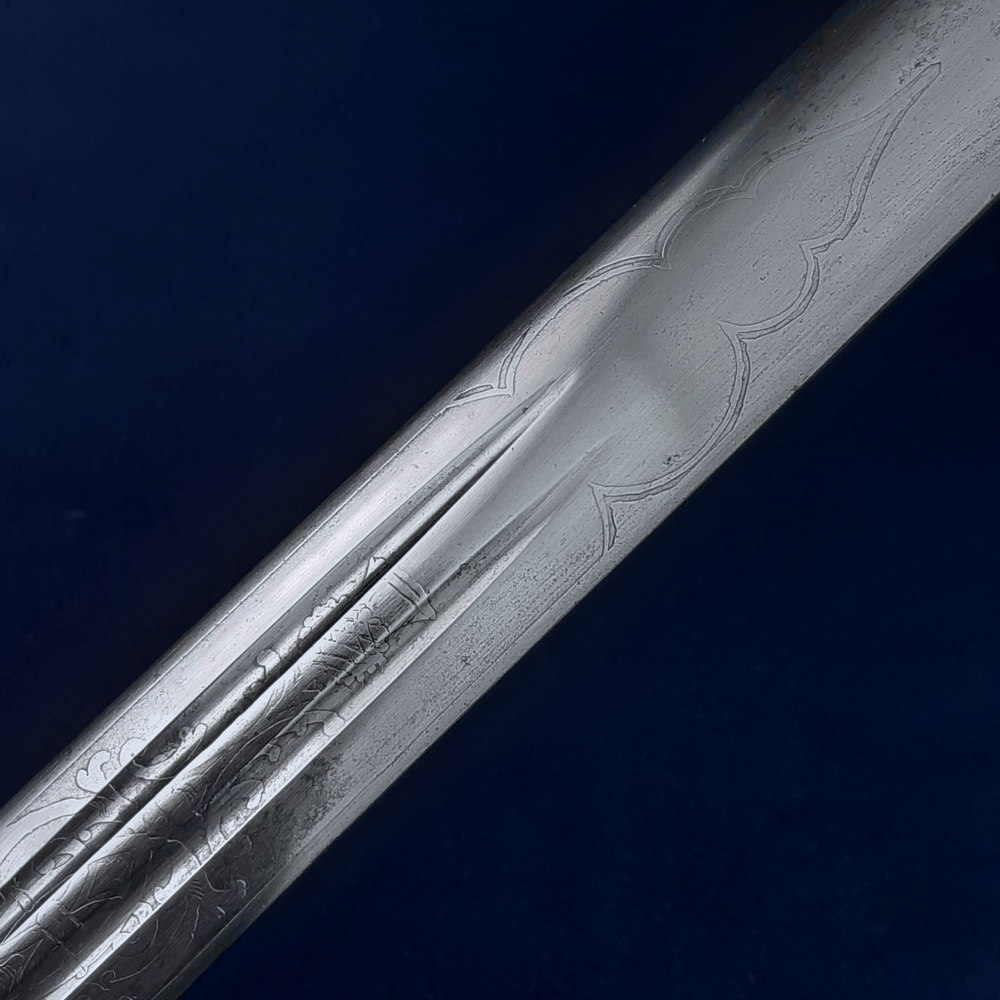
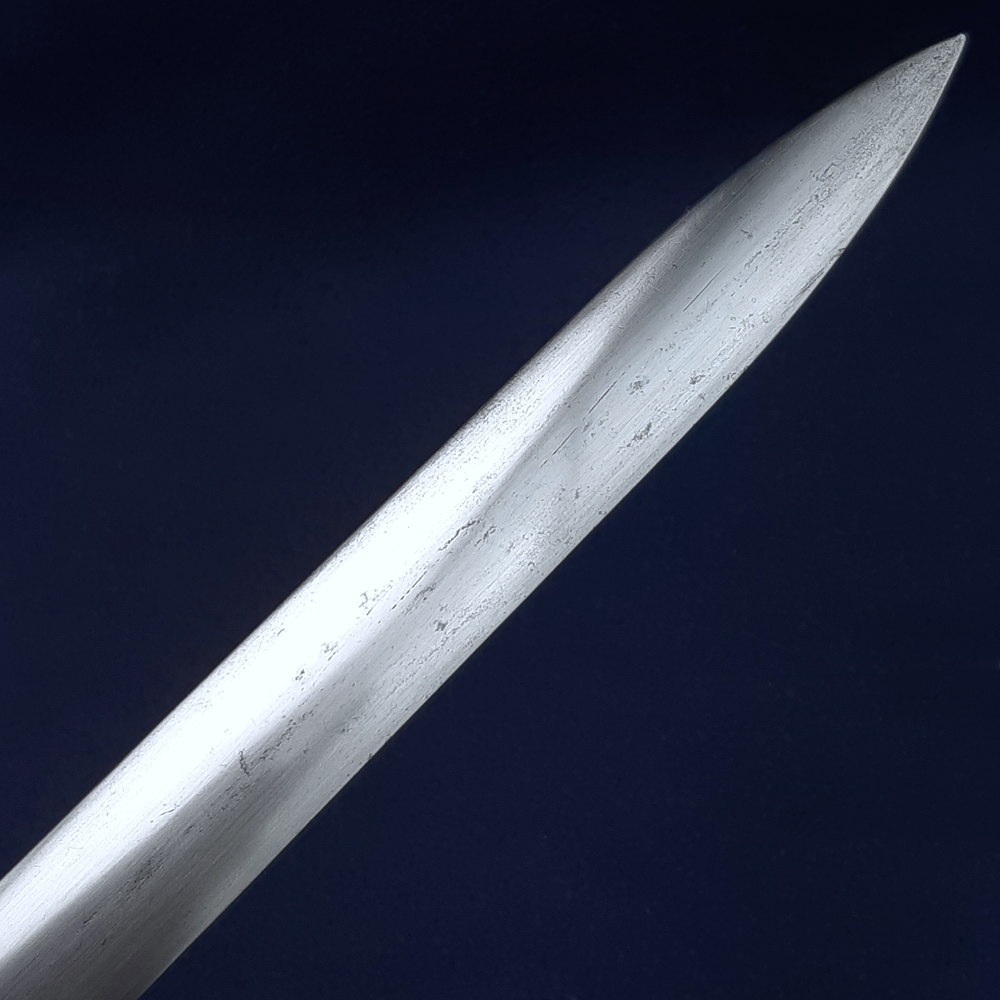
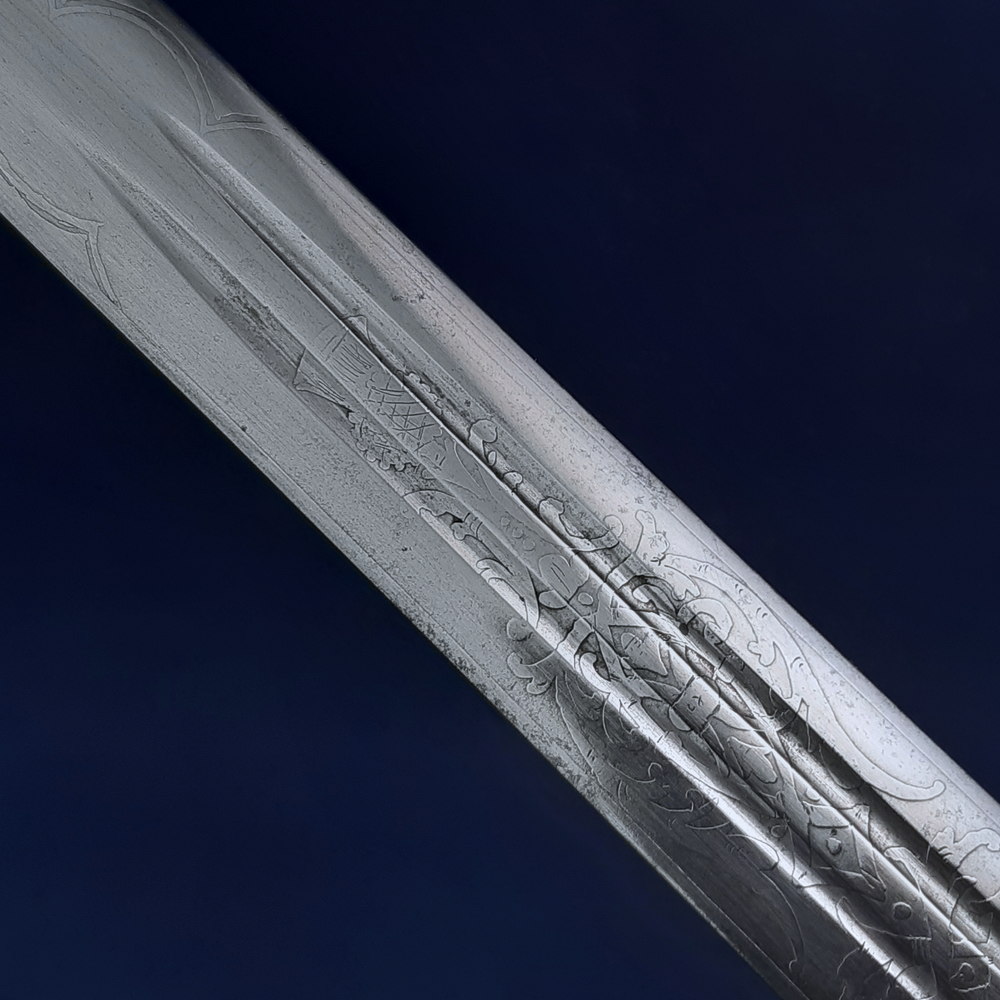
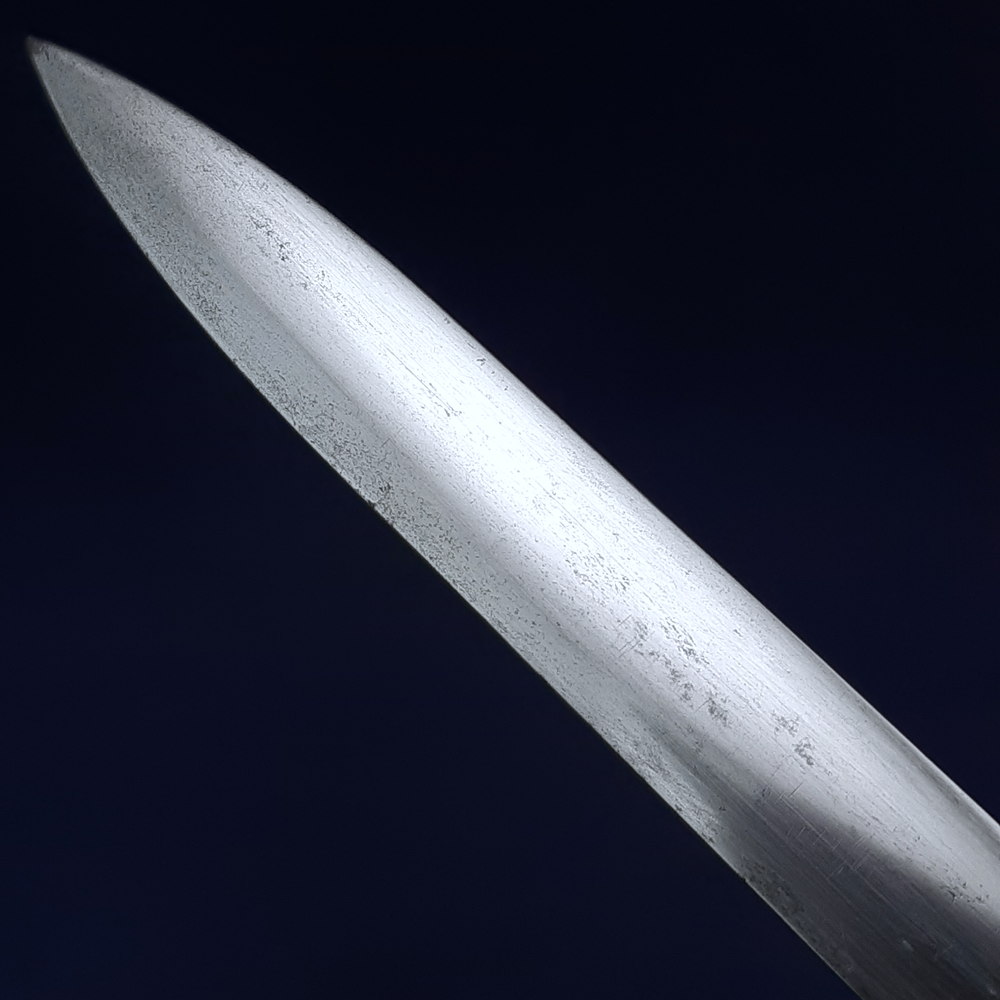
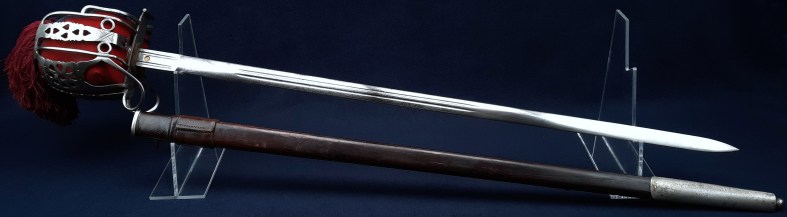
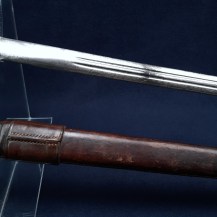
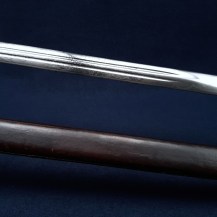
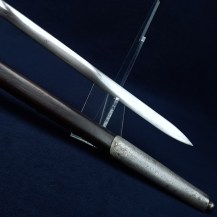
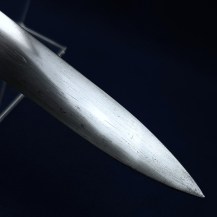
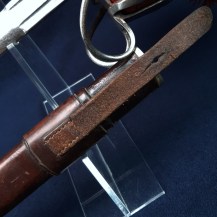
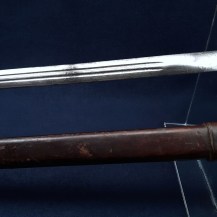
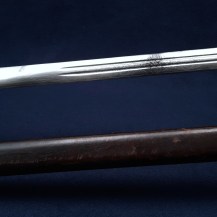
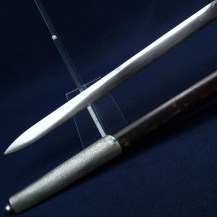
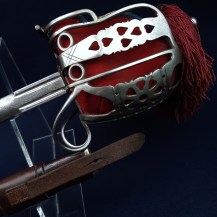
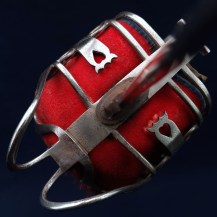
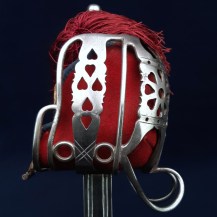
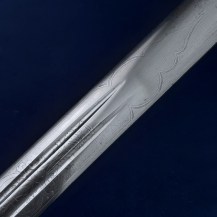
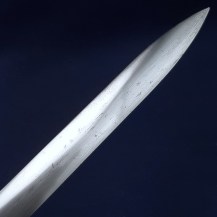
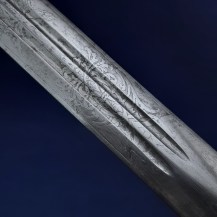
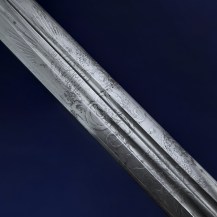
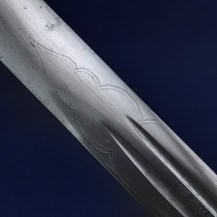
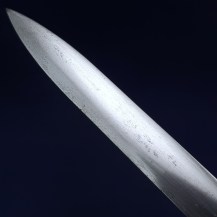
Straight spear-pointed blade with double central fullers and two short fullers at the ricasso. Steel pierced basket hilt, brown leather washer, red fabric hilt liner with white leather inner and blue silk edging. Spiral grip of wood covered with shagreen bound with wire, steel ferrule and pommel cap, fringe of red silk thread. Leather field scabbard with frog strap, nonferrous throat piece, probably brass, steel chape piece with ball finial. Blade 33 inches in length, the sword 39½ inches overall.
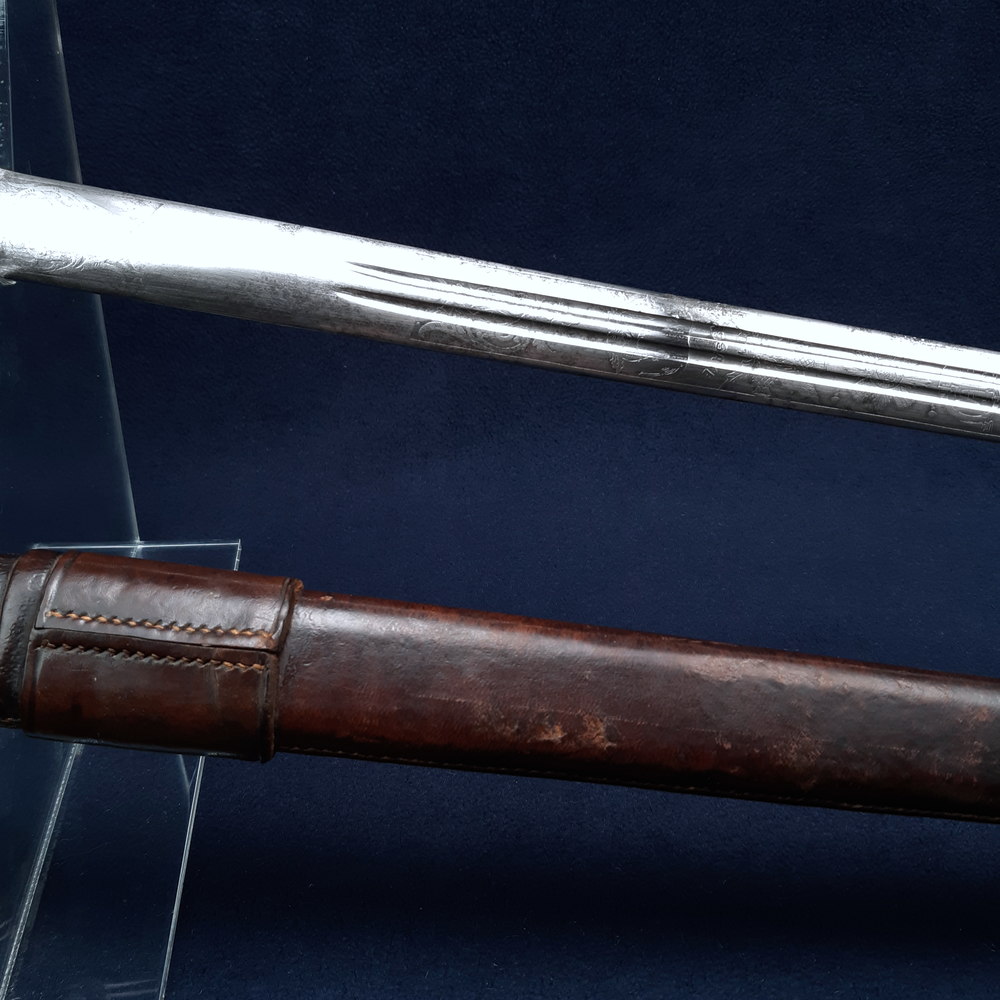
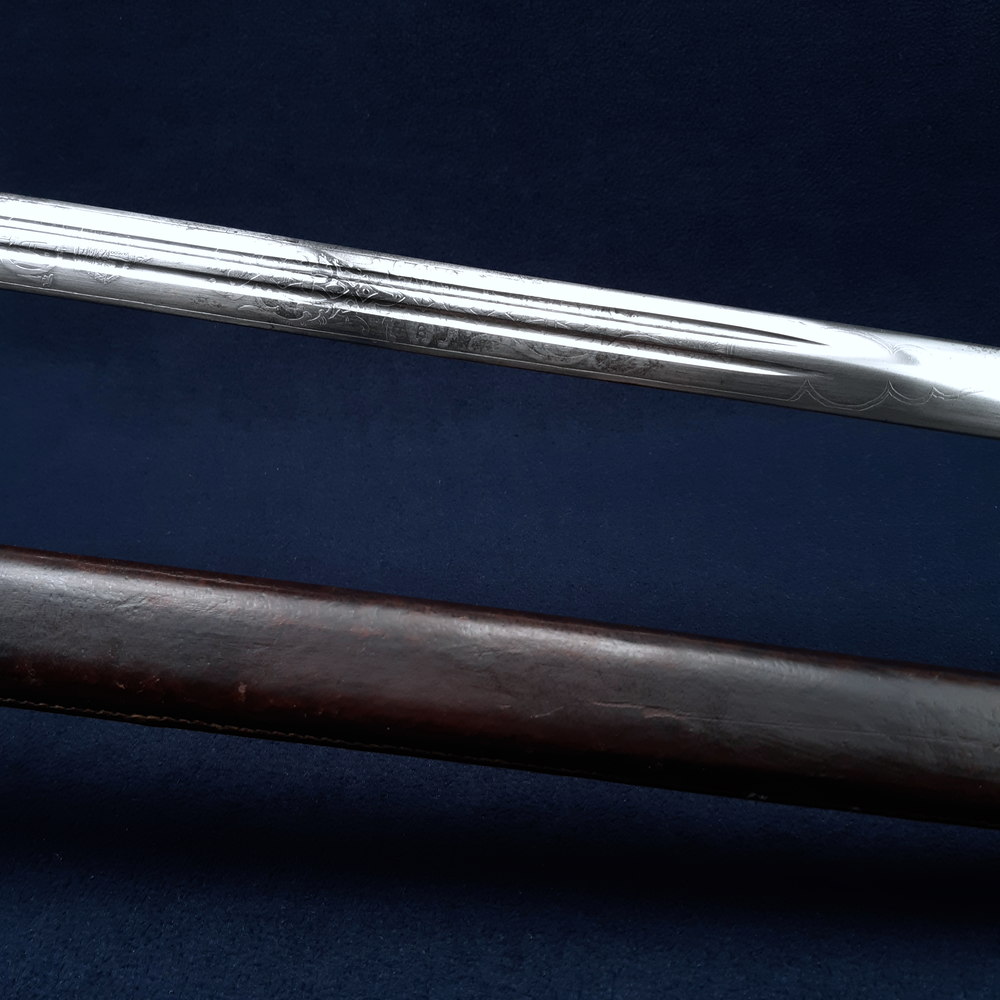
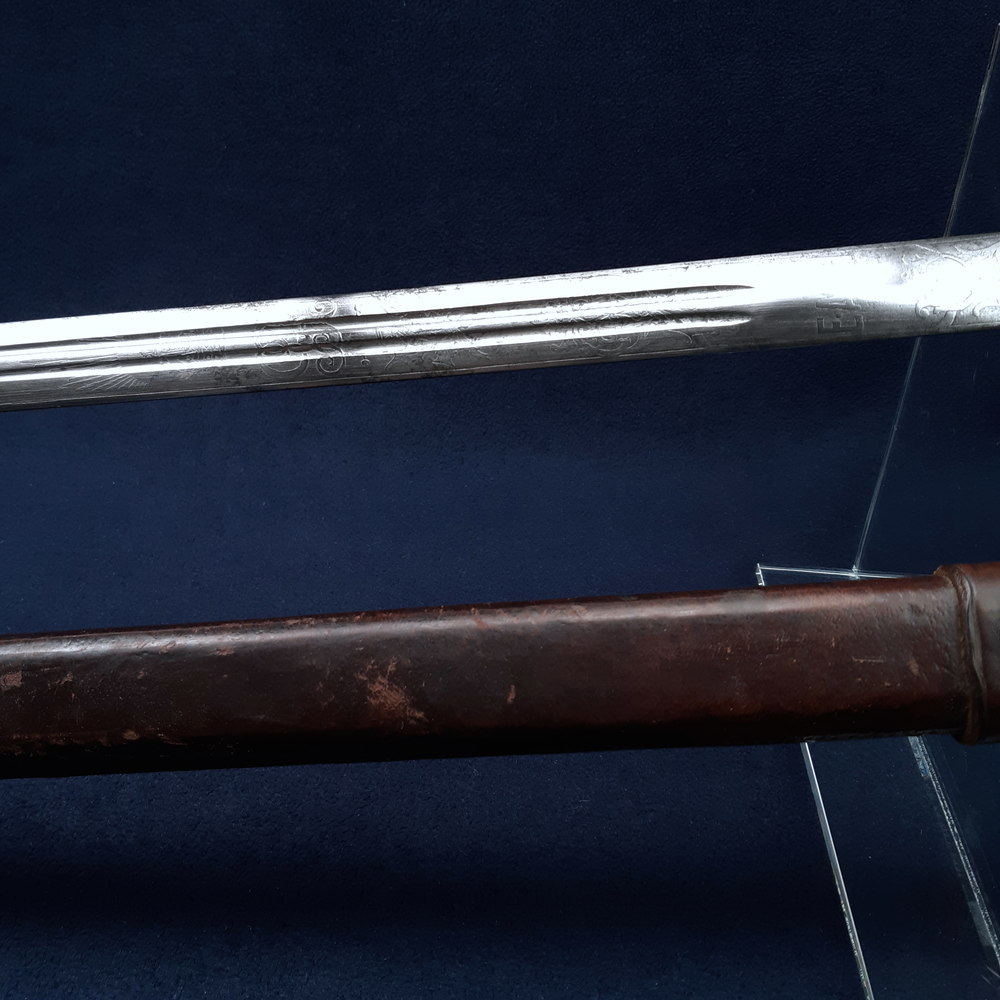
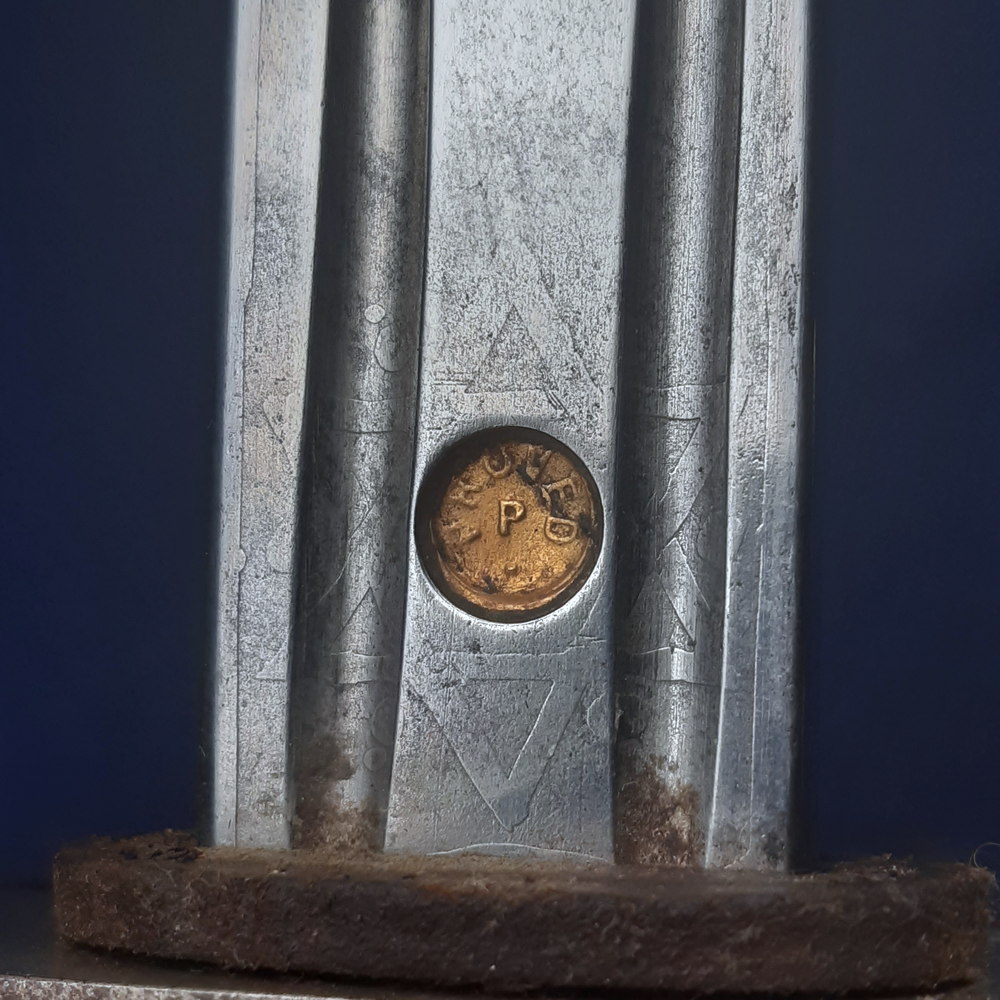
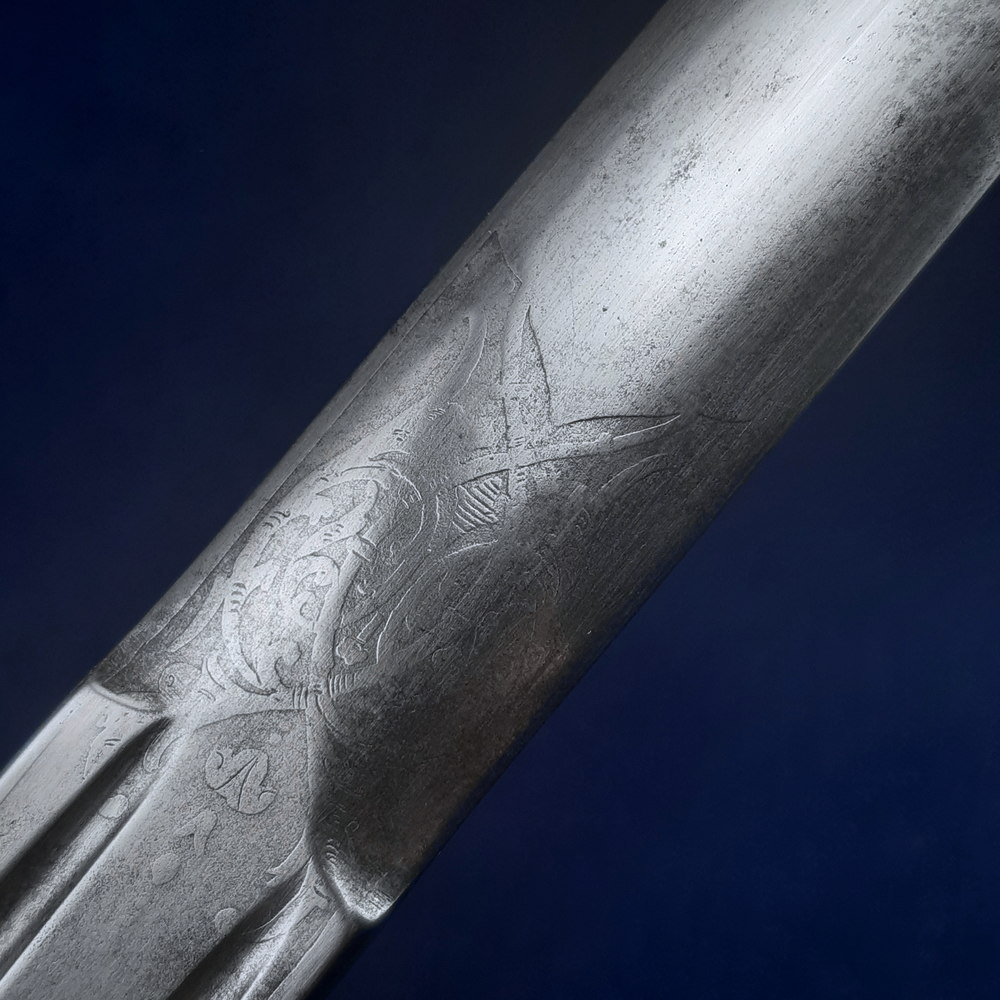
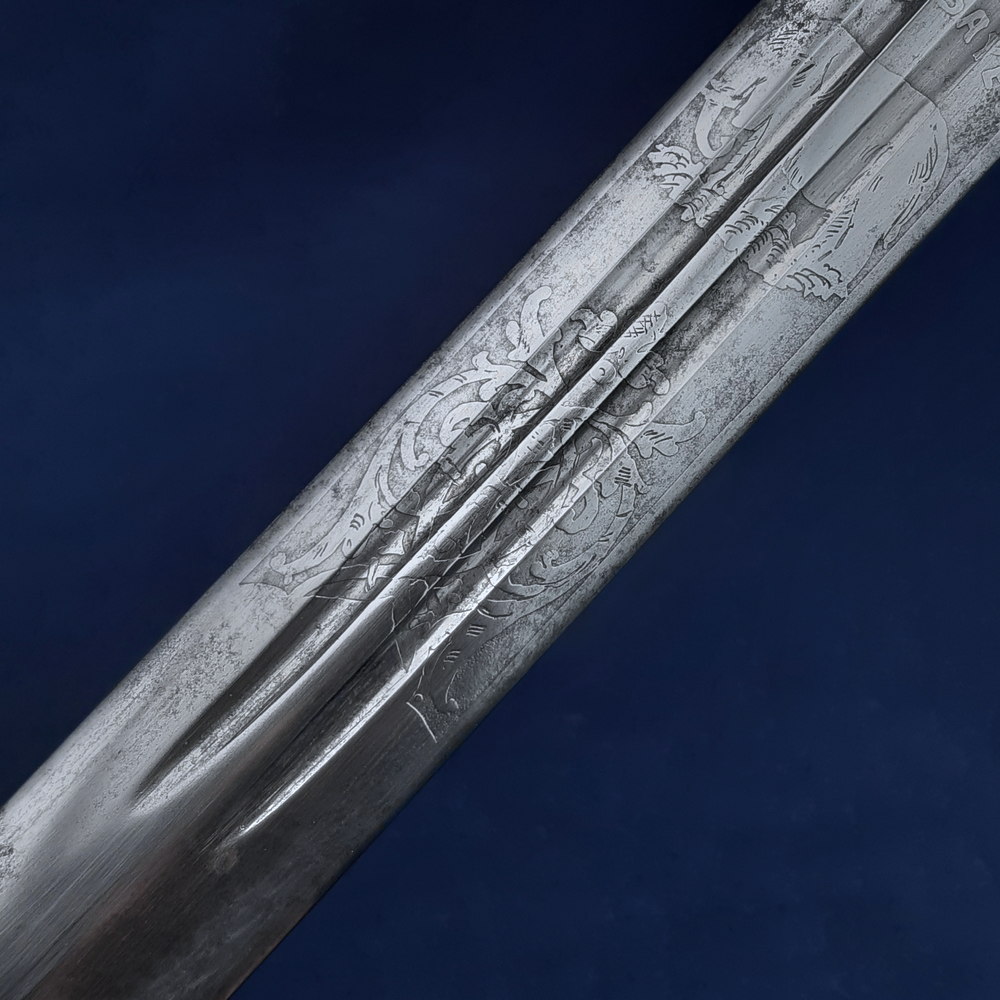
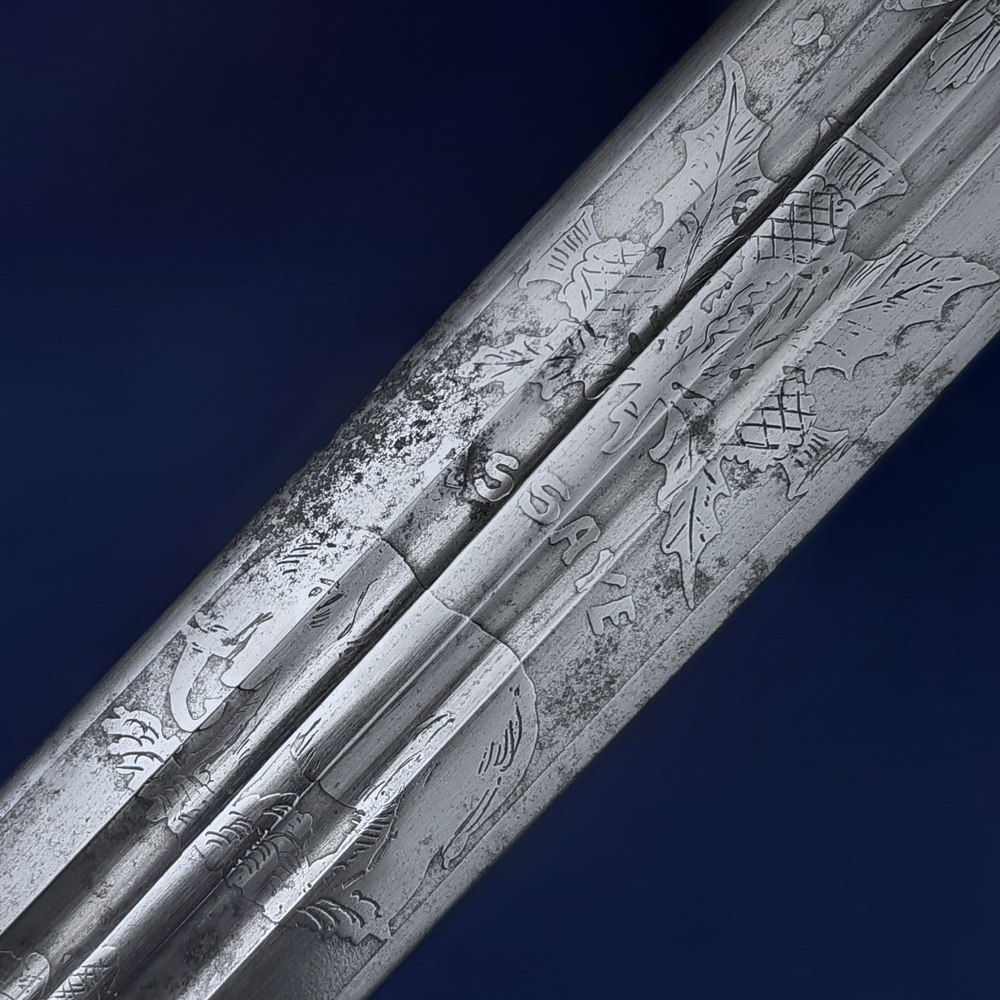
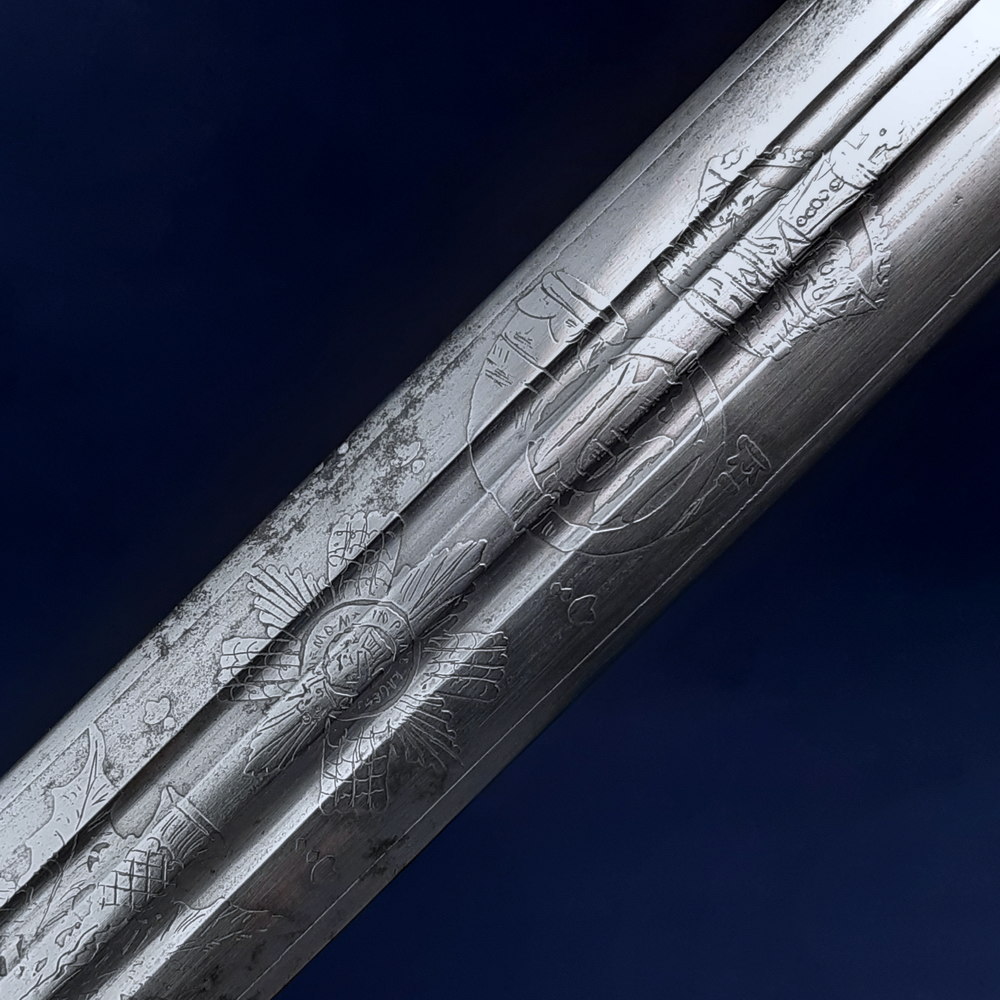
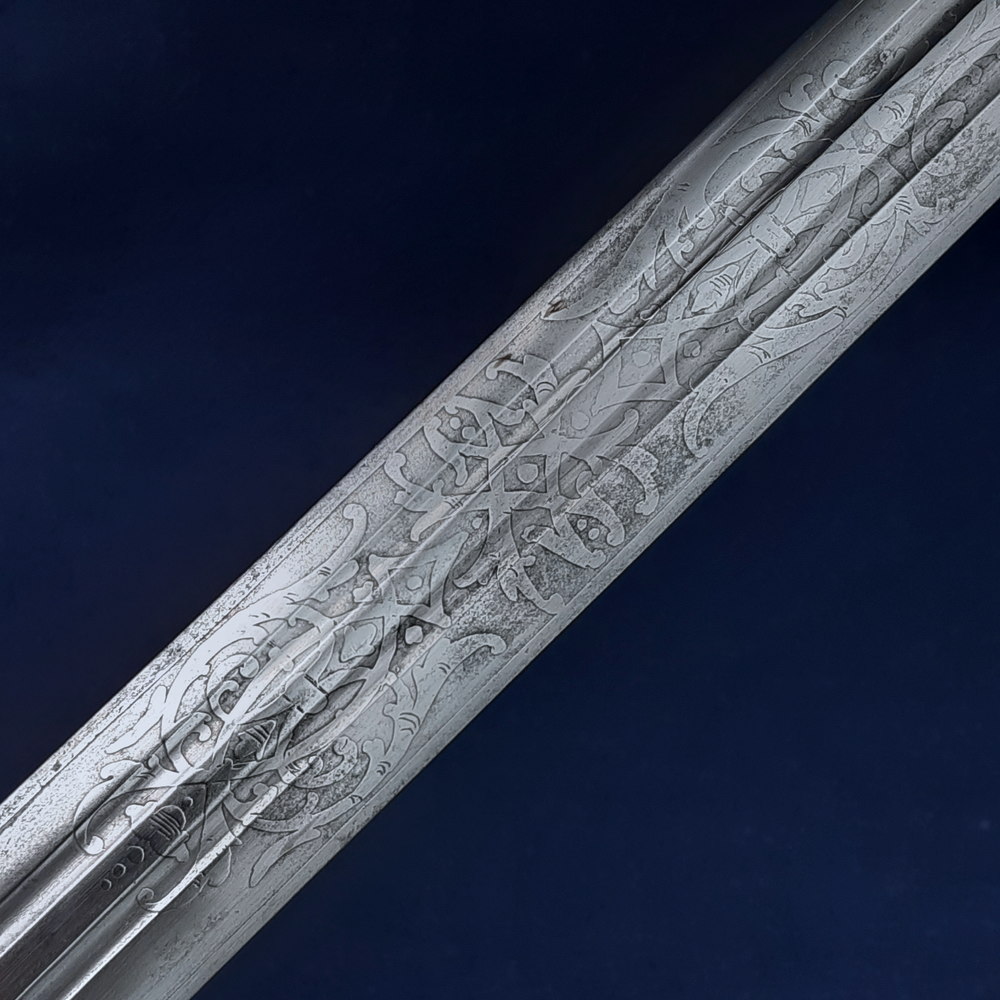
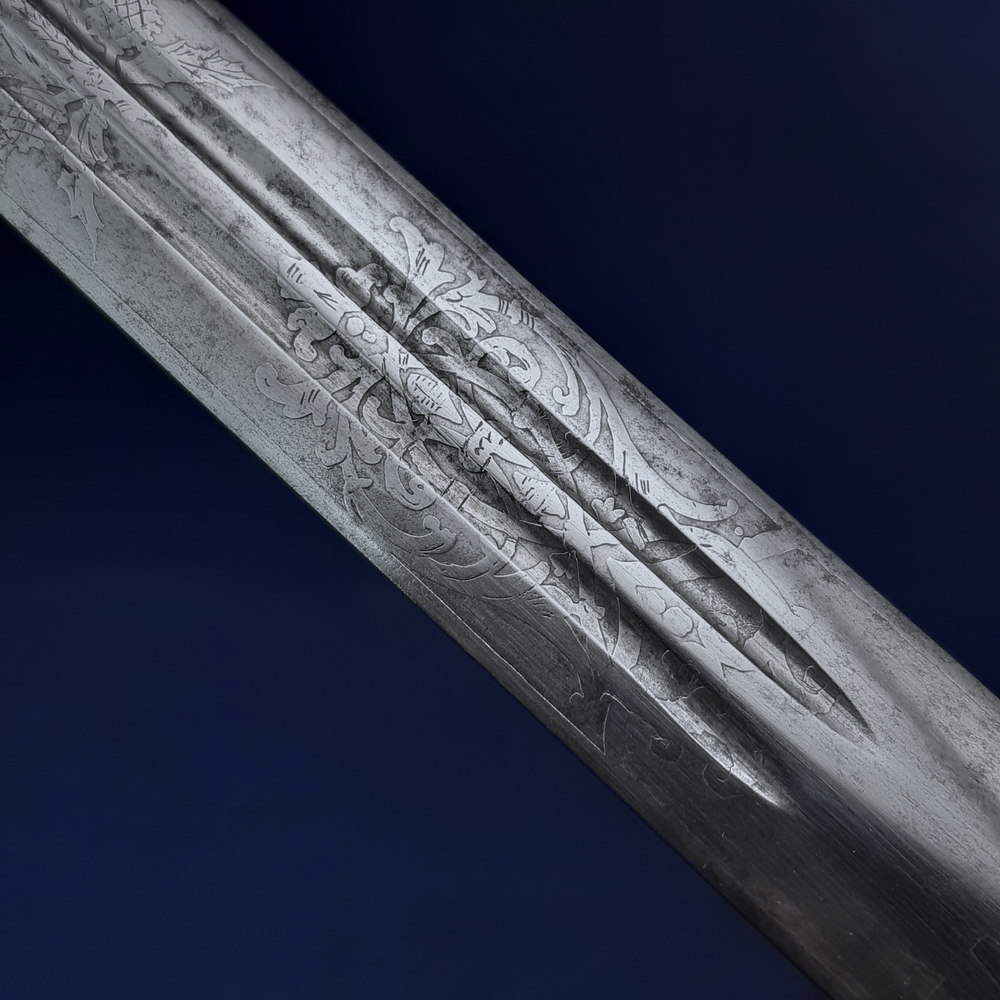
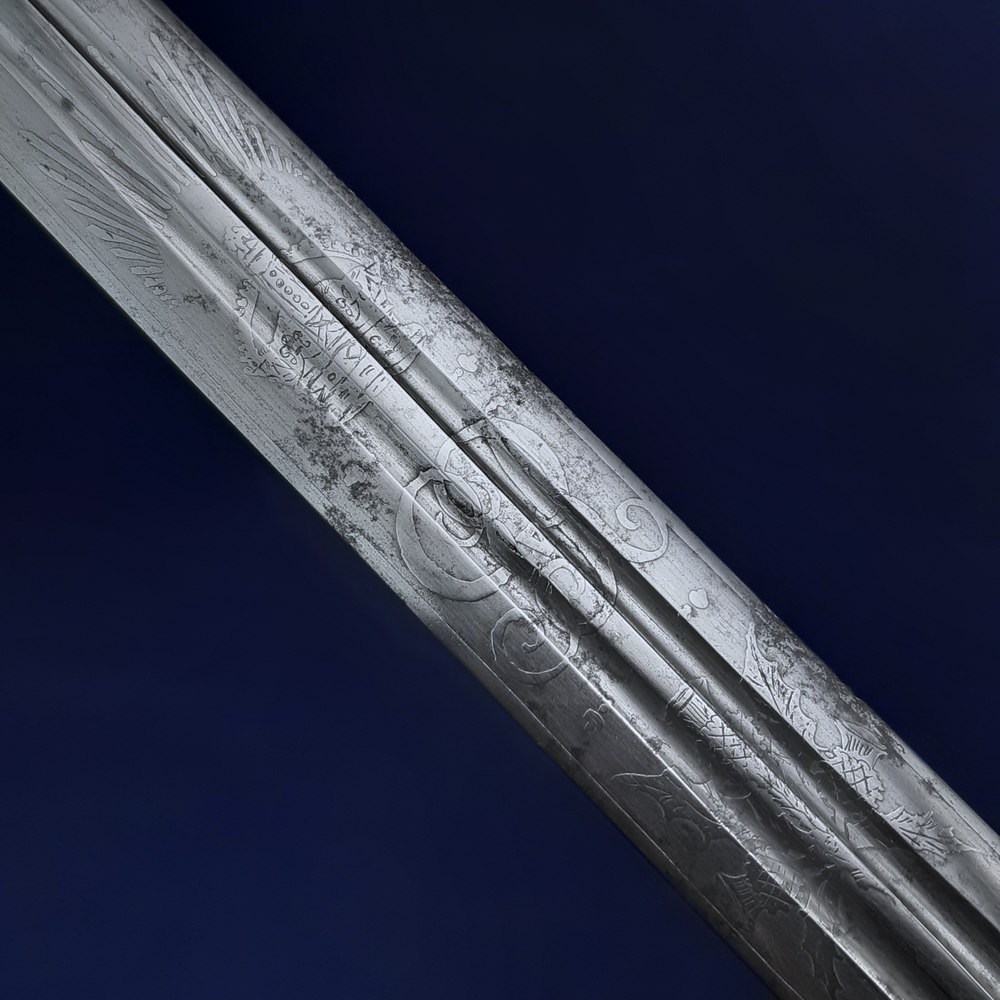
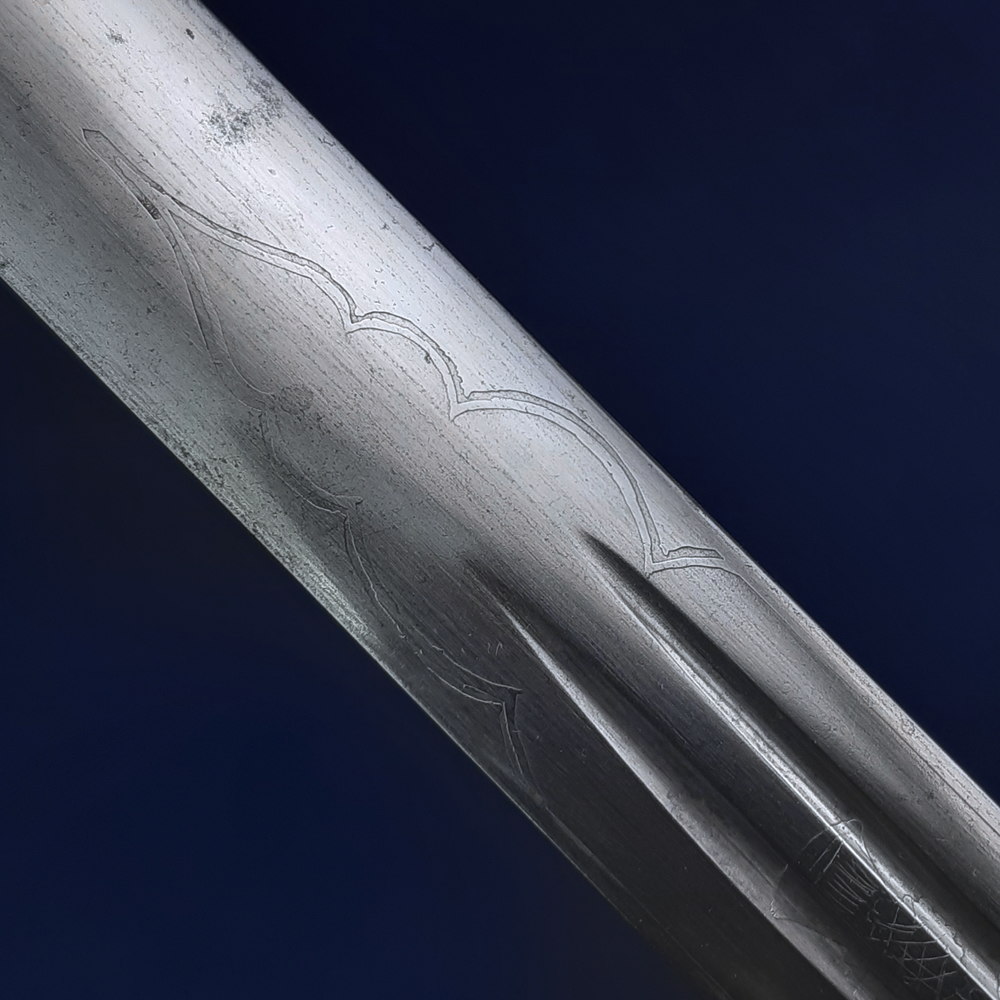
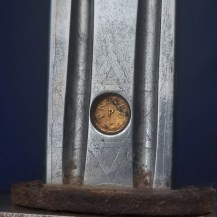
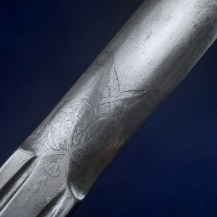
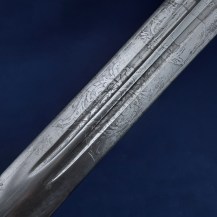
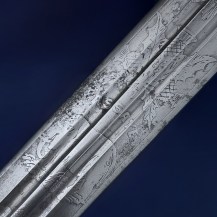
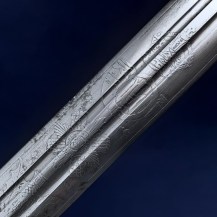
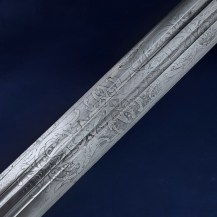
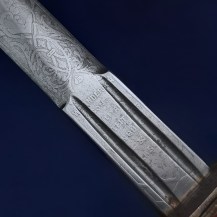
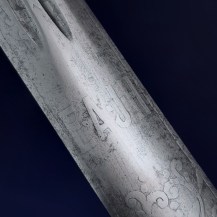
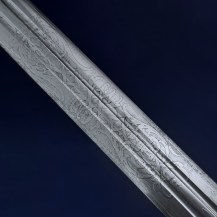
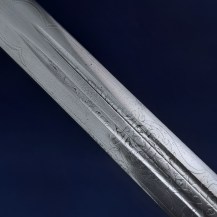
On one side at the ricasso is a brass proof slug reading ‘PROVED P’, set within an etched six-pointed star. The blade is further etched on that side with the royal crown and several badges of the Highland Light Infantry: a strung bugle with HLI monogram placed within the loop of the bugle, a saltire & rayed star with a small thistle and garter placed in the centre, a group of thistles, and an elephant with the text ‘ASSAYE’. Around these are foliate motifs including more thistles.
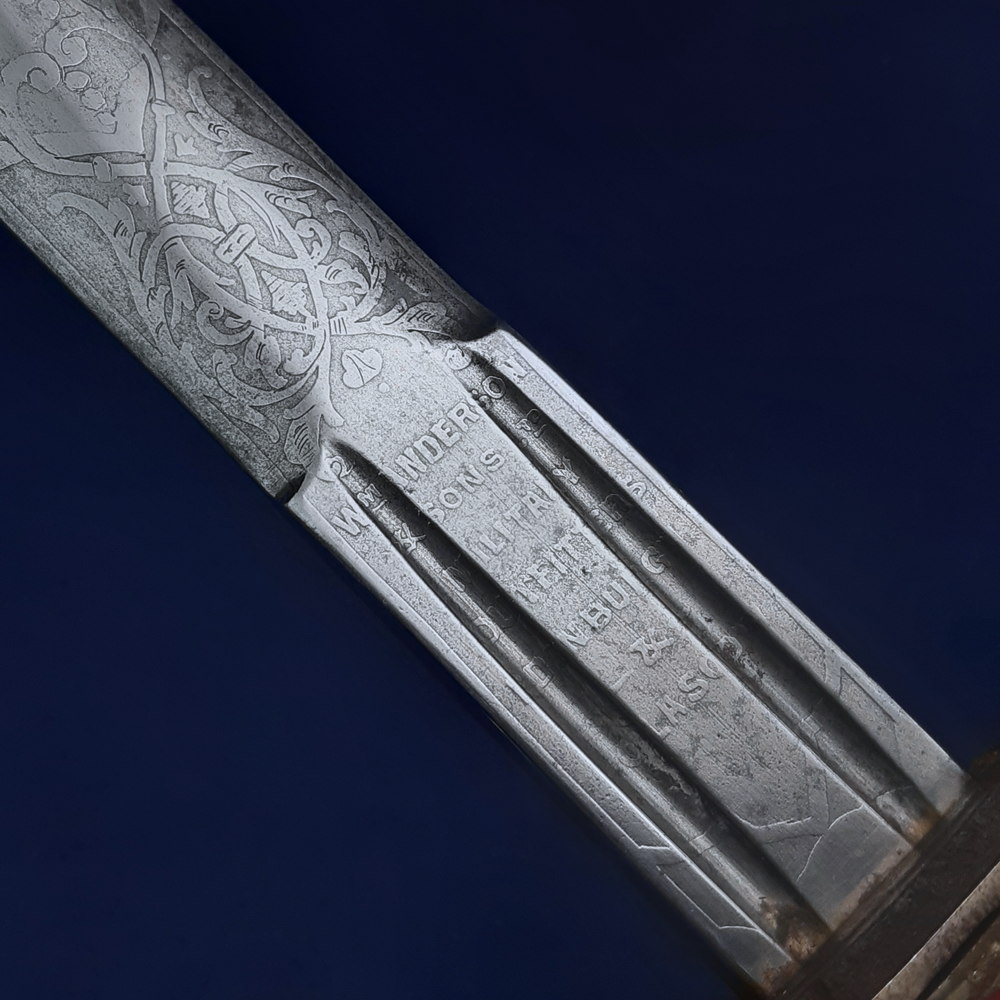
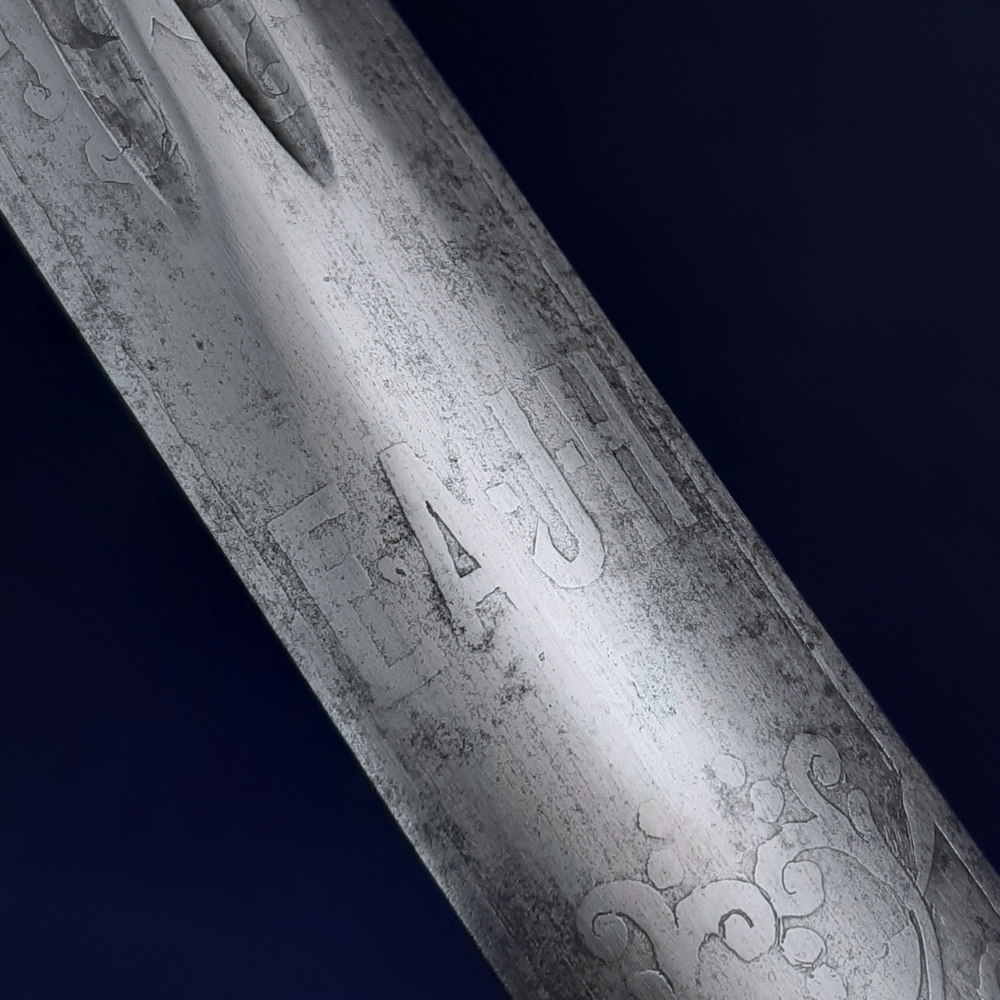
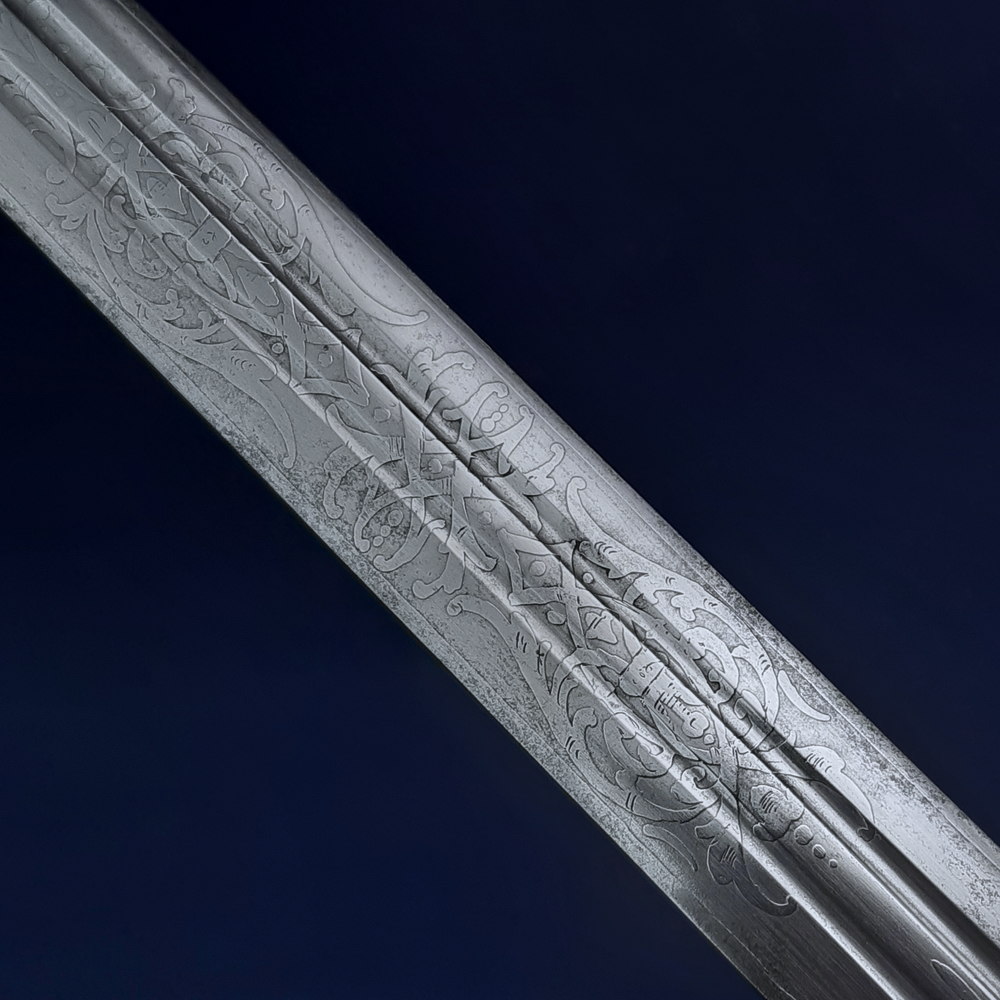
The blade is etched on the other side at the ricasso with the retailer’s mark ‘WM ANDERSON & SONS LTD MILITARY OUTFITTERS EDINBURGH & GLASGOW’. The blade is further etched on that side with the owner’s initials ‘E.A.J.H.’, the crown and cypher of King George V, and foliate motifs including thistles.
William Anderson and Sons was a retailer who like many military outfitters resold swords made elsewhere, with their name applied to the blade at the production stage. They operated out of premises on George Street in Edinburgh from 1868 to 1968, also maintaining premises in Glasgow from 1910 to 1956.
Eric Archibald Jeffrey Hunter was born in August 1897 and gained a commission as a probationary 2nd Lieutenant in the Highland Light Infantry in August 1916, having just turned 19. Consulting officer records he appears to be the only officer of the Highland Light Infantry in the period of George V’s reign (1910-1936) with these initials, so I am reasonably confident in attributing this sword to him. Eric most likely purchased his sword in 1916 to coincide with his new commission, probably sold together with his officer’s uniform, and since he resided in Glasgow it is likely he bought it from Anderson’s premises there which at the time were on 106 Hope Street.
Eric served with the HLI in France from October 1916. He remained with the Army after the end of the war, but was placed on the half-pay list in January 1919 due to poor health caused by wounds. He was nonetheless promoted to Lieutenant in March 1919 and was restored to full pay in May 1919, presumably having recovered physically.
Eric was seconded for service with the King’s African Rifles in March 1924, being granted the rank of temporary Captain. He was promoted full Captain while still serving with the KAR in March 1926. He was restored to the Highland Light Infantry at the rank of Captain in the 1st Battalion in March 1927 and married Marie Fern in September 1927.
He was seconded again to serve as an Adjutant with the Auxiliary Force in India in March 1929. The Auxiliary Force was a part-time volunteer unit modelled on the British Territorial Army, which acted as a reserve and local security force in aid of the civil powers in India. It sometimes required support from regular officers like Eric for leadership and administration, and sergeants seconded from British units stationed in India served as instructors. Eric retired in November 1931 at the rank of Captain.
Upon the outbreak of WW2 Eric was recalled to service from the Reserve of Officers, joining the Army Service Corps at the rank of Captain and Assistant Adjutant in September 1939, with the serive number 27563. He at some point was seconded to the Highland Light Infantry, and was promoted to Brevet Major in July 1941. He was still serving with the HLI when he died in a military hospital in Britain in September 1942, aged 45, at the rank of Major and acting Lieutenant Colonel. As Eric’s death was on active service he is recorded as a war casualty in, for example, the Commonwealth War Graves database, but I have not found any reference to his death being a result of combat. He is buried in Paisley (Woodside) Cemetery, just west of Glasgow and near his wife’s birthplace.
More information may be obtainable on Eric’s service history than I currently have available to me: his officer’s service record does not appear to be held at the National Archives, probably because he served beyond the 31st March 1922 meaning it should still be held by the Ministry of Defence. This could be applied for via the MoD’s portal to obtain military records of service.
The traditionally-styled Scottish broadsword was carried exclusively by Highland infantry regiments until 1881, when the Lowland regiments adopted Scottish dress and the broadsword along with it (with the exception of the Cameronians aka Scottish Rifles). This example has an interchangeable hilt, the pommel unscrewing to allow disassembly so a crossbar or field officer’s hilt could be swapped onto the same blade (no additional hilts included with this example). This feature dates back to the 1860s but was first officially mentioned in the Dress Regulations of 1883.
The blade is bright with only a few small spots of light patination and two small areas of cleaned pitting along the back edge (roughly 2cm and 3cm long), which extend partly into the etching. Its edge is unsharpened and undamaged other than the pitted spots. The shagreen of the grip is all intact with very light handling wear, its wire binding is all present and tight. The sword is solid in the hand with no movement to any parts.
The, hilt, ferrule and pommel have all been nickel plated (but not the pommel nut, I think). This plating is good with only light speckled wear. The outer hilt bar on the right-hand side is slightly bent inwards. The fringe is very good with good colour and strength to the strands. The hilt liner has some light staining on the inner leather and its blue edging has been lost in a few places exposing the join between fabric and leather.
The scabbard has some spots of abrasion to its leather section, its frog strap remains flexible. The scabbard’s throat & chape pieces are also nickel plated, this plating shows some moderate wear on the chape piece giving it a mottled appearance, mixing lighter nickel and slightly darker grey steel.
