


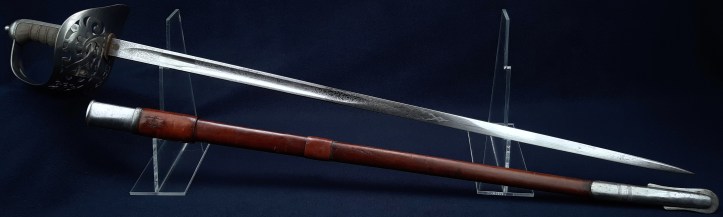

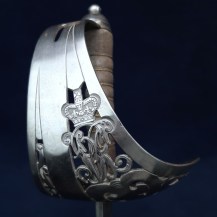
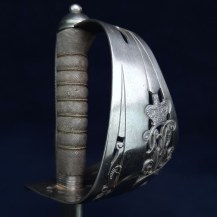
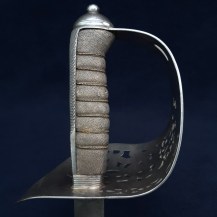
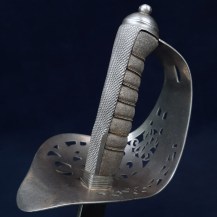
British 1895 Pattern Infantry Officer's Sword with Pre-Regulation Field Scabbard
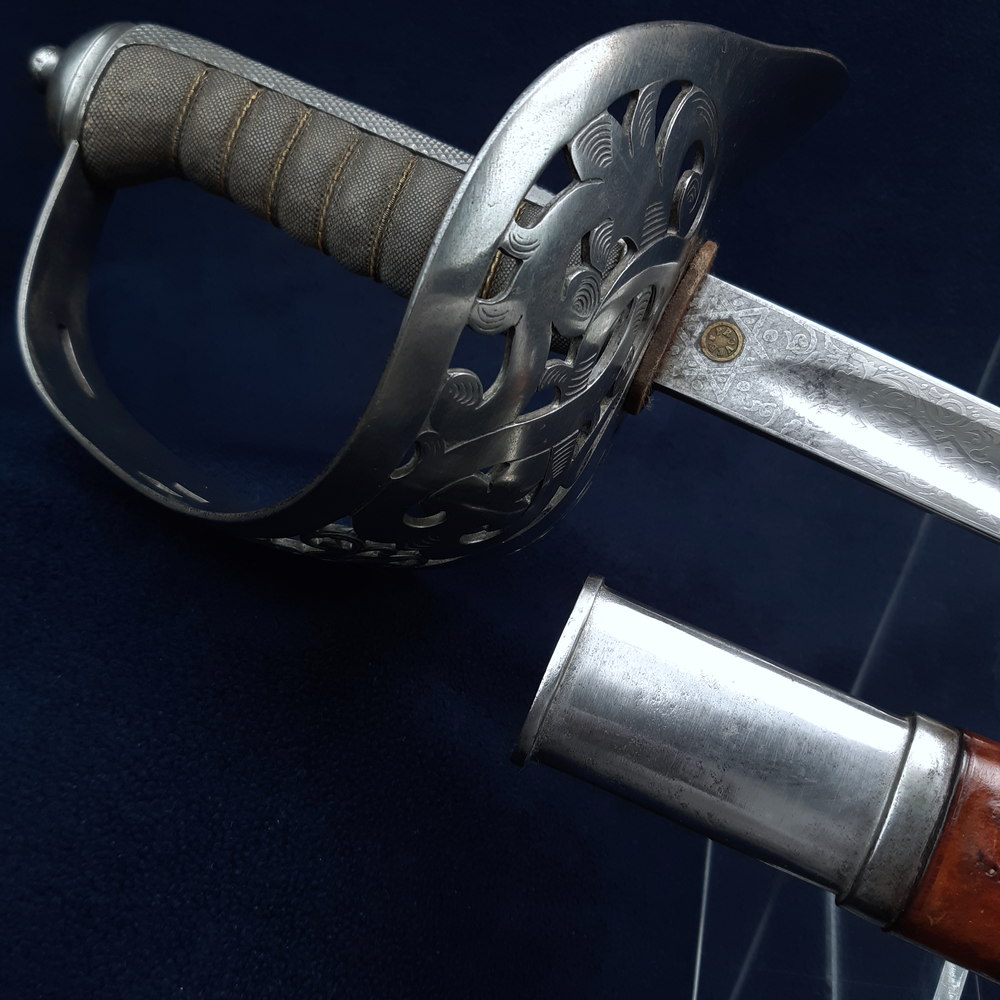
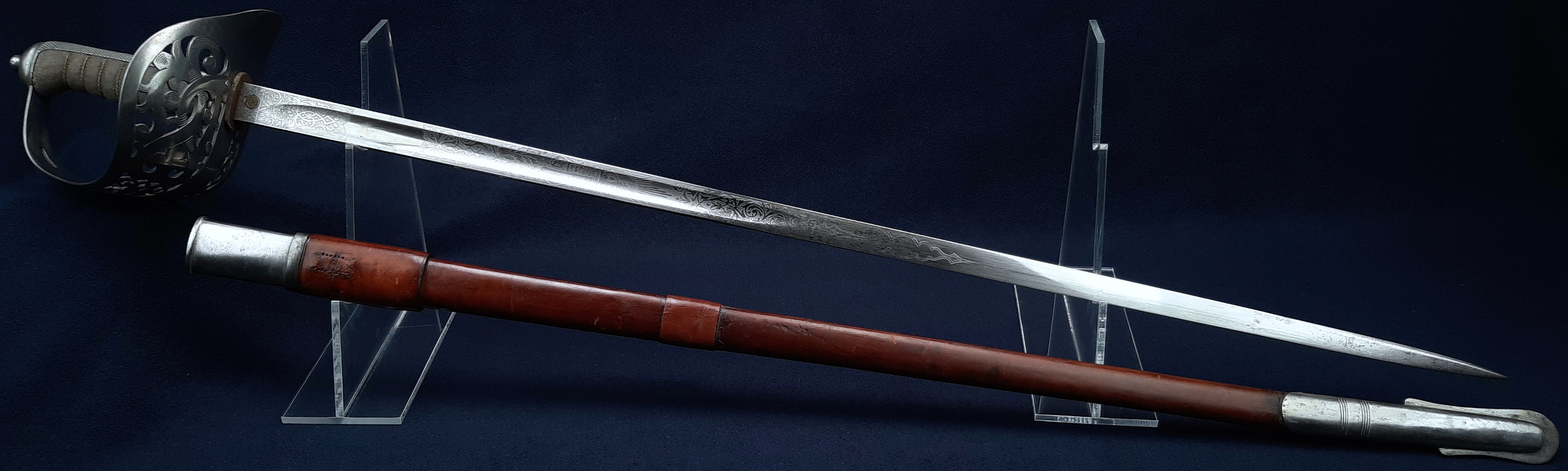
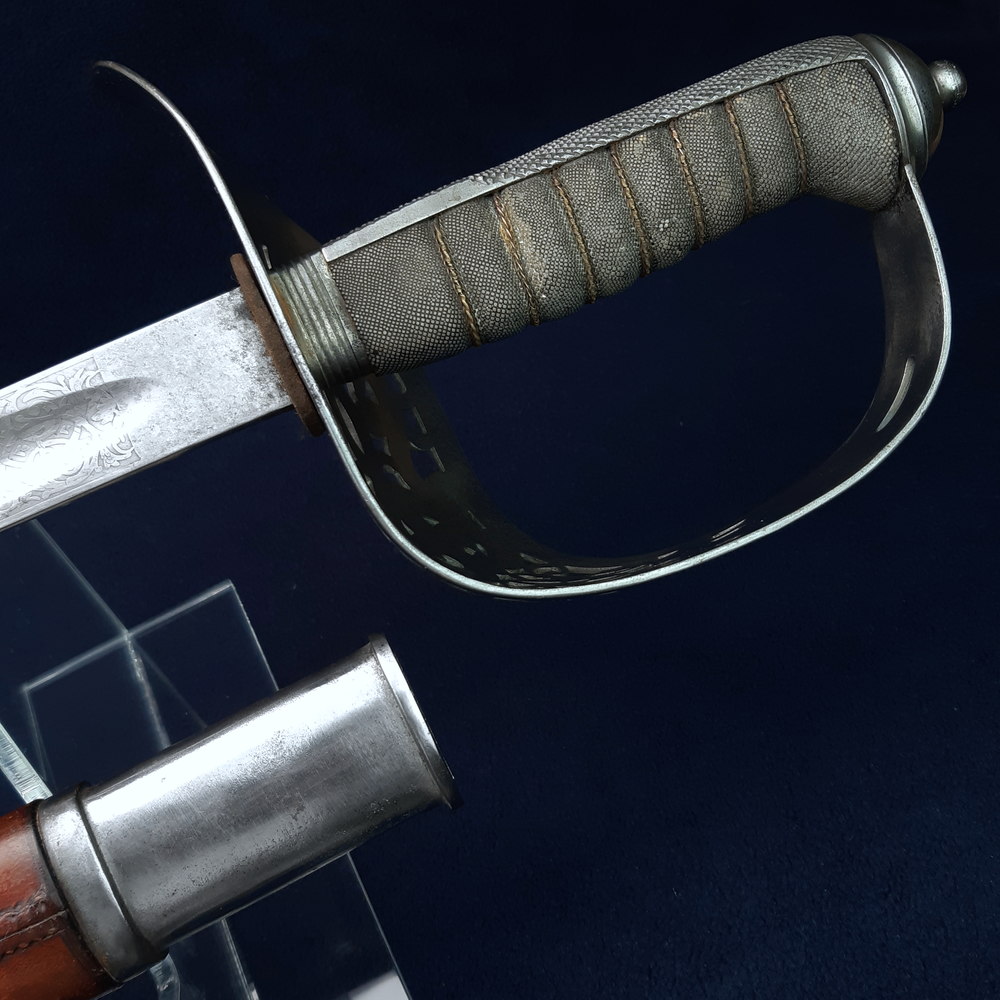
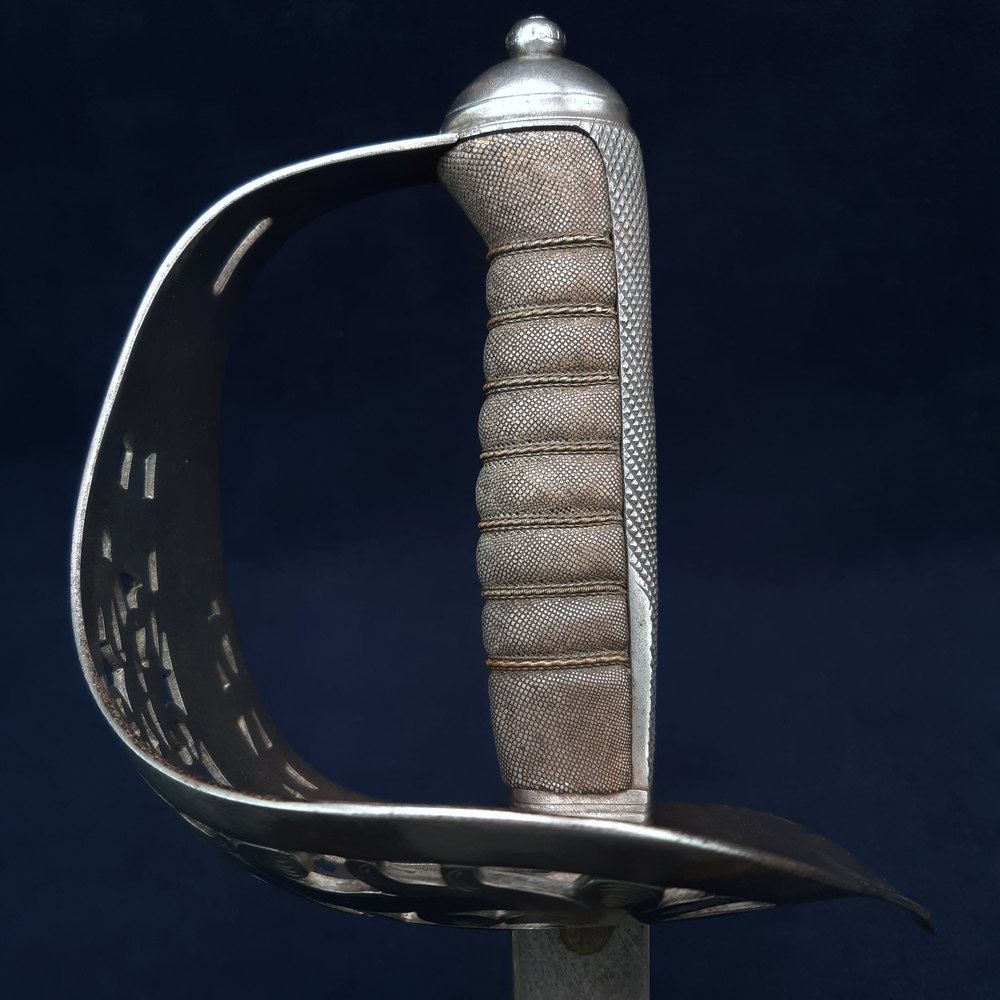
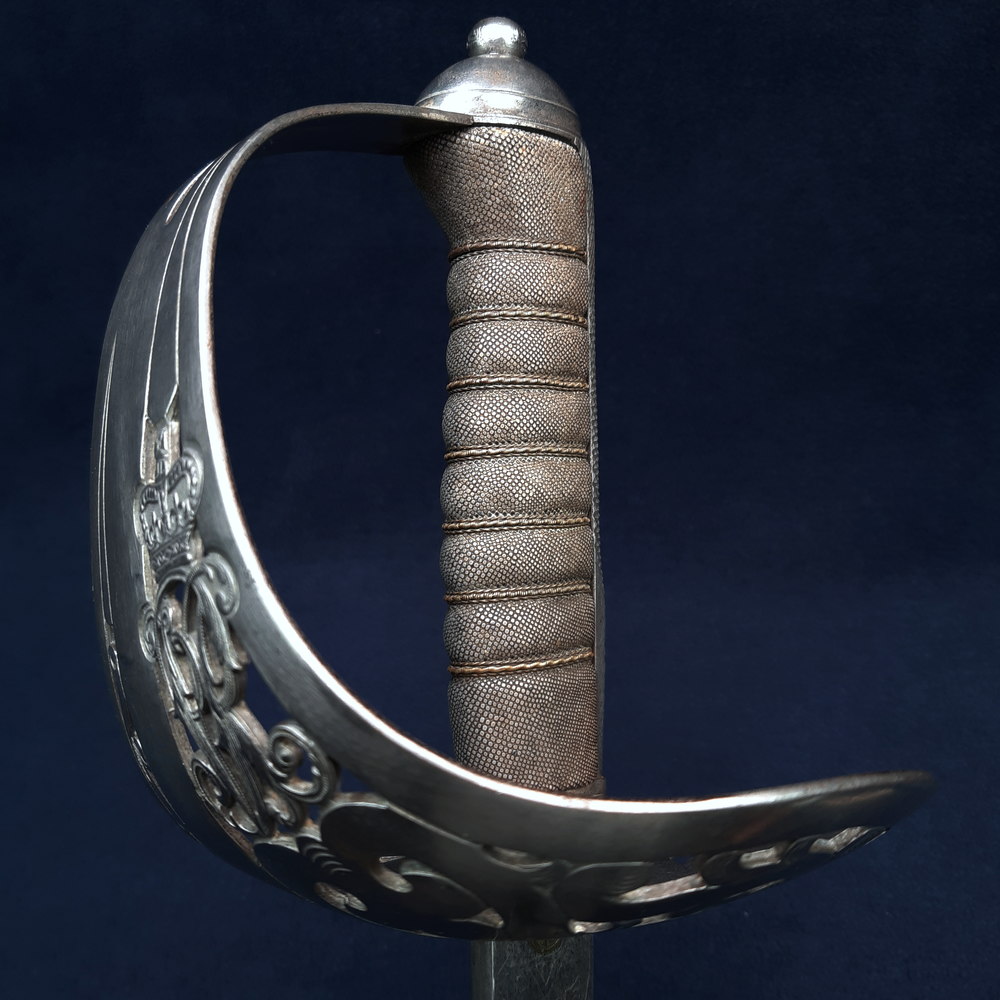
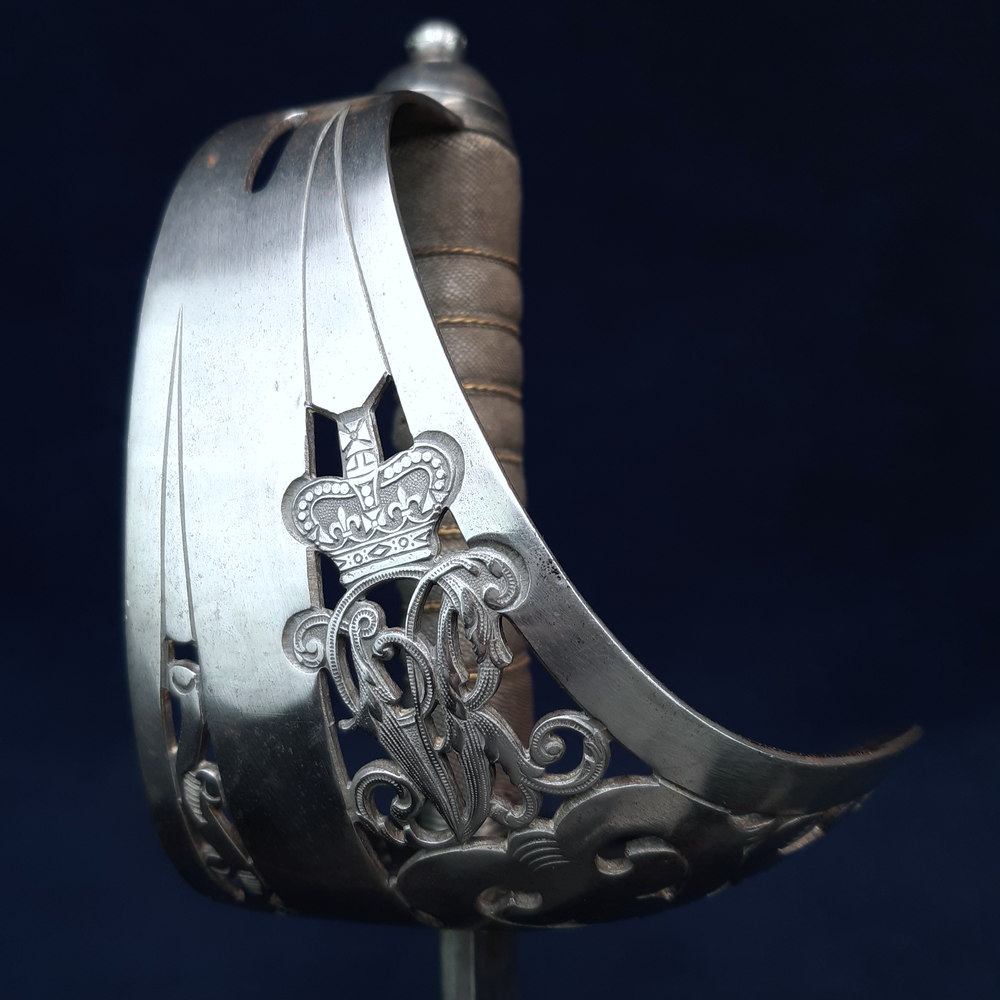
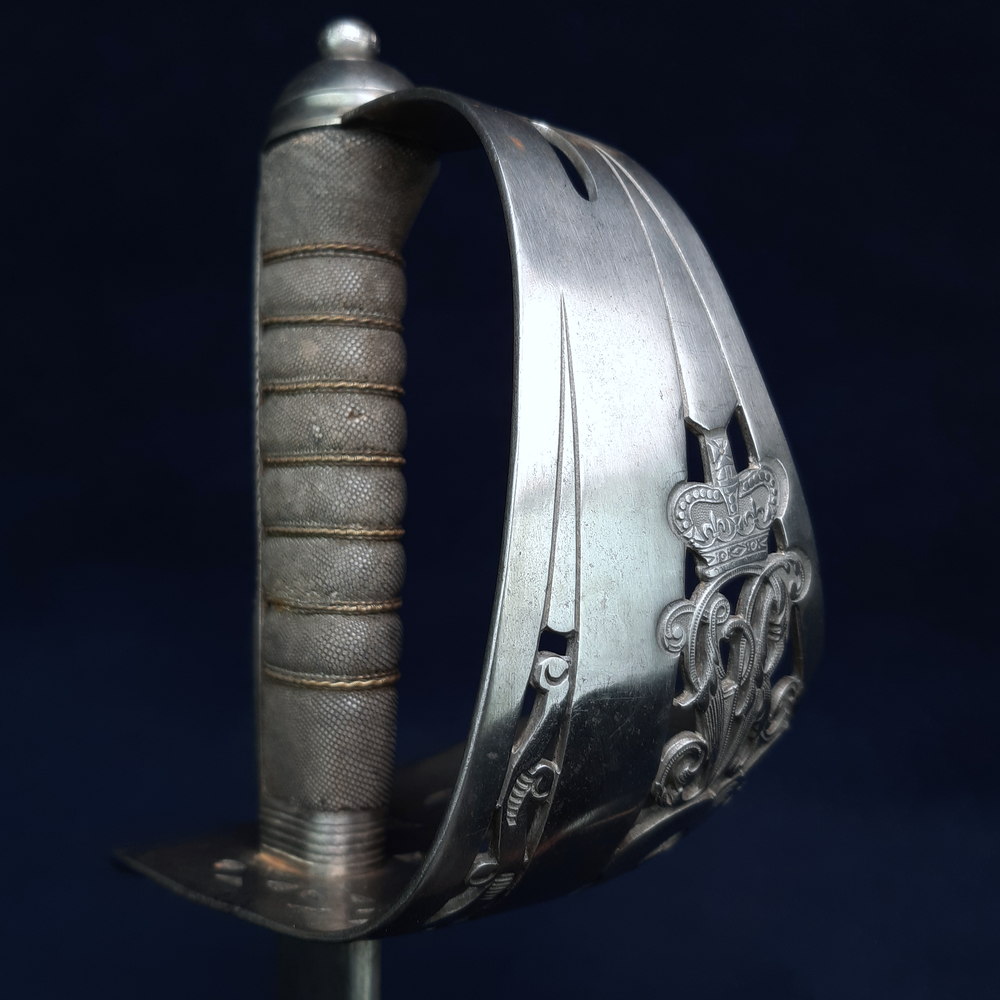
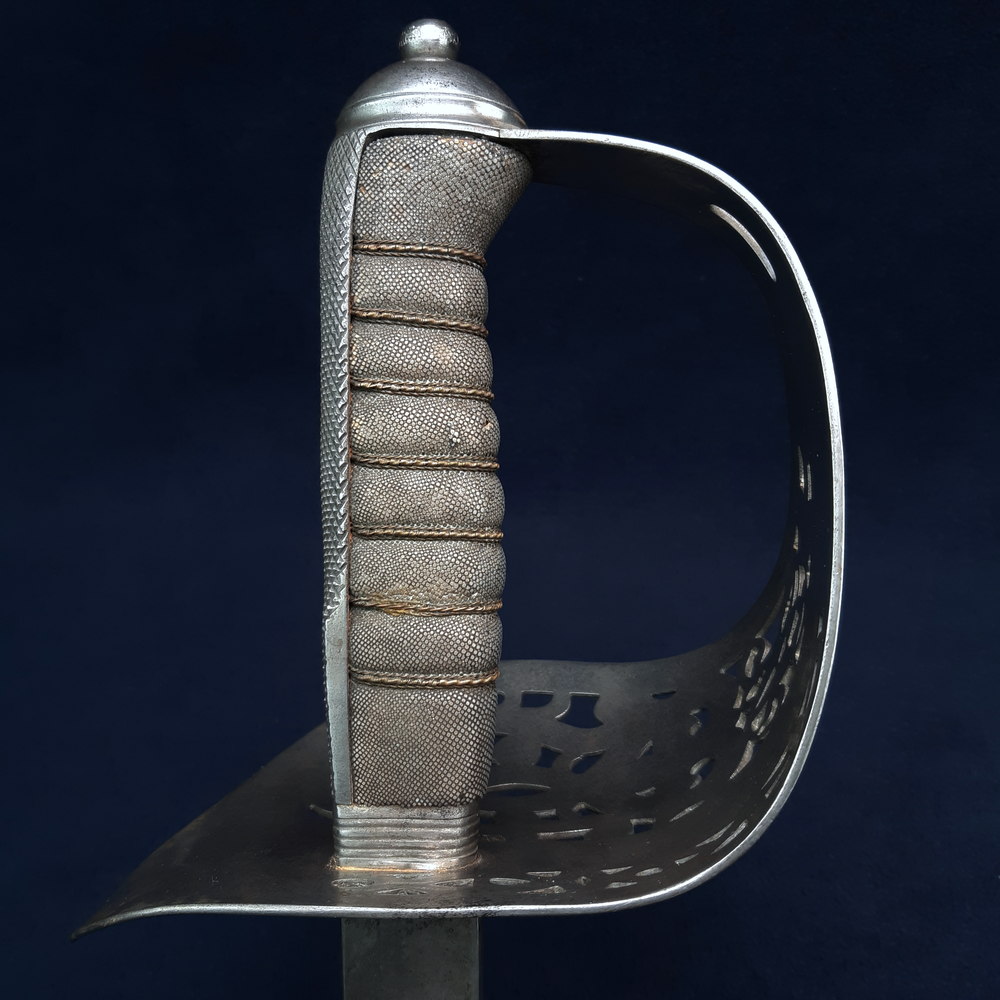
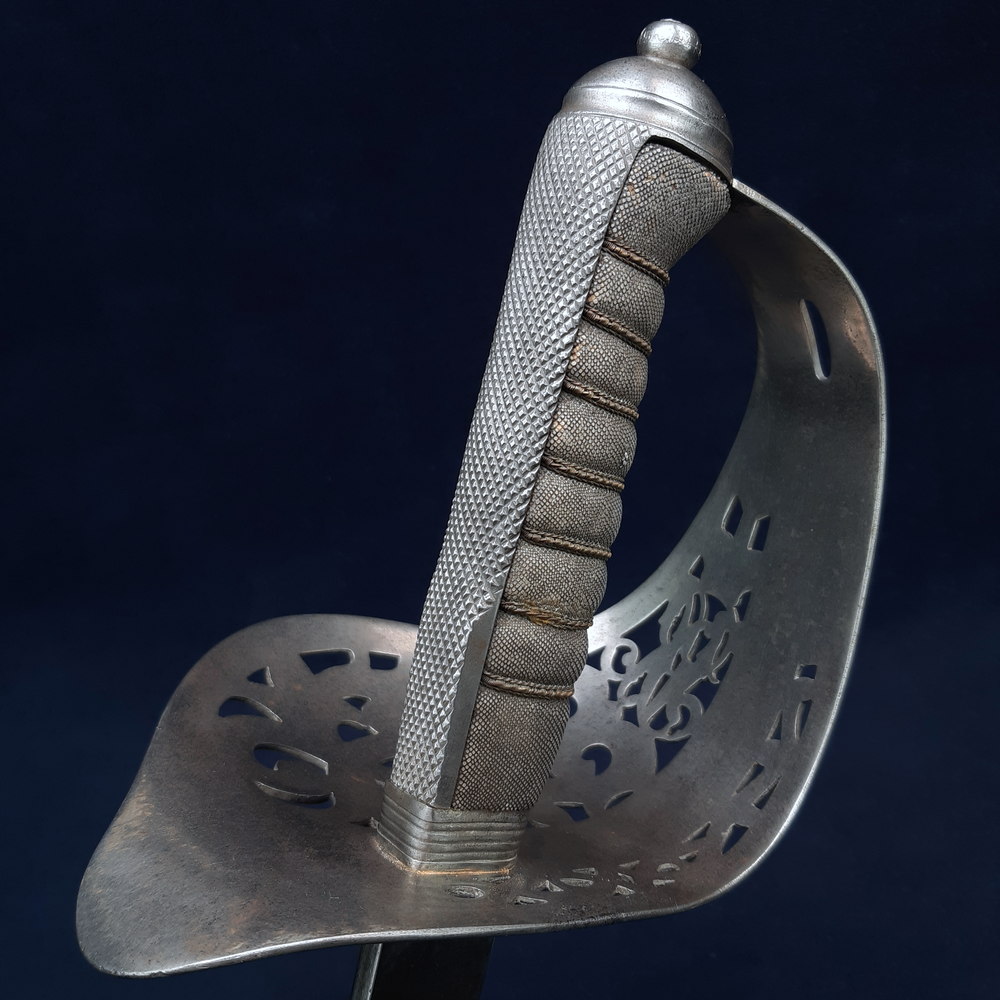
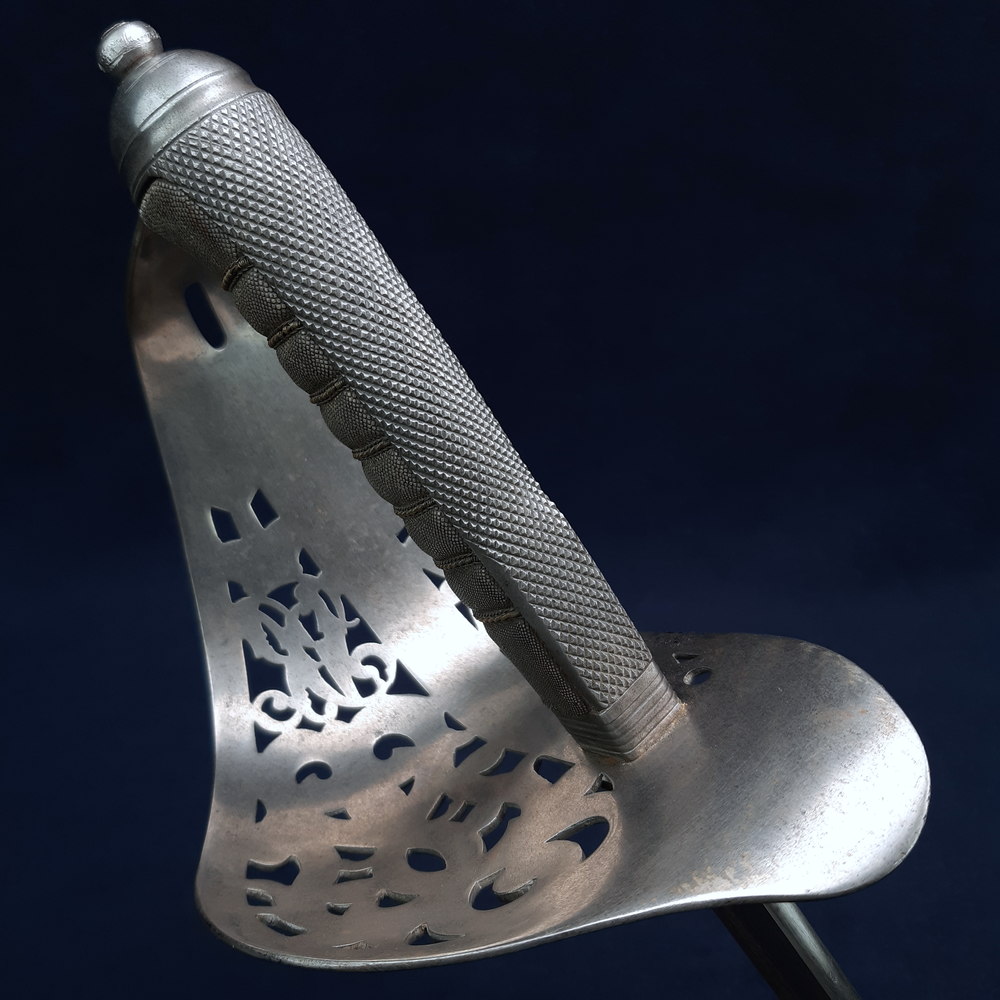
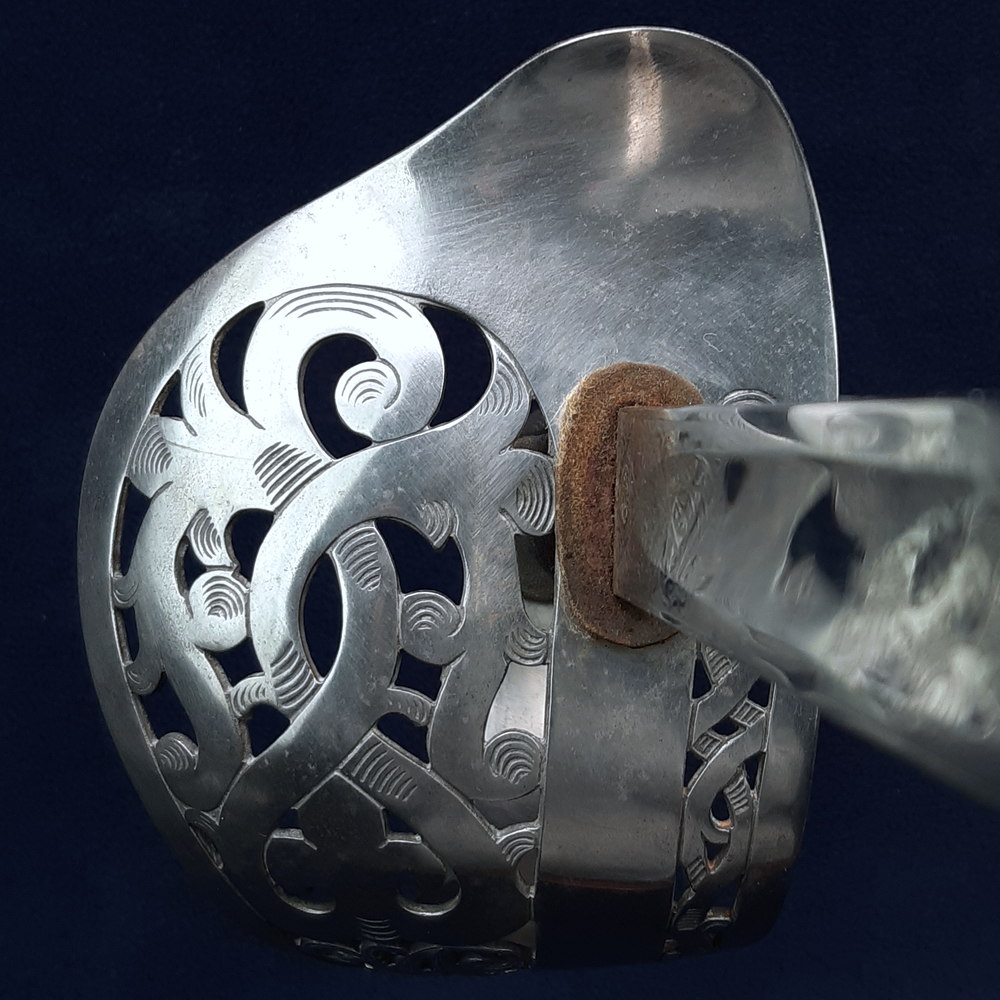
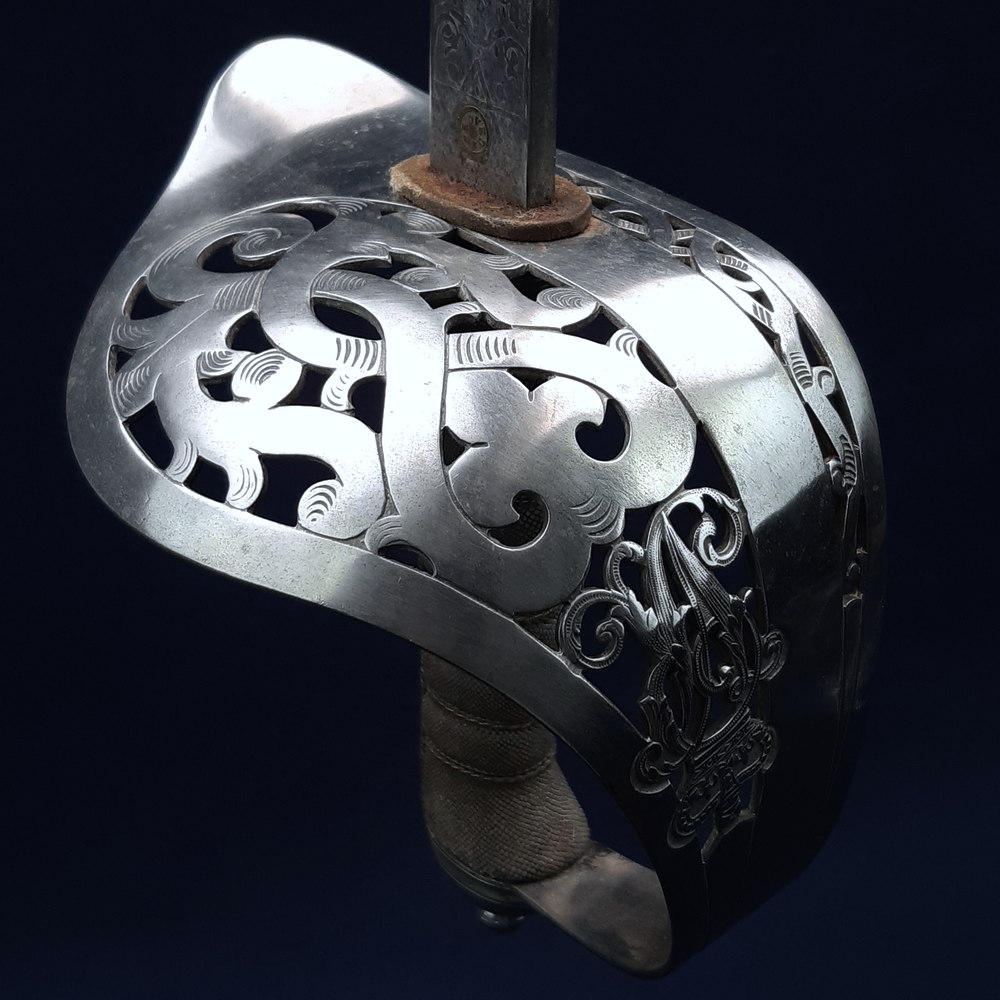
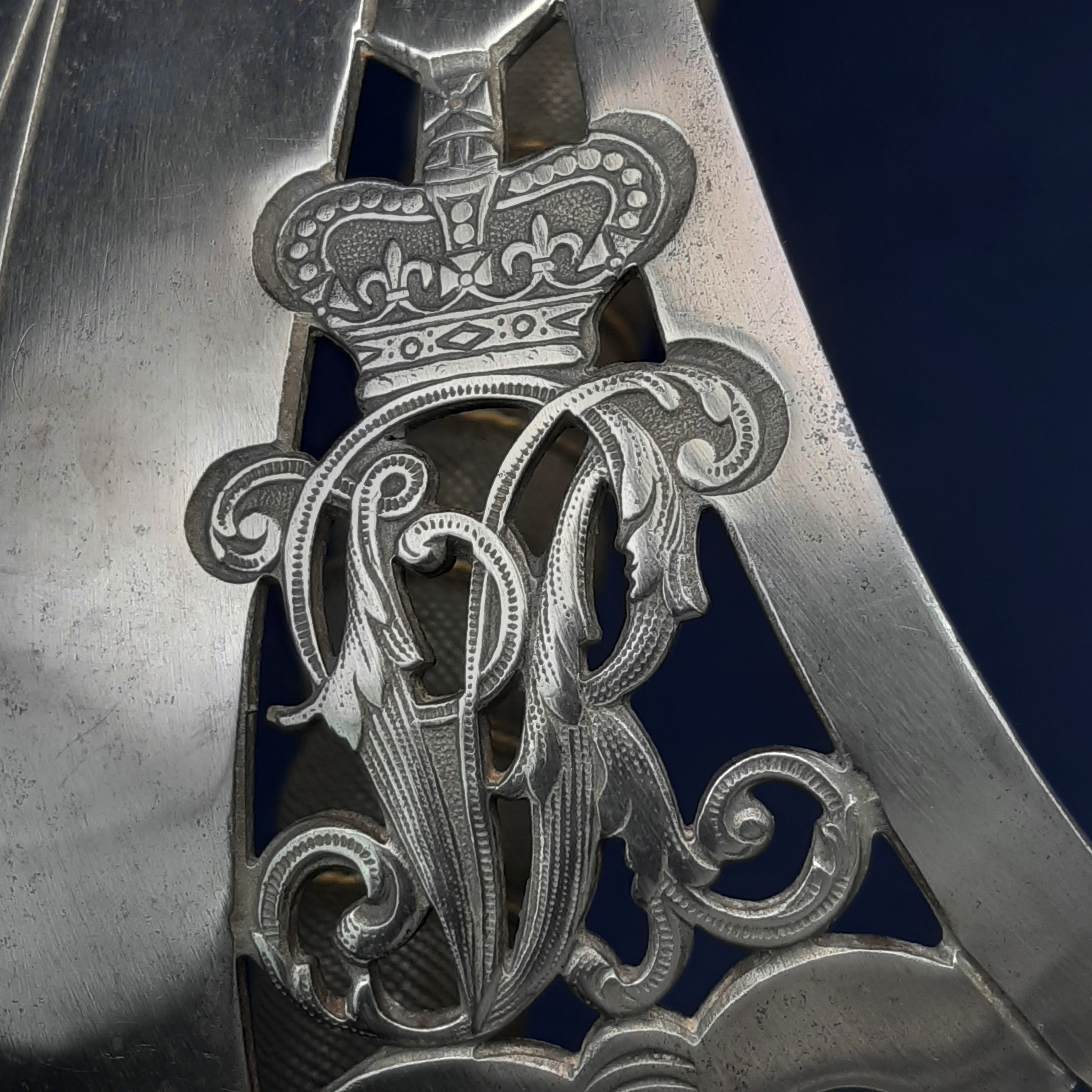
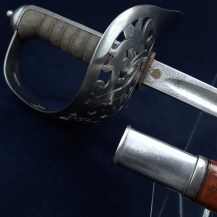
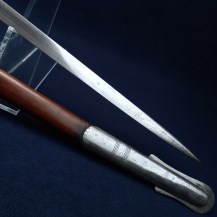
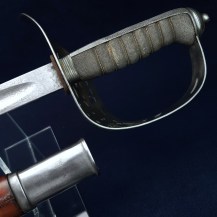
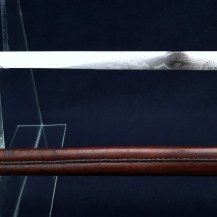
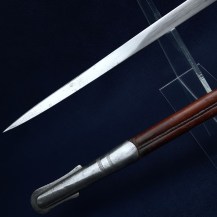
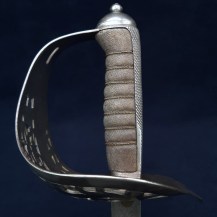
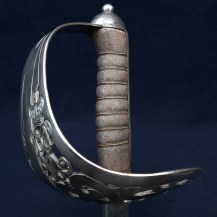
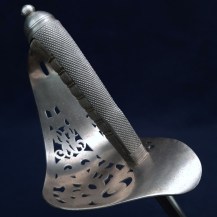
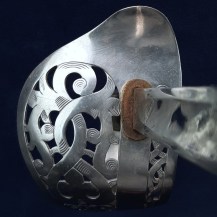
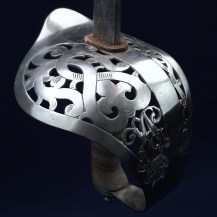
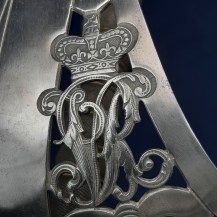
Single-fullered straight blade with spear point. Steel hilt with pierced decoration including crown and royal cypher of Queen Victoria. Steel ferrule, steel fully chequered backstrap with integral pommel, black shagreen grip bound with wire, brown leather washer. Brown leather pre-regulation field scabbard with steel throat and chape pieces. Blade 32½ inches in length, 1.05 inches wide at the shoulder, the sword 38¾ inches overall.
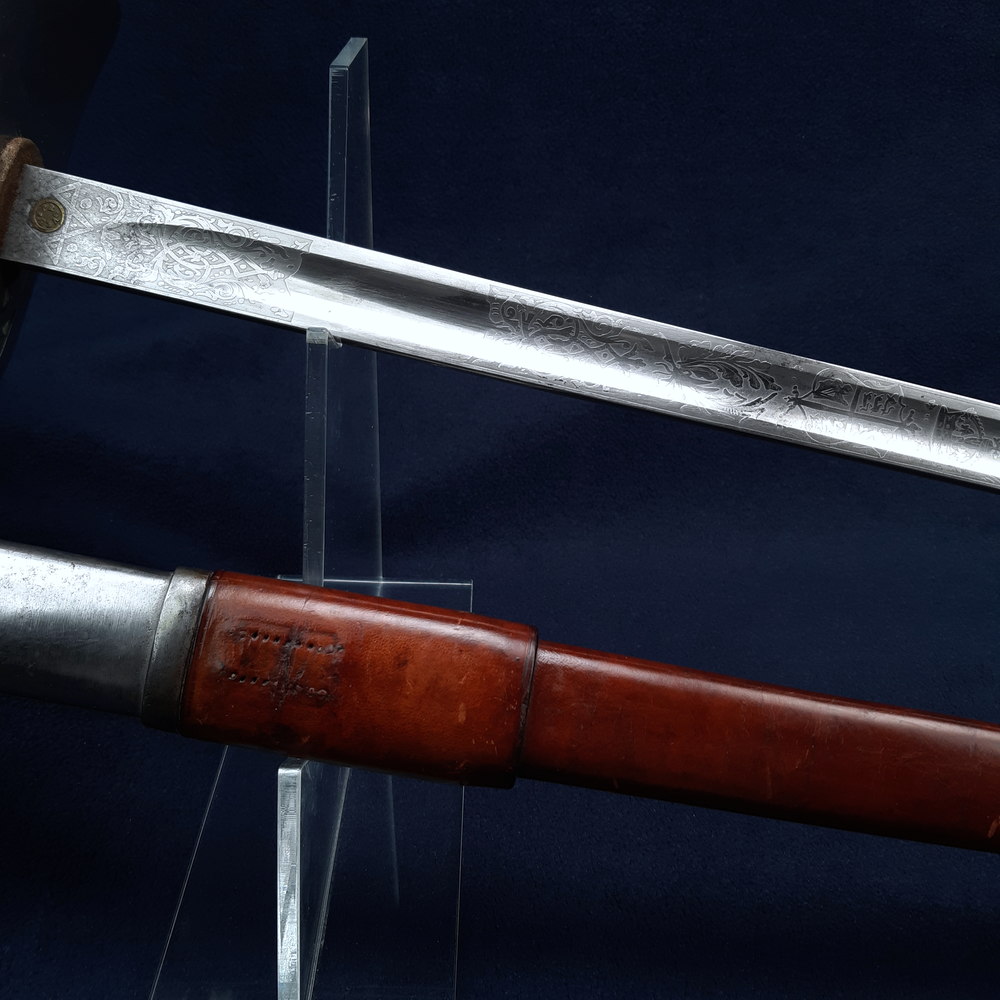
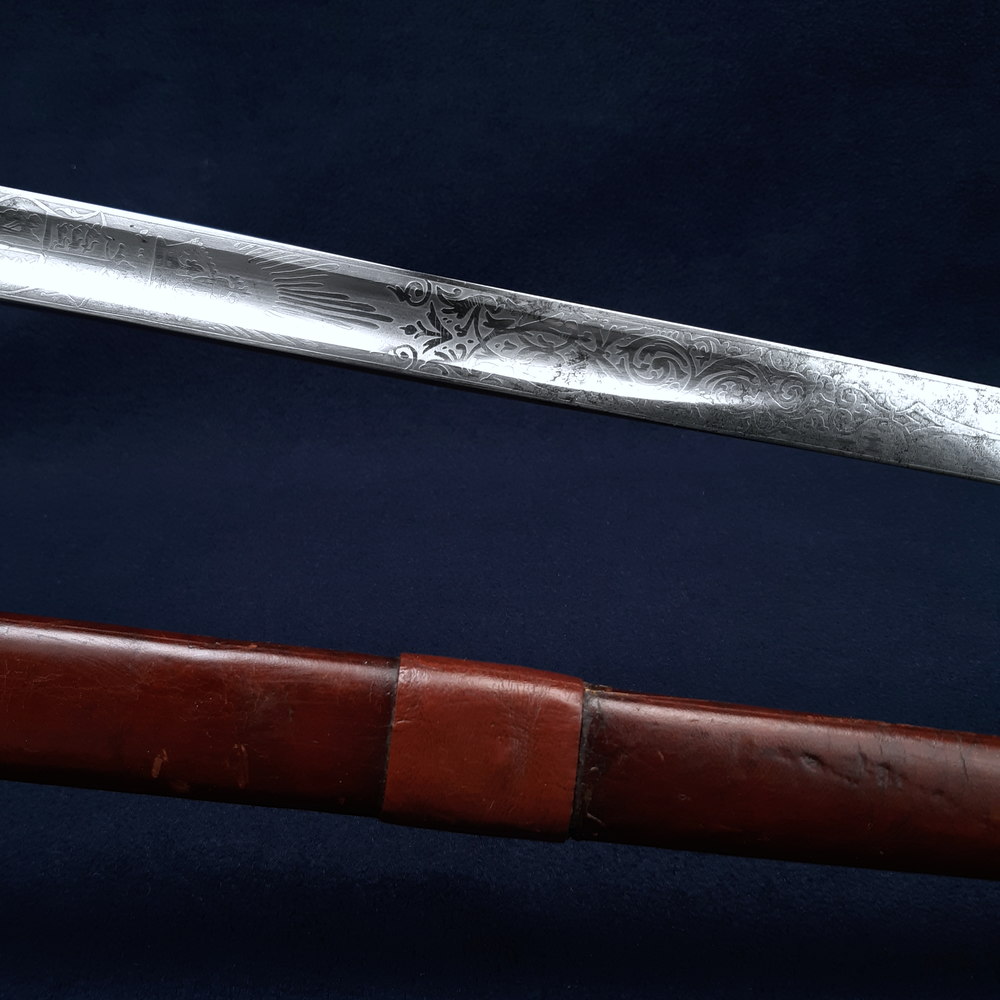
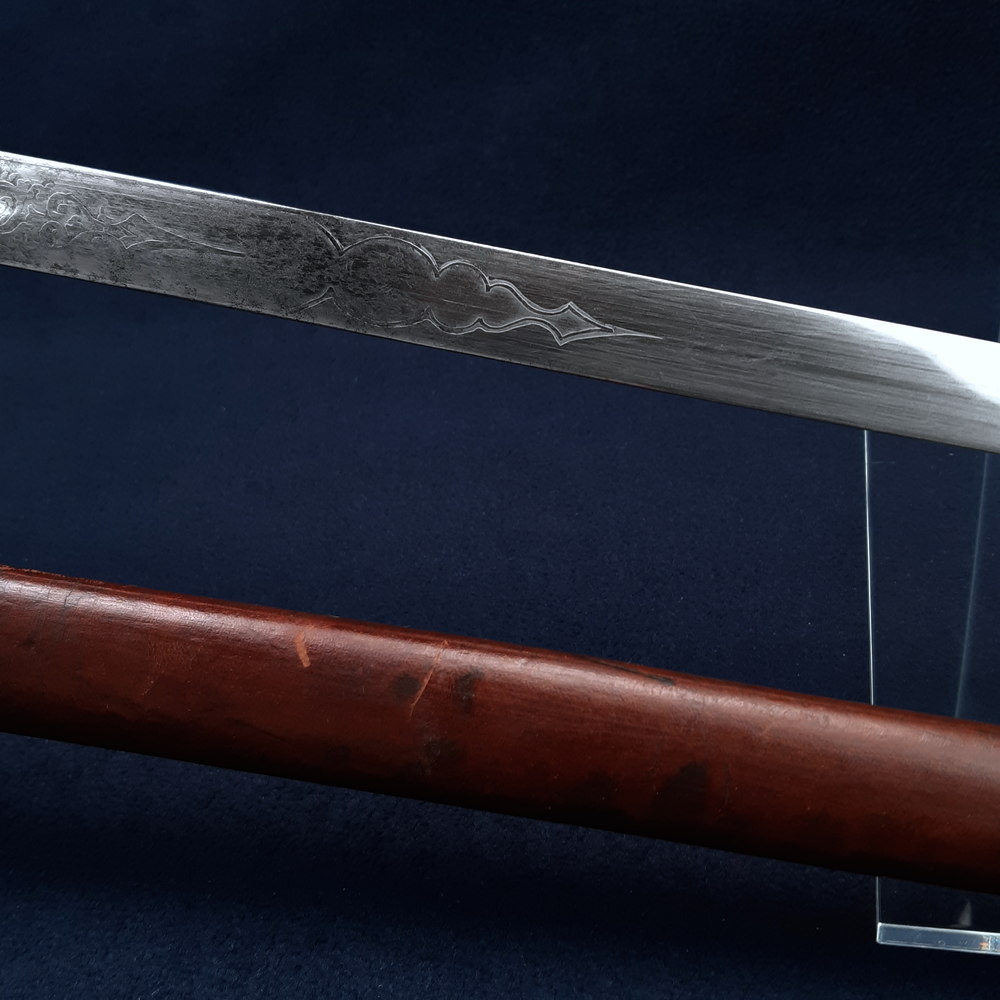
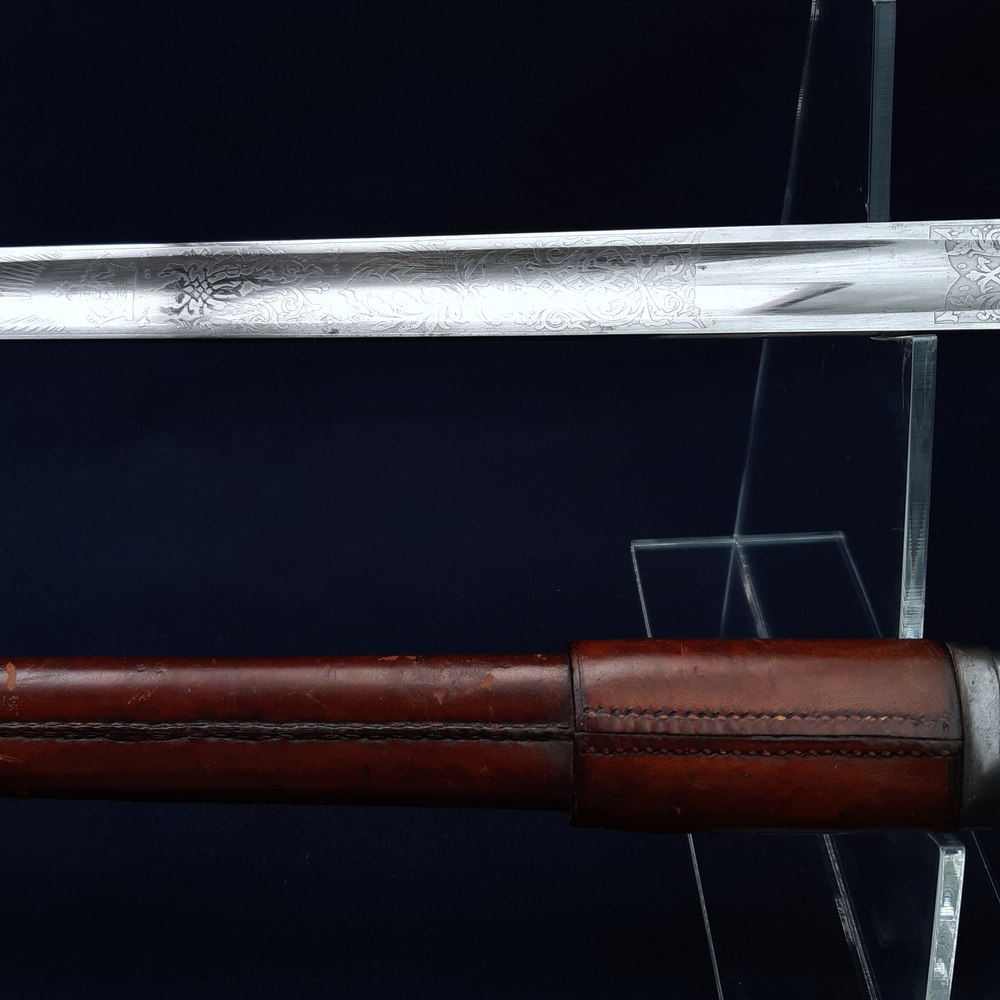
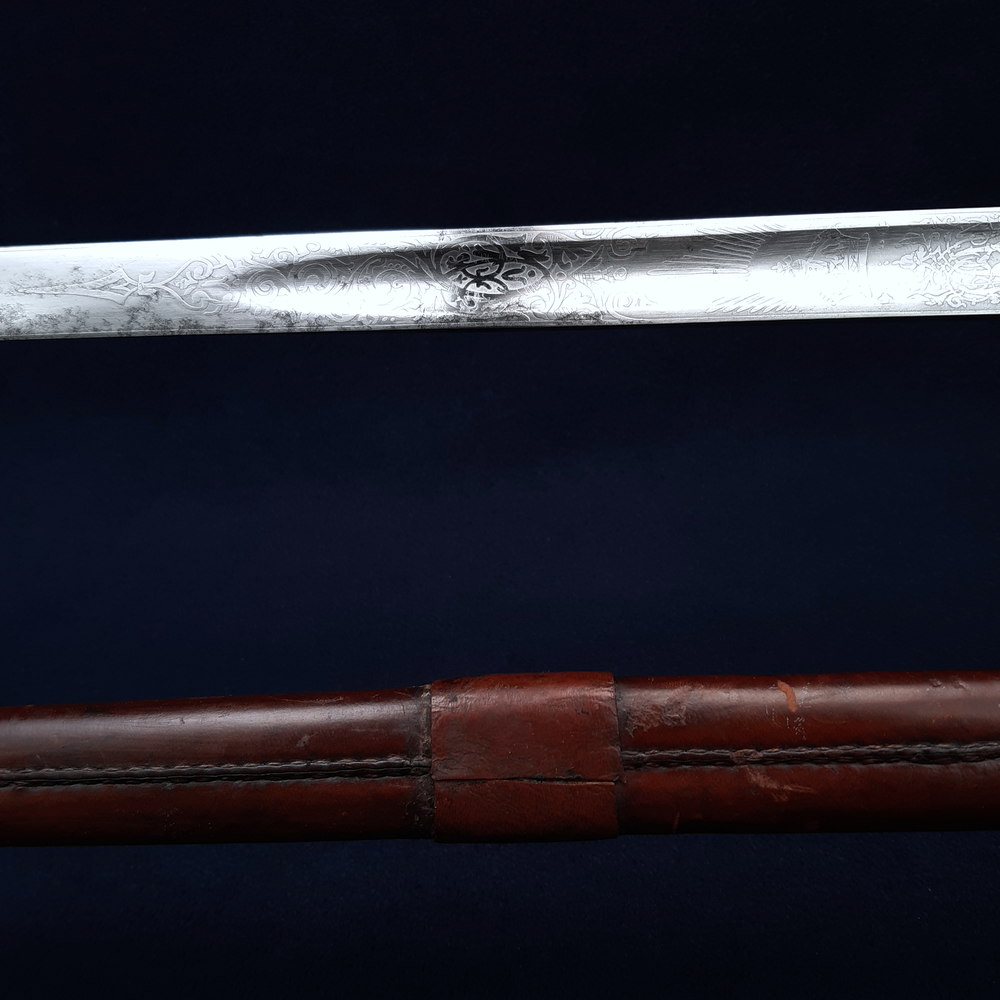
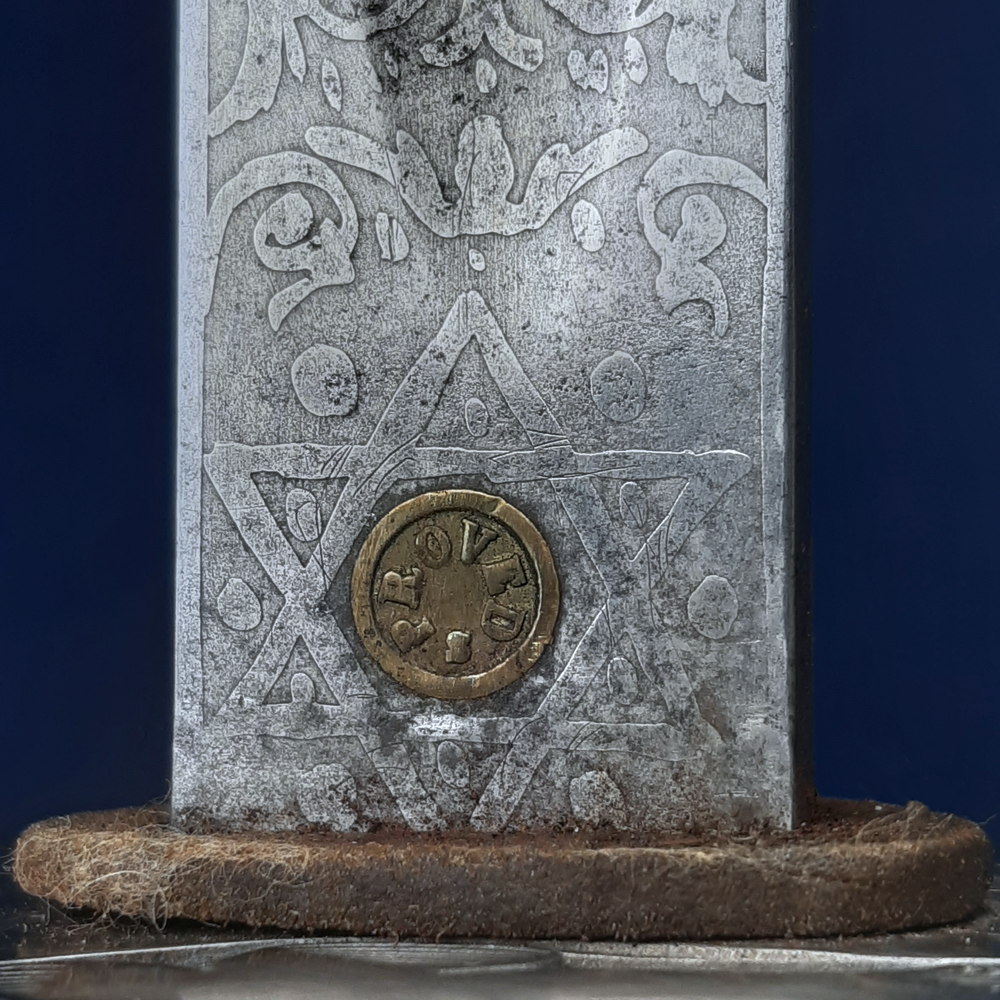
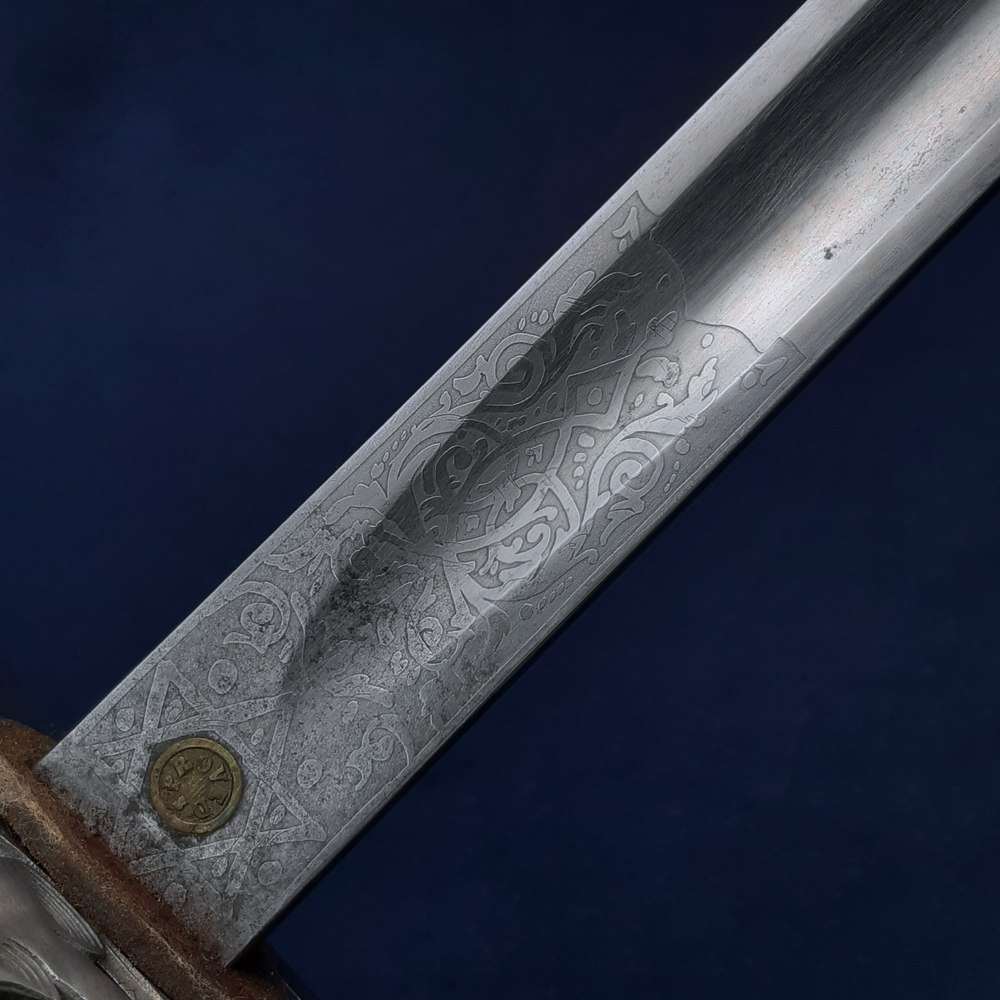
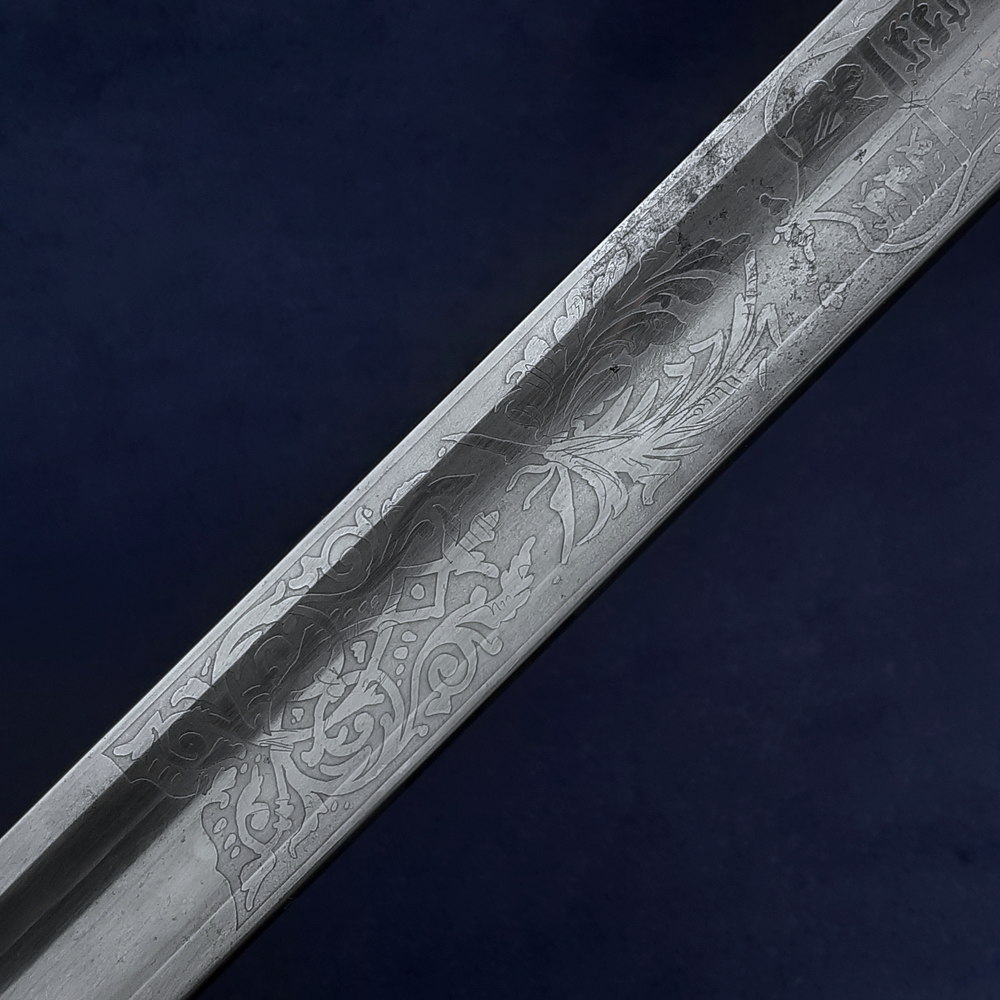
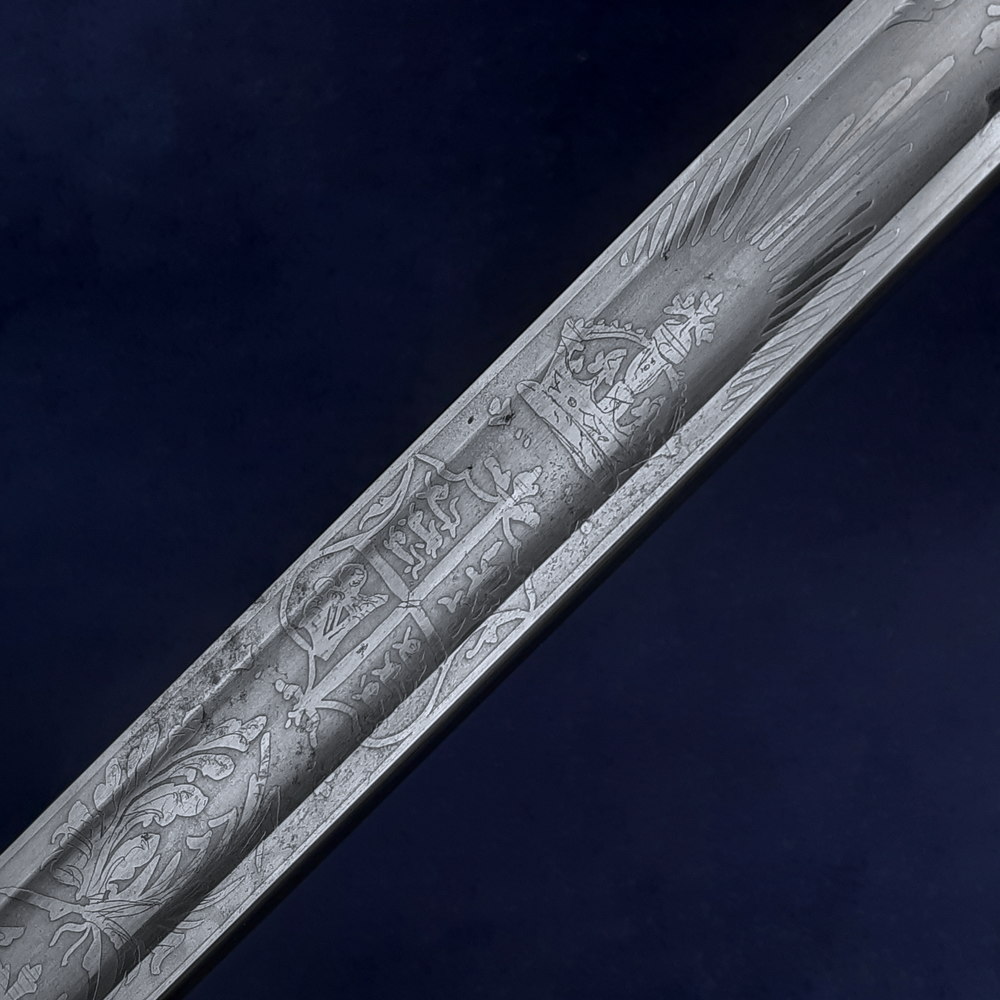
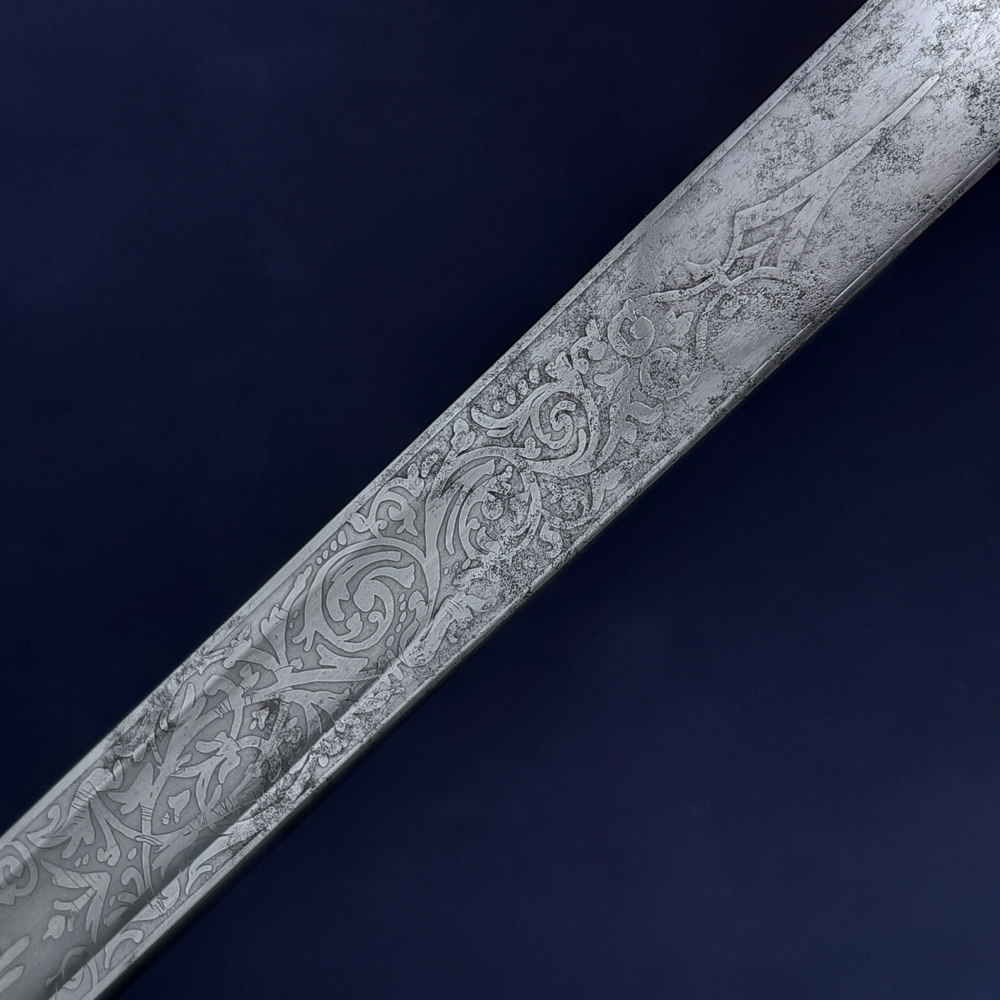
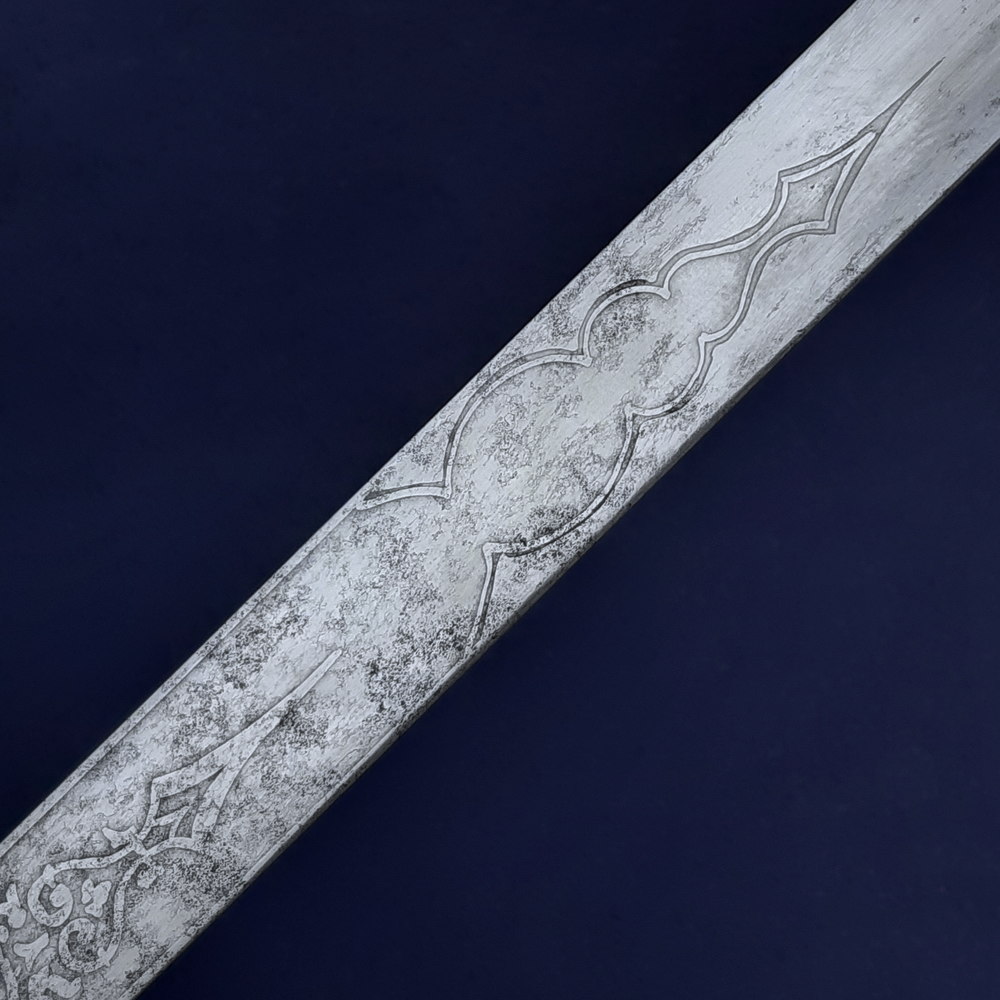
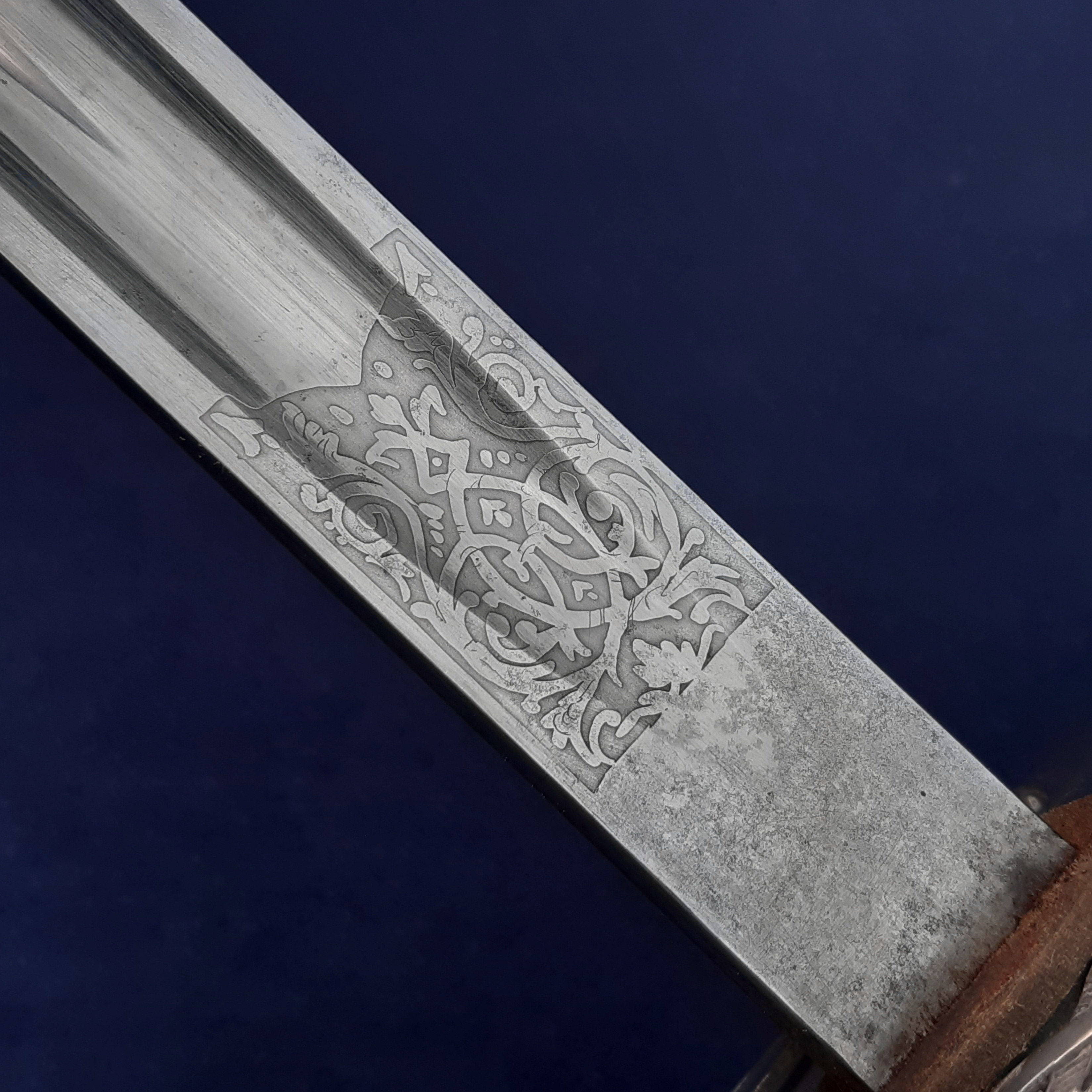
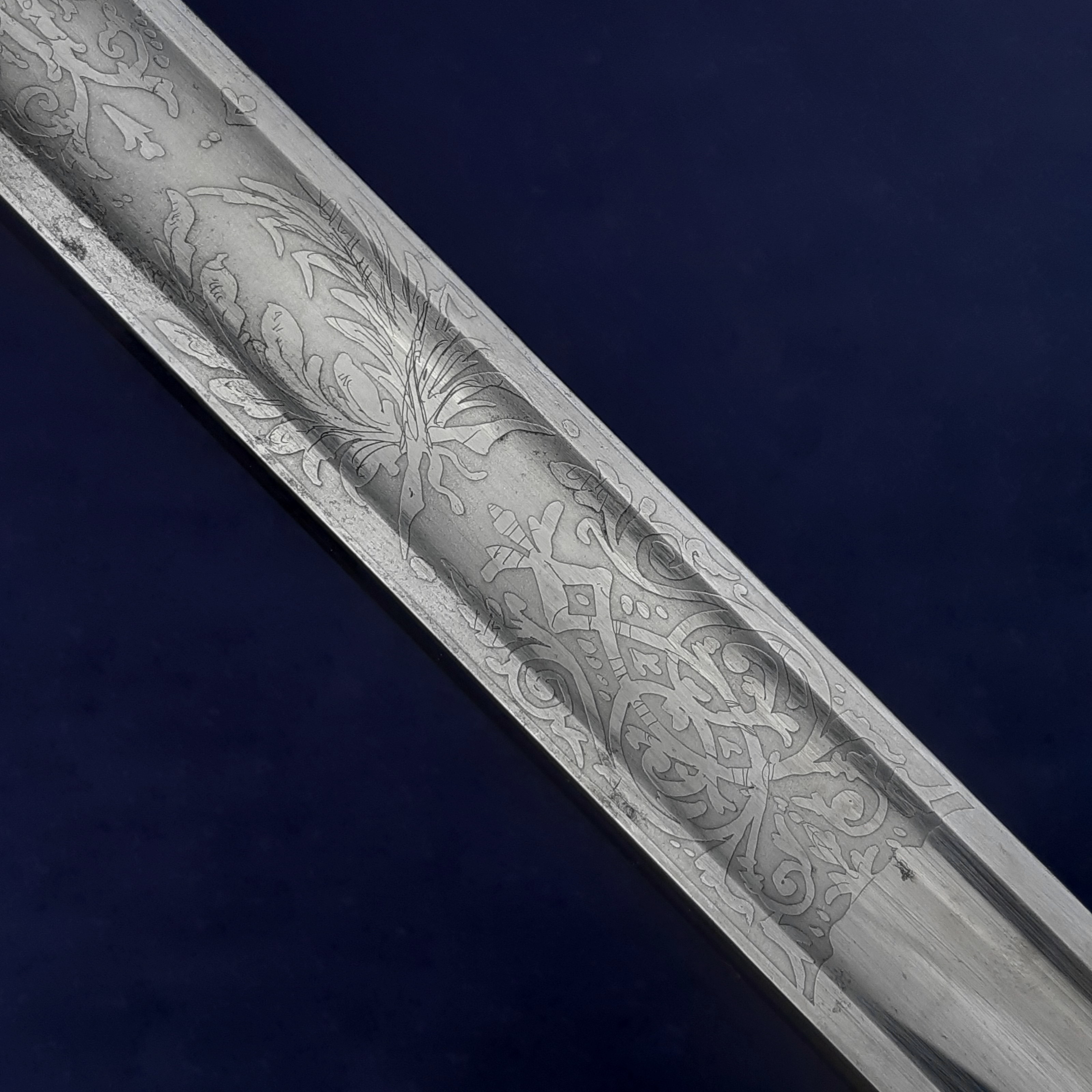
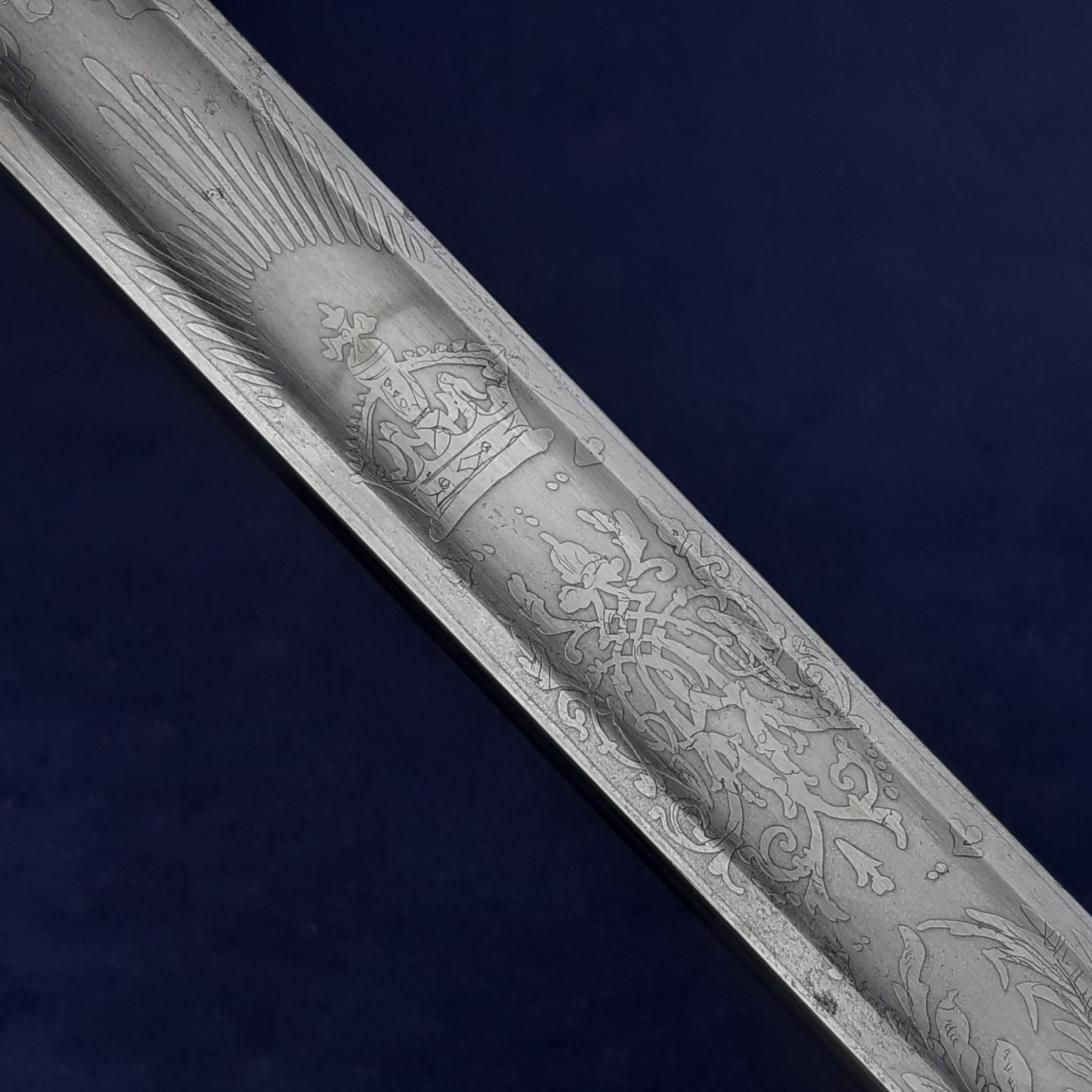
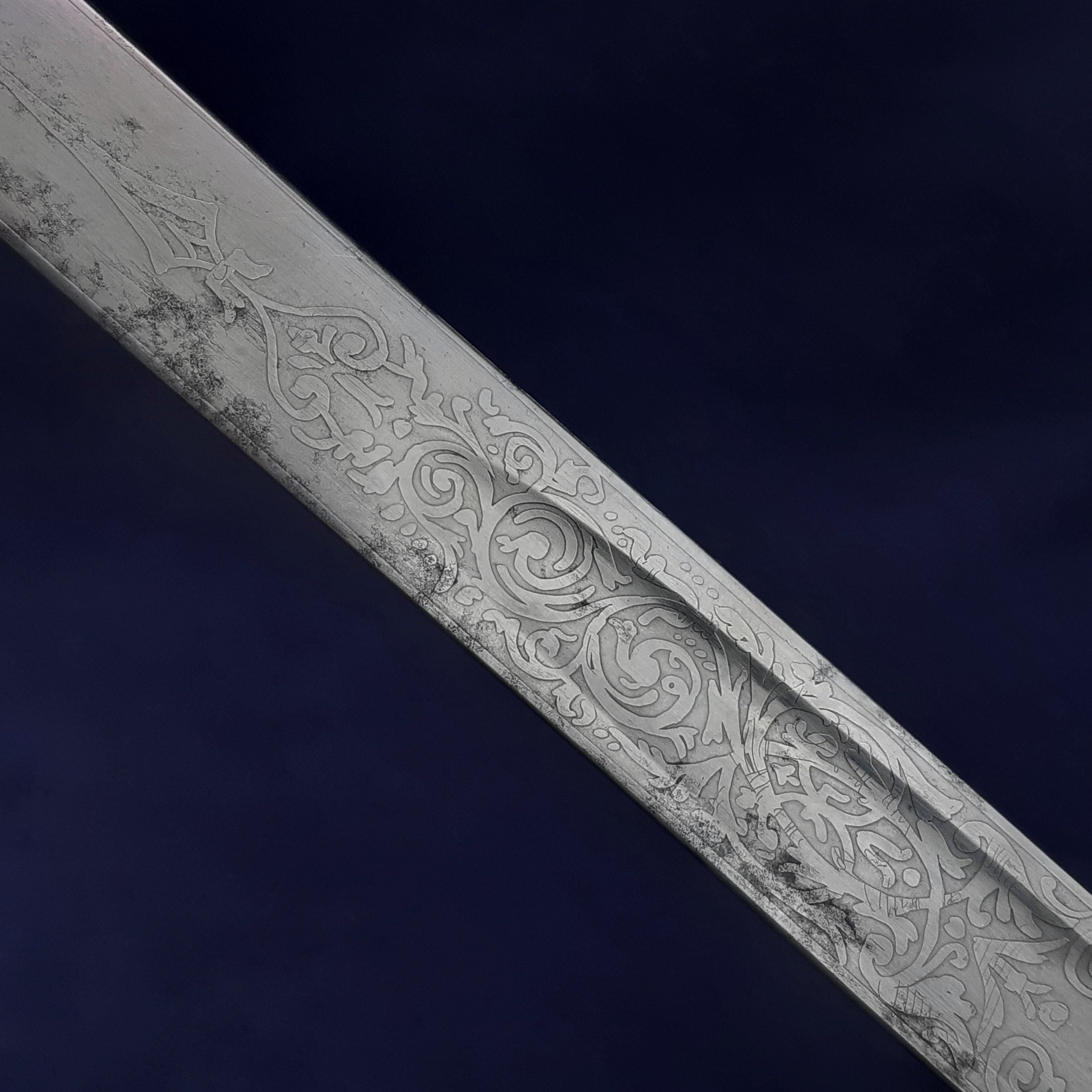
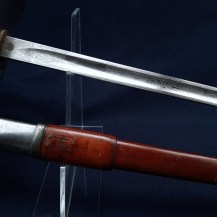
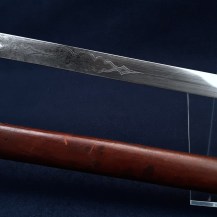
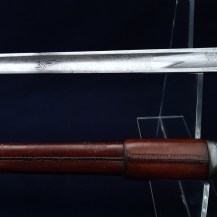
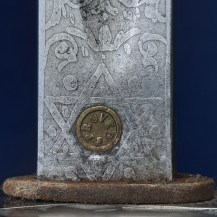
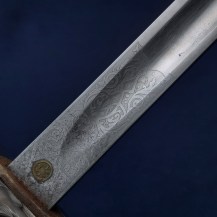
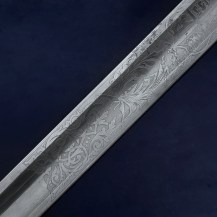
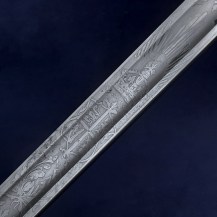
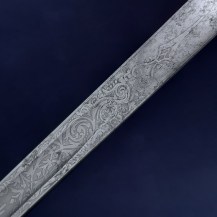
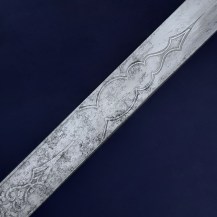
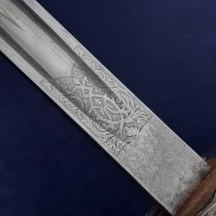
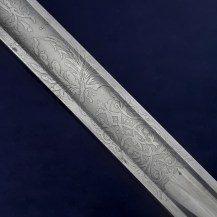
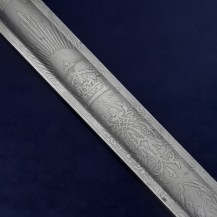
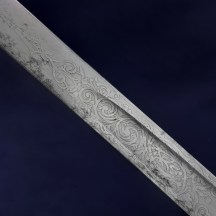
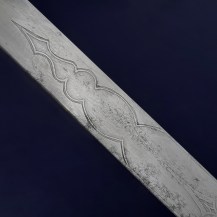
The blade is set at the ricasso on one side with a brass proof slug stamped with ‘PROVED S’, the slug surrounded by an etched six-pointed star. The blade is further etched on that side with a wreath of laurel and palm, the royal crown and coat of arms, a cartouche for the optional etching of the owner’s name which has been left blank, and foliate motifs.
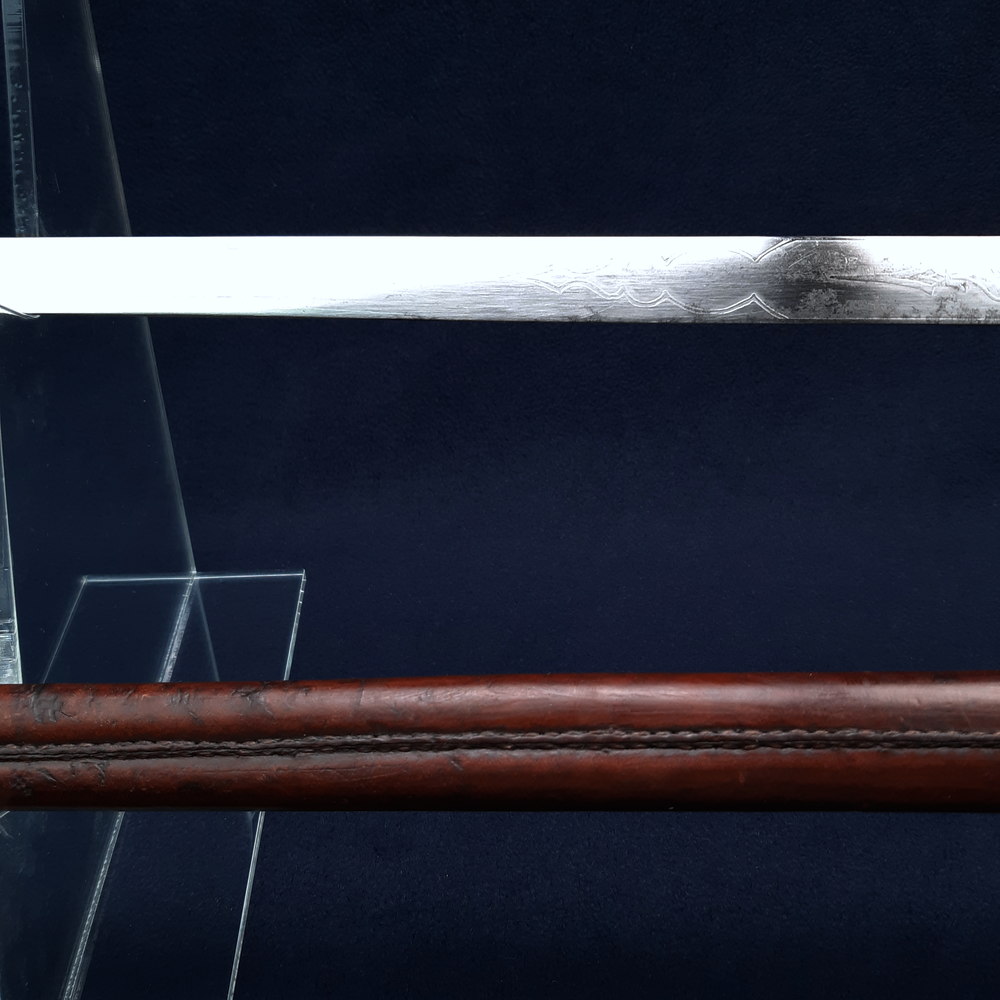
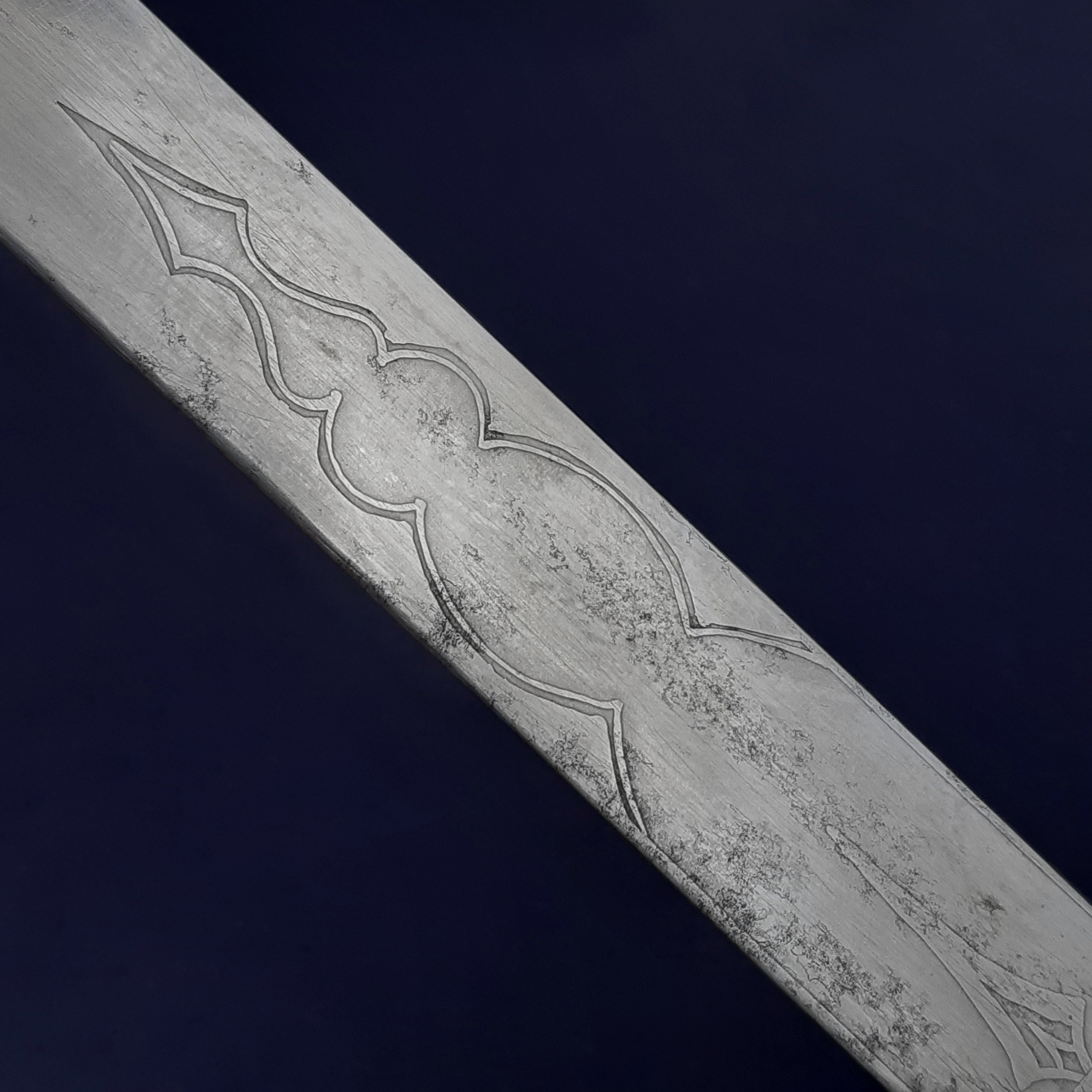
The ricasso of the other side is blank. The blade is further etched on that side with identical wreath, cartouche & motifs, and with the crown and cypher of Queen Victoria (in its mirrored form).
Only in production for two years, the 1895 Pattern infantry officer’s sword can be identified by its hilt design. Its inside edge is flat and the pierced holes in the decoration are somewhat larger than on its successor the 1897 pattern, on which the inner edge of the guard was turned down to reduce fray on the uniform and the pierced holes were reduced in size to offer more hand protection. Being so briefly in service it is much scarcer than the 1897 Pattern which served through both World Wars and is still used today, especially as some swords originally made as 1895 Patterns were rehilted as directed by the Army Order that announced the change.
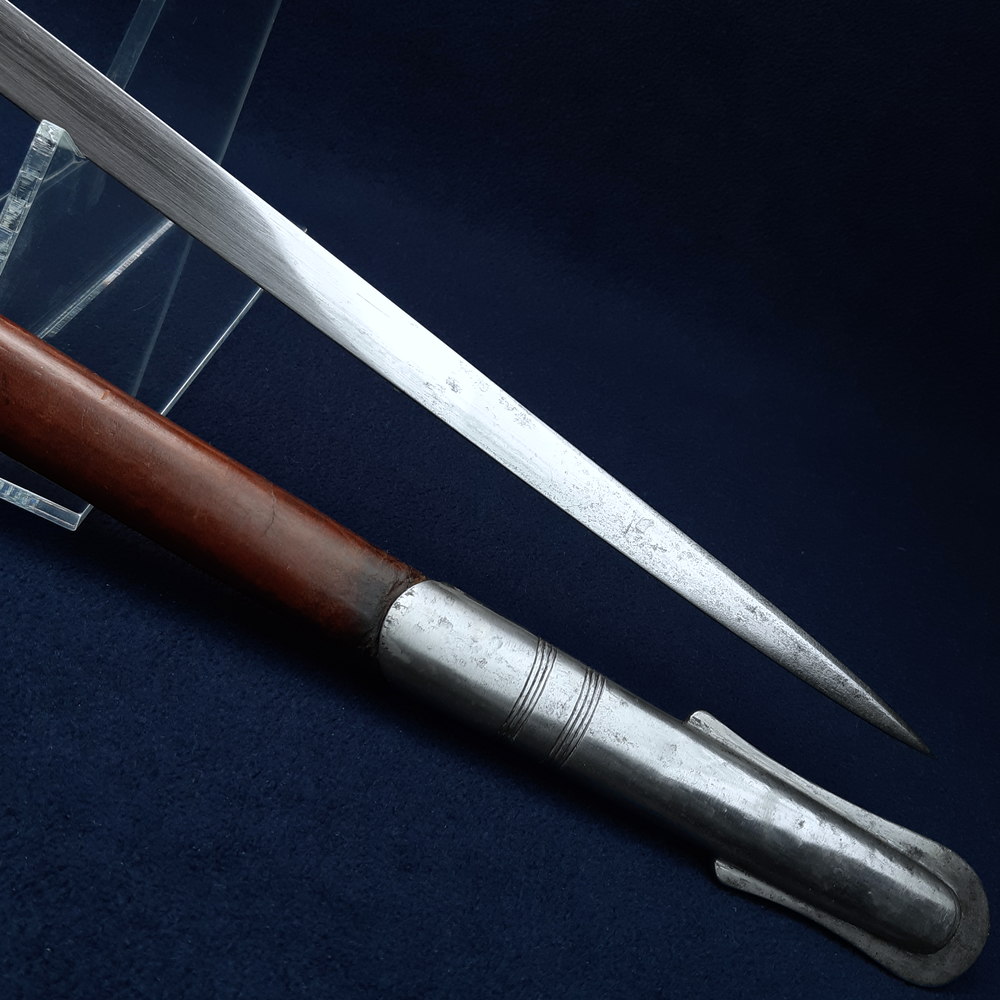
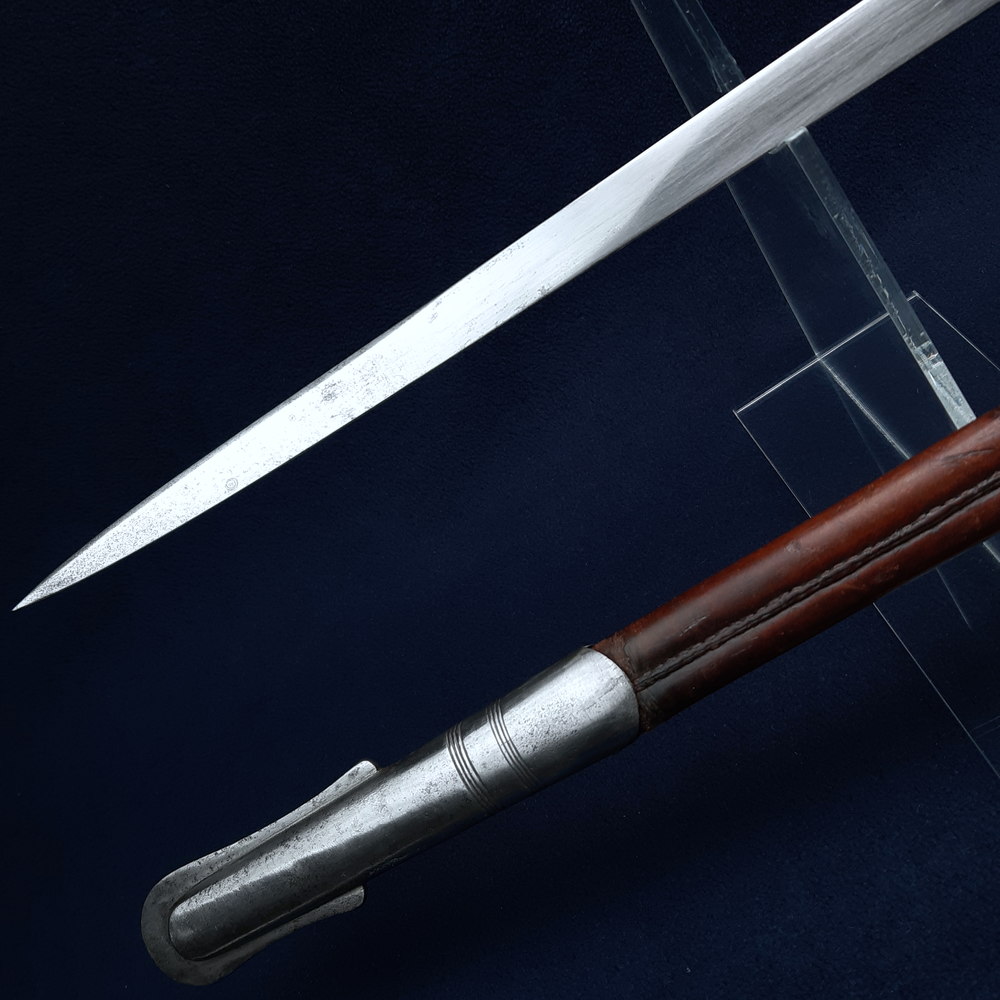
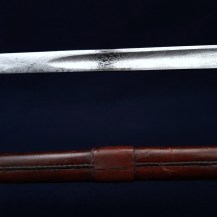
1895 Patterns are typically paired with a steel scabbard, which was at that time universal. A brown leather field scabbard was introduced in 1899 with the Sam Browne belt system and the steel scabbard became for parade only. Some officers privately purchased leather scabbards for field carry before they became regulation items, however, from manufacturers offering aftermarket models to fit the various Patterns. This sword is paired with a typical example: unlike the 1899 scabbard it has a steel chape and it lacks the 1899’s wood core, being simply a leather tube.
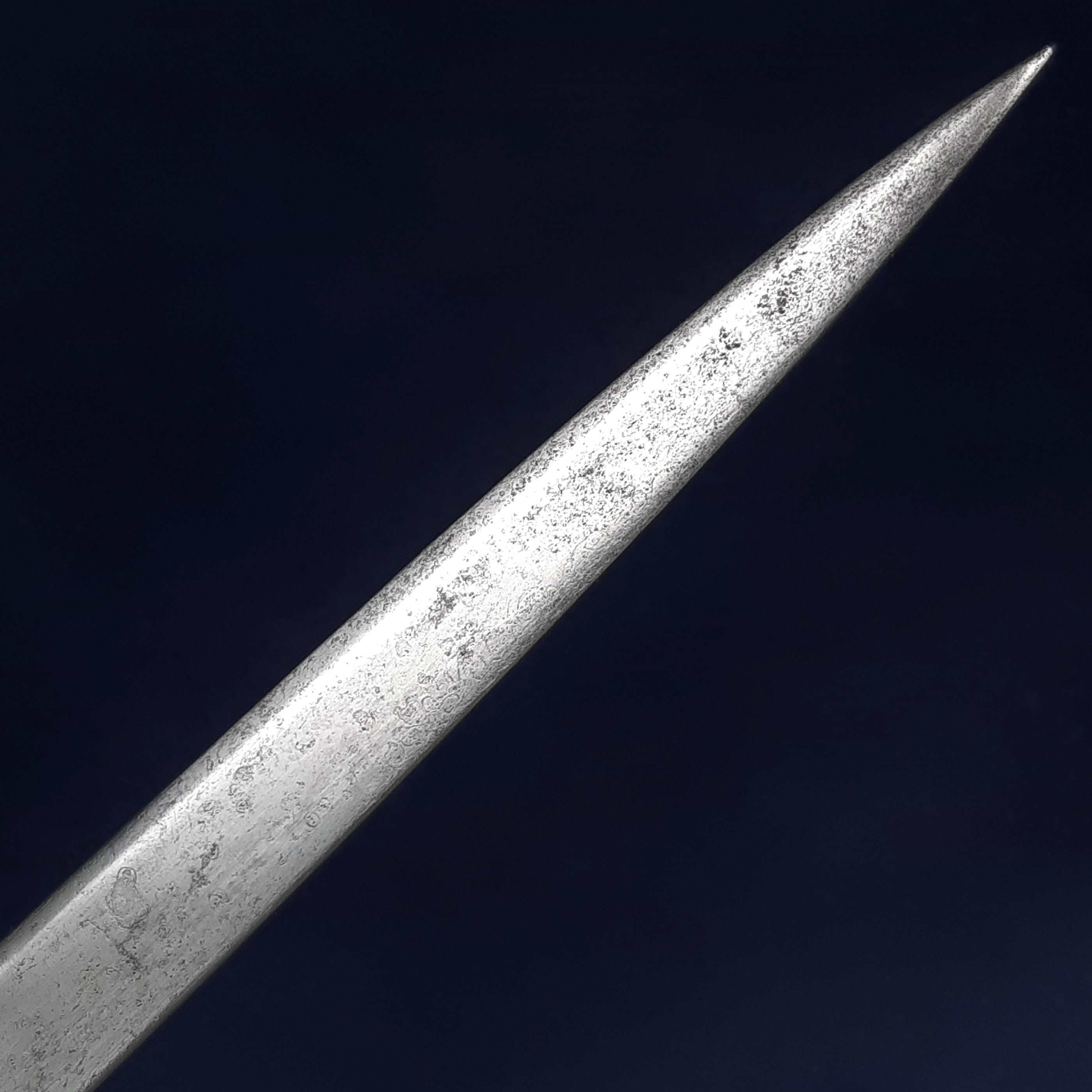
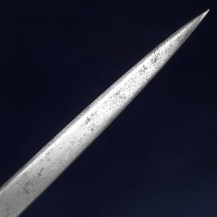
The sword is solidly peened, firm in the hand with no movement to any parts, the blade rings when struck. The blade has a bright finish with some areas of cloudy light patination toward the top of the etched section, frosting and some spots of light patination around the tip, some light scratching at the ricasso and parts of the tip section. The blade is unsharpened and its edge is undamaged.
The hilt is clean and bright with old polishing marks and a few tiny spots of patination. The shagreen of the grip has light handling wear. The grip wires are all present with slight movement to the loops.
The scabbard fittings are bright with some polishing marks and a few tiny spots of light patination. The chape piece has two small dents on one side, these do not interfere with sheathing and drawing which is smooth and free, the sword not gripped by any retention mechanism or close-fitting liner.
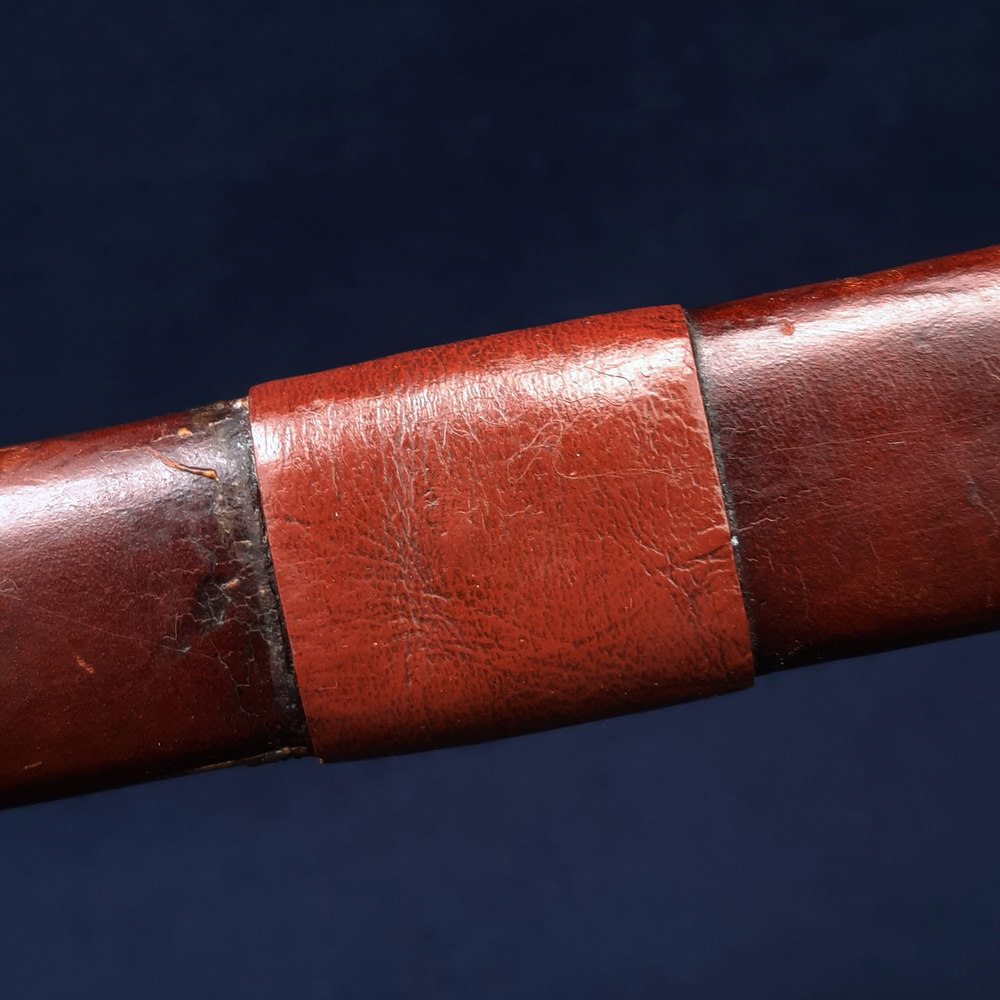
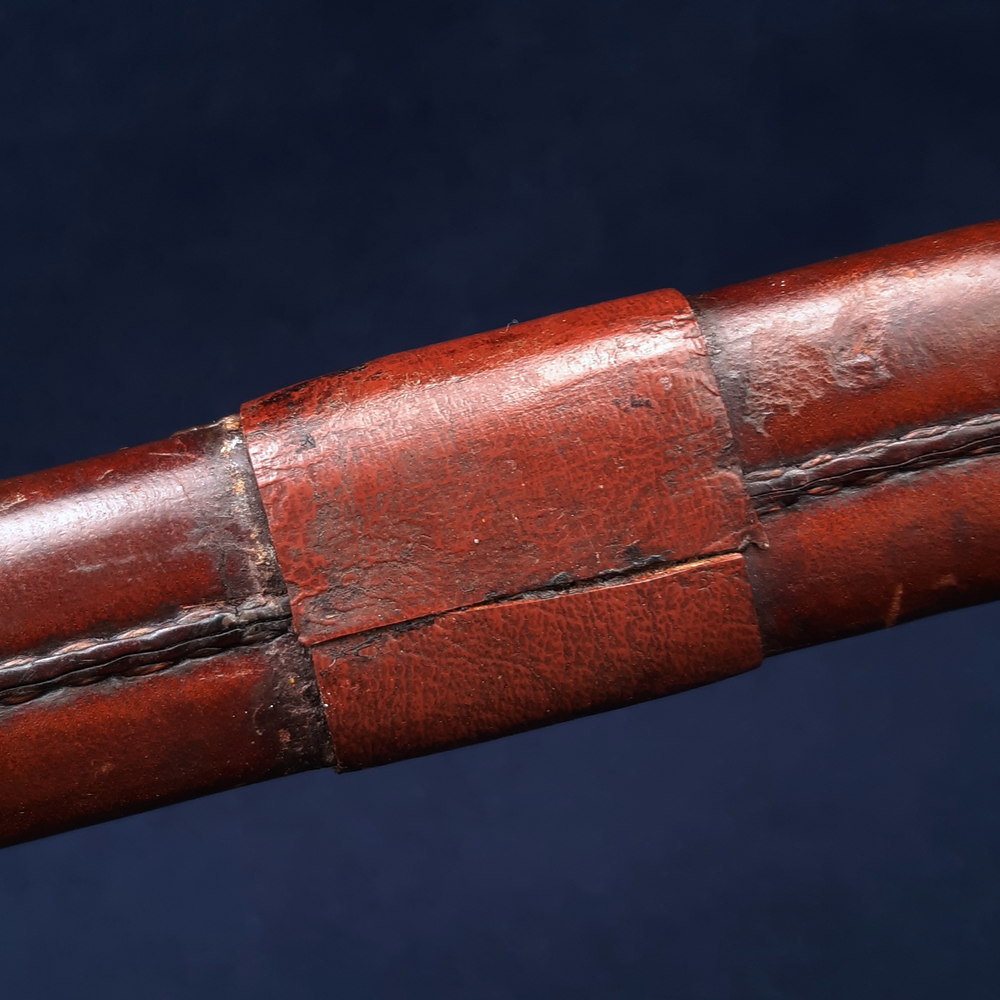
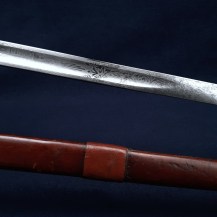
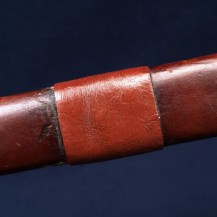
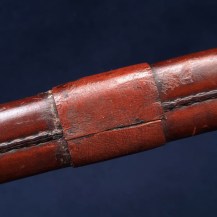
The leather of the scabbard has some small dents and spots of surface-level abrasion, its visible stitching is all intact. Slight movement to the chape piece but it remains attached. The leather of the scabbard is generally flexible: take care to support it after the sword is withdrawn as it has no rigid core. One visible repair has been made to the leather body consisting of a leather strip wrapped around it and presumably glued, done to stabilise what I think is a partial break to the body. This repair is intact although the scabbard can flex slightly at the break point under the ‘bandage’.
