

British WW1 Period 1827 Pattern Naval Officer's Sword by Gieve, Matthews & Seagrove, 1904-1916
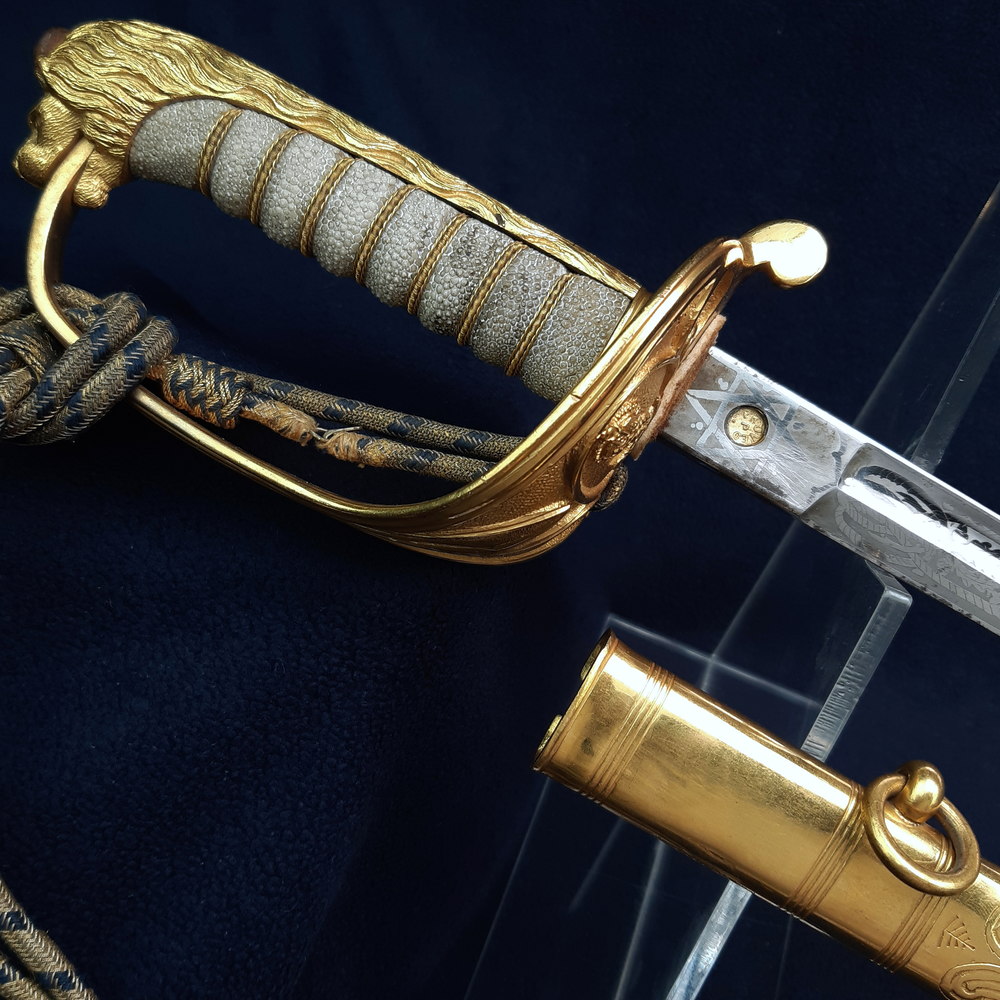
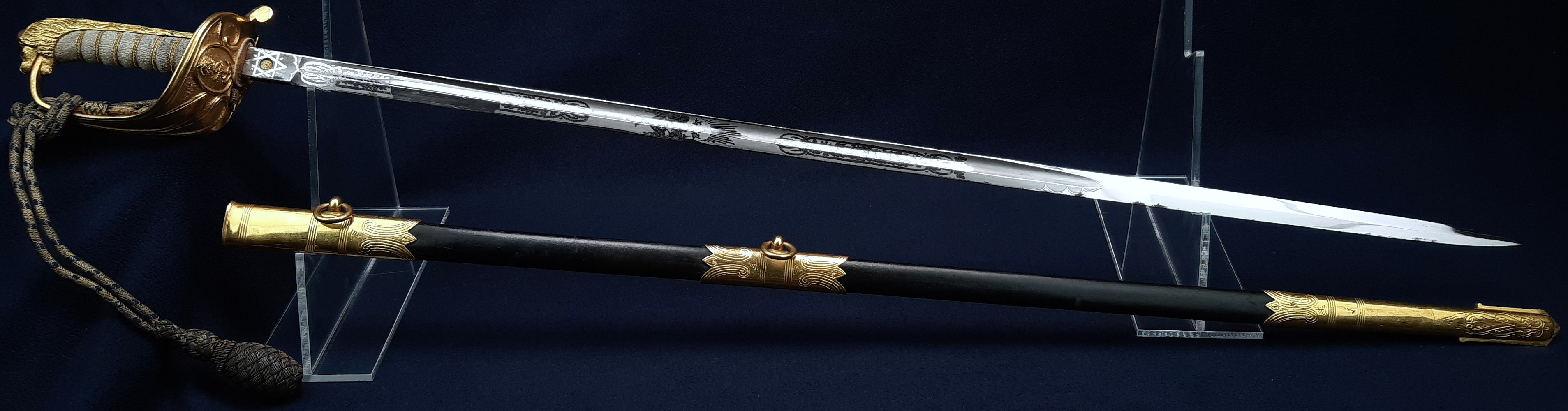
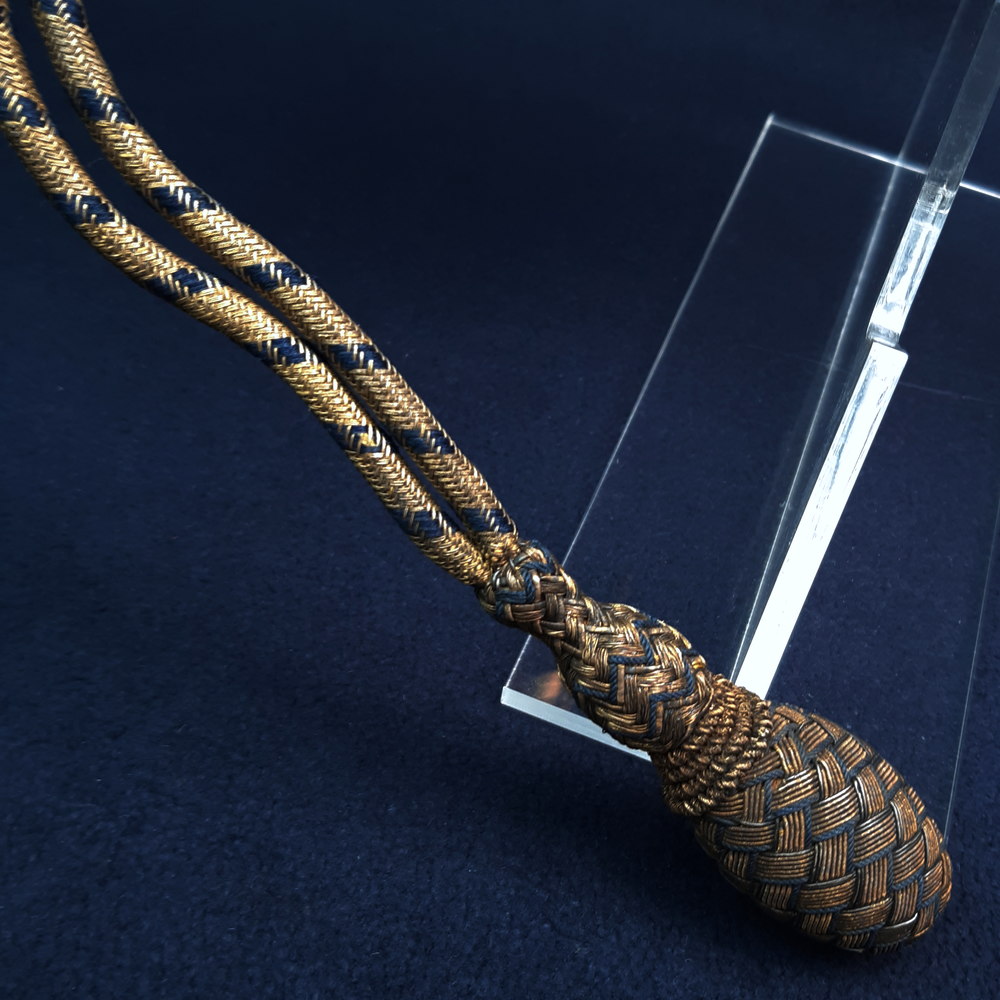
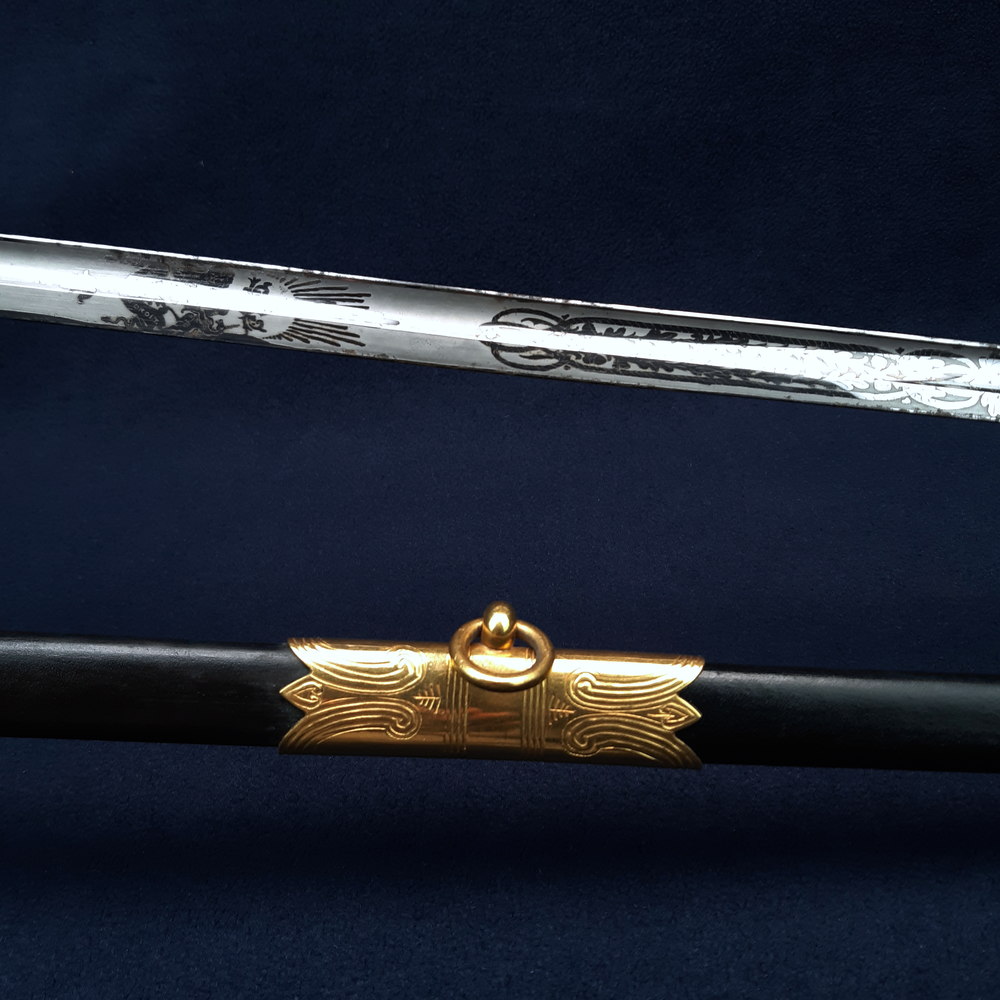
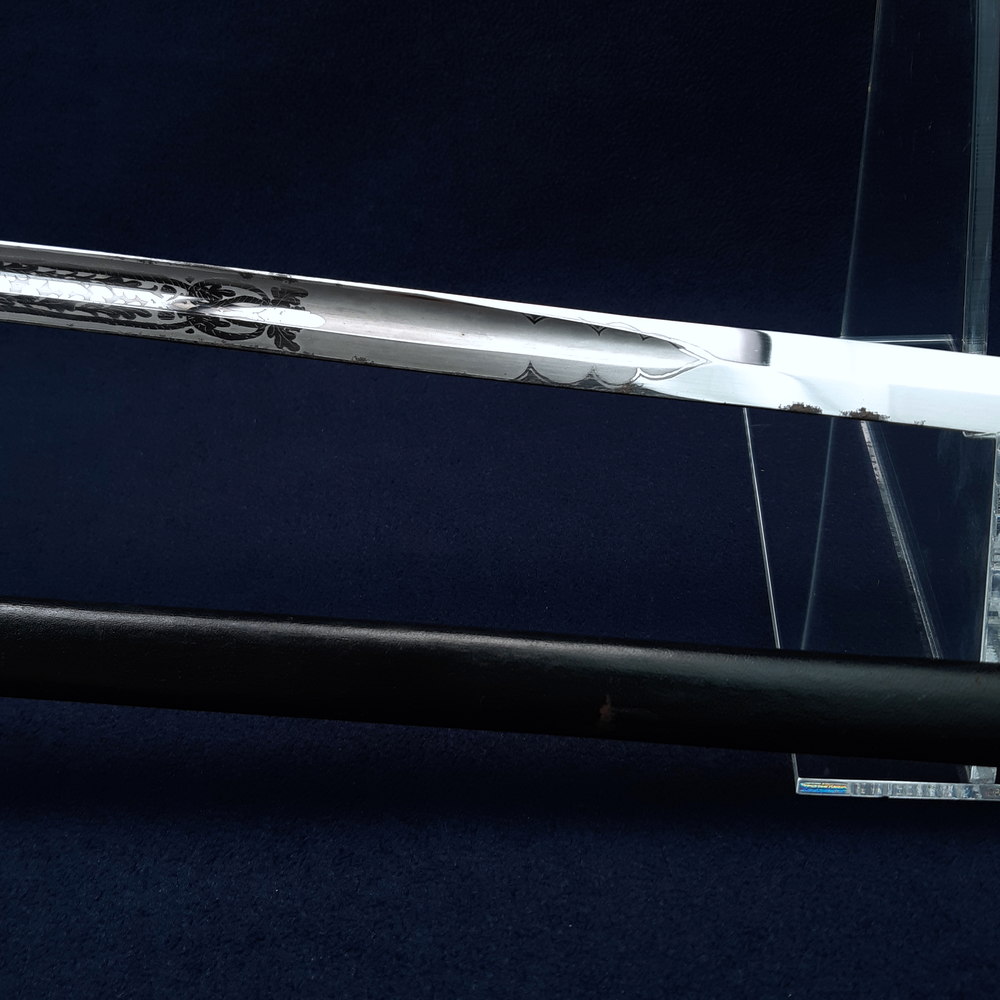
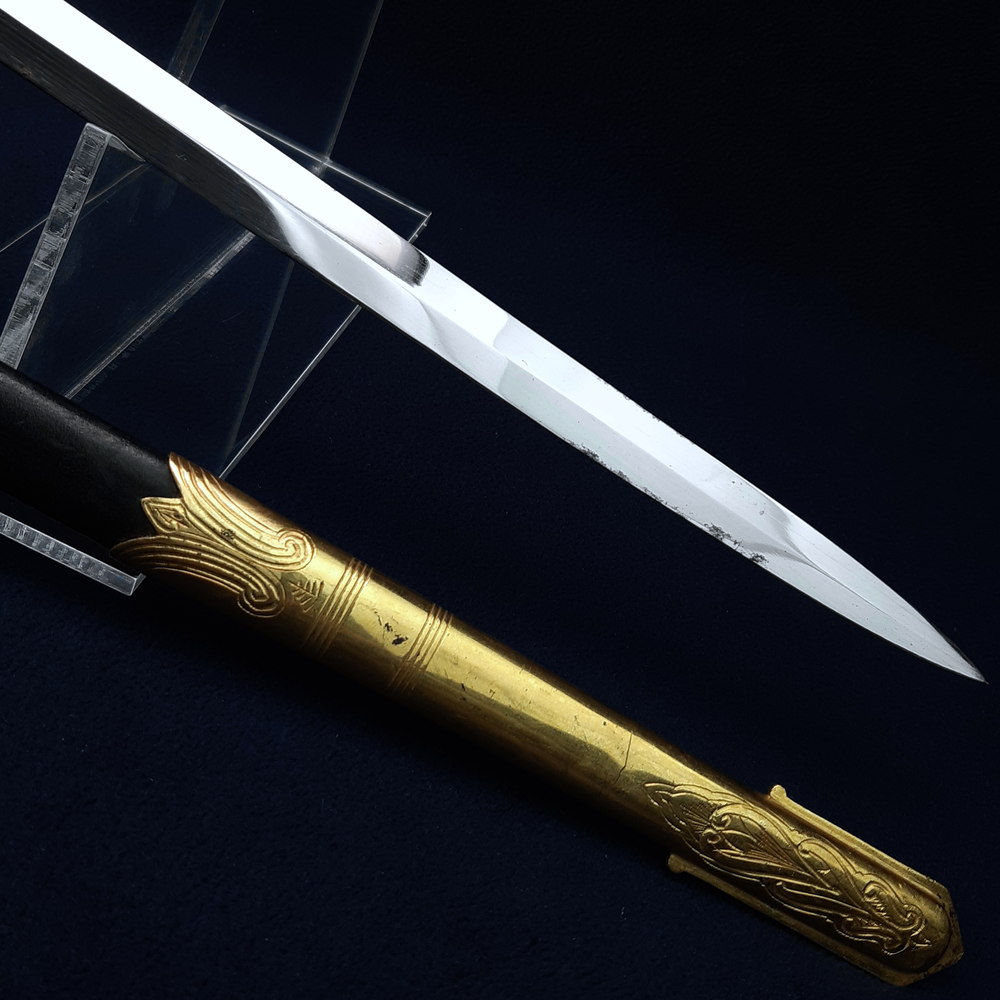
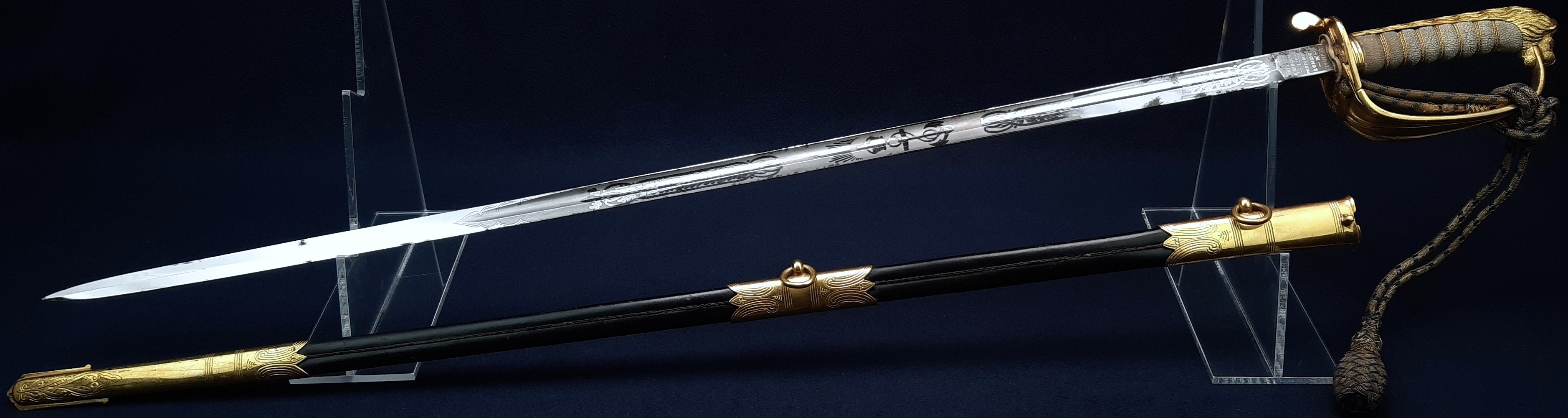
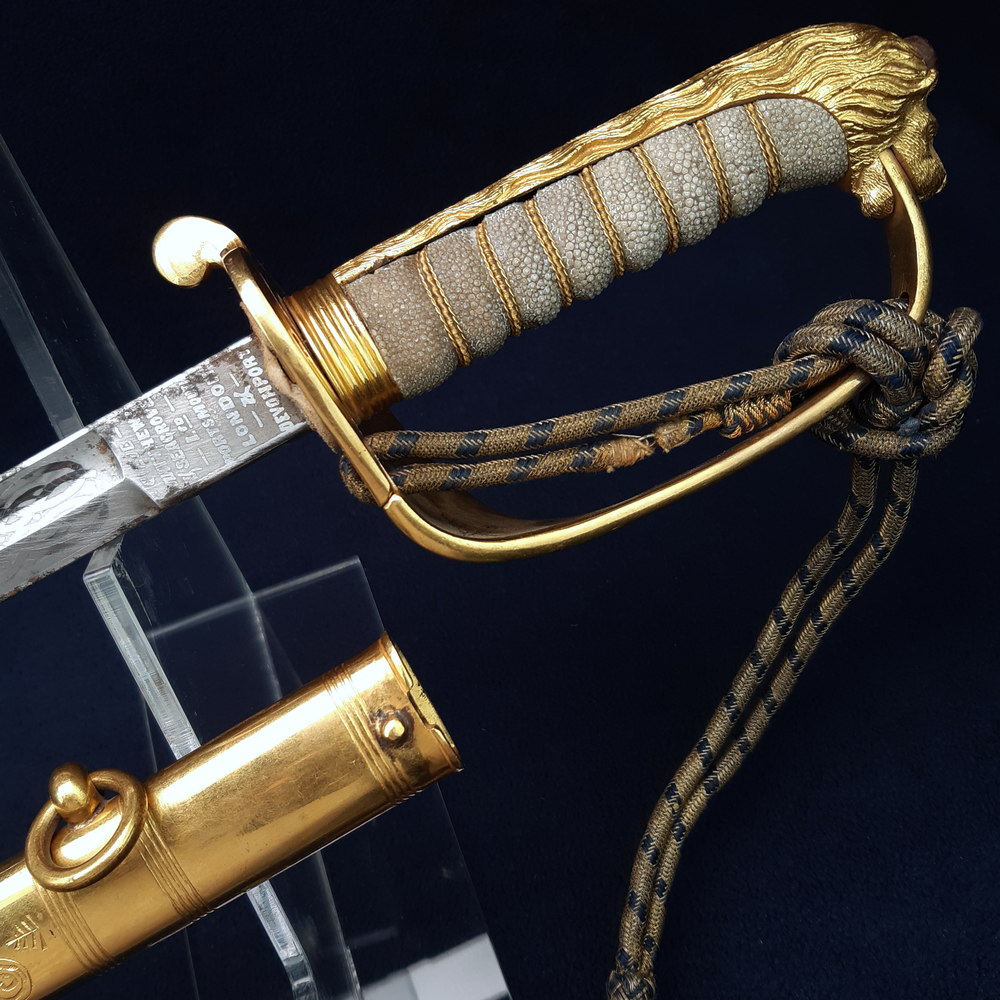
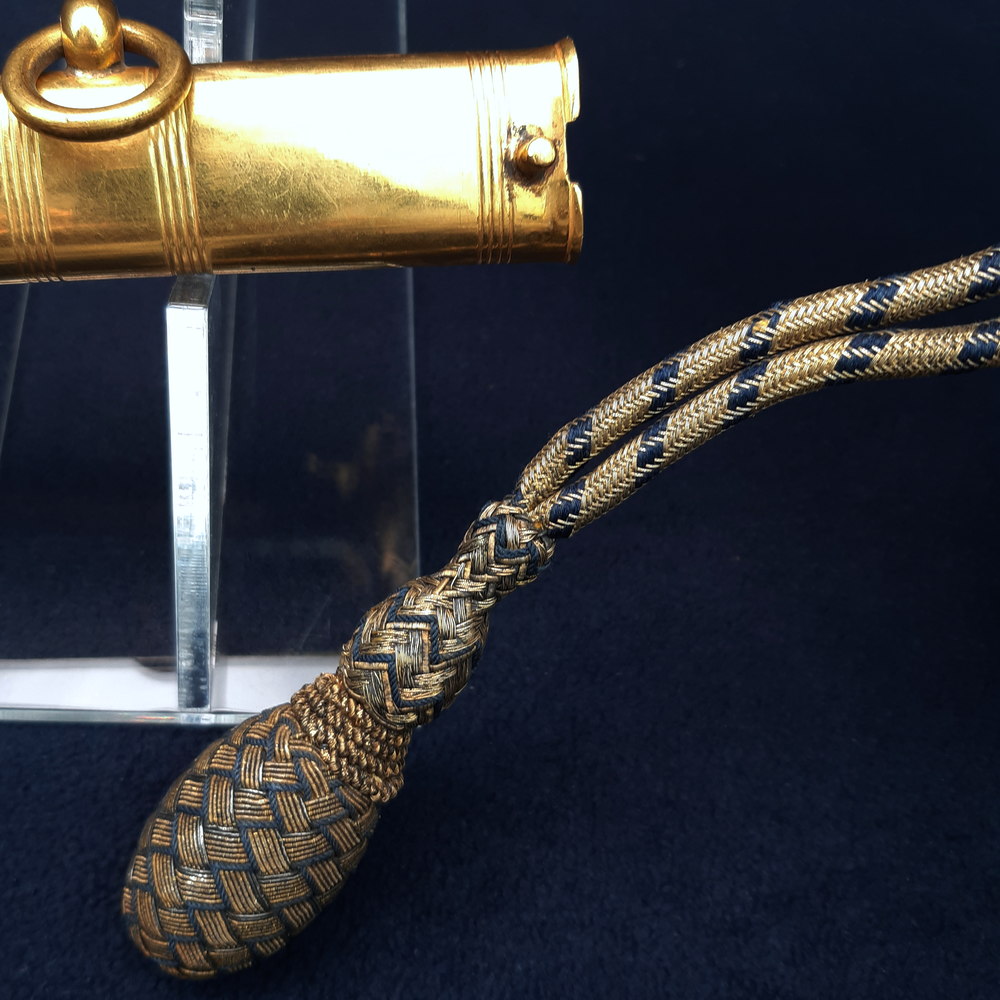
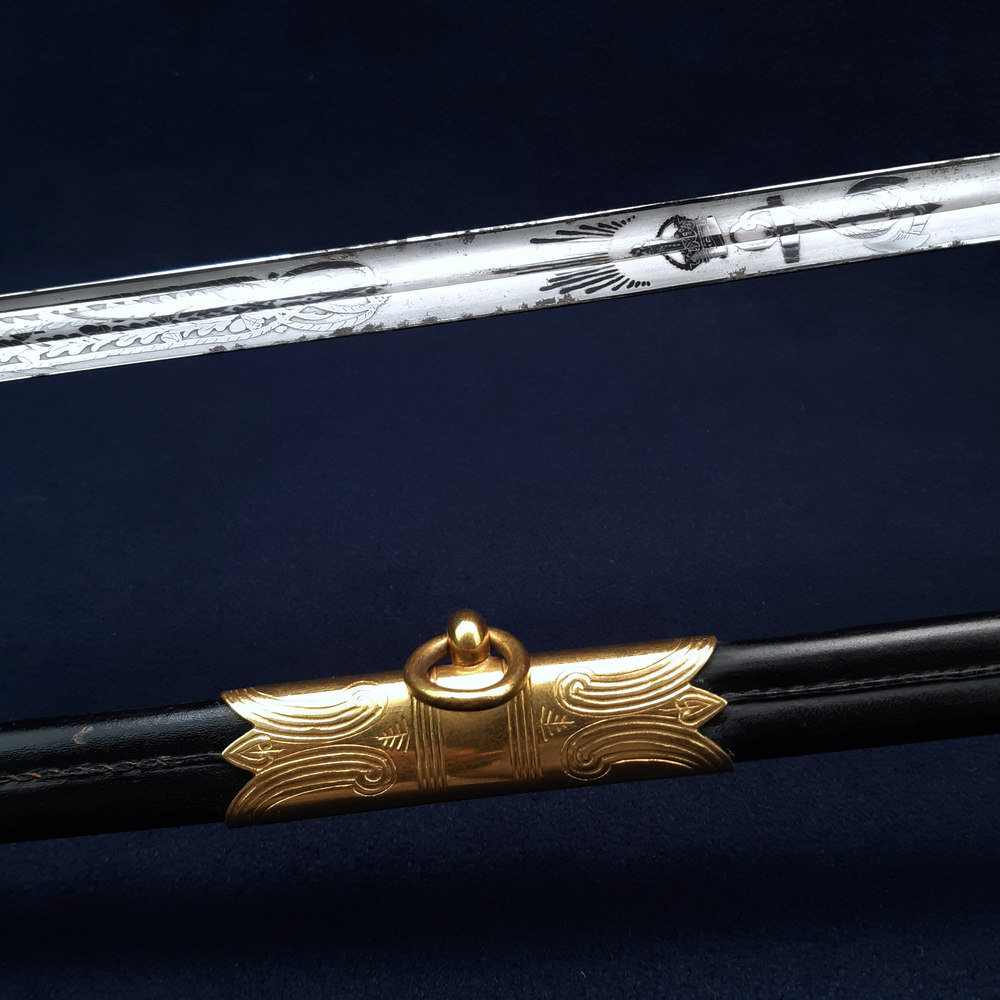
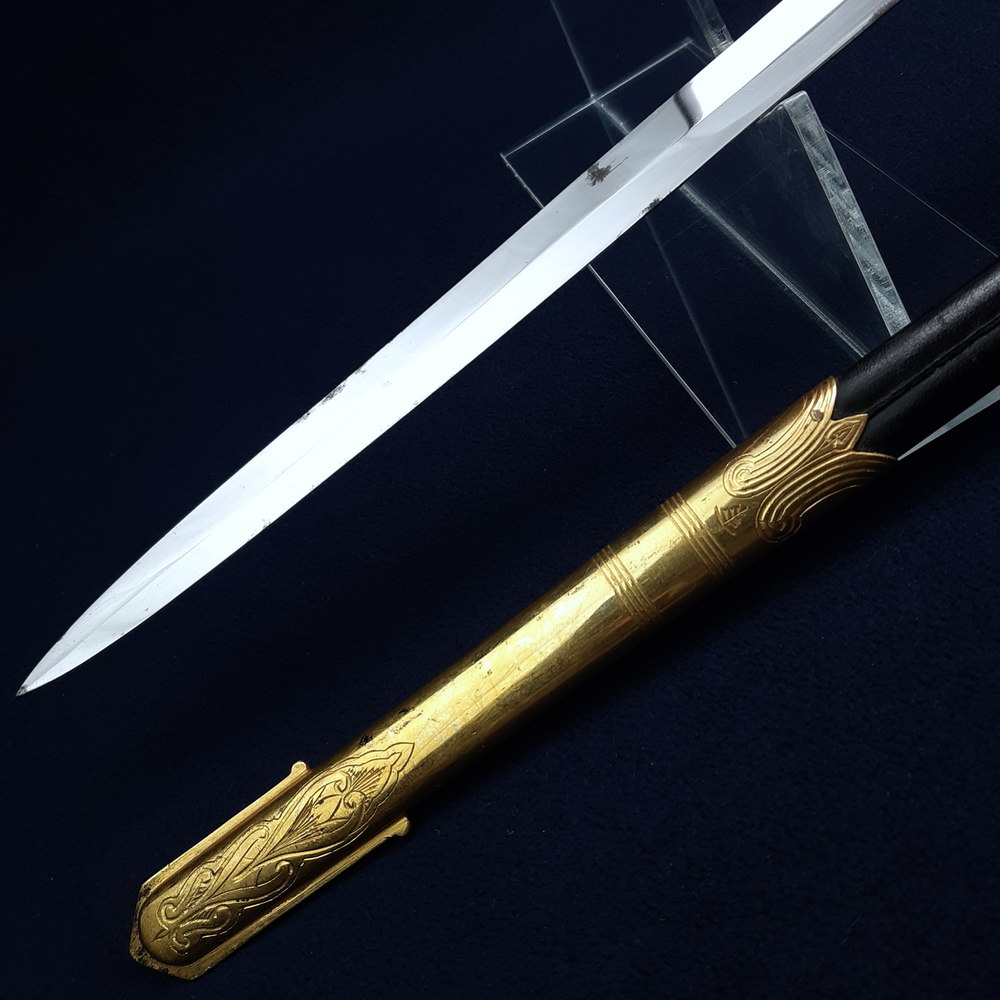
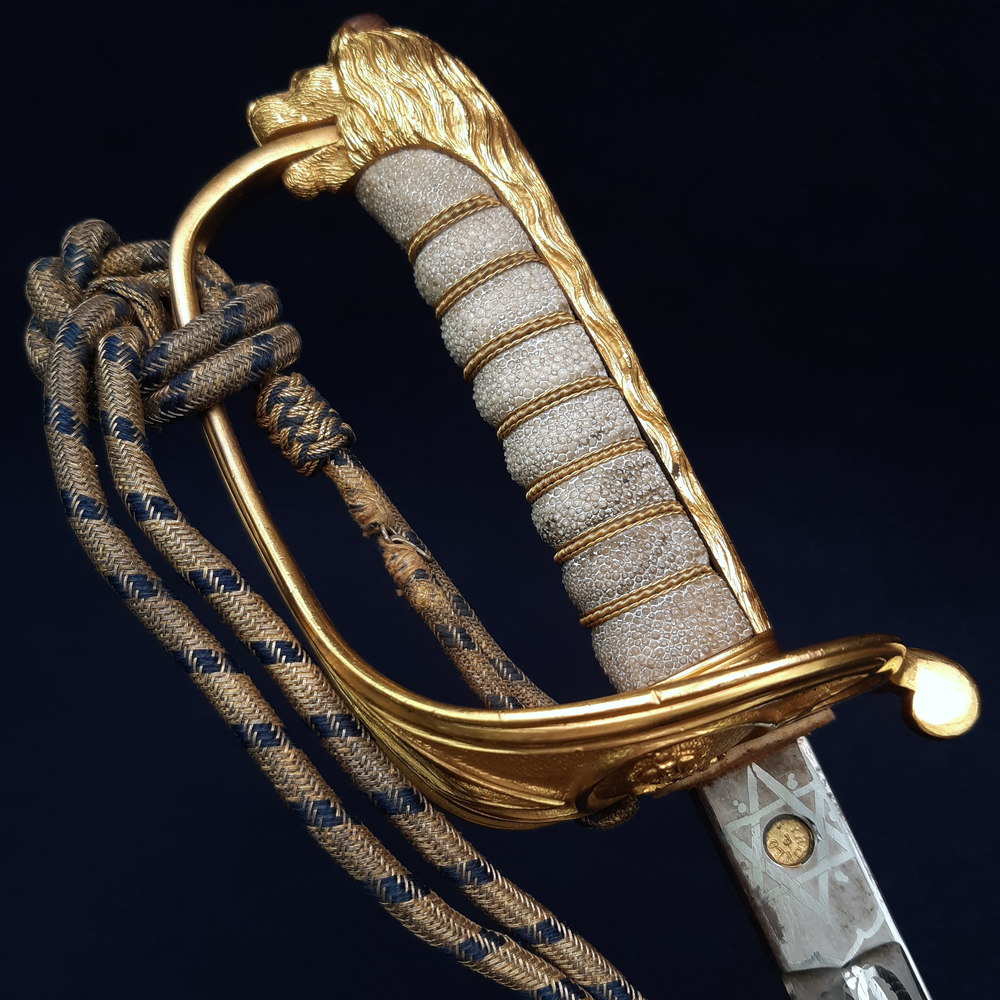
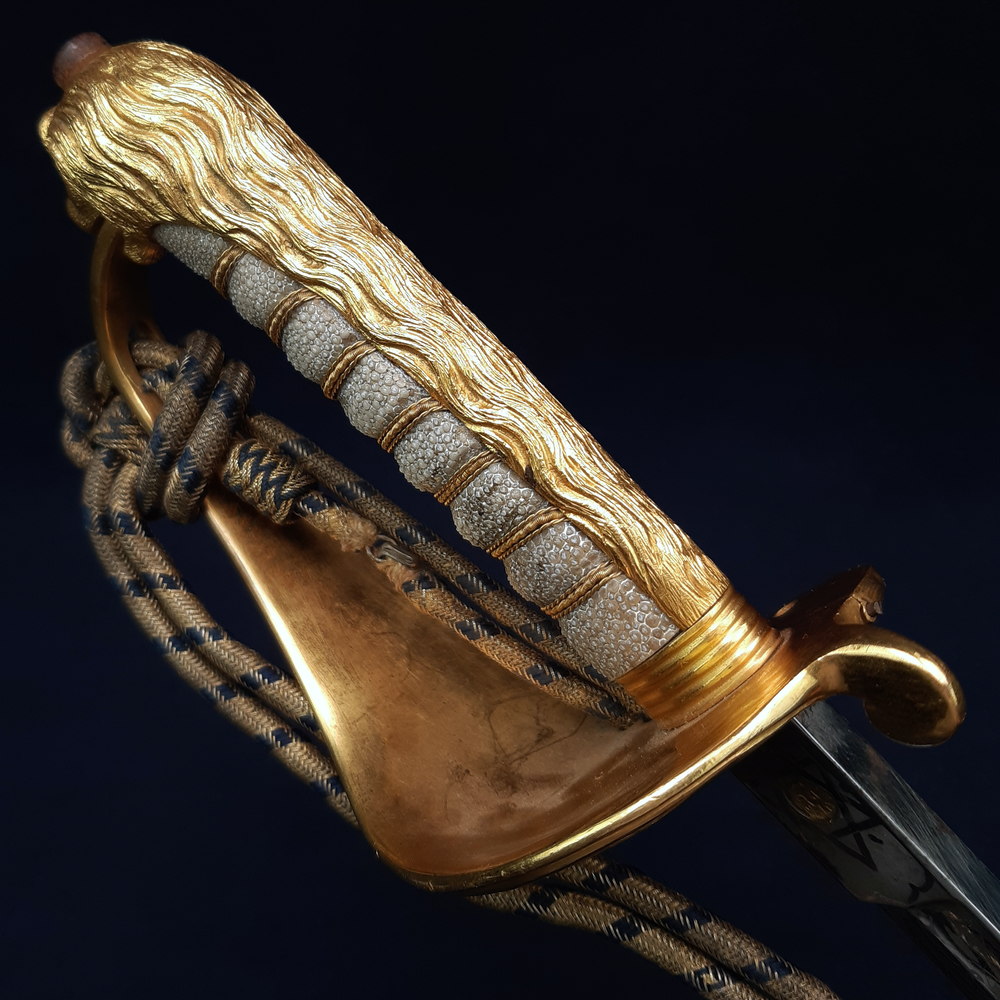
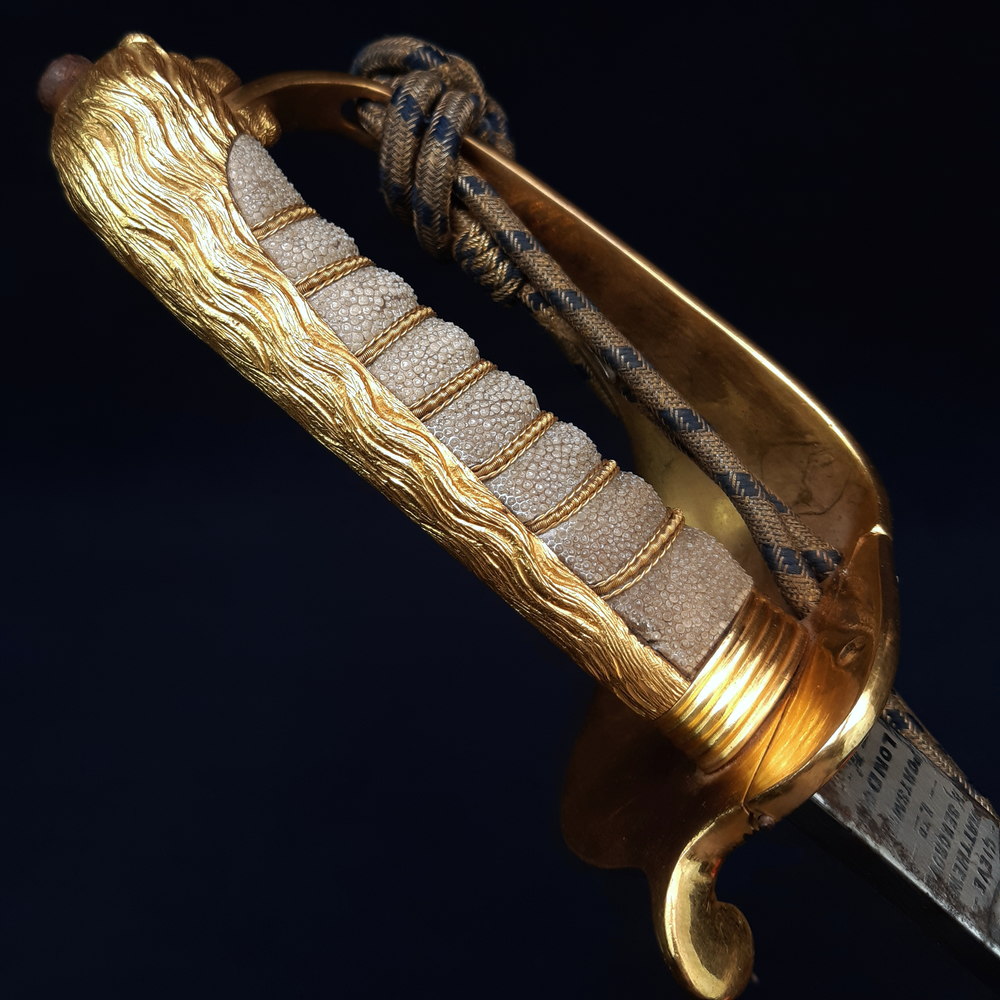
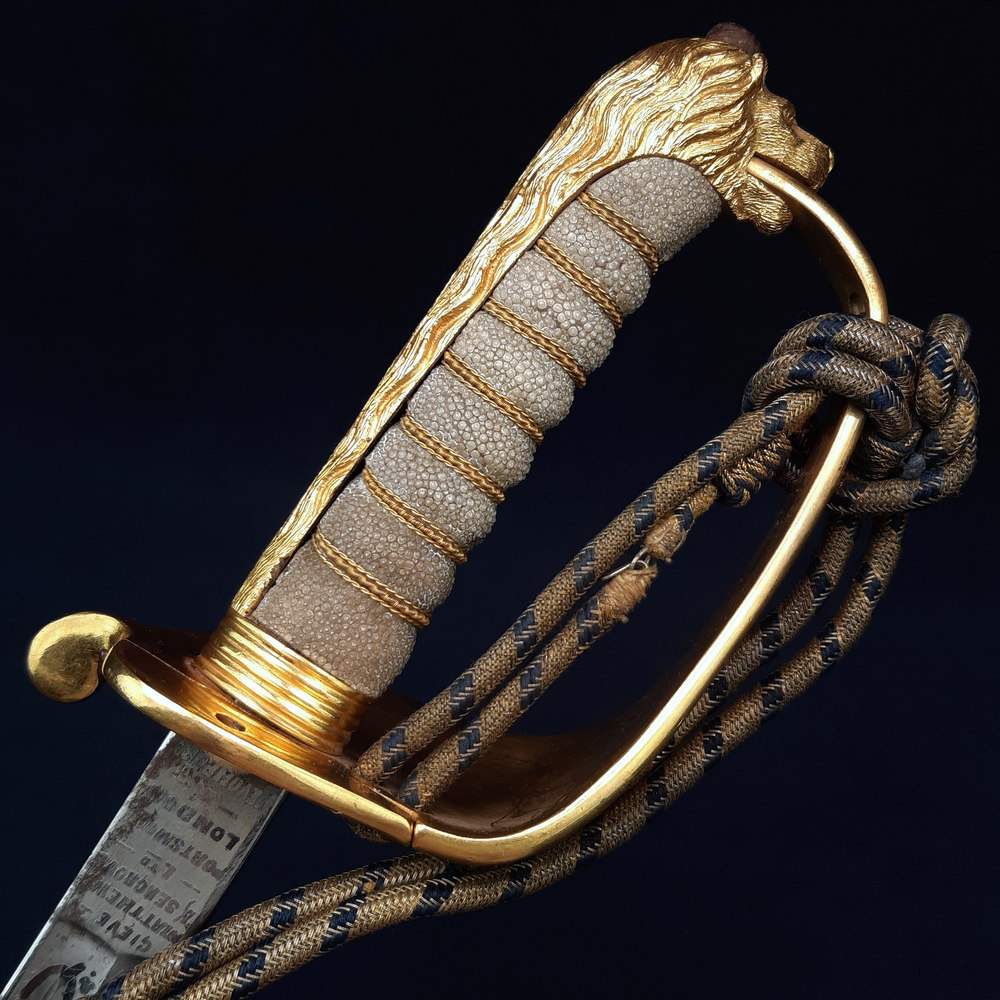
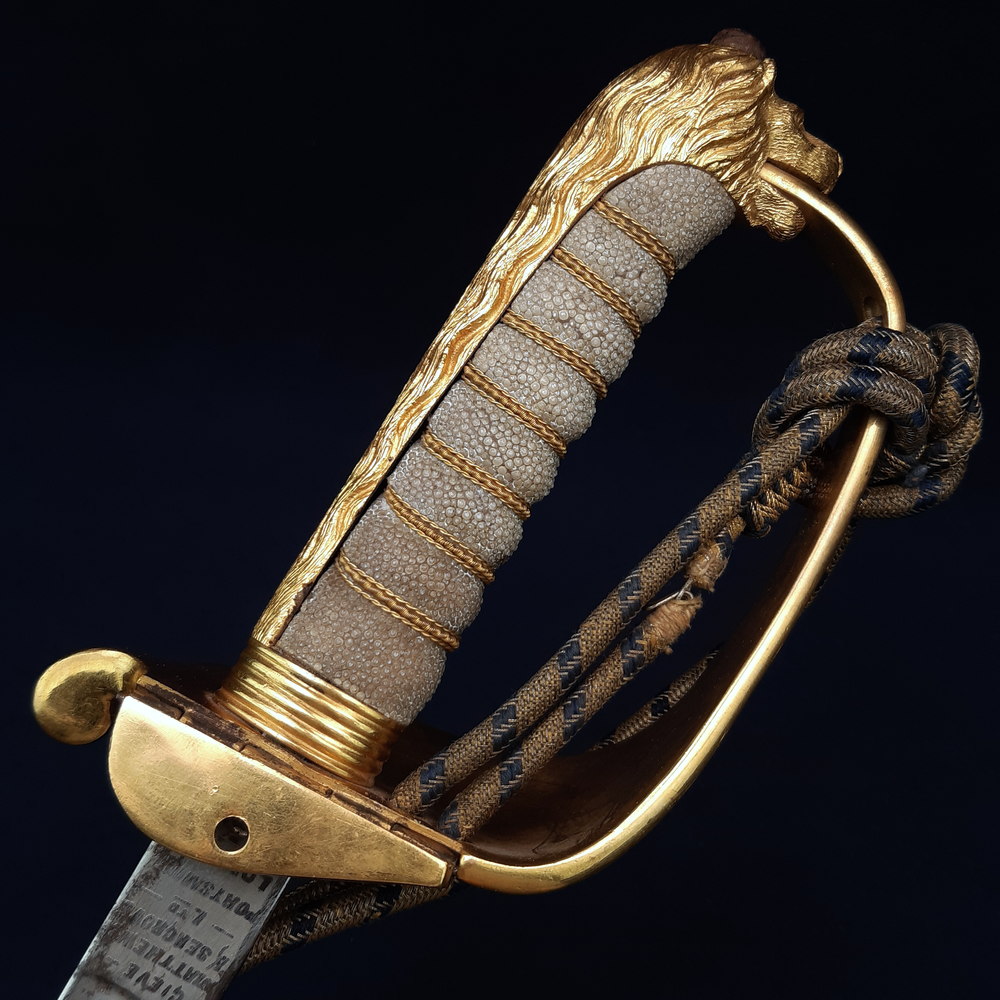
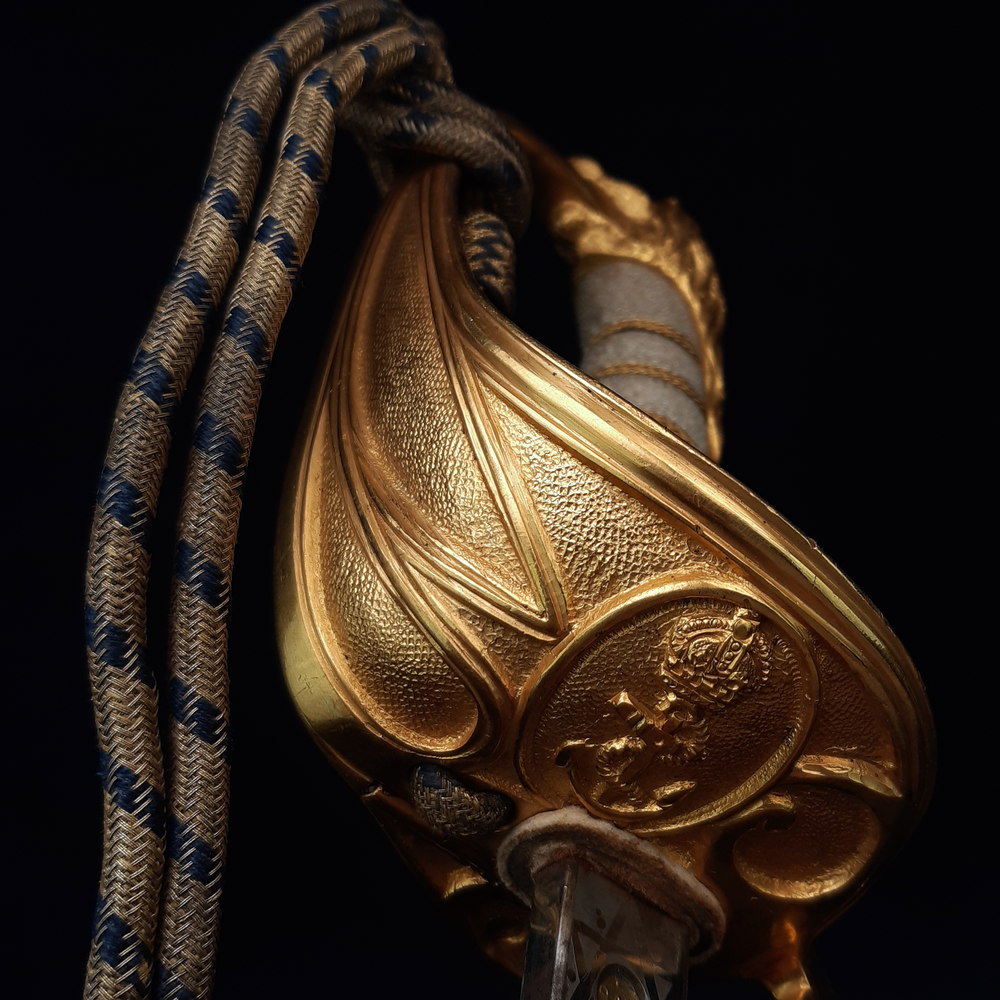
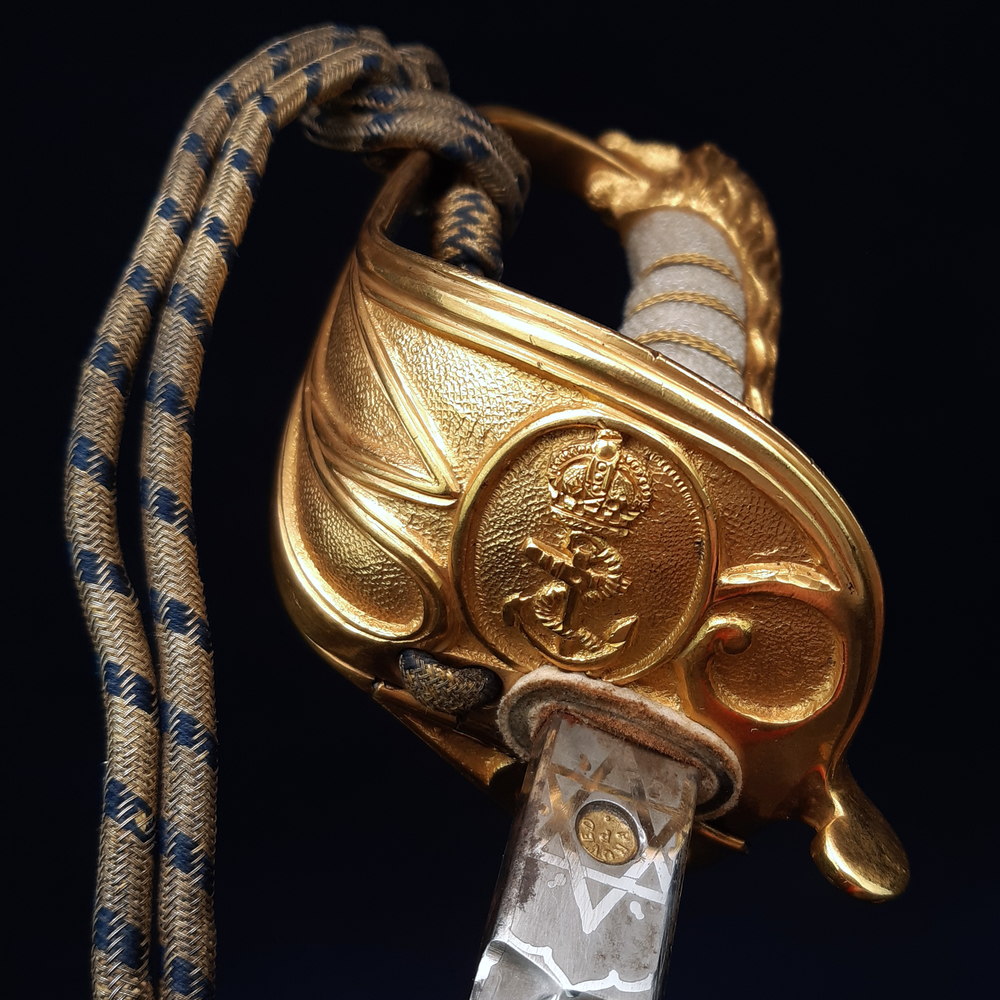
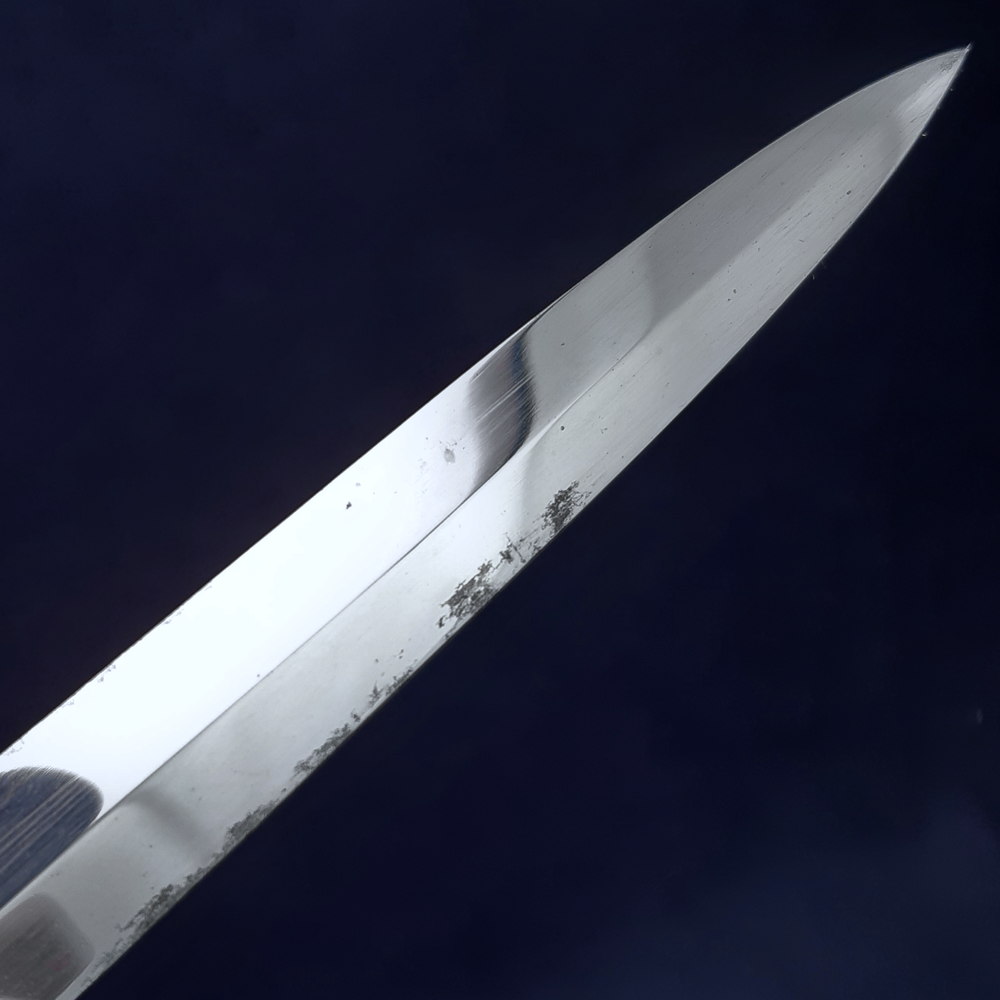
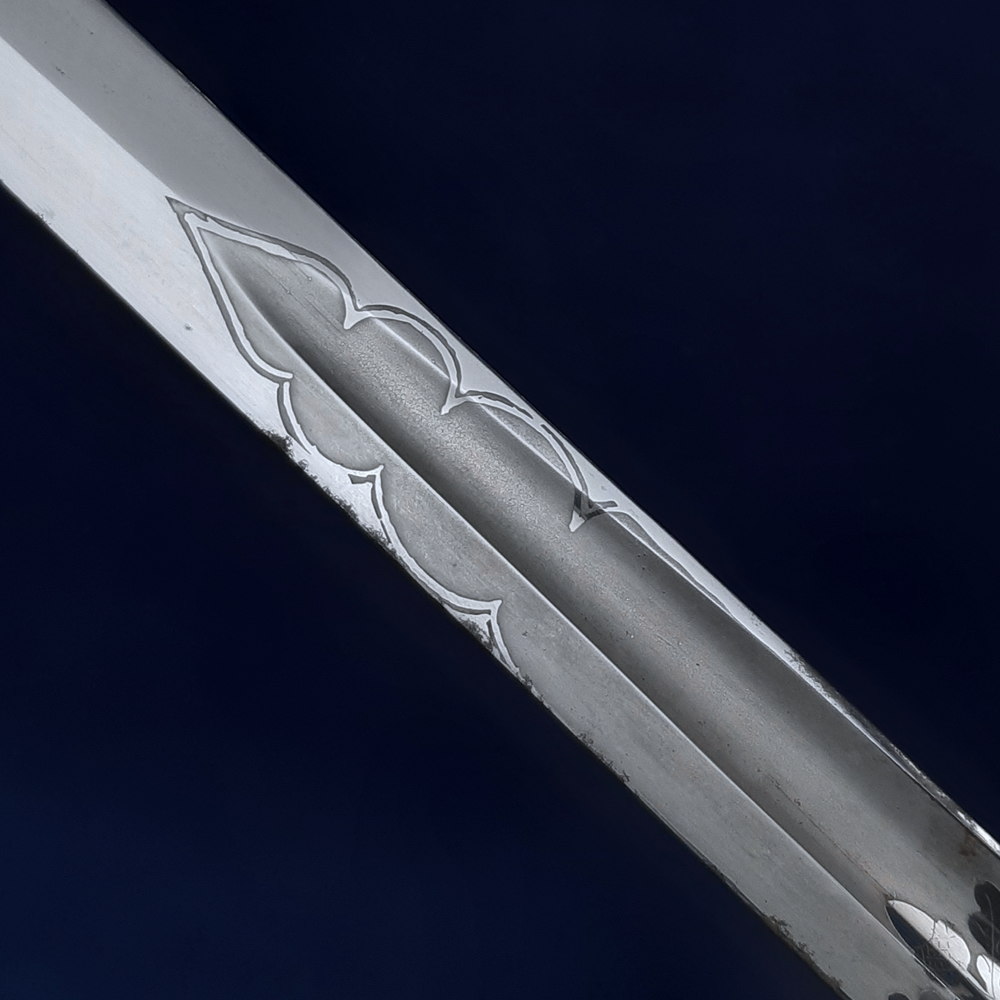
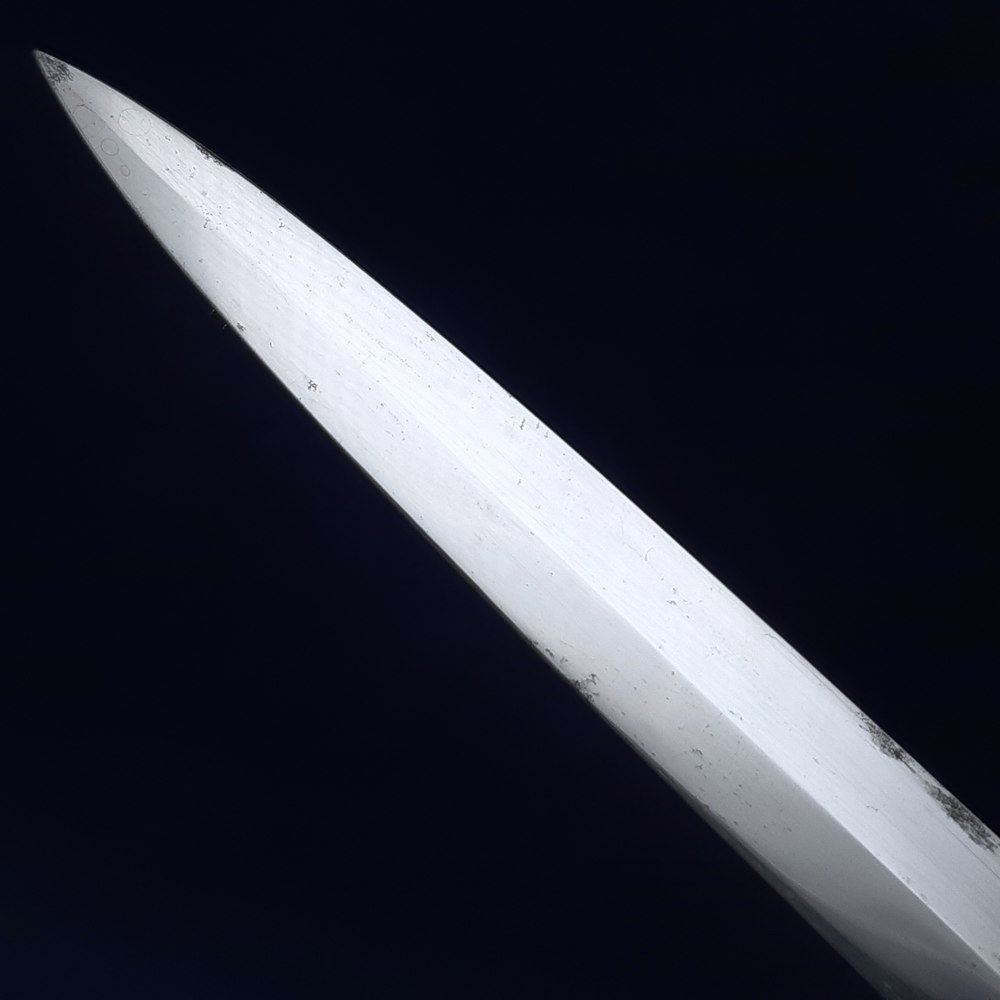
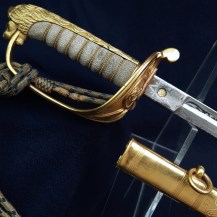
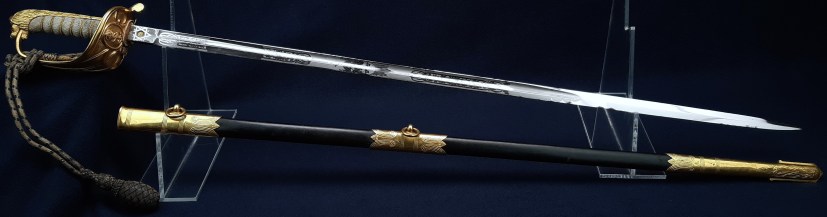
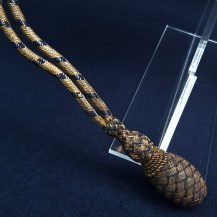
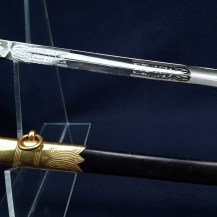
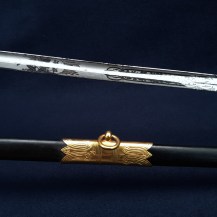
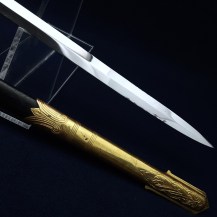
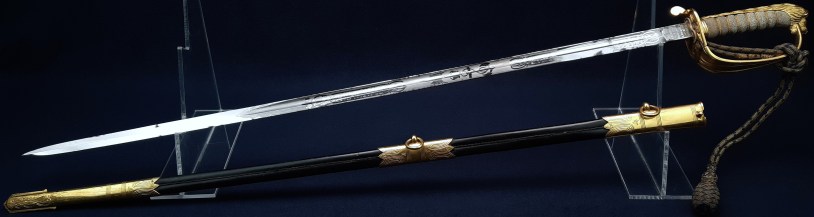
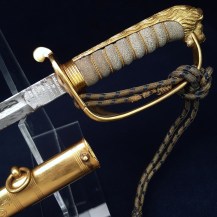
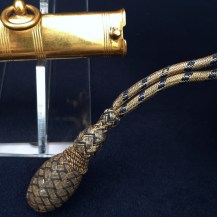
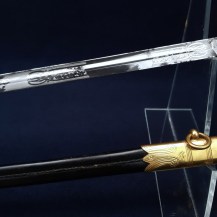
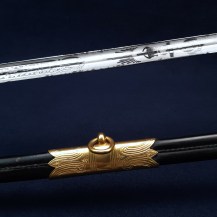
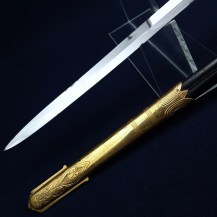
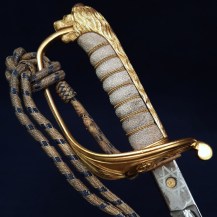
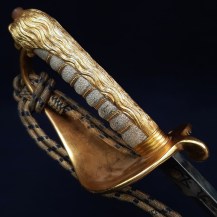
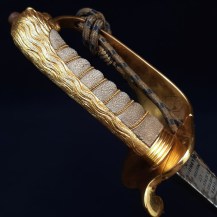
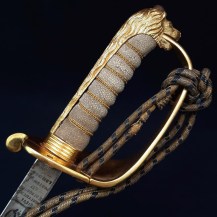
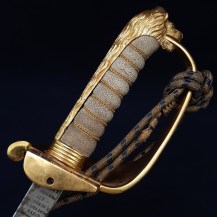
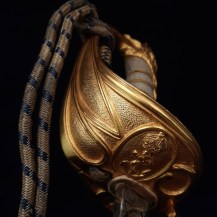
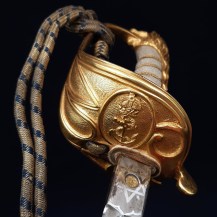
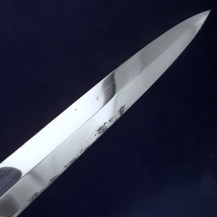
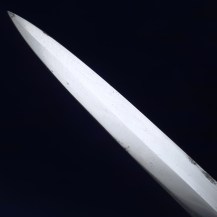
Single fullered ‘Wilkinson’ type blade with spear point. Gilt brass half-basket hilt cast with a St Edward’s crown and fouled anchor within a cartouche, hinged folding inner guard securing the sword in its scabbard, gilt brass hair-textured backstrap with lion head pommel, tang button, white shagreen grip bound with wire, ribbed brass ferrule, blue & gold knot. Buff leather washer. Black leather scabbard with gilt brass throat, chape and middle pieces, hanging rings on the throat and middle. Blade 31¼ inches in length, 0.75 inches wide at the shoulder, the sword 36½ inches overall.
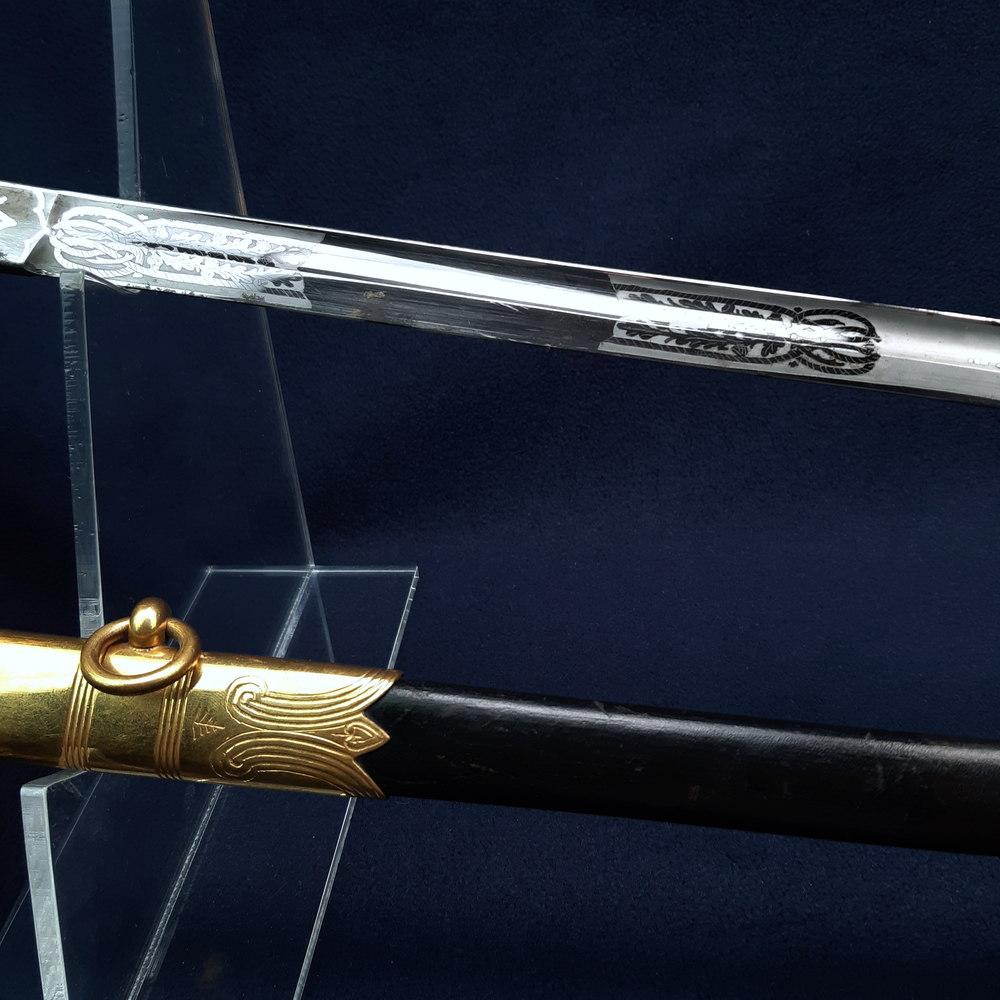
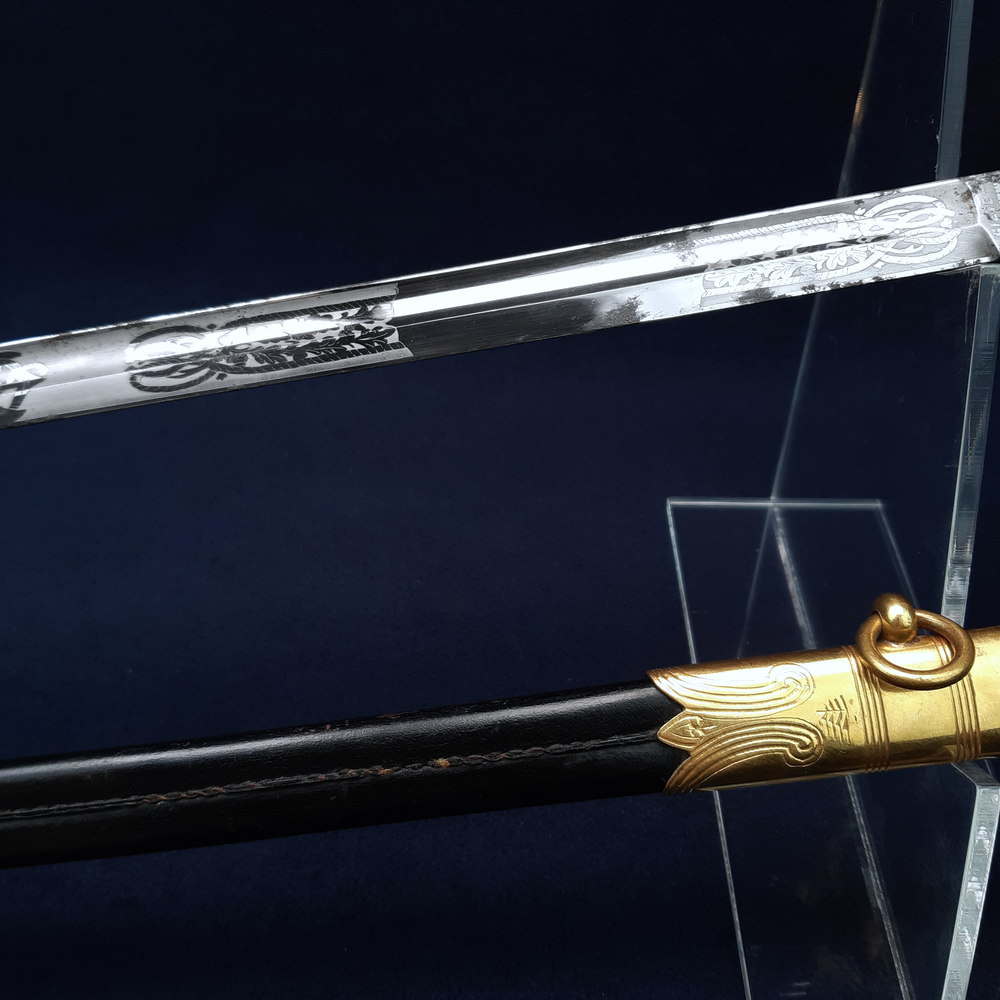
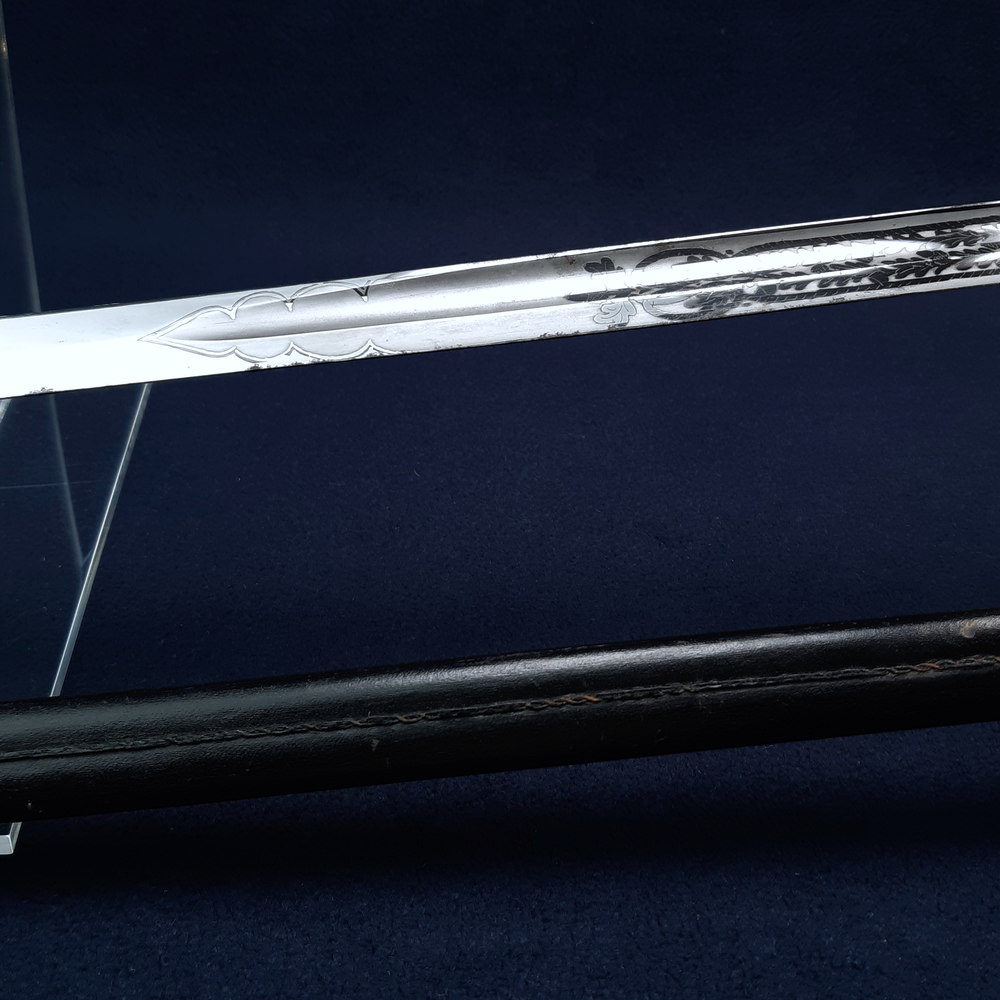
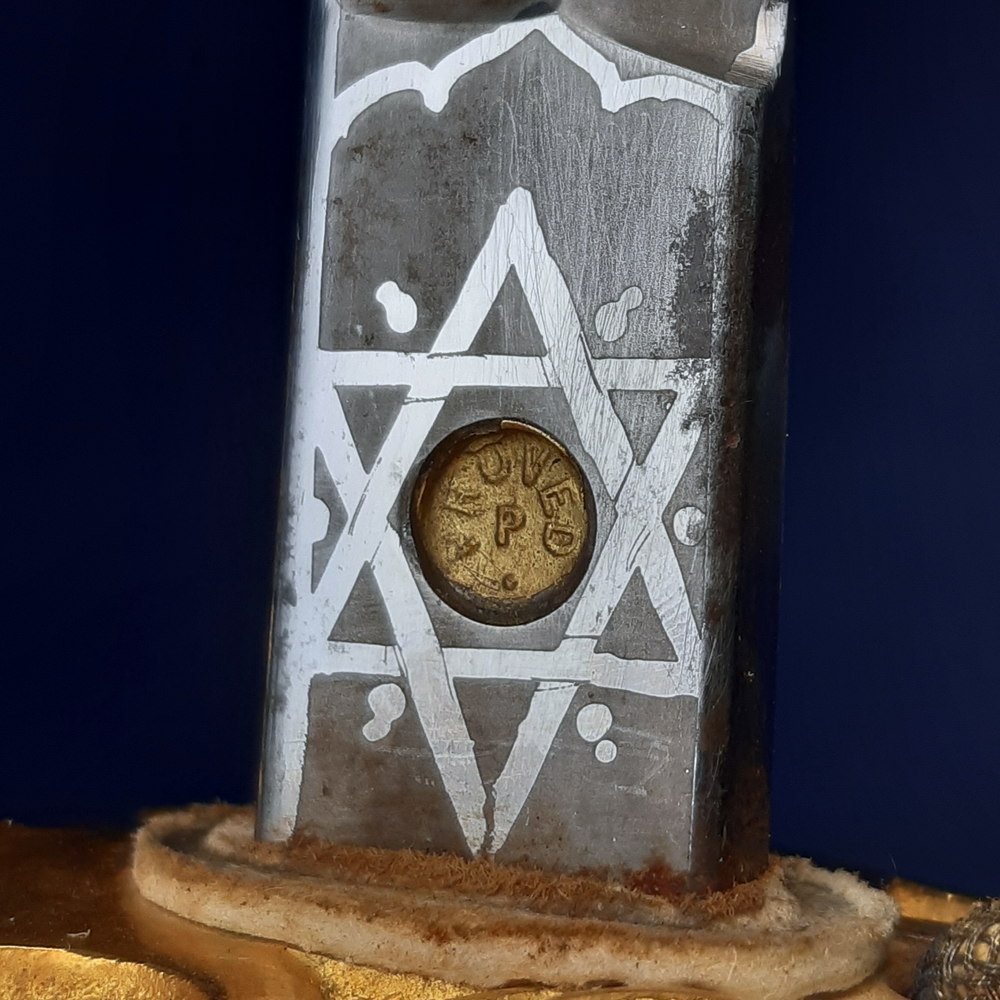
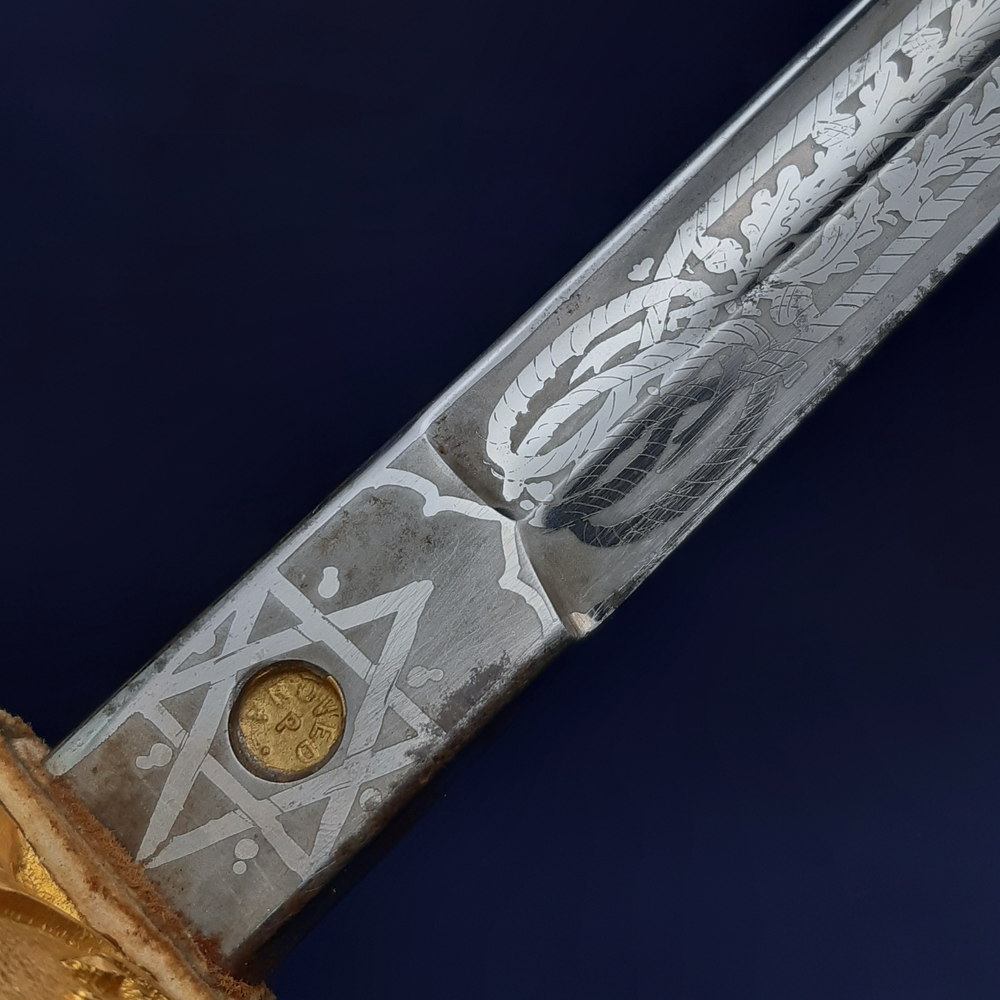
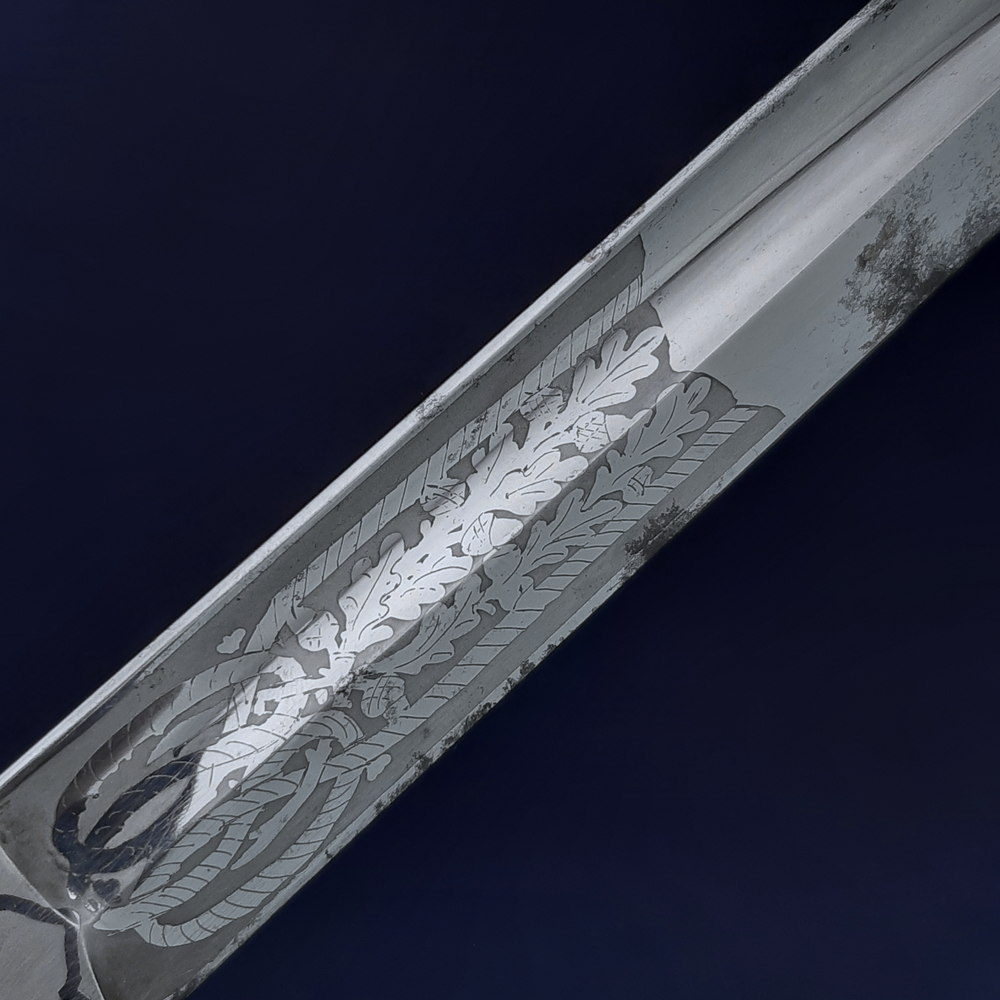
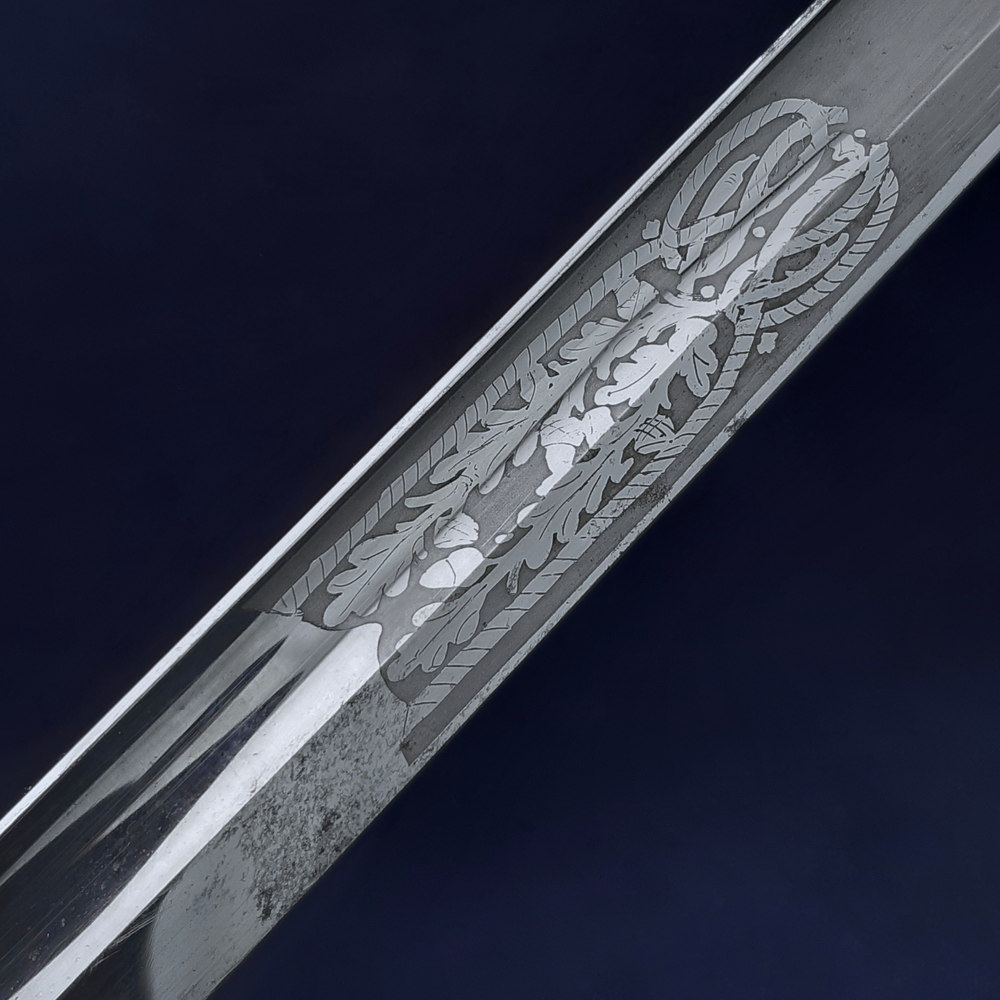
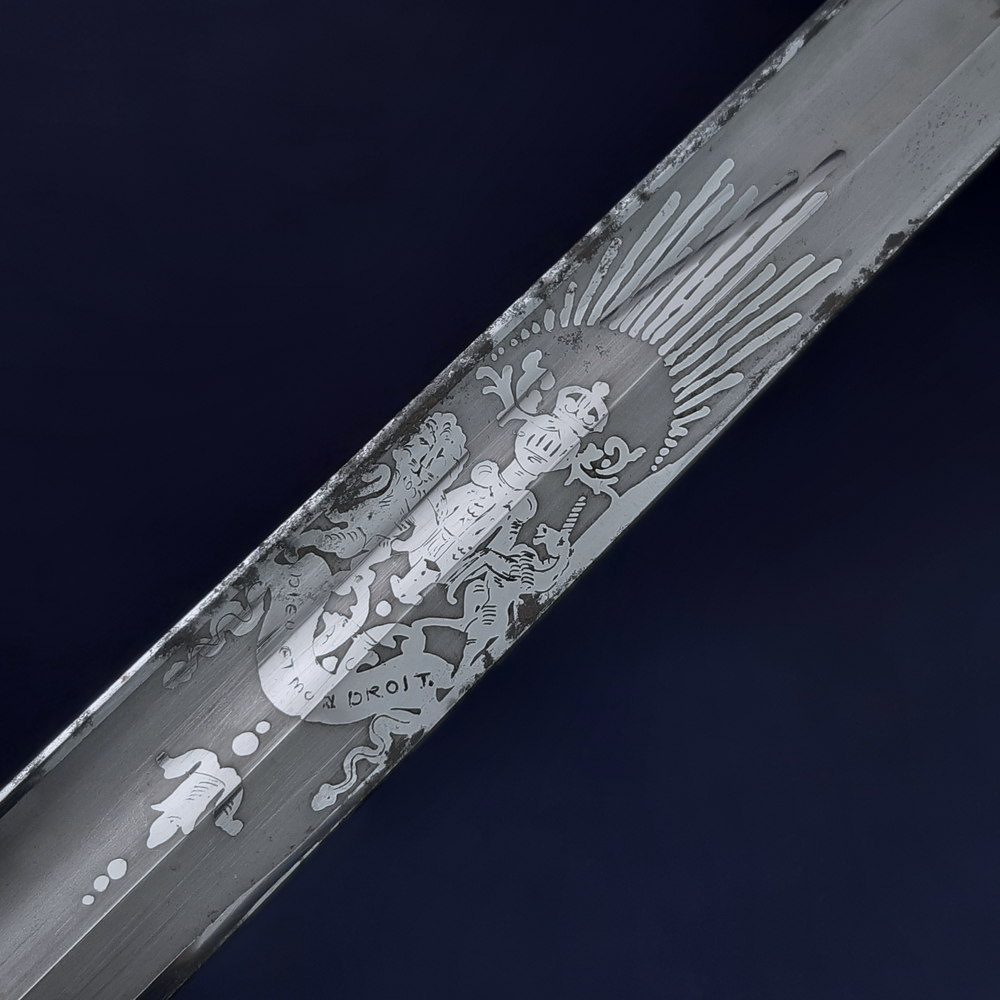
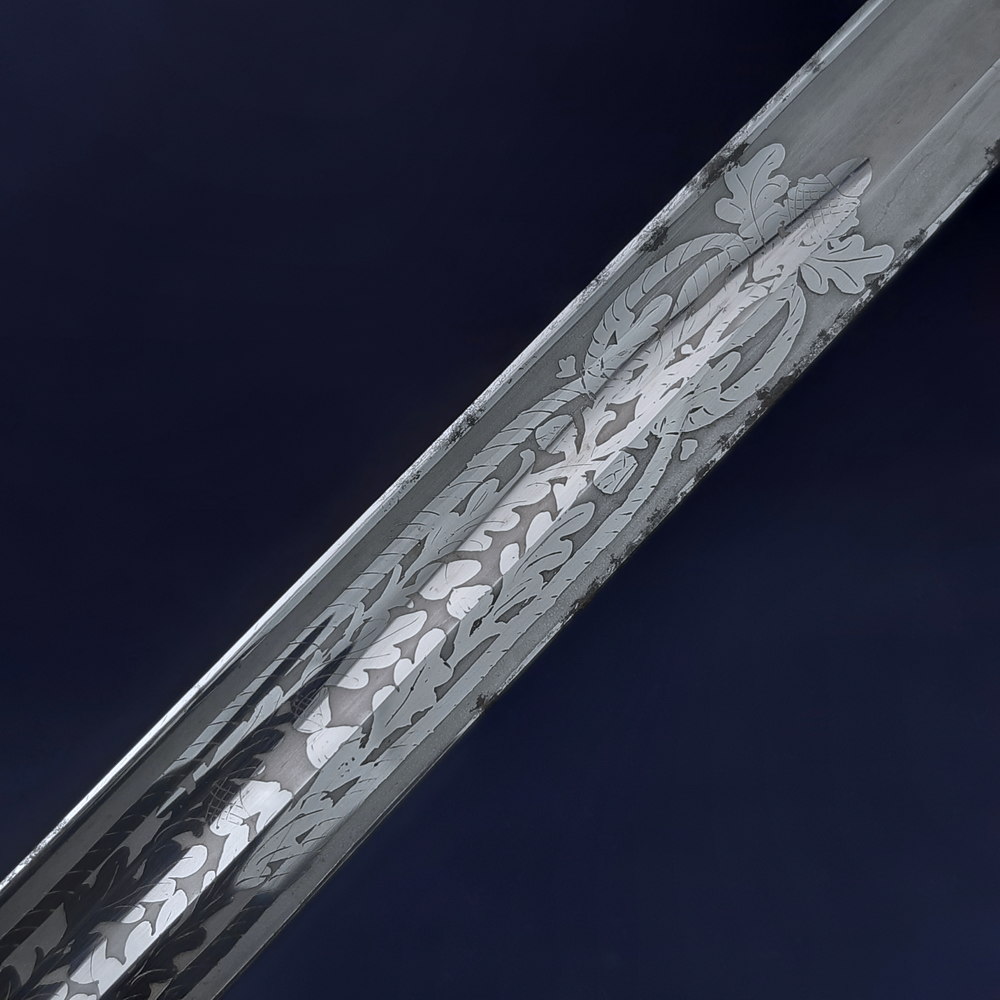
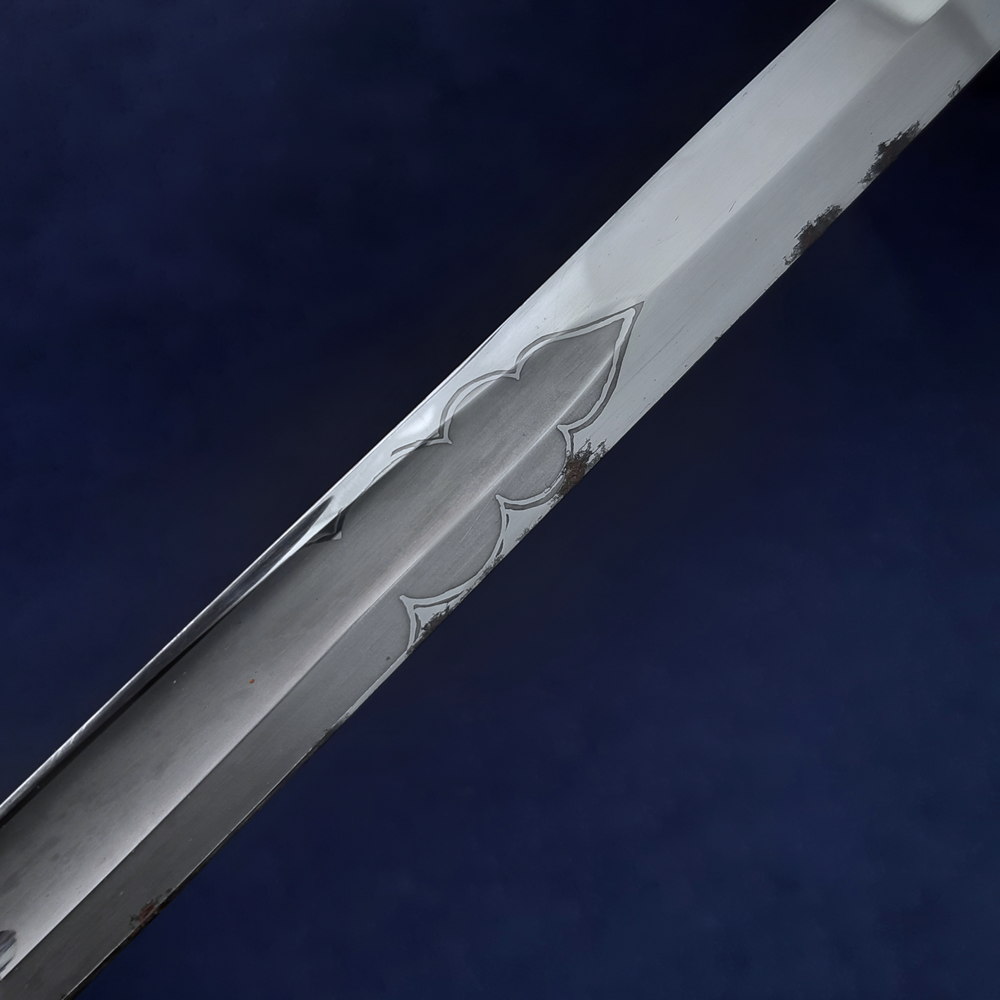
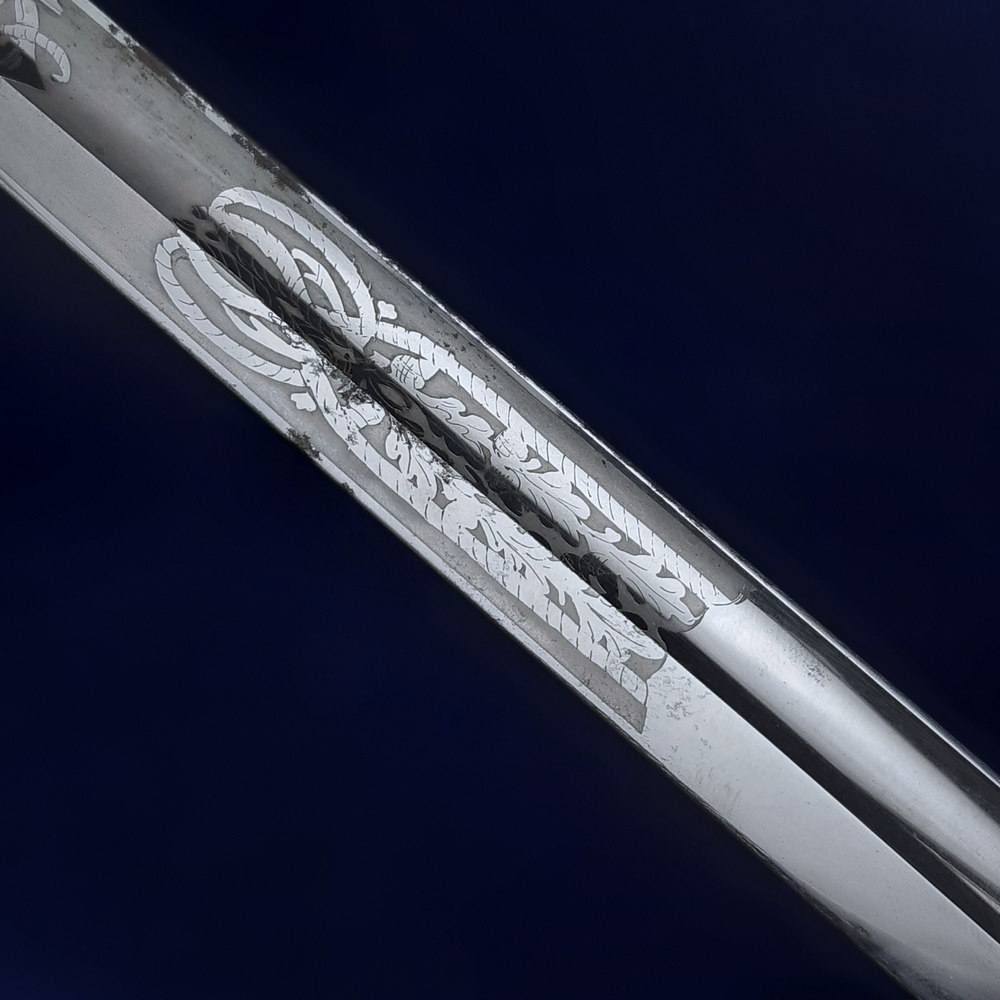
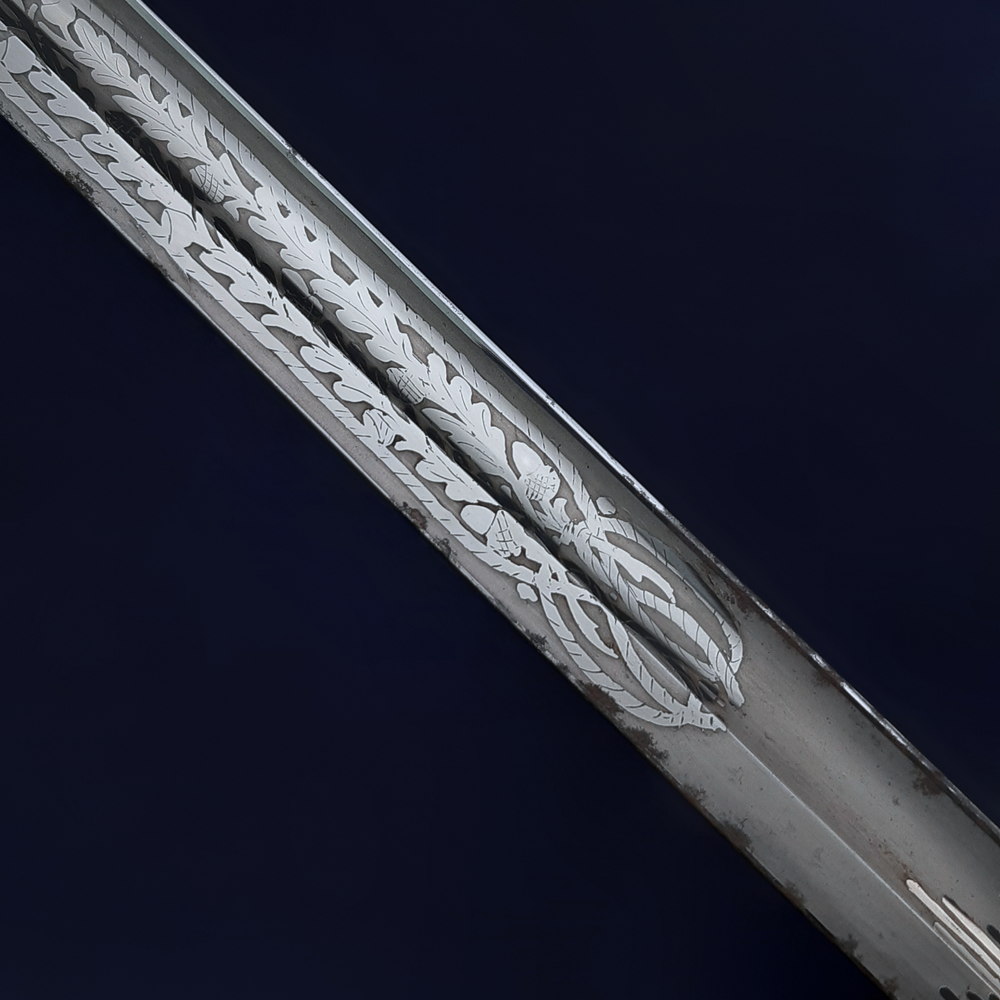
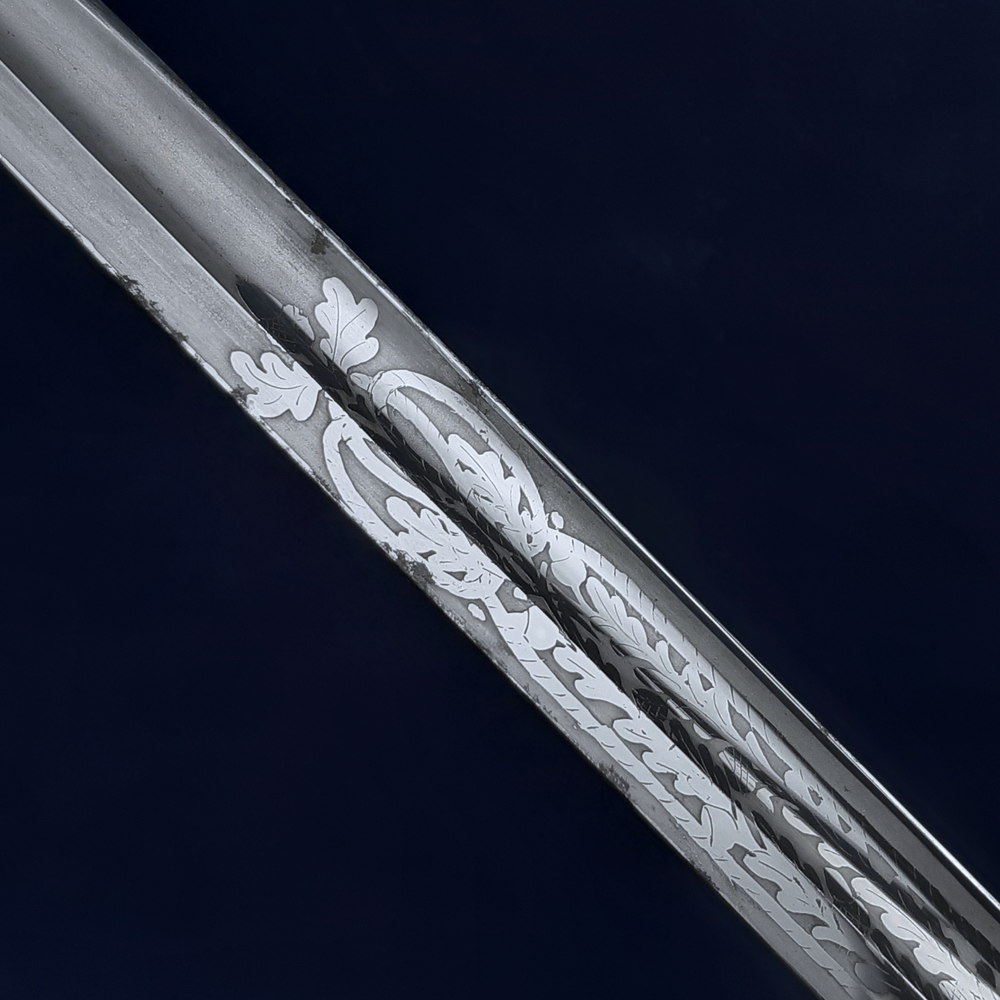
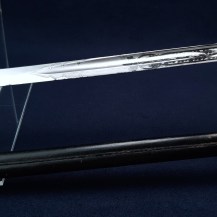
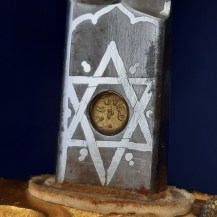
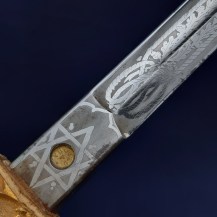
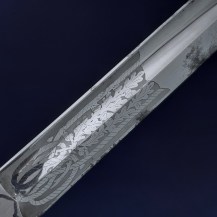
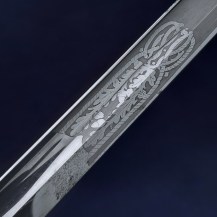
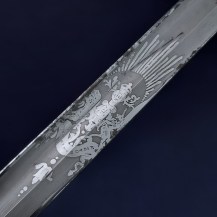
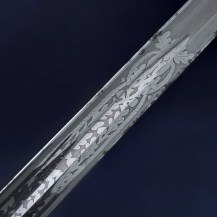
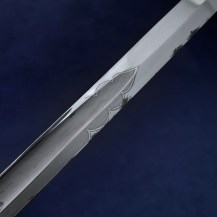
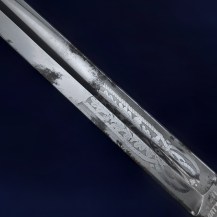
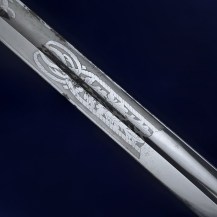
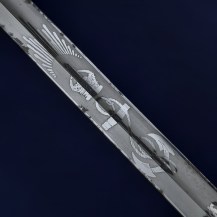
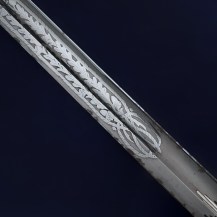
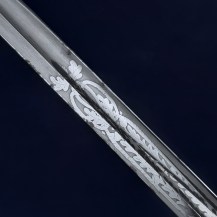
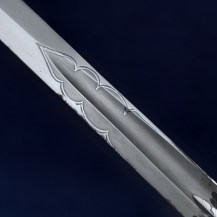
The blade is set at the ricasso on one side with a brass proof slug stamped with ‘PROVED P’, the slug surrounded by an etched six-pointed star. The blade is further etched on this side with the royal coat of arms, decorative motifs of oak leaves and ropes, and a cartouche for the optional etching of the owner’s name which has been left blank.
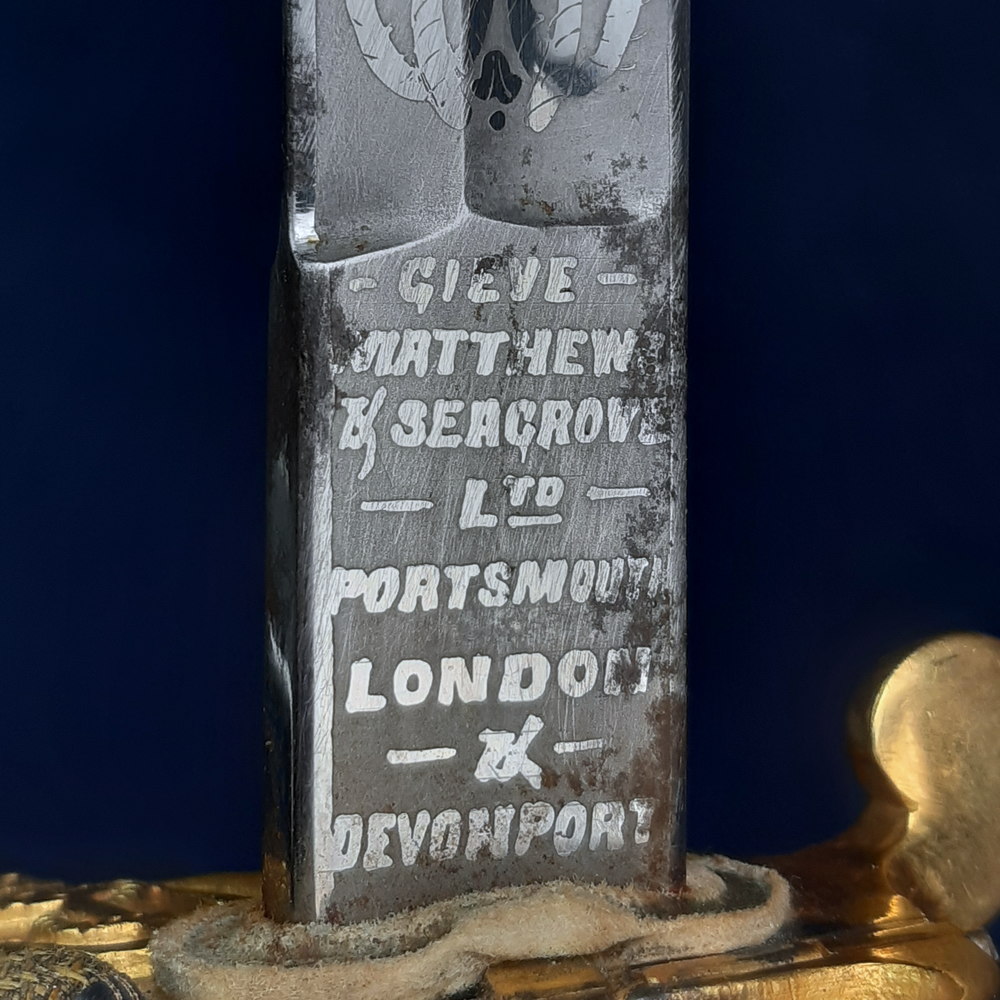
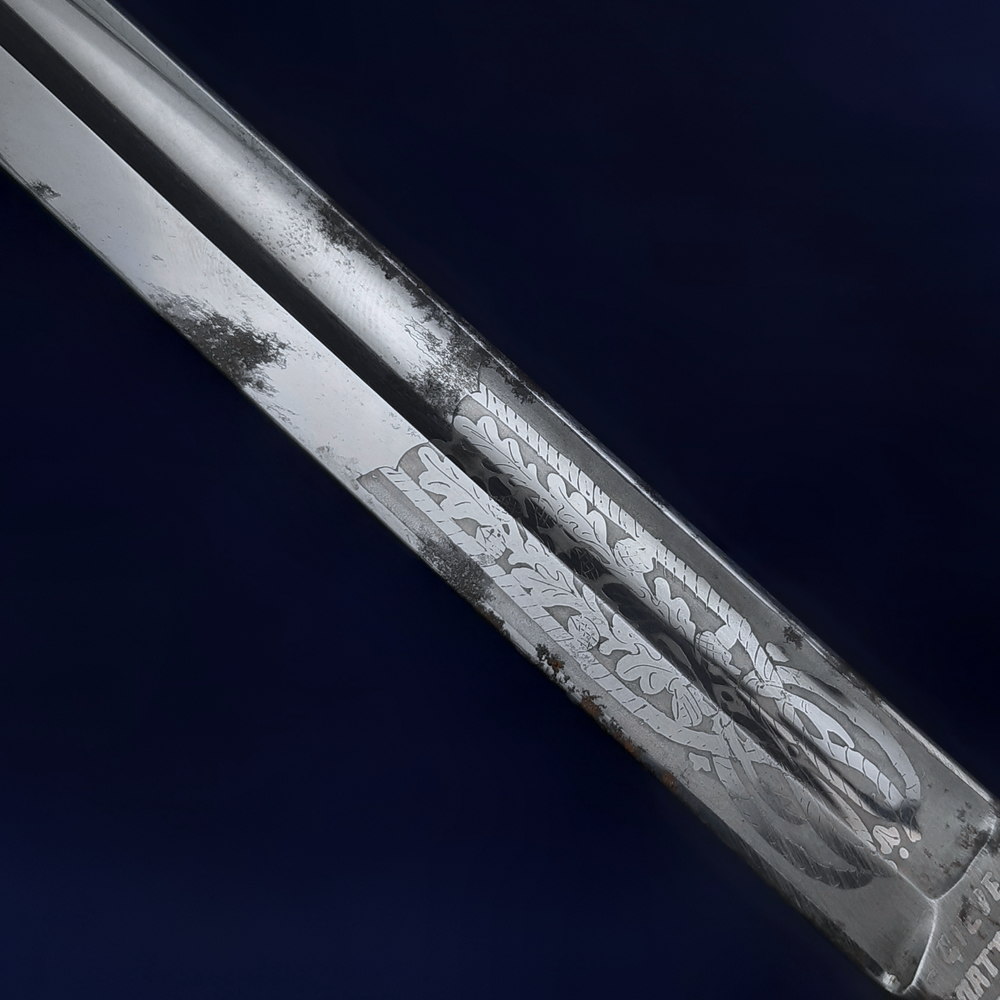
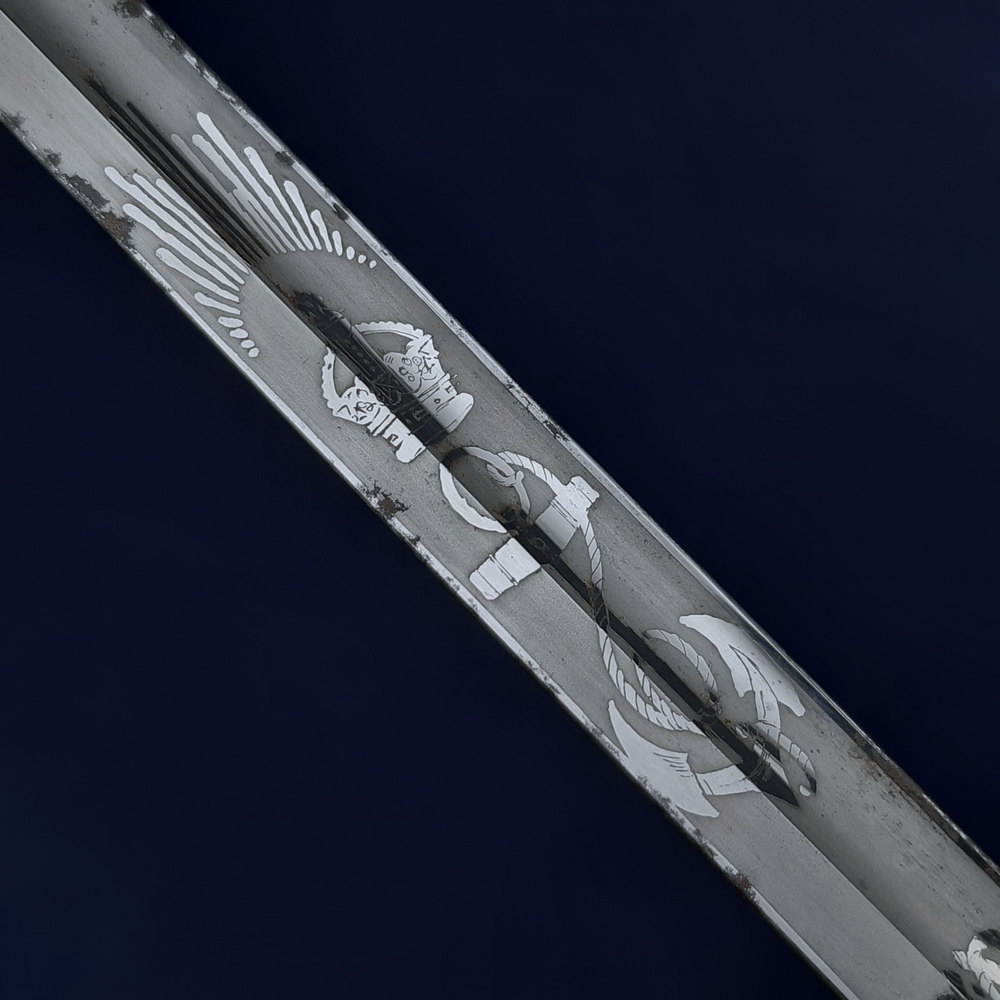
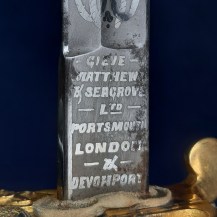
It is etched at the ricasso on the other side with the retailer’s mark ‘GIEVE MATTHEW & SEAGROVE LTD PORTSMOUTH LONDON & DEVONPORT’, and further etched on that side with the royal crown above a fouled anchor, as well as identical motifs & cartouche as above.
The firm of Gieve was a successor to that of Joseph Galt, who had James Gieve as a partner from around 1863 until he took over the business in 1887 and renamed it James Gieve & Son, trading on 111 High Street, Portsmouth. Gieve brought in new partners Henry Matthews and Edwin Seagrove in 1904, the resulting firm Gieve Matthew & Seagrove Ltd trading at multiple addresses in Portsmouth.
In 1911 the partners consolidated all Portsmouth operations at one premises at 22 The Hard, with other shops located in London and Devonport. In 1916 the partnership was presumably dissolved as the firm reverted to ‘Gieves Ltd’ at the same premises. This allows this sword to be dated to the period from 1904 to 1916.
Gieve appears to have retailed swords made by others (for instance the firm is listed as a trade customer in the records of Mole and the Wilkinson Sword Company) but did also produce them under its own roof. It was one of the very few British swordmakers to survive into the late 20th century, confirmed as of 1953 to still have a small workshop via a subsidiary. Gieves Ltd merged with military outfitters Hawkes & Co in 1979 to form Gieves & Hawkes. This company still trades today as a military outfitter and bespoke tailor, although their swords are supplied from outside sources.
Introduced to coincide with a major overhaul of naval officers’ uniforms, the 1827 Pattern sword was based upon the 1822 Pattern Infantry Officer’s sword then in use with the Army, especially in the hilt design, but with the gaps between the bars of its hilt filled in to create a solid half-basket. Early versions used a curved pipeback blade, which was superseded in 1846 by the new ‘Wilkinson’ type blade which was fullered and only slightly curved. The scabbard, sword knot and carrying slings went through some changes over time, but the 1827 Pattern sword carried by naval officers is not drastically different in form today than in 1846.
This is a ‘picquet weight’ example, constructed with a narrower blade and slightly smaller hilt than a full-weight version (about half an inch shorter). This made it lighter, easier for the owner to carry and wear for long periods on formal occasions for which a fighting sword was unnecessary.
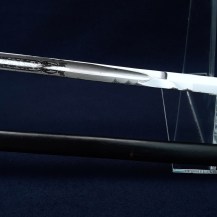
Some small spots of moderate patination along the edge and spine of the blade, some in the etched area. The etching is generally crisp retaining the strong contrast between bright designs and matt etched background. The hilt retains essentially all of its original gilding, the only notable wear being on parts of the hinge of the folding guard, revealing patinated brass. The folding guard is fully functional and locks the sword into the scabbard. The shagreen grip is in good shape with no significant handling wear, its wire binding is all present and tight. Very minor fray and rubbing to the sword knot in places. The scabbard fittings also retain their gilding with only a few dark wear spots around the end of the chape. The scabbard leather is excellent with no creasing or significant surface wear and all its stitching is intact. The scabbard is strong, easily capable of supporting its own weight even held horizontally with the sword withdrawn.
