

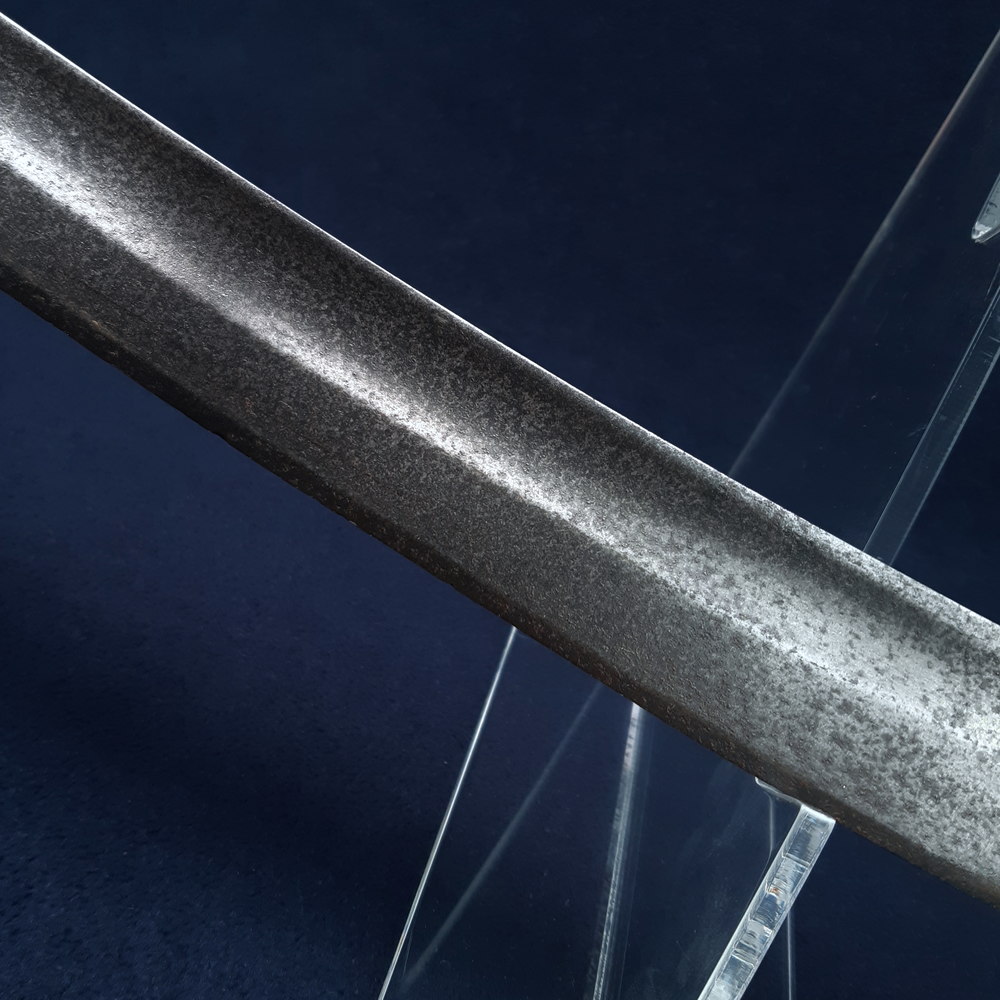
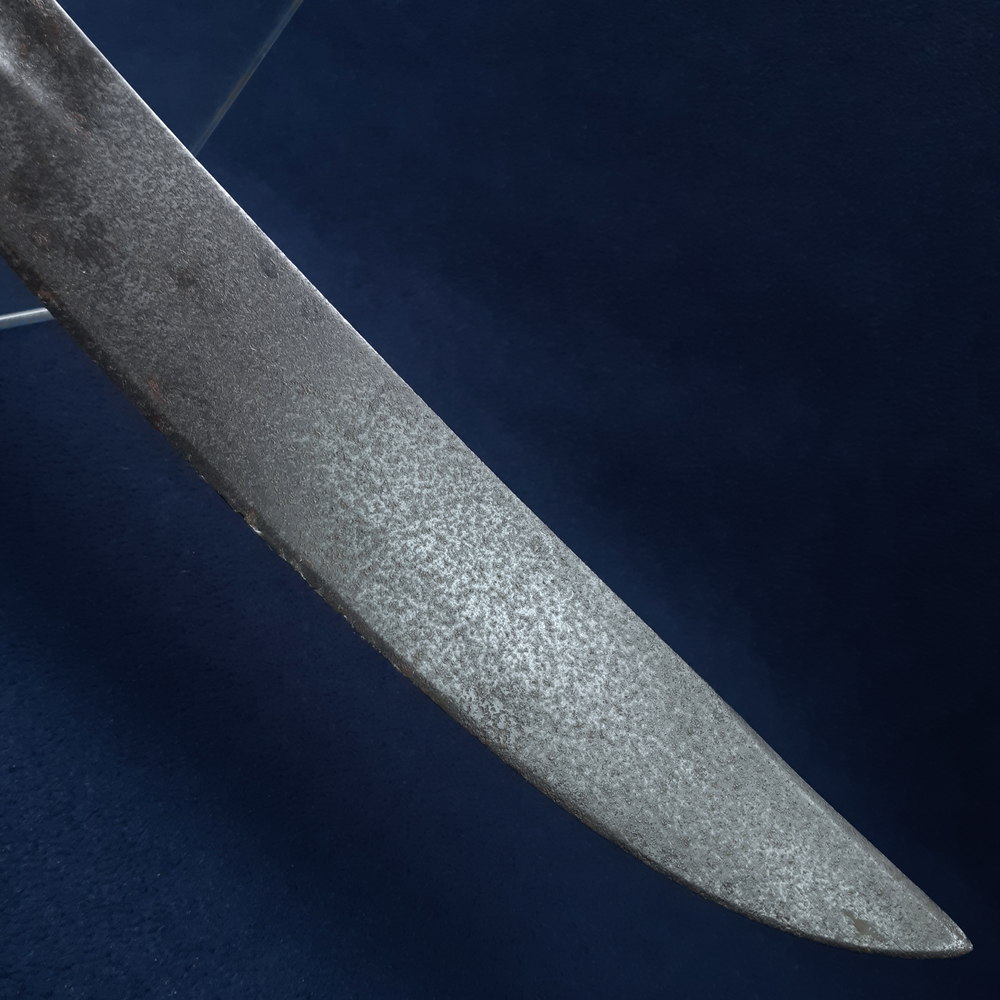
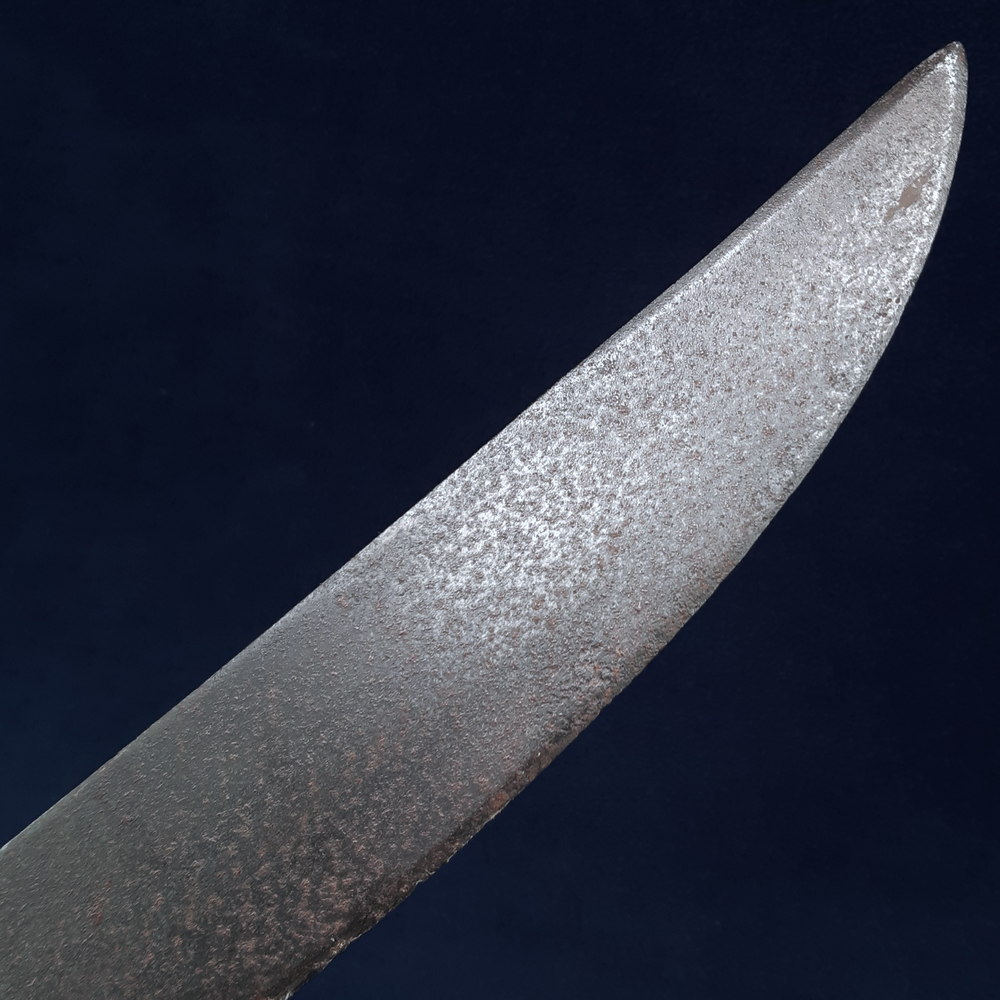
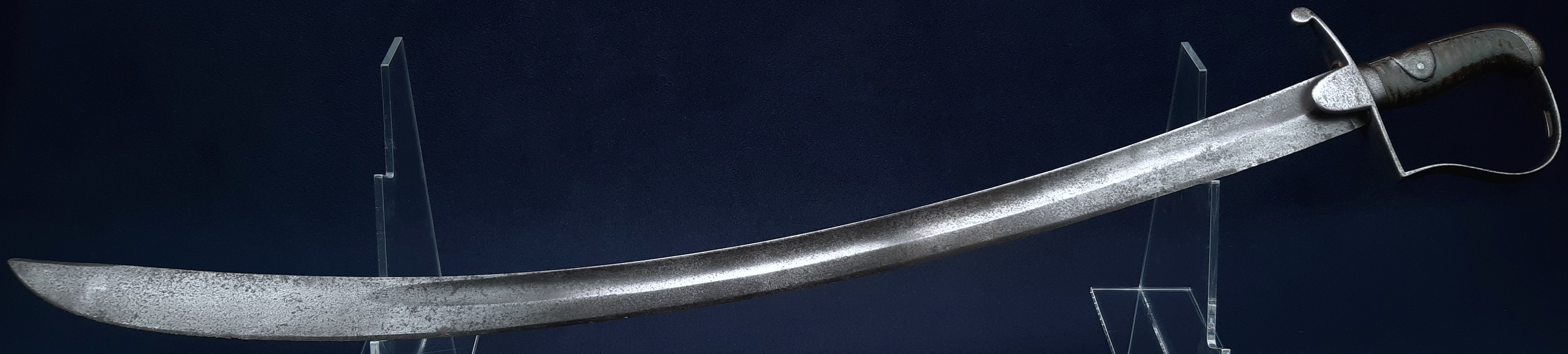
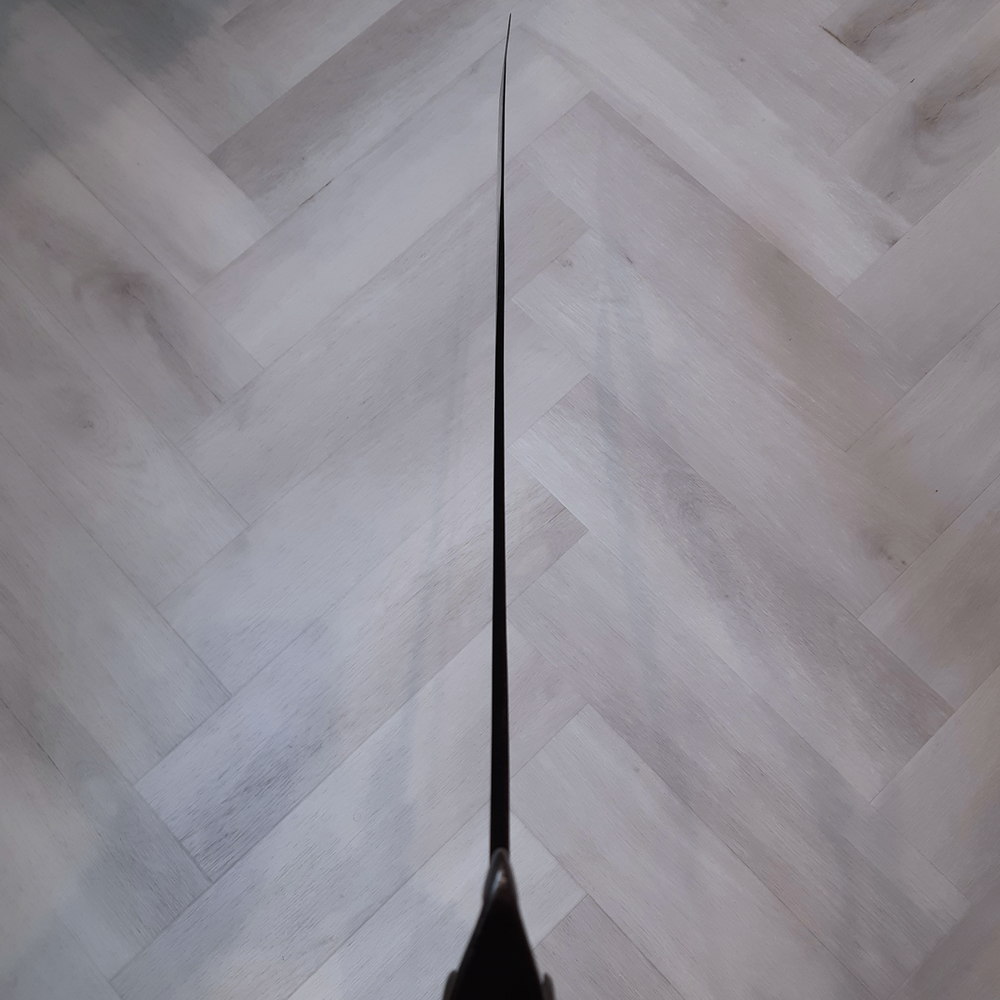
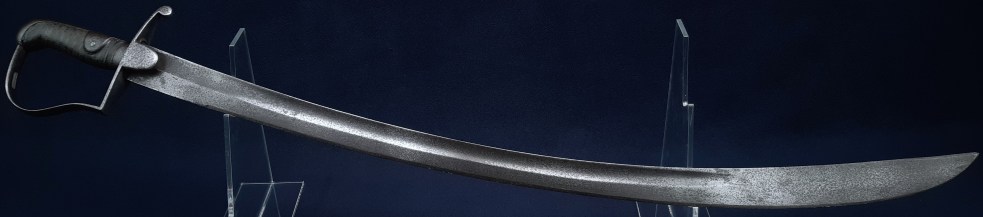
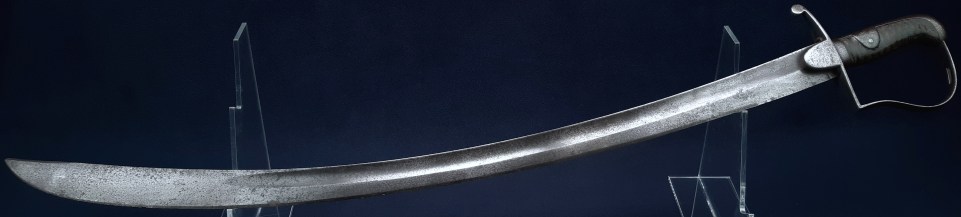
East India Company 1796 Pattern Light Cavalry Sword, 1842-43 by Mole
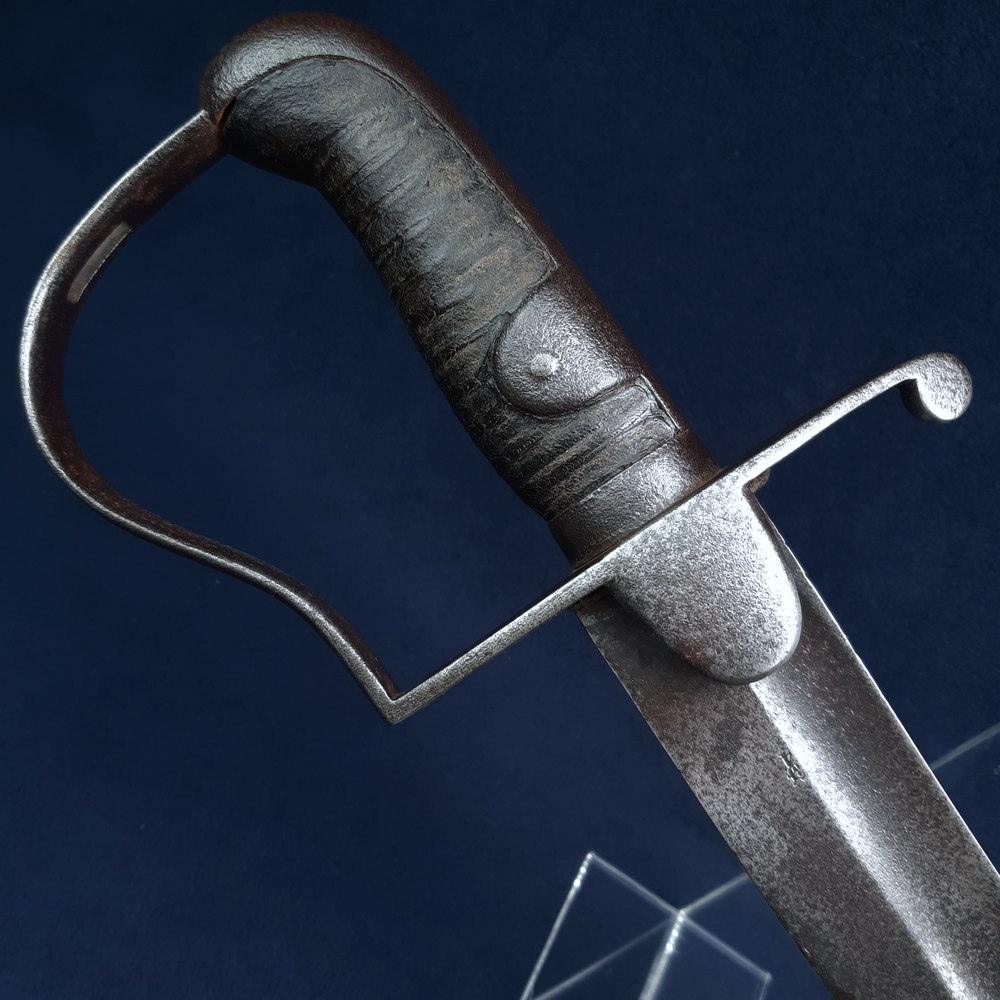
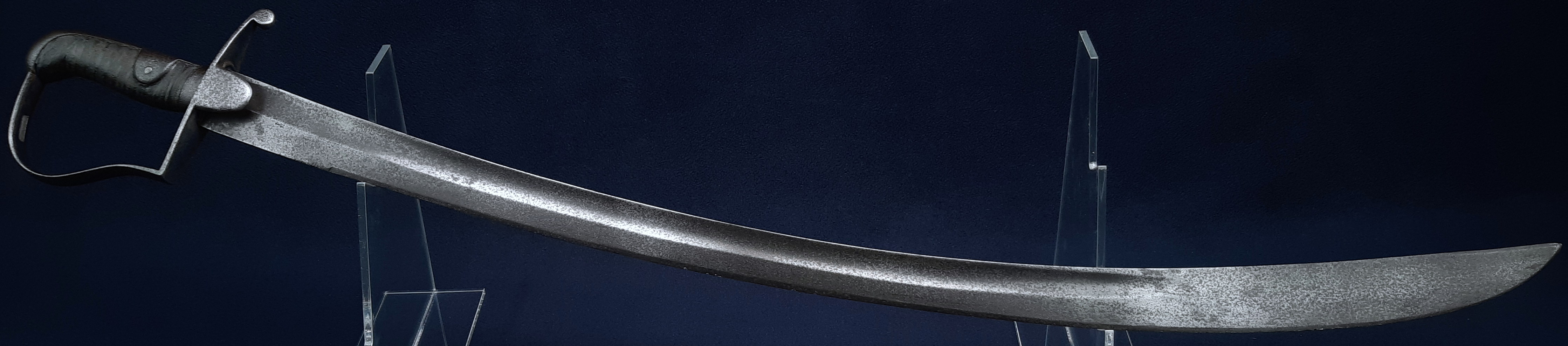
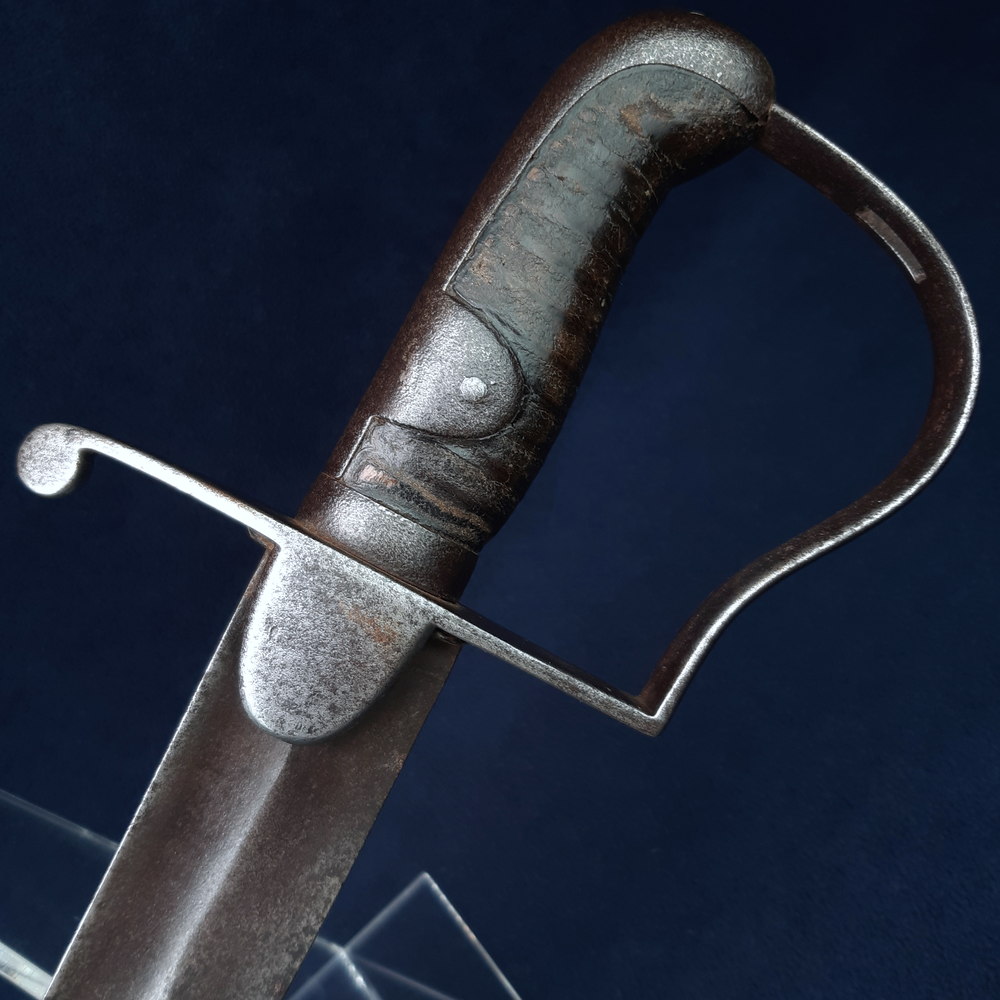
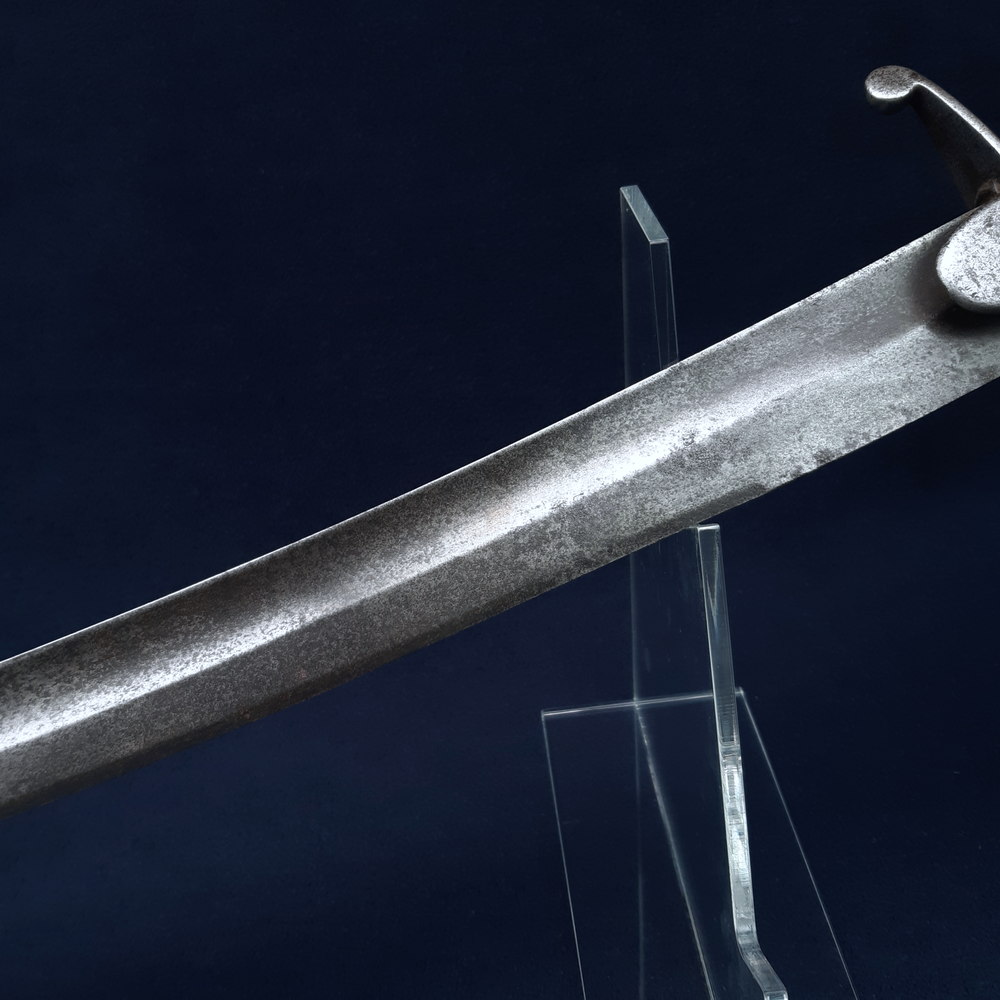
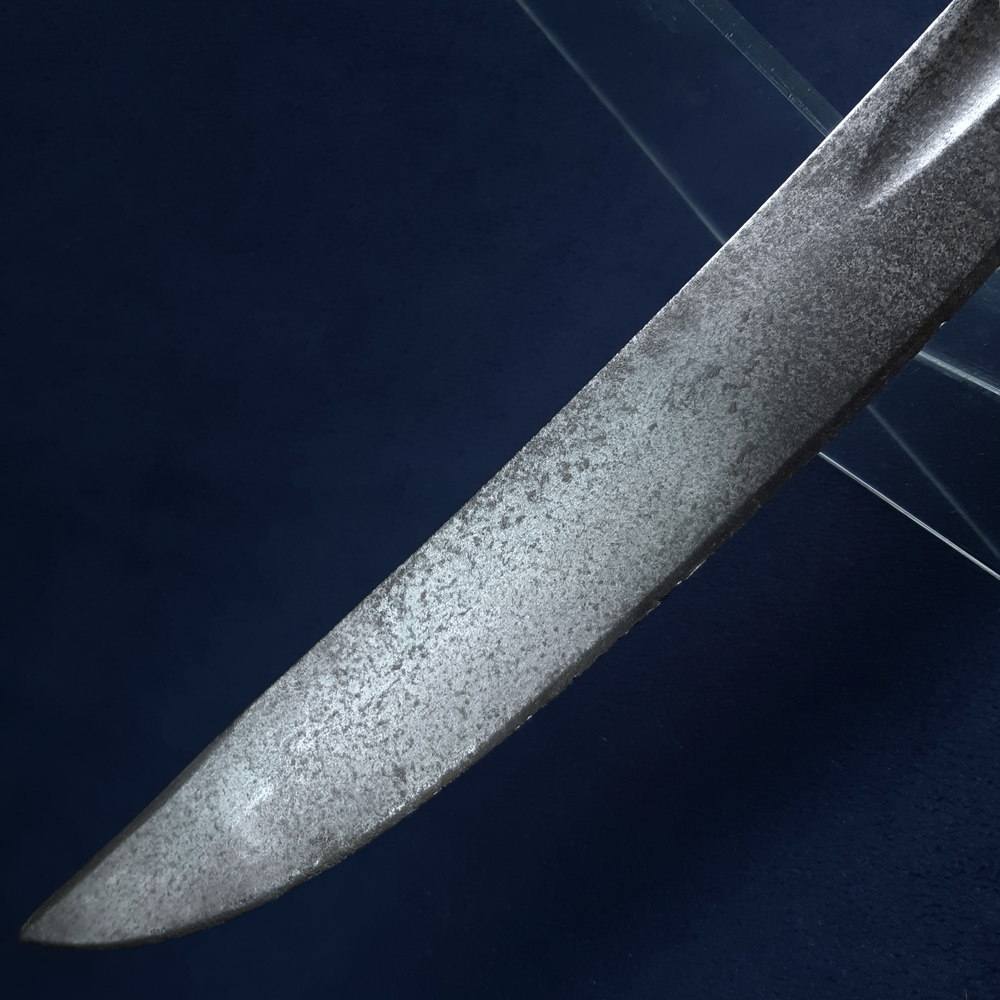
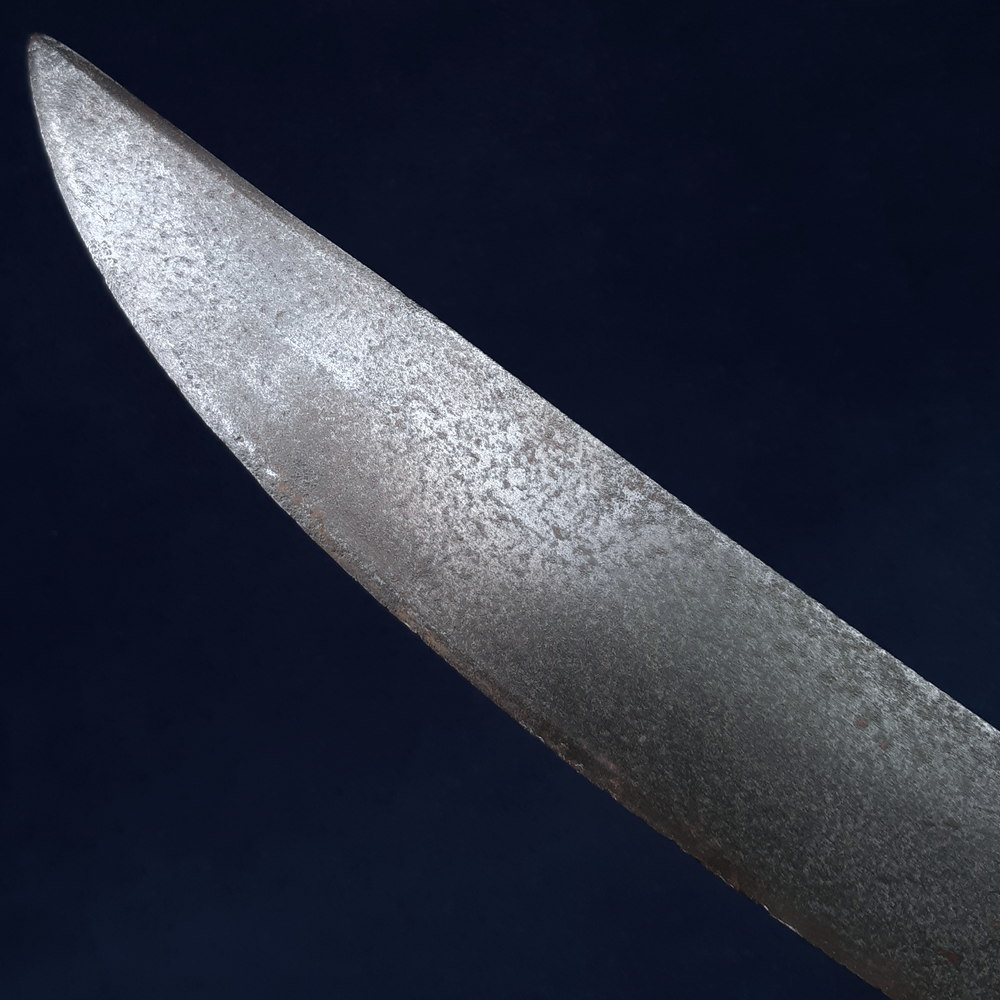
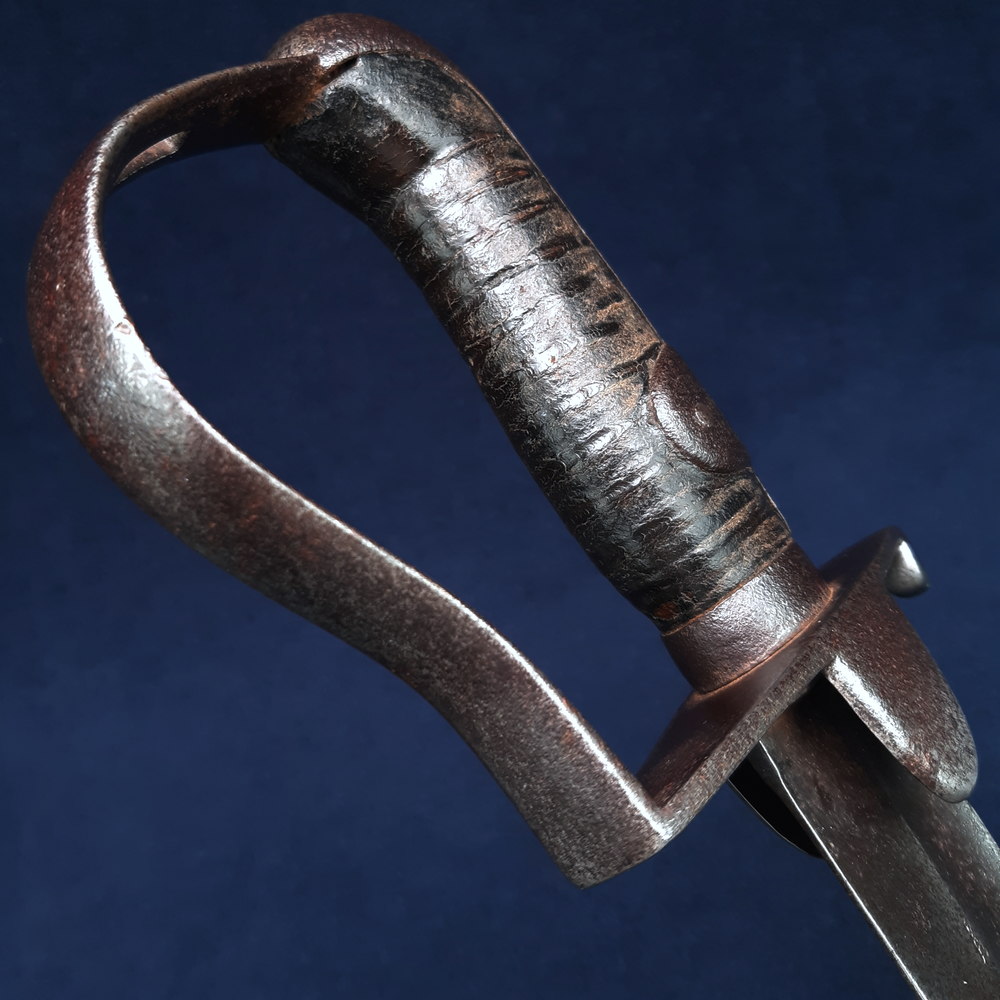
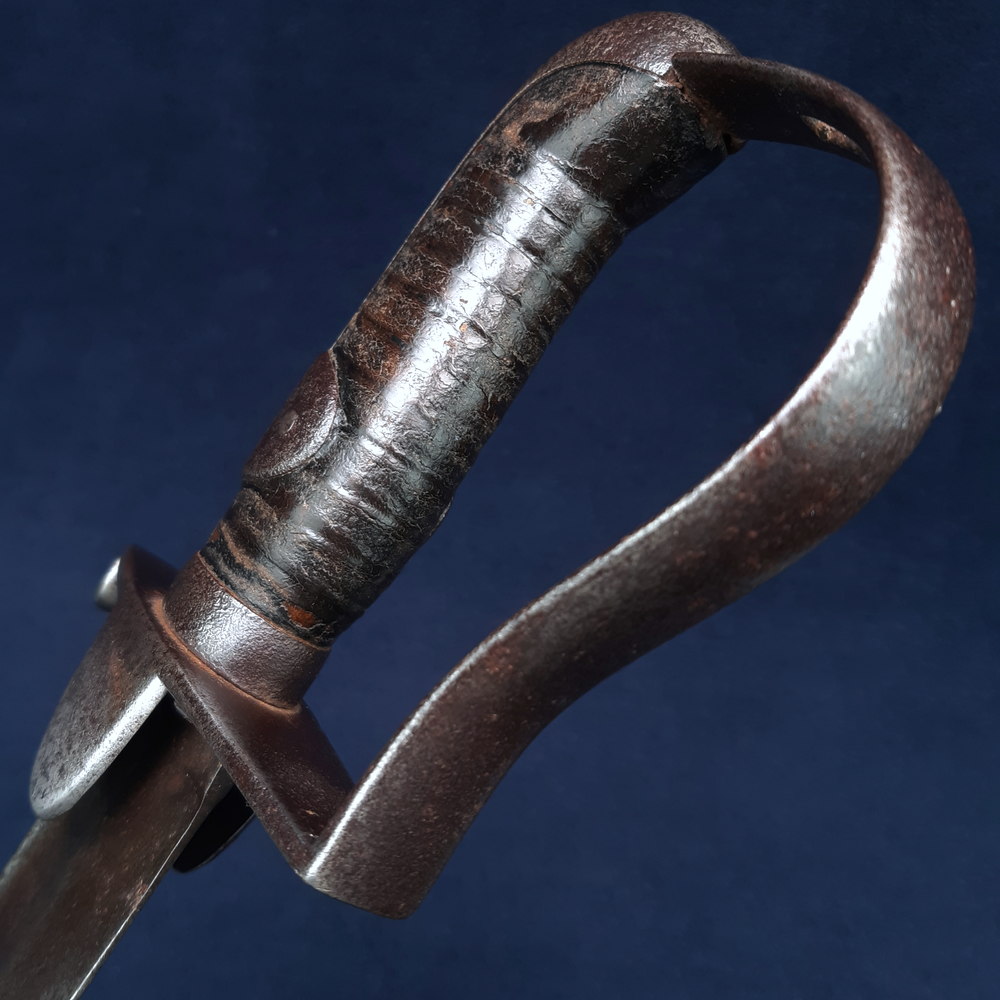
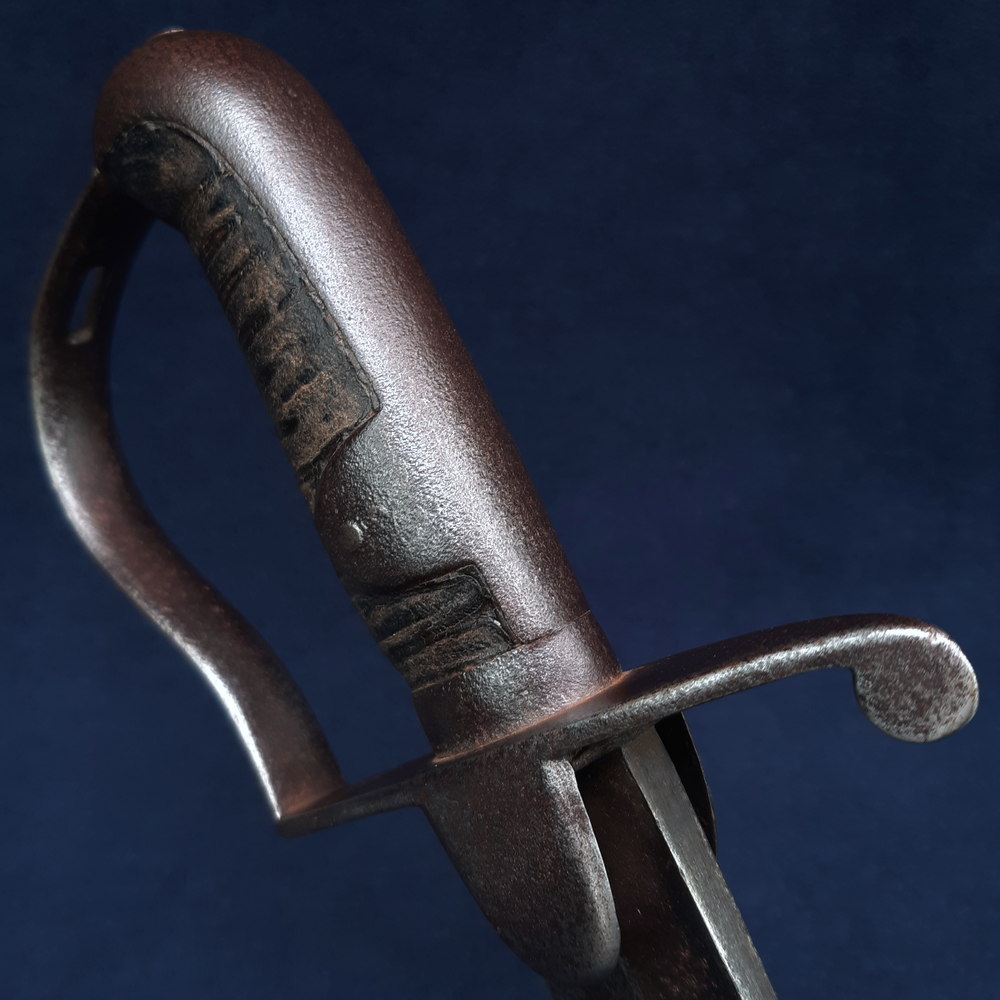
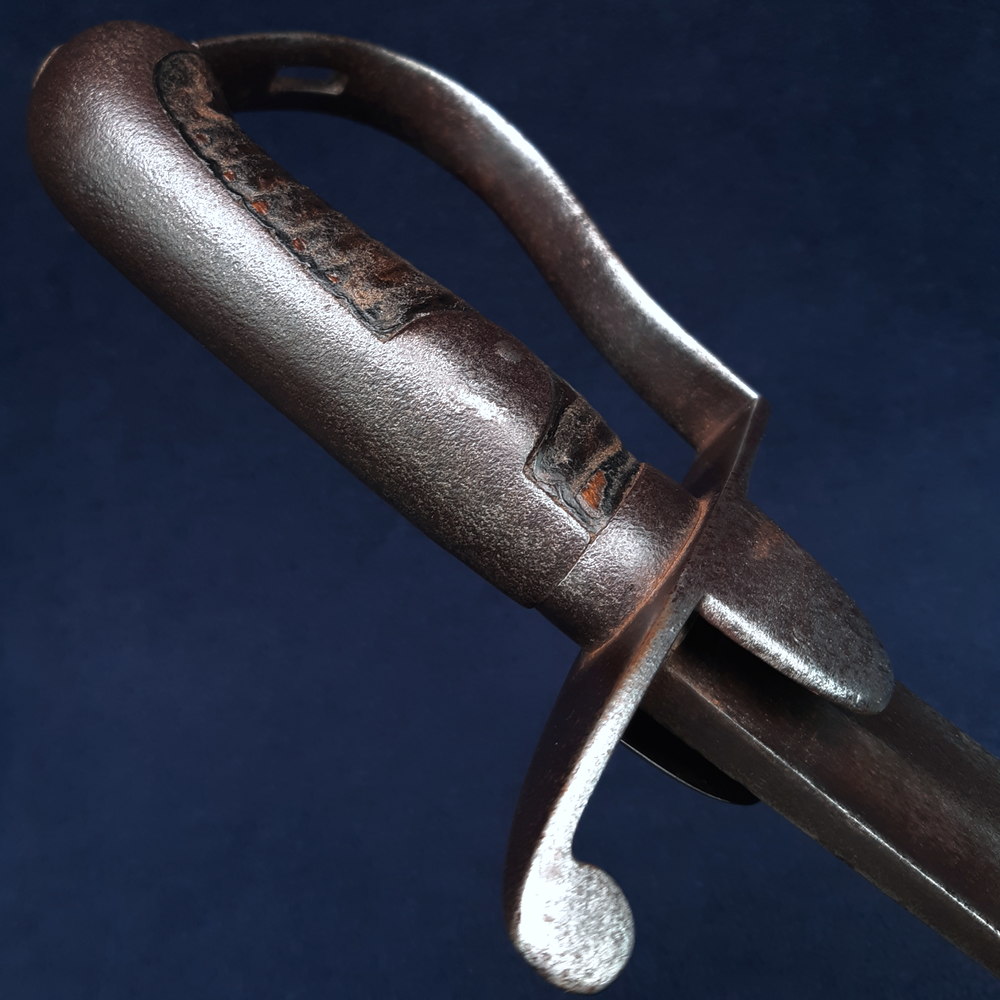
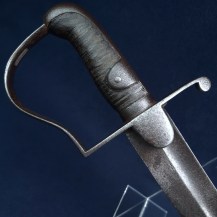
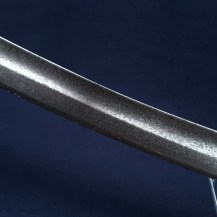
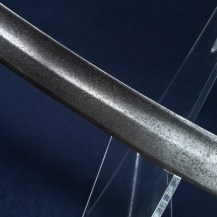
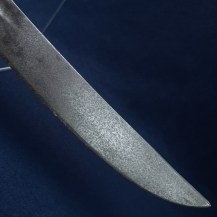
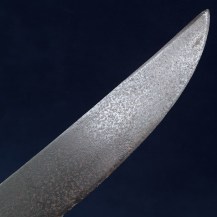
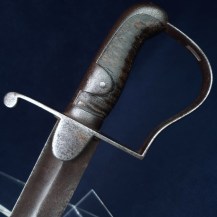
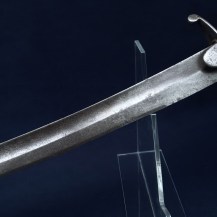
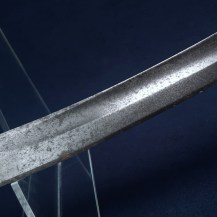
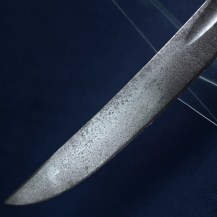
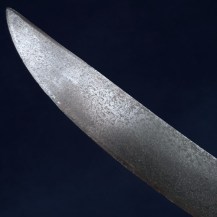
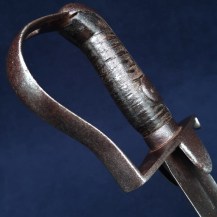
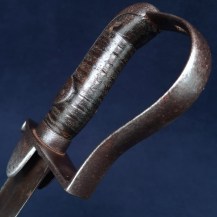
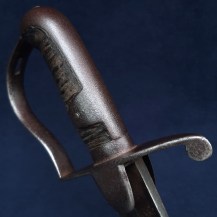
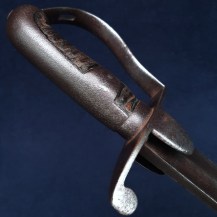
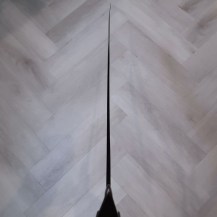
Curved sabre blade with single fuller, false edge and hatchet point. Brown leather washer, iron stirrup P-shaped hilt with sword knot slit, comma-shaped quillon, semioval langets, smooth iron backstrap with projecting ears secured to the tang through the grip with a single rivet, and integral pommel cap. Ribbed wooden grip covered with pressed black leather. No scabbard. Blade 32¾ inches in length, 1.55 inches wide at the ricasso, the sword 37¾ inches overall.
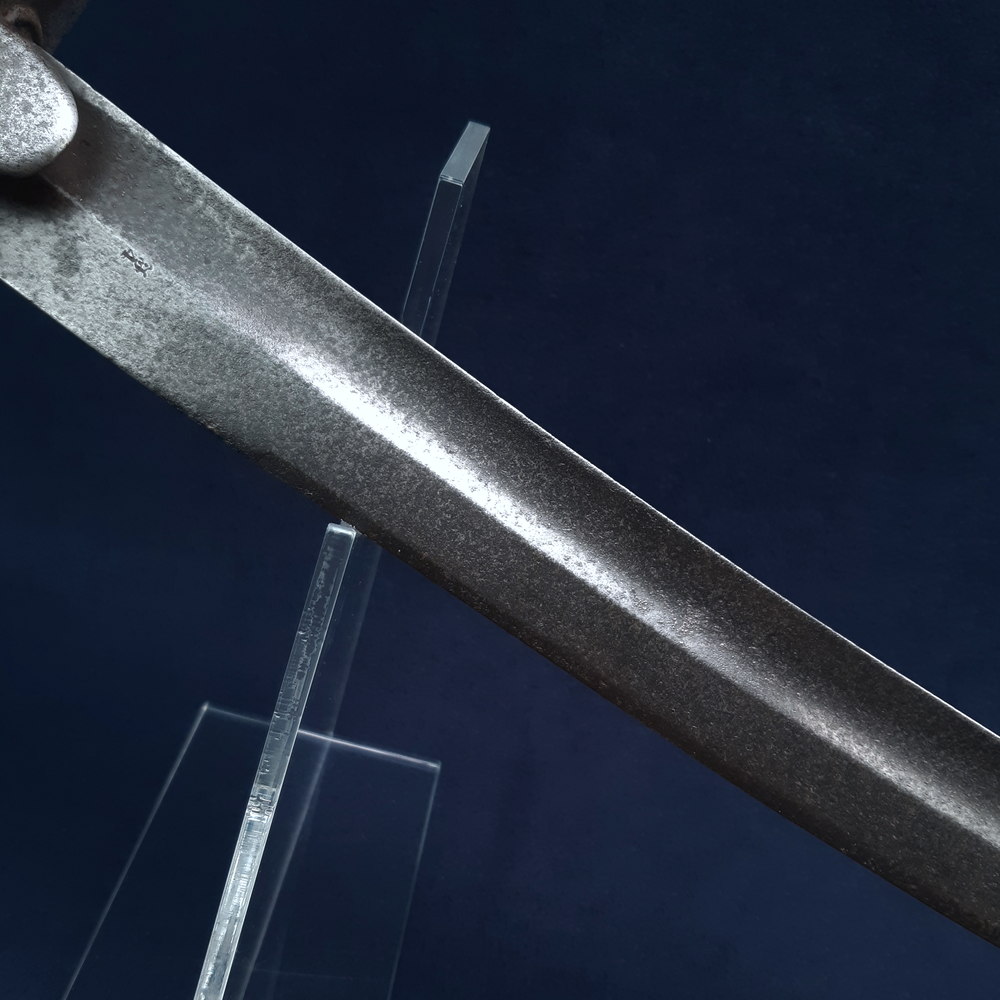
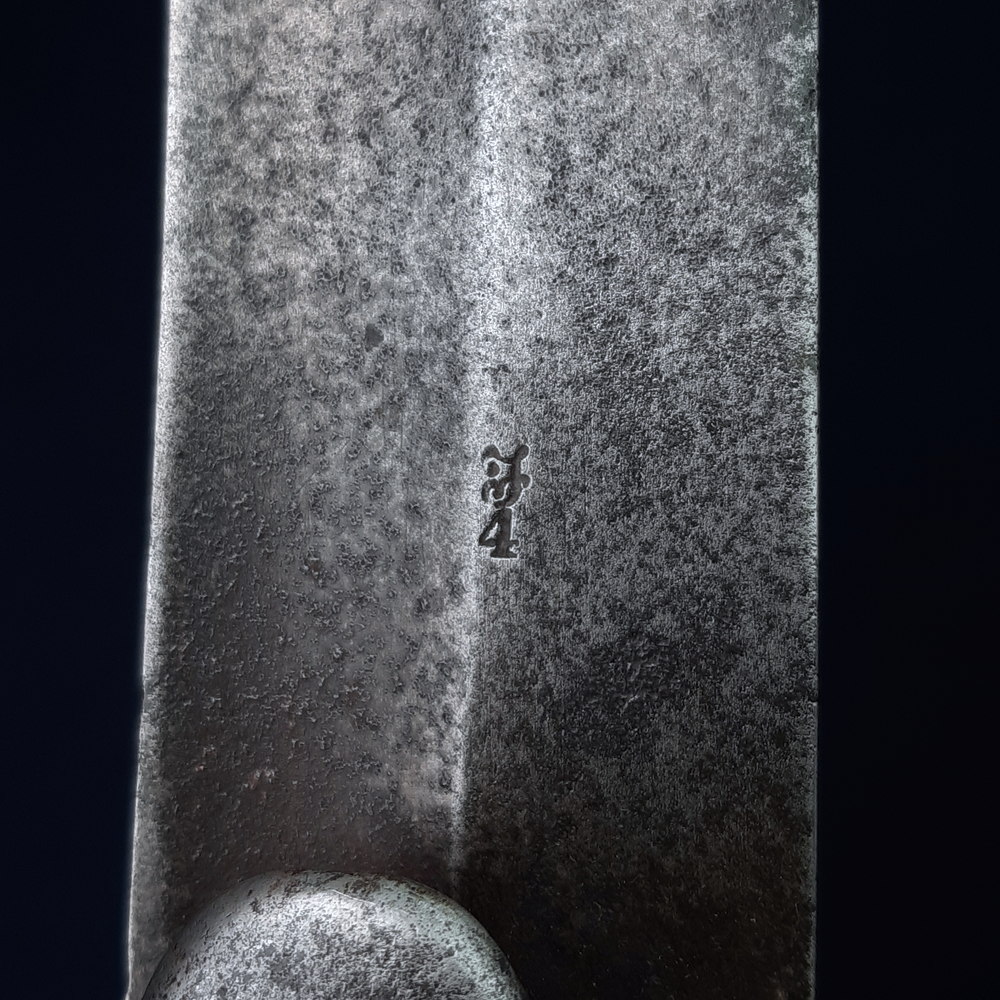
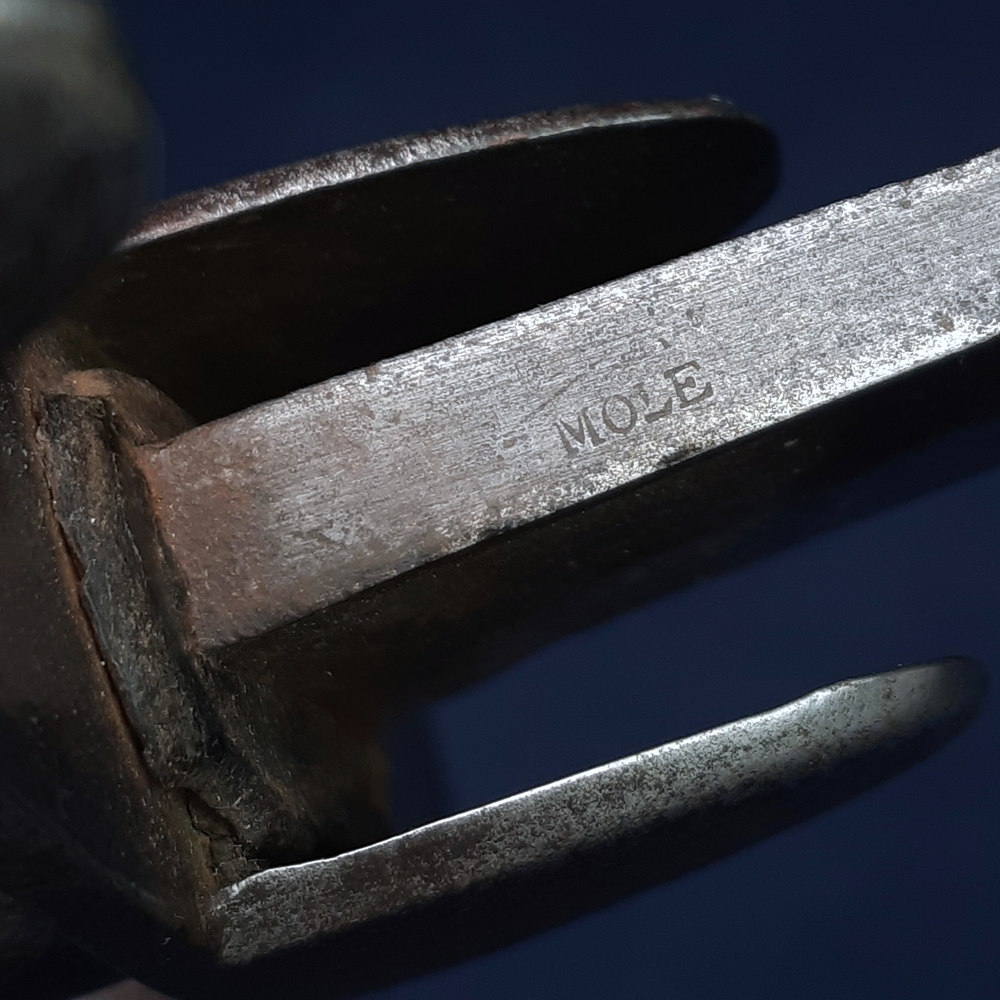
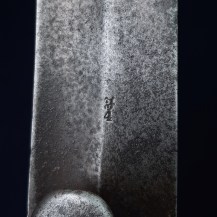
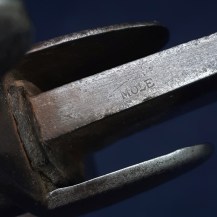
The spine of the blade is stamped next to the shoulder with the maker’s mark ‘MOLE’, indicating the firm of John & Robert Mole. The blade is stamped in the fuller at the forte on one side with the East India Company approval mark of F over 4, which dates it to 1842-43. These marks, similar in style and placement to British crown inspection stamps, can also be found on British-made socket bayonets exported to India to supply the Company in the same period.
In 1842 the combined armies of the East India Company were roughly twice the size of the regular British Army, with over 200,000 men spread across the separate commands of its Bengal, Madras, and Bombay Presidencies compared to roughly 130,000 British regulars (27,000 of which served in the East Indies and were also paid by the Company). Made up primarily of Indian troops and junior officers commanded by a relatively small cohort of British officers (in 1844 recorded at 235,446 Indian to 14,584 British) the Company armies peaked in size at around 300,000 men in 1857.
This vast force required vast supply but the EIC deliberately split its supply chains between Britain and India to avoid creating industrial capacity which could have armed Indian powers. Small arms components were produced by contractors in London and Birmingham, inspected at Company proof houses in Britain, then shipped to the India and assembled there. Some other items were produced locally, including gunpowder, ammunition and artillery pieces. Over time the EIC developed its own models of muskets and rifles, similar to the British types but adapted to its needs, and the industry readily catered to the demands of such a large and reliable customer.
The Company’s troops generally favoured traditional Indian swords like the tulwar (examples exist of tulwars made by British manufacturers as well as ‘arsenal’ tulwars of Indian make with Company marks) but it did adopt the British 1796 Pattern light cavalry trooper’s sword, at first buying them as surplus and later commissioning new production runs in the 1840s, Napoleonic era stock presumably having dried up by then. This example is one of those newly produced for the EIC.
Why it chose this Pattern in particular is obvious: its strongly curved sabre blade, optimised for cutting, was comparable to the tulwar in concept, enough so that surplus blades were sometimes remounted locally in the Indian style. It would have been compatible with Indian swordsmanship tradition and could be ordered from some of the same suppliers that made the Company’s bayonets. The 1796 Pattern light cavalry sword is thought to have had an even longer service life in India than in Britain, and that the Company was still buying more in 1843 certainly supports that idea. The pattern’s design influence continued beyond the age of Company rule well into the British Raj period: the Indian 1896 Pattern Mountain Artillery sword used a very similar blade as did cavalry trooper’s swords produced by multiple British manufacturers for Indian service as late as 1915.
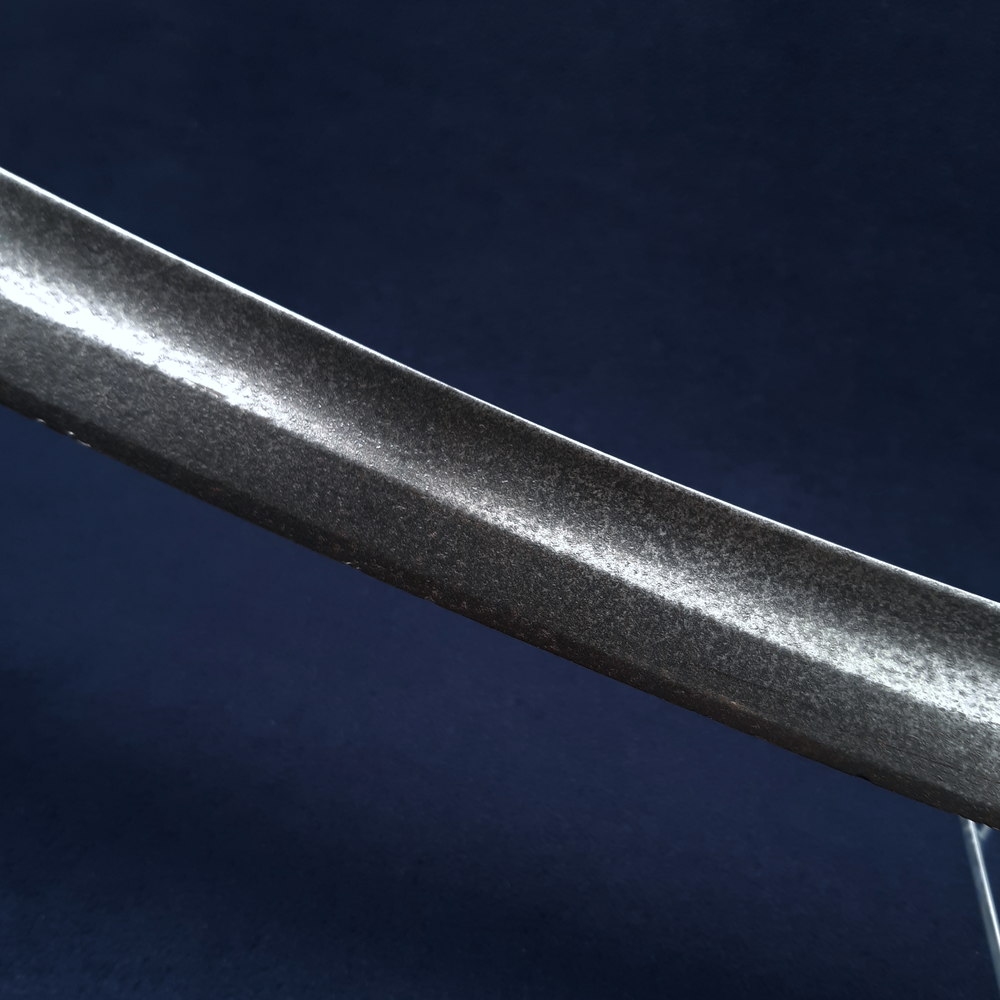
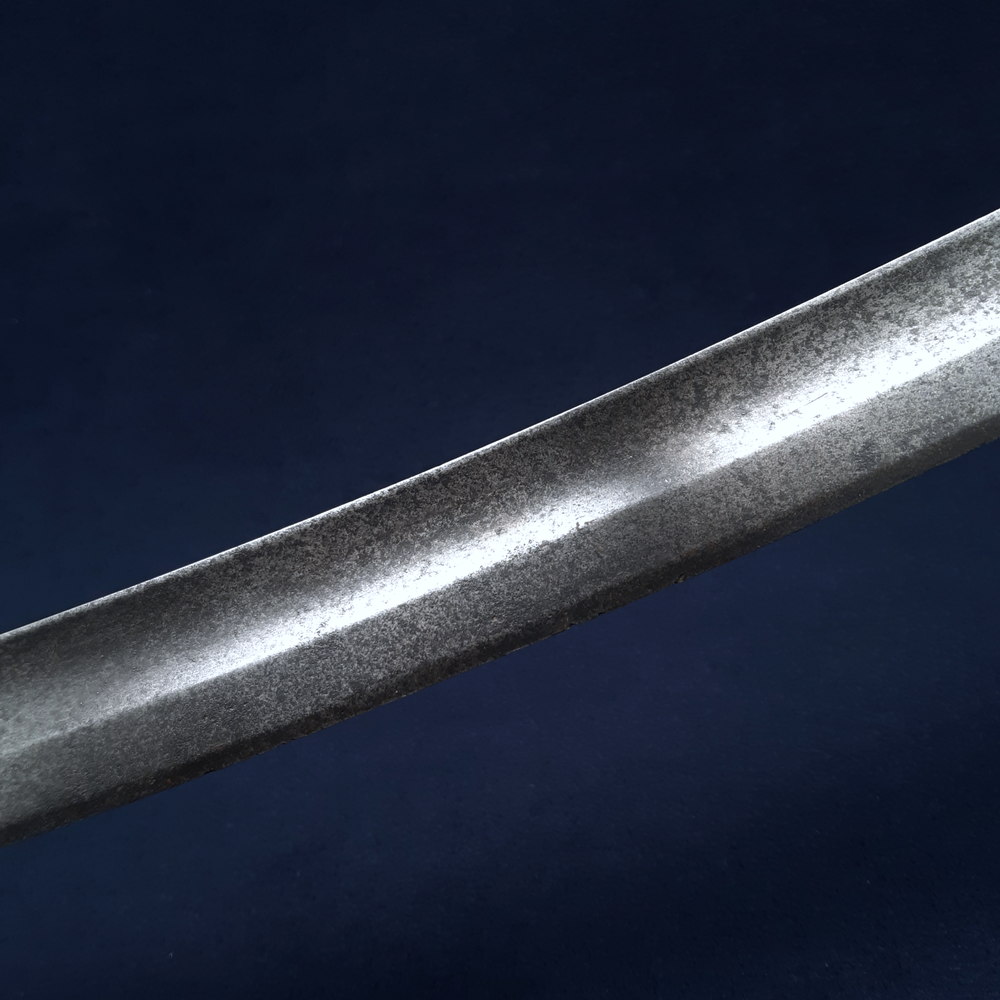
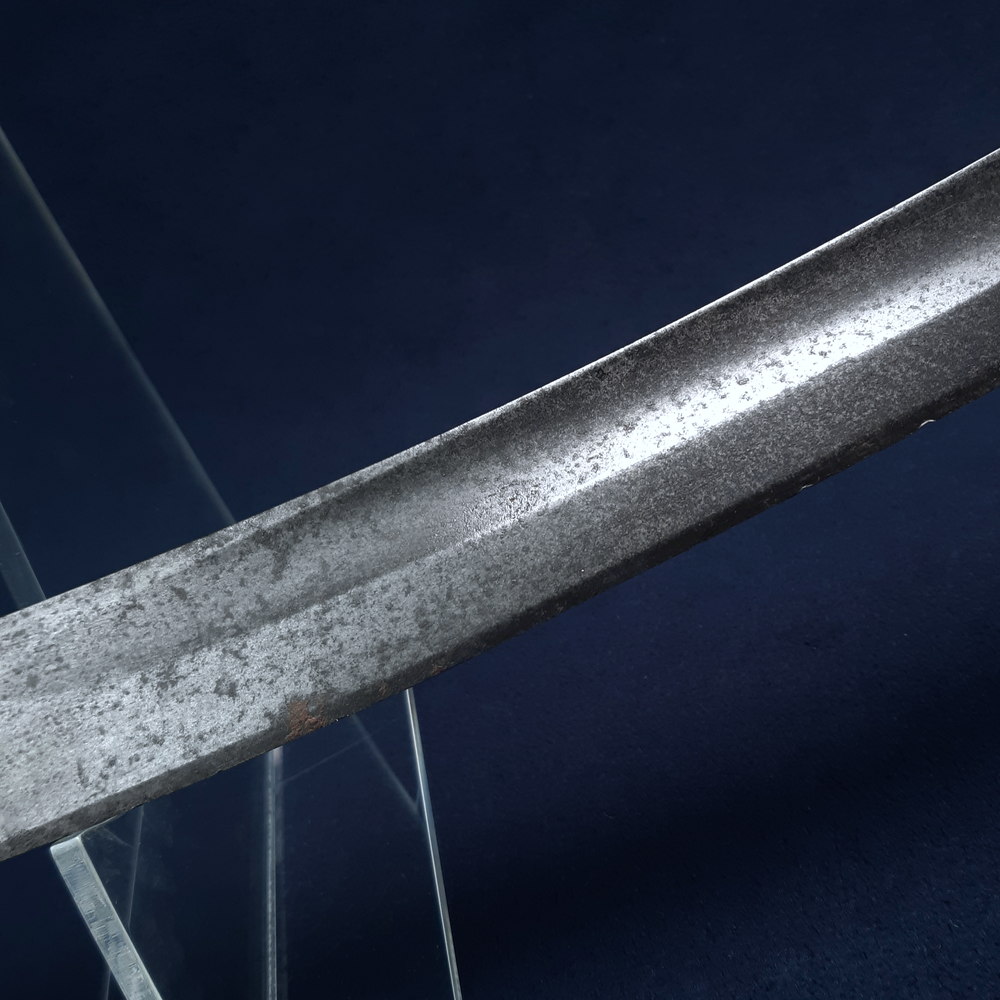
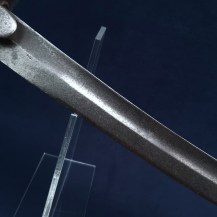
The sword is solid in the hand, well peened with no movement or rattle to its parts. The blade has been sharpened, with the exception of a ~3½ inches ricasso left at the base of the blade: the combination of an acute edge and a relatively long ricasso stands out to me as more Indian in style, the sort of edge one would see on a tulwar, compared to a British short ricasso and more obtuse edge. A false edge 3 inches in length has also been sharpened: this pattern did not have a false edge as standard but one was sometimes added by grinding to give the blade a more penetrative point.
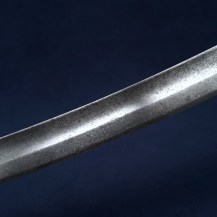
Acute edges are sharper but are more prone to damage: this example’s true edge has a number of nicks, chips and rolls. The blade has mottled patination and scattered light pitting overall, with a couple of small rust spots which I have sought to stabilise. All other metal parts have dark patination and peppered light pitting overall, with a few lighter spots like the langets and quillon.
The leather of the grip has heavy handling wear. It has worn thin and completely through in places. Where this would have revealed the wood core, what I believe is black paint or lacquer has been carefully applied at some point to cover the exposed wood, including on the raised ribs and areas next to the pommel where the grip flares outward. Two small patches of wood are visible next to the ferrule on one side. Apart from this the grip is very stable, with no cracking or movement.
