

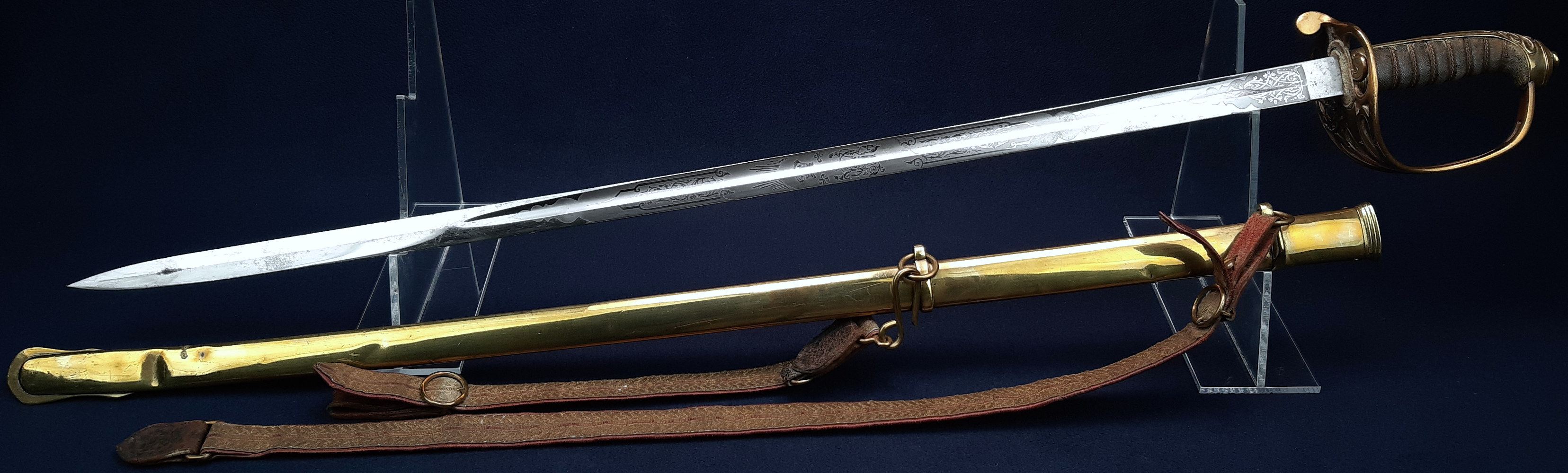
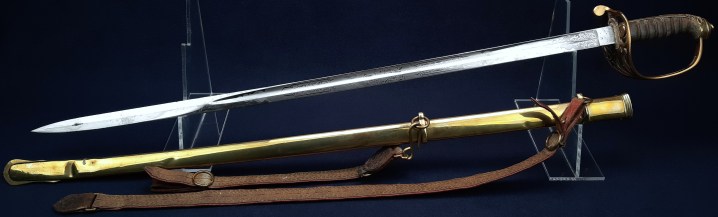
British 1845 Pattern General Officer’s Sword
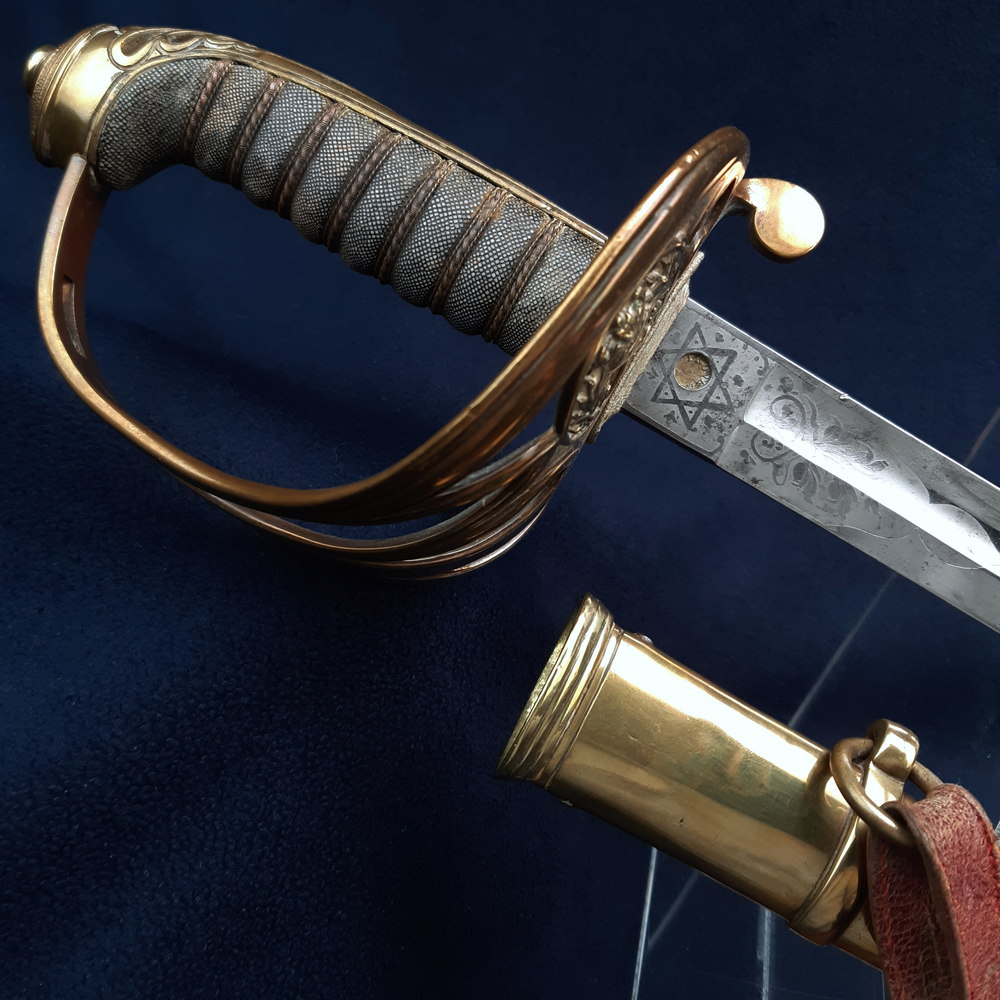
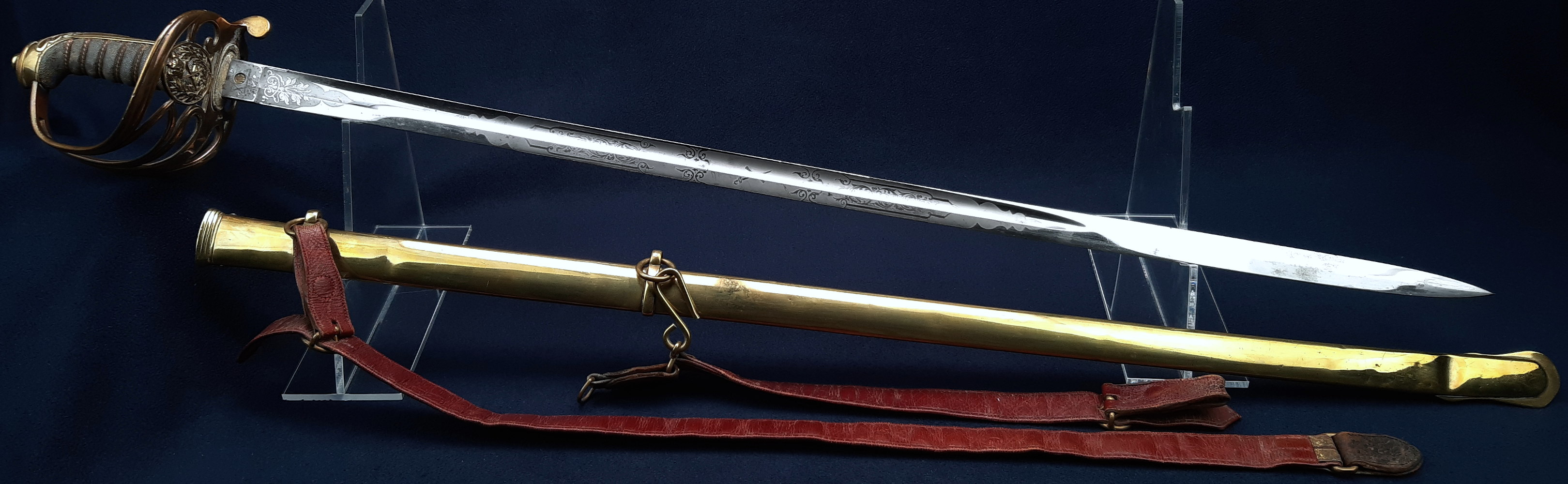
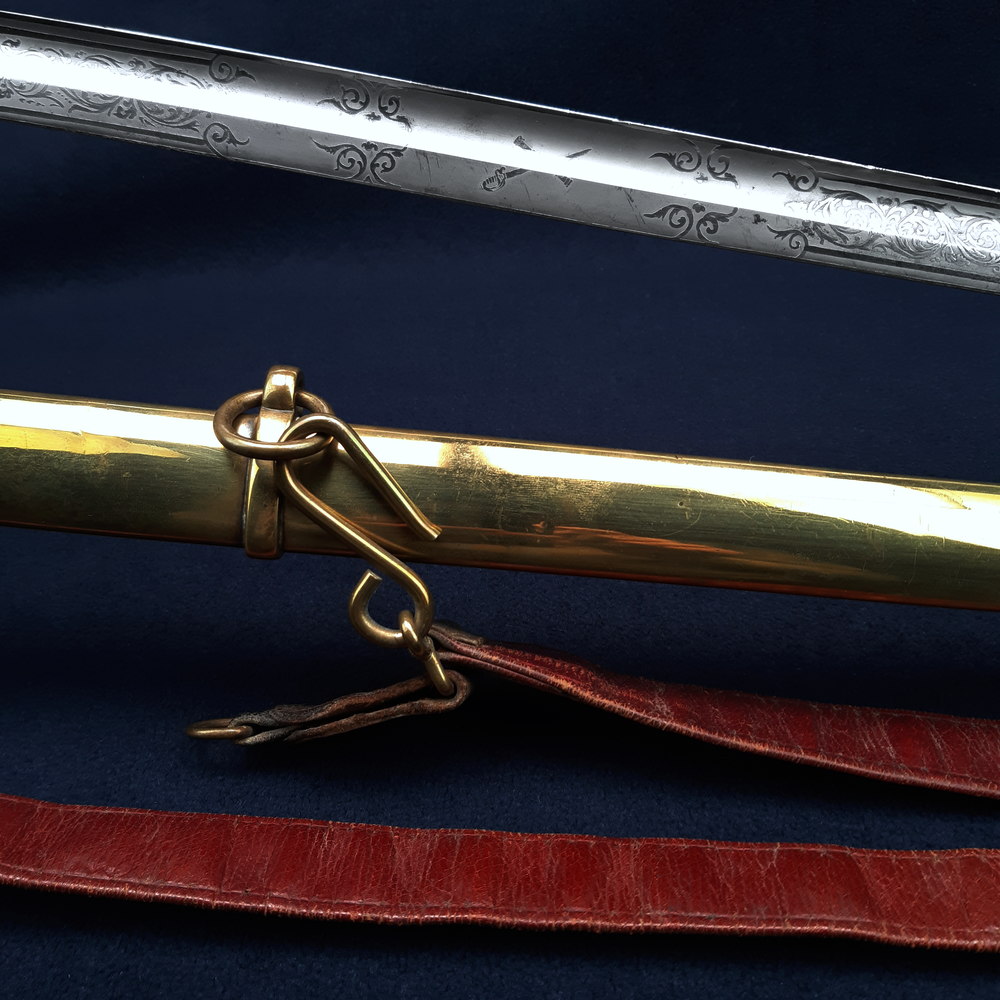
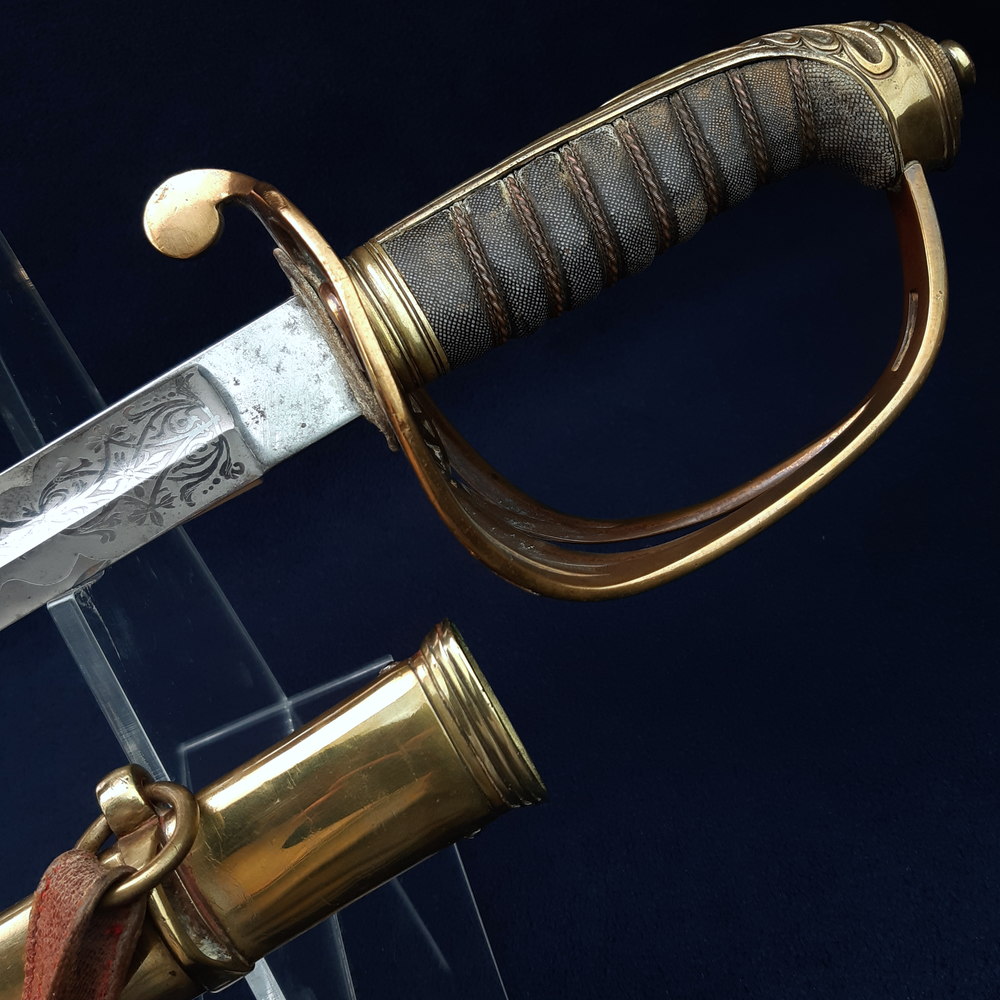
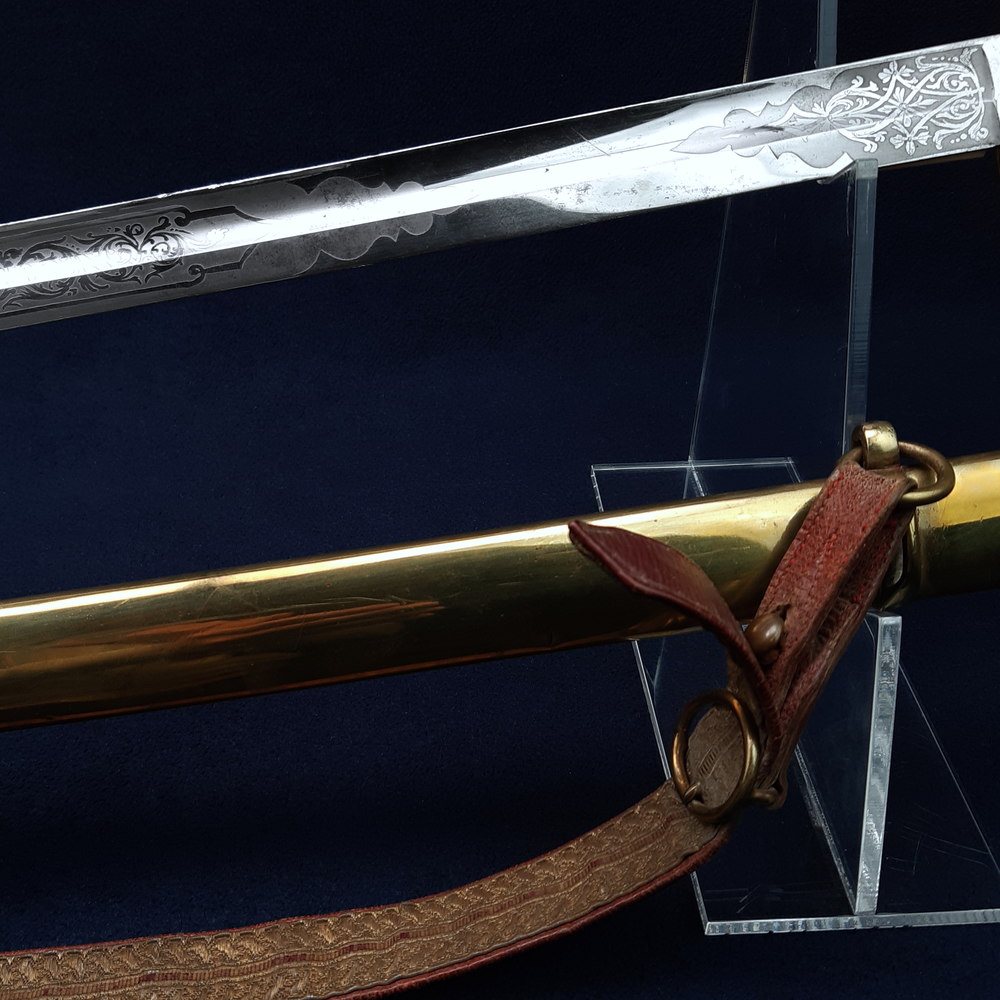
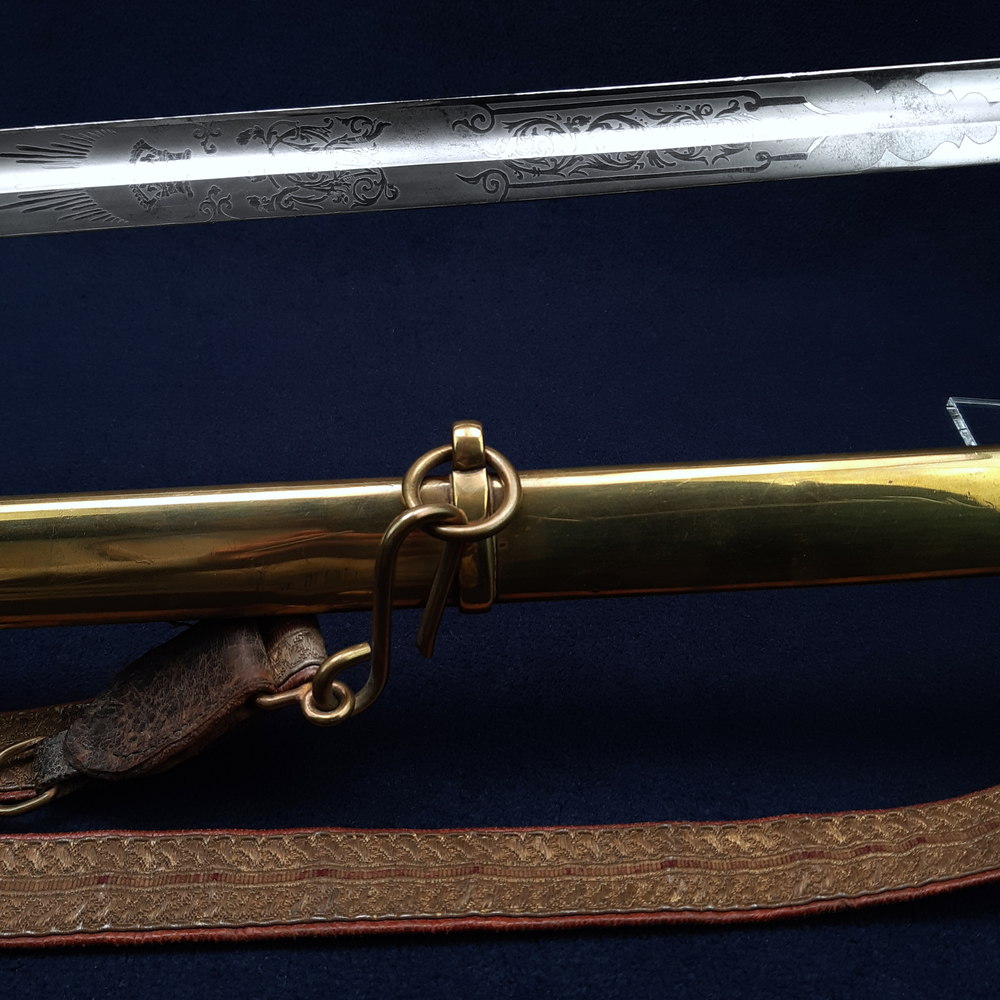
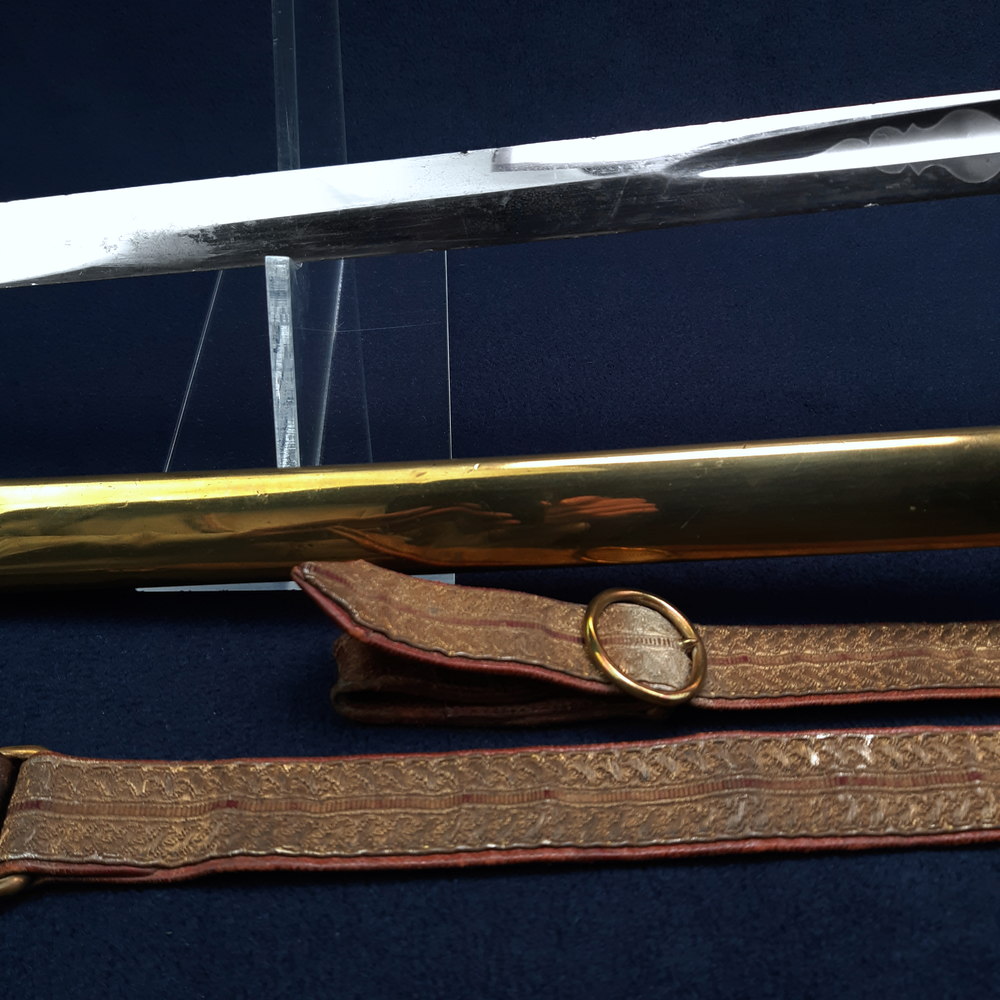
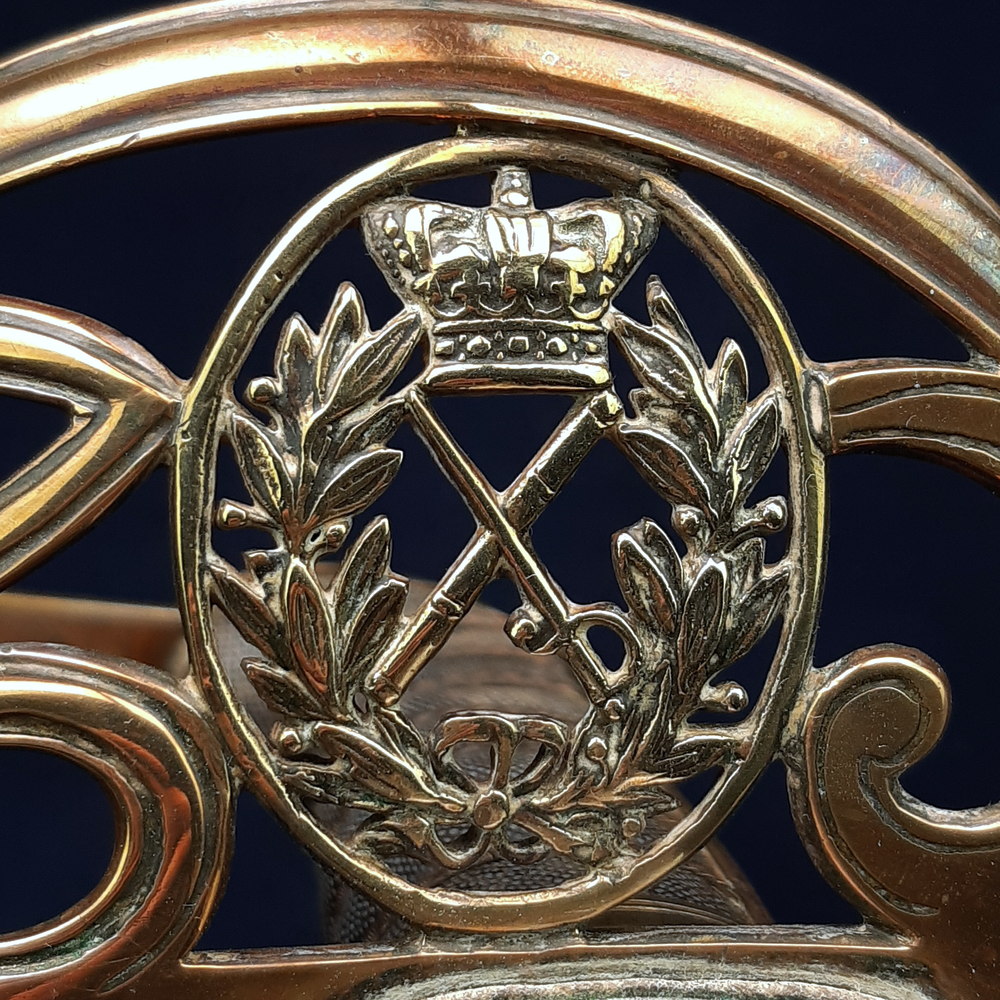
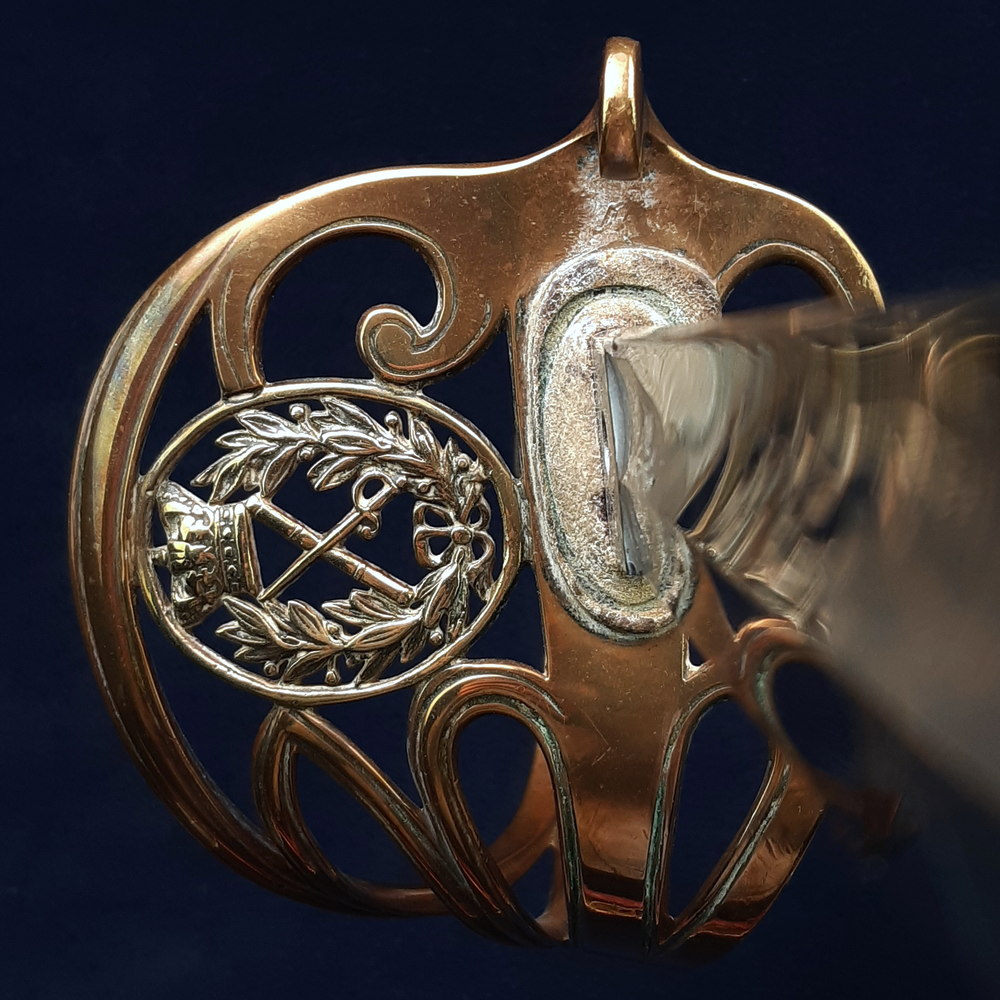
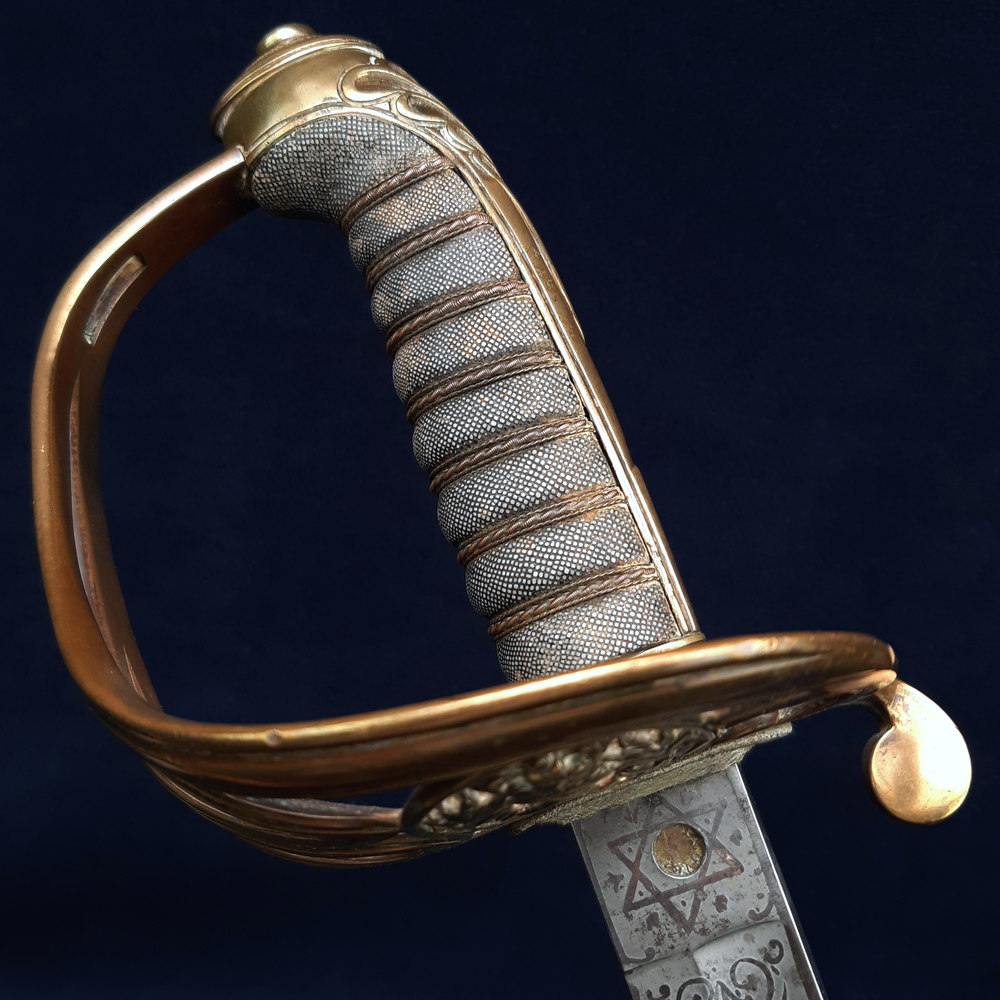
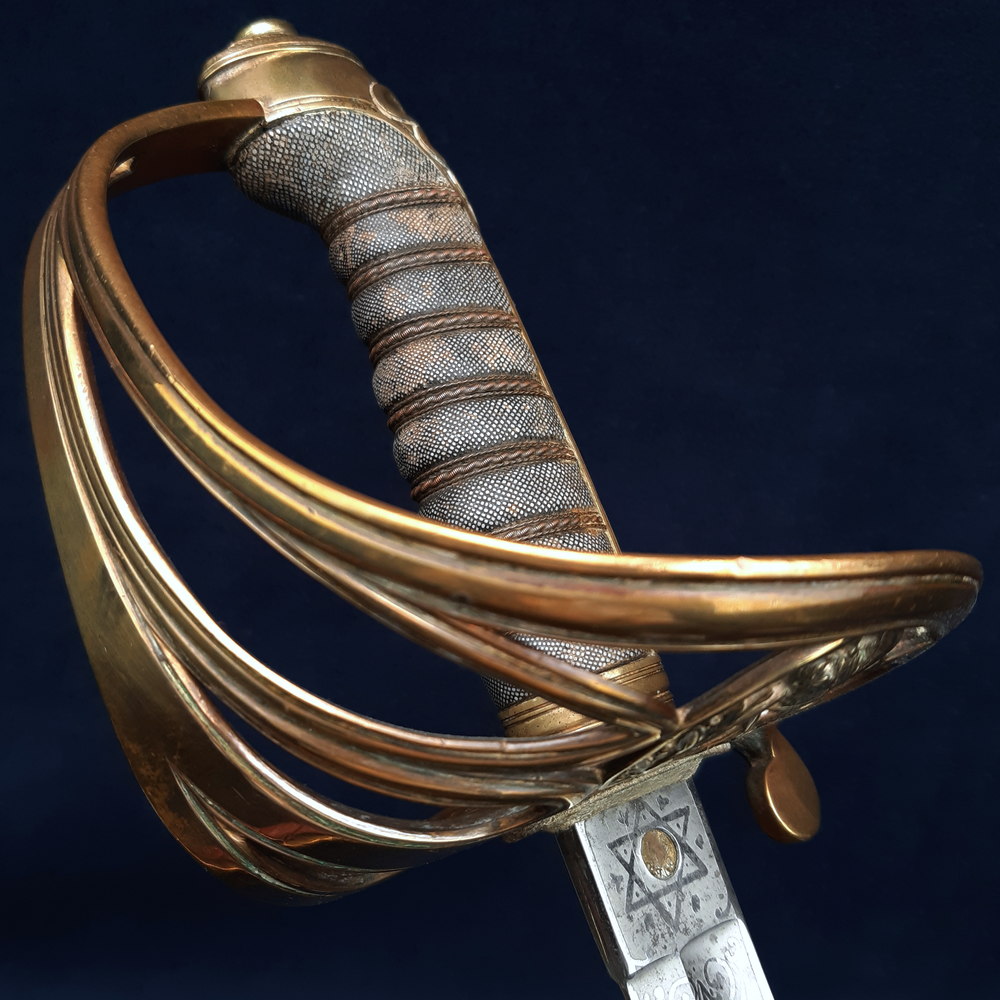
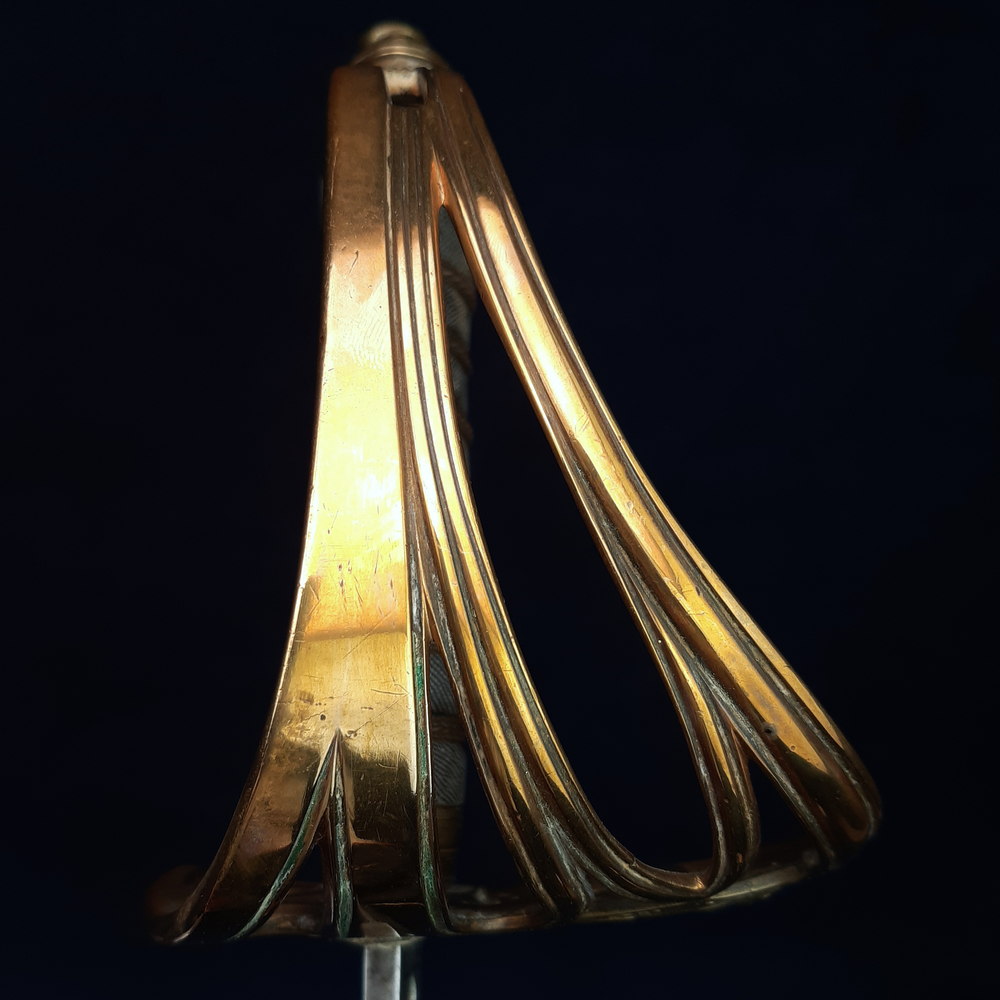
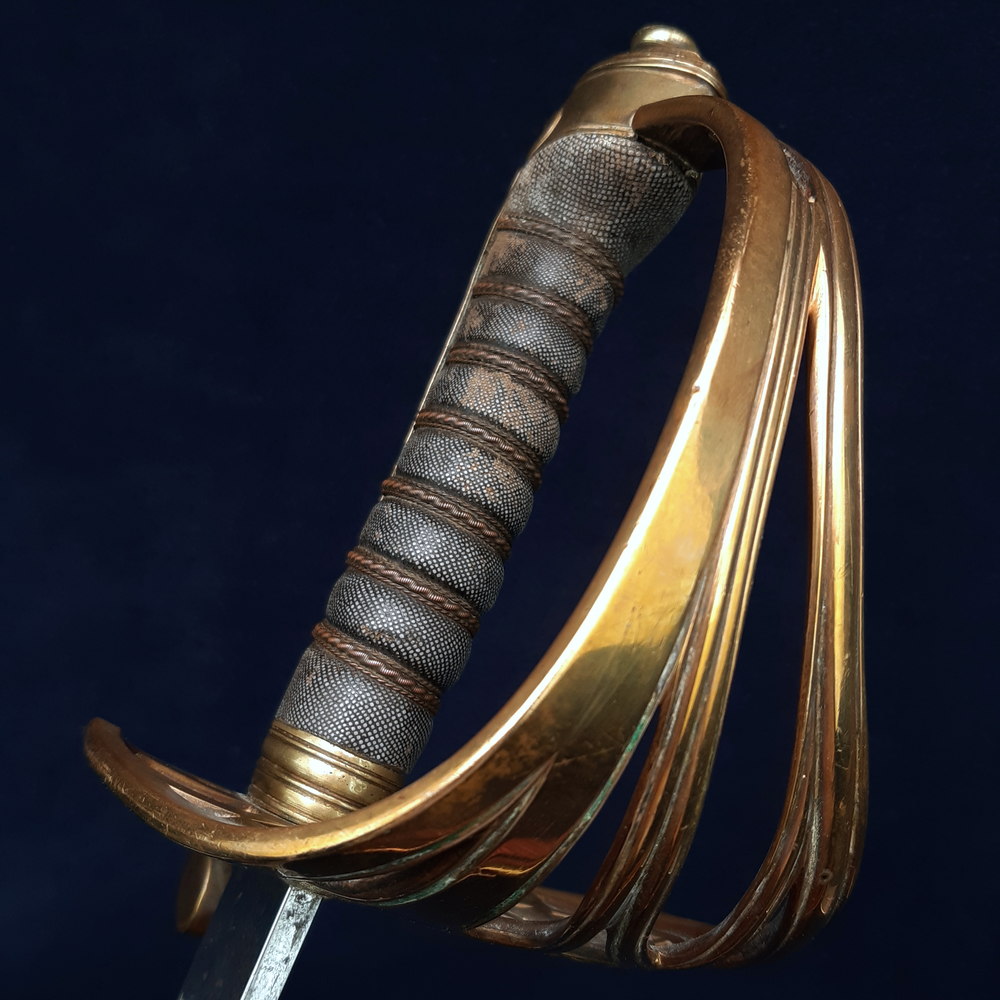
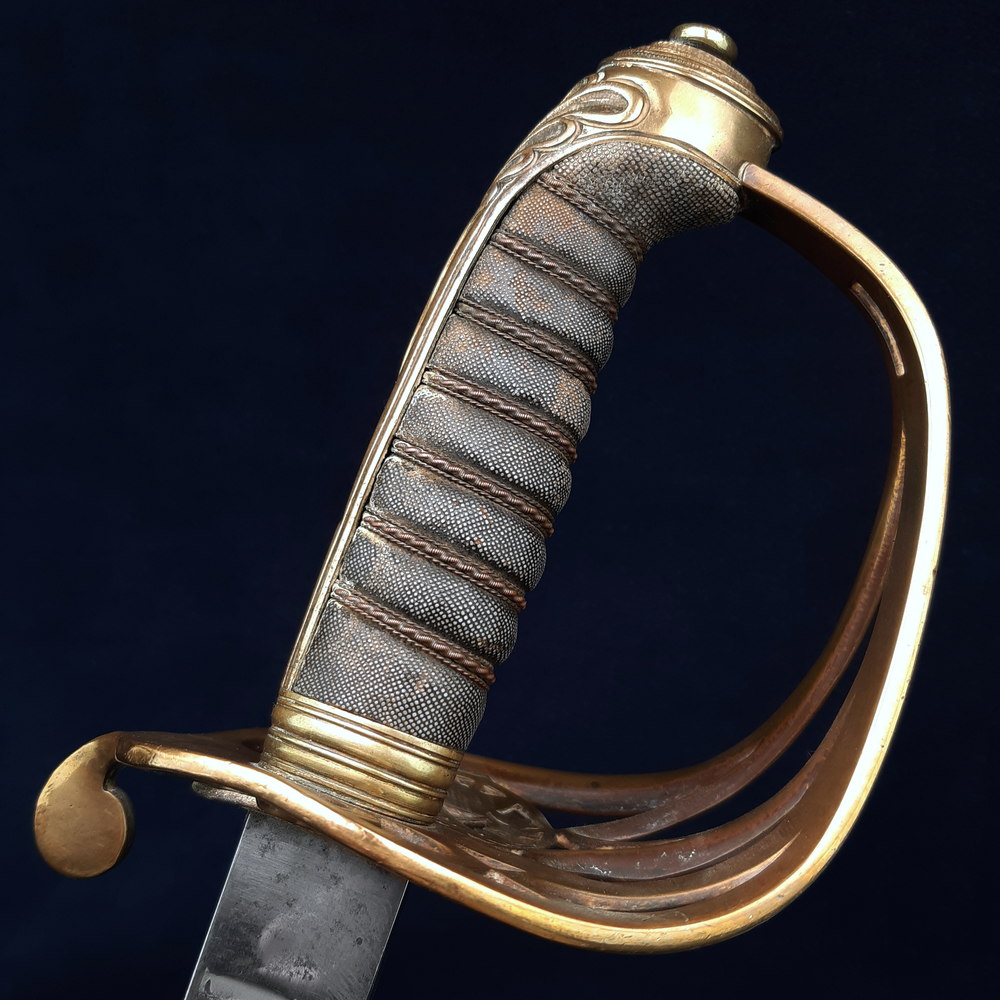
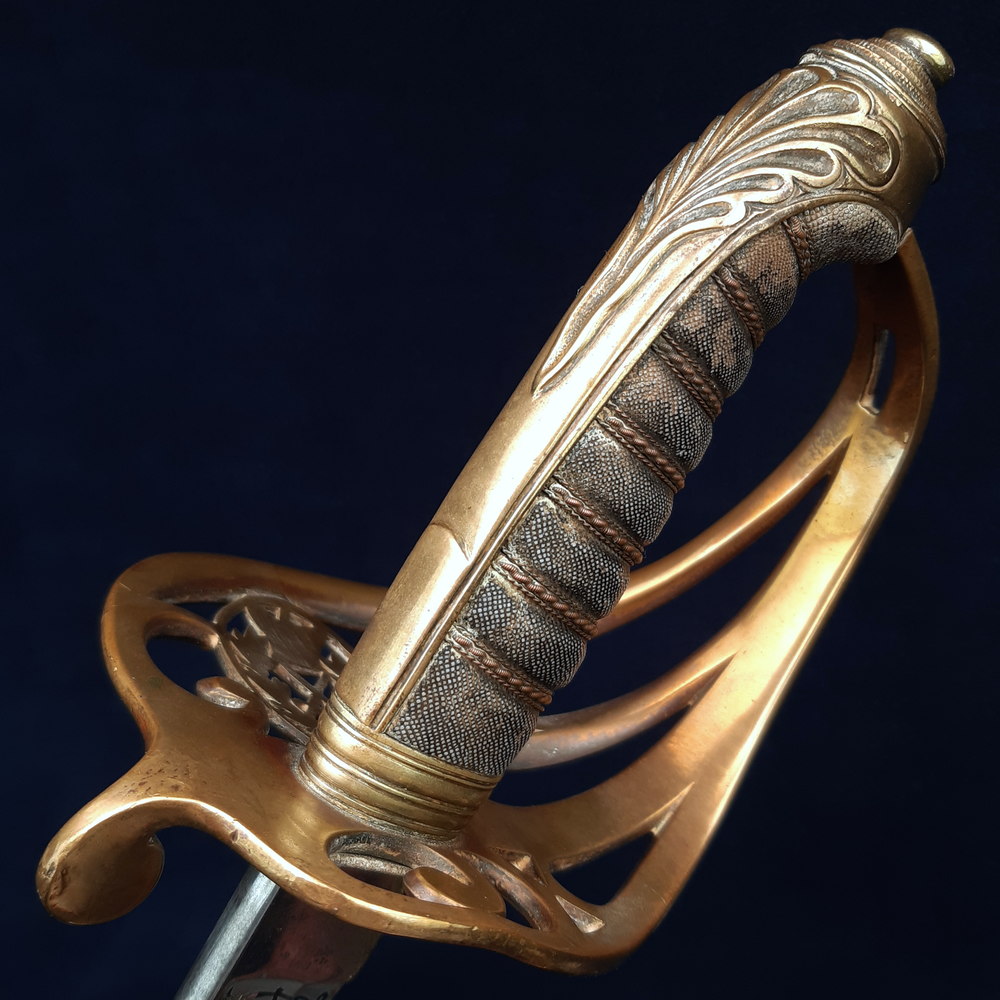
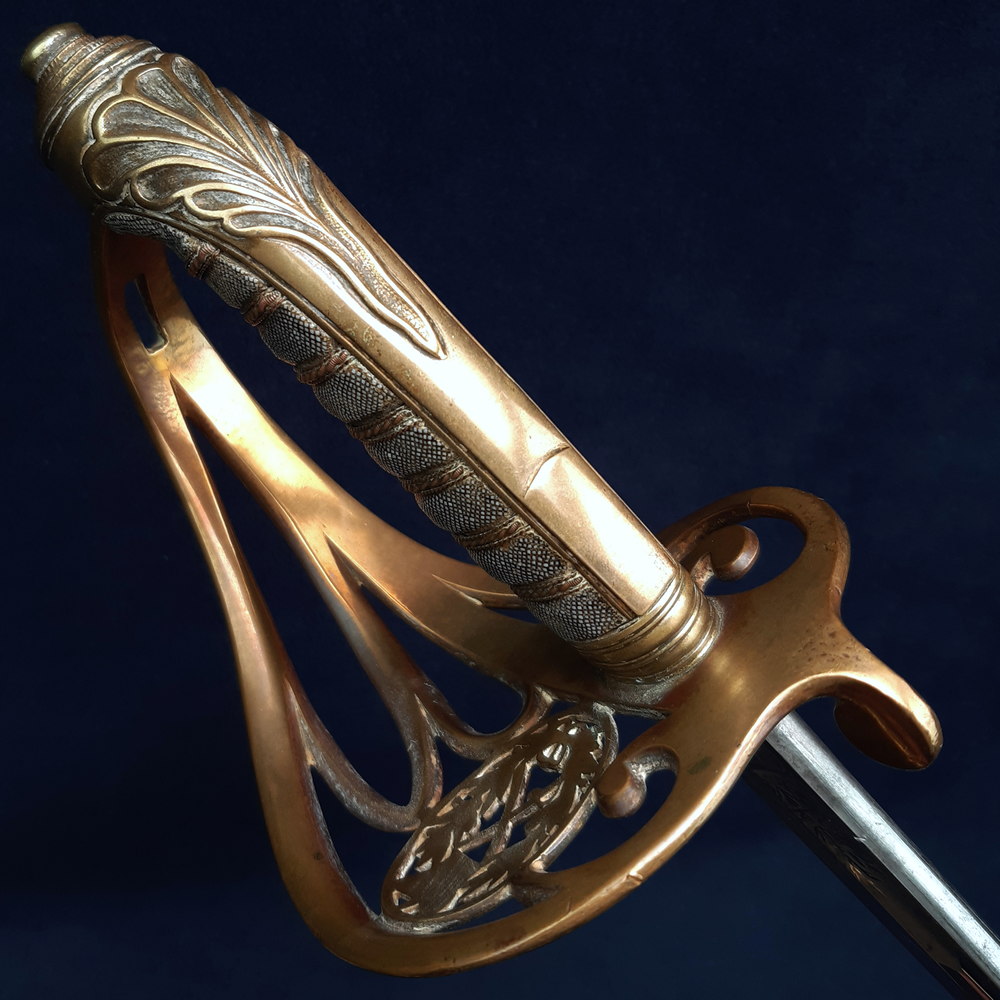
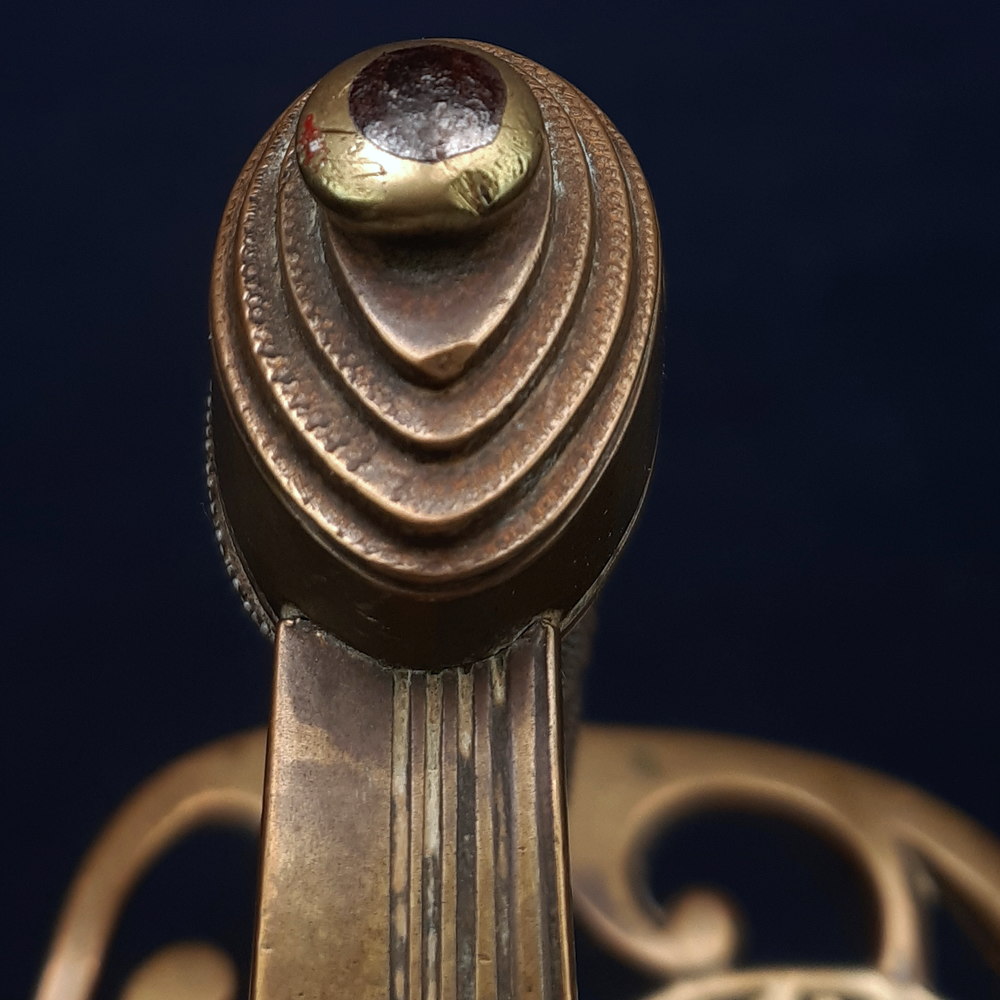
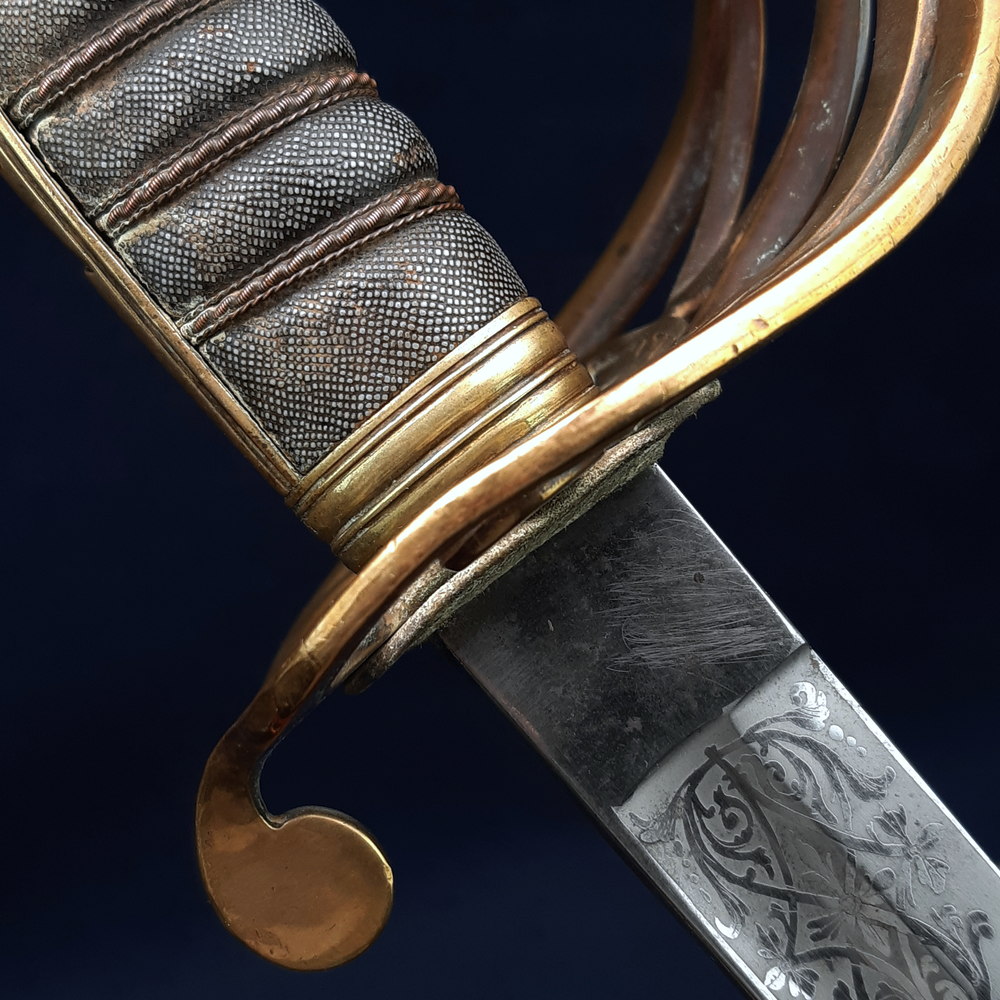
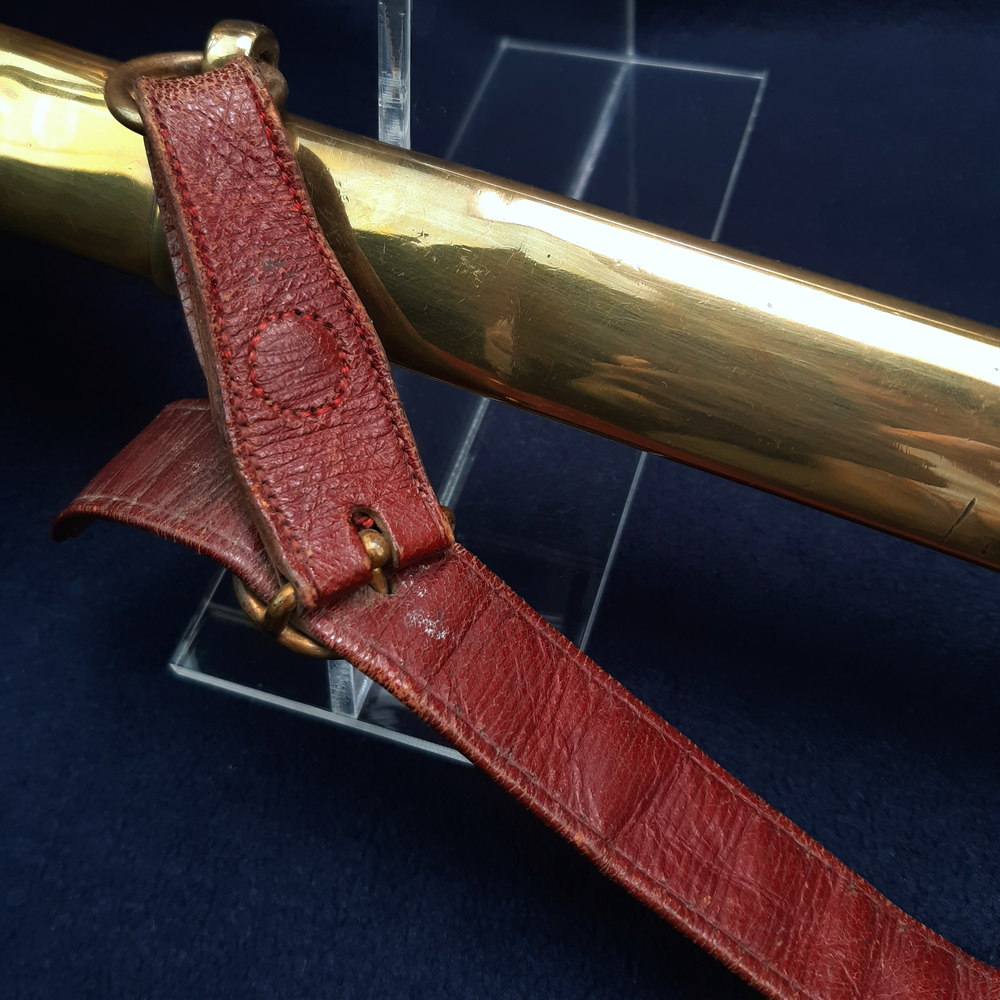
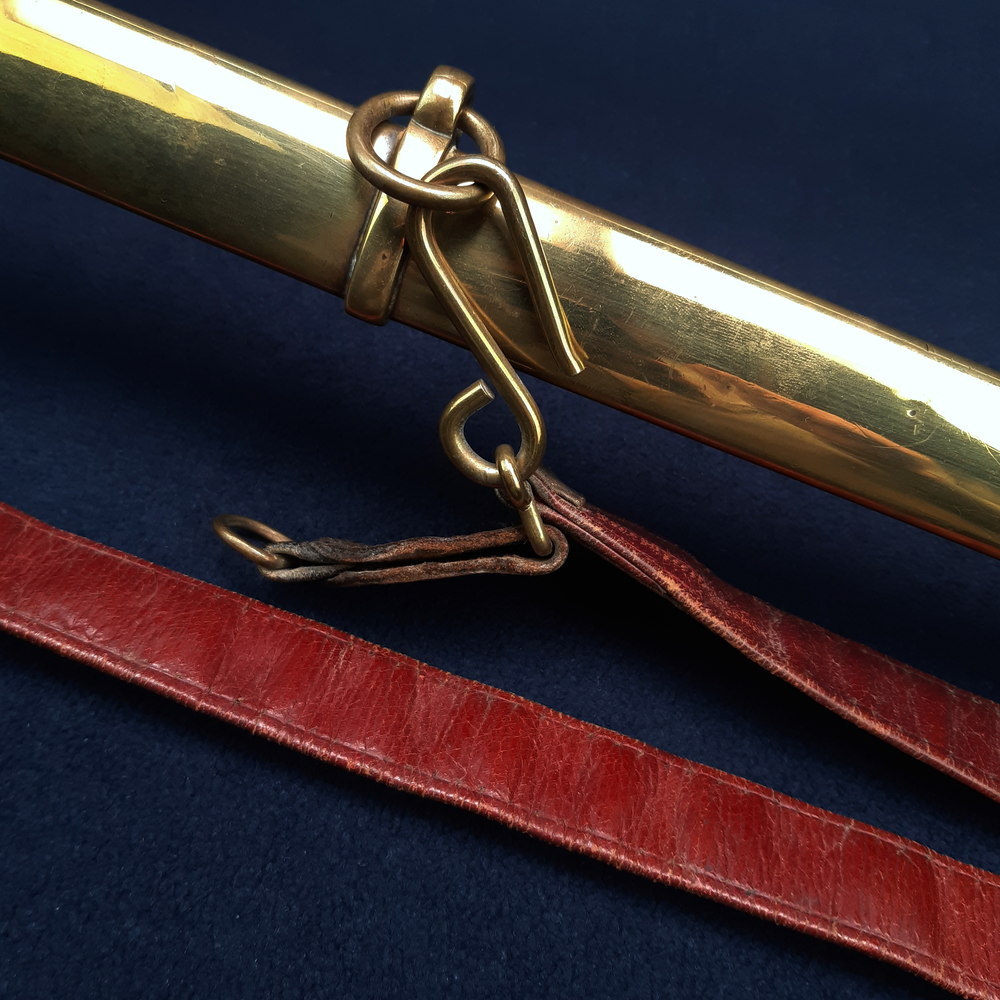
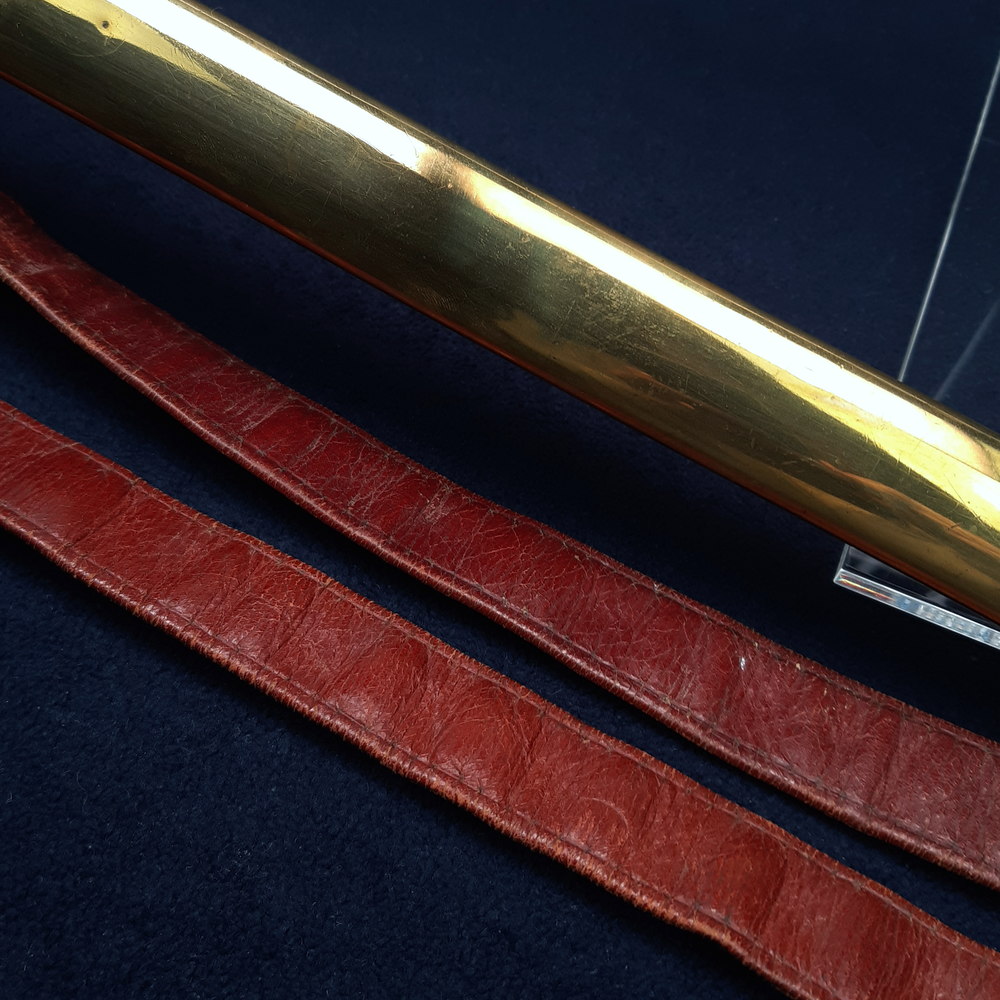
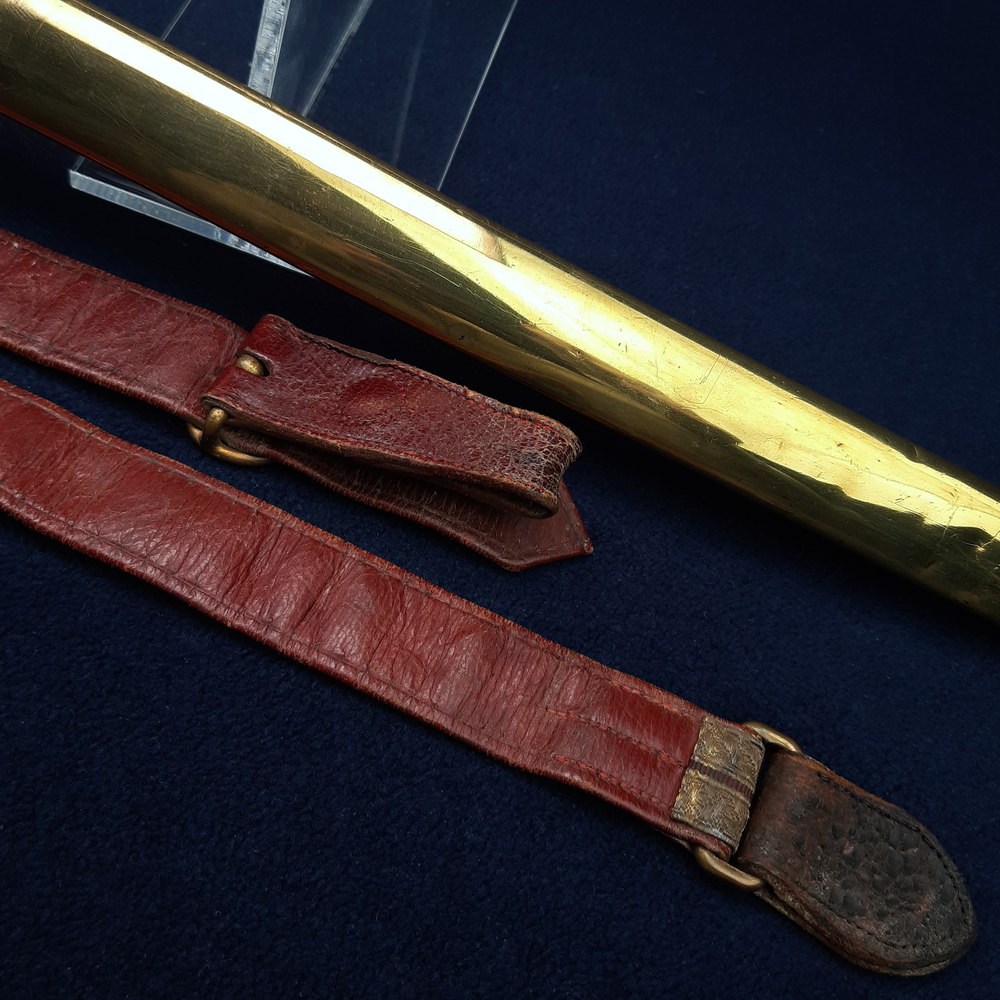
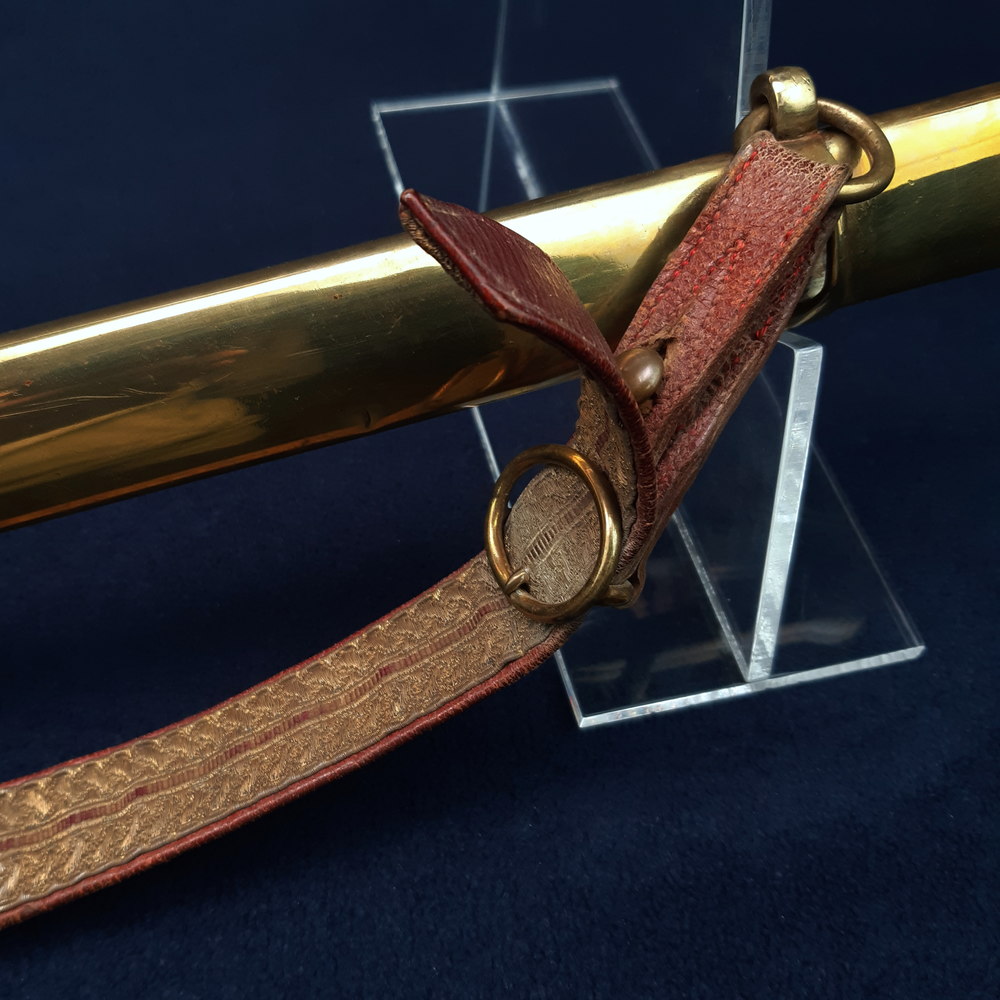
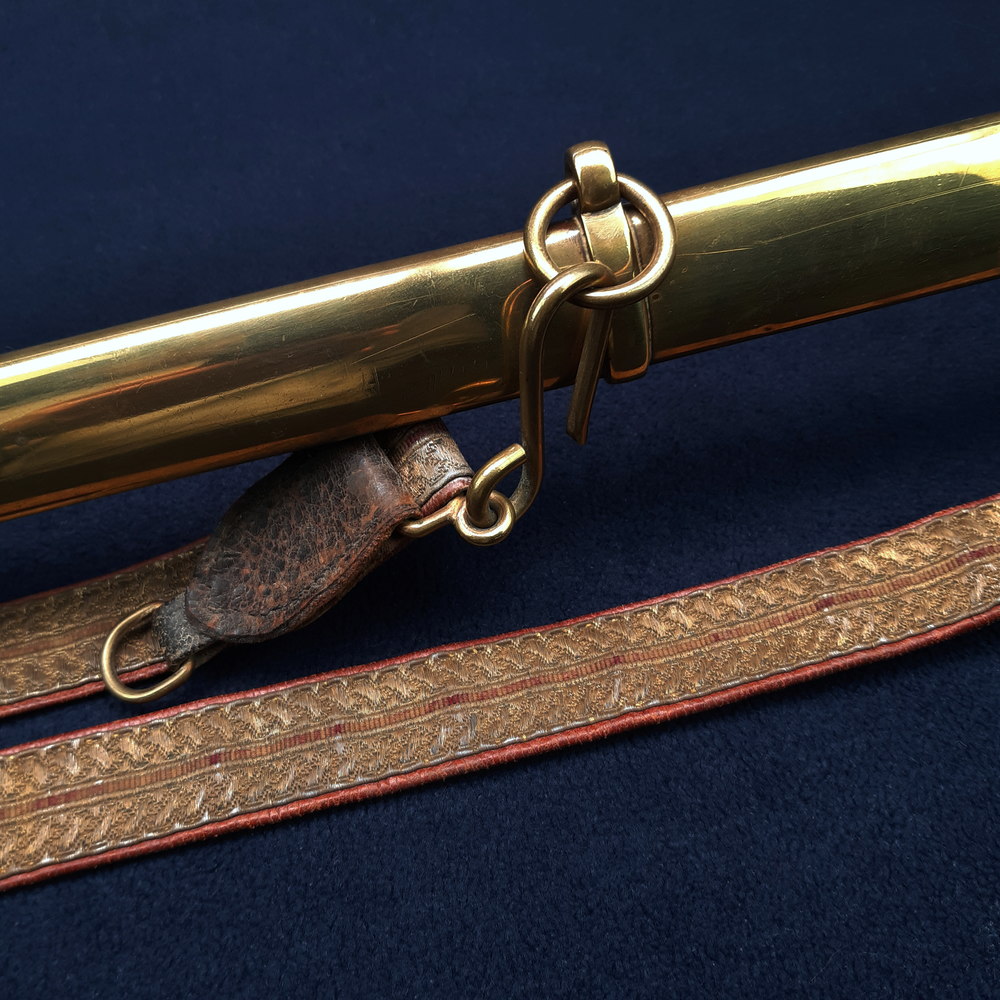
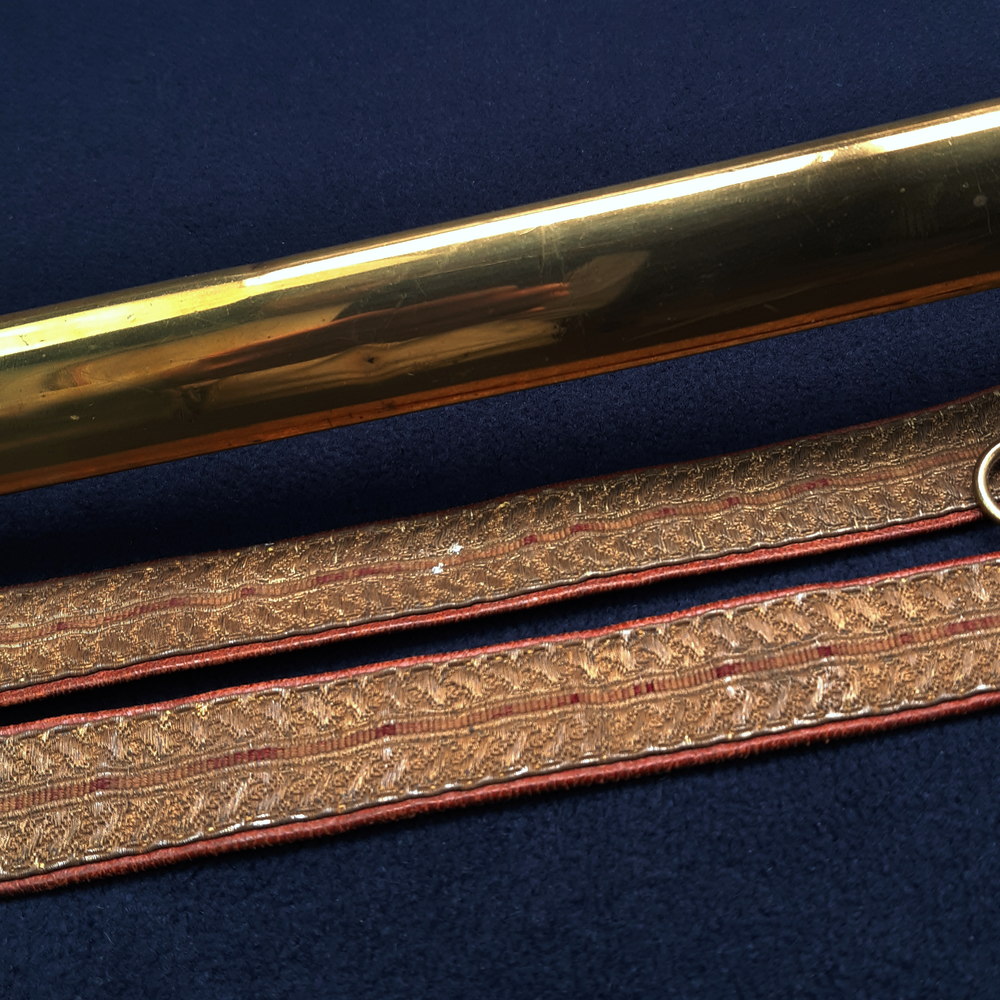
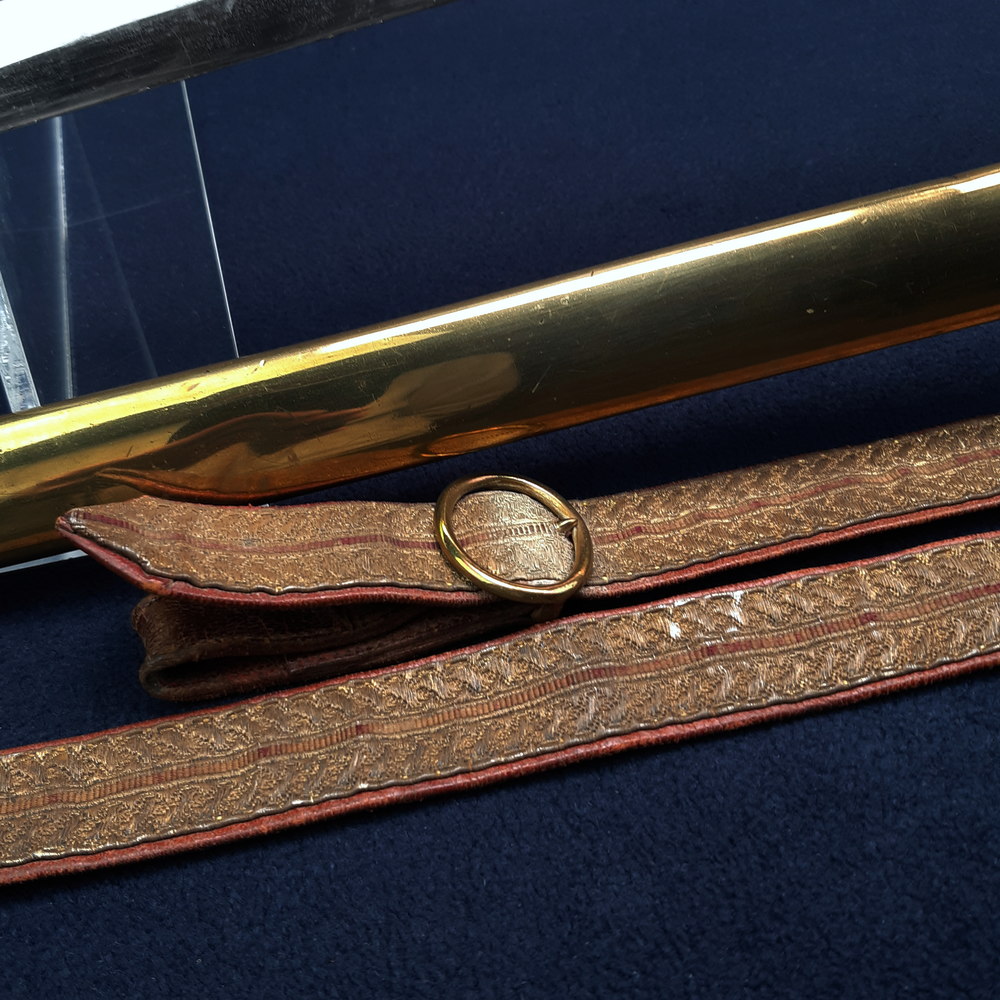
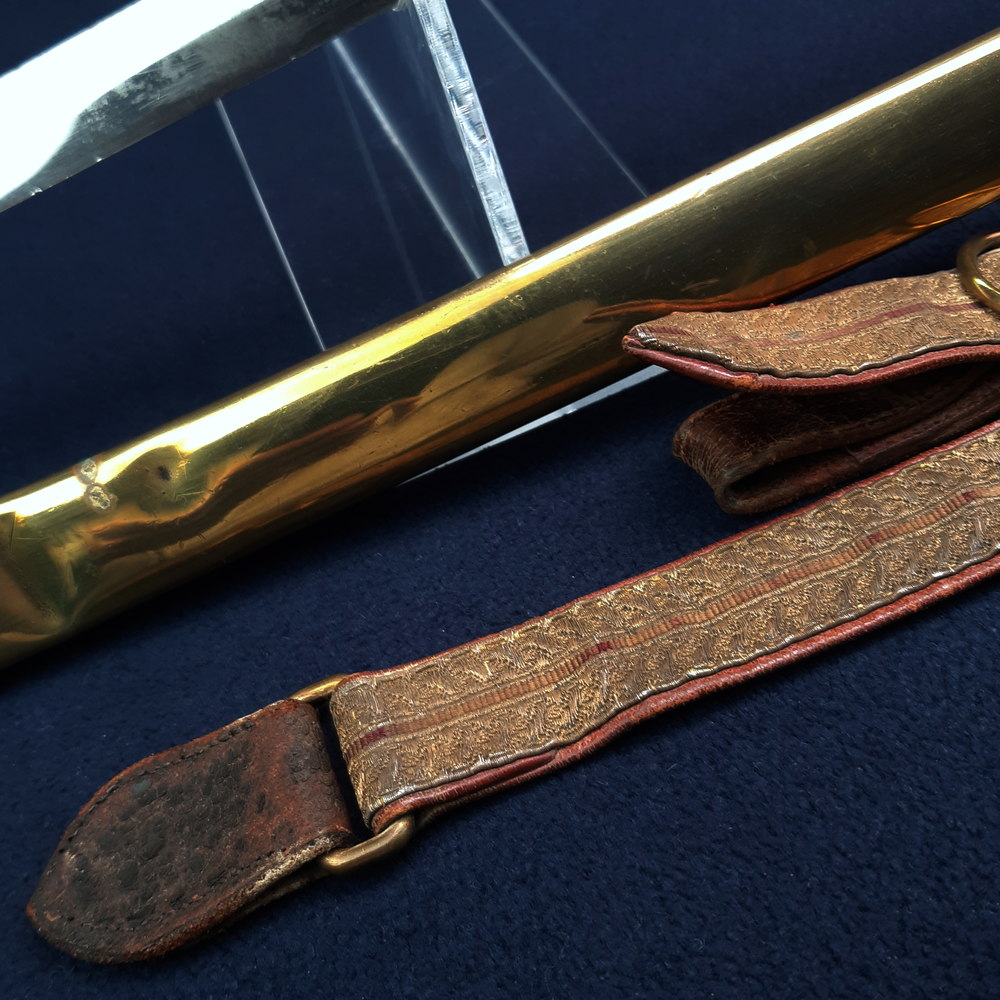
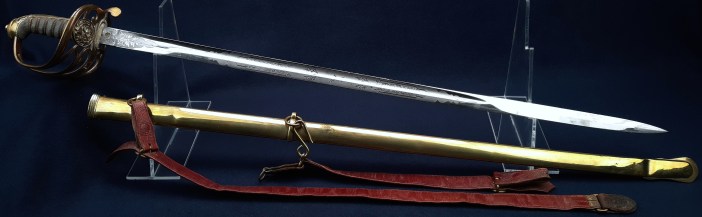
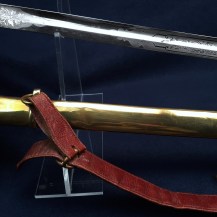
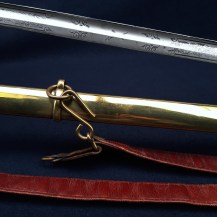
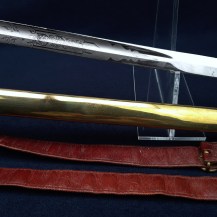
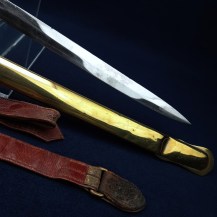
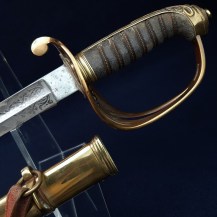
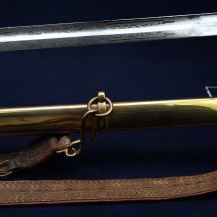
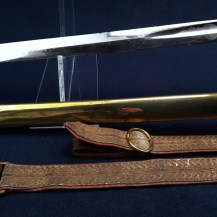
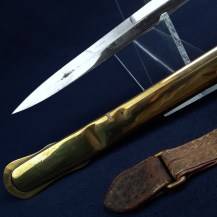
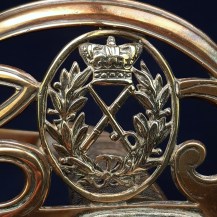
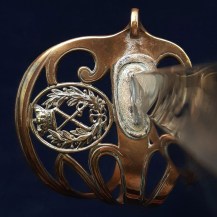
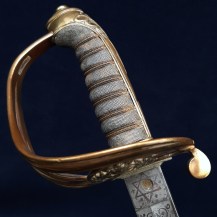
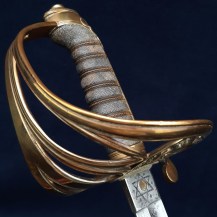
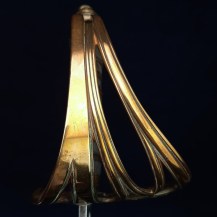
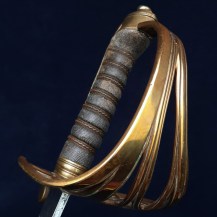
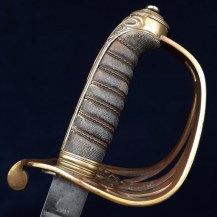
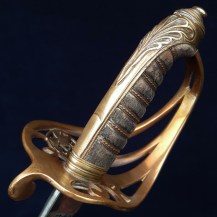
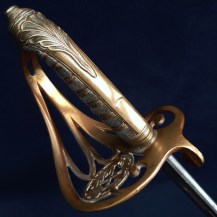
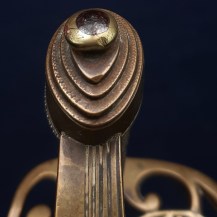
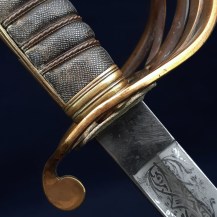
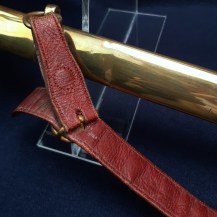
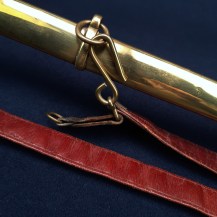
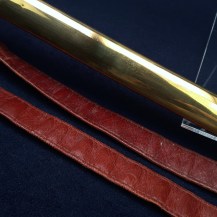
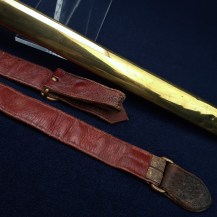
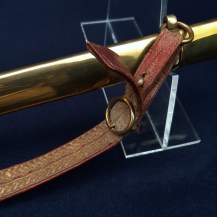
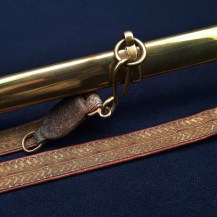
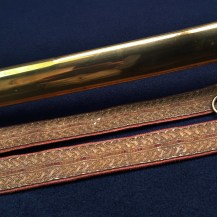
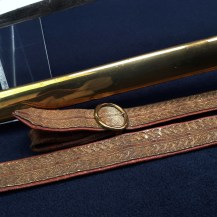
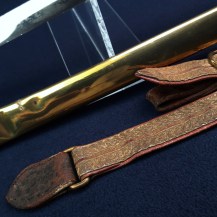
Curved single fullered blade with spear point. Distinctive pierced gilt brass ‘Gothic’ hilt, the hilt cast with a crown, a sword crossed with a baton, and victor’s laurels, all arranged within an oval. The hilt also has a small quillon and a sword knot slit. Brown leather washer. Ribbed brass ferrule, smooth brass backstrap with cast acanthus motif, integral stepped pommel cap, brass tang button, grip of black shagreen over wood bound with wire. Brass scabbard with two hanging rings. Hanging straps of red Morocco leather on one side and woven bullion on the other, with brass buckles & furniture. Blade 32¼ inches in length past the washer, 1.05 inches wide at the shoulder, the sword 37¾ inches overall.
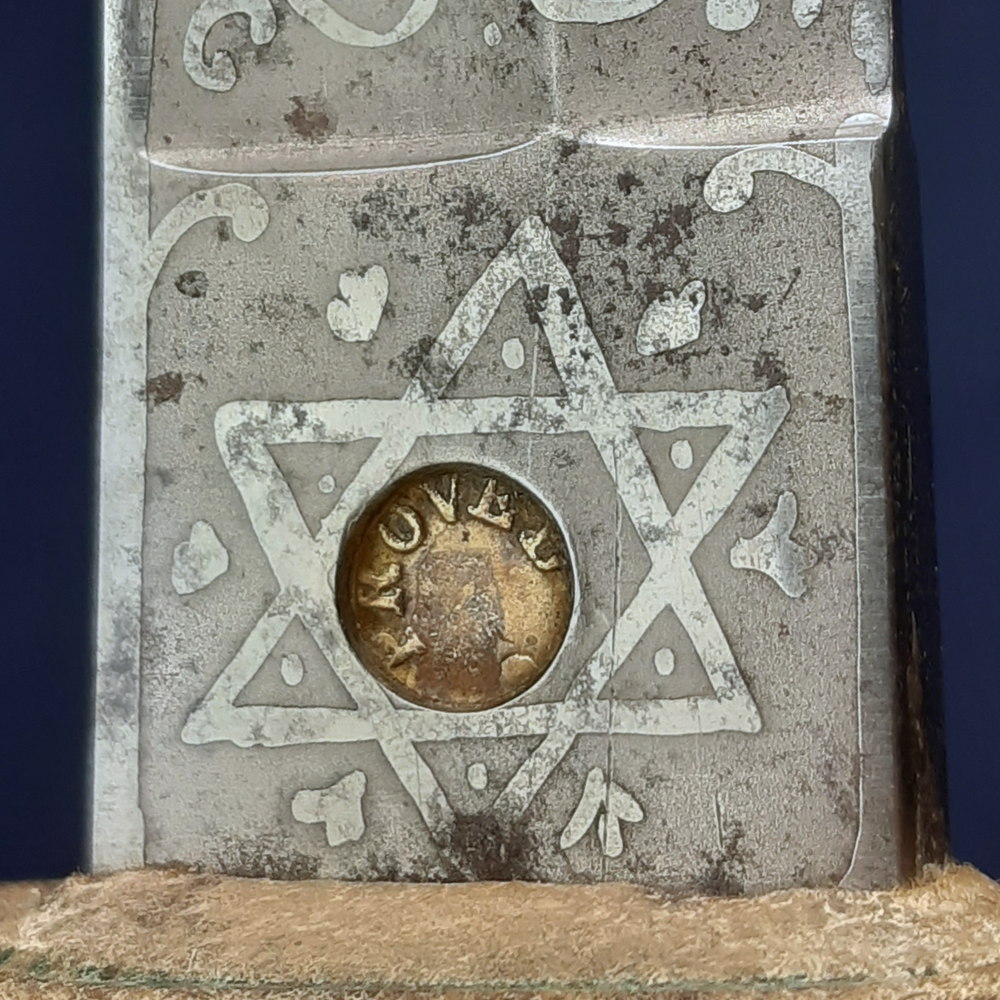
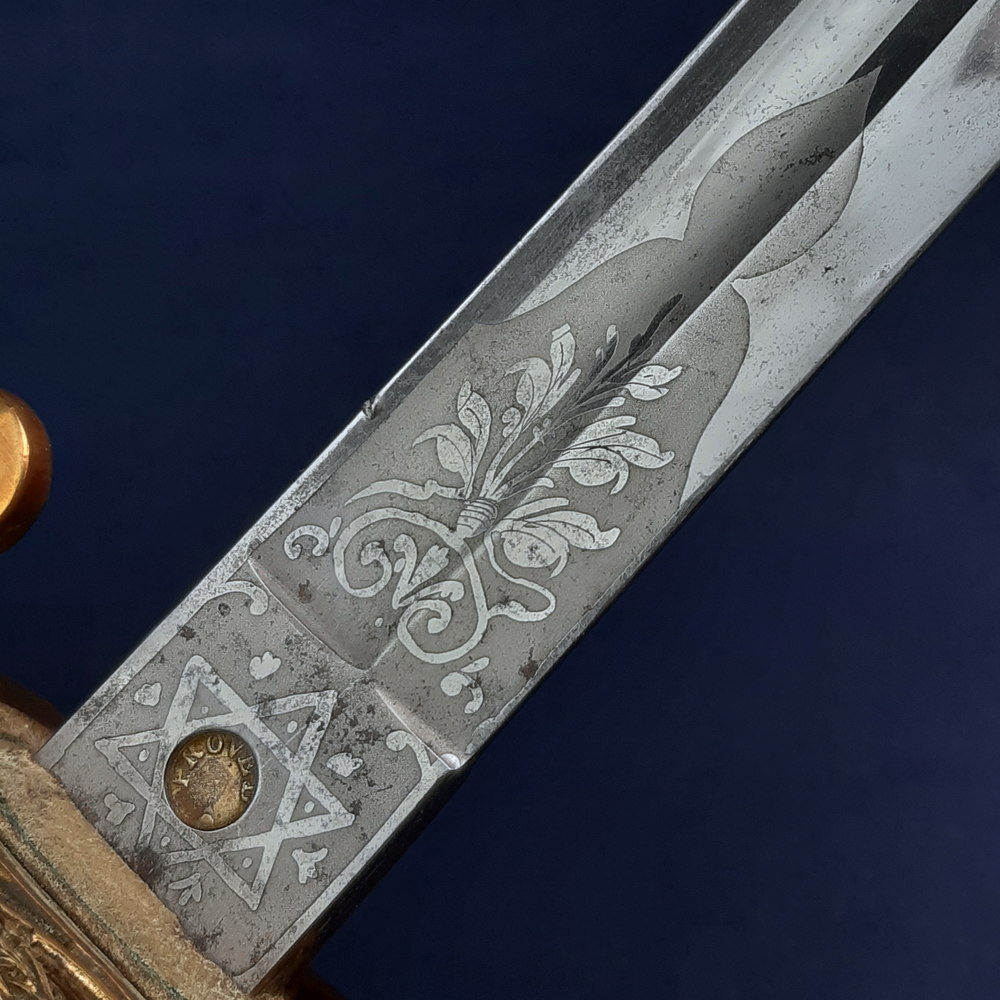
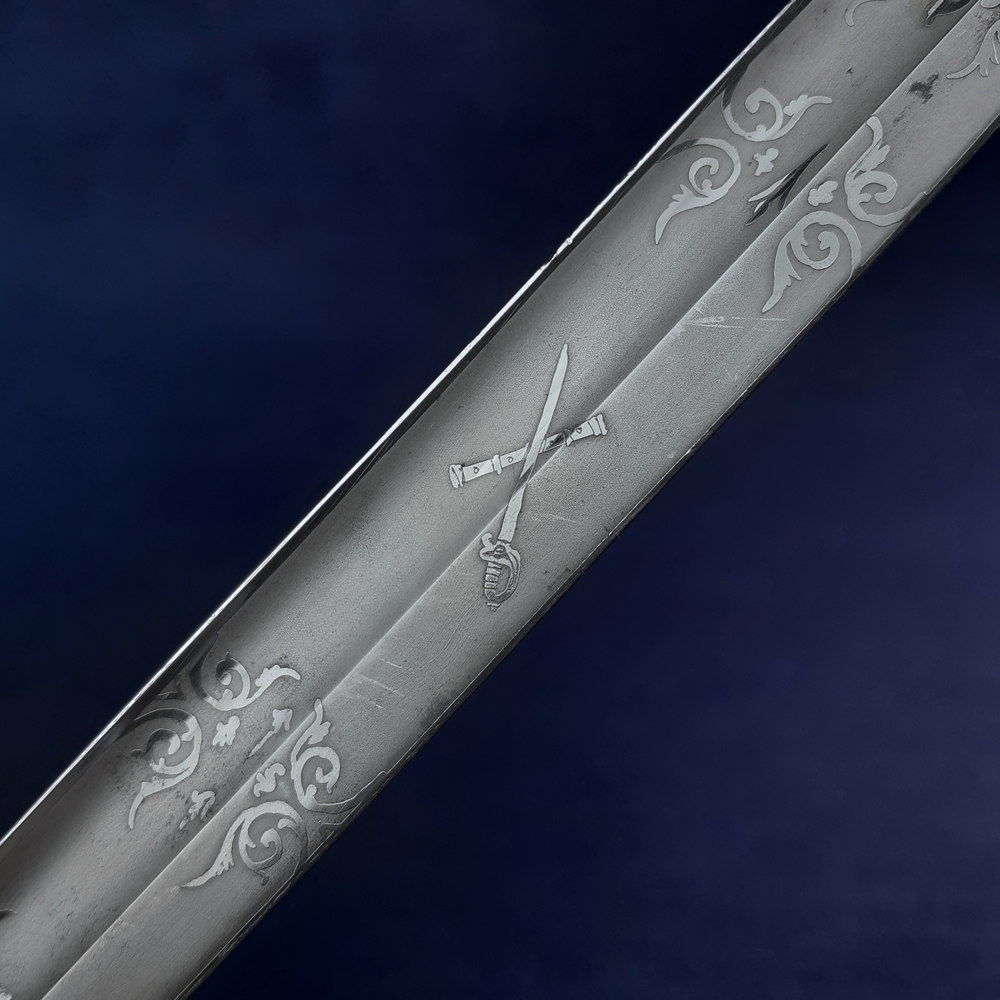
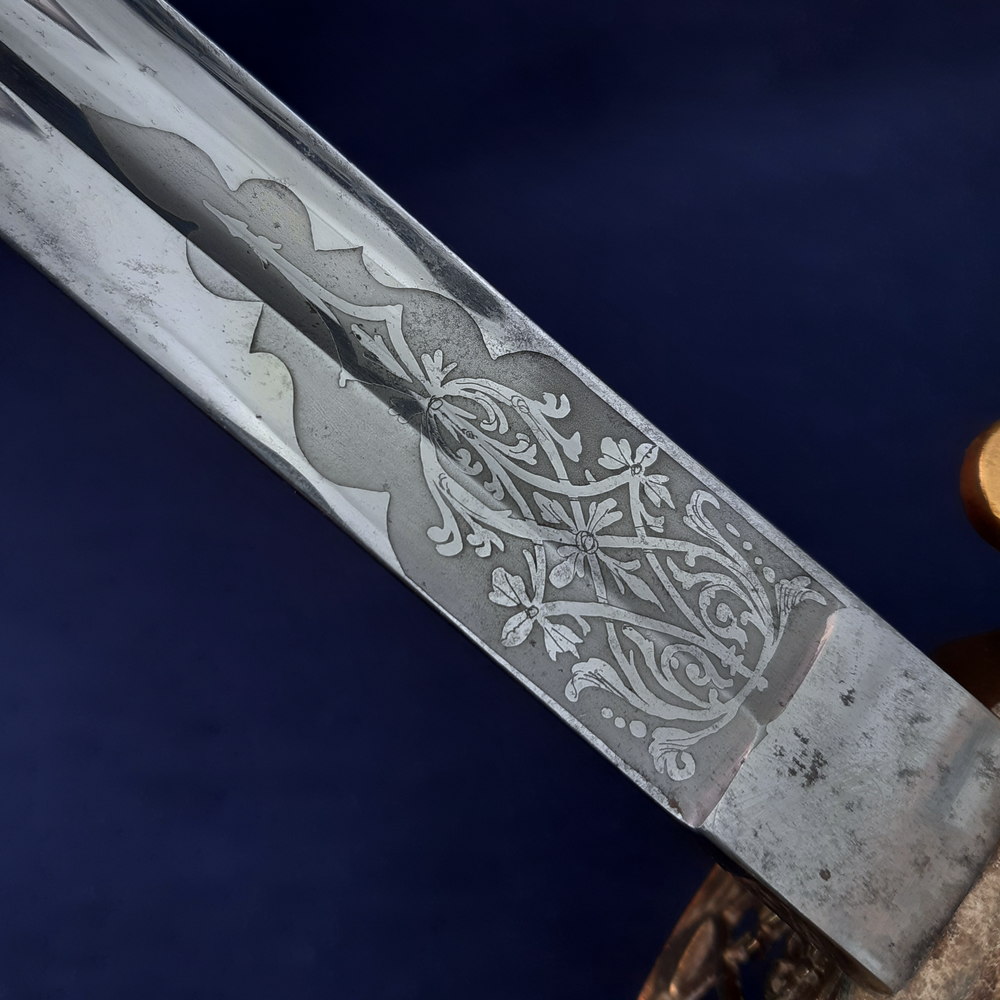
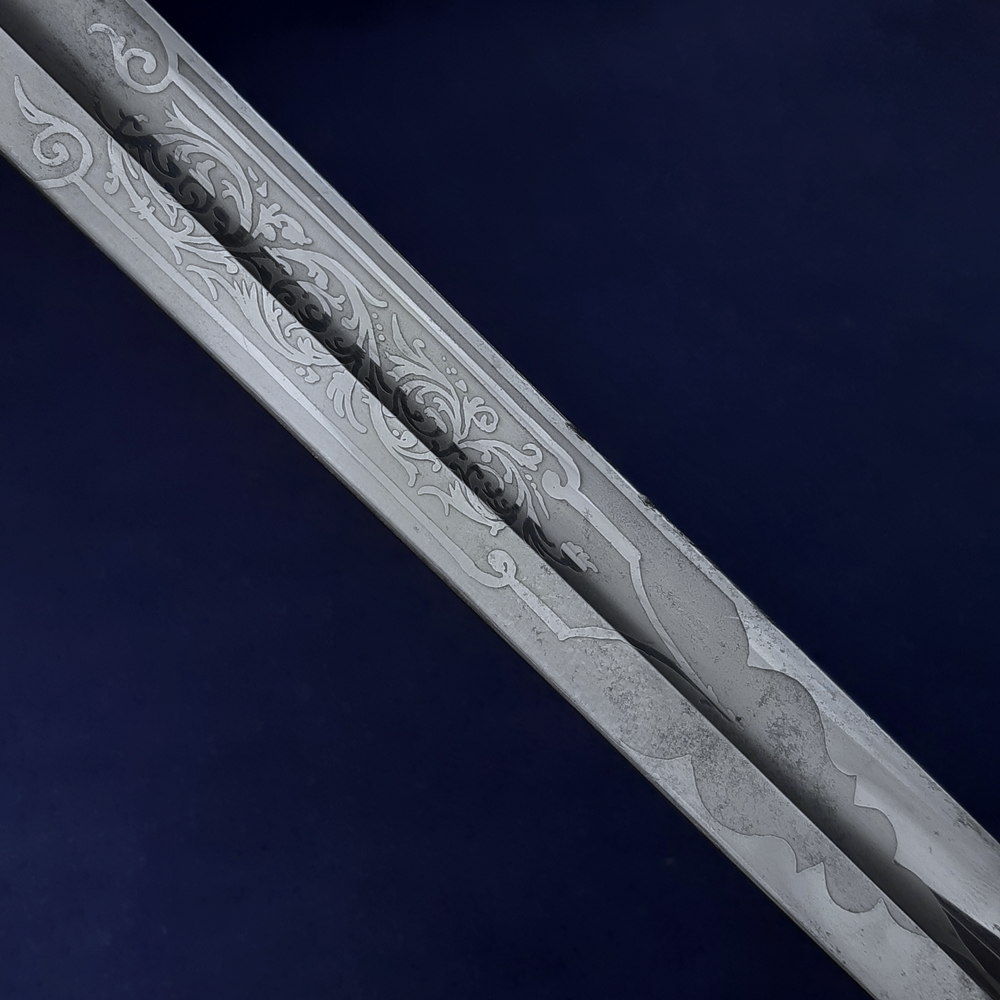
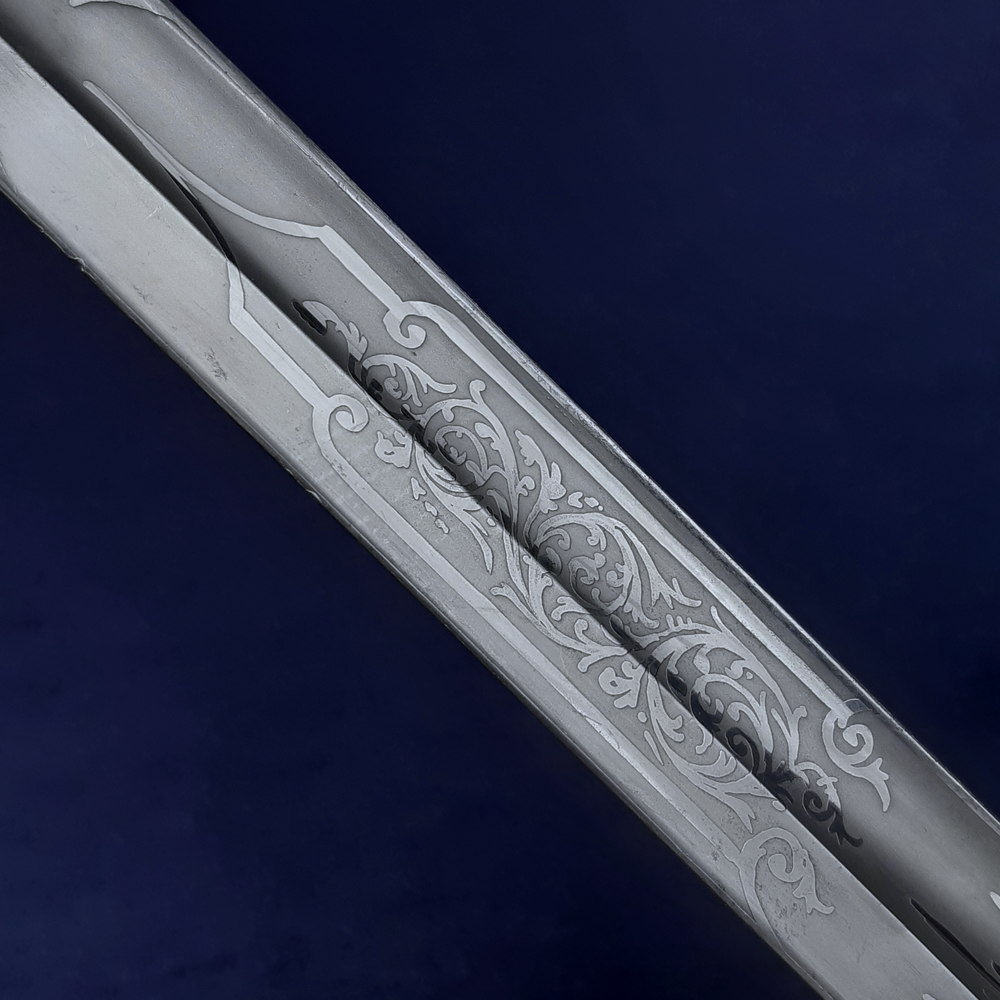
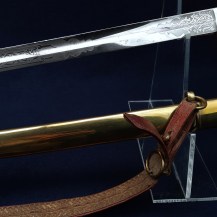
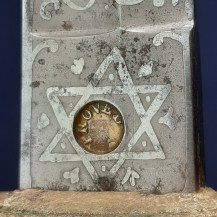
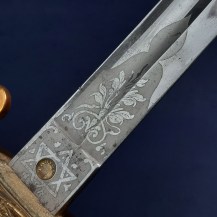
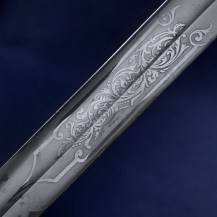
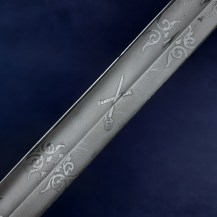
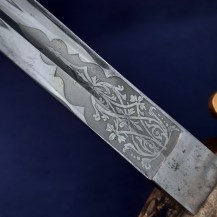
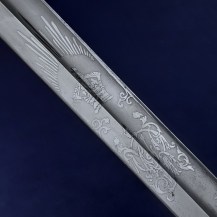
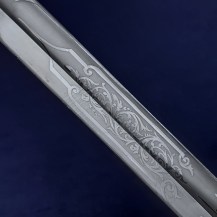
The blade is set at the ricasso on one side with a brass proof slug stamped with ‘PROVED’, the slug surrounded by an etched six-pointed star. The blade is further etched on that side with a crossed sword and baton, and foliate motifs.
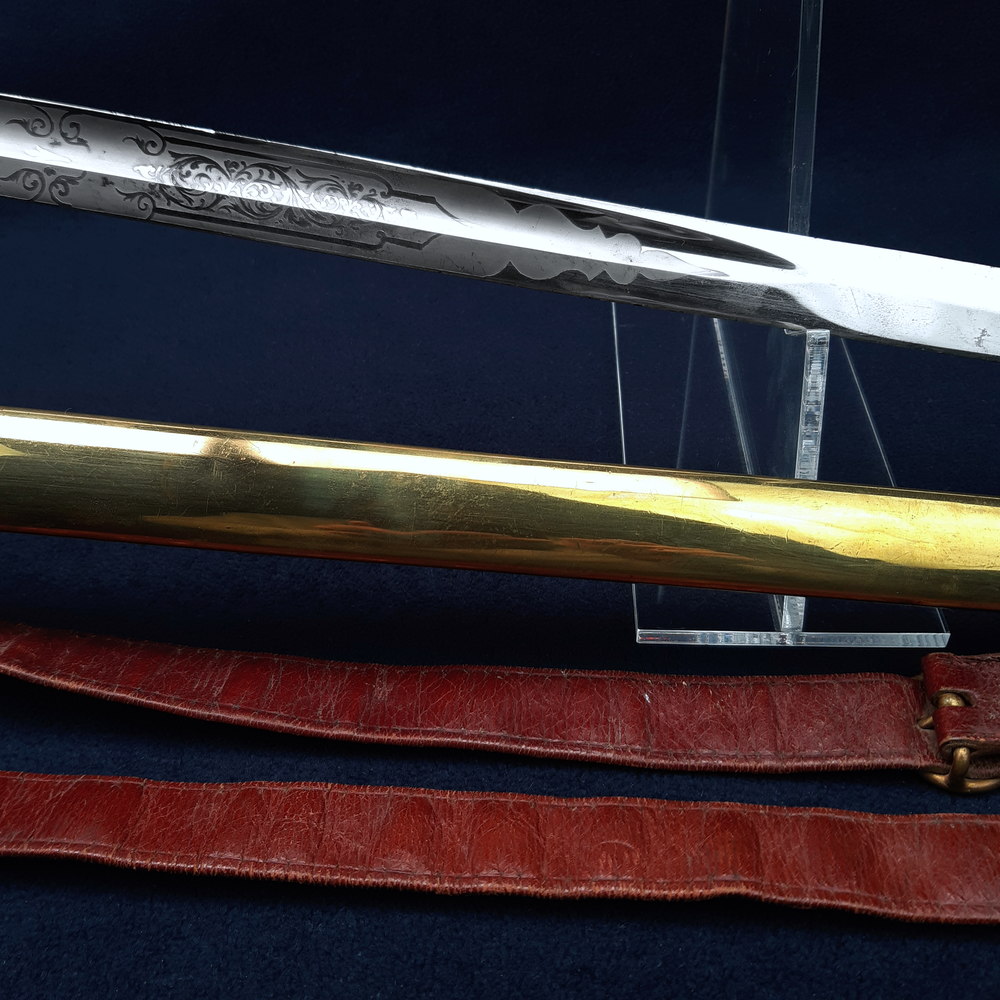
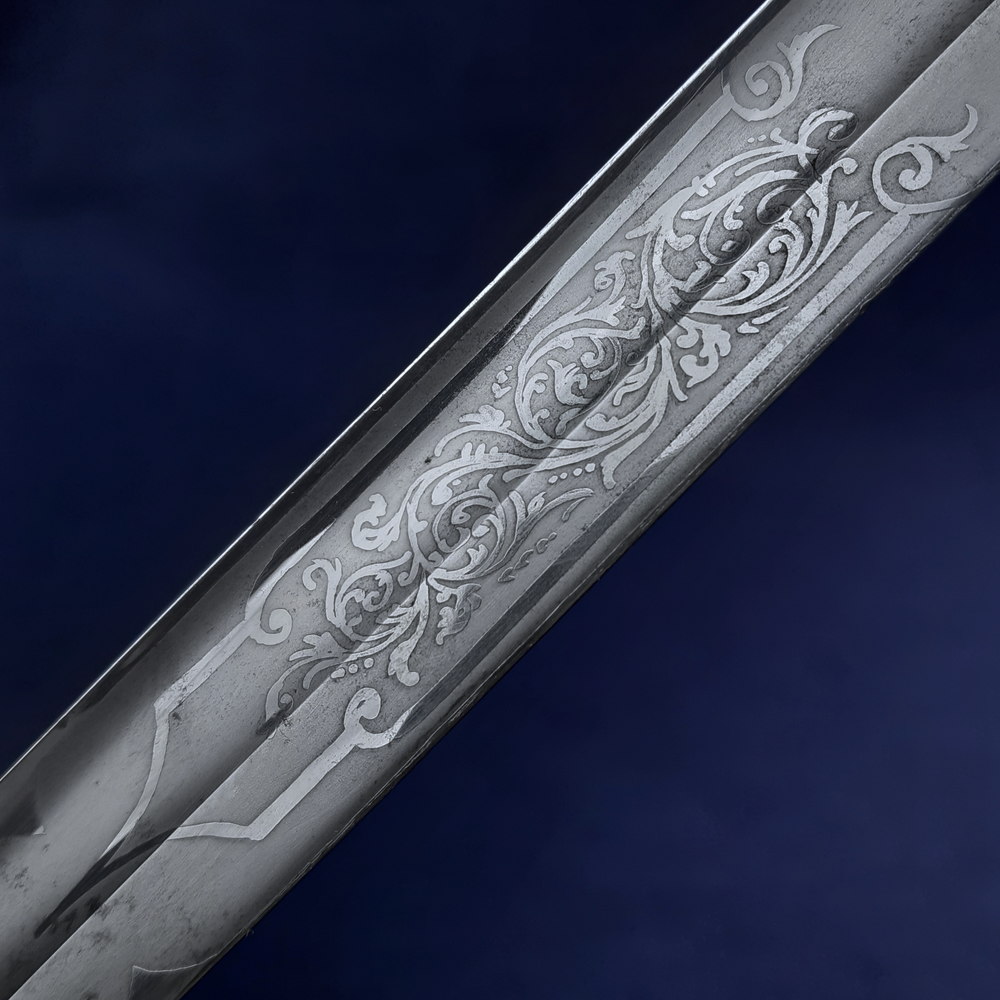
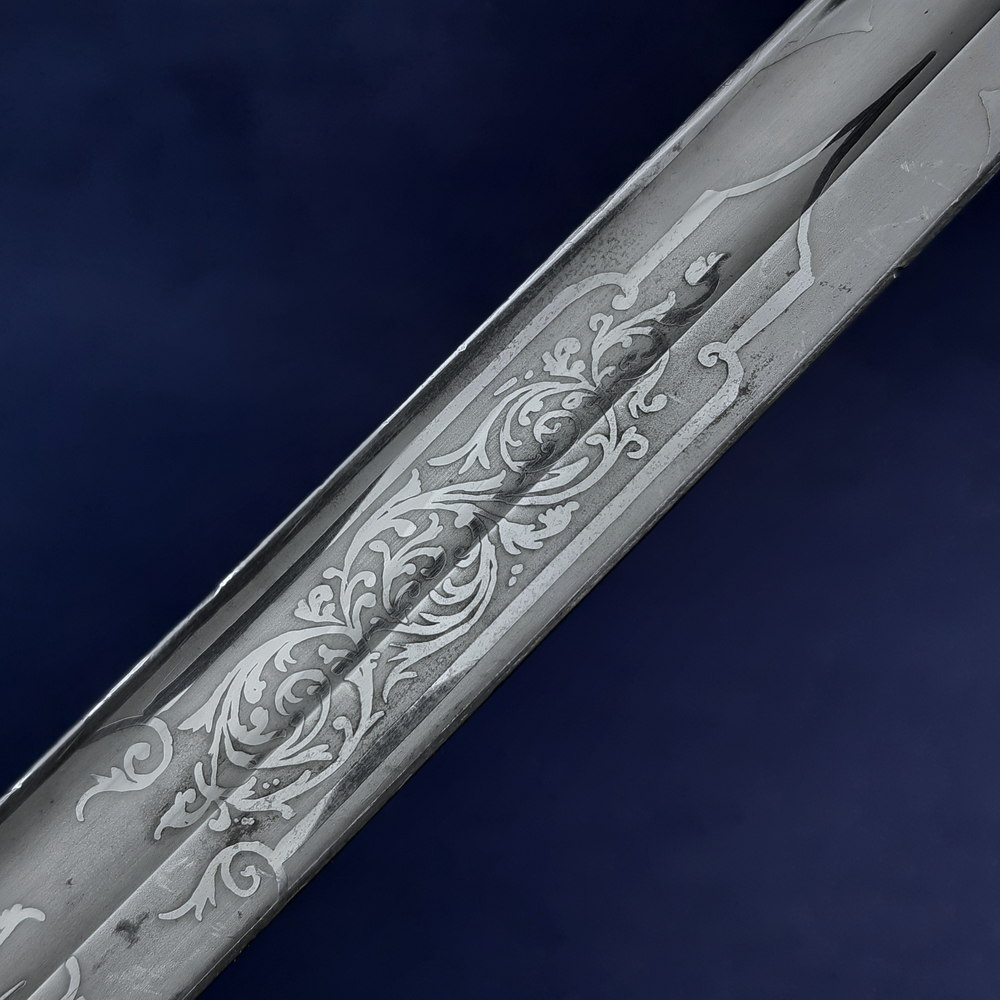
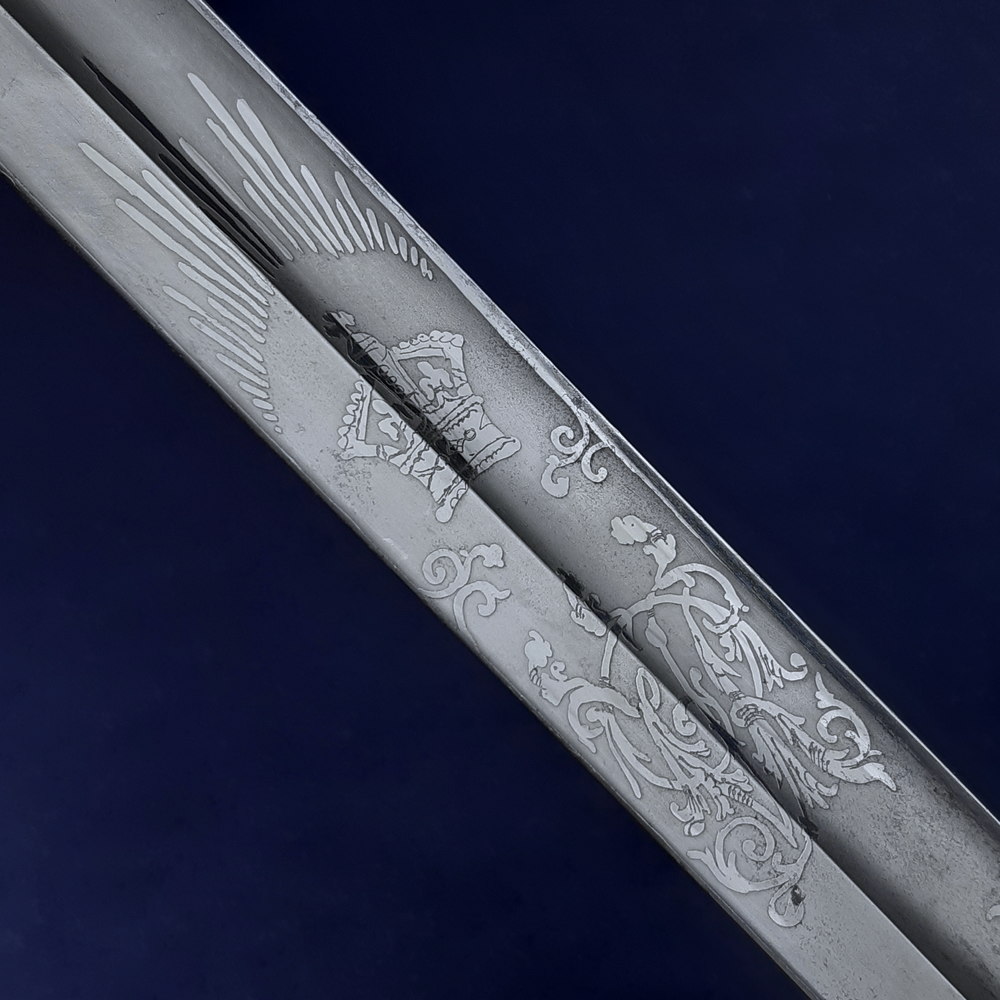
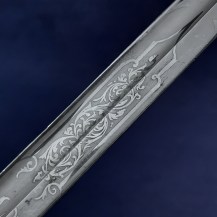
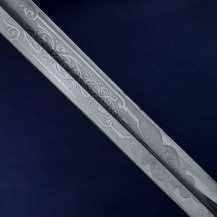
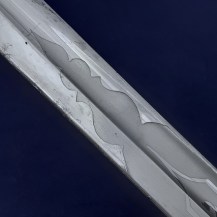
The ricasso of the other side is blank. That side is further etched with the crown and cypher of Queen Victoria and identical foliate motifs.
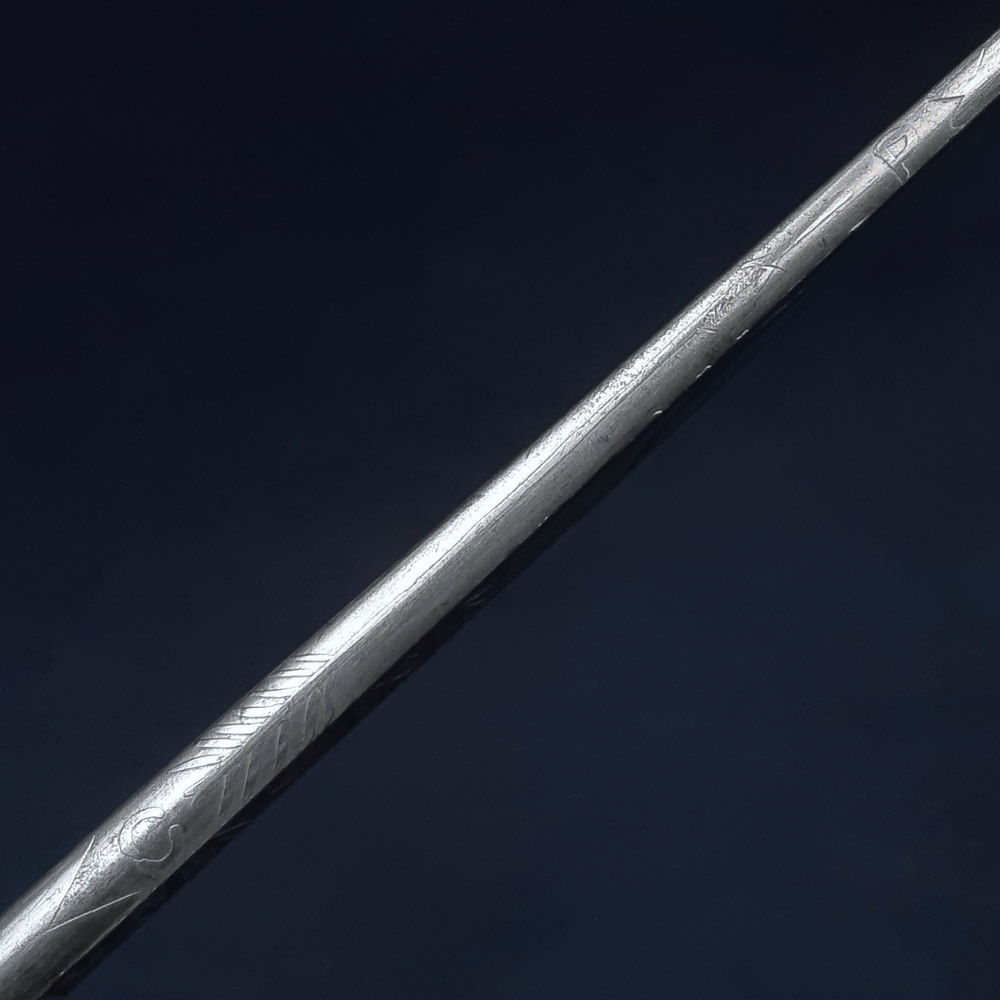
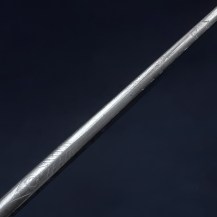
The spine of the blade is etched with a centre of percussion arrow, with the letter ‘C’ placed behind the tail of the arrow and the letter ‘P’ just behind its tip.
The 1845 Pattern general officer's sword was a variation of the standard infantry officer's 1845 Pattern, but with the monarch's cypher on the guard replaced with the general officer's badge of rank: a crossed sword and baton. This continued a practice also used for the 1822 Pattern, which first introduced the ‘gothic’ hilt. Officers would have purchased such a sword upon attaining general officer rank, meaning Major-General or higher, or when they were assigned to a general officer’s staff: because of their relative numbers surviving swords are more likely to be those of staff officers.
The 1831 Pattern mameluke was the dress and ceremonial sword for such officers, so the 1845 was intended to be the sword carried on active campaign duty, performing the same fighting role as the standard 1845 Pattern while still denoting their rank. Such officers in practice had fairly free choice of their campaign weapons, especially in India, so in the field one might have seen a mixture of the 1845 and other models, such as the Patterns of their original regiments. The 1845 Pattern was carried until 1892 when a new blade shape was introduced.
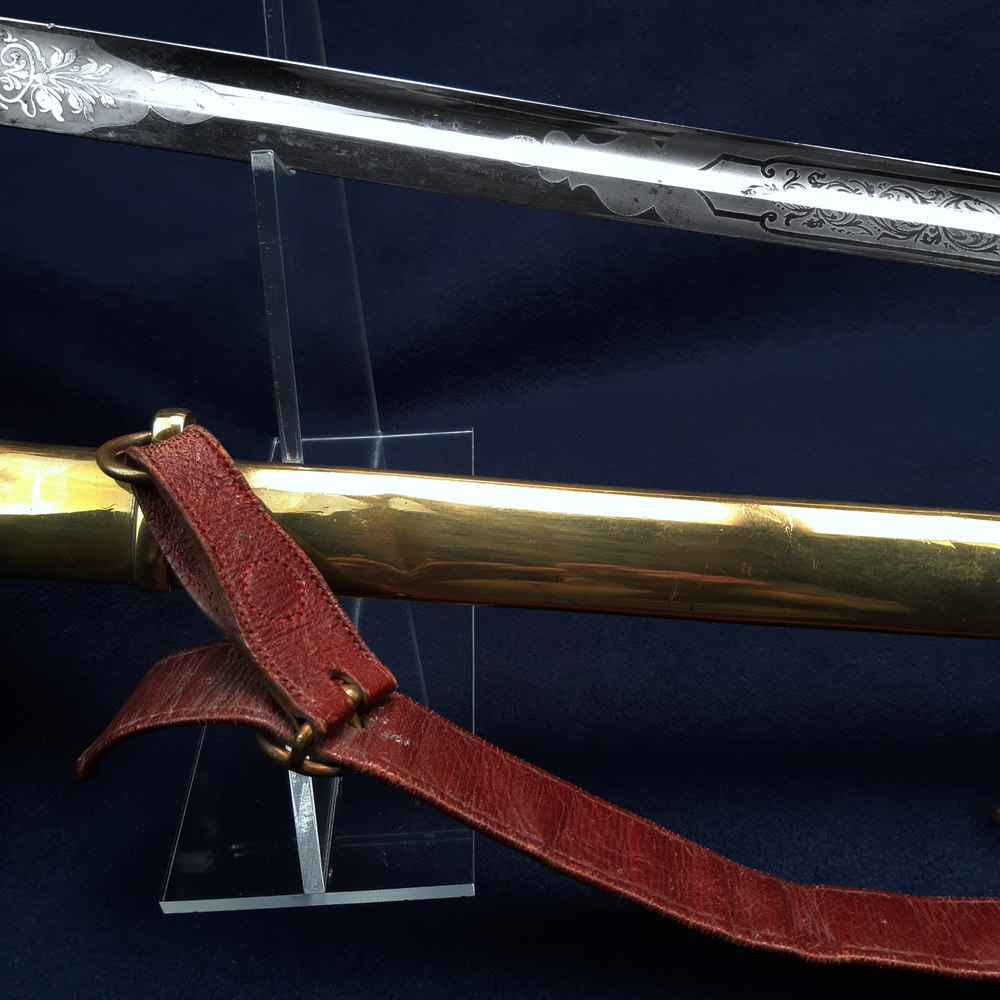
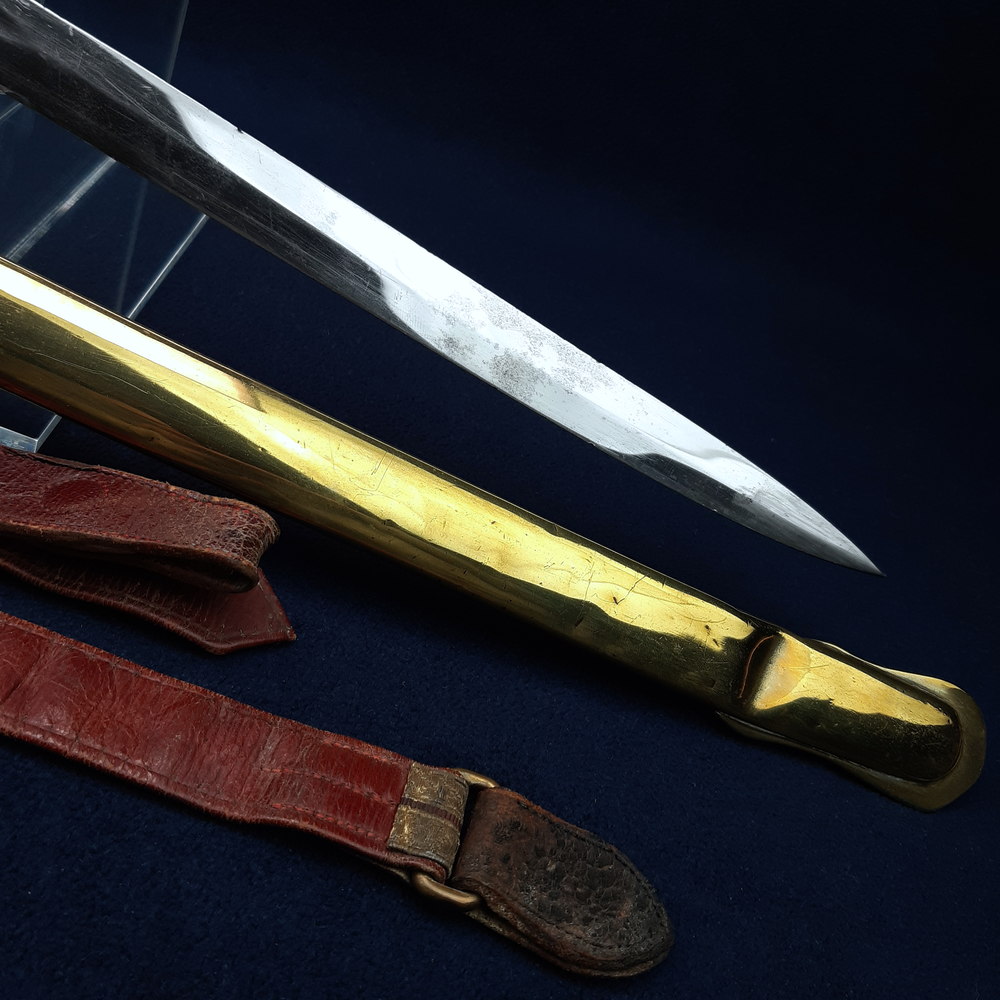
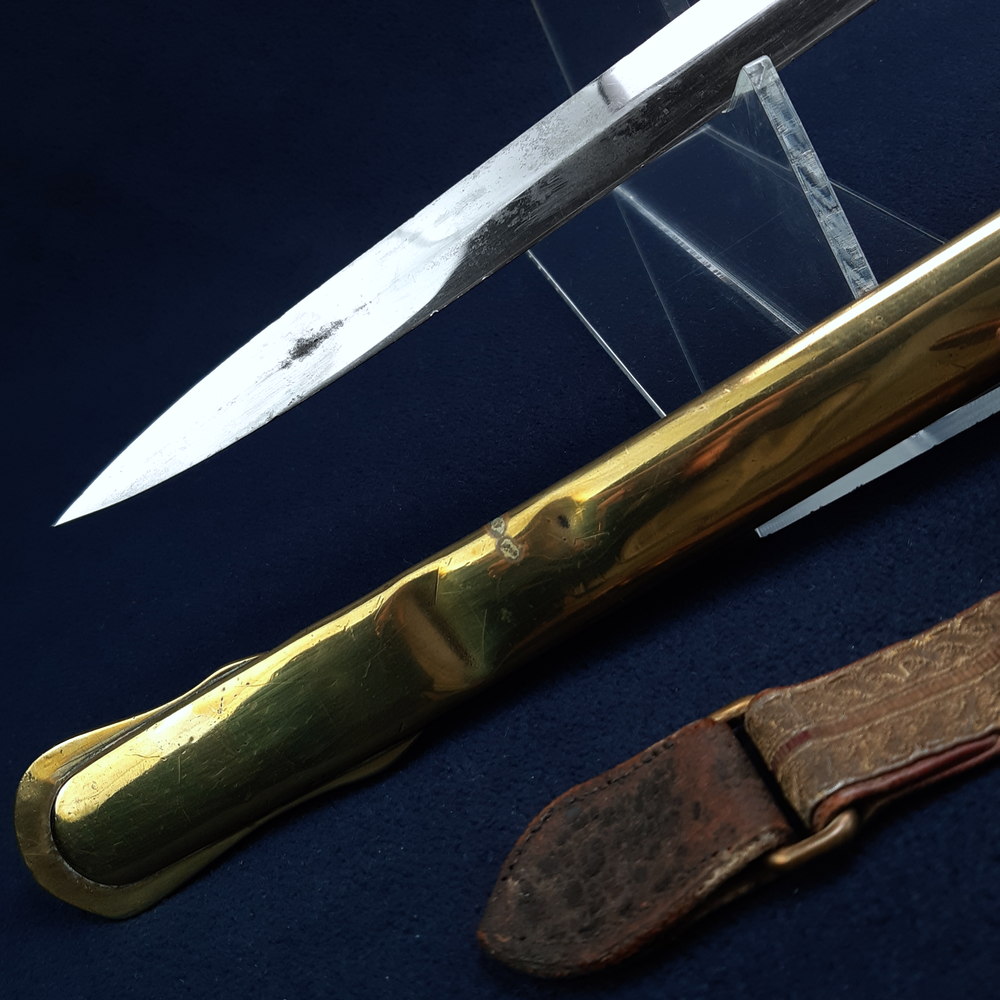
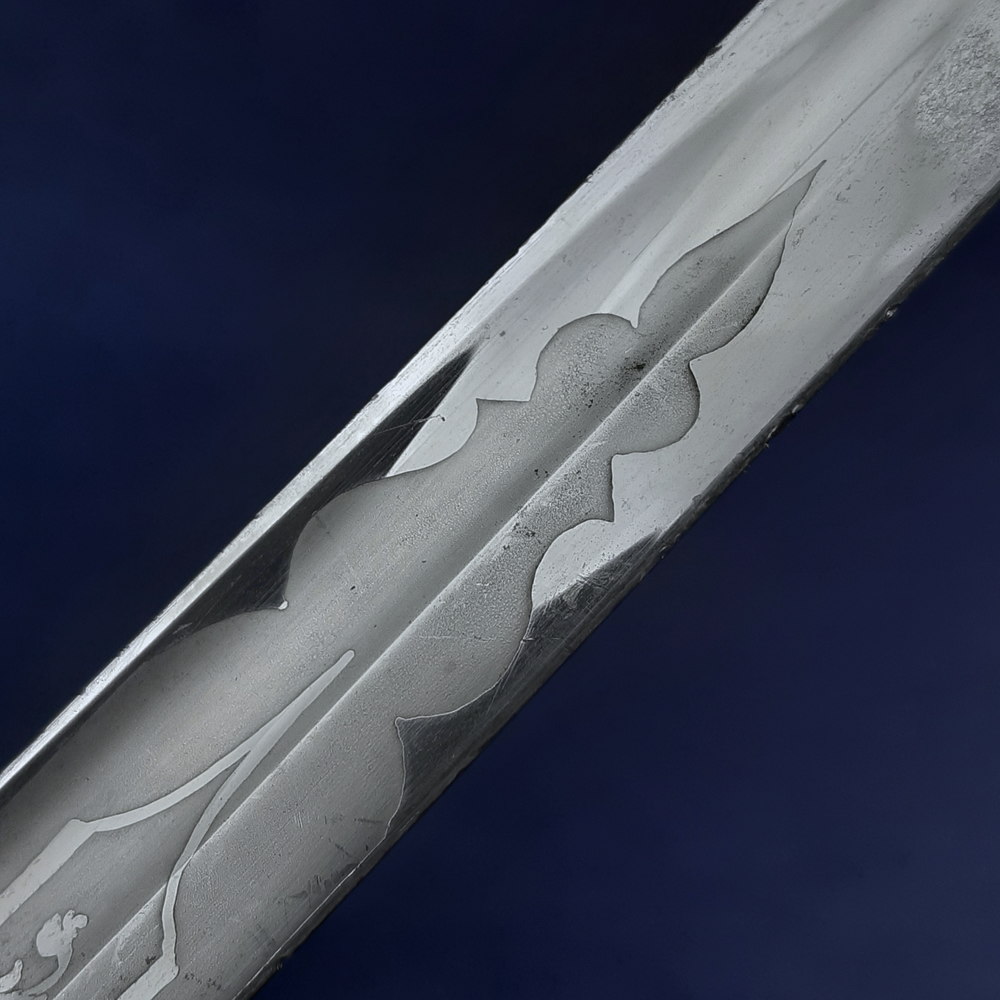
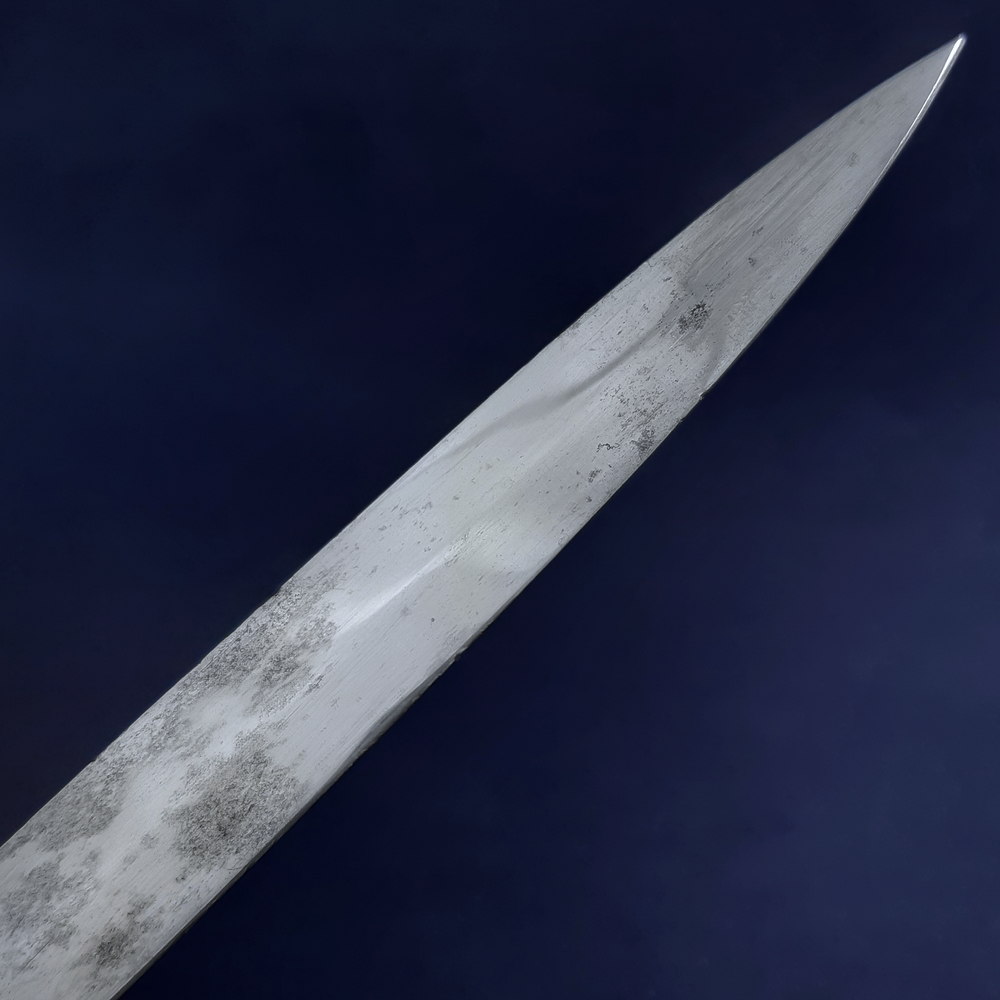
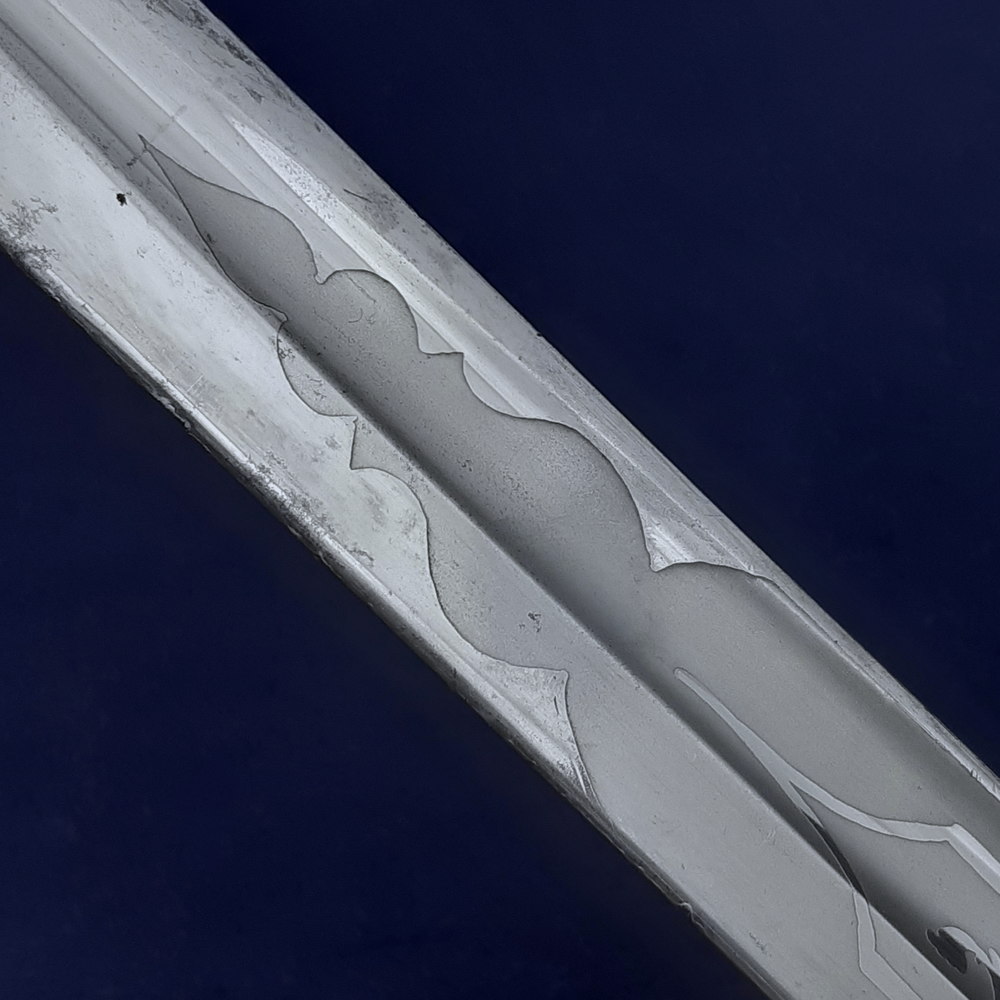
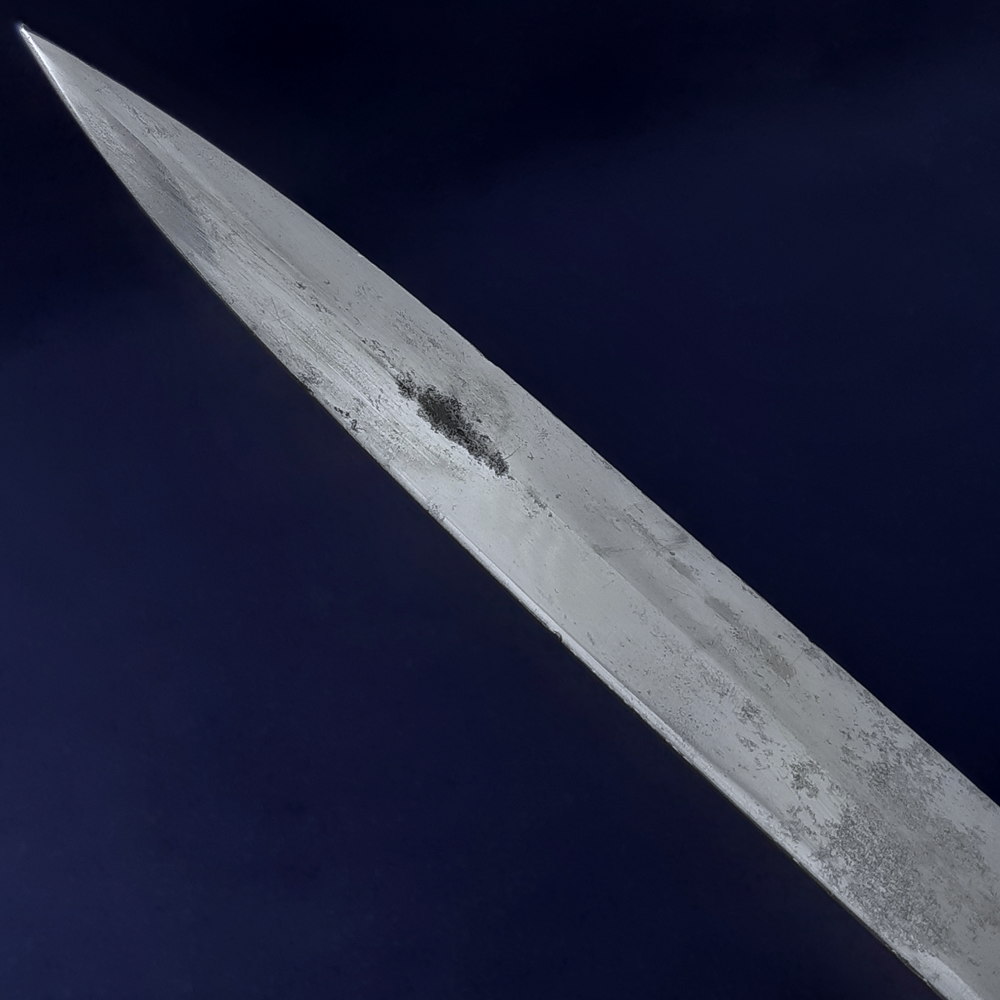
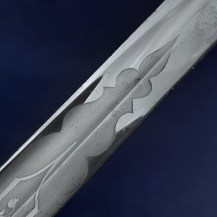
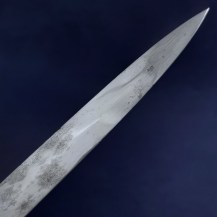
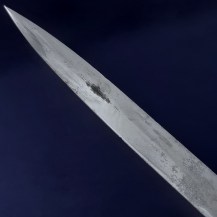
The blade is generally very bright and clean with a mirror polish to the tip section and any bright areas within the etching. Spotted light patination on the ricasso and in a few places among the etching. The etching is generally excellent retaining its crispness and strong contrast between the matt acid-etched background and the mirror-bright lands. The tip section of the blade has some areas of frosting, scattered hairline scratches and a small spot of light pitting on one side.
The blade is unsharpened but there are a number of nicks to both the true and false edges, one on the false edge deep enough that I would call it a notch. Meanwhile the shoulders of the spine in the lower section of the blade bear a number of dents. Damage like this is sometimes attributed to combat use, edge nicks being from striking while shoulder dents suggest parrying, although I think one needs very good provenance to say any sword has definitely seen combat. The nicks to the true edge are indeed on the upper part of the blade where one would expect them from striking, but it is odd to see nicks on the false edge and odder still to see all of these marks on a blade that hasn’t been sharpened for a fight.
The inner side of the guard (protecting the thumb when held) is slightly bent inwards as though it has taken a blow on that side. The brass parts of the hilt and scabbard have a moderate patina. The wire binding of the grip is all intact with only fractional movement to the wire loops. The shagreen of the grip has some moderate handling wear and some areas of fading. Fractional rotational movement to the guard, preventing the blade ringing clearly when struck. The sword is otherwise firm in the hand and solidly peened.
The scabbard has a good light patina with some spots of scratching and frosting, plus a few dents, the most noticeable being one deep dent found on each side at the chape end just above the shoe, which produces a slight kink looking down the spine of the scabbard. None of the dents interfere with sheathing and drawing of the sword however, which is smooth and there is no rattling of the sheathed blade in the scabbard. The shoe remains firmly attached. The throat piece retains both of its steel screws.
The hanging straps remain strong and flexible with good colour and no breakages, rubbing to the leather in places.
