

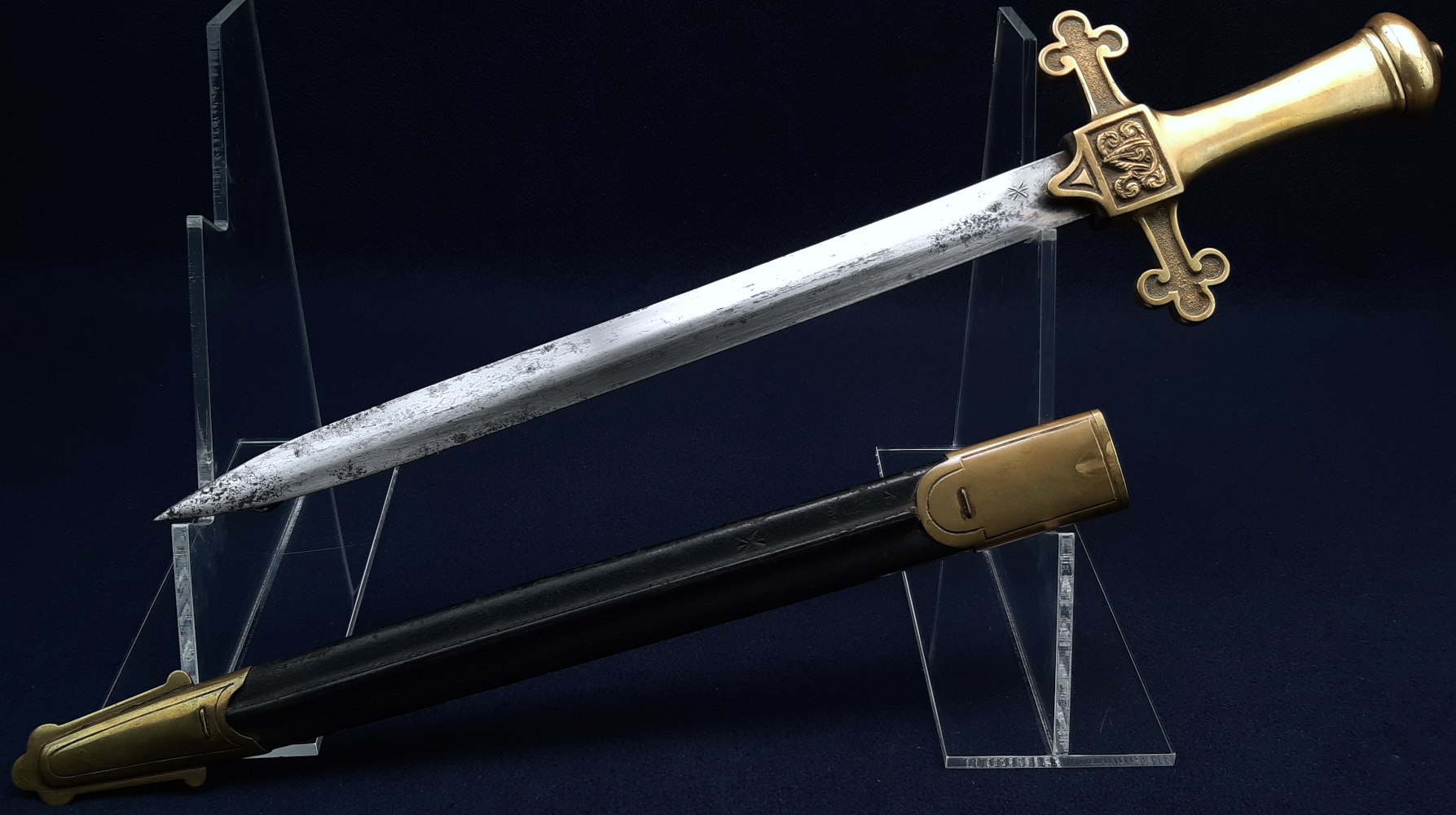
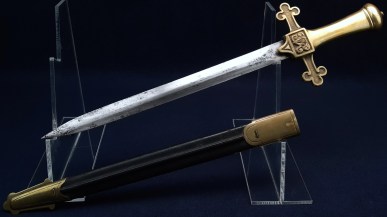
British Victorian Mark II 1895 Pattern Drummer’s Sword of the Grenadier Guards, Issued 1903
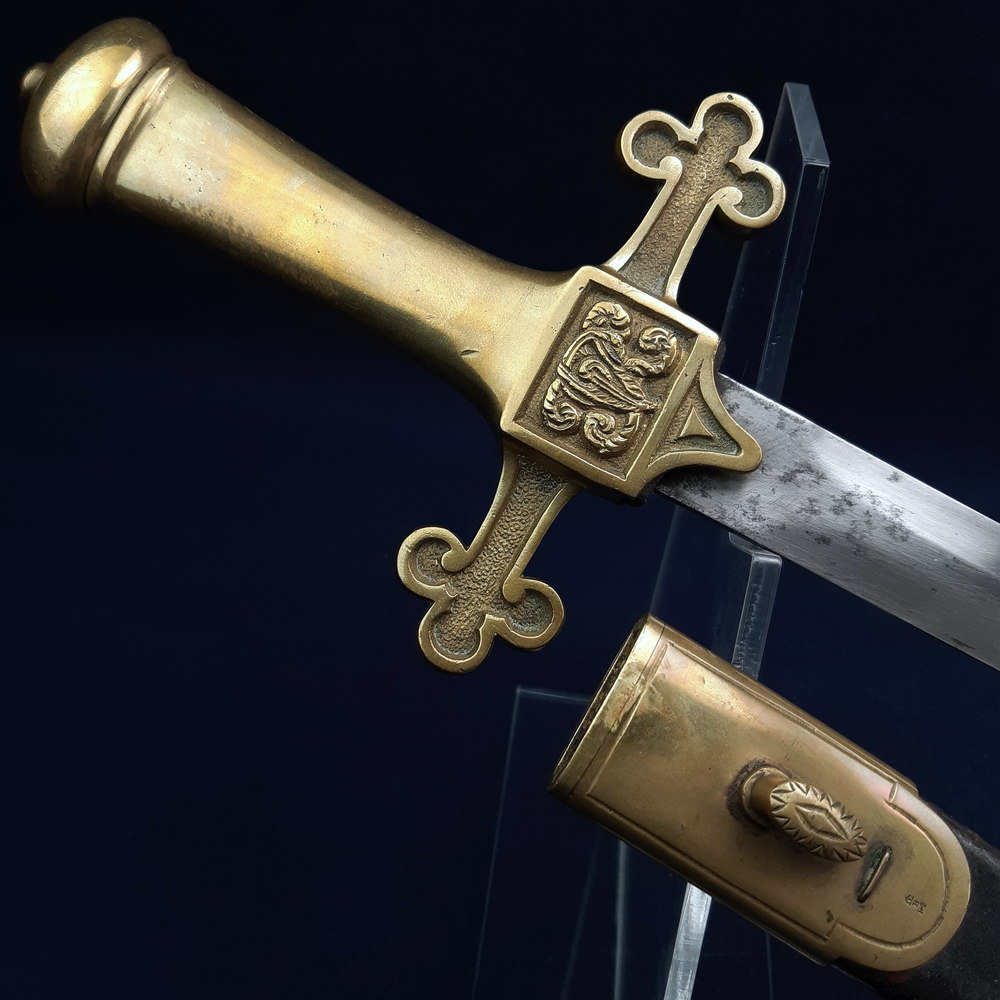
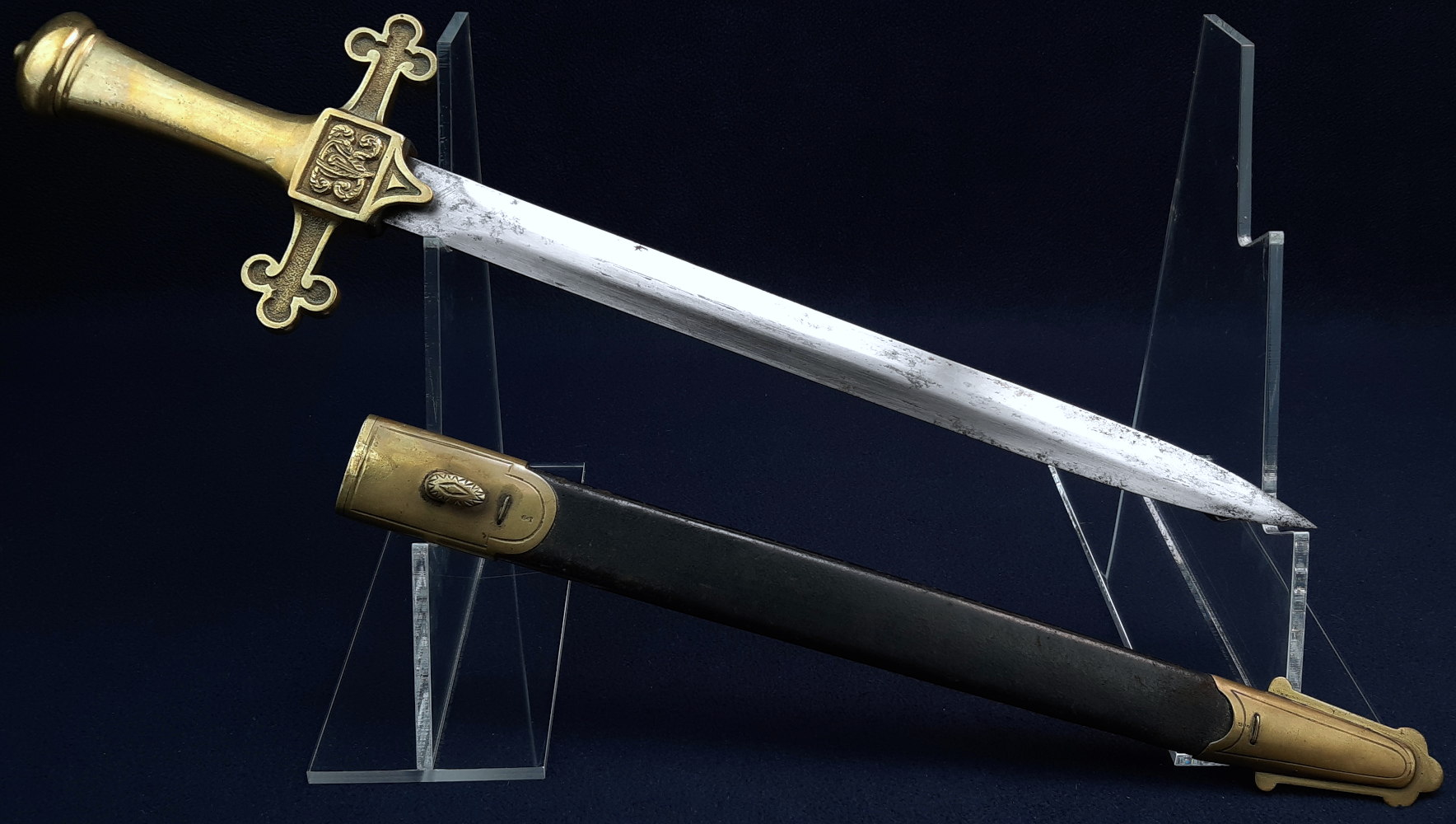
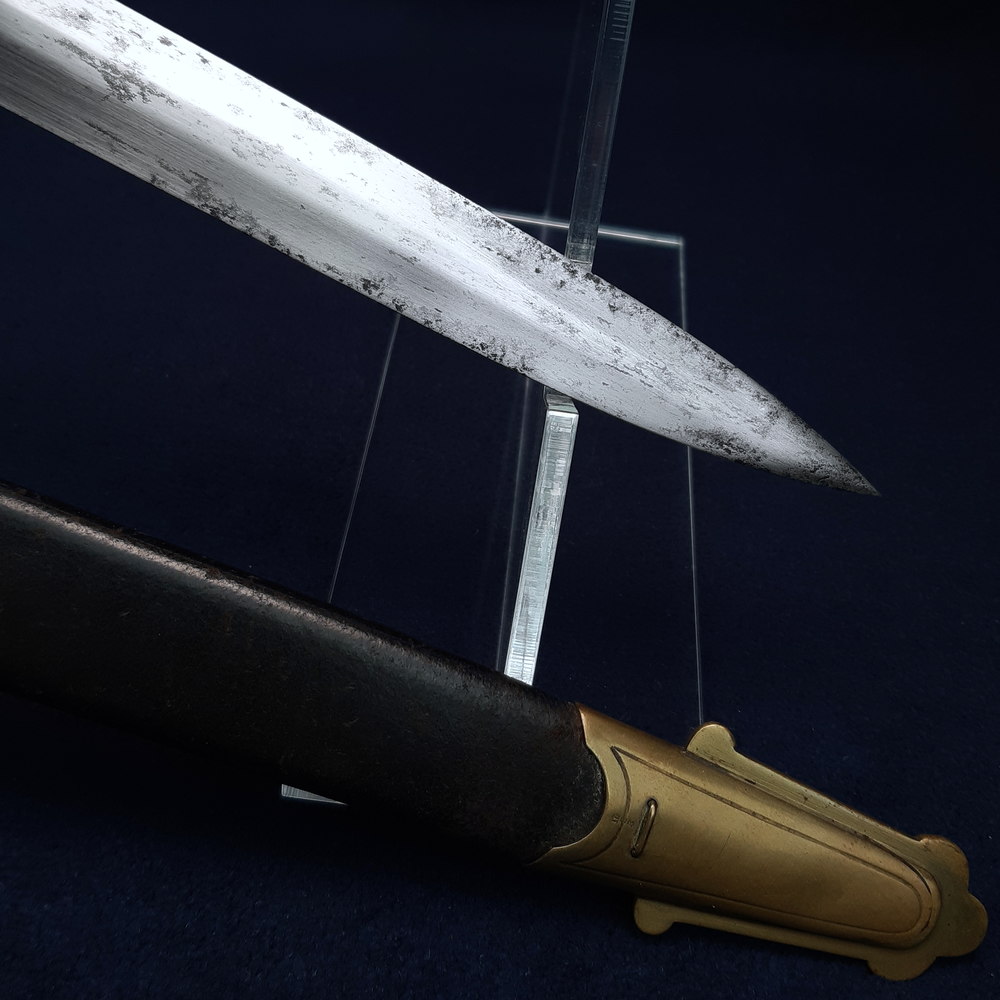
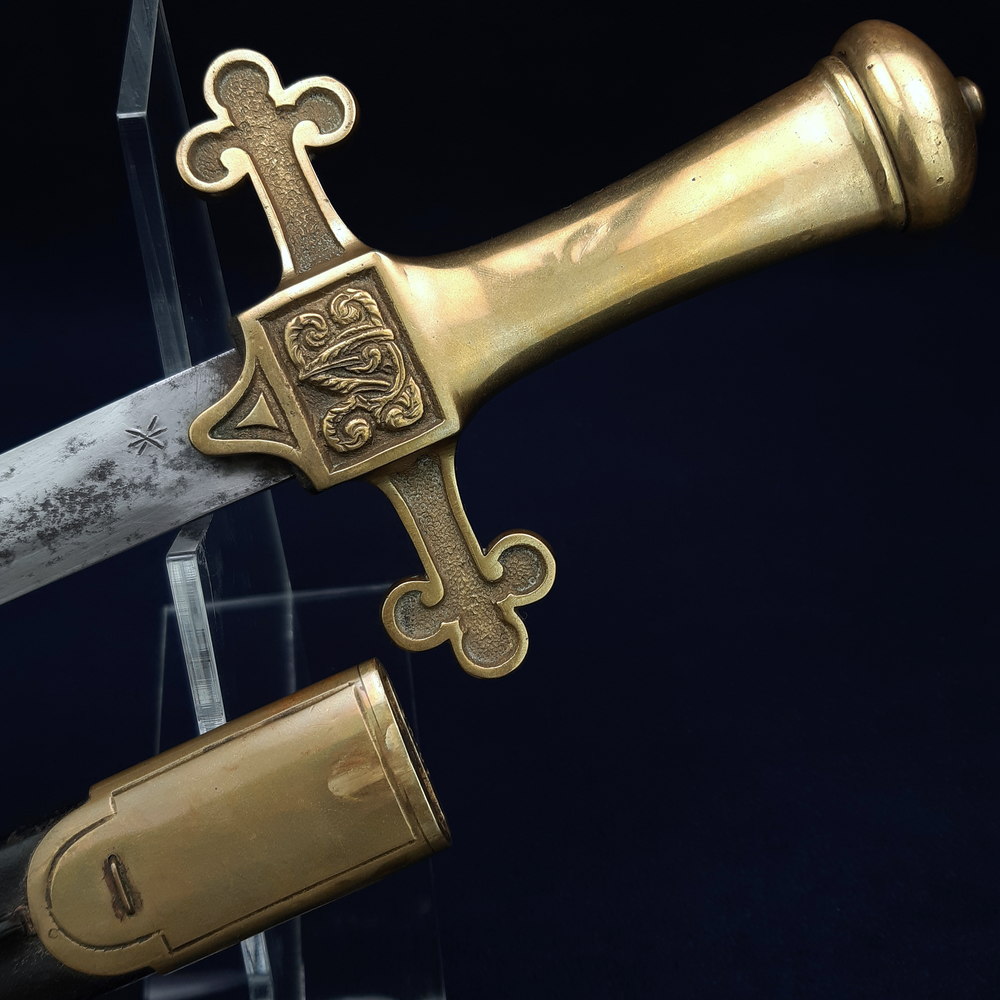
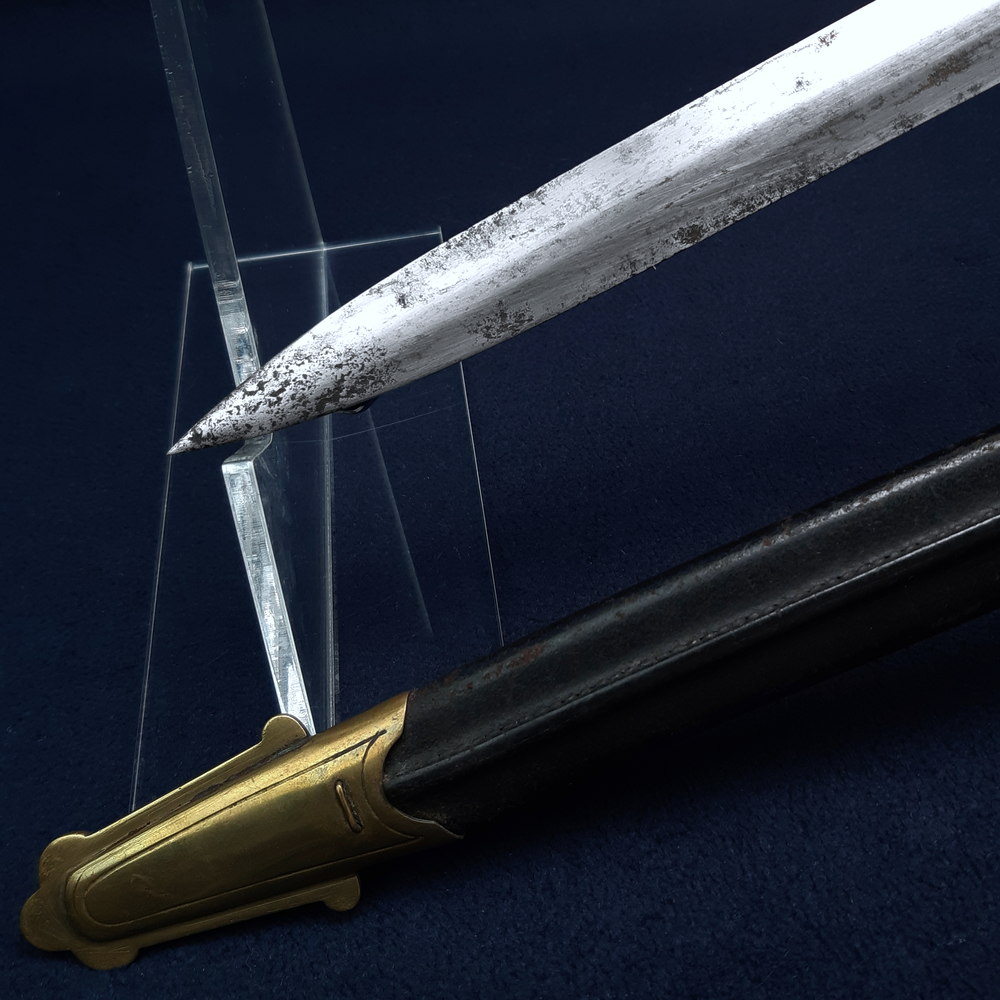
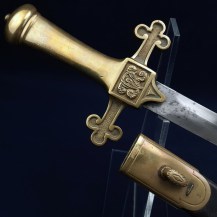
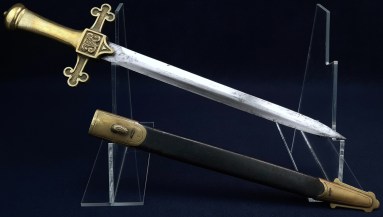
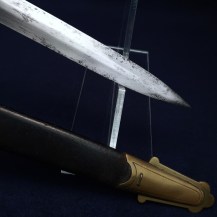
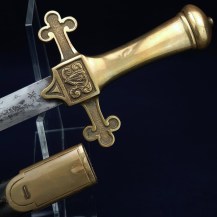
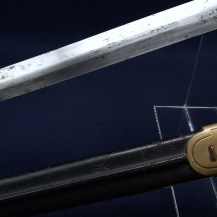
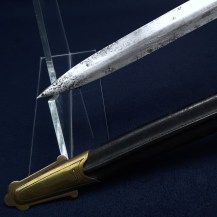
Straight unfullered, double-edged, spear-pointed blade with diamond cross-section, brass hilt with central ‘VR’ cypher of Queen Victoria, triangular langets and trefoil finials. Smooth brass grip, integral smooth oval pommel with tang button. Black leather scabbard with brass fittings at the throat and chape, the throat piece with teardrop-shaped frog stud.
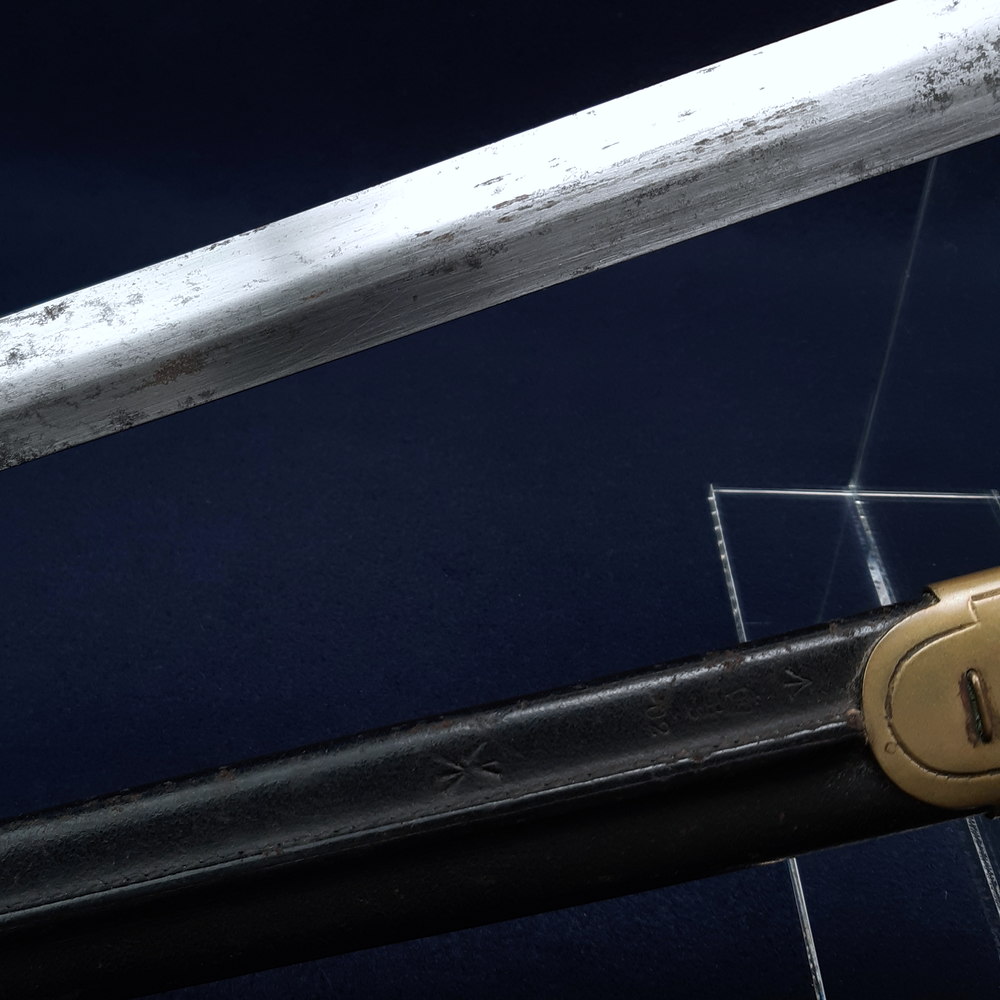
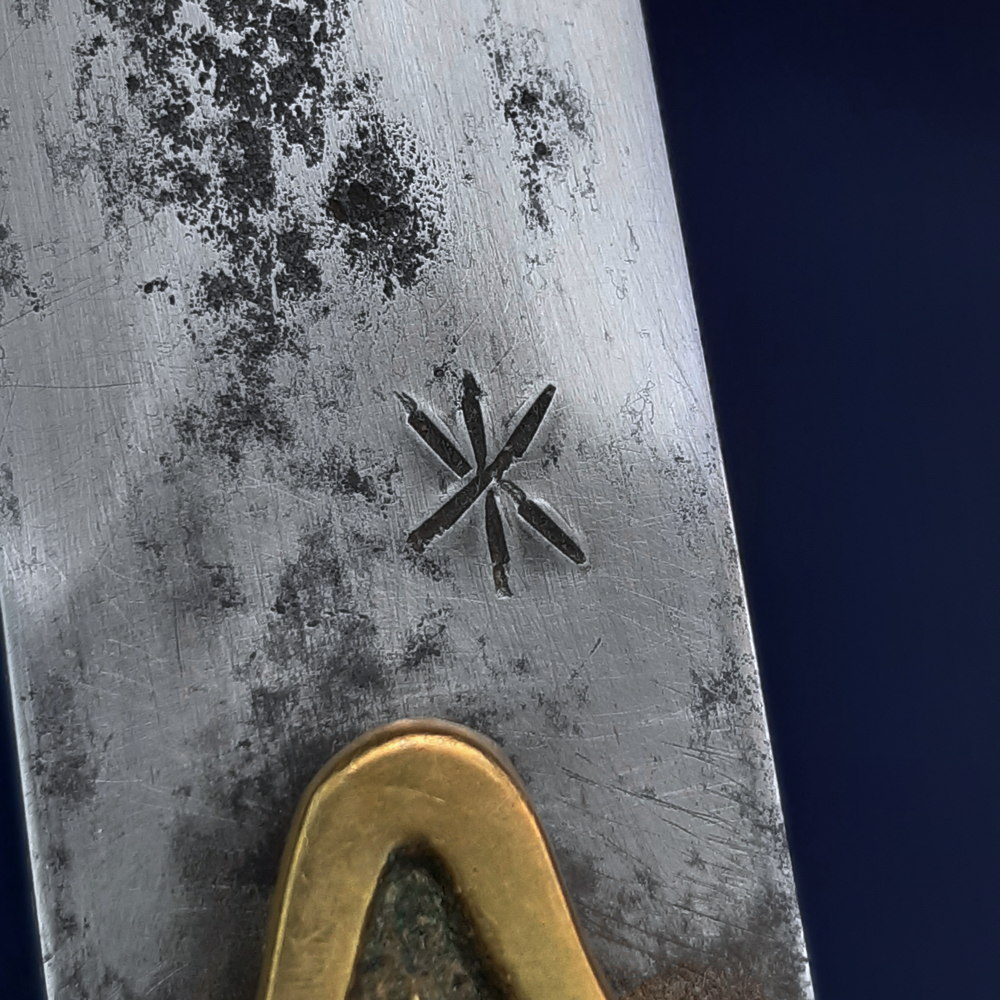
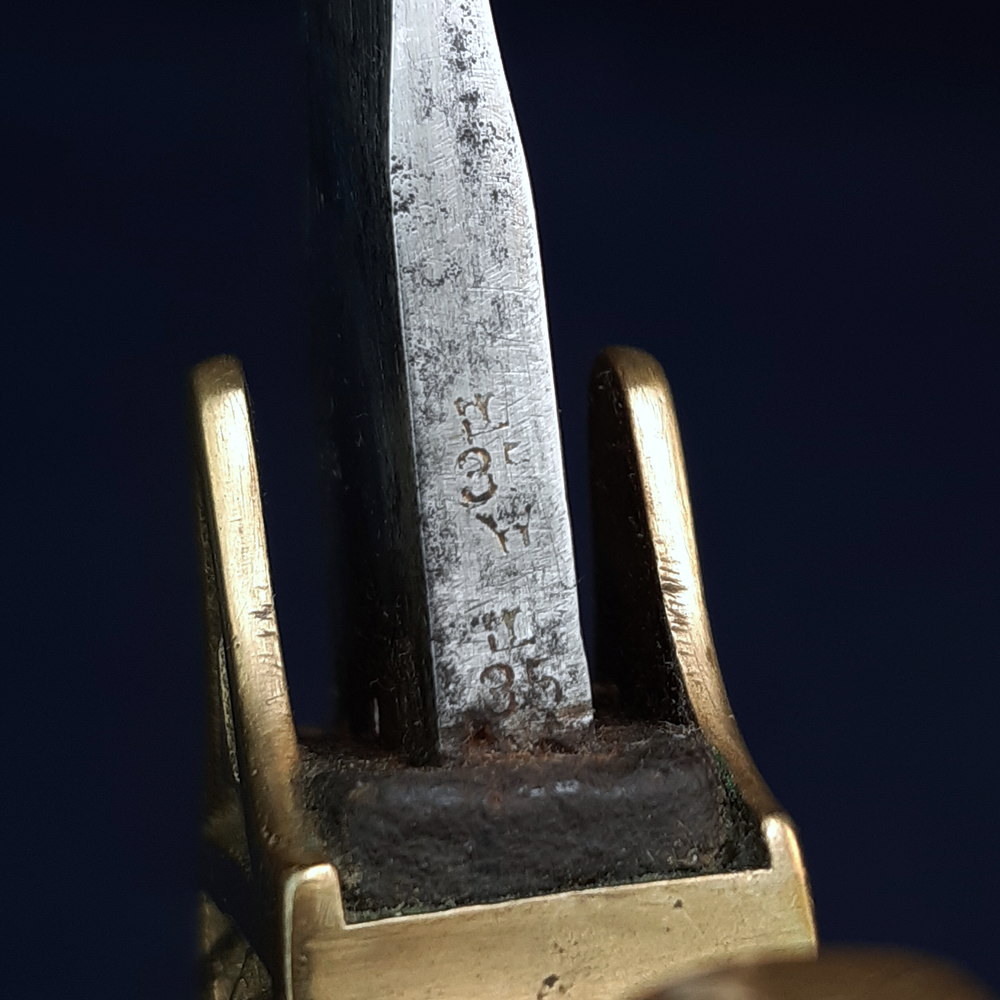
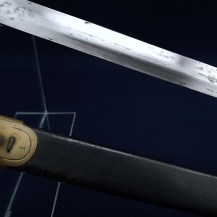
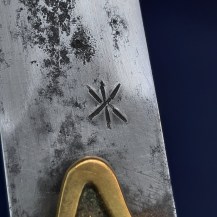
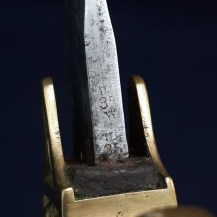
The blade is stamped on one side next to the langet with two broad arrows point to point, a mark that was applied to British Army equipment that was obsolete or to be sold off. The short spine of the blade is stamped with two crown inspection marks, one of them with the letter ‘W’ for the Wilkinson Sword Company.
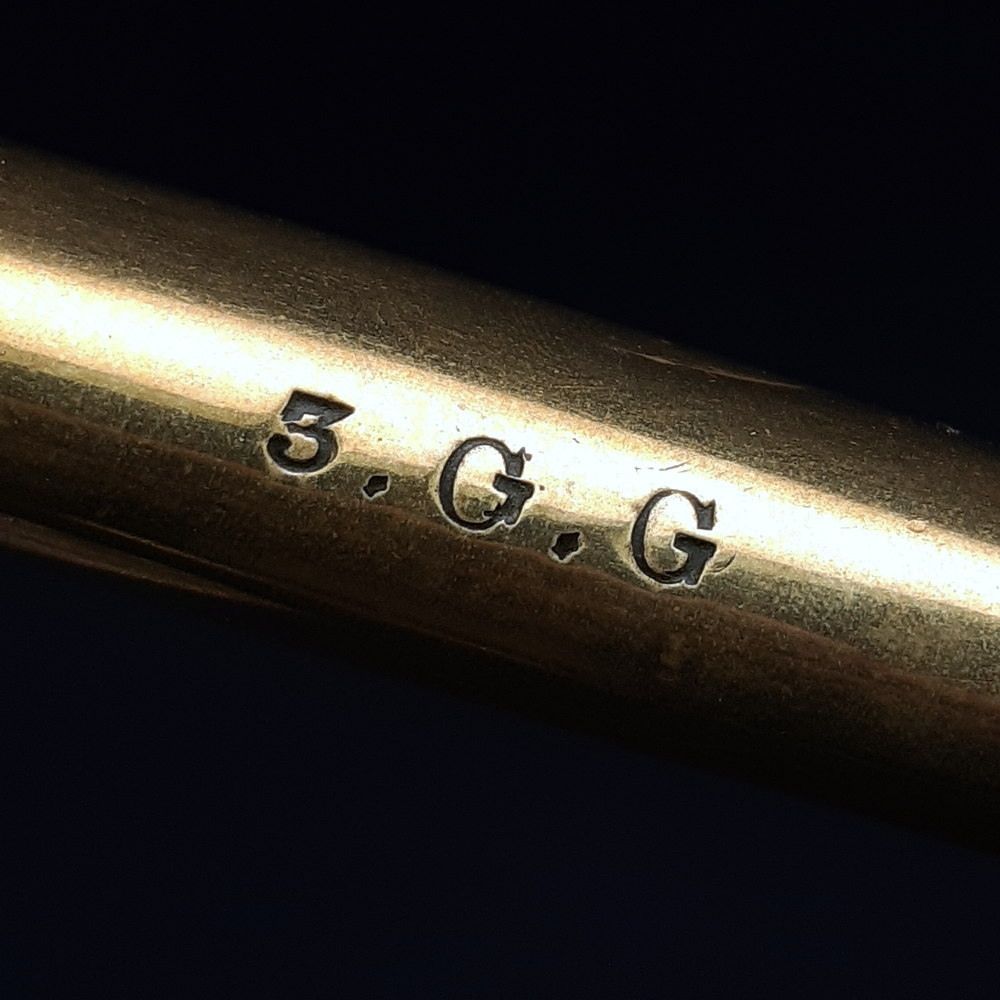
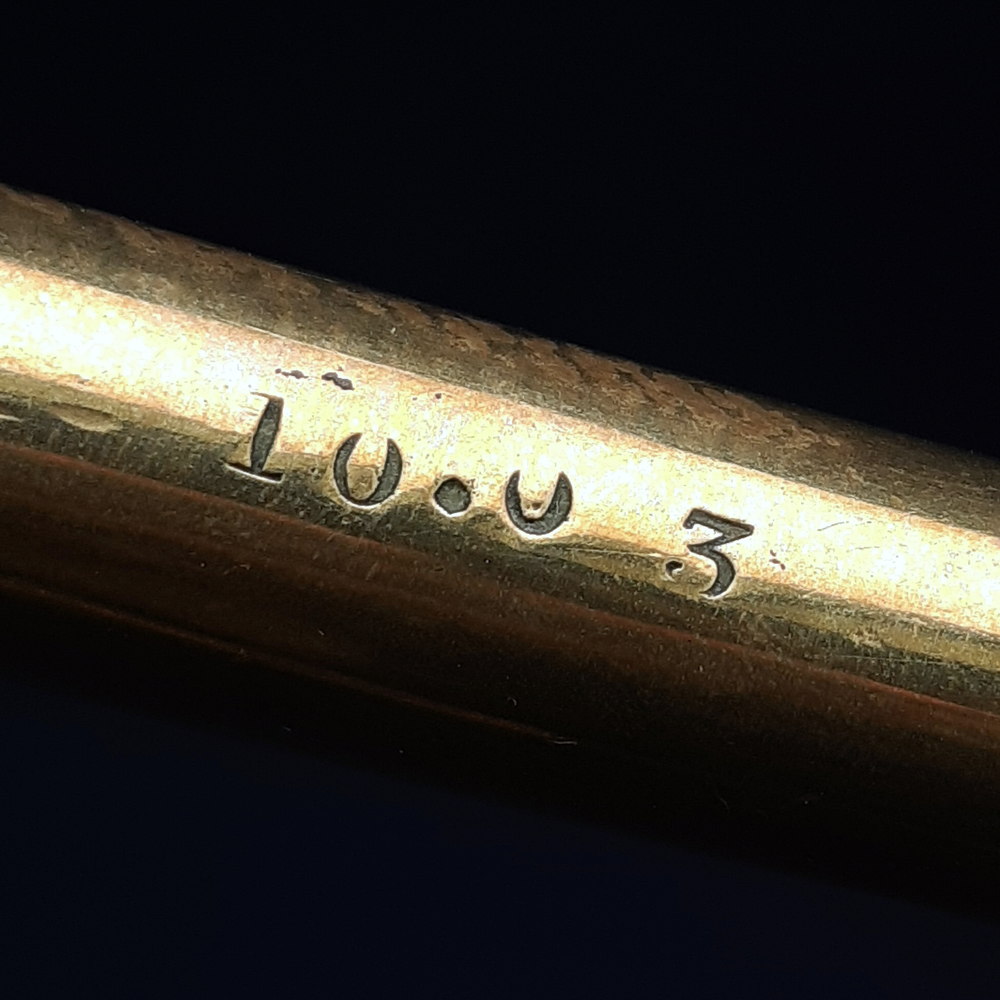
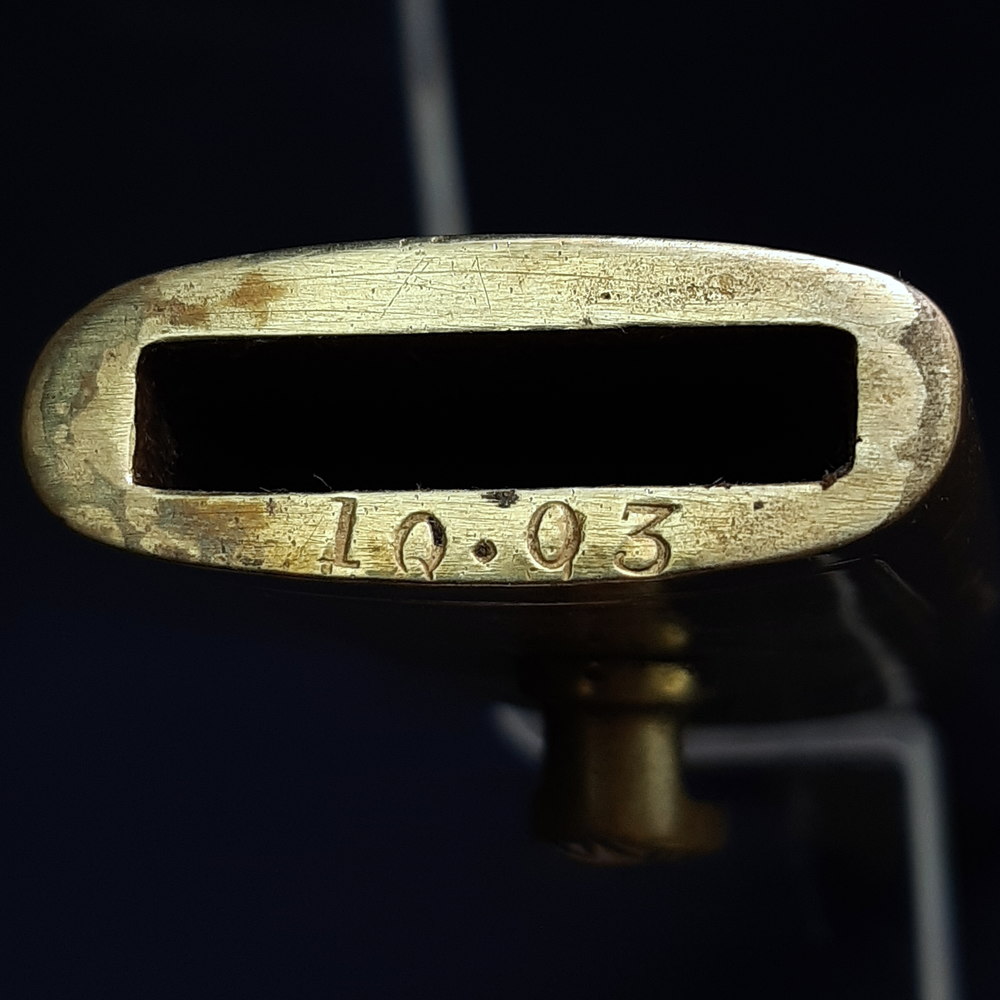
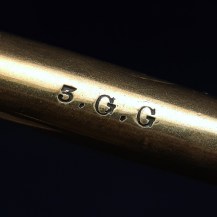
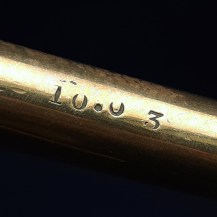
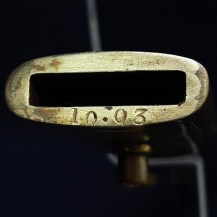
The brass grip is stamped on one of its narrow sides with ‘3.G.G’, indicating that this sword was issued to the 3rd Battalion, Grenadier Guards. The other narrow, smooth side is stamped with the date 10.03, probably indicating that the sword was issued or received into the regimental armoury in October 1903.
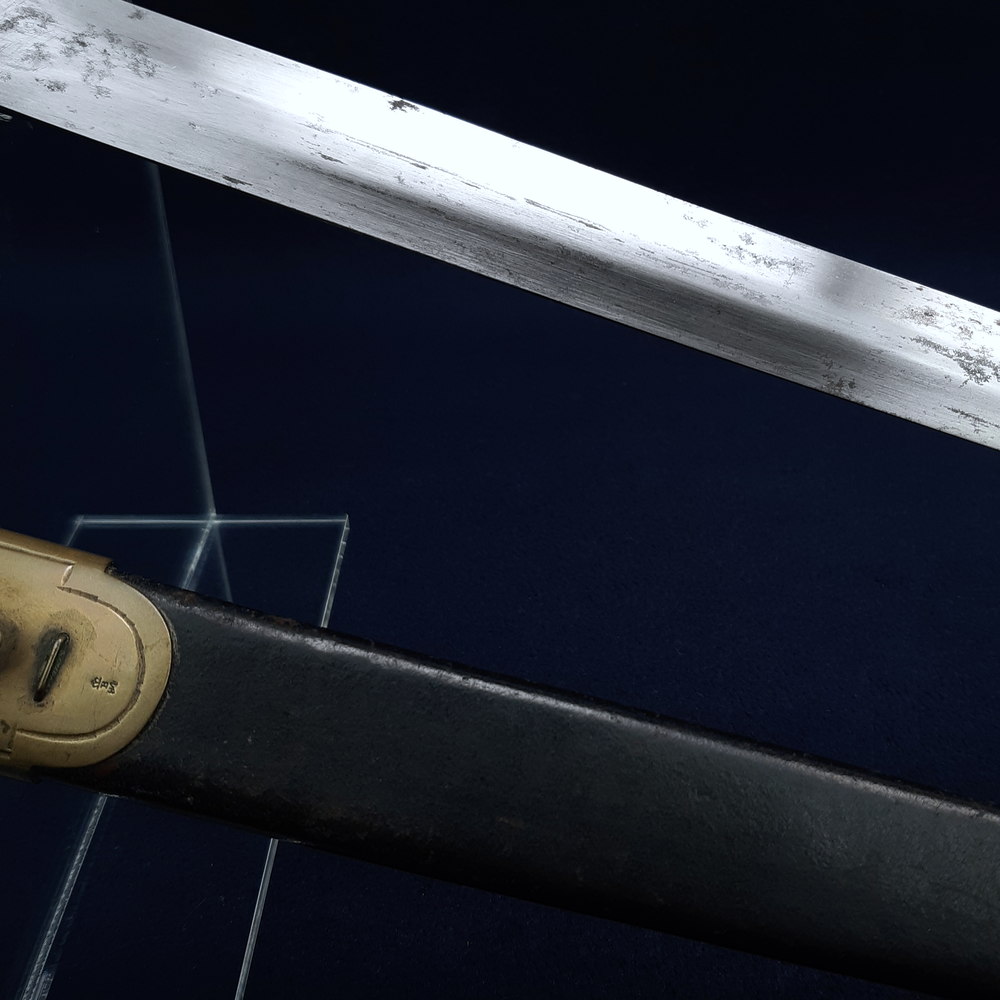
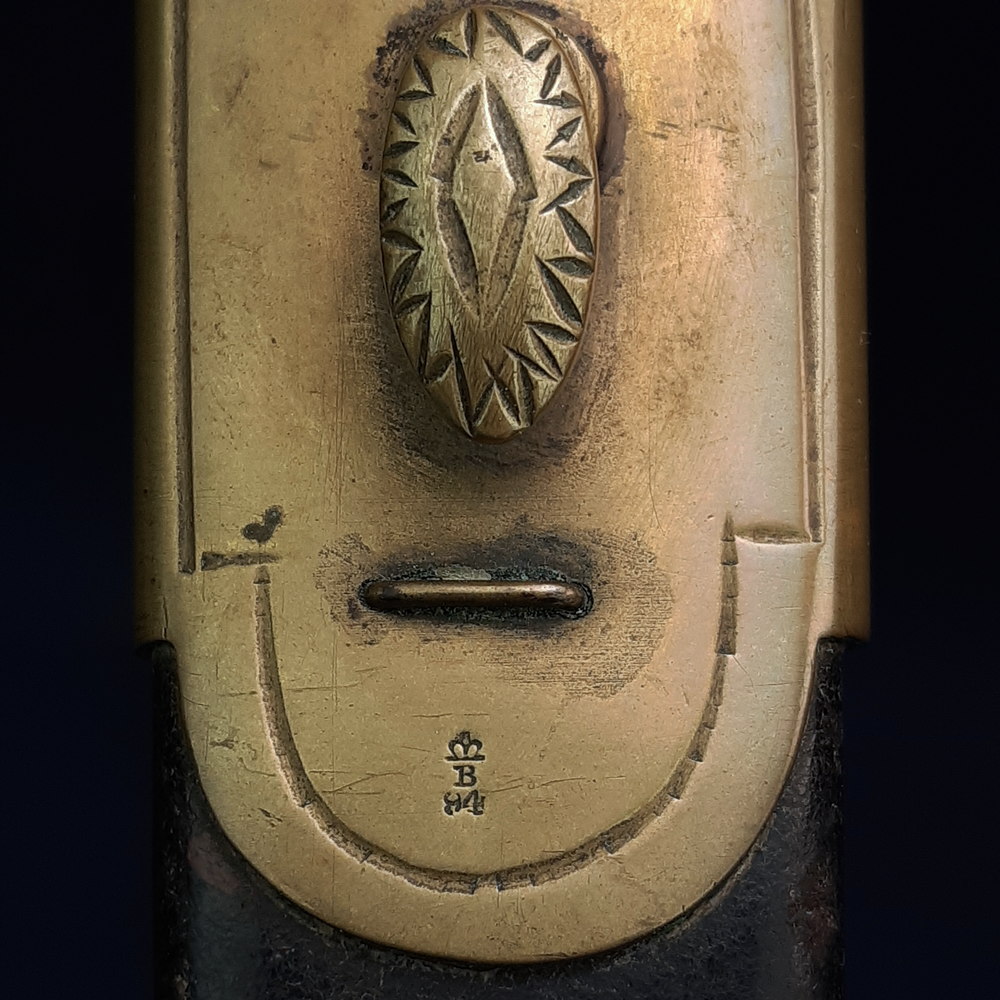
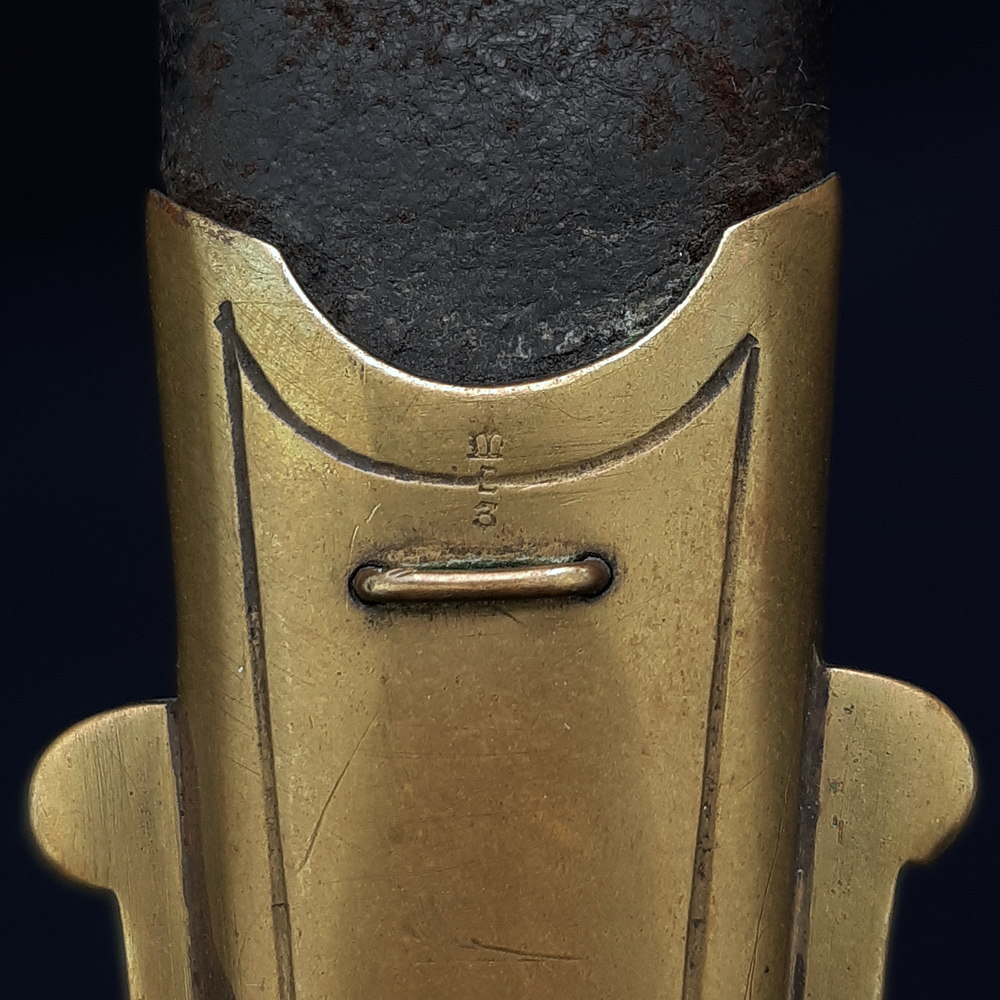
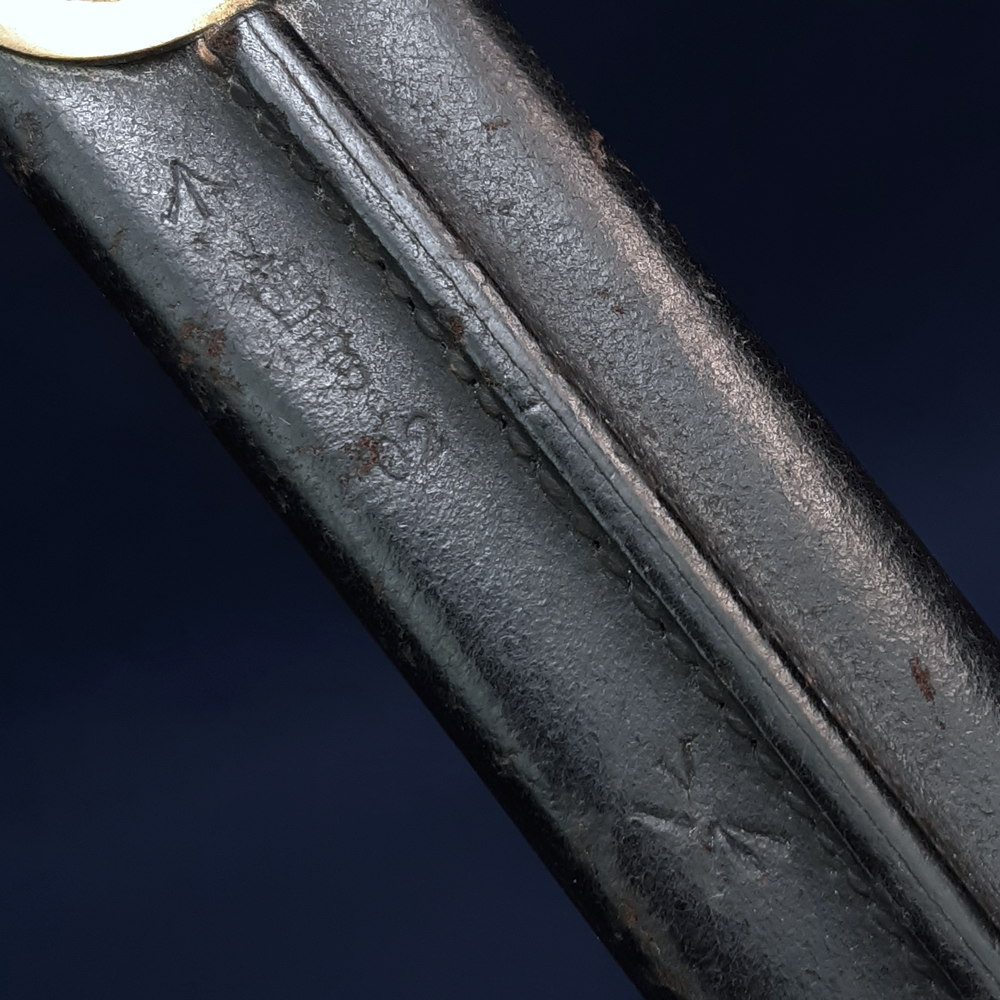
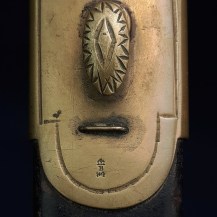
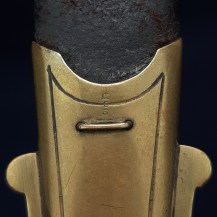
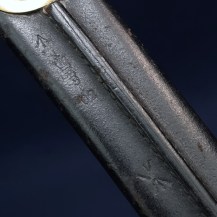
The throat piece of the scabbard is stamped next to the mouth with an identical ’10.03’ stamp, confirming that they are an original pair issued together. The throat piece is also stamped next to the staple with a small crown inspection mark with ‘B’ for Birmingham. The chape piece is likewise stamped next to the staple with another crown inspection mark with ‘B’. The leather scabbard body is stamped next to the seam with a broad arrow, another crown inspection stamp with ‘B’, the manufacture date ’02, and further down, two broad arrows point to point.
These short swords were issued to drummers of infantry regiments. The ‘Mark II’ sword was introduced in 1895 to replace the long-serving Mark I introduced in 1856. The new model was 5 and 7/8 inches shorter and 3/8 of an inch narrower in the blade, making it lighter and less cumbersome, and the ornate hilt and pommel of the Mark I was smoothed out for a more streamlined look. A version with a cast iron hilt was initially issued to buglers but this was abolished in 1904.
Queen Victoria died in 1901 so one would assume this is one of the last made with the ‘VR’ cypher. However, due perhaps to the large quantities in circulation few drummer’s swords seem to have actually been made in the early 20th century: I have seen a George V example but never an Edward VII. The indication that this example was issued in 1903 certainly supports the idea that Victoria-marked drummer’s swords remained in service at least through the Edwardian period (1901-1910).
The 3rd Battalion Grenadier Guards were on active service in South Africa from 1899-1902, so the issue date of this piece being in 1903, shortly after their return to Britain, makes sense: after years of deployment regiments tended to go through a period of restocking and reequipment.
It has been noted that an Army order was given in July 1901 to sharpen bandsman’s swords for active service, presumably prompted by the ongoing Boer War but of obviously questionable utility. This order was not officially rescinded until 1905 so I am reasonably sure this example ought to have been sharpened upon issue, even though the 3rd Battalion was no longer on active service and the Boer War had been over for 17 months. Shockingly, it shows no sign of this. I strongly suspect that an order so absurd was never widely followed.
The sword is solidly peened with no movement to any parts, the blade rings when struck. The blade has some areas of moderate cleaned pitting, mainly near the tip but with one patch at the forte on one side, as well as some spots of light patination and old polishing marks overall. The brass hilt & grip and the brass fittings of the scabbard have an even light patina, with a slightly brighter area on the scabbard throat piece where it is covered by the langets when the sword is sheathed. One shallow dent to the face of the grip on one side.
The chape piece of the scabbard has two very small, shallow dents on the front face, which do not interfere with sheathing and drawing. The chape piece can move fractionally although it remains stapled, while the throat piece is firm. The leather of the scabbard has light surface rubbing and a few spots of light abrasion. It is strong and easily capable of supporting its own weight when the blade is withdrawn. All of its stitching is intact.
