

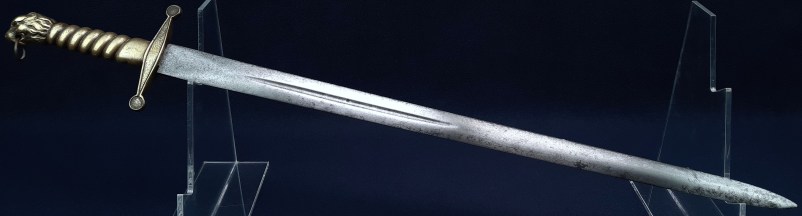
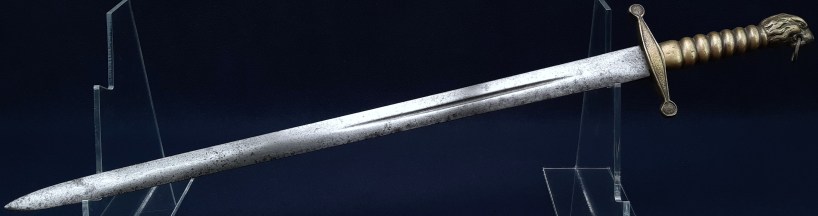
British Bandsman's Sword, Early 19th Century, Possibly of the 2nd (The Queen’s Royal) Regiment of Foot
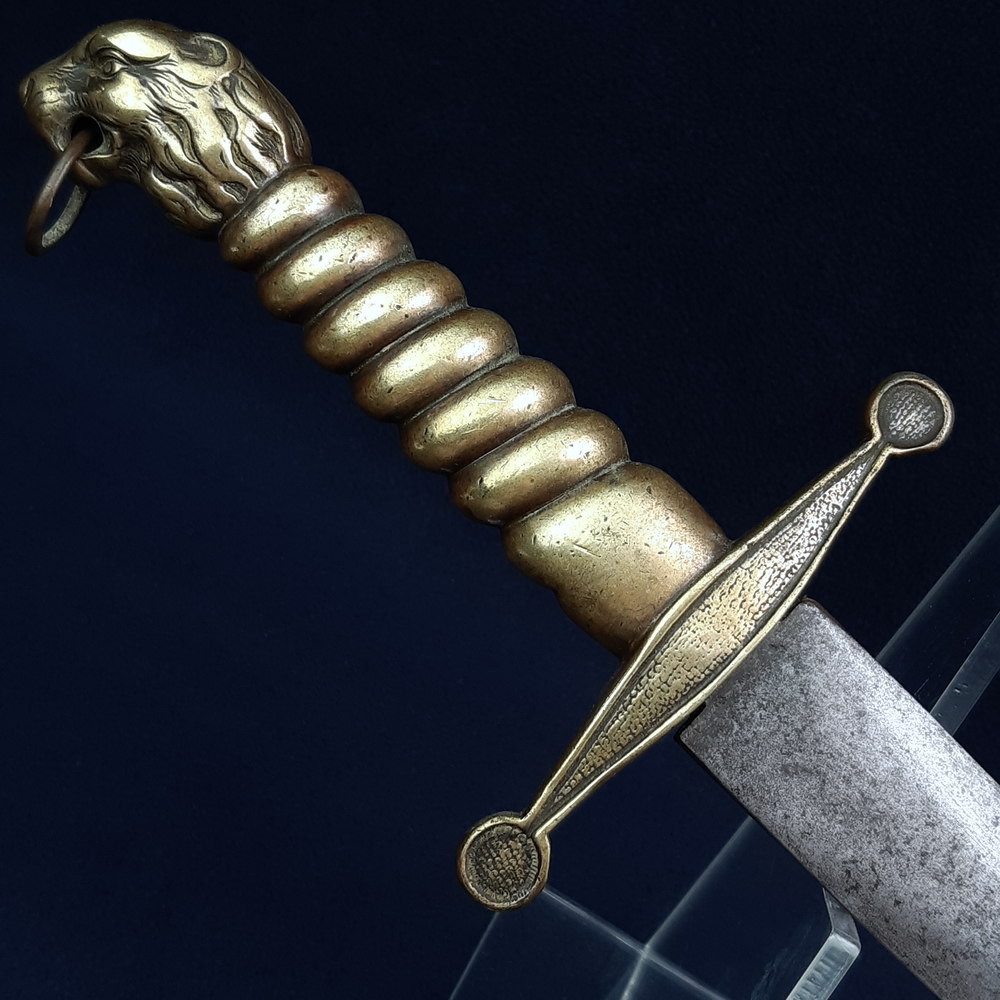
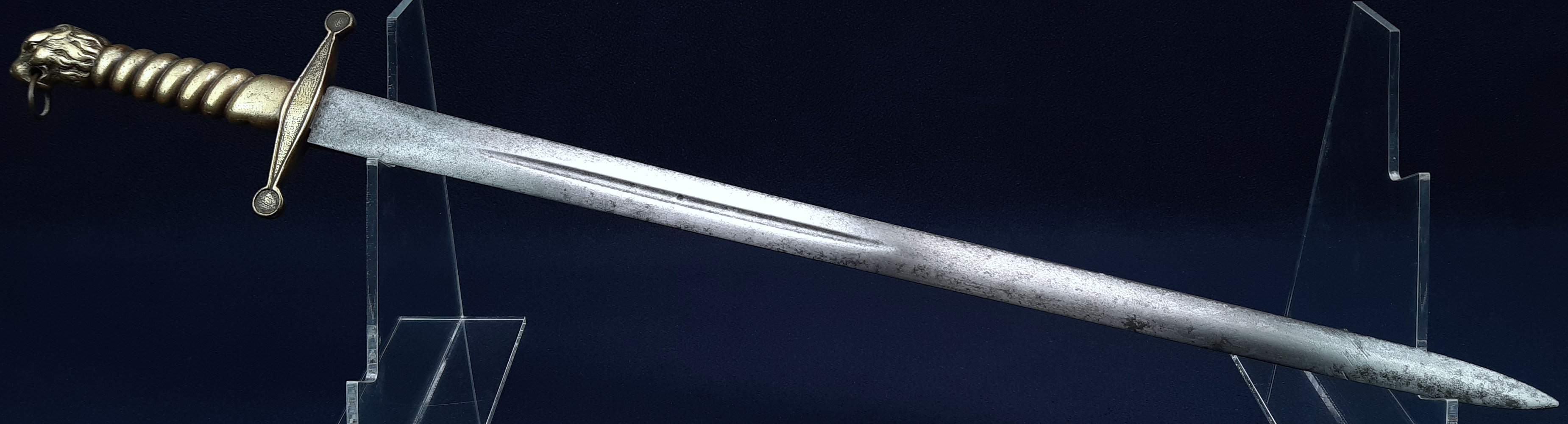
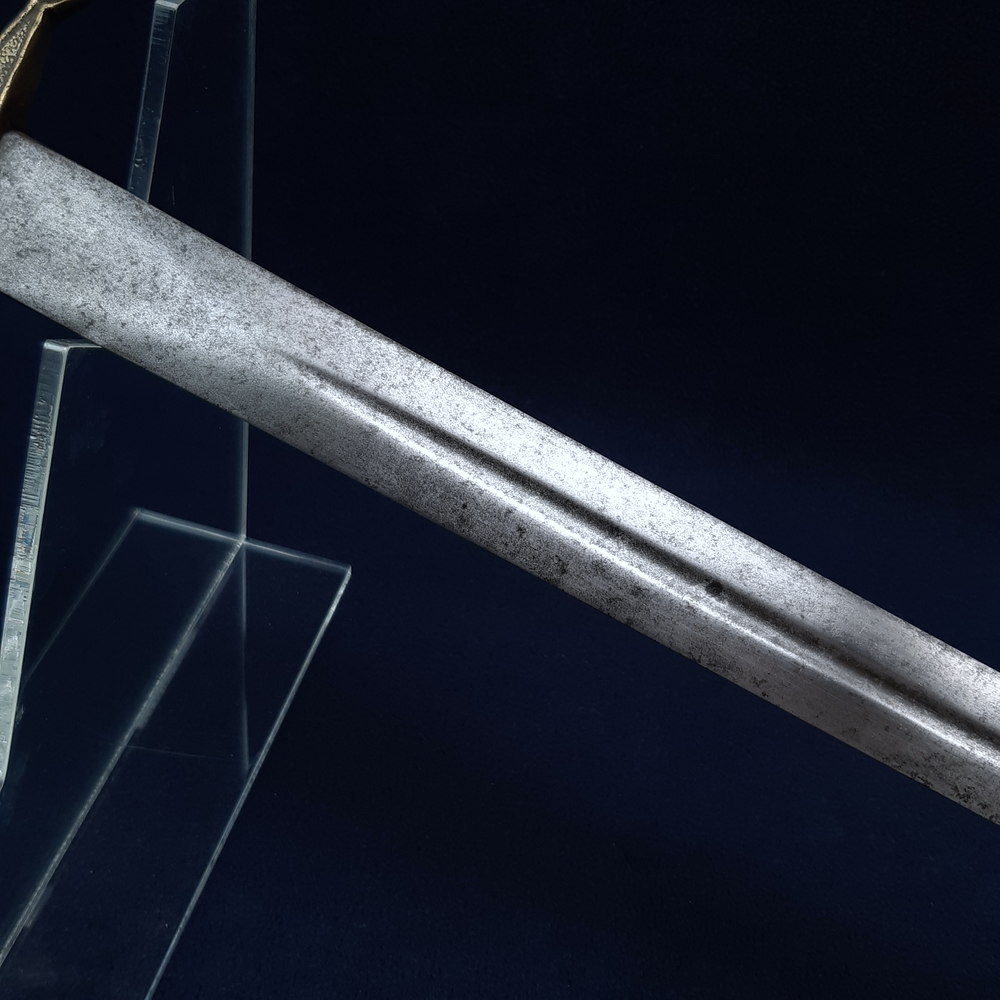
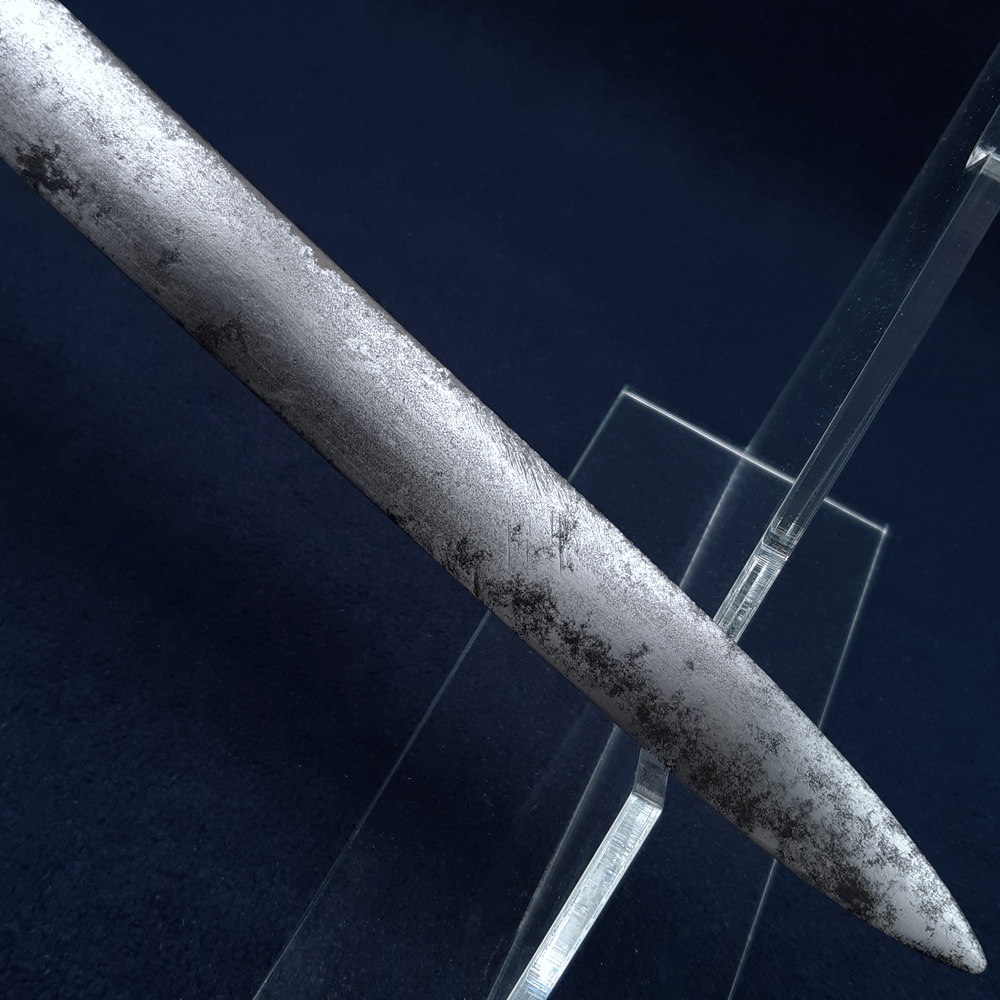
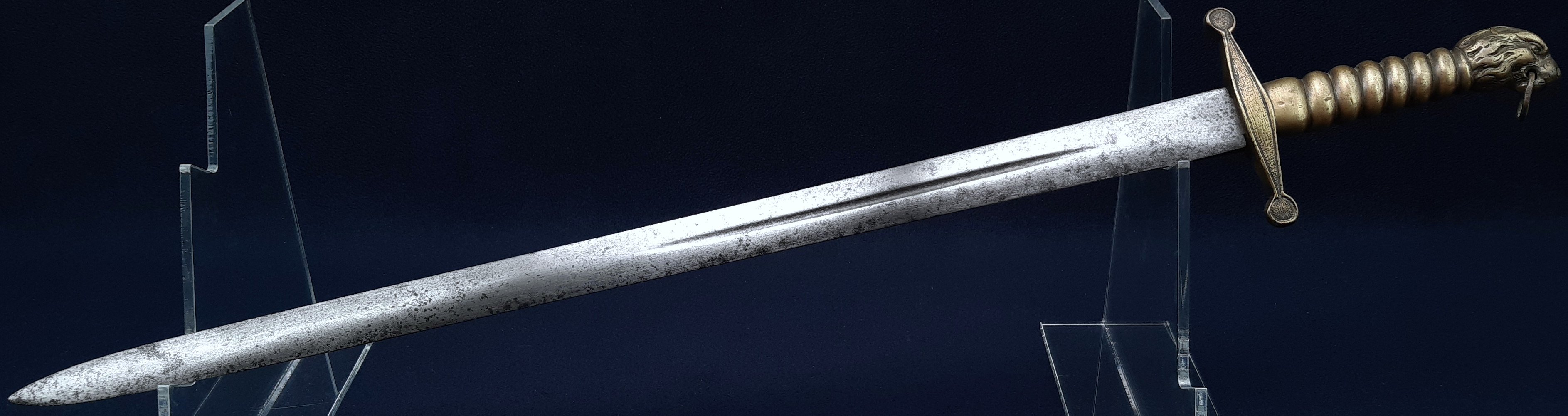
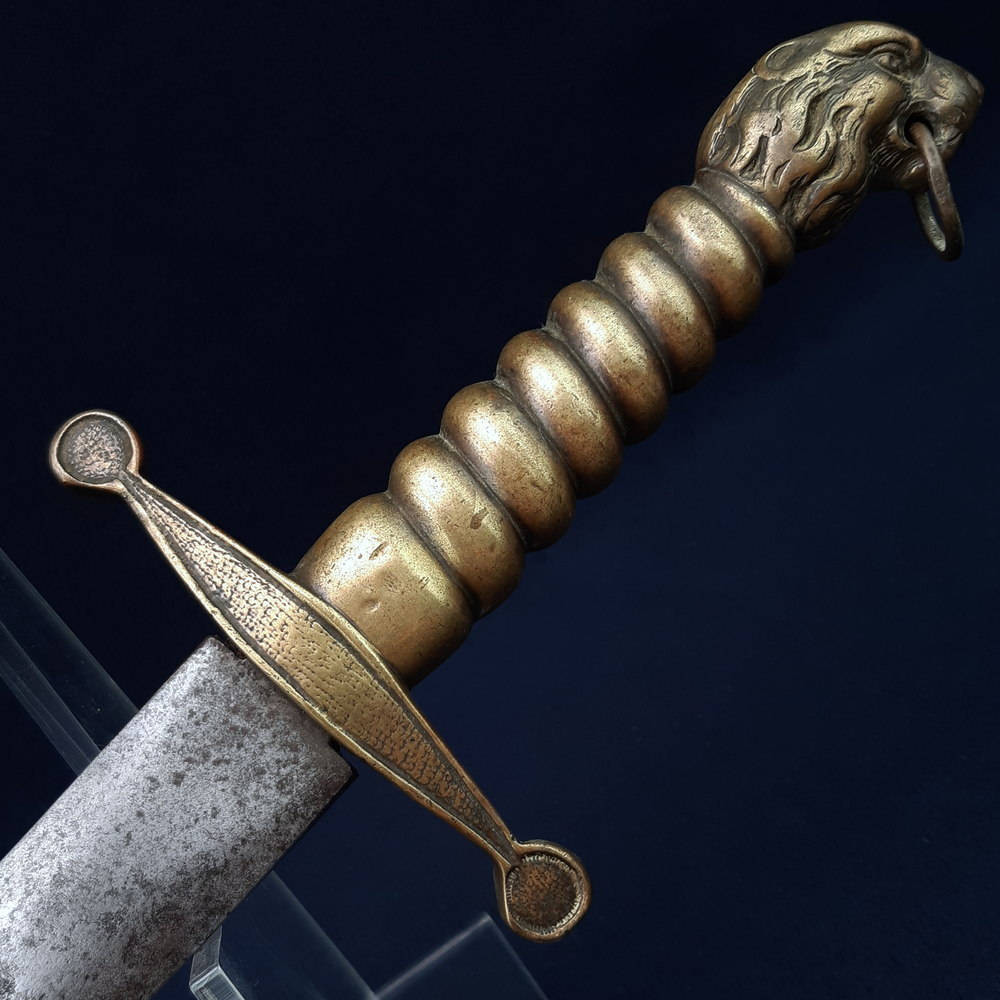
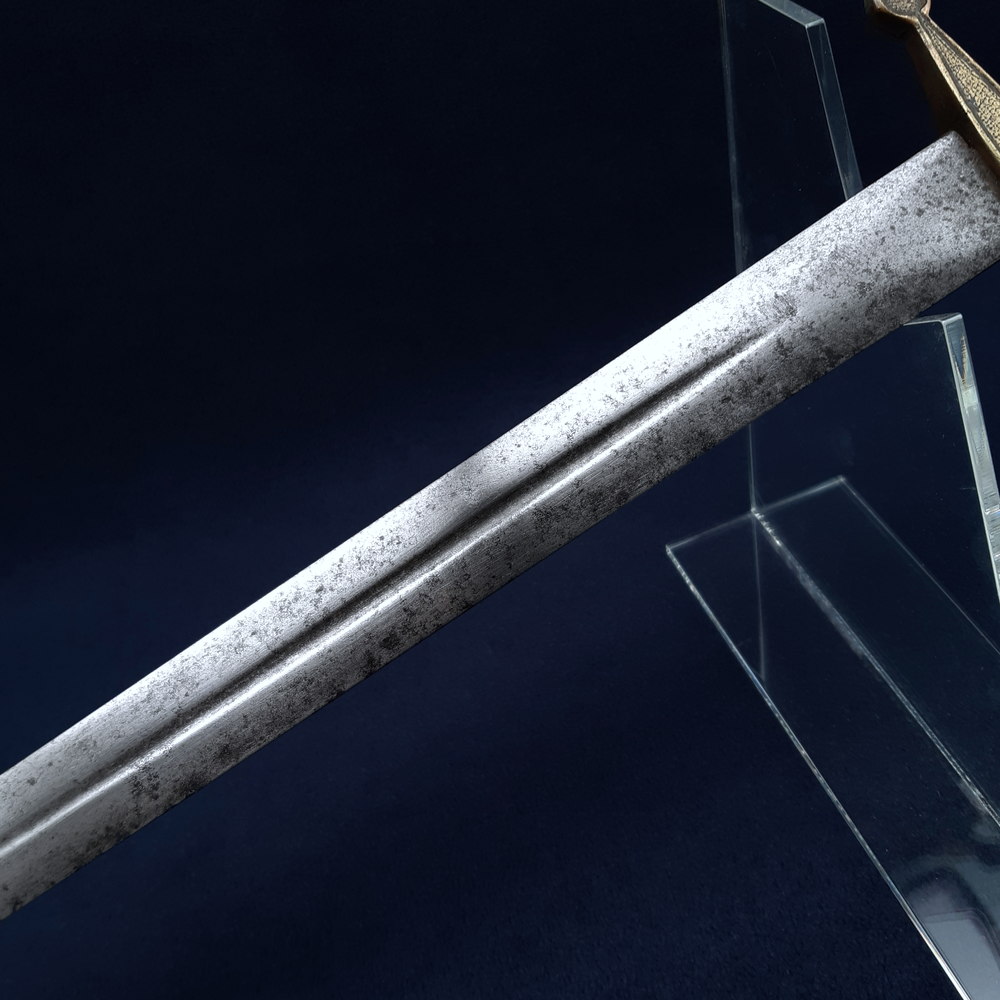
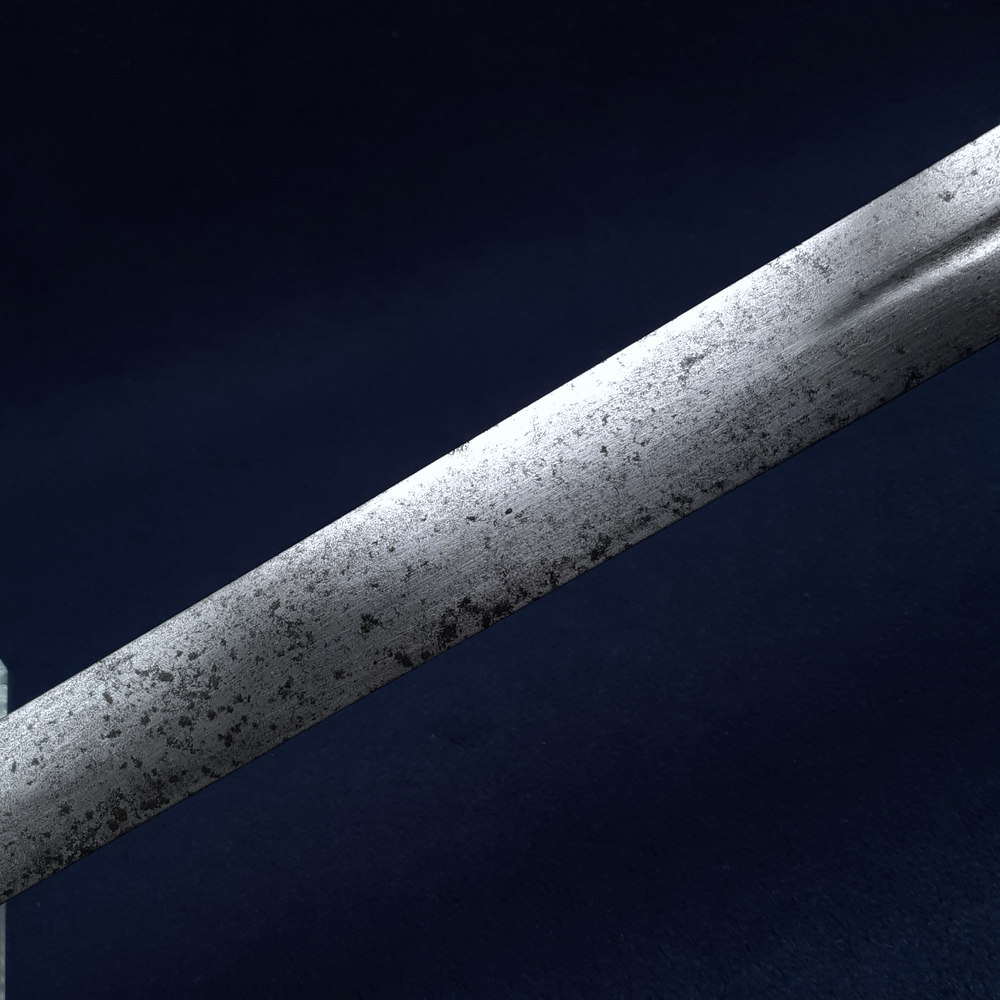
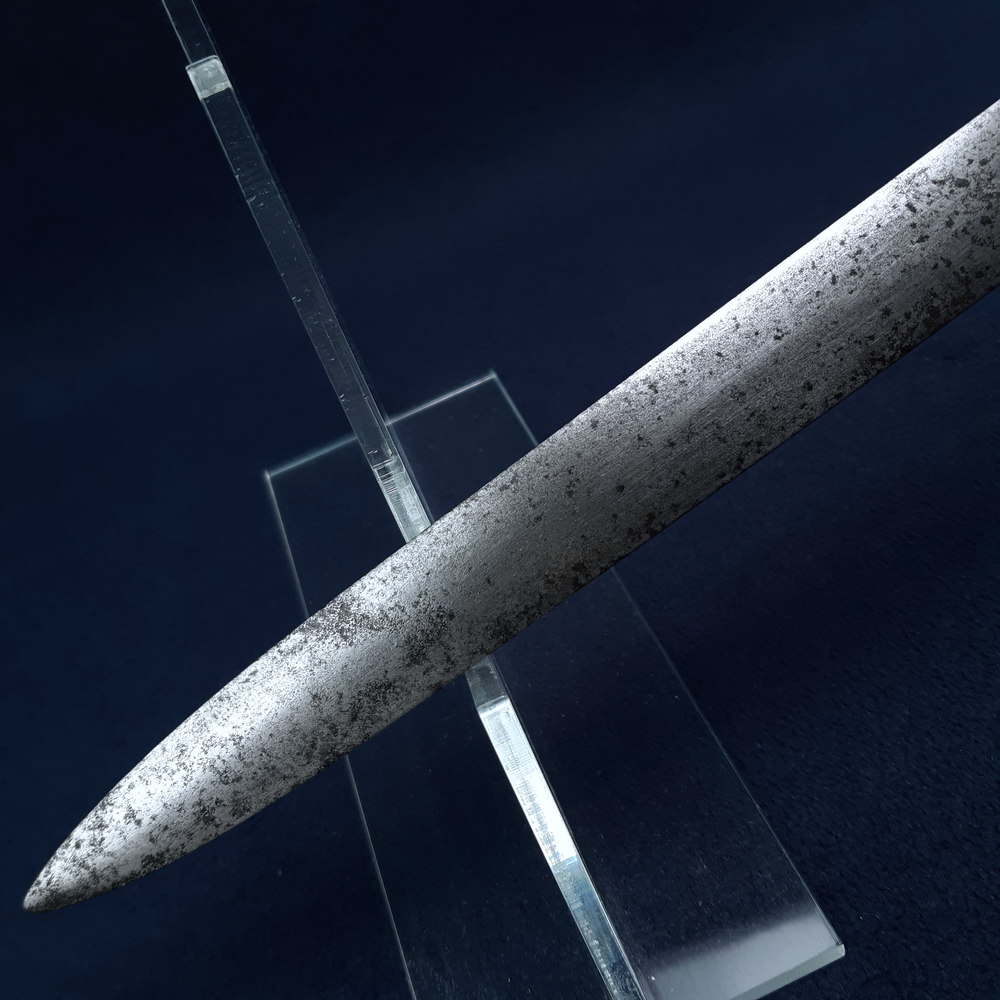
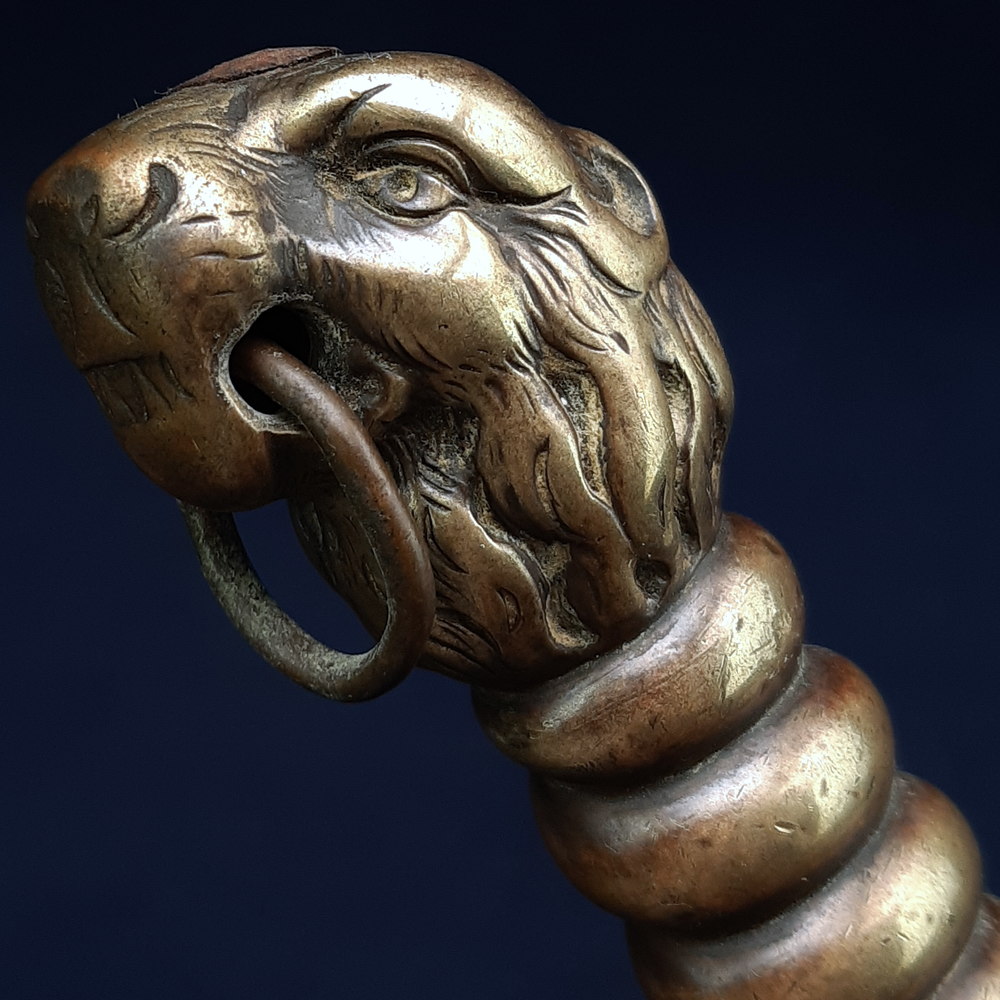
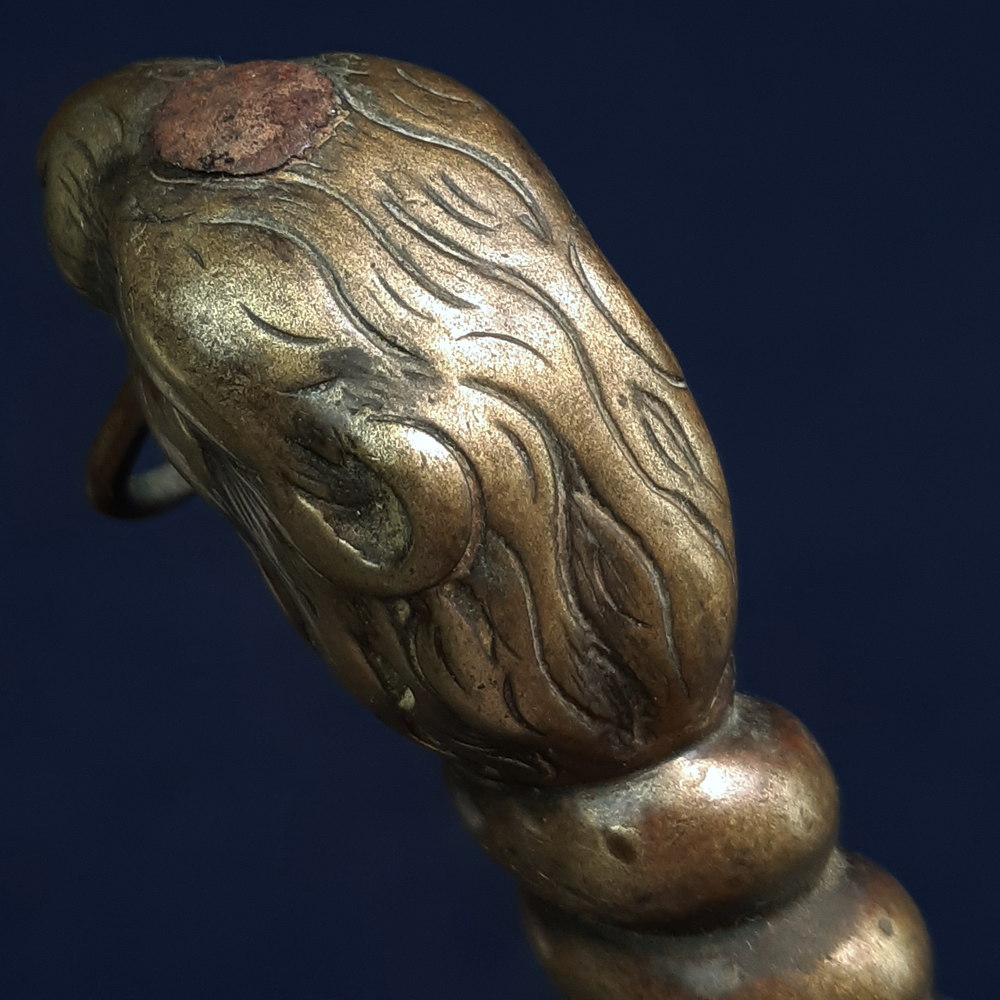
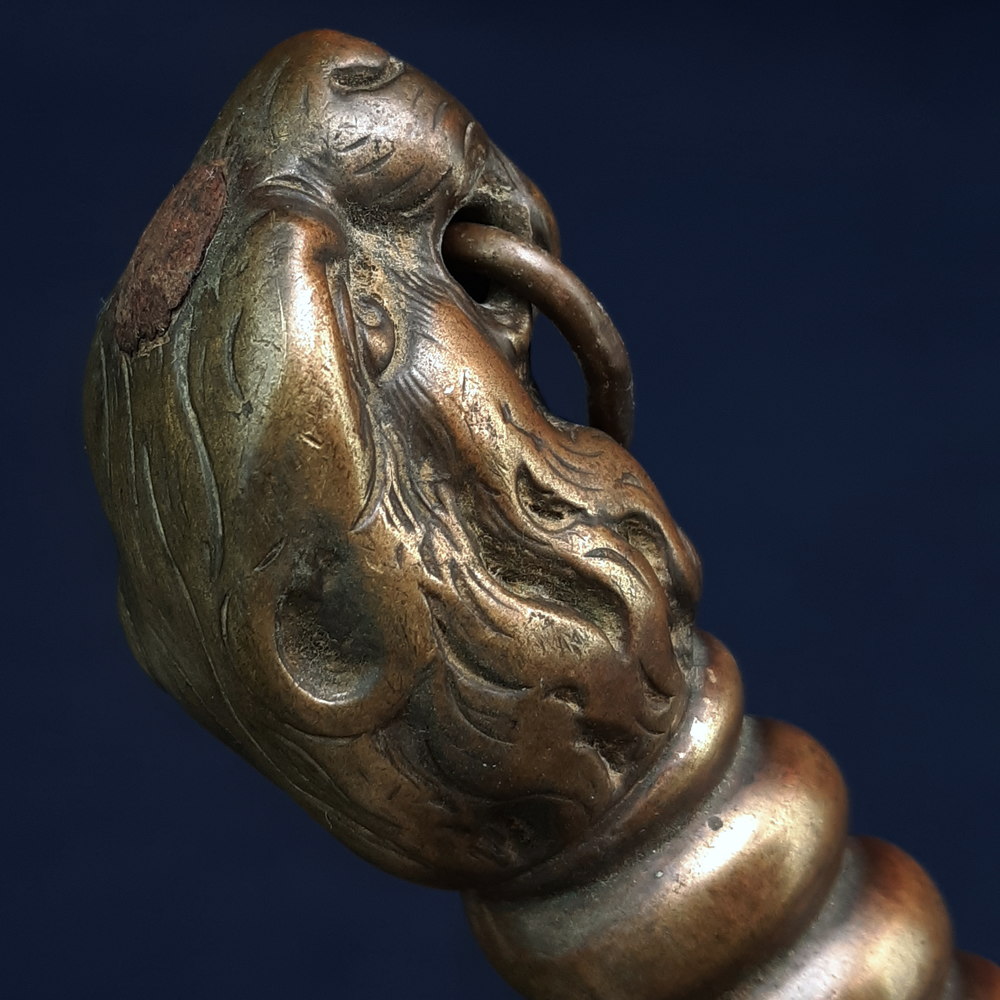
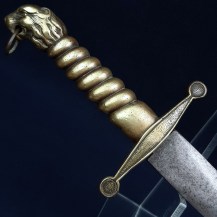
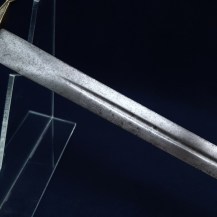
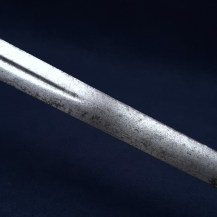
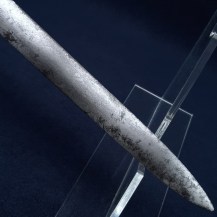
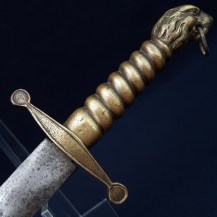
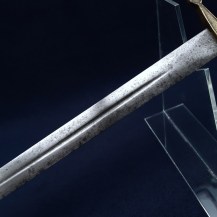
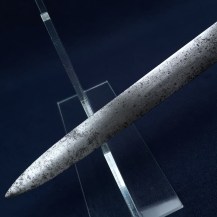
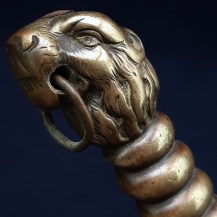
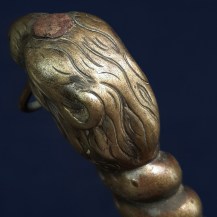
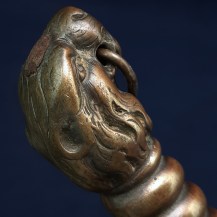
Straight blade with diamond profile, single short central fuller and spear point, single-piece cast brass hilt with straight crossguard with circular quillon terminals, spiral ribbed grip, lion’s head pommel with eyelet and movable ring. No scabbard. Blade just over 22½ inches (57.4cm) in length, the sword just under 28½ inches (72.2cm) overall.
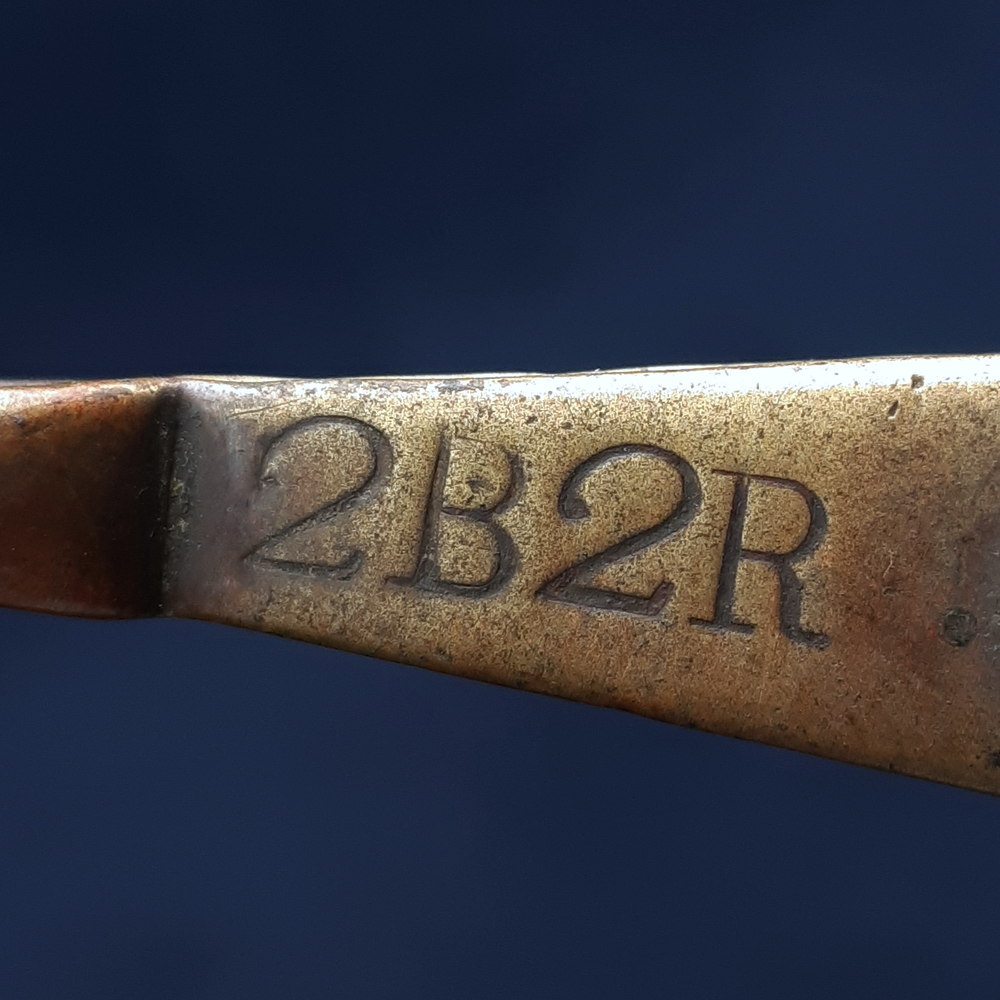
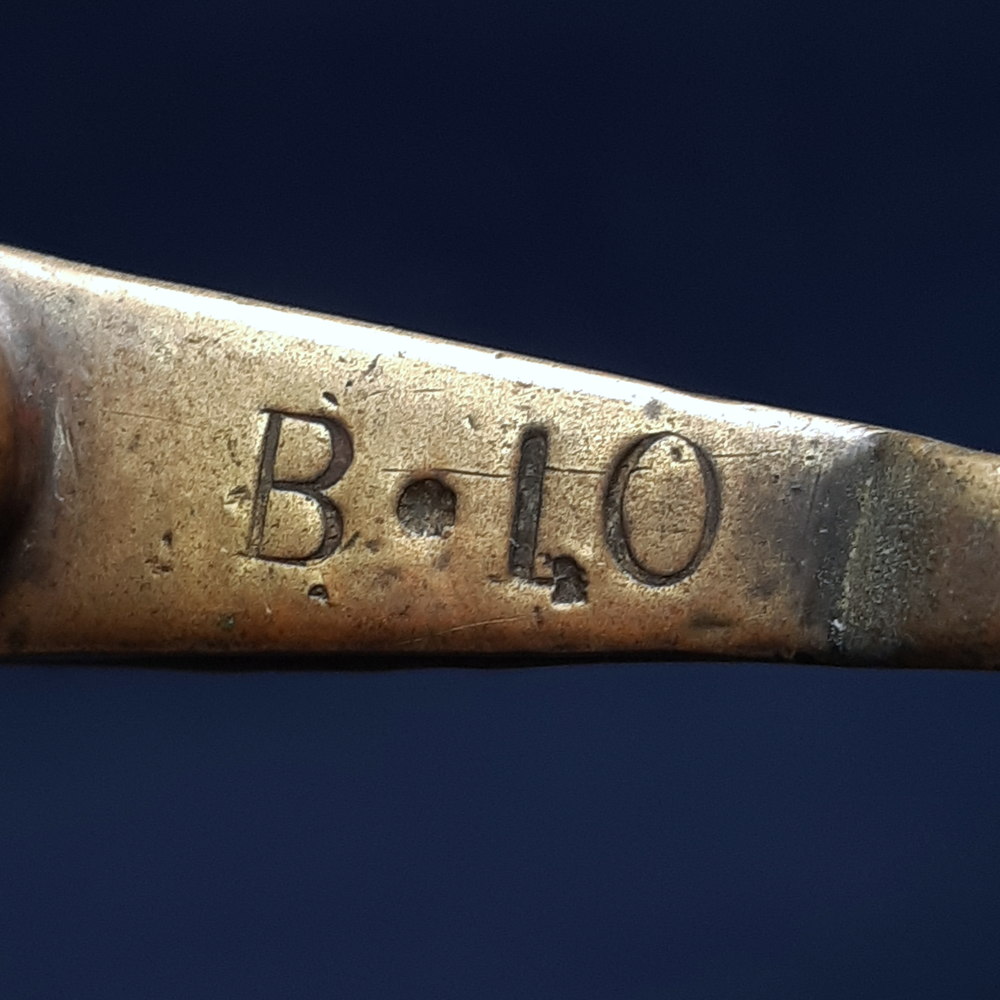
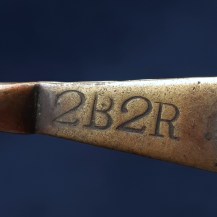
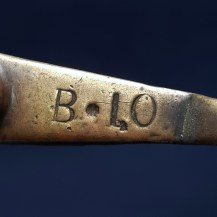
The hilt is stamped on the grip side on one quillon with ‘2B2R’ and the other with ‘B.10’. This is probably a unit mark and I would tentatively identify ‘2B2R’ as 2nd Battalion, 2nd (The Queen’s Royal) Regiment of Foot. ‘B.10’ signifies that this is sword number 10 issued to that battalion’s band. I have seen two other examples, both bear the exact same unit mark with only the number ‘B._’ changing one to the next. My thanks to Mr Philip Lankester for advice on these cryptic markings.
There was no standard pattern for the ornamental swords carried by military bands in the eighteenth and early 19th centuries. Each regiment was responsible for equipping its band as it saw fit, the expense generally paid for by its officers. Nonetheless bands were often well equipped as regiments took great pride in their music and sought to outdo each other in their pageantry. Composed of a mixture of enlisted men and paid civilian musicians, military bands often performed for the public becoming a cultural fixture and a useful means of outreach between military and civilians, a tradition which continues to this day.
Despite their non-standard procurement there was a common style to the British band sword (with considerable variation): a short, usually curved, mameluke-style sword with brass fittings and a pommel in the form of an animal head, most often a lion. Curvature made them easier to carry on the march, making this type somewhat unusual, although it is quite short.
The Royal Armouries collection contains a great number of British bandsman’s swords which the Armouries curators have grouped into types based on the form of their hilts. This type is not included among them, although it is closest to the ‘Type N’ which also has a straight diamond profile blade and straight crossbar hilt (see Royal Armouries item IX.431 – pictured in their online collection and also in Swords of the British Army, 1st Edition by Robson 1975, p170). The RA collection is by no means exhaustive however and it is always interesting to find new variants.
The Mark I Drummer’s sword introduced in 1856 also had a short straight diamond-shaped blade (19 inches), and this type might have been a precursor. Dating this piece is difficult, but the use of such swords would have declined after 1856 and the Royal Armouries generally date their examples to between 1800 and 1860.
Of the two other examples I have seen, one was stamped to Wilkinson, 27 Pall Mall. Wilkinson traded at that address from c1829 suggesting an earliest date for this type. Since they all bear the same unit mark it is possible that all are by Wilkinson.
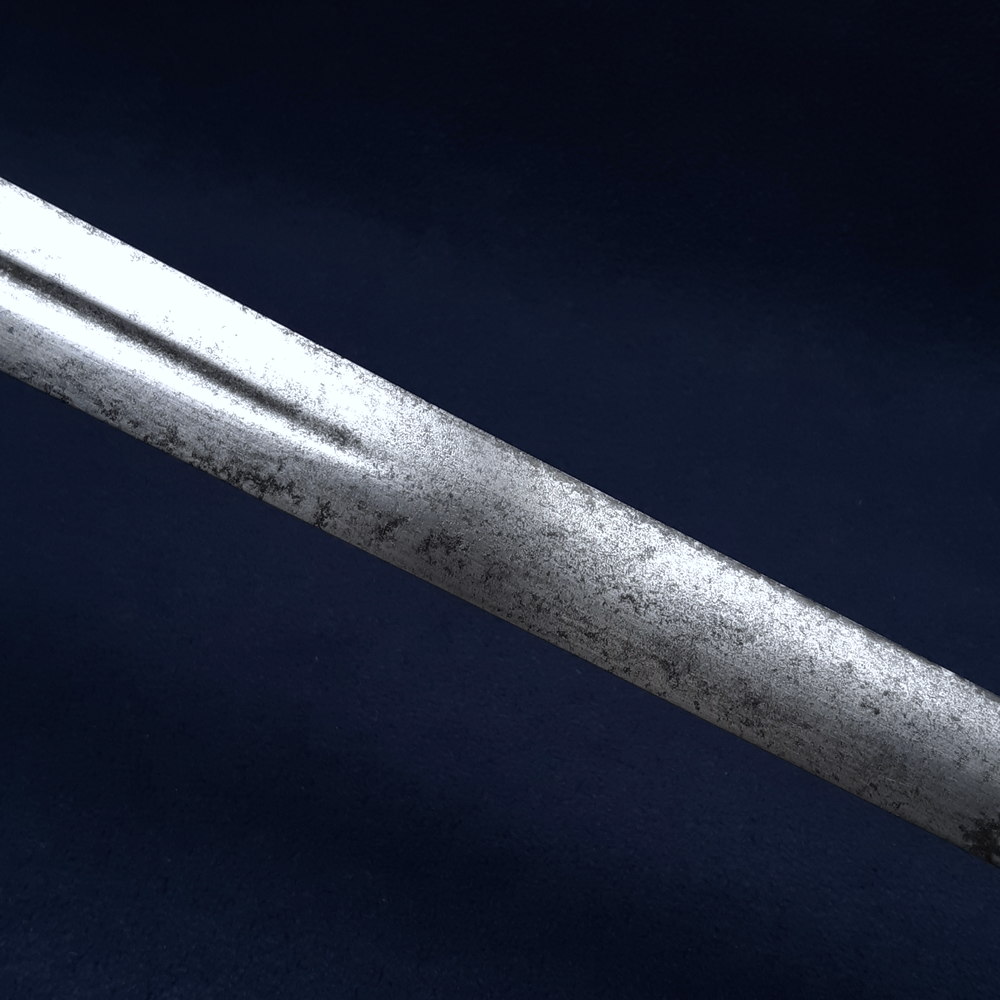
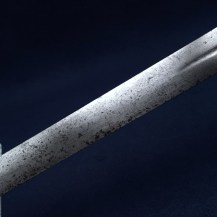
The blade has spots of light and moderate scratching, light patination, and patches of light pitting, most notably near the tip. No damage to its edge, which is unsharpened. The tip is rounded – it may always have been so but if it was sharp it probably extended by another ~2mm. The hilt, grip and pommel have an even midtone patina.
