
German Weimar Period Hunting/Forestry Association Hirschfanger, By E. & F. Hörster, Solingen
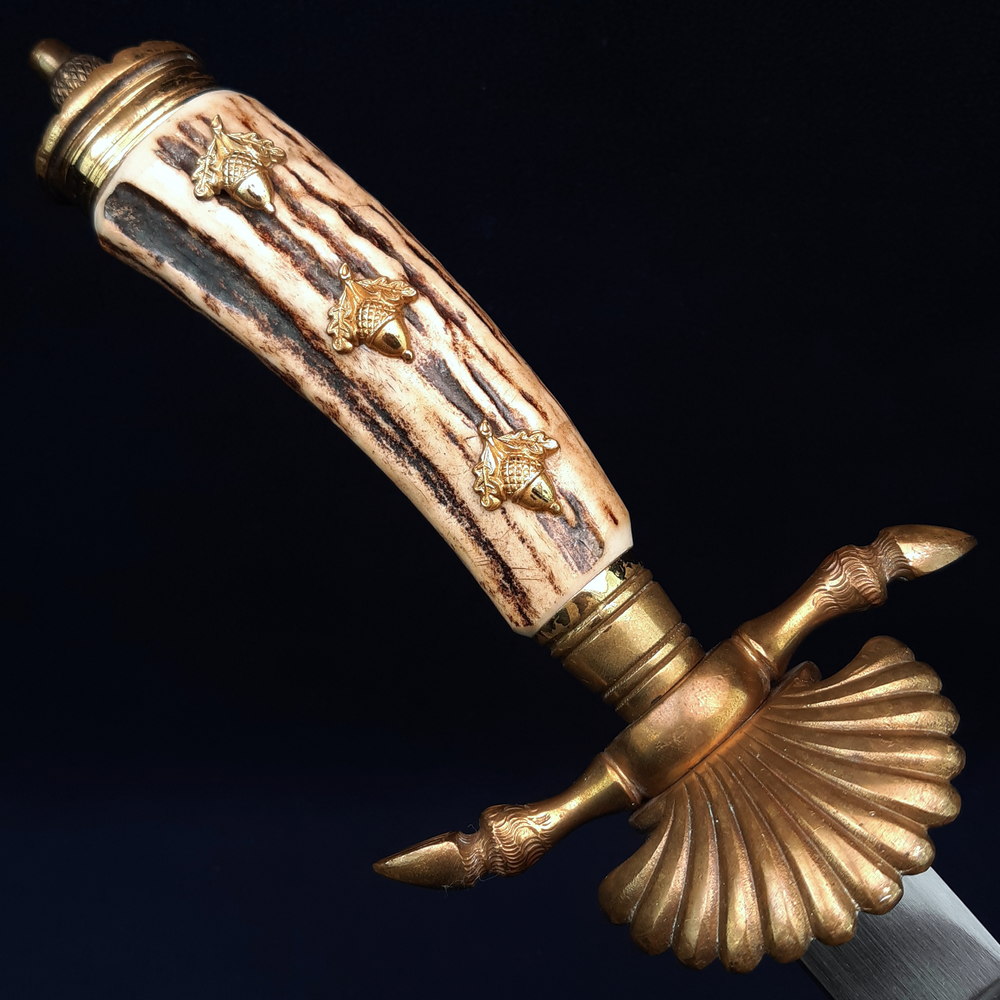
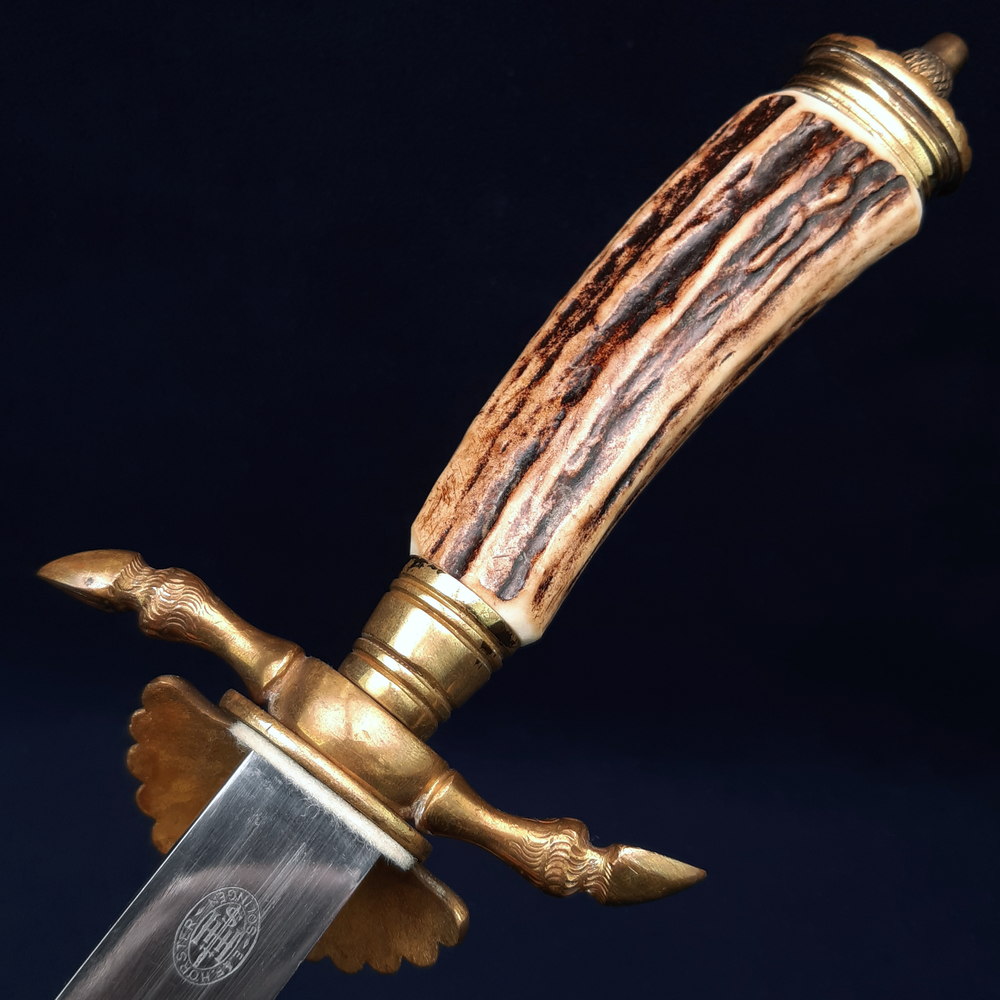
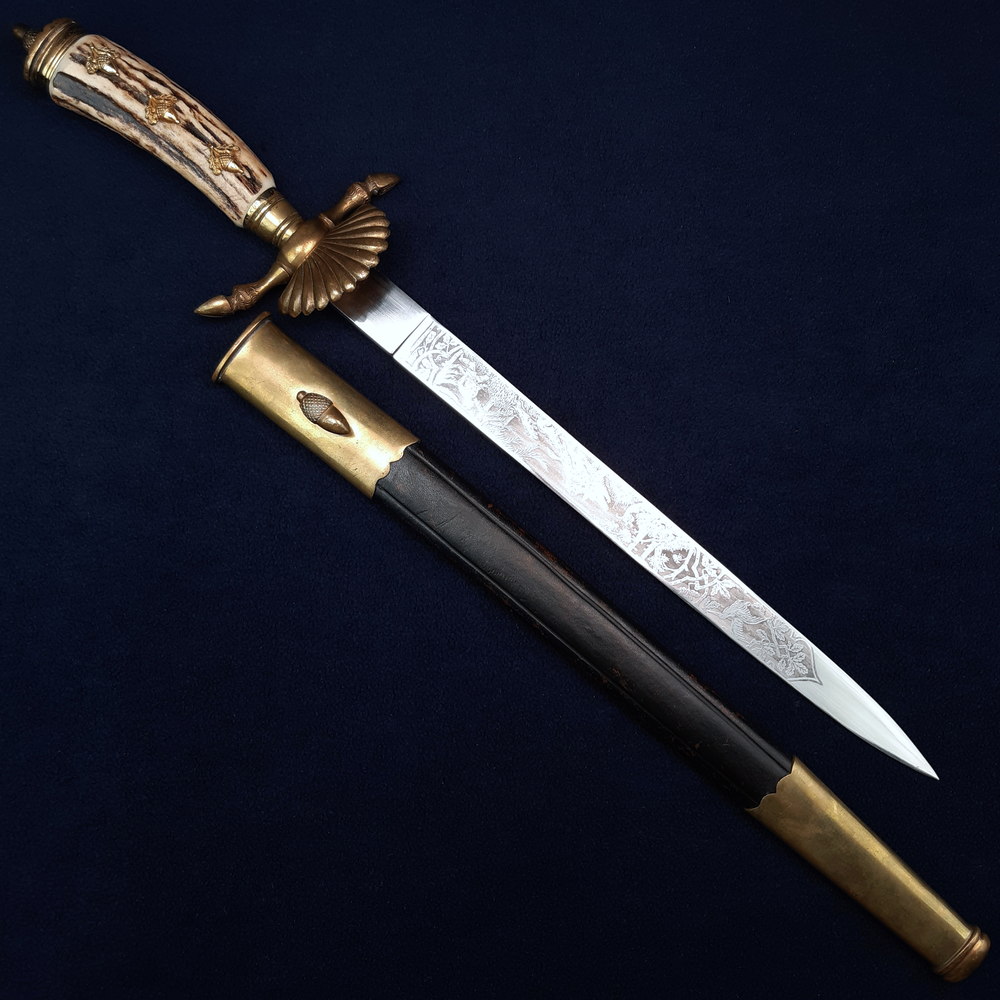
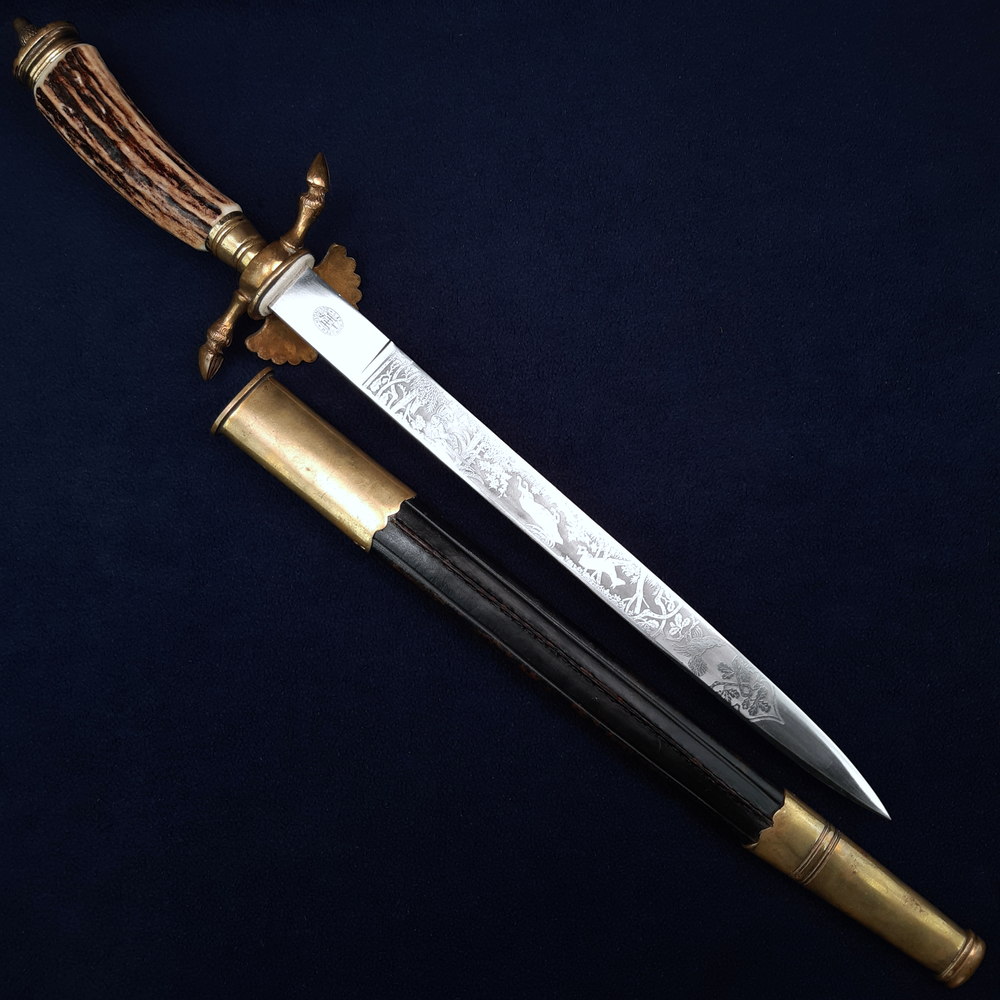
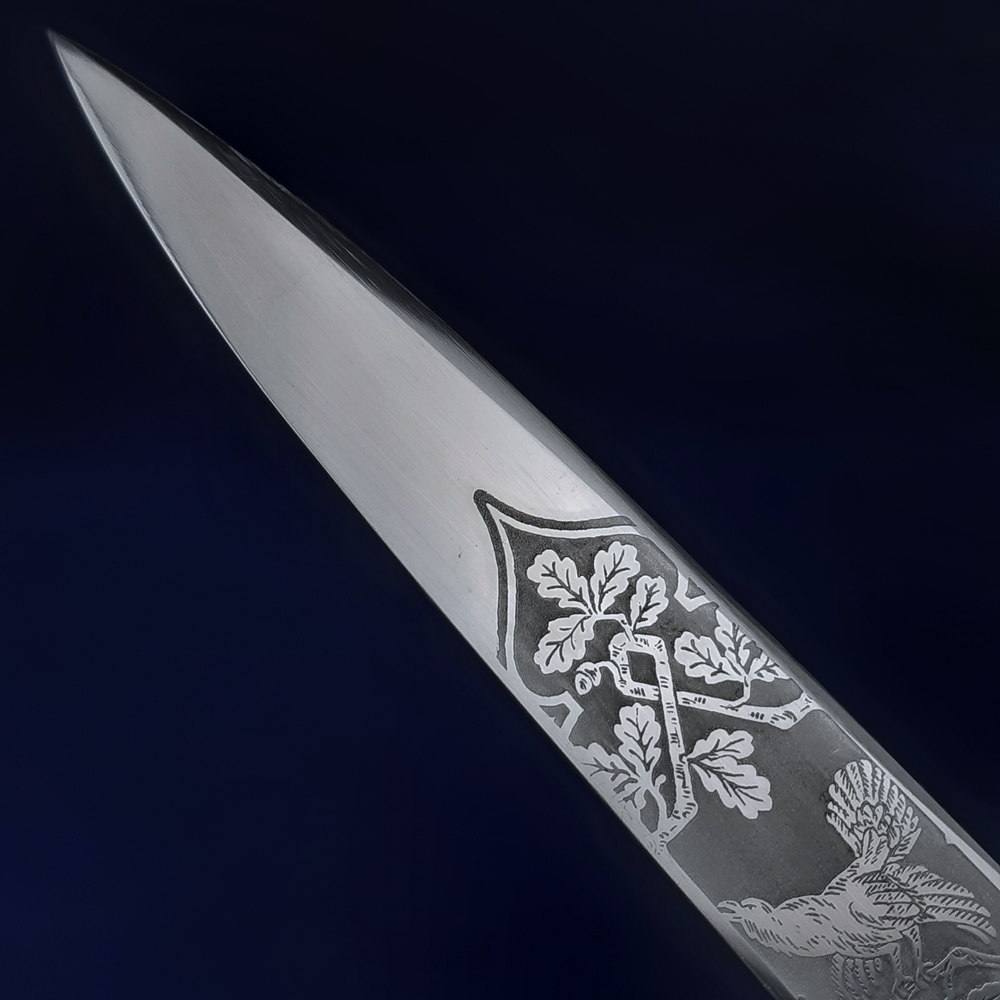
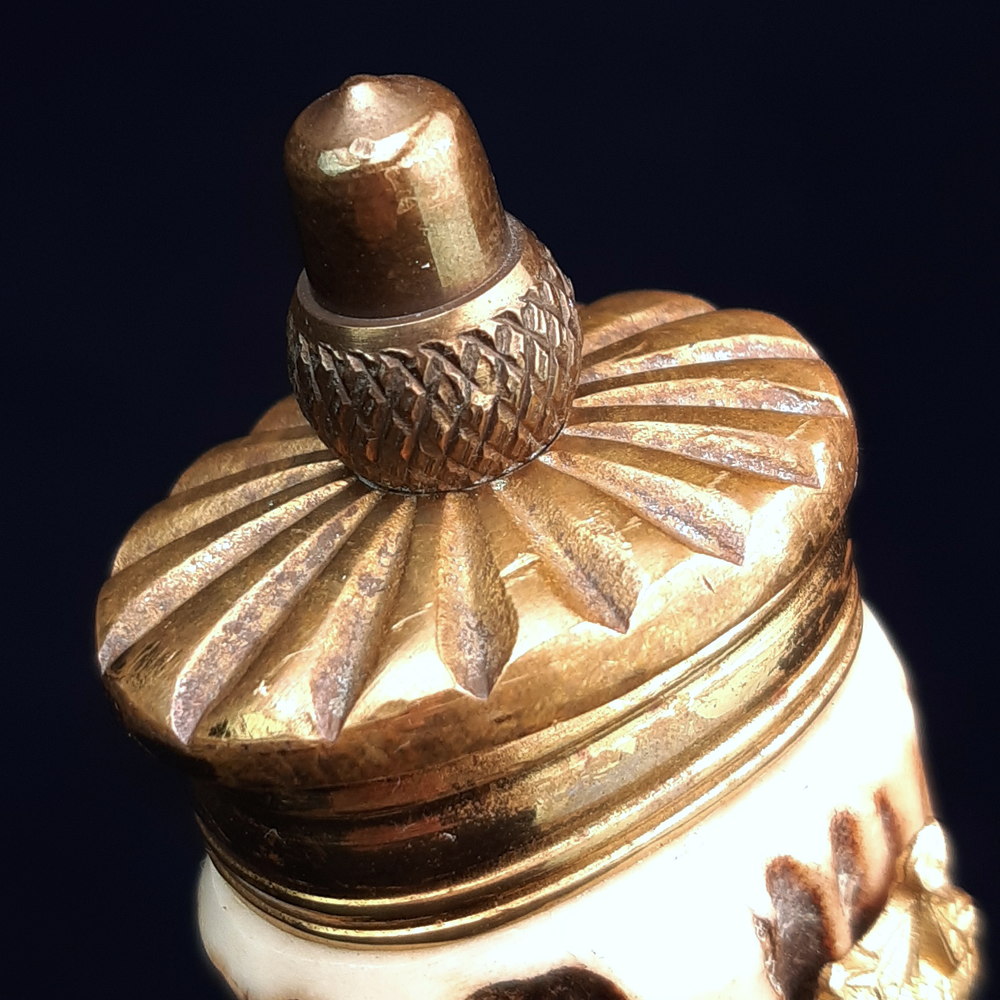
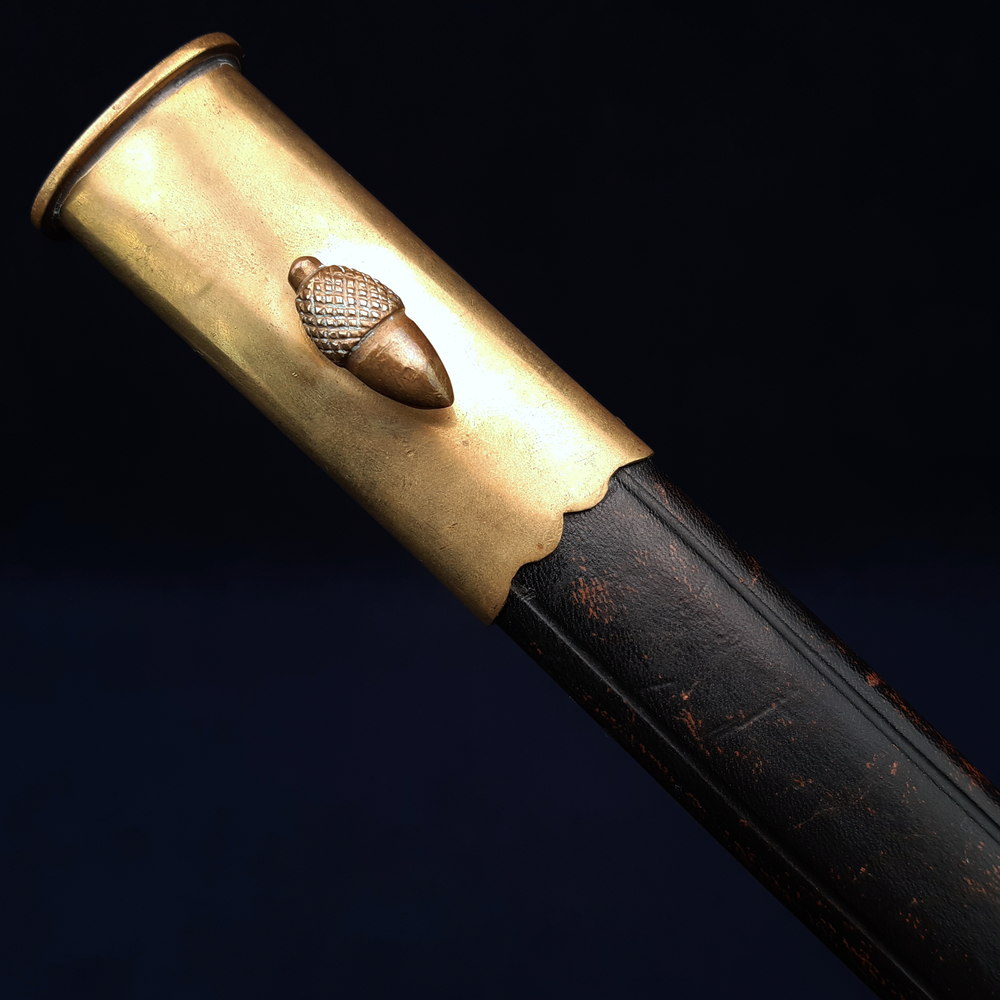
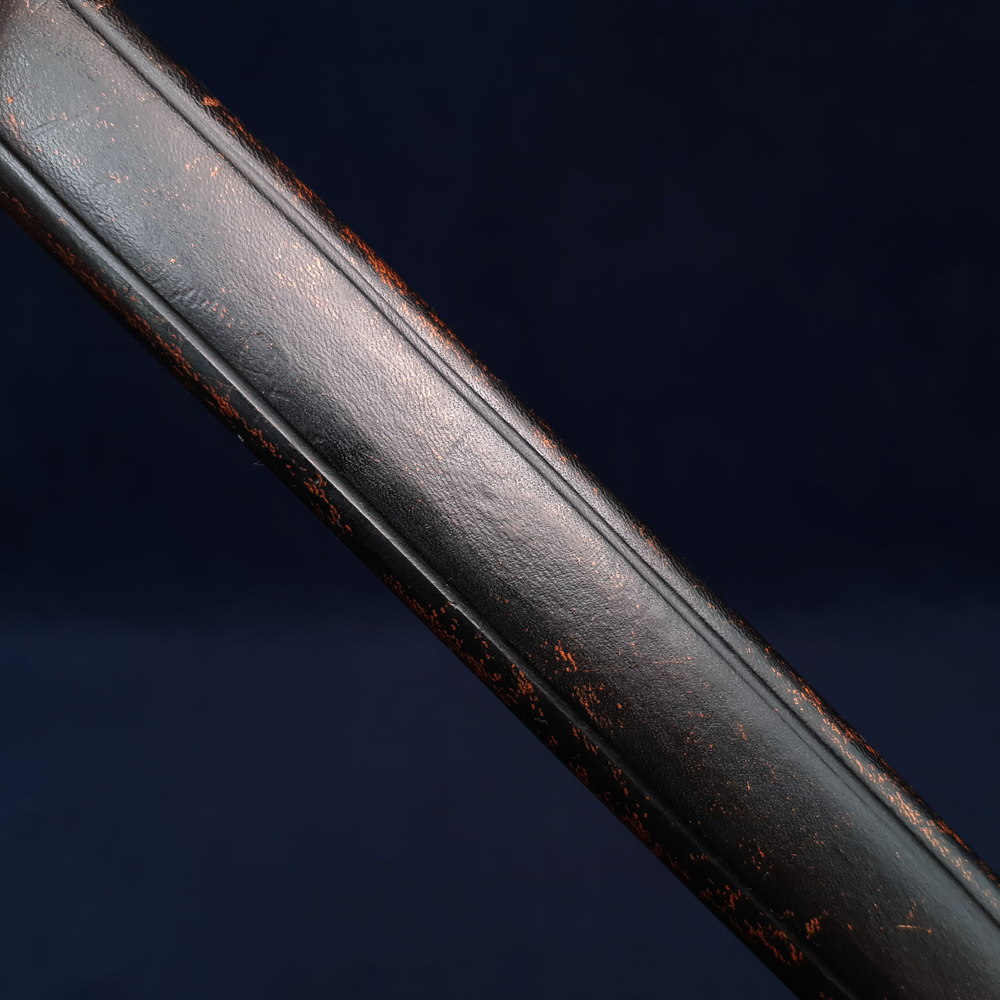
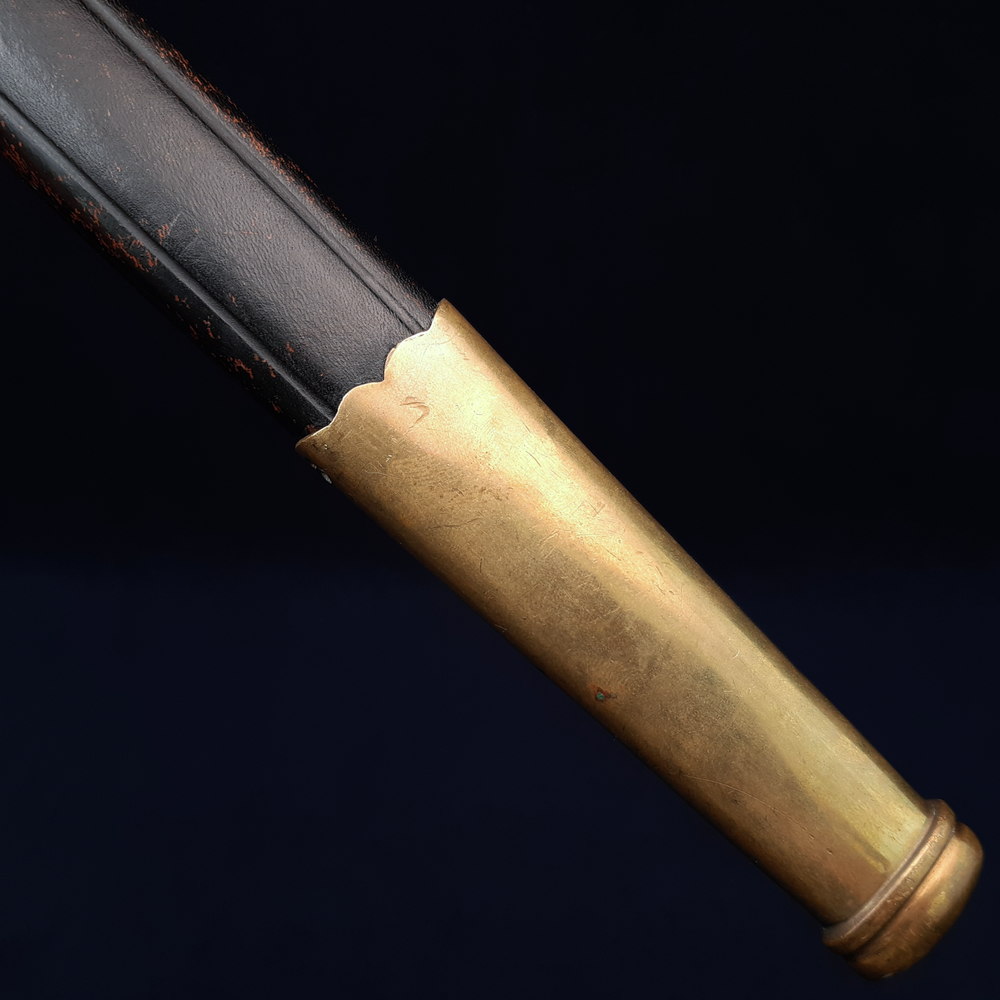
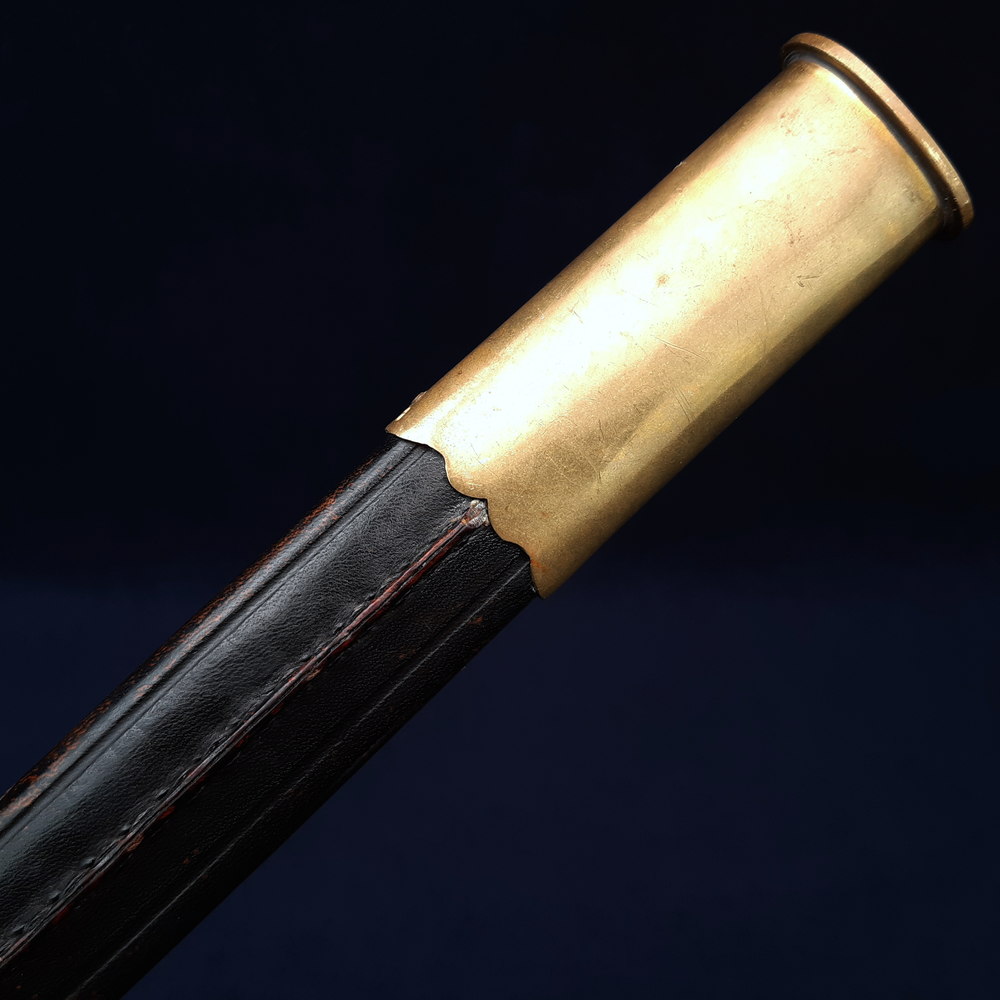
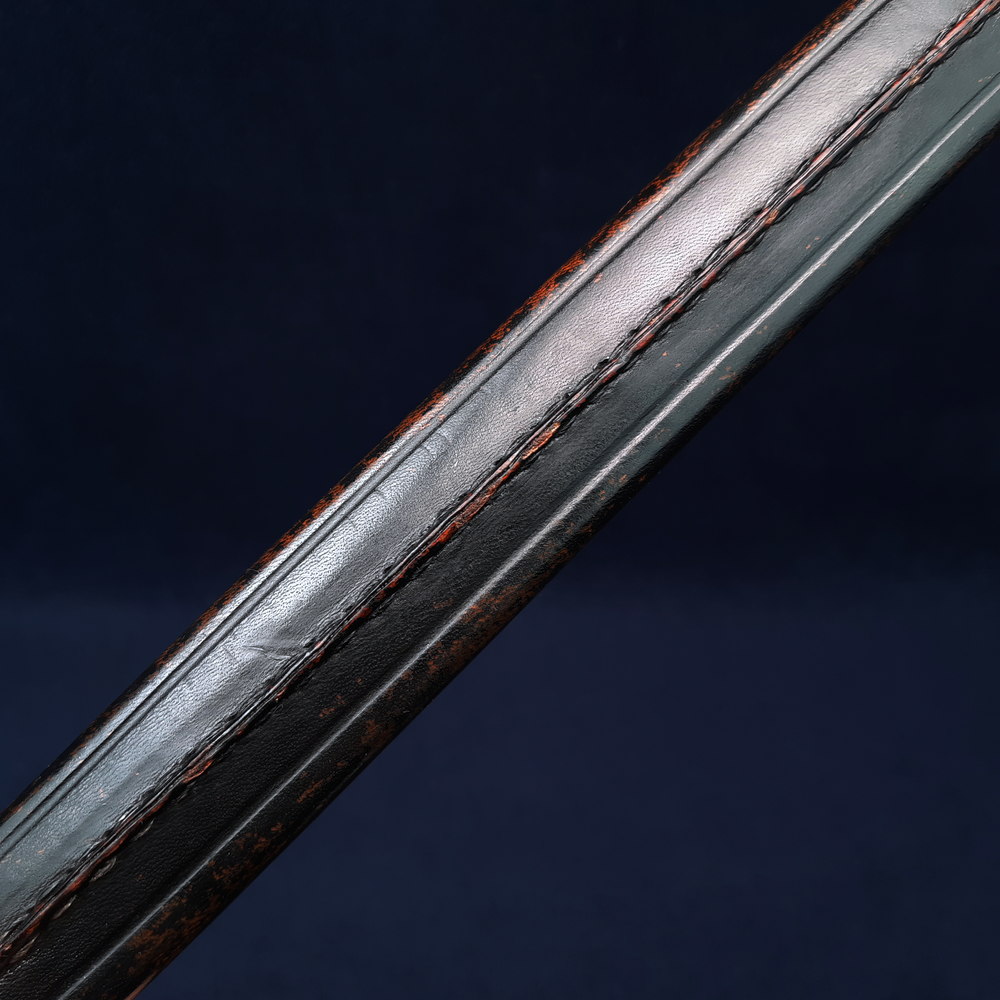
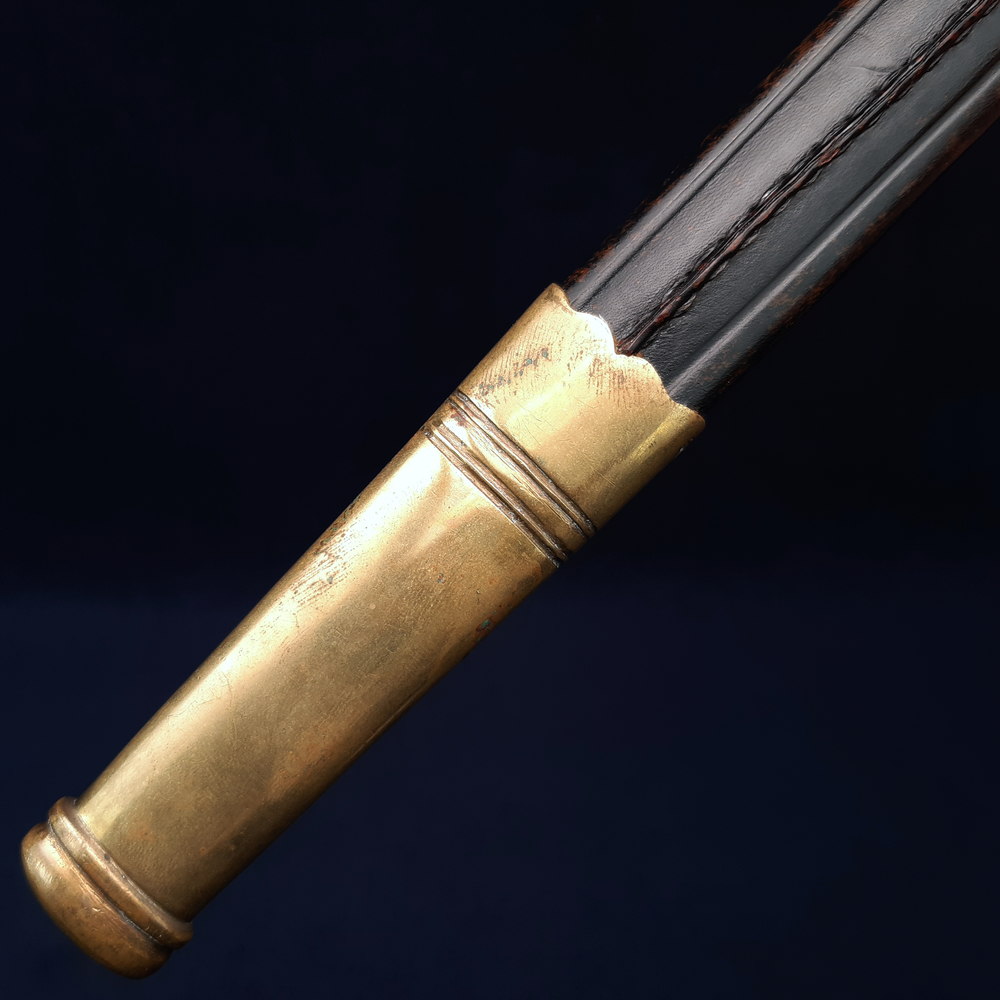
Straight unfullered blade with spear point. Brass shell guard on one side, brass hilt with recurved quillons in the form of deer legs with hoof finials, white fabric washer, ribbed brass ferrule, grip of smoothed white antler set with three brass acorns, ridged brass pommel cap, round tang button. Black leather scabbard with brass fittings at the throat and chape, the throat piece with acorn-shaped frog stud, the chape piece with oval finial. Blade 13 inches in length, the hirschfänger 19¼ inches in length overall.
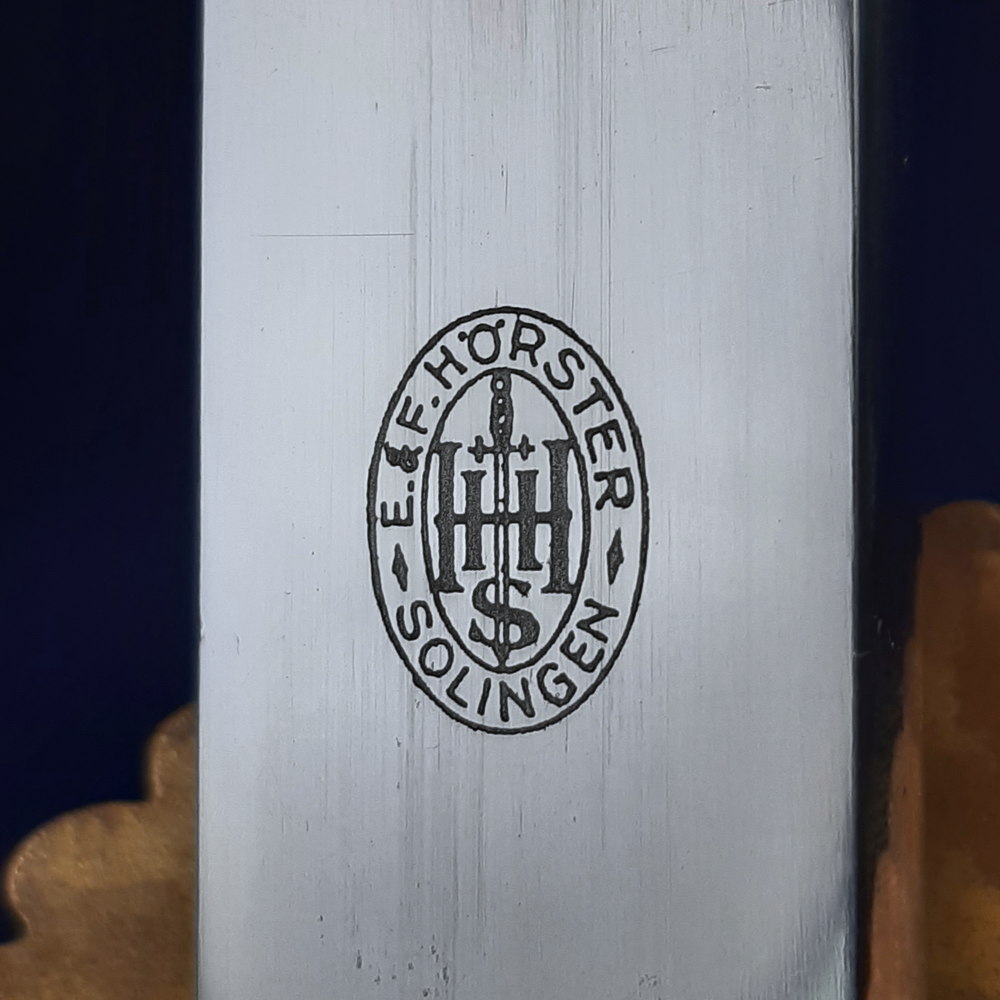
The blade is stamped or etched at the ricasso on one side with the maker’s mark of E. & F. Hörster, Solingen – the letters ‘H H S’ arranged as a monogram and impaled vertically with a straight cross-hilted sword within an oval, surrounded by the firm’s name in another oval forming a band.
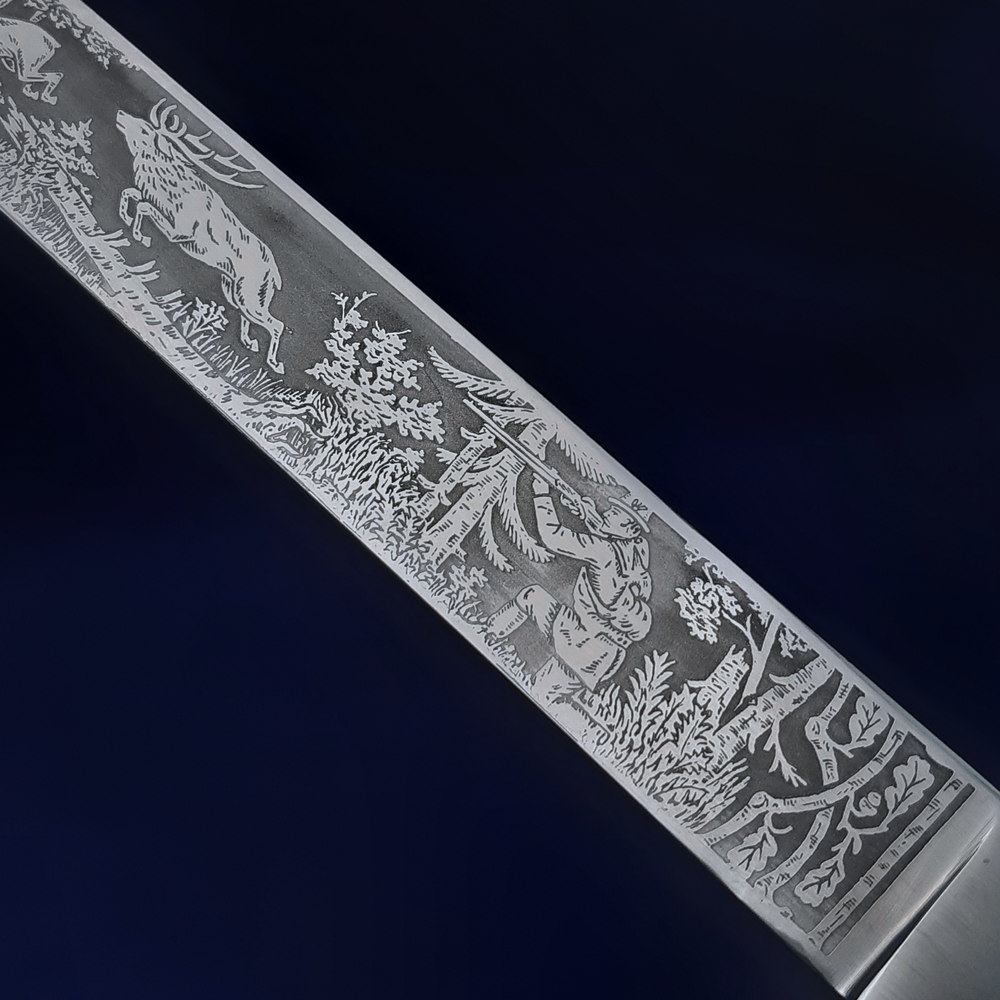
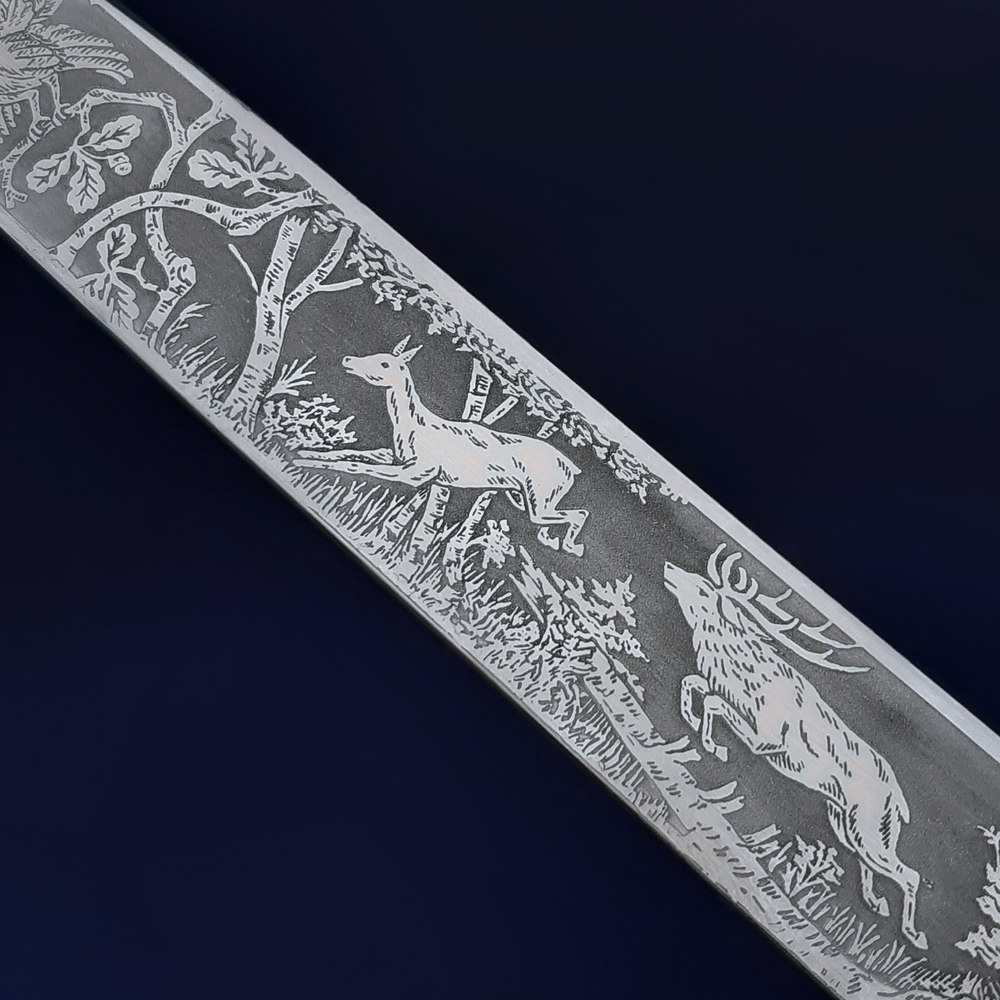
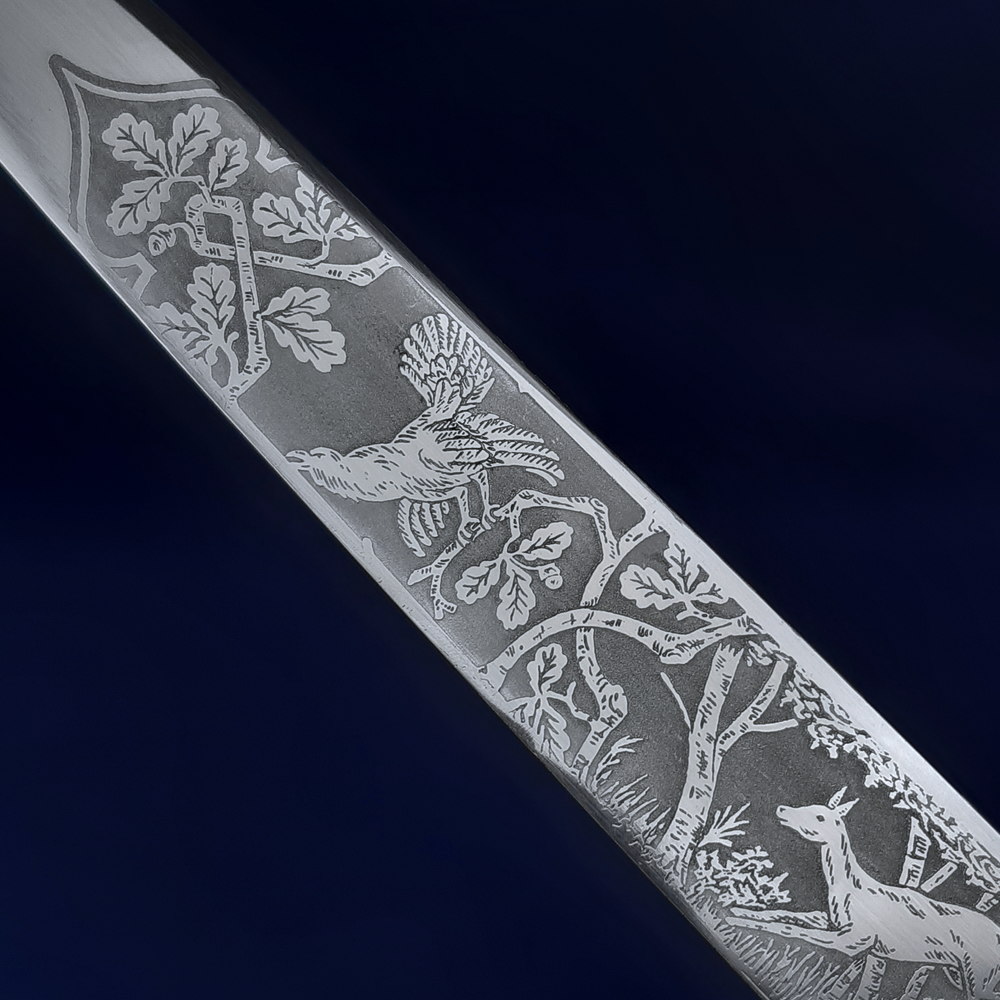
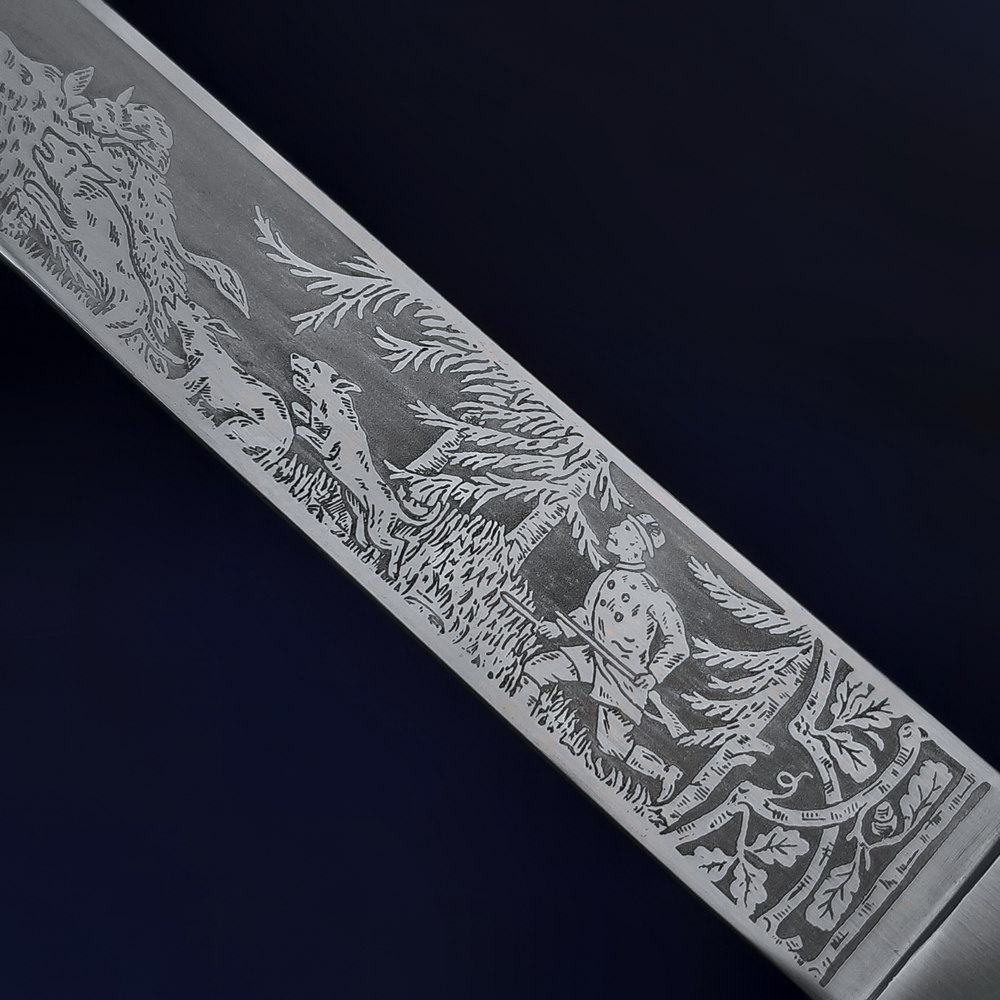
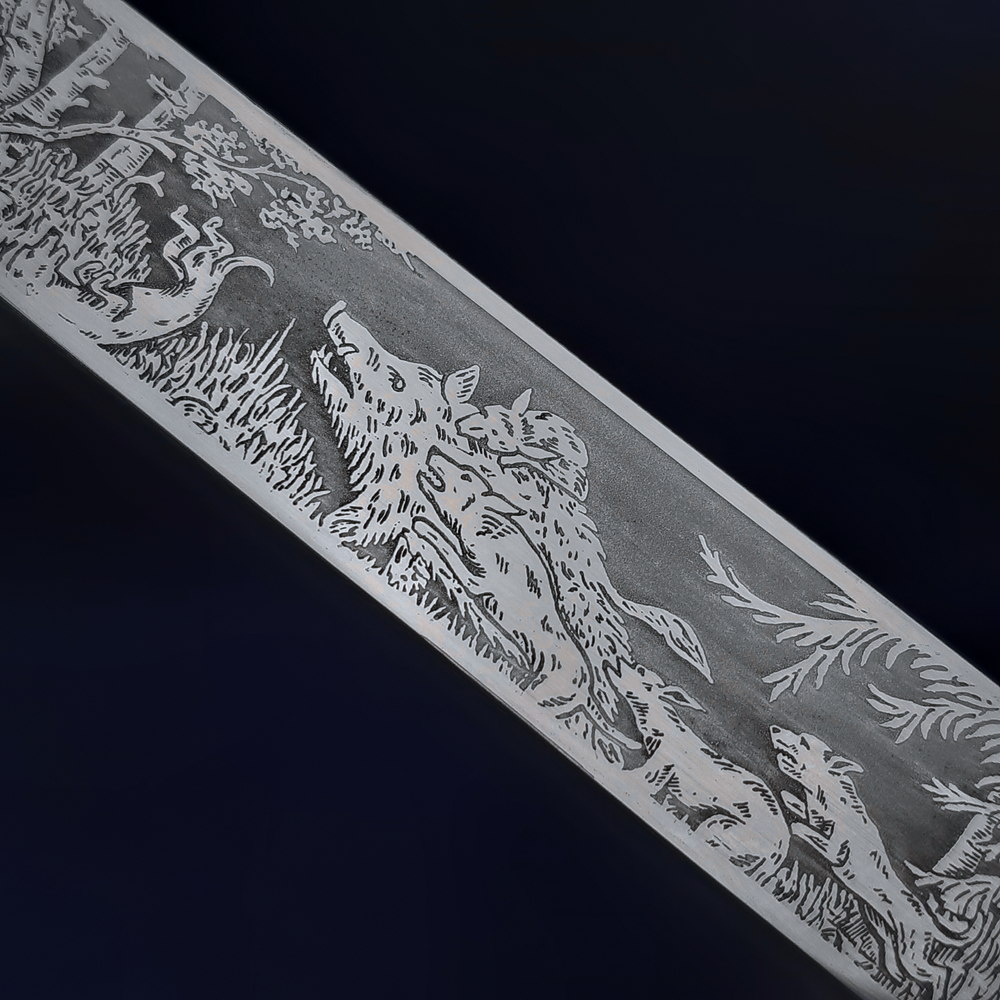
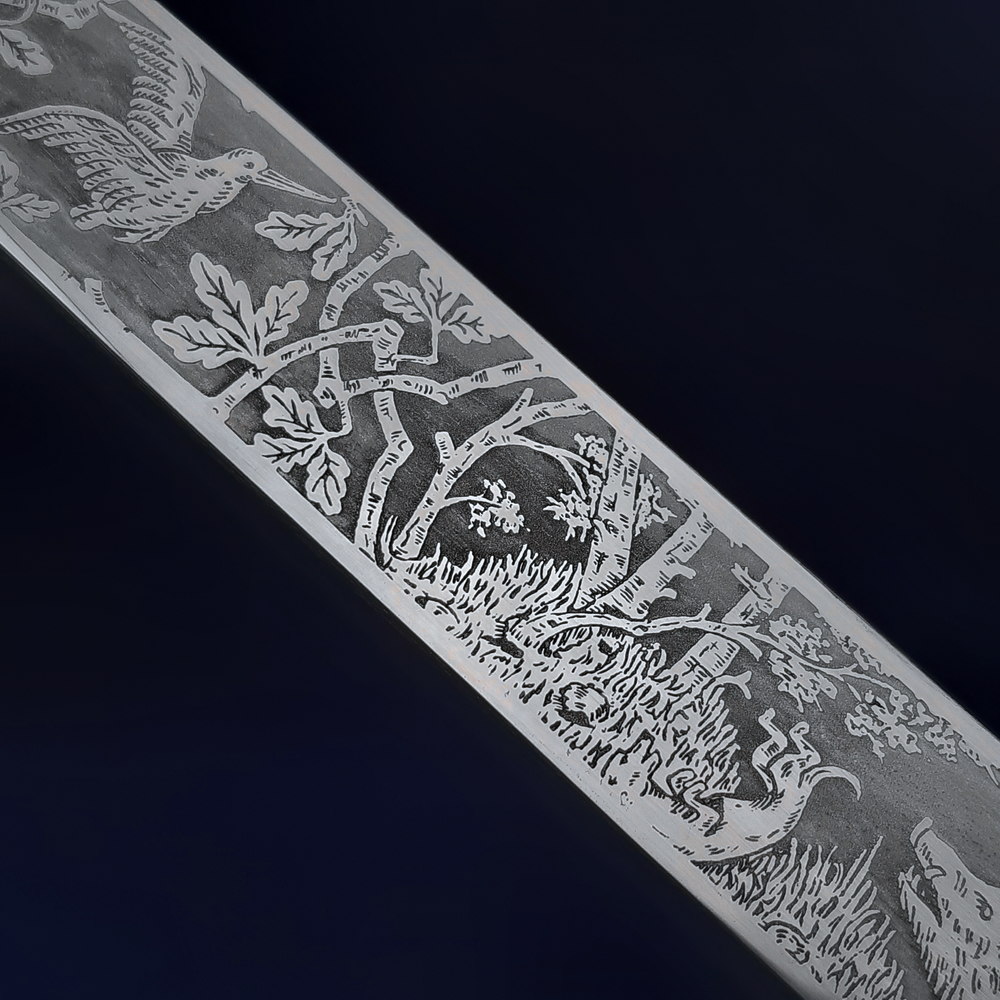
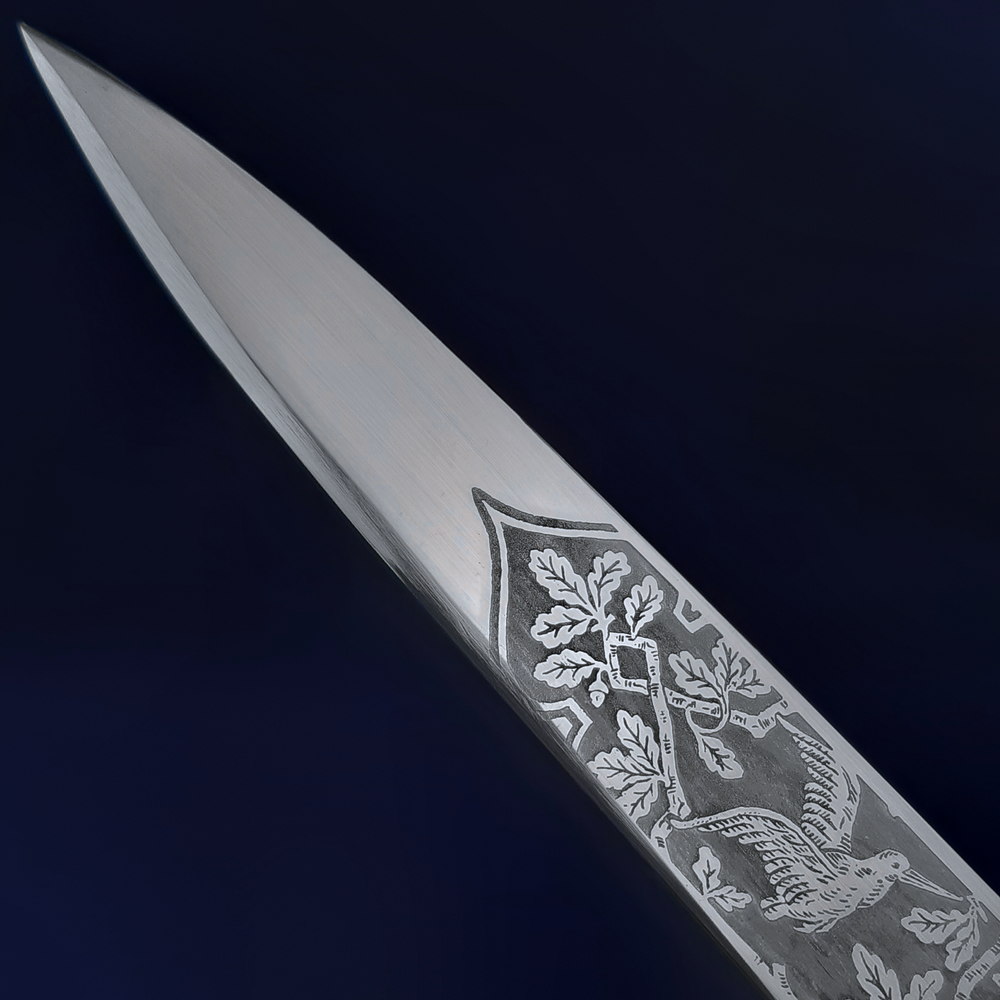
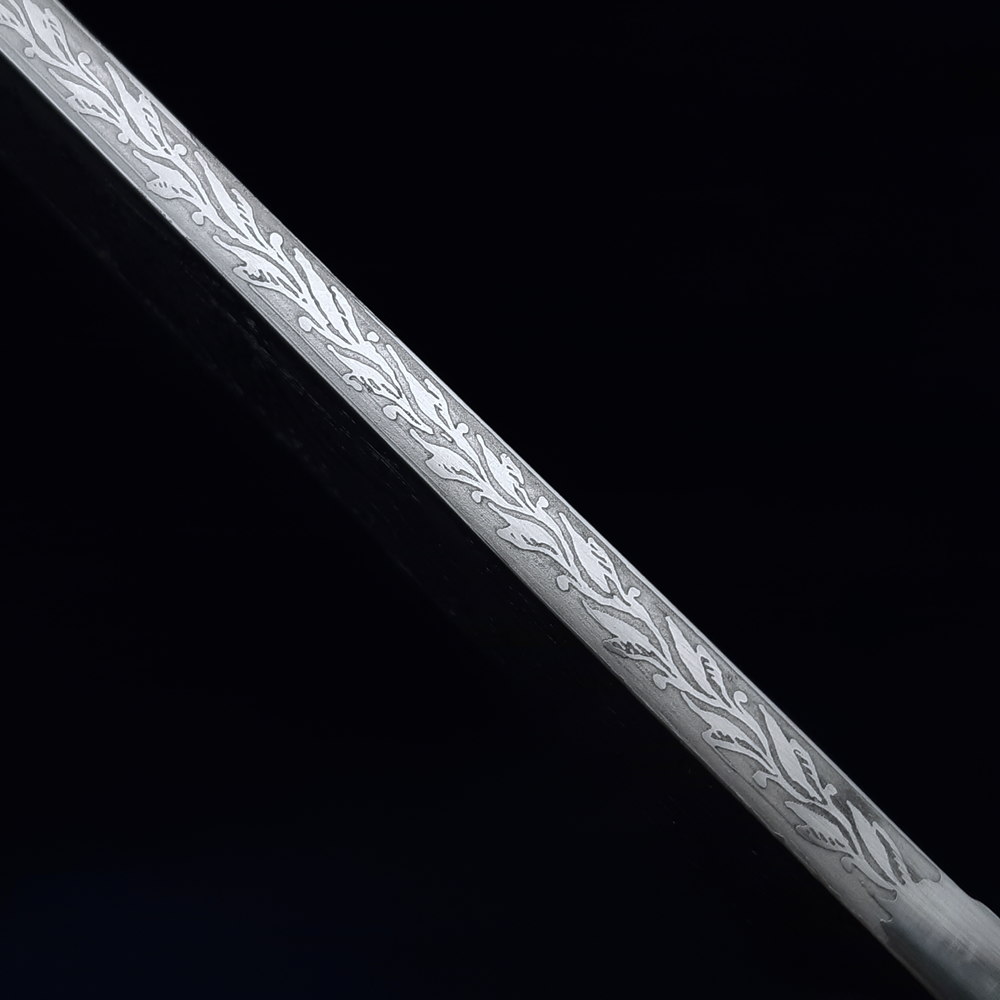
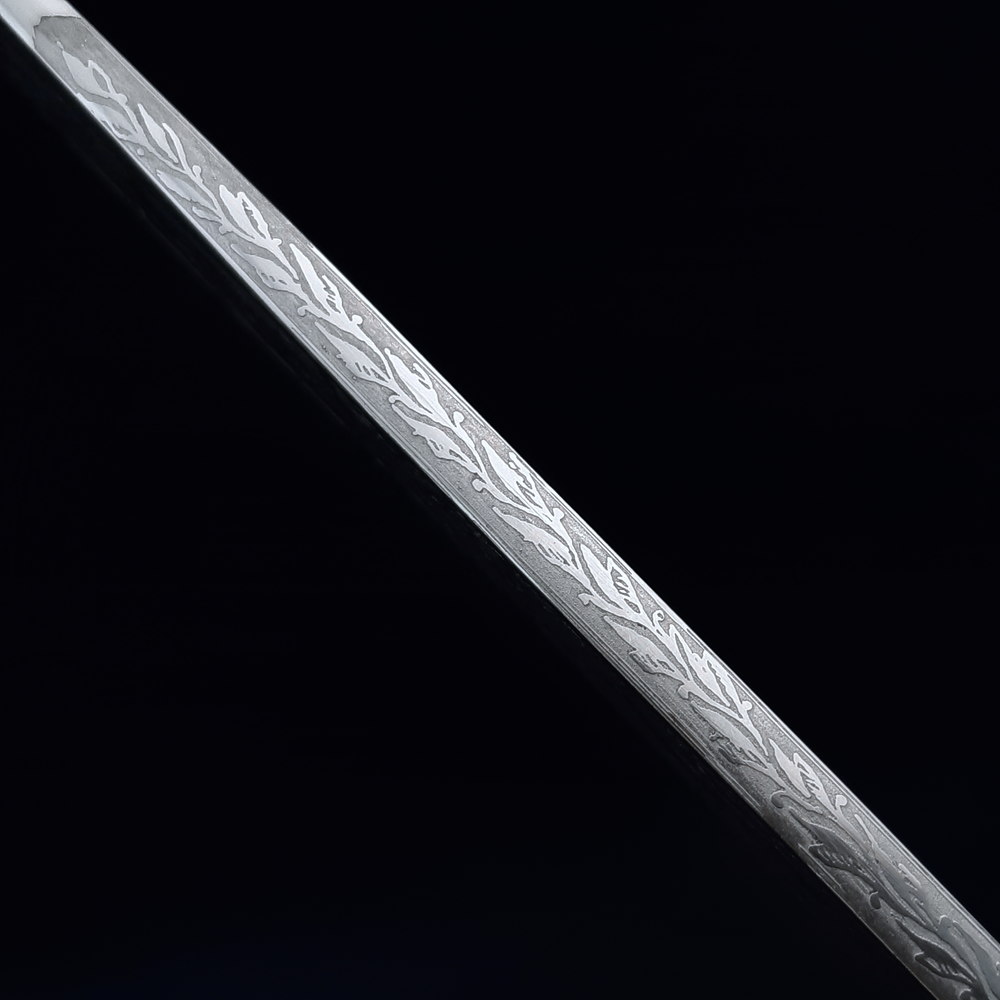
The blade is also etched on both sides with detailed hunting scenes and related images. On one side the main scene shows a hunter in a kneeling position among trees, taking aim with a long gun at two fleeing deer, one stag and one hind. Above this on the same side is etched a bird perched on a branch and knotwork formed of branches with foliage. On the other side of the blade the main scene is of a boar being run down in the forest by a pack of hunting dogs. One of the dogs is biting the boar’s neck, and another has been bowled over by its charge. A hunter runs behind the boar & hounds with his gun in one hand and a dagger in the other, ready to finish off the boar once it falls. Above this is etched a long-beaked bird on the wing and more knotwork formed of branches with foliage. The spine of the blade is etched with foliage.
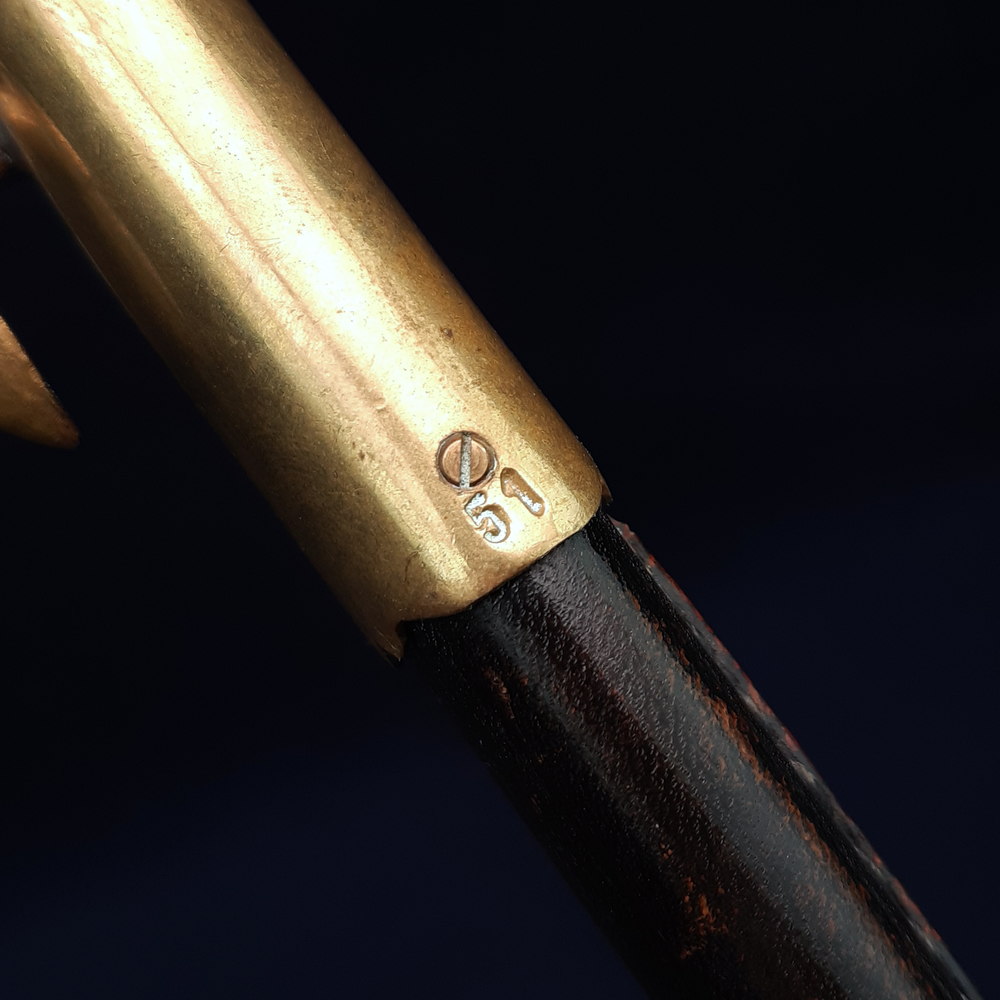
The throat piece of the scabbard is stamped next to the screw with ‘51’.
The Hirschfänger (literally, ‘deer catcher’) is a German hunting sword or long knife with a long history dating back to the 17th century, when it emerged as a specialized offshoot of the Hauswehr (all-purpose domestic knife) which was itself descended from the Germanic seax. Like other hunting swords its purpose was to dispatch game animals, but its small size is probably linked to the development of enclosure hunting in Germany, wherein rather than chase down prey in open ground hunters would wall off an area with stretched fabric allowing them to easily kill the trapped animals. At close quarters, with other hunters nearby, firearms and longer swords were less practical.
The hirschfänger became emblematic of the huntsman and even as the nature of hunting changed it gained a ceremonial role, presented and worn to show that the bearer was qualified and knowledgeable in the rules of the hunt. Highly decorated examples can be found, often incorporating romantic hunting iconography. By the 19th century variations on the design might be carried by hunters, forest rangers, civil servants employed by the forestry department, local rifle associations and off-duty soldiers of the Jäger & Schützen battalions.
Whether military or not, these were privately purchased pieces and multiple Solingen manufacturers produced different versions to suit customer demand, resulting in great variation. Given its decoration style this example is probably non-military.
The etching is excellent, clear and detailed retaining a strong contrast between the matt background and the bright polished lands. The blade overall retains its high polished finish free of patination, rubbing or staining. Slight side-to-side movement to the hilt and the ferrule can rotate in place, allowing very slight shifting of the grip. The brass parts have an even moderate patina, with some spots of rubbing to the ferrule and pommel. Slight movement to one of the acorn-shaped grip rivets, the one nearest the pommel.
The scabbard fittings are likewise evenly patinated, with a couple of darker spots and light staining to the chape piece, some very light scratches to both pieces. The chape piece of the scabbard has lost its attaching screw/rivet – it remains quite well attached to the leather body by friction (it does not fall off under its own weight, it needs to be pulled) but it is not fixed and can be pulled off – it would need either a replacement or to be glued in order to secure it permanently. The leather scabbard body has some light surface rubbing and a few small dents, all of its stitching is intact.
