
British WW1 1908 Pattern Cavalry Trooper’s Sword by Enfield, 1916 with Unusual Leather-Covered Steel Scabbard
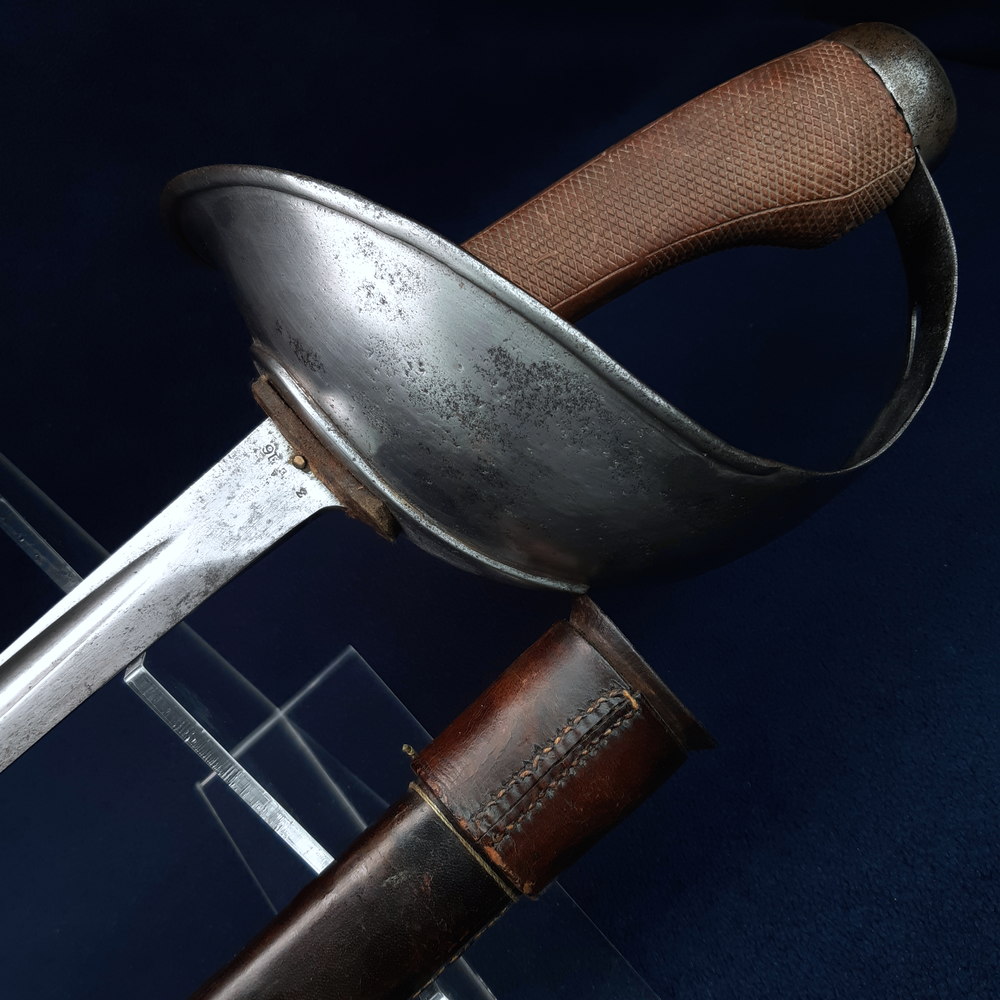

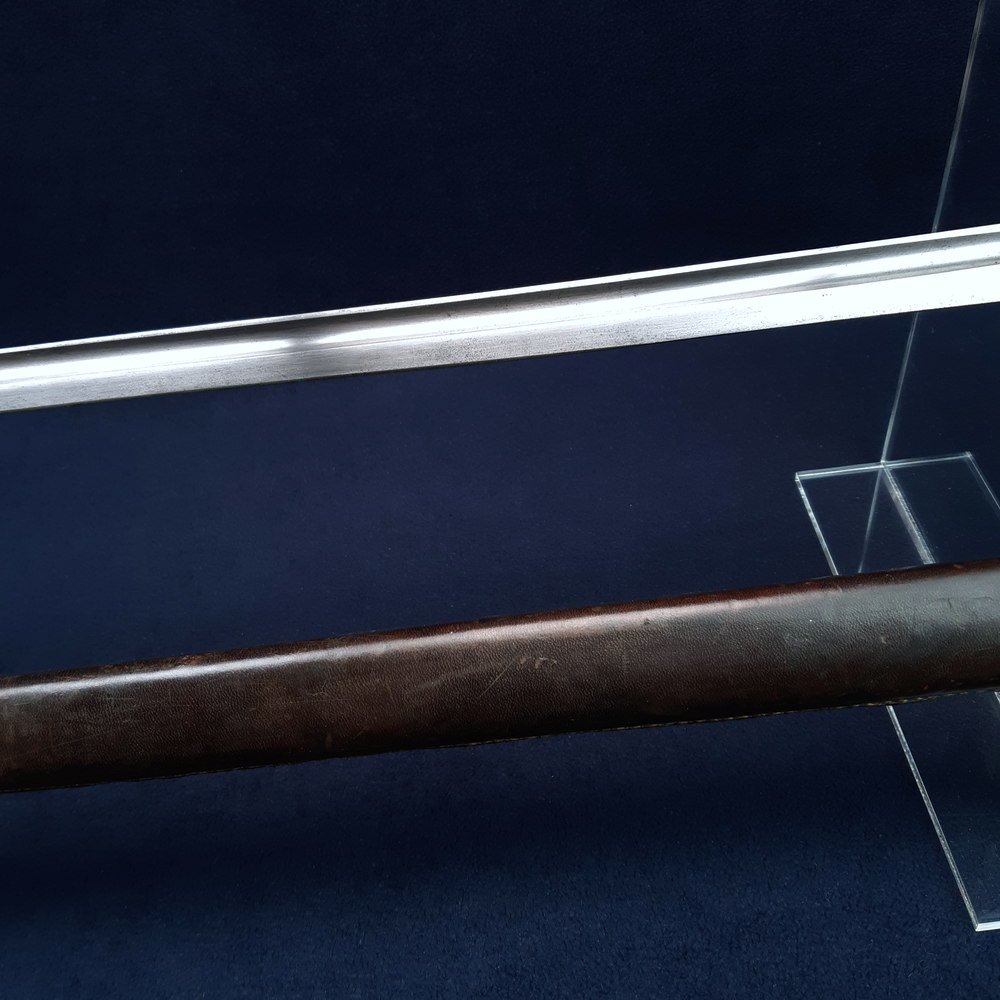
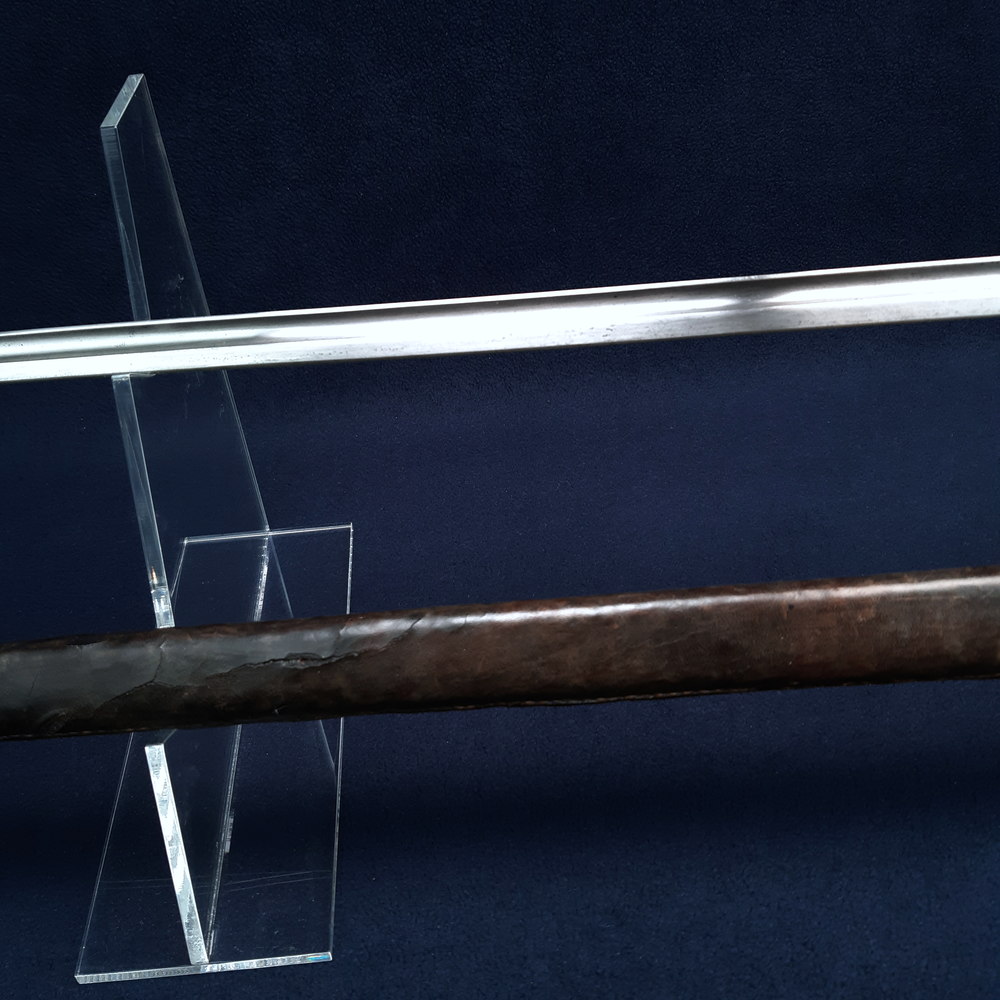
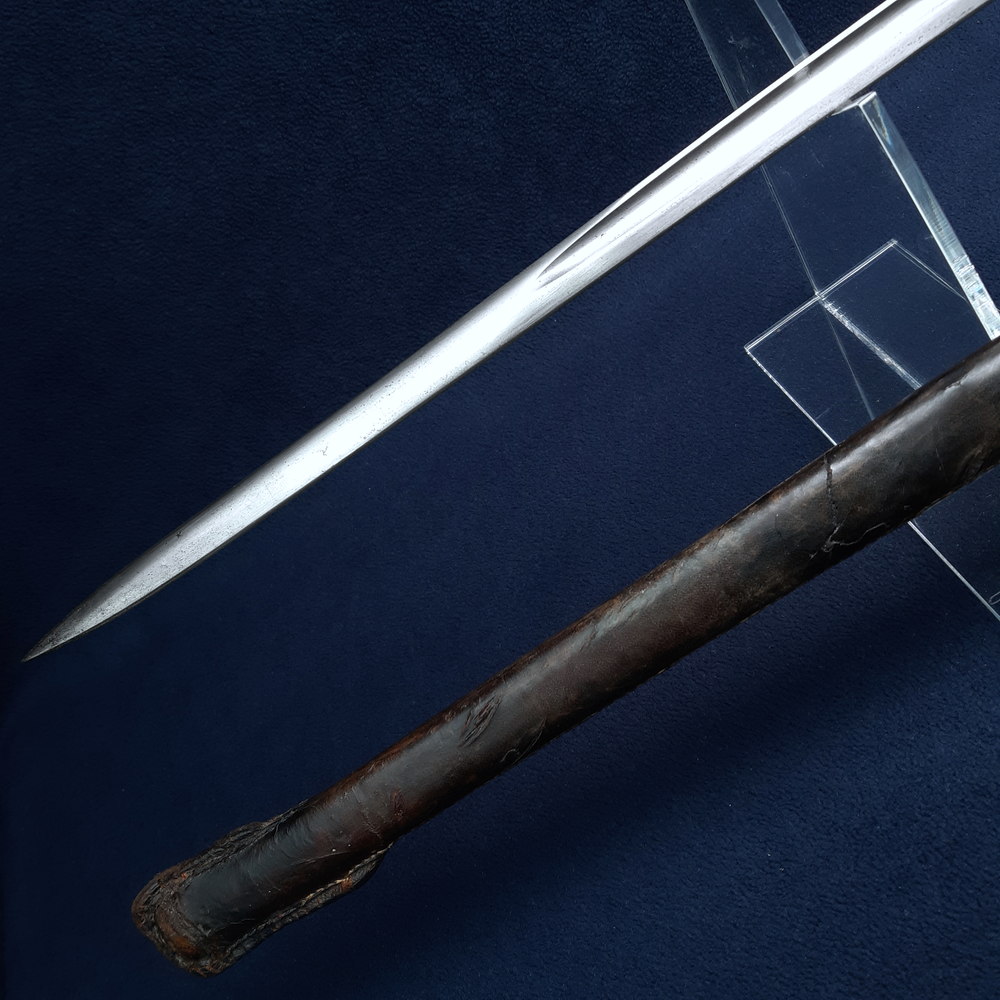
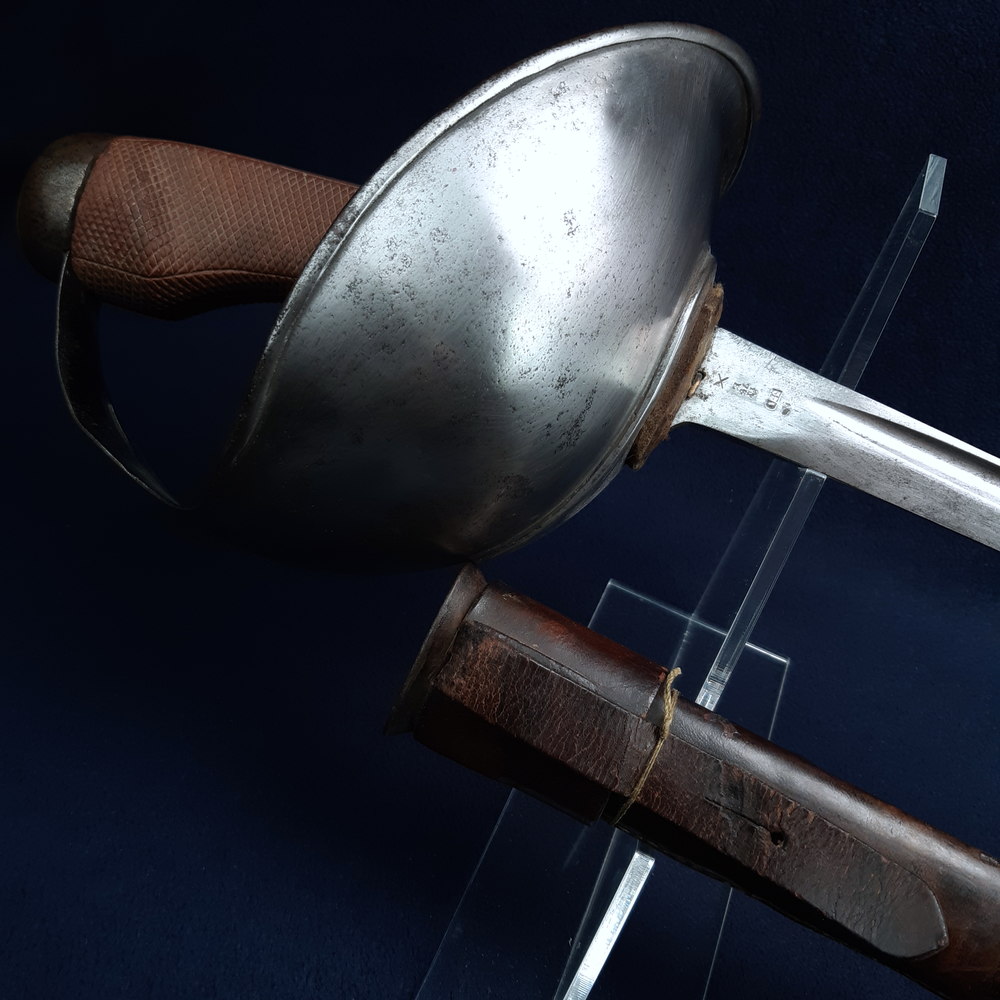

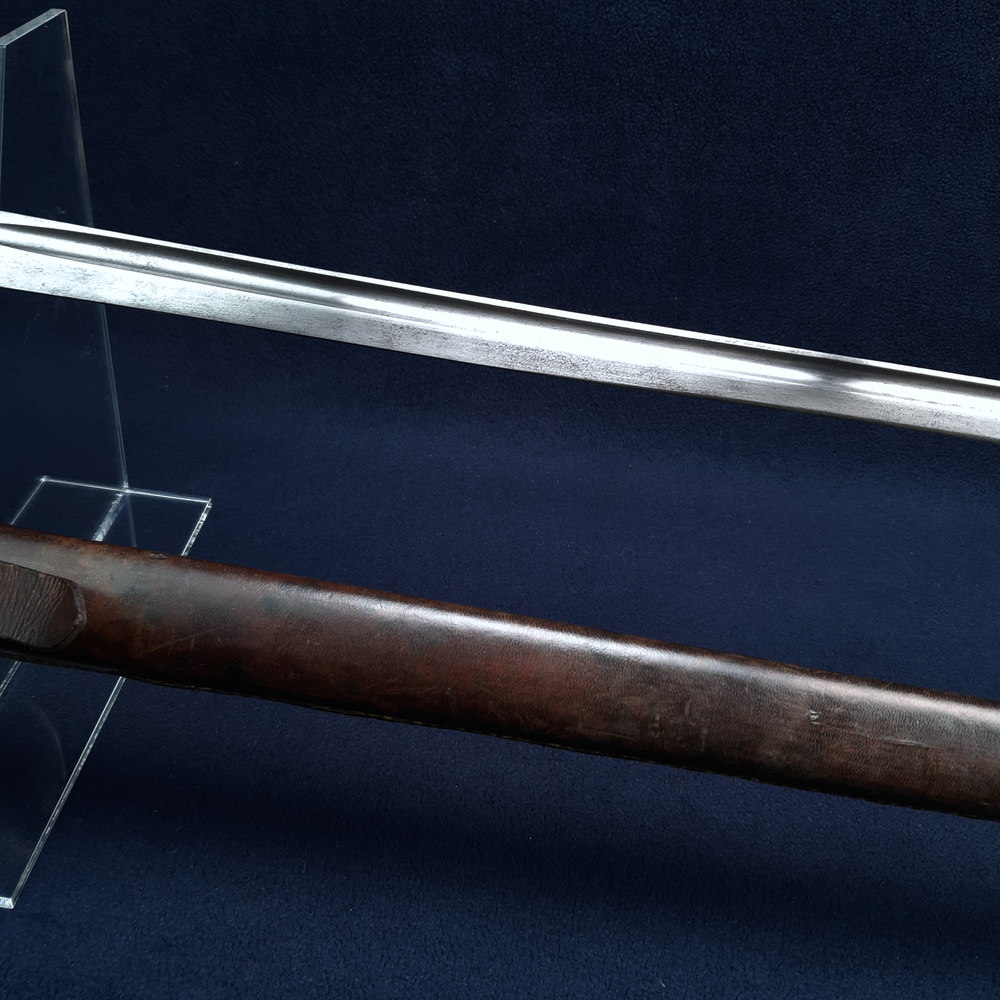
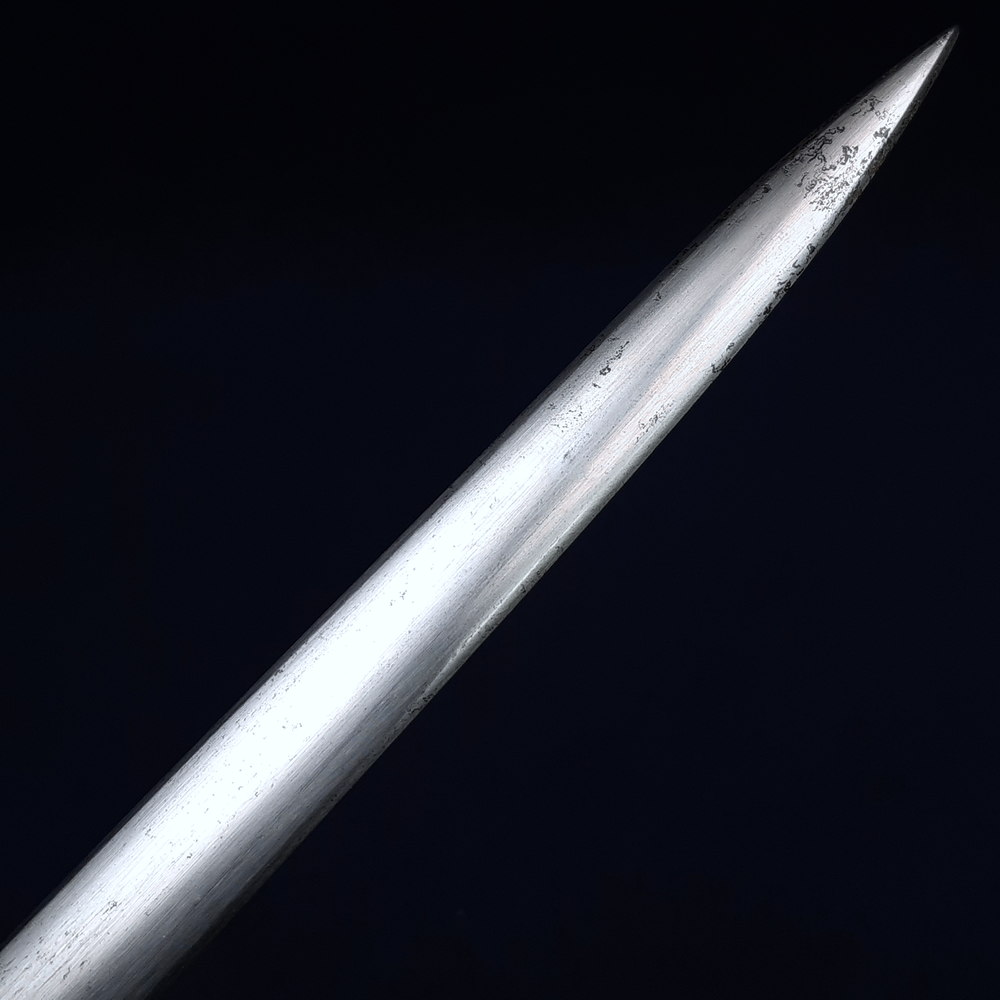
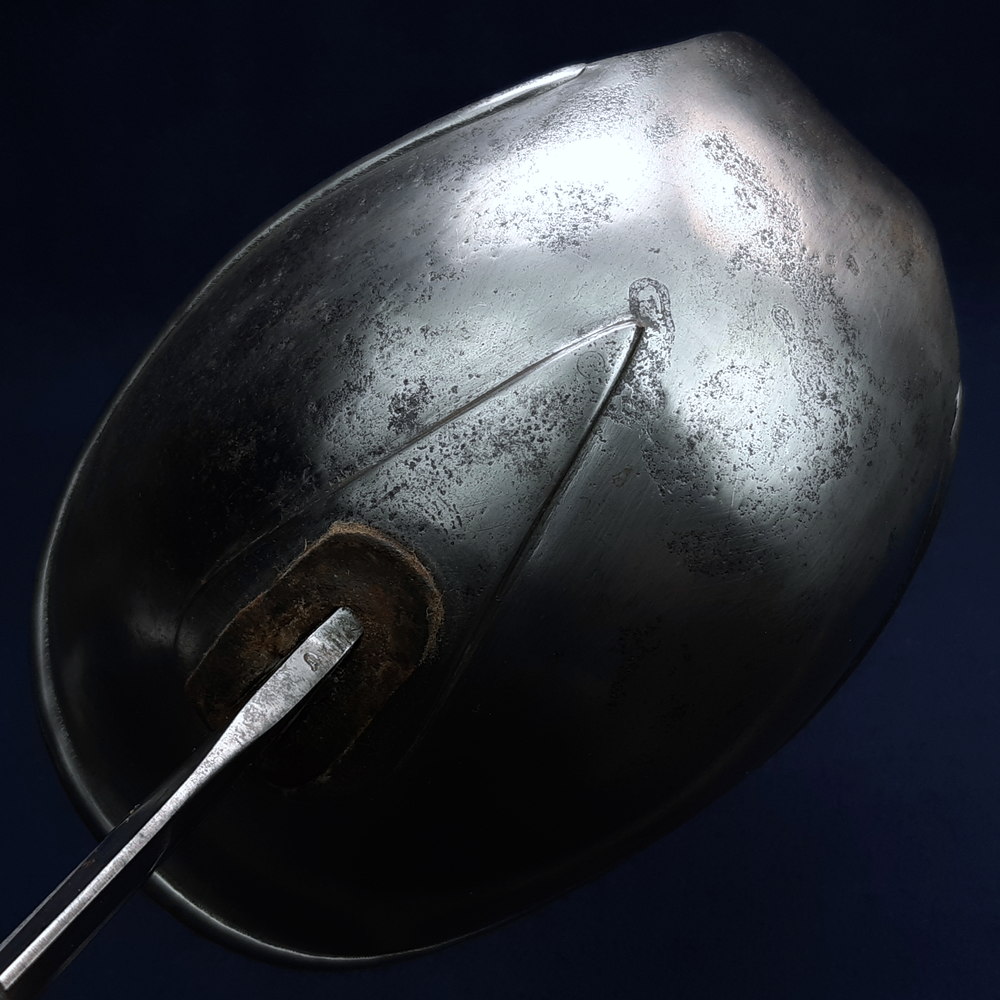
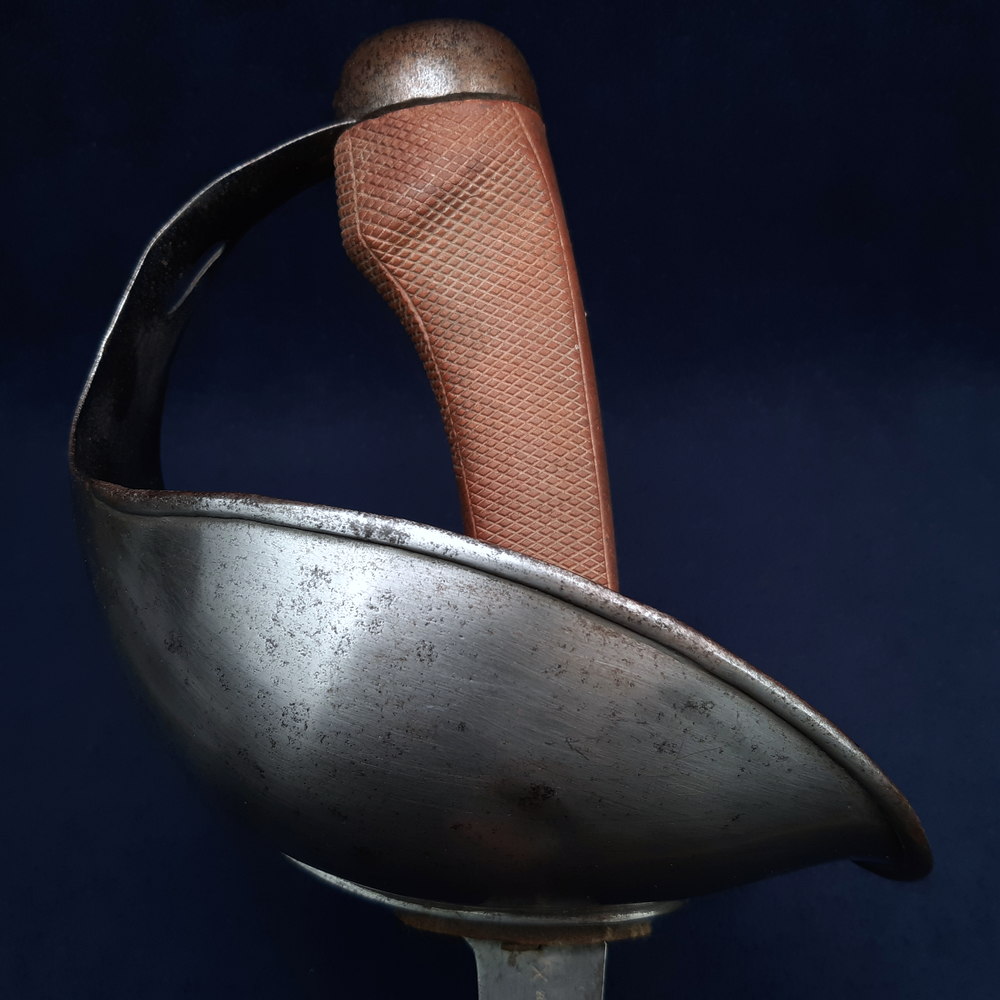
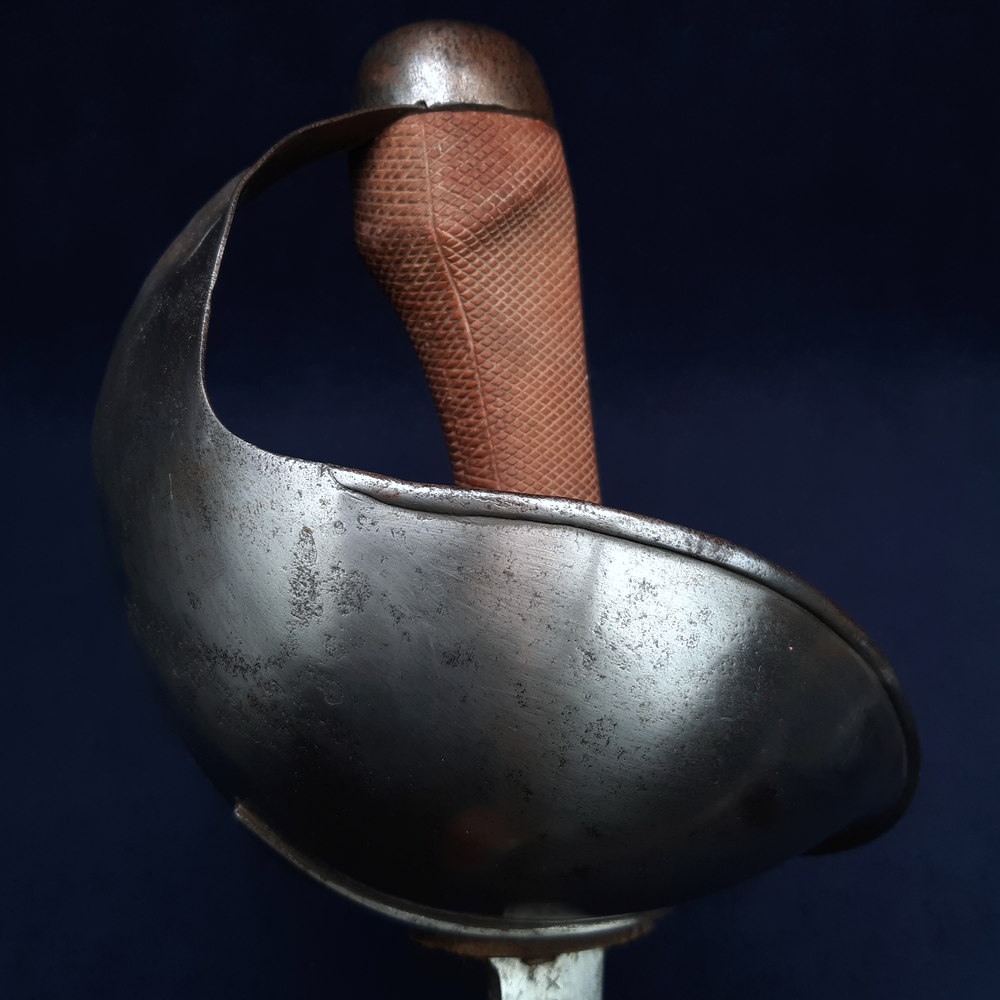
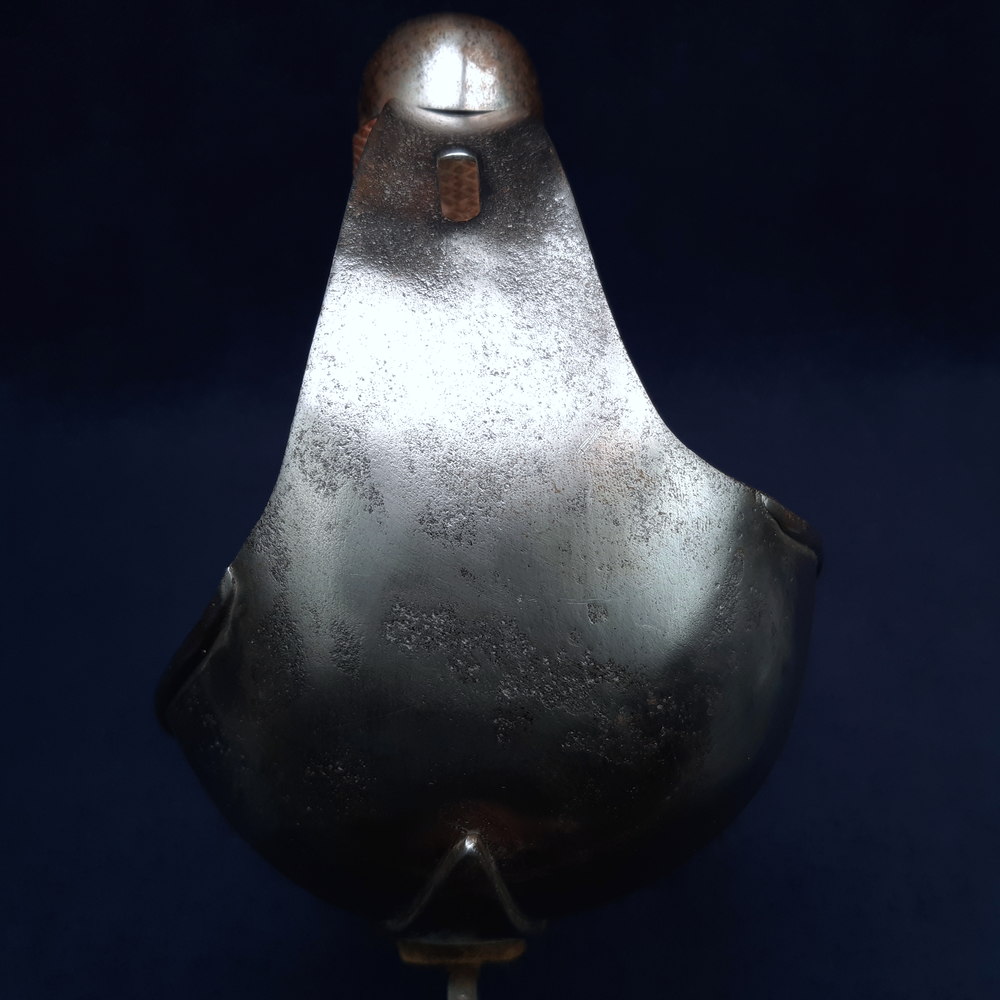
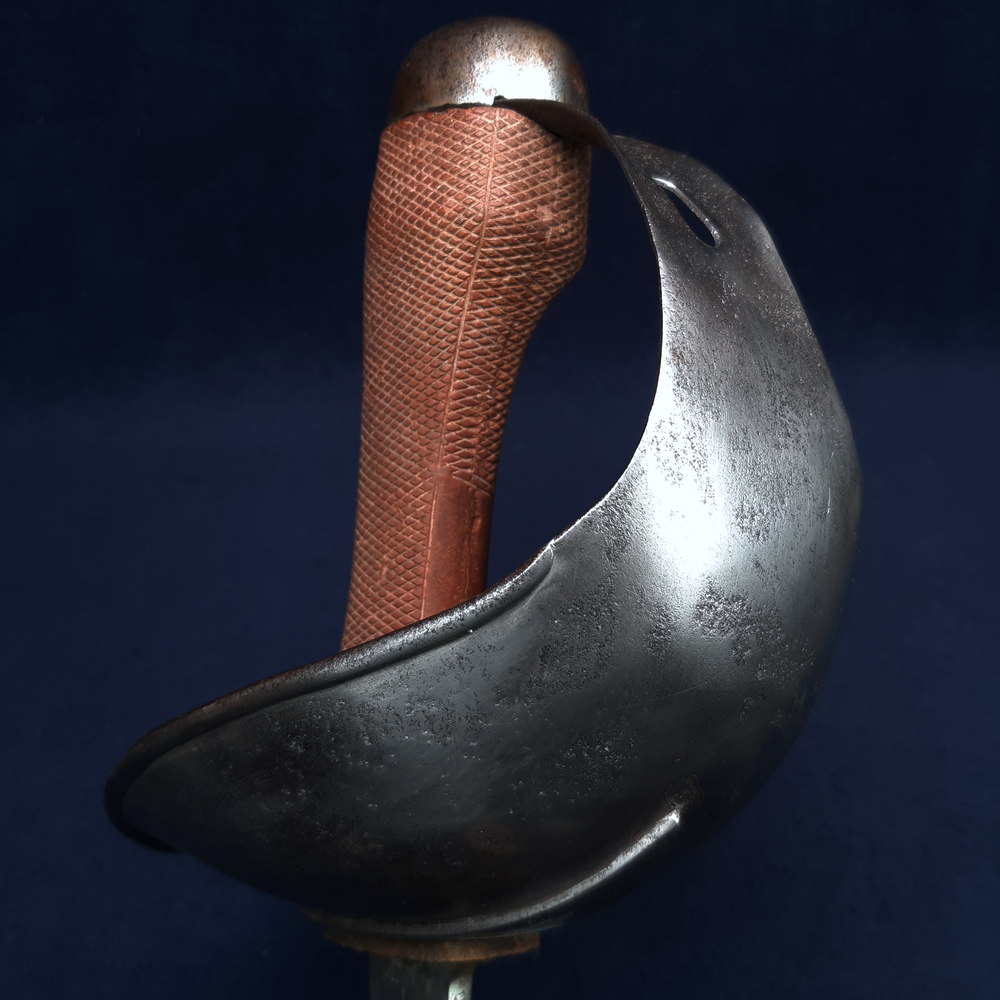
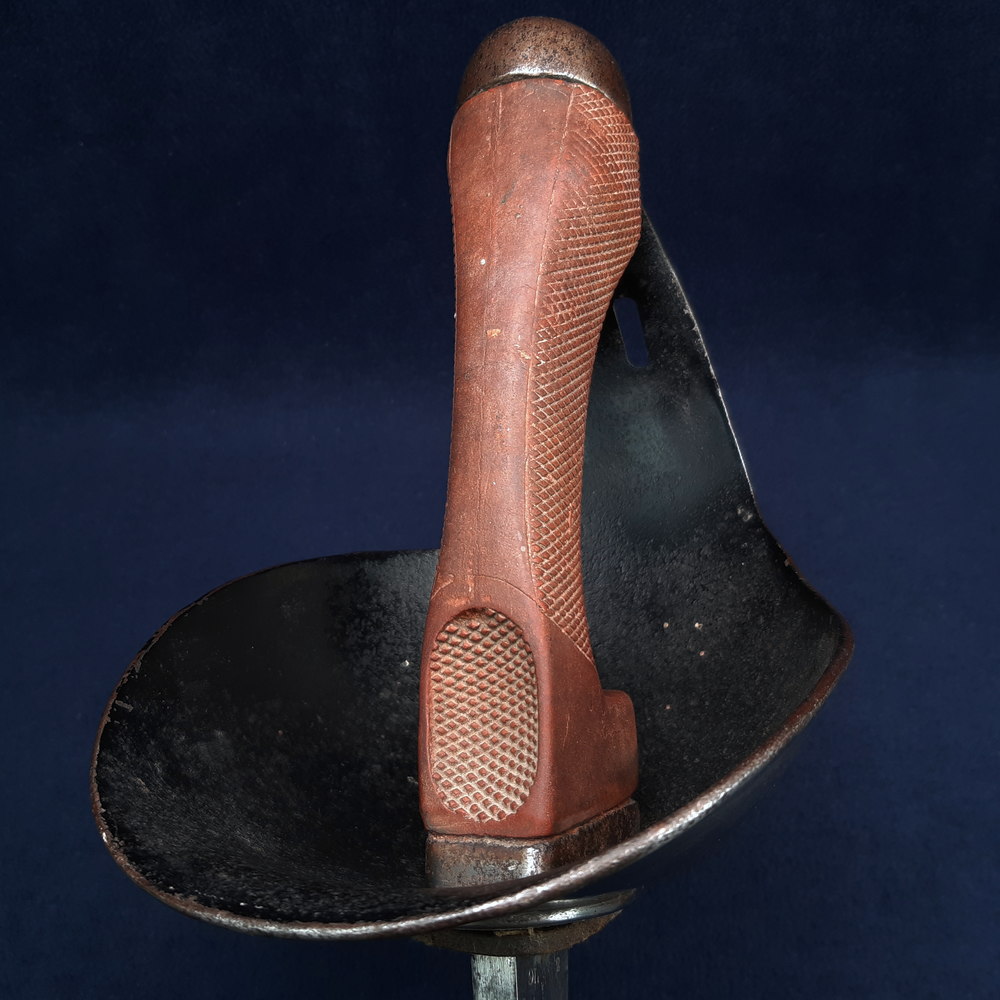
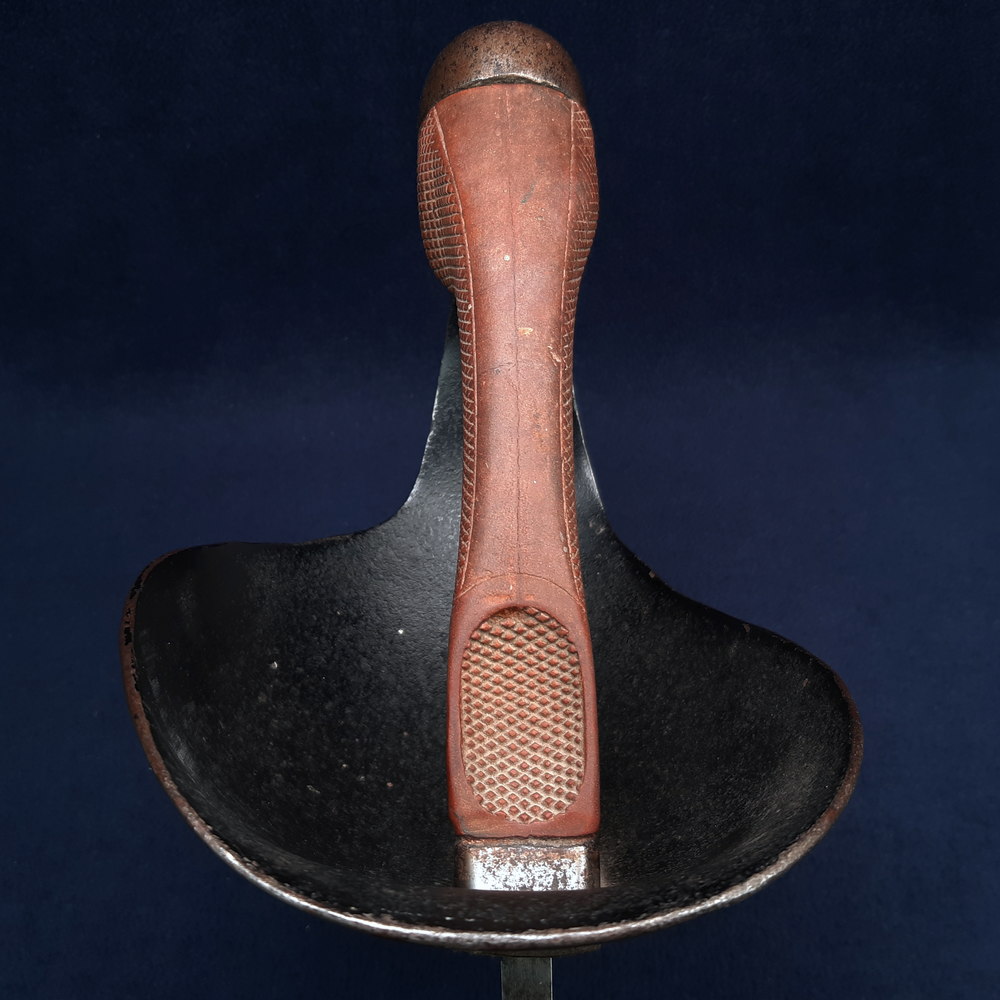
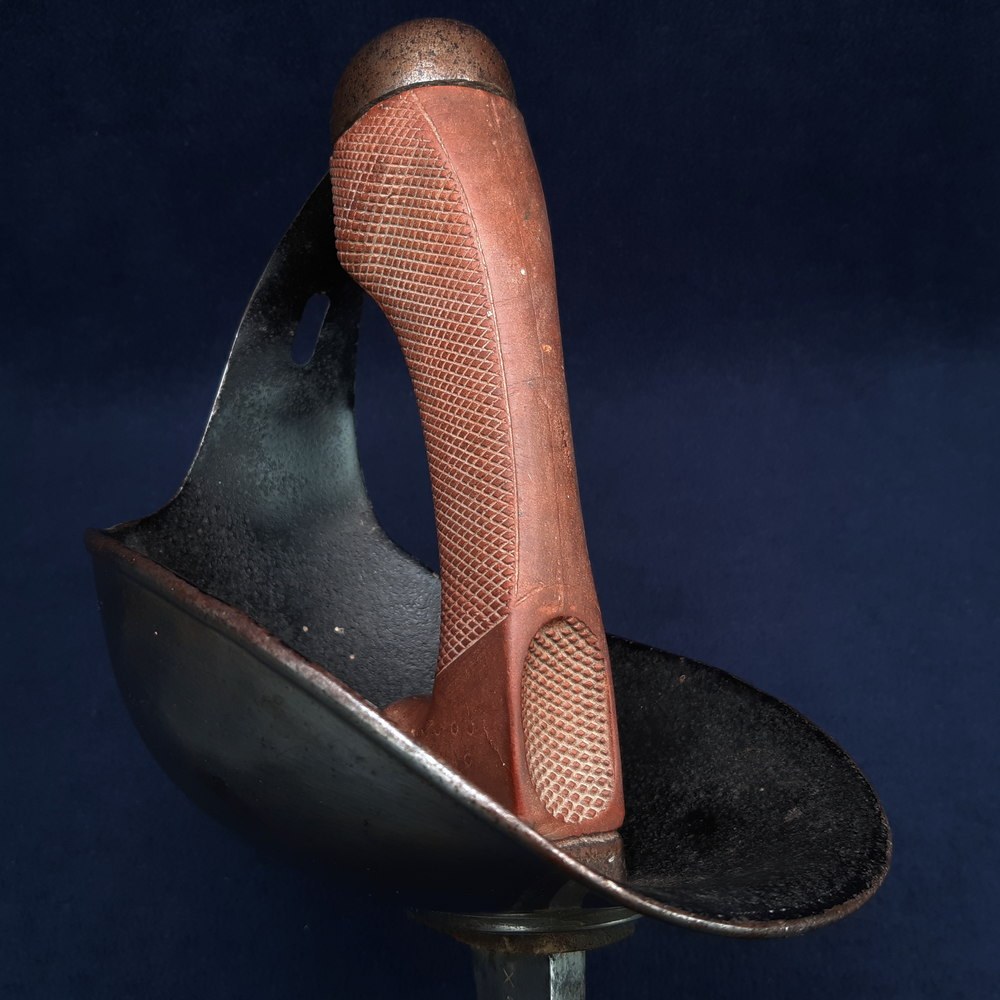
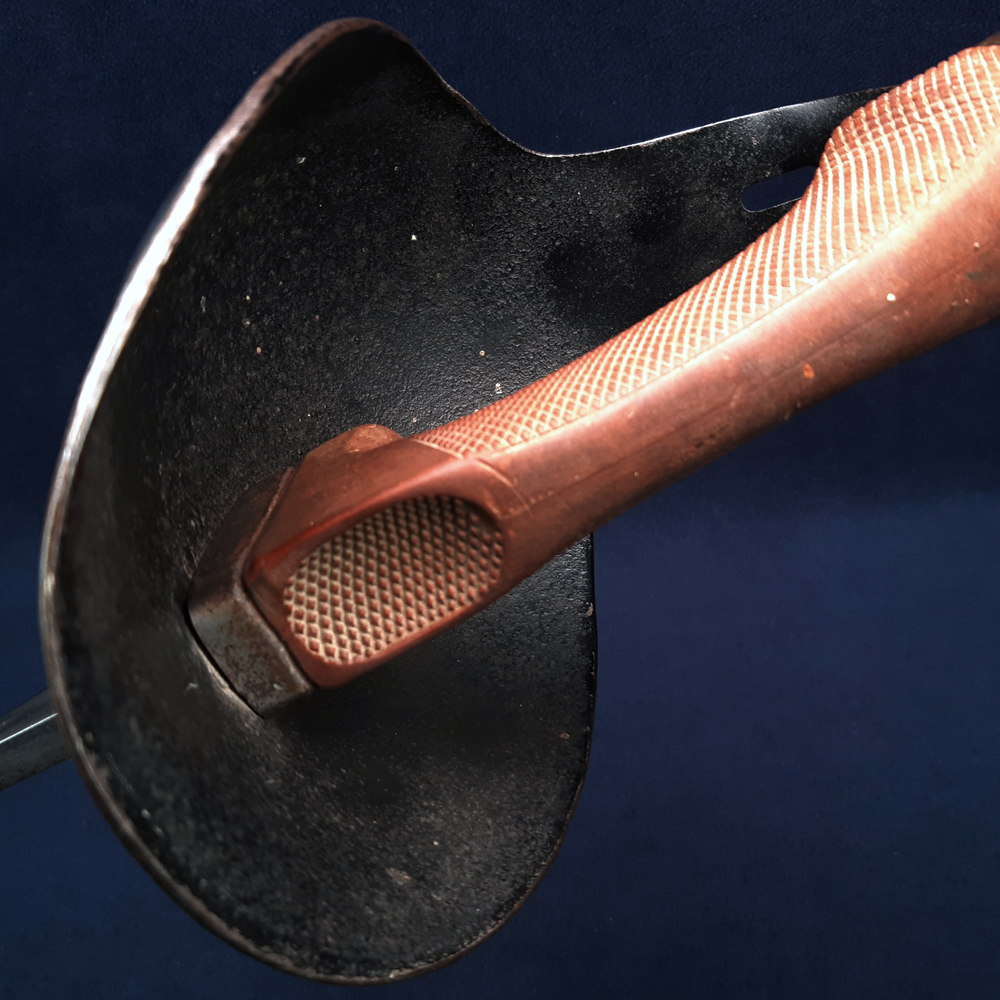
Straight single-fullered blade with spear point, steel bowl hilt with folded rim and sword knot slit near the pommel. Brown leather washer, chequered plastic grip with thumb rest. Smooth oval steel pommel. Steel scabbard covered with leather including leather frog strap and lyre chape piece, leaving only the steel throat piece exposed. Blade 35 inches in length, the sword 42½ inches overall.
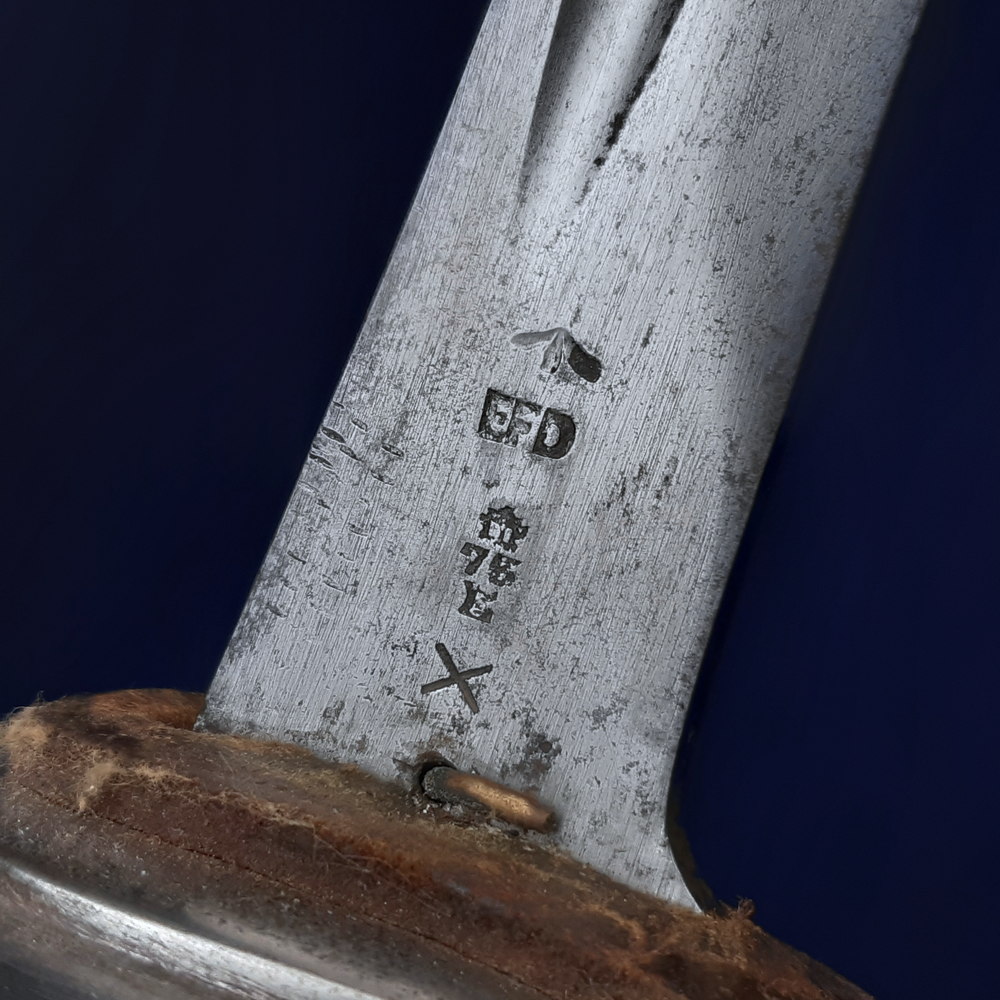
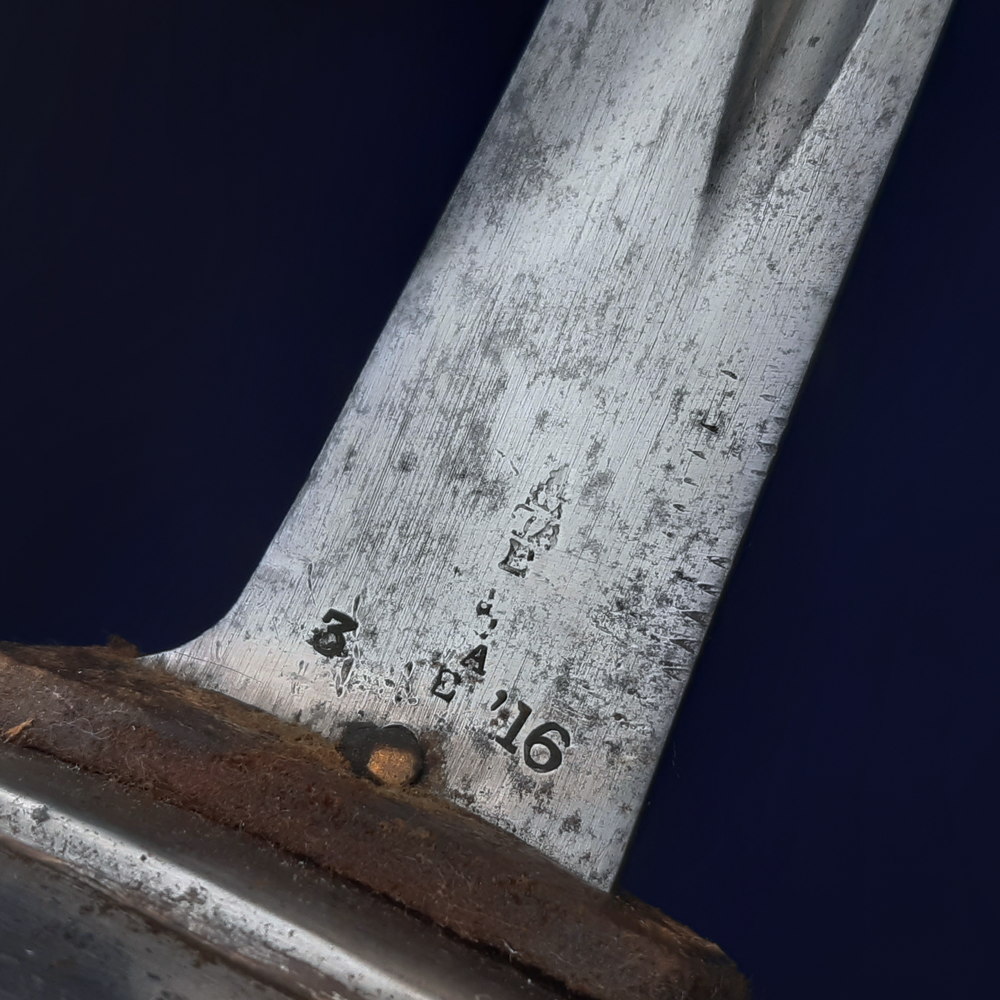
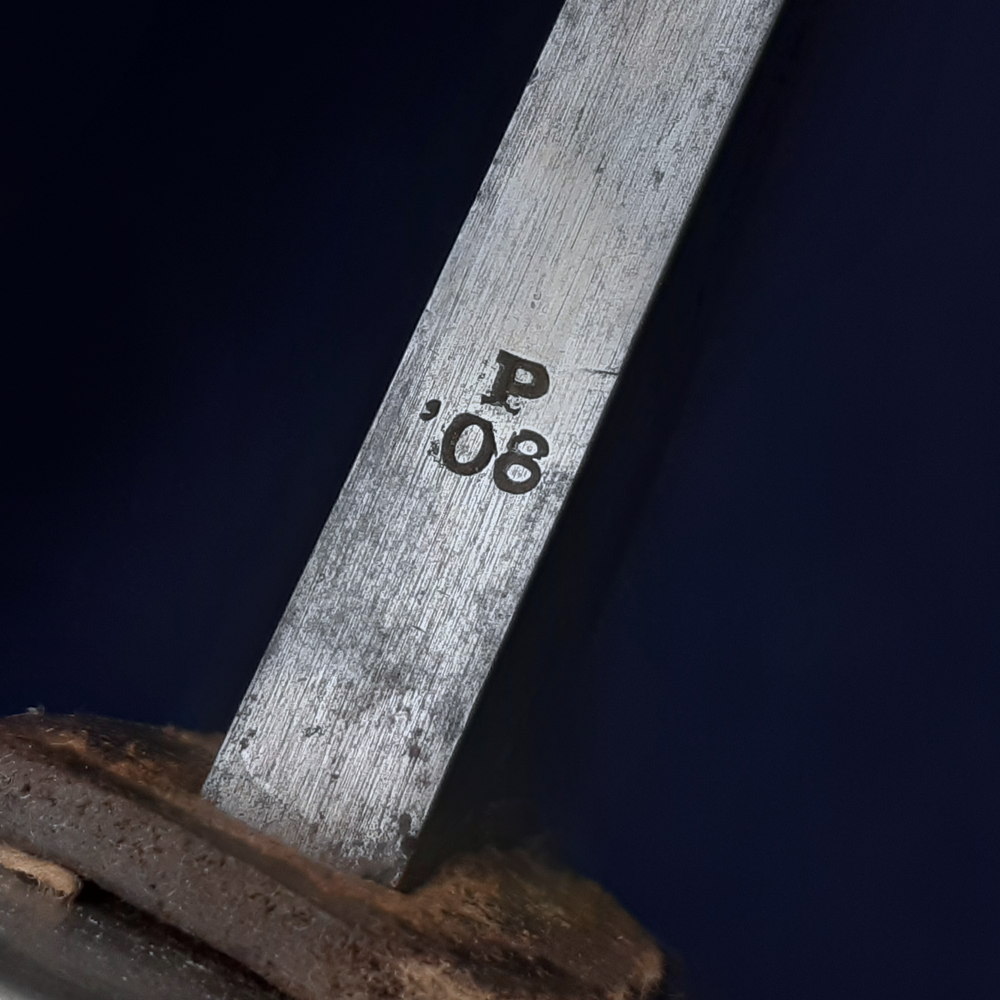
The blade is stamped at the ricasso on one side with a broad arrow War Department stores mark, ‘EFD’ indicating that it was manufactured by the Royal Small Arms Factory at Enfield, a crown inspection mark with ‘E’ for Enfield and an ‘X’ indicating that the blade passed a manufacturer’s bending test. It is stamped on the other side with the manufacture date 3 ‘16 for March 1916 and two further crown inspection marks with ‘E’. The spine of the blade is stamped P ‘08 indicating the pattern. The inside of the hilt is covered thickly with black paint, obscuring any unit marks that might be stamped in their usual position there. The scabbard leather is unmarked while its steel body, which is often stamped on standard examples, is obscured by the leather.
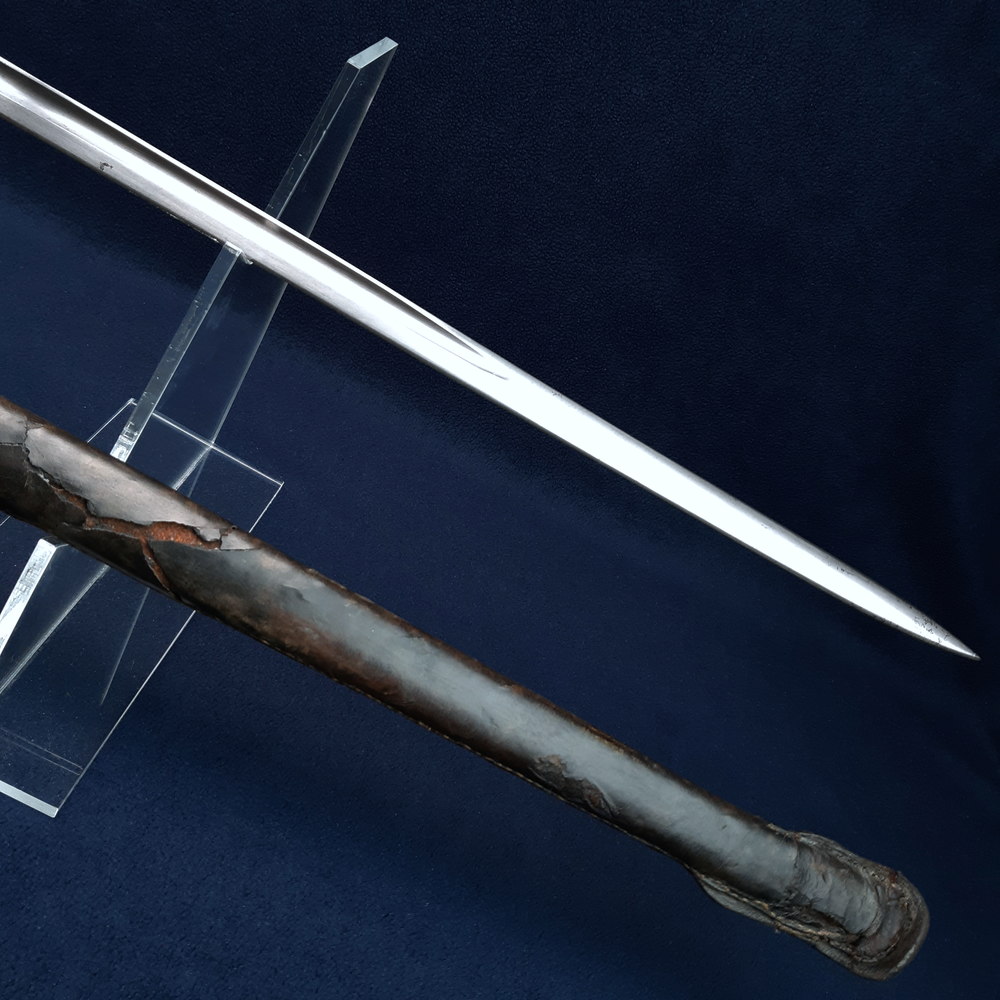
Leather scabbards are unusual on the 1908 Pattern – most examples use an all-steel scabbard with two fixed hanging rings at the throat, designed to be held by a horizontal strap attaching it to their horse’s saddle via a frog. This example is built like the steel scabbard but lacks the fixed rings, and with its vertical frog strap it must have been worn with a Sam Browne belt attached to the rider’s body instead, effectively the same system as seen on field scabbards for the 1912 Pattern cavalry officer’s sword. The scabbard is well made and would seem to combine the strength of a steel scabbard with the lack of rattle and reflection which made leather or leather-over-wood scabbards popular for field use.
I have seen all-leather scabbards on 1908 Patterns before which are sometimes referred to as being used by NCOs, but have not seen documentary evidence of this connection, nor have I seen this stronger leather-over-steel model before. A trial run of similarly leather-covered-steel scabbards was produced for the 1899 Pattern trooper’s sword during the Boer War, with the purpose of cutting down reflection, but this was not made universal and they are uncommon today.
As mentioned the inside of the hilt has been painted black, as has as the outer rim of the scabbard’s throat piece. These are remnants of a field paint scheme that would most likely have covered all the metal hilt parts. Paint was often applied to cavalry trooper’s swords during the First World War as camouflage, and to reduce reflection off the polished metal which could give away a unit’s position. Between its black paint and leather scabbard cover this particular sword would have been rendered completely non-reflective in the field. Painting does not seem to have been done preemptively or according to a central plan – rather it was done ad hoc by deployed soldiers themselves. The odds of a camouflaged sword having been carried on a campaign are therefore very high.
Field paint was often removed after the conflict to return swords to parade condition, and this example appears to have treated that way with the outside of the hilt and pommel stripped and repolished. The finish on the inside of the hilt did not matter so much and it would have been tricky to remove paint in the recesses there, so it has been preserved in that area.
The steel pin at the base of the blade (designed to hold the washer in place) has been lost – a short copper rod appears to have been inserted as a replacement, peened on one side of the blade and bent 90 degrees on the other to secure it. This simple repair may be period and there is dark patination to the copper. The washer itself may be a replacement as its edges are more roughly and irregularly cut than standard, although the leather has some age to it.
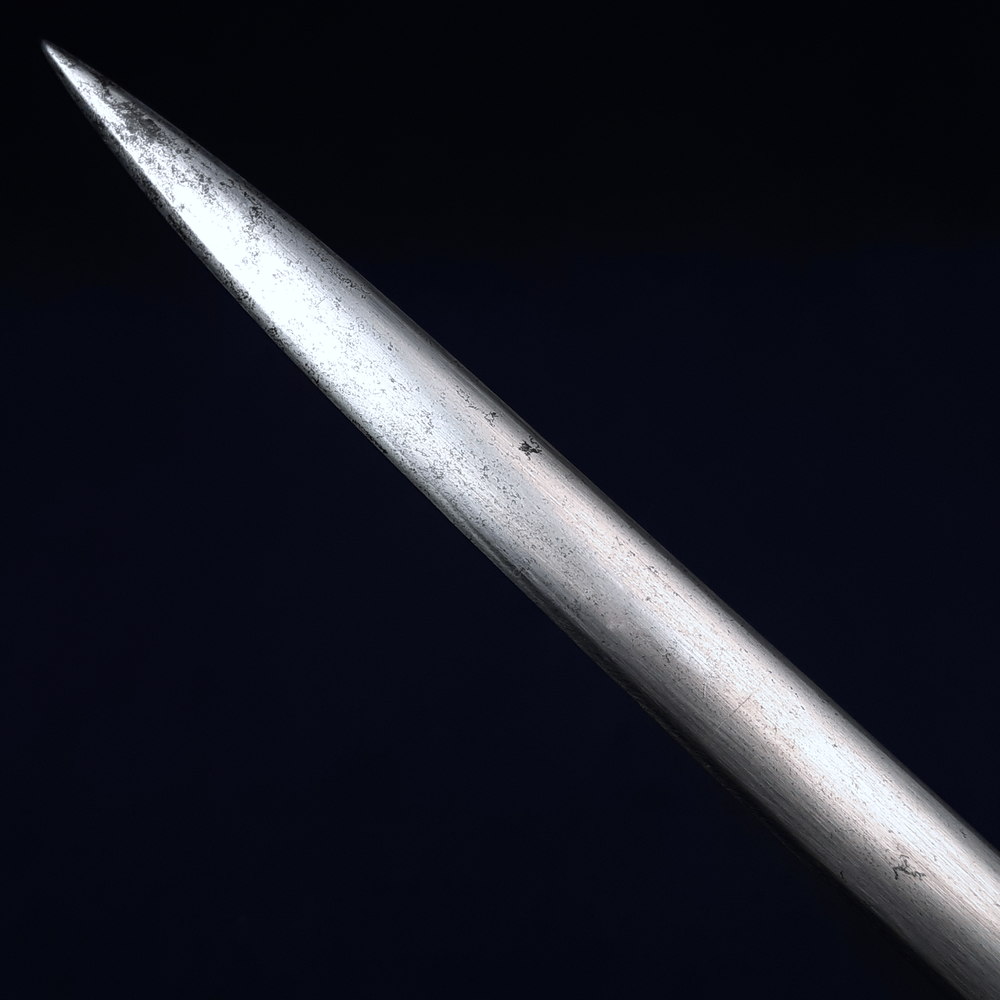
The blade is bright and clean, sharp with no edge damage, only tiny patches of light patination near the tip and at the forte, a few small dents also at the forte. The outside of the hilt has been refinished bright with polishing marks and patches of cleaned moderate pitting, some of which looks to be filiform (worm-shaped, caused by moisture working its way under a protective layer like paint or lacquer). Speckled patination to the pommel. Only a few light dents to the plastic grip, very little handling wear. The sword is firm in the hand with no movement to the hilt or grip.
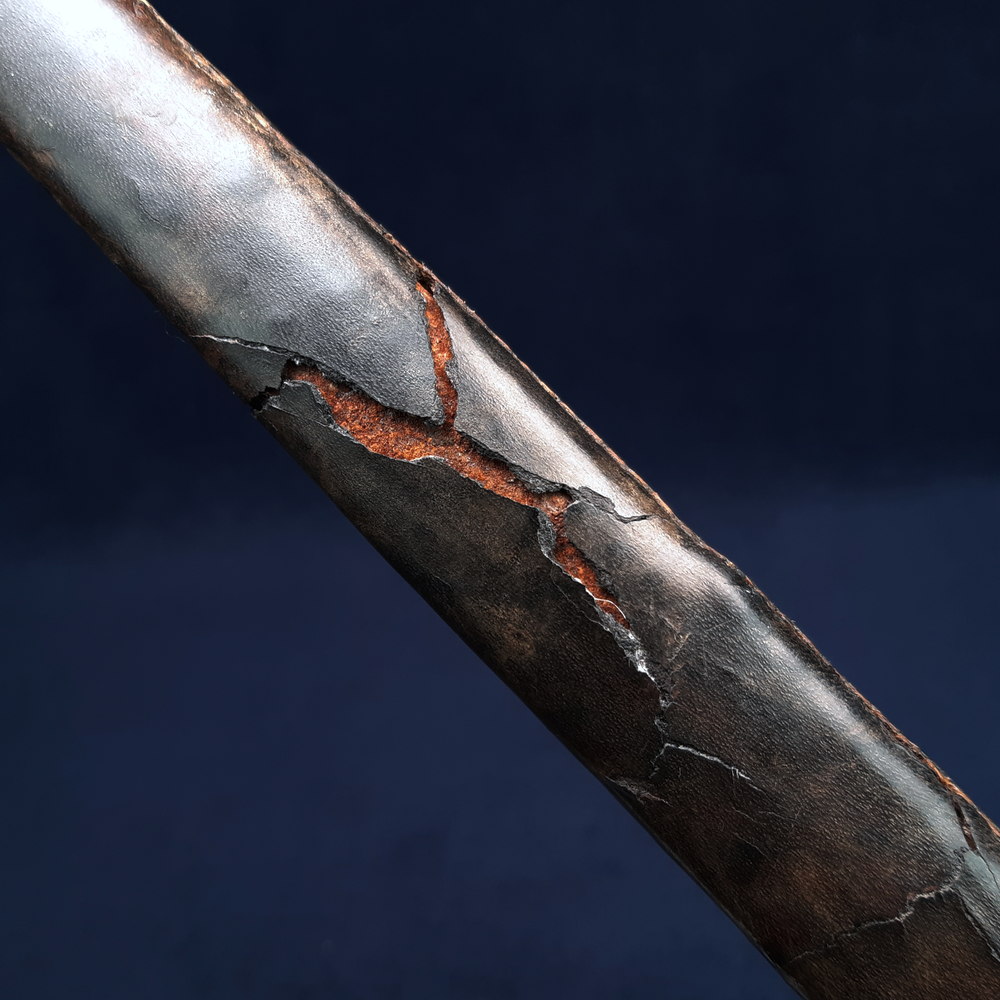
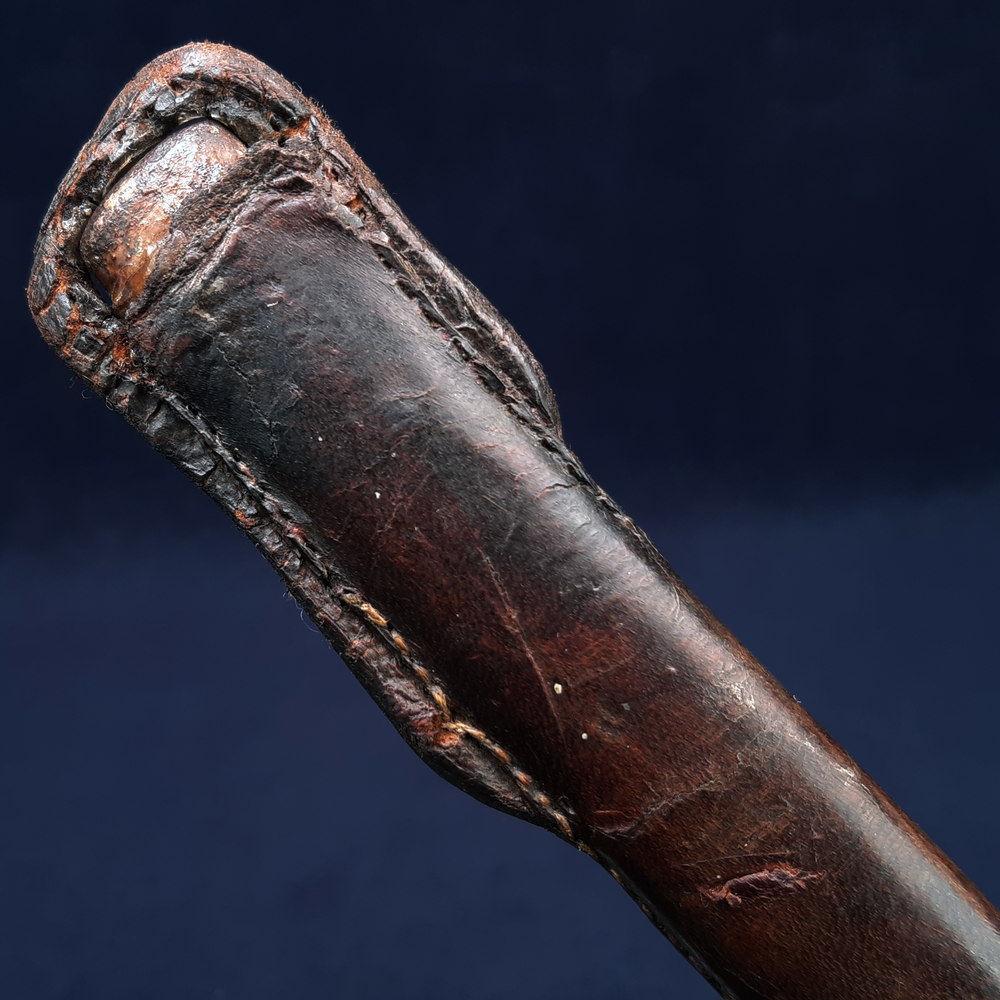
The leather scabbard cover has some dents and small cuts, one notable branching crack to one face in its lower section, perhaps due to shrinkage opening up an existing cut. This has exposed the steel core, and the exposed steel is rusted. The chape end is a high-wear area and the leather chape piece has some denting, cracks from bending, loss of stitching and one area of lost leather exposing the chape end of the steel core on one side (which allows us to see that it is shaped just like the standard steel scabbard). Interestingly there is no active rust on the very small area of exposed steel and what looks like brown paint or lacquer there (the steel may have been given a protective coat of some kind before covering with leather?). Some hard glassy filler material is visible between the leather and steel in one spot at the edge of the break– possibly an adhesive.
A previous owner has tied down the leather frog strap with cord – this keeps it nicely in place and helps prevent damage so I have left it be.
