
British Circa 1801 Georgian Infantry Grenadier Officer's Sabre
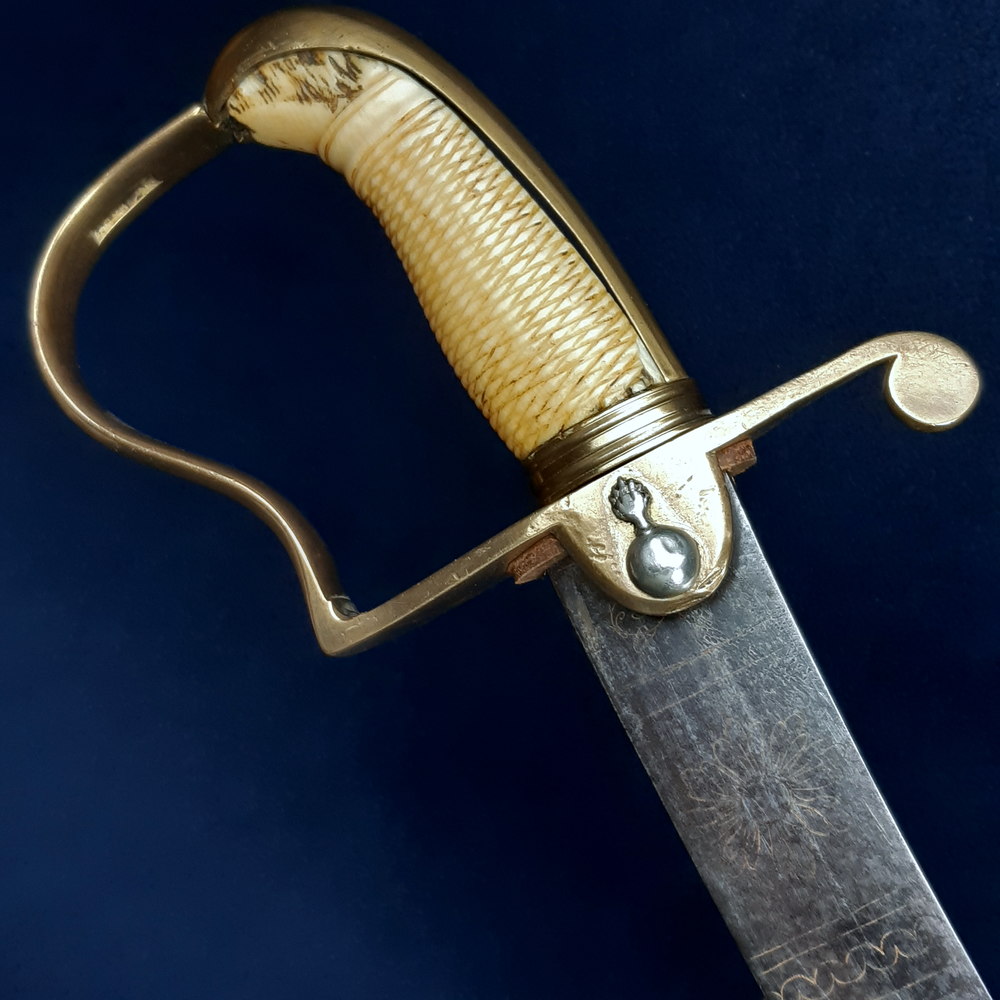
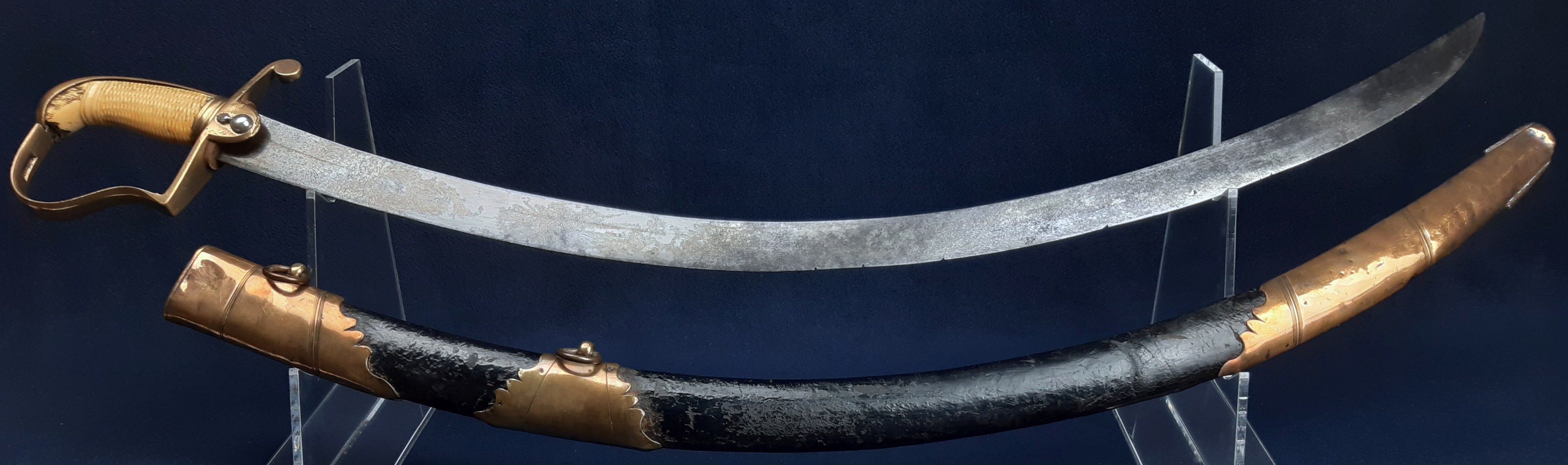
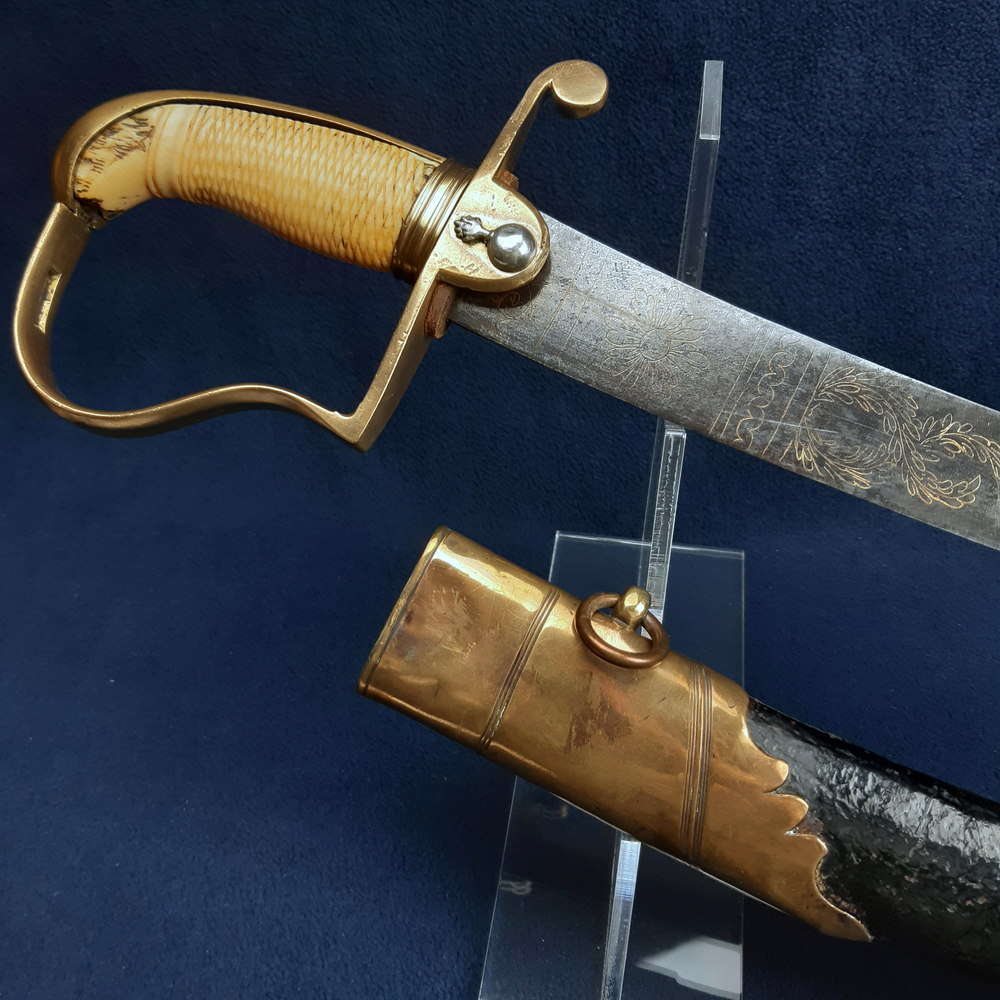
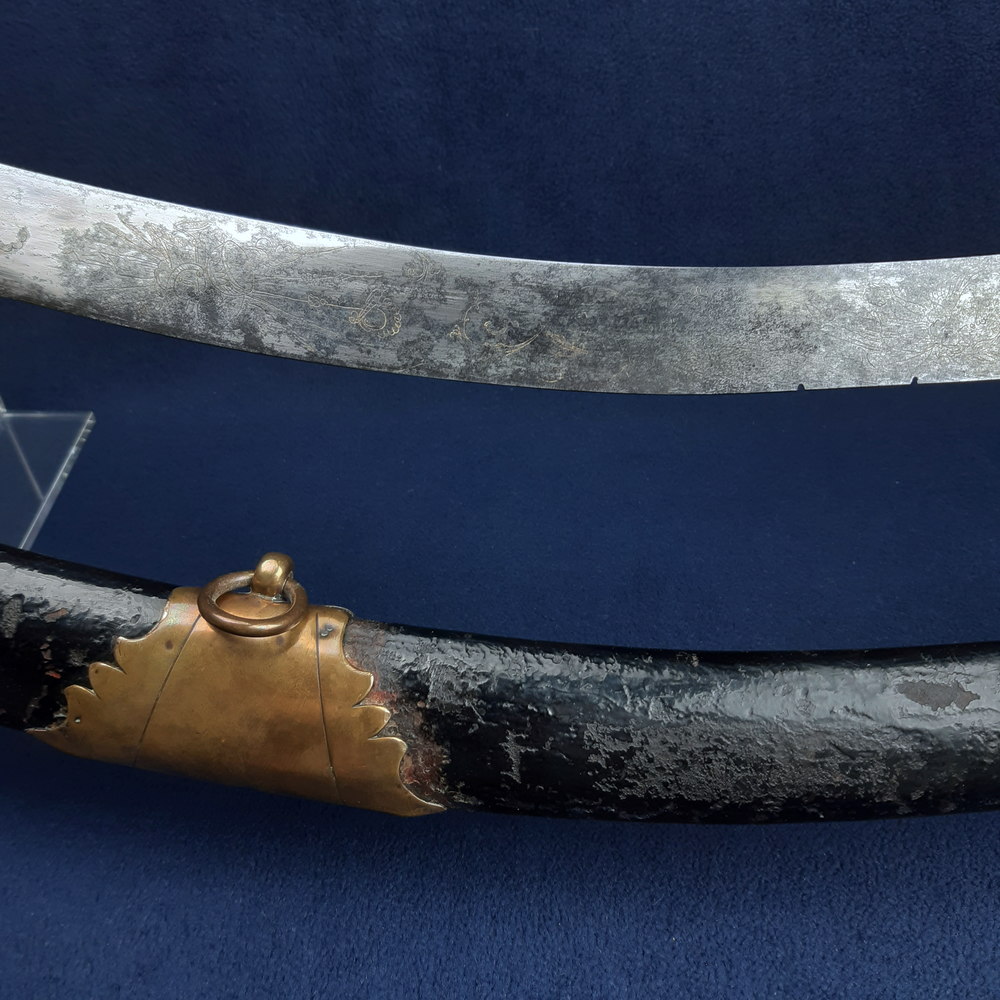
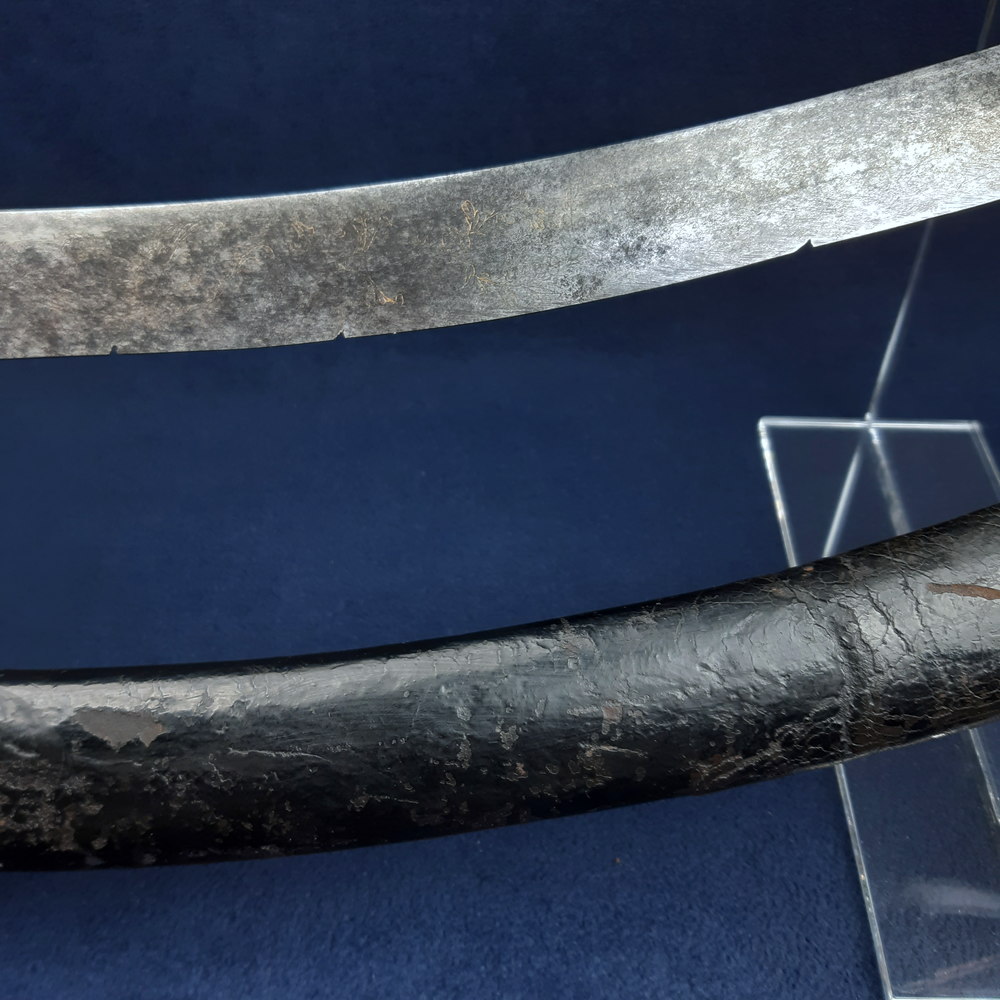
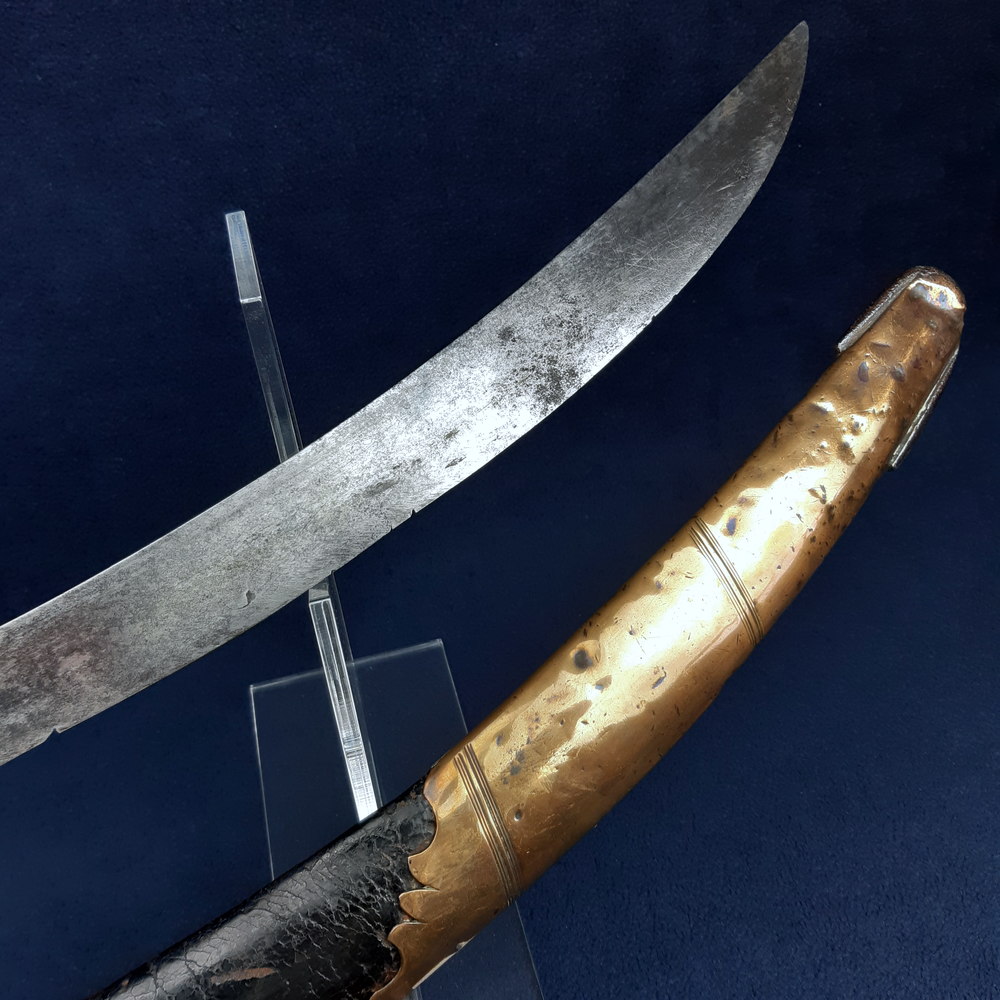
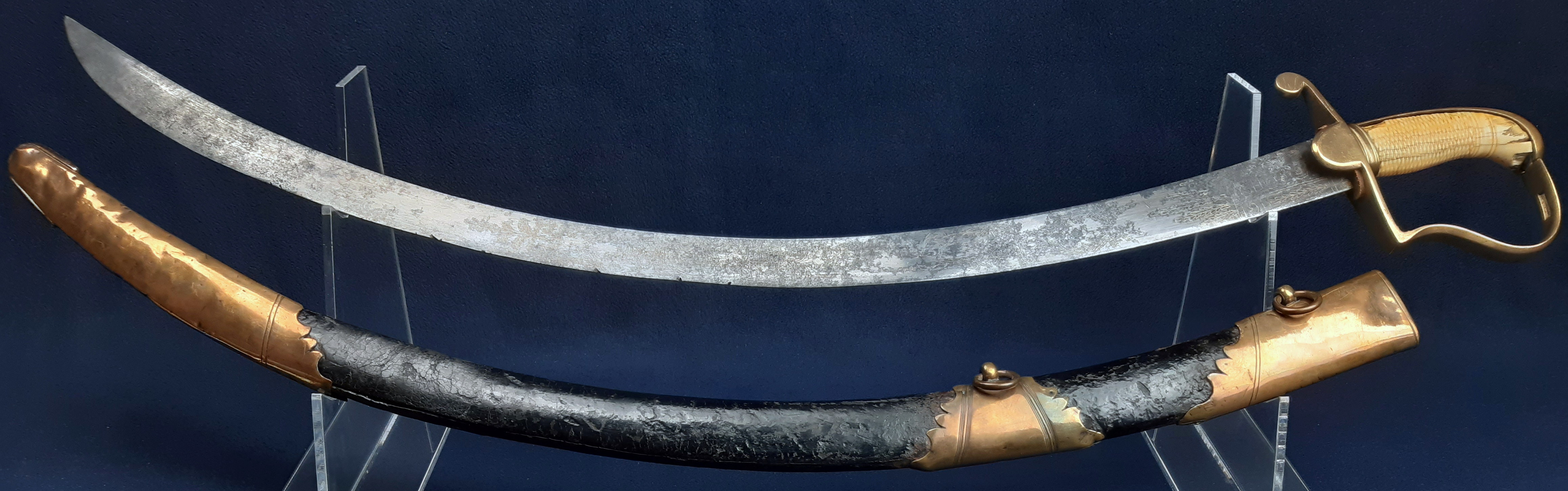
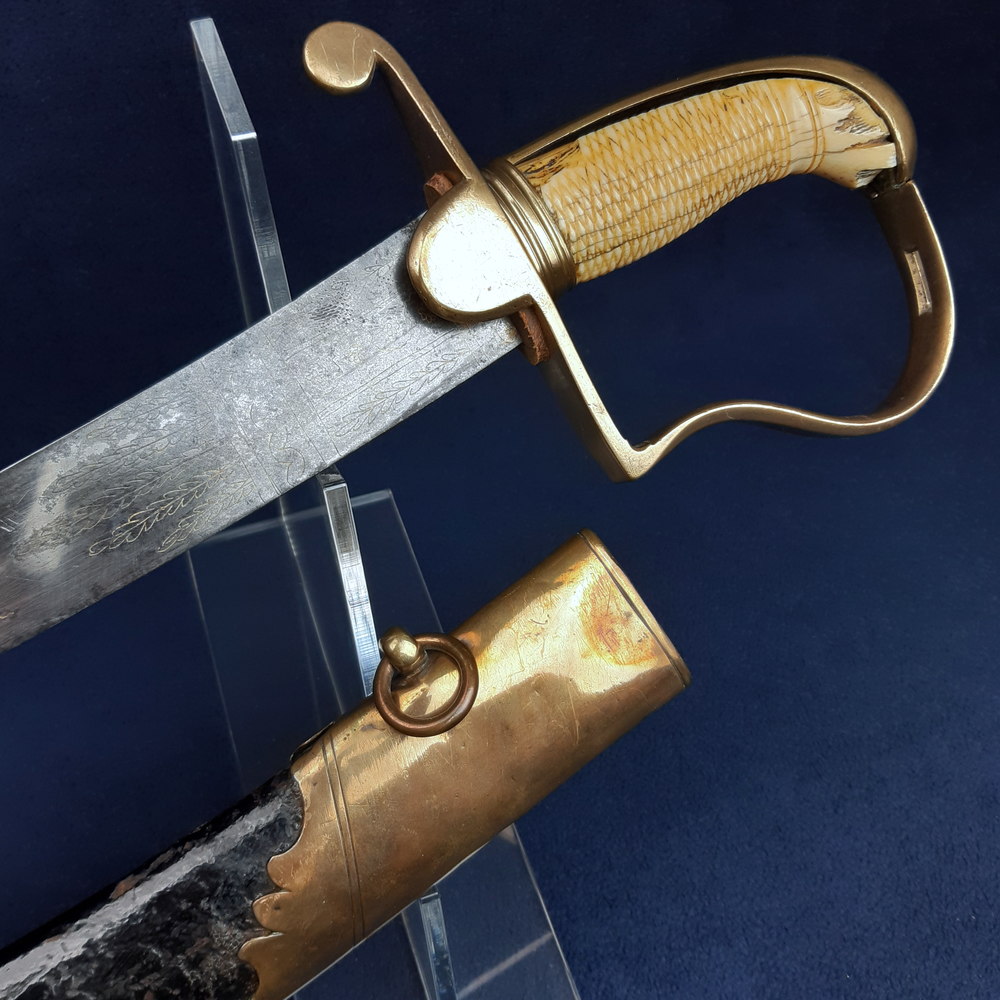
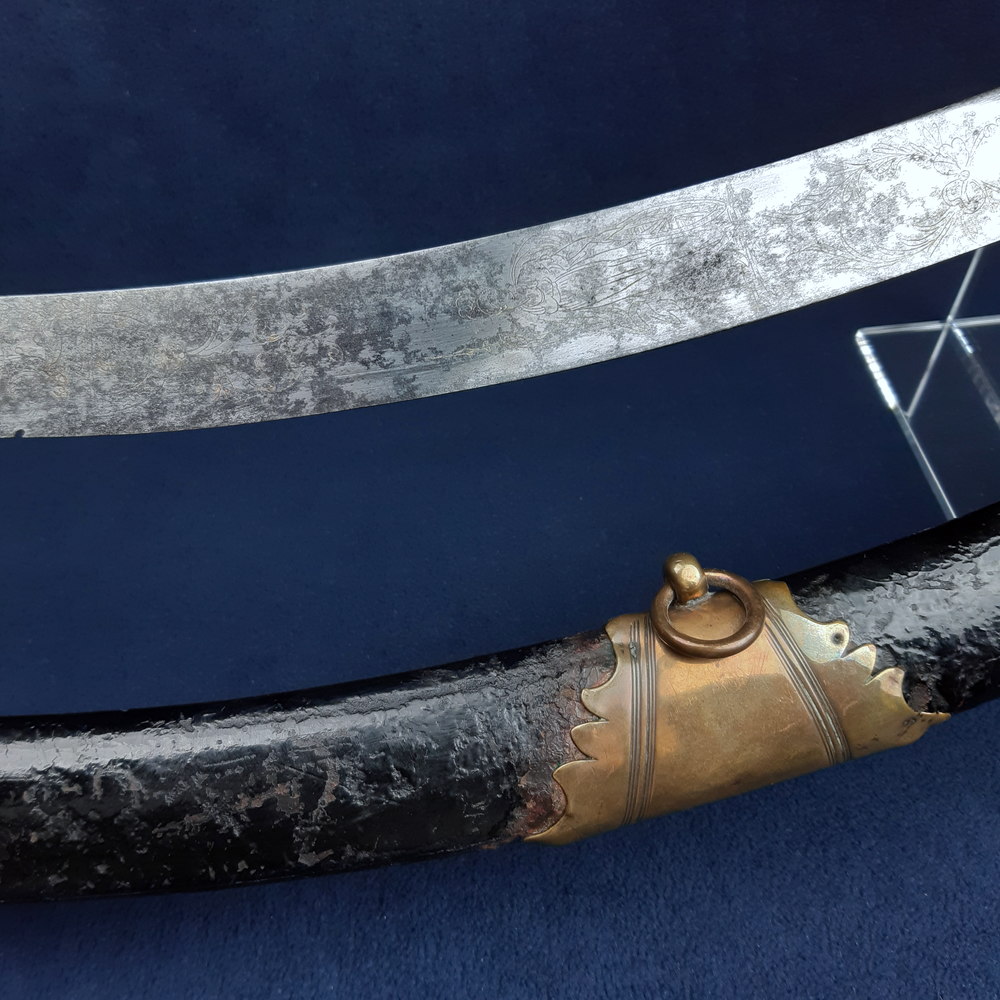
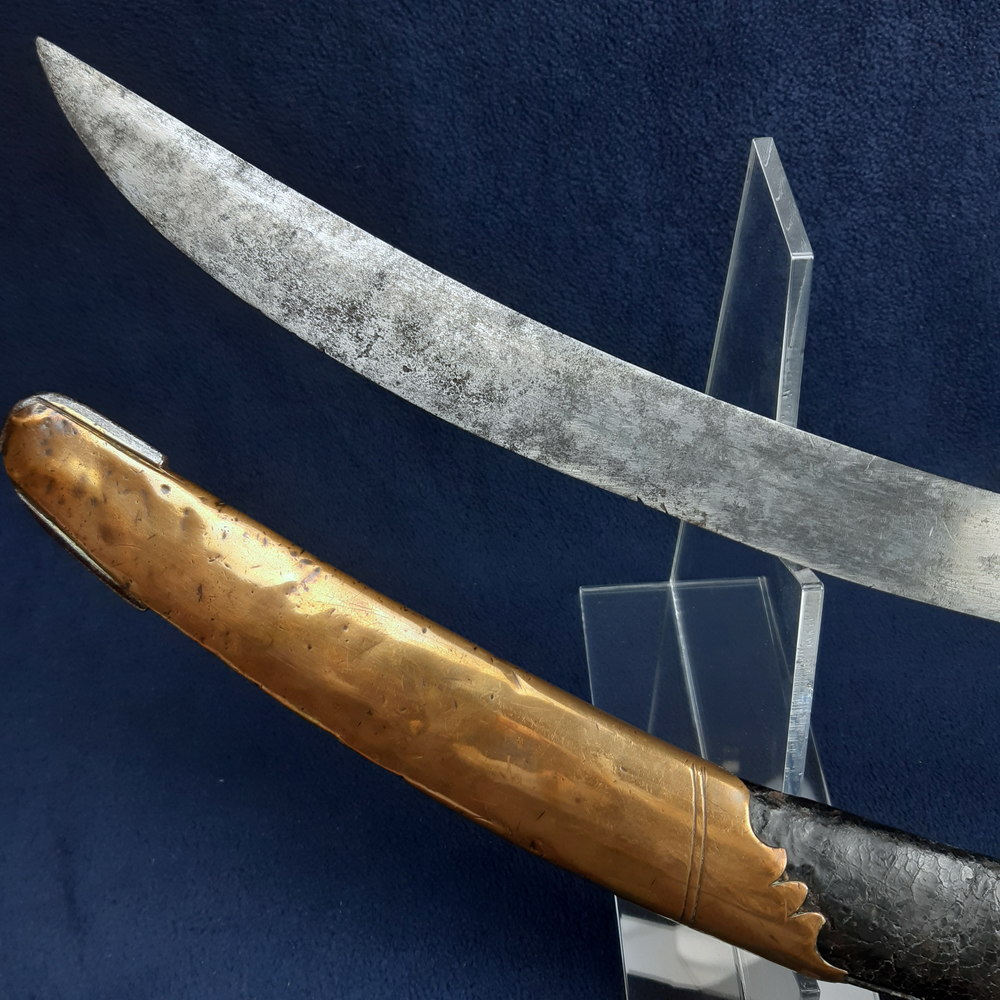
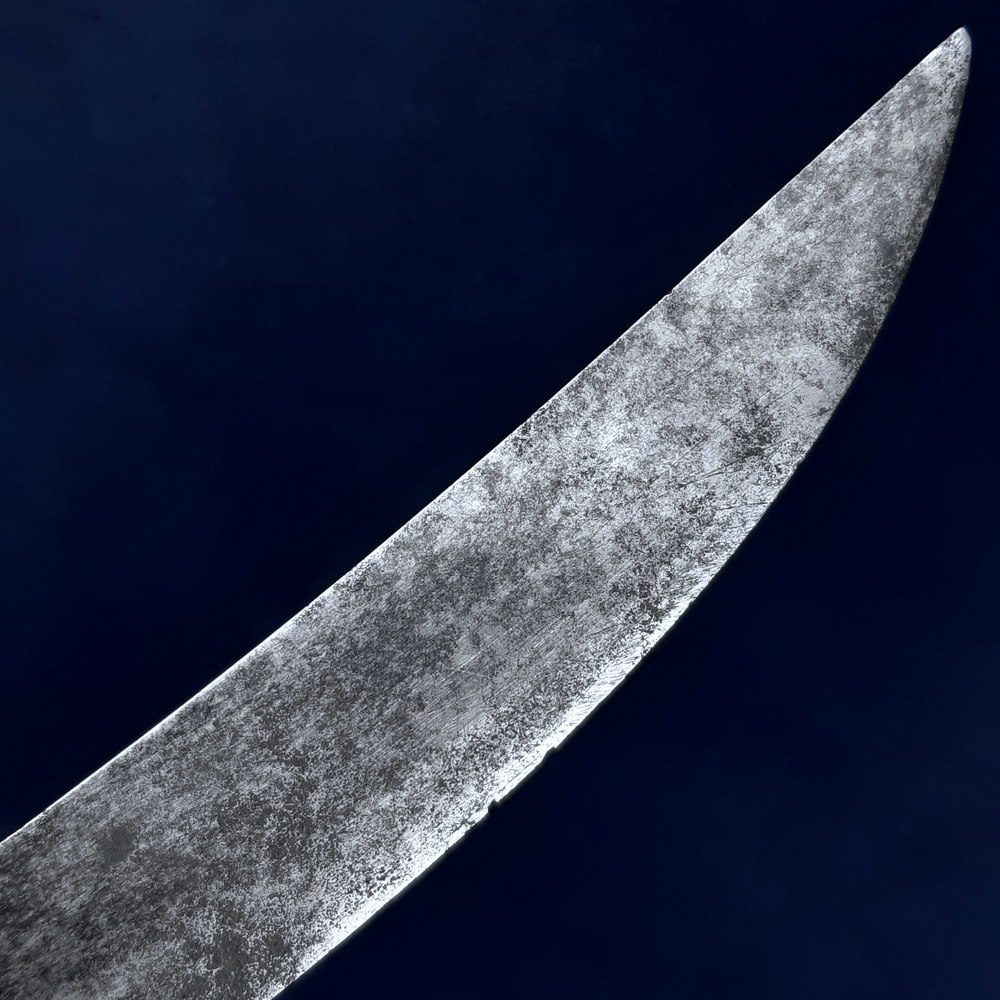
Curved single-edged unfullered blade with hatchet point. Brown leather washer, brass P-shaped hilt with faceted knucklebow, comma-shaped quillon, semioval langets. Brass ferrule, faceted backstrap & integral pommel. Ivory grip, partly chequered. Scabbard with wood core covered with black leather, brass fittings at the throat, middle and chape, middle & throat pieces with brass hanging rings. Blade 27¾ inches in length past the washer, the sabre 32¾ inches overall pommel to tip.
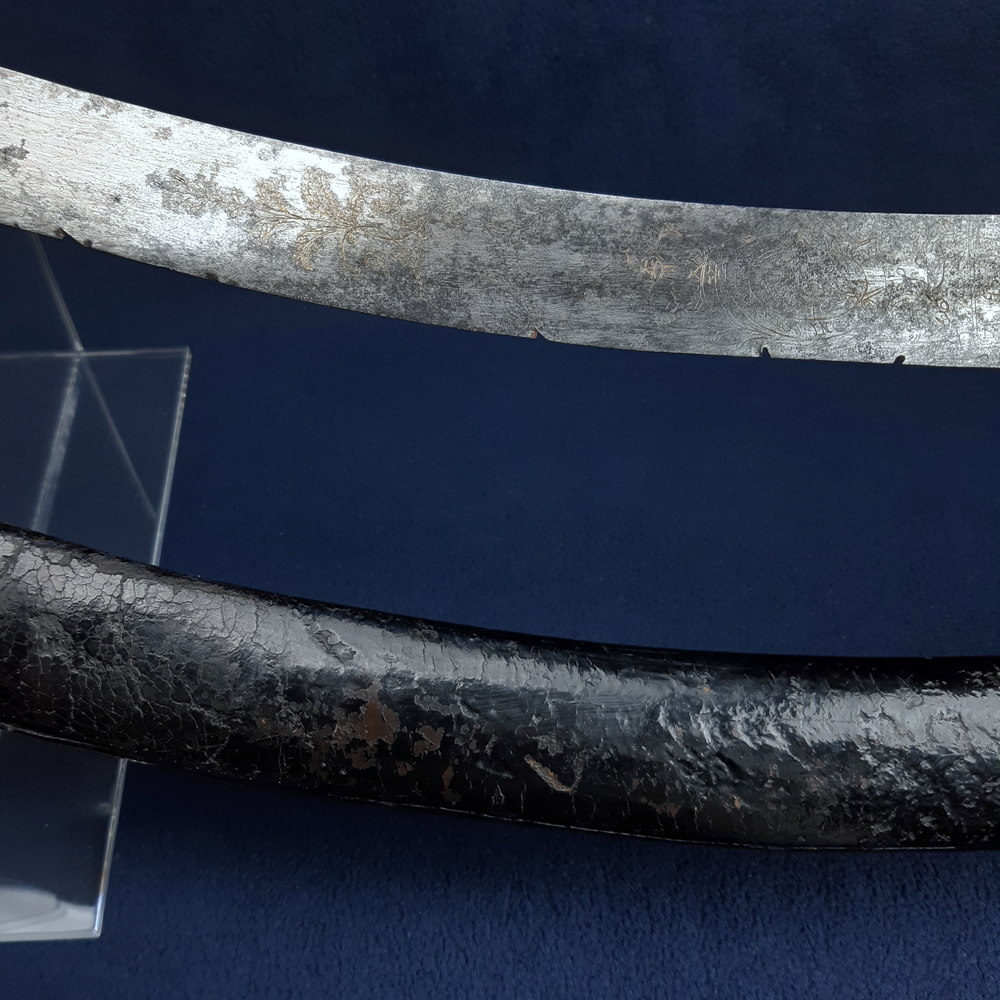
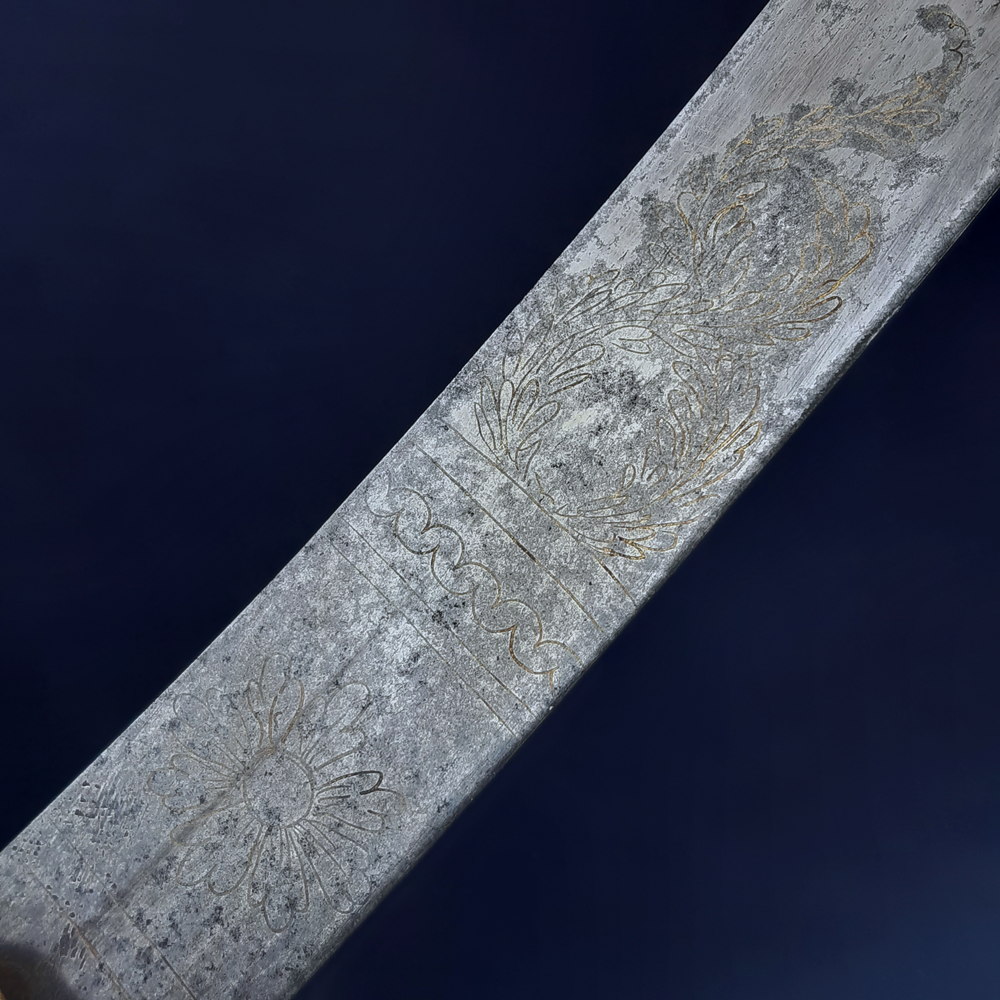
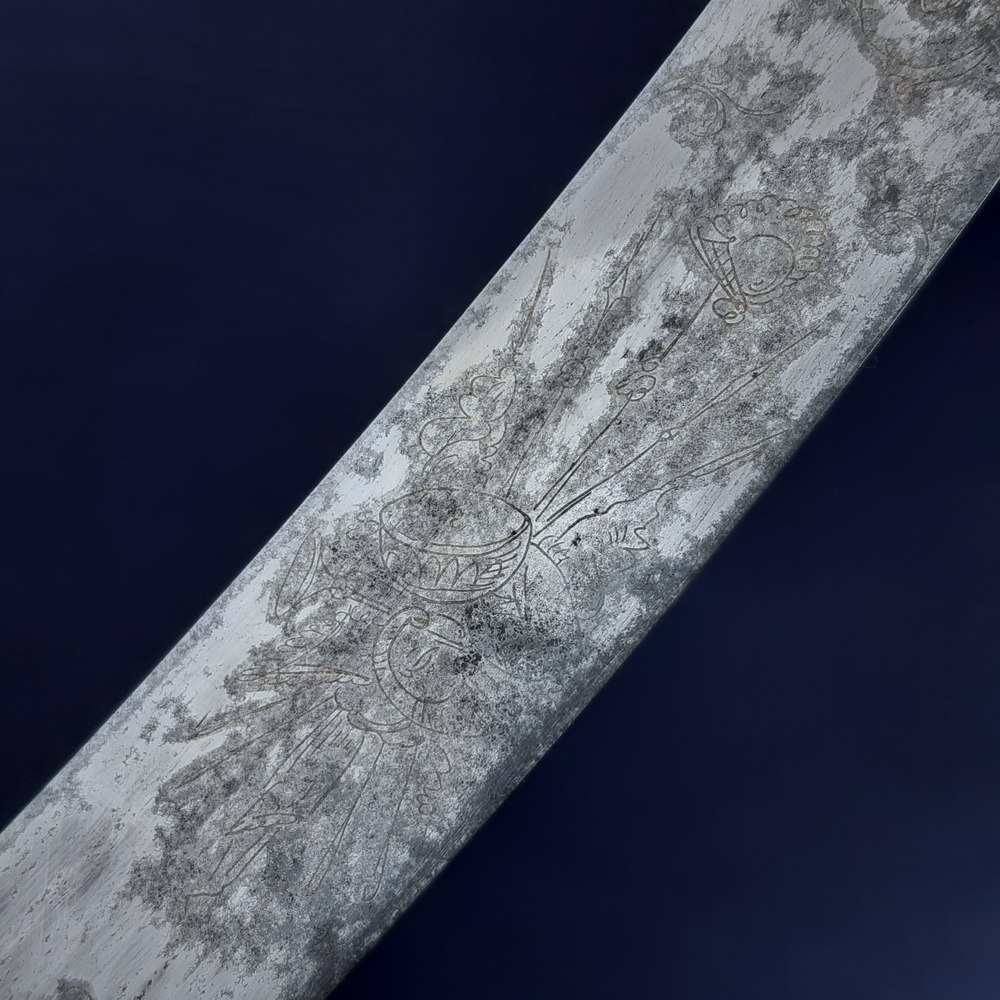
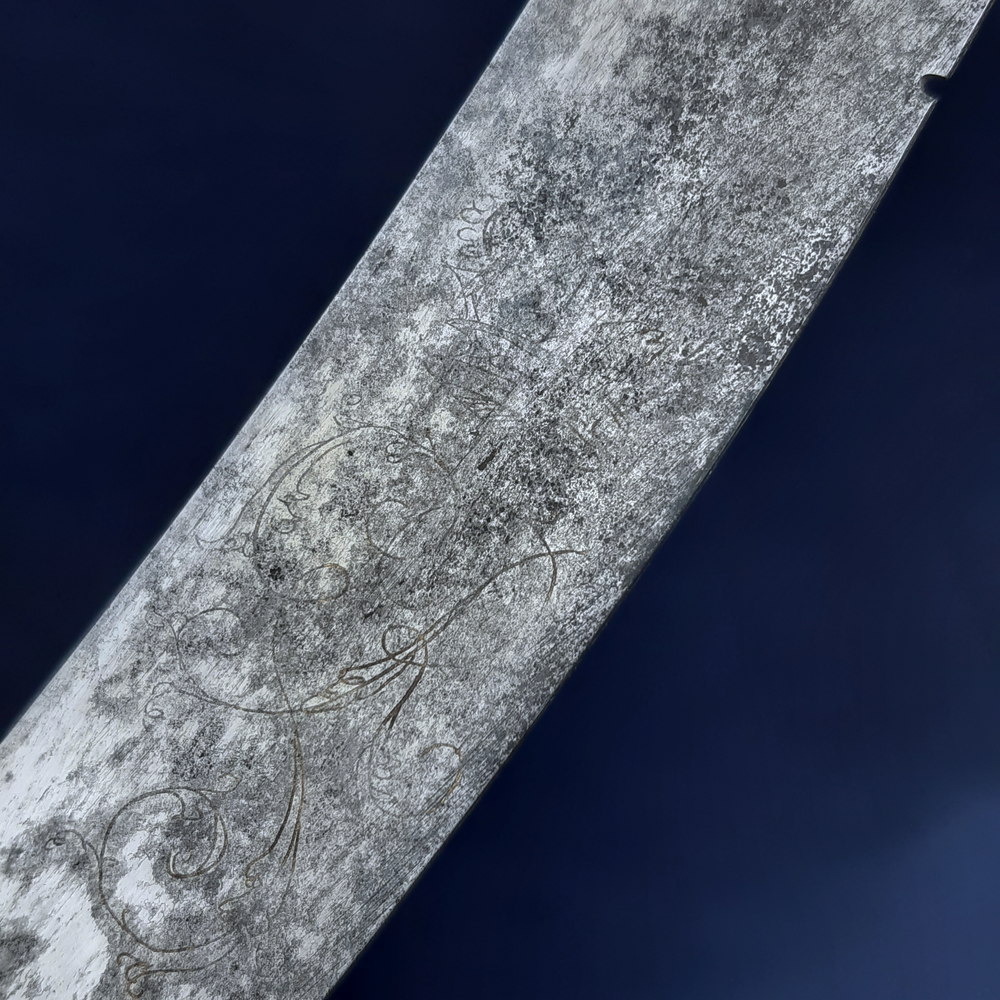
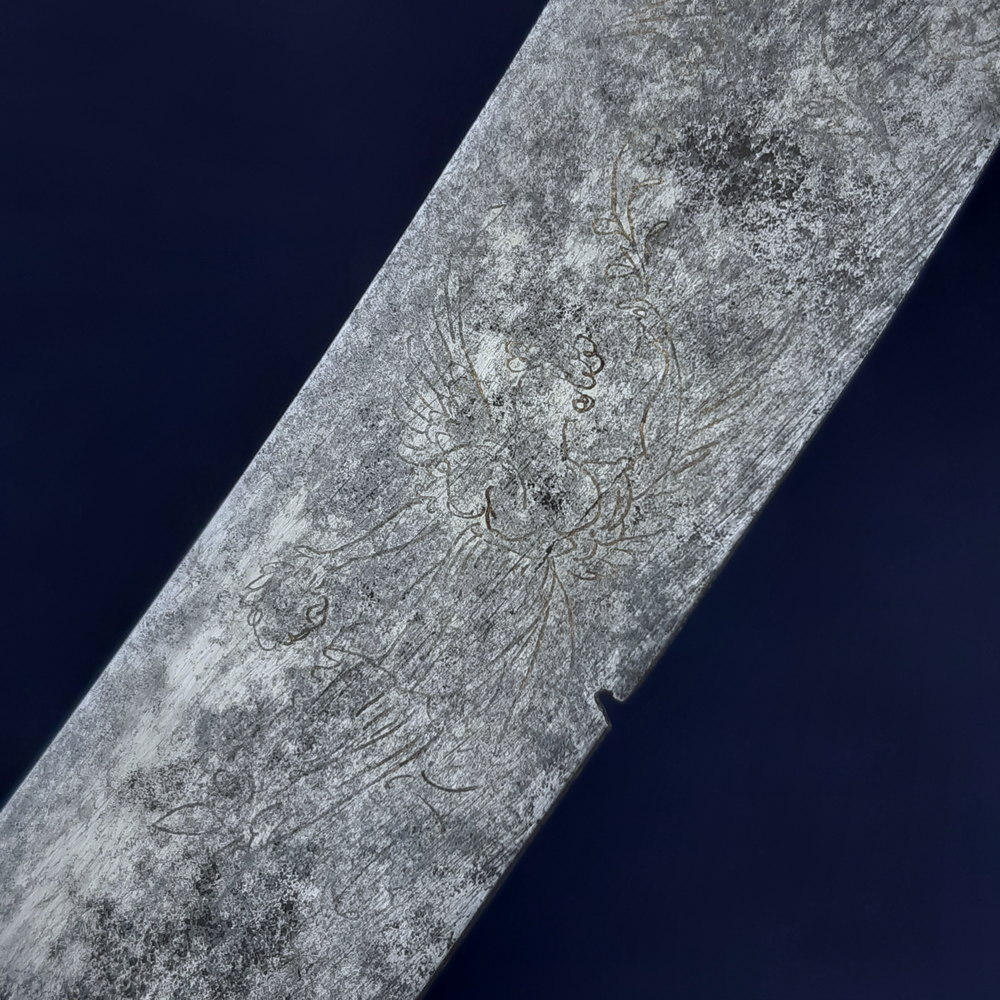
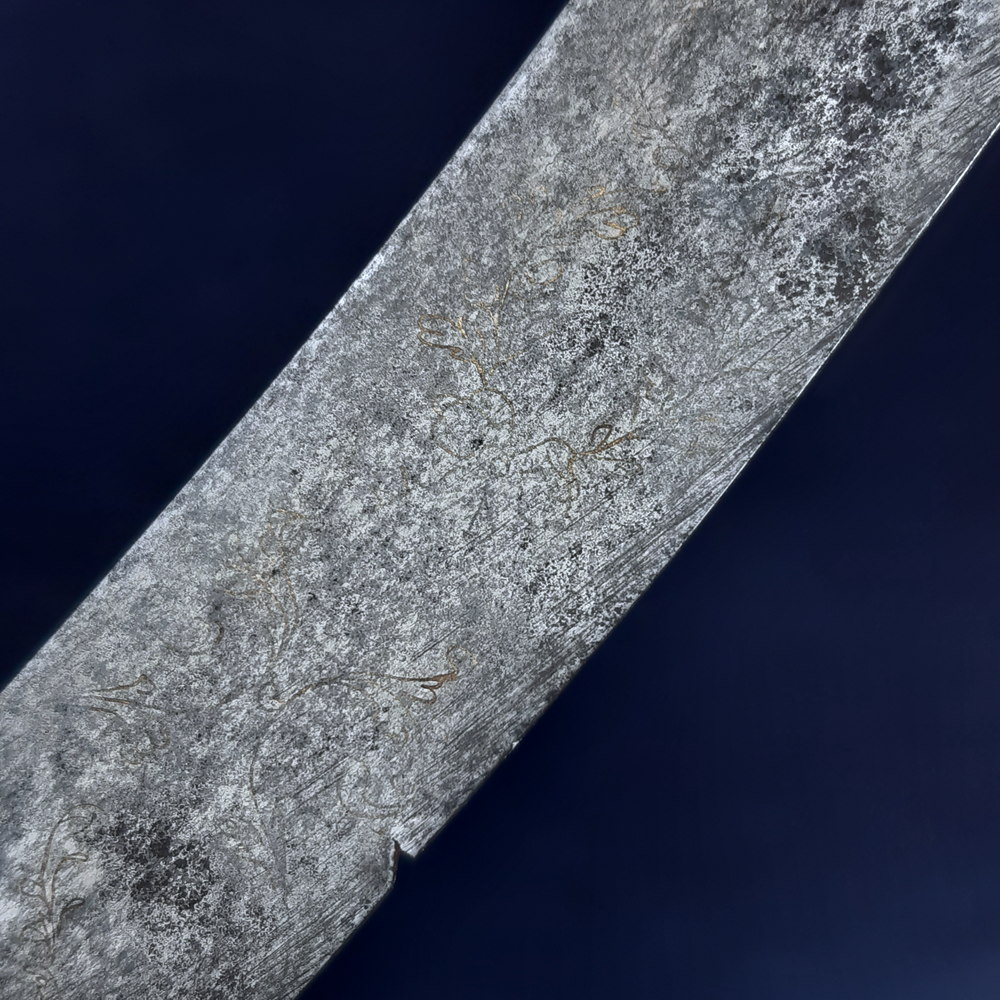
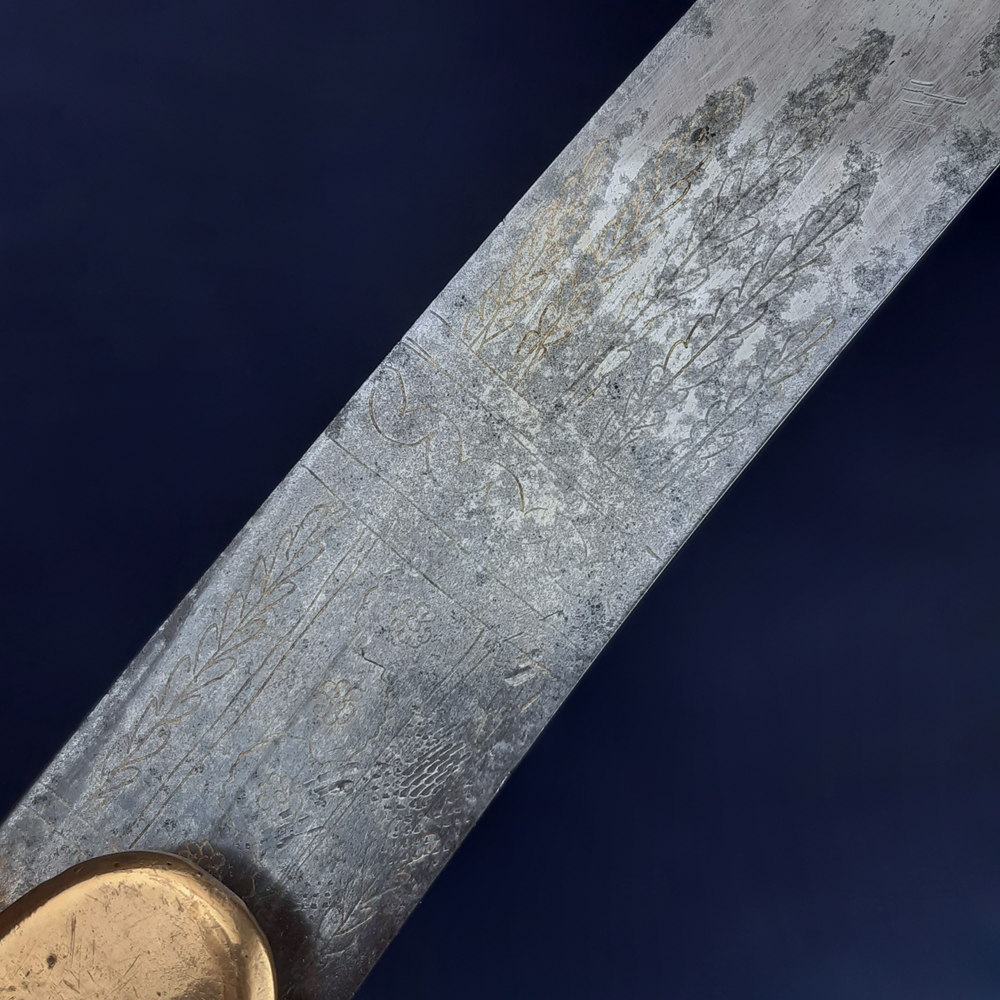
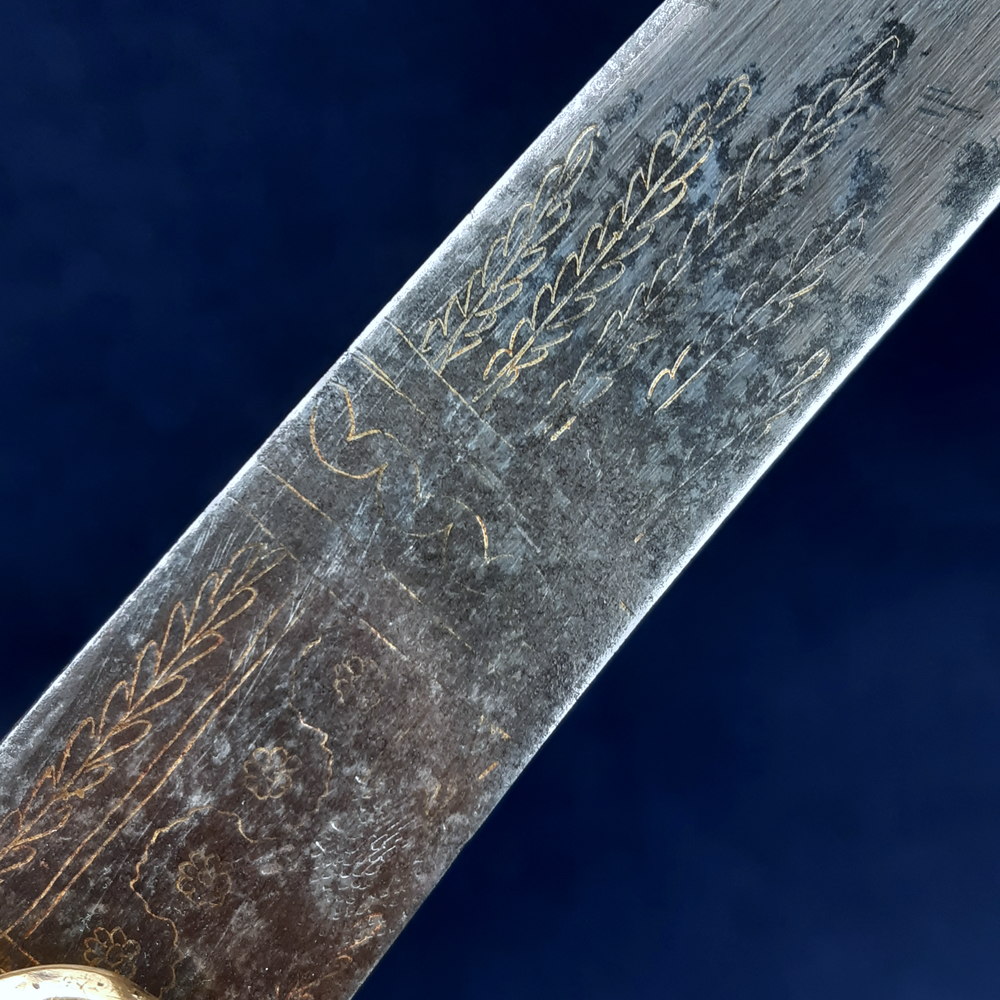
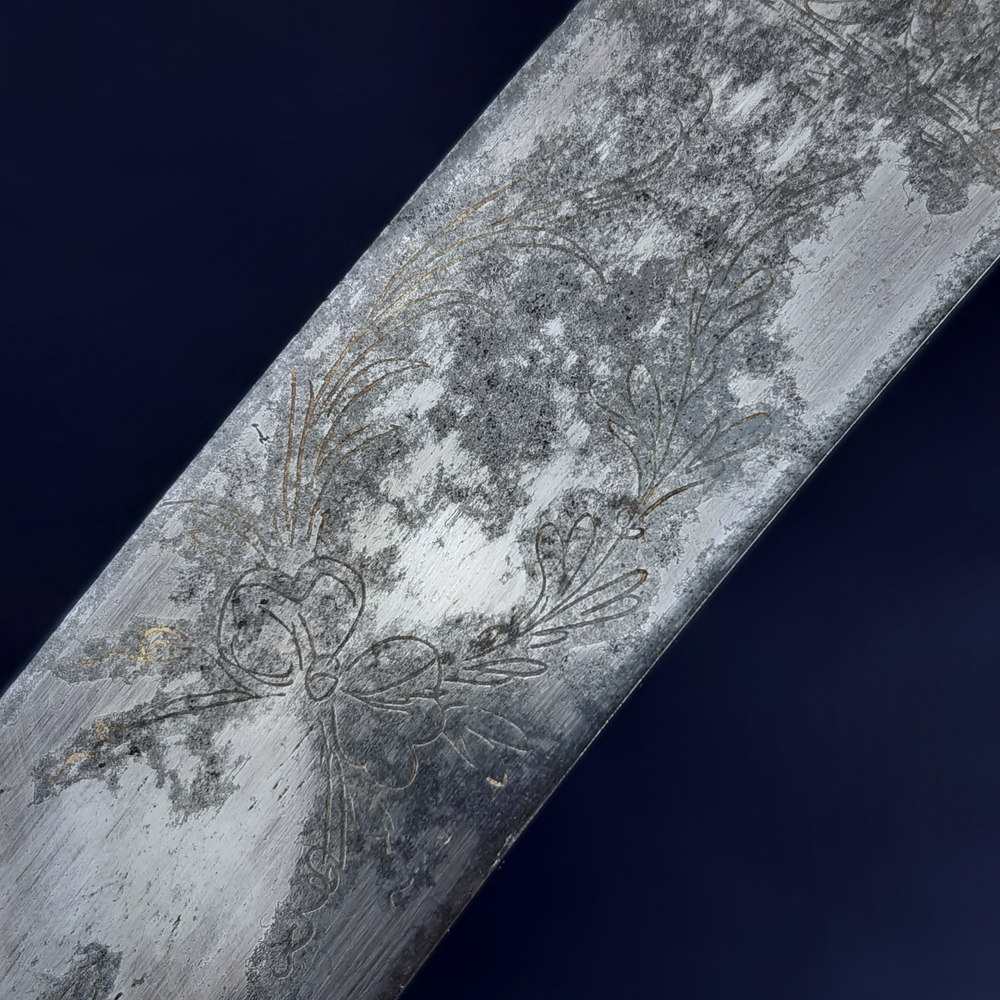
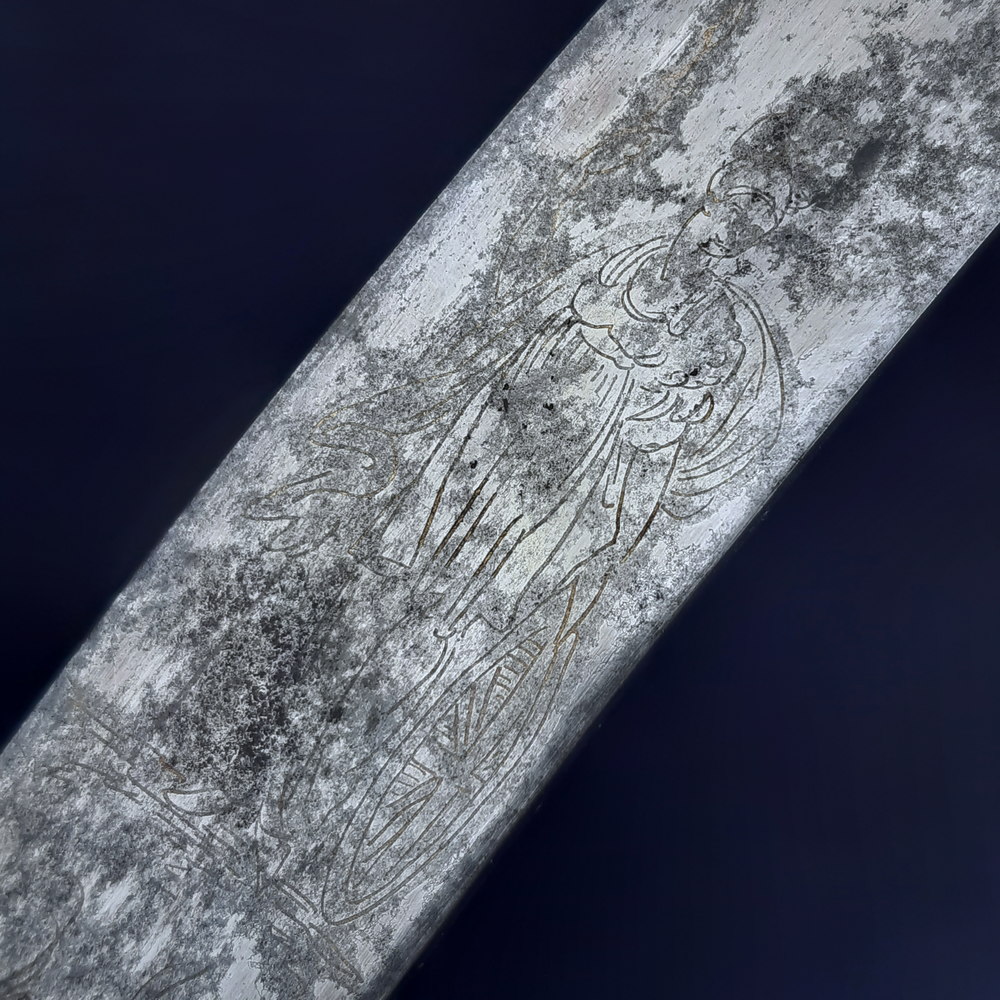
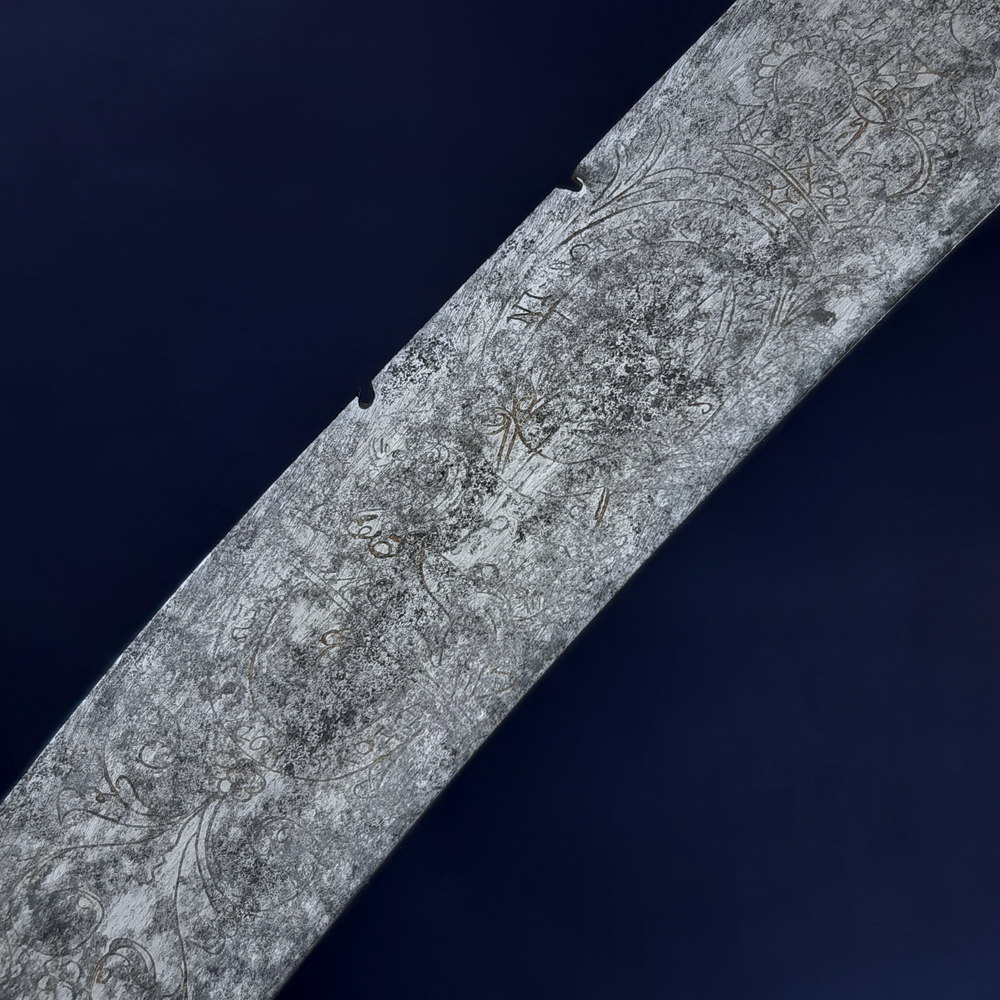
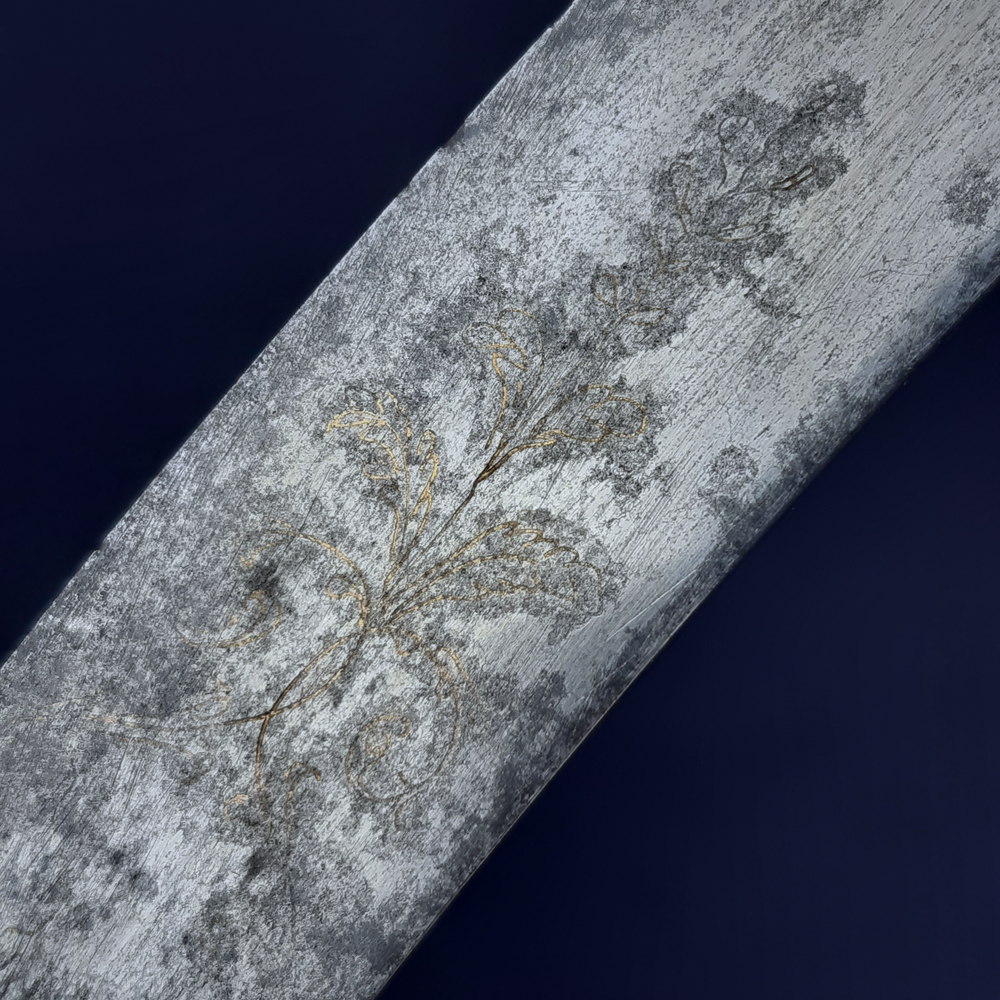
The blade appears to have been made as a blue & gilt piece along 2/3 of its length – the blueing has been fully lost or patinated while some gilding remains in the etching. The substantial etched decoration remains, consisting of motifs of palm fronds, victor’s laurels, a stand of arms, the crown and ‘GR’ cypher of King George III, an allegorical classical figure of winged Victory holding a laurel wreath and palm frond, another figure of Britannia (the personification of the United Kingdom) with her spear* and shield emblazoned with the Union flag, and the royal coat of arms including the horse of Hanover. Its tiny details are impacted by pitting but the top right quarter appears to show a lion rather than a fleur-de-lys, this would indicate the coat of arms used post-1801 Act of Union.
*Modern depictions of Britannia usually show her with a trident instead – this was first seen on coinage in 1797, its nautical symbolism celebrating British naval victories and the power of the Royal Navy. The spear is a much older motif used in Roman depictions of Britannia.
One of the langets is inset with a flaming bomb, suggesting this sword was for a grenadier officer. In this period each regiment of foot contained one company of grenadiers – these specialists had to be tall and physically strong to hurl iron spheres the size of a tennis ball far enough not to injure their own side, and brave to stand firm at the front line and light their fuses only at the right moment.
Non-regulation sabres like this one became popular as fighting swords during the Georgian period among infantry officers, who had considerable latitude to purchase and carry the swords they preferred. They replaced the earlier spadroons in part due to their robustness, shorter length and strong cutting ability, but also because they were fashionable and associated with the glamorous hussar units that were trendsetters among the cavalry. Officers of the rifle regiments on colonial service appear to have begun the infantry’s sabre trend in the early 1790s, which then spread to light companies and grenadier companies of regular infantry.
By 1799 officers of the grenadier and light companies were officially permitted sabres, and the 1803 Pattern infantry officer’s sword bowed to the trend with a curved, hatchet-pointed regulation sabre, albeit with a more ornate hilt that owed less to the cavalry. Even after 1803 non-regulation fighting sabres remained widespread and popular. A continuous feedback loop between officers and manufacturers led to a wide variety of interesting design features, and several regiments implemented their own bespoke sabres.
The blade has some nicks and notches to its edge, not very sharp but with old sharpening marks. Areas of blade patination and pitting, some of which impact the engraving. The ivory grip has some chipping at the pommel end and next to the ferrule, but remains firm in the hand. The brass scabbard fittings have some small dents , the leather of the scabbard has some surface flaking, cracks and dents. The sword sheathes and draws smoothly. The leather washer may be a later replacement.
Due to the ivory used in the grip, this sword cannot be exported from the UK. It has been declared and registered as antique ivory under the provisions of the UK Ivory Act and can therefore be sold within the UK. Please note this is a one-time registration: if you purchase this sword and wish to resell it you must register it again.
