
British 1796 Pattern Light Cavalry Trooper’s Sword by Runkel, 1796-1800
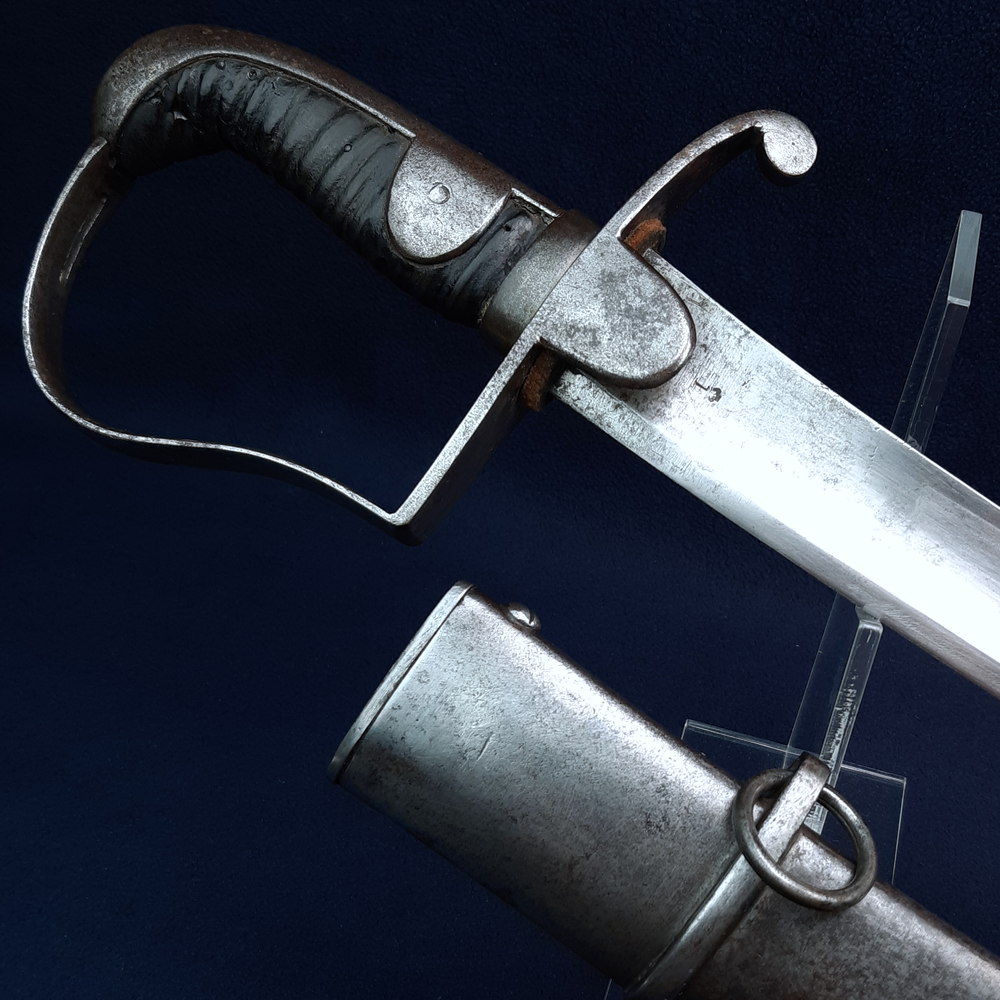
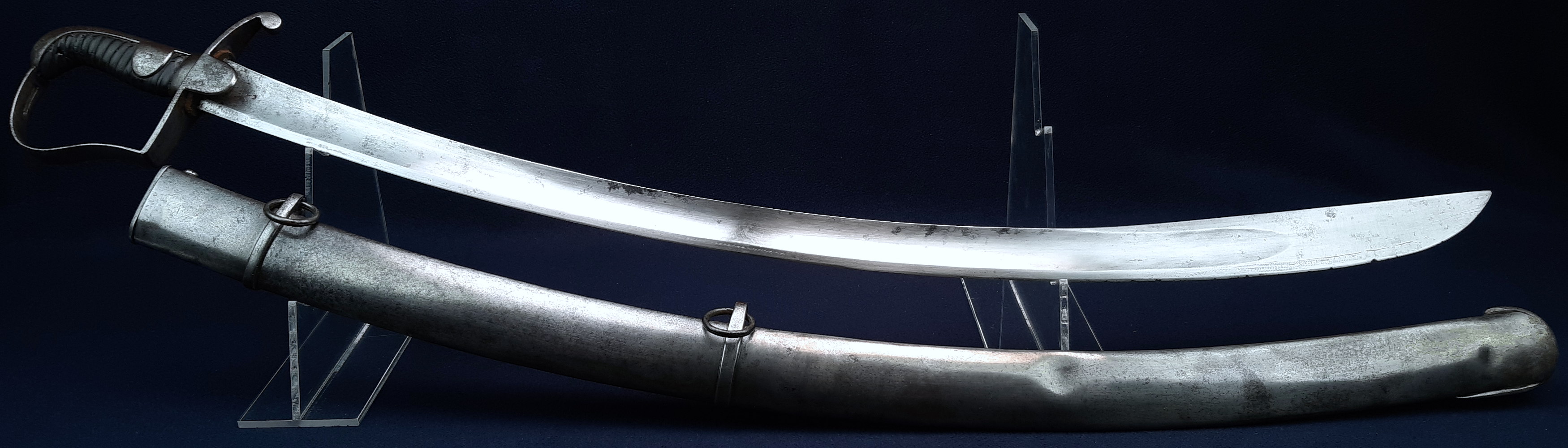
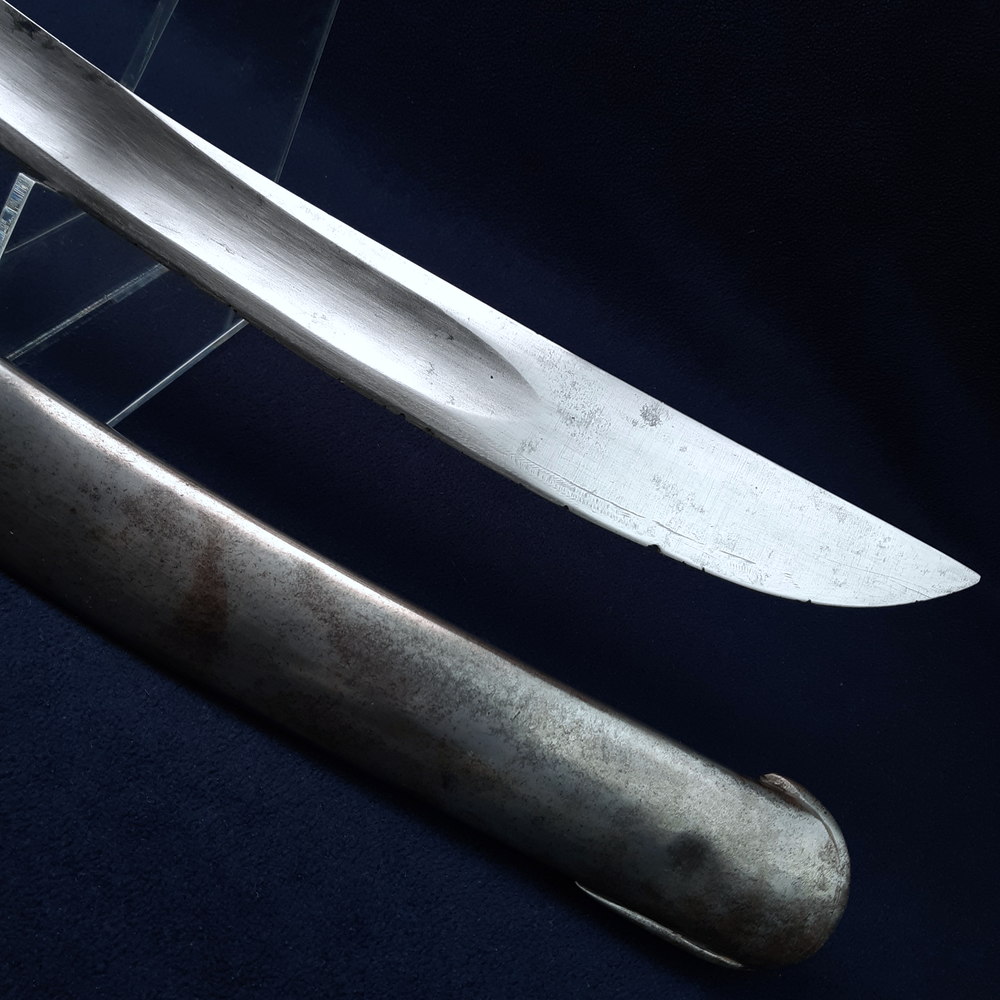
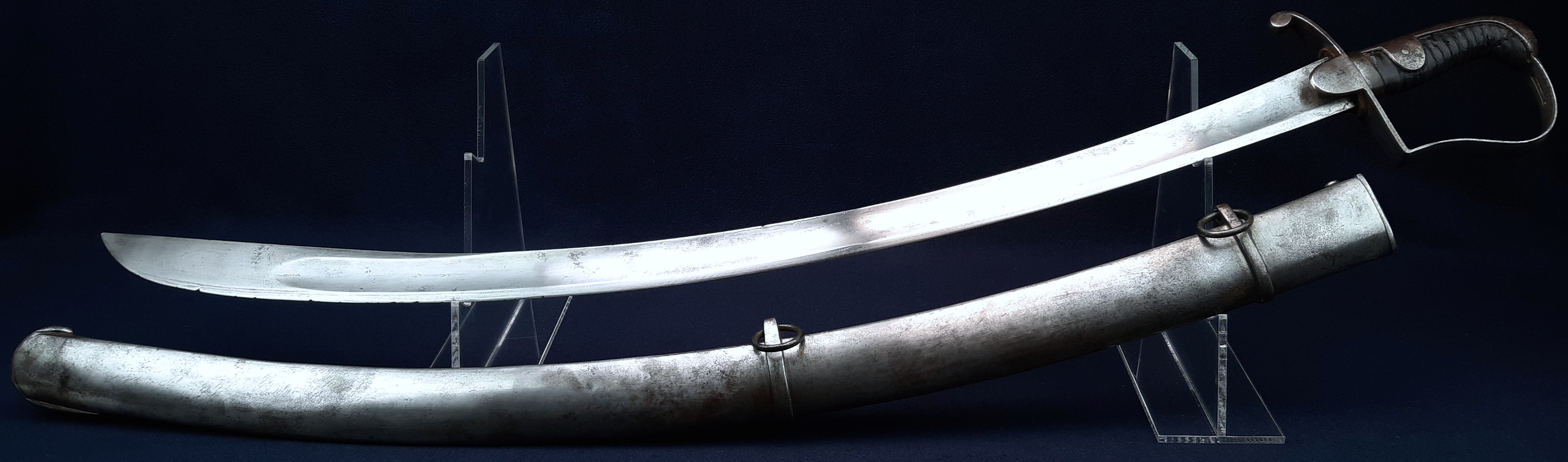
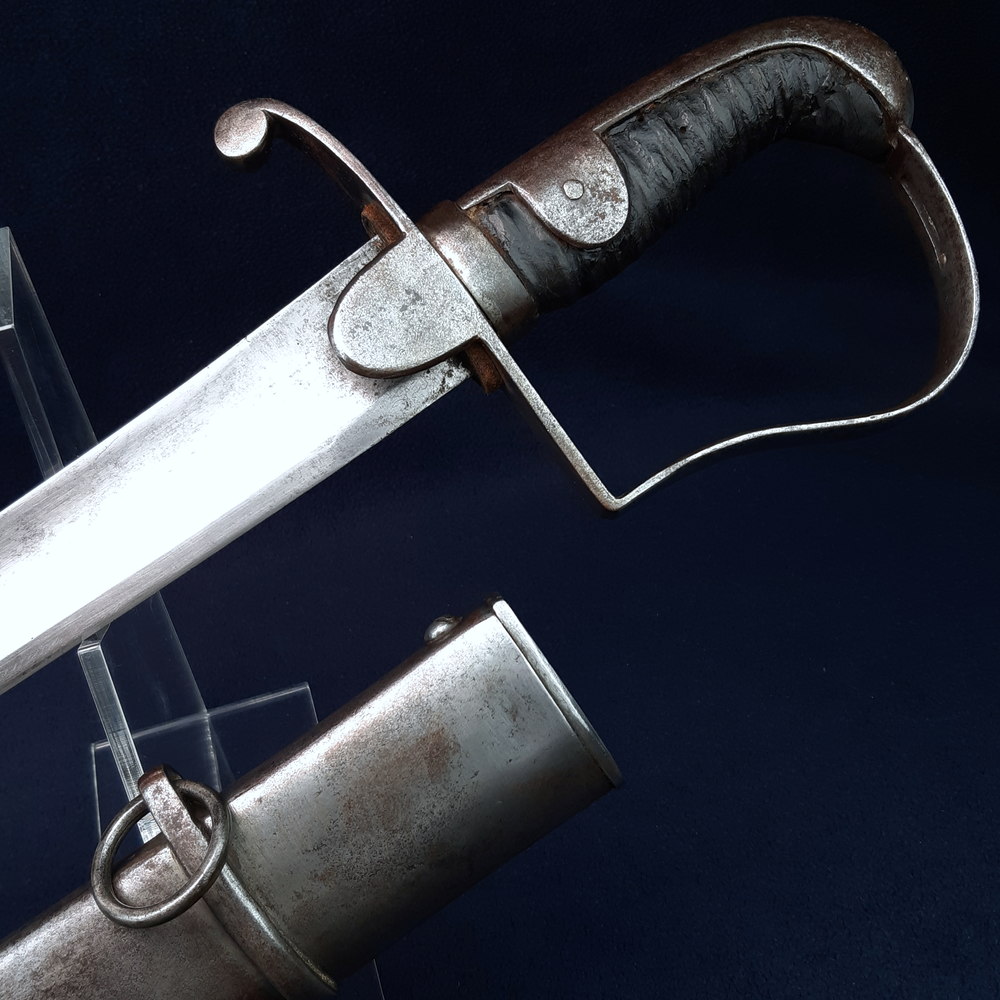
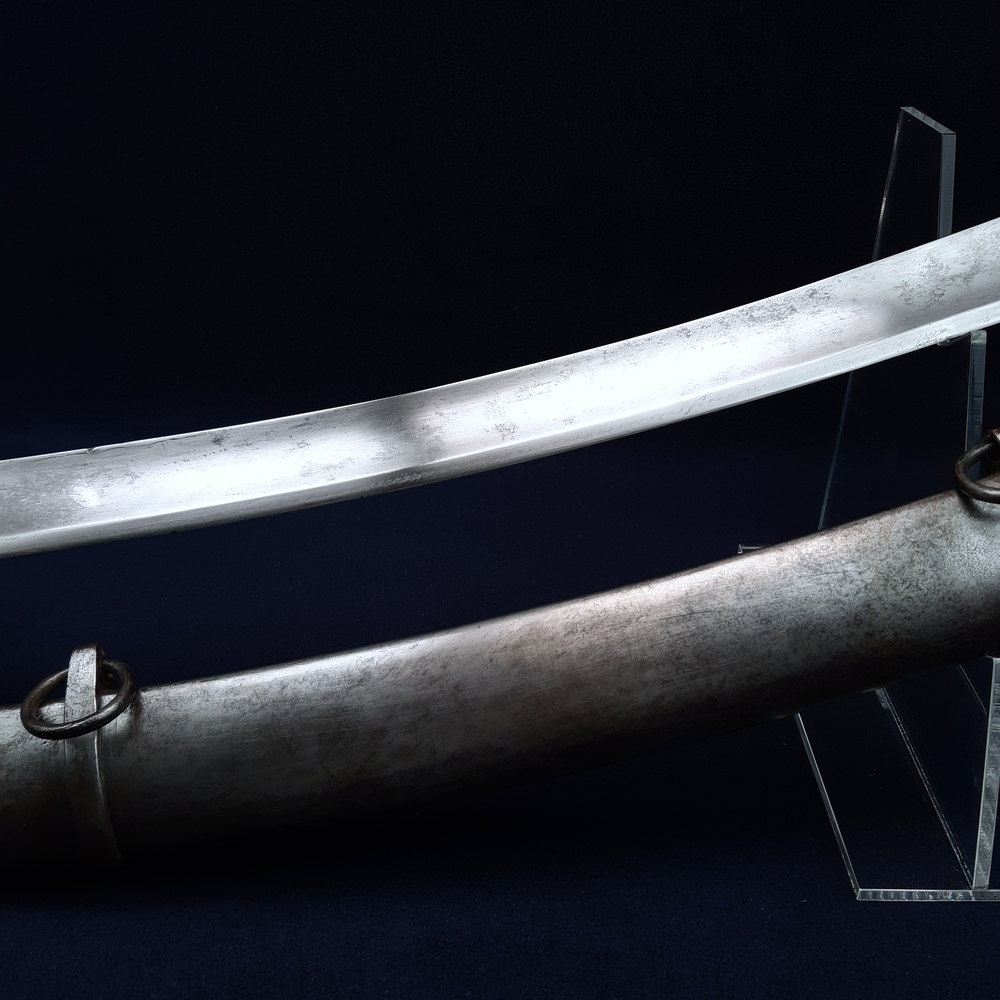
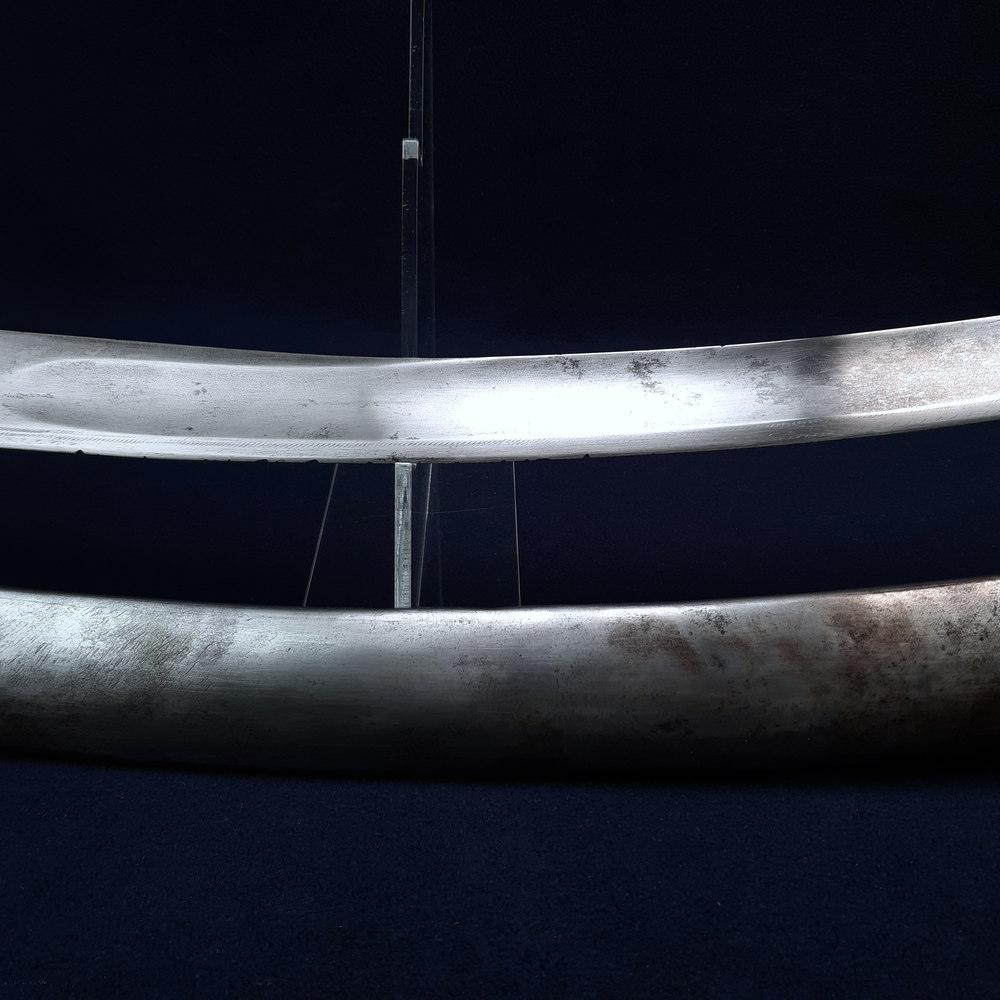
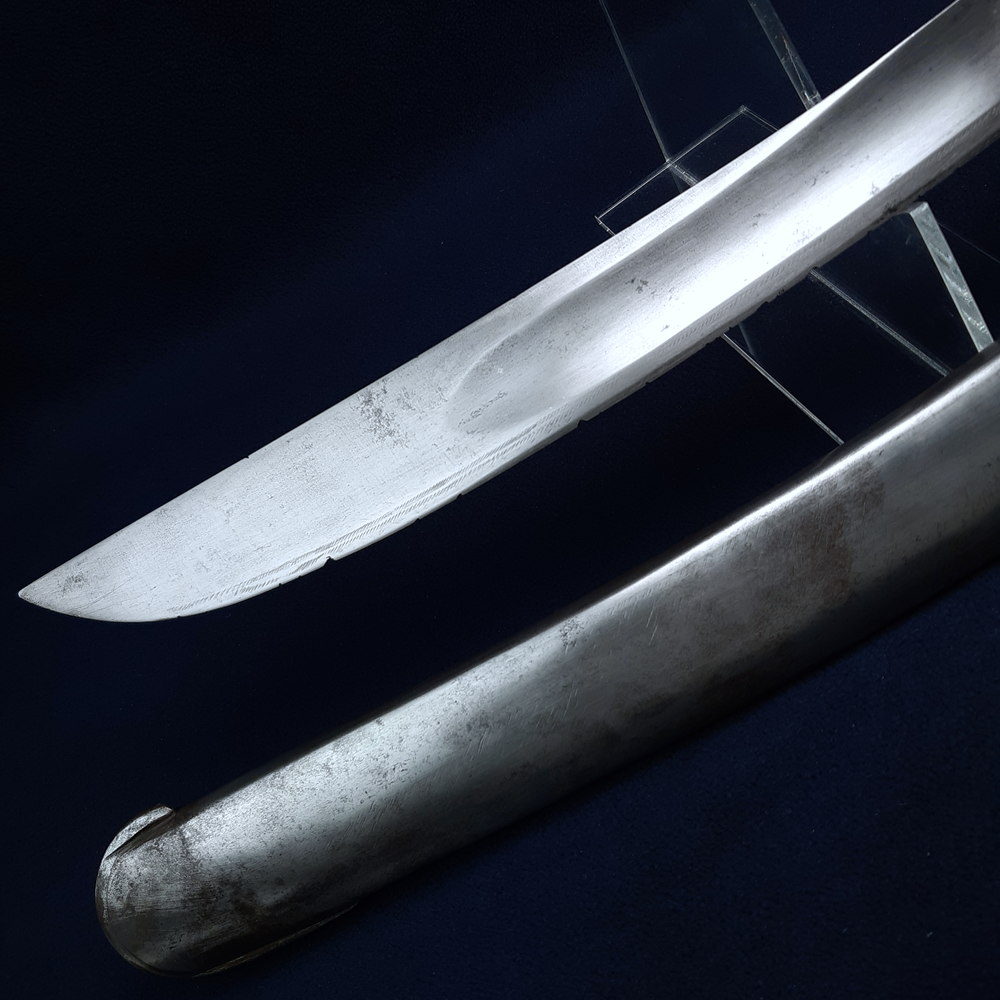
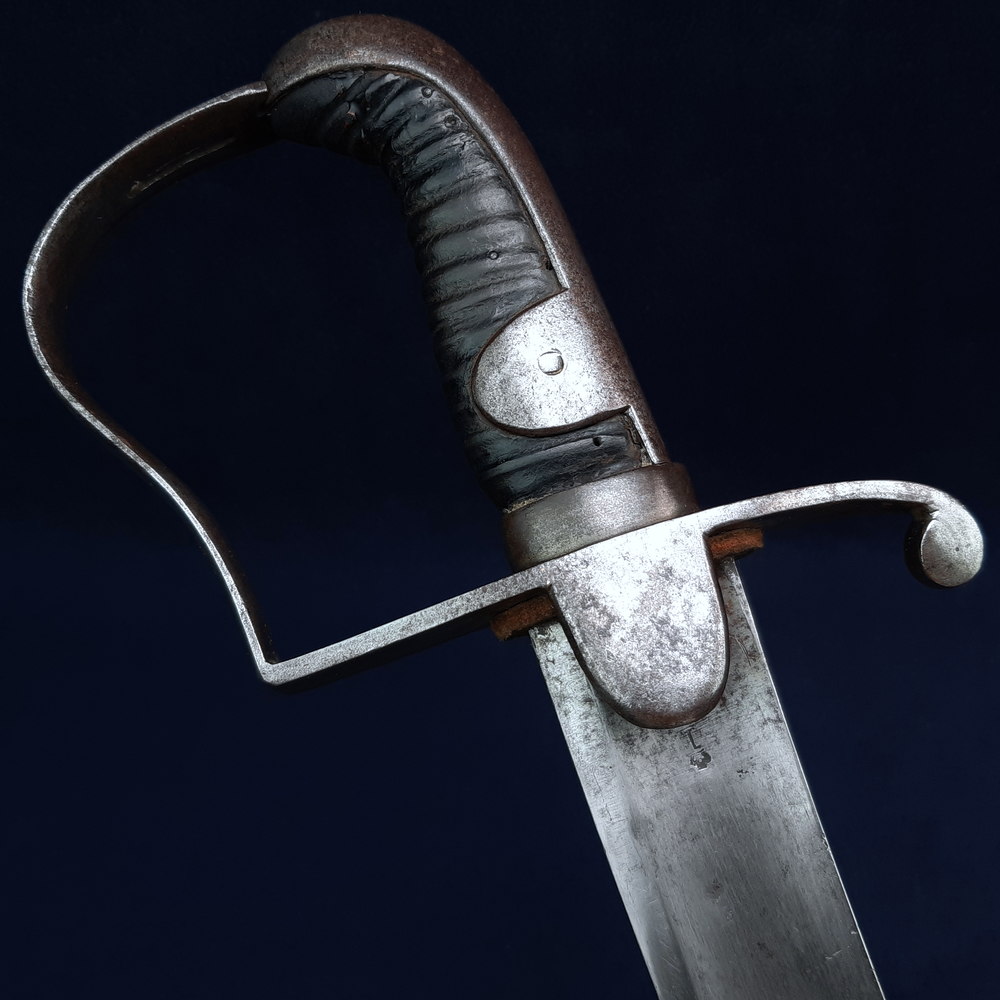
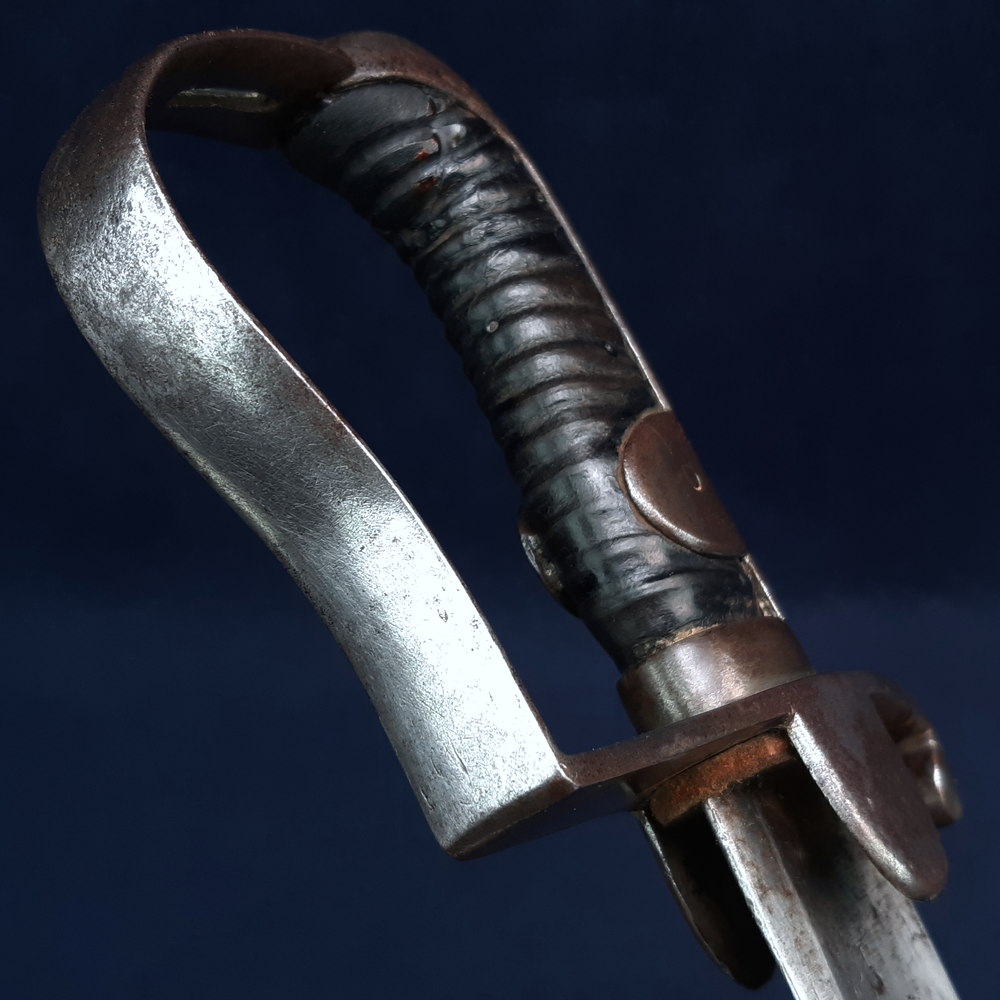
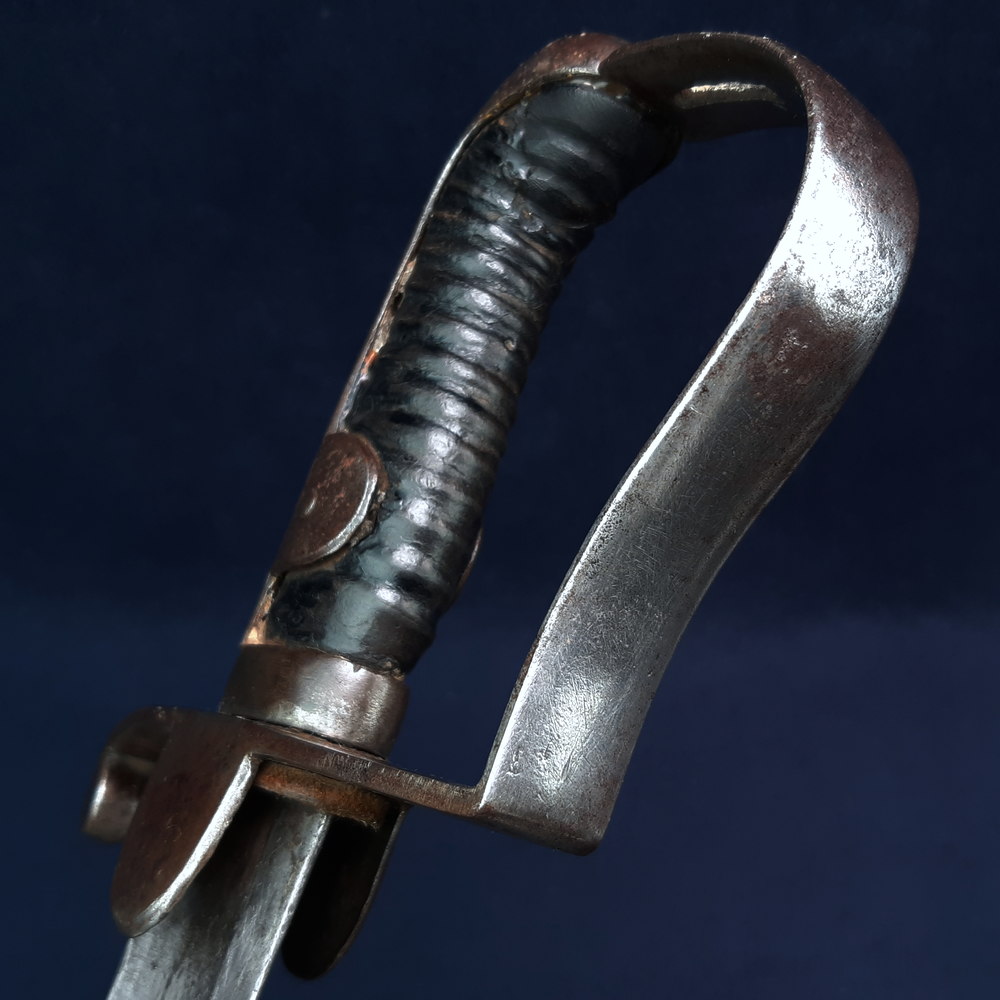
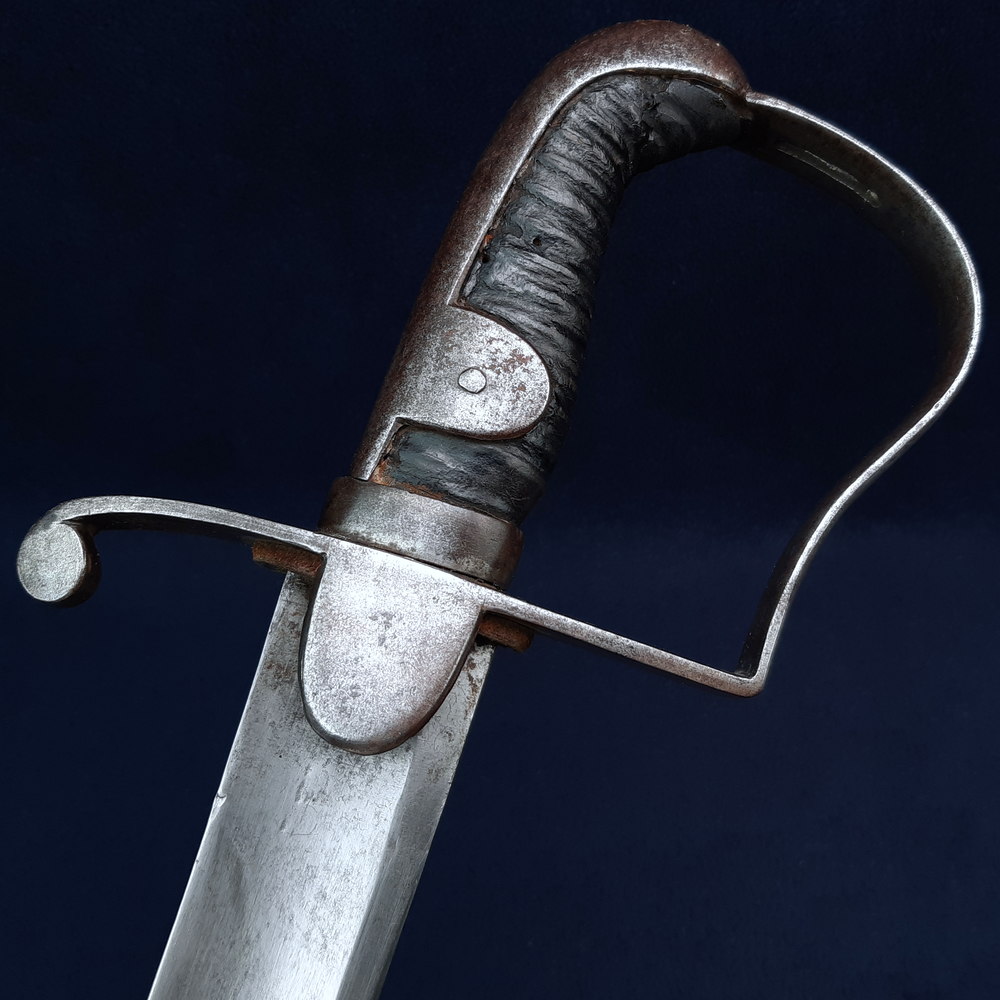
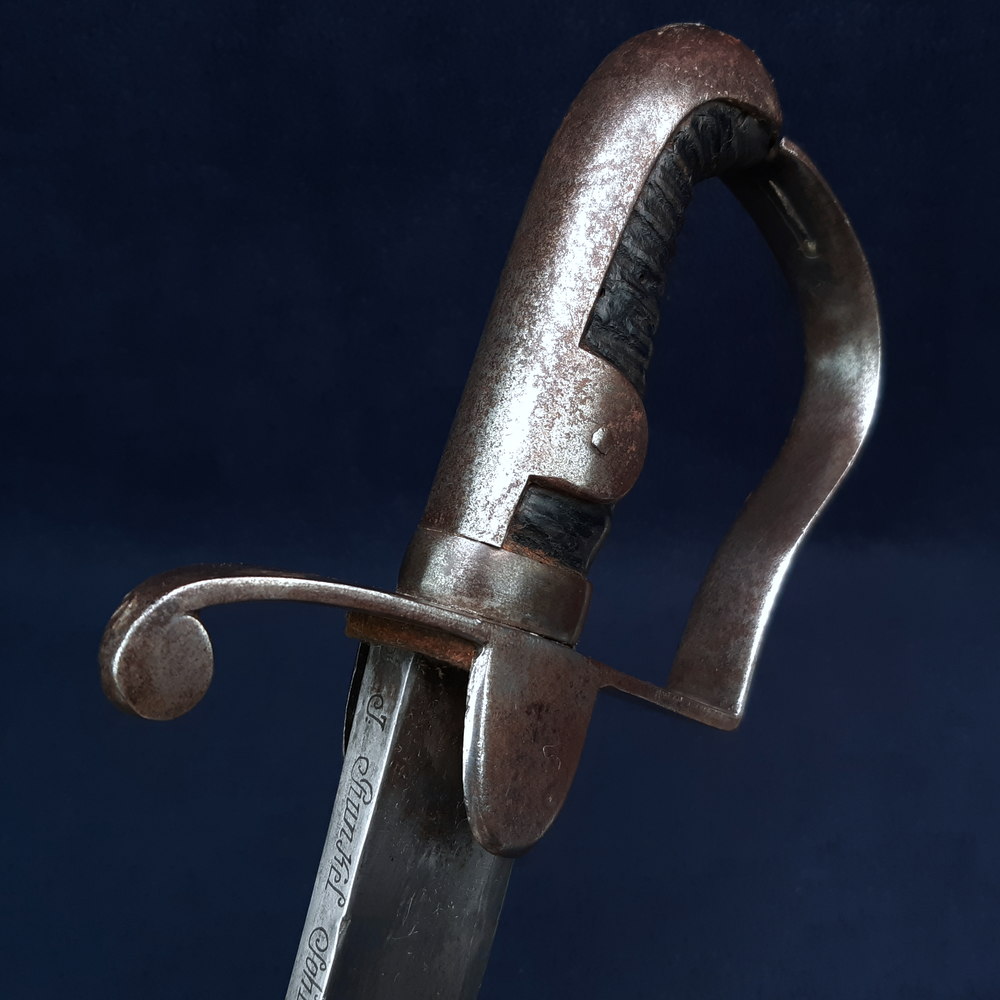
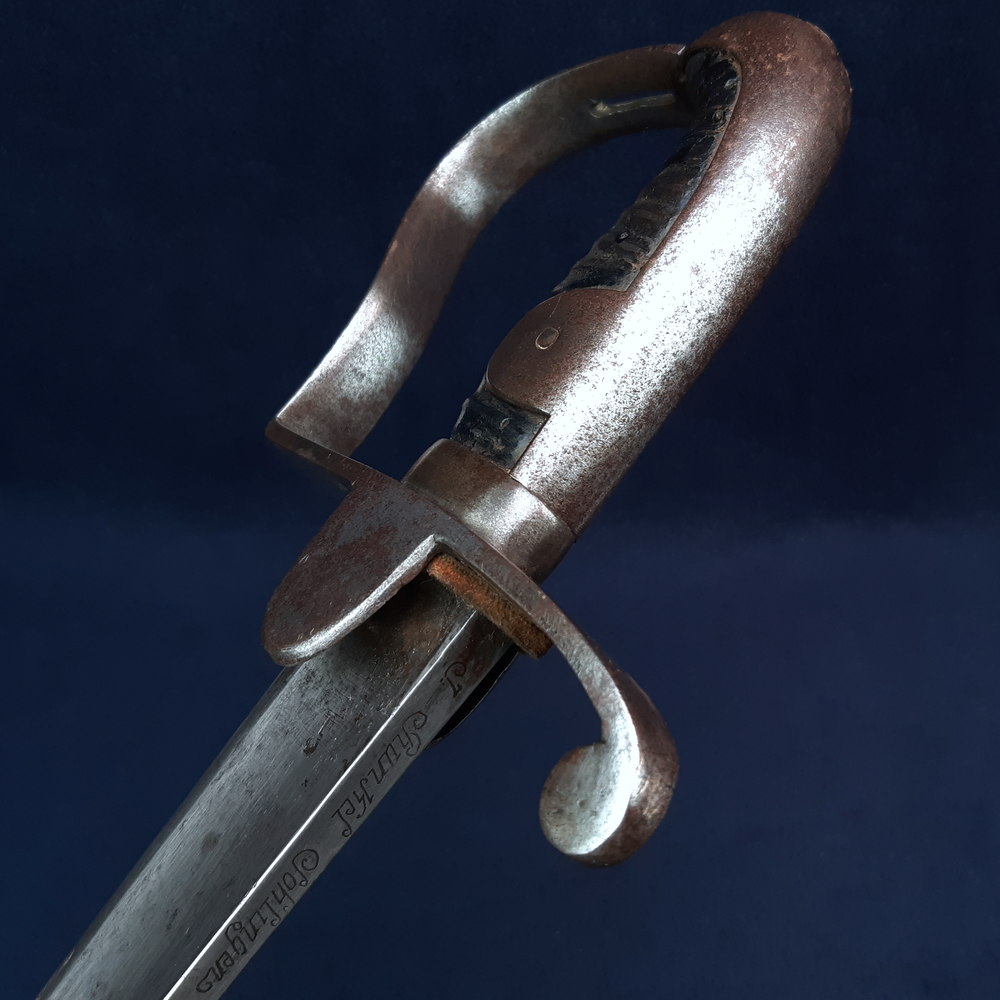
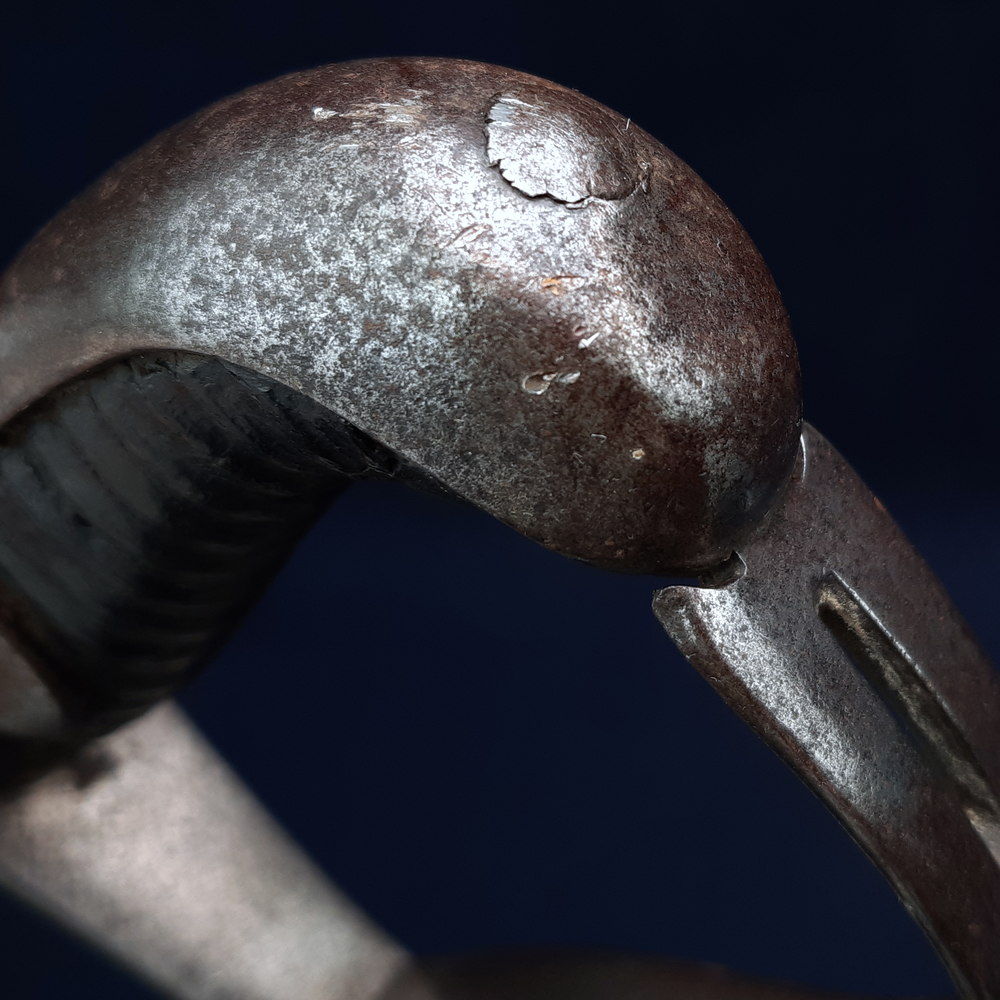
Curved single-edged blade with single fuller and hatchet point. Brown leather washer, iron stirrup P-shaped hilt with sword knot slit, comma-shaped quillon, semioval langets, smooth iron backstrap with projecting ears secured to the tang through the grip with a single rivet, and integral pommel cap. Ribbed wooden grip covered with pressed black leather. Plain steel scabbard with two bands mounted with hanging rings. Blade 32½ inches in length, the sword 37½ inches overall.
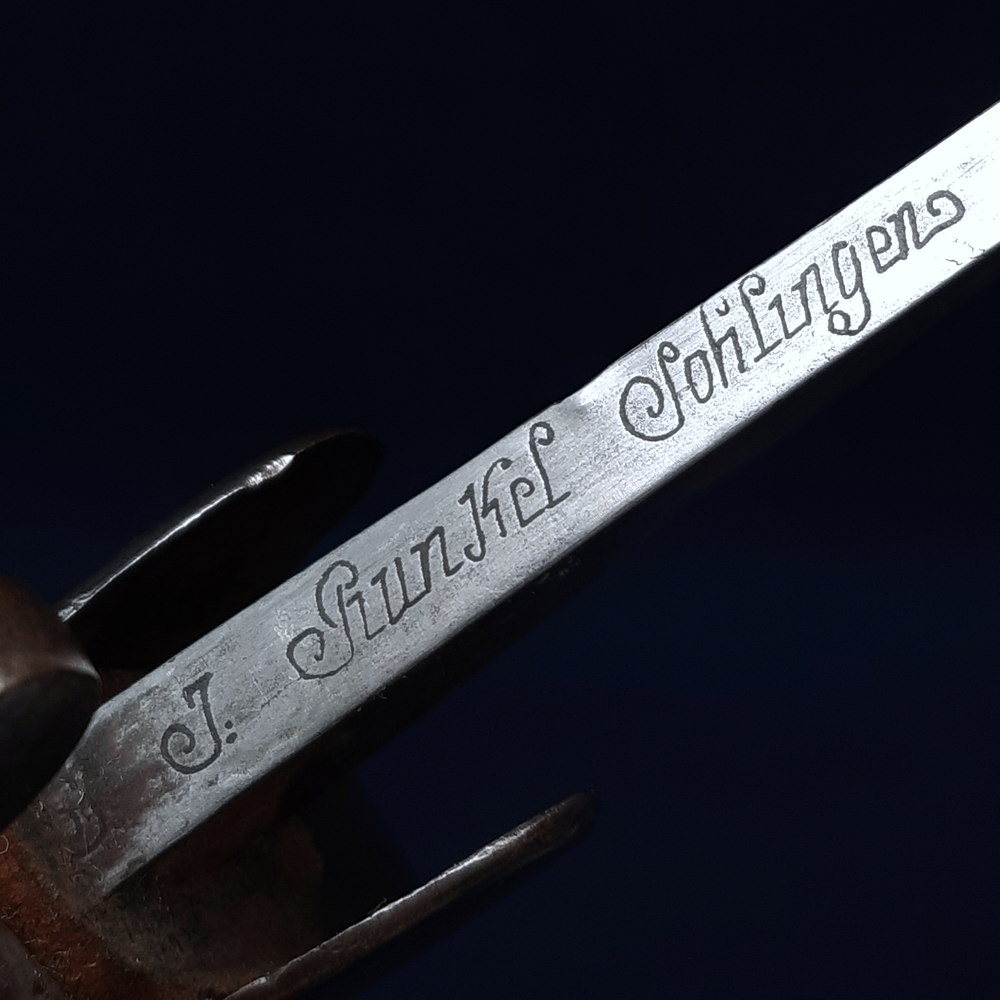
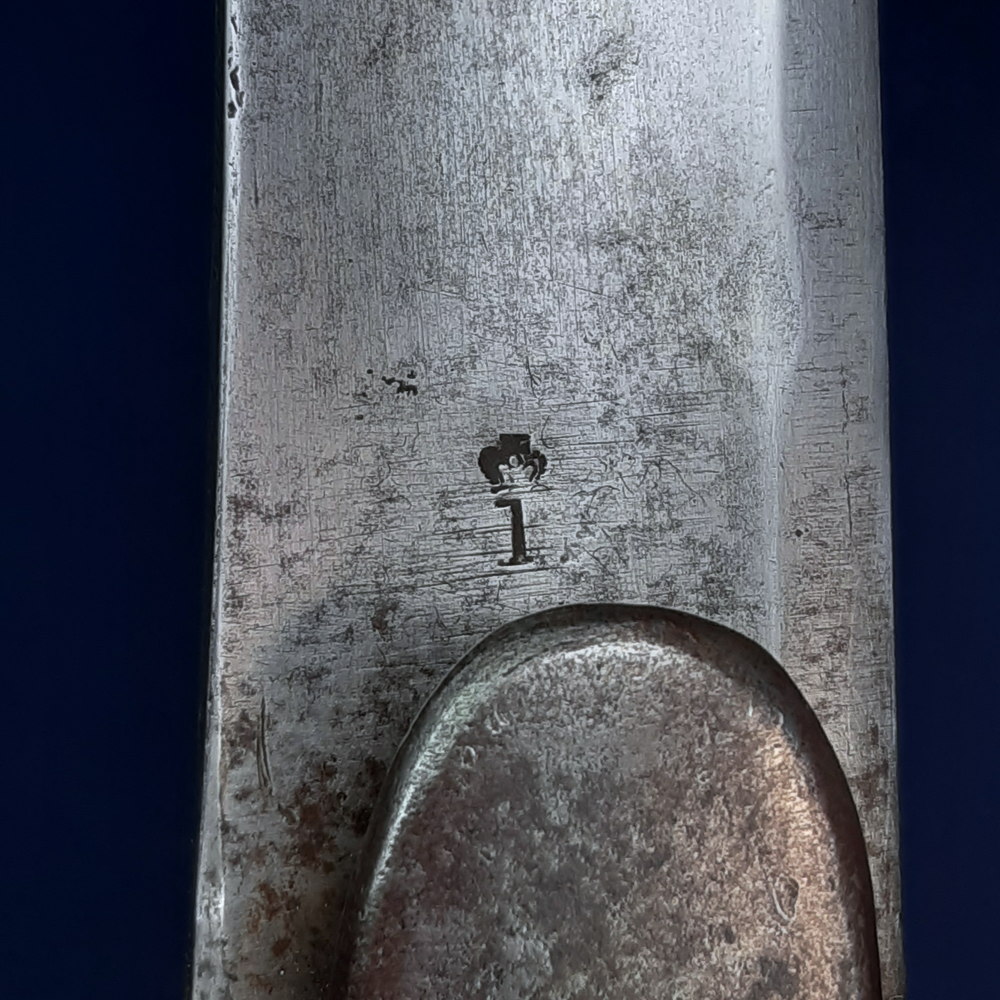
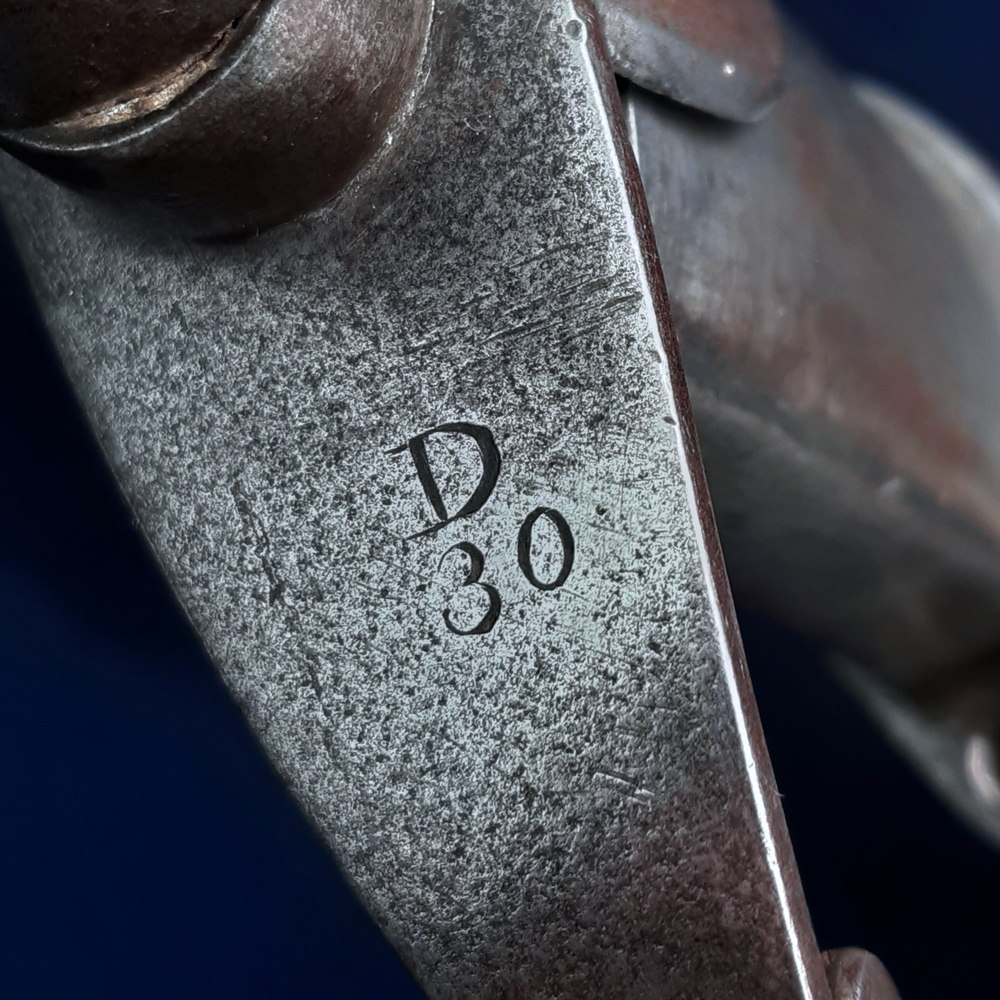
The spine of the blade is stamped with the maker’s mark ‘J. J. Runkel Sohlingen’, indicating the firm of John Justus Runkel. The blade is stamped in the fuller at the forte on one side with a crown over ‘1’, an inspection stamp indicating government property. The inside of the hilt is stamped near the ferrule with ‘D 80’. This was probably a weapon number, e.g. sword 80 assigned to D Troop.
John Justus Runkel was a prolific importer (and occasionally, smuggler) of sword blades and completed swords from Solingen, Germany, into Britain. His business, operating from 1778 to 1808, sold primarily to the sword makers and retailers of London, undercutting British-based producers. The spelling ‘Sohlingen’ was used on Runkel’s blades until around the year 1800, when it was changed to ‘Solingen’, so this sword would have been made between the introduction of the Pattern in 1796 and 1800.
The 1796 Patterns of cavalry sword were designed by John Gaspard le Marchant, and were a significant step forward in standardization over the more variable 1788 Patterns. Le Marchant gained first-hand experience of cavalry fighting in the Flanders campaigns of 1793-95, and decided that other forces, particularly their Austrian allies, had superior equipment and training to the British:
“I have been busily engaged in making drawings of all the articles in the military equipages of our Allies which differ from our own… I have also paid particular observation to the mode of training the Austrian cavalry to the use of the sabre, in which their superiority over us is incredible.”
Swords in particular needed to change, the existing types being in his view heavy and poorly balanced. For the heavy cavalry he recommended a near-copy of the Austrian Model 1775, while for the light cavalry, inspired by “the expertly used scimitar blades of the Turks, Mamelukes, Moors and Hungarians” Le Marchant argued for a lighter, shorter curved sword that could both cut and thrust. The design that emerged was in fact oriented to cutting: very broad bladed, more strongly curved and with a simpler profile than its predecessor the 1788. In a melee the Light pattern needed to be wielded skillfully to avoid wasting strikes on non-fatal areas, but could inflict grievous injuries, as an officer of the French Chasseurs recounted:
“Out of every twenty blows aimed by them, nineteen missed. If, however, the edge of the blade found its mark only once, it was a terrible blow, and it was not unusual to see an arm cut clean from the body.”
Le Marchant died in battle leading cavalry at Salamanca in 1812, but his swords carried on his legacy, in use with the regular Army until 1821 and with yeomanry units for decades longer. The 1796 Patterns were still in active use with yeomanry as of 1848, the 1821 Patterns being only very rarely introduced to them. The Prussian M1811 ‘Blucher’ sabre was a very close replica of the Light trooper’s pattern, and in India in particular the blade was a natural fit with an existing tradition of slashing sword technique. Spare blades can be found mounted into tulwar hilts, and swords produced for Indian cavalry units as late as the 1910s used a blade modelled on that of the 1796.
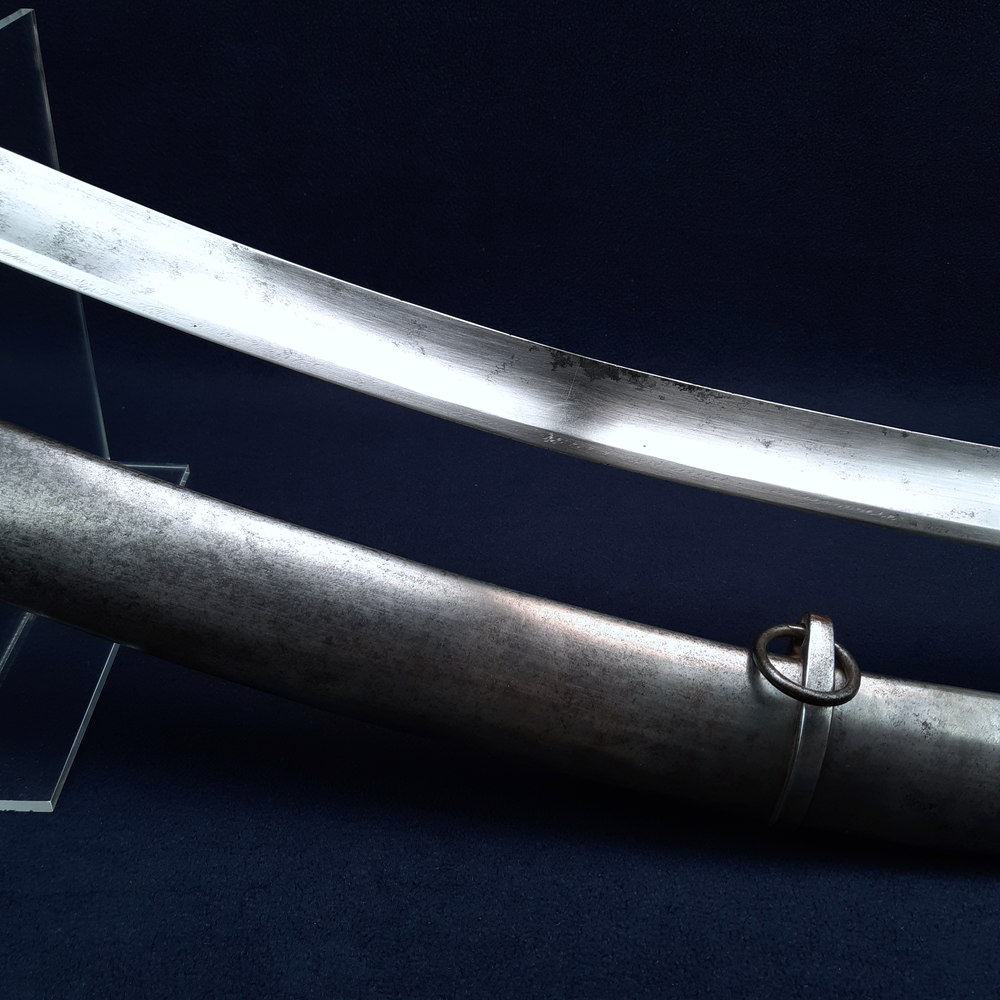
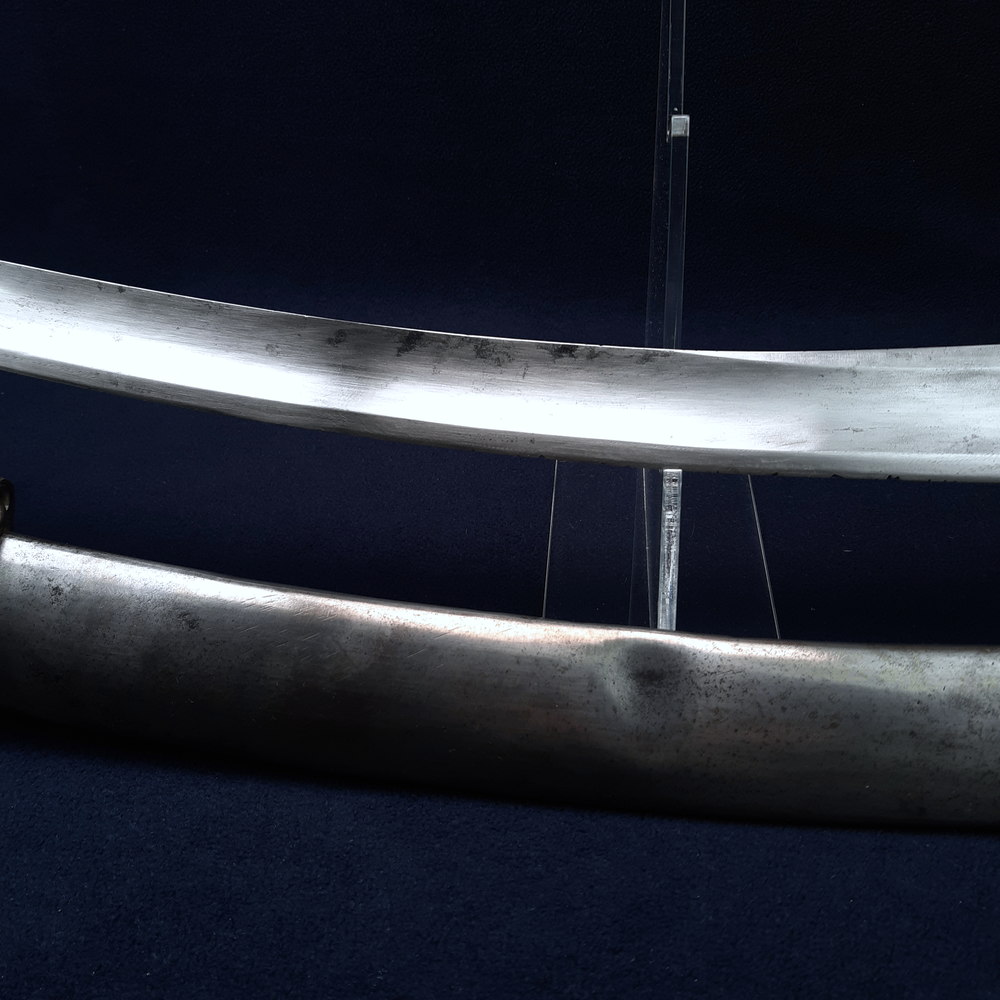
The sword is solid in the hand with no movement or rattle to its parts. Its blade is bright, previously repolished with polishing marks overall and a few spots of dark patination along the spine. Its edge is very sharp, with visible sharpening marks on all of it. Multiple nicks of varying size to the edge, and multiple dents to the corners of the blade’s spine.
The sword’s grip has a few worm holes – I can see two on one side, three on the other and one on the belly. Some appear to have been filled in at a later date. The leather covering of the grip is missing at its base next to the pommel, as well as in a strip next to the ferrule, the loss in each area exposing ribbed wood which has been painted black. The paint is a good colour match but matt, whereas the leather is glossy. The leather is otherwise quite sound with some handling wear to raised edges but good adhesion to the wood. The hilt, ferrule and backstrap have moderate patination and peppered light cleaned pitting. The pommel area has some scratches and spots of gouging creating small burrs. The scratches show up bright so may not be period damage.
The scabbard has significant polishing marks with indented parallel lines visible across much of it – perhaps a buffing wheel or belt was used by a previous owner, who as noted above seems to have made efforts to refurbish the sword. Some small dents to the scabbard body, particularly along its spine, and two more noticeable dents on one side, one near the midsection and one just above the chape. None of these interfere with sheathing and drawing, which is smooth. One of the screws for the throat piece remains, the other has been lost. The steel of the scabbard has areas of light staining and speckled patination.
