
British 1796 Pattern Infantry Officer’s Spadroon by Runkel, 1800
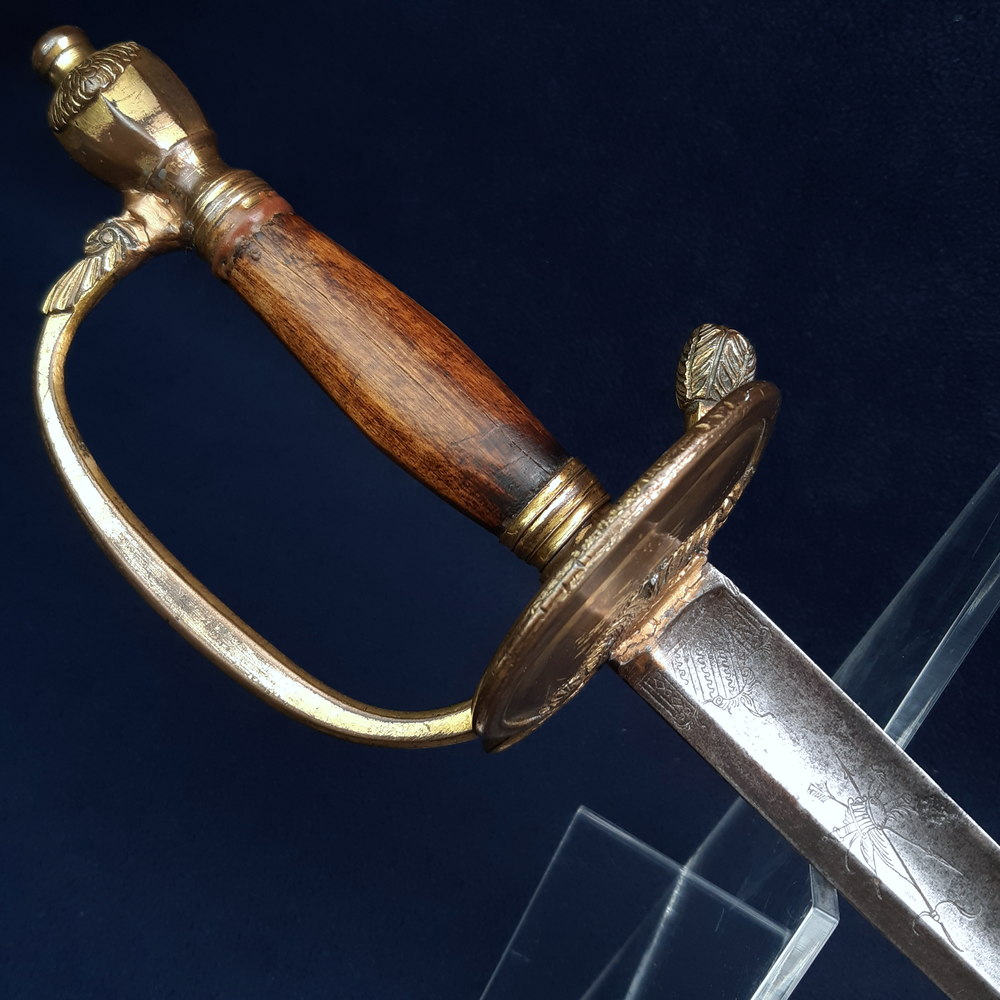
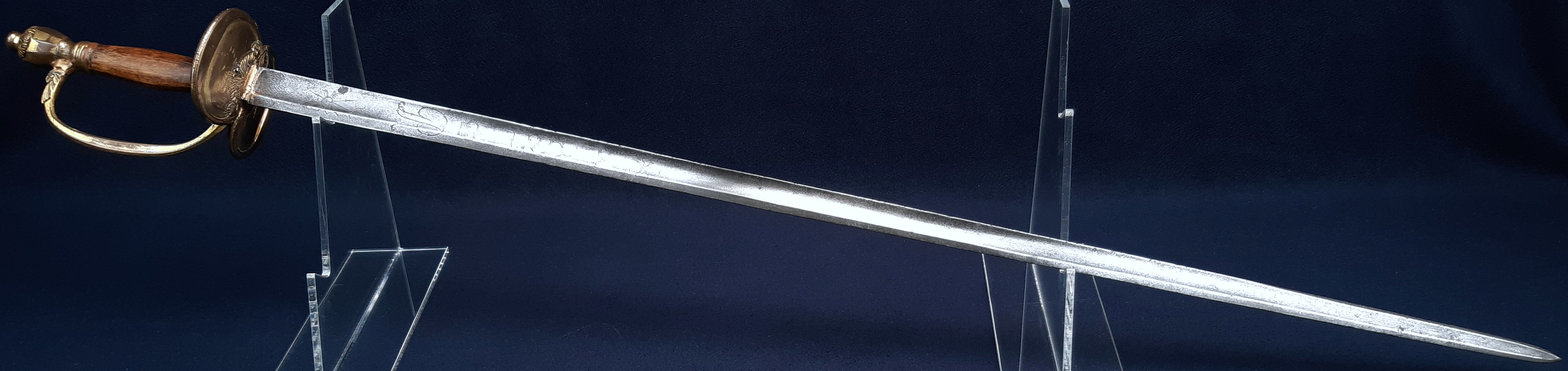
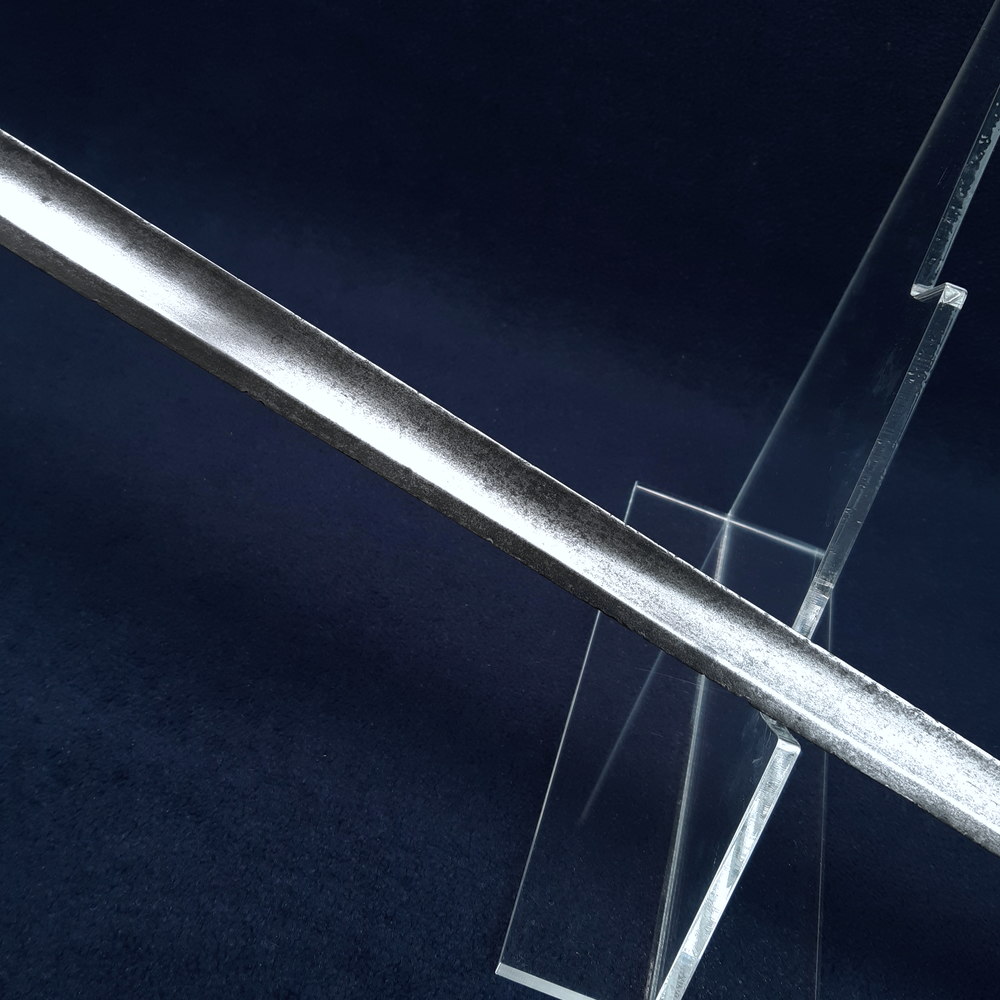
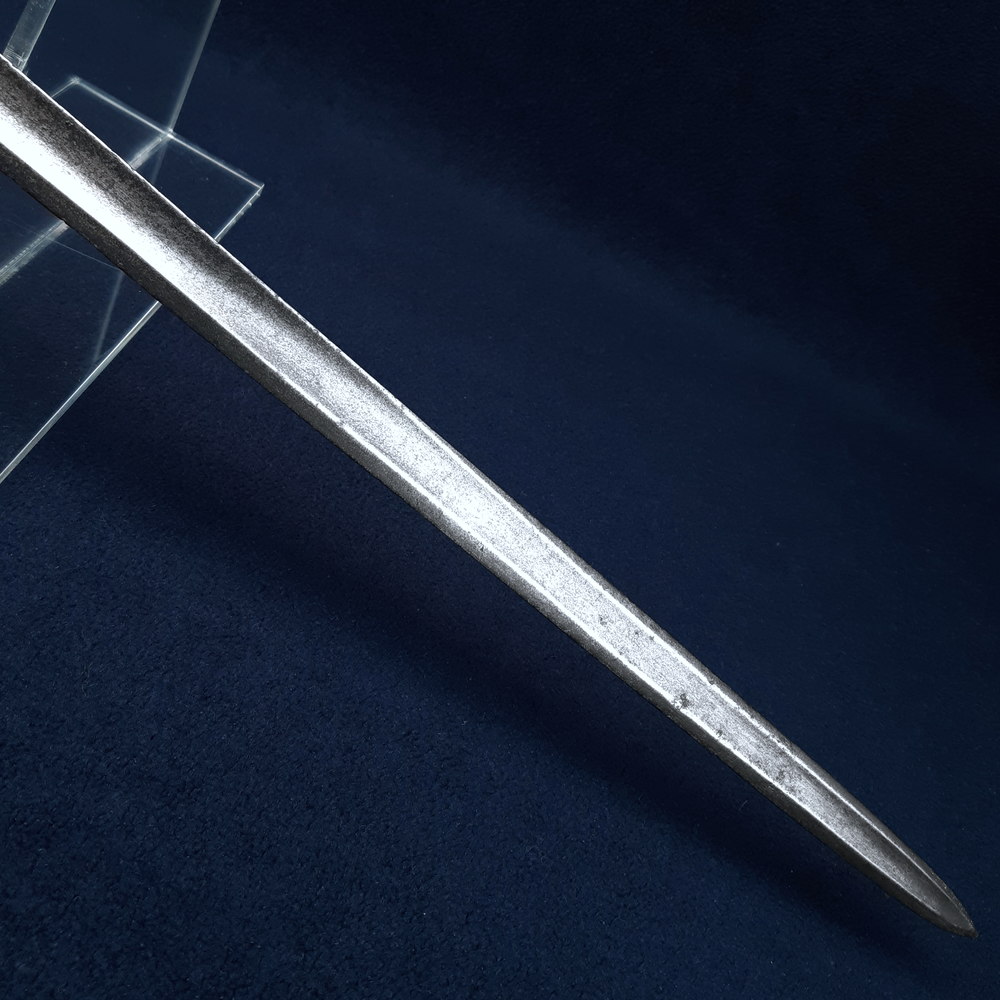
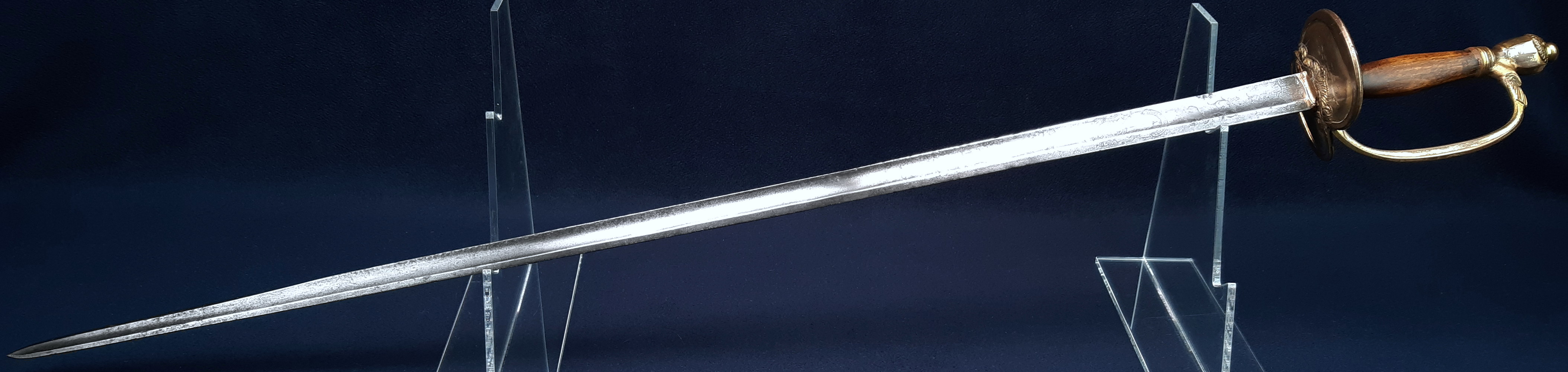
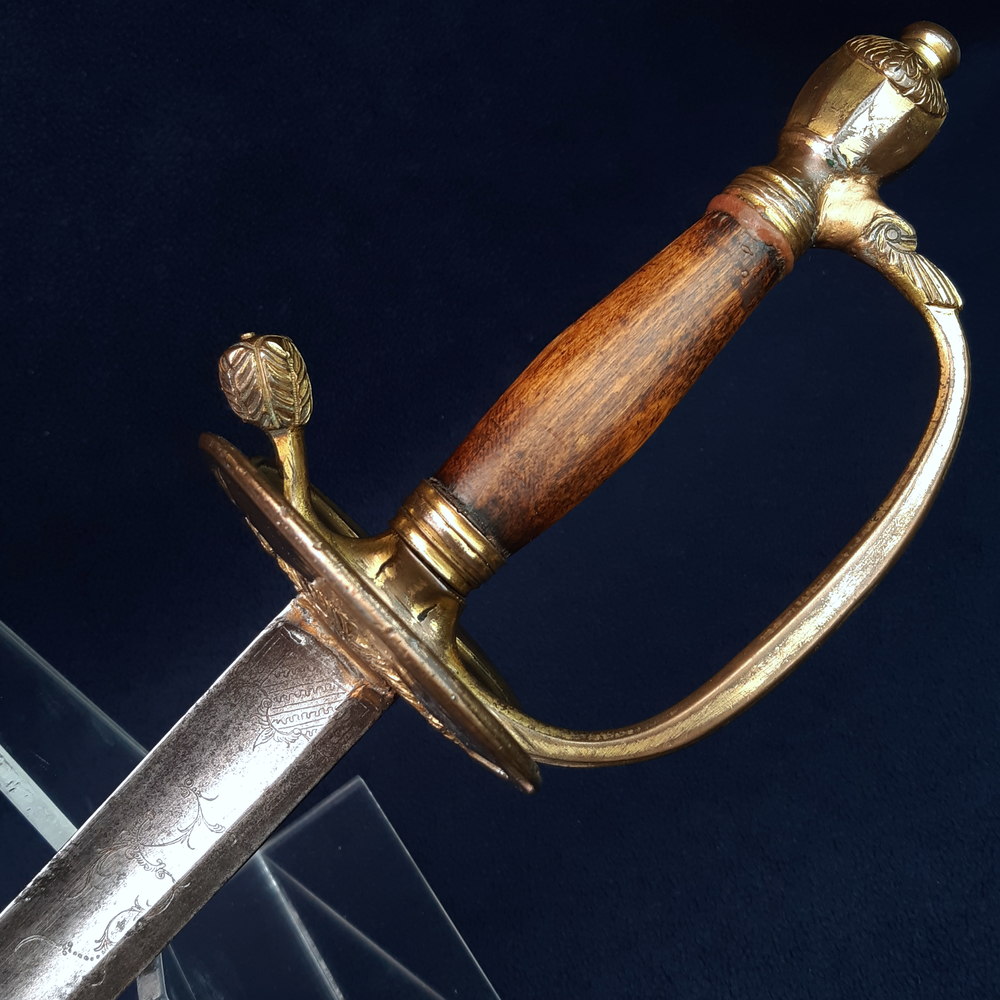
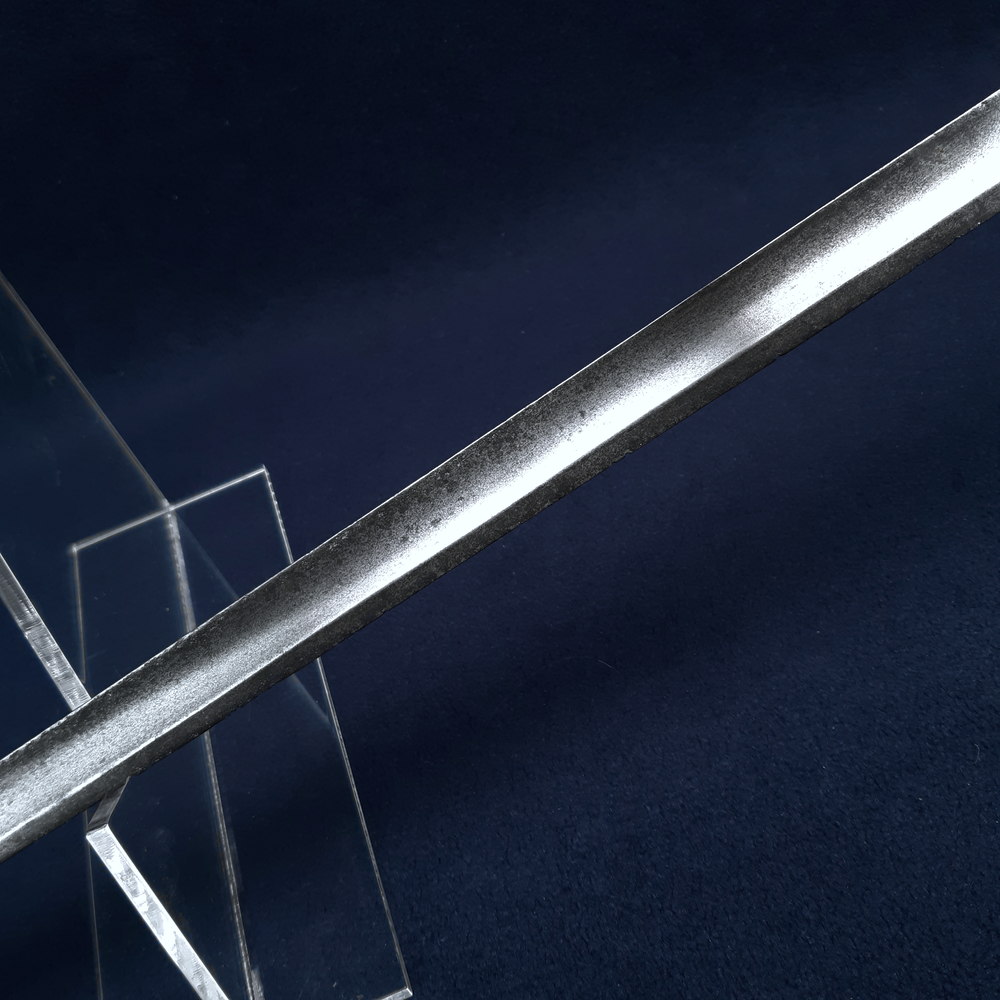
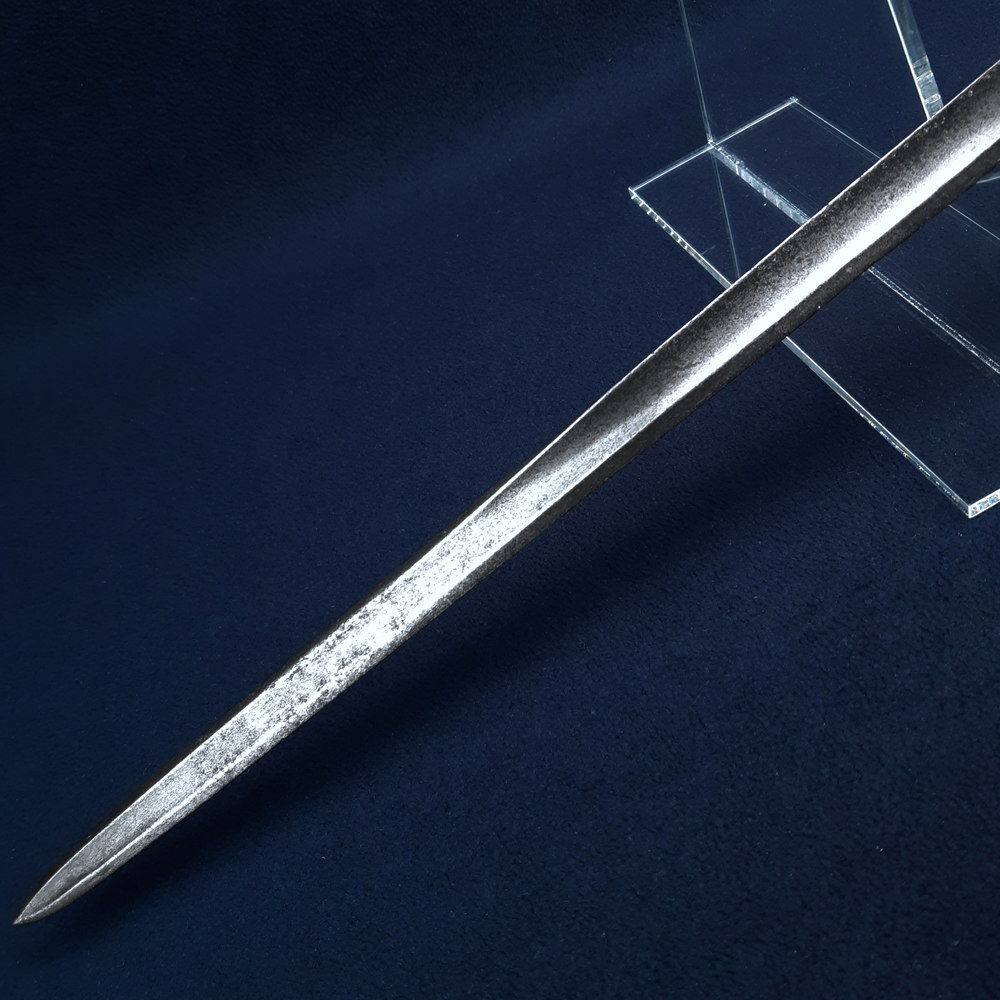
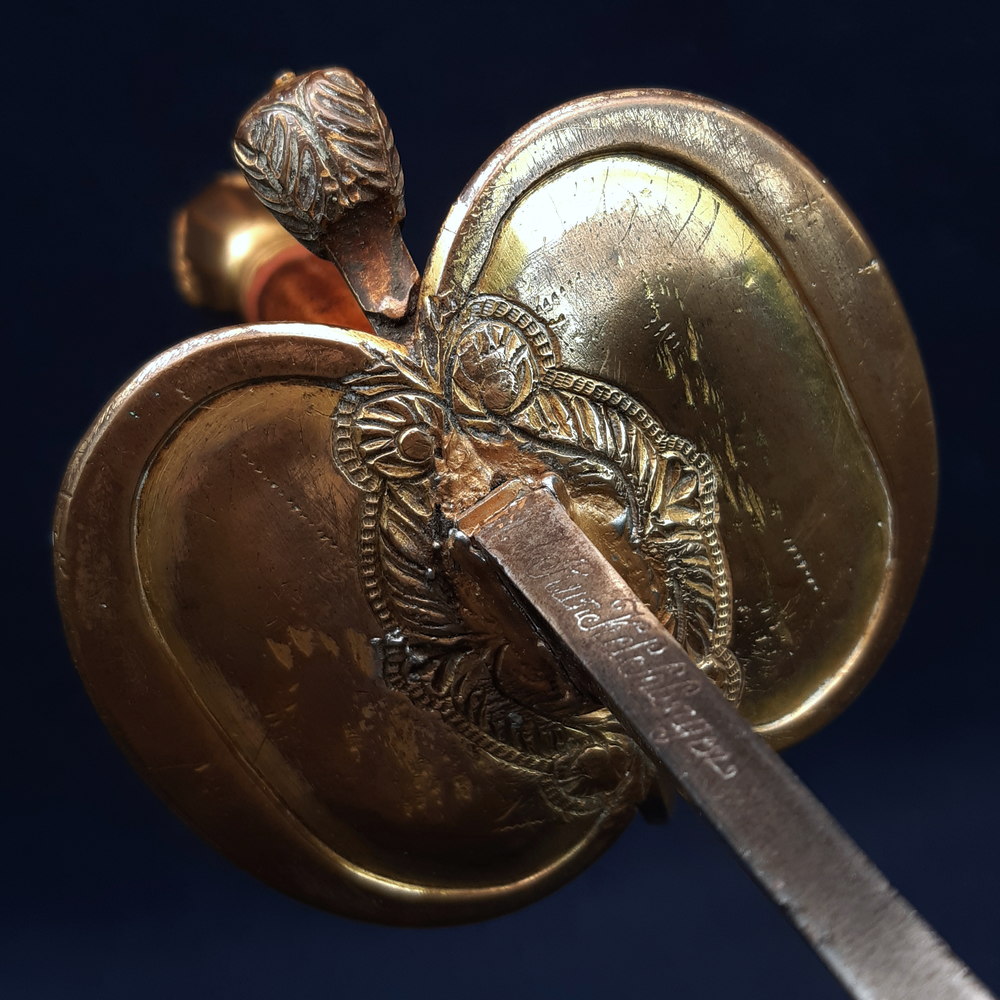
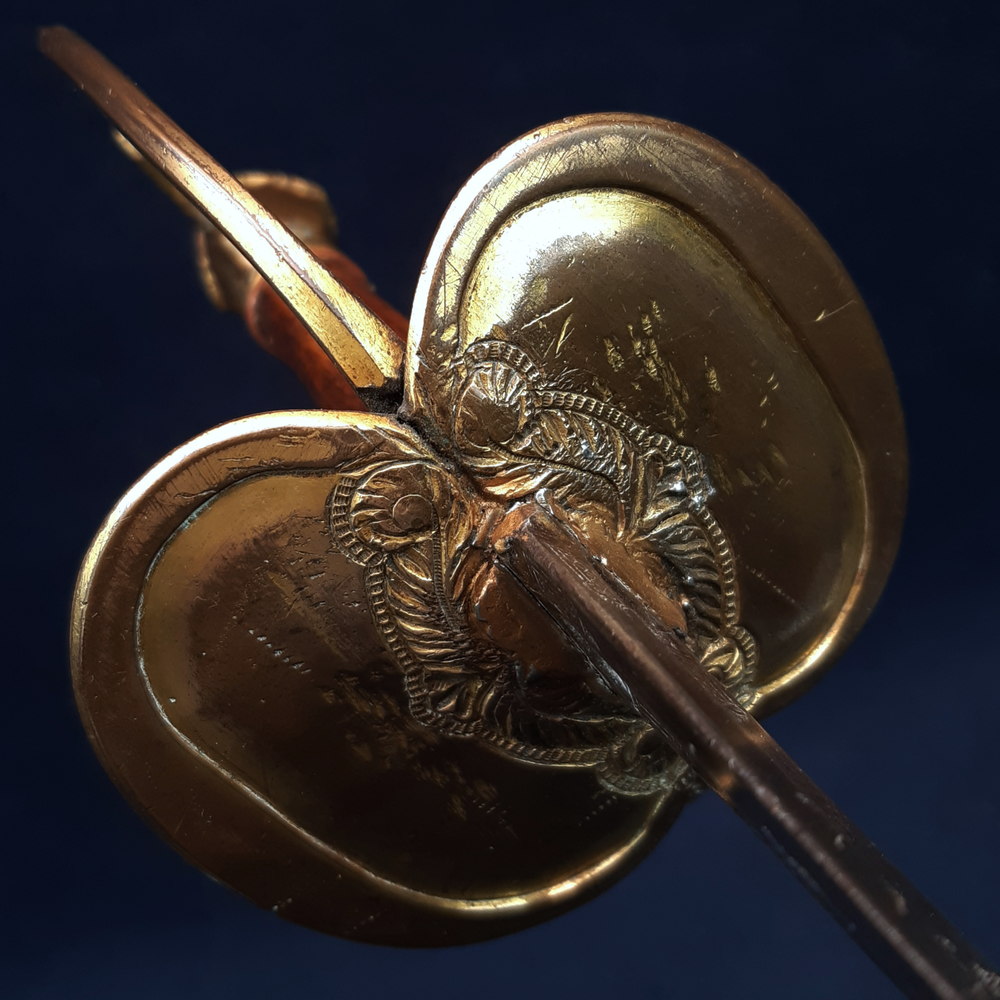
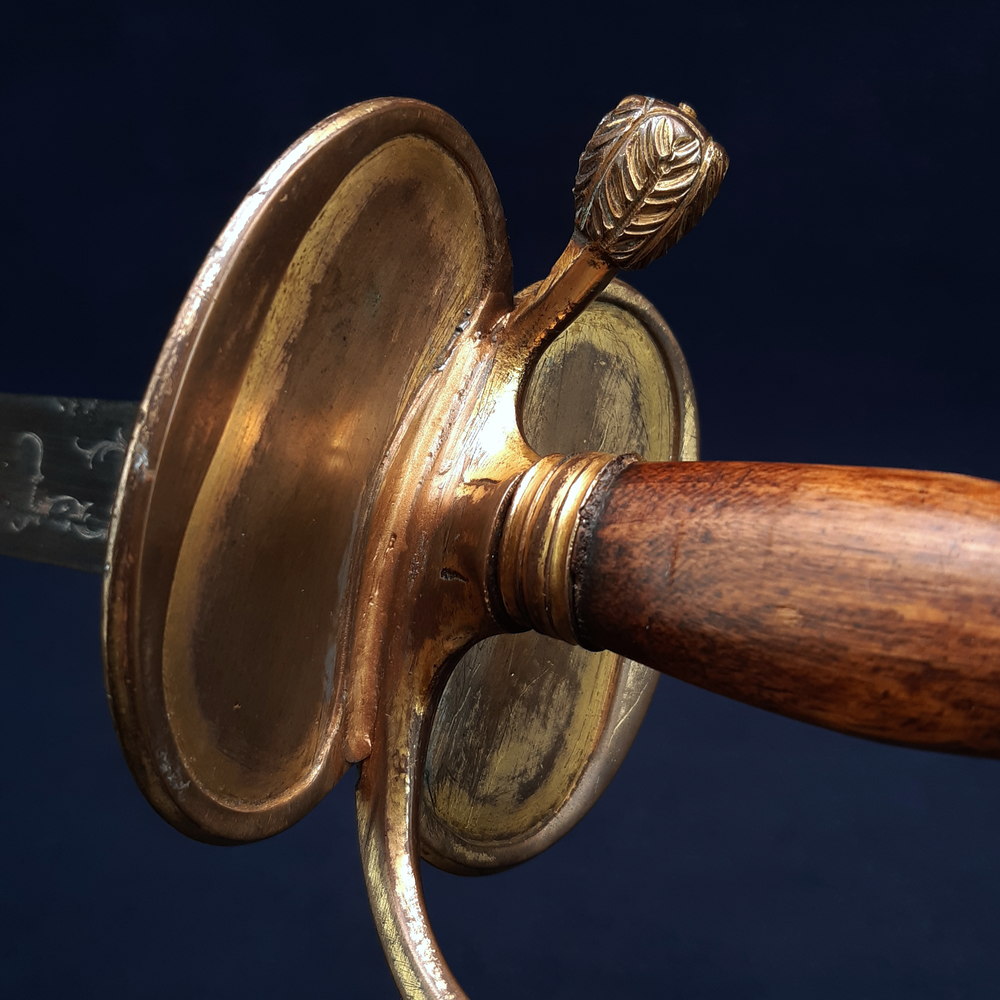
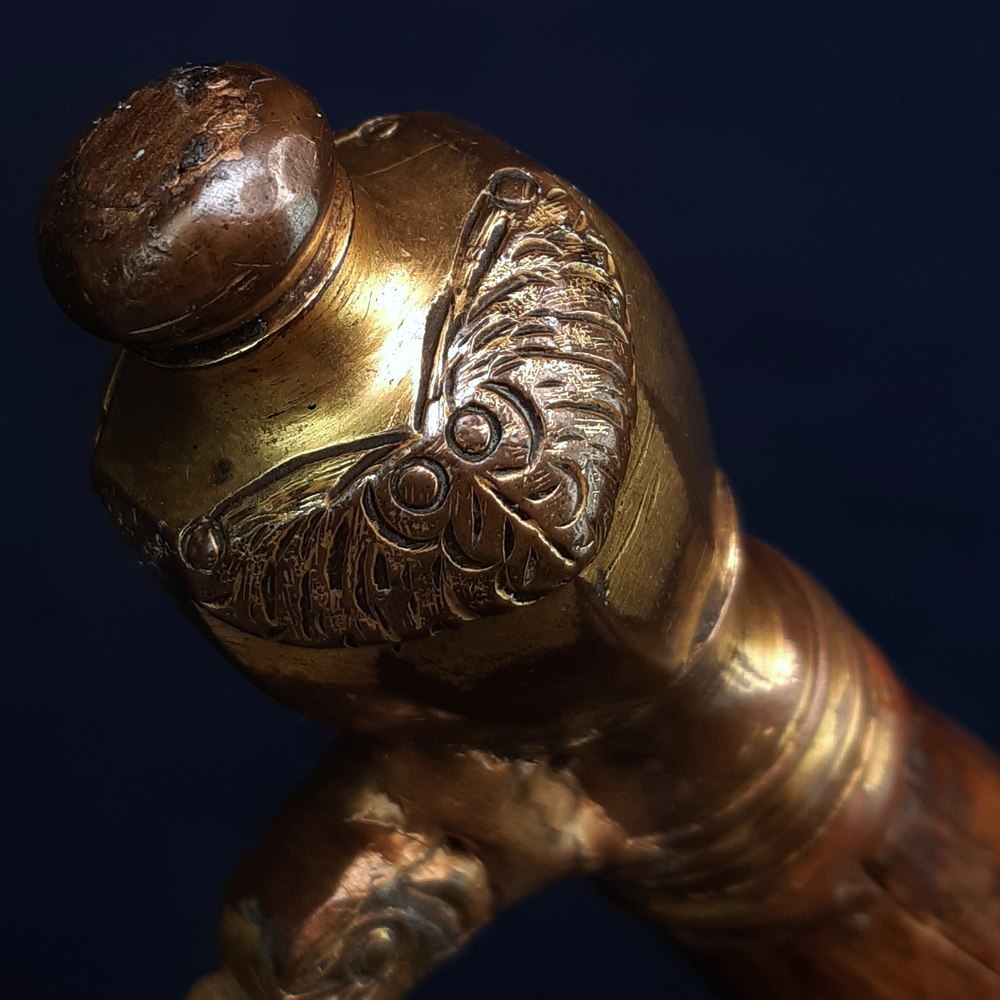
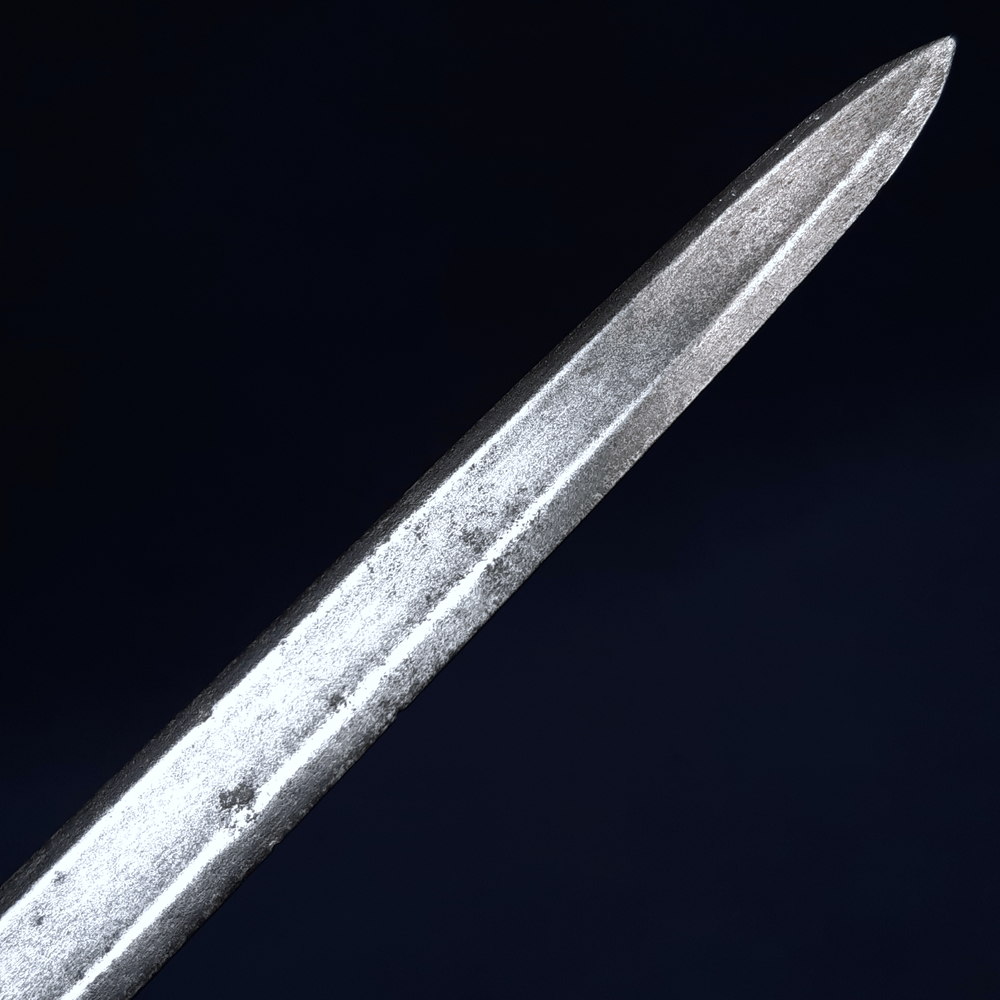
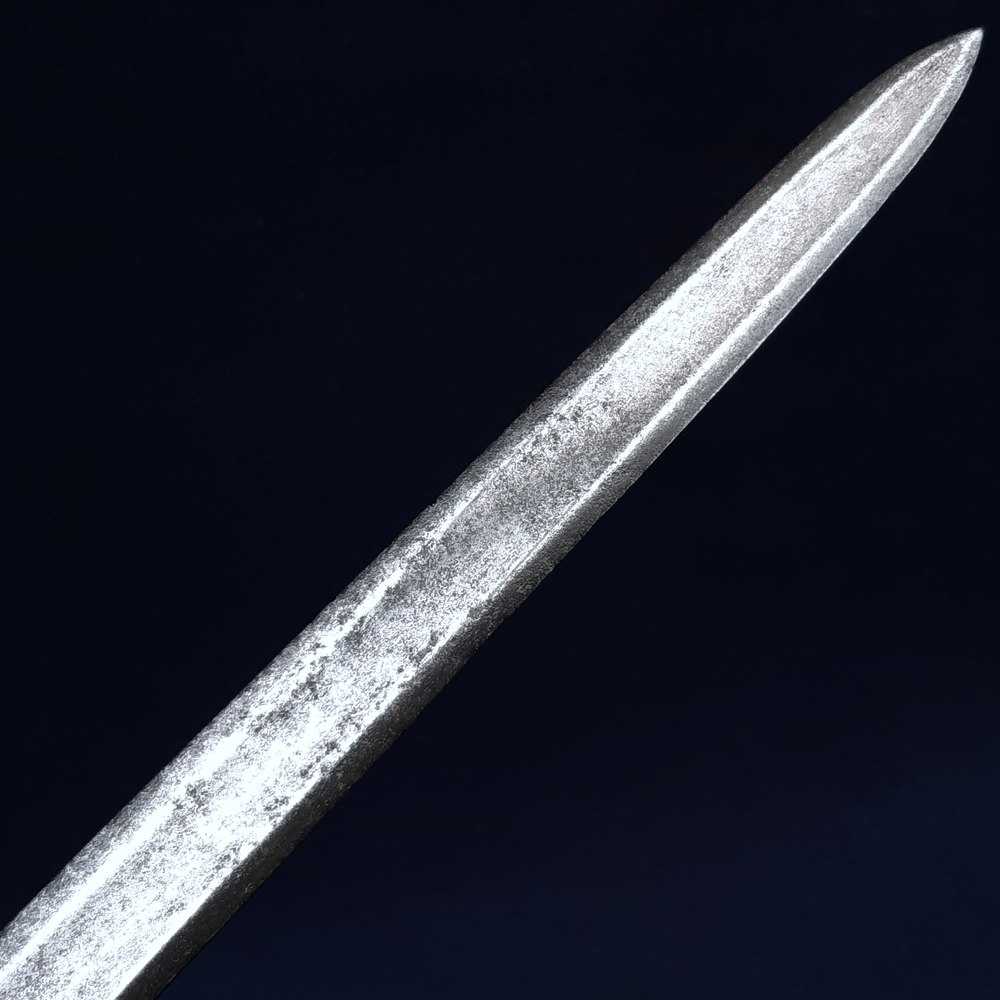
Straight single fullered blade with false edge, short ricasso, the fuller extending the full length of the blade up to the tip. Brass smallsword hilt with fixed double shell guard, wood grip, ribbed ferrules at each end of the grip, brass quillon in the form of a leaf rosette, slender brass knucklebow, faceted brass pommel with leaf designs, brass tang button. Blade 32½ inches in length, 1.05 inches wide at the shoulder, the sword 39 inches overall.
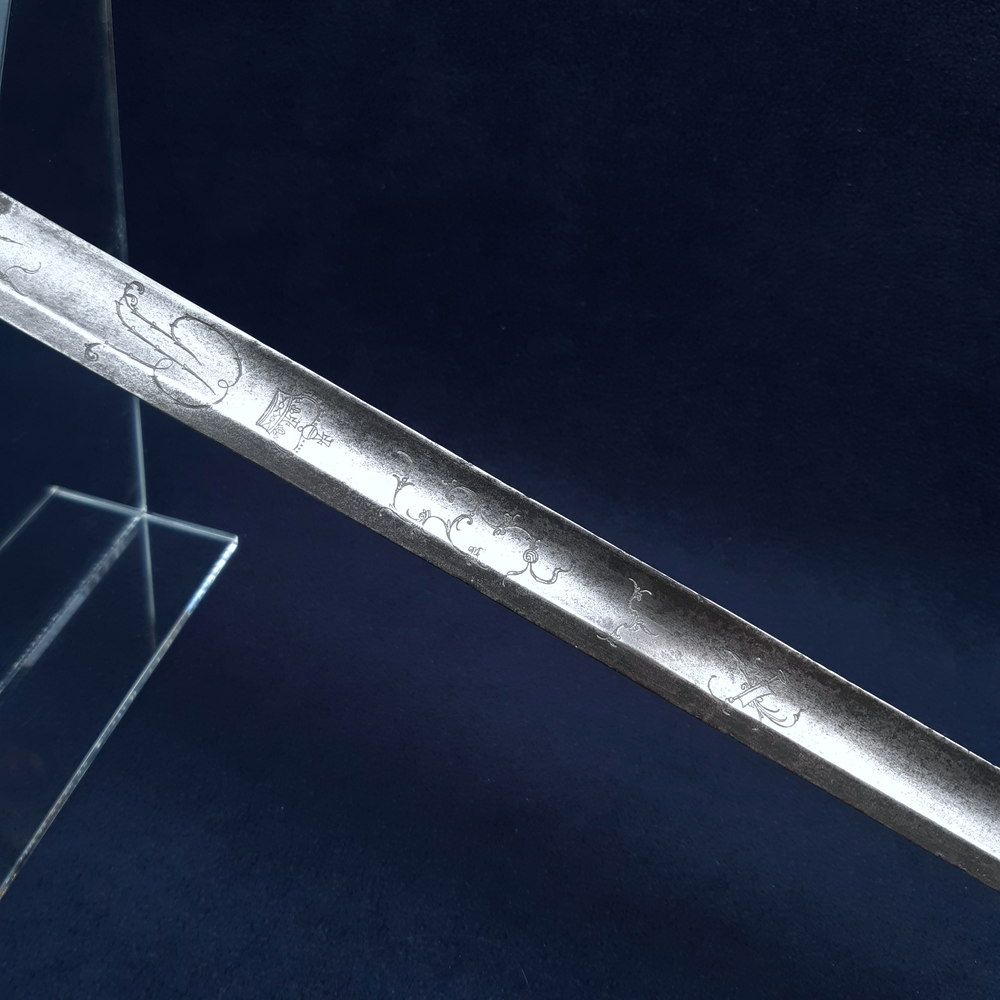
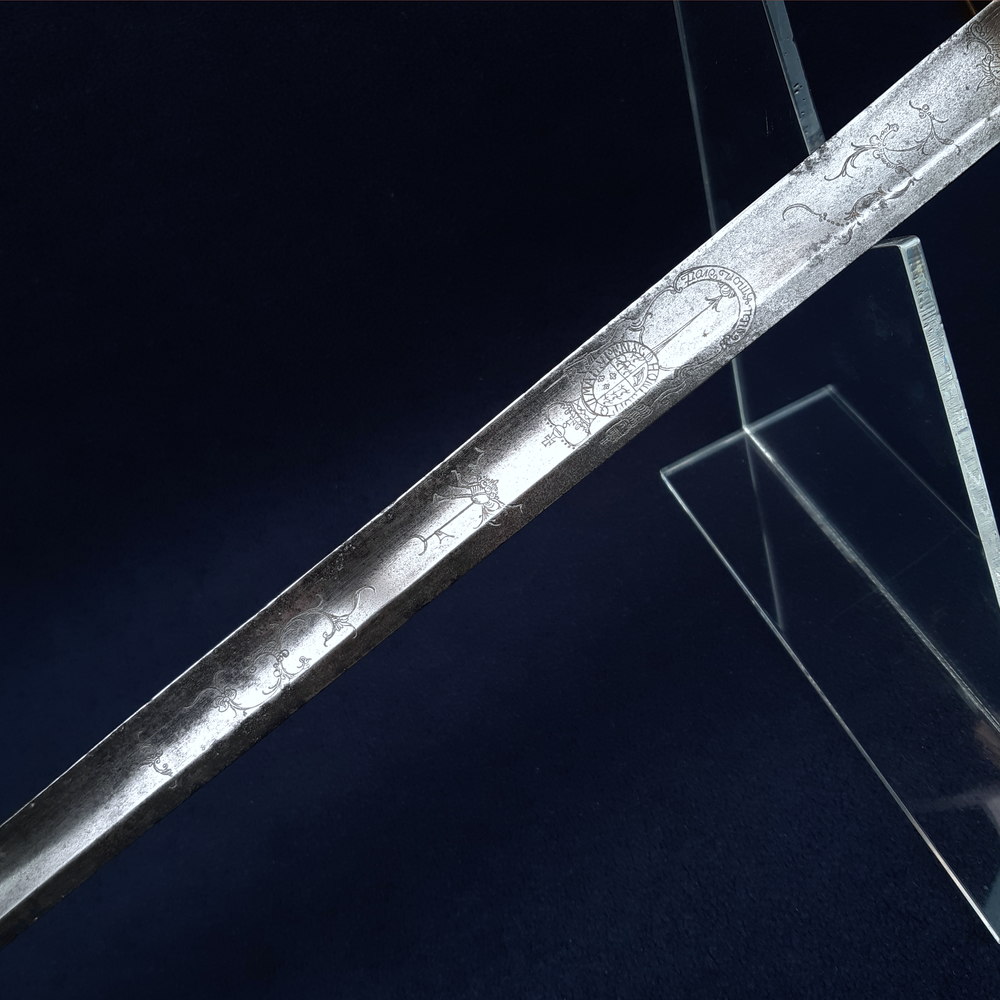
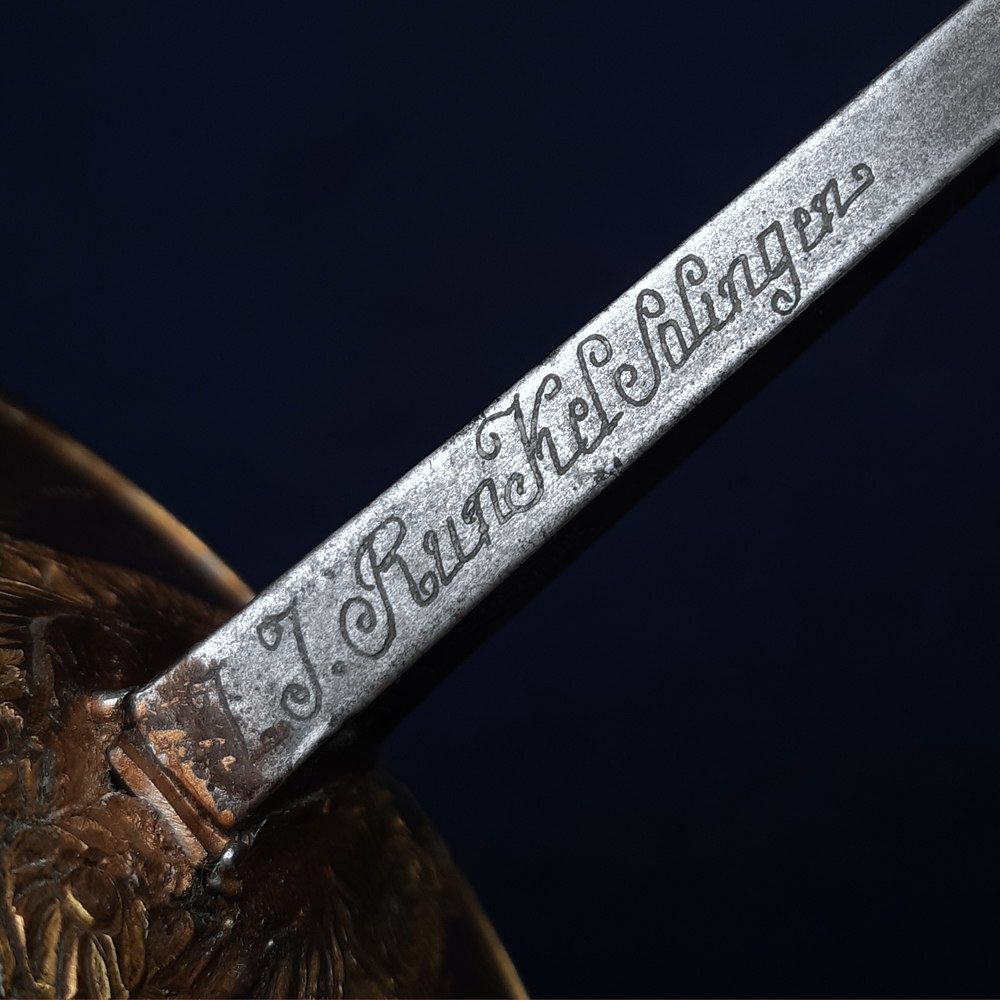
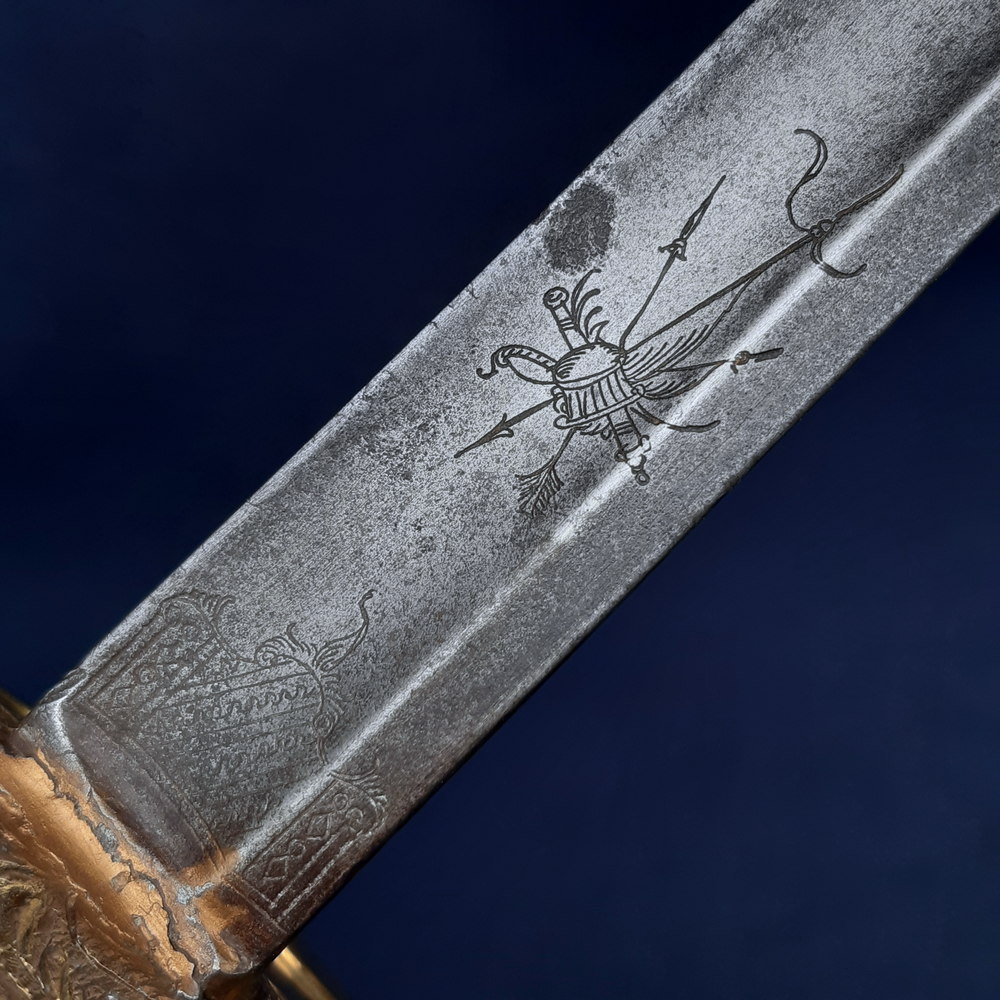
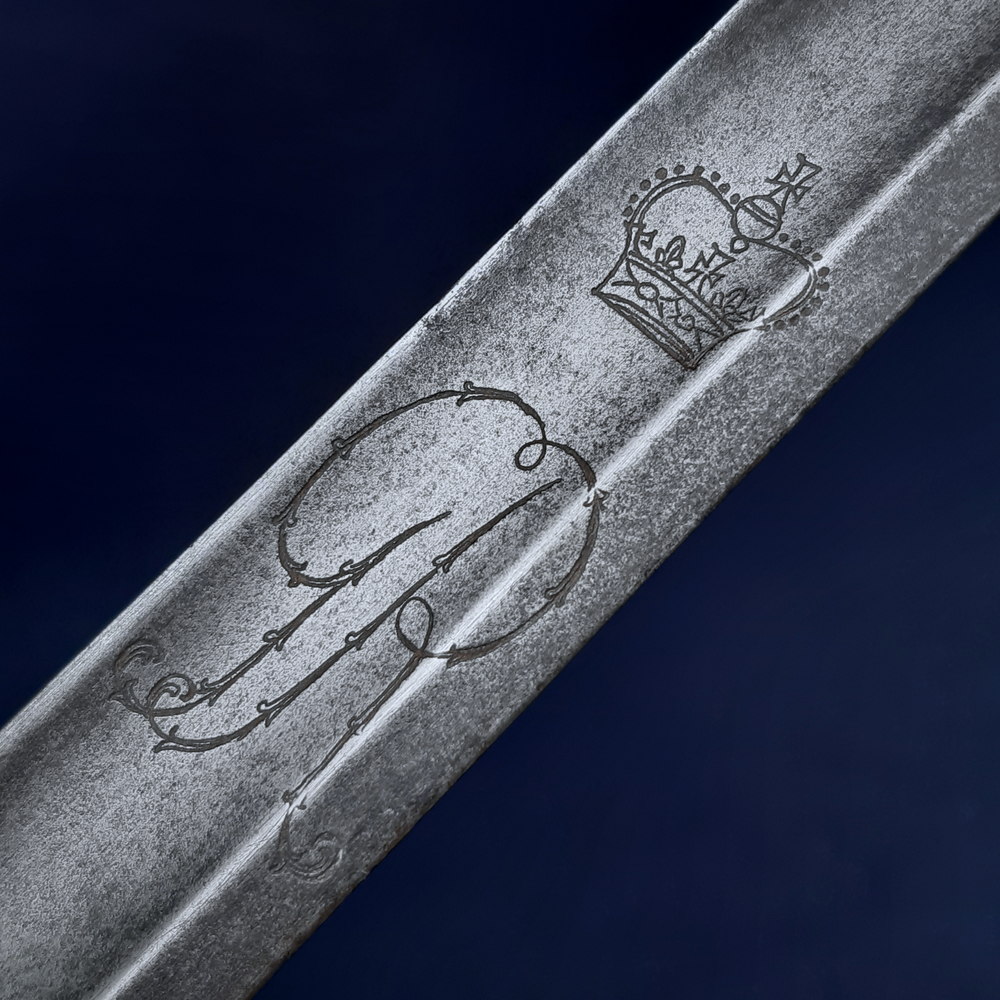
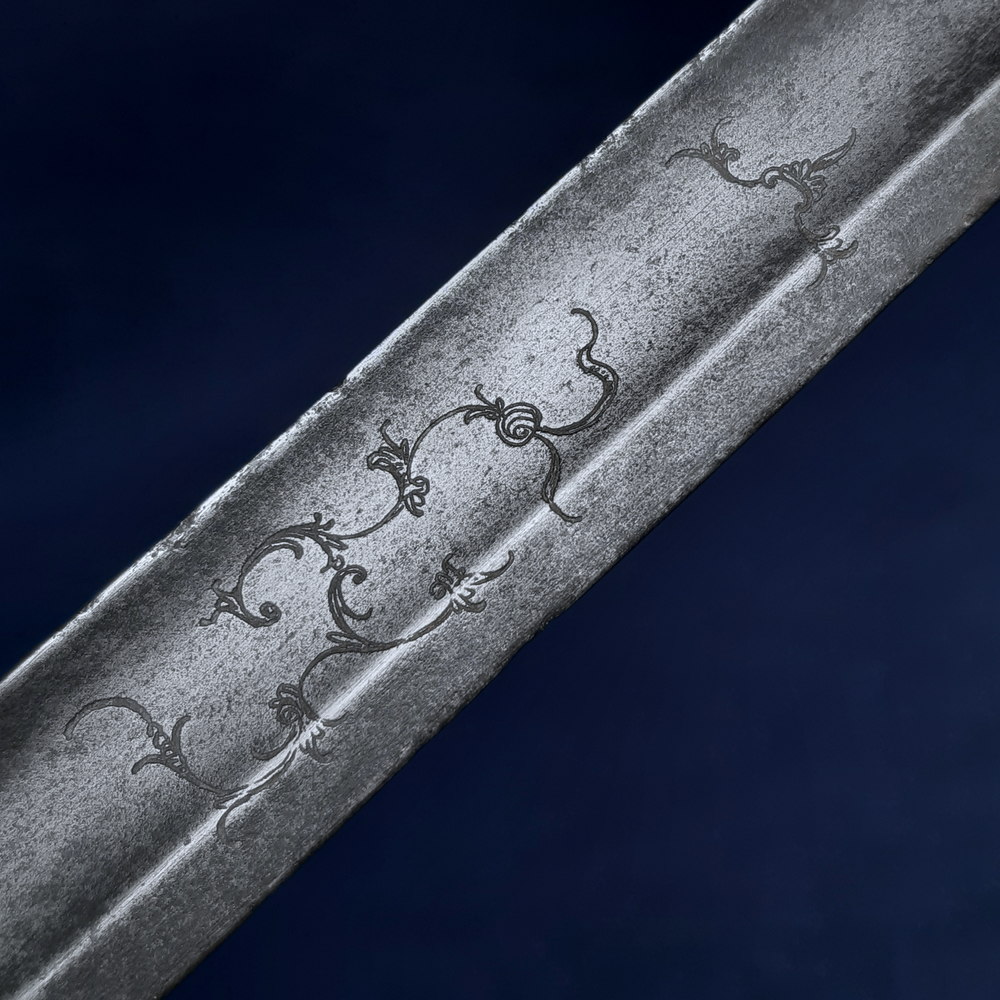
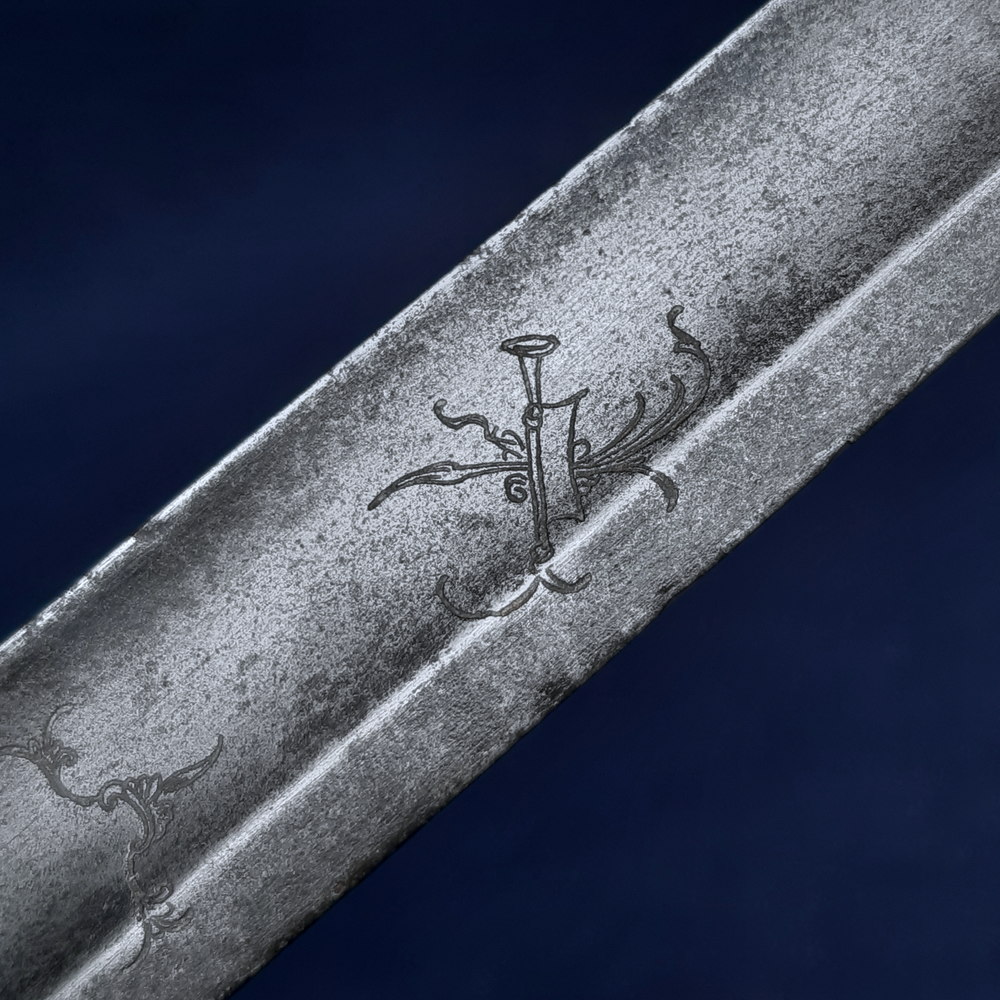
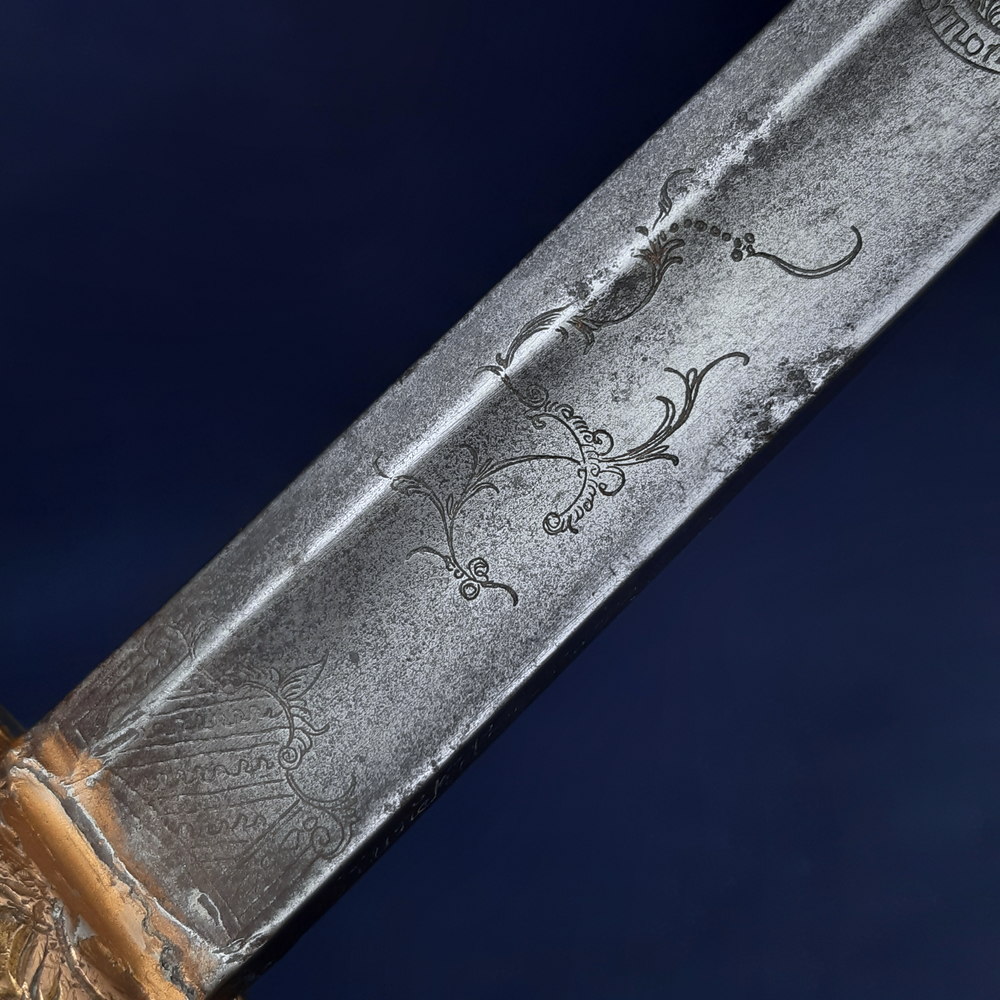
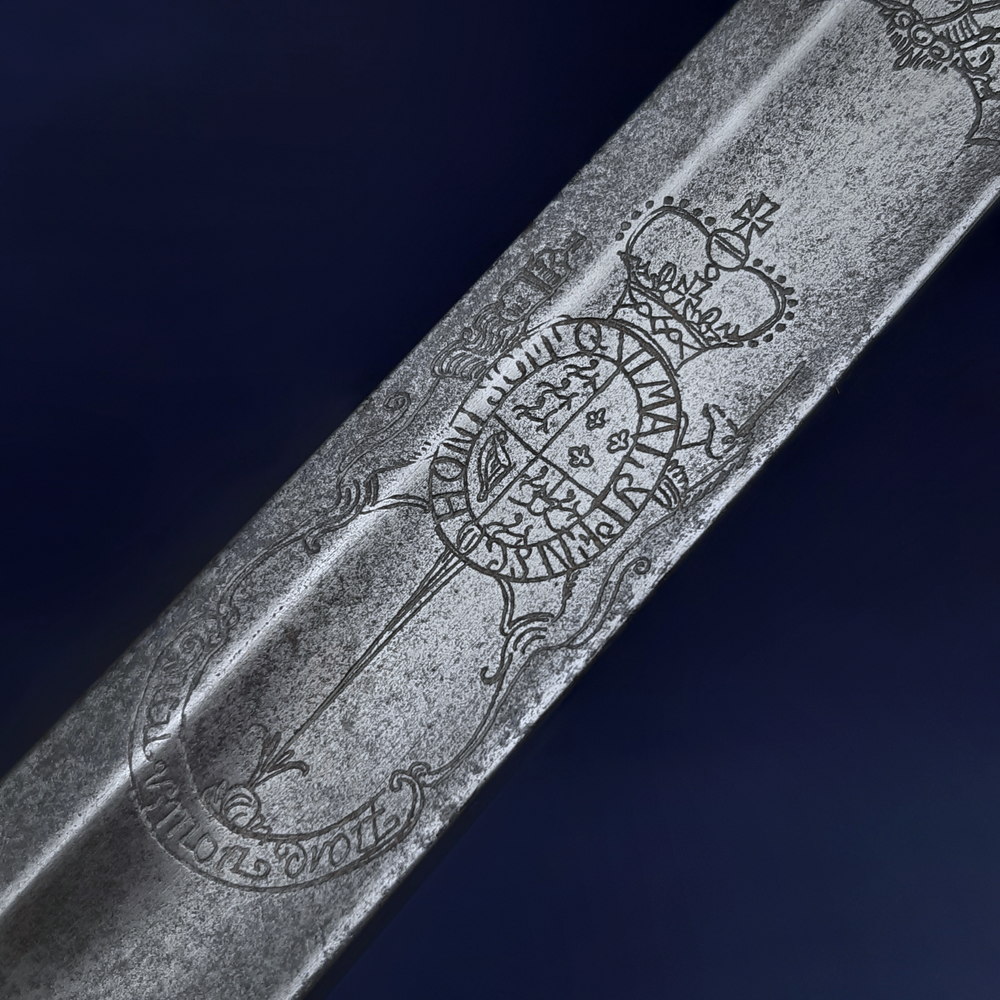
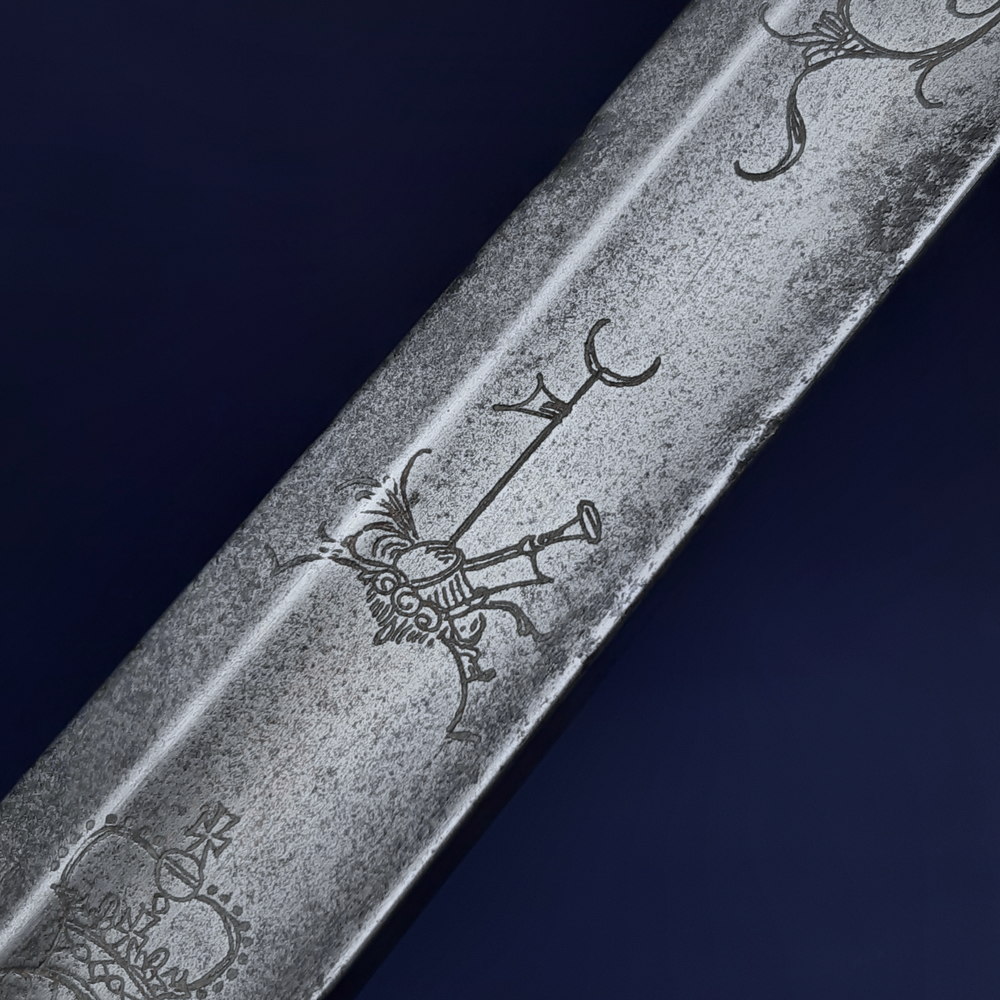
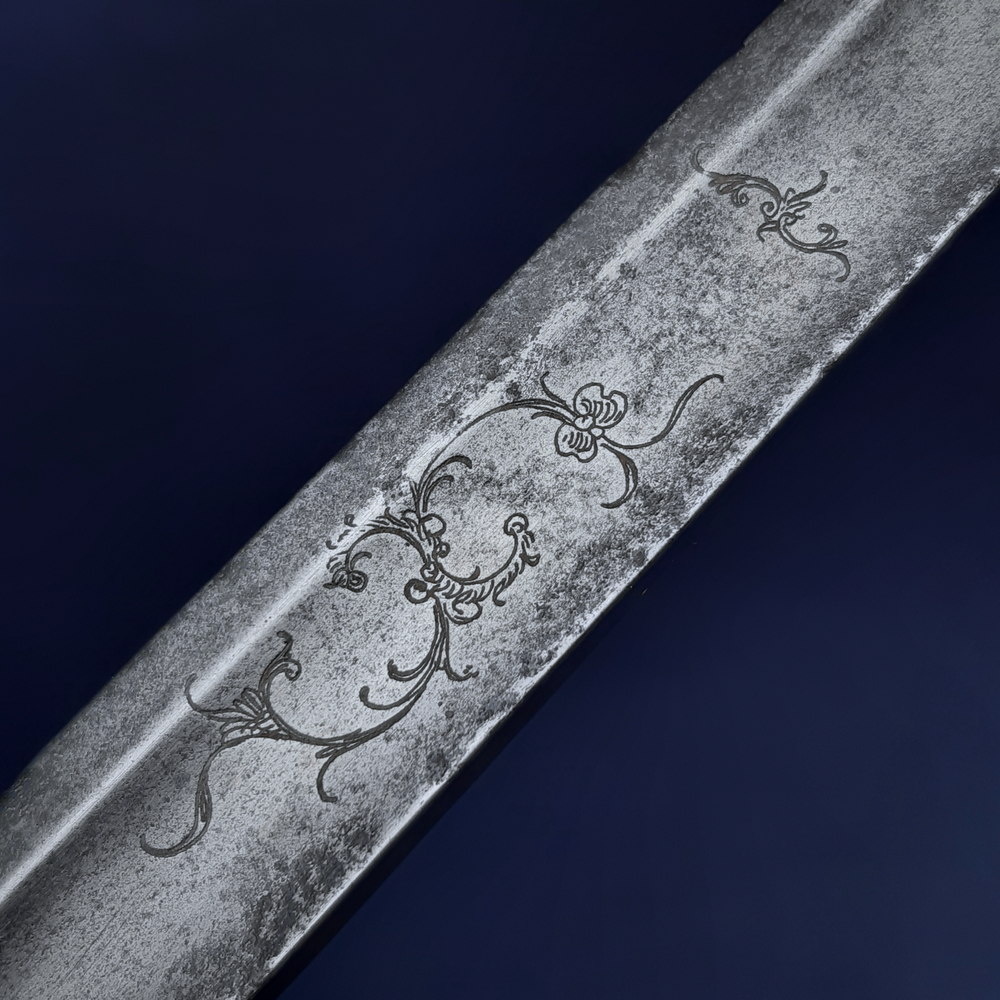
The blade is engraved on one side with stands of arms, the crown and cypher of George III, and foliage, and on the other side with more stands of arms, the royal coat of arms, and foliage. Decorative leaf edging to the hilt at the base of the blade, similar to the pommel. It is engraved on the spine with ‘J. J. Runkel Solingen’, indicating John Justus Runkel.
The royal coat of arms seen on this sword is the version predating the Act of Union which united Great Britain and Ireland, effective 1st January 1801. While it is rendered in a simplified form one can clearly make out features of the older design including the French fleur-de-lys in the top right quarter and the segmented bottom right quarter which held the King’s Hanoverian titles. As part of the Act the King gave up his claim to France so that quarter was replaced, and the Hanoverian emblems moved from the bottom right to a central inescutcheon of their own.
John Justus Runkel was a prolific importer (and occasionally, smuggler) of sword blades and completed swords from Solingen, in his native Germany, into Britain. His business, operating from 1778 to 1808, sold primarily to the sword makers and retailers of London, undercutting British-based producers. The spelling ‘Sohlingen’ was used on Runkel’s blades until around the year 1800, when it was changed to the ‘Solingen’ seen on this example.
Combining the post-1800 ‘Solingen’ spelling and the pre-1801 coat of arms, I am reasonably confident this sword was made in the year 1800.
The spadroon appears to have been an English innovation, first appearing around 1680. It was a light straight-bladed double-edged sword with a fuller typically running the entire length of the blade, which aimed to find a midpoint between the smallsword and broadsword, with a simpler, less restrictive guard compared to the elaborate mortuary and basket hilts of its predecessors. It was sometimes referred to as the ‘shearing’ sword and was regarded as a refined weapon, fast and agile due to its lightness but capable of cutting as well as thrusting.
The first formal instructions from the War Office on what swords should be carried by infantry officers was given in April 1786, specifying that swords should have straight cut-and-thrust blades, 32 inches long and at least 1 inch wide at the shoulder. The hilt, it said, should be of steel, or if not steel, should be gilt or silver according to the colour of the uniform buttons for that unit. These extremely vague rules resulted in a great deal of variation in the swords produced.
In 1796 the specification was updated, keeping the same blade but with a standardized double shell guard and wire-bound grip, which produced the 1796 Pattern. There was still some level of variation but this was usually restricted to decoration and extras, like the folding guard seen on some examples. This example is relatively simple, with only line engravings rather than the flashy blue & gilt blades seen on some examples, and a fixed hilt. This pattern was carried until the increasing popularity of sabres as fighting swords displaced the spadroon, leading to the radically different 1803 Pattern infantry officer’s sword.
The blade’s true edge seems to have been sharp at one time but is now quite dulled from wear outside of a scabbard, the false edge is unsharpened. Multiple small nicks/dents to both edges and dents along the spine. The tip is very slightly worn (<1mm). The blade has light patination overall, some spots of cleaned heavy pitting on the spine and running close to the spine on each side, some of it near the engraving but not impacting the designs, and near the tip. The engraved decoration is very clear with no rubbing or signs of repolishing.
The brass parts of the hilt have a moderate patina, some gilding remaining on faces and in recesses, wear to the gilding on raised edges that reveals brass. The quillon is bent slightly backwards towards the grip. The outside of the guard has a number of small dents. The original wire binding of the grip has been wholly lost exposing its wood core – the wood has cracks running lengthwise on one side but is firm in the hand.
A previous owner has taken measures to repair or reinforce the hilt, probably to prevent movement & rattling of its parts. There is brazing to both the inside and outside of the shell guard, serving to join it to the base of the blade and to the knucklebow, and also at the base of the knucklebow joining it to the pommel. There is glue at the base of the grip joining it to the pommel. This has successfully firmed up the hilt components making the sword solid in the hand, but is relatively crude work, albeit with some effort to colour-match the fixatives to the sword components.
