
Indian 19th Century Baker-Style Bayonet
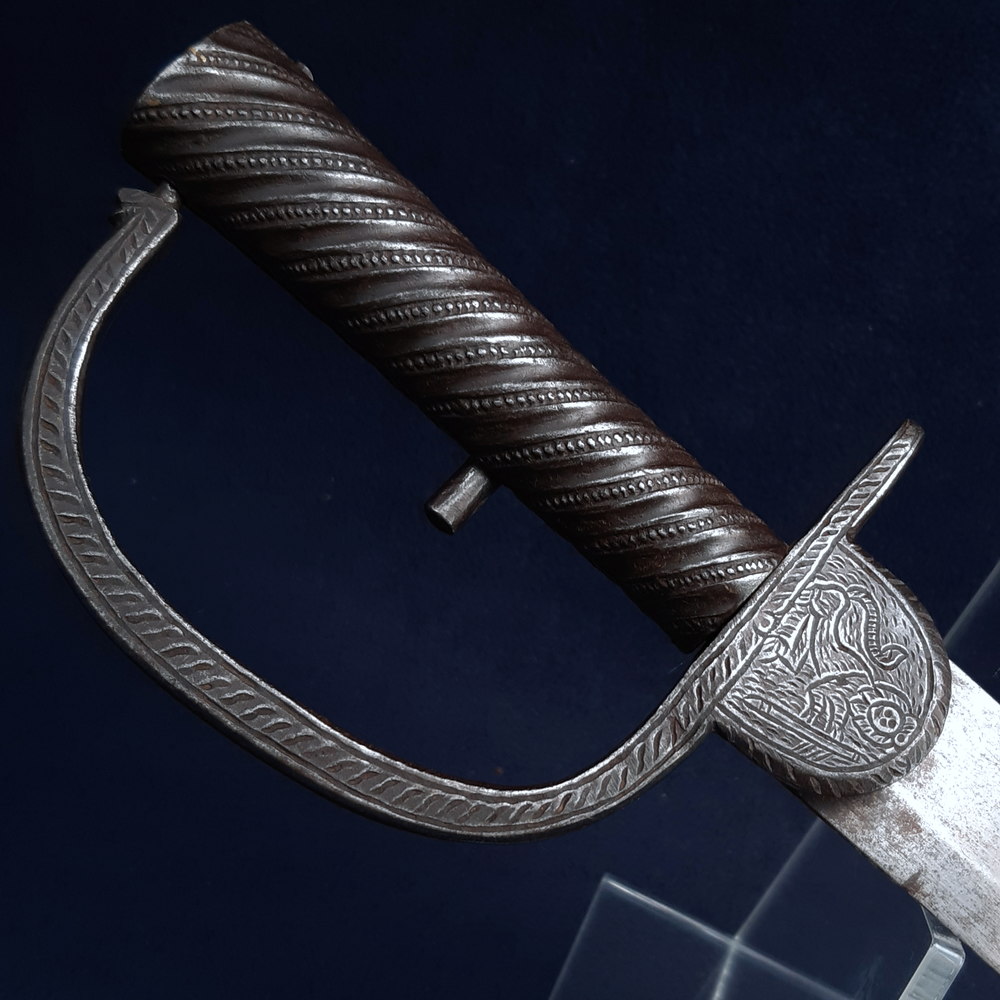
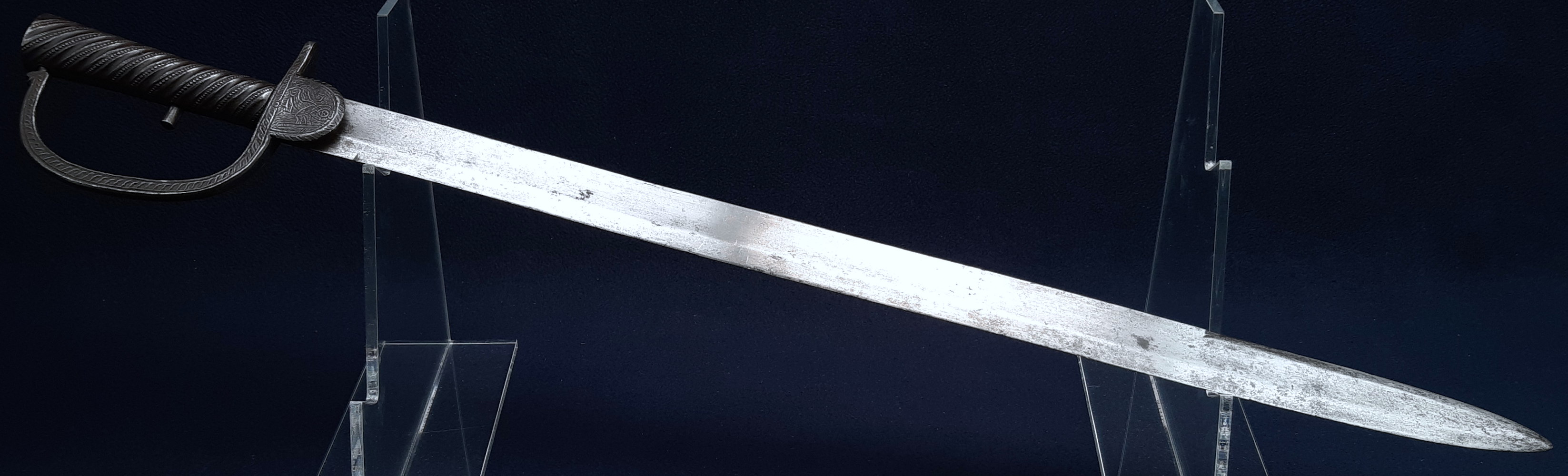
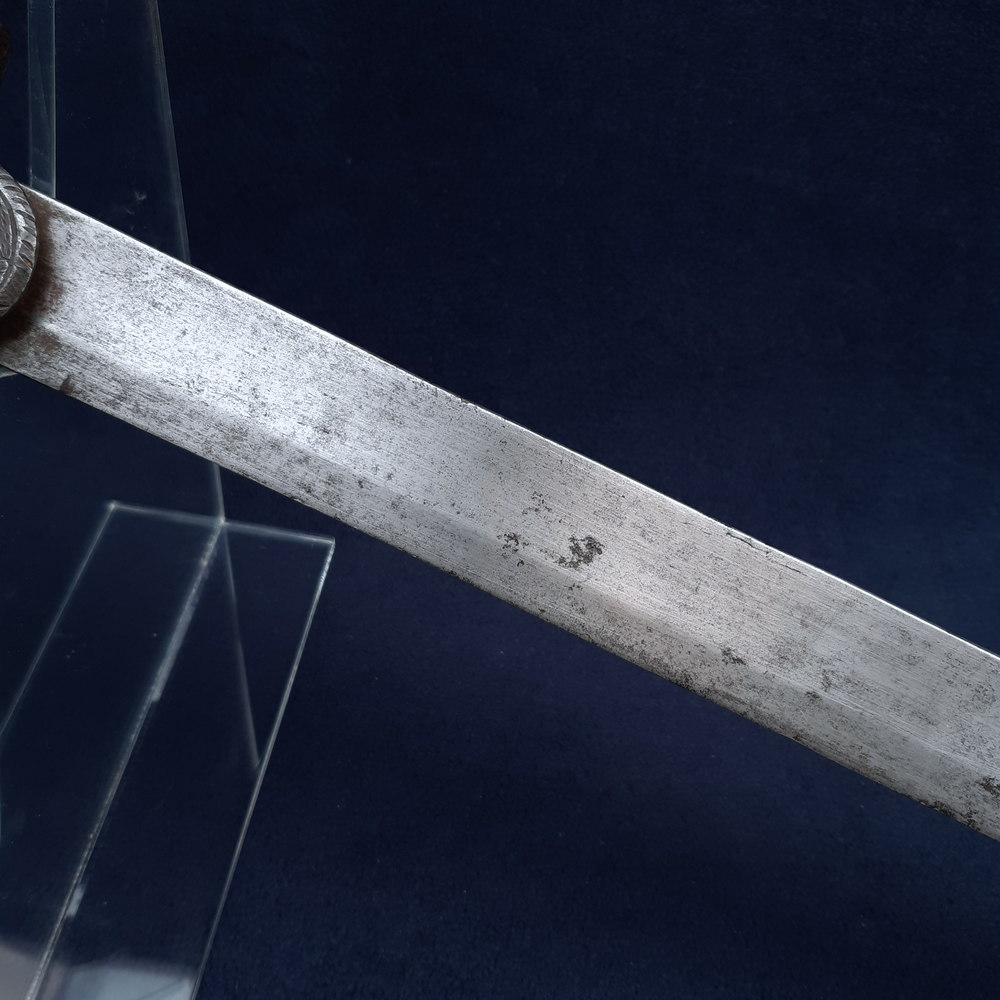
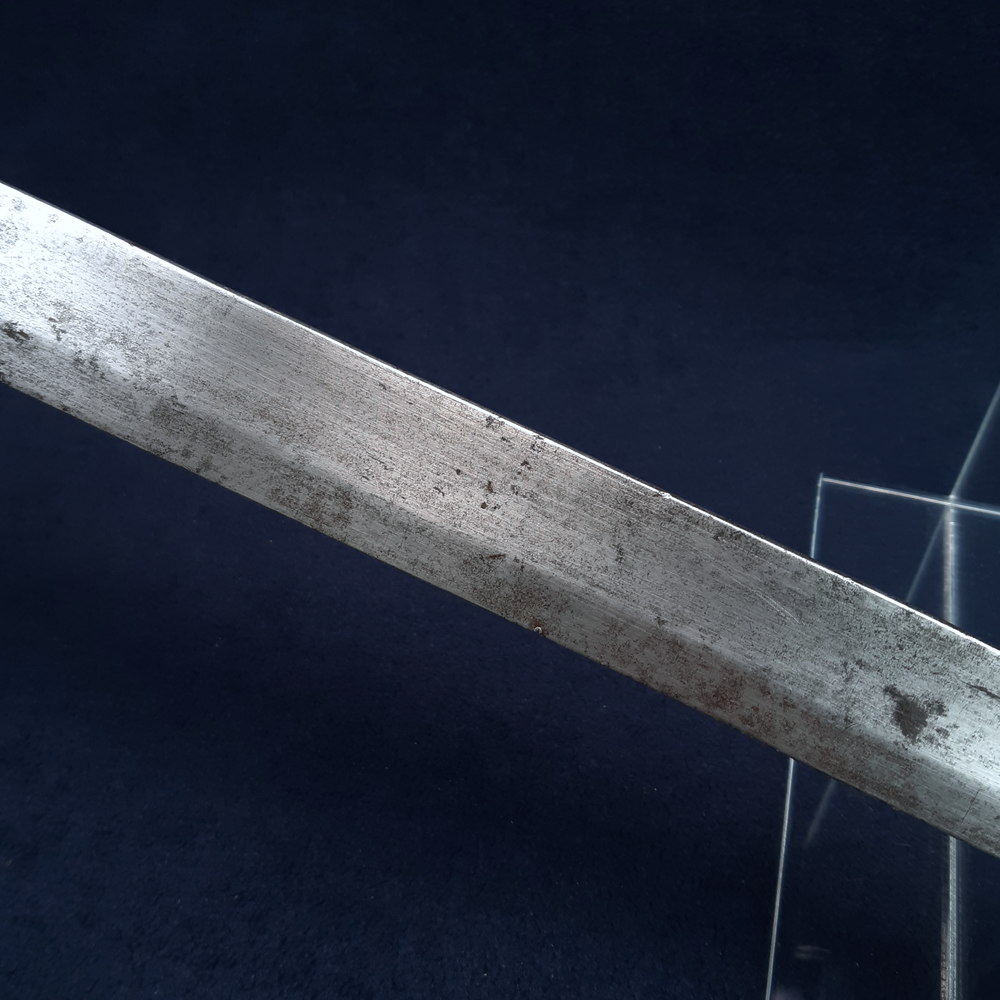
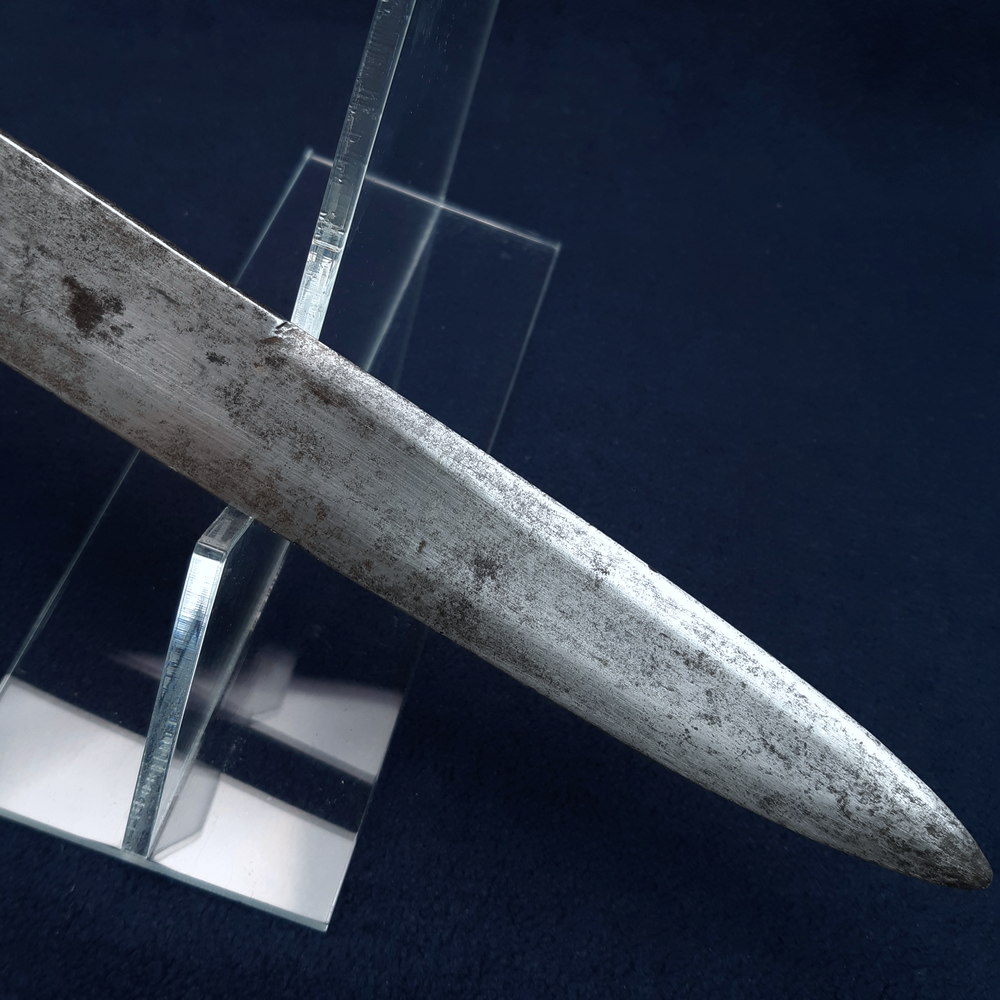
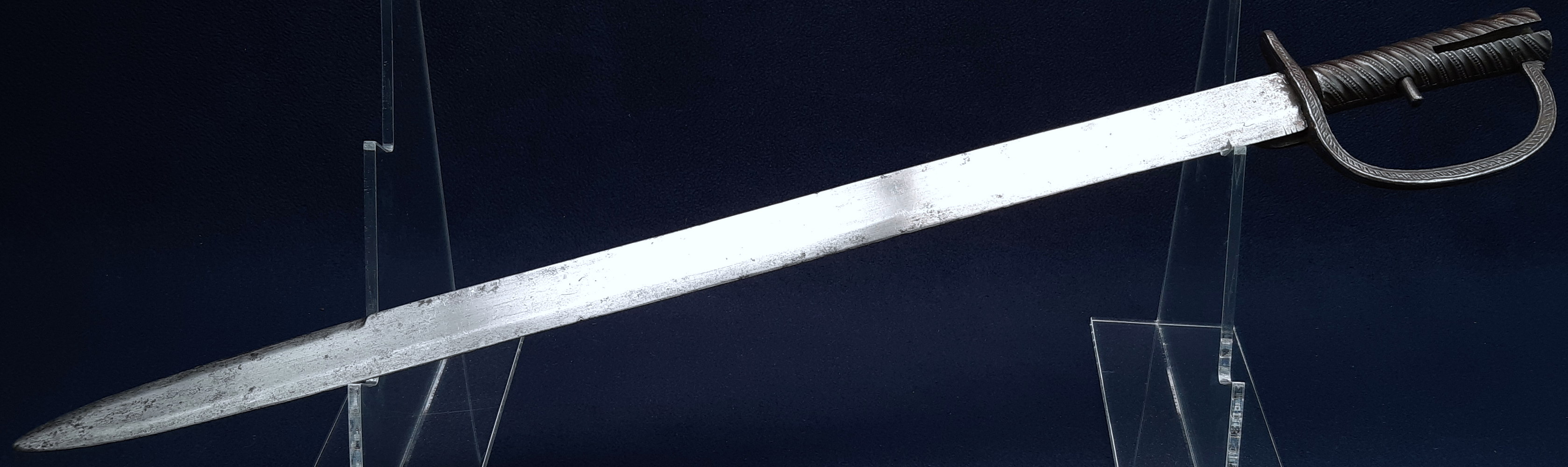
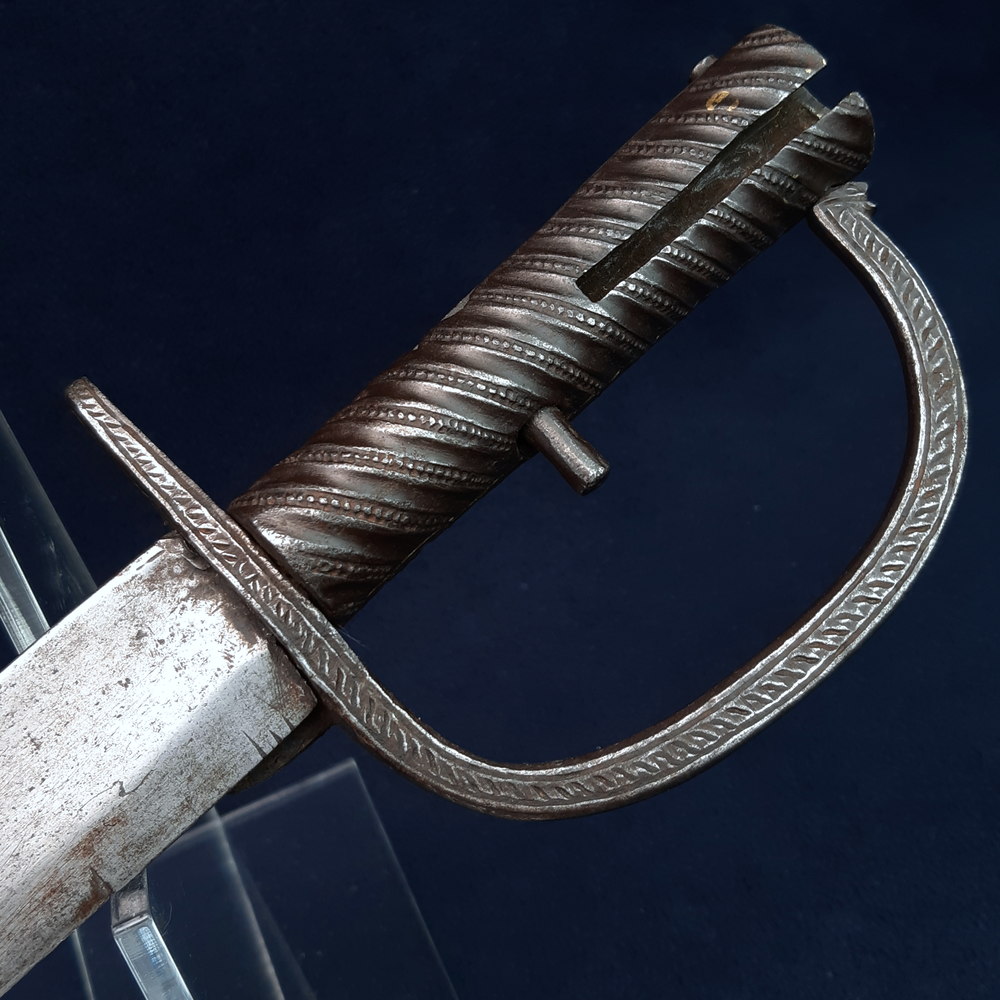
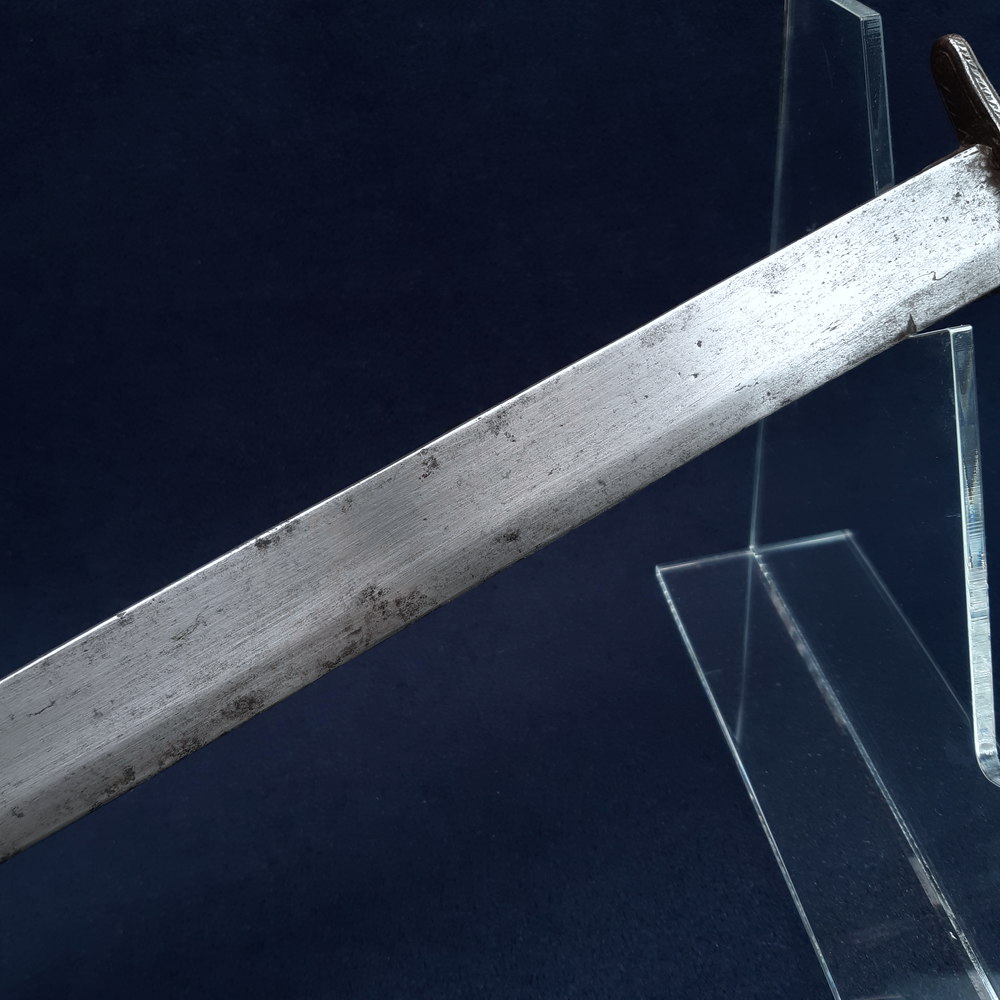
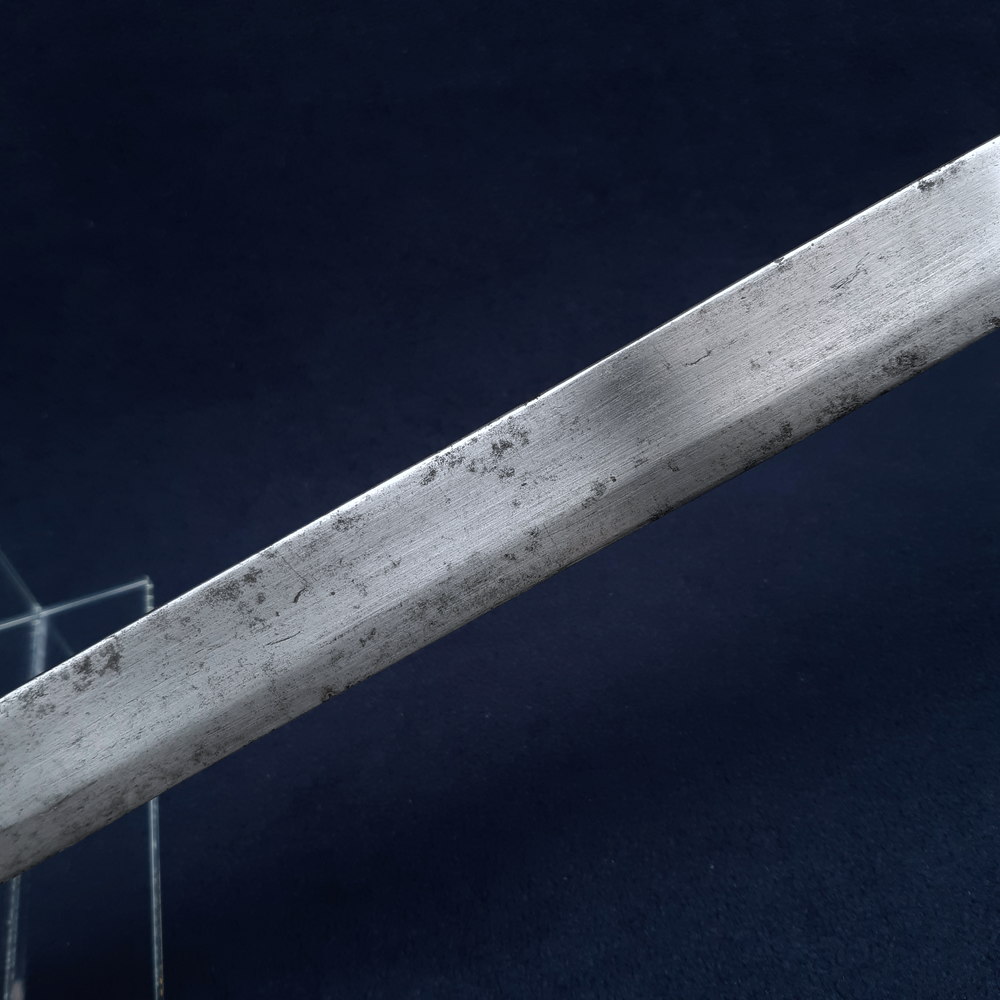
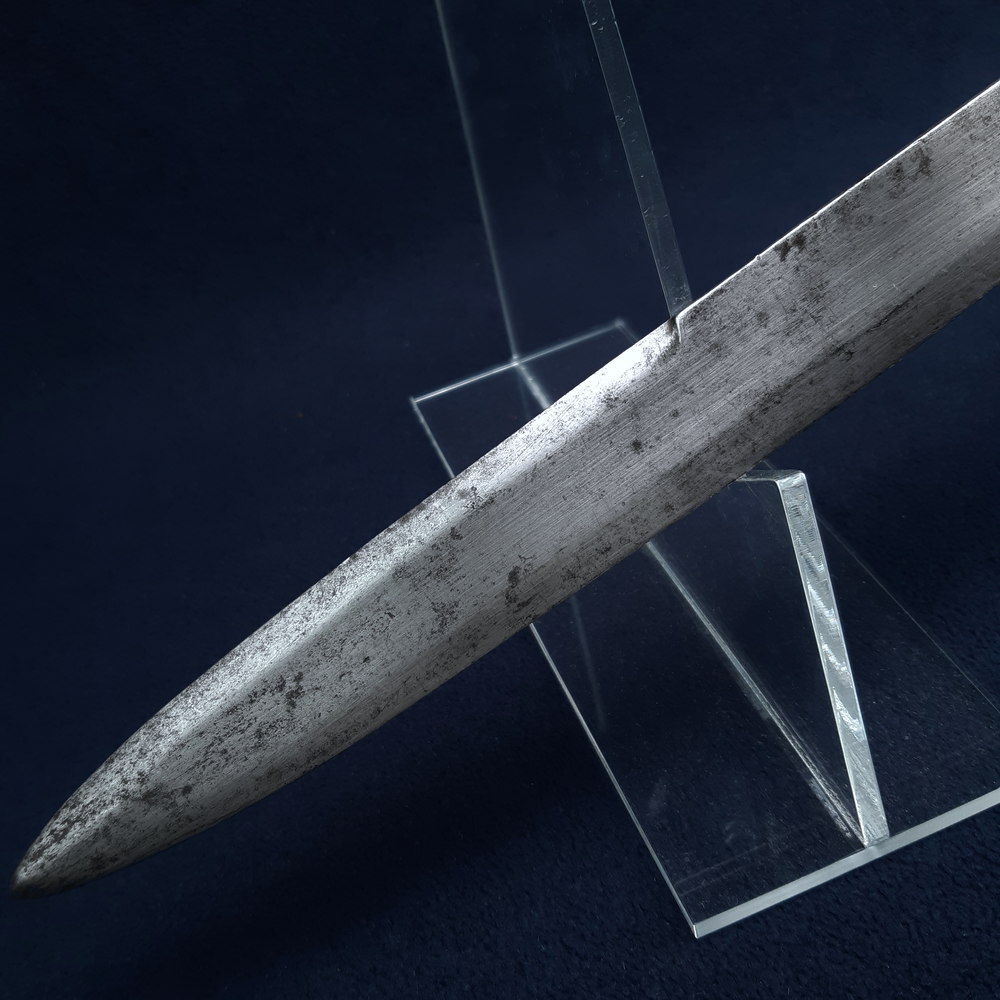
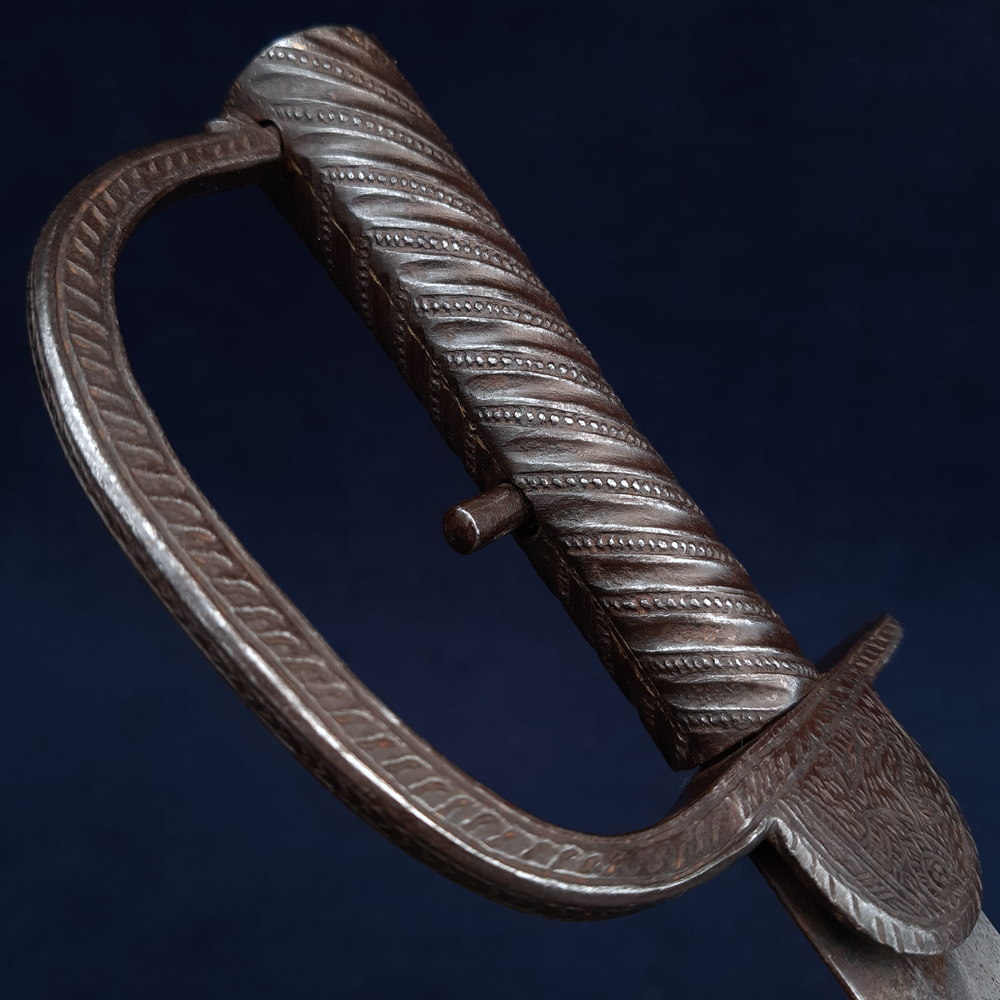
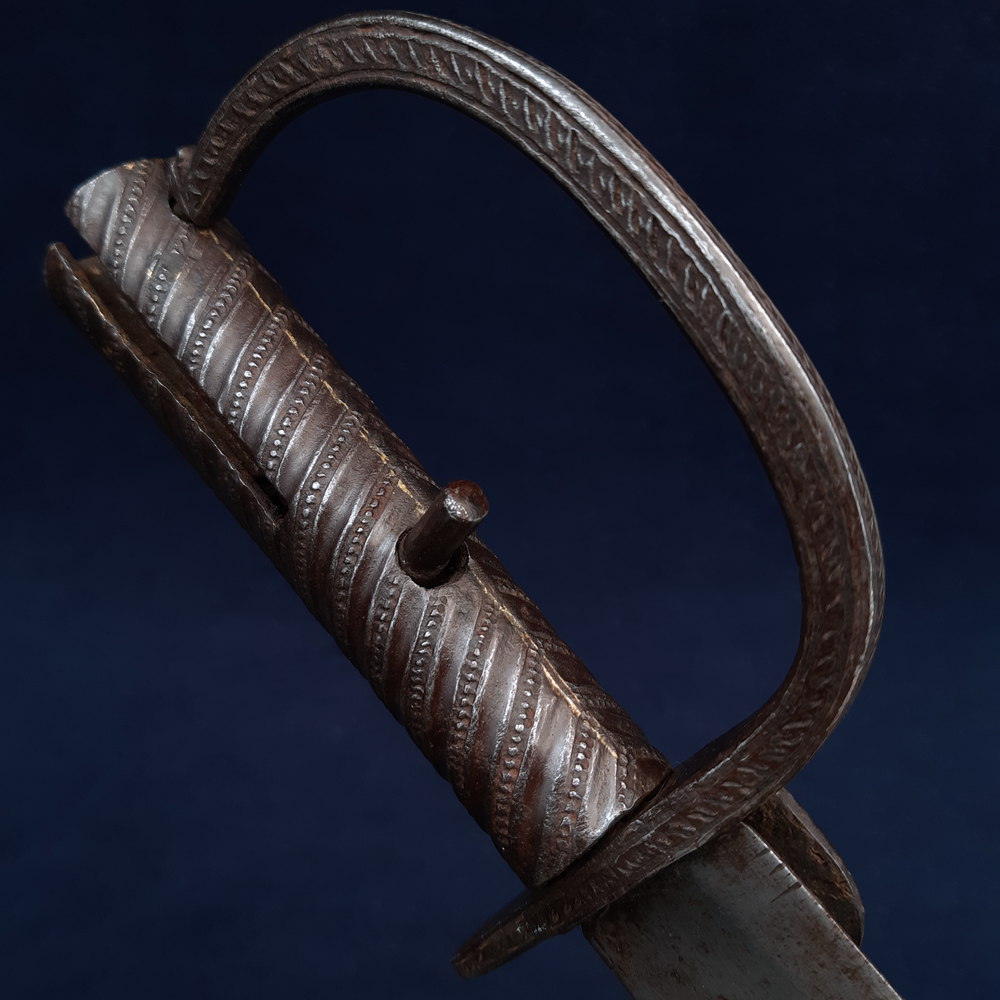
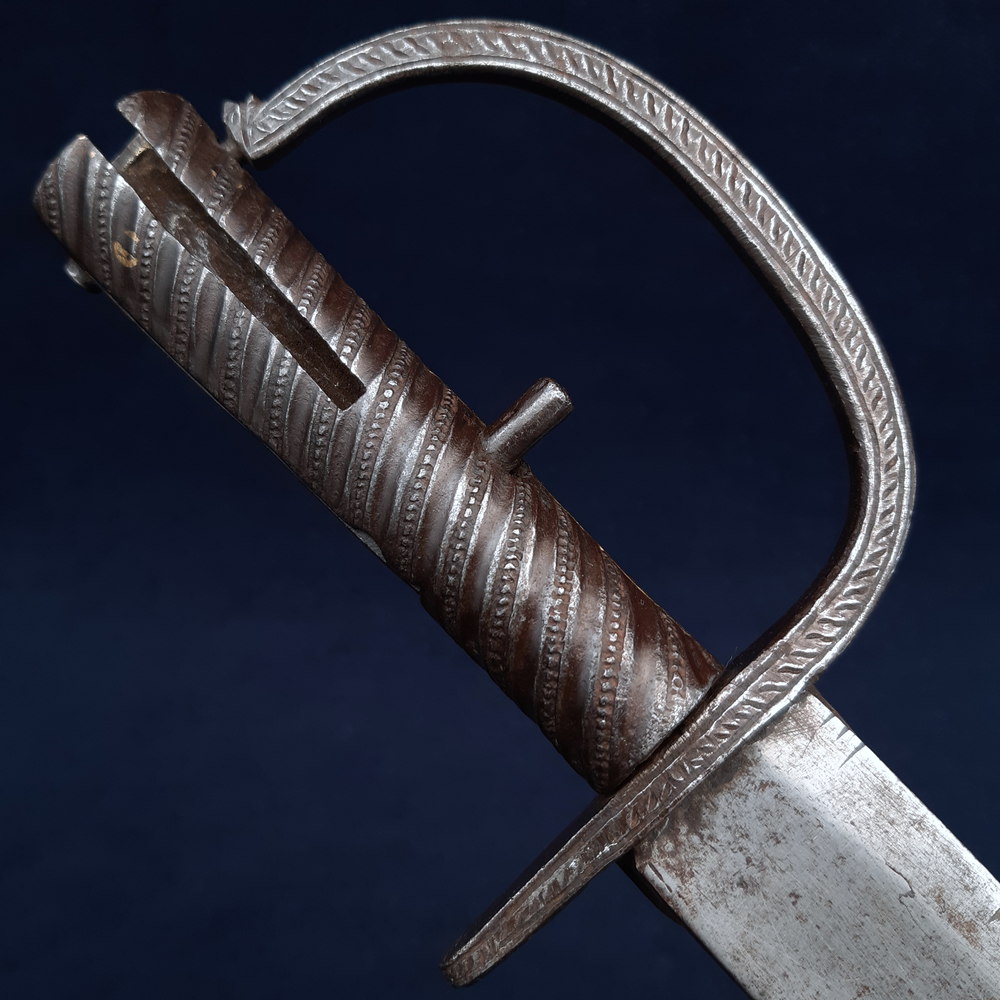
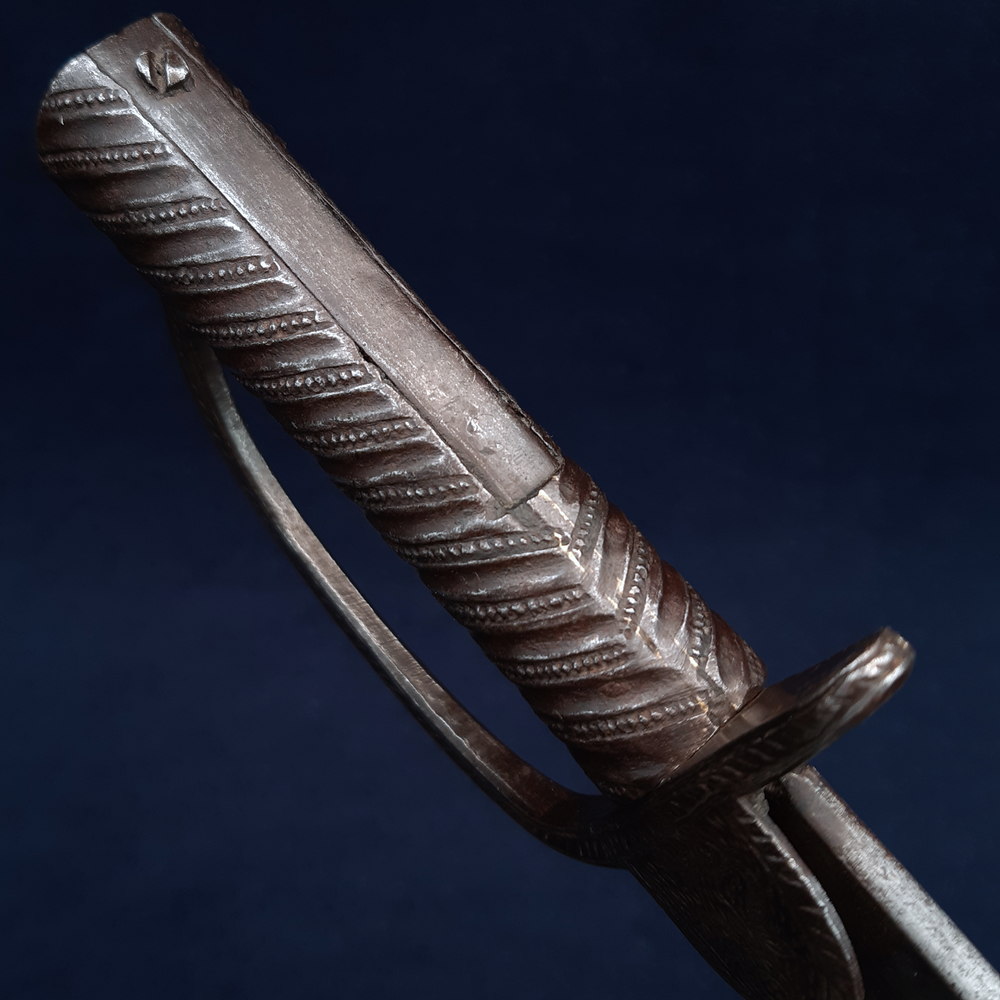
Straight, spear-pointed blade. Steel hilt with semioval langet on one side only and D-shaped knucklebow. Steel grip with beading and ribbing to its surface, formed of two halves brazed together, with mortise slot and inset steel leaf spring locking mechanism attached with a single screw. Blade 21 5/8 inches in length, 1.2 inches wide at the shoulder, with false edge for the last 5¾ inches, the bayonet 26 1/8 inches overall.
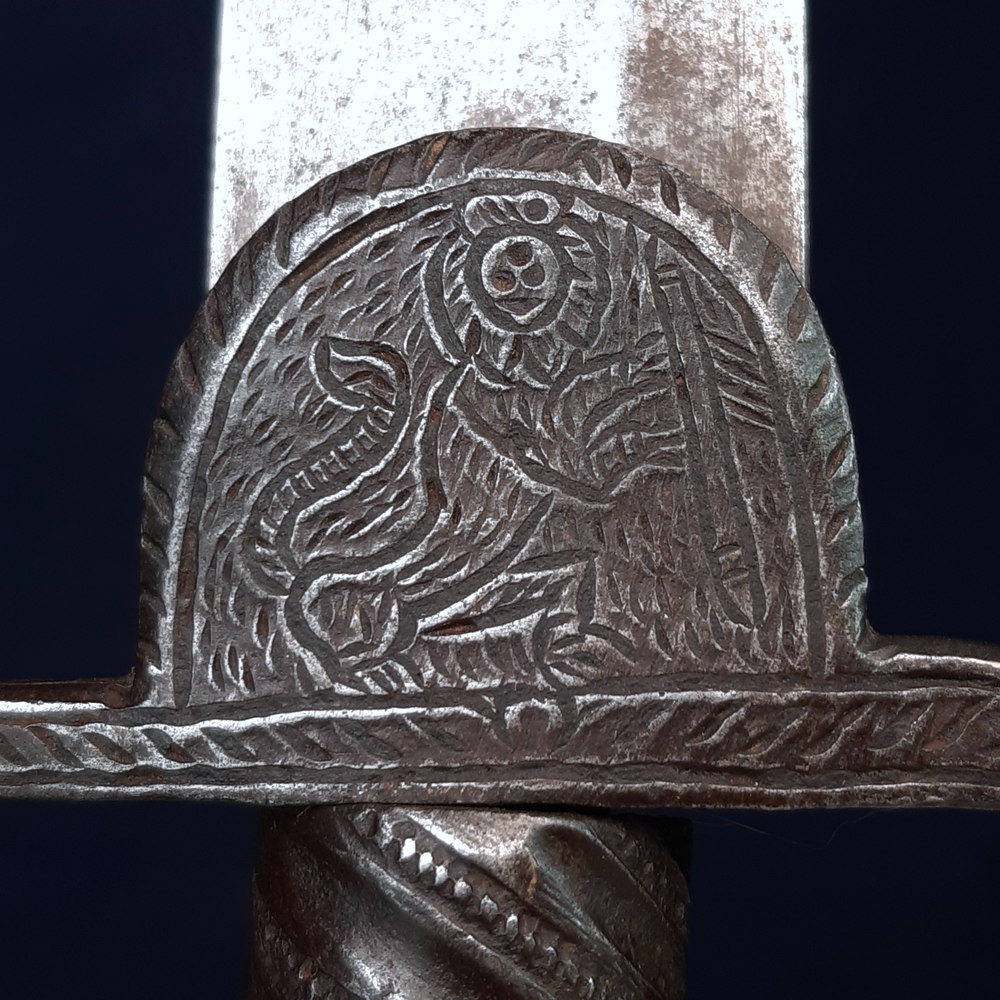
The langet bears a chiselled design of a lion rampant with its paws on a staff with pennant or a flagpole – this resembles the badge of the East India Company, which was a lion rampant holding a crown between its forepaws, and it even more closely resembles the supporters of the Company’s coat of arms, which were lions rampant holding flags of St George on flagpoles.
These bayonets are thought to have been manufactured in India, probably to fit to locally-made percussion rifles made in the style of the British P1837 Brunswick rifle, this being cheaper than importing ‘official’ Brunswick bayonets. The design clearly harks back to the bayonet for the Baker rifle which preceded the Brunswick, that had been very popular among Indian troopers.
Being local crafts purchased outside the Army procurement structure they carry no production markings. Some were found in the huge cache of surplus arms kept at the Royal Palace in Kathmandu, Nepal, and sold off in 2008.
See page 346 of British Commonwealth Bayonets by Skennerton & Labudda, or page 318 of British & Commonwealth Bayonets by Skennerton & Richardson, for an example of this model (referred to as I3) and discussion of several variations of the type. Skennerton notes that the higher quality versions are those with steel hilts – this would make sense given the cost of steel hilts over brass.
The locking mechanism functions, although I have not tested whether it will fit to a Brunswick. The blade has some forging imperfections, light scratching and some small spots of patination and light cleaned pitting in places, particularly towards the tip, which is rounded by ~3mm. A number of tiny nicks to both edges, one small notch to the true edge. The hilt has a dark forged finish with light rubbing wear to raised edges showing bright steel. The blade is solidly peened to the grip, slight movement to the knucklebow & langet.
