

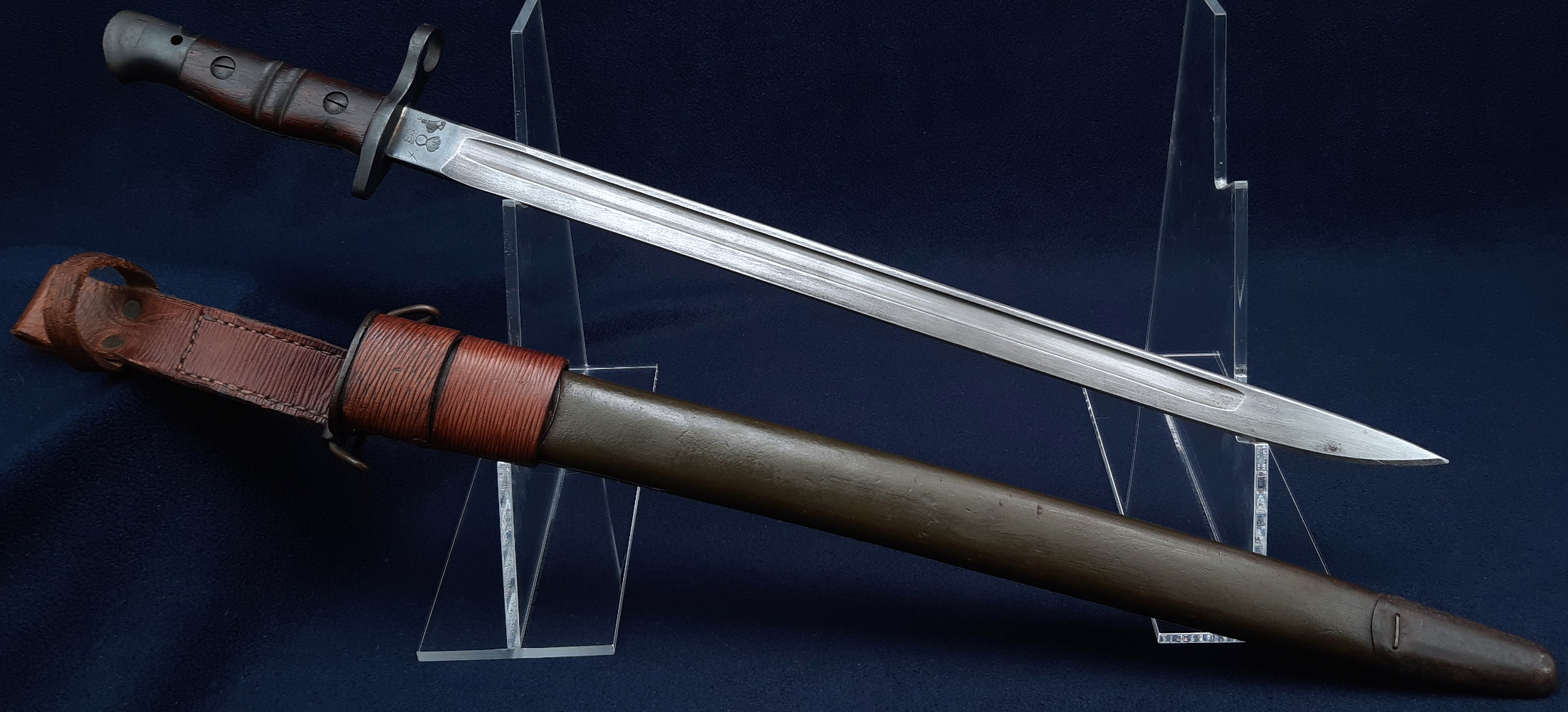
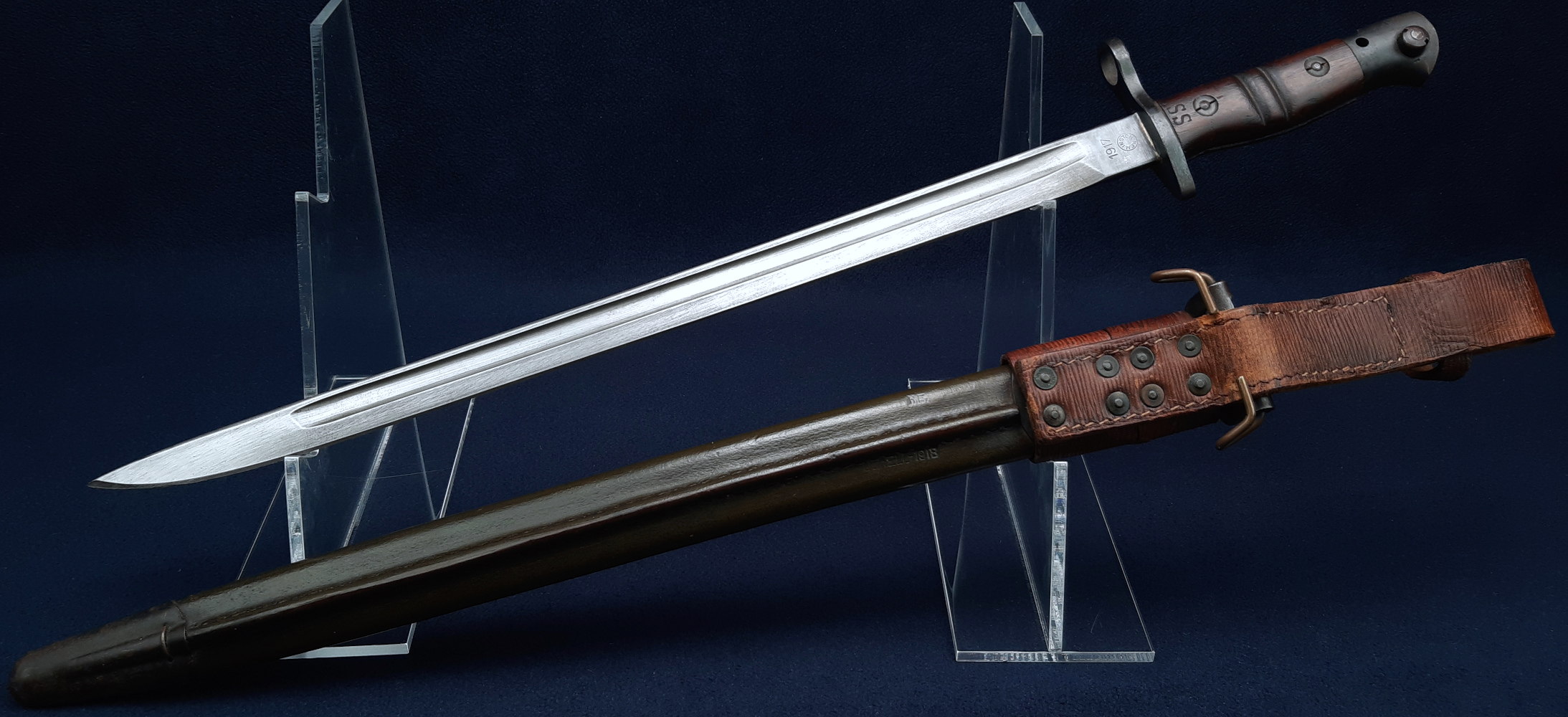
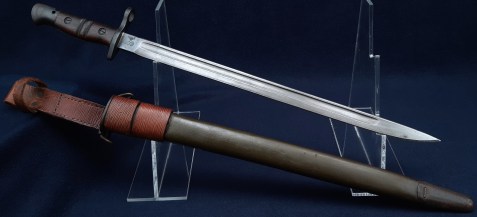
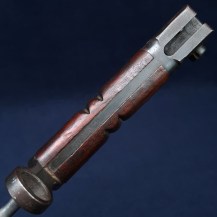
US Model 1917 Bayonet with Home Guard Frog, by Remington 1917
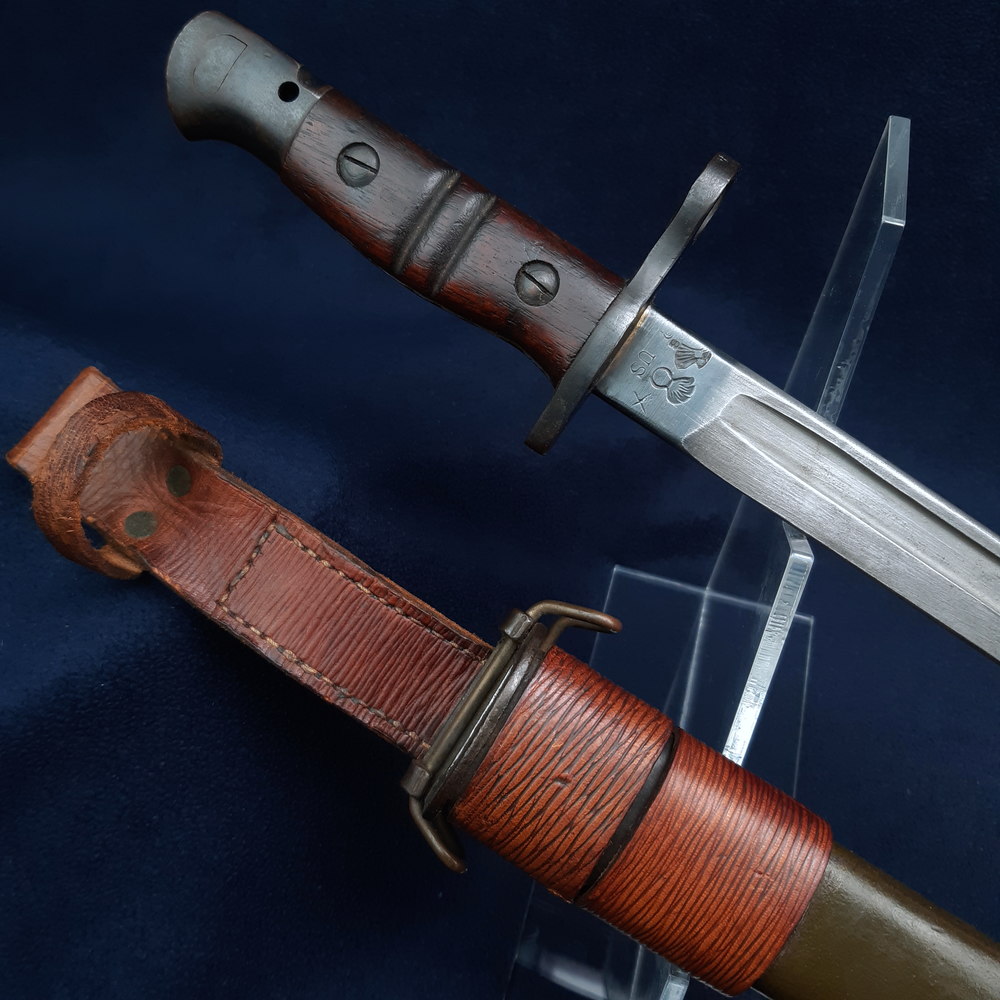
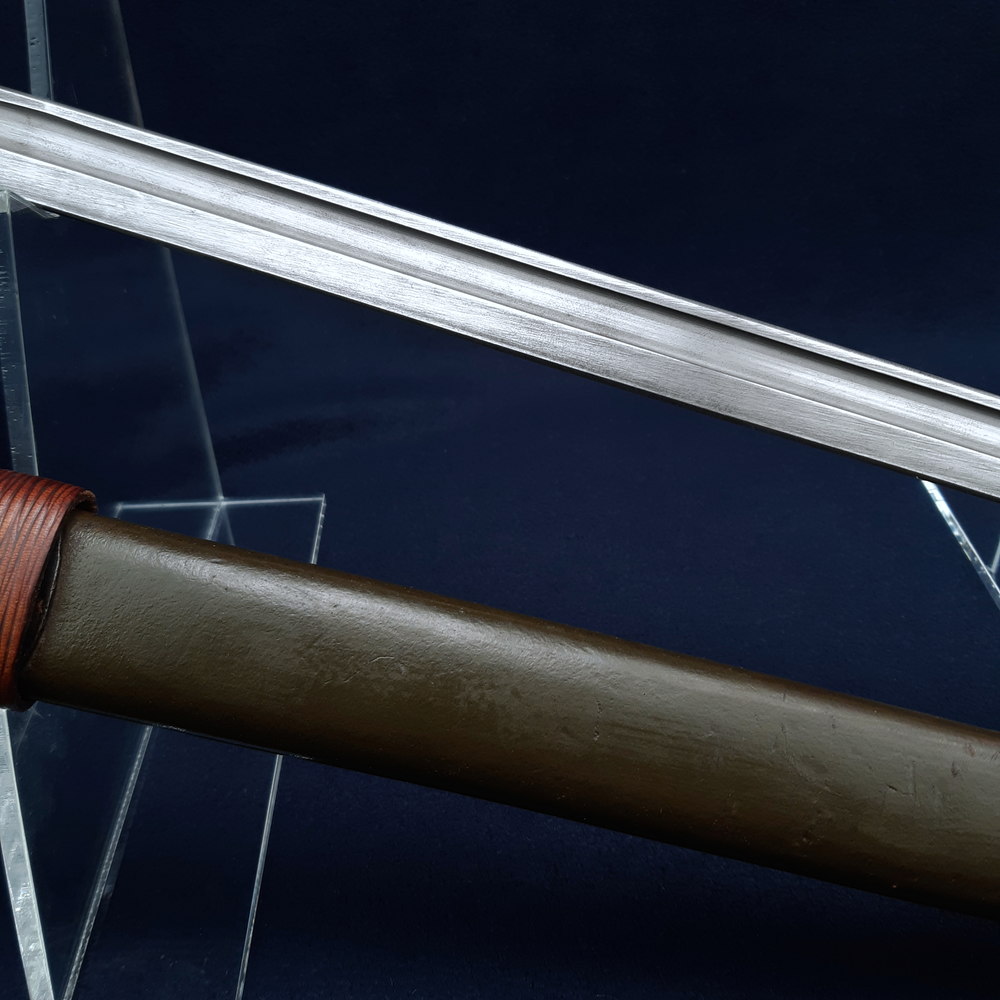
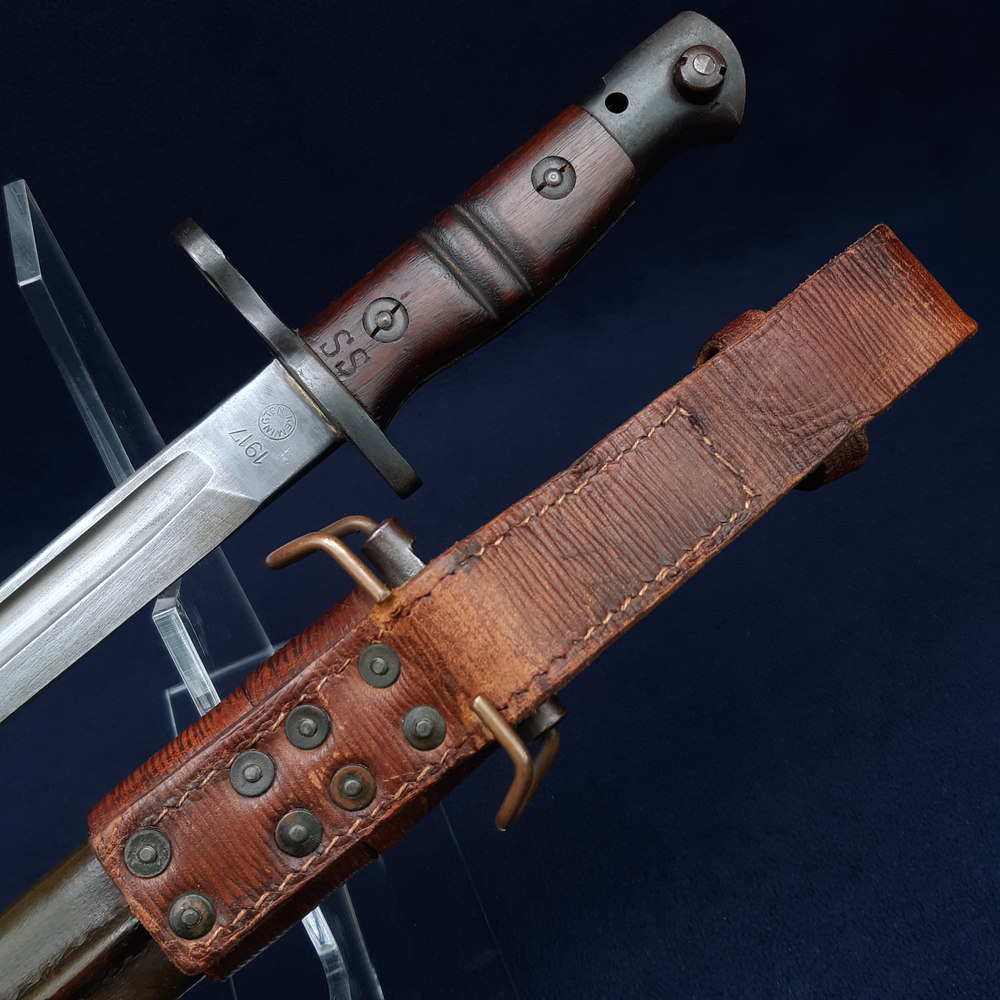
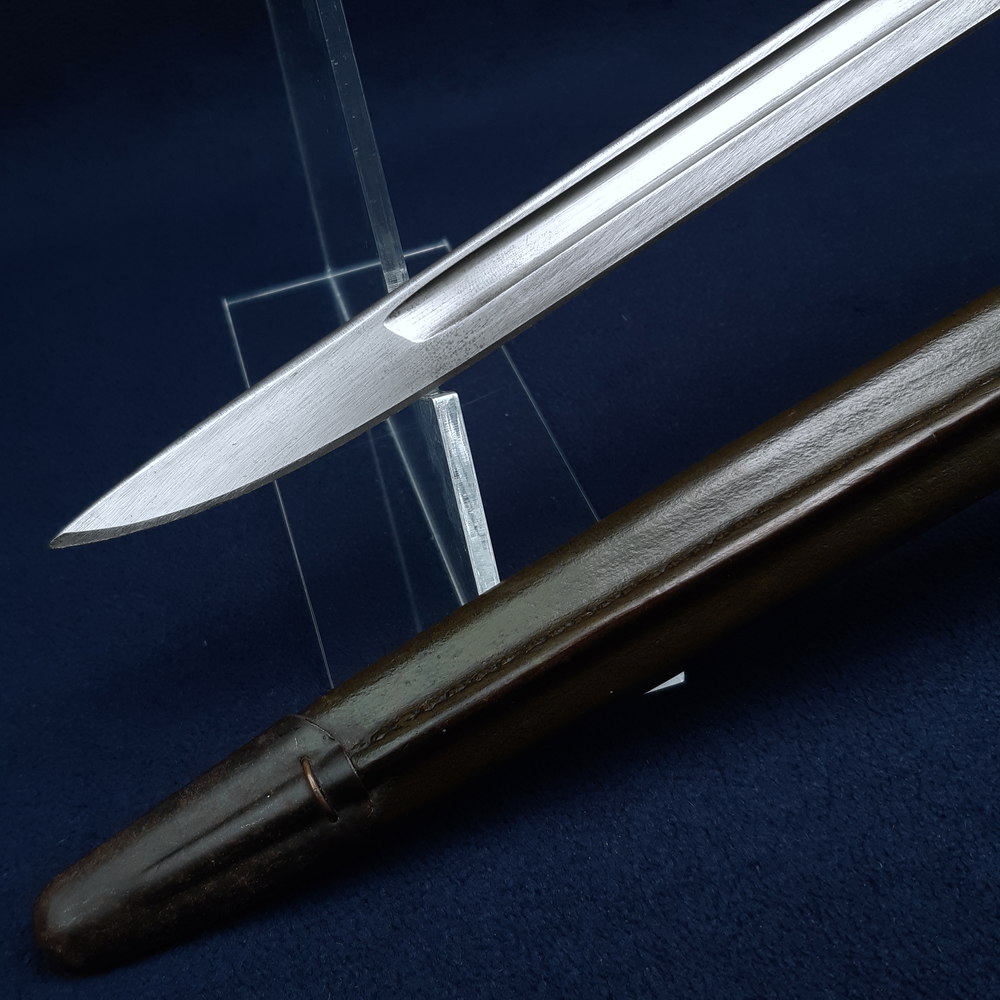
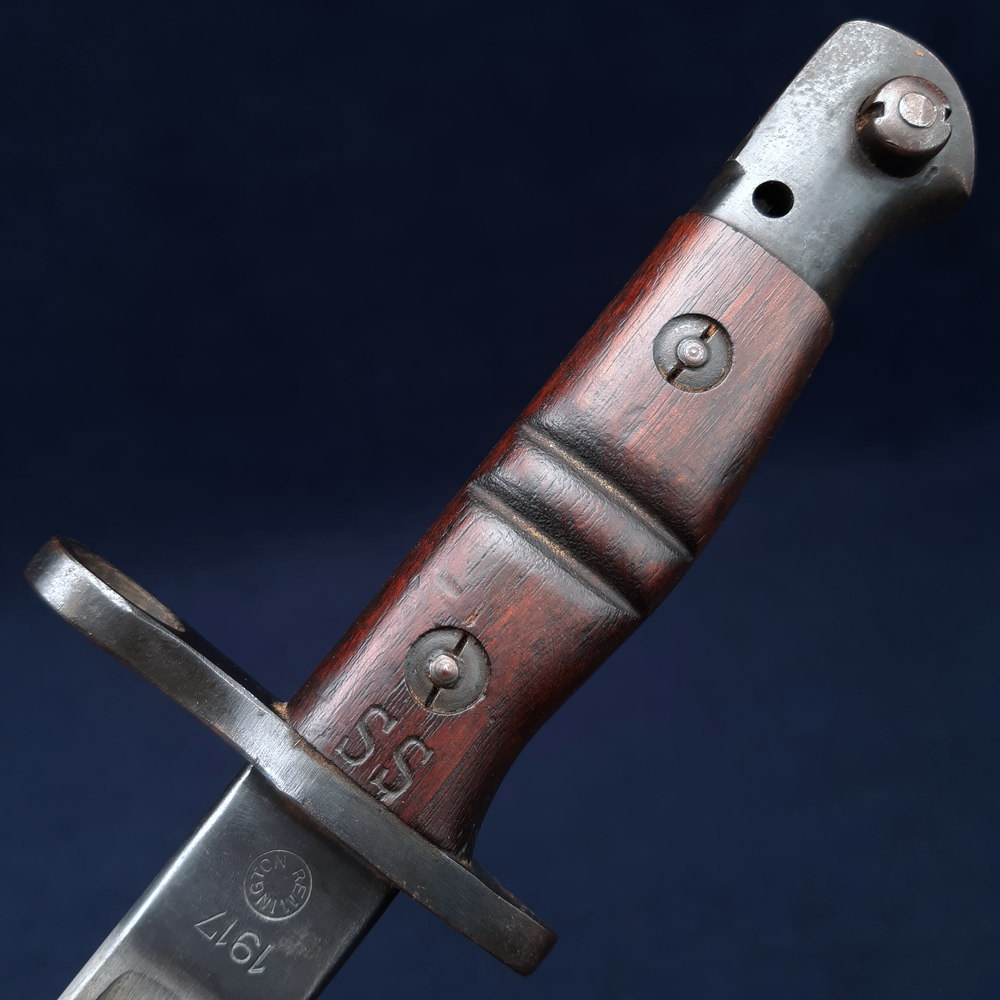
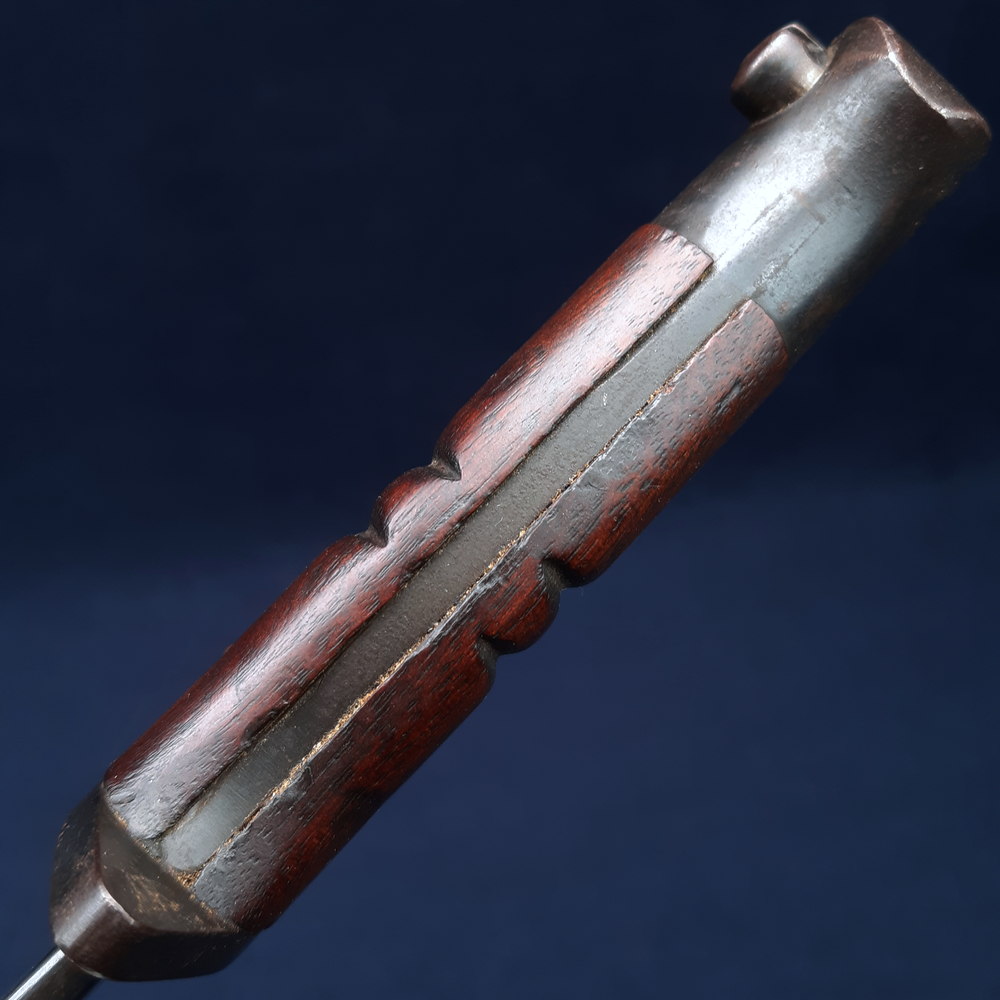
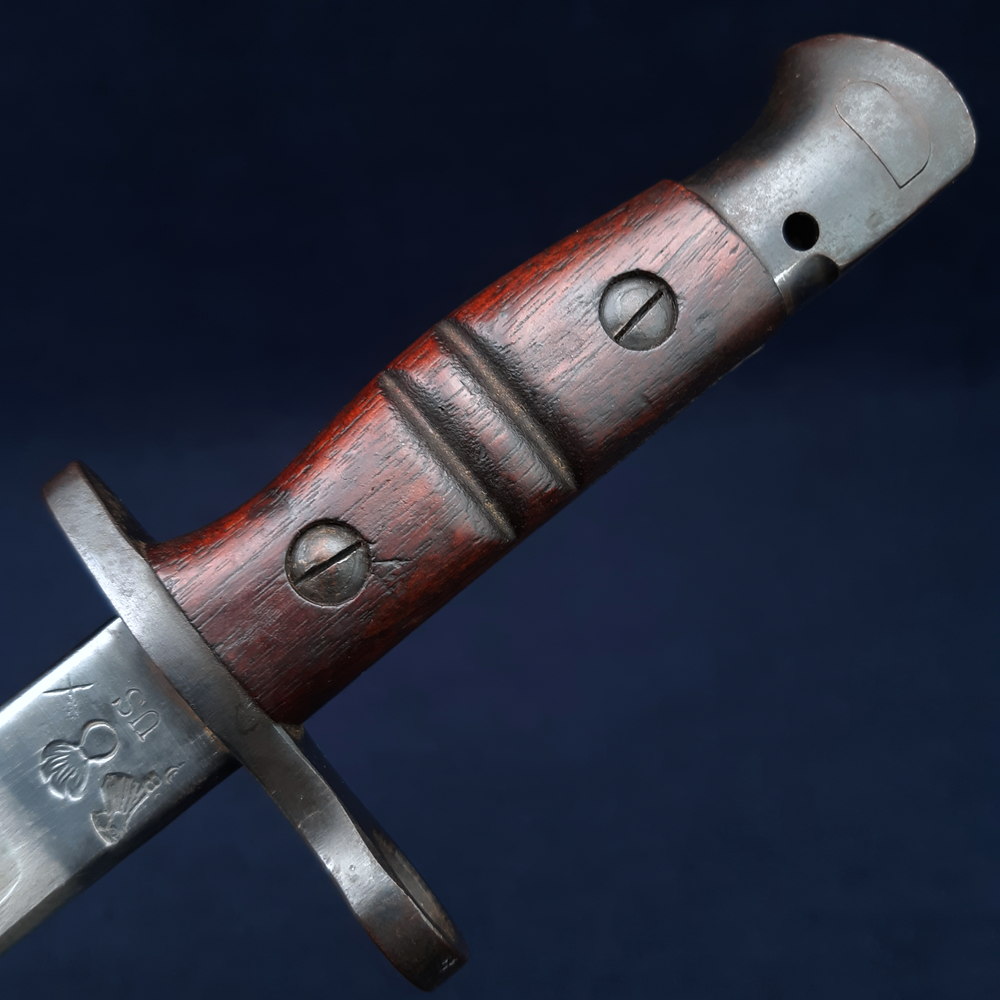
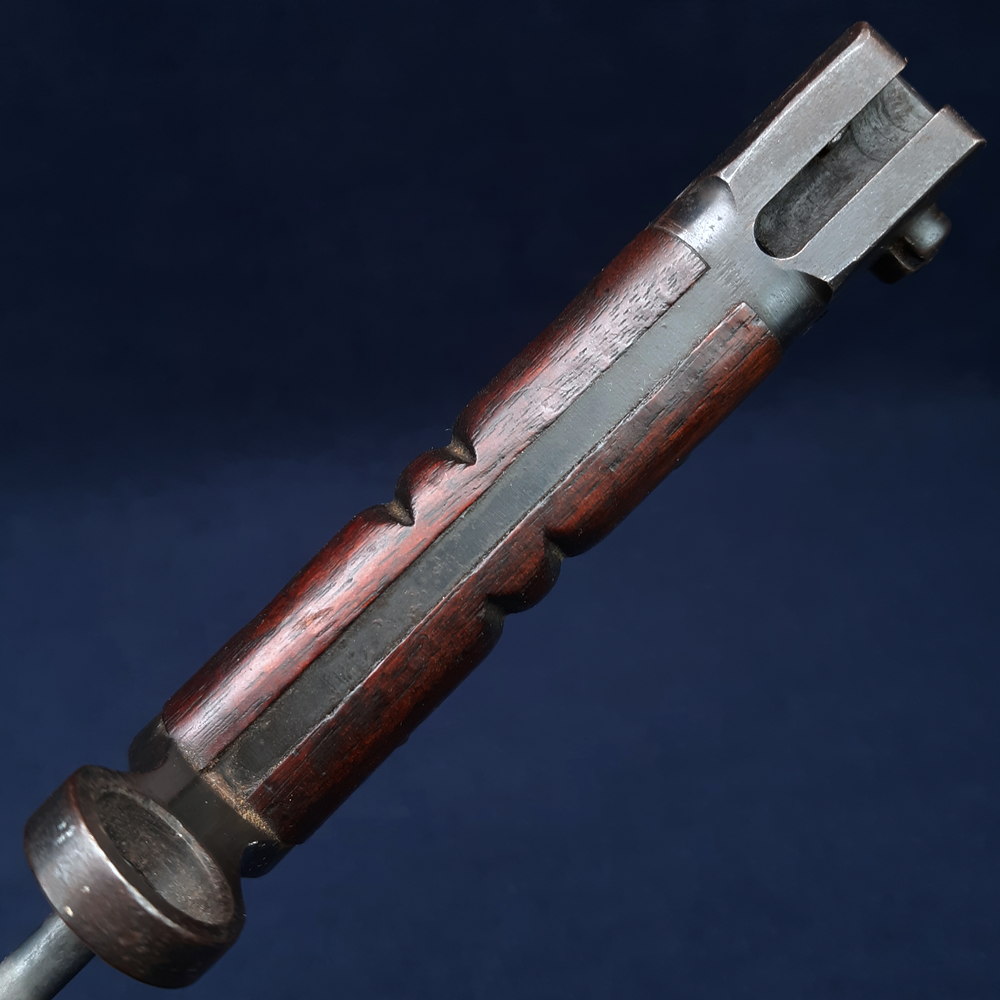
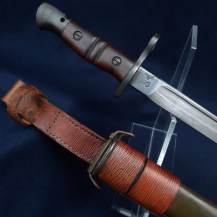
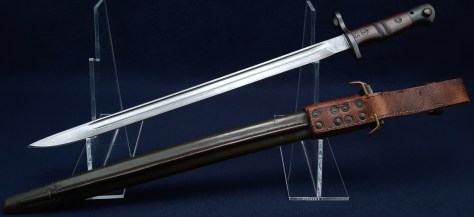
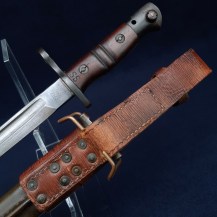
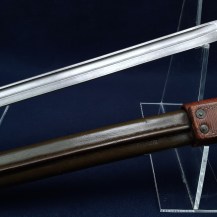
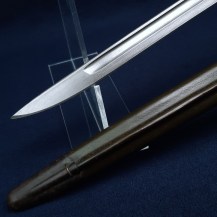
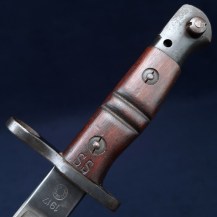
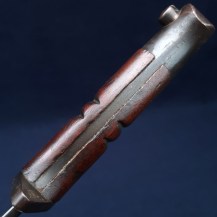
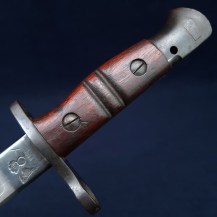
Straight single-fullered blade with spear point, steel hilt with muzzle ring, wood slab grips secured by two screws, steel beaked pommel with oil hole and locking button. Olive green painted leather scabbard with steel locket & chape fittings, brass webbing hooks, brown leather frog with belt loop and retaining loop.
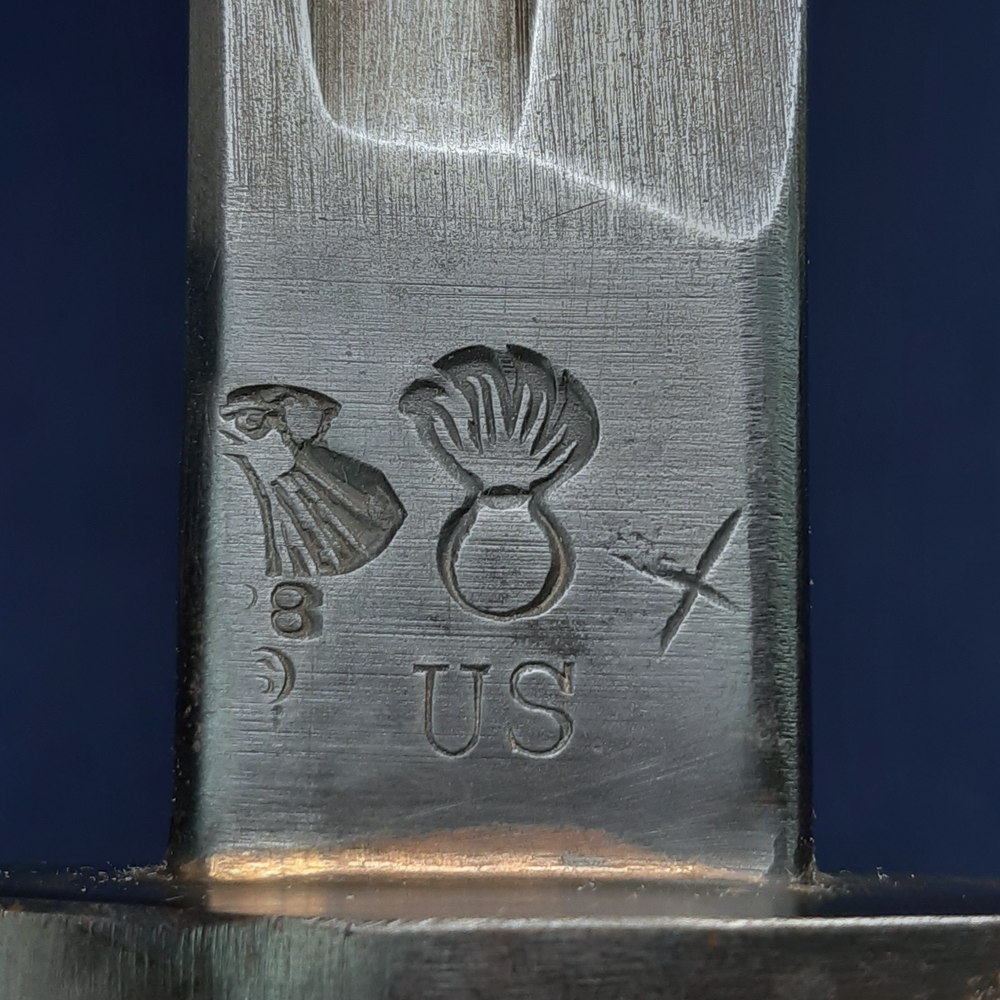
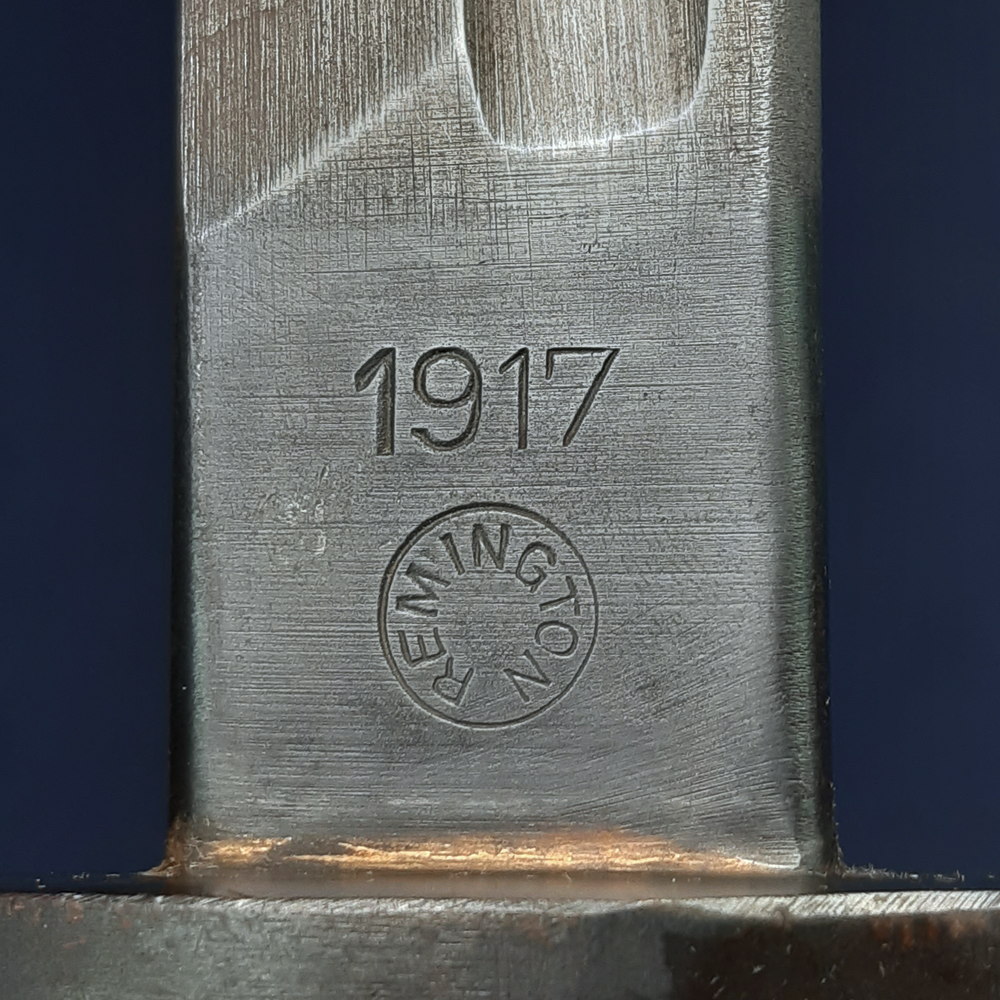
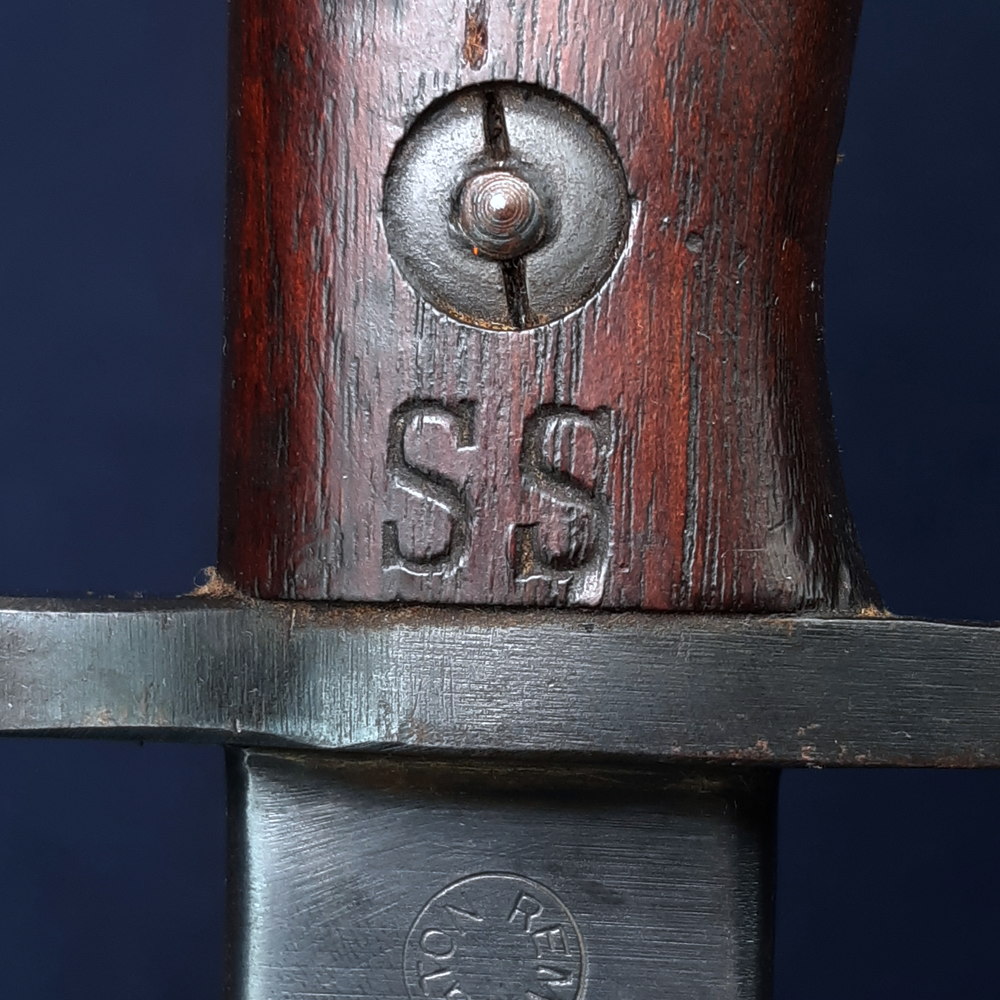
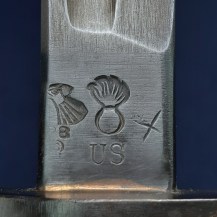
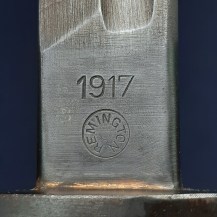
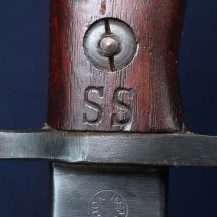
The blade is stamped on one side at the ricasso with the Shell and Flame (aka Flaming Bomb), the mark of the US Army Ordnance Branch, below which is ‘U.S.’, as well as an eagle head inspection mark and an ‘X’ indicating that it passed a manufacturer’s bending test, and on the other side with the manufacture date 1917 and a Remington roundel manufacturer’s mark. One of the wood grips is stamped between the hilt and the nearest screw with ‘SS’, the meaning of which I am unsure of.
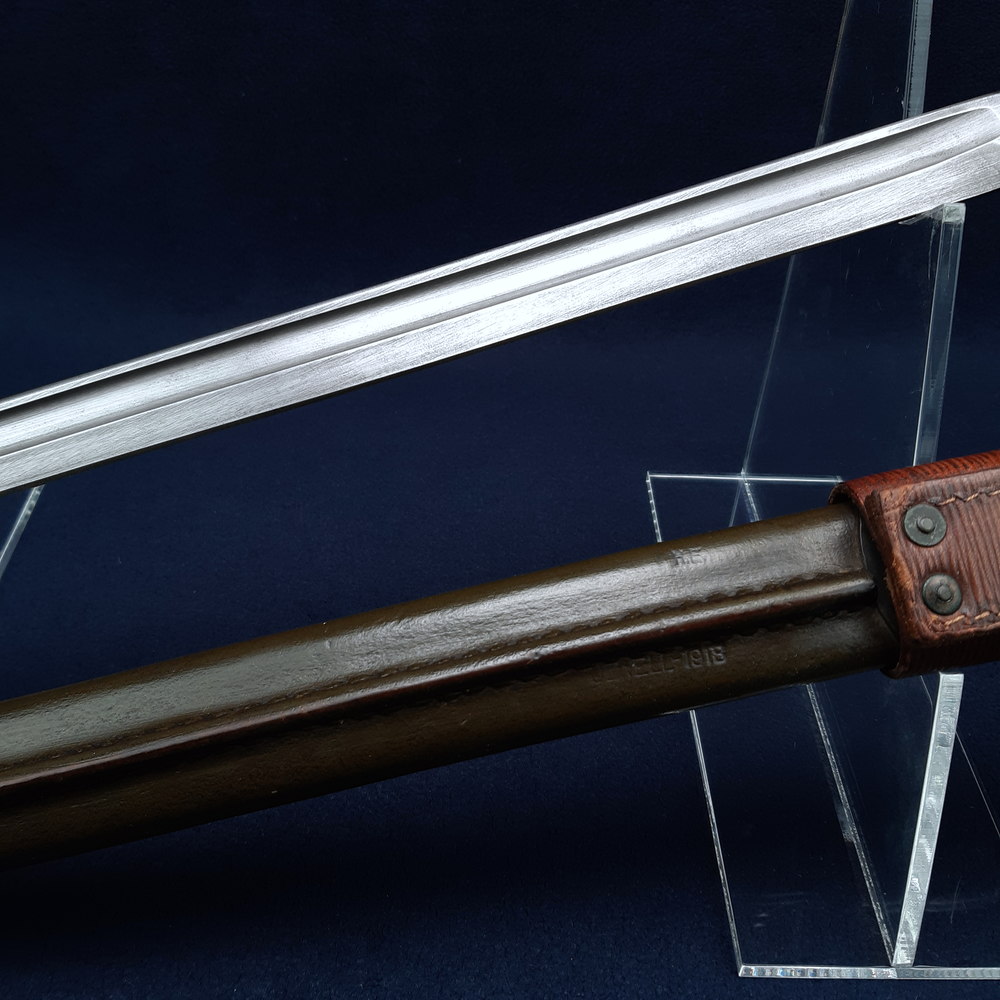
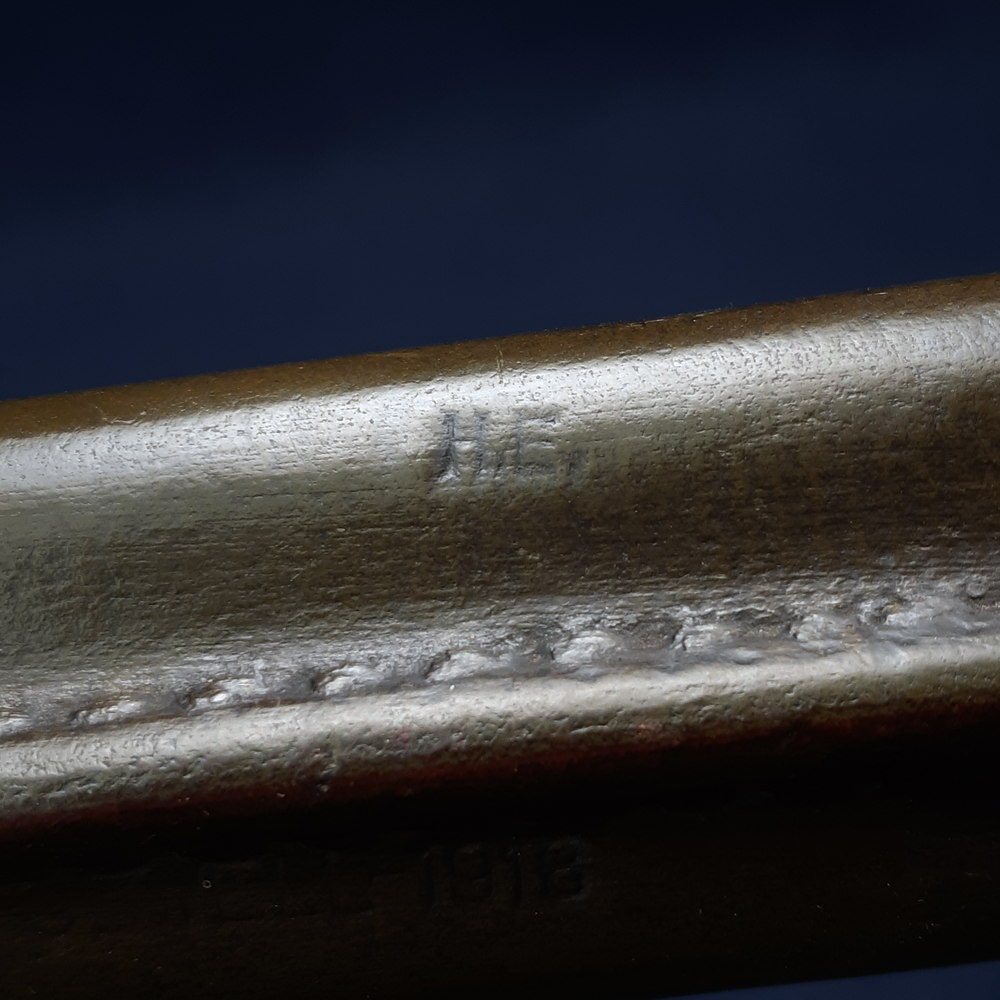
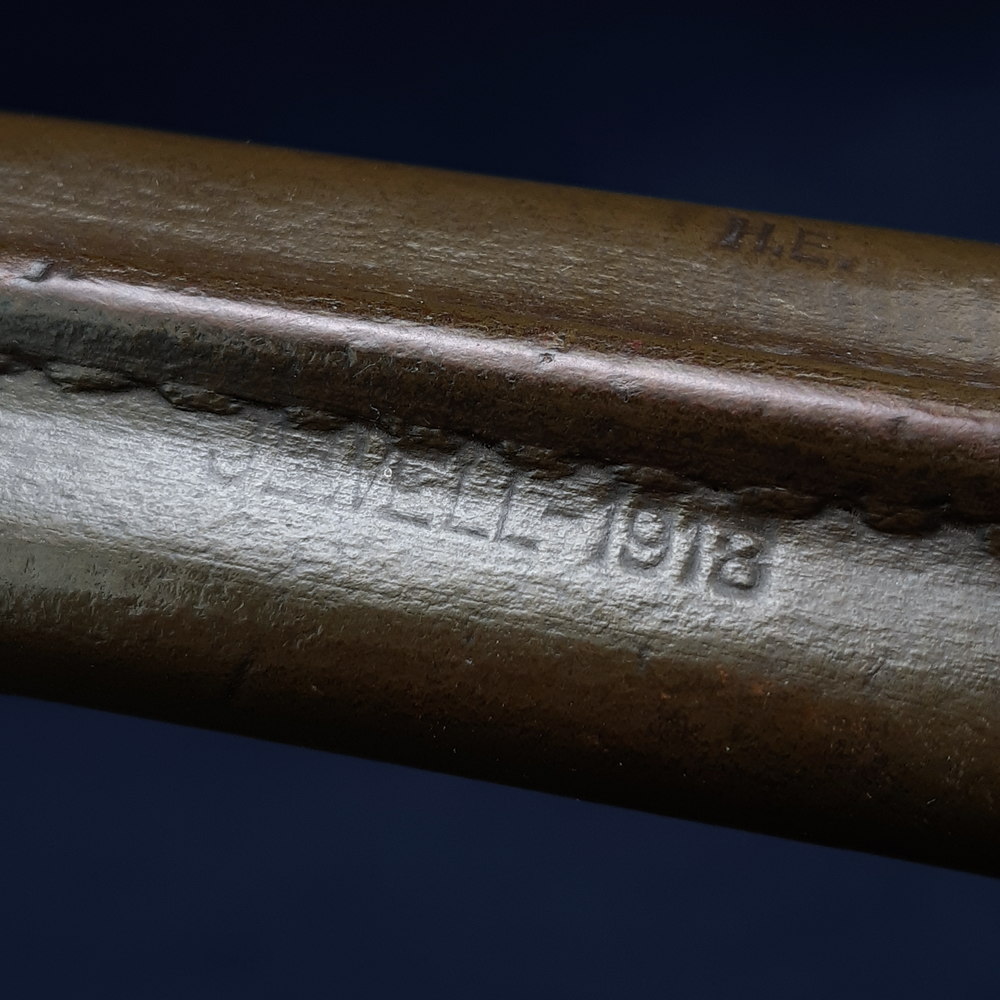
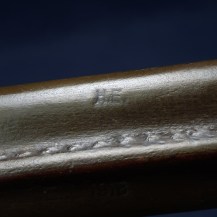
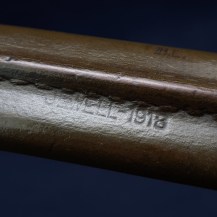
The leather of the scabbard is stamped on the rear side on one side of the seam with ‘H.E.’ and on the other side with ‘JEWELL 1918’ indicating the leather section was made by the Jewell Belting Company of Hartford, Connecticut in that year. The chape piece is stamped next to the staple with two faint letters which I believe are ‘M.S.’ for the Maxim Silencer Co., a subcontractor which made these parts, frequently seen paired with Jewell bodies.
Due to the outbreak of WW1, manufacture of the new British P1914 Enfield rifle was contracted out to American manufacturers Remington and Winchester, including its matching 1913 Pattern bayonet. After the United States entered WW1 in 1917 the factories that had been producing for the British switched to supplying the same products to the US Army. In US service the P1914 Rifle became the ‘United States Rifle, Model of 1917’ with accompanying ‘Model 1917’ bayonet – both direct copies, now with US markings.
However, the distinctive pattern of frog that has been fitted shows that this bayonet did see use in British hands after all: it was issued to the British Home Guard during WW2, who were often armed with the M1917 or P1914 rifles, no longer standard issue but which still used current cartridges.
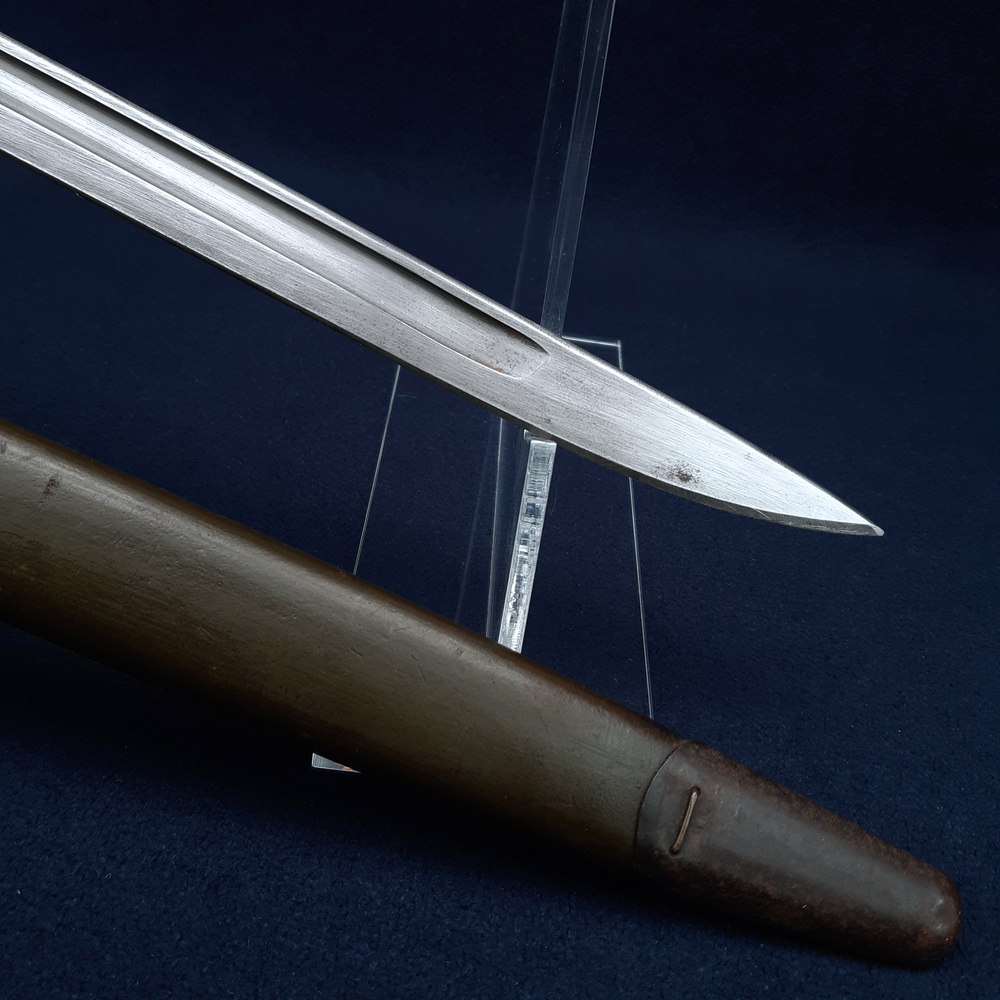
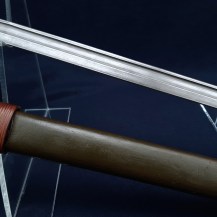
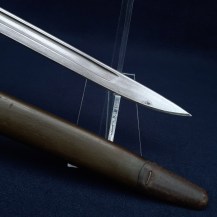
The blade has a clean parkerised finish, with only one spot of light patination near the tip on one side. It retains its original blued band at the ricasso. Its edge is sharp, particularly so near the tip where there are visible sharpening marks, with no edge damage. The tip appears at first to be fractionally chipped but there is a ground bevel up to it on both sides leading me to think it was deliberately sharpened into a stronger, ~1mm wide point. The hilt, exposed tang and pommel retain their original blued finish, with very little wear even on raised edges like the locking button. The wood grips have only a few small dents.
The scabbard fittings have a blued finish with very little wear, some light cleaned rust spotting to the chape piece. The leather of the scabbard has a few dents to its front face, it remains glossy with very little rubbing wear or colour fading. The frog remains flexible and strong, with some dents to the scabbard loop as well as one tiny flap to the leather on one edge (~5mm across) which I have glued down, some abrasion to the retaining loop and at the edges of the belt loop.
