


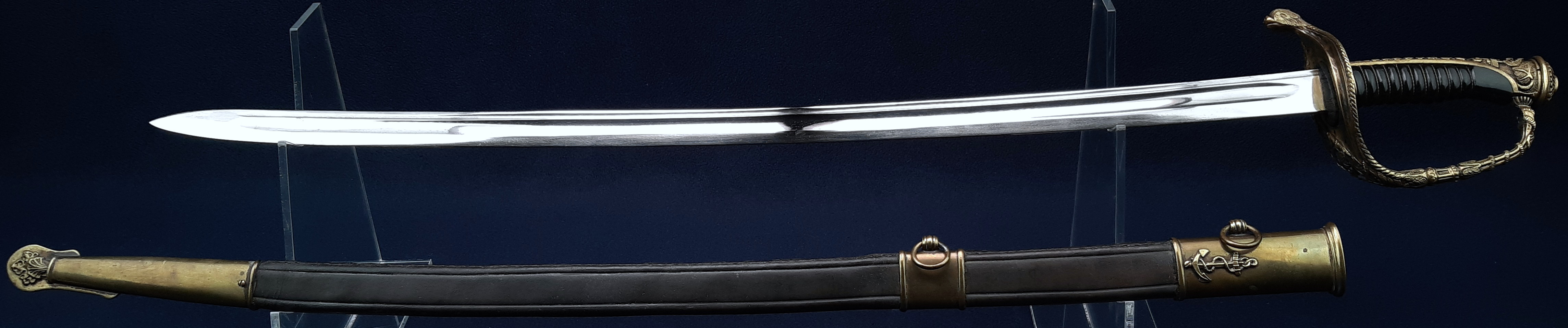

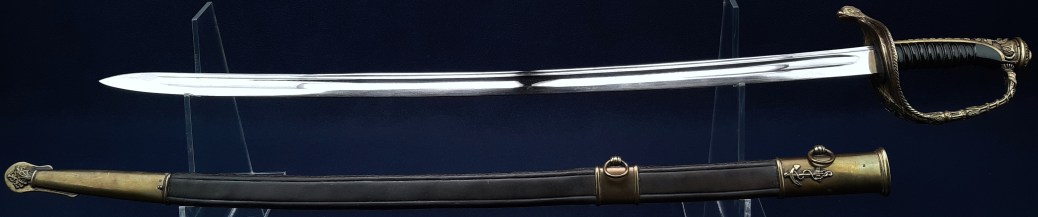
French M1854 Naval Officer's Sword by Coulaux, Klingenthal
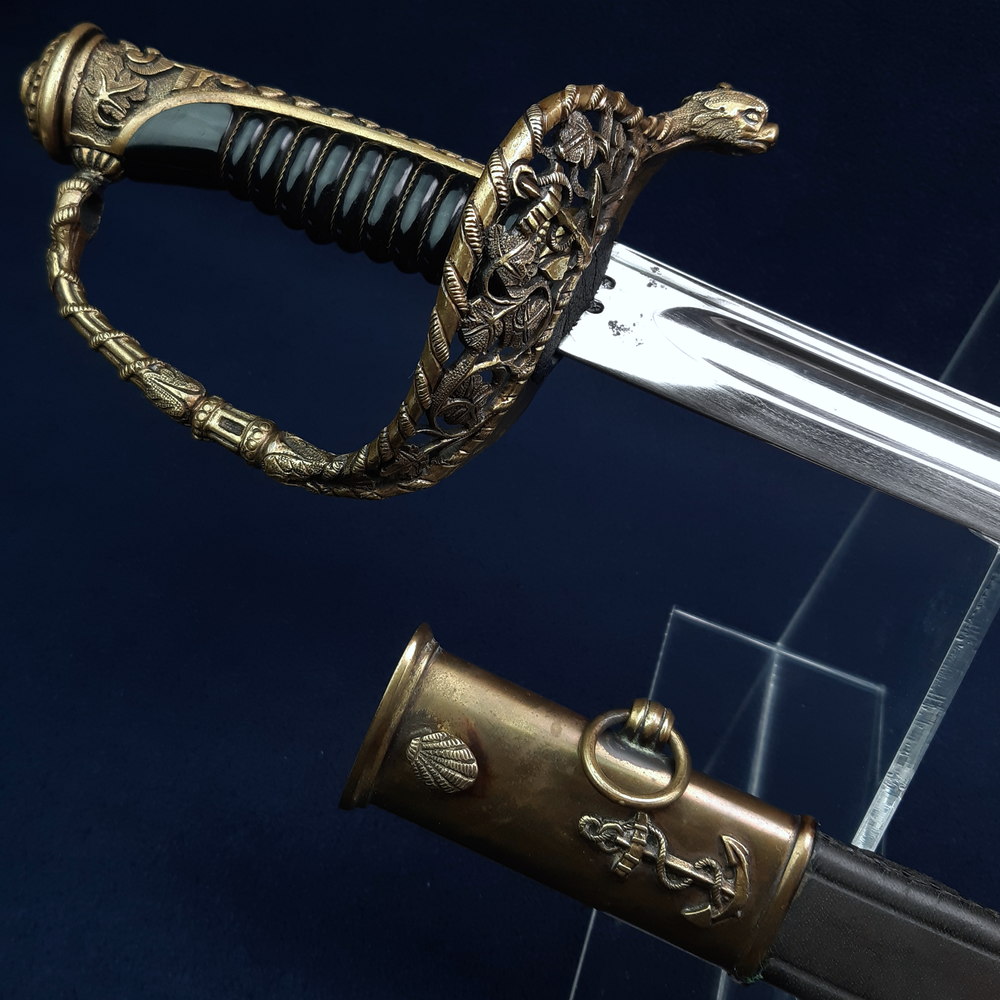
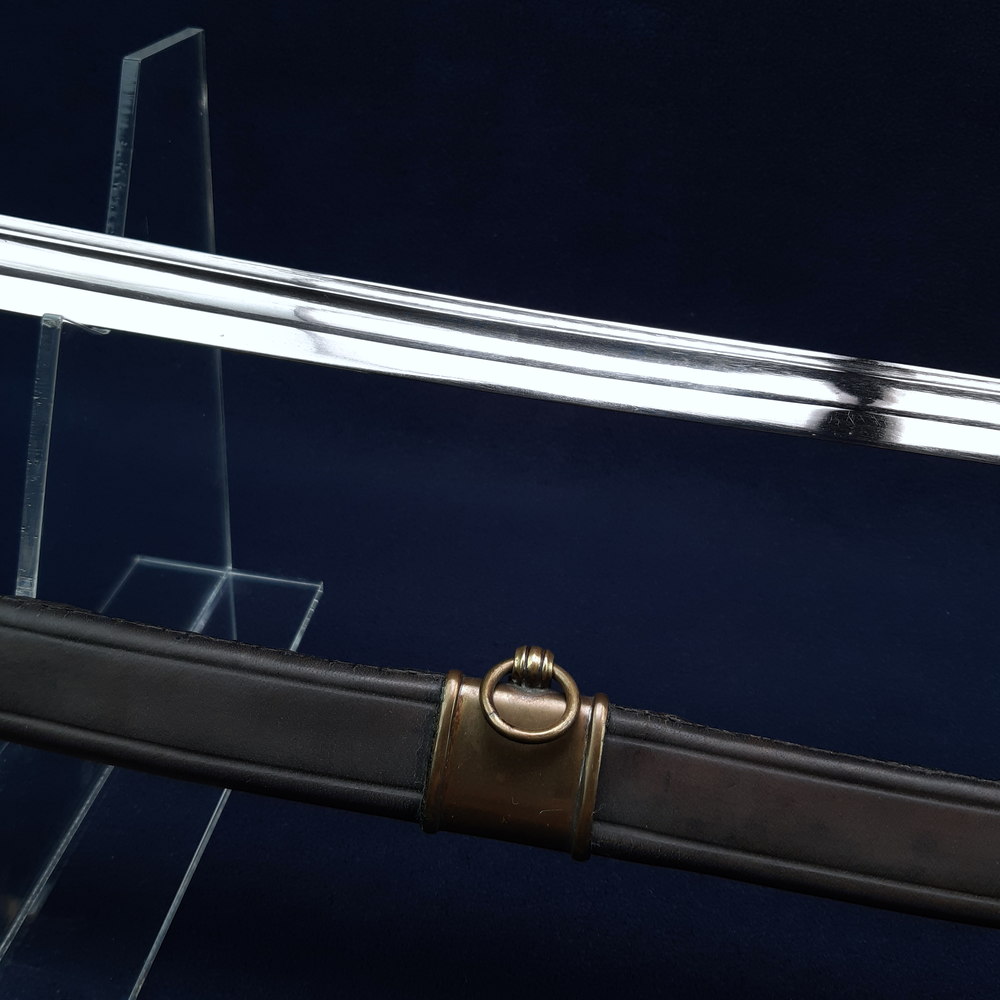
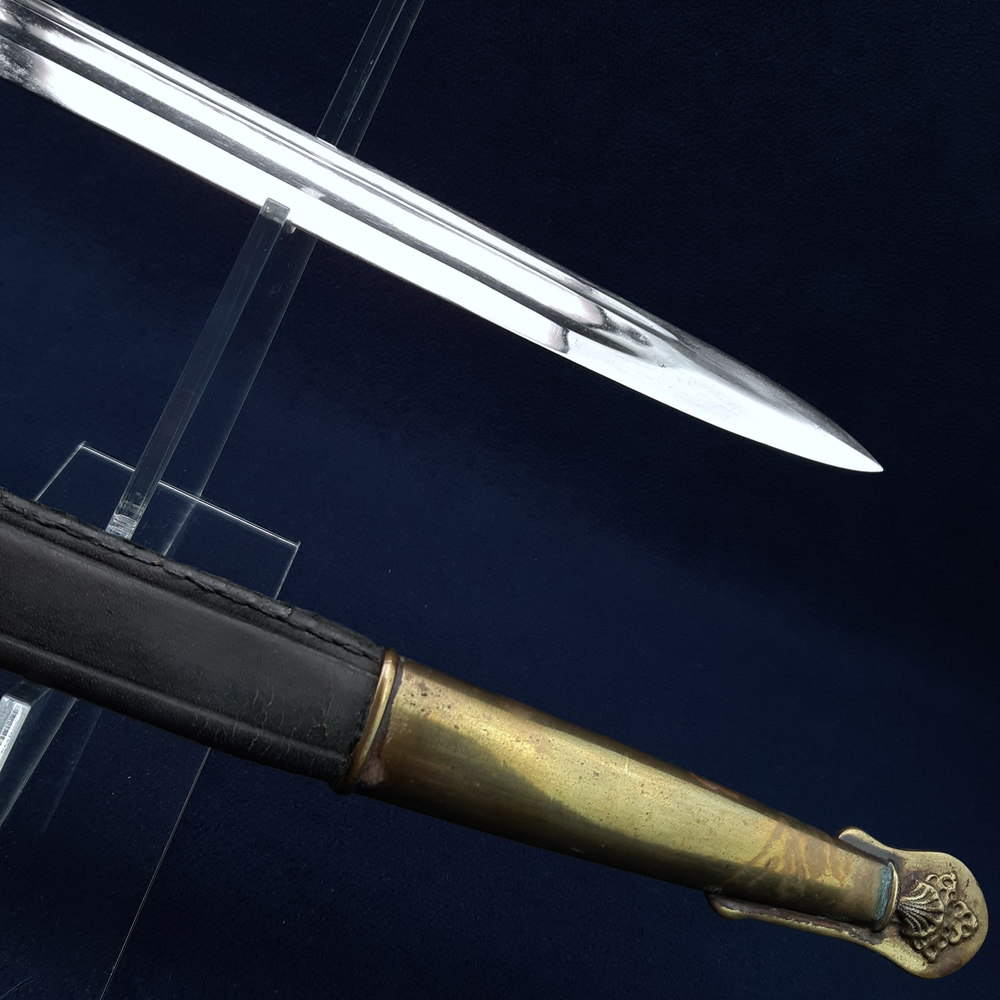
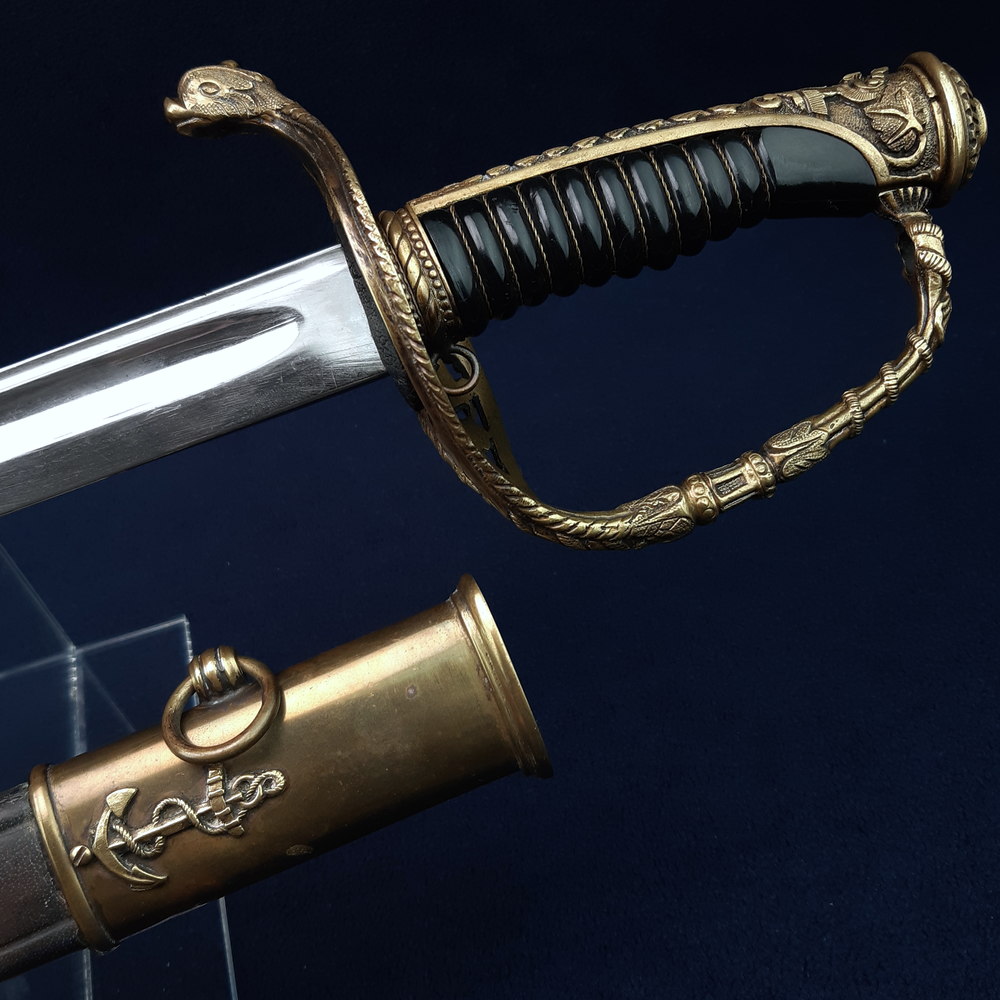
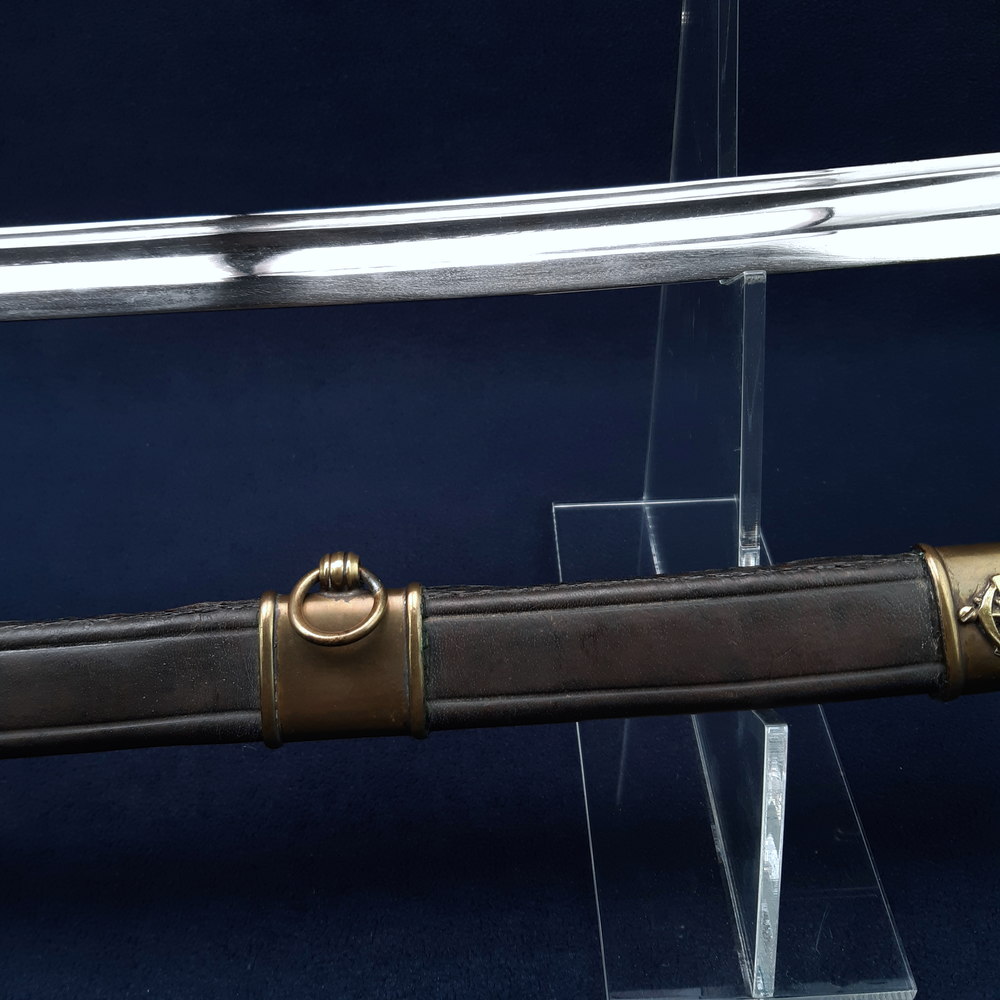
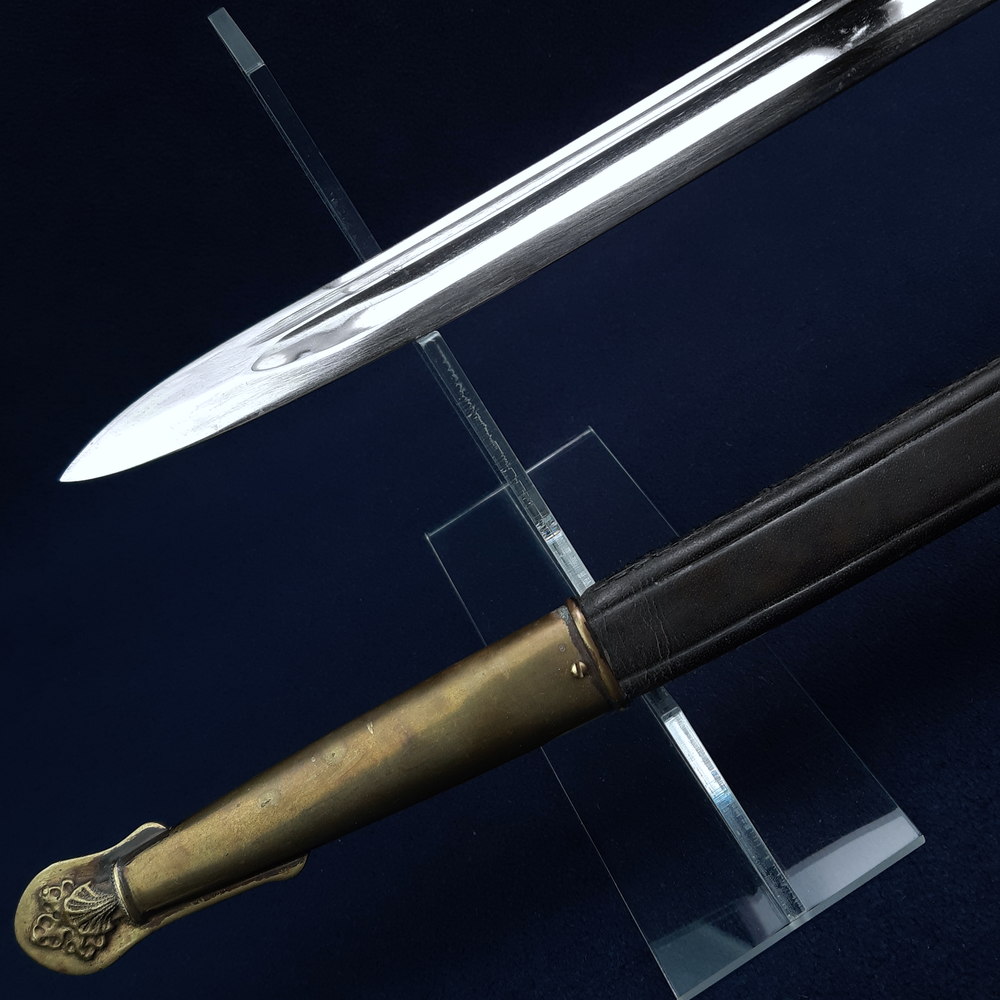
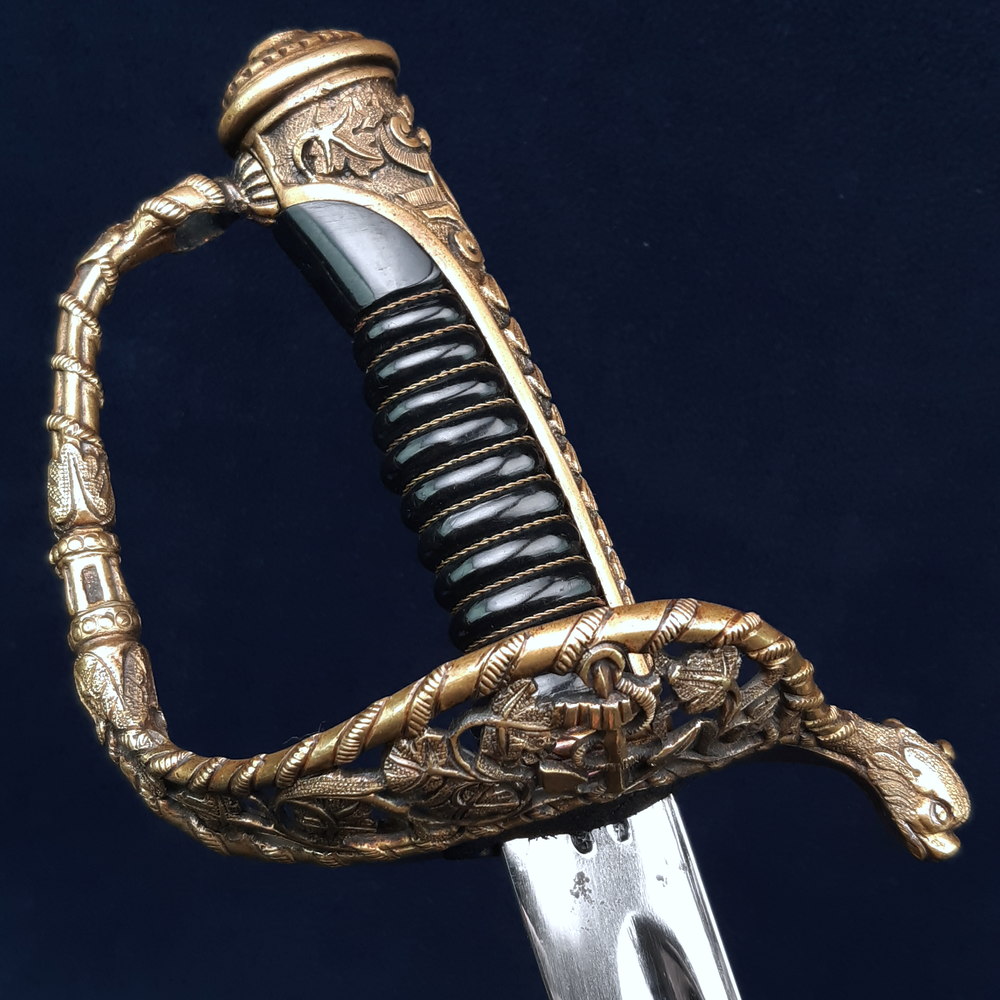
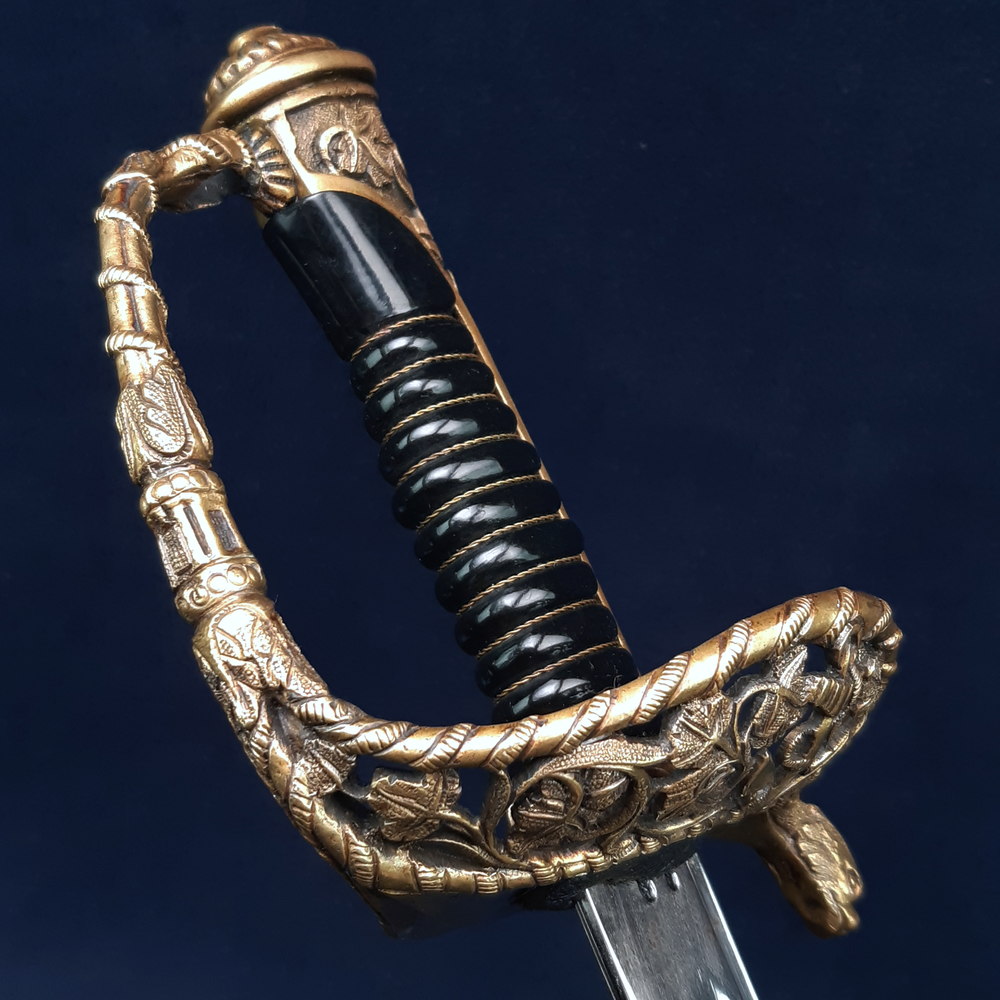
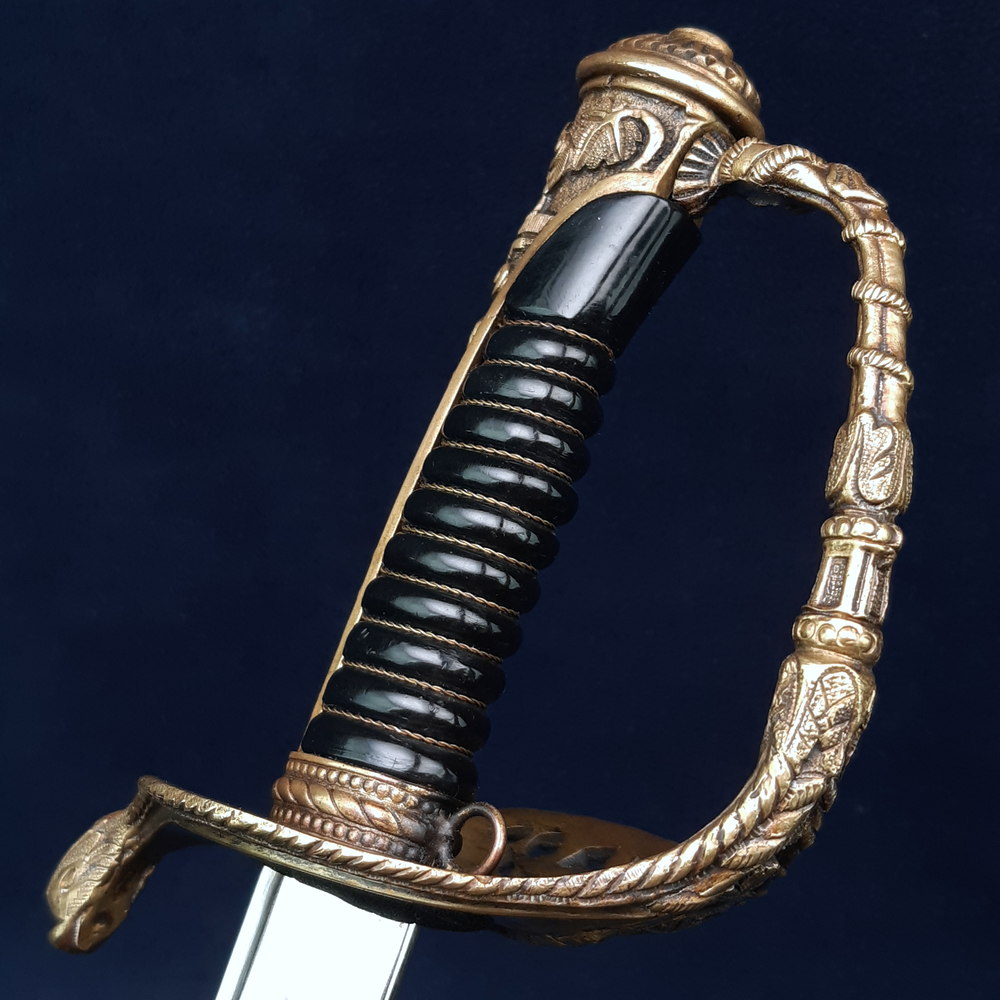
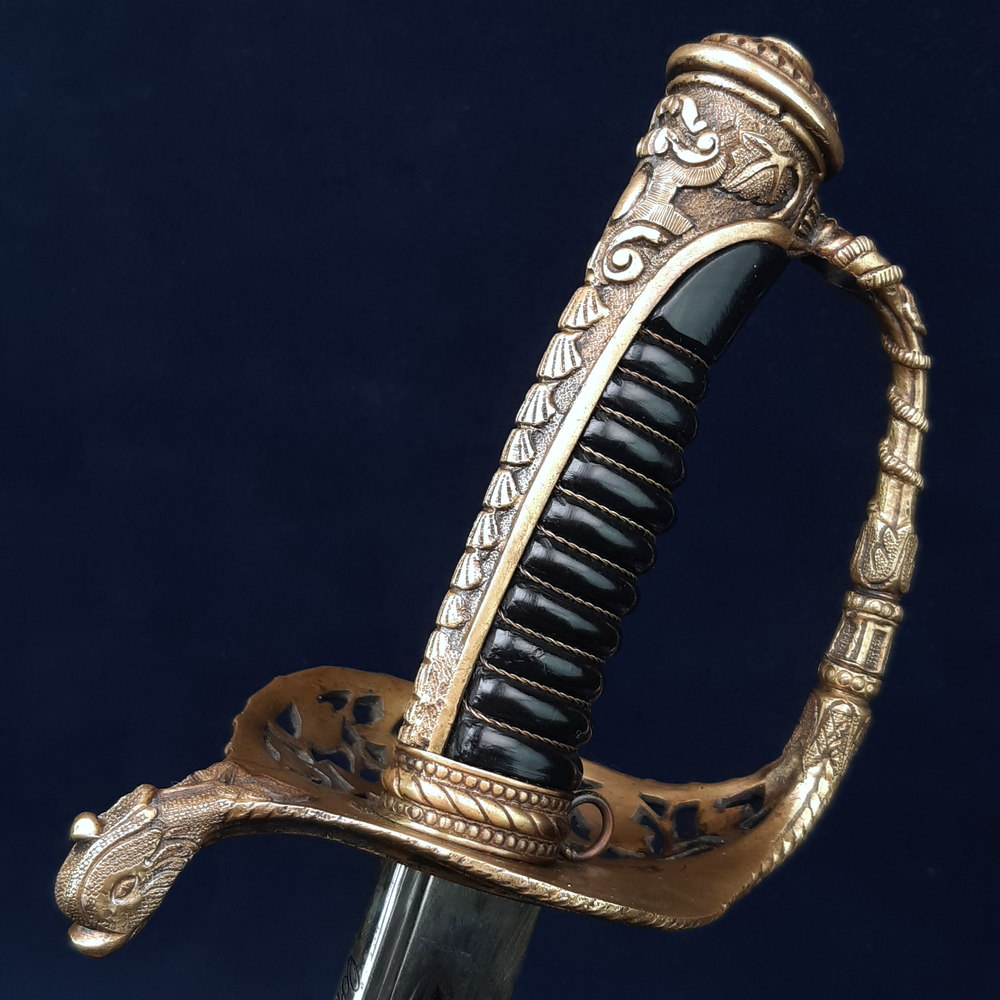
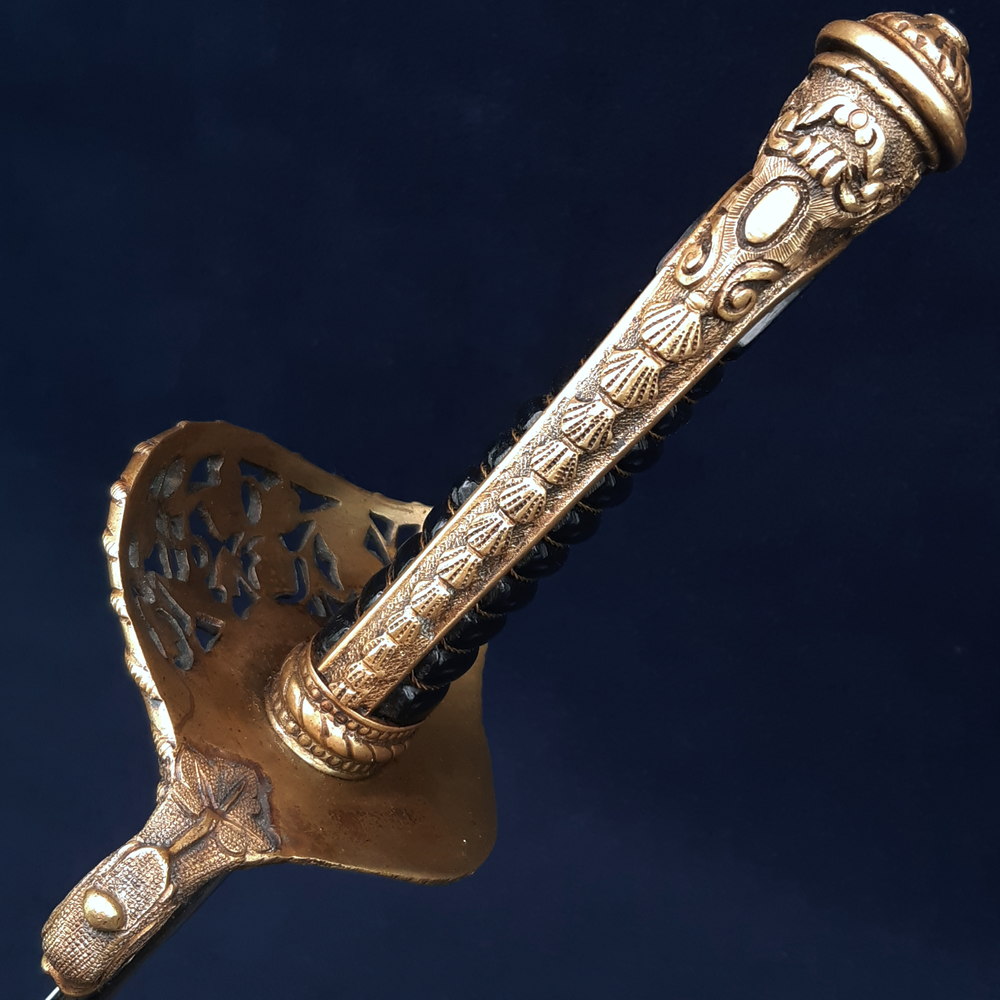
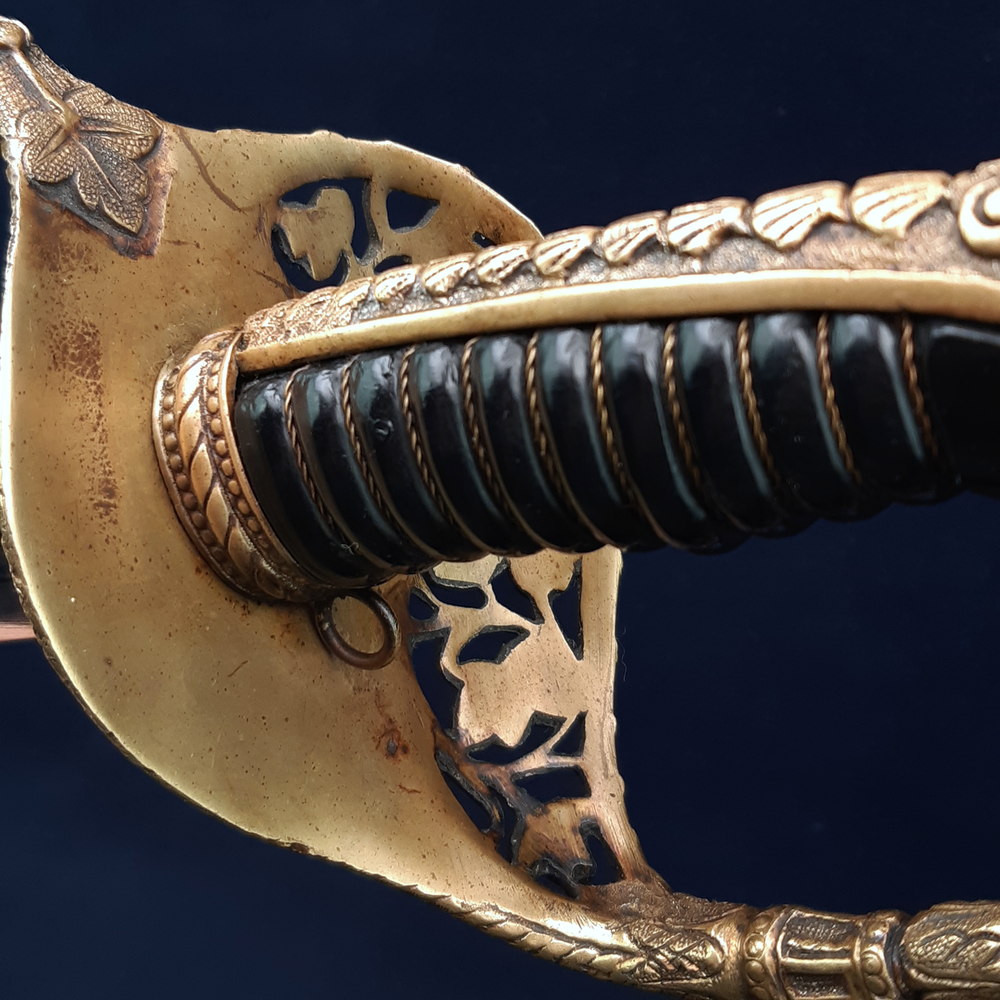
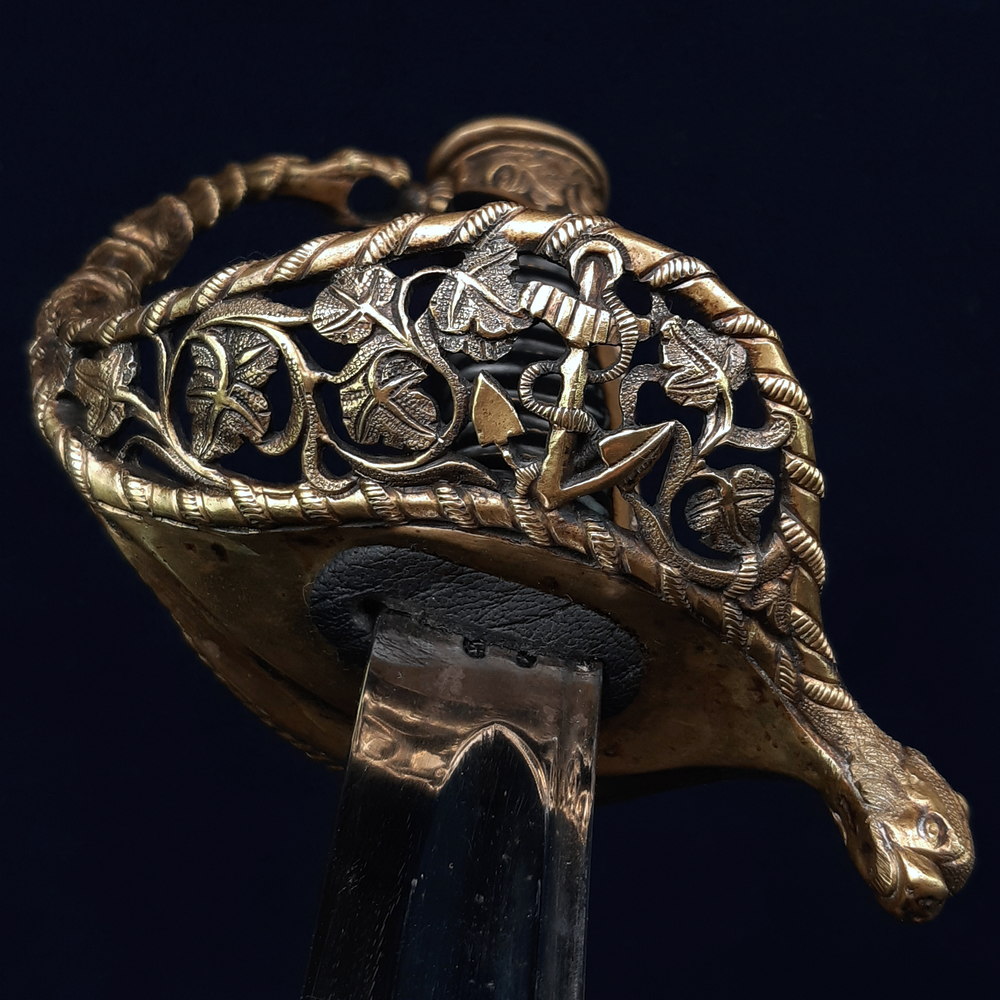
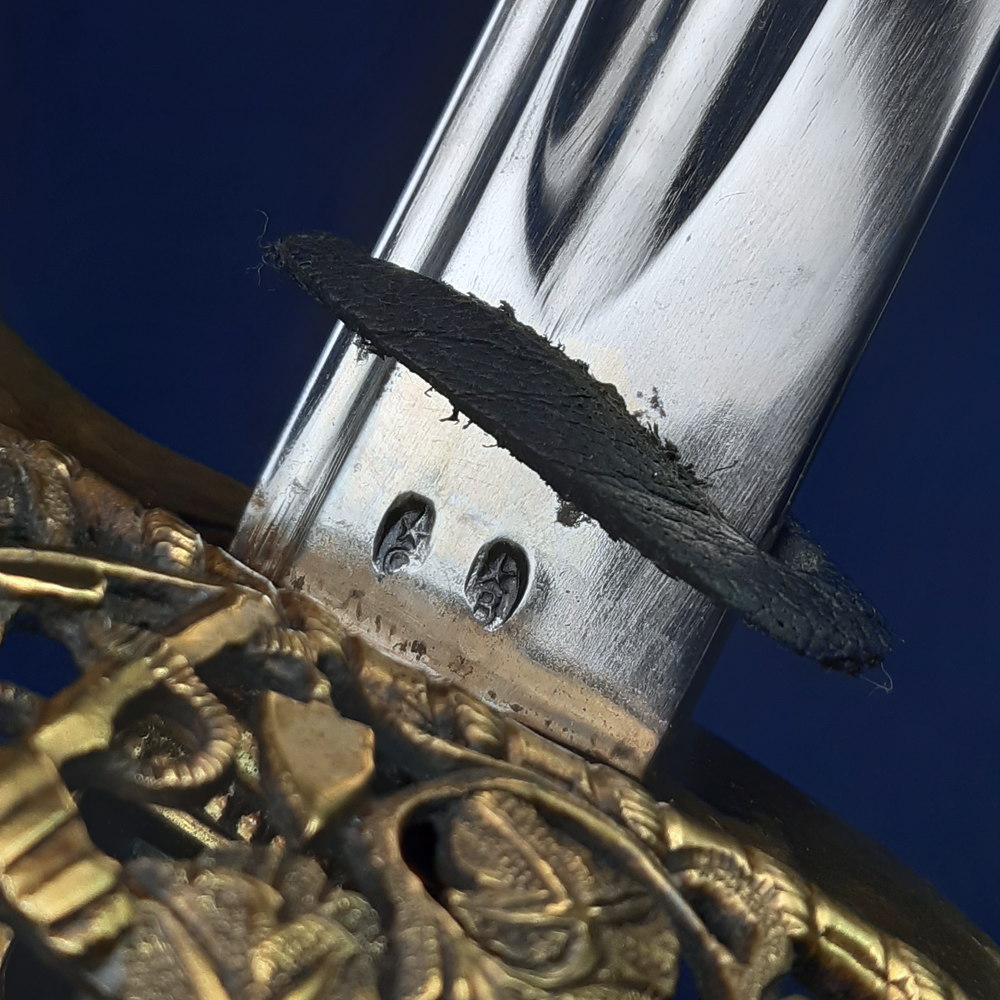
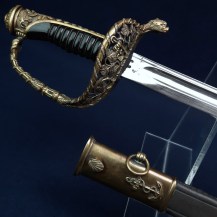
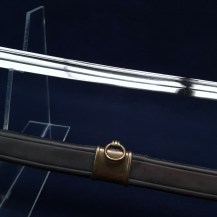
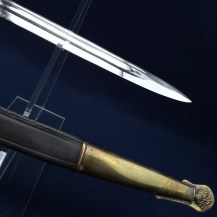
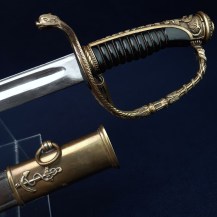
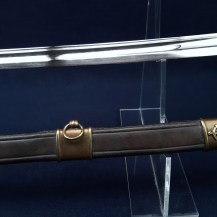
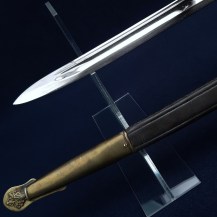
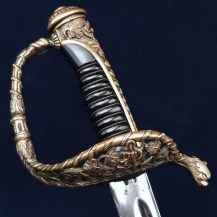
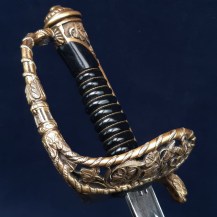
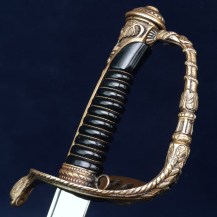
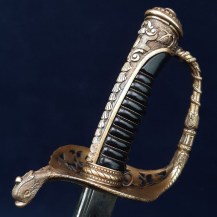
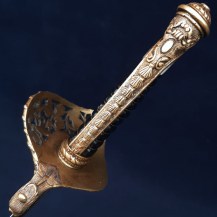
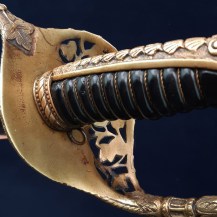
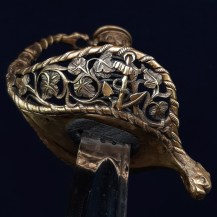
Curved blade fullered a la Montmorency (one broad fuller and one narrow fuller running close to the spine) with false edge and spear point. Black leather washer. Ornate brass hilt with forward-curving quillon in the form of a mythical sea creature, usually referred to as a dolphin, cast and pierced panel of decoration to the outer guard in the form of a fouled anchor, leaves and vines, the edges of the panel cast to appear as if wrapped in a rope, this feature continuing down the ornate knucklebow, which has an oval opening for a portepee. Ring also set inside the hilt next to the ferrule for threading a portepee. Grip of ribbed black plastic bound with wire. Brass backstrap cast with seashells, swags and leaves, integral oval pommel cap with radial palmate design. Black leather scabbard with brass fittings at the throat, middle and chape, the throat and middle pieces with hanging rings, the throat piece bearing a frog stud in the form of a seashell on one side, and a fouled anchor on both sides, the chape piece with large shoe cast with a seashell and leaves.
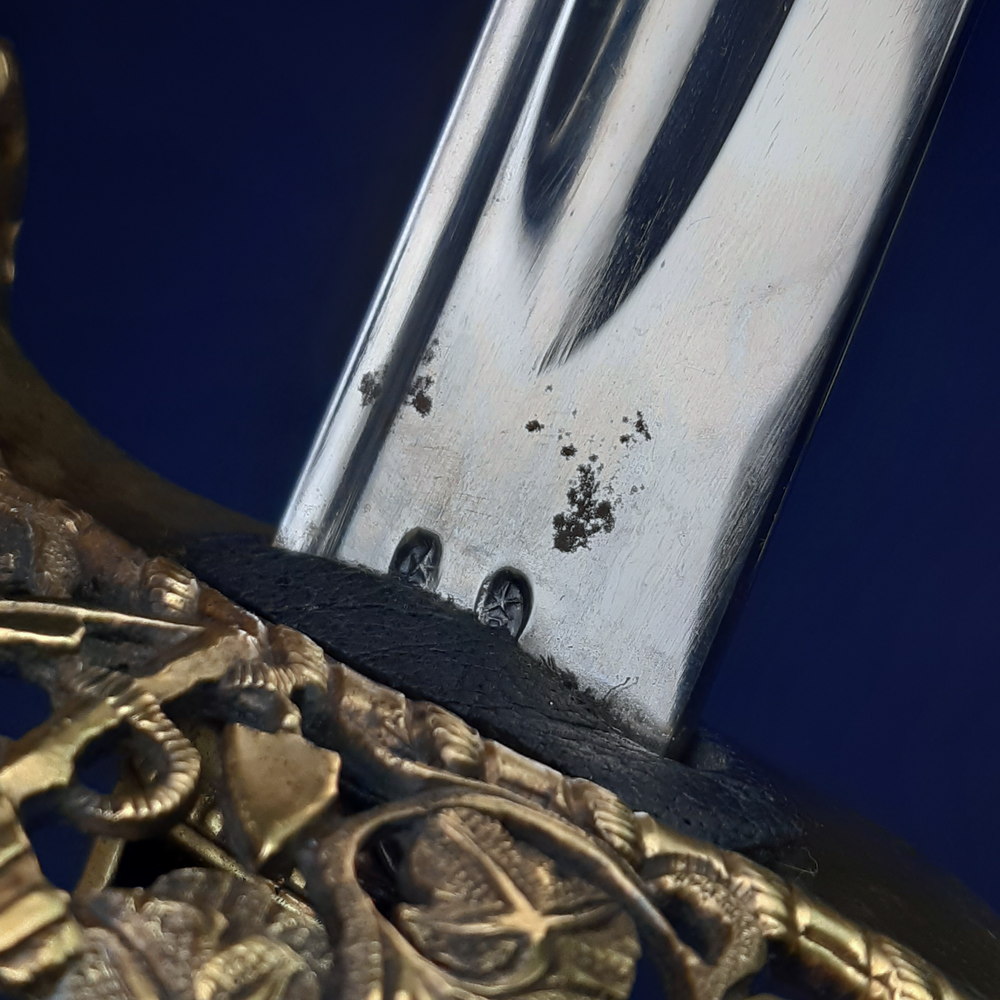
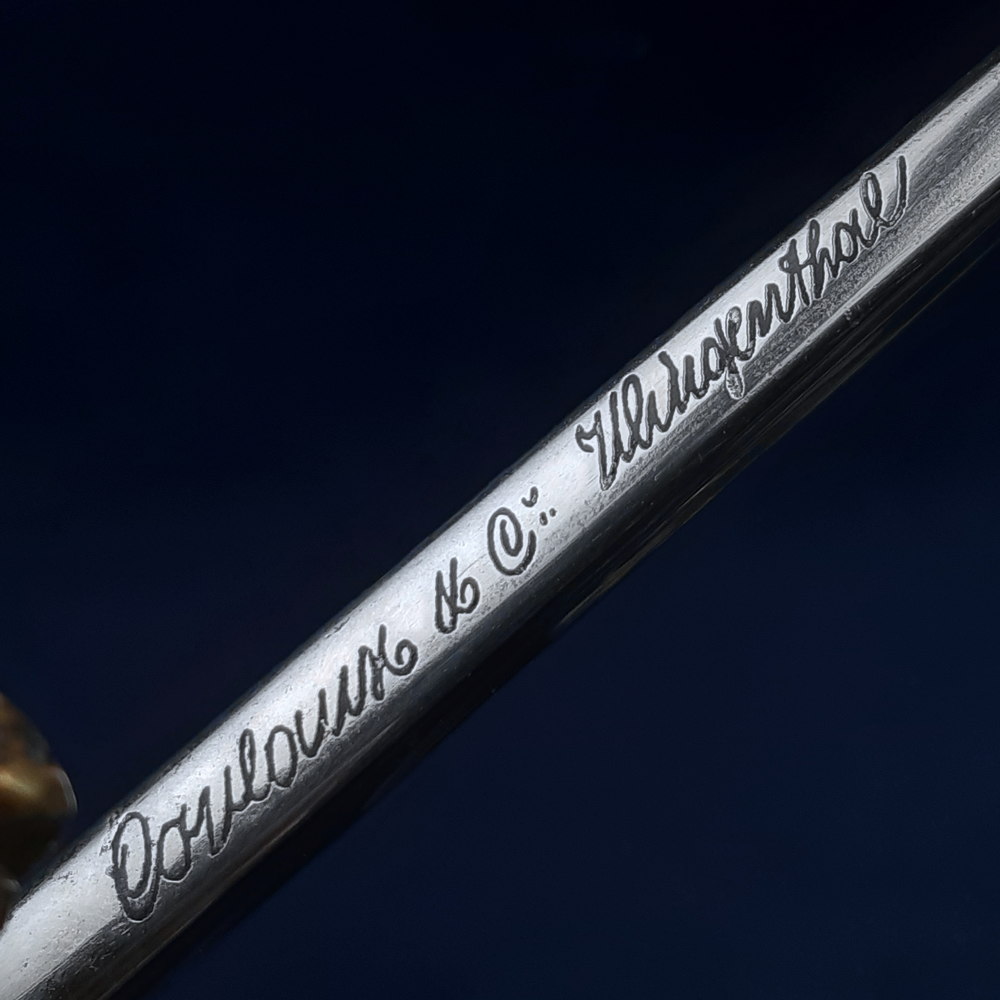
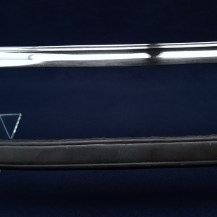
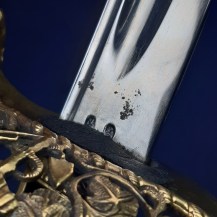
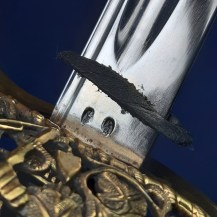
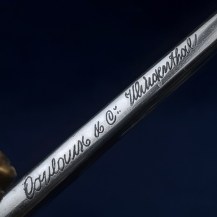
The spine of the blade is engraved with the maker’s mark ‘Coulaux & C. Klingenthal’. The ricasso of the blade is stamped on one side with two poinçons (inspector’s punch marks), one of a star and ‘C’, the other a star and ‘B’.
Government arms manufacture at Klingenthal began in 1730 with the opening of what was then known as the 'Manufacture Royale d'Armes Blanches d'Alsace', and ended in 1836, the location being considered too close to the German border and vulnerable in case of invasion. Main production shifted to the arsenal at Châtellerault. The Coulaux family had been managing and operating the Klingenthal facility since 1801, and purchased it at auction from the French state in 1838. It was run by the family thereafter as the private enterprise ‘Coulaux & Cie’ (Coulaux & Co.), continuing to produce sword & bayonet blades, as well as fencing swords and agricultural blades, until its closure in 1962.
The Model 1854 naval officer’s sword remains in use by the French navy to this day, France’s longest serving regulation model of sword. This example is probably from the early 20th century as it uses plastic for the grip rather than horn: the material was updated when Bakelite became available. The combination of poincons seen on the blade’s suggest a date range starting from 1900, although I cannot find an end date for these. Given its manufacturer the sword cannot postdate 1962.
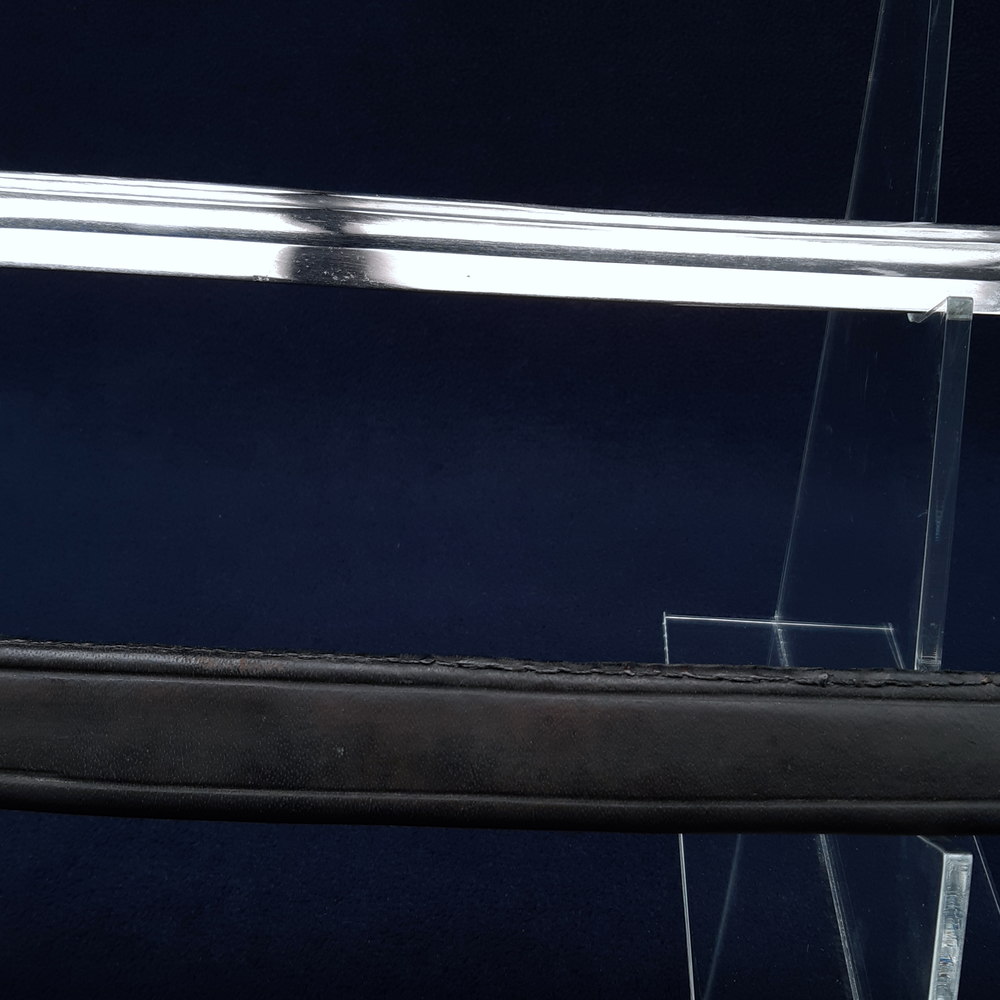
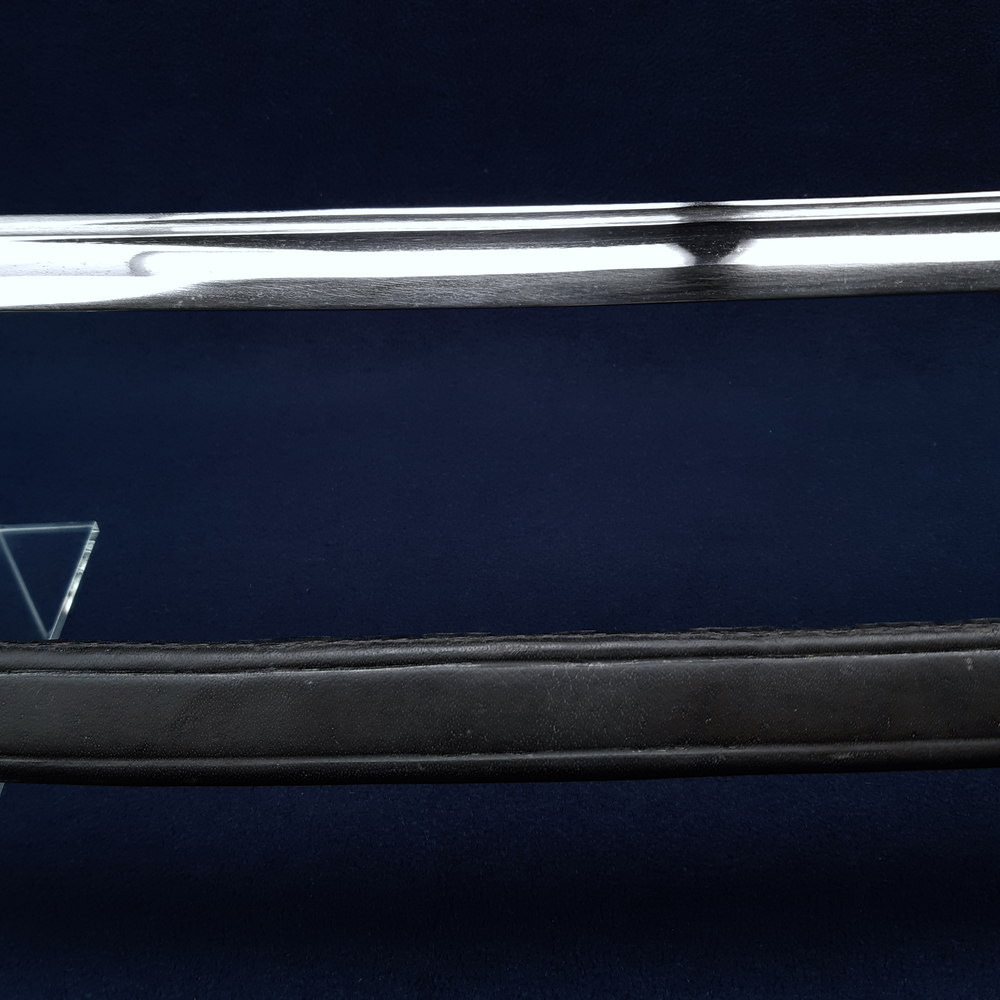
The blade has a high polish with only small spots of light frosting and a few tiny spots of patination – it may well be nickel-plated and if so the plating is in excellent condition with no flaking.
The brass hilt has an even light patina and a few tiny dents. The wire binding of the grip is all present and tight, the wood itself in undamaged. The scabbard has a few shallow dents to the upper end which do not interfere with sheathing and drawing, it retains its gloss black paint with a few tiny spots of flaking revealing steel and some areas of abrasion.
