

French M1816 Artillery Sidearm
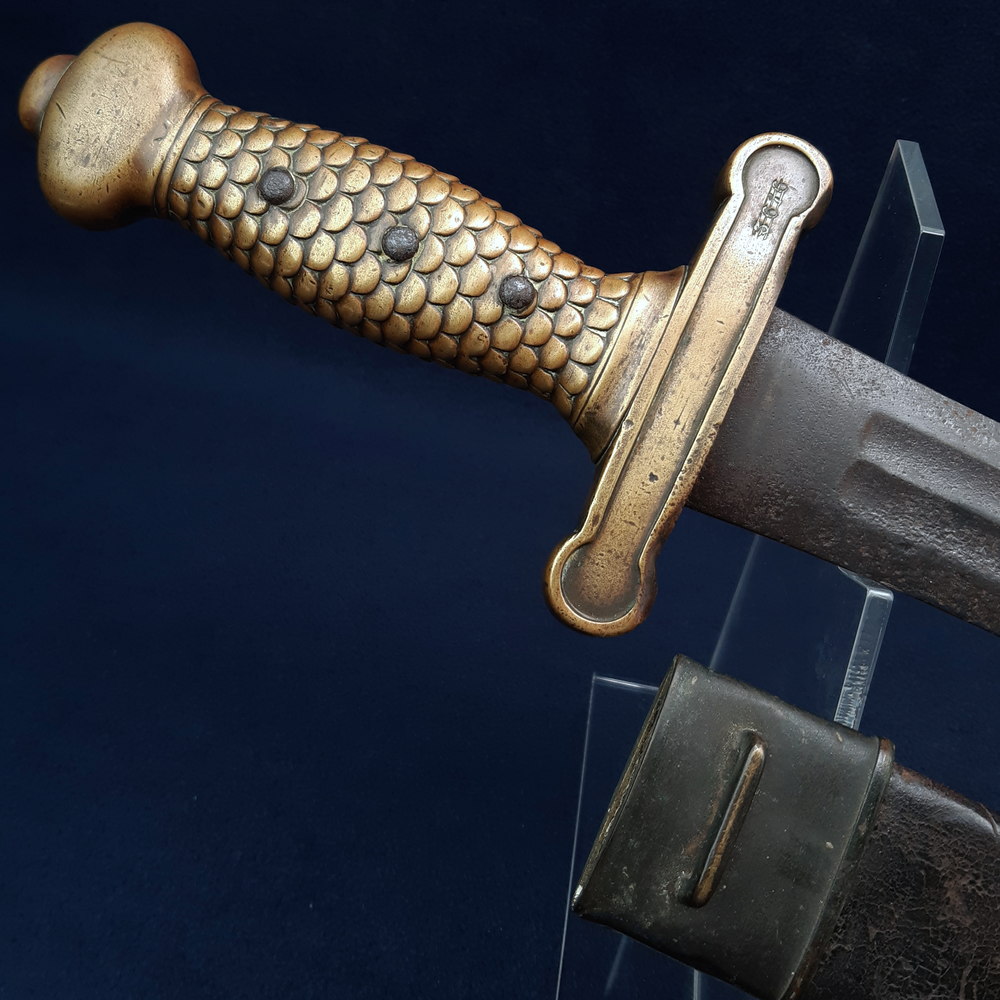
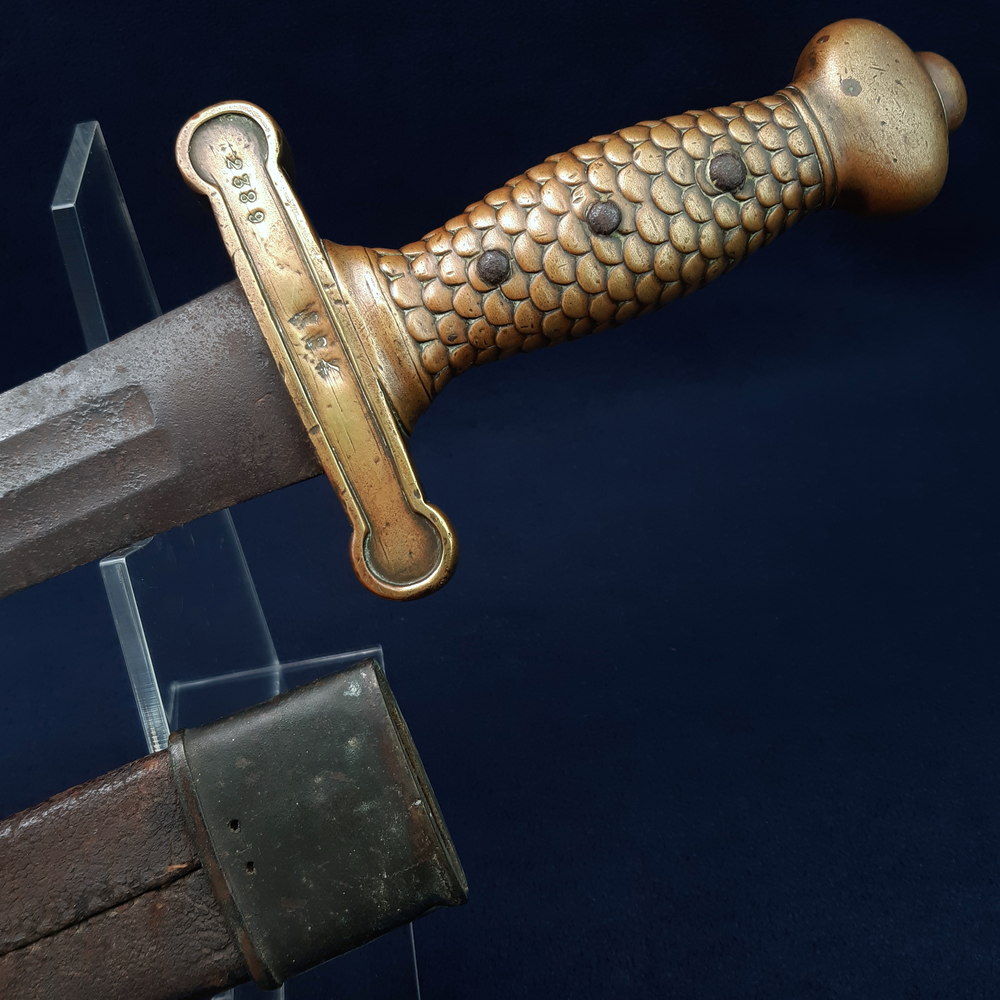
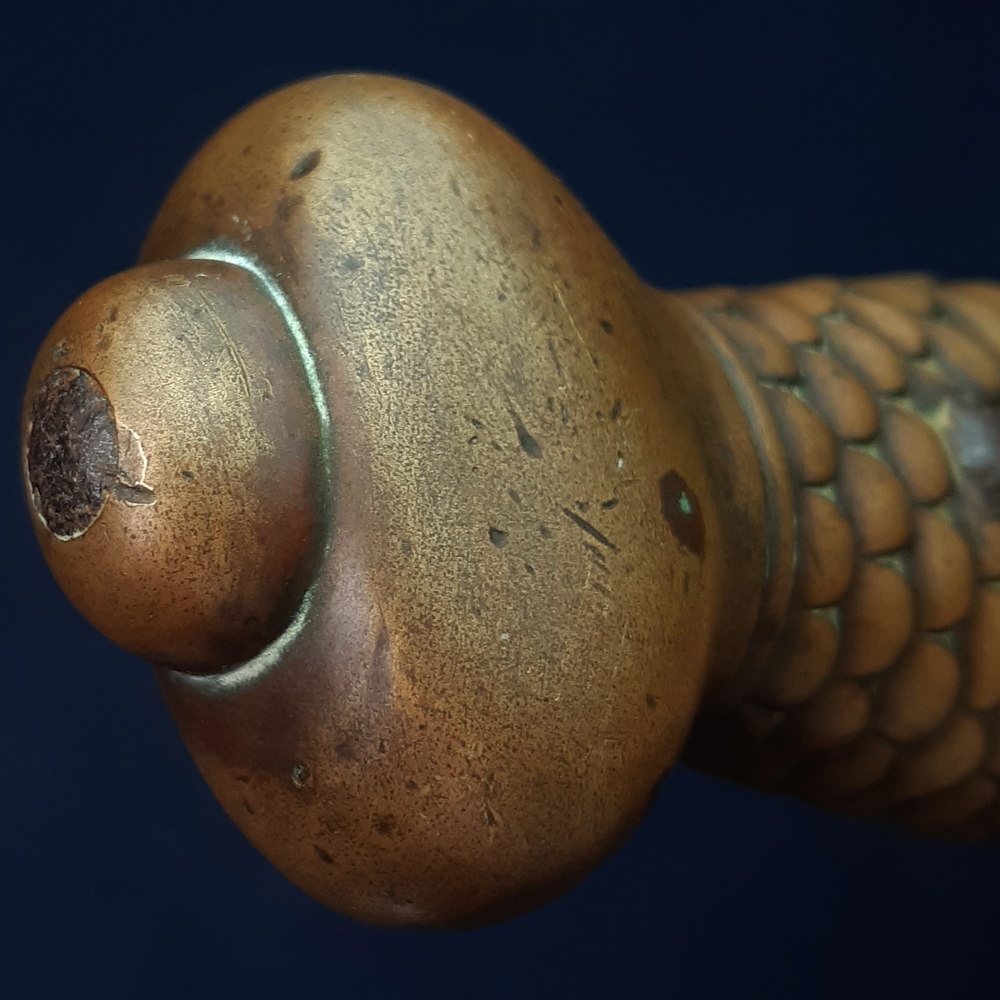
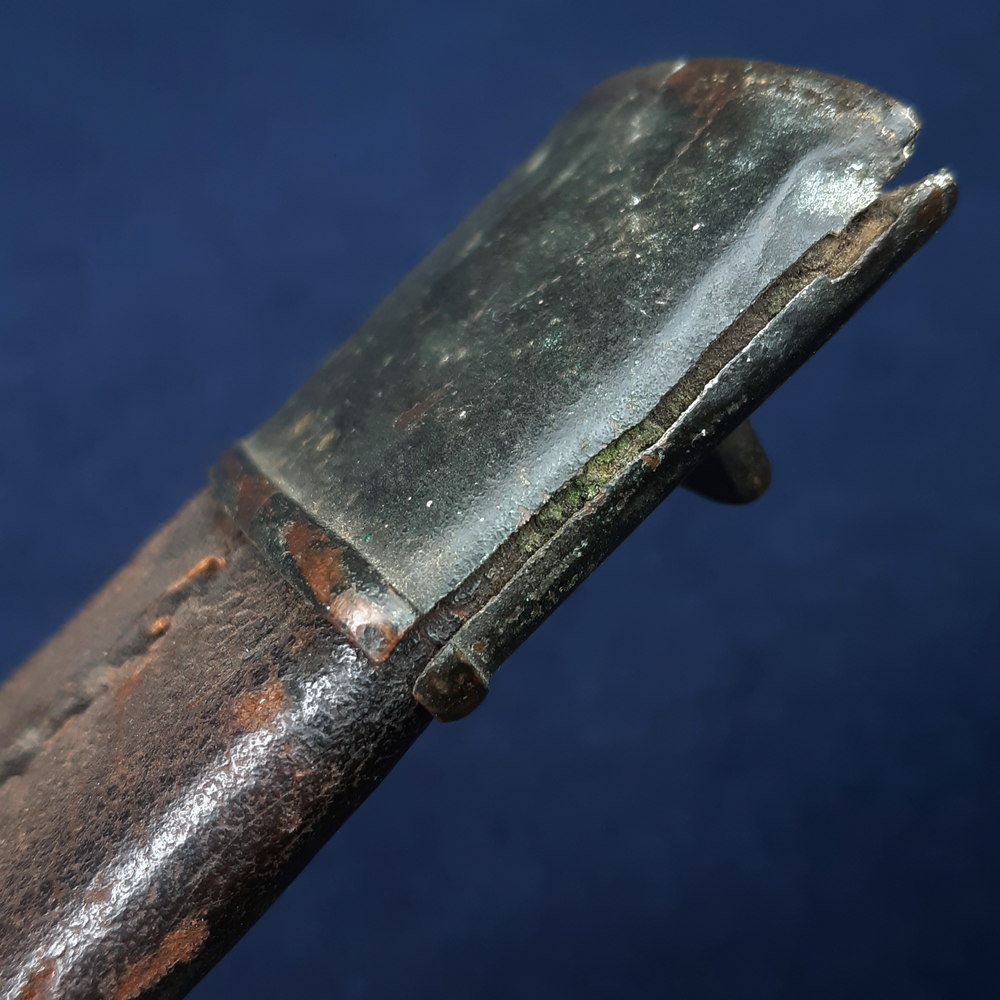
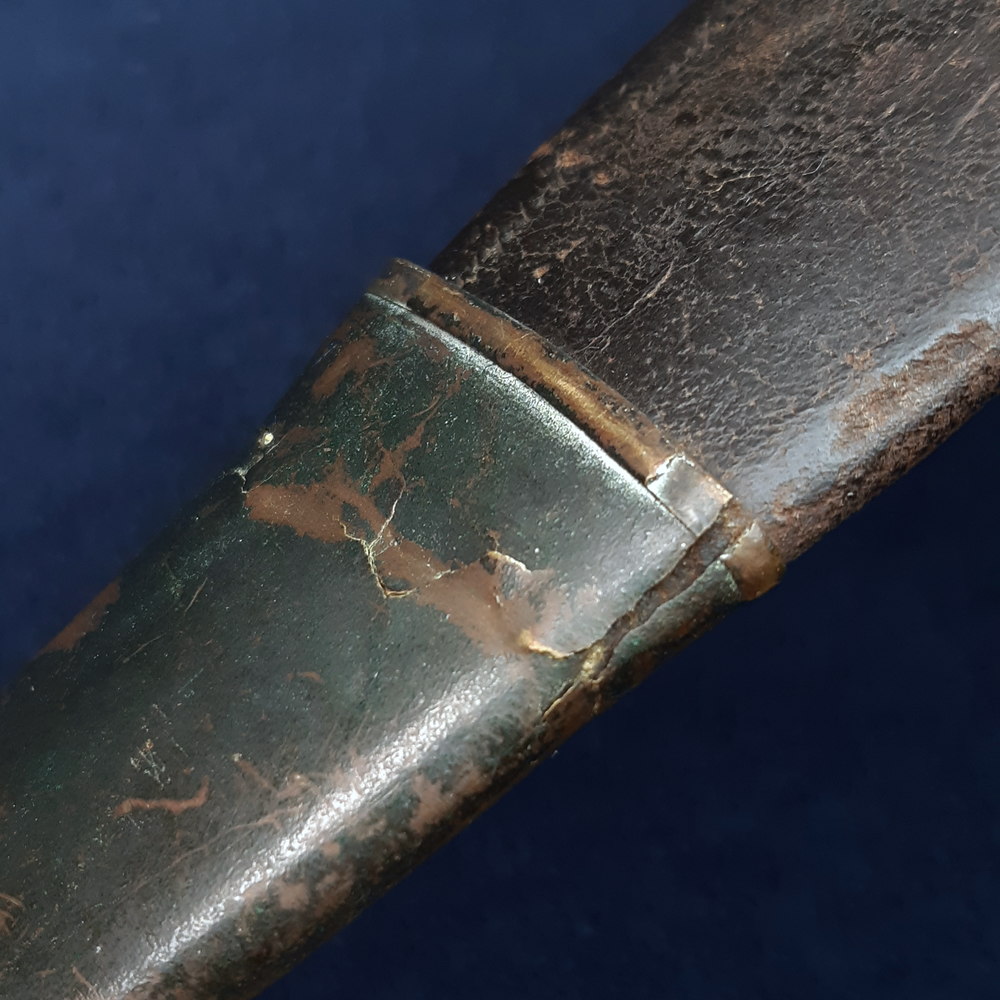
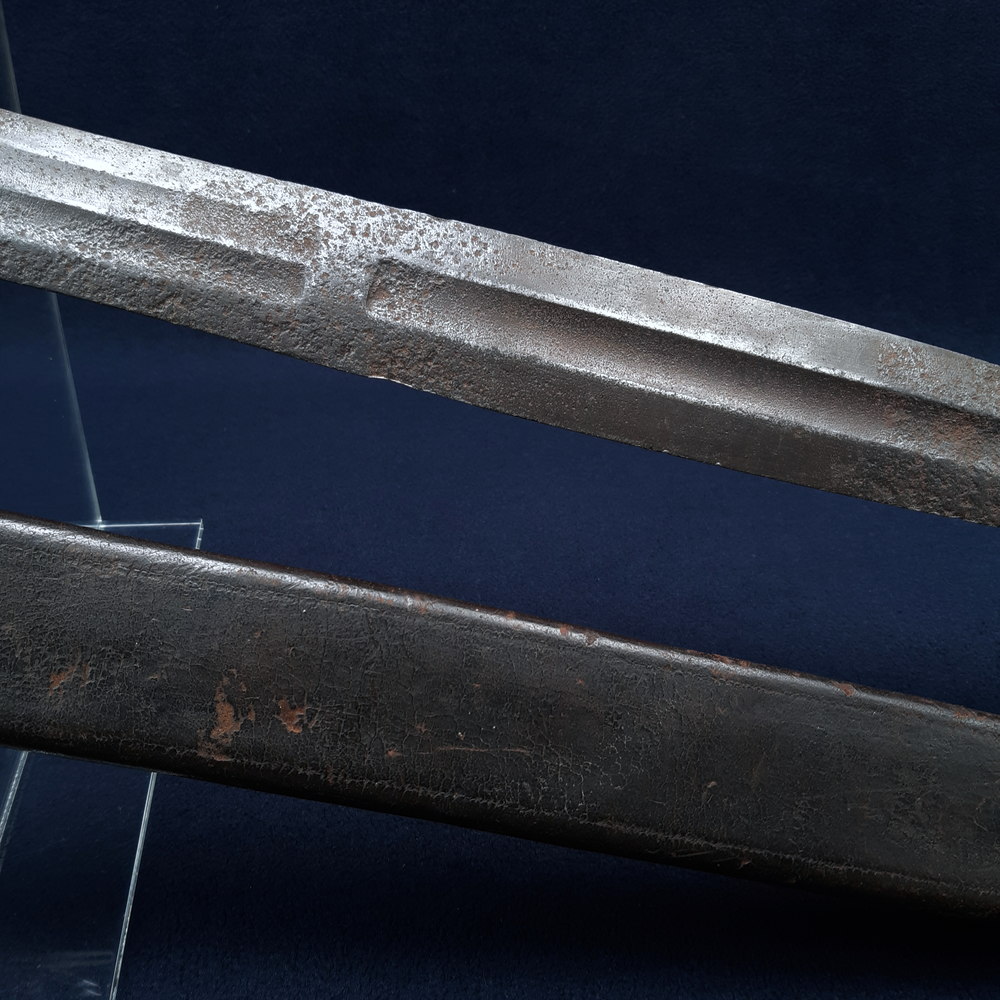
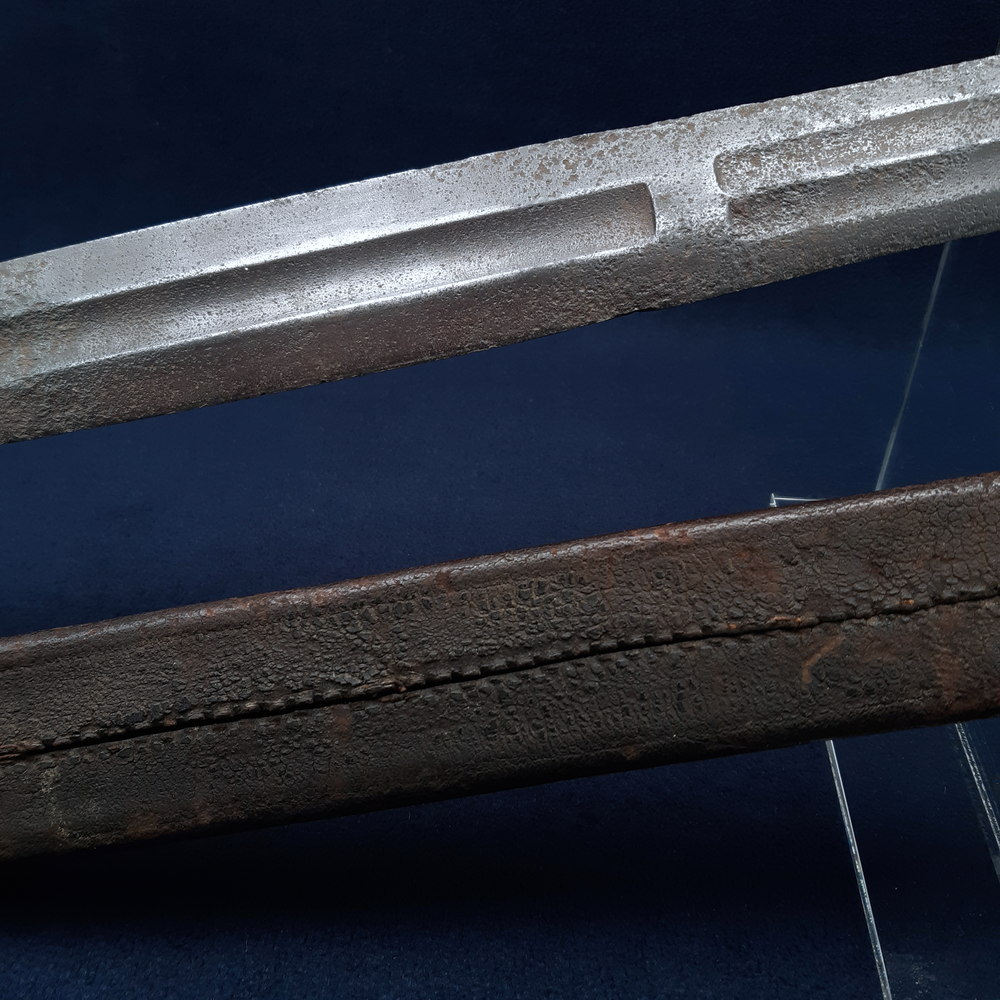
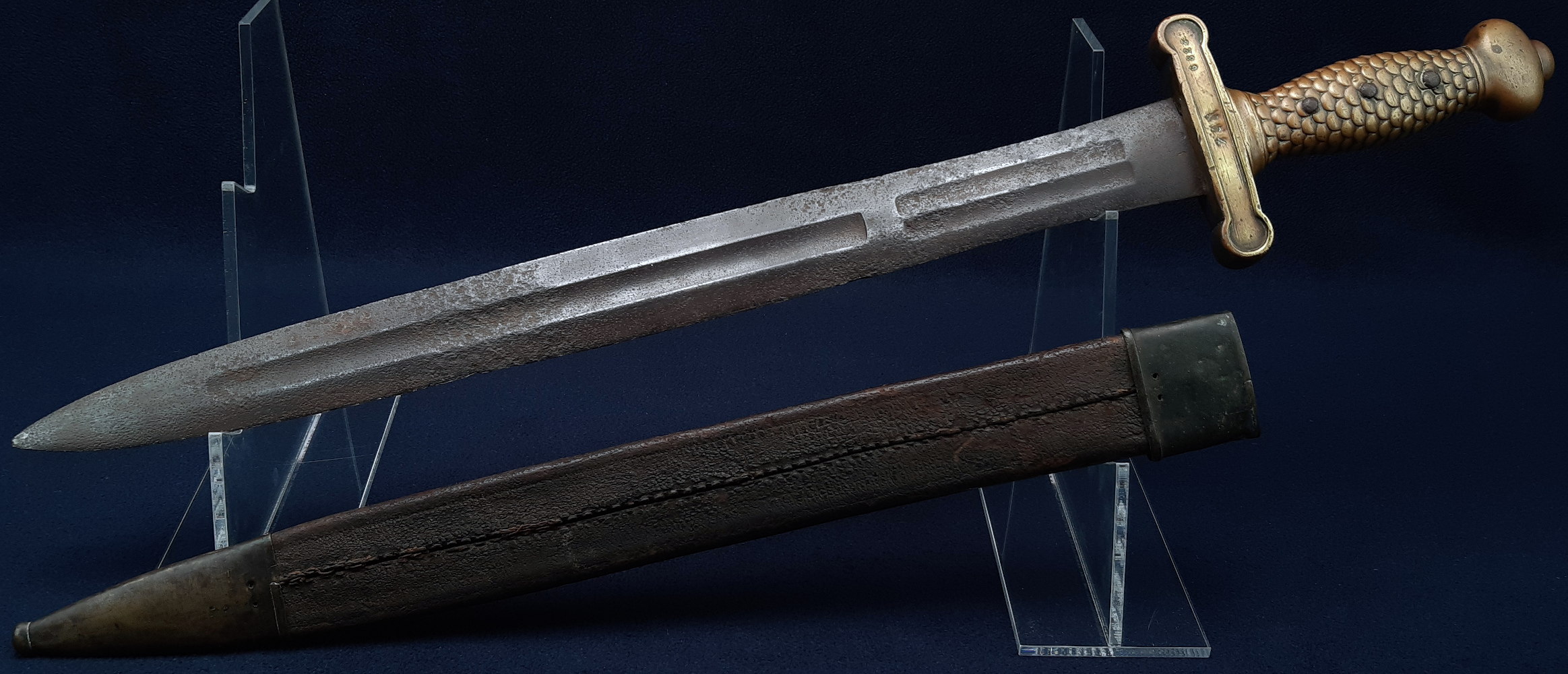
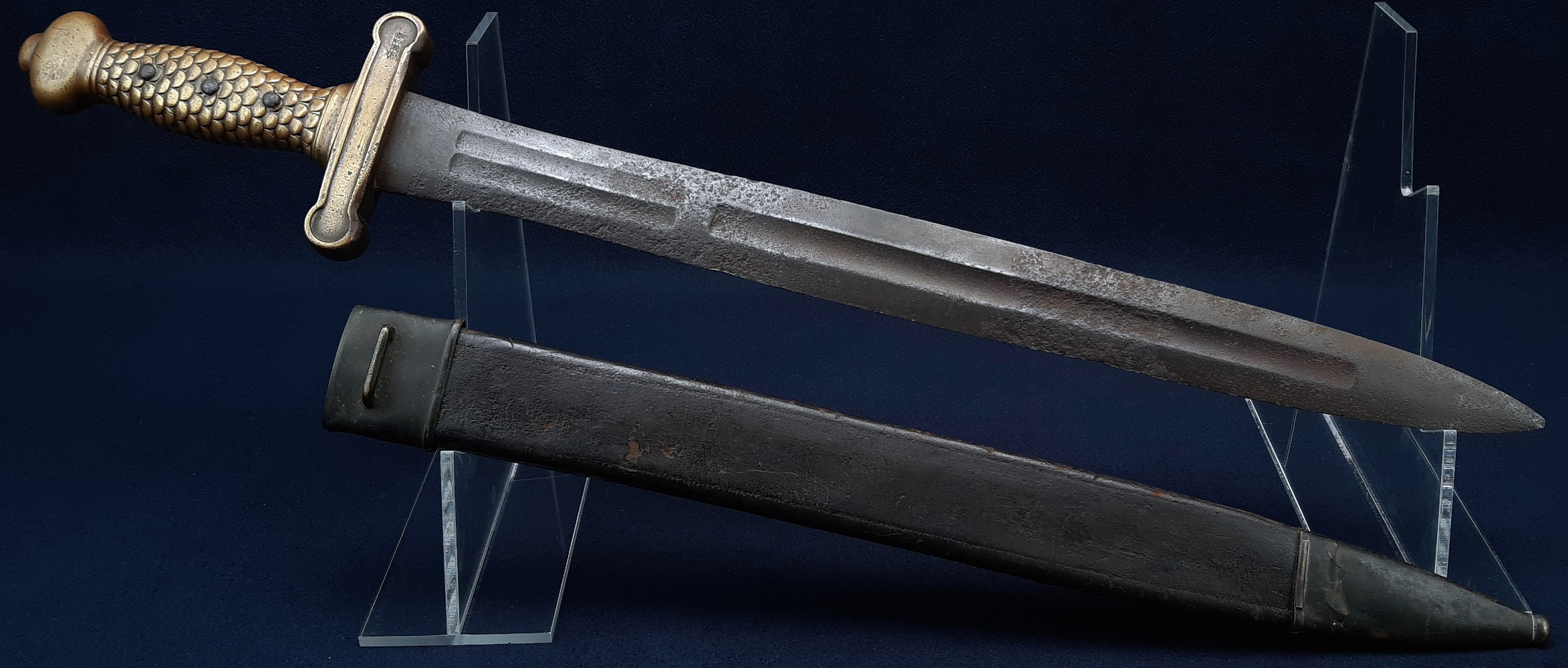
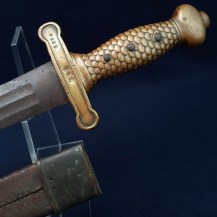
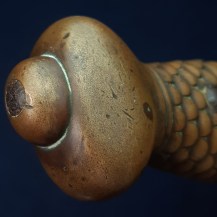
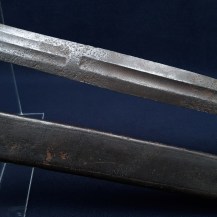
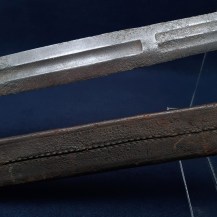
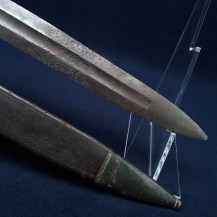
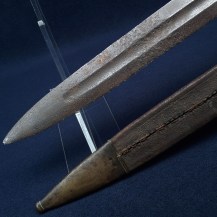
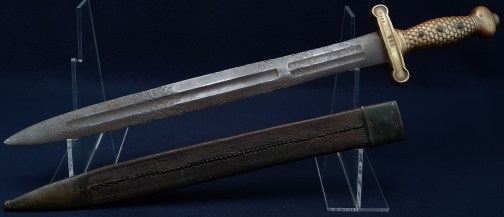
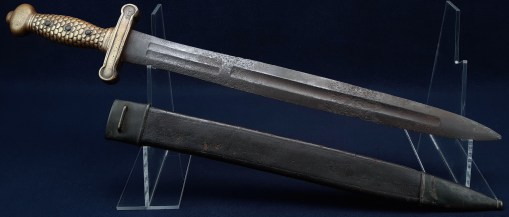
Straight leaf-shaped blade with lenticular cross section, two short, narrow fullers toward the forte above which is a single long fuller. Solid brass crossbar hilt with round finials, integral brass grip with fishscale texture and three steel rivets, oval brass pommel. Black leather scabbard with brass chape and throat pieces, the throat piece with frog loop.
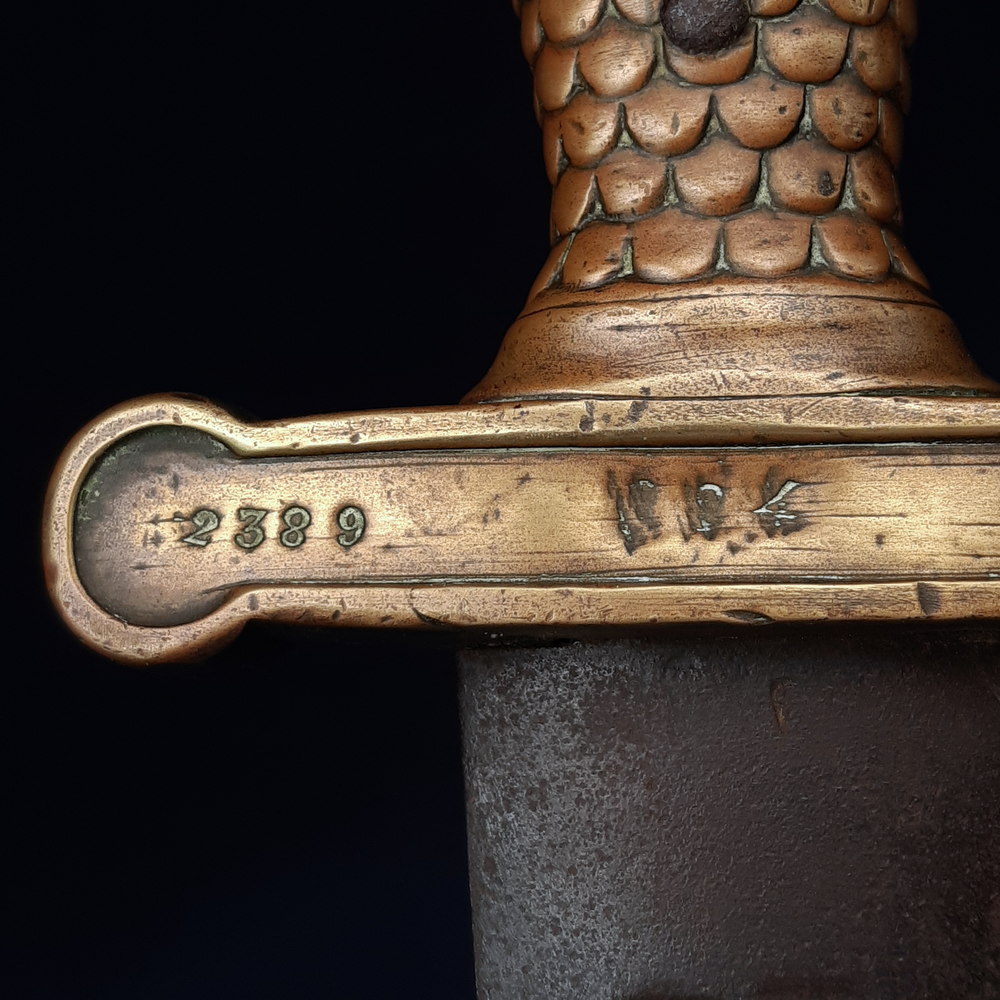
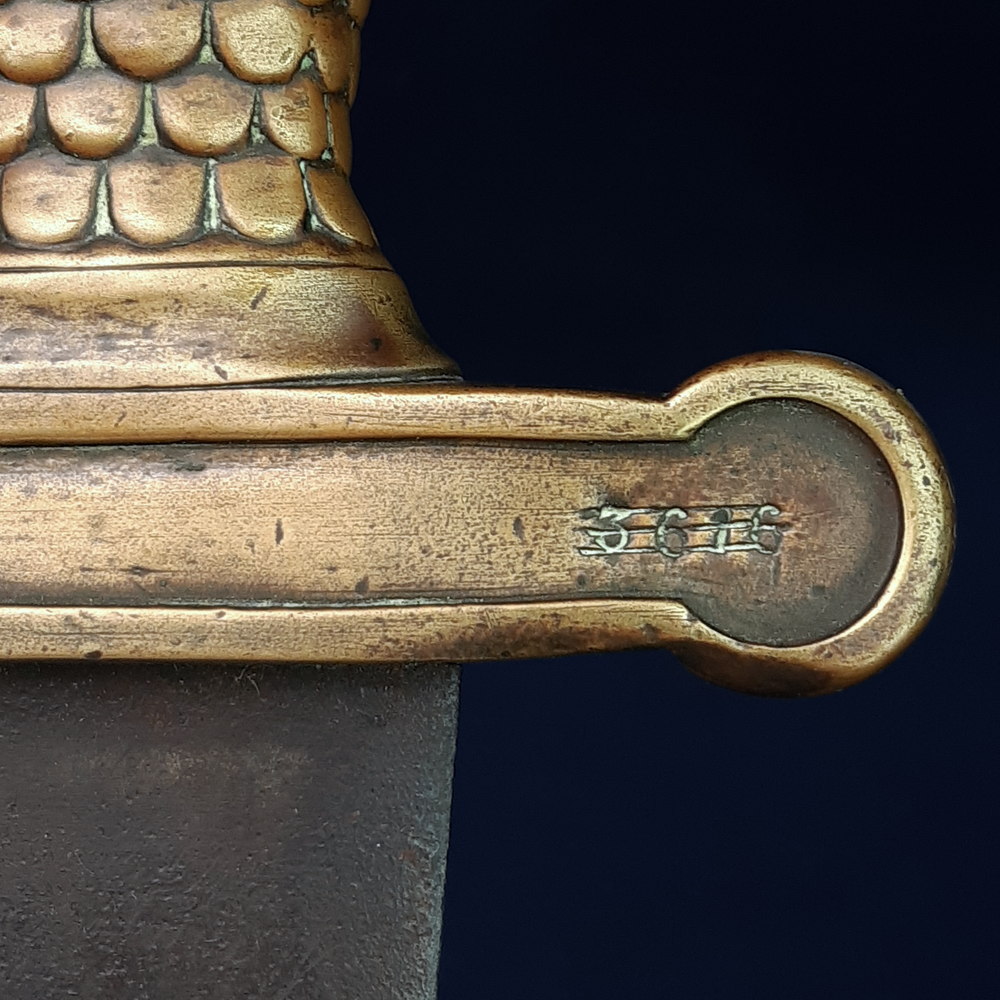
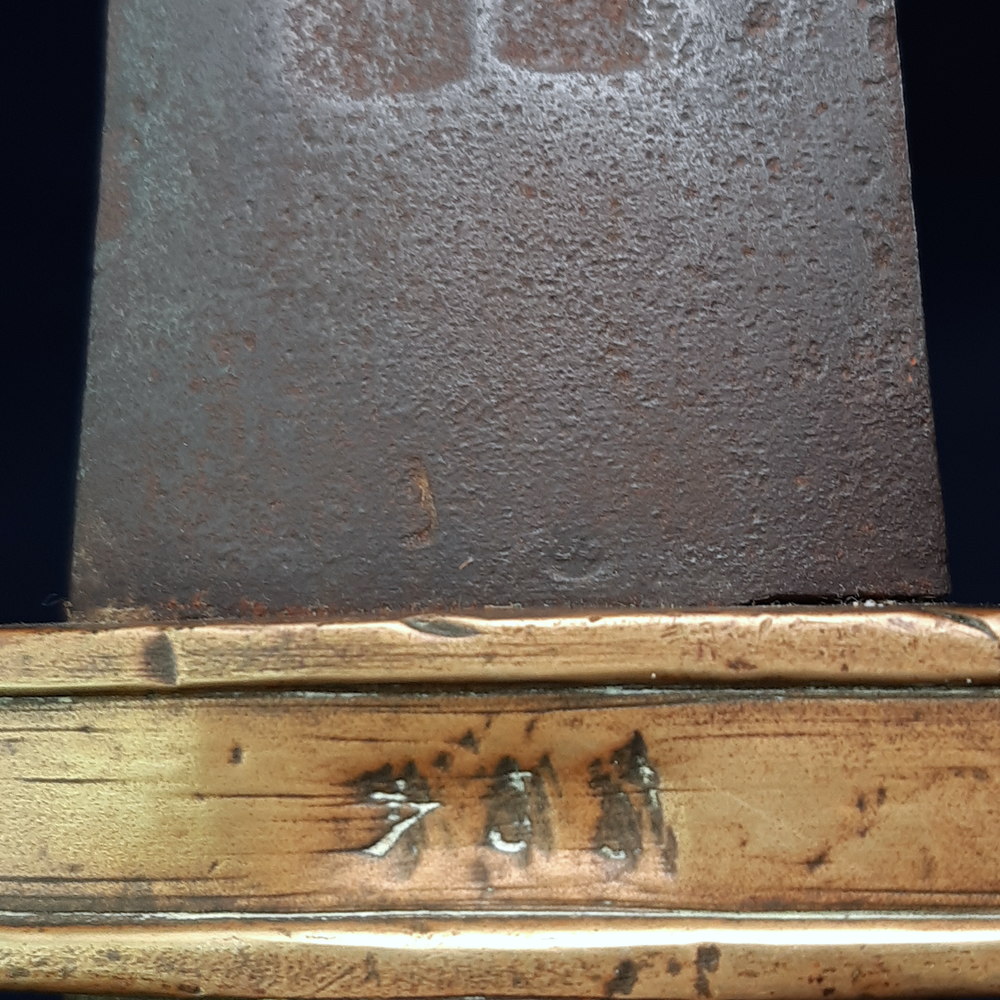
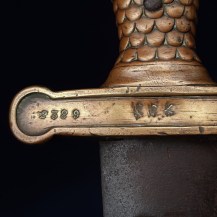
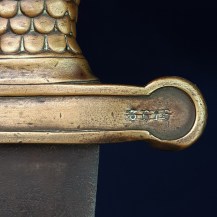
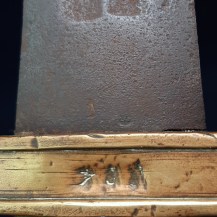
The blade is engraved on one side at the ricasso with traces of what may be a manufacturer’s mark in cursive script, but this is illegible due to heavy patination and speckled pitting. The ricasso on the other side is stamped with two poincon inspection marks. The crossbar of the hilt is stamped with three serial numbers: ‘2389’ on one finial, ‘3616’ on the other finial, which has been cancelled with three strikethroughs so presumably predates the non-cancelled mark, and finally an illegible three-digit number in the centre of the hilt which has been cancelled by denting the digits.
Sidearms with the form of a neoclassical ‘gladius’ appear to have originated with the French 1771 ‘Eagle Head’ Artillery sword. A series of very similar-looking short swords were subsequently designed, including the French 1816 & 1831 Artillery models, the US Model 1832 Foot Artillery, the Swiss 1842 Pioneer’s, the Russian 1848 Pioneer’s and the British 1855 Land Transport. They were simple and robust but not particularly useful for combat (the gladius having become obsolete for good reasons) so remained either ceremonial items or in the role of a machete for various field tasks such as clearing brush.
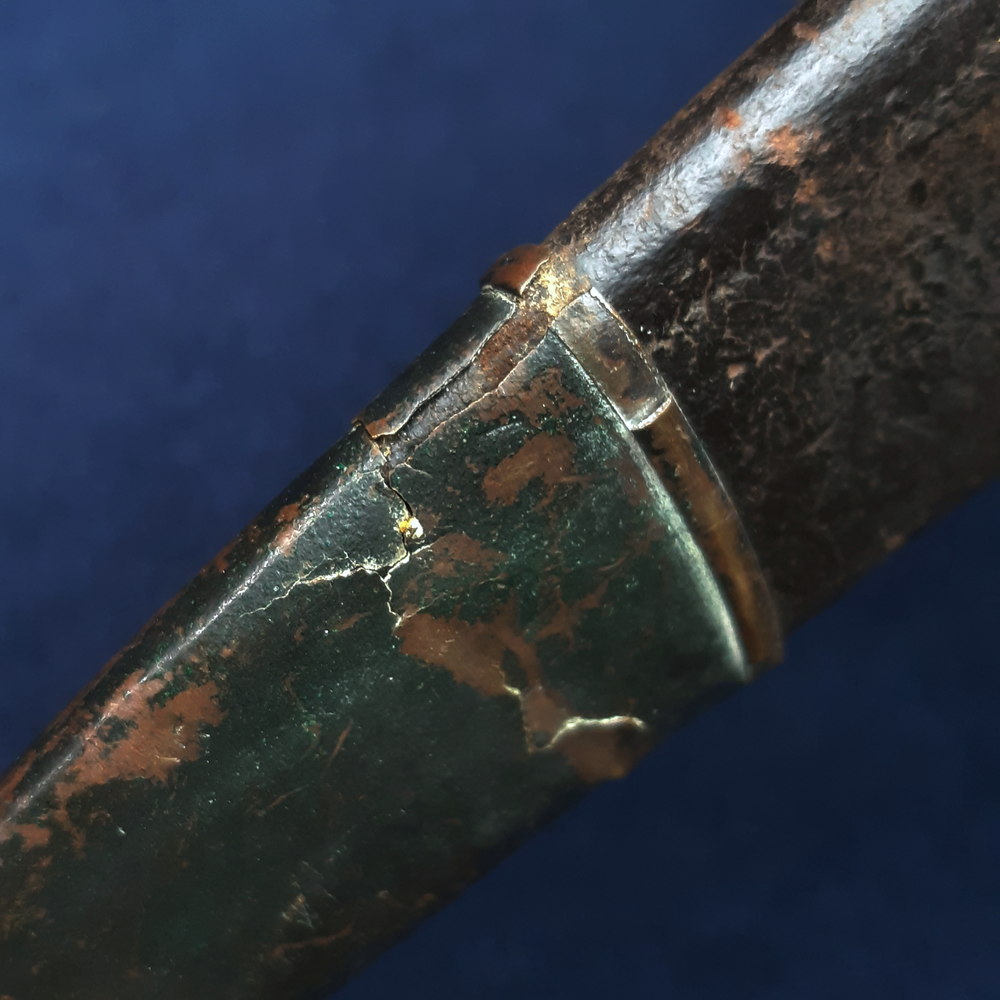
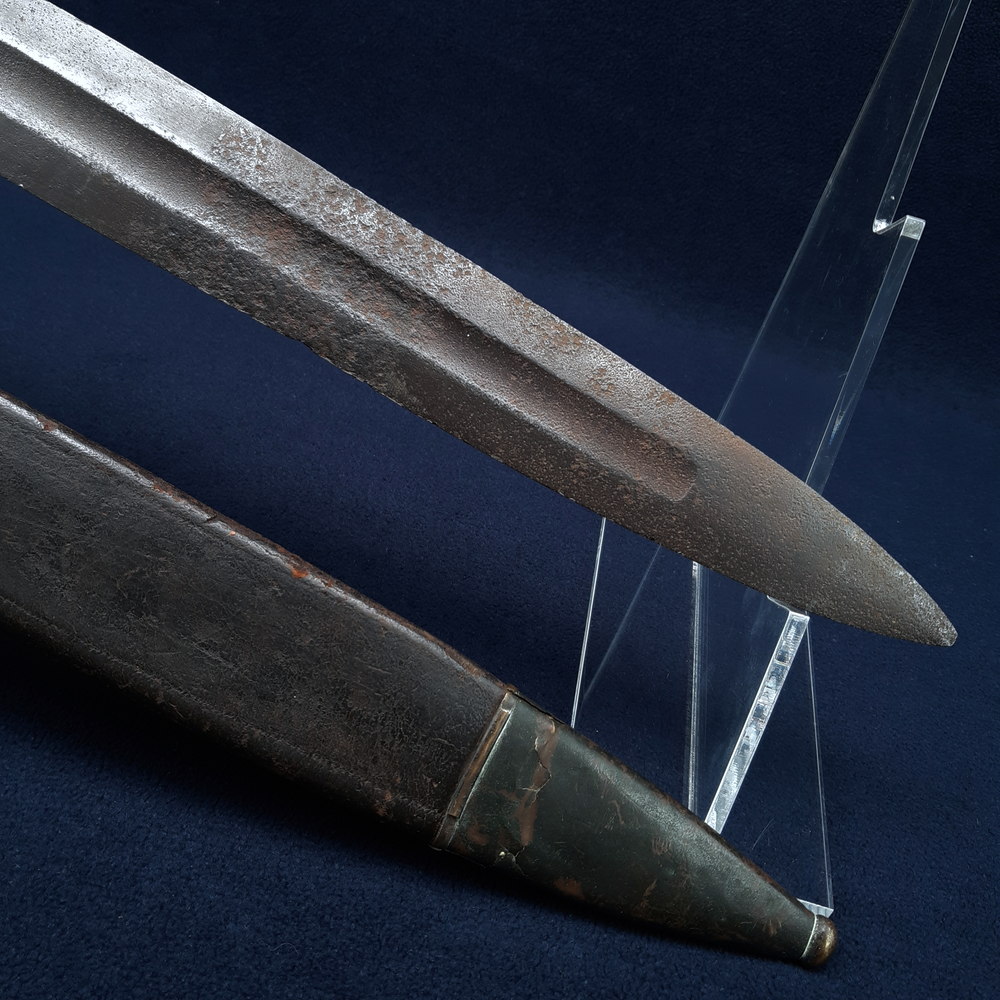
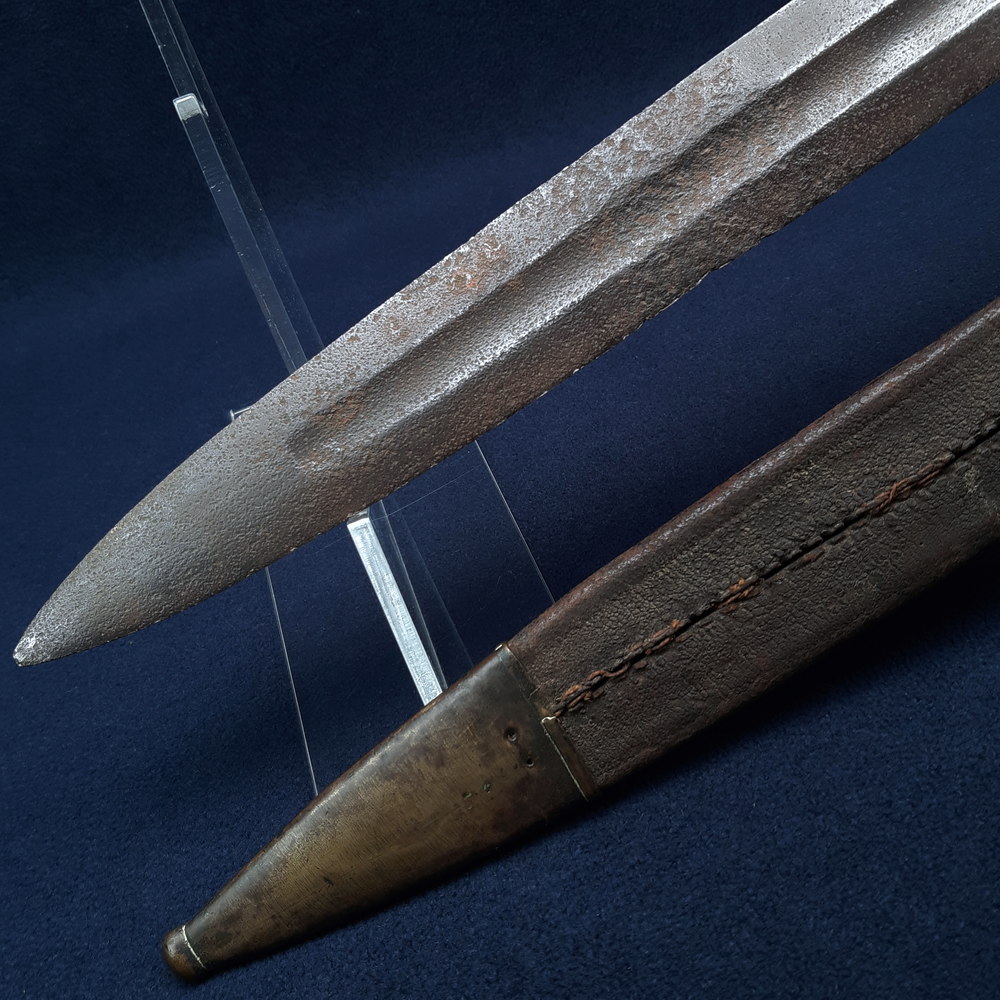
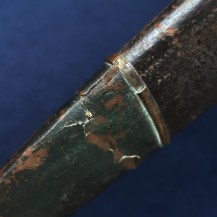
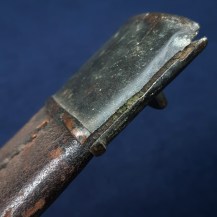
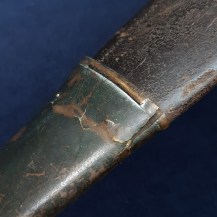
The blade has a dark patina overall and areas of moderate to heavy pitting. The tip is worn and there are some nicks and rolls to the edge. The brass hilt has a moderate patina with a few spots of staining and small dents. The three steel rivets in the grip have a dark patina matching the blade. The scabbard leather is original with some abrasion, flaking and surface-level cracking, and a 5cm long split along part of one side. Its stitching has almost all been lost. The throat and chape pieces of the scabbard have been painted a very dark green at some point, which has worn off on one side of the chape piece and is slightly worn elsewhere. The staples attaching the pieces to the scabbard leather have been lost allowing the throat piece to detach. The throat piece is cracked along one side and the chape piece has denting and cracking along its upper edge on one side.
