

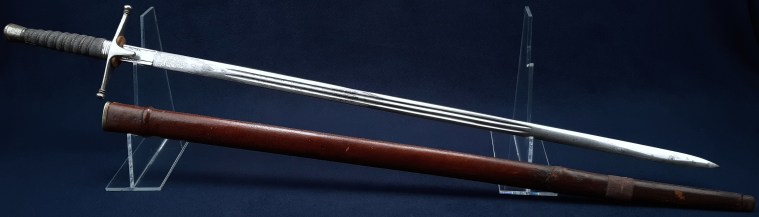
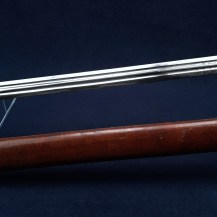
Scottish George V Infantry Officer's Cross Hilted Broadsword, Highland Light Infantry
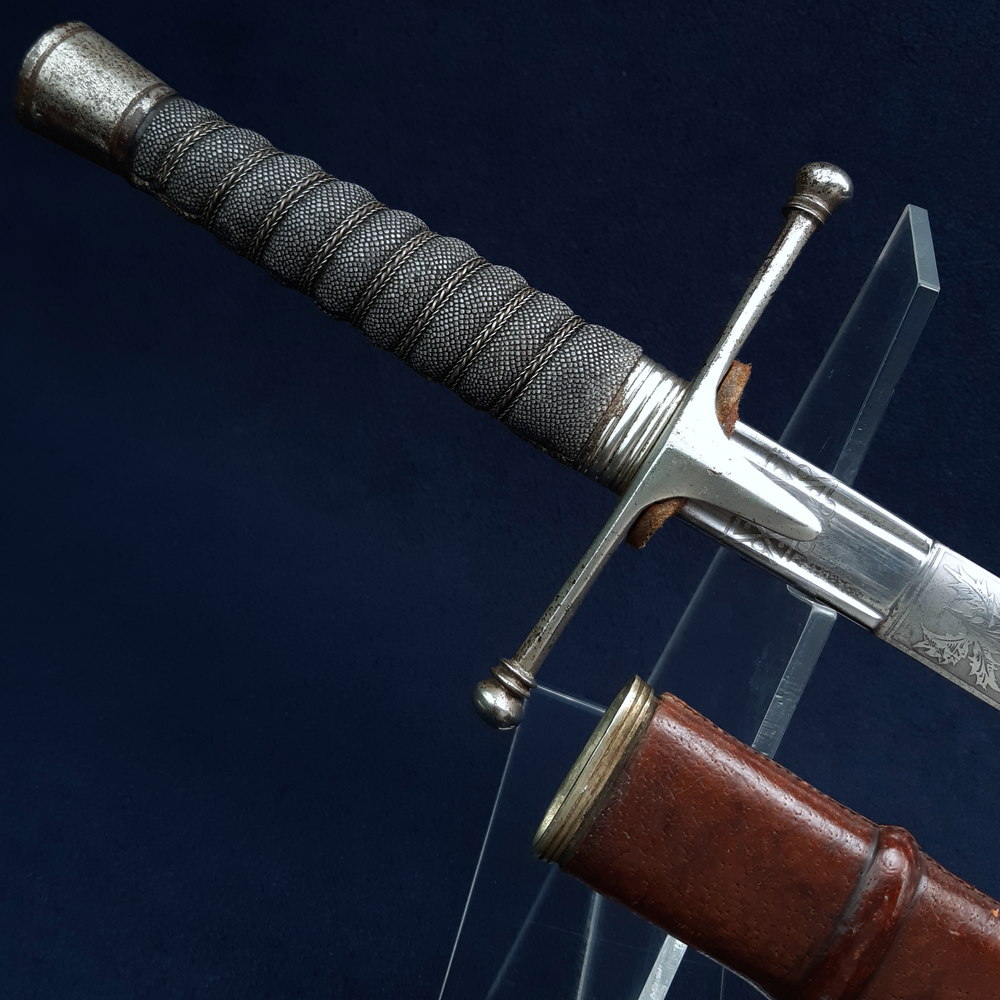
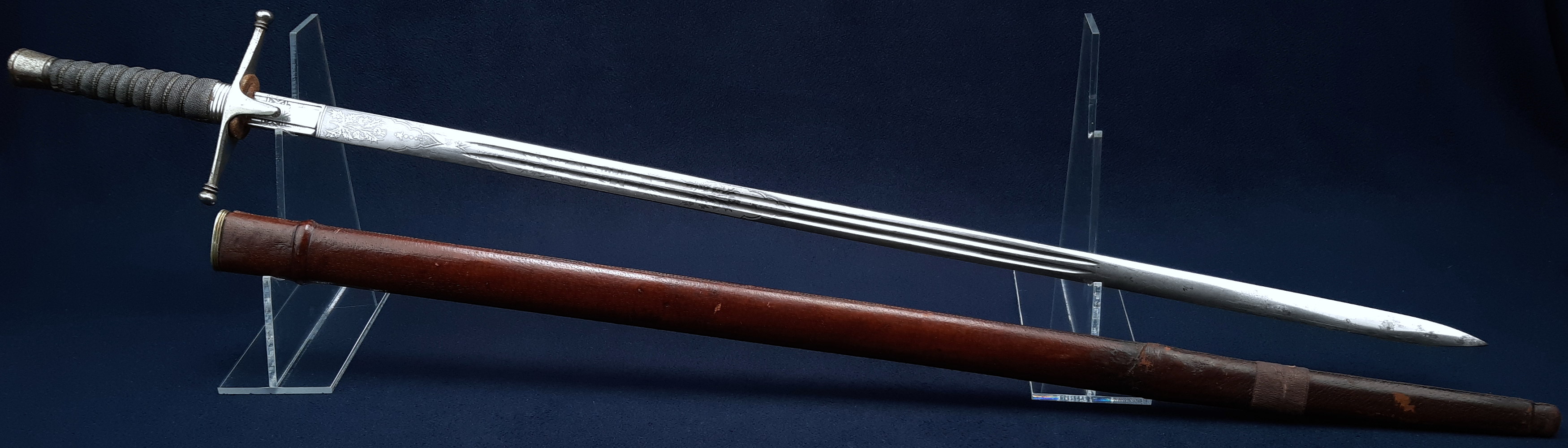
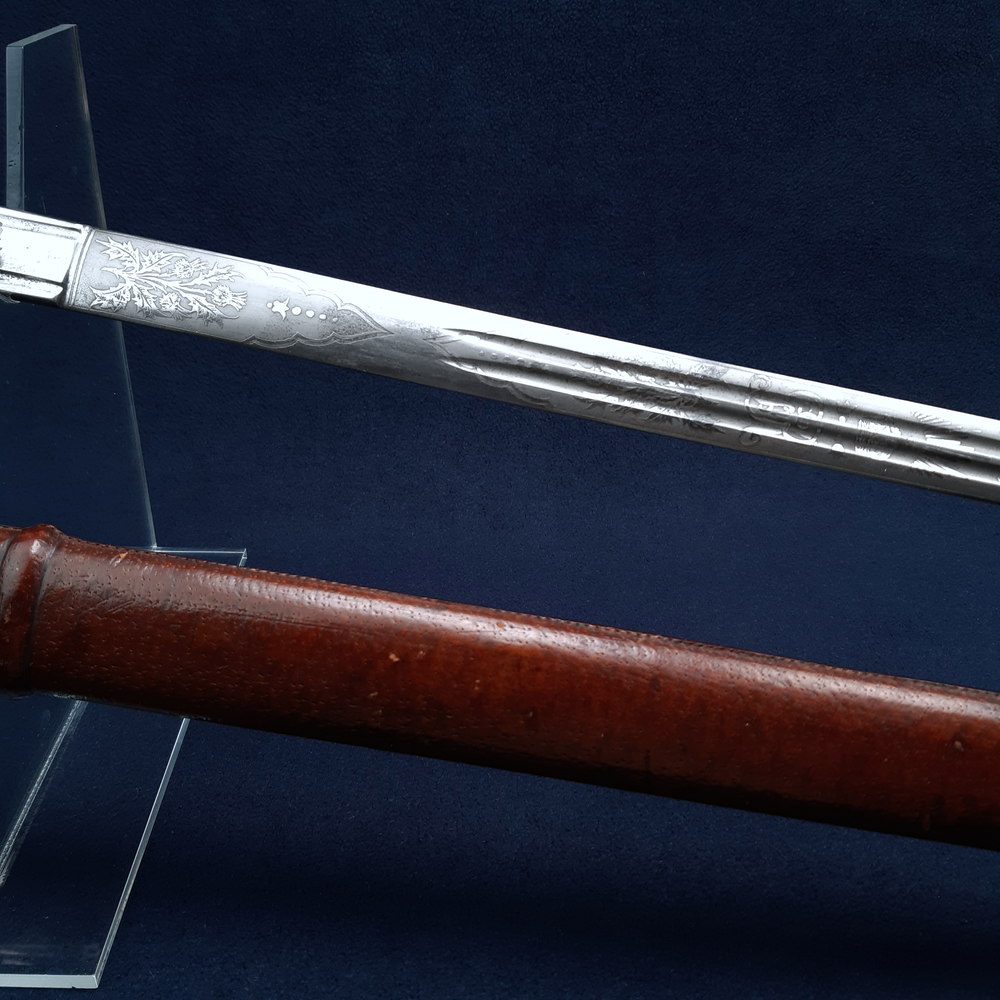
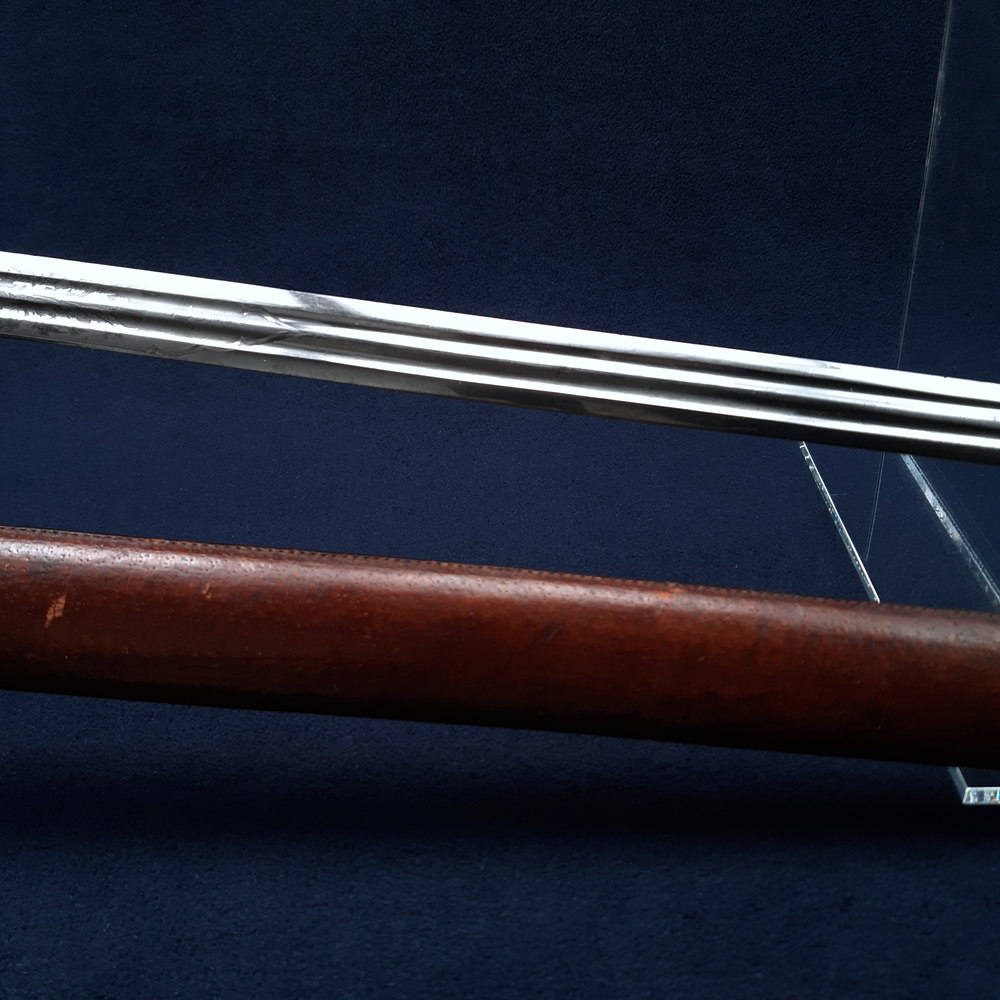
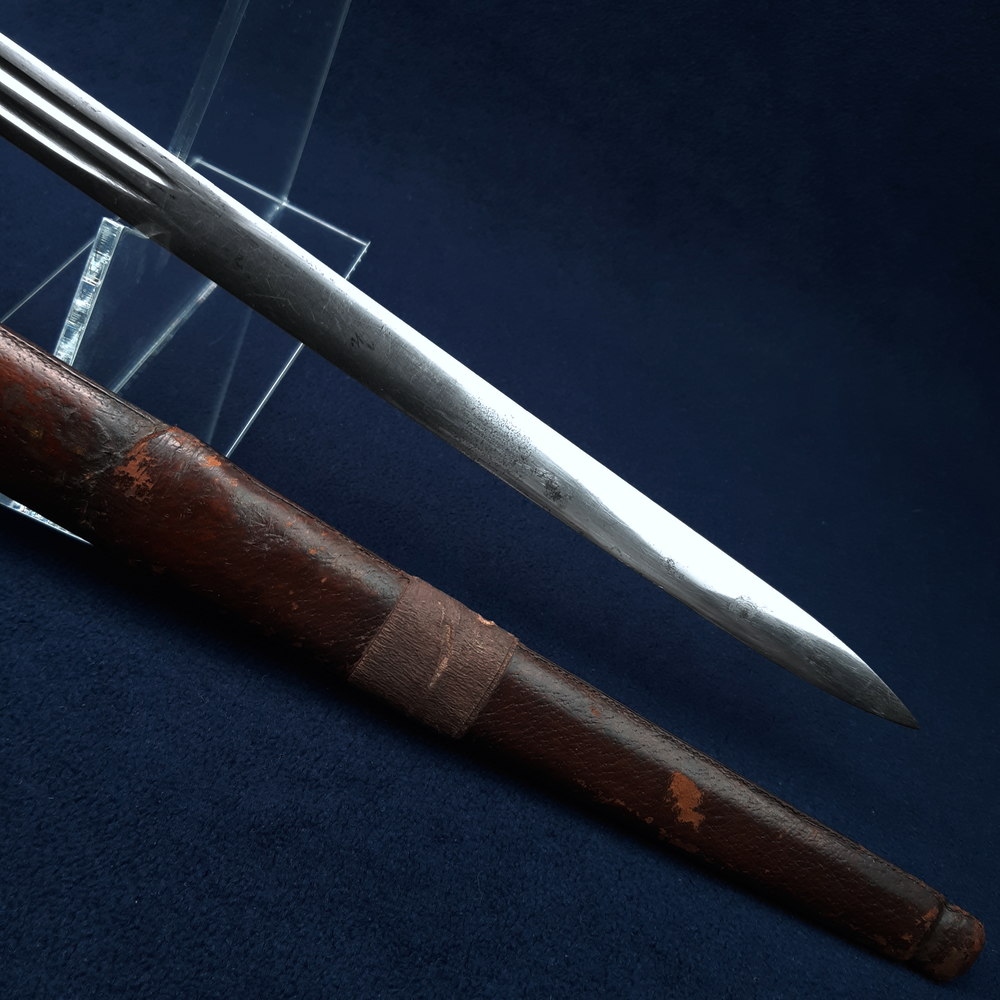
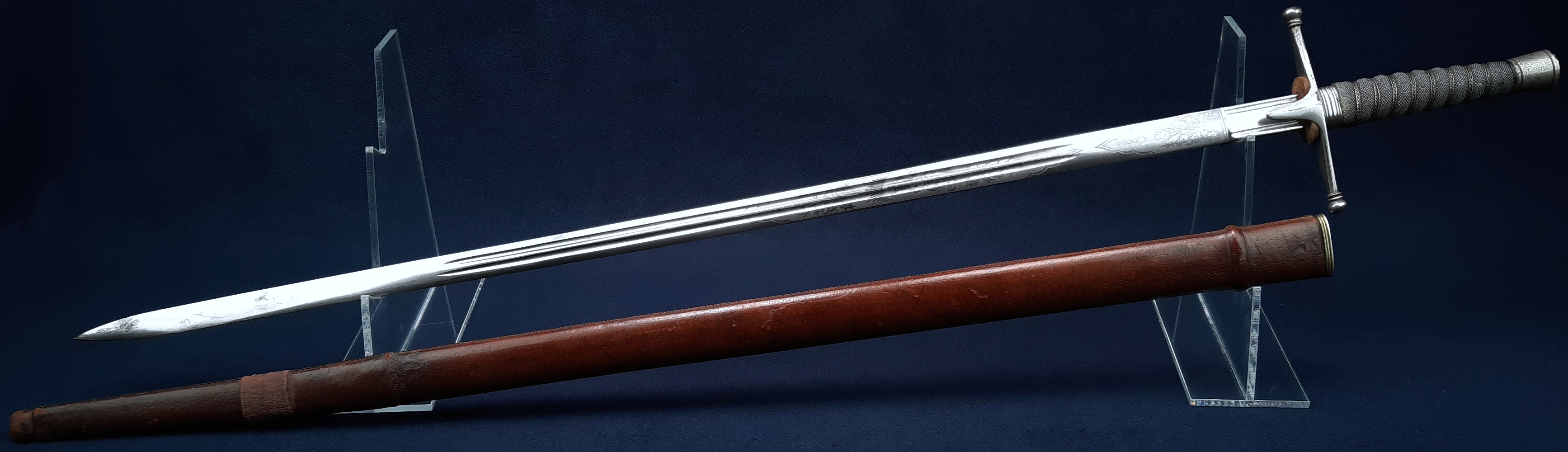
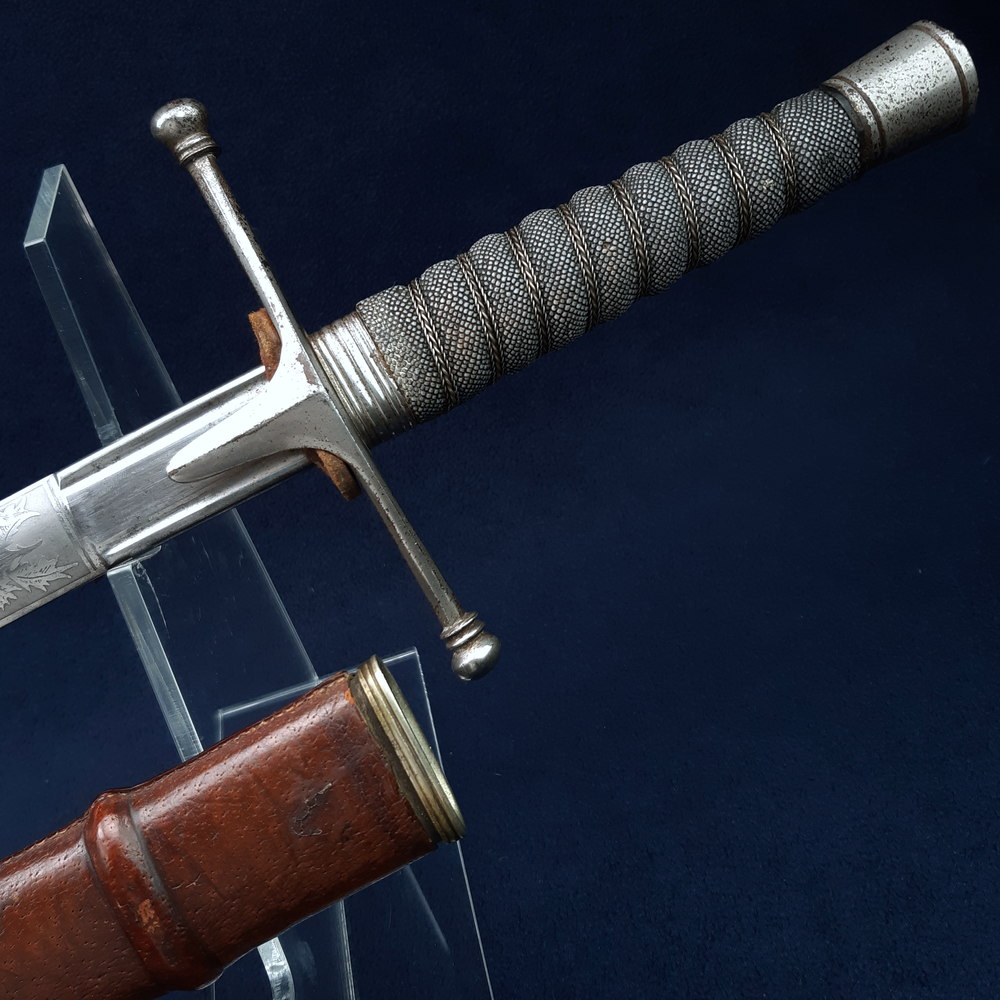
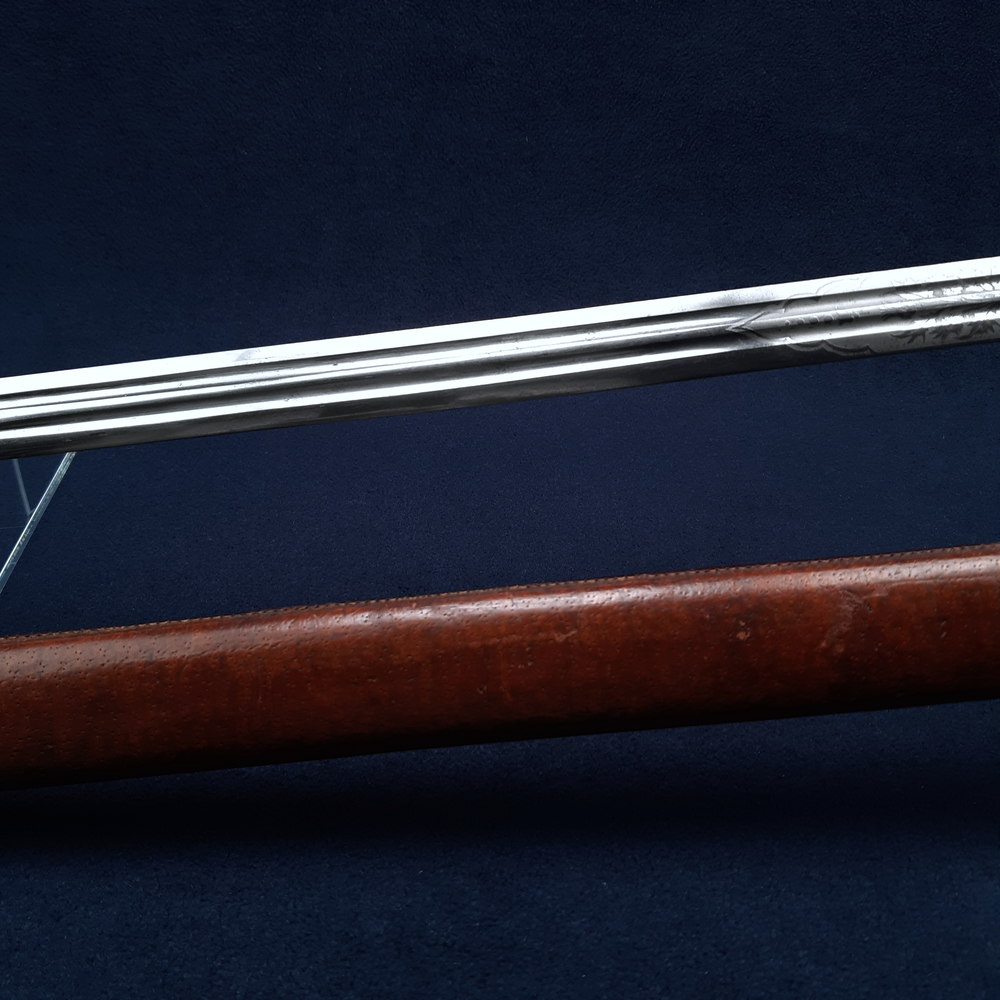
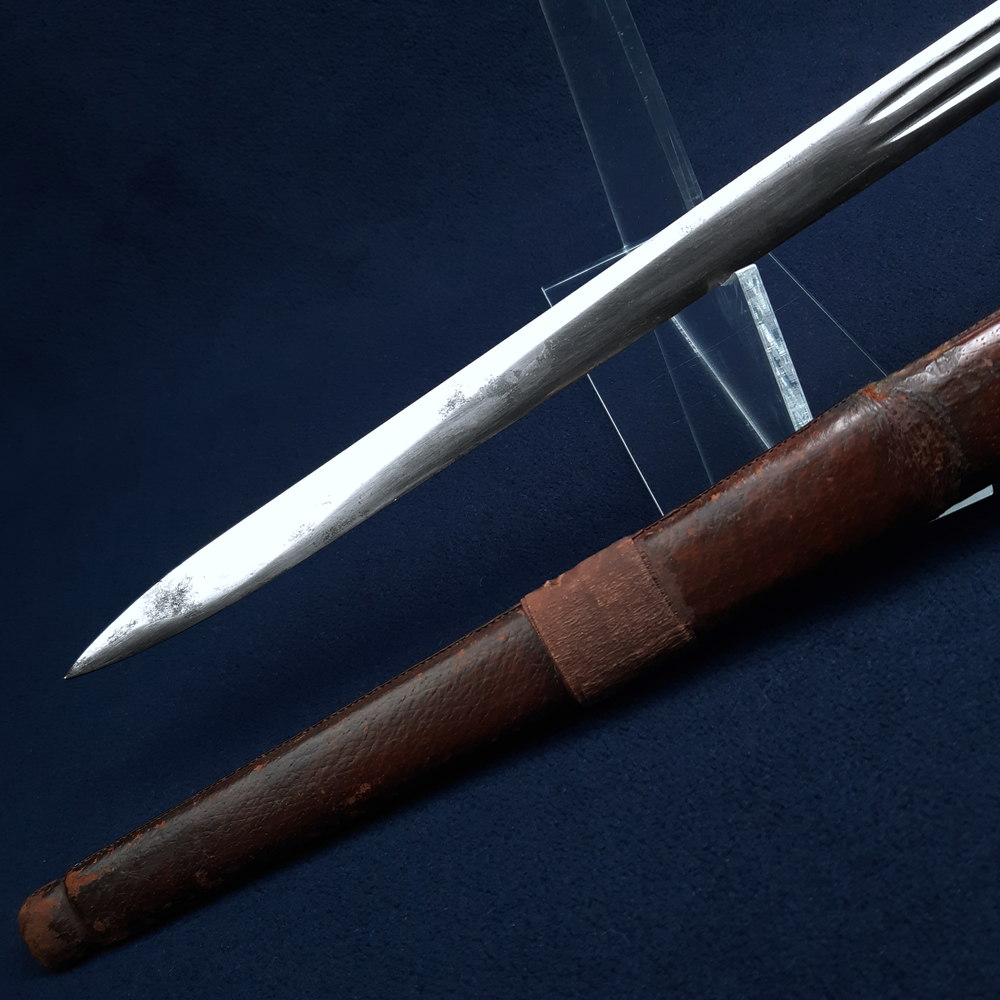
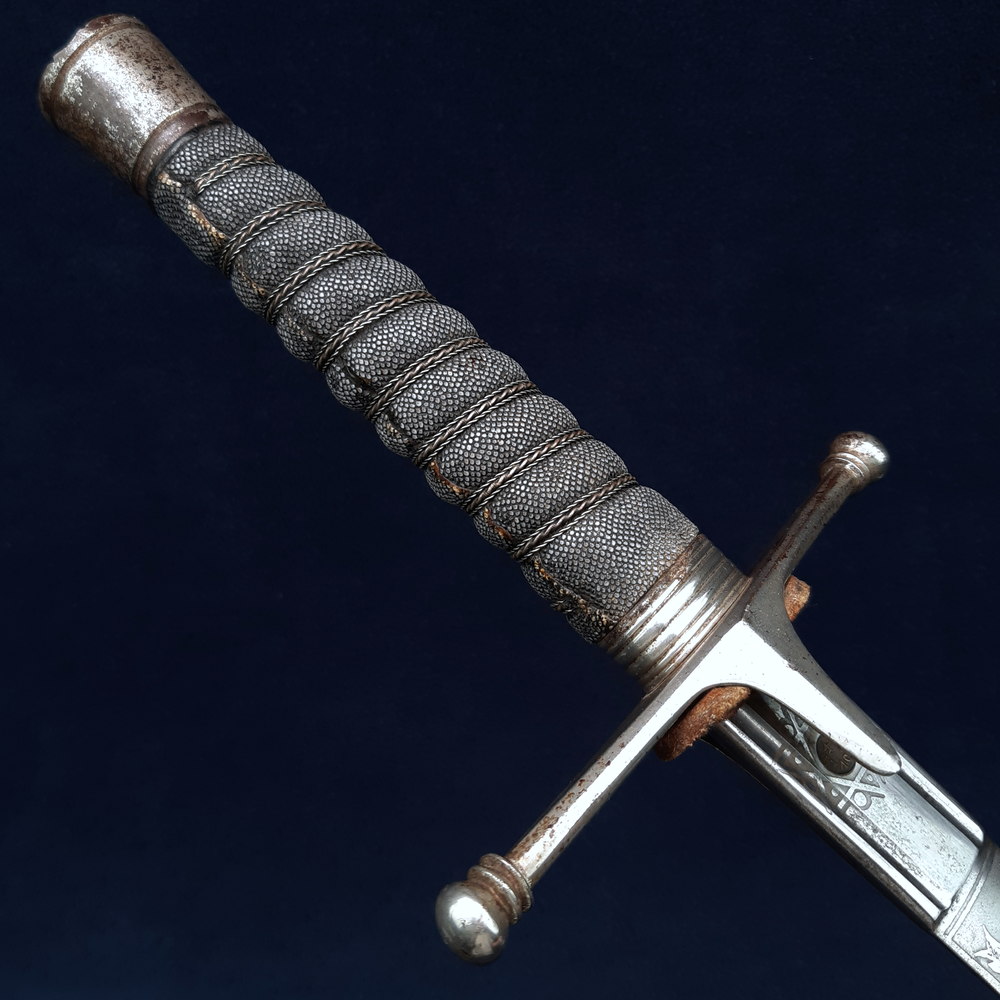
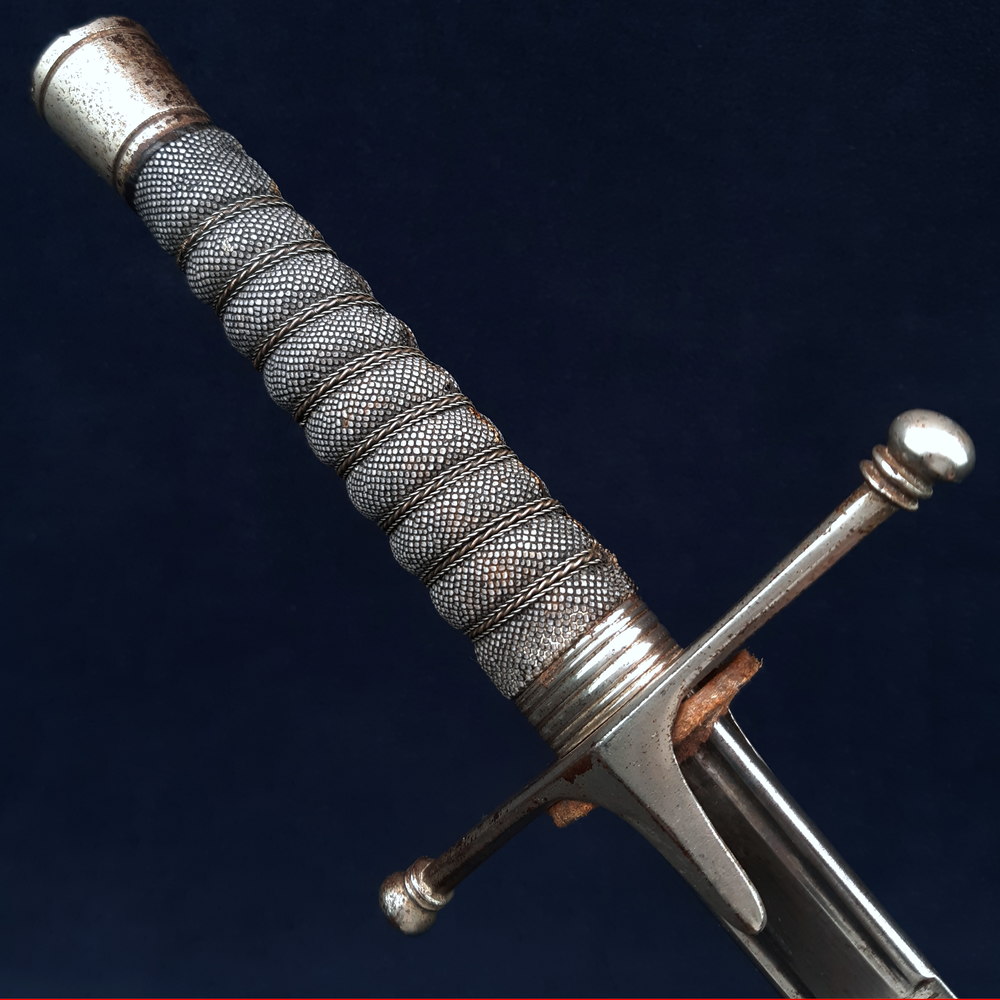
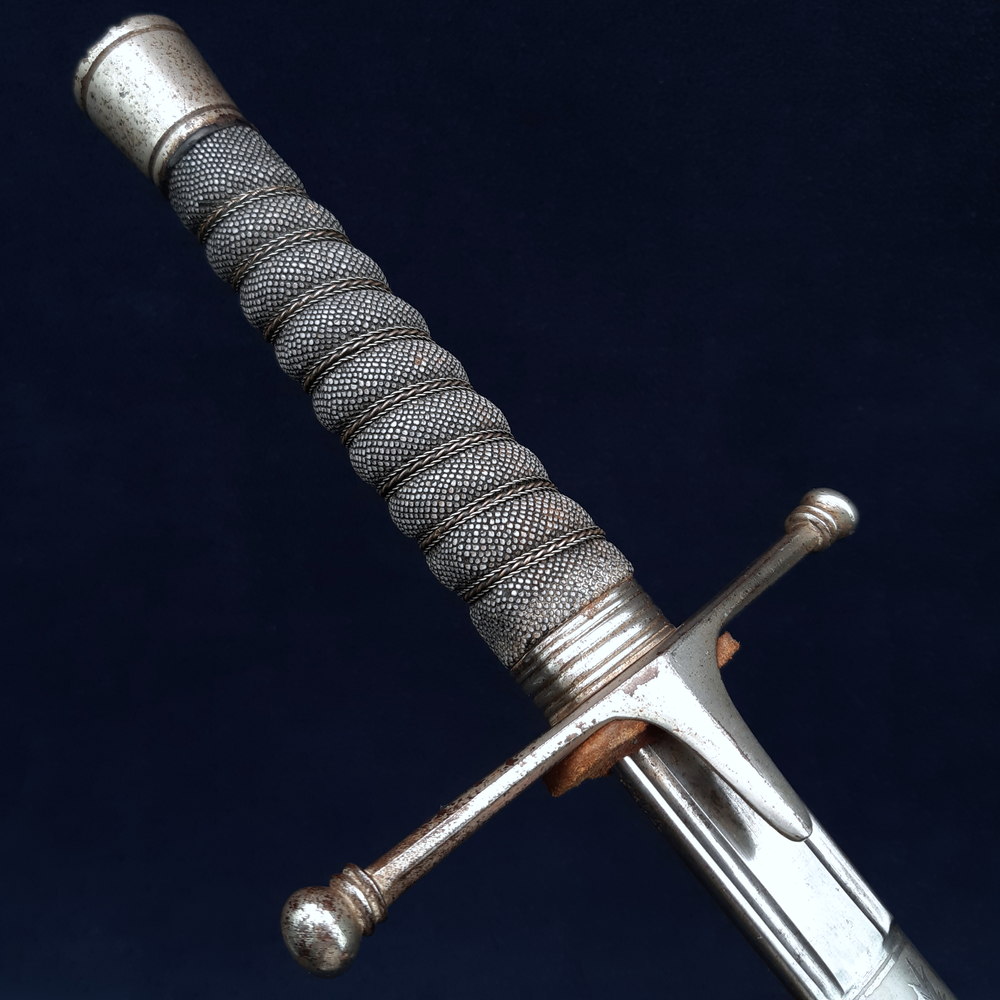
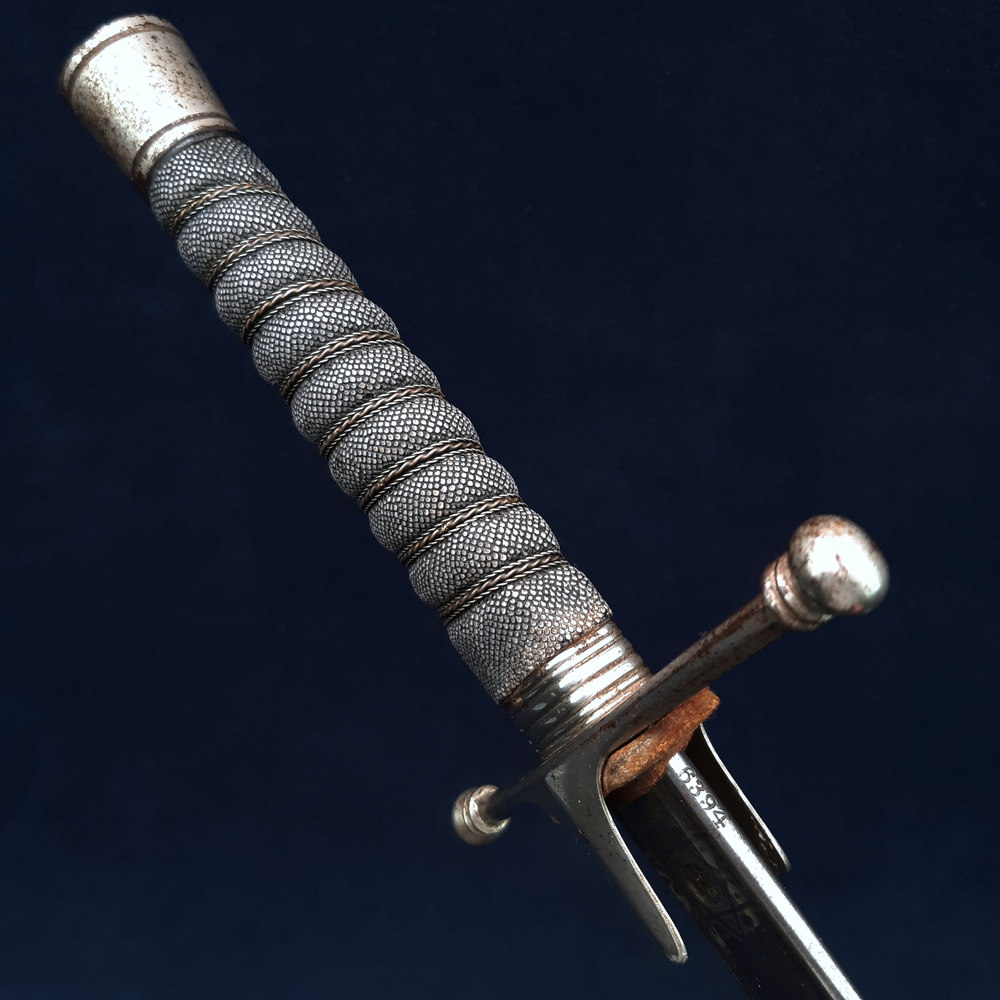
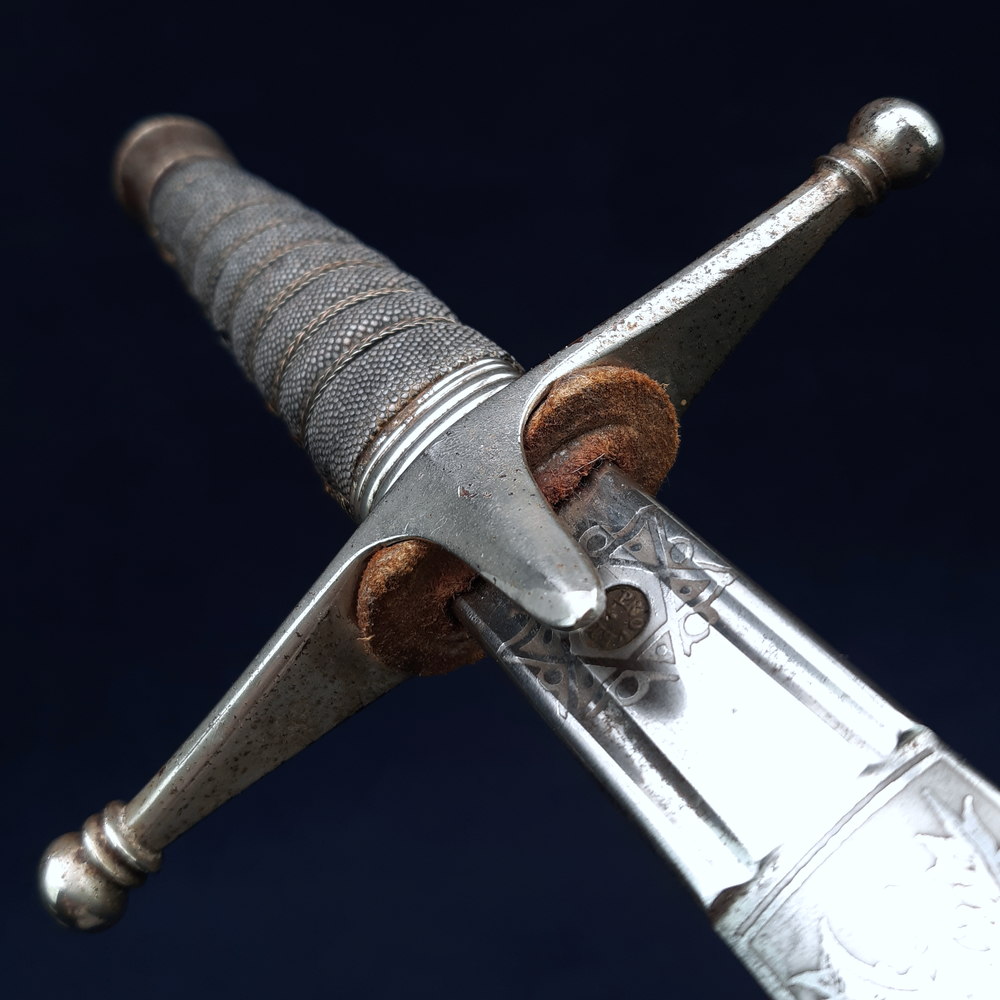
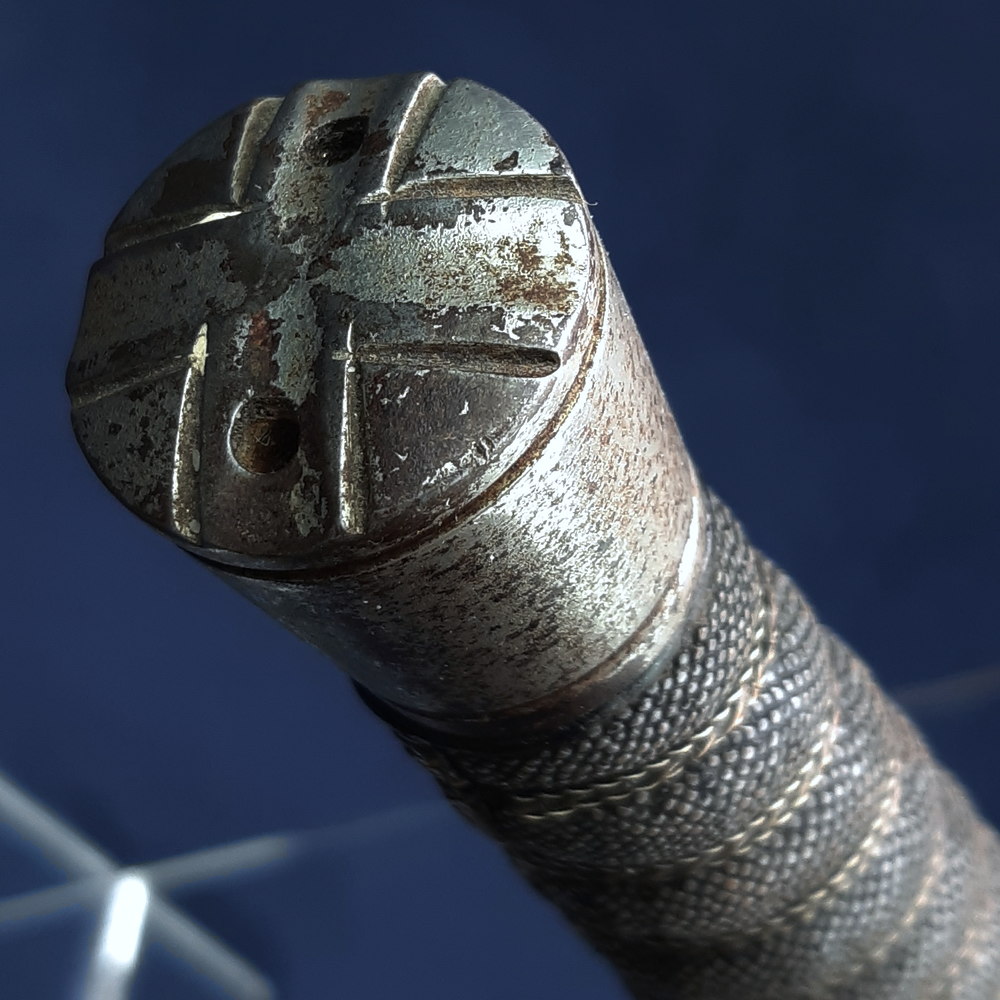
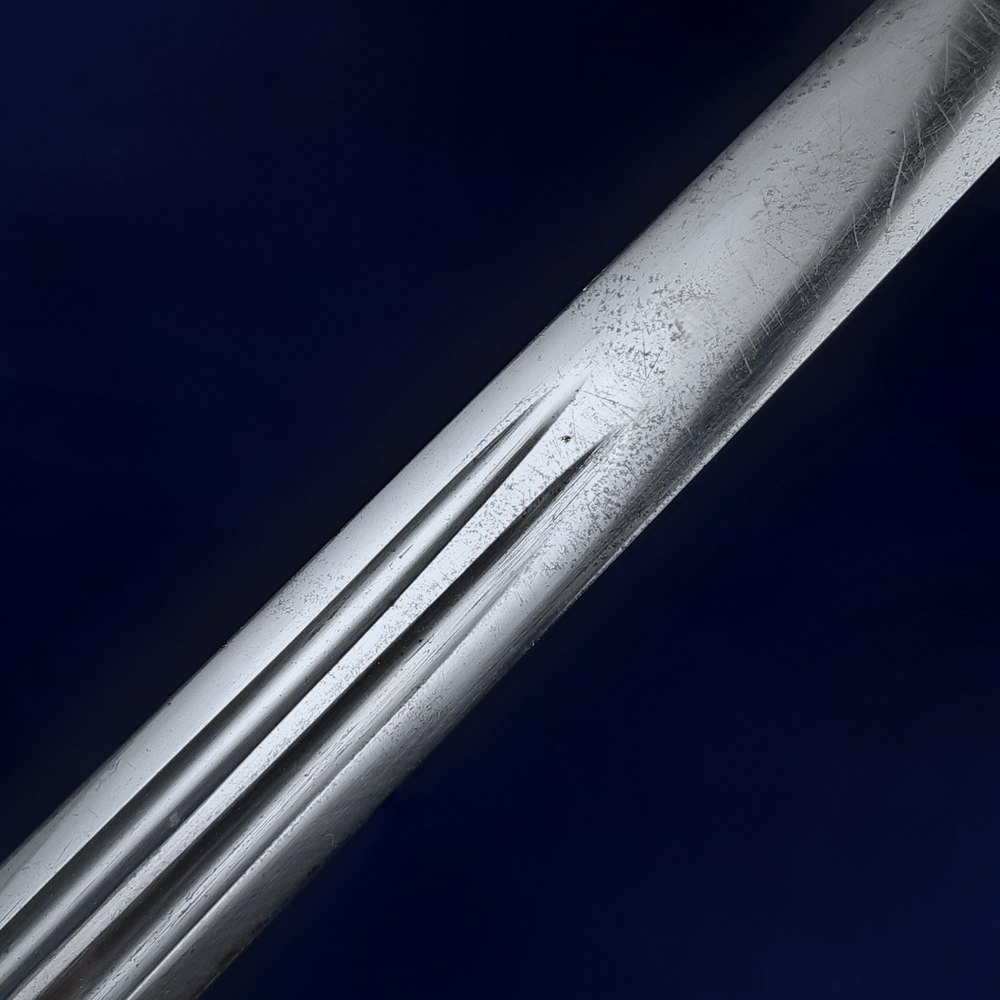
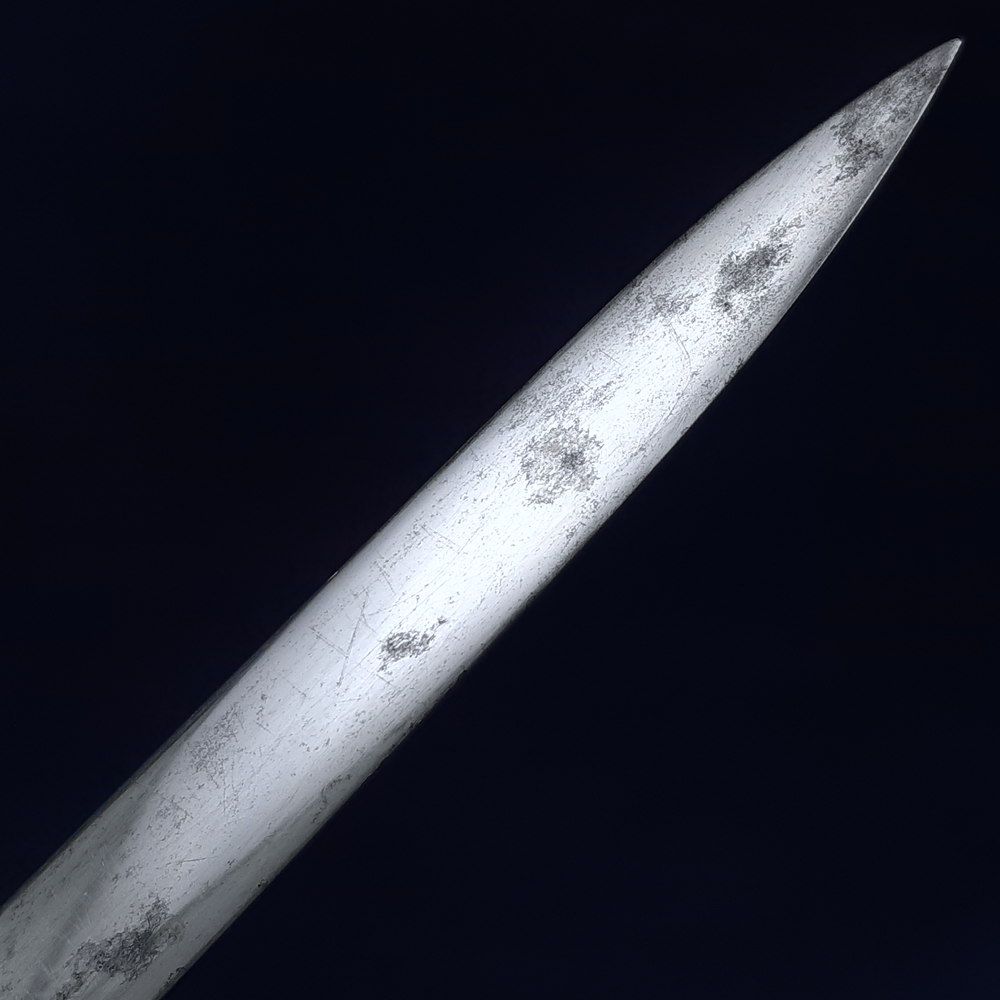
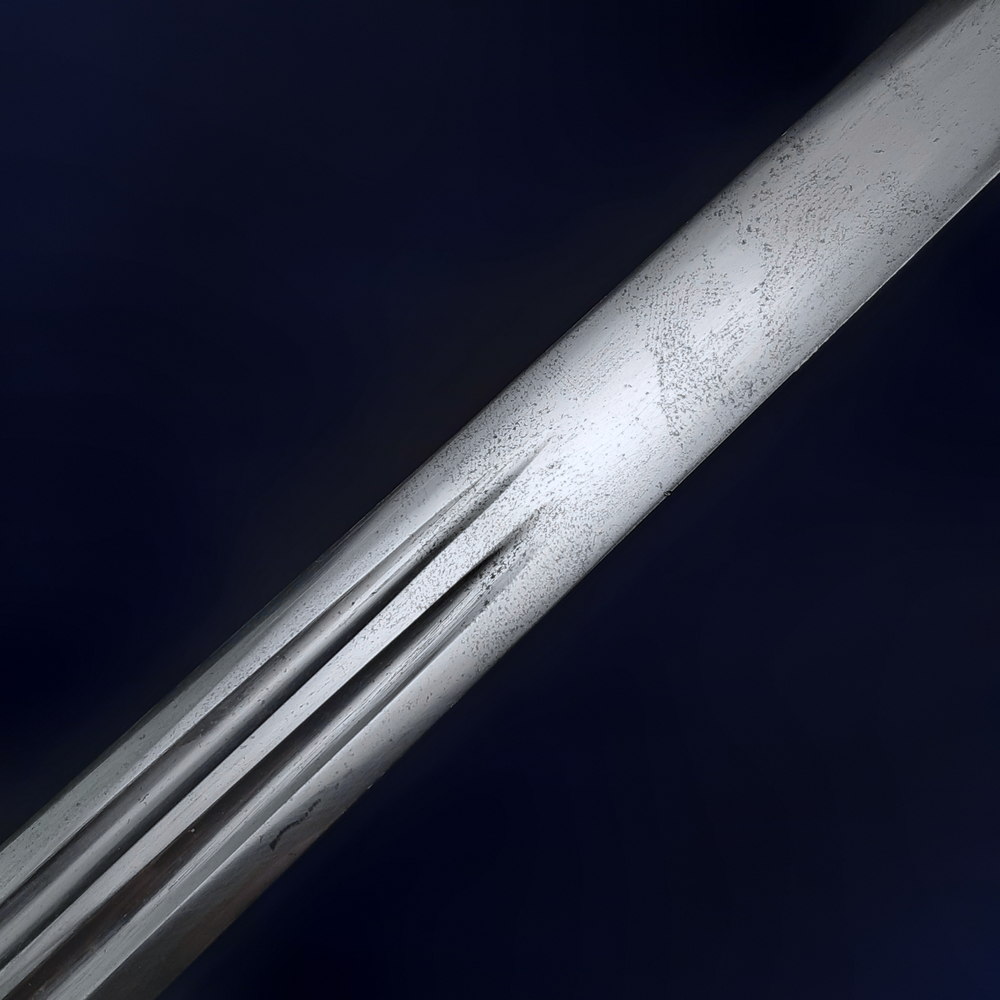
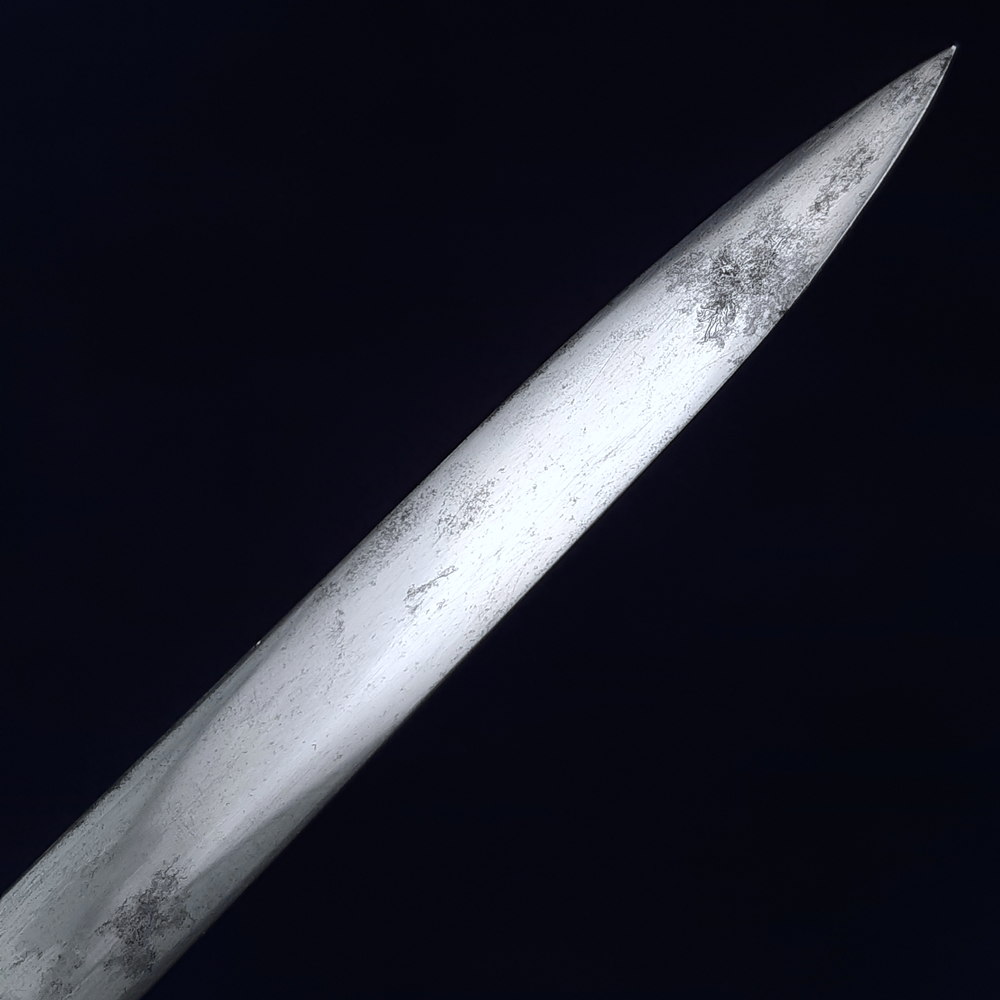
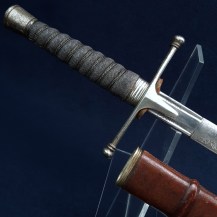
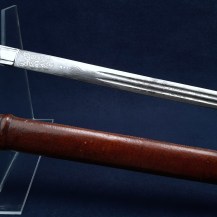
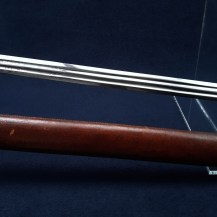
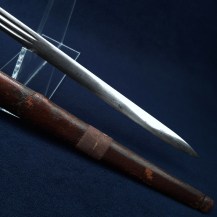
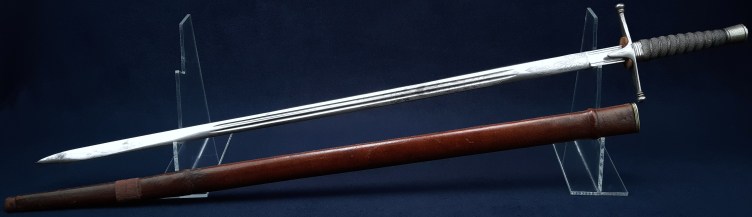
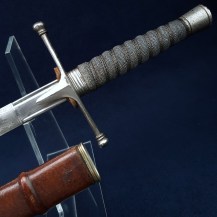
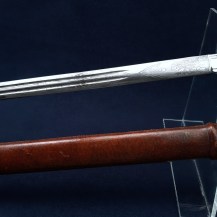
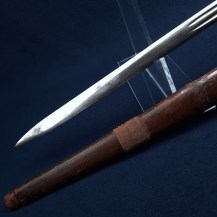
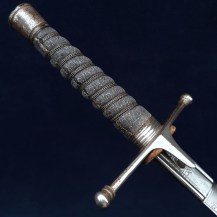
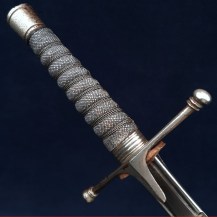
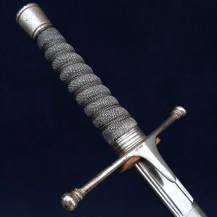
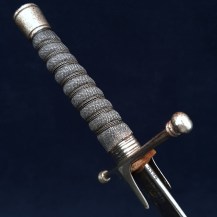
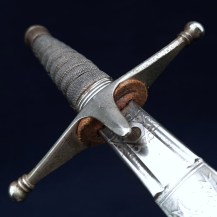
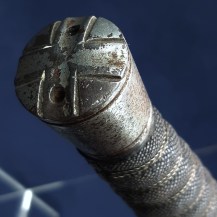
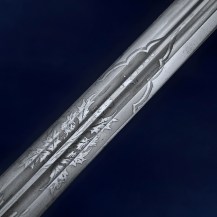
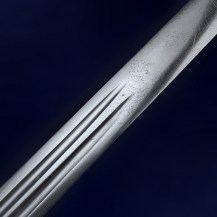
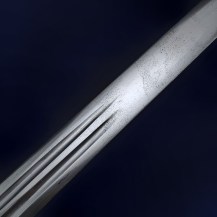
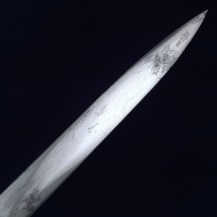
Straight blade with double fullers and spear point. Steel interchangeable cross-bar hilt with tongue-shaped langets and ball finials. Steel ferrule, conical-frustrum-shaped steel pommel with incised grooves on its side near each end and an incised cross upon its slightly domed end. Two holes sunk in the pommel end for loosening and tightening with a specialised tool (though it can simply be turned by hand if necessary). Brown leather washer. Spiral ribbed grip of wood covered with shagreen, bound with wire. Brown leather scabbard with leather band near the throat and ribbed nickel-plated brass mouthpiece. Blade 32½ inches in length, the sword 39¼ inches overall.
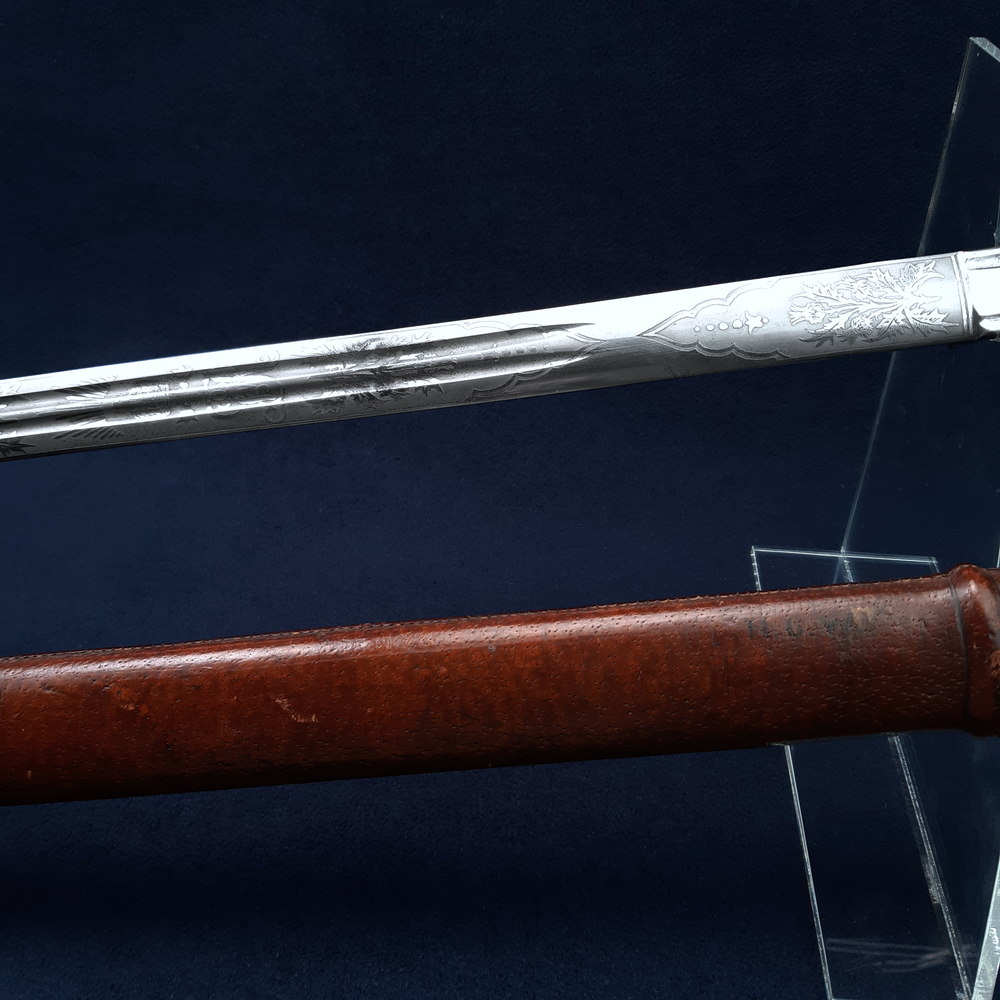
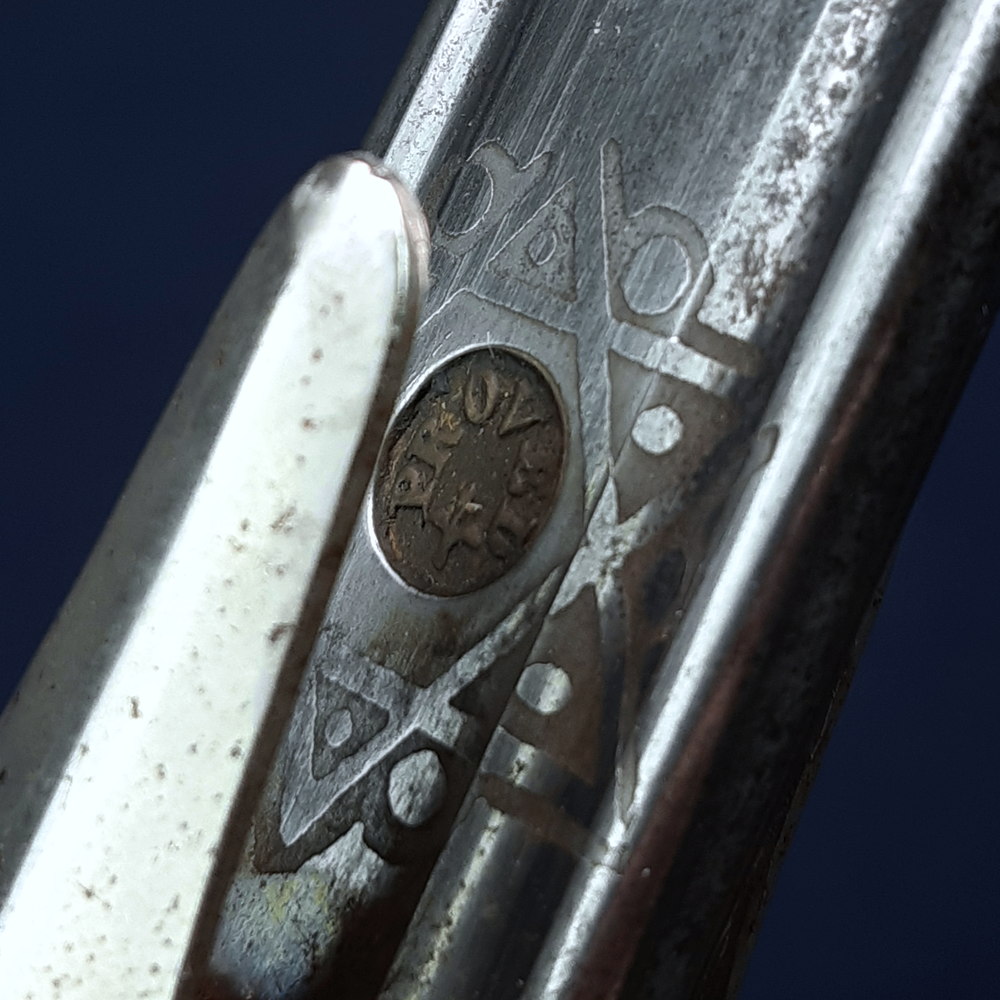
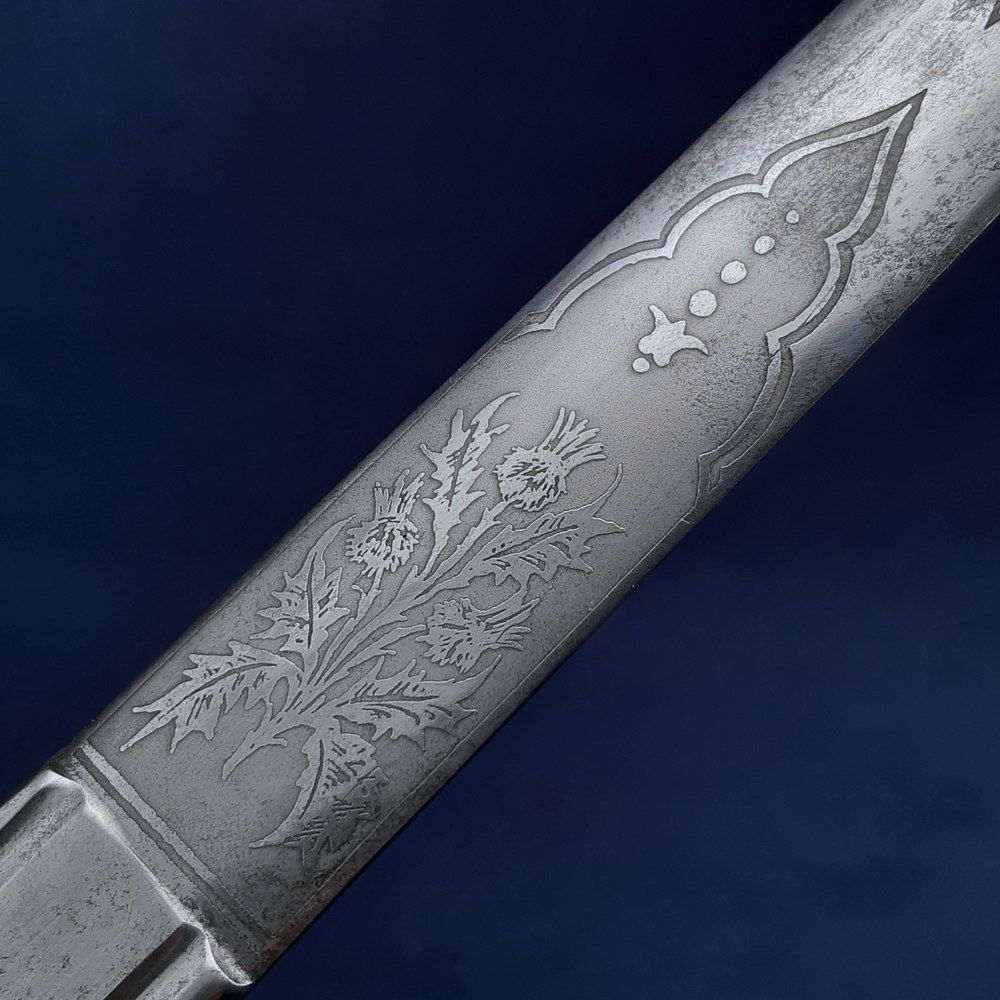
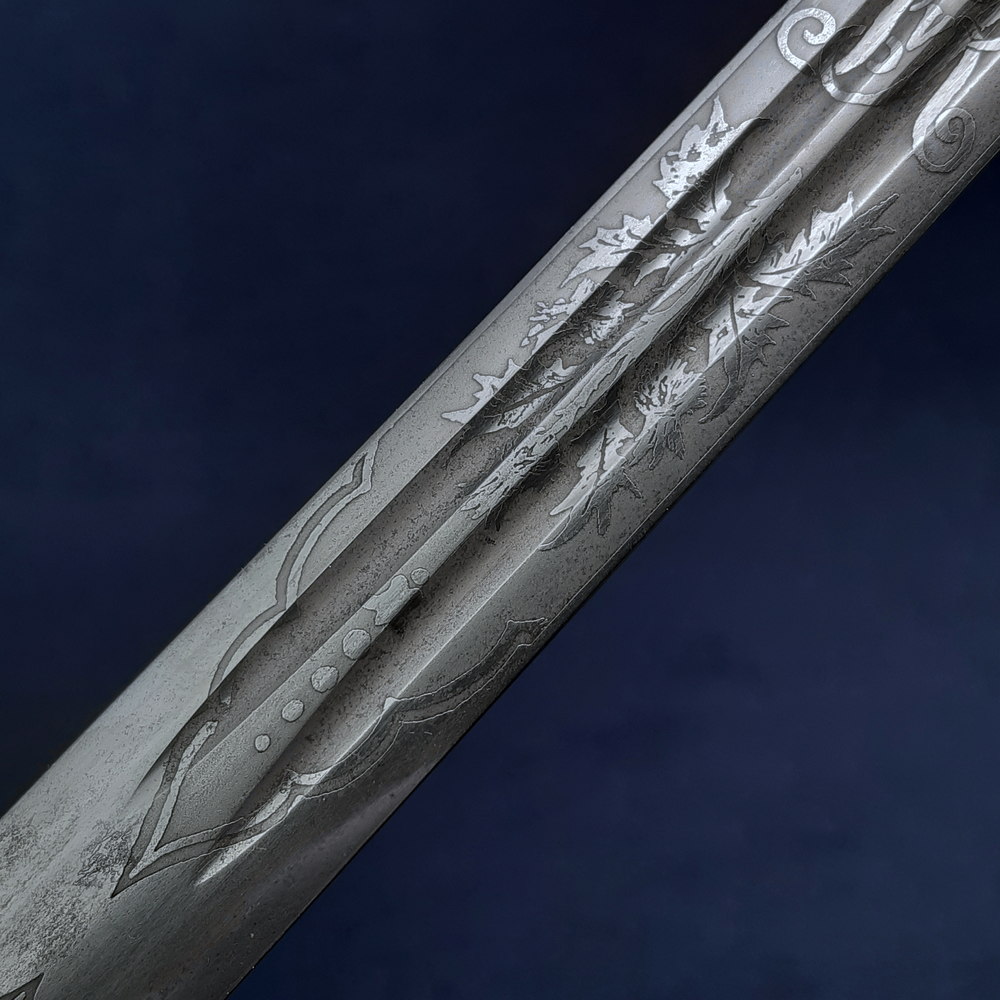
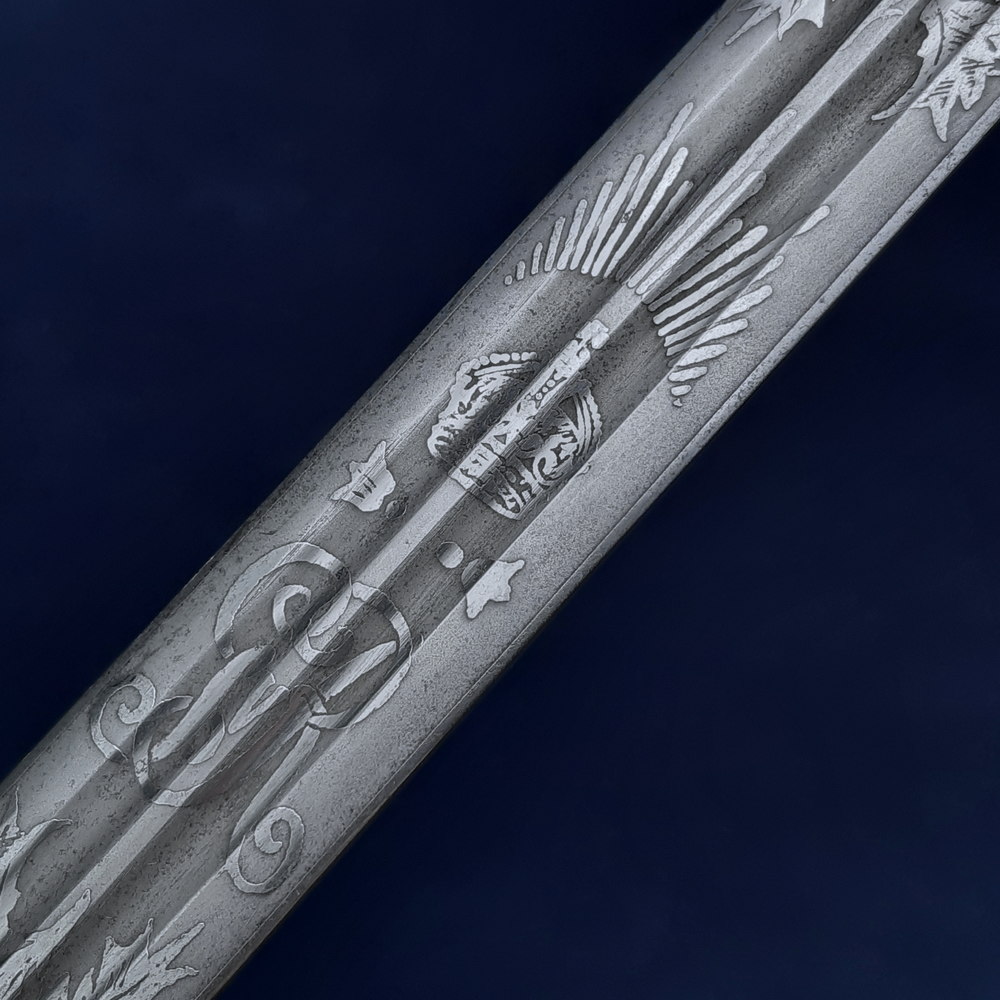
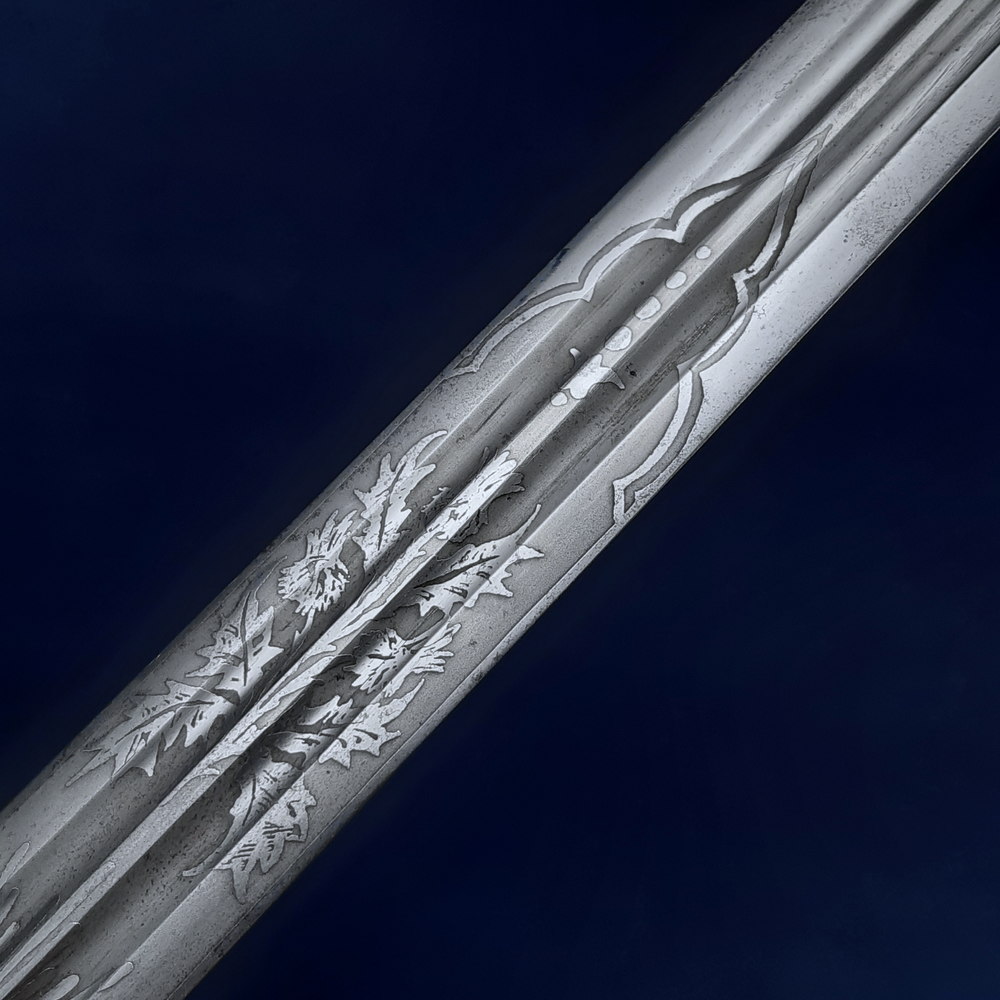
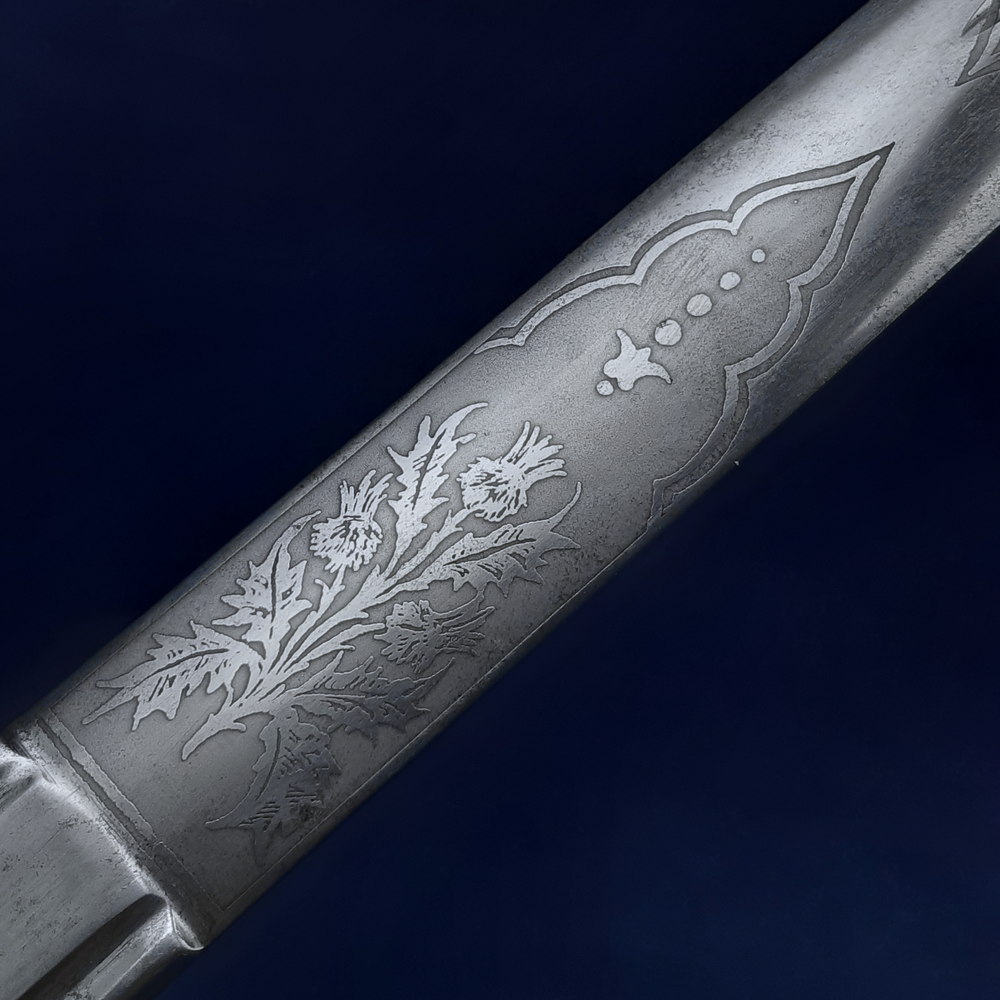
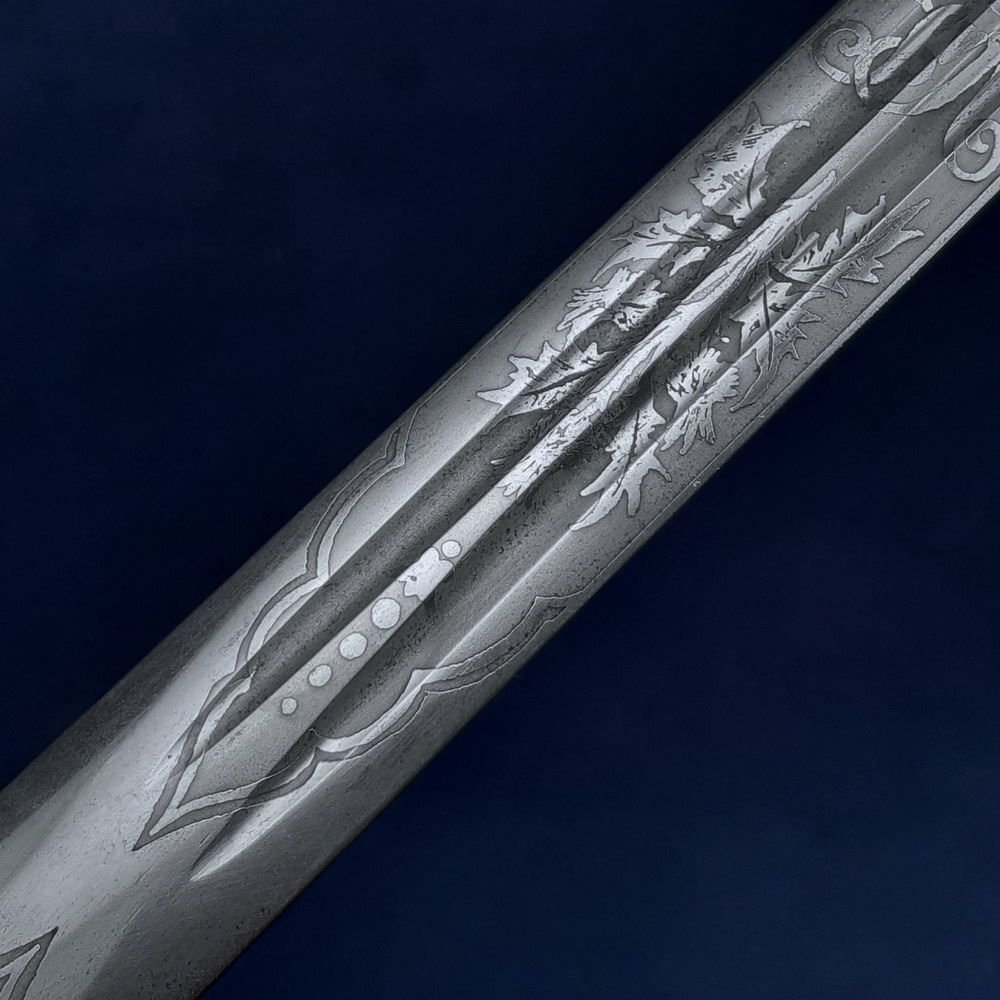
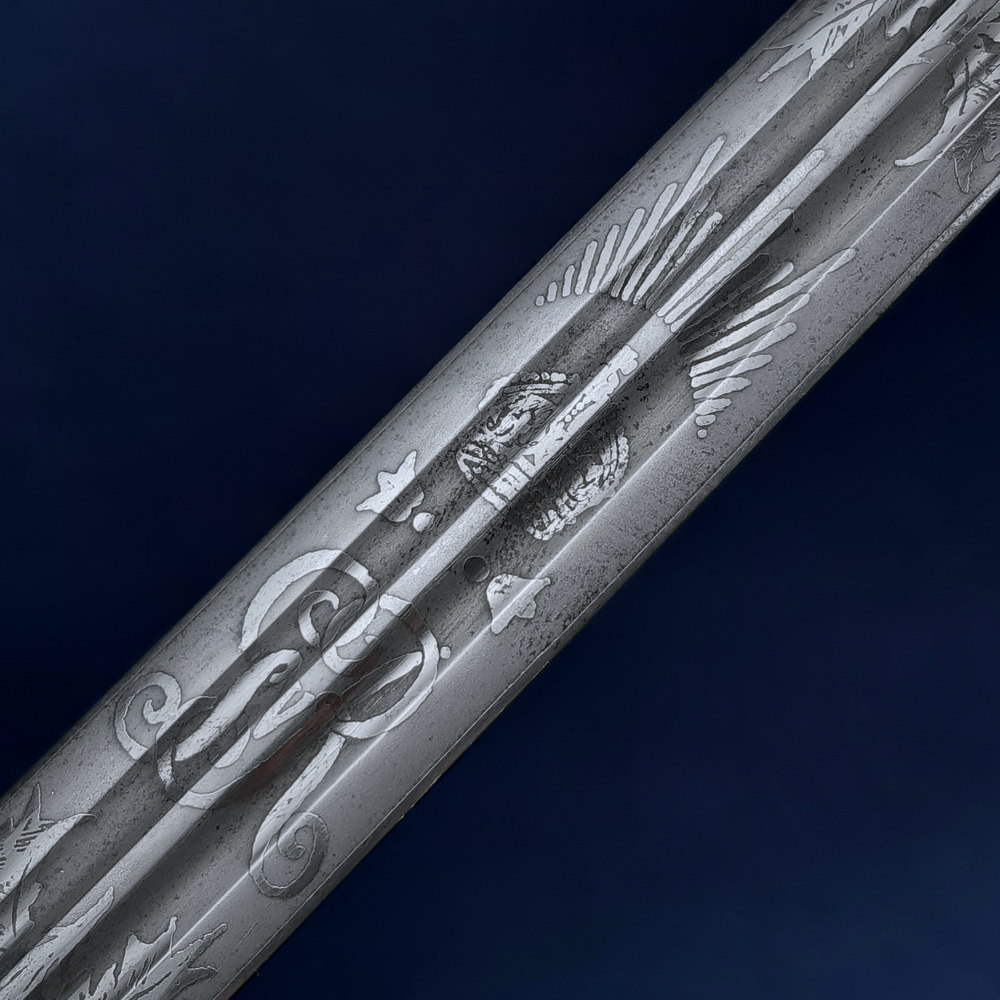
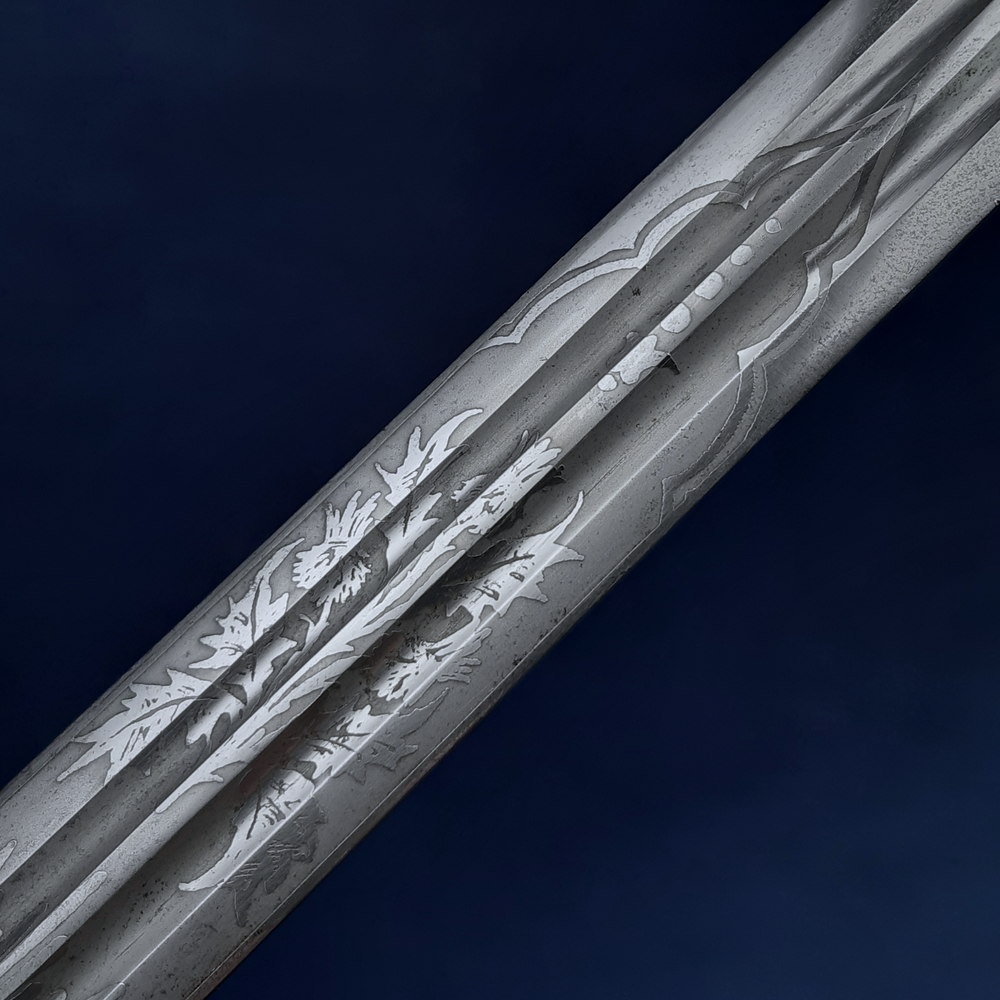
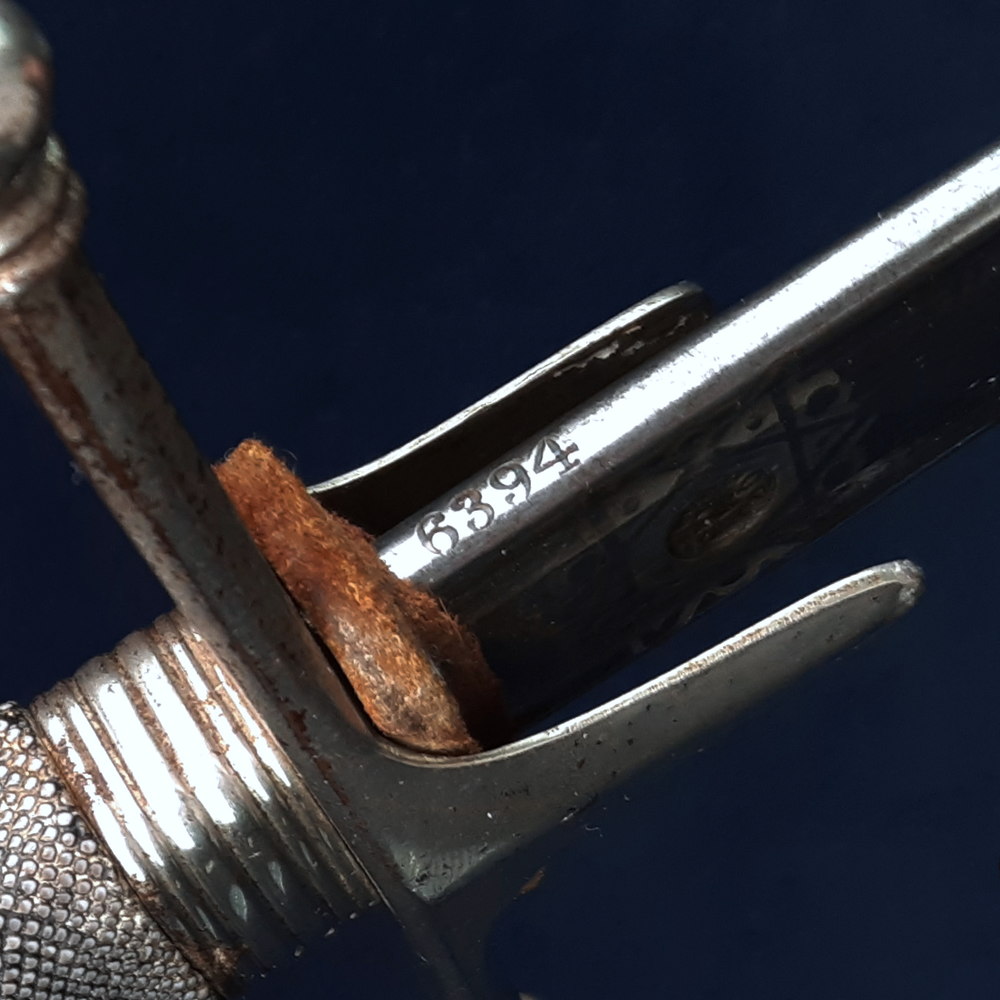
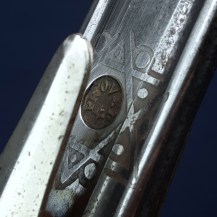
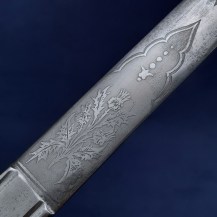
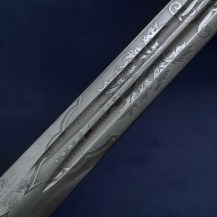
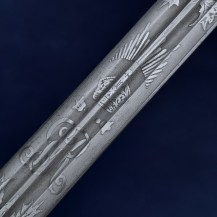
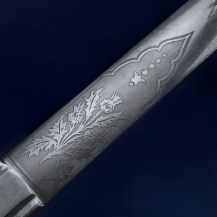
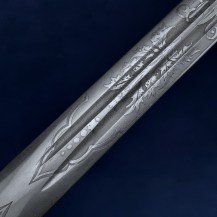
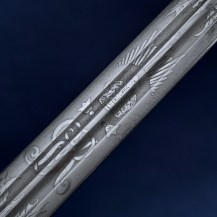
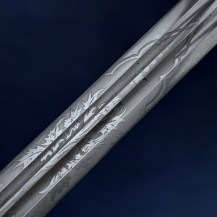
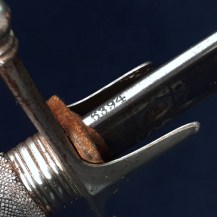
The blade is set at the ricasso on one side behind the langet with a brass proof slug stamped with ‘PROVED’ and a fleur de lys, the slug surrounded by an etched six-pointed star. The blade is further etched on both sides with the crown and royal cypher of King George V, and multiple thistle motifs.
The proof slug on this example has been seen on swords sold by multiple firms including Hawkes & Co and George Thurkle, and it has been suggested that these blades might be German imports. The spine of the blade at the ricasso is stamped with the serial number ‘6394’.
The traditionally-styled Scottish broadsword was carried exclusively by Highland infantry regiments until 1881, when the Lowland regiments adopted Scottish dress and the broadsword along with it (with the exception of the Cameronians aka Scottish Rifles). This was also the year the Highland Light Infantry was formed by merging the 71st and 74th Foot, both former Highland regiments, although the new regiment recruited from the Lowlands and was grouped with the Lowland Division.
While it does not carry any regimental insignia on its blade as is sometimes found, the distinctive hilt and pommel design on this sword link it to the HLI, no other Scottish regiment having used these. This example is in field order: its interchangeable hilt would have allowed it to be swapped with a basket hilt and a steel scabbard for parade order. It dates to the reign of George V which was 1910-1936.
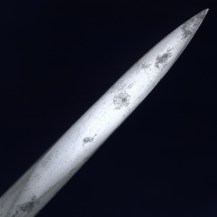
The blade is unsharpened with no edge damage. It is bright with a few spots of light cloudy patination, mainly in the tip section where there is also some light scratching. None of this significantly impacts the blade’s etching, which is clear and crisp. The hilt, ferrule and pommel have been nickel plated, this plating has worn in places revealing patinated steel, most notably on some side of the pommel and raised edges of the hilt. Even when torqued down the hilt can rattle somewhat due to slight movement to the hilt and ferrule. The grip is good with light handling wear, a handful of individual lost scales to the shagreen. The wire binding of the grip is all intact with fractional movement to some of the loops.
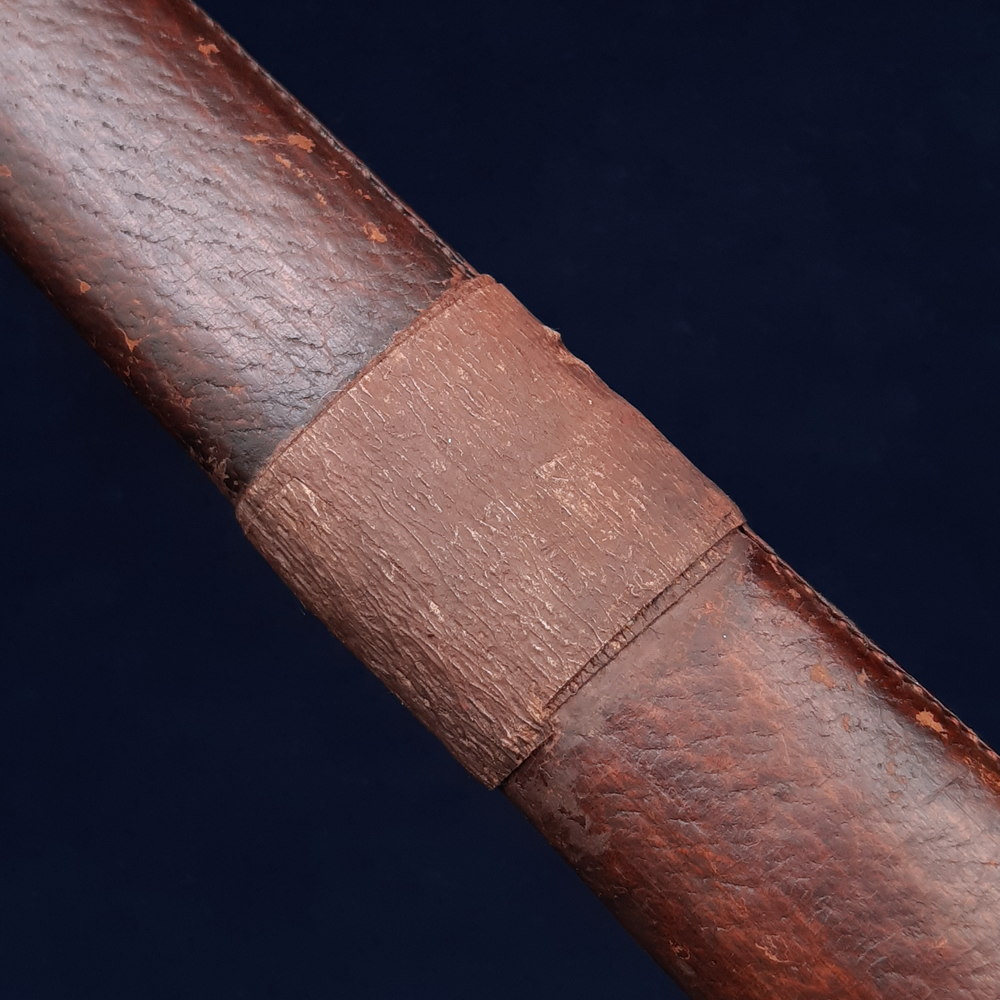
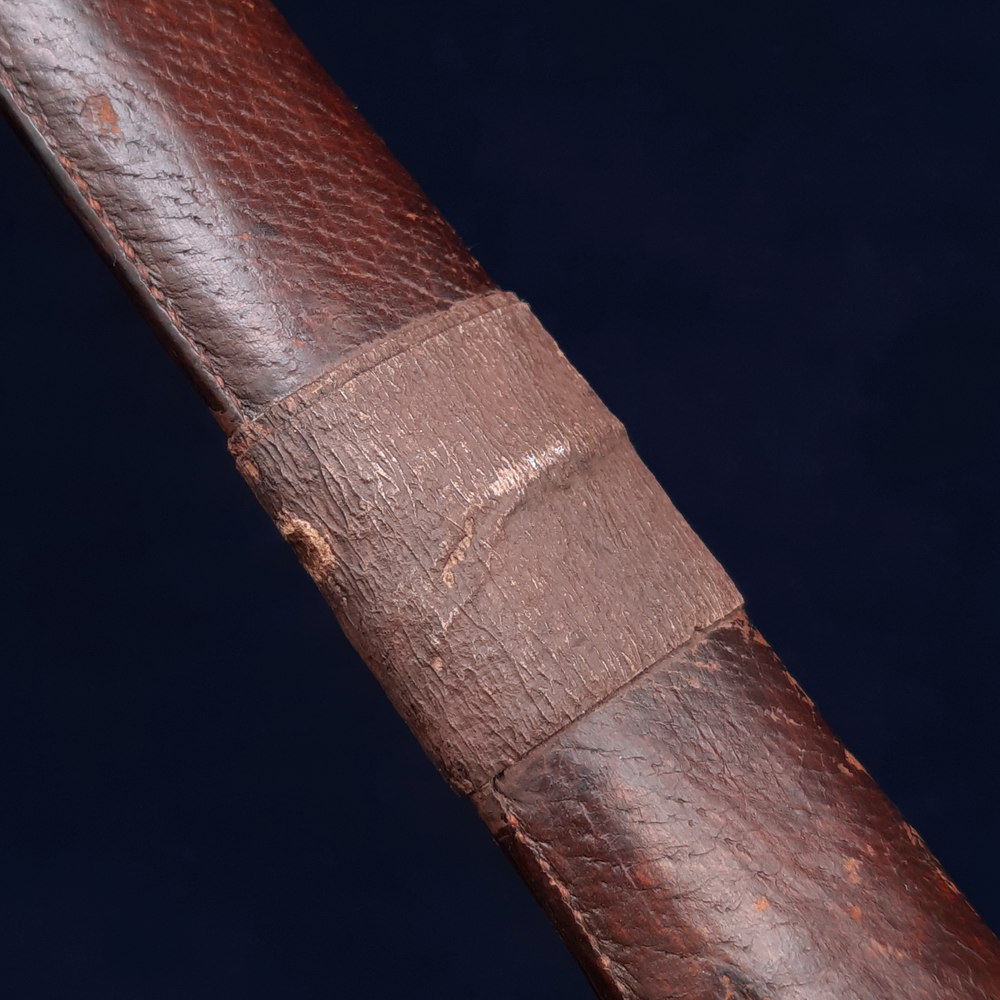
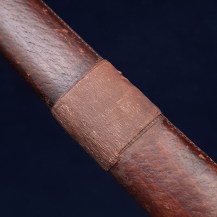
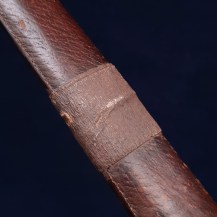
The leather of the scabbard has some small dents and spots of surface-level abrasion, its stitching is all intact. There was probably a steel chape piece on the scabbard at one time which has been lost, leaving a bare leather end. One visible repair has been made to the chape section consisting of a leather strip wrapped around it and presumably glued. As the chape will move slightly with pressure I believe this repair was done to reattach a detached chape end, or at least to stabilize a partial break. This repair is structurally sound and the scabbard can be held horizontally with no issues. The sword still fully sheaths and draws and holds well in the scabbard when sheathed.
