

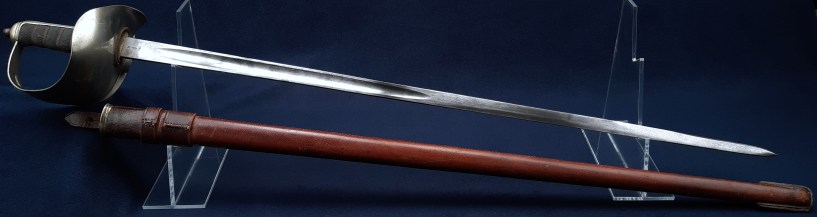
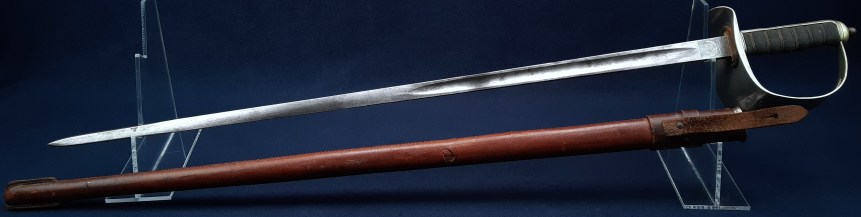
British WW1 War Economy 1898 Pattern Infantry Staff Sergeant’s Sword by Fenton Brothers, 1915
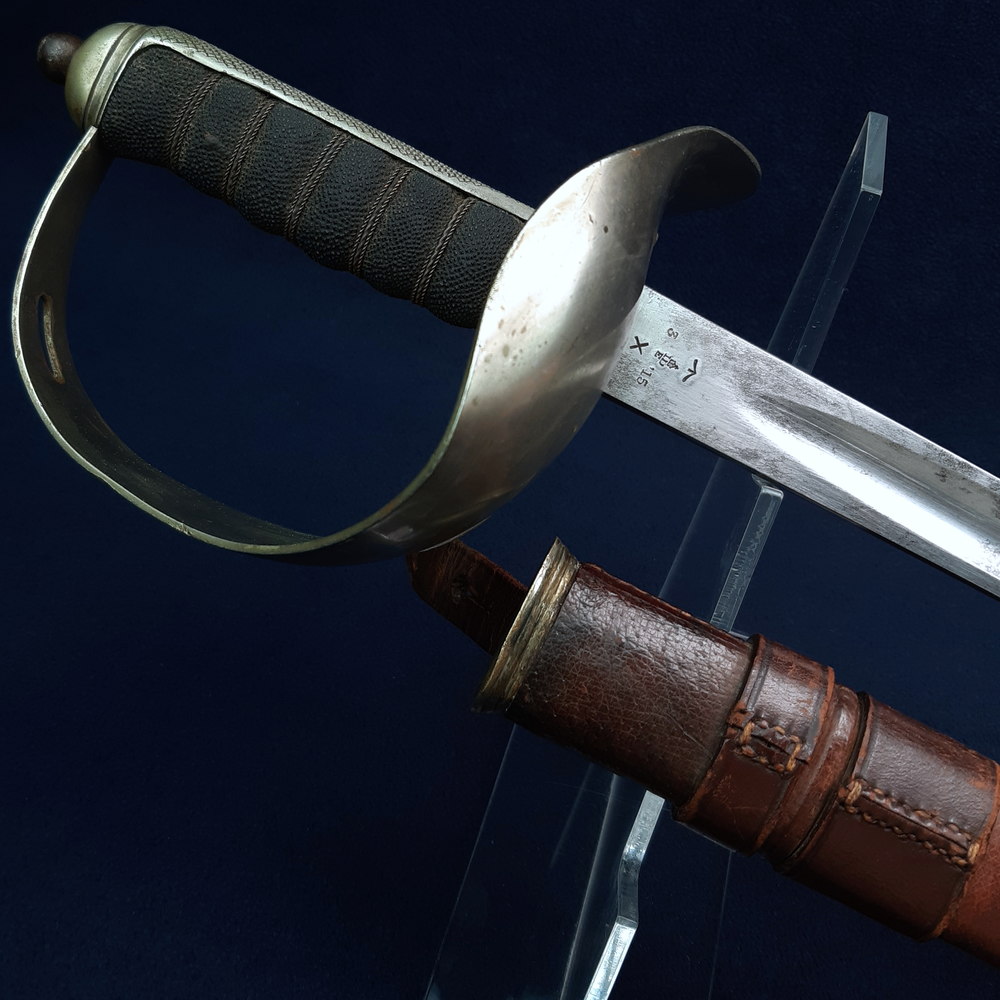
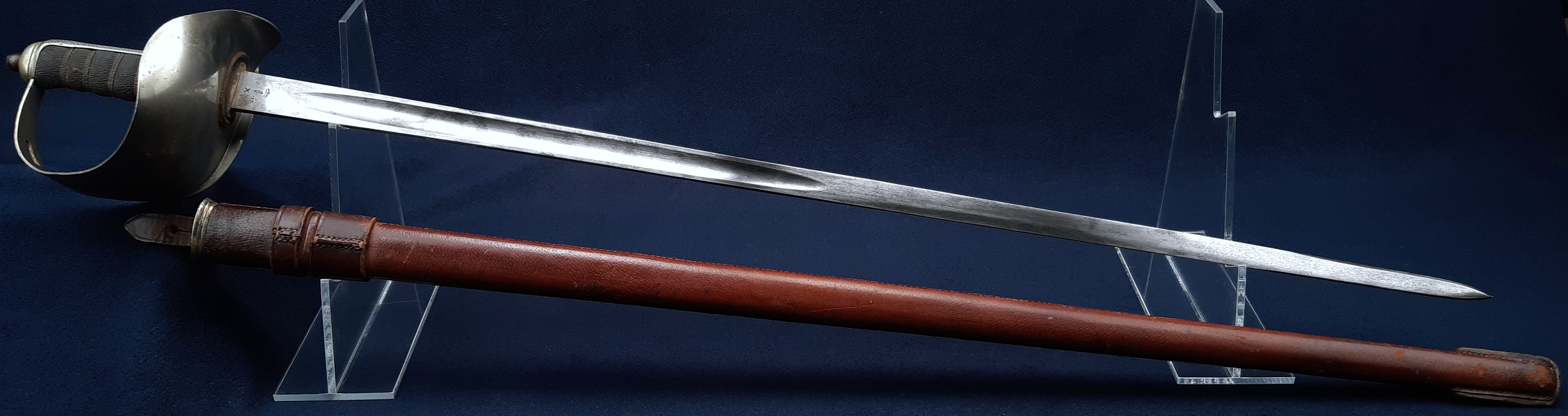
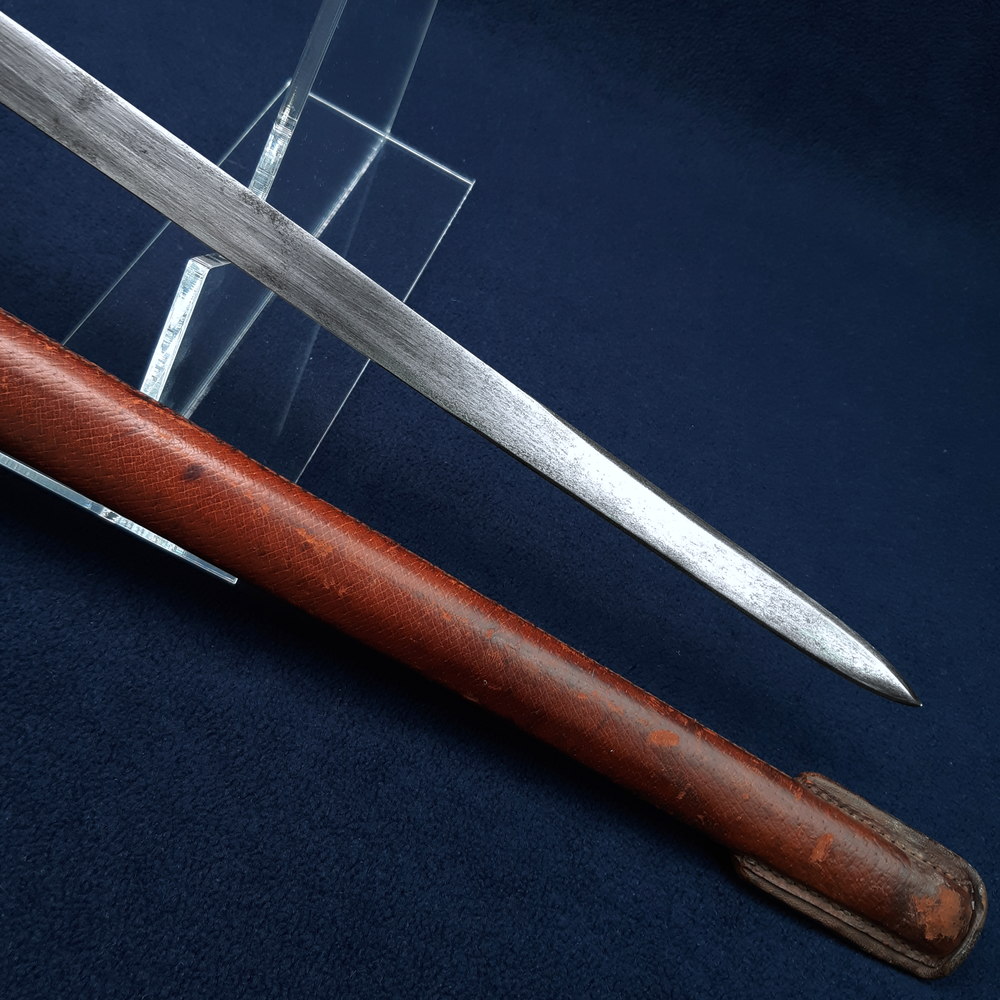
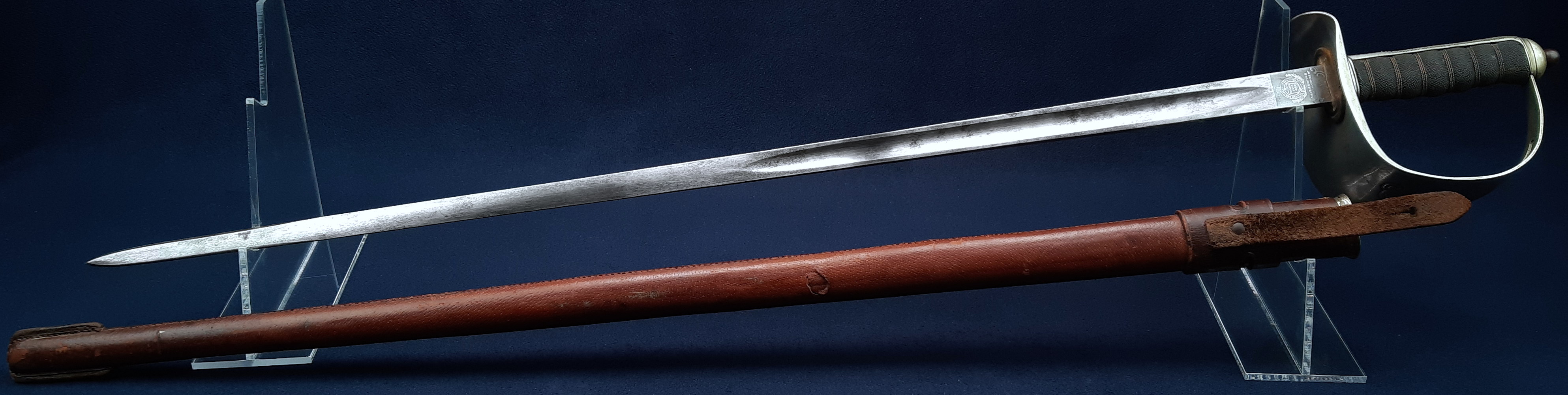
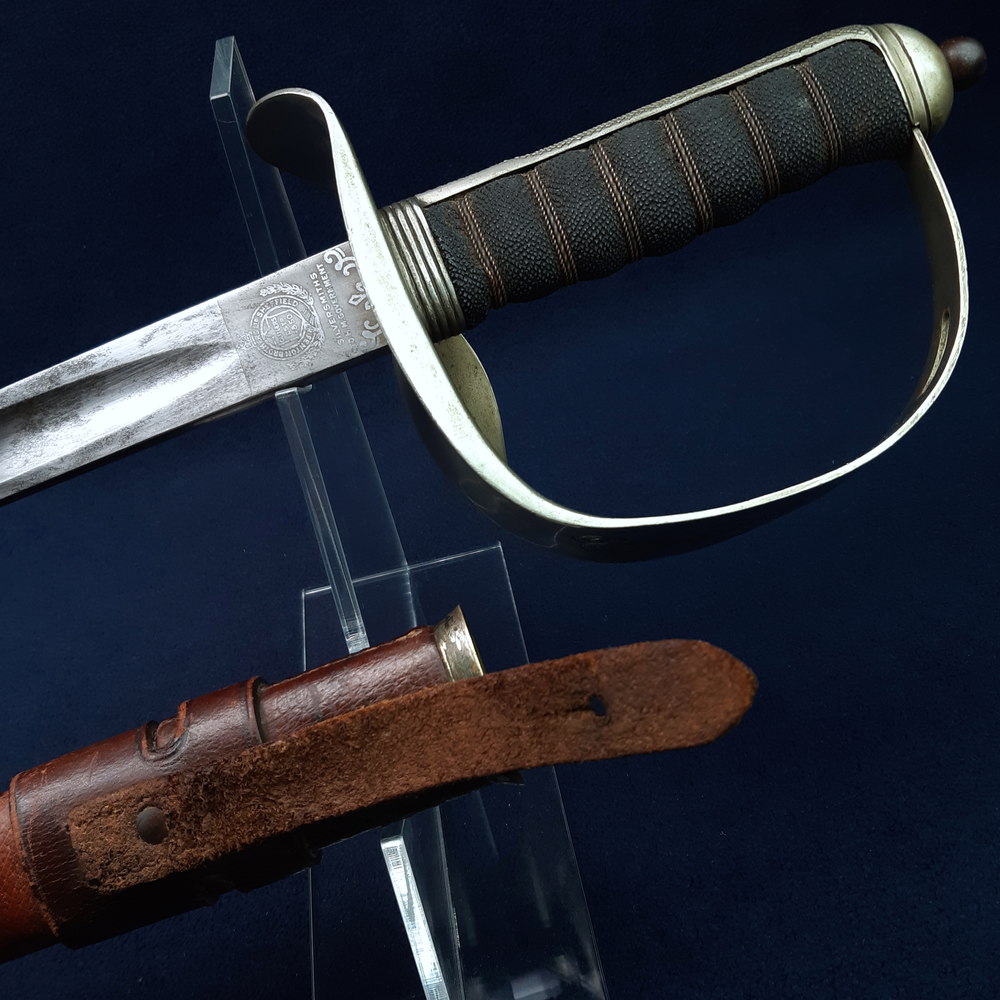
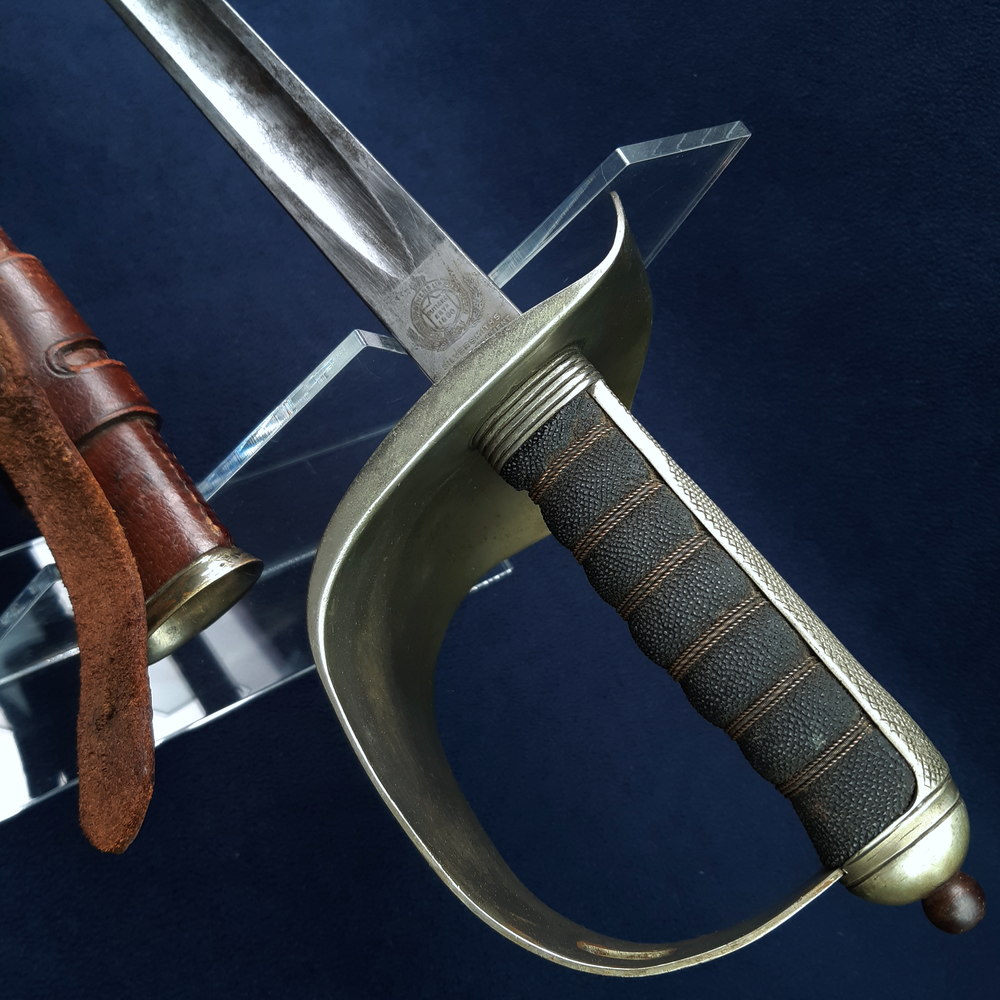
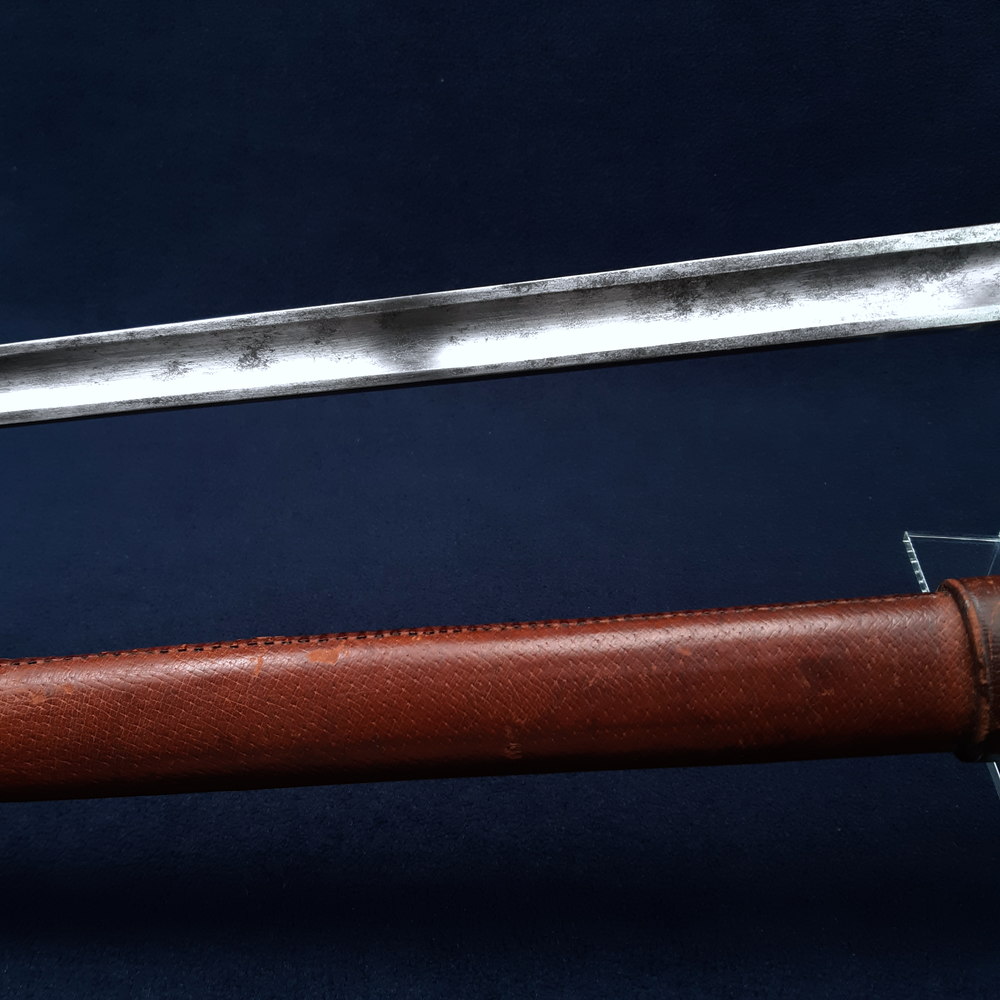
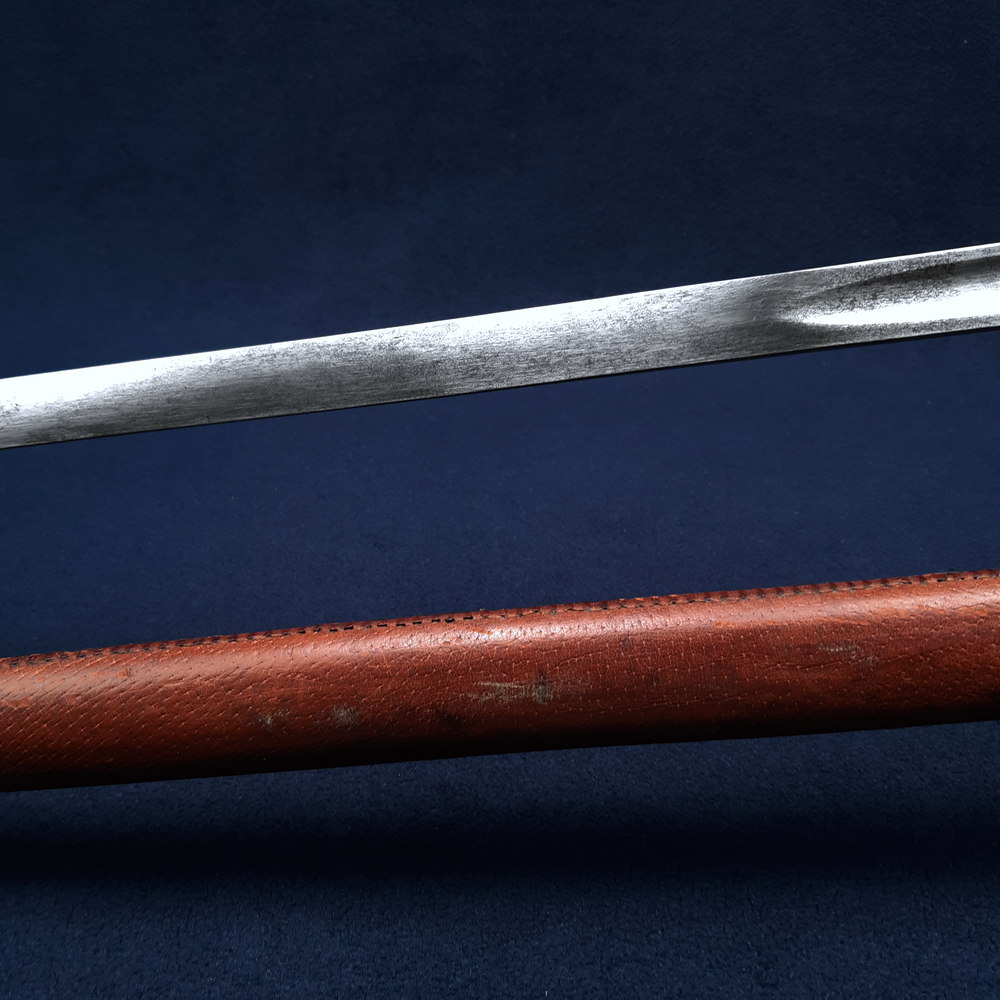
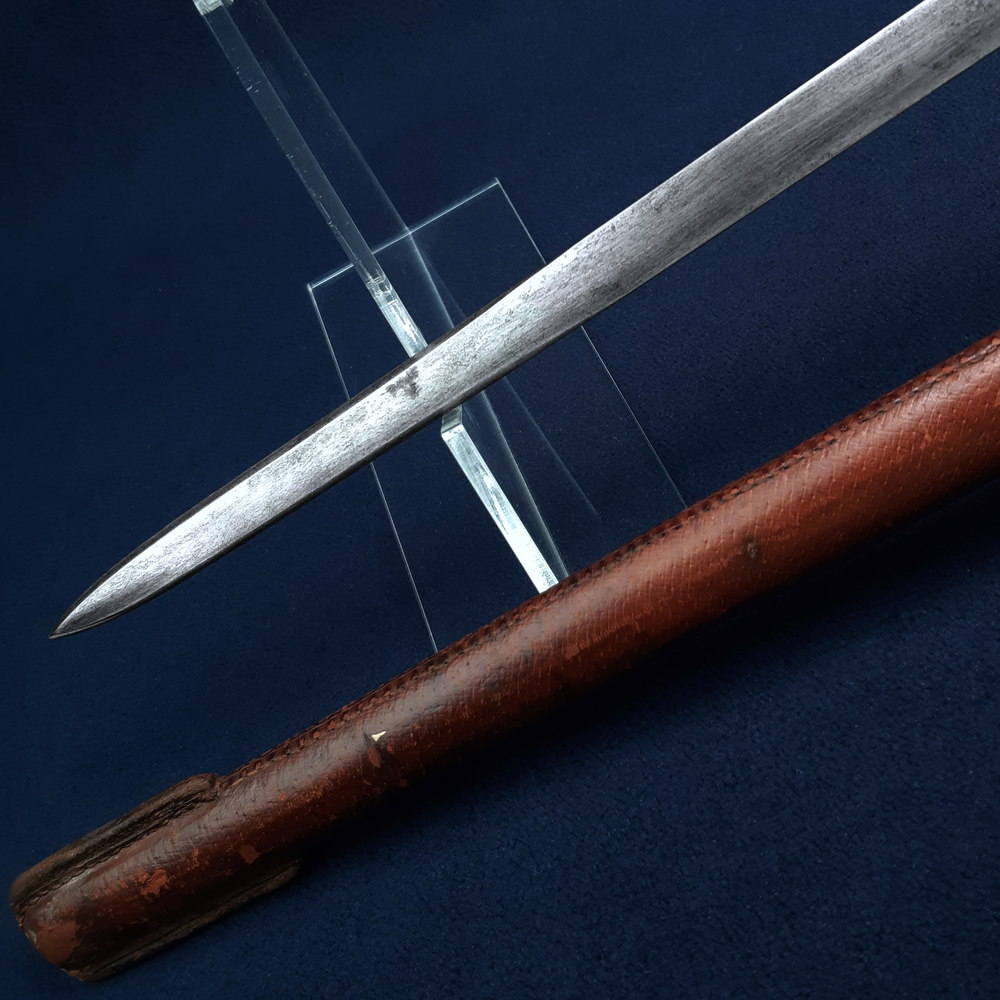
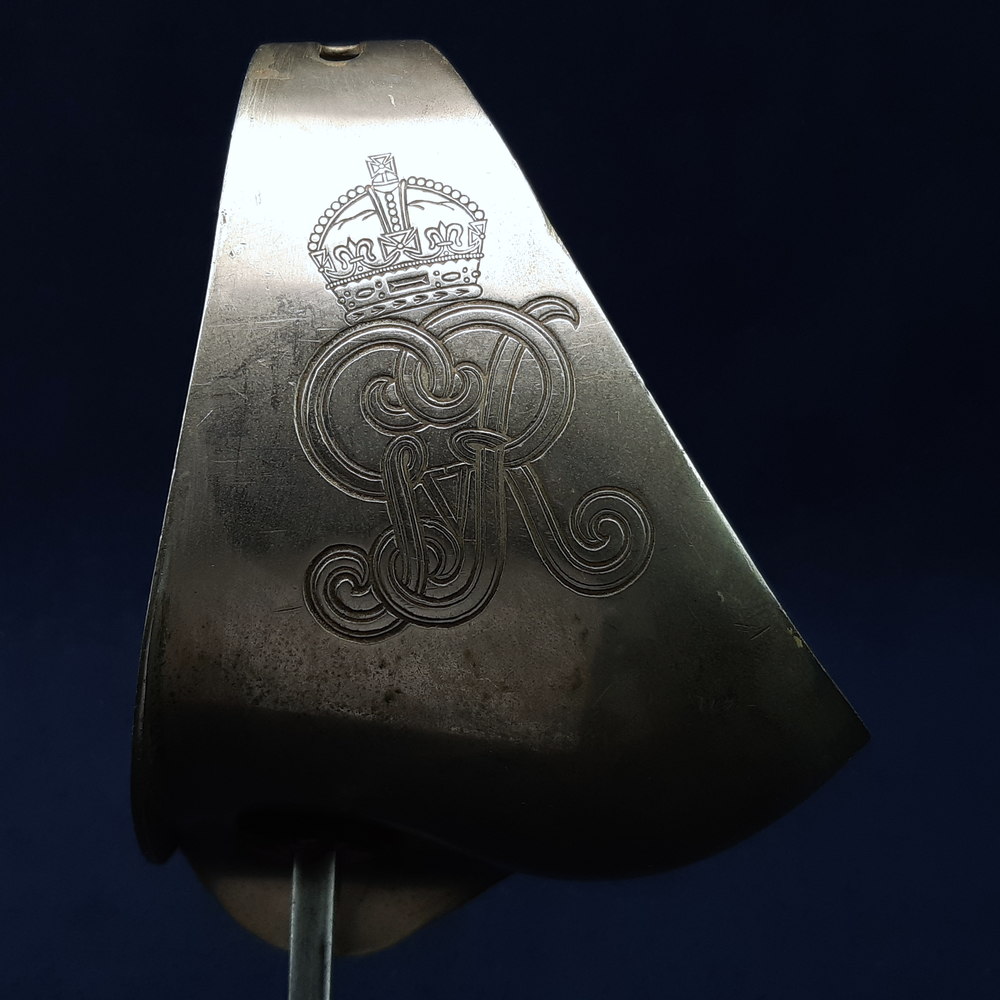
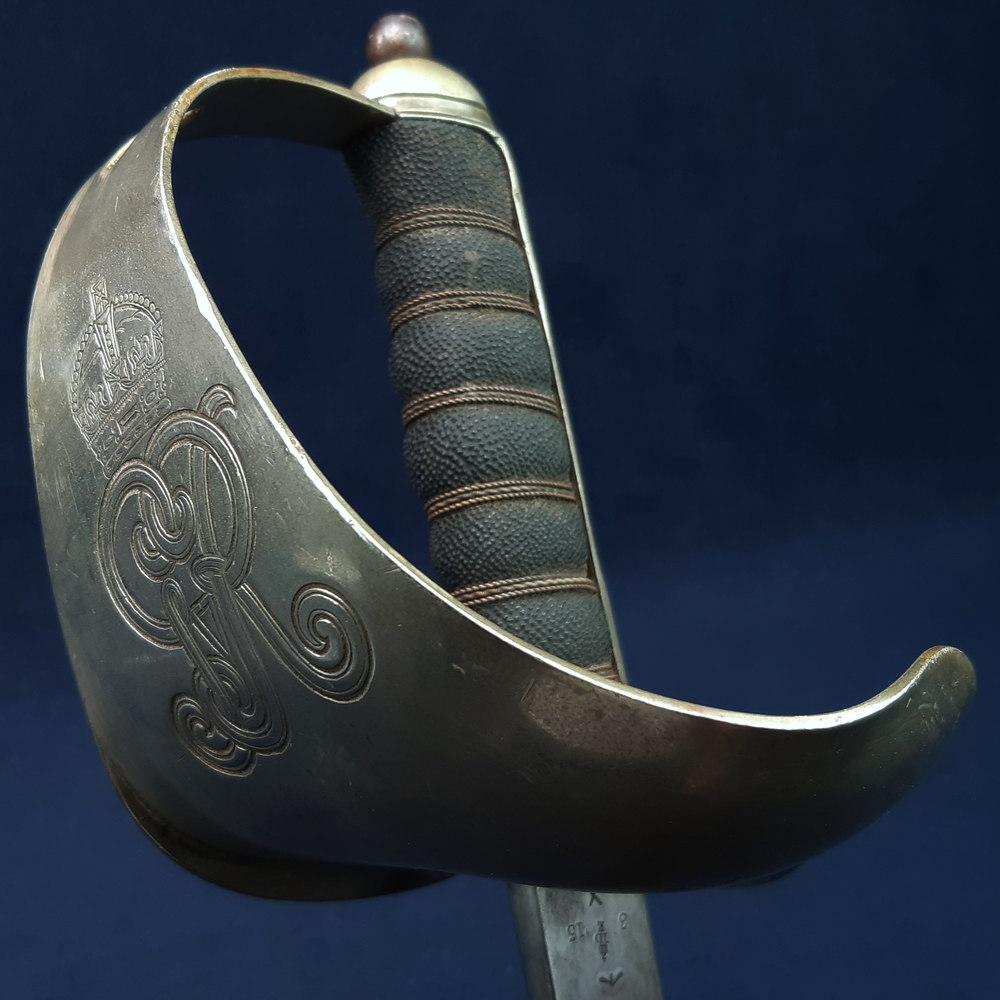
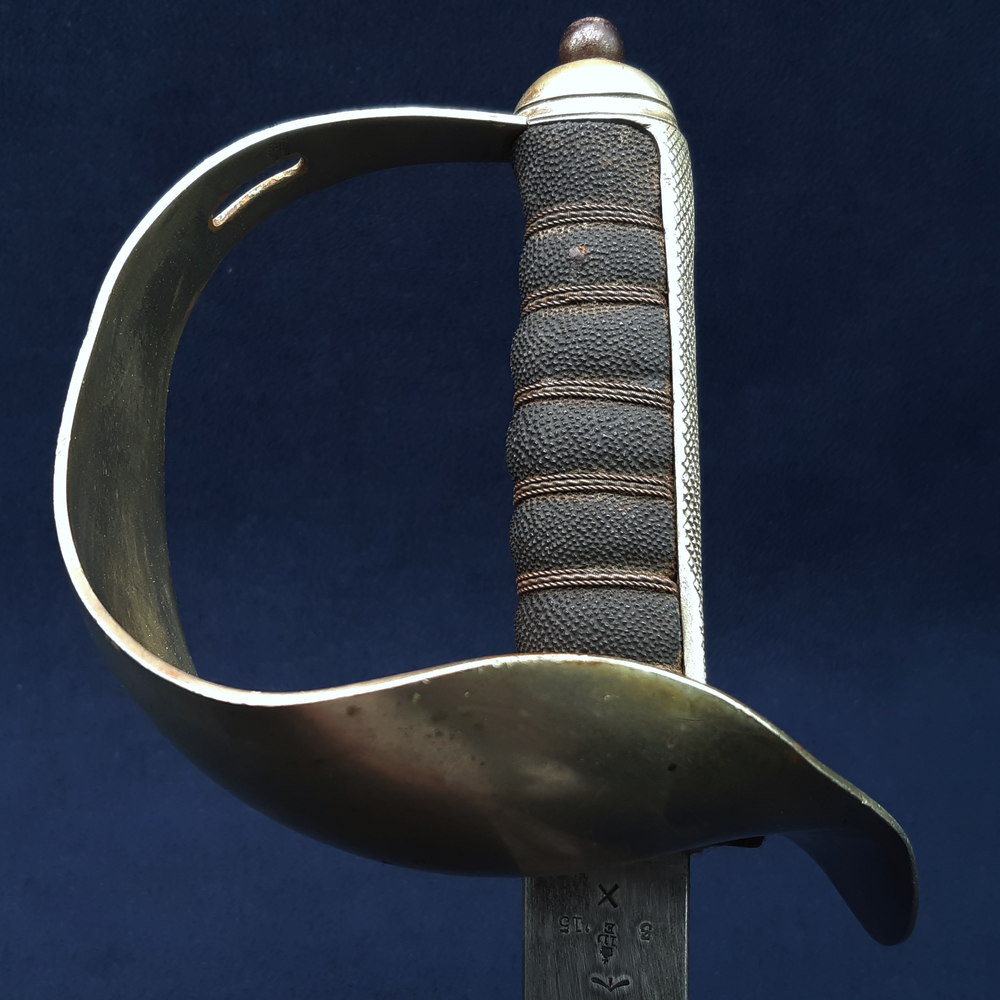
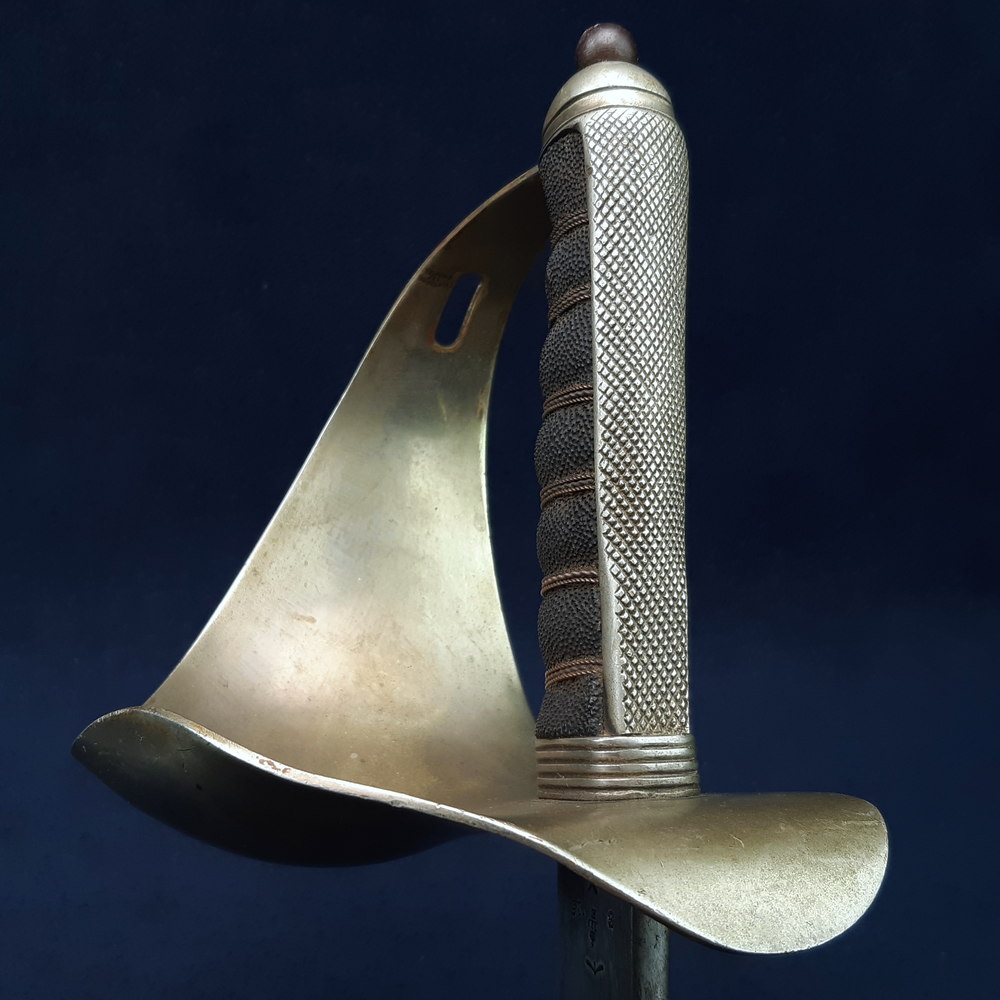
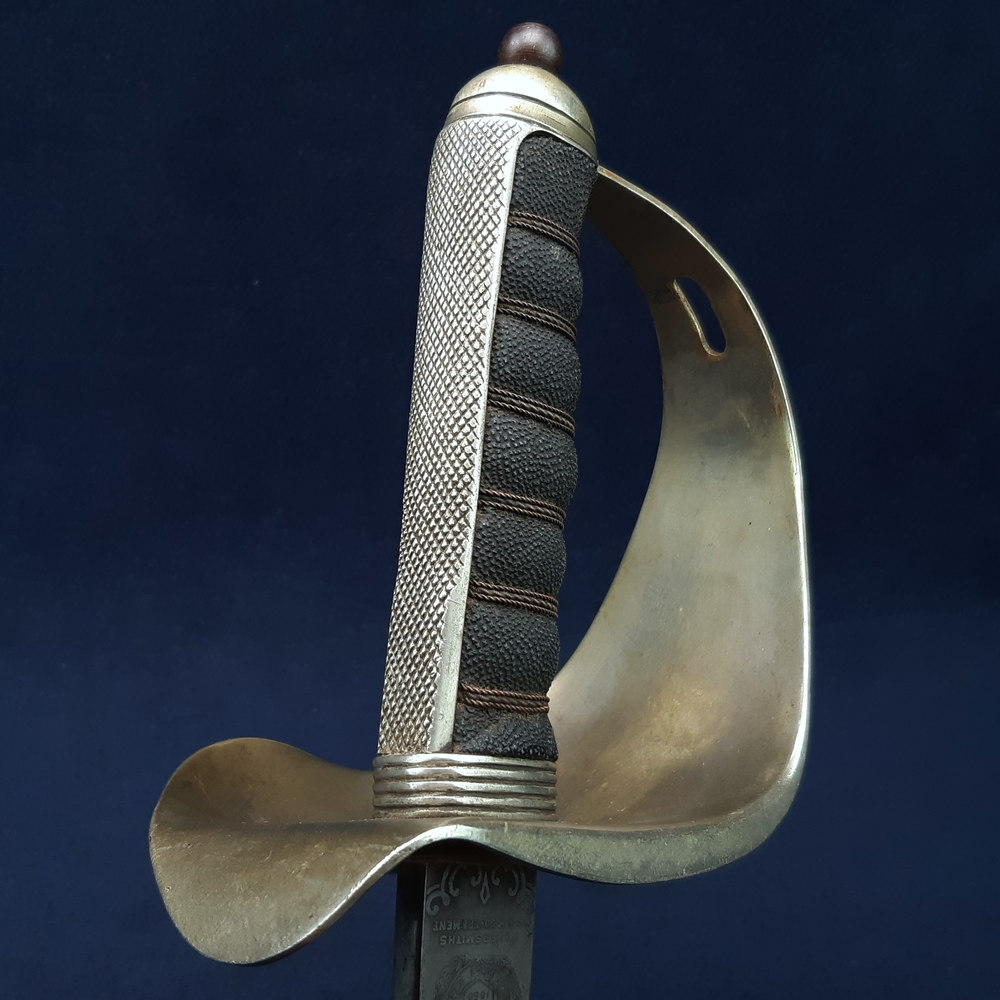
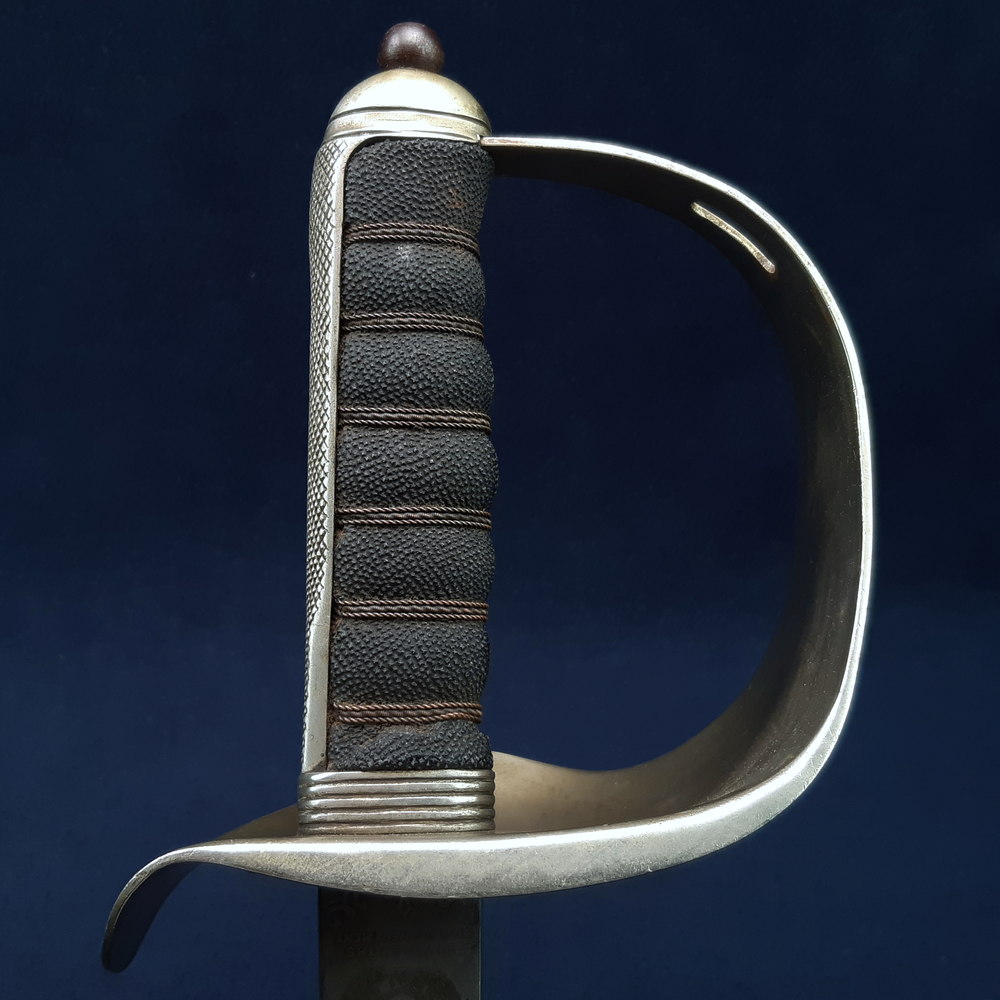
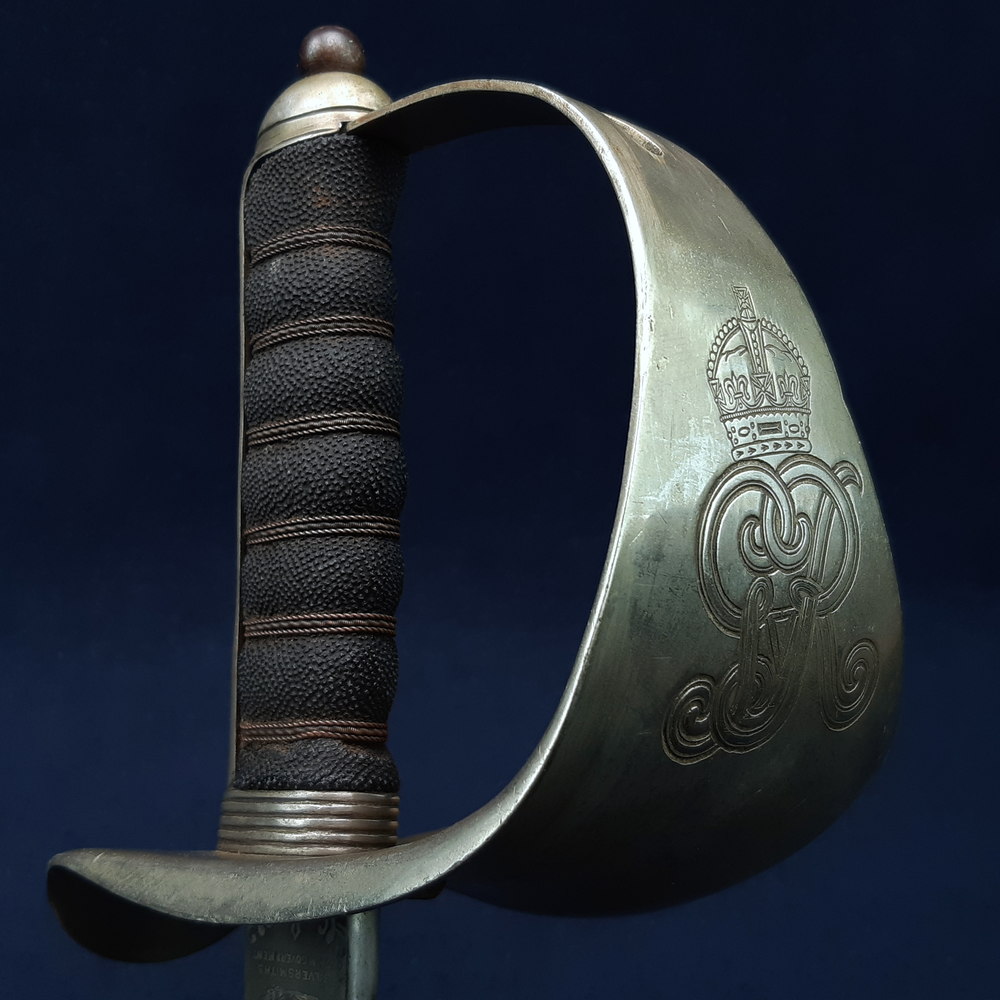
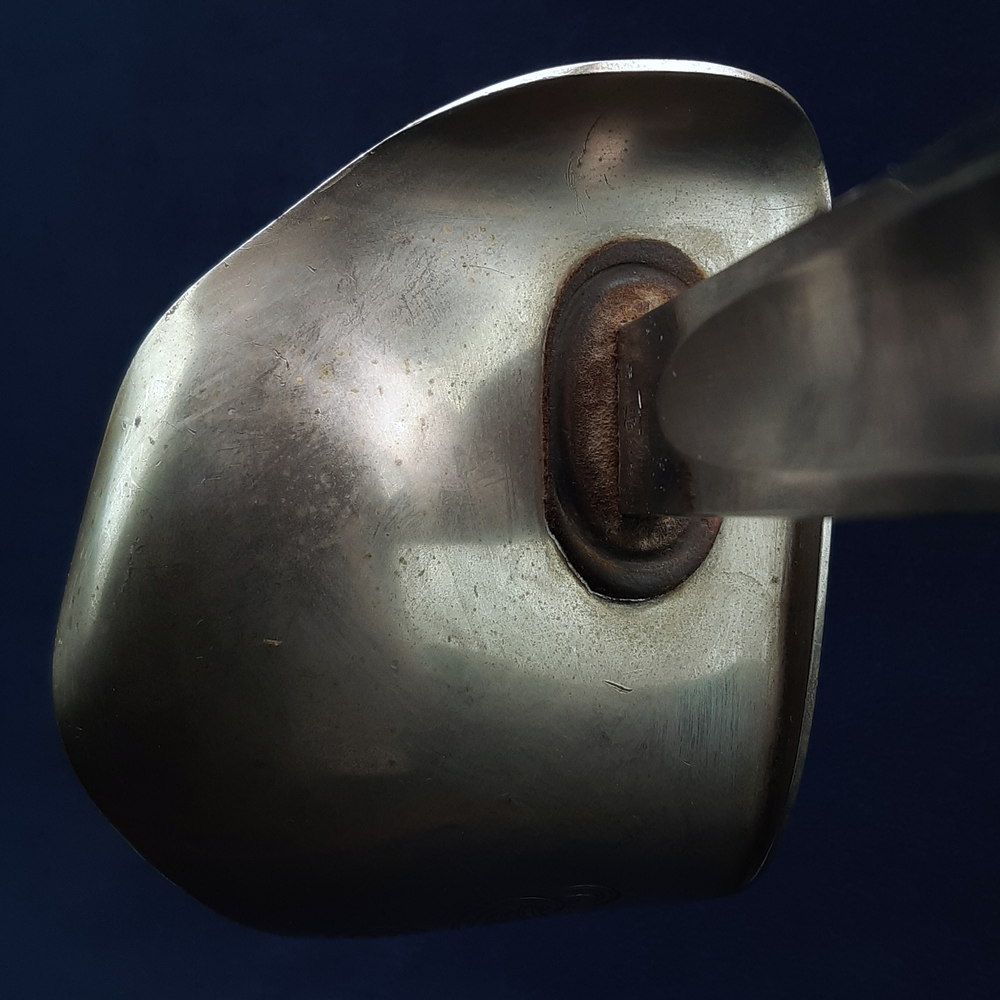
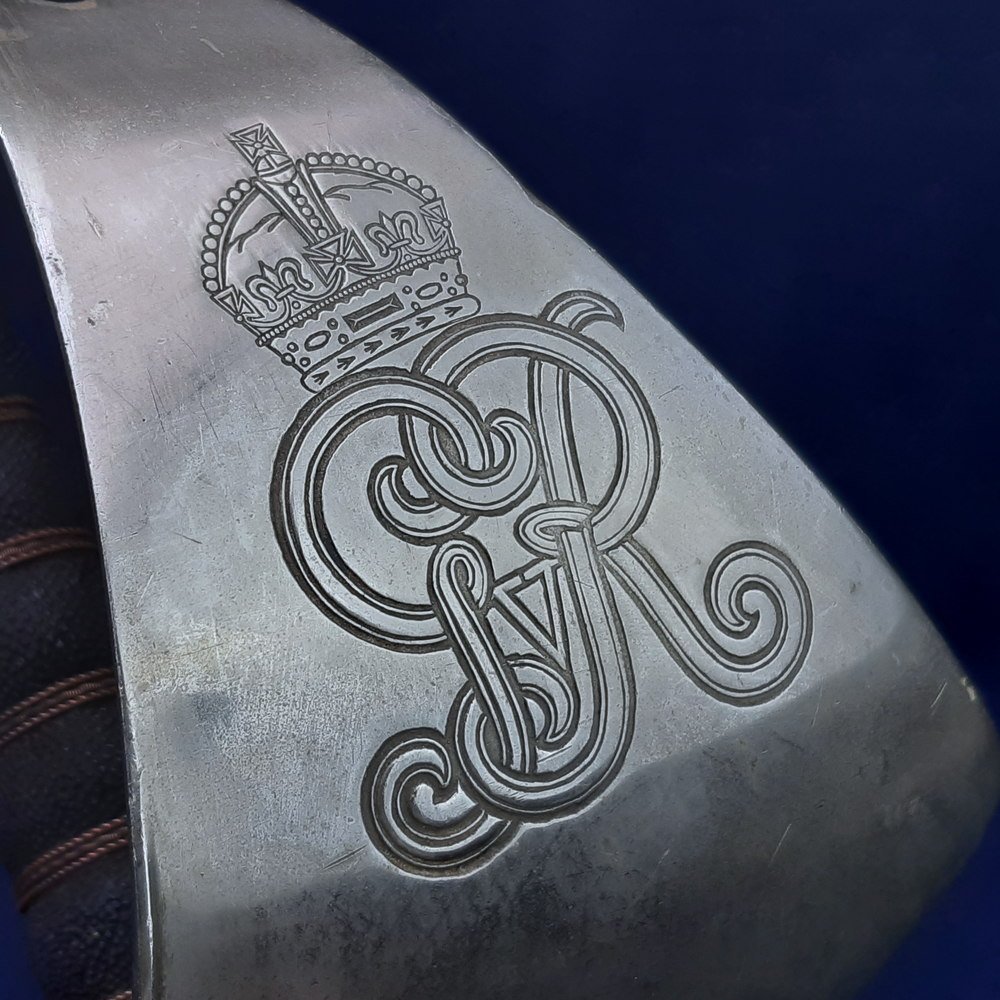
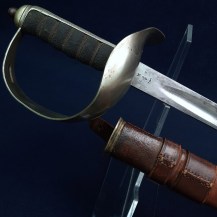
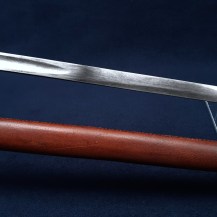
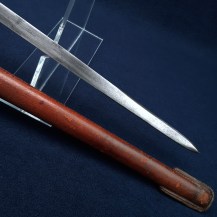
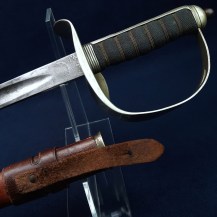
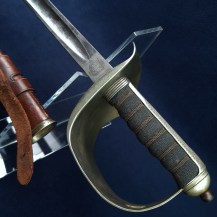
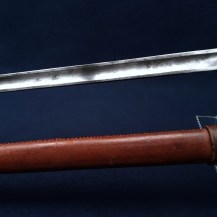
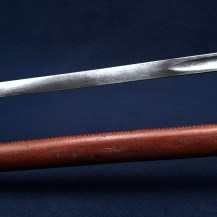
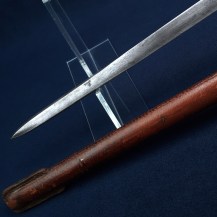
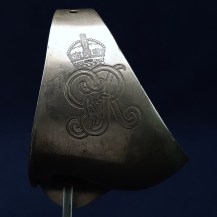
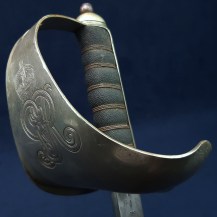
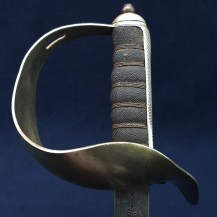
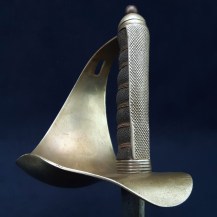
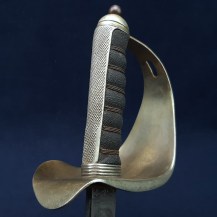
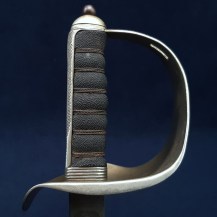
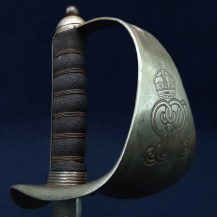
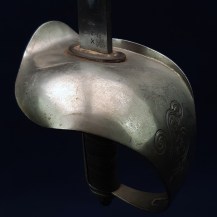
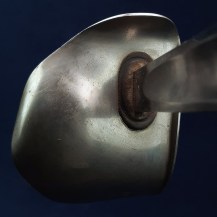
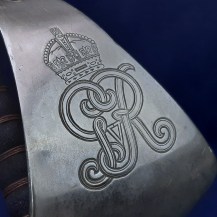
Straight single-fullered spear-pointed blade. Unusual Fenton Bros. solid hilt made of, I believe, cast German silver rather than steel, similar in form to the 1897 pattern infantry model, but lacking piercing except for its sword knot slit and decoration except for the crown and cypher of King George V, stamped on the outside. Fully chequered backstrap, integral oval pommel with tang button. Wire-bound shagreen grip, brown leather washer. Blade 32½ inches in length, the sword 38½ inches overall. Brown leather field scabbard with frog strap and nickel-plated brass throat piece.
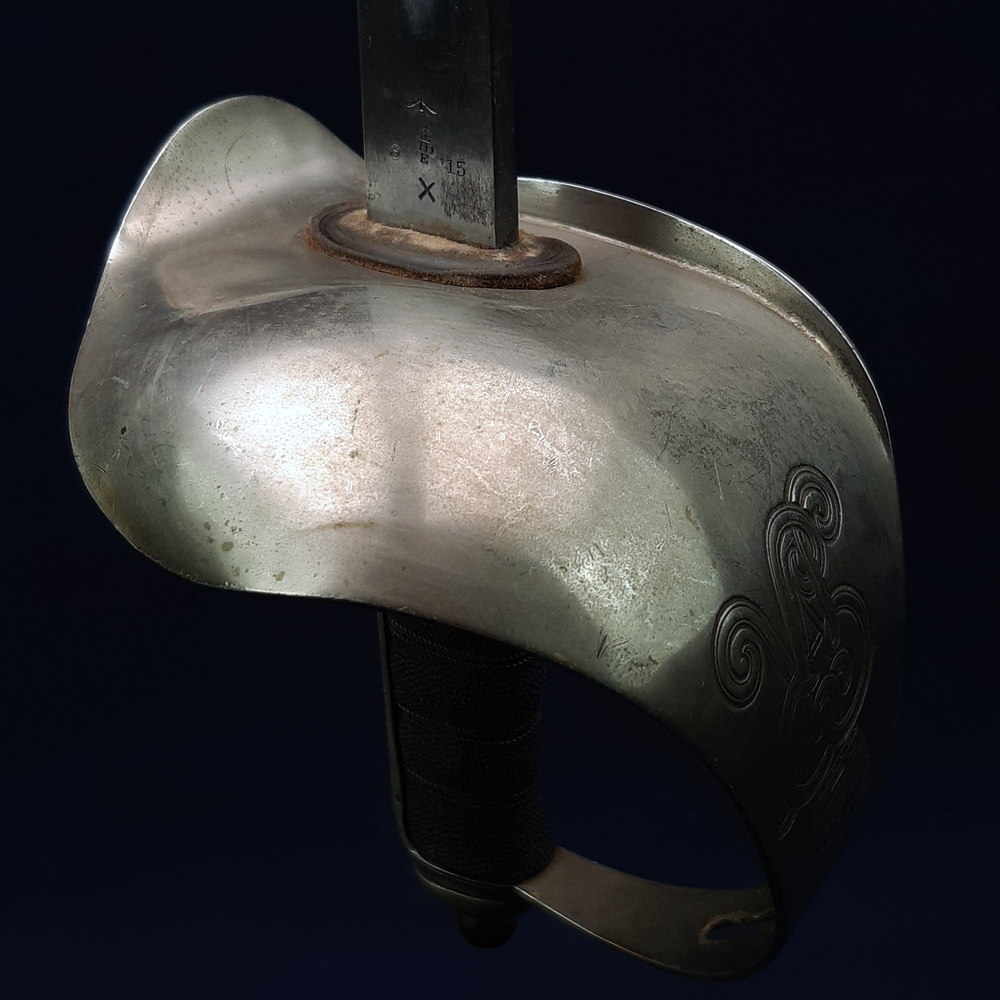
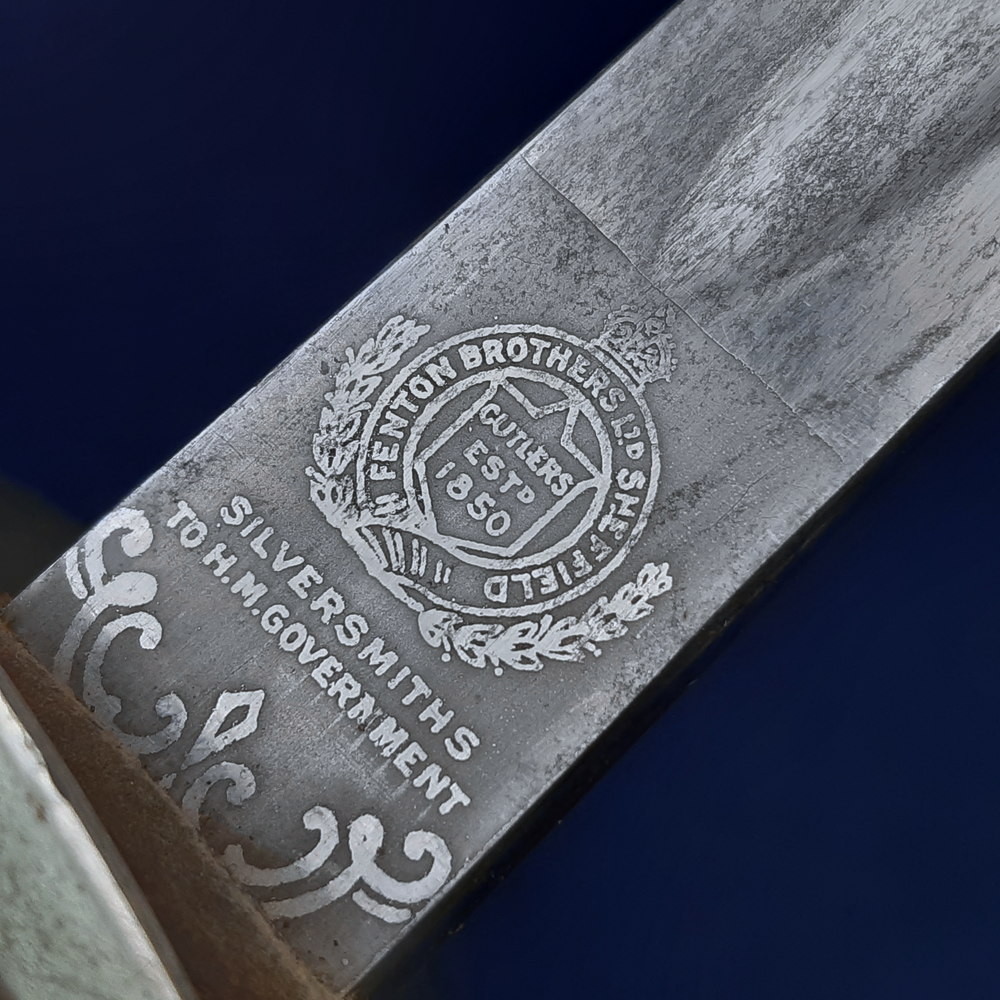
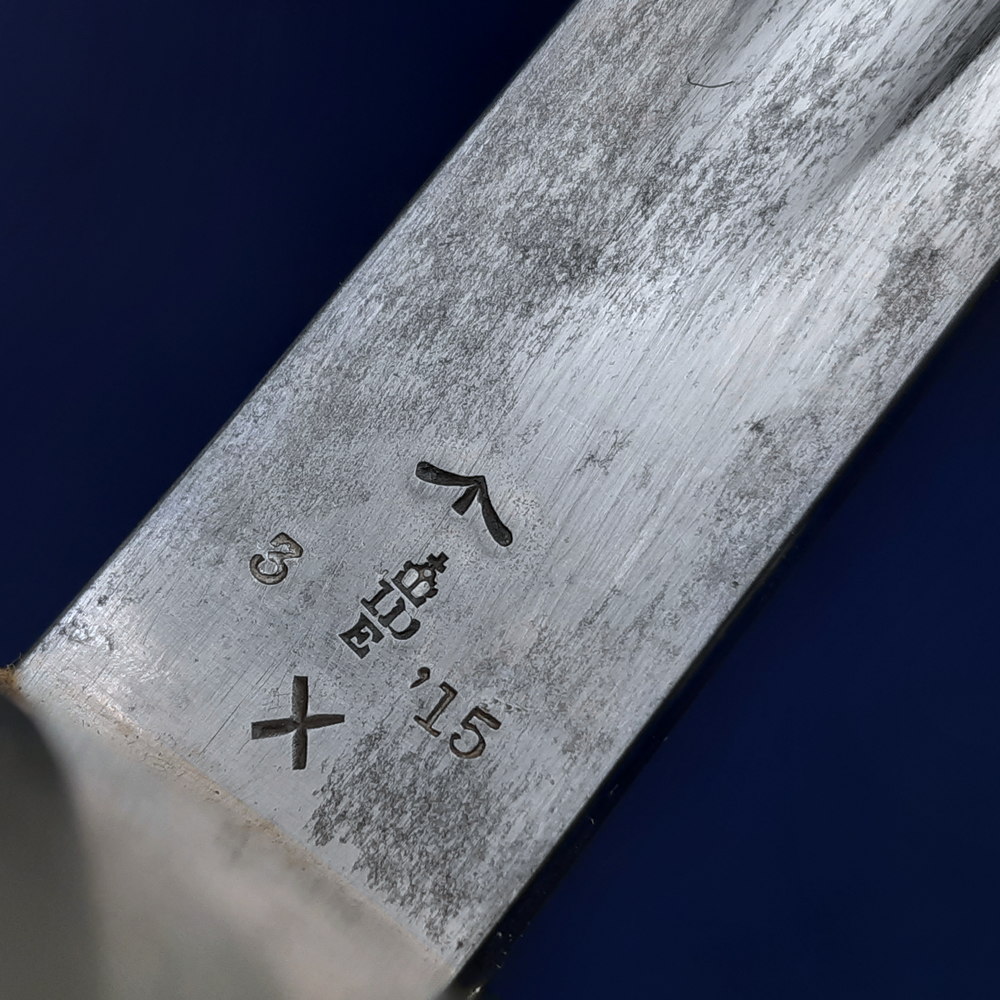
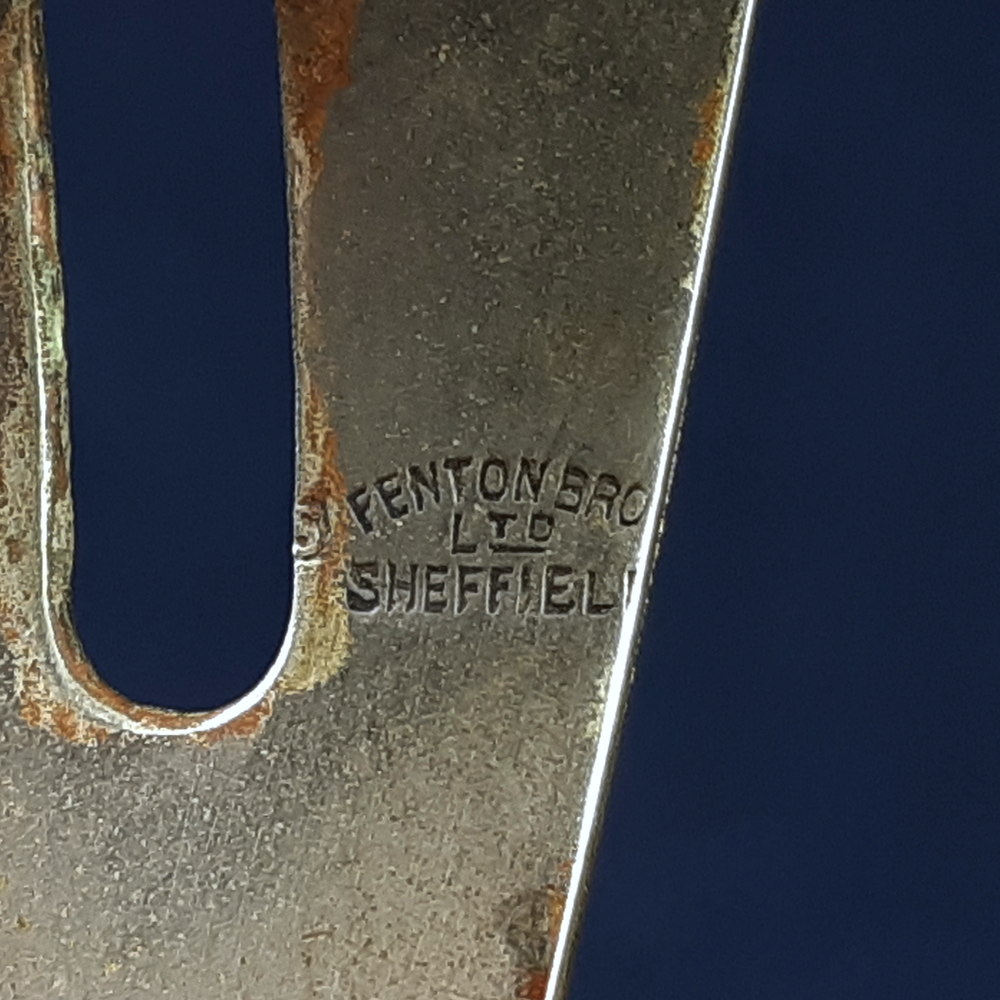
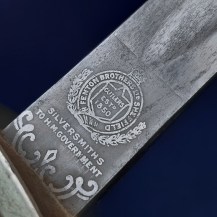
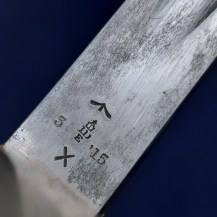
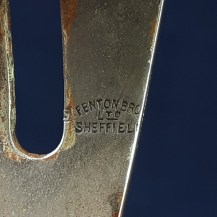
The blade is etched at the forte on one side with the maker’s mark ‘Fenton Brothers Ltd Sheffield Cutlers Estd 1850 Silversmiths to H.M. Government’, arranged within a garter similar to that in the royal coat of arms, surmounted by a crown with laurel wreaths and a shield within. It is stamped on the other side with a broad arrow, indicating War Department property, the date 3 ‘15, indicating manufacture in March of 1915, a crown inspection stamp with ‘E’ for Enfield and an ‘X’ indicating that the blade passed a manufacturer’s bending test. The hilt is also stamped on the inside next to the sword knot slit with ‘Fenton Bros Ltd Sheffield’.
Since this sword has government inspection and ownership stamps it is a staff sergeant’s sword, not an officer’s model – unlike officers who privately purchased and owned their own swords, sergeants were issued their swords from regimental stores like a musket or bayonet, and the swords remained government property.
The 1898 Pattern sergeant’s sword resembled the 1897 Pattern infantry officer’s sword in form. Most 1898s produced would have either a Victorian or Edwardian cypher, but some are known to have been produced after 1912 with a George V cypher, or rehilted with it.
Established by John Fenton around 1850, with his brother Frank joining as a partner in 1859, Fenton Brothers was a Sheffield-based silversmith and cutler. It did not make swords until the First World War when, like other firms, it was contracted to do so by the War Office. Existing sword cutlers like Wilkinson and Mole had heavy wartime workloads, including mass production of bayonets.
Hilts made of cast German silver (copper-nickel-zinc alloy), softer than steel but harder than brass, are a known wartime economy measure seen most often in swords for the Royal Artillery. Fenton’s hilts, made in-house as confirmed by their individual stamps, are interesting for their drastic simplification of the conventional infantry officer’s sword design. Fenton may have lacked the tooling to bend a conventional steel hilt blank into shape, while German silver would have been more manageable (even on equivalent tooling, steel requires 1.5 - 2 times greater bending tonnage, exhibits springback and produces more wear on the equipment). Fenton omitted all pierced and foliate decorations, simplifying down to merely the royal crown and cypher, which could be rapidly applied by stamping thanks to the softer metal.
In general Fenton swords appear to my eye to have more basic workmanship than most, which speaks perhaps to lack of experience as swordsmiths and/or wartime economy measures – but at the same time the etched maker’s mark and quite good polish given to the blade, both unusual for a sergeant’s sword, speak to the firm’s strengths in electroplating and polishing. This is the second example I have sold of this unusual type and both were dated to March of 1915 – perhaps Fenton made a batch for the government at this time. The expansion of the Army during WW1 produced a great deal more sergeants, which possibly required some additional production.
Fenton Bros returned to normal production after 1918 but trade declined in the interwar years. It merged with James Deakin & Sons, another struggling silversmith with a brief swordmaking history, but the resulting company ceased trading around 1938.
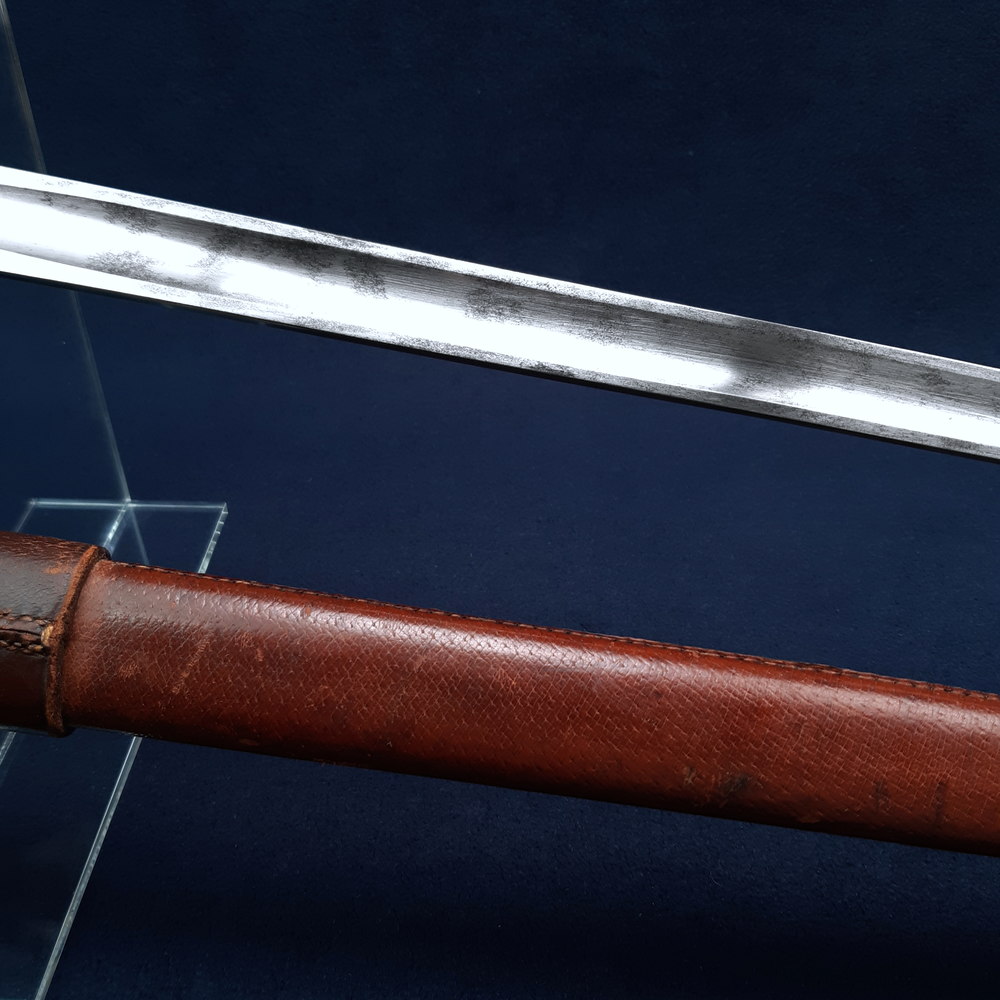
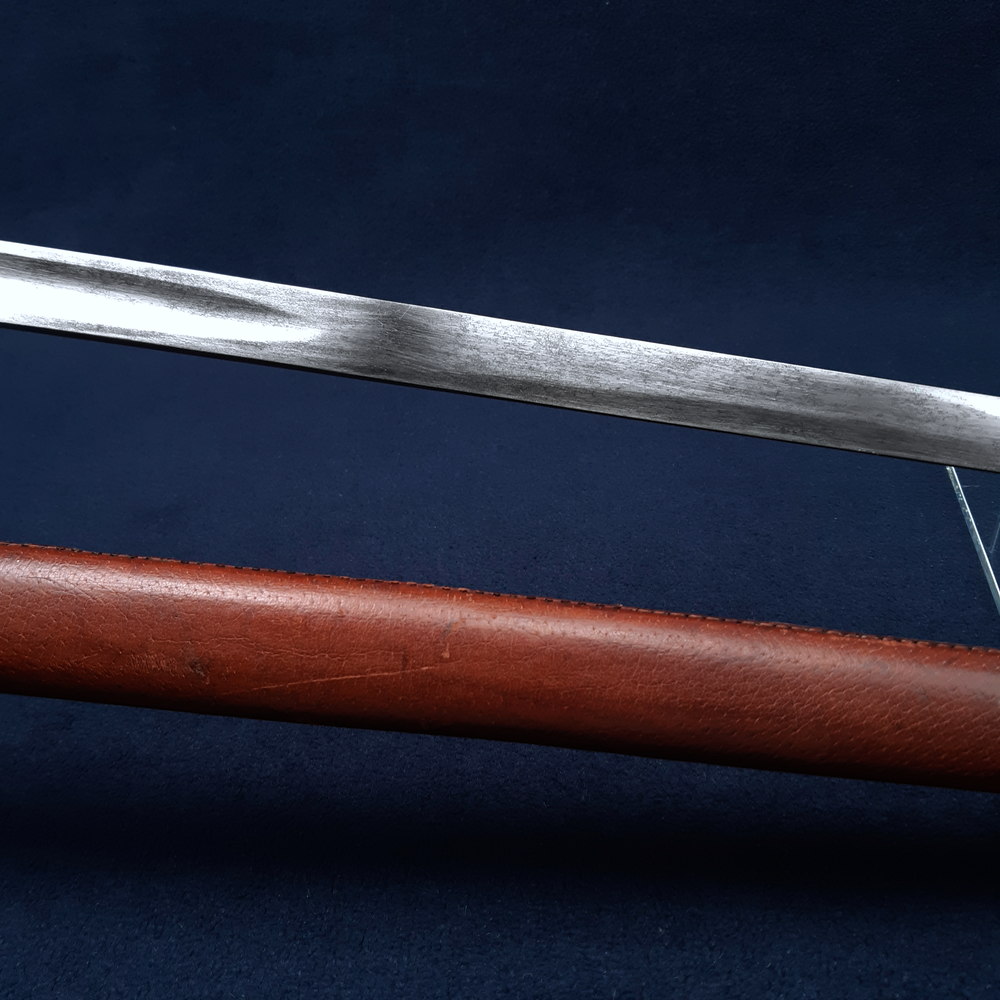
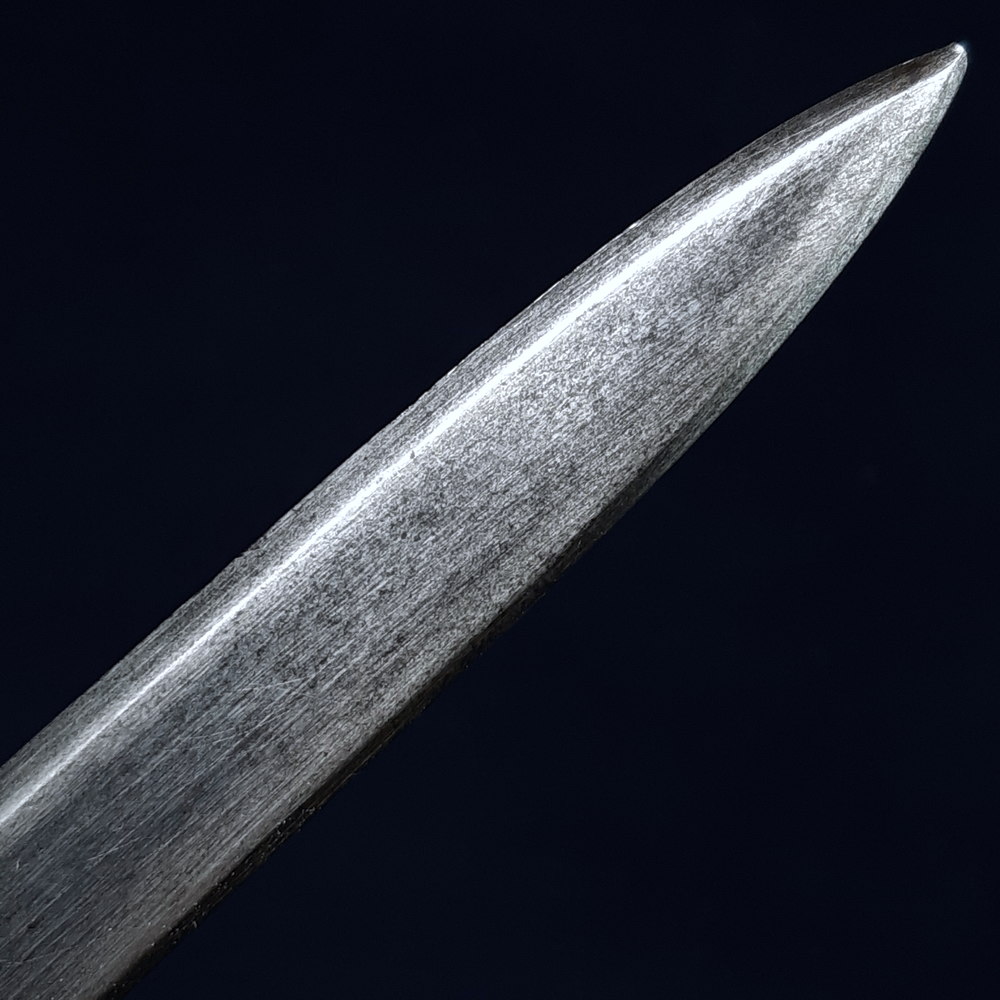
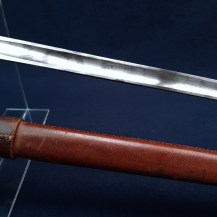
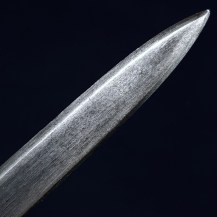
The blade has some light patination, one small spot of dark moderate patination on one side near the tip. Its edge is unsharpened and undamaged, the tip has rolled for a loss of about 1mm. The hilt has some rubbing and frosting in places and some light dents & scratches to the outer guard. The shagreen of the grip is all intact with very little handling wear, its wire binding is all present and tight. The leather scabbard has some scuffing, heavier at the chape. The shoe end is bent over. There is a U-shaped cut to the leather at the midsection on one side which exposes a small area of wood core – there is no ‘flap’ to it and the leather remains firmly in place. All the scabbard’s stitching is intact with slight opening of the seam at the midsection. The frog strap is flexible with very minor surface cracking. Some wear to the plating of the throat piece revealing patinated brass.
