

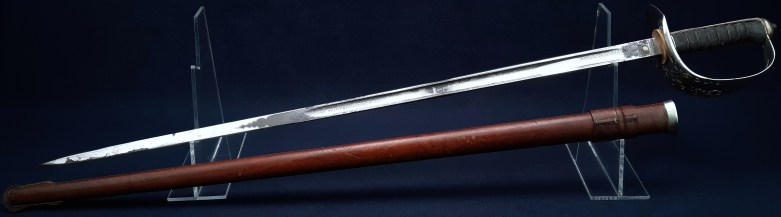
British WW1 1897 Pattern Infantry Officer’s Sword of Captain Charles Roydon Brown MC MID, Essex Regiment, KIA France 1917, by Wilkinson
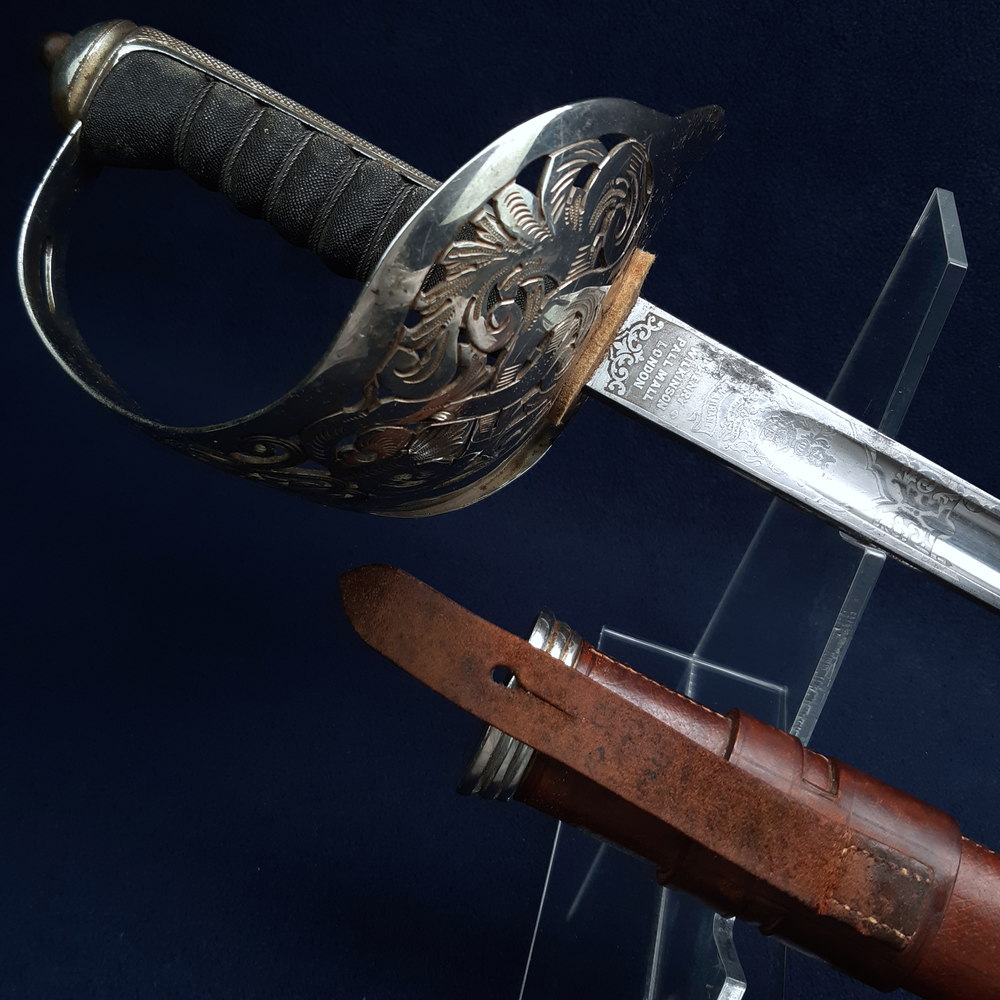
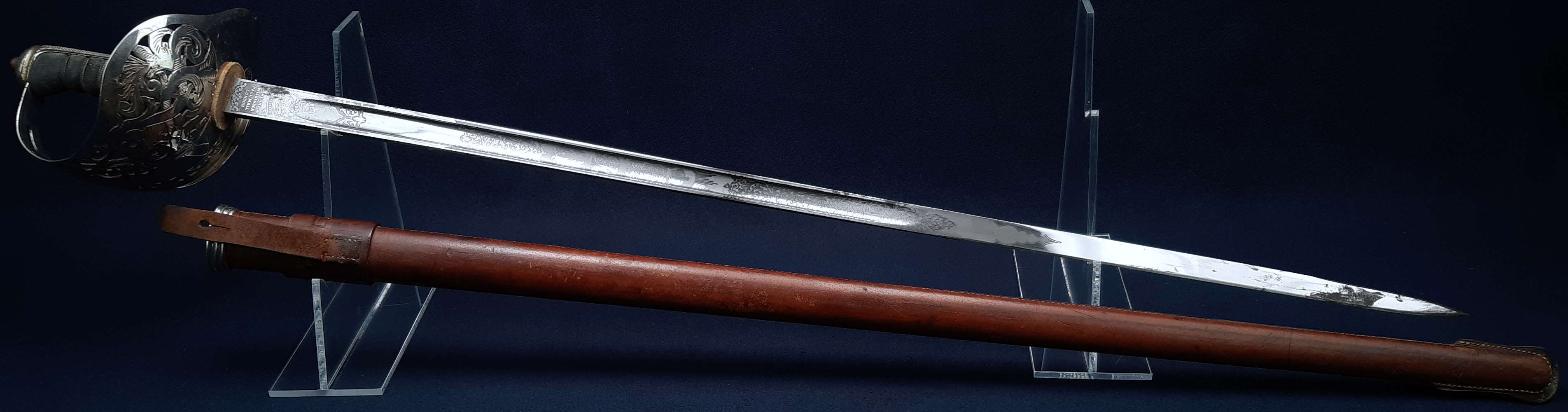
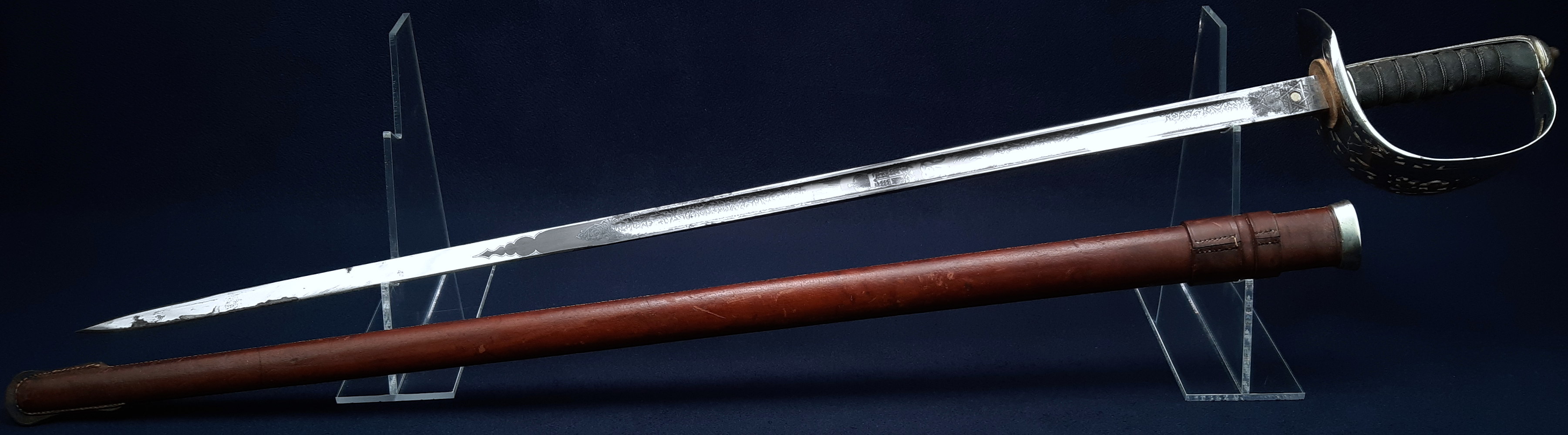
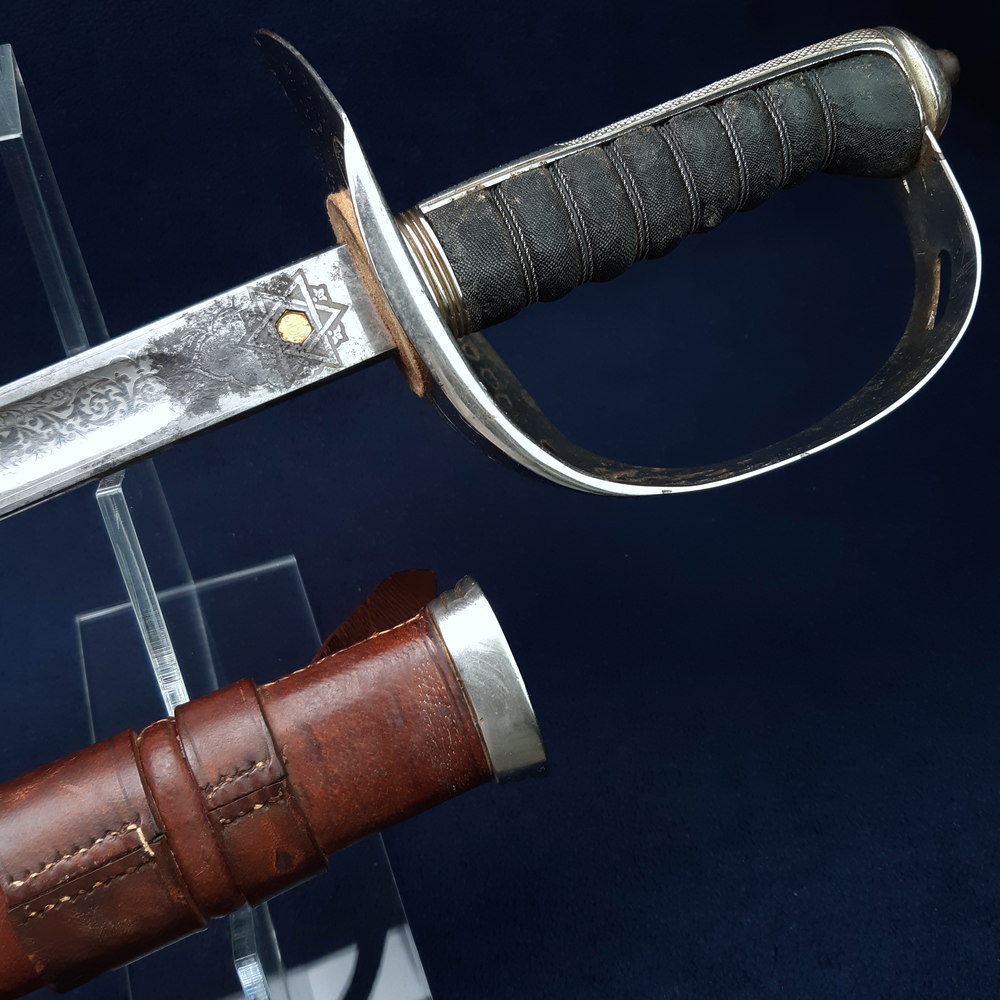
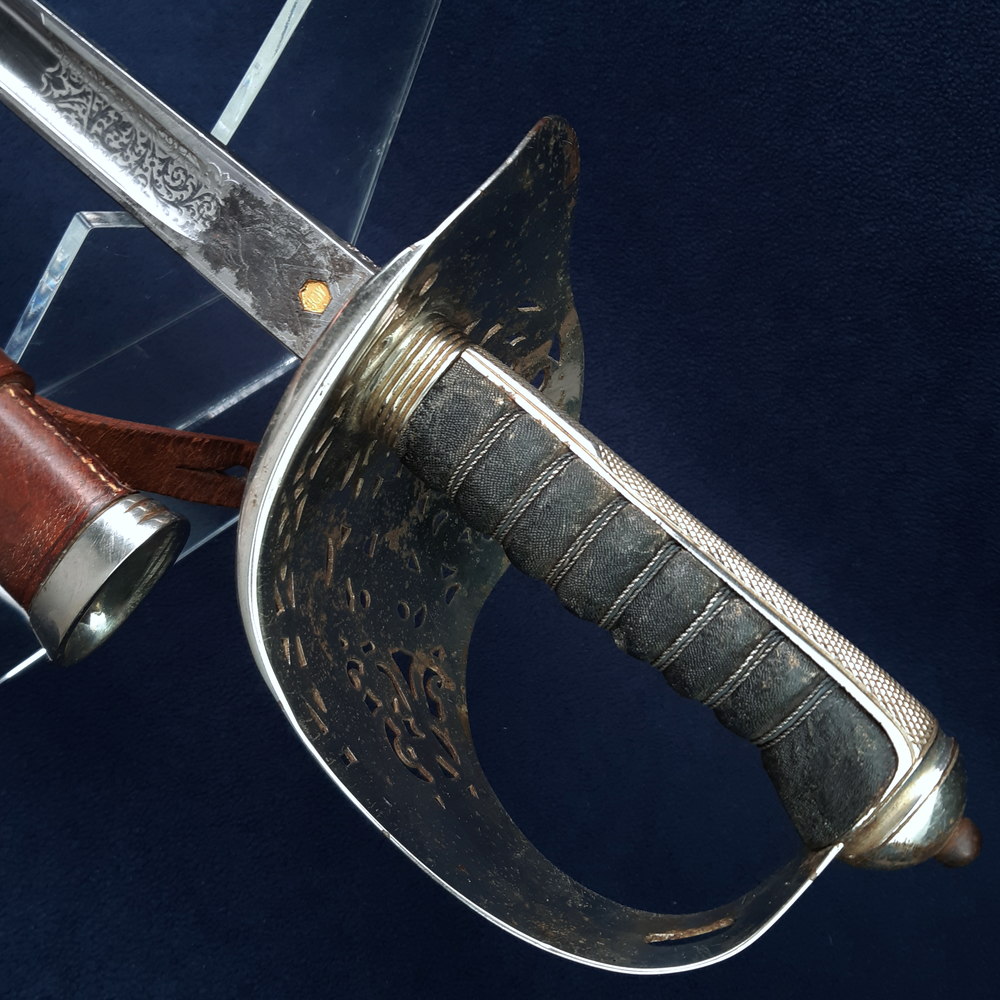
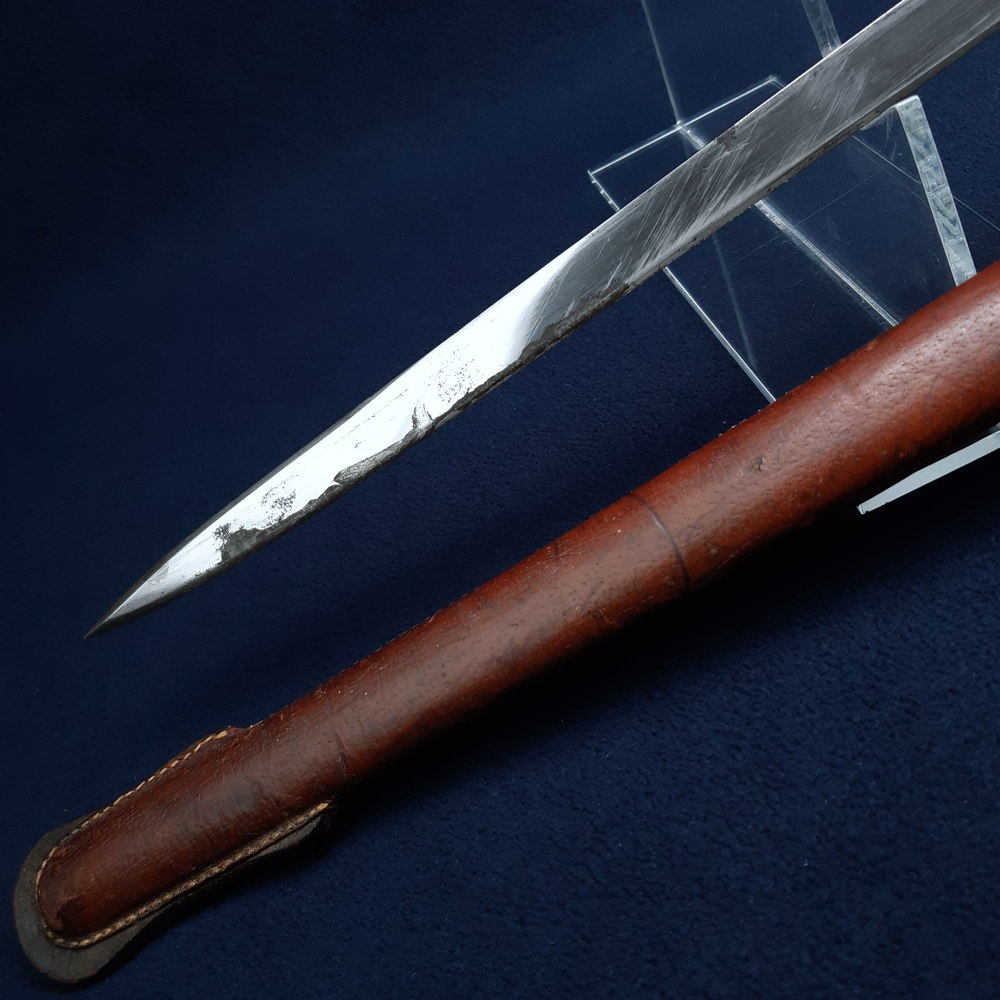
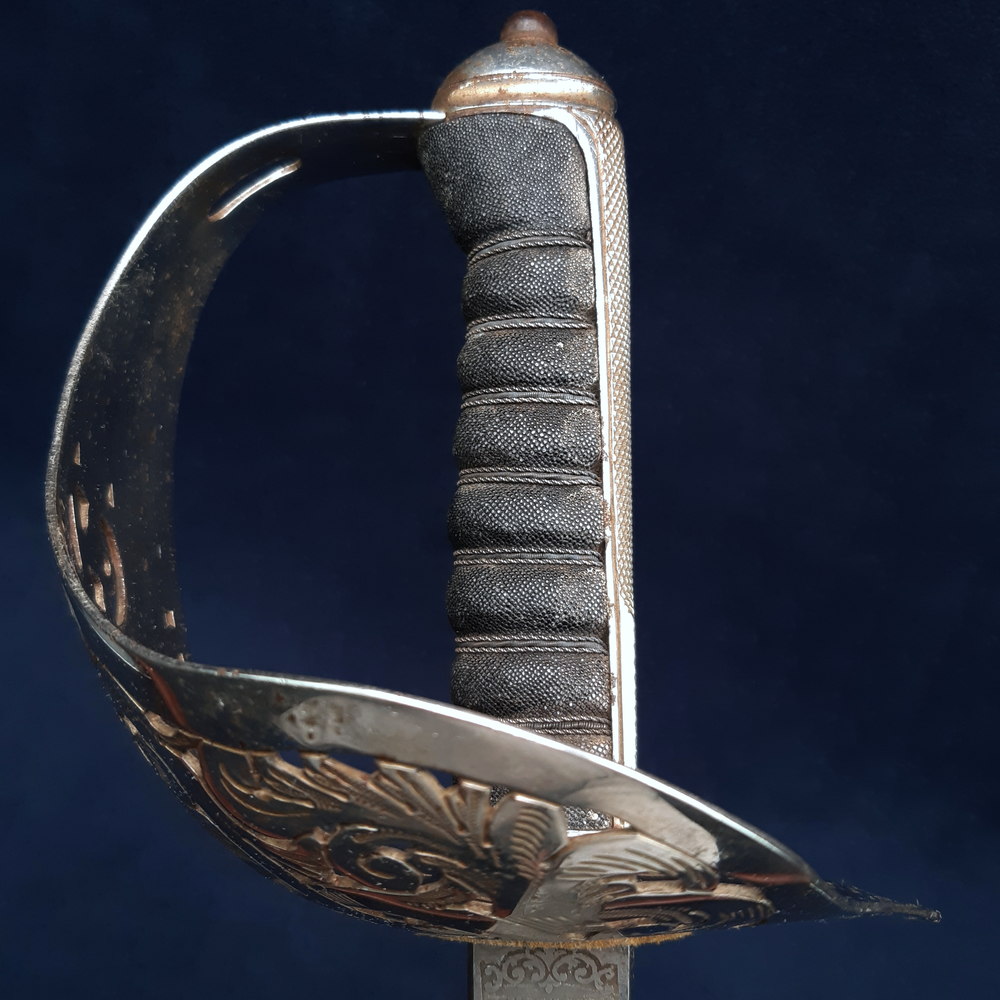
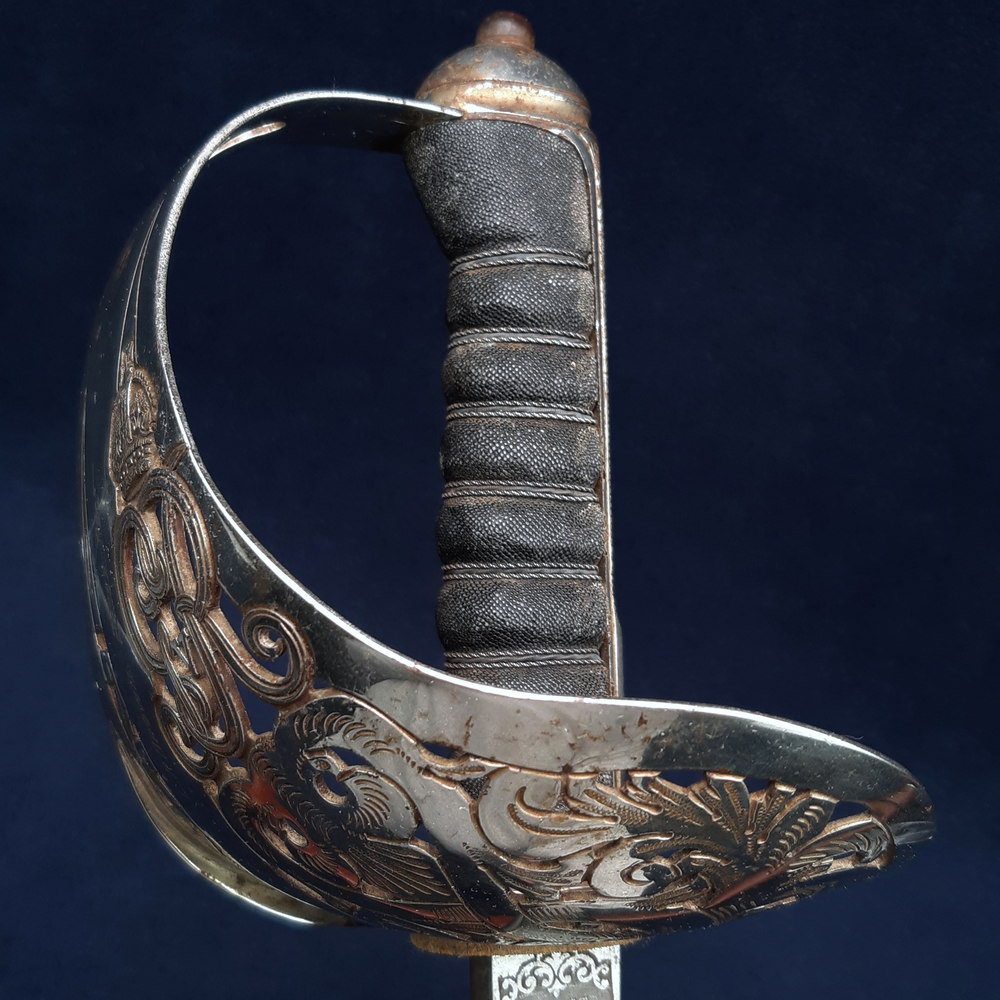
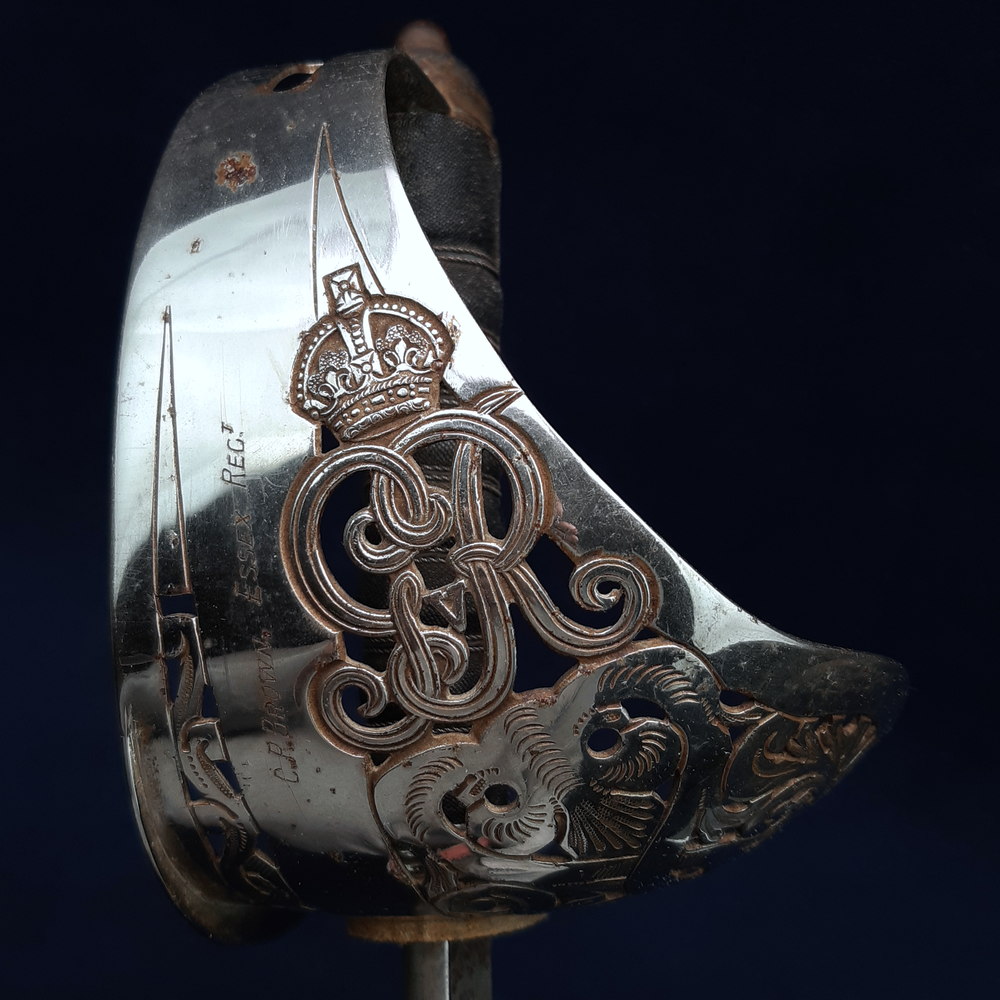
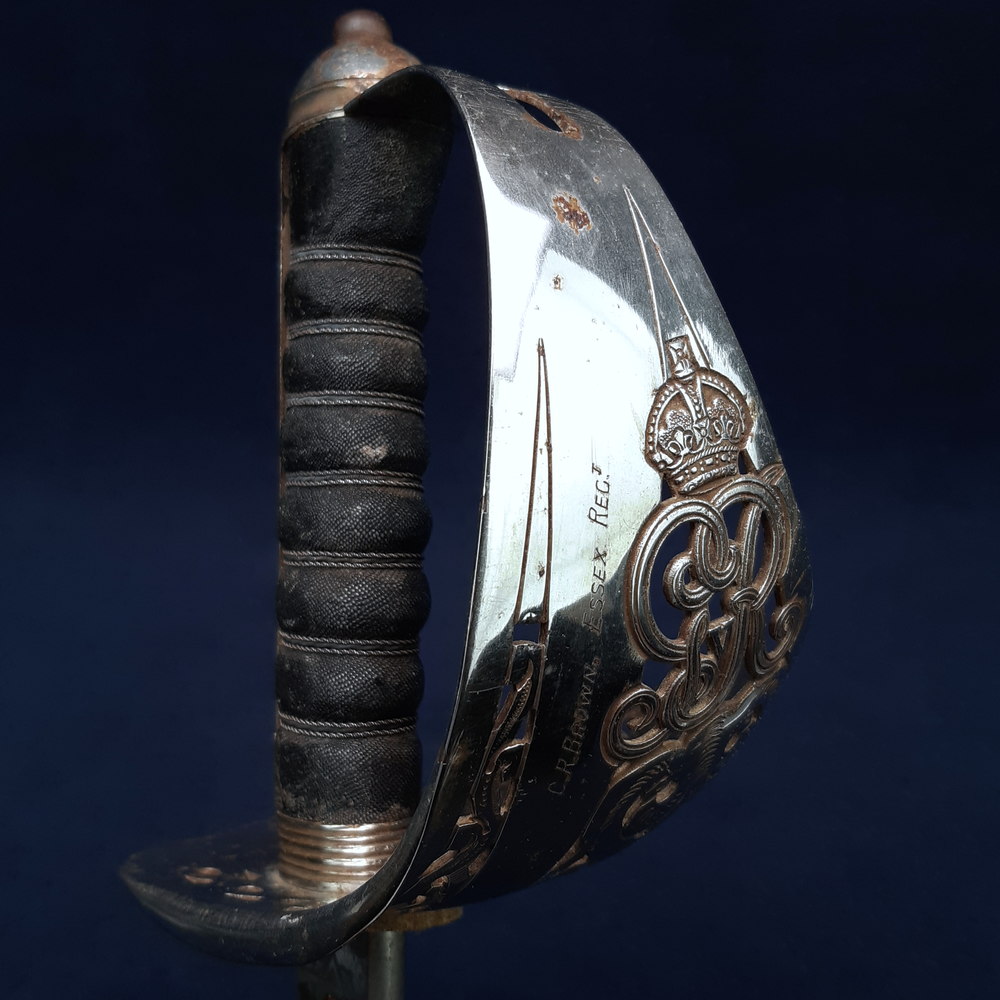
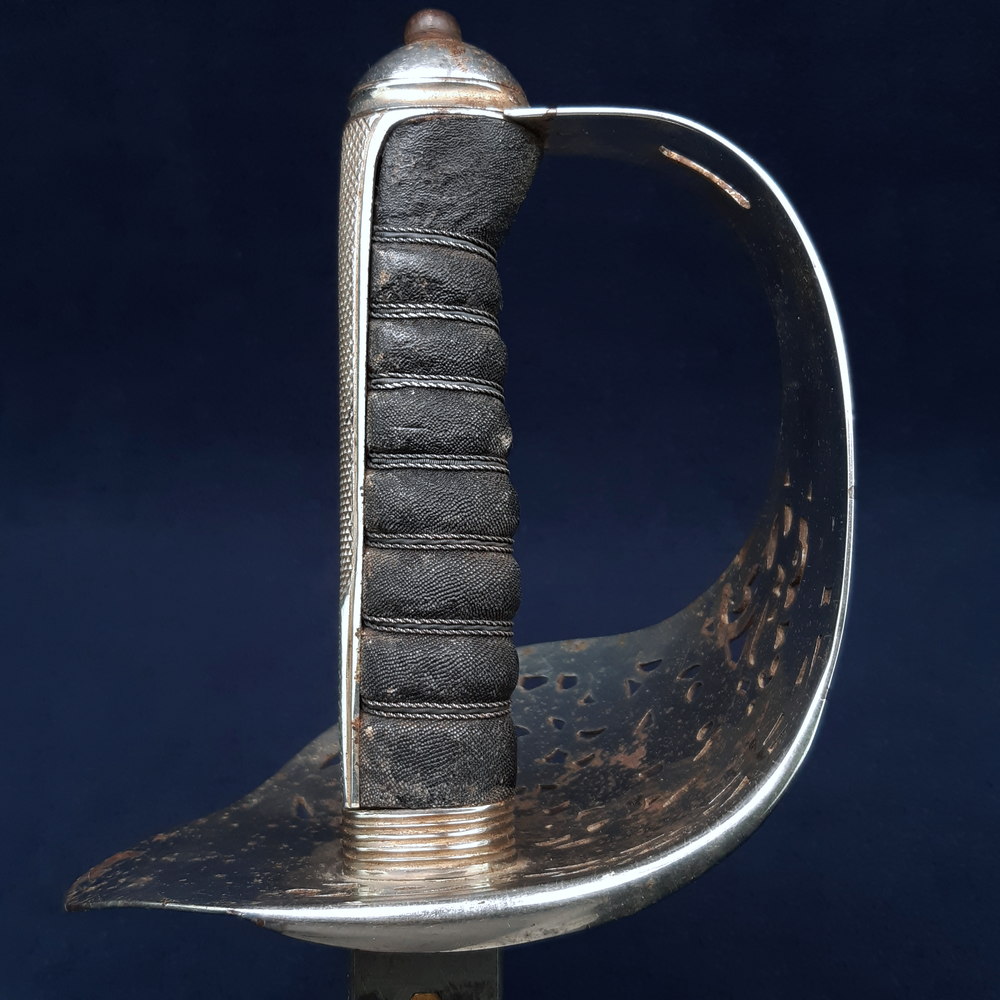
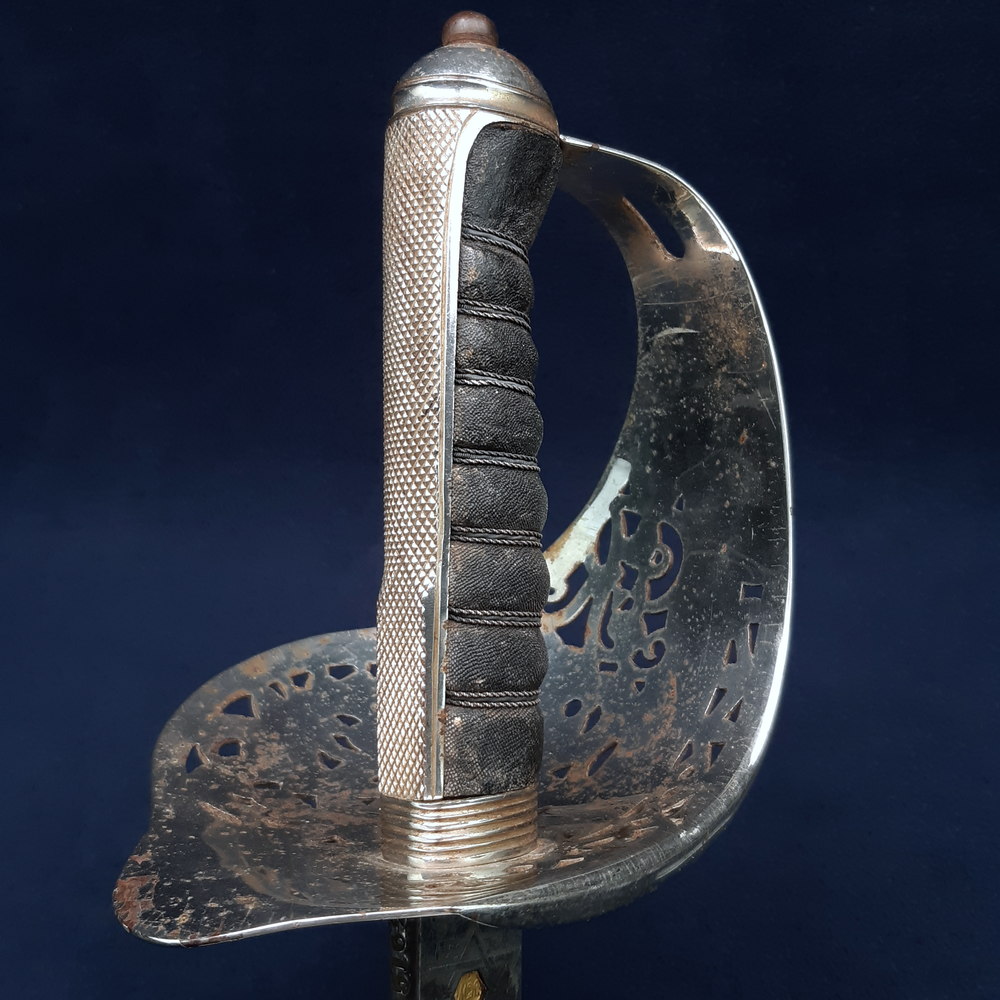
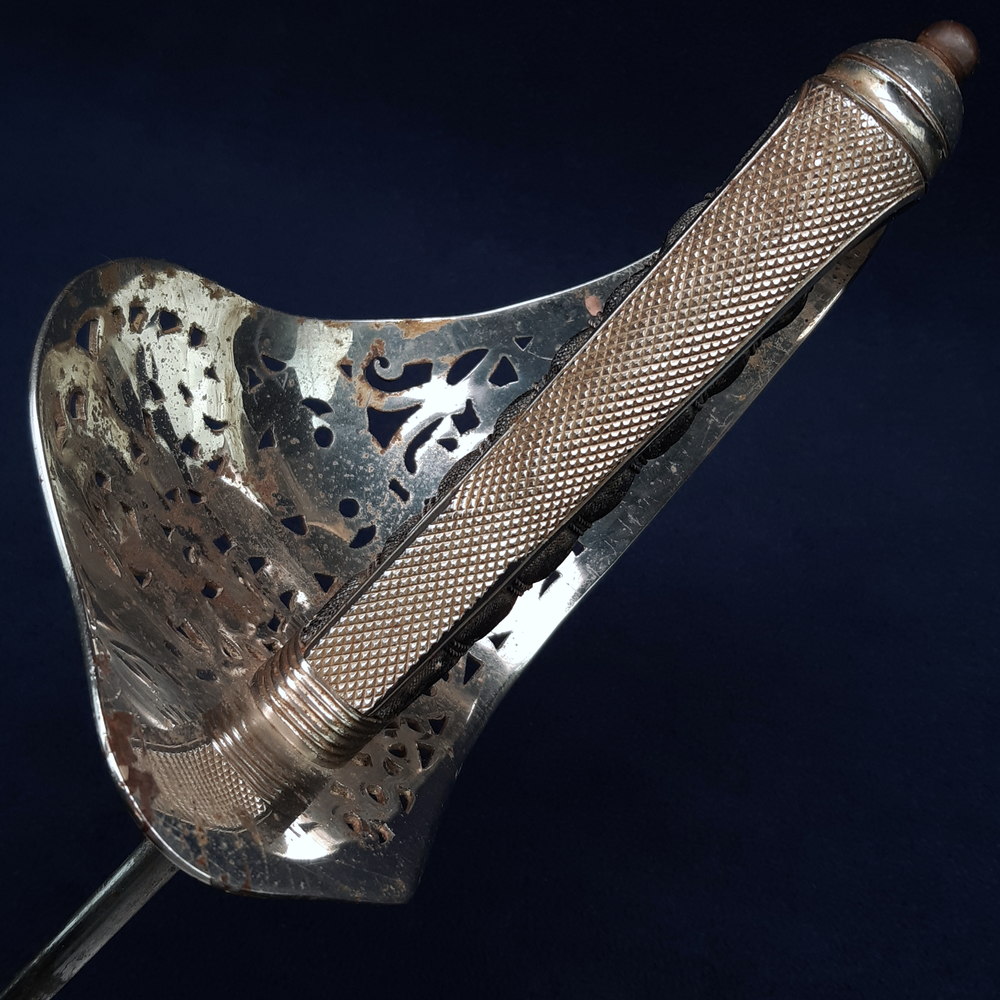
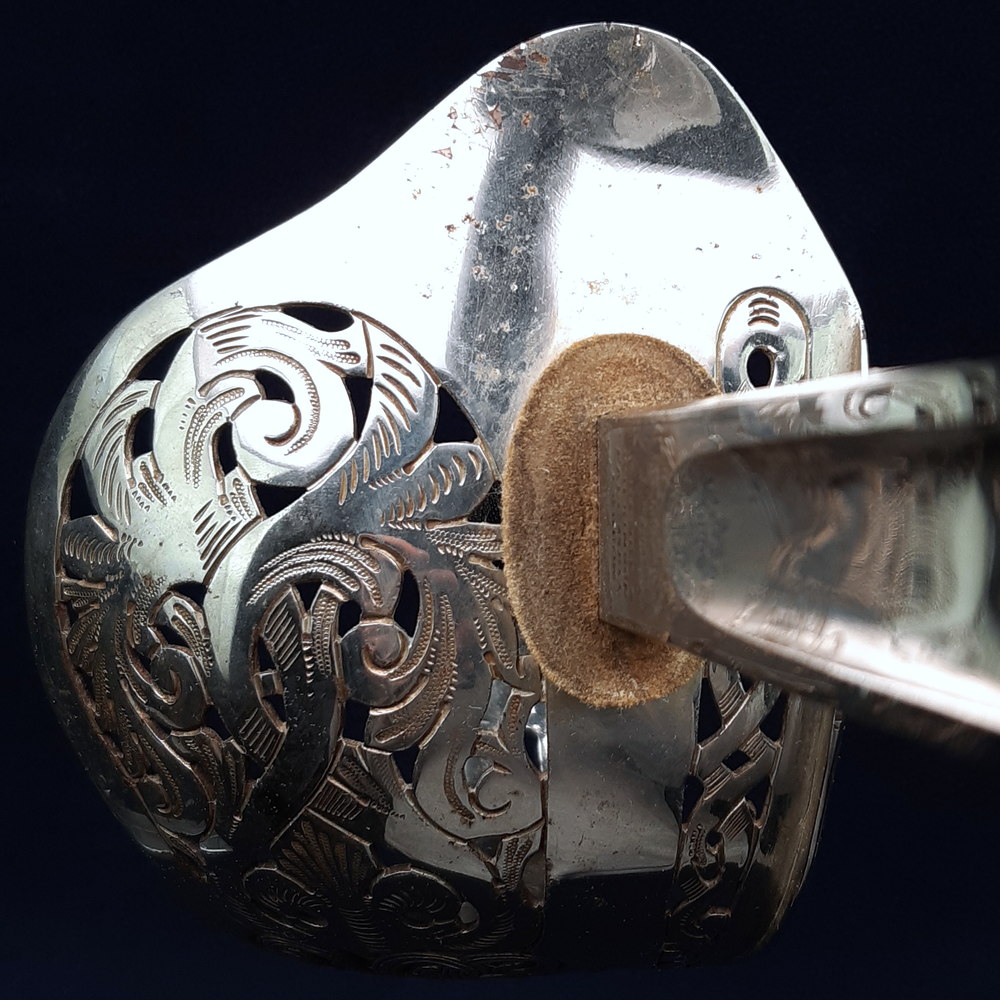
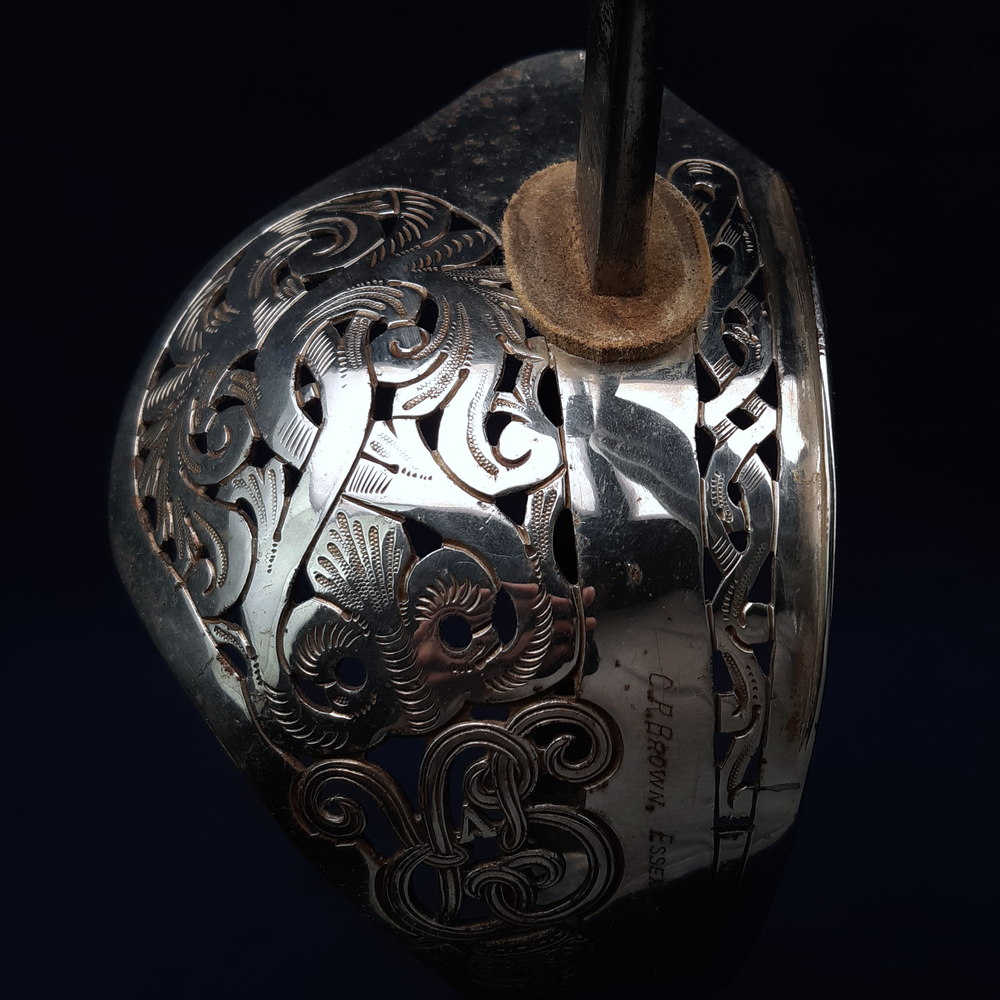
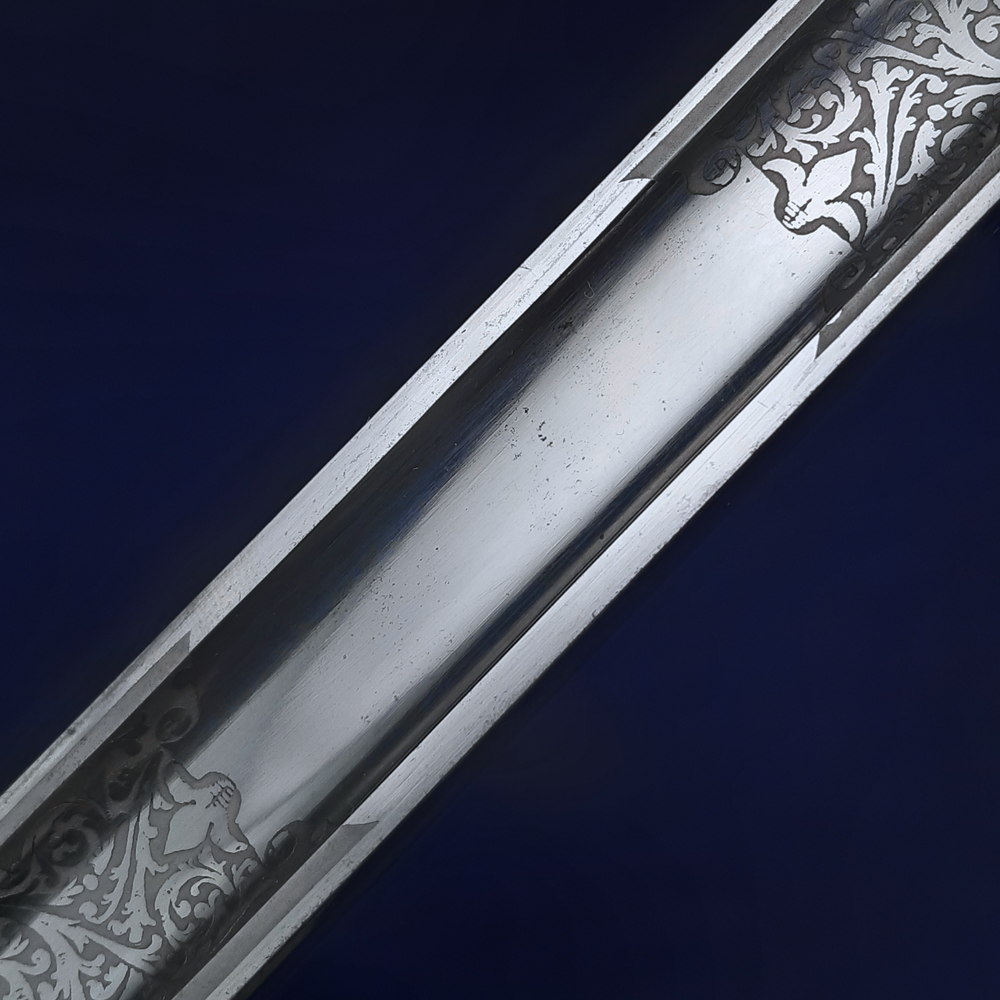
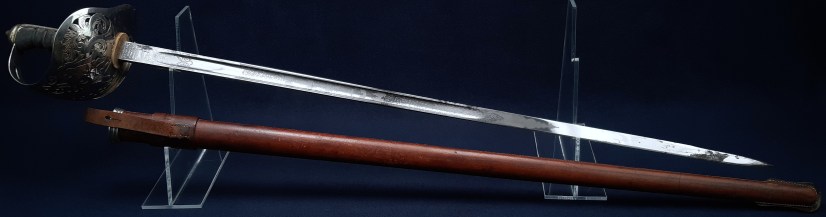
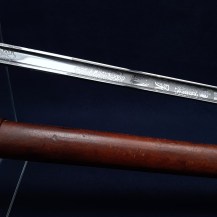
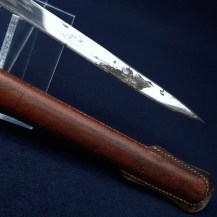
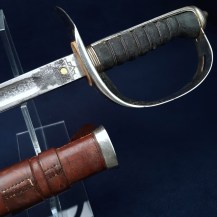
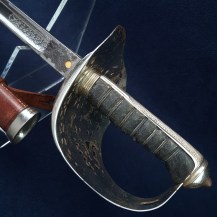
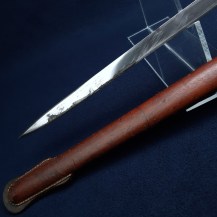
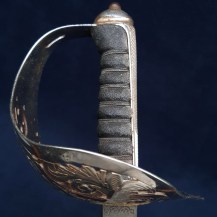
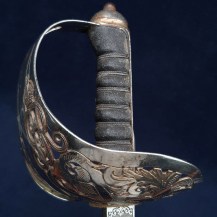
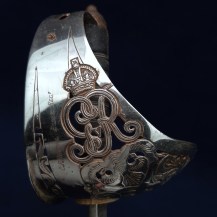
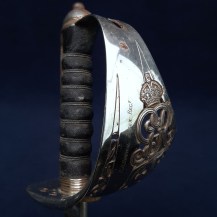
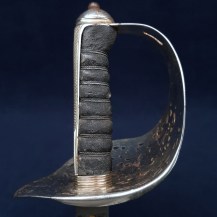
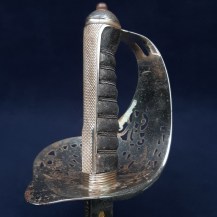
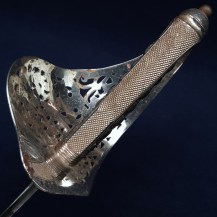
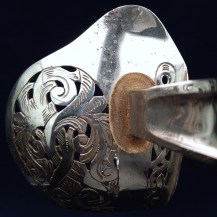
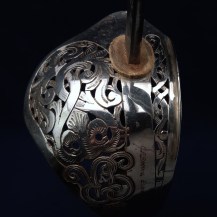
Straight single-fullered spear-pointed blade. Steel hilt with pierced decoration including the crown and cypher of George V. Fully chequered backstrap, integral oval pommel with tang button. Wire-bound black shagreen grip. Buff leather washer. Brown leather field scabbard with nickel plated steel throat piece, leather frog strap. Blade 32¾ inches in length, 1 inch wide at the shoulder, the sword 39 inches overall.
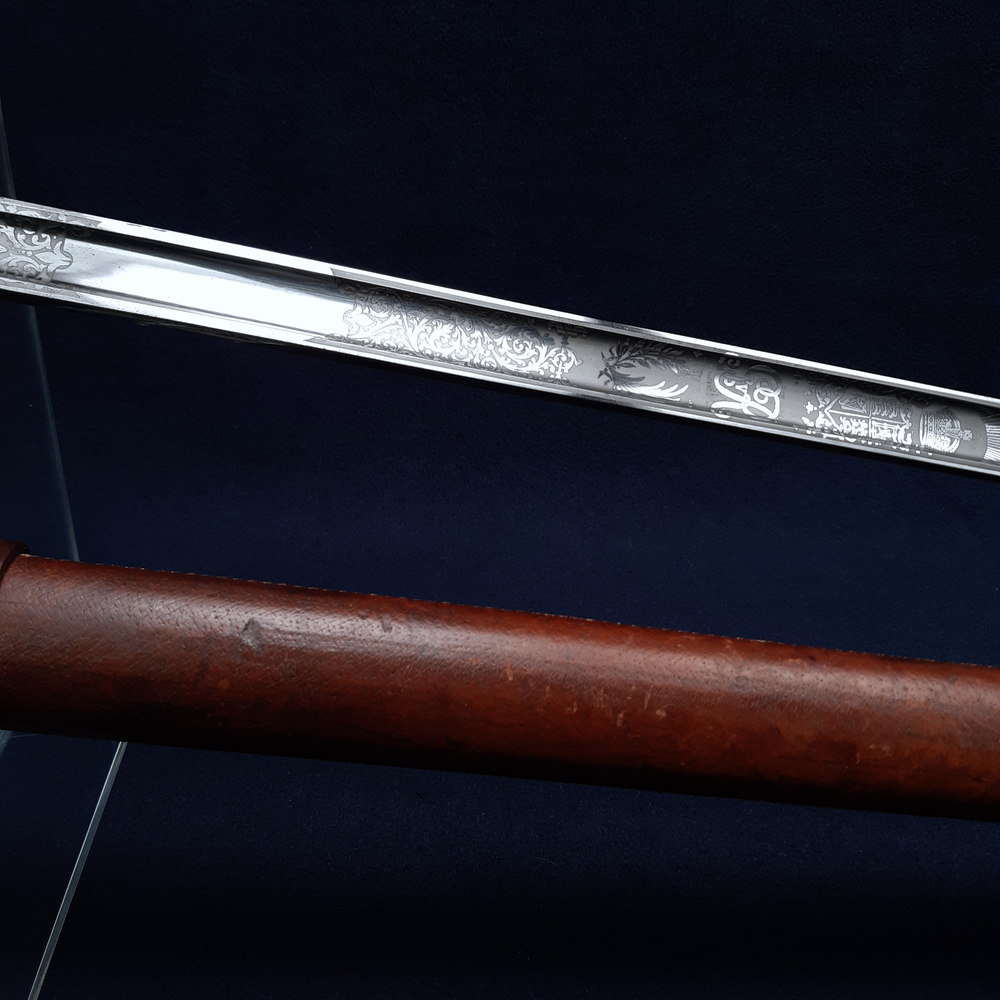
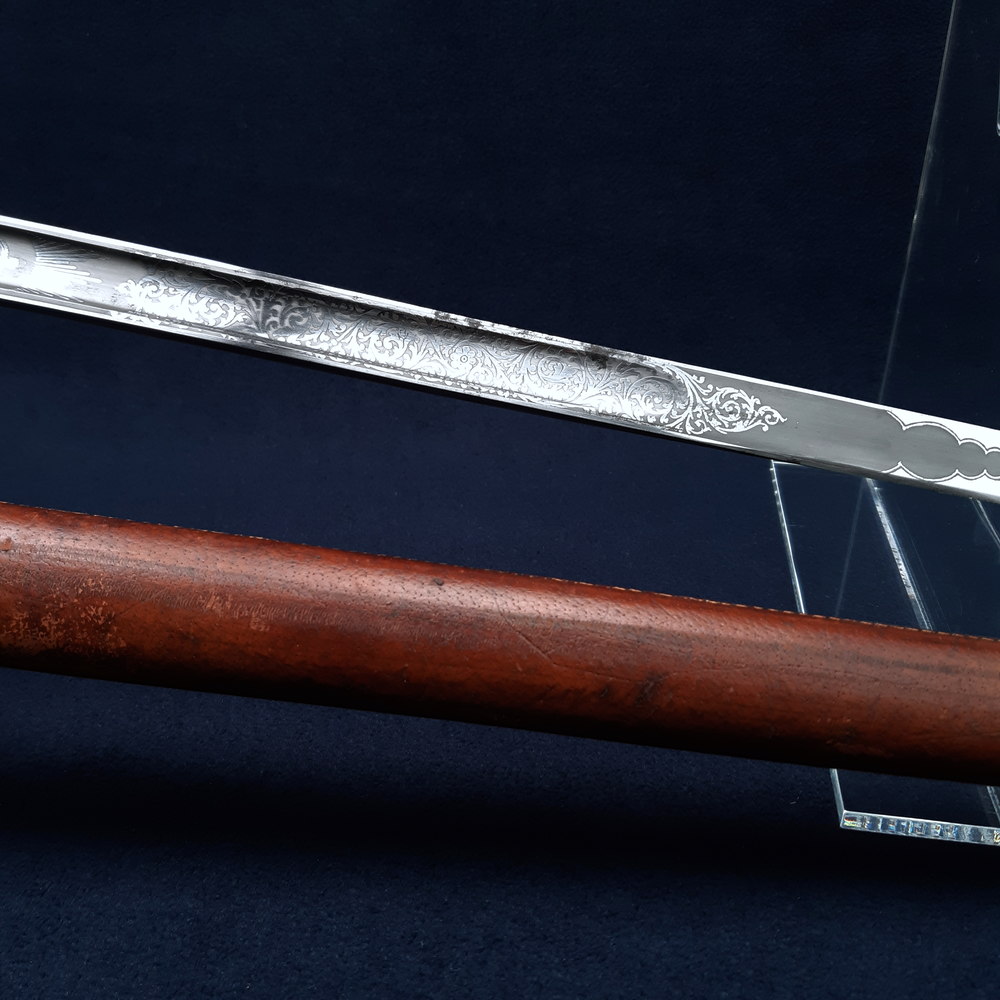
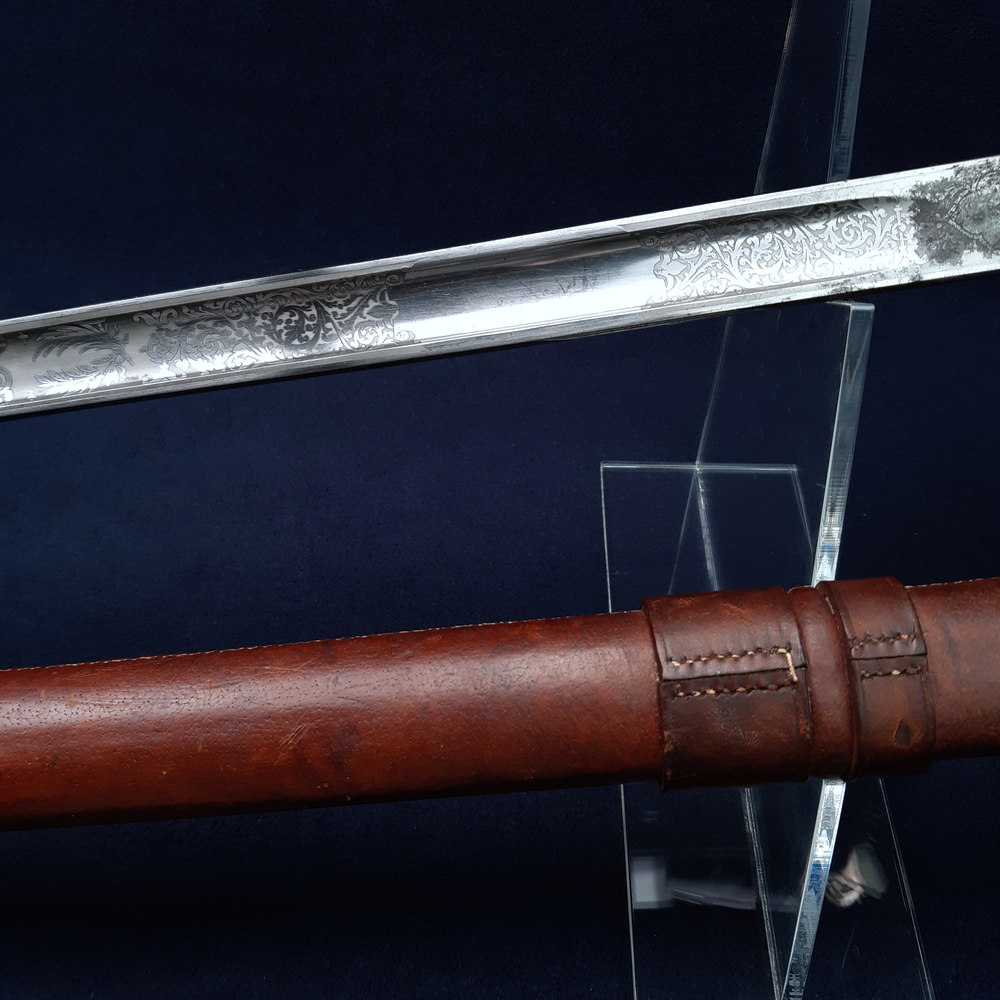
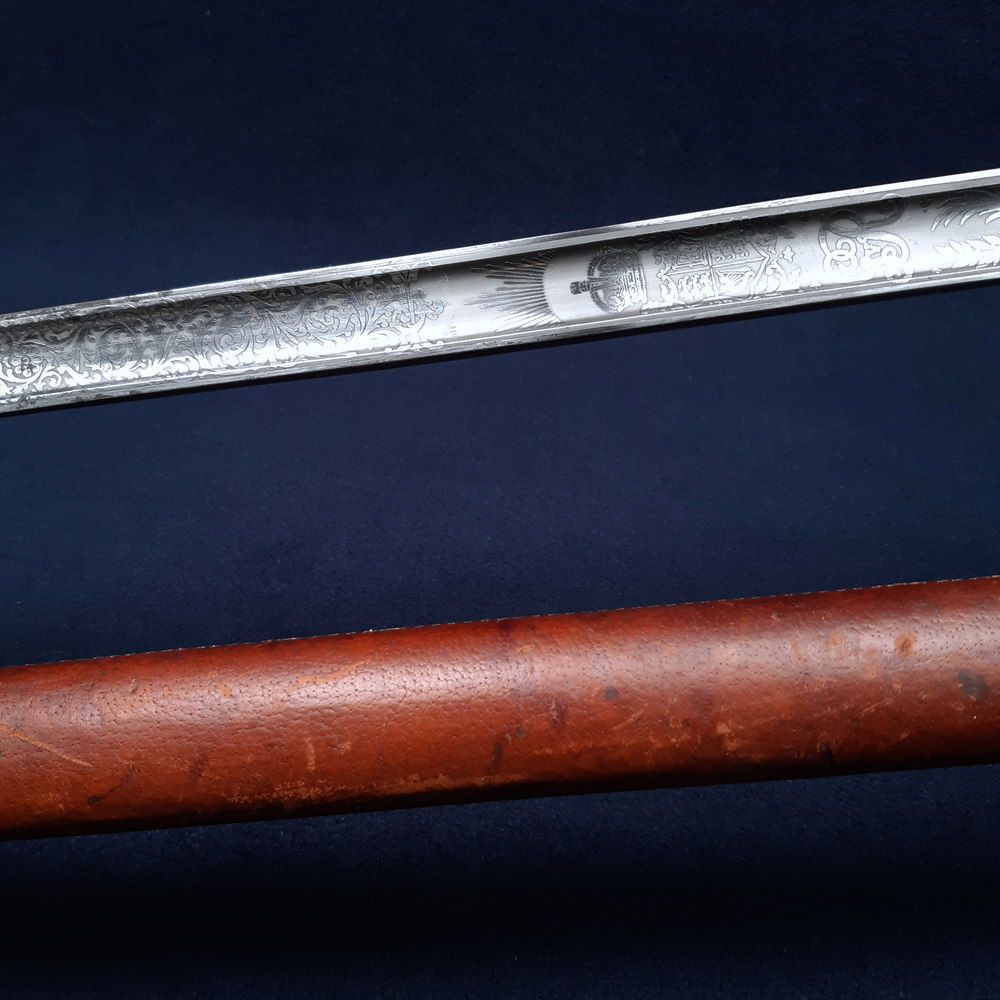
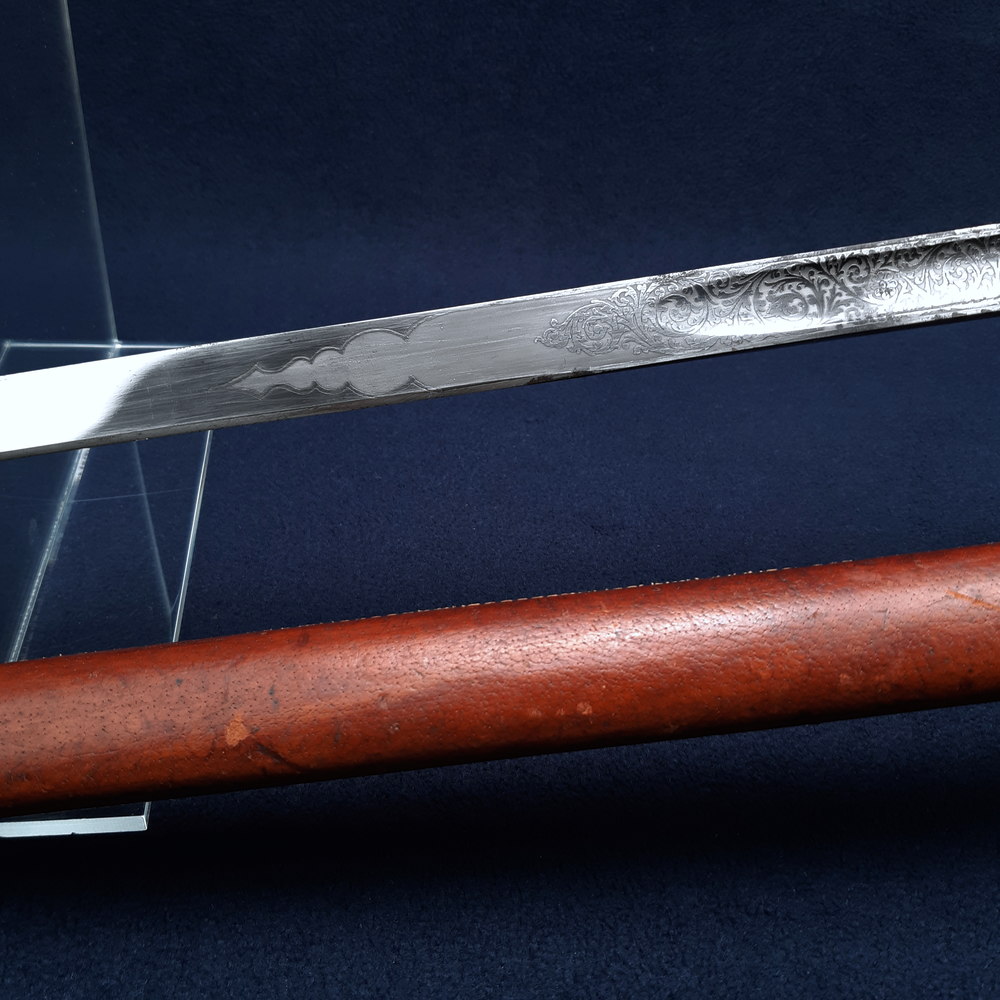
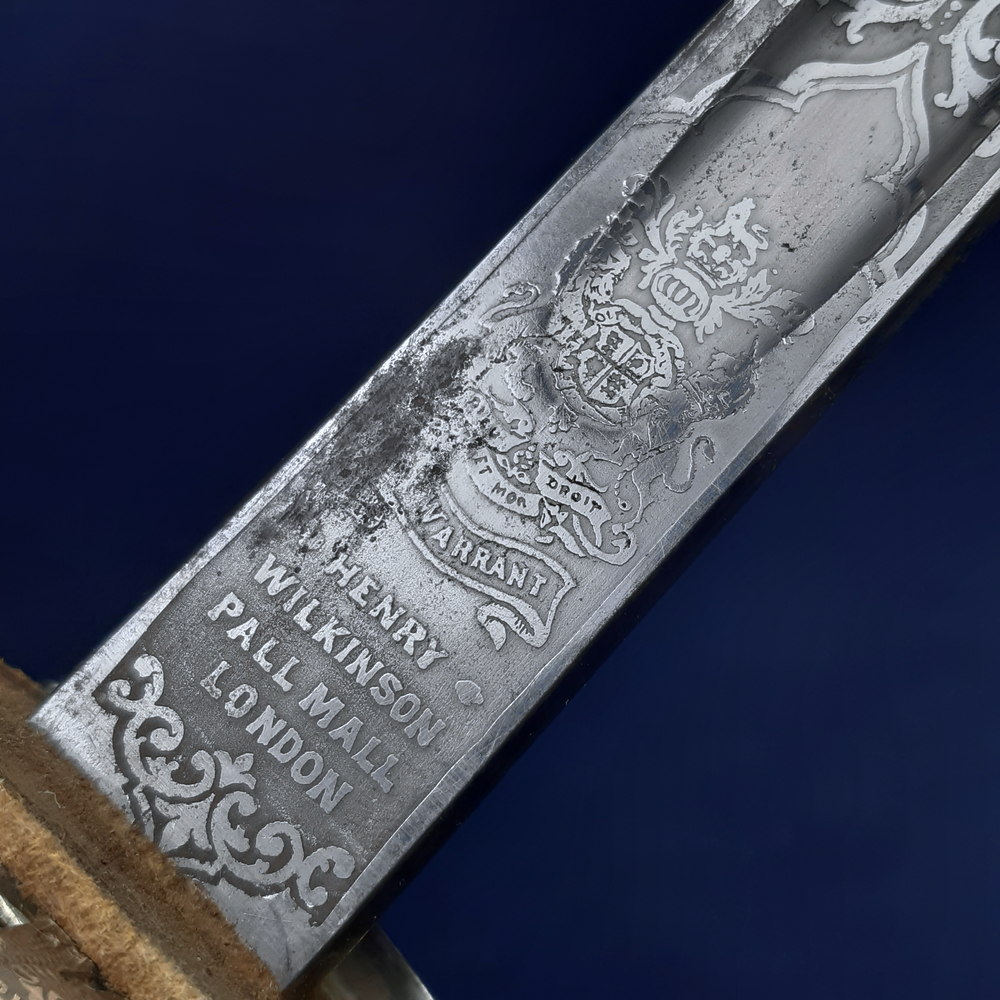
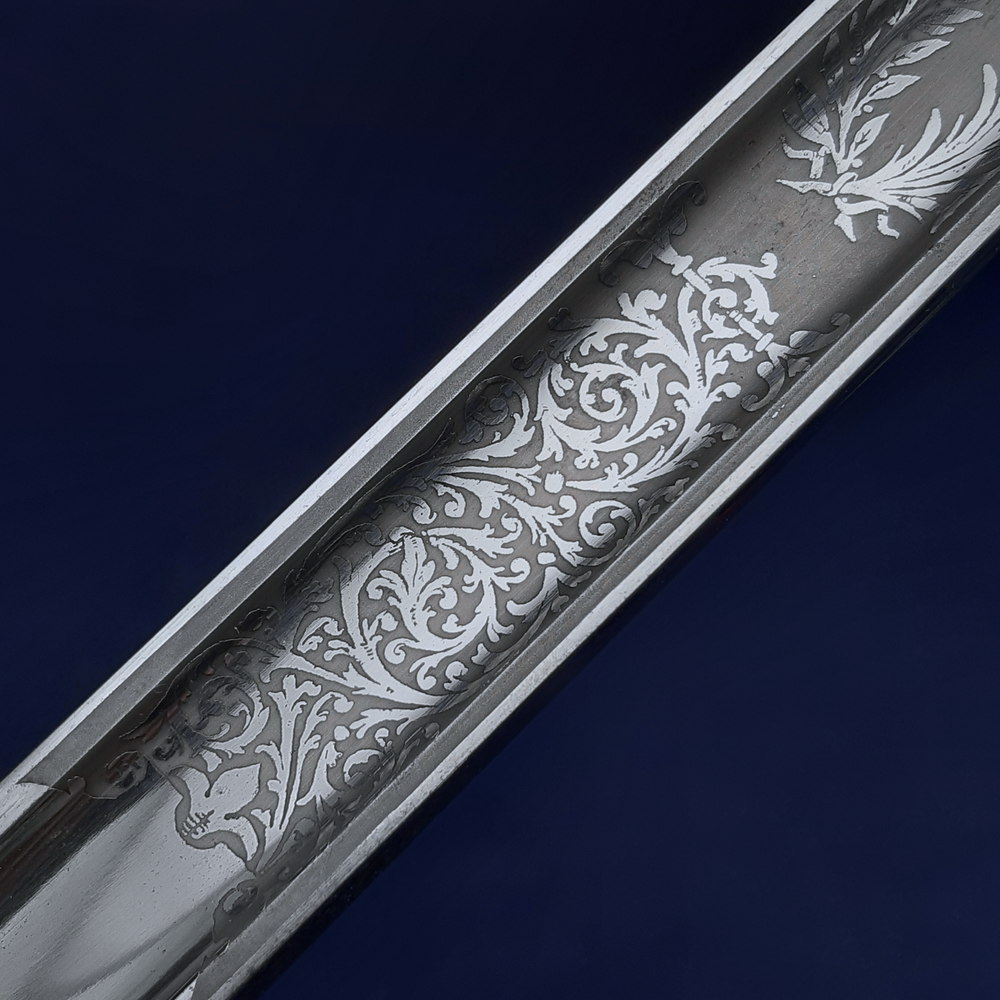
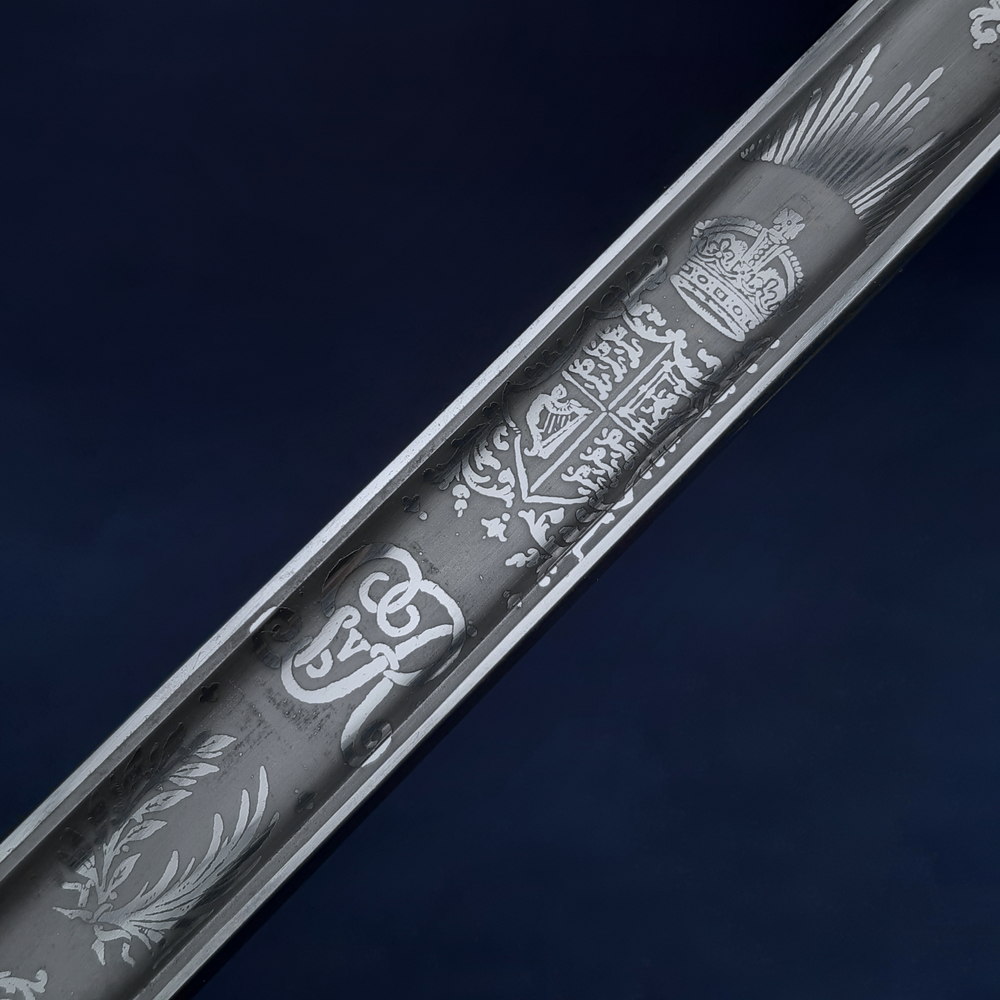
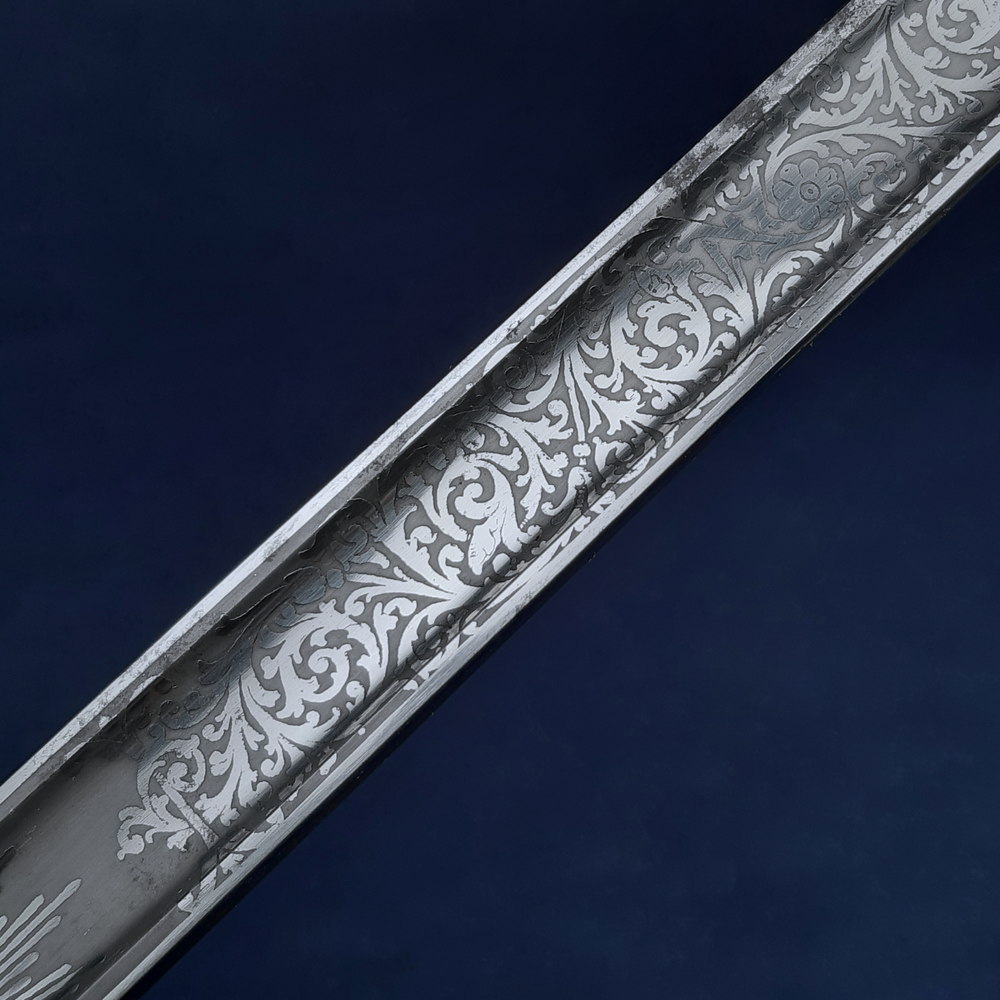
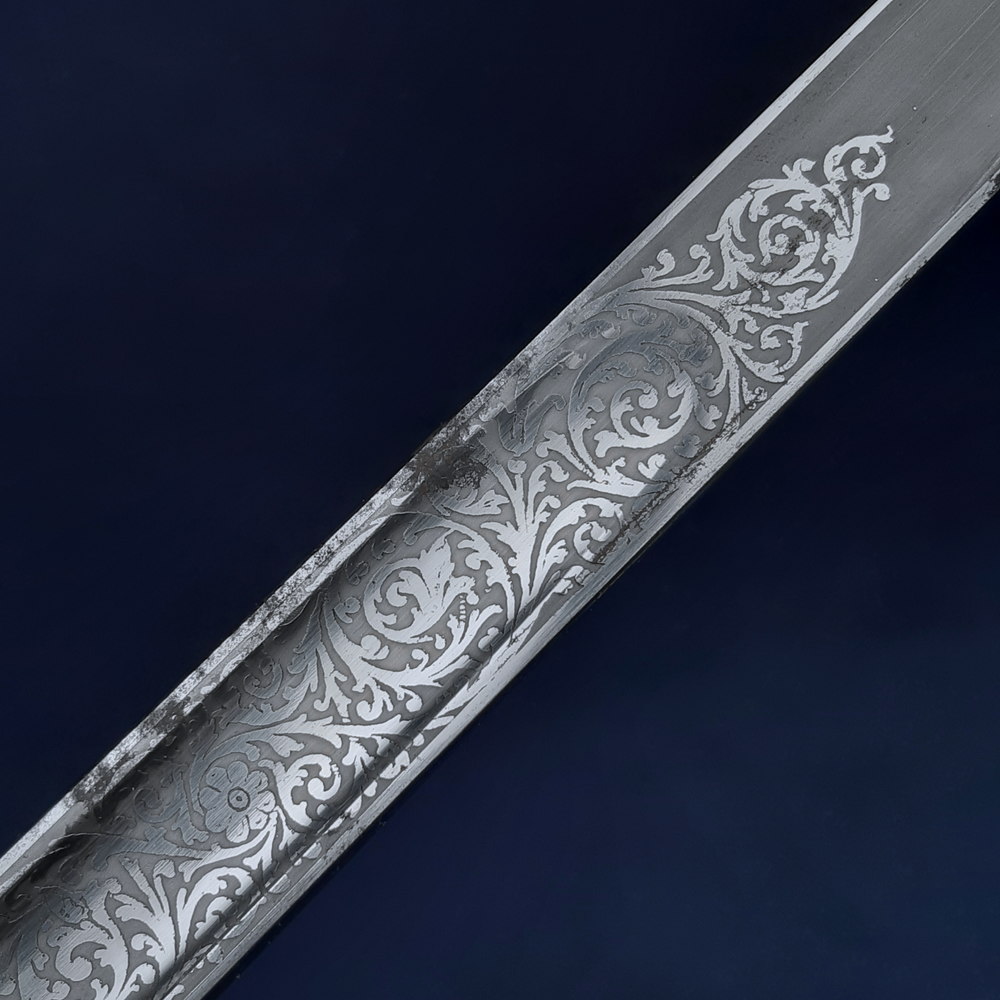
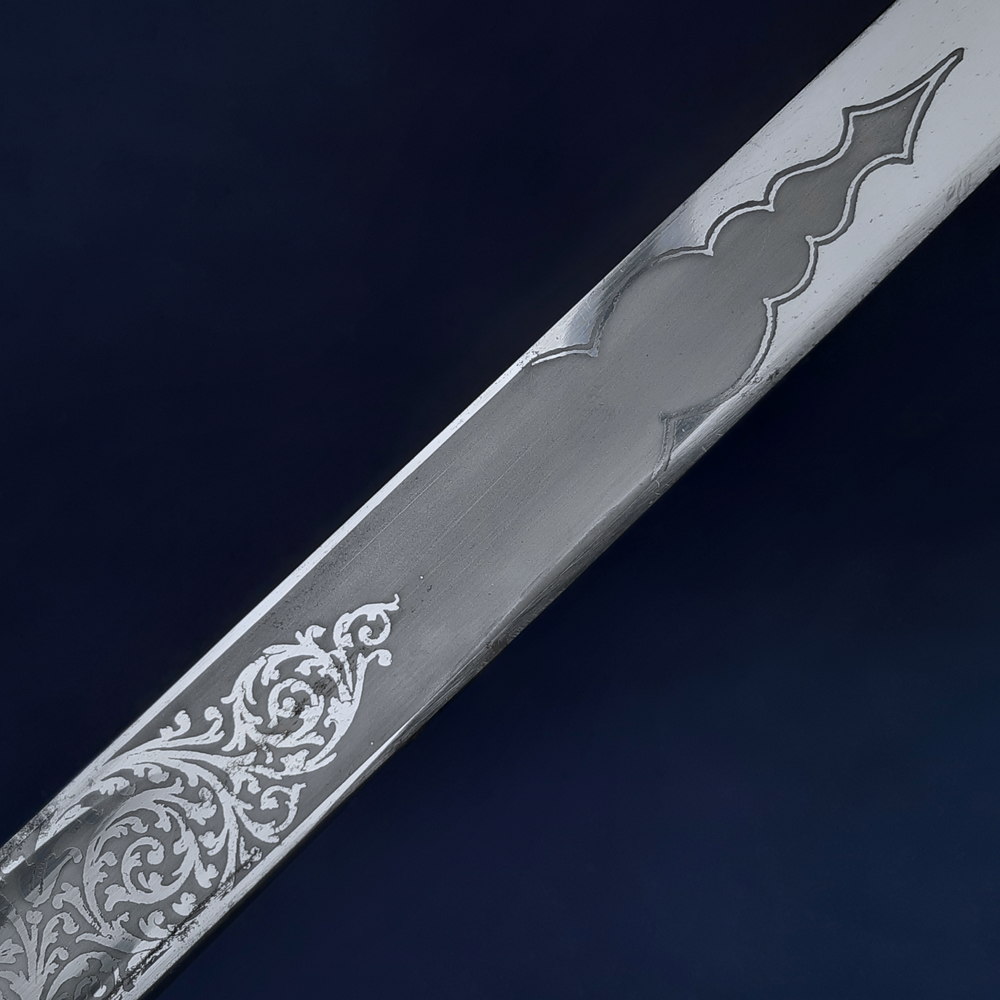
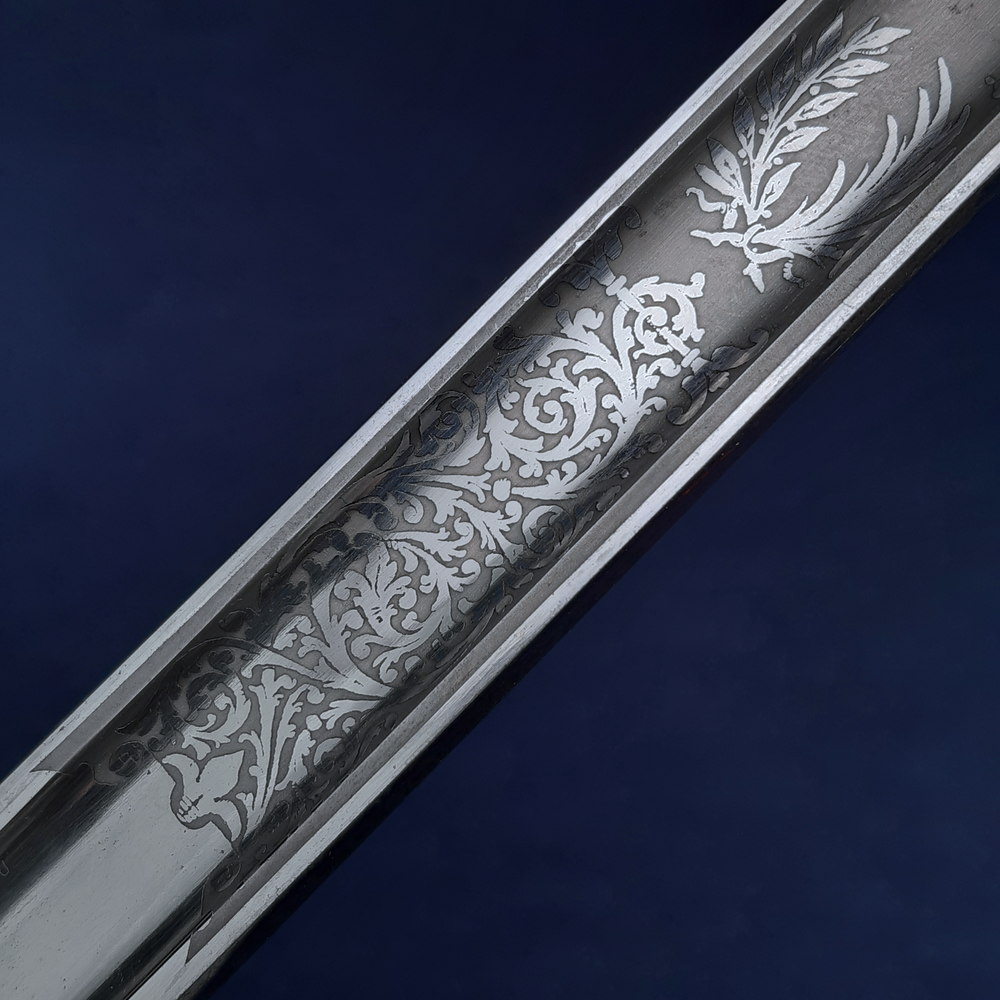
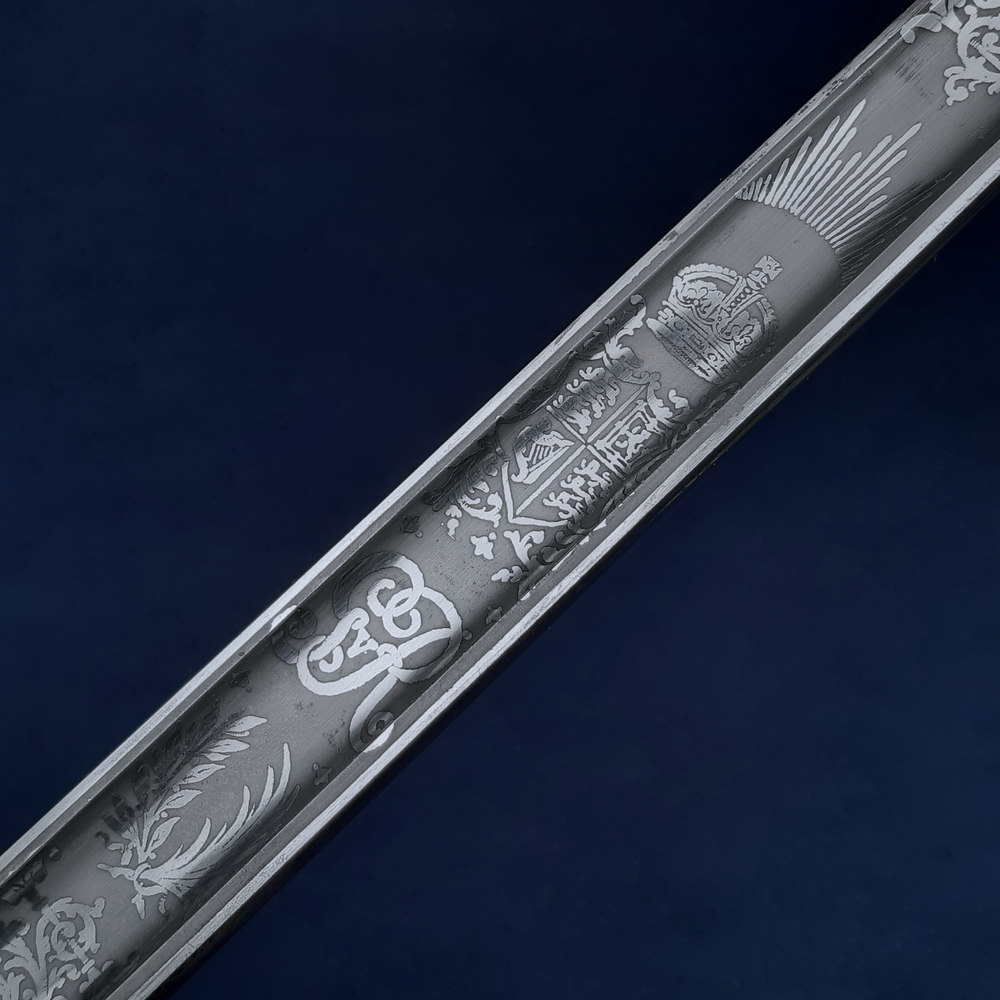
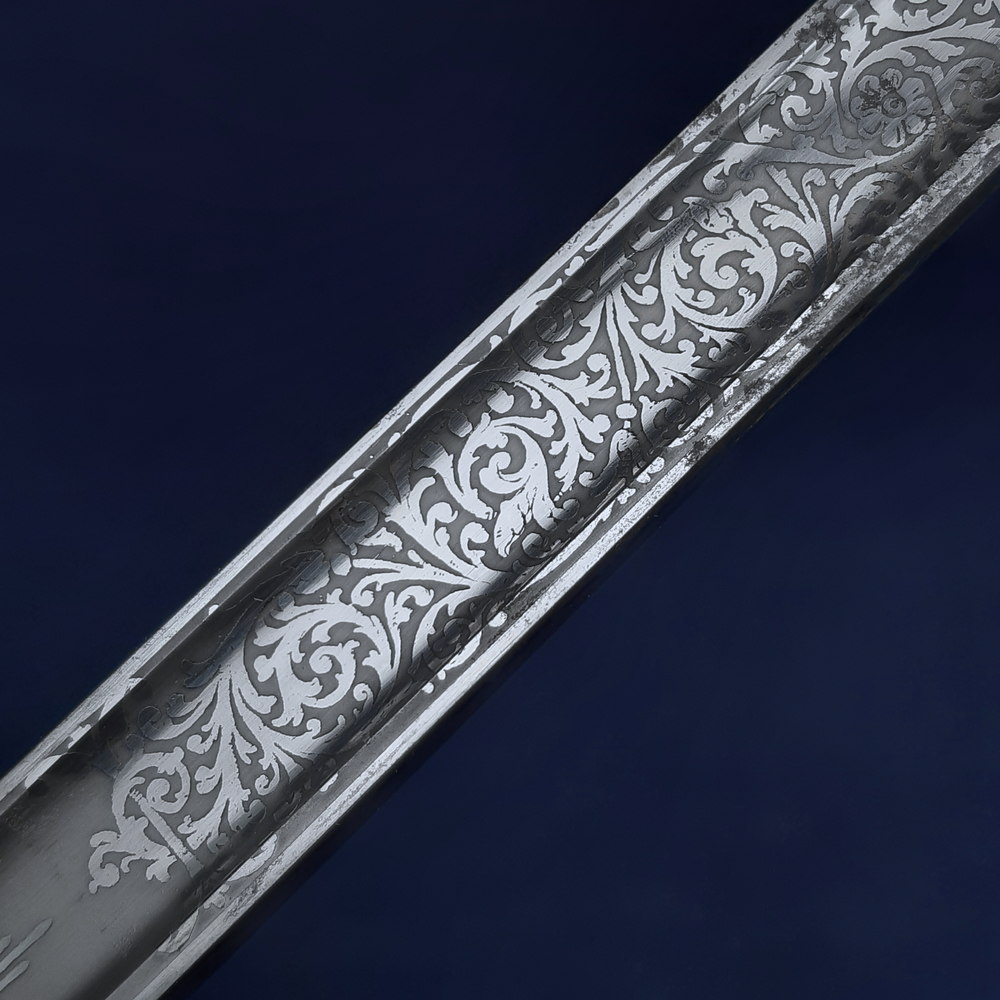
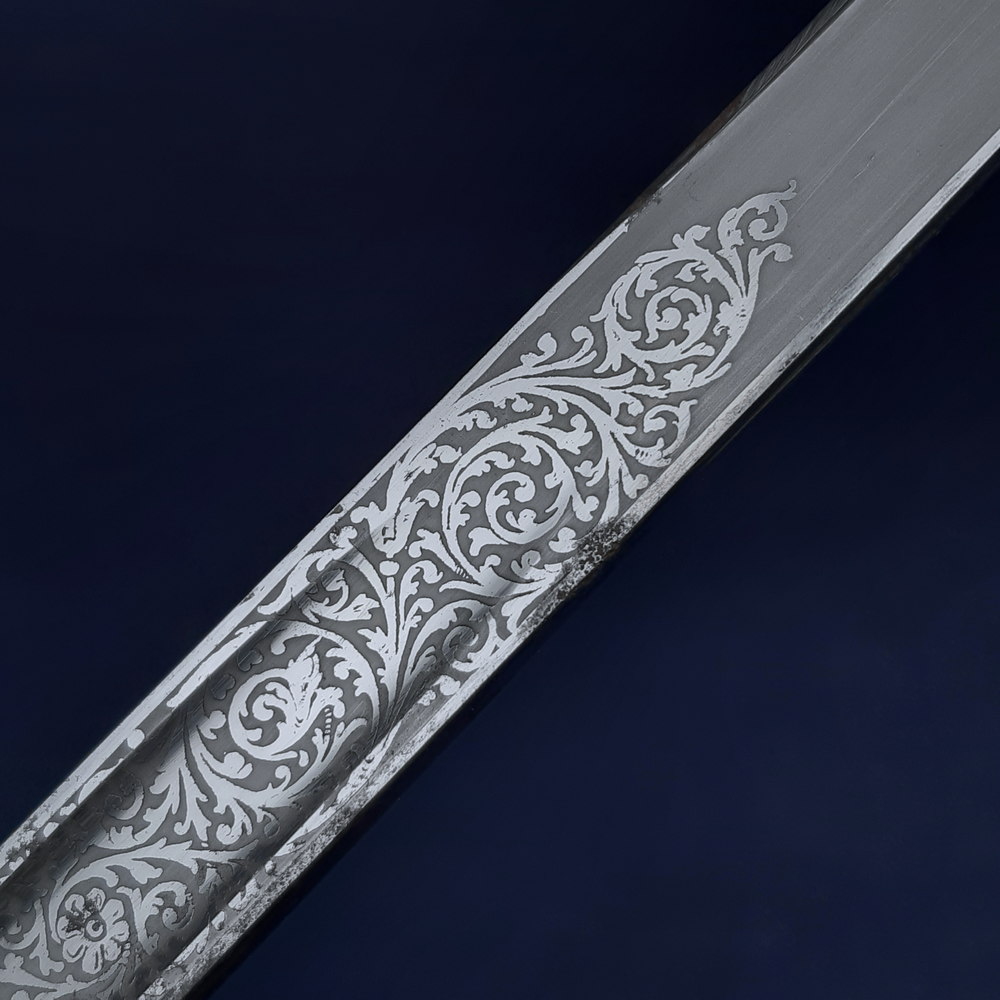
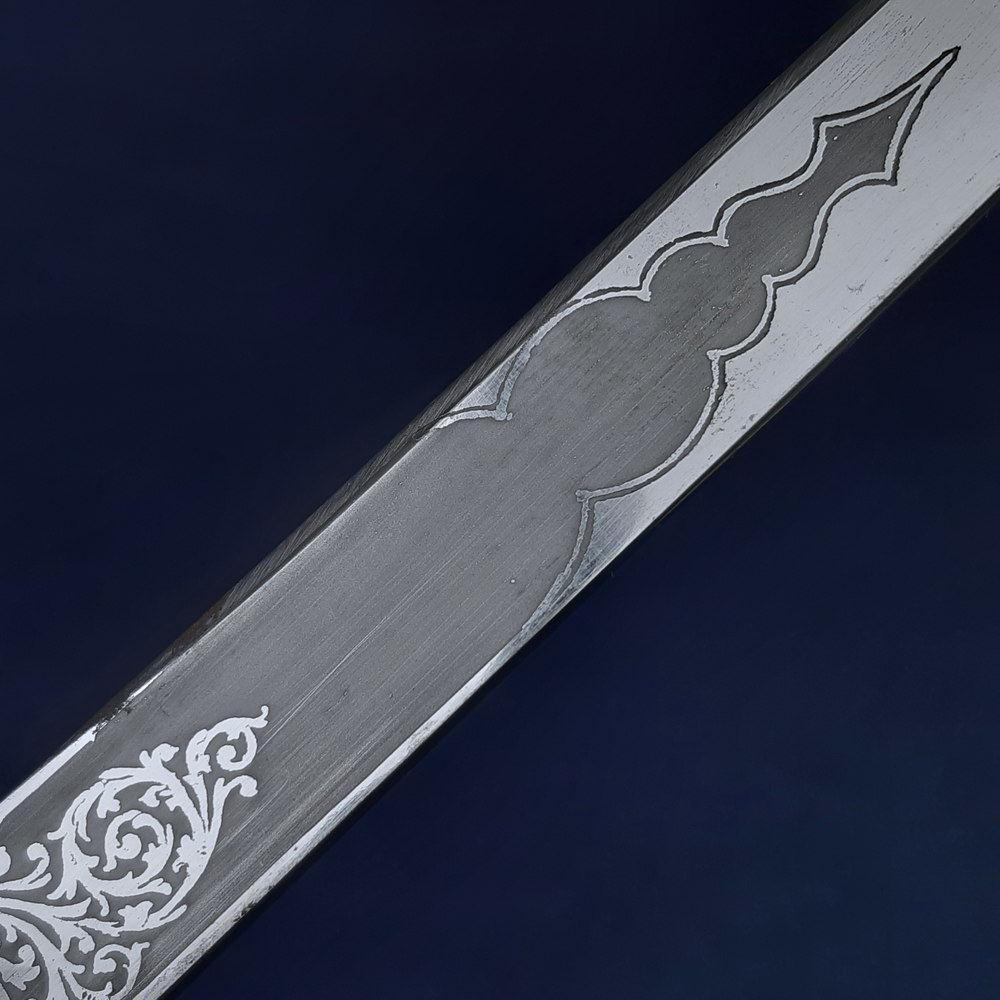
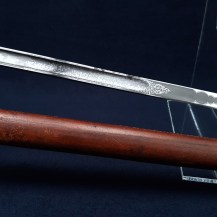
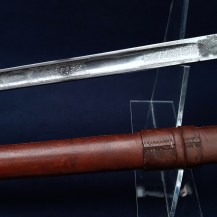
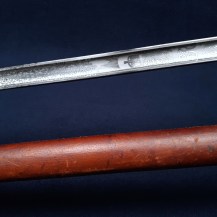
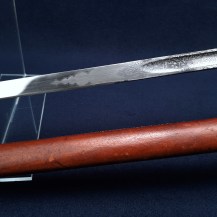
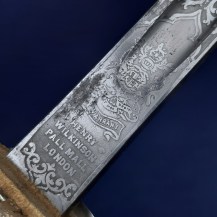
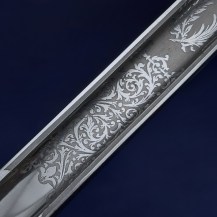
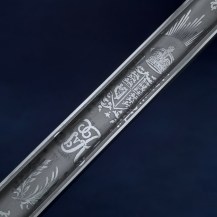
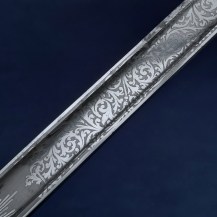
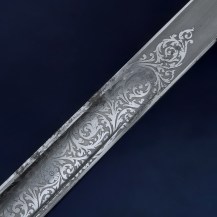
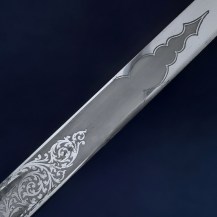
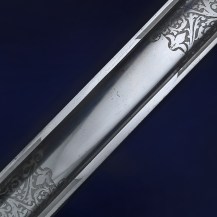
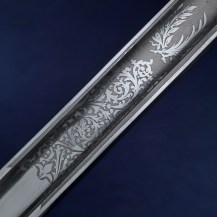
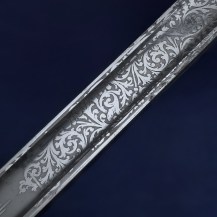
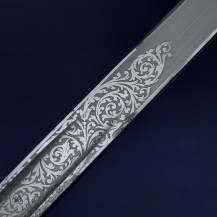
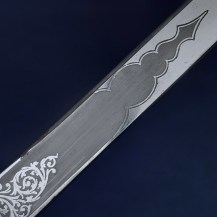
The blade is etched on one side at the ricasso with the maker’s mark ‘HENRY WILKINSON PALL MALL LONDON’ above which is the royal coat of arms and a scroll reading ‘BY WARRANT’. Above this is a cartouche for the optional etching of the owner’s initials or family crest, which has been left blank. That side of the blade also features the crown & cypher of King George V, the royal coat of arms, a wreath of laurel & palm, and foliate motifs.
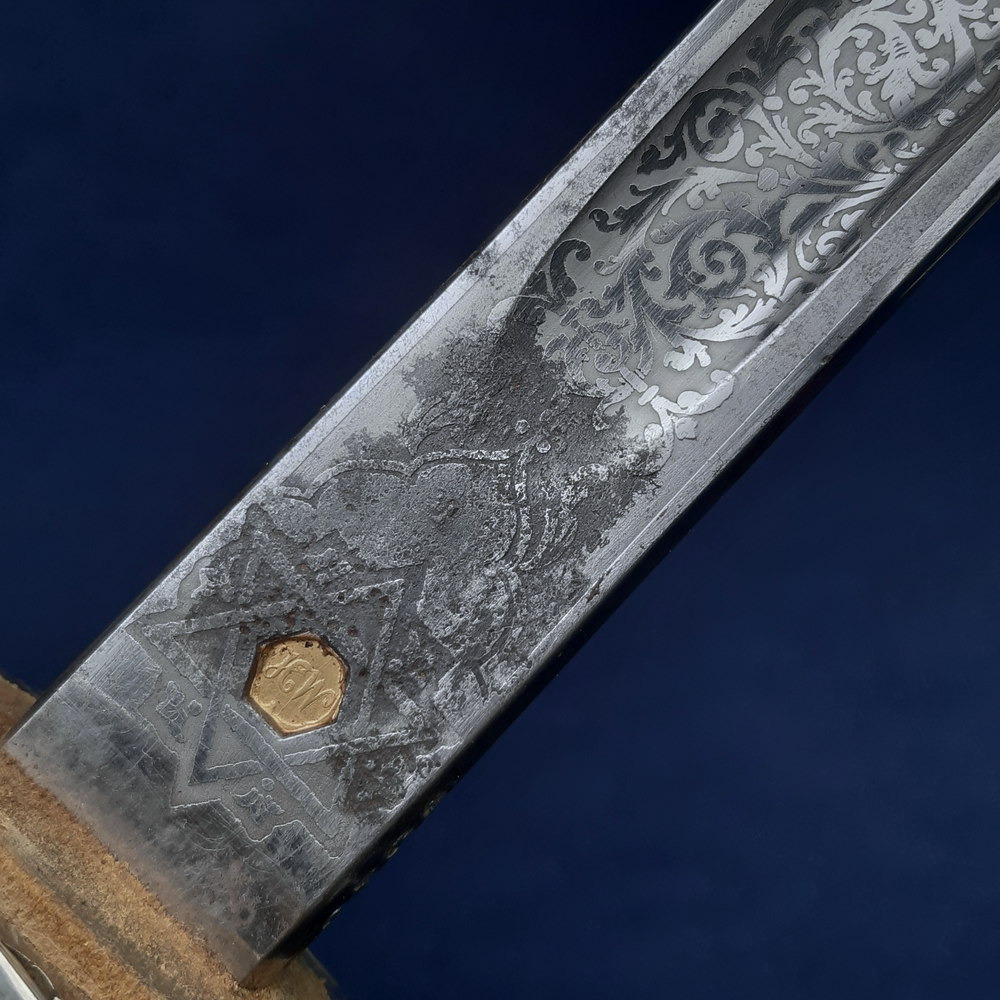
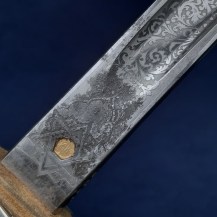
The other side of the blade is set at the ricasso with a hexagonal brass proof slug stamped with ‘HW’ for Henry Wilkinson, within an etched six-pointed star. The hexagonal proof slug was used from 1905 onwards to denote Wilkinson’s best quality blades. There is etching above this identical to the previous side: blank cartouche, crown & cypher, coat of arms, wreath, and foliate motifs.
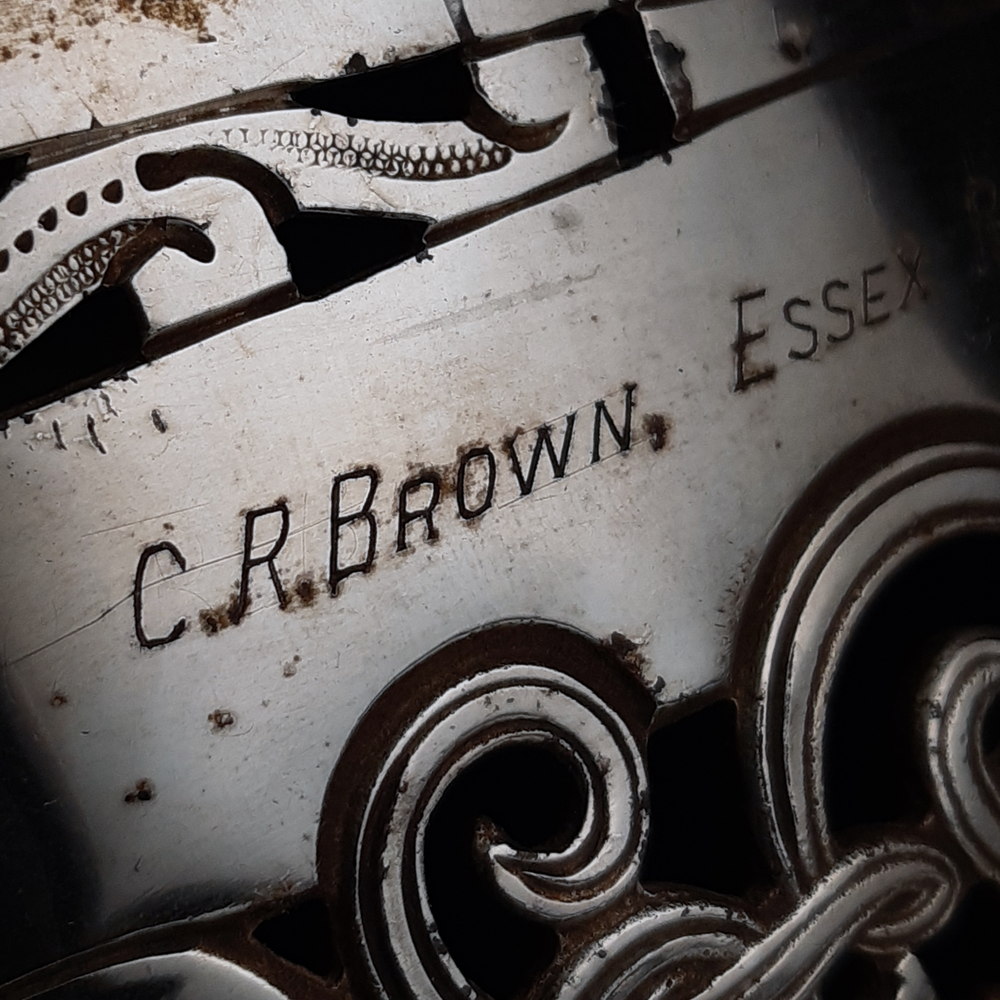
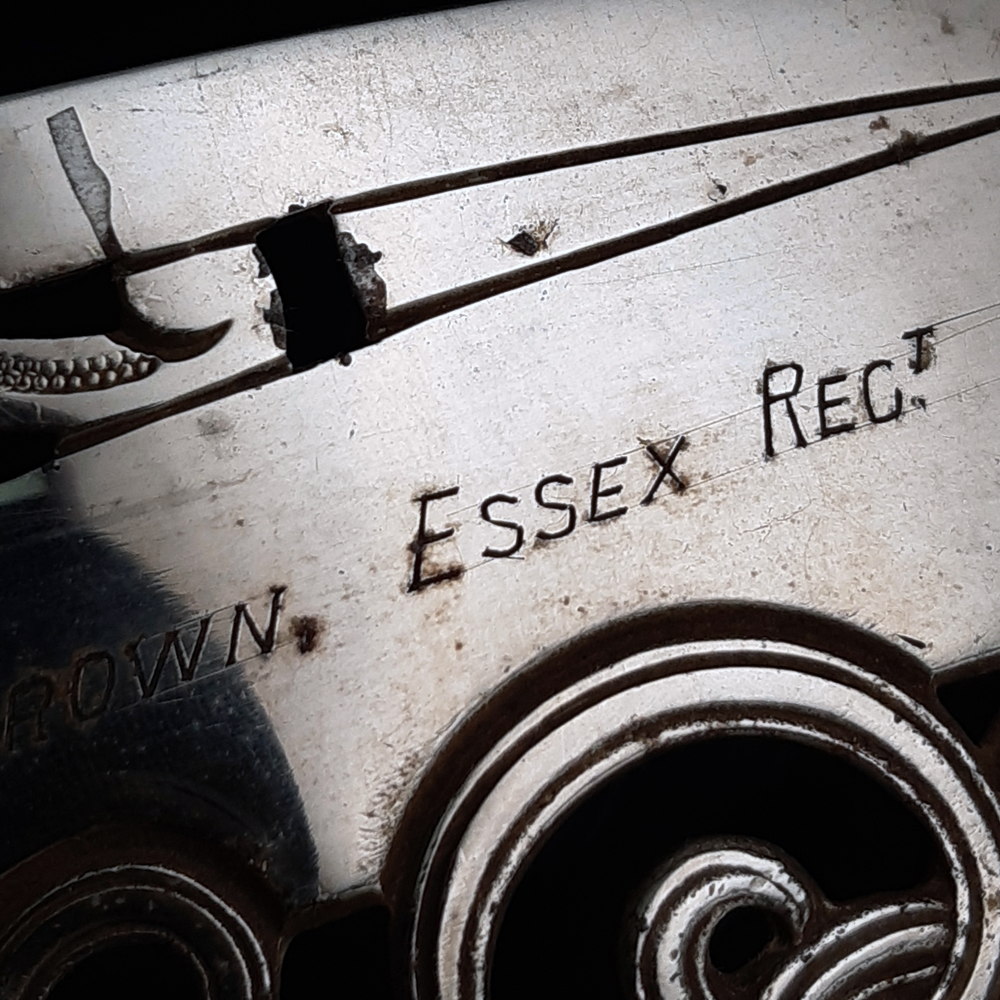
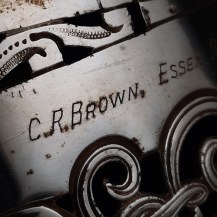
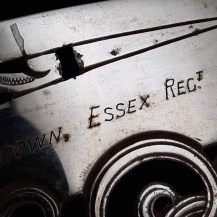
The outside of the hilt is engraved next to the royal cypher with ‘C.R. BROWN, ESSEX REGT’.
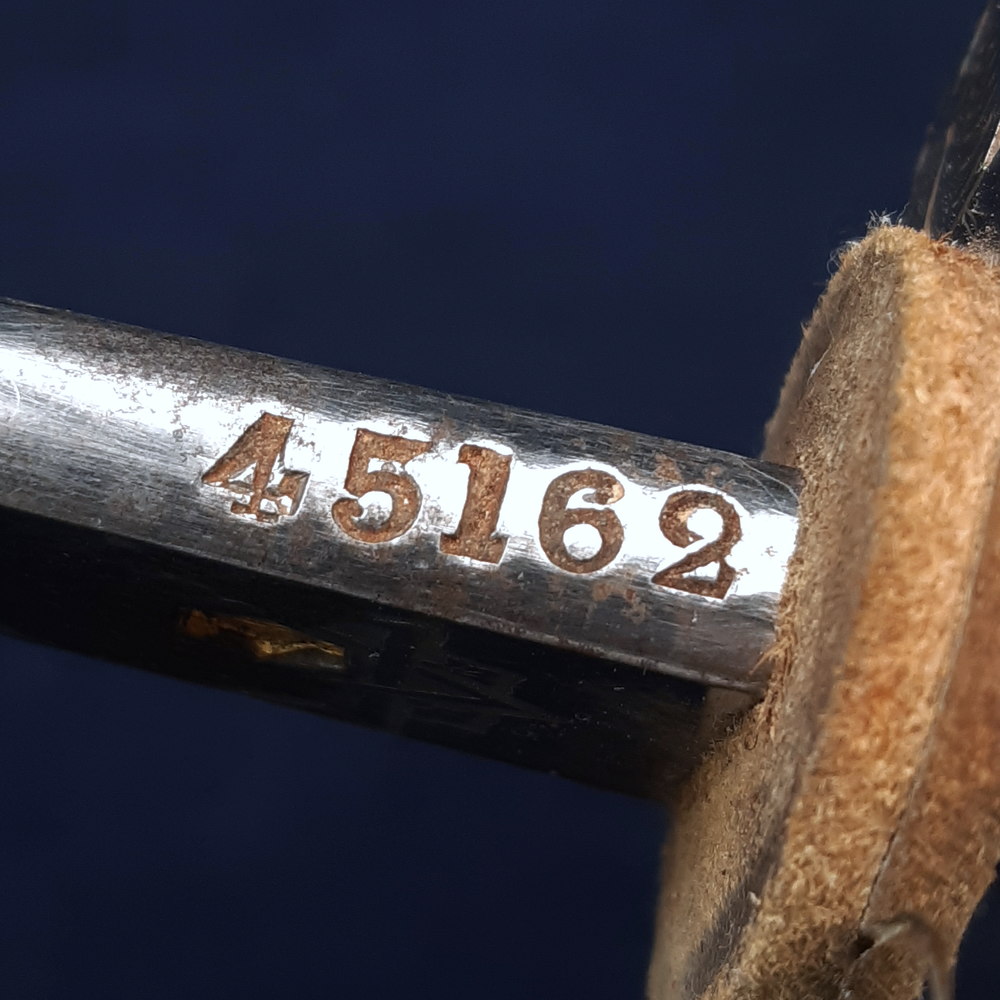
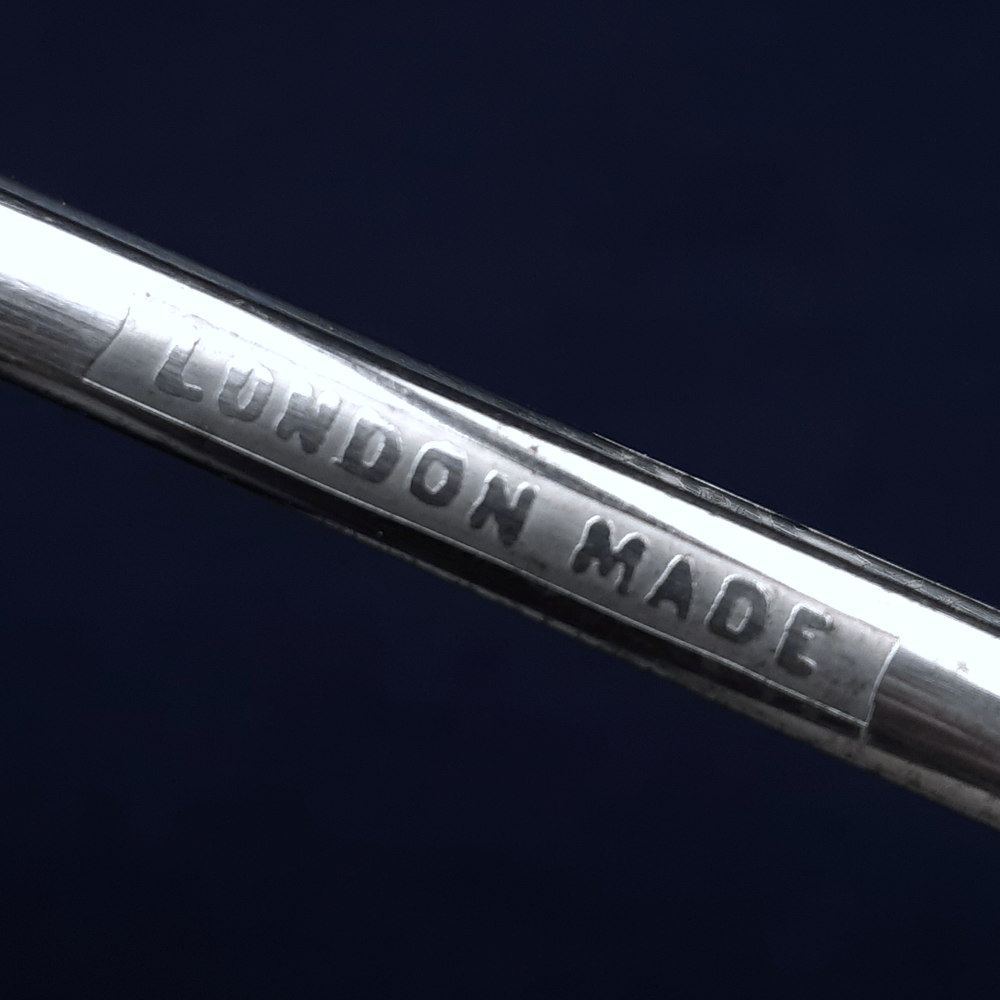
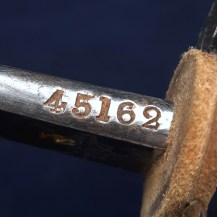
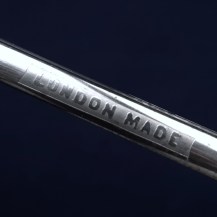
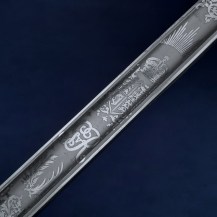
The spine of the blade is etched with ‘LONDON MADE’ and stamped at the forte with the serial number ‘45162’. Wilkinson company records attest that ‘C.R. Brown 12th Essex Reg’ purchased 45162, an ‘Infantry’ sword. The exact date of sale is not recorded but was in the year 1914: due to unprecedented demand for swords Wilkinson record entries are frequently blank or incomplete in the early years of WW1.
Charles Roydon Brown was born in April 1892 in Lewisham, son of Charles Francis Brown and Ann Sophia Brown of 120 Brigstock Road, Thornton Heath, Croydon. His father was a civil servant who worked as a clerk in the War Office. Charles attended St Andrew’s Collegiate School in Dublin until 1905, followed by Croydon Borough Boys’ School until 1909. He then attended the University of London where he appears to have taken modules in physical sciences, and was a member of the University of London O.T.C. (Officer’s Training Corps).
Officer’s Training Corps were university training units intended to provide officers for the regular or reserve forces, and Charles was commissioned from his OTC into the 12th Battalion of the Essex Regiment in August 1914. Records suggest he also passed through the 9th and 13th Battalions before ultimately reaching the 1st Battalion.
He passed an intermediate exam for his Bachelor of Science in October 1914 suggesting he was still working on his studies for some time after commission, which then paused upon his deployment. His initial deployment was to France, where he was wounded in October 1915.
Charles was awarded the Military Cross in January 1916 as part of the New Year Honours List. The large batch of MCs awarded at that time were generally for outstanding service over the course of the war to date rather than an individual act of gallantry, and no descriptive citations were given to explain them. Nonetheless it confirms that Charles’s service had been much appreciated, and outstanding service of a field officer generally entailed a fair amount of bravery. Whatever action led to Charles’s earlier wound may well have played a part.
Charles died in action with the 1st Battalion Essex Regiment in France on or after the 14th April 1917, aged 25. The Second Battle of Arras began on the 9th April and the 1st Battalion was moved there shortly after the initial offensive, relieving the 87th Brigade at the recently captured village of Monchy-le-Preux. The 1st Battalion, together with Canadian troops of the Newfoundland Regiment, attacked an area of high ground known as ‘Infantry Hill’ at 05:30 on the 14th, with Charles in command of Z Company, one of four companies of Essex men. Their initial advance was successful, gaining the desired ground with few casualties and while taking prisoners, but from 08:00 a heavy German artillery barrage fell on the new position along with a counterattack by the 3rd Bavarian Regiment, considered some of the best troops the Germans had to offer.
The Germans had not strongly defended the hill for a reason: the British advance left them on a salient which the Germans were able to pinch off with their counterattack, encroaching on three sides and threatening to completely surround the hill. British reserves moved up to prevent this and the 1st Essex & Newfoundlanders held on to their gains, but with very heavy losses. 17 out of 31 officers and 644 of 892 other ranks of the 1st Essex were killed, injured, taken prisoner or missing.
Charles was recorded as missing that day but he was never seen again, and is considered killed in action ‘on or after’ the 14th April. His remains have no known burial site but he is commemorated on a memorial at Brown's Copse Cemetery, Roeux, as well as on an organ erected in memoriam in St John's Congregational Church in Thornton Heath, his name on a plaque with other war casualties ‘connected with this church’. He was survived by his parents, four sisters and a younger brother.
After their mauling at Monchy-le-Preux both 1st Essex and the Newfoundlanders were combat ineffective, but the desperate situation left no opportunity for them to withdraw. They were put in reserve only long enough to combine them into the temporary ‘1st Newfound Essex Battalion’, also called simply the ‘Newfoundessex’. This very unusual British-Canadian composite unit was still well under strength for a battalion, just 400 men, but nonetheless returned to the same trenches within days. The two units separated once new drafts of recruits arrived. Both regiments have memorials at Monchy-le-Preux, a caribou statue for the Newfoundland Regiment and a plaque for the Essex men.
Further information on Charles’s service than I have available to me can be found at the National Archives at Kew, where his officer’s record has the document reference number WO 339/11790. This runs to an unusually long 201 pages not including blank pages, so would be costly to have scanned and sent to you, but can be consulted in person with a reader’s card.
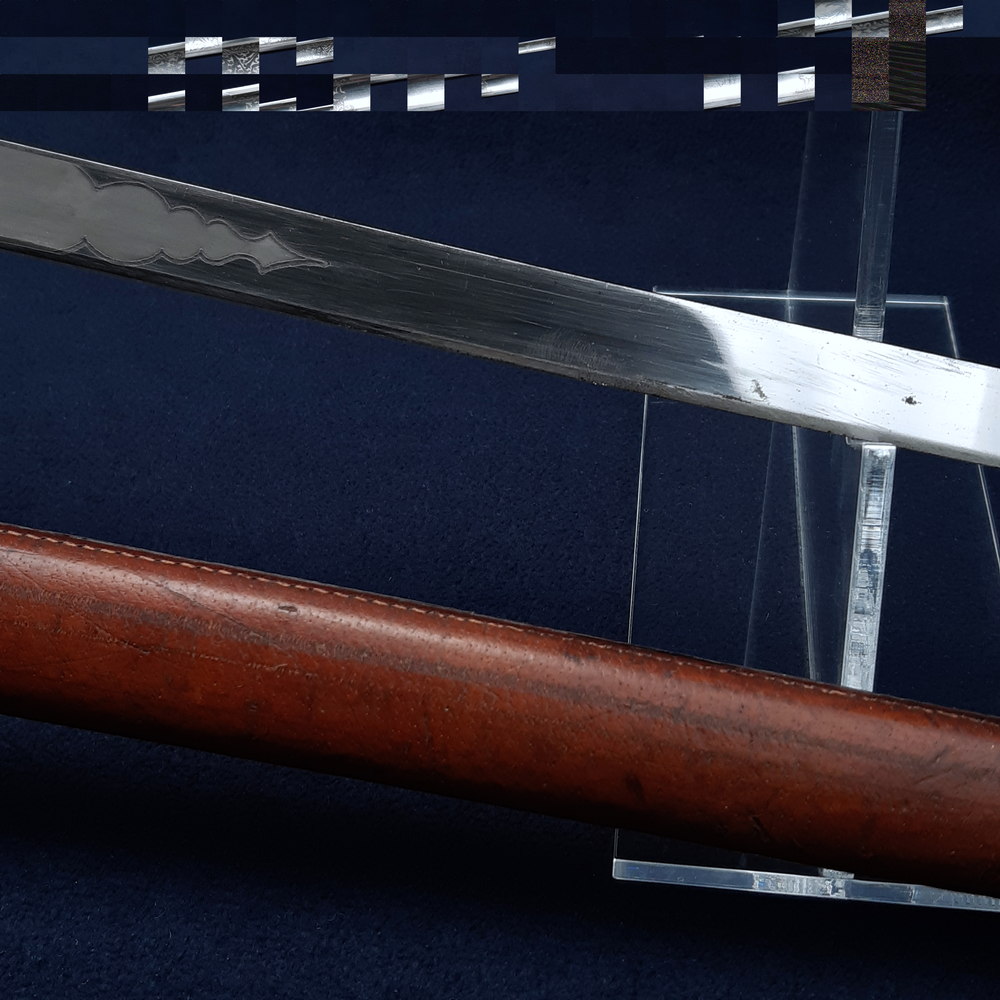
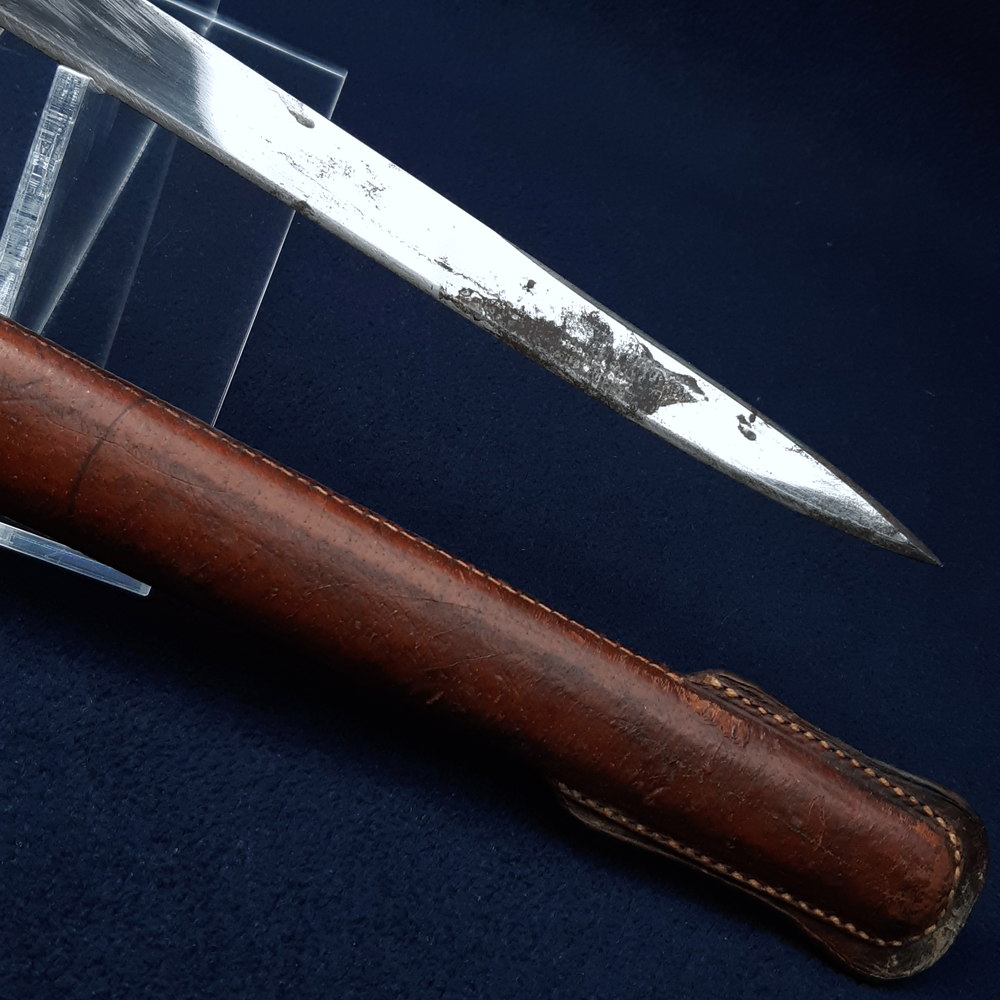
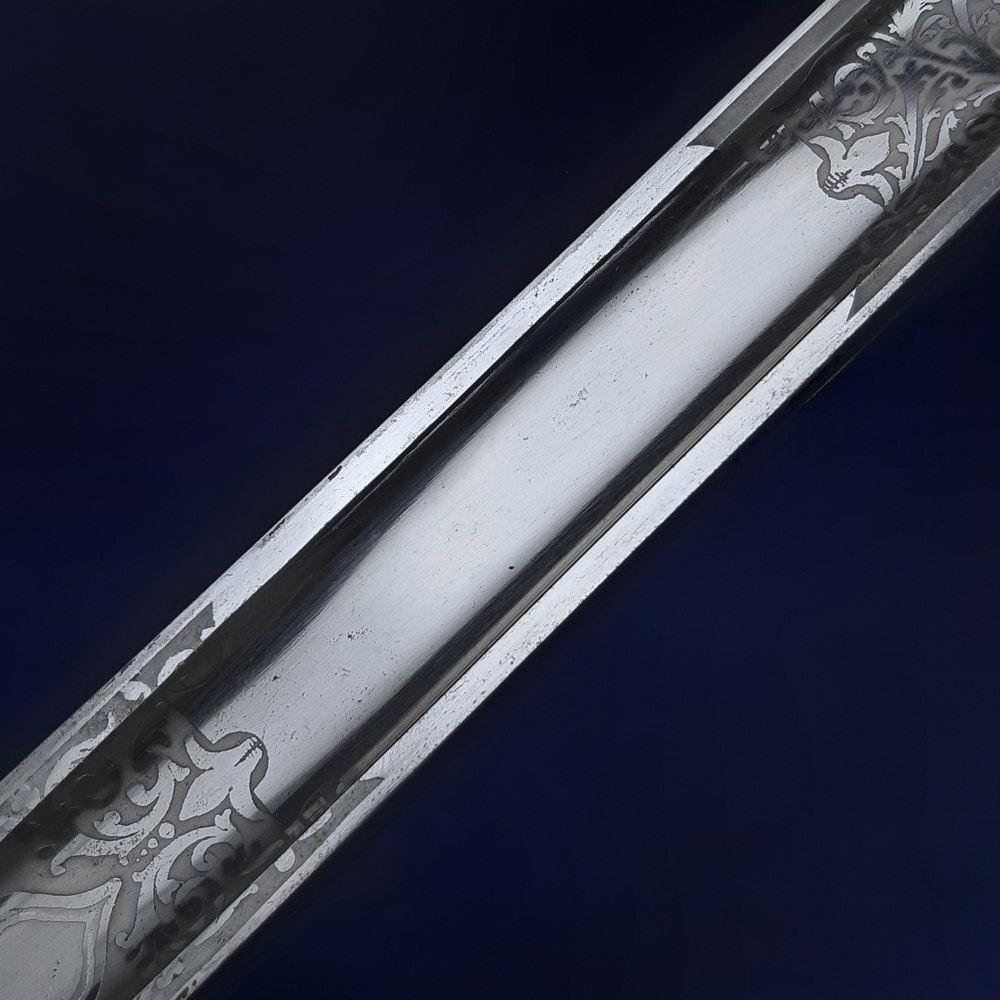
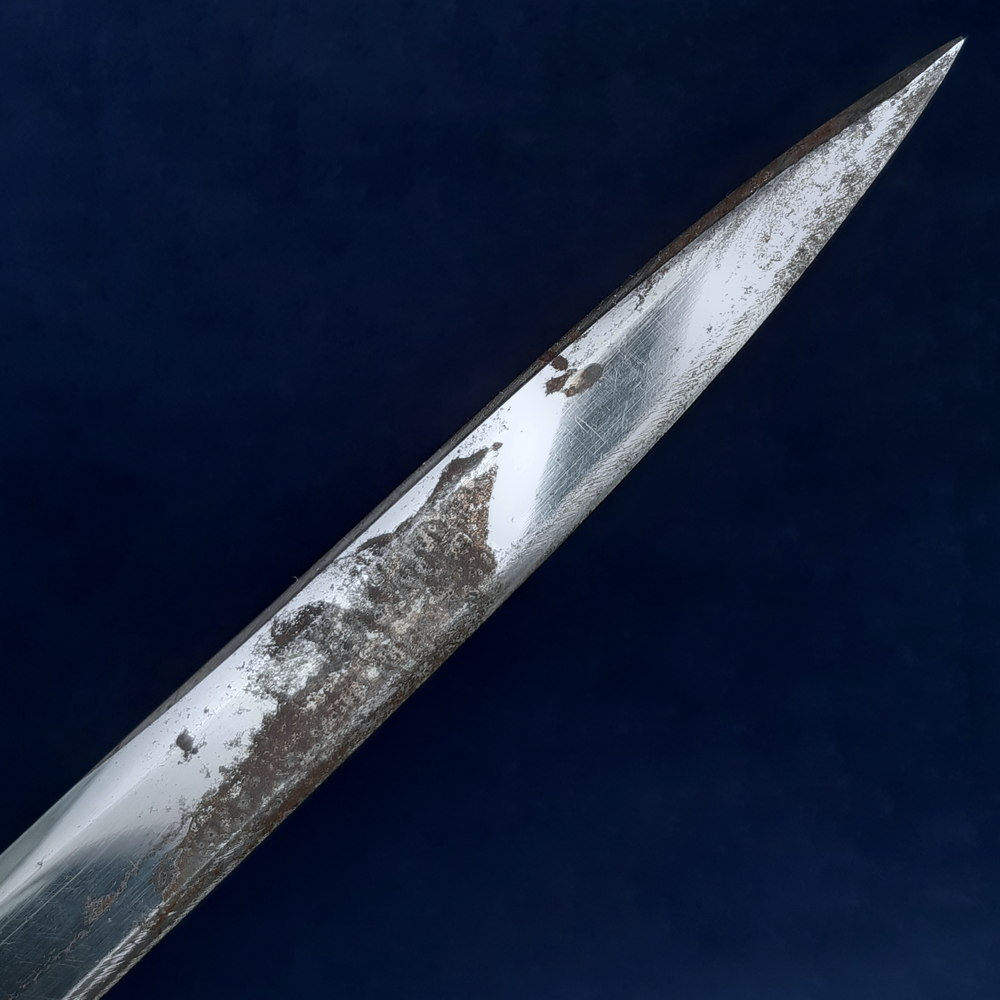
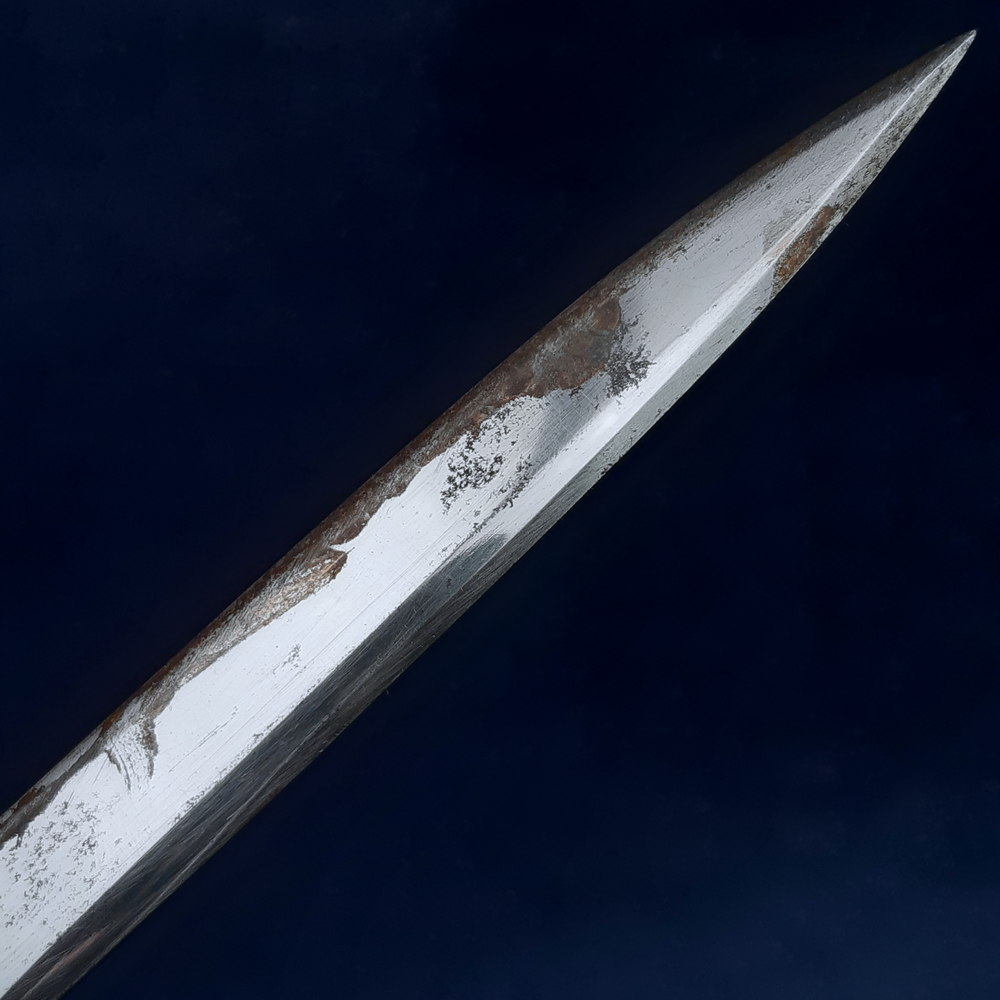
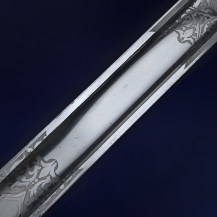
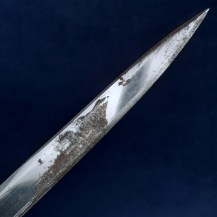
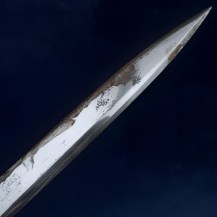
The blade is generally bright and clean but has a few patches of dark patination and pitting at the ricasso on both sides, along the spine, and in the tip section. This mostly spares the blade’s etched areas which are crisp, retaining the contrast between the matt acid-etched background and the reflective polished designs within it. The tip section is mirror polished aside from the patinated areas. The blade has been sharpened toward the tip on both its true and false edges, with some sharpening marks. The hilt, backstrap, and pommel are all nickel plated with some speckled wear to the plating exposing patinated steel in places, notably the inside of the guard where fingers would rub against it, and a large patch on the pommel. The tang button is not plated and has a dark patina overall. The shagreen of the grip is all intact with moderate handling wear, some smoothing. The wire binding is all present and tight with only fractional movement to a couple of the loops.
The sword is firm in the hand with no movement to any parts, the blade rings when struck. The leather scabbard has some minor surface scuffing, small dents and two small indentations near the chape. Its stitching is all intact. There is a short crack running from one edge of the frog strap where it joins to the scabbard body: the strap remains well attached and but take care not to let the crack propagate. The scabbard mouthpiece is in good condition with all its plating.
