



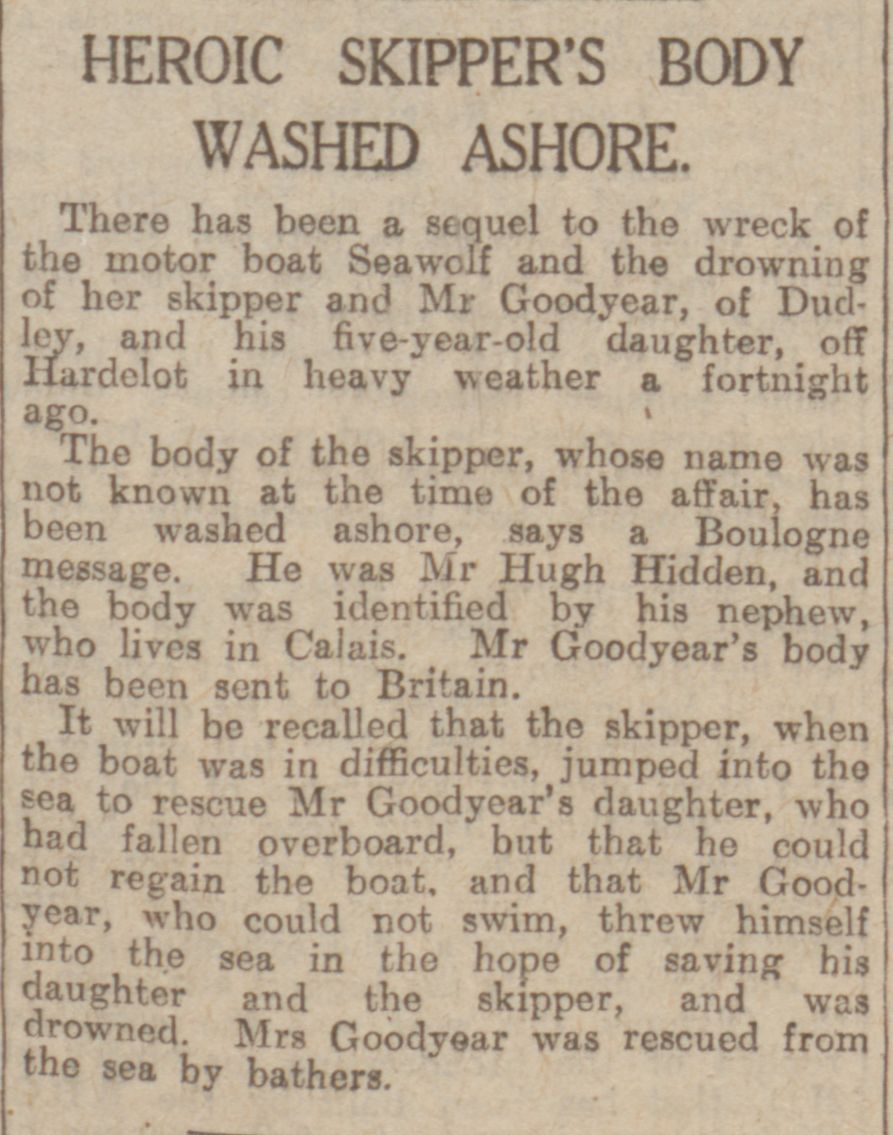


British WW1 1874 Pattern 2nd Life Guards Officer's Sword of Quartermaster and Captain Hugh Llewellin Hidden MC
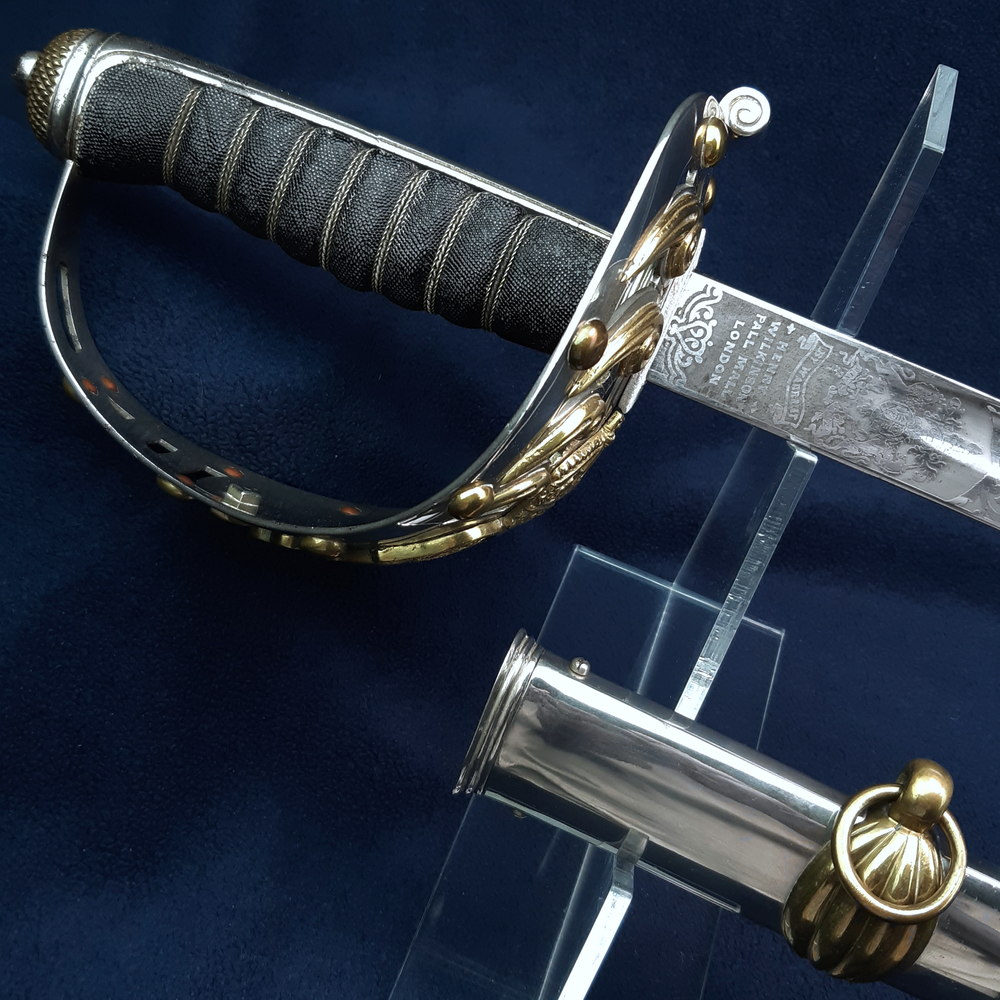
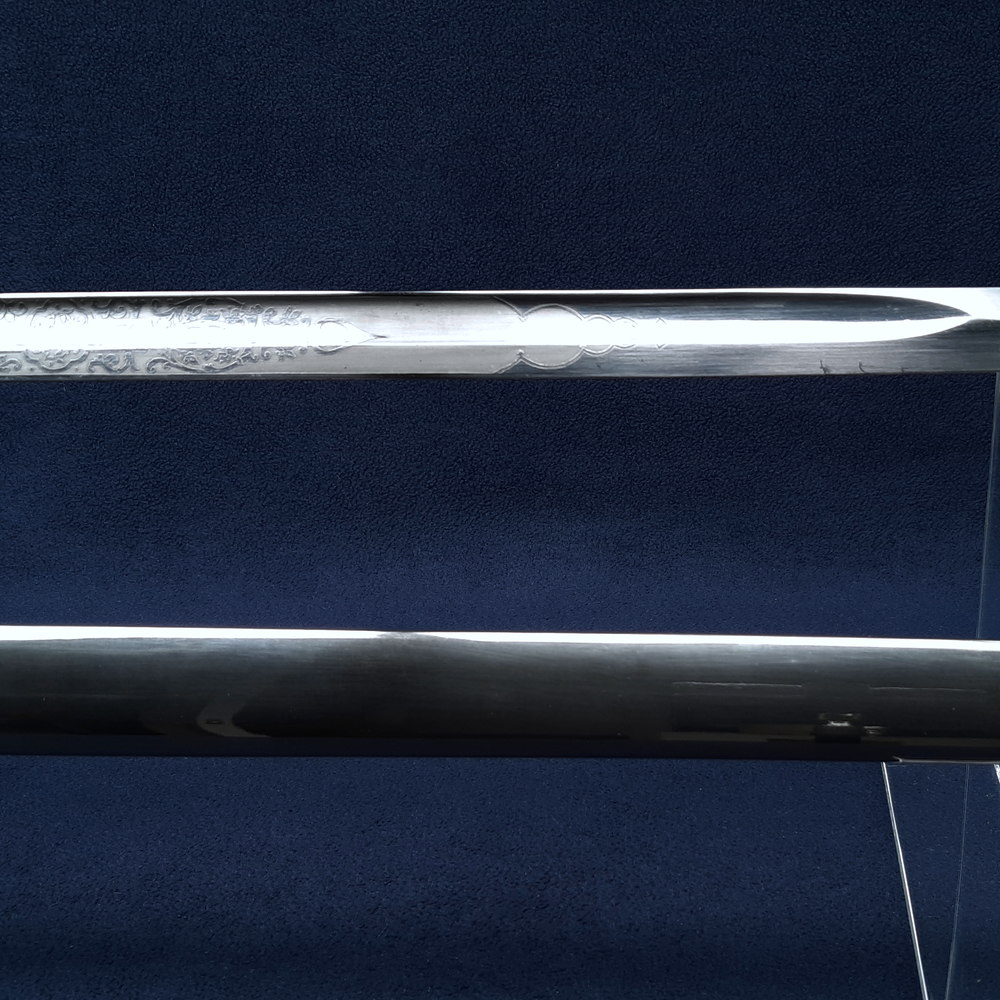
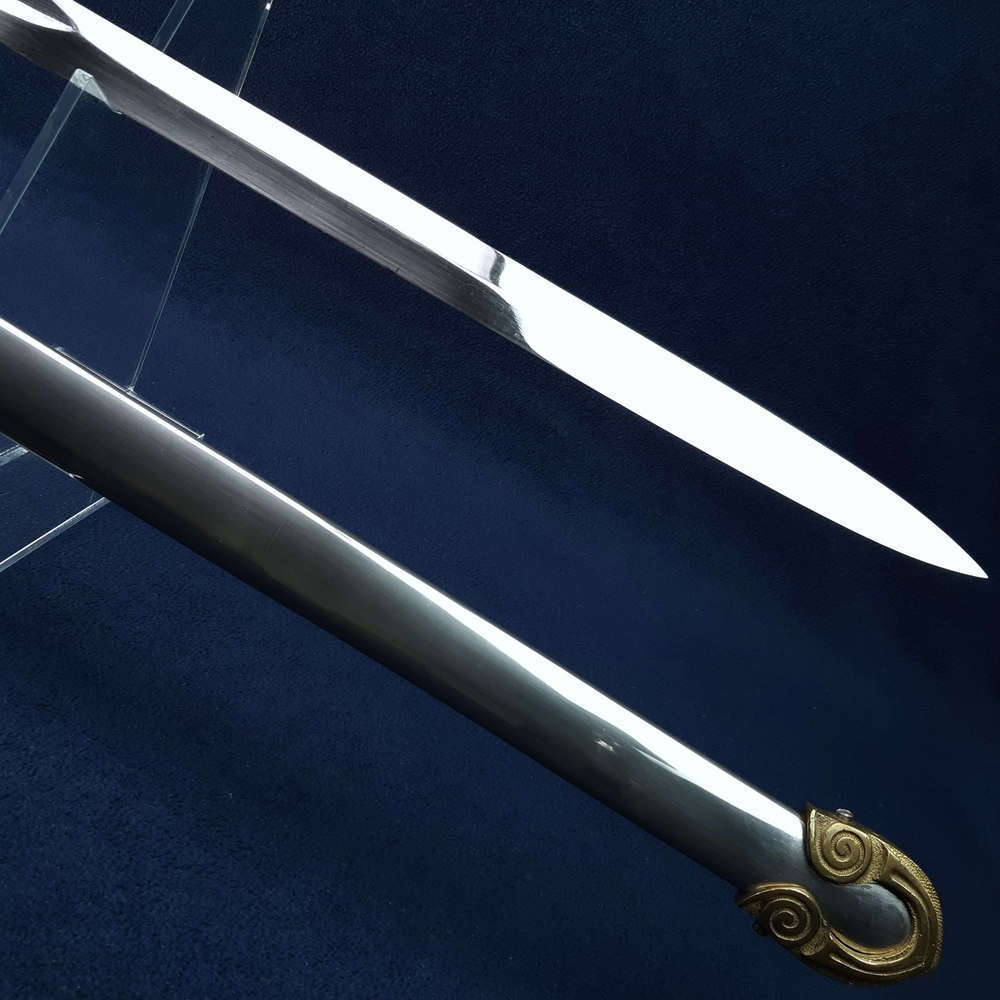
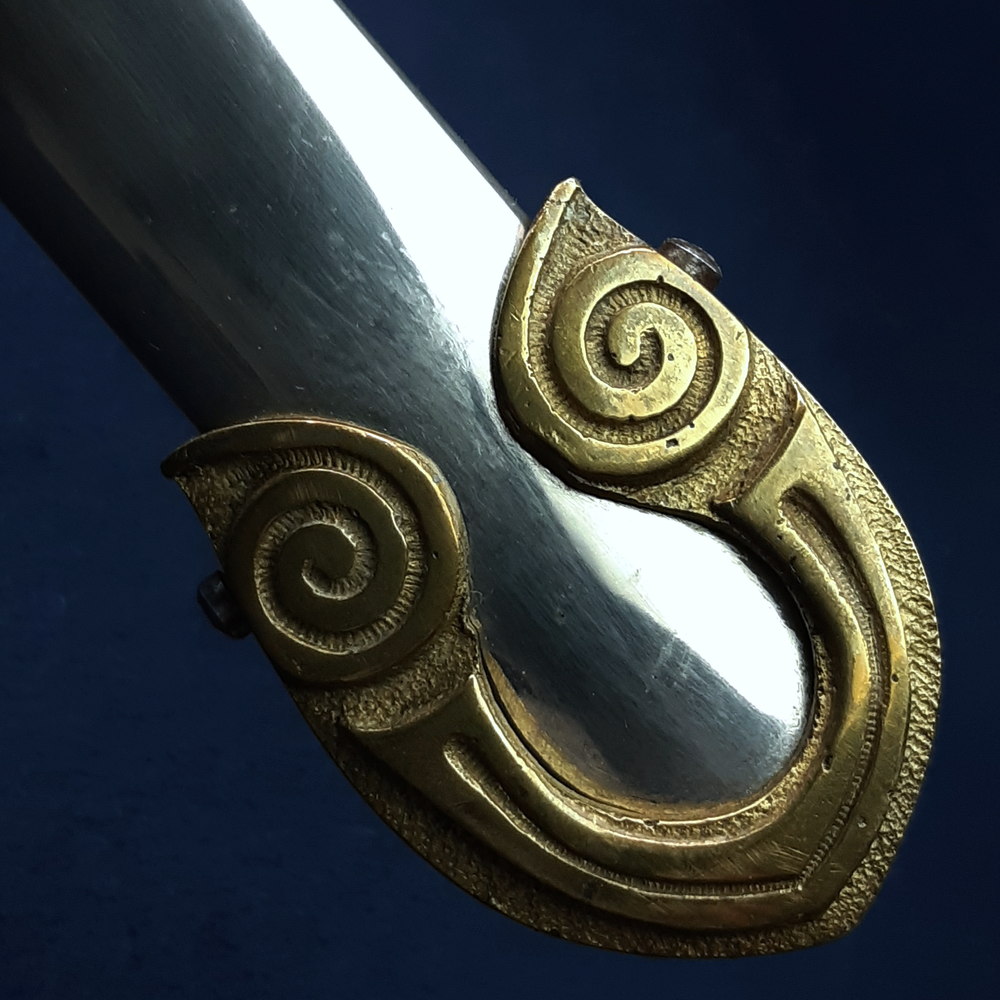
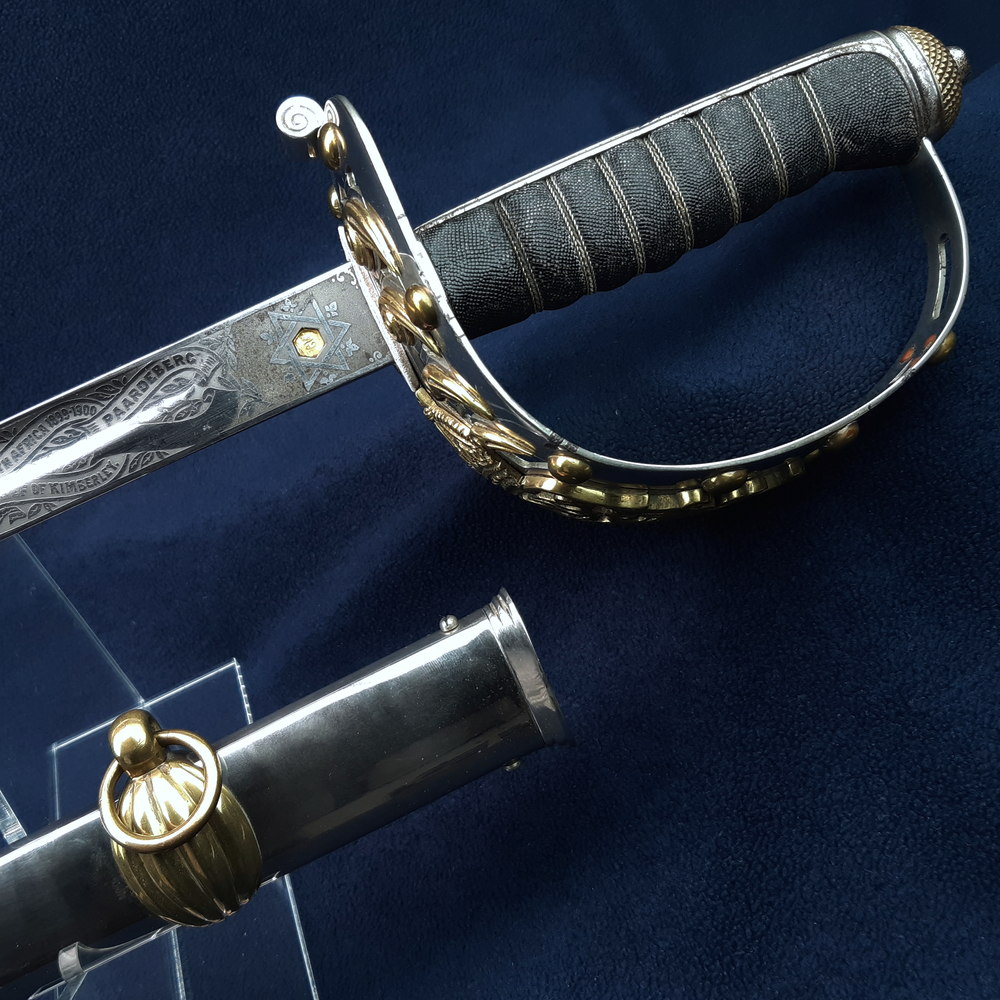
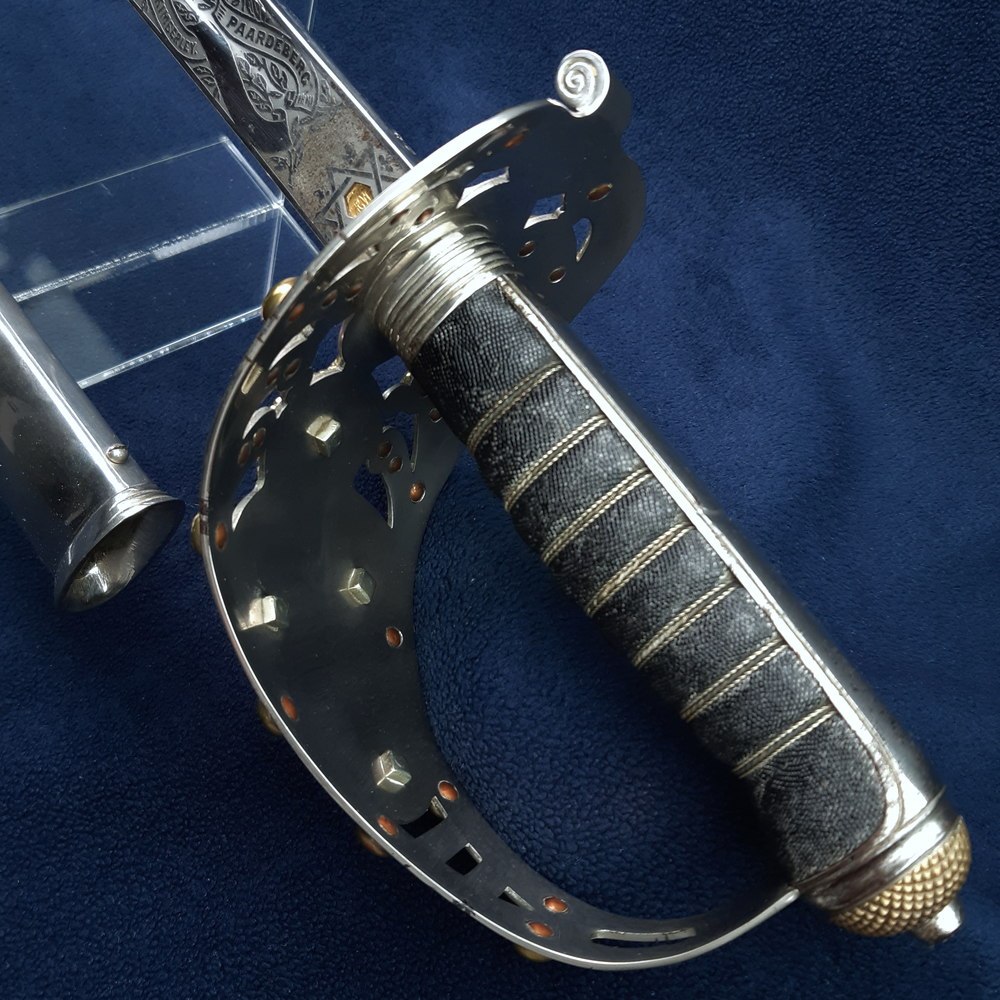
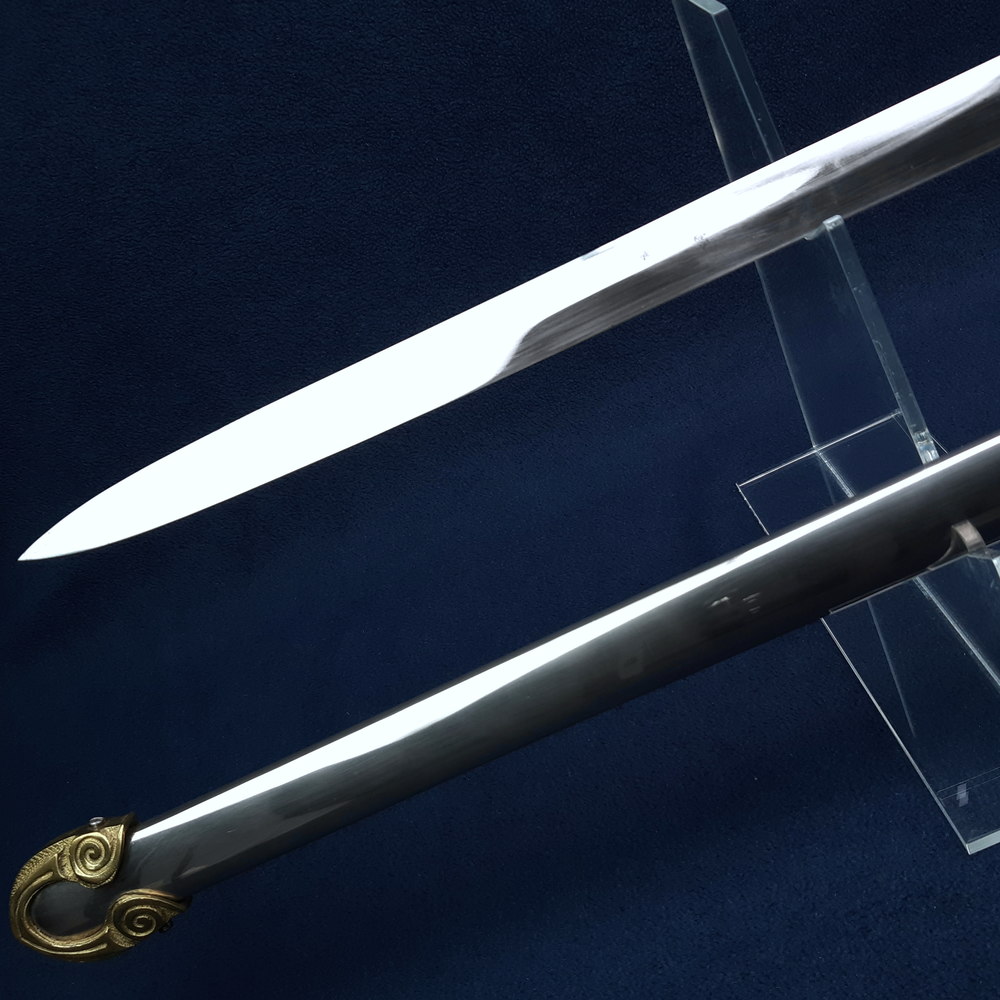
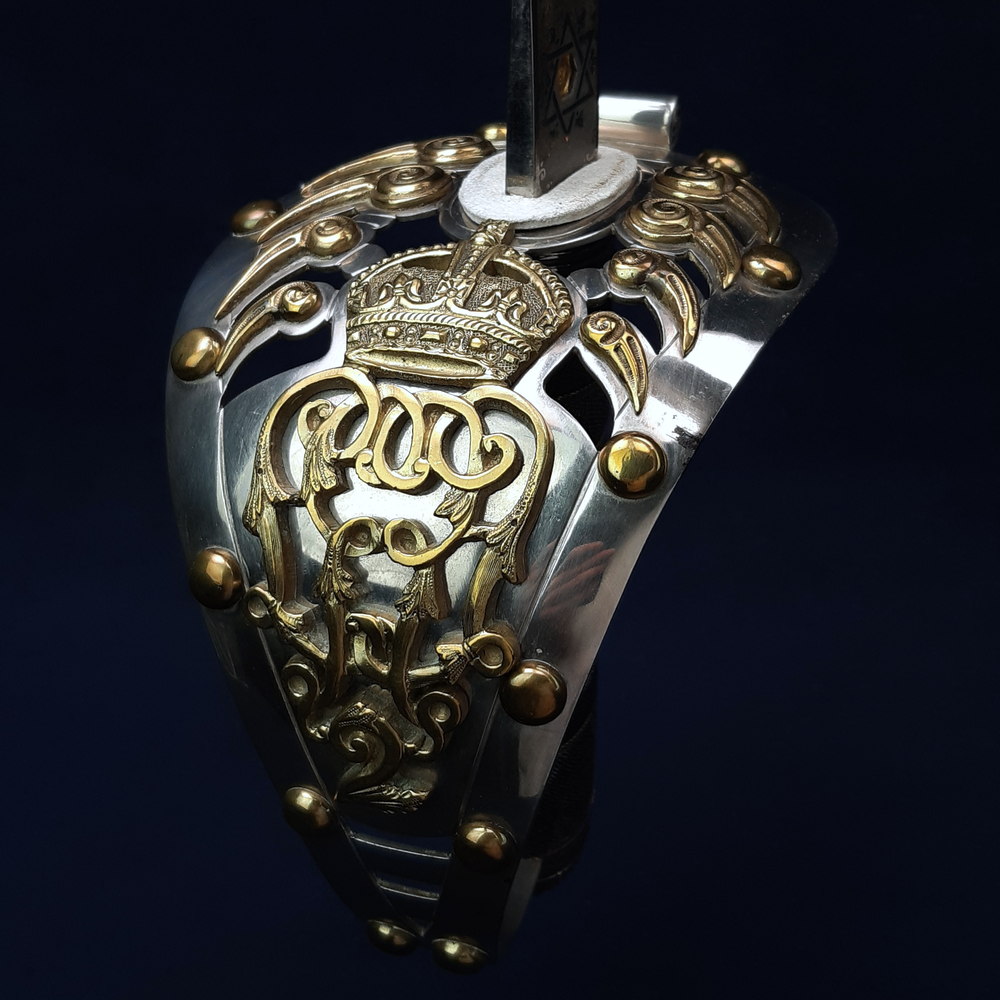
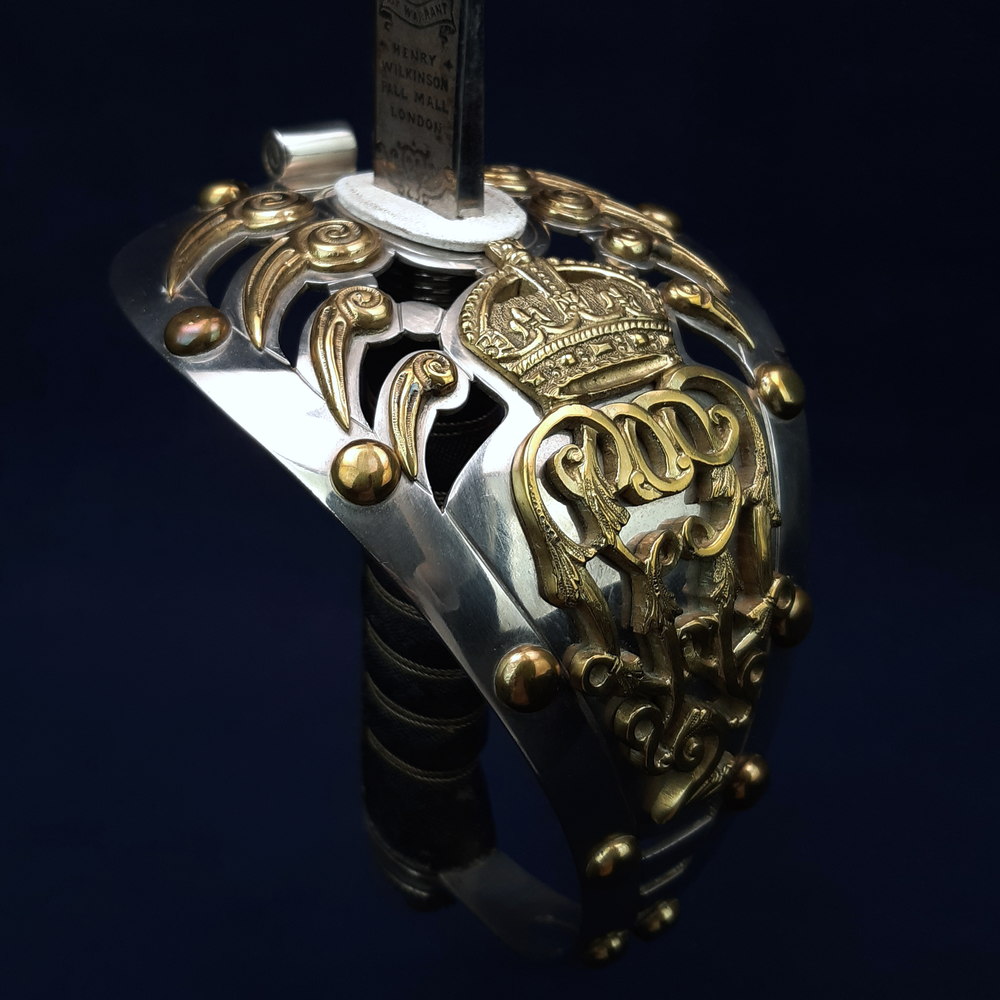
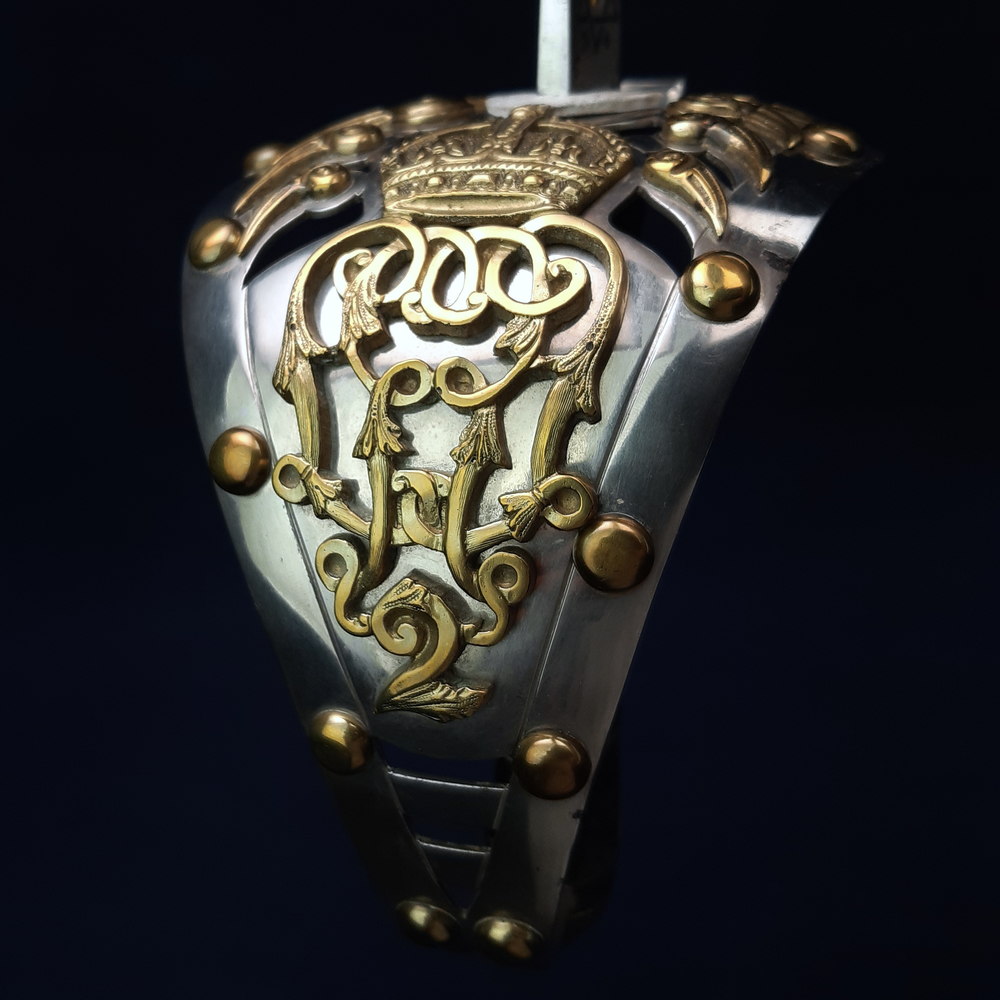
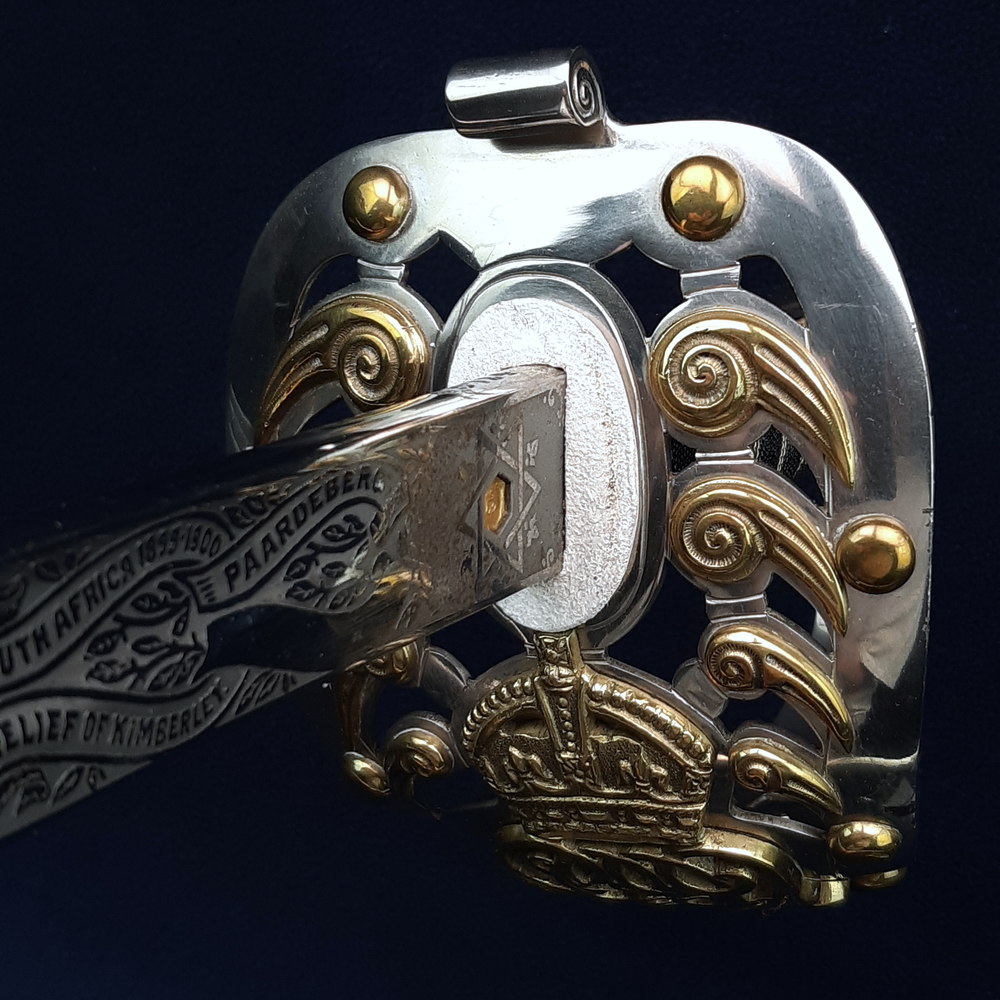
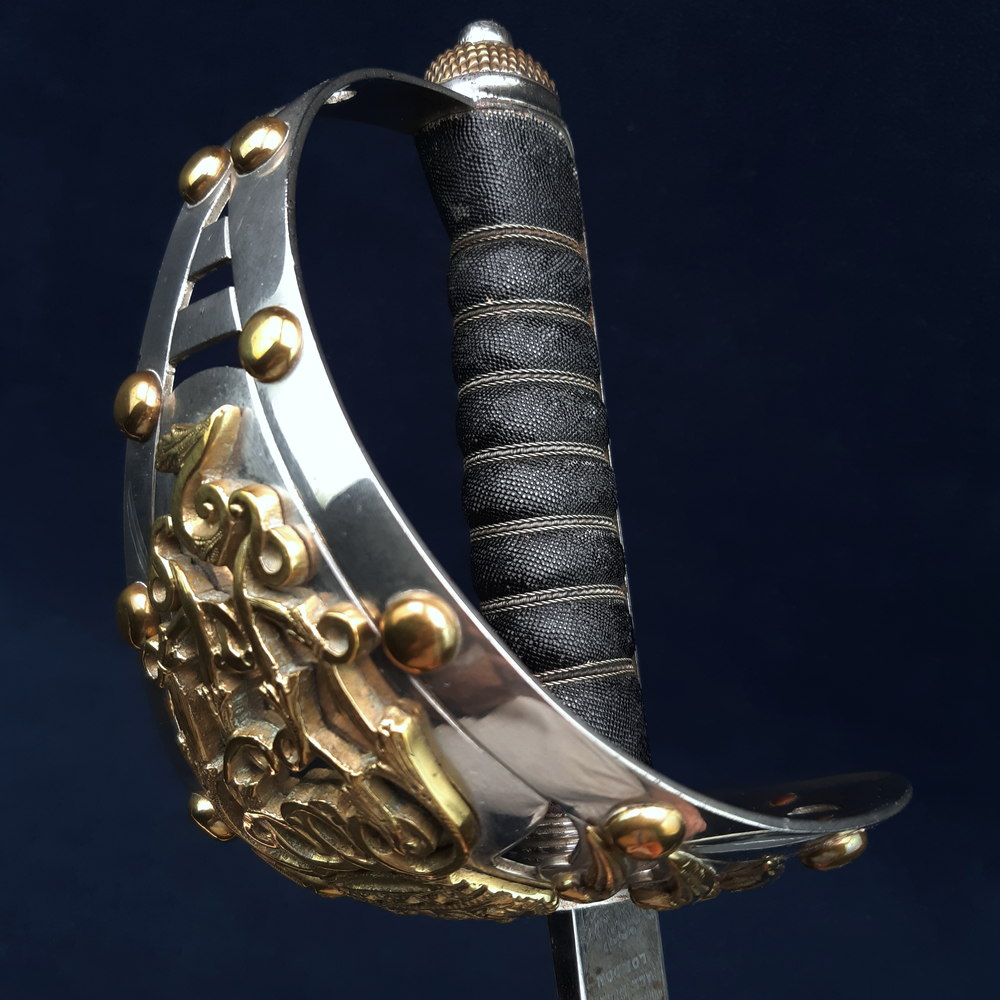
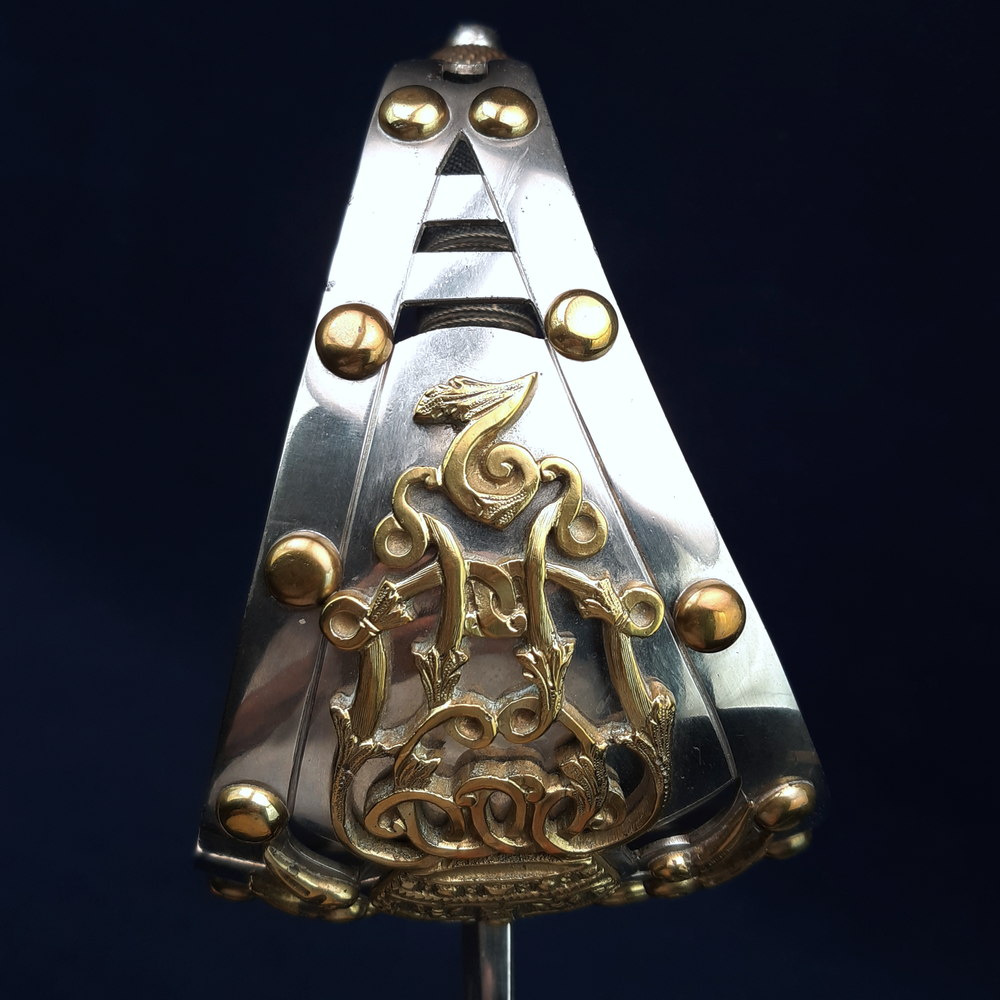
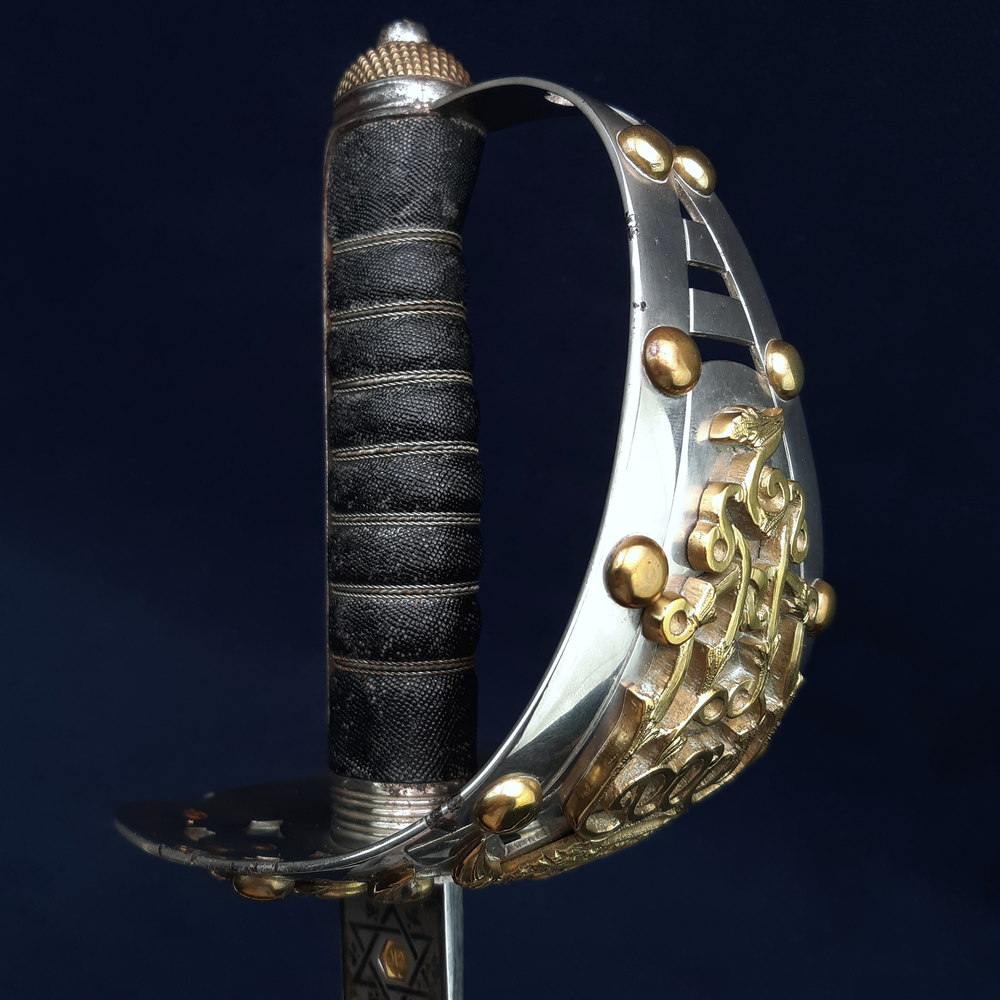
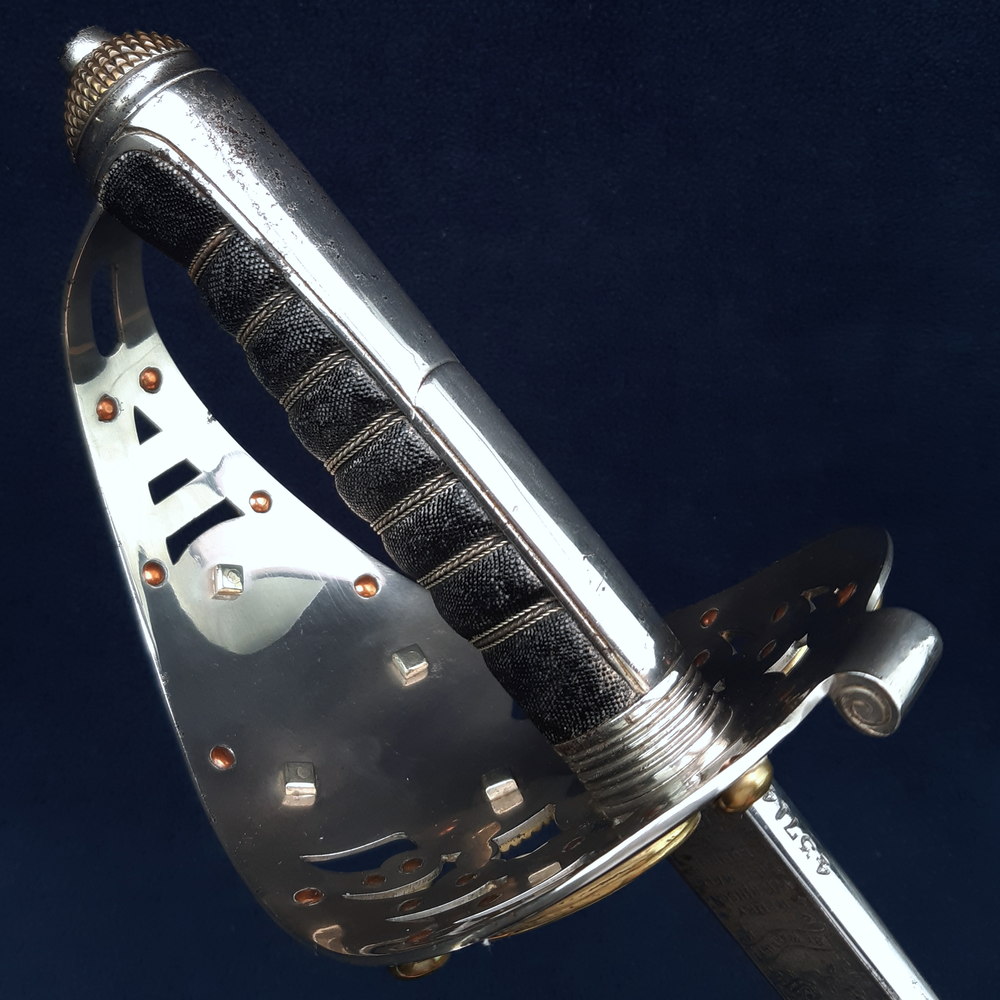
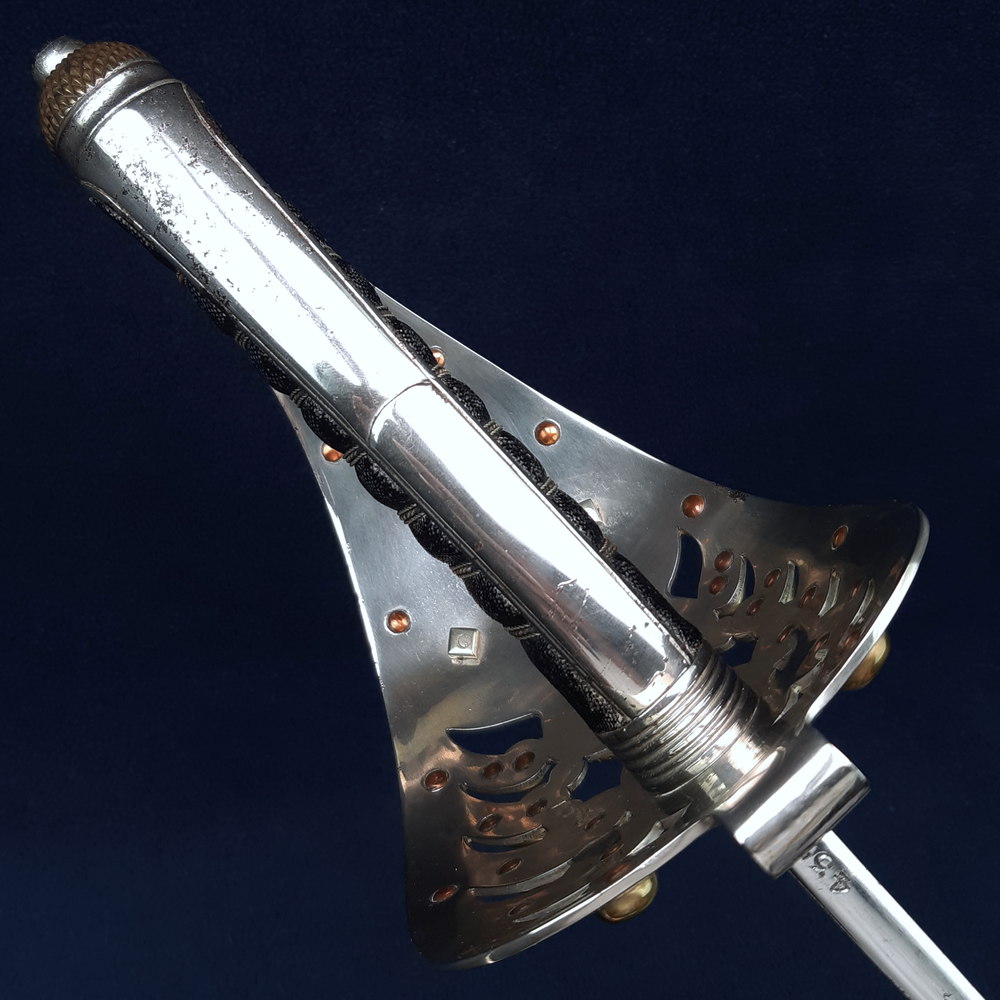
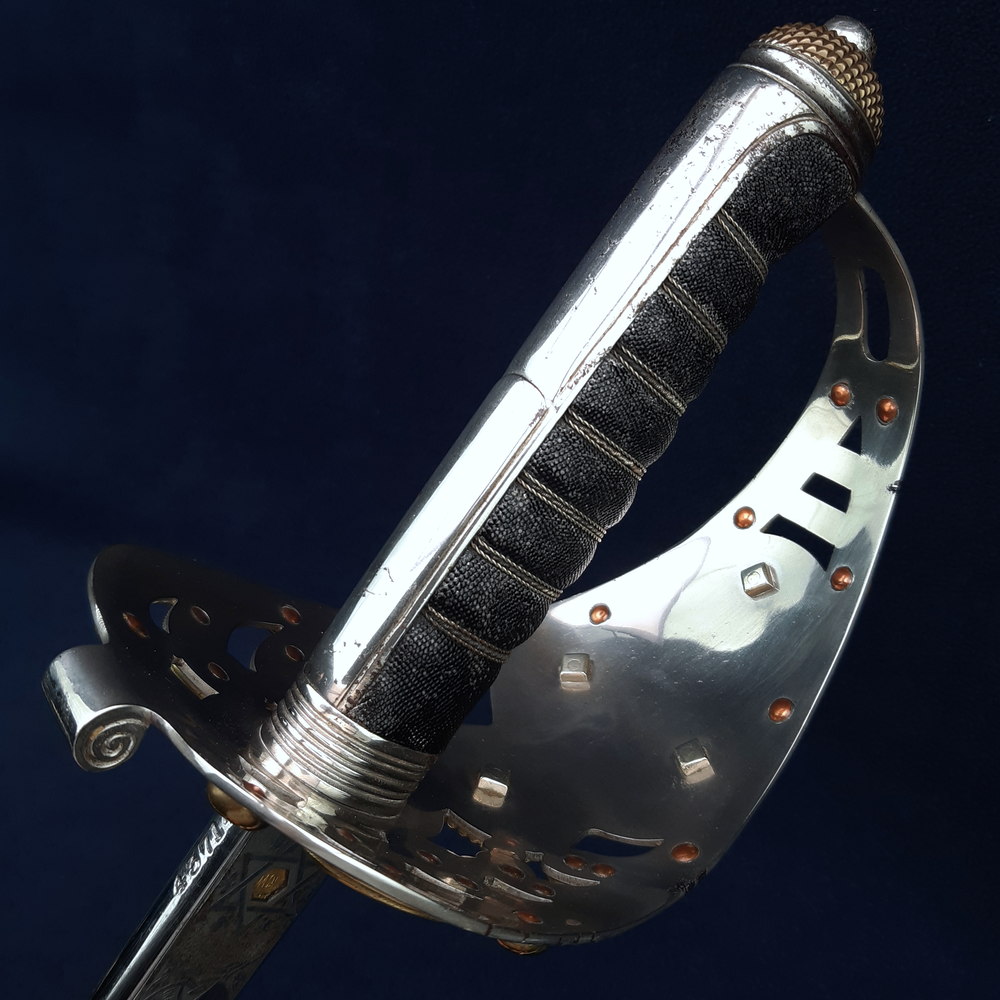
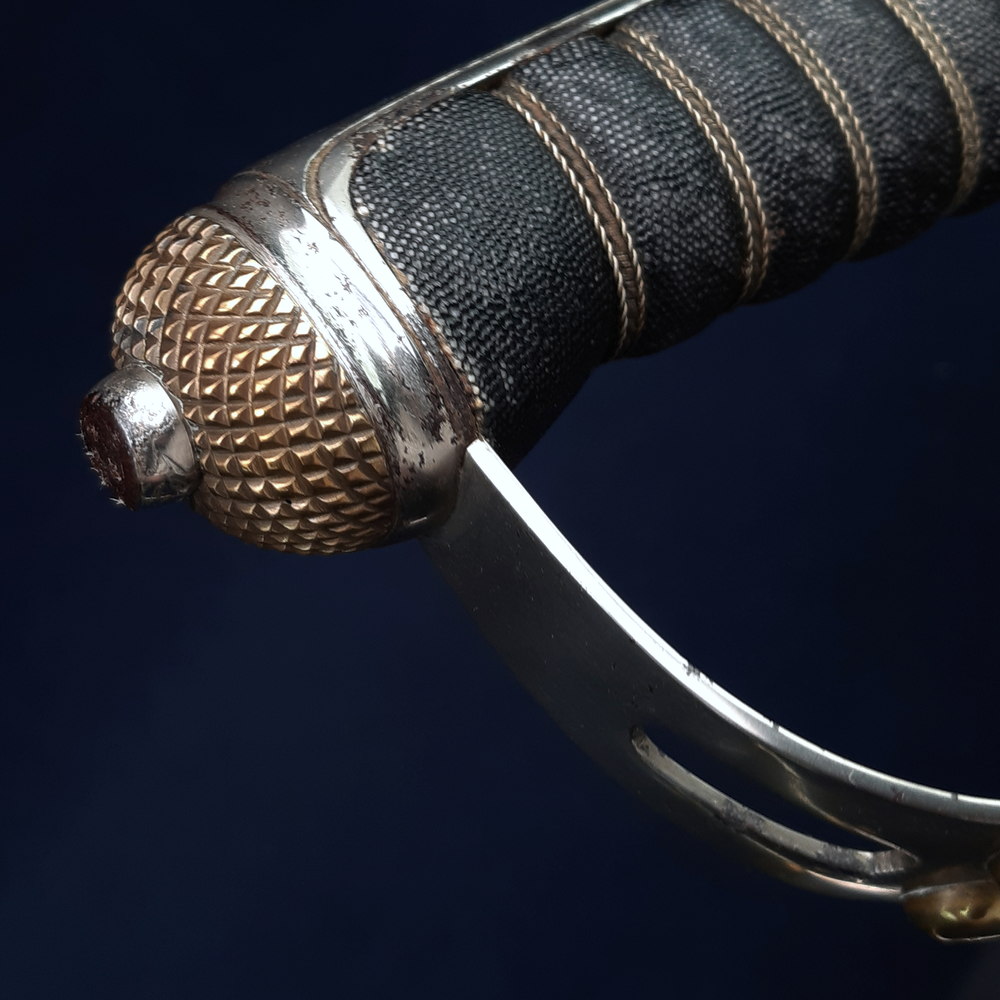
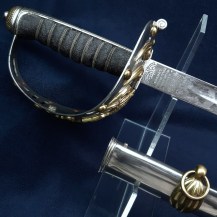
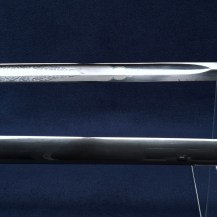
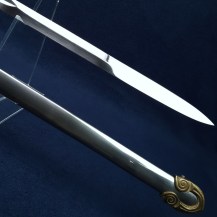
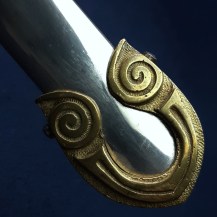
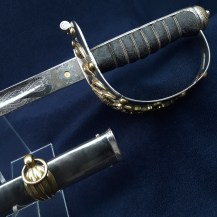
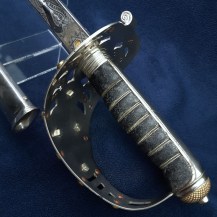
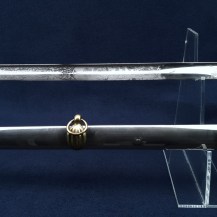
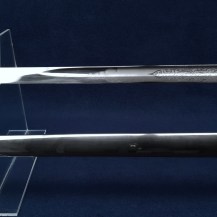
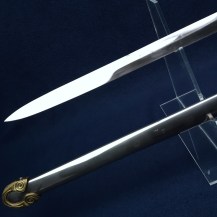
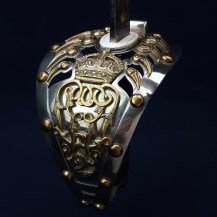
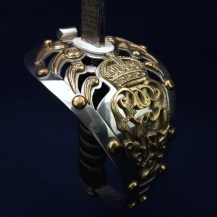
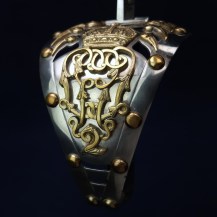
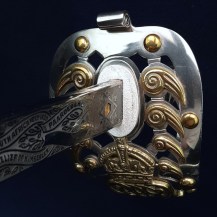
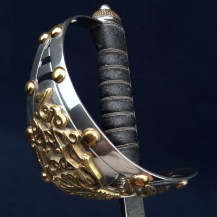
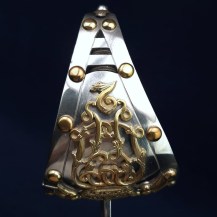
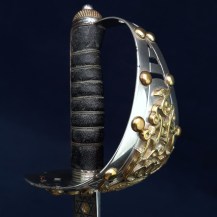
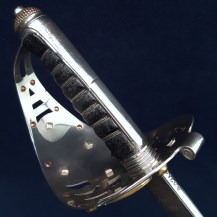
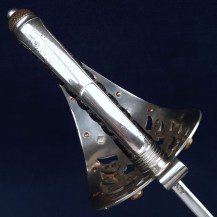
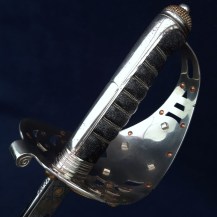
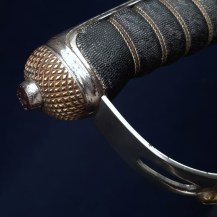
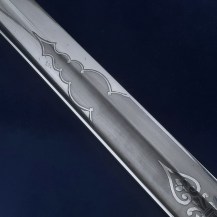
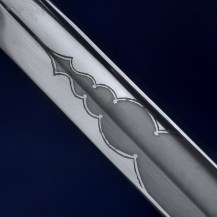
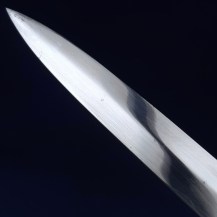
Straight blade with single fuller and spear point. Steel hilt with cylindrical quillon, sword knot slit, pierced decoration and multiple attached brass pieces, the largest being a regimental badge of the 2nd Life Guards consisting of the royal crown atop the monogram ‘LG’ above the number ‘2’ - arranged above this are 8 comma-shaped decorative pieces and 12 circular domed brass studs line the edges of the guard (this design is sometimes called the 12-stud hilt as a result). The badge is attached by 4 square steel nuts visible on the inside of the hilt, while the others are attached by brass riveting. Ribbed grip of wood covered with black shagreen bound with wire. Ribbed steel ferrule, smooth steel backstrap, chequered pommel cap made of brass with steel tang button. Steel scabbard with two large ribbed oval brass bands with hanging rings, ornate brass chape finial. Blade 37 inches in length, 1.06 inches (2.7cm) wide at the shoulder, the sword 43½ inches overall.
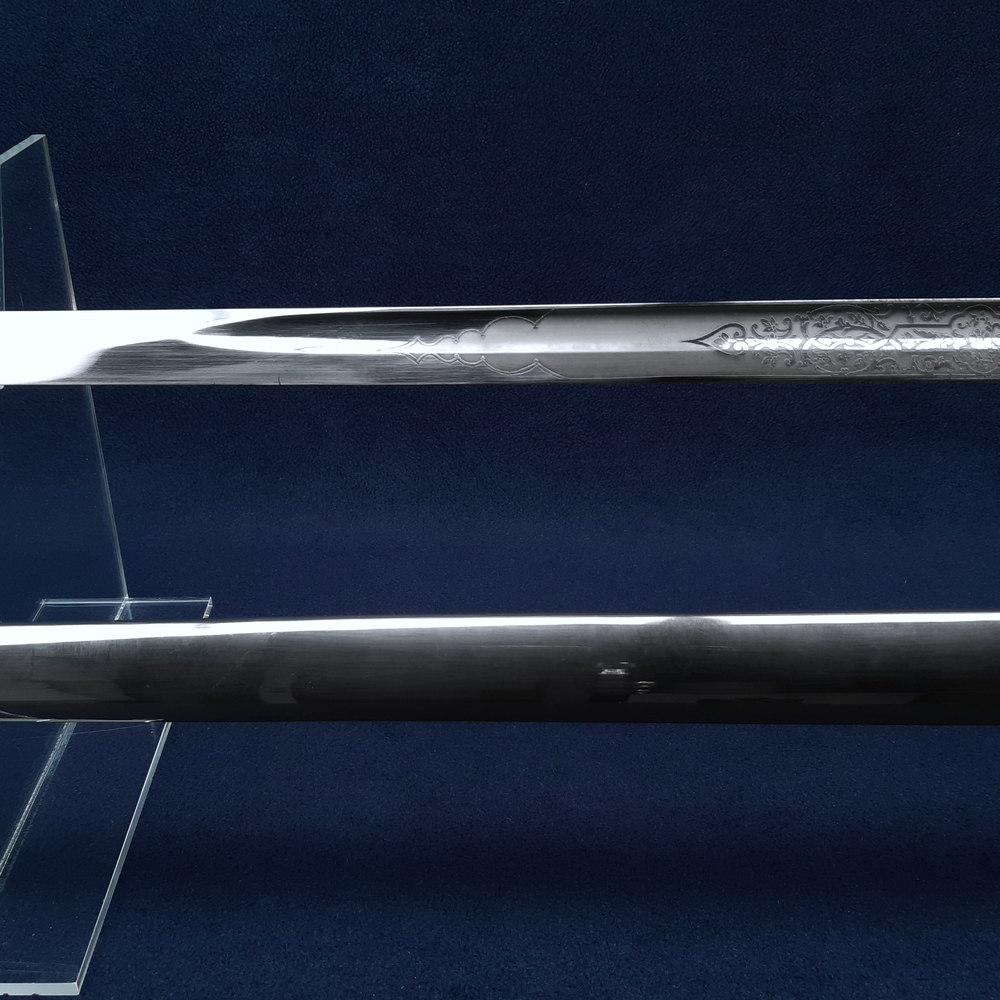
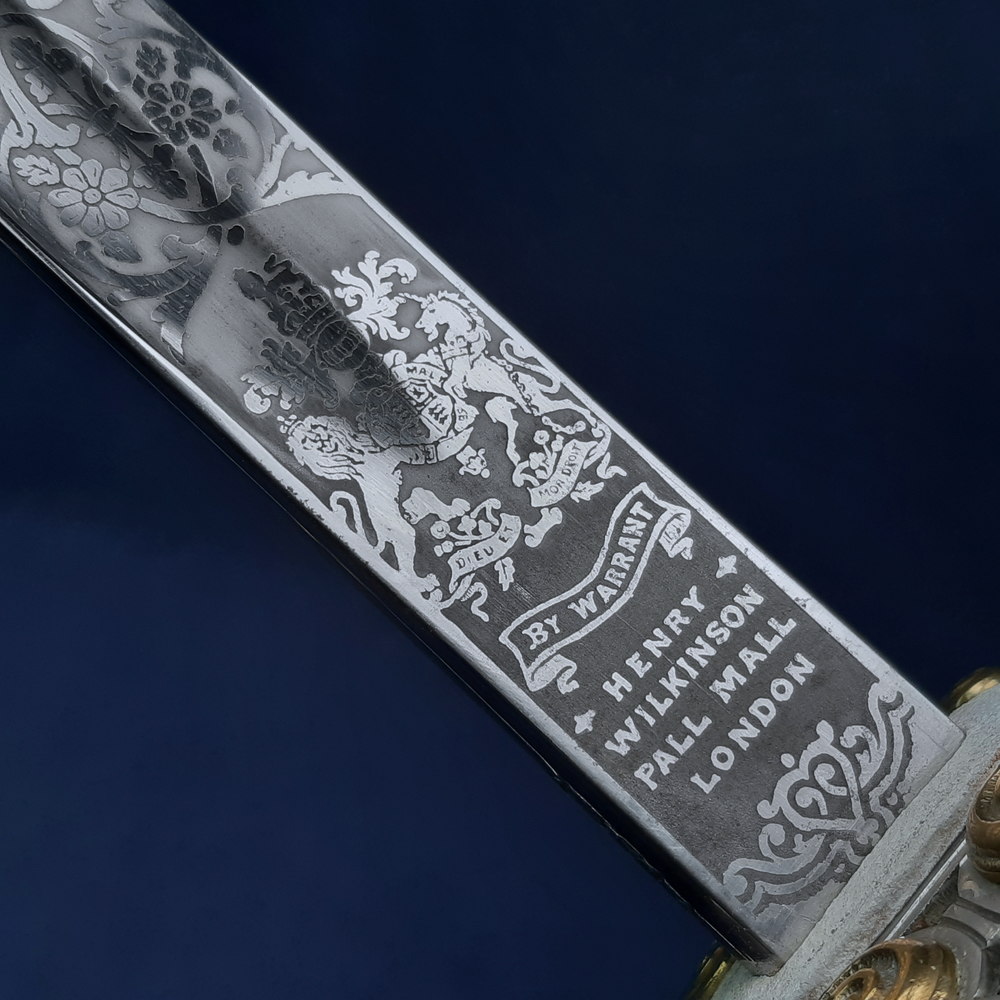
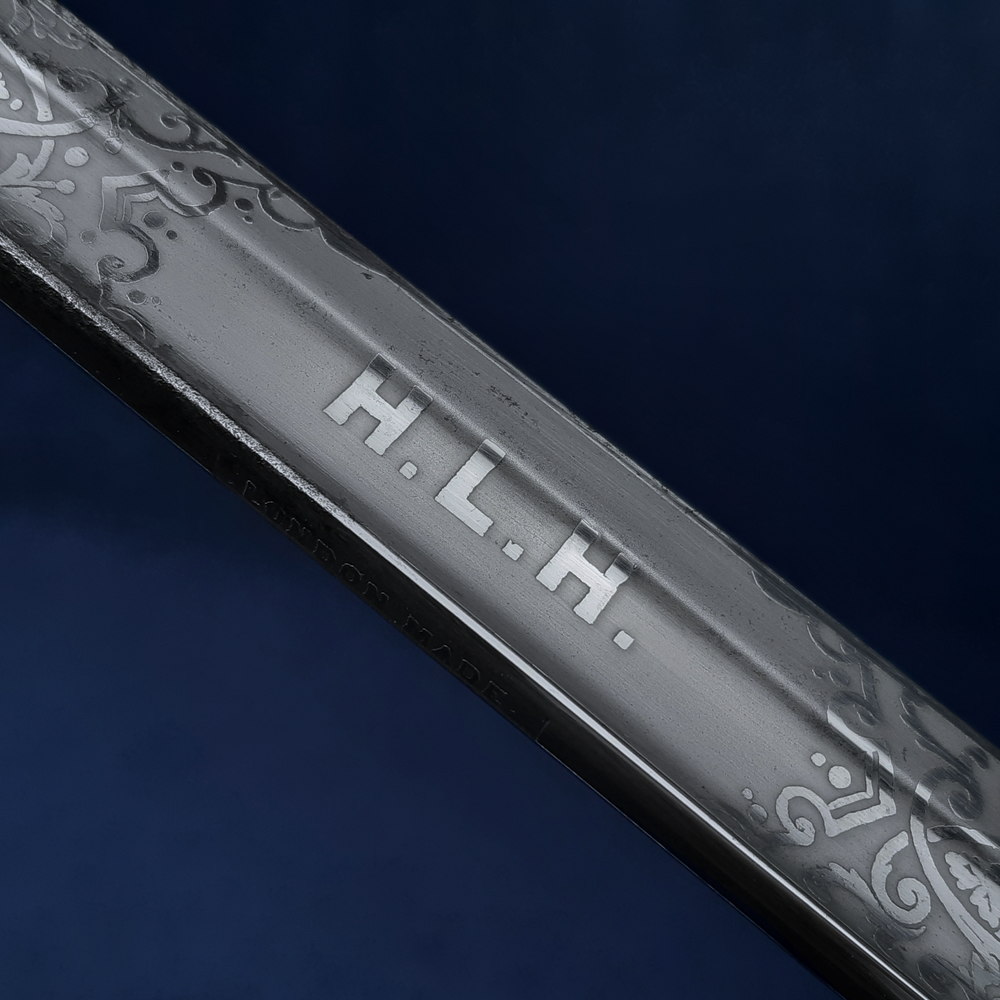
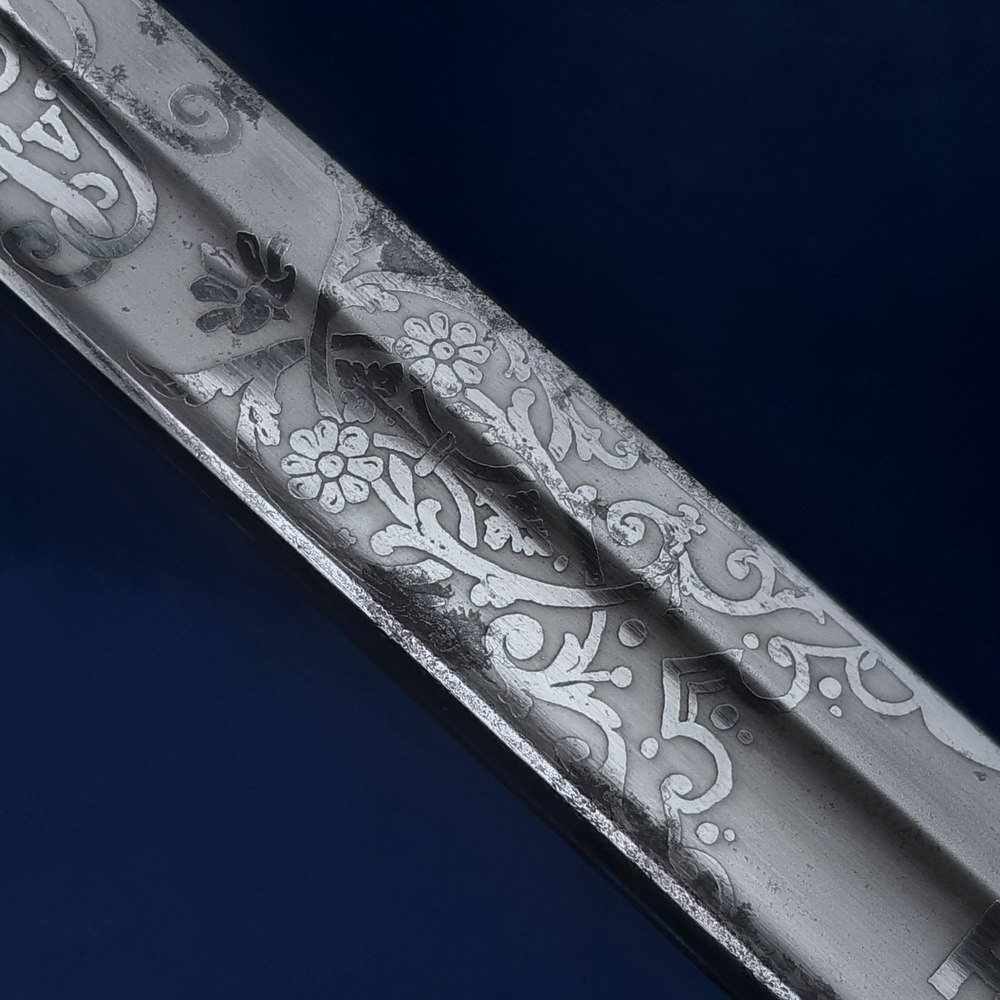
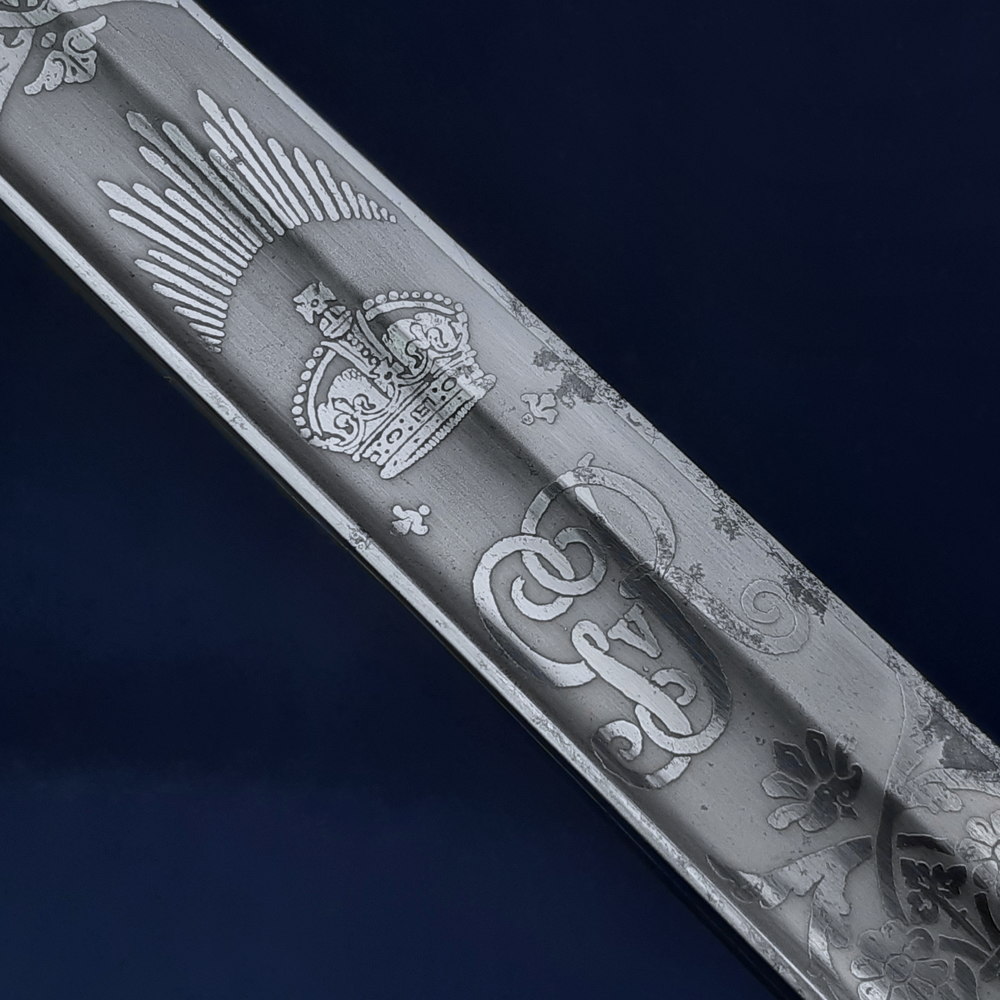
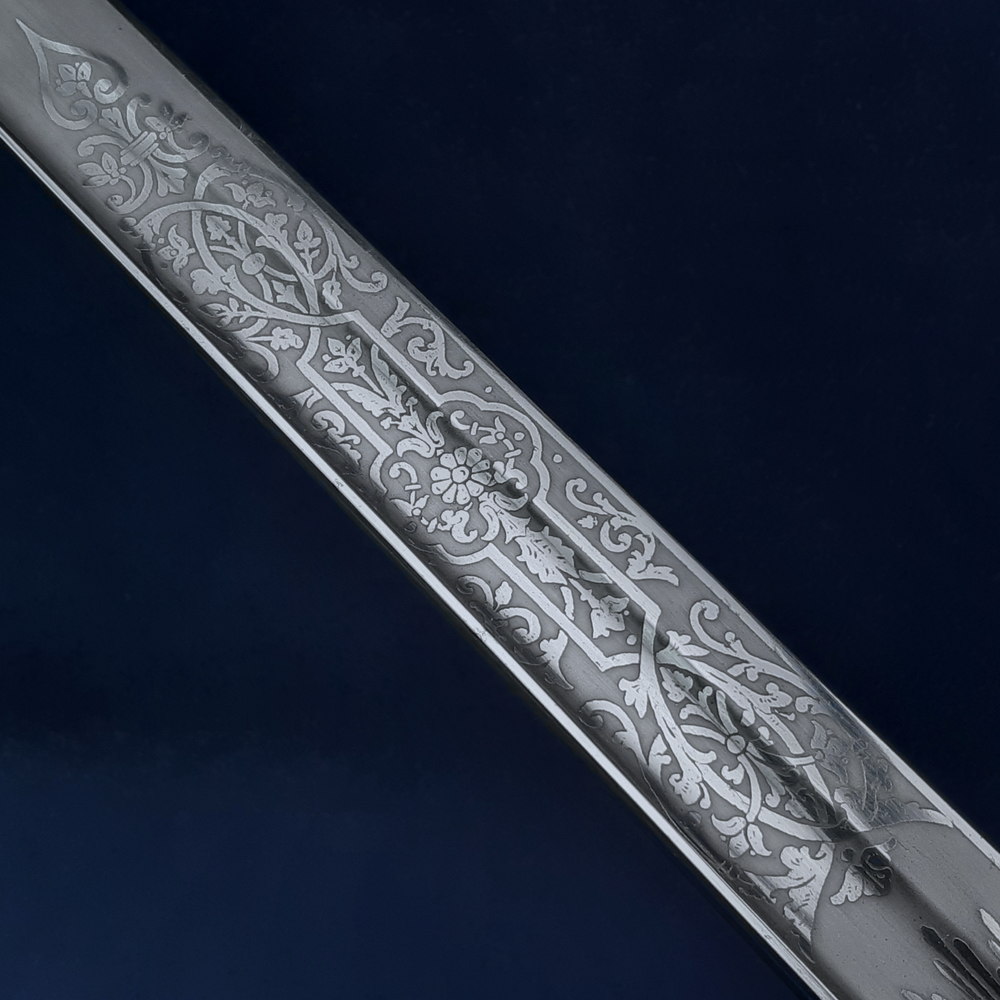
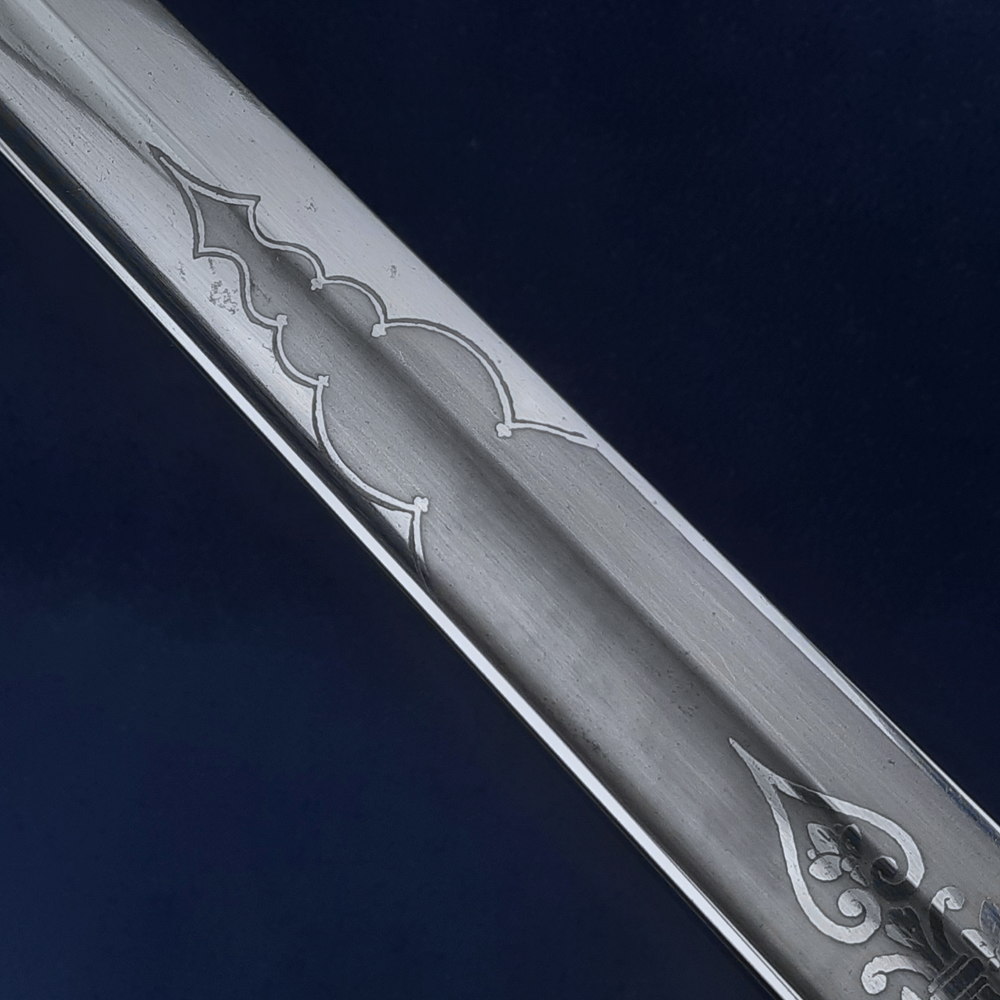
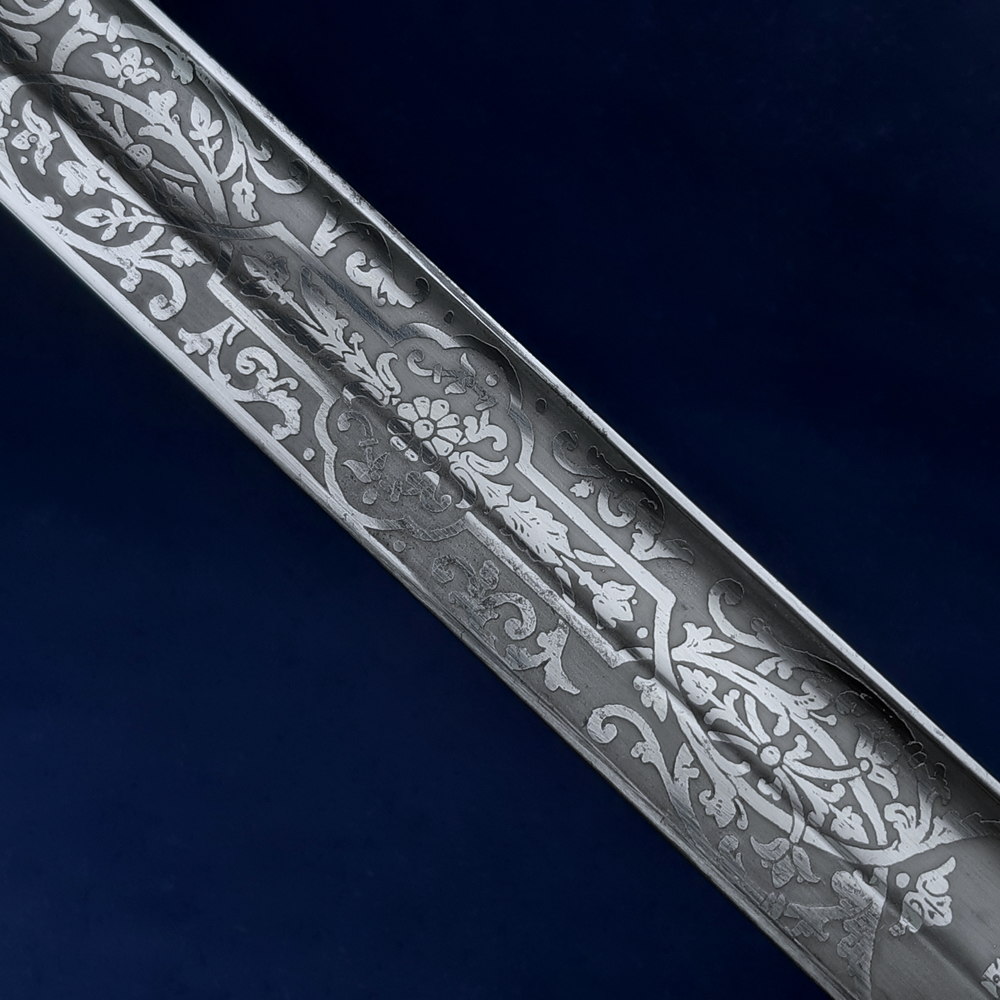
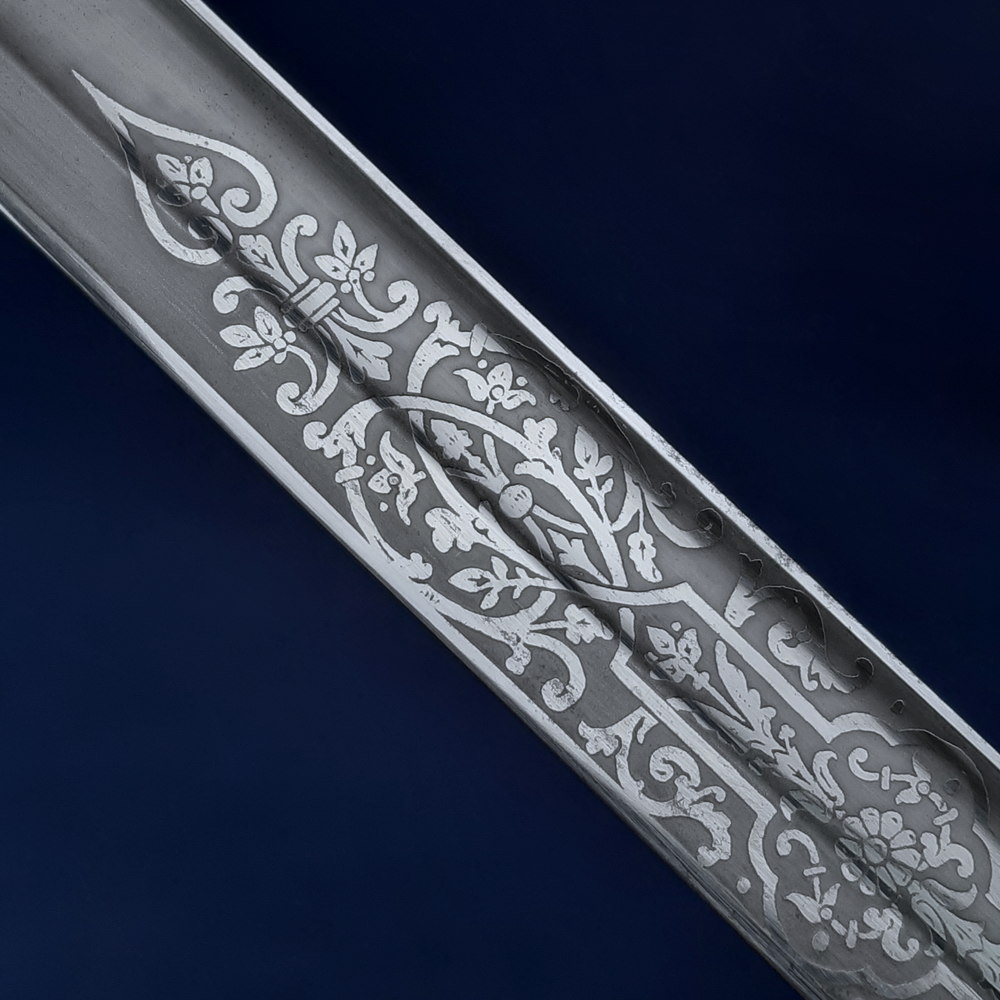
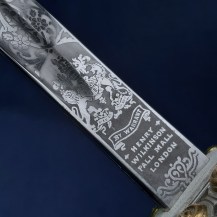
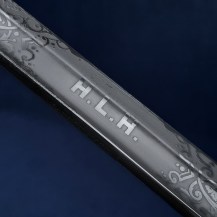
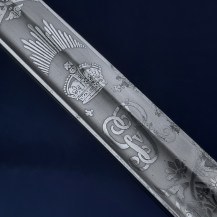
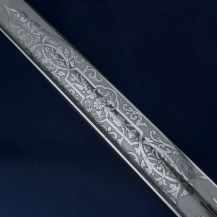
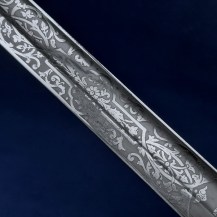
The blade is etched on one side at the ricasso with the maker’s mark ‘HENRY WILKINSON PALL MALL LONDON’ above which is the royal coat of arms and a scroll reading ‘BY WARRANT’. Above this is a cartouche for the optional etching of the owner’s initials or family crest, which has been filled in with ‘H.L.H.’. That side of the blade also features the crown & cypher of King George V and foliate motifs.
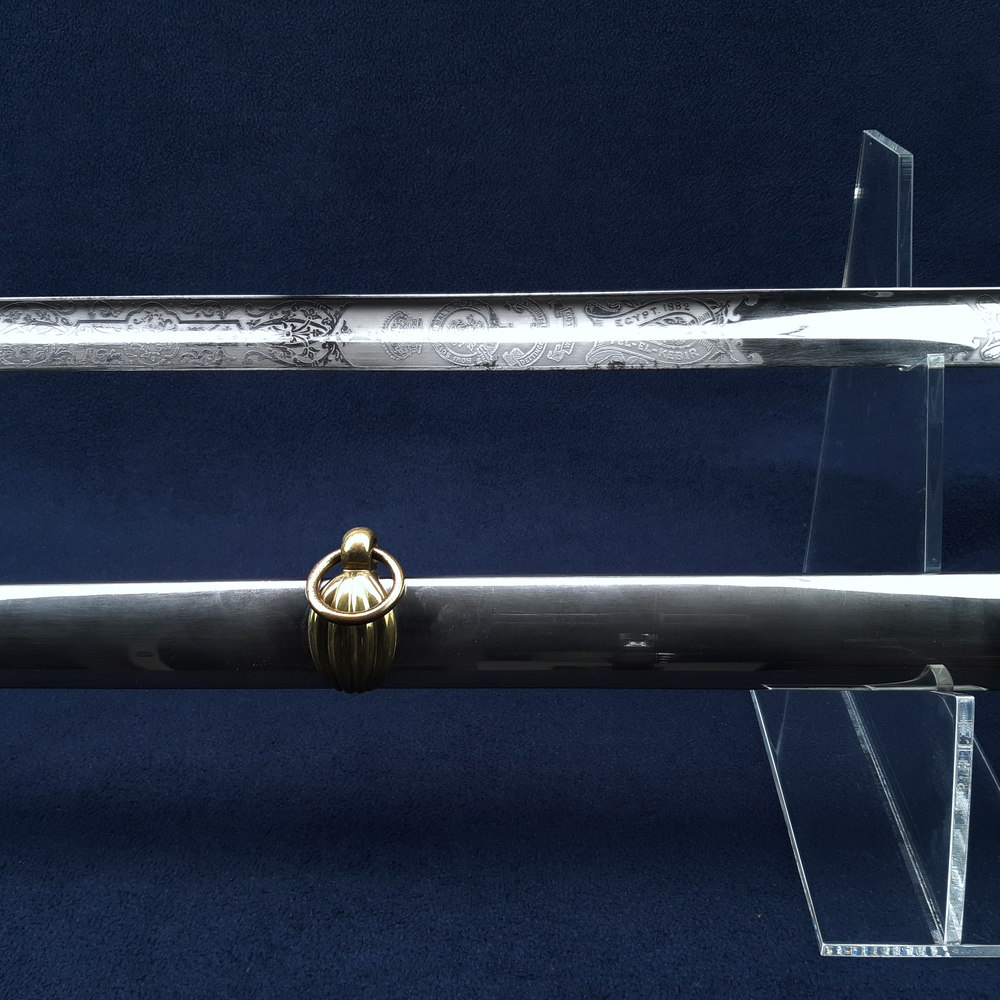
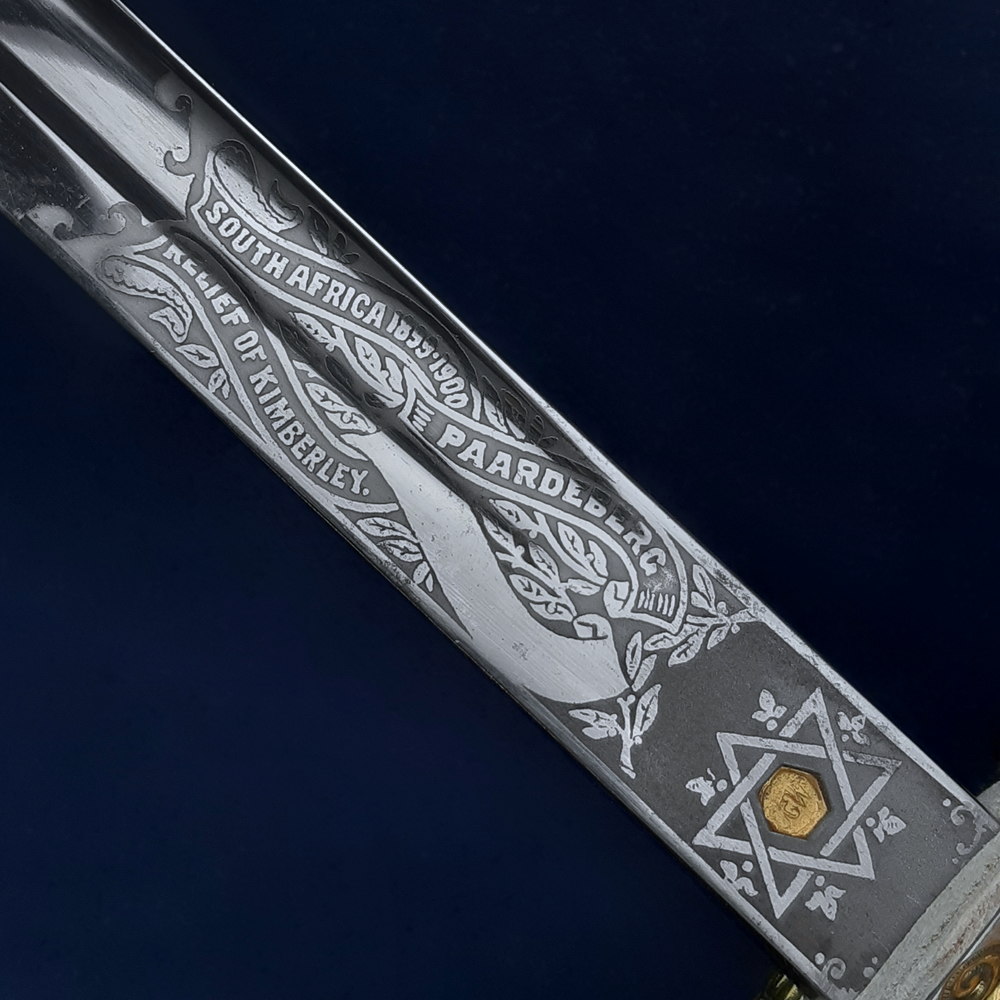
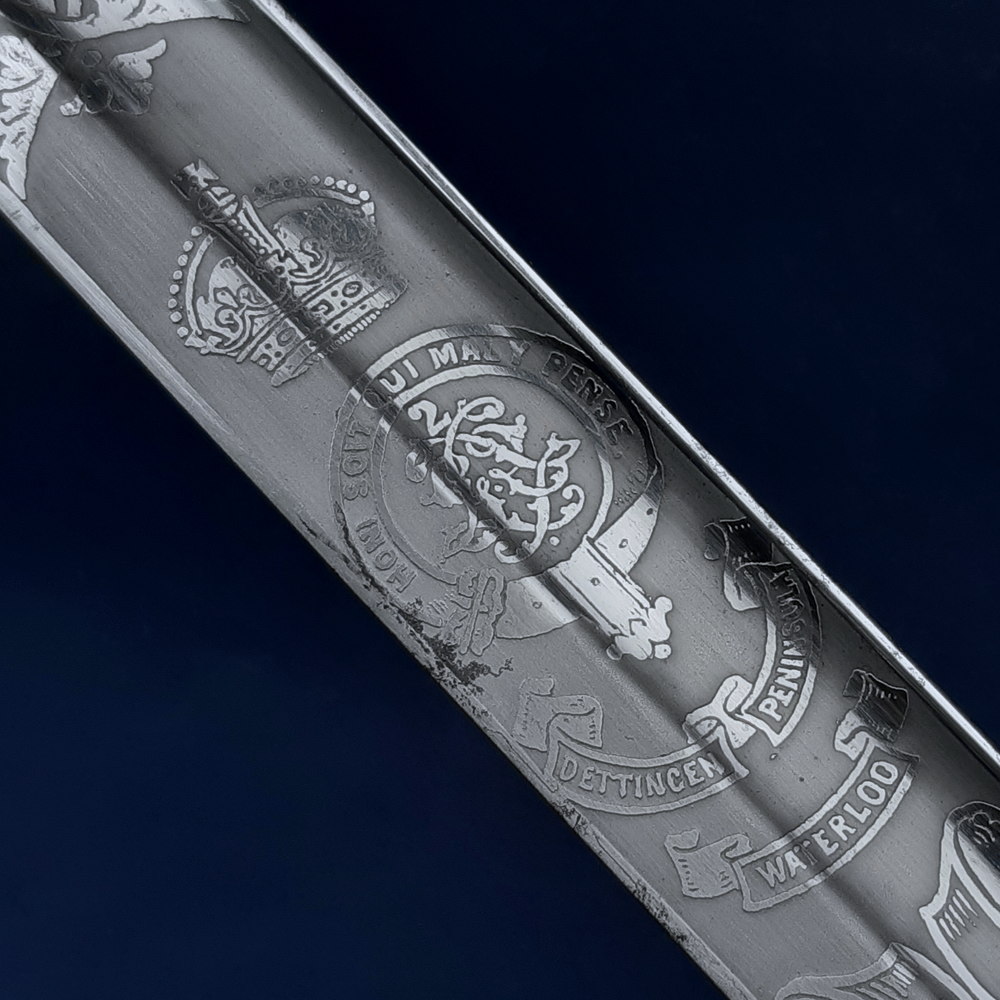
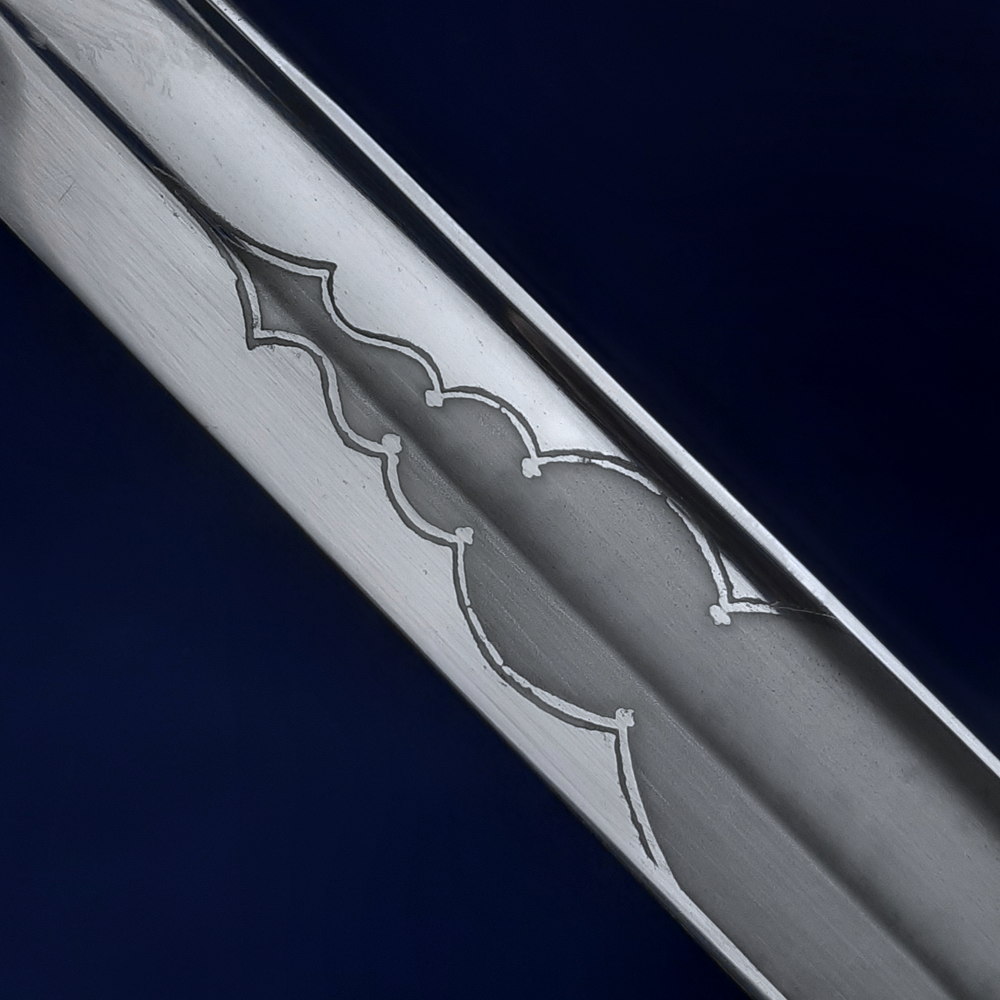
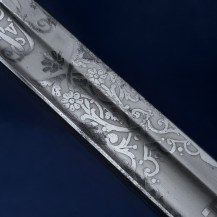
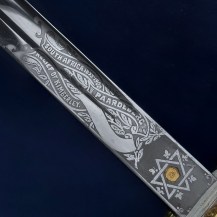
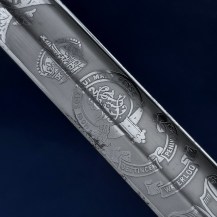
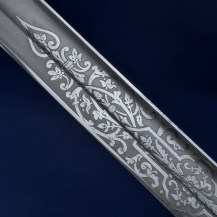
The other side of the blade is set at the ricasso with a hexagonal brass proof slug stamped with ‘HW’ for Henry Wilkinson, within an etched six-pointed star. The hexagonal proof slug was used from 1905 onwards to denote Wilkinson’s best quality blades. Above this is etched the battle honours of the 2nd Life Guards within scrollwork in chronological order: DETTINGEN, PENINSULA, WATERLOO, EGYPT 1882, TEL-EL-KEBIR, SOUTH AFRICA 1899-1900, RELIEF OF KIMBERLEY, and PAARDEBERG. This was their complete list of honours from the end of the Boer War until WW1, which added a further 28 to the list. The last three honours are separated from the rest by a blank cartouche mirroring that on the other side. Above the honours is etched the royal crown with a badge of the 2nd Life Guards, and foliate motifs.
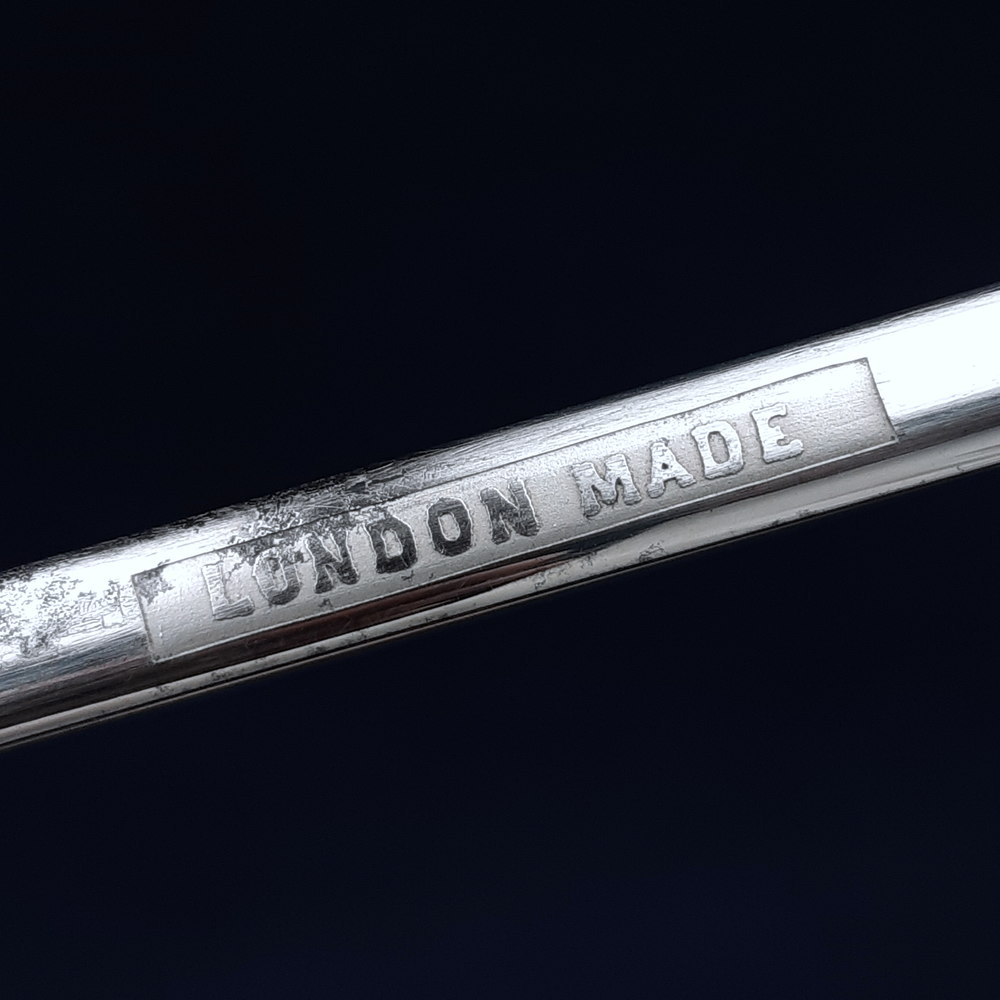
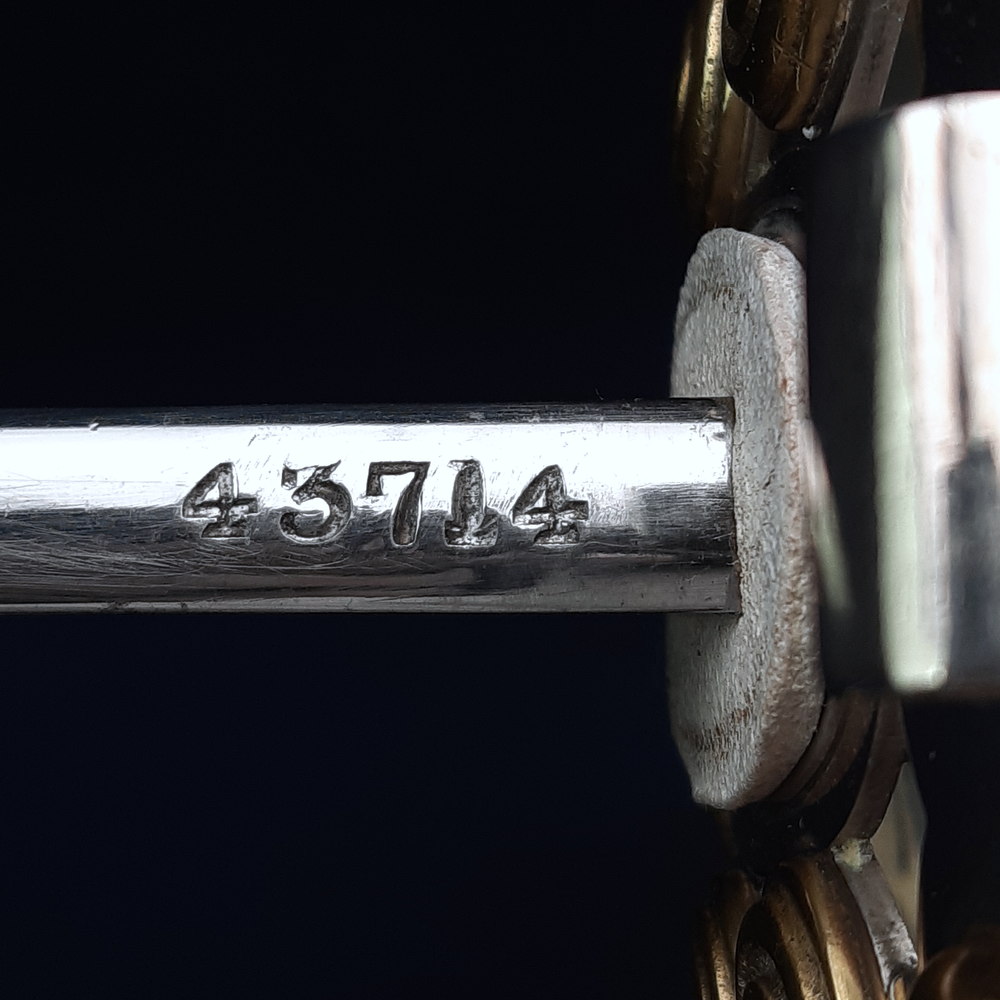
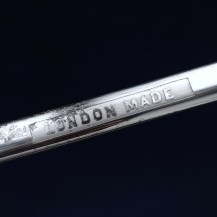
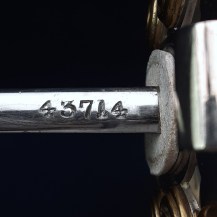
The spine of the blade is etched with ‘LONDON MADE’ and stamped at the forte with the serial number ‘43714’. Wilkinson company records attest that ‘H. Hidden’ purchased 43714, a ‘2nd Life Guards’ sword, on the 13th September 1912.
Hugh Llewellin Hidden was born in February 1872 in Shepherd’s Bush near London. He lived in Putney and worked as a clerk until he joined the 2nd Life Guards at Windsor in November 1891, aged 19. Recruits to the household cavalry regiments were required to be tall and well-built: sources suggest a minimum of 5 feet 10 inches in height. Hugh had no problem there, being measured at 6 foot 1 5/8.
He was appointed Lance Corporal in December 1894 and Corporal in 1897. He passed classes in gymnastics and fencing at Aldershot in 1898 and married his wife Emily in the same year.
In November 1899 he was deployed to South Africa and fought in the Boer War – in that conflict the 1st and 2nd Life Guards each contributed one squadron to form a combined Life Guards regiment. Hugh was wounded at the Battle of Paardeberg on 22 February 1900 and was promoted to Corporal of Horse in September that year, a field promotion. The rank of Corporal of Horse is unique to the Household Cavalry, equivalent to Sergeant.
He returned home, along with most of the regiment, in November of that year. He was awarded the Queen’s South Africa Medal with clasps for Paardeberg, Relief of Kimberley and Transvaal. Experience of combat clearly did not discourage him from the Army, as he re-engaged when his initial 12 years’ contract of service ended in 1903. He was promoted to Quartermaster Corporal-Major in July 1904 and was awarded the Long Service & Good Conduct Medal in April 1910.
In August 1912 Hugh was made Quartermaster (i.e. the head quartermaster, in charge of the whole regiment’s supply), with the honorary rank of Lieutenant. This lines up exactly with this sword’s purchase date: by virtue of their honorary officer rank quartermasters were granted the privilege of wearing an officer’s sword. Troopers carried swords too but these were government property: just like a commissioned officer Hugh would have purchased his own sword.
On the outbreak of WW1 Hugh embarked with his regiment in their initial deployment in August 1914, for which he was awarded the 1914-15 Star.
The regimental quartermaster was key for any deployed regiment’s logistics. Stationed at the ‘Q-Store’ in the rear echelon, a man like Hugh had to manage the ordering, storage, and distribution of all uniforms, weapons, ammunition and rations the men needed. For a cavalry regiment like the 2nd Life Guards he also had to consider the regiment’s mounts, which needed their own equipment and large quantities of grain or hay – a standard cavalry regiment having 528 riding horses, 74 draught horses, 6 pack horses, 18 carts or wagons, and 15 bicycles. Cavalry had to roam large distances without losing contact with their supply line, and running short of fodder would quickly exhaust the horses.
The first year of the war was extremely hard on the Household Cavalry. The three regiments deployed and fought together as the ‘Household Cavalry Composite Regiment’ from August to October of 1914. They initially deployed as cavalry and took significant casualties during the Retreat from Mons holding off the German advance, often called upon to rush in and plug gaps or attack exposed enemy units due to their greater mobility.
Rather than try and patch up the battered composite unit General Allenby ordered the regiments separated and each to be brought up to a strength of 410 other ranks, and for each to also form a Reserve Regiment as reinforcement.
This expansion could only be accomplished by drafting reservists from other regiments and by fairly liberal promotions to supply the required NCOs. This influx of men from an assortment of regiments caused some cultural issues but allowed the Household regiments to operate under their individual banners again within a full Brigade of cavalry.
The reconstituted 2nd Life Guards remained cavalry but fought as infantry in many engagements, the conditions not being right for a cavalry breakthrough. They spent the entire Battle of Neuve Chapelle (the 10th to 13th March 1915) standing by, mounted in their saddles from before dawn to after dusk, without opportunity for action. At Ypres they fought as infantry reinforcing lines broken by the first chlorine gas attack, then at Loos they were again held in readiness as cavalry, before going in as infantry reinforcements when only modest gains were made. The pattern of holding back as cavalry then fighting as infantry continued for years until the regiment officially dismounted in March 1918 and once again merged with the other Household Cavalry, becoming the 2nd battalion of the new Guards Machine Gun Regiment for the remainder of the war.
Hugh was awarded the Military Cross in the New Years Honours List of 1917. The large batch of MCs awarded at that time were generally for outstanding service over the course of the war to date rather than an individual act of gallantry, and suggests that Hugh’s service in the role of quartermaster had been much appreciated. Before the end of WW1 Hugh was promoted from honorary Lieutenant to honorary Captain. I am not sure exactly when he left the Army, the 1921 census lists him as still serving with the 2nd Life Guards at the age of 50.
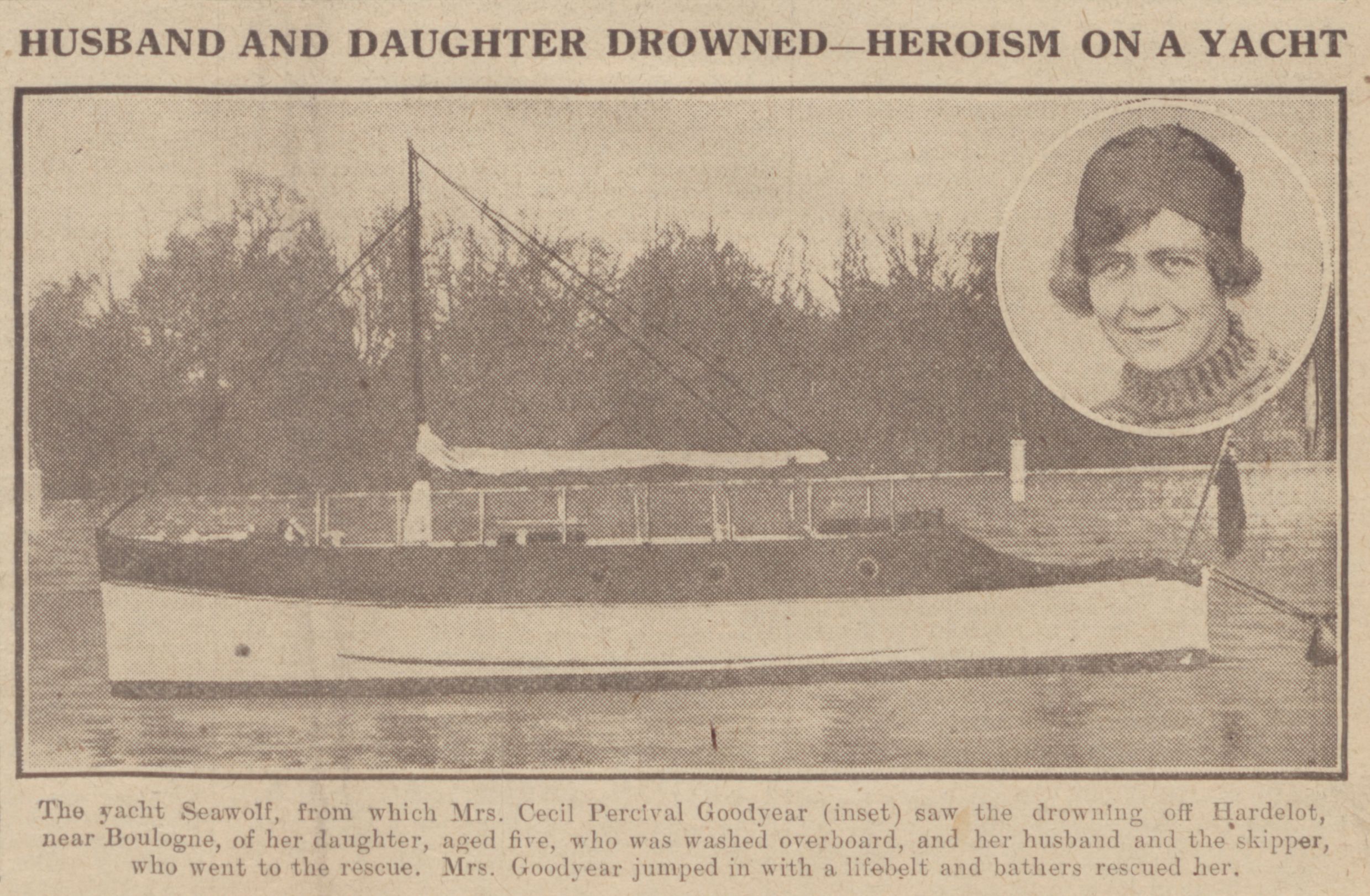
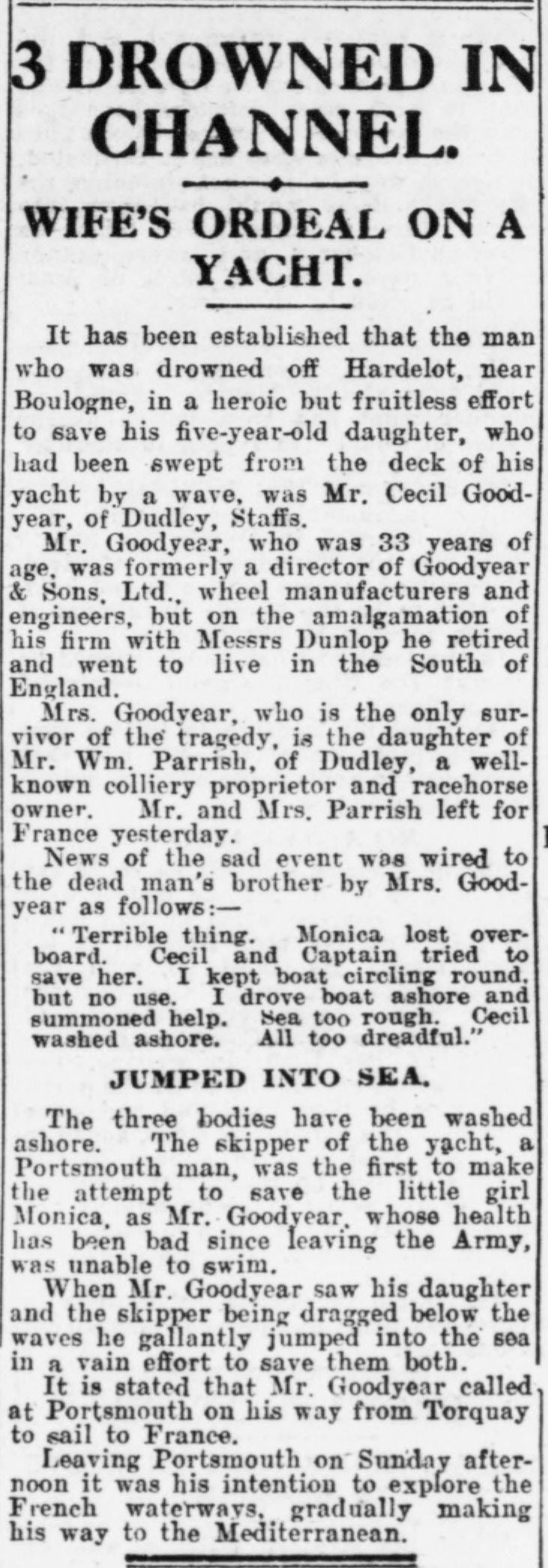
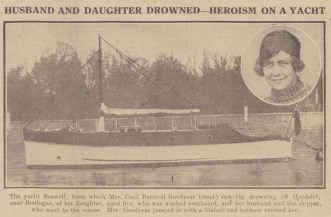
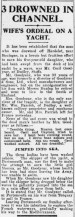
After retiring from the Army sometime in the 1920s Hugh moved to the south coast of England, settling at Hamworthy, near Portsmouth. On the 19th September 1927, aged 56, Hugh was captaining the motor-yacht ‘Seawolf’ in the English Channel. Also on board were the yacht’s owner, Cecil Percival Goodyear, his wife, and their five-year-old daughter Monica Goodyear. Cecil was a wealthy man, having recently retired in his early thirties after the family firm W. Goodyear and Sons, a wheel manufacturer (not the same as Goodyear Tyres), merged with Dunlop Rubber Co. Hugh was presumably being paid to skipper the yacht for the family on what was planned to be a lengthy cruise: they had set off from Portsmouth and planned to sail the waterways of France and eventually head to the Mediterranean.
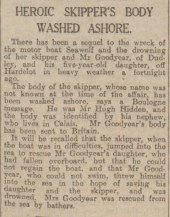
While sailing off Hardelot-Plage the seas became rough and Monica was swept overboard by a wave. Hugh jumped into the water to rescue her but was unable to climb back onto the boat. Mr. Goodyear, who could not swim and was reportedly in poor health, also jumped in to try and help them. All three drowned leaving only Mrs. Goodyear alive. Cecil and Monica’s bodies were washed ashore soon afterwards while Hugh’s was found washed up further north at Boulogne-sur-Mer on the 3rd October. He is buried at St. Michael's Churchyard in Hamworthy, most likely his local church, with a regimental headstone.
Hugh’s only son, Hugh Rensburg Hidden (sometimes written as ‘Rensburgh’ and seen scanned into databases as ‘Rensborg’, ‘Reusburg’ or ‘Rensbury’), was born in St Pancras, London, in January 1900 while his father was fighting in South Africa. In January 1918, while still a student and only just over the minimum age, he enlisted with the Royal Flying Corps, which became the Royal Air Force in April. He was discharged in May 1918 having been found medically unfit to be a Flying Officer. He joined the Inns of Court Officer Training Corps instead in June 1918 and reached the rank of Lance Sergeant before being demobilized in May 1919. As of 1921 he worked as an architect with the Imperial War Graves Commission in France. He served with 21 Army Group during WW2, receiving an emergency officer’s commission from the ranks in 1943 and reaching the rank of Lieutenant-Colonel. His work appears to have involved interactions with the Dutch government and he was awarded the Knight Officer of the Order of Orange-Nassau, with Swords, by the Netherlands in 1947. He died in 1977, survived by his wife Ada, with no children.
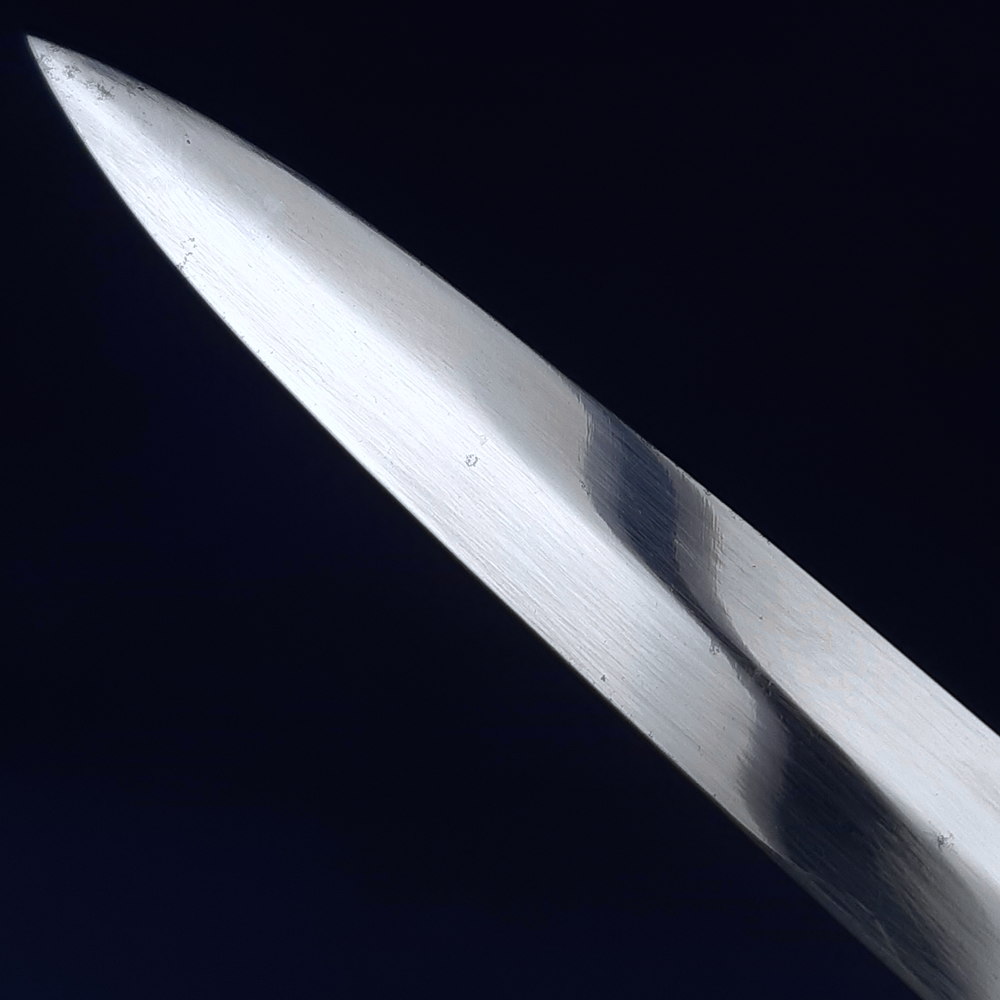
The sword is solidly peened with no movement to its parts. The blade’s edge is unsharpened with no nicks or chips, its point is likewise intact. Small areas of light cleaned pitting and patination to the blade – this impacts the etched area and a small part of the spine but does not obscure any of the main designs. The etching is otherwise excellent, crisp and bright, retaining the contrast between the matt background and bright designs. The sword has excellent bright finishes overall, only tiny areas of wear to the nickel plating of the backstrap, pommel cap and near the sword knot slit. All the brass parts have an even light patina with good retention of detail suggesting little in the way of repolishing. The shagreen of the grip is free of damage, with very light handling wear. Its wire binding is all intact, slight movement to the loop next to the ferrule and the two loops nearest the pommel. The scabbard is superb, completely free of dents, bright and clean, with both screws at the throat.
