

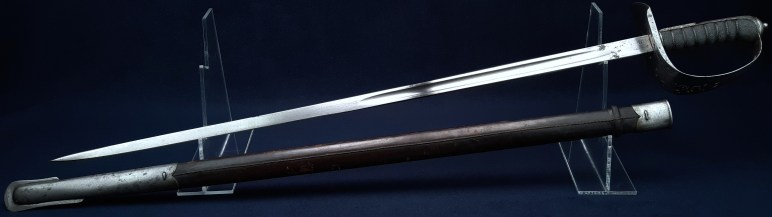
British Indian Army 1898 Pattern Infantry Staff Sergeant’s Sword by Wilkinson, With Unit Mark
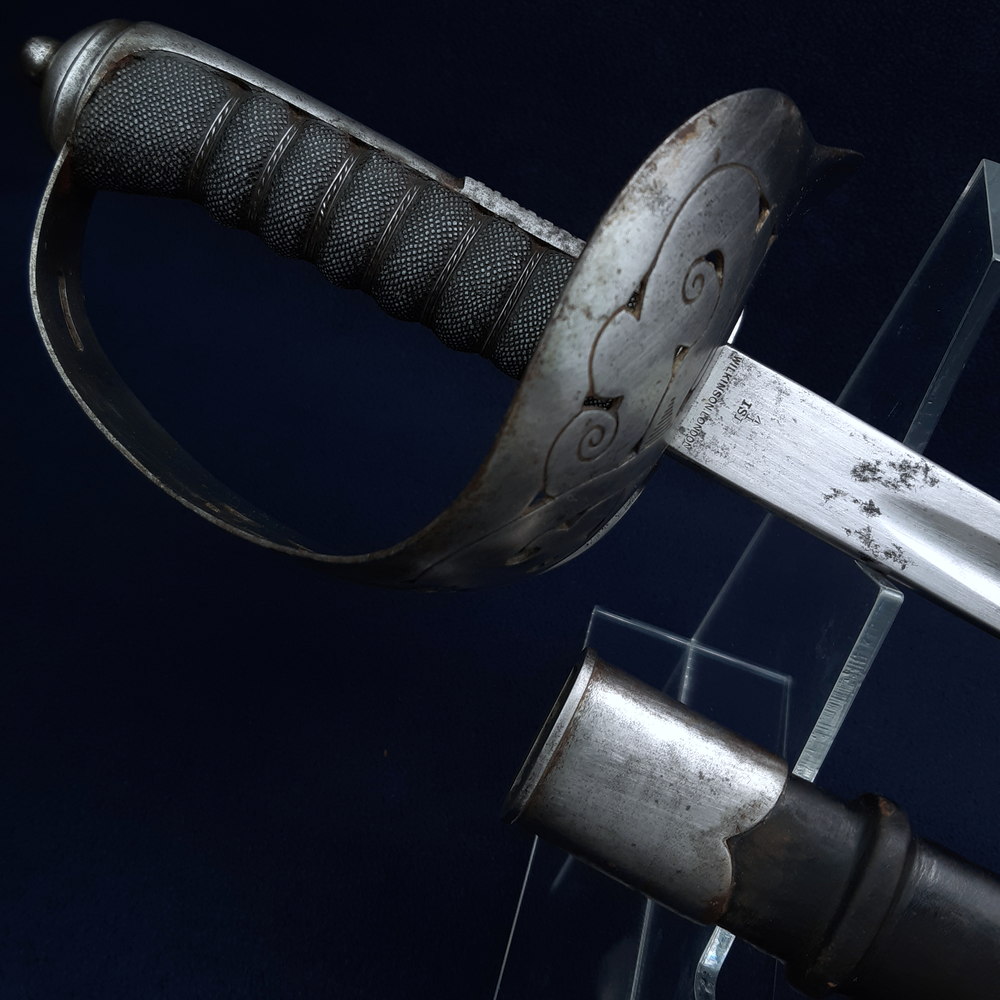
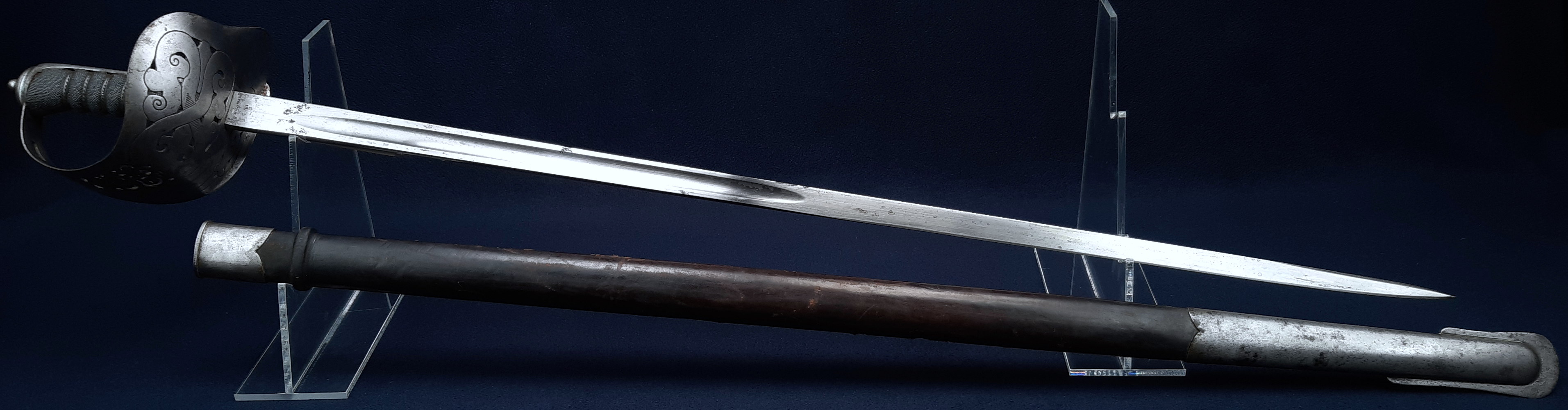
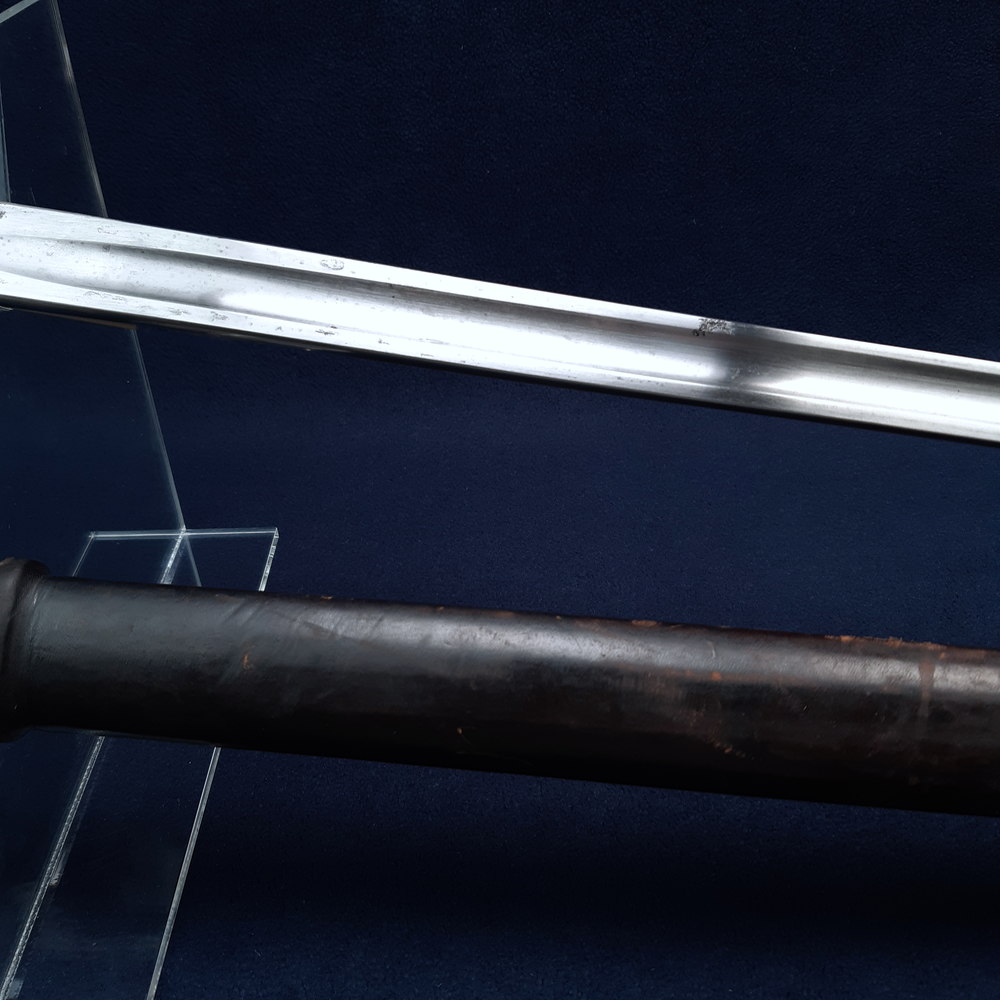
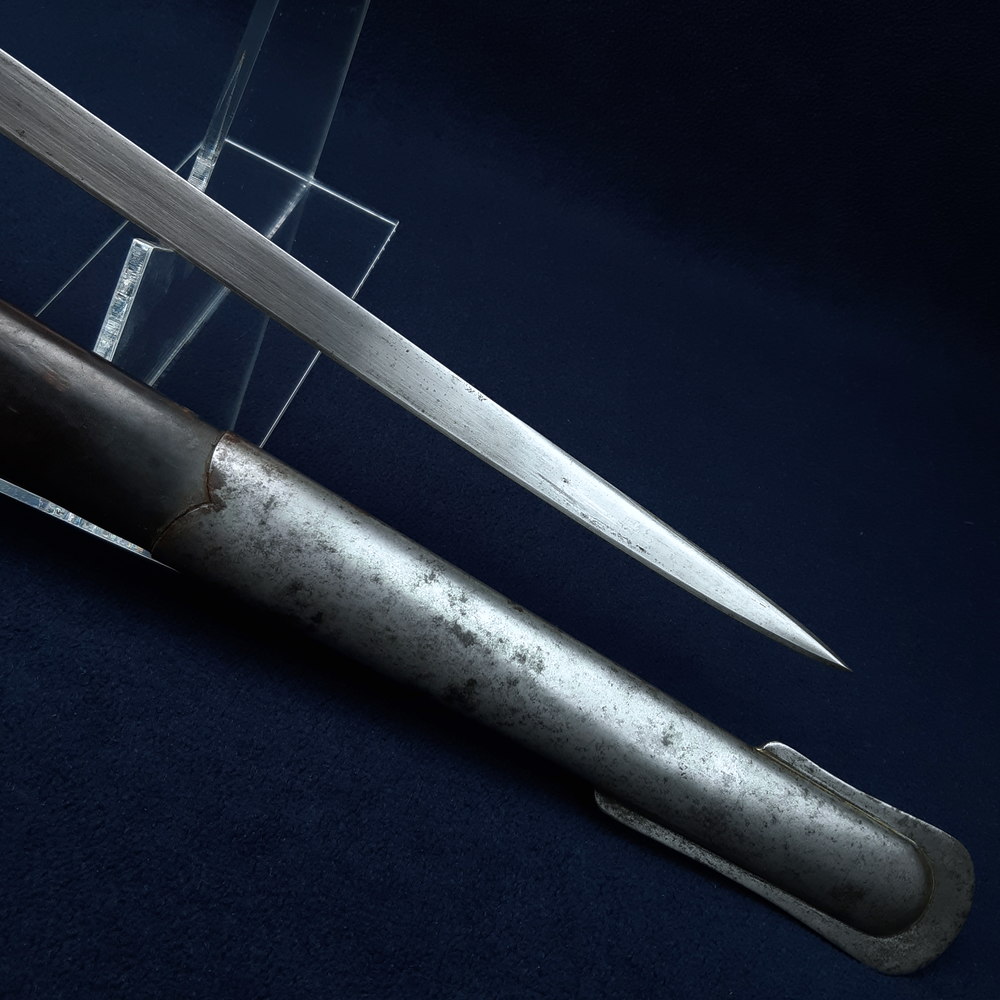
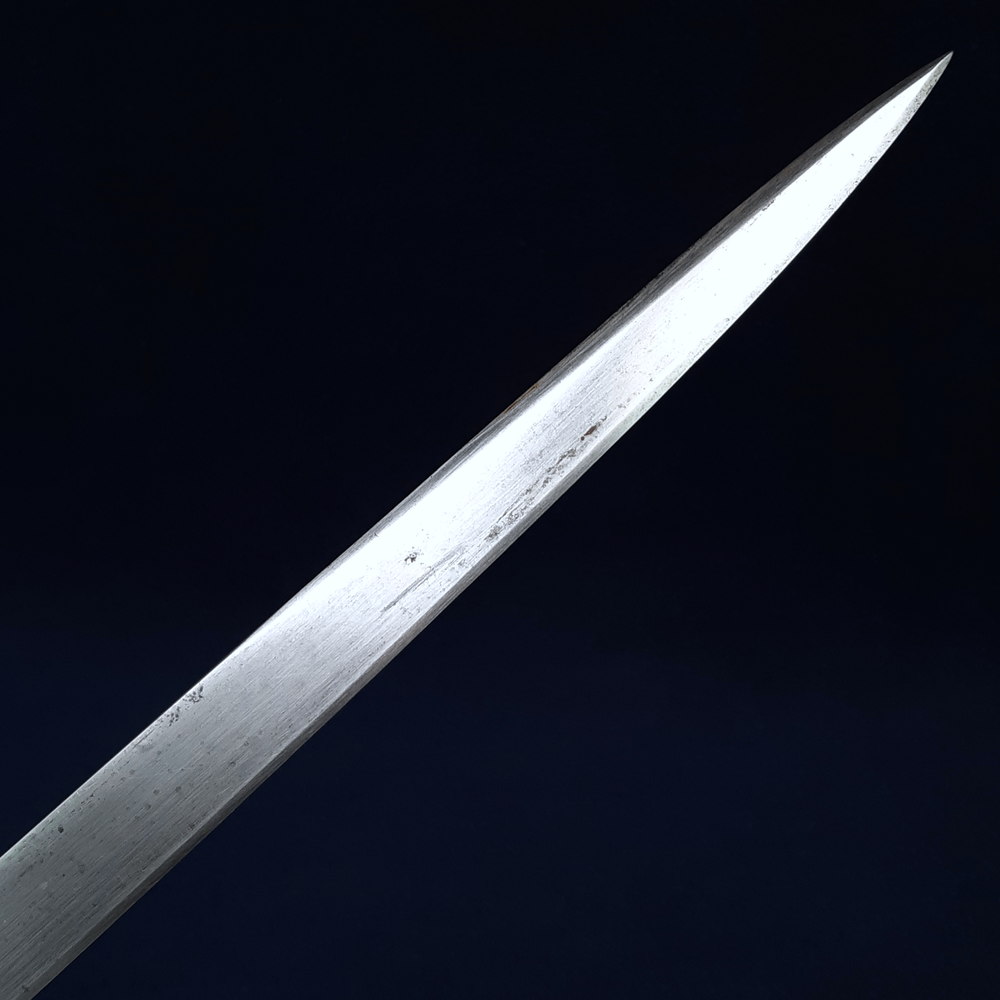
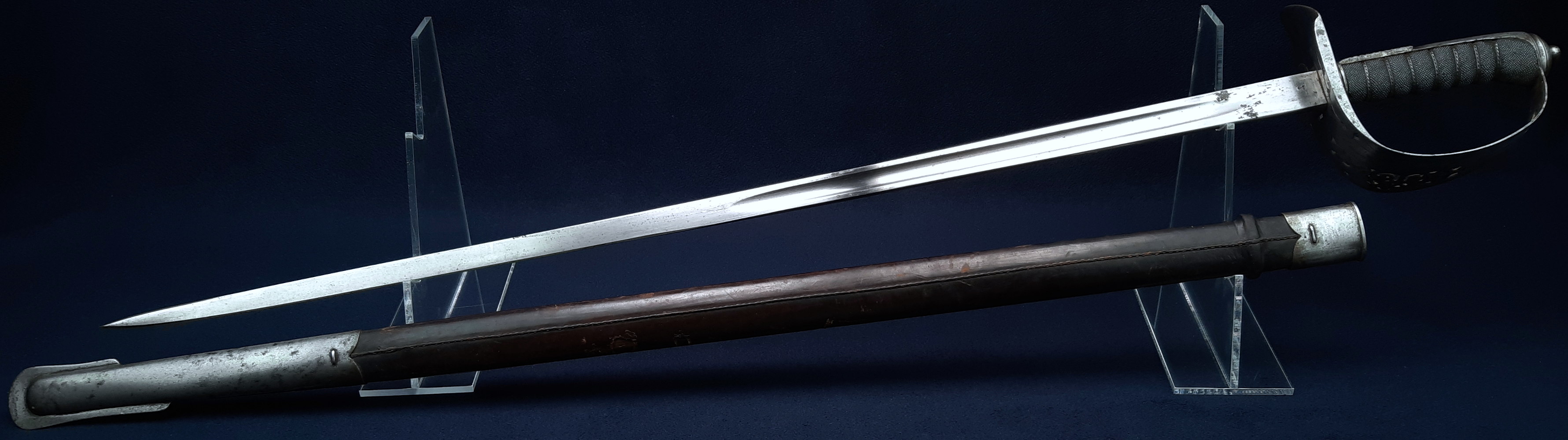
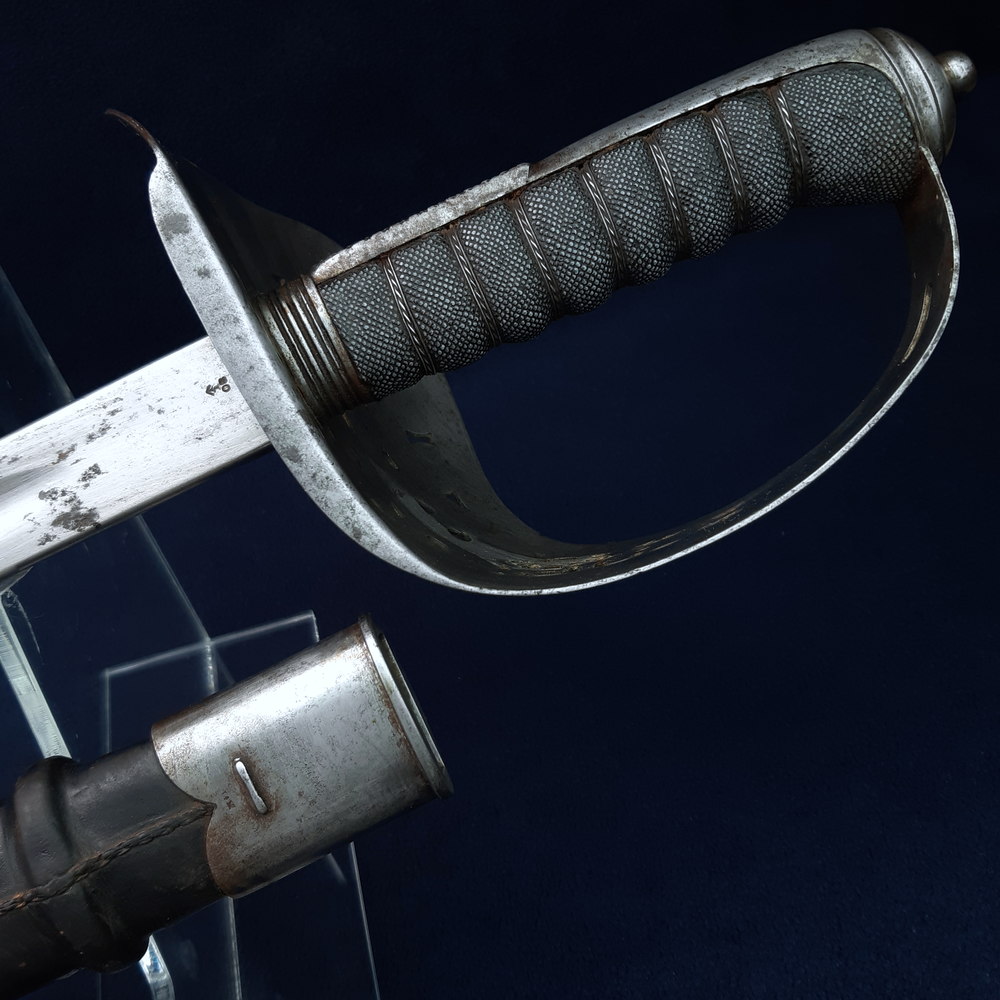
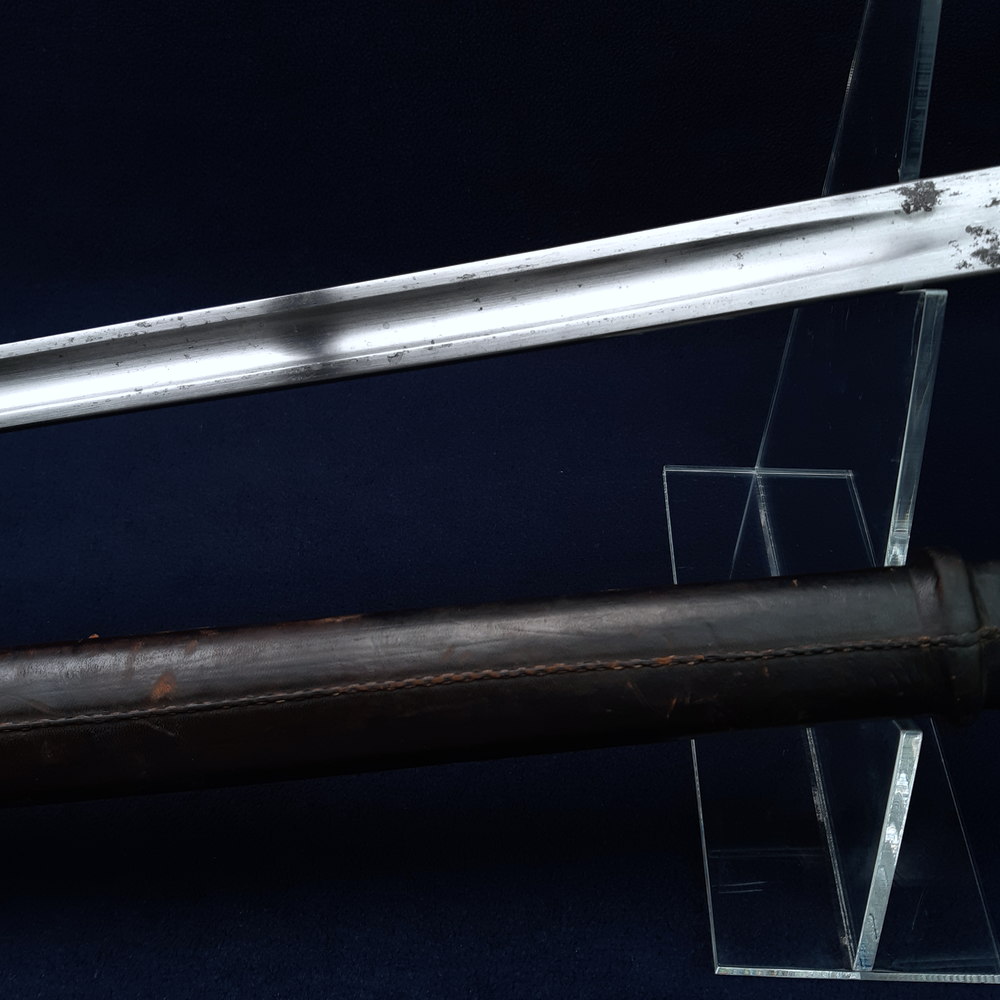
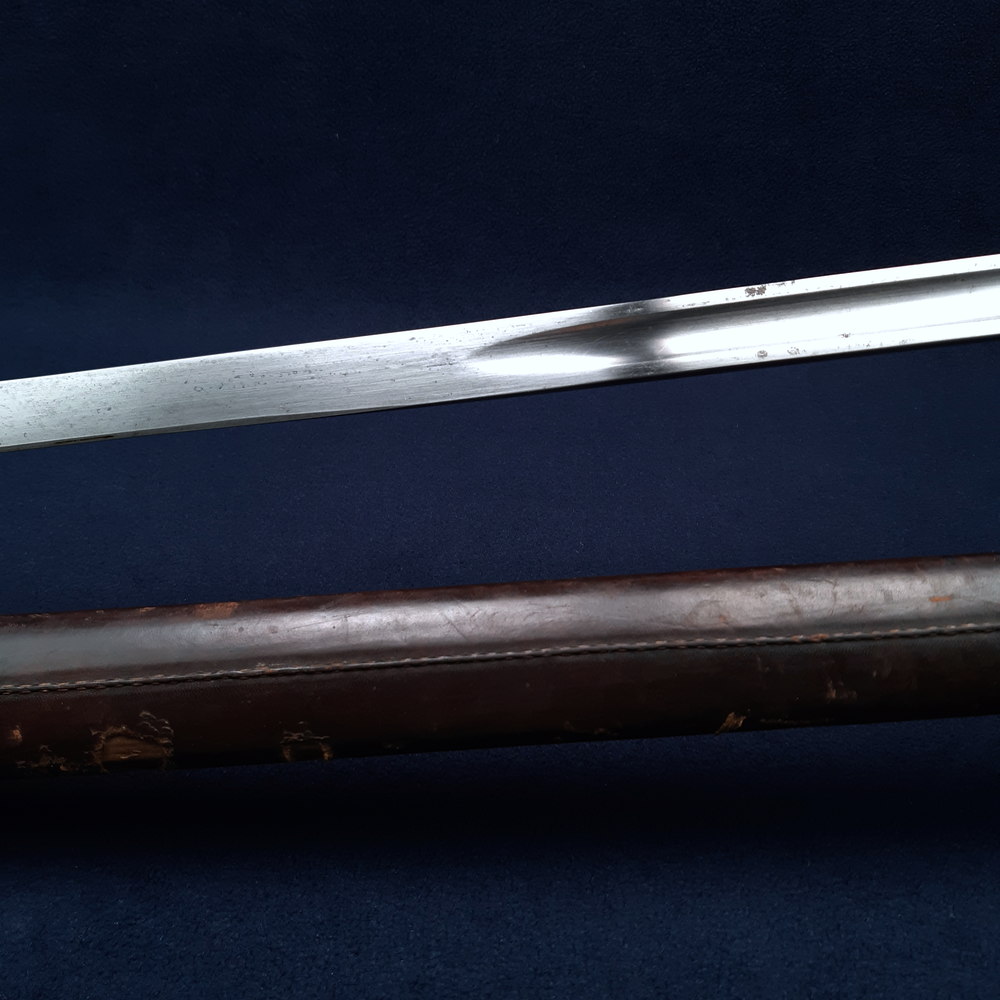
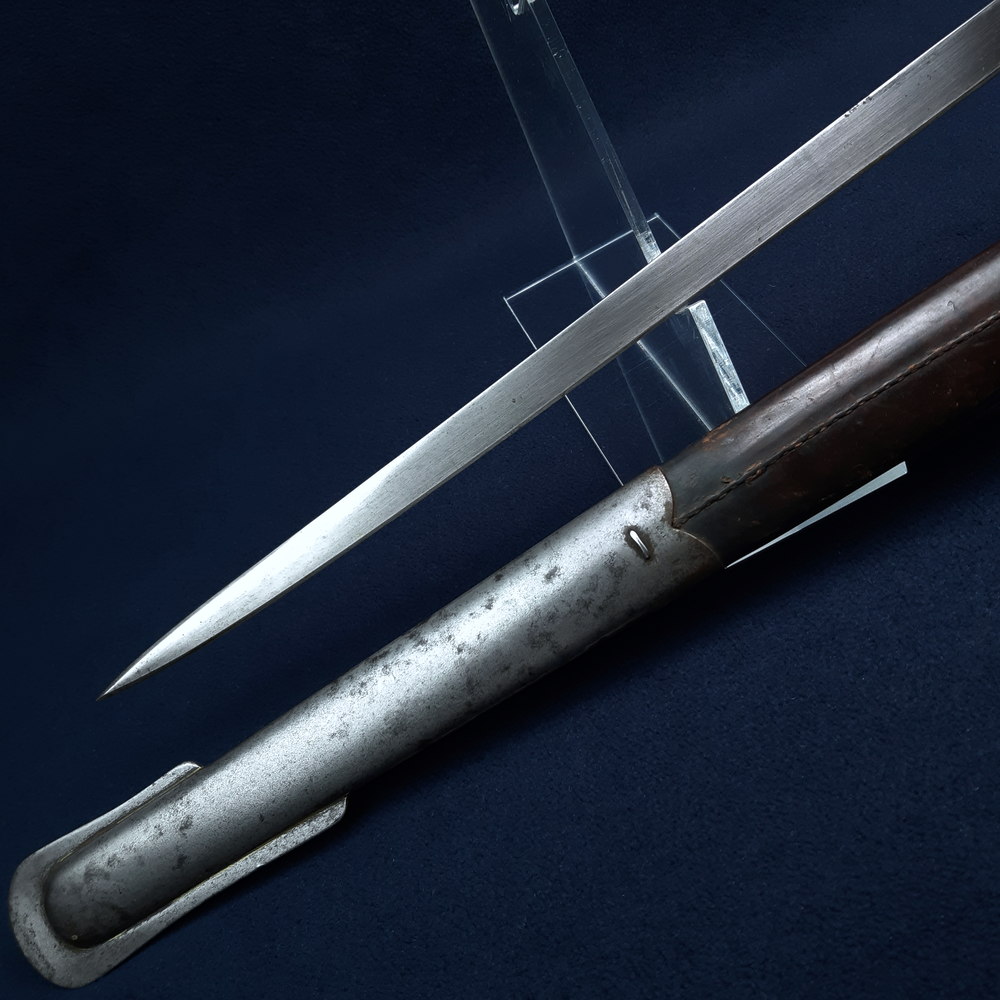
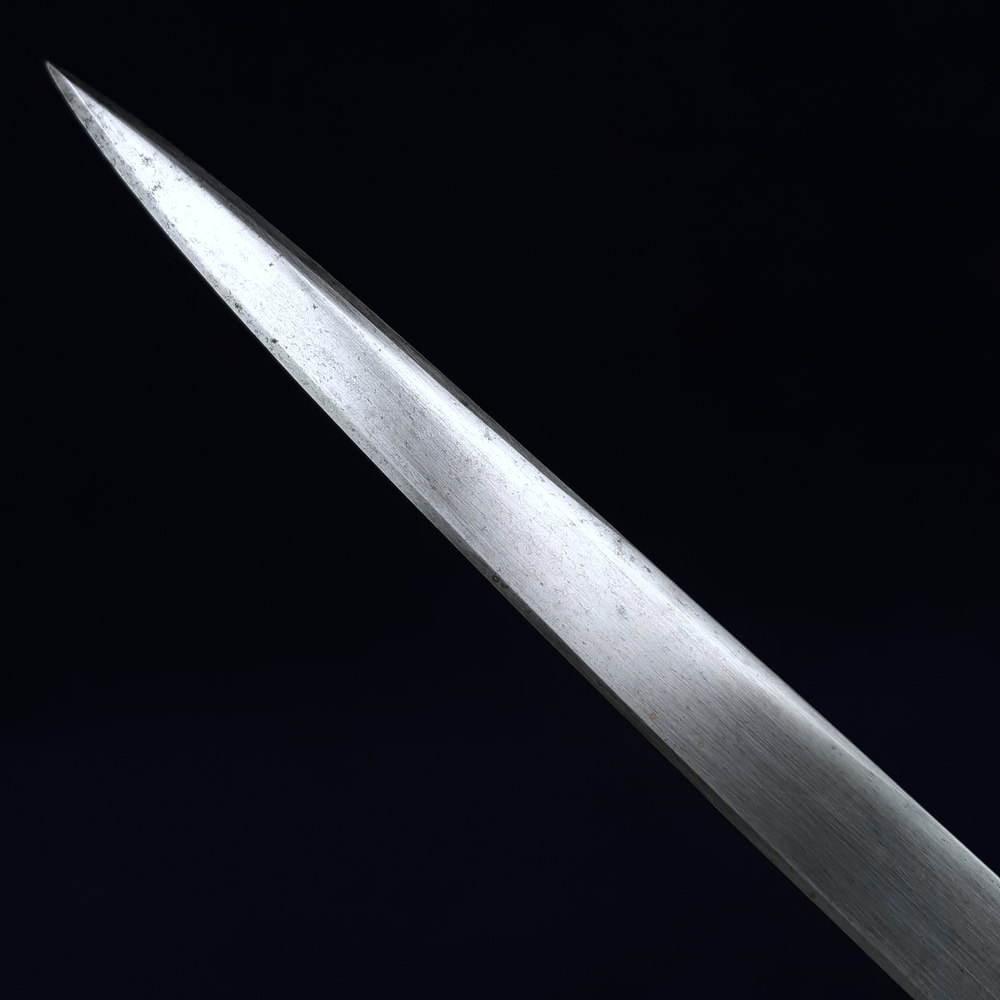
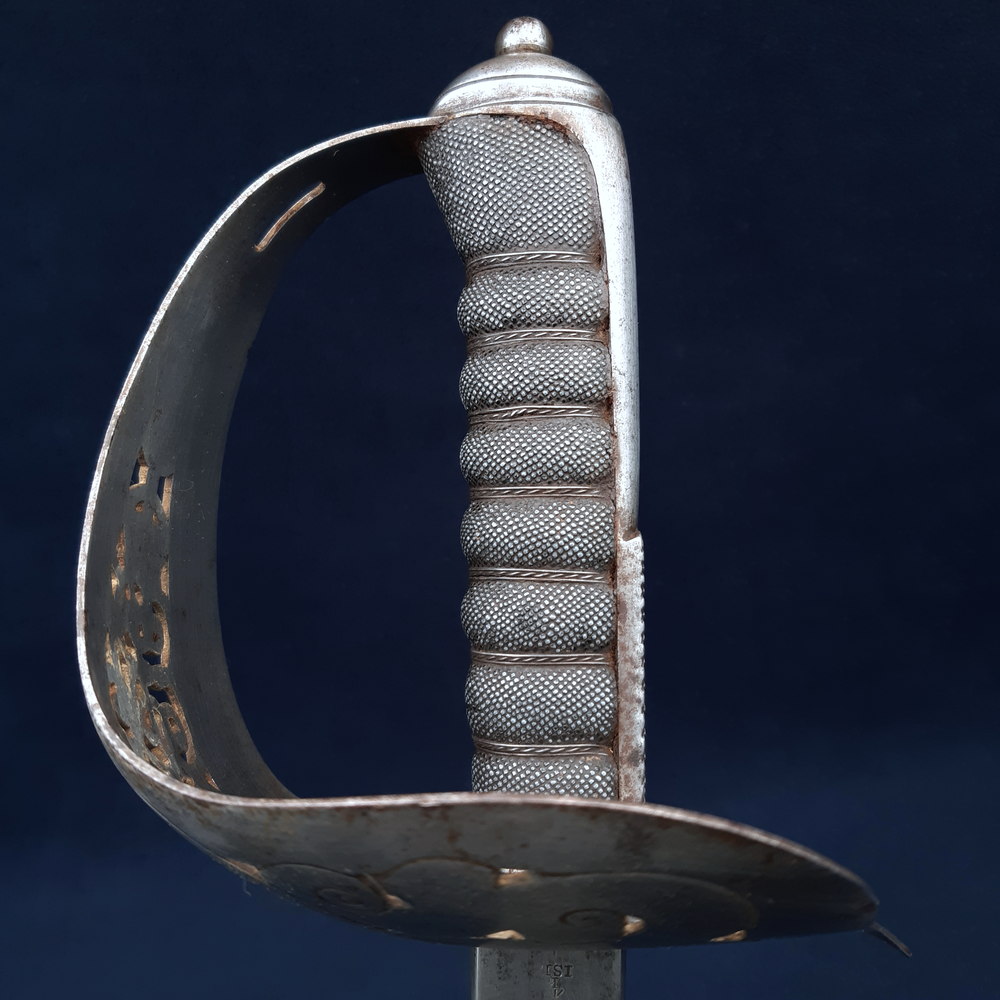
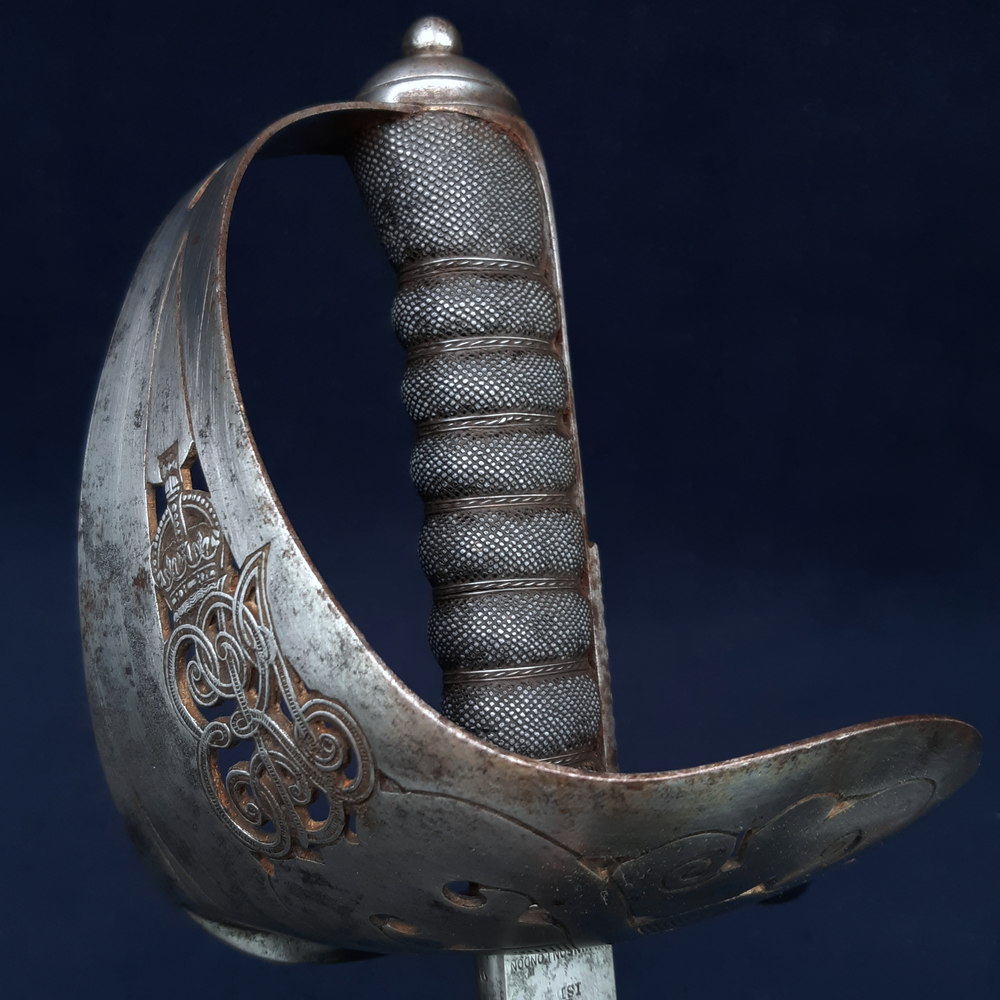
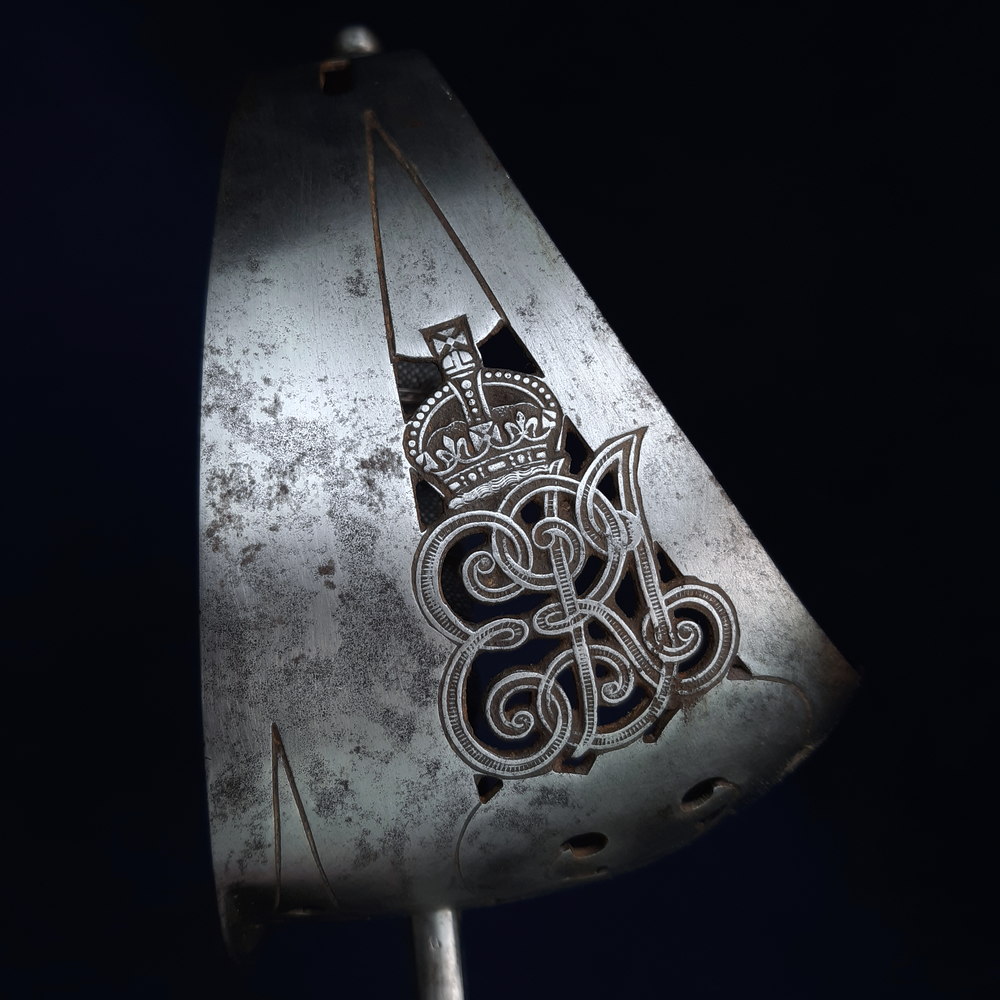
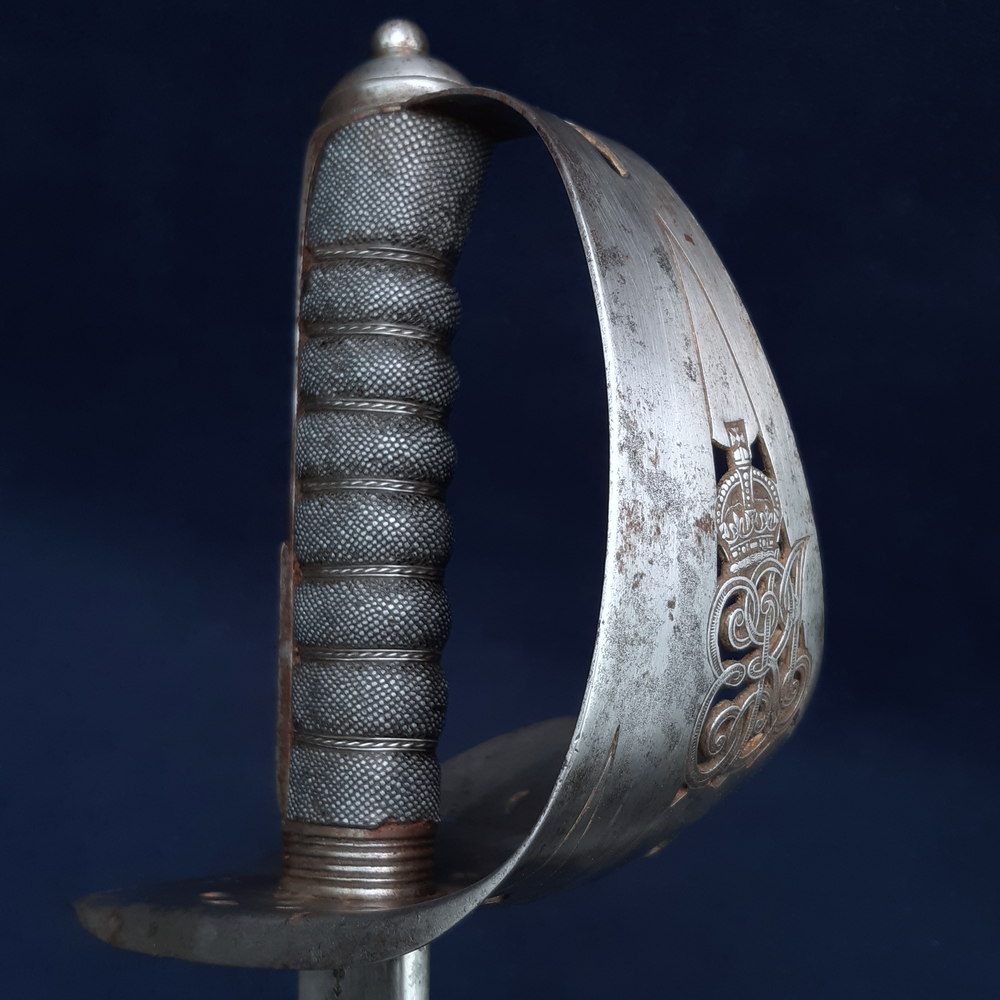
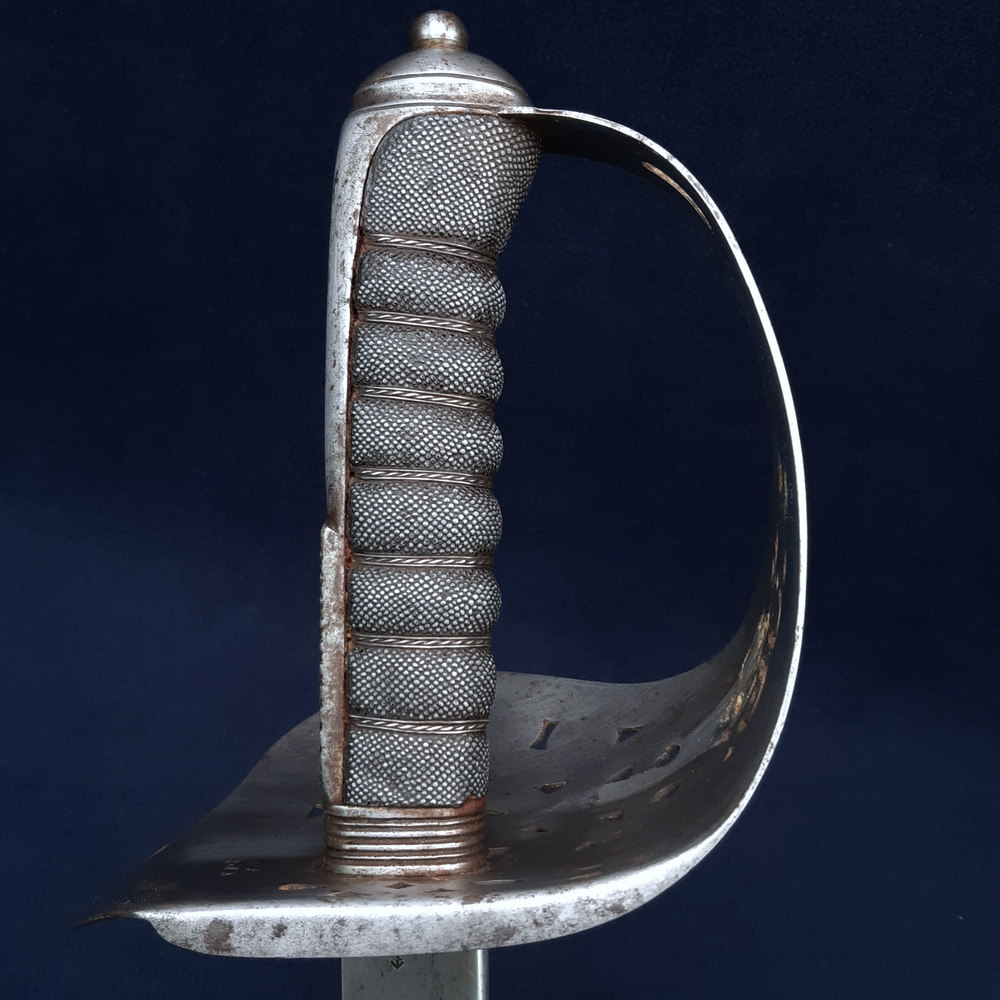
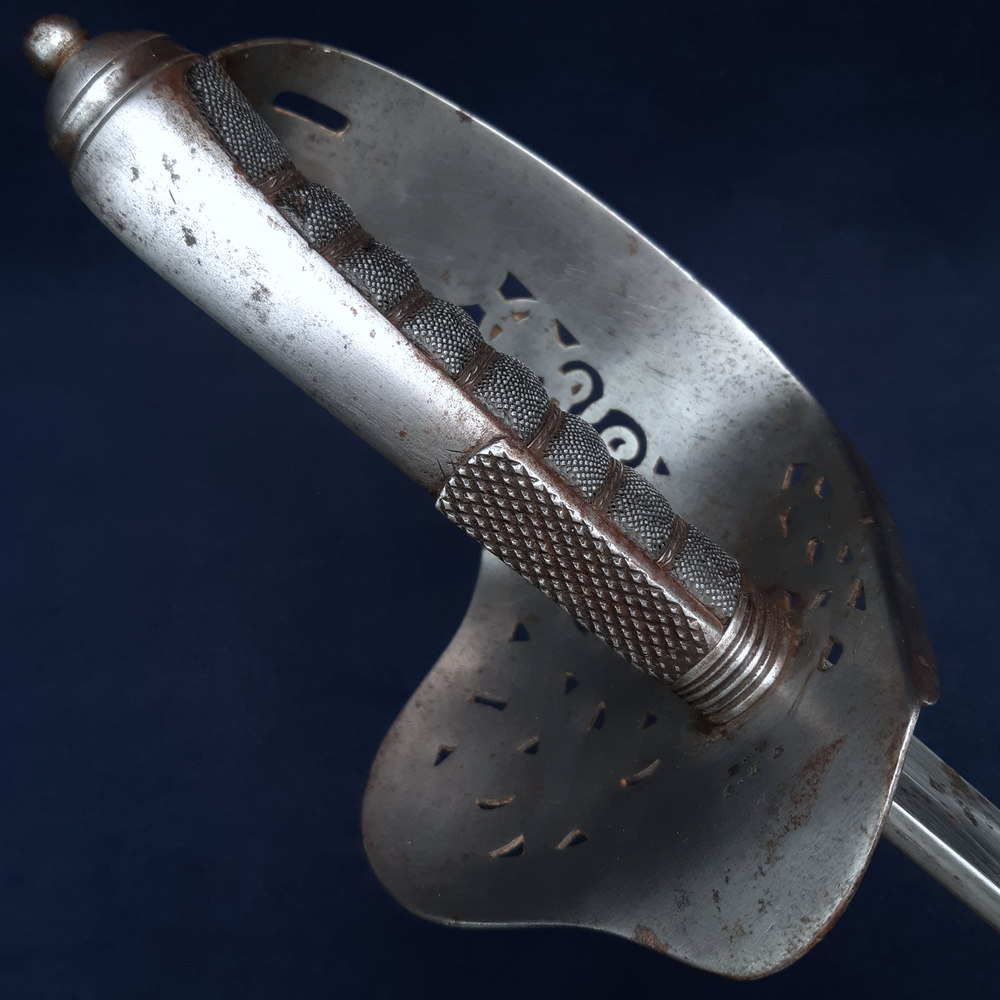
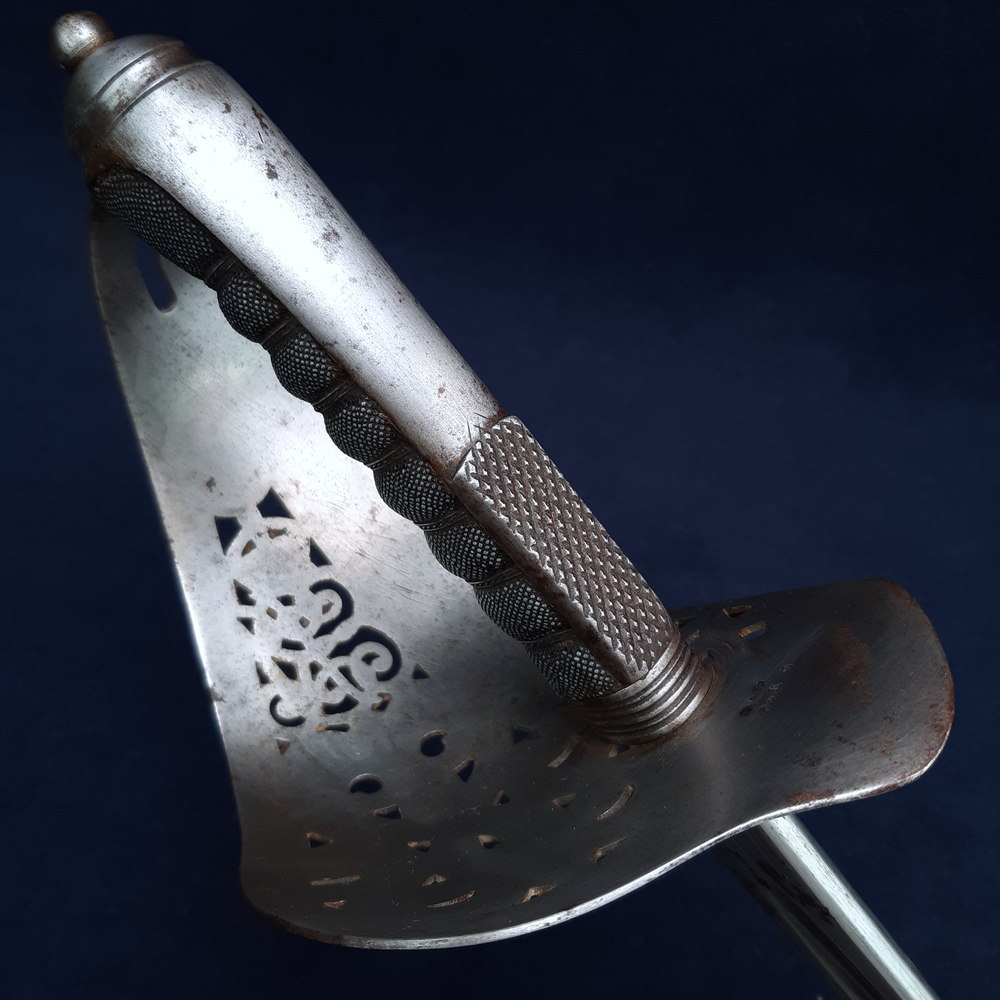
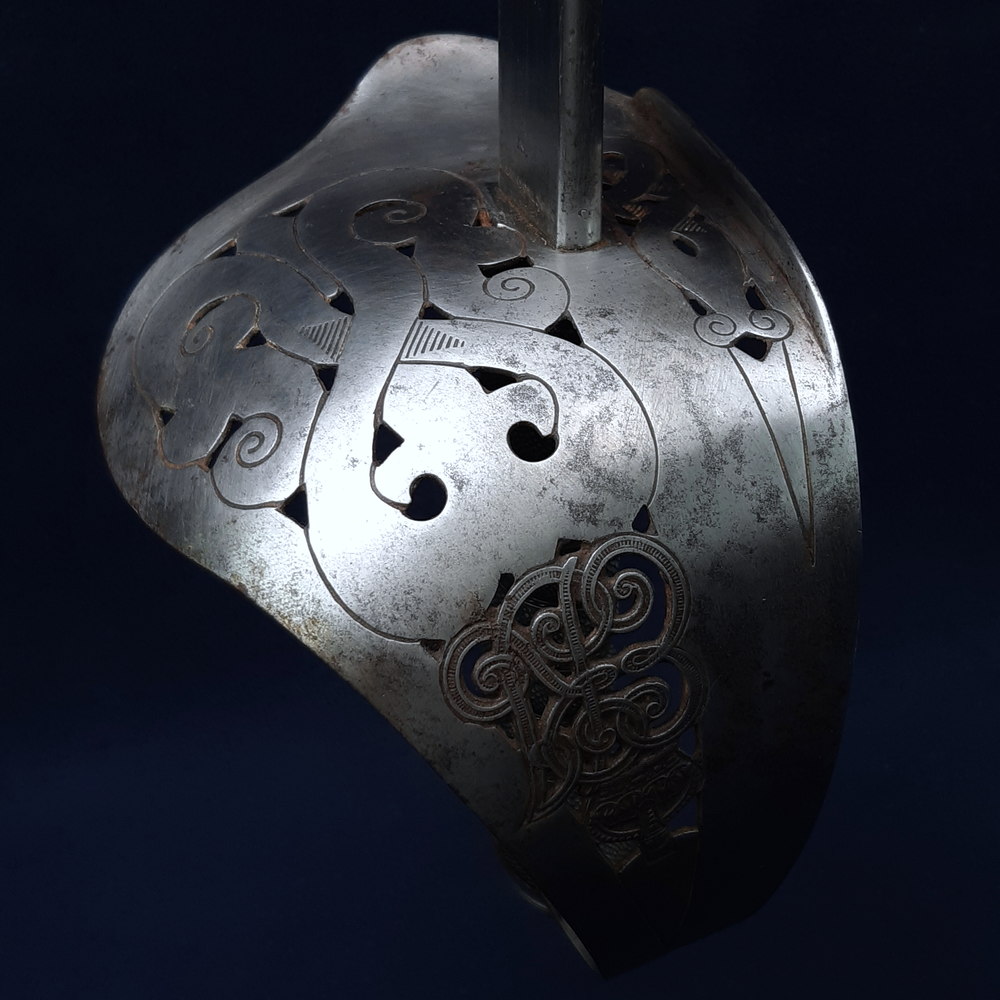
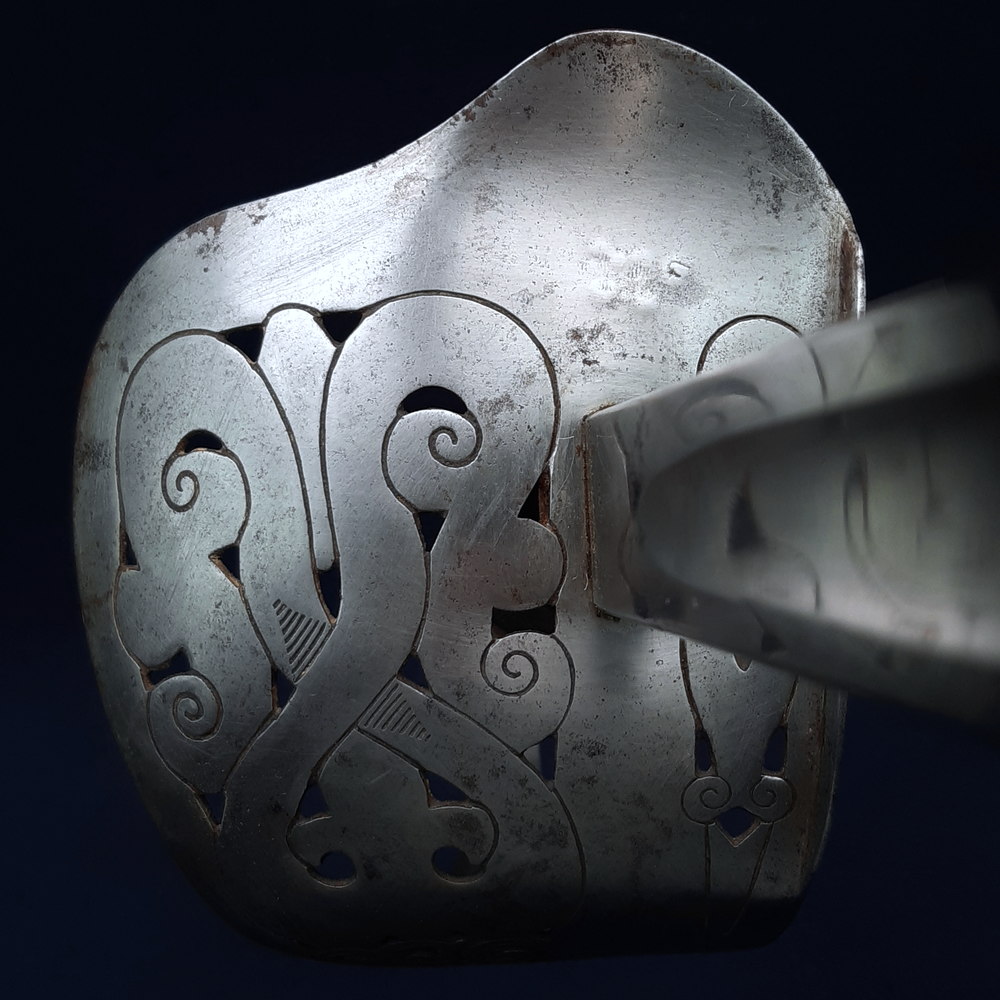
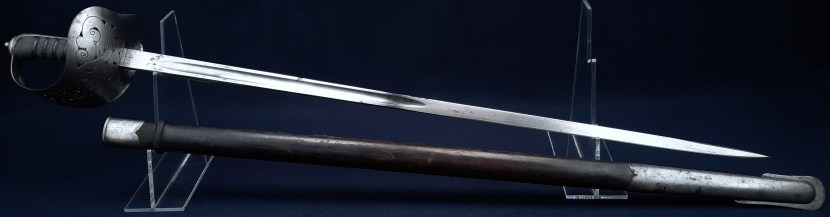
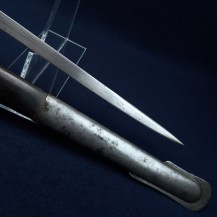
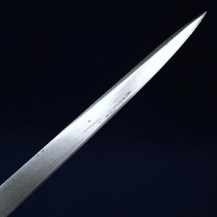
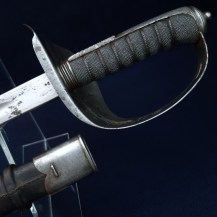
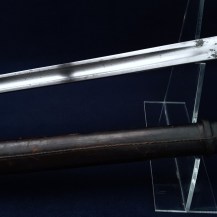
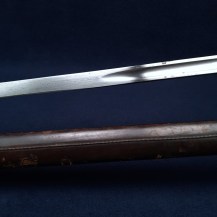
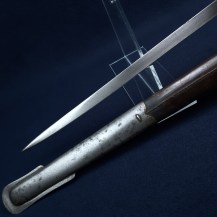
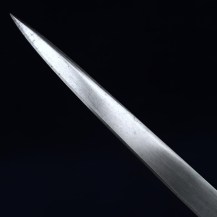
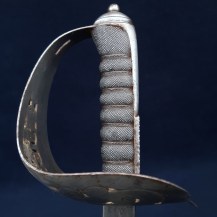
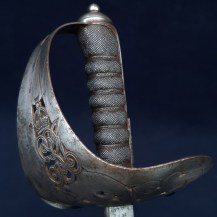
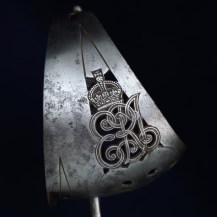
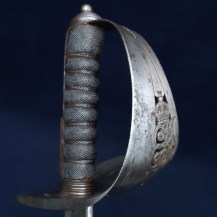
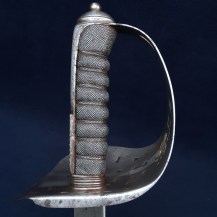
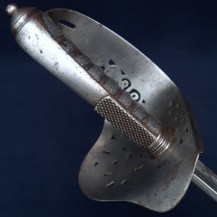
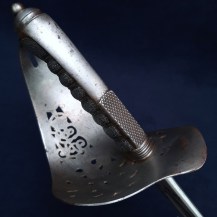
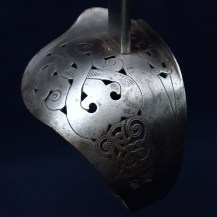
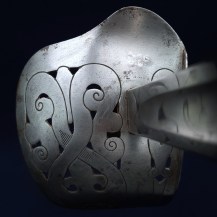
Single-fullered straight blade with spear point, steel hilt with pierced decoration including crown and imperial cypher of King and Emperor Edward VII as used in India: ‘ERI’ (Edwardus Rex Imperator). Steel backstrap with chequered thumb rest and integral pommel, grey shagreen grip bound with wire. No washer. Brown leather field scabbard in the Indian style with steel throat and chape pieces, leather ridge near the throat for hanging from a belt or cummerbund in the manner of a tulwar. Blade 32 11/16 inches in length (83cm), the sword 39 inches overall.
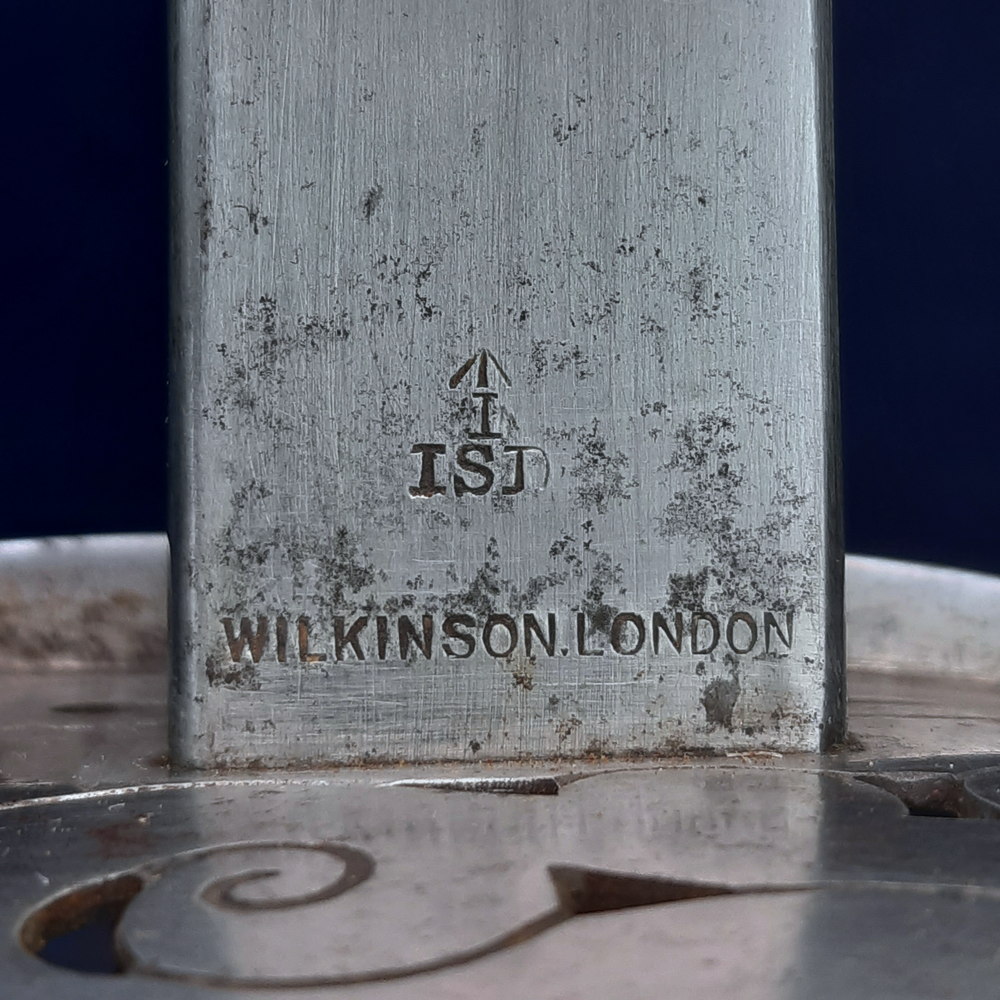
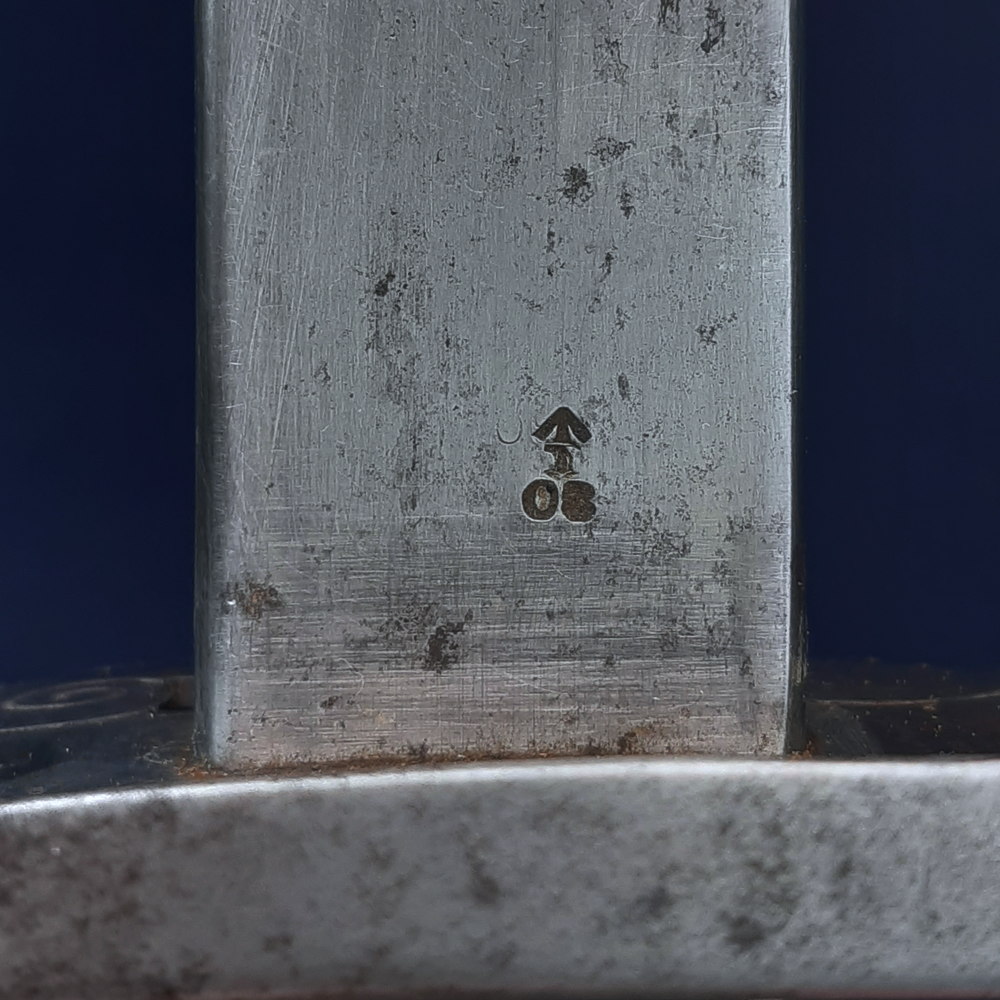
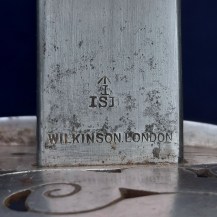
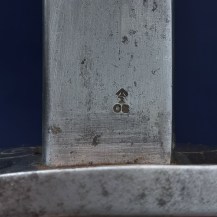
The blade is stamped at the ricasso on one side with a broad arrow over ‘I’ and ‘ISD’, indicating ownership by the Indian Stores Department, and below this the maker’s mark ‘WILKINSON LONDON’. The other side of the blade is stamped with another broad arrow over ‘I’ and ‘06’.
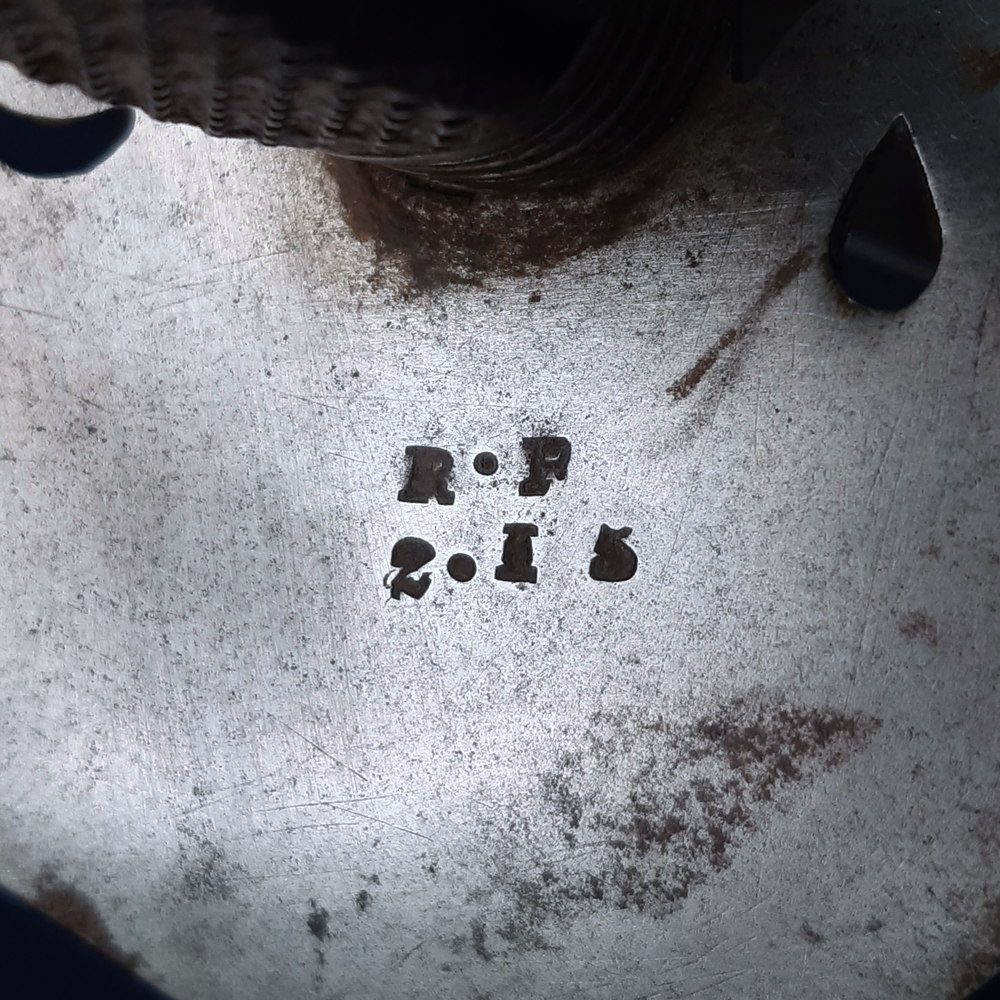
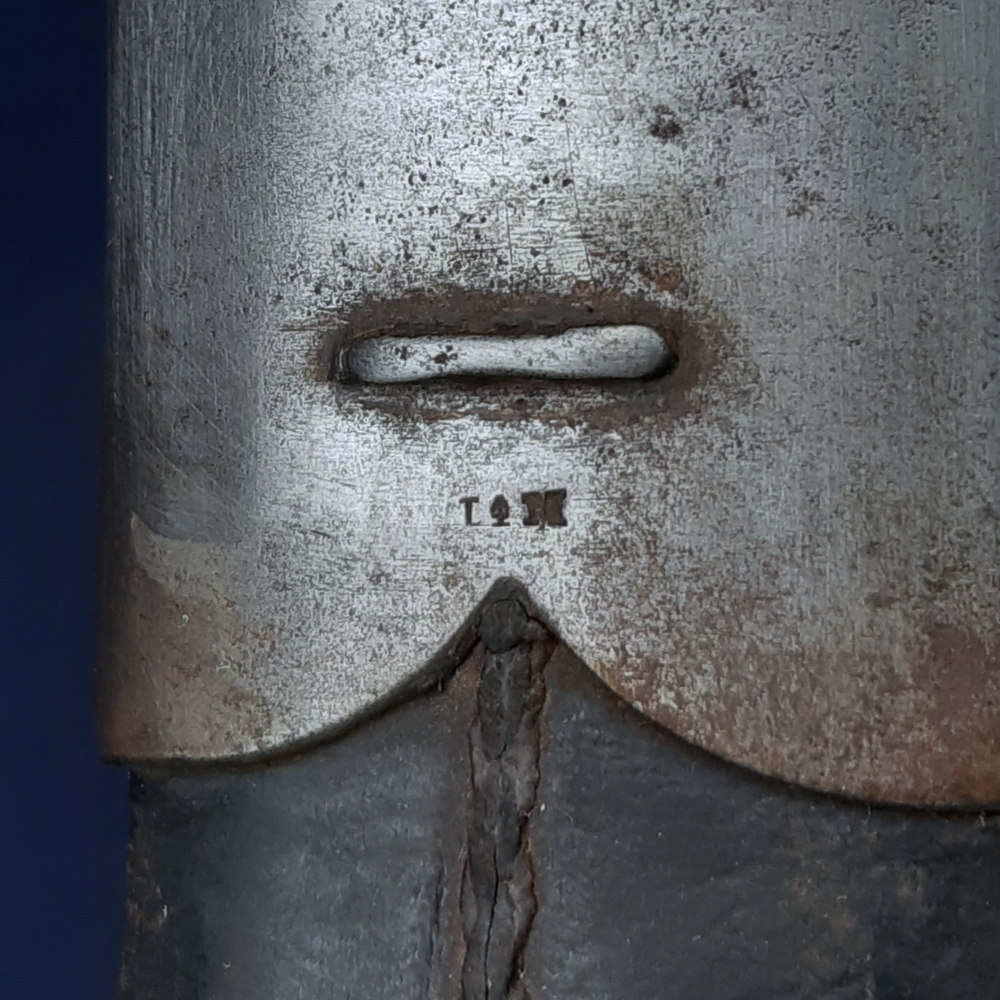
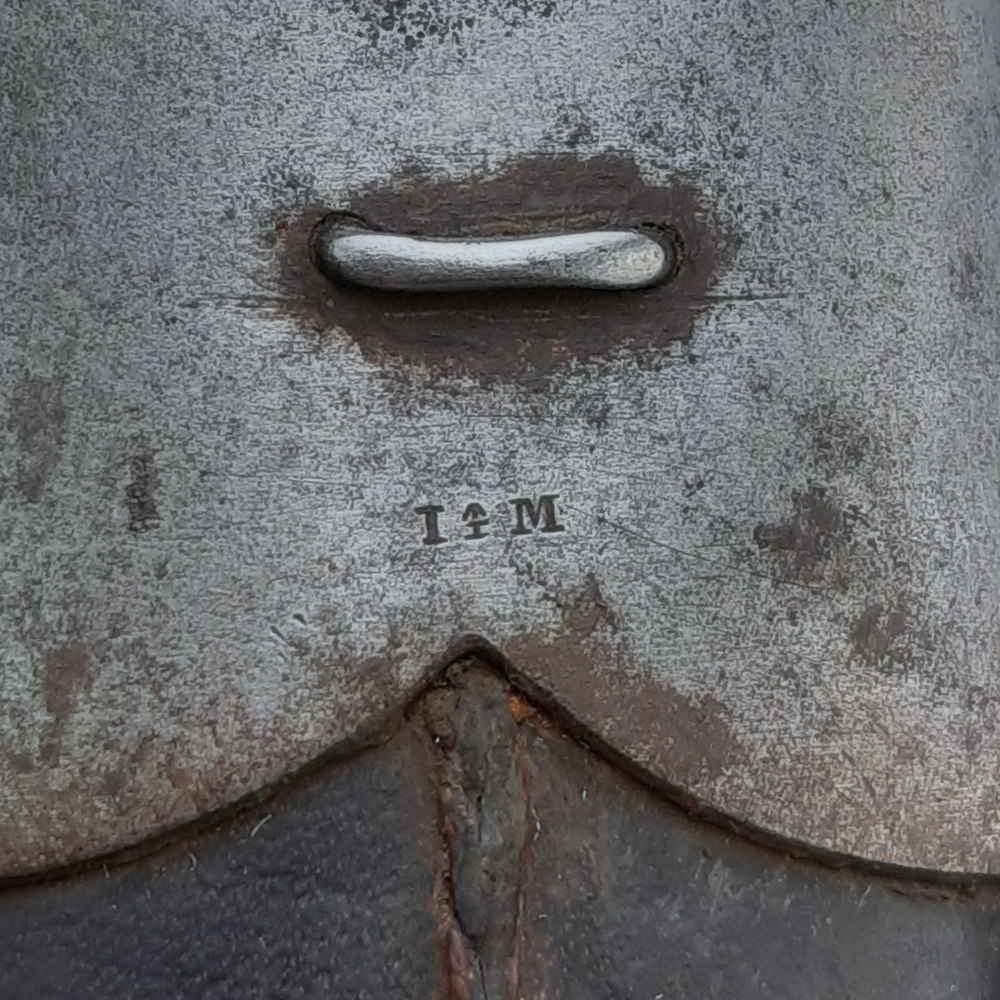
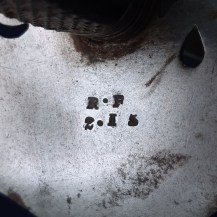
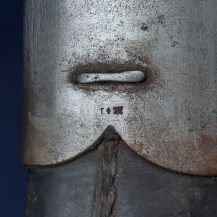
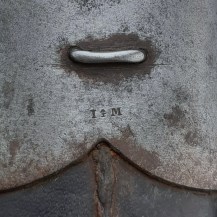
The inside of the hilt is stamped near the ferrule with ‘R.P’ over ‘2.15’. The format and placement suggests this is a unit mark and issue date, i.e. that the sword was issued in February 1915 to the unit abbreviated to ‘R.P.’ I do not know which unit this refers to within the Indian Army at the time, however. The throat and chape pieces of the scabbard are both stamped next to the staple with a tiny mark ‘I ^ M’ where ^ is a broad arrow with a smaller letter I beneath it. This is most likely an Indian government ownership stamp.
British Army sergeants continued to carry swords as a sign of rank even after they were withdrawn from the basic infantryman. Unlike officers, who purchased and owned their own swords, sergeants were issued their swords from regimental stores like a musket or bayonet, and the swords remained government property. Regiments only needed a small stock of sergeants’ swords and would only have disposed of them when obsolete or broken, so the sergeant’s models are rarer than the officer’s today.
The same dress and armoury standards prevailed in the Indian Army during the period of British rule: staff sergeants and senior NCOs like Company Havildar Majors (the Indian equivalent of Company Sergeant Majors) were authorized to carry Sergeant’s pattern swords. After India gained its independence, the Indian Army reduced sword carriage to officers only. Regarded by some as an unwanted colonial tradition, their carriage is today limited to designated parade leaders and contingent commanders during major national events.
A new design of infantry officer’s sword was finalised in 1897, and a near-identical version was introduced for sergeants in the same year, the 1897 Pattern. The blade of this version was criticised as being too light and not stiff enough, and was quickly replaced by this, the 1898 Pattern, a slightly beefier version.
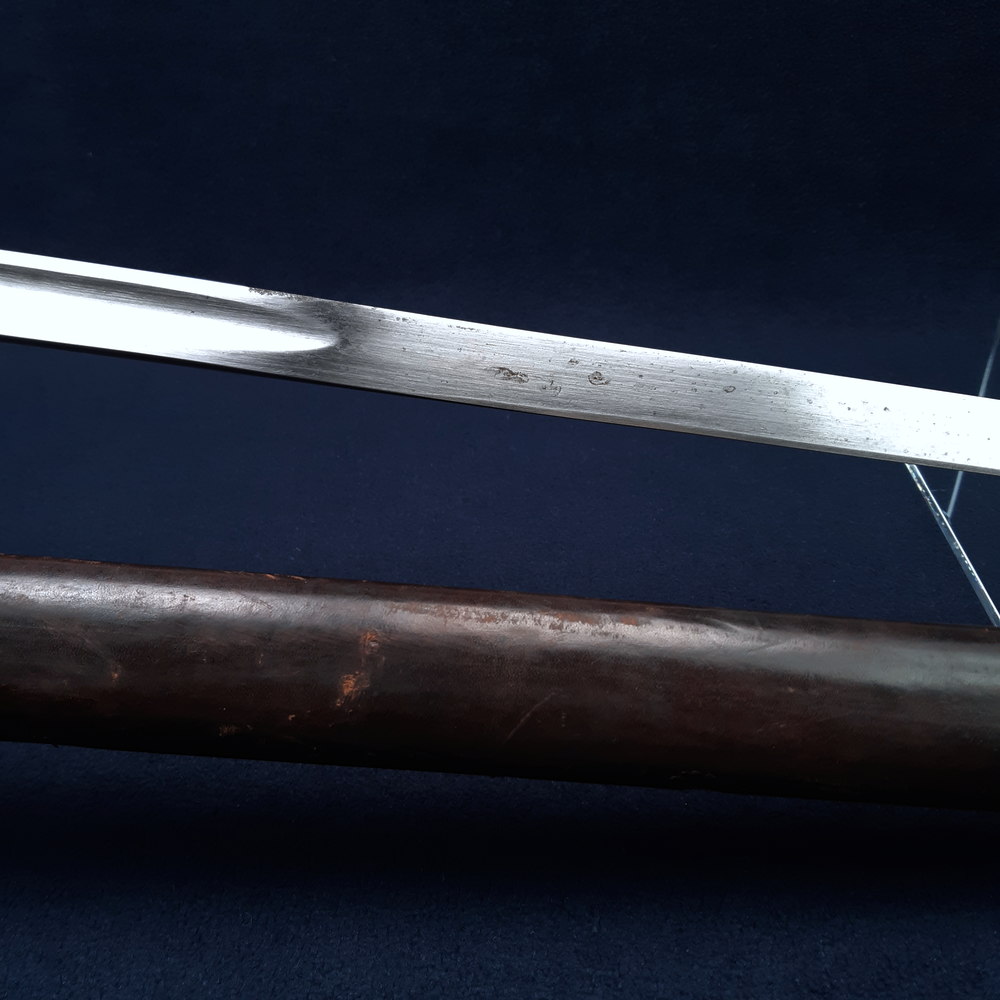
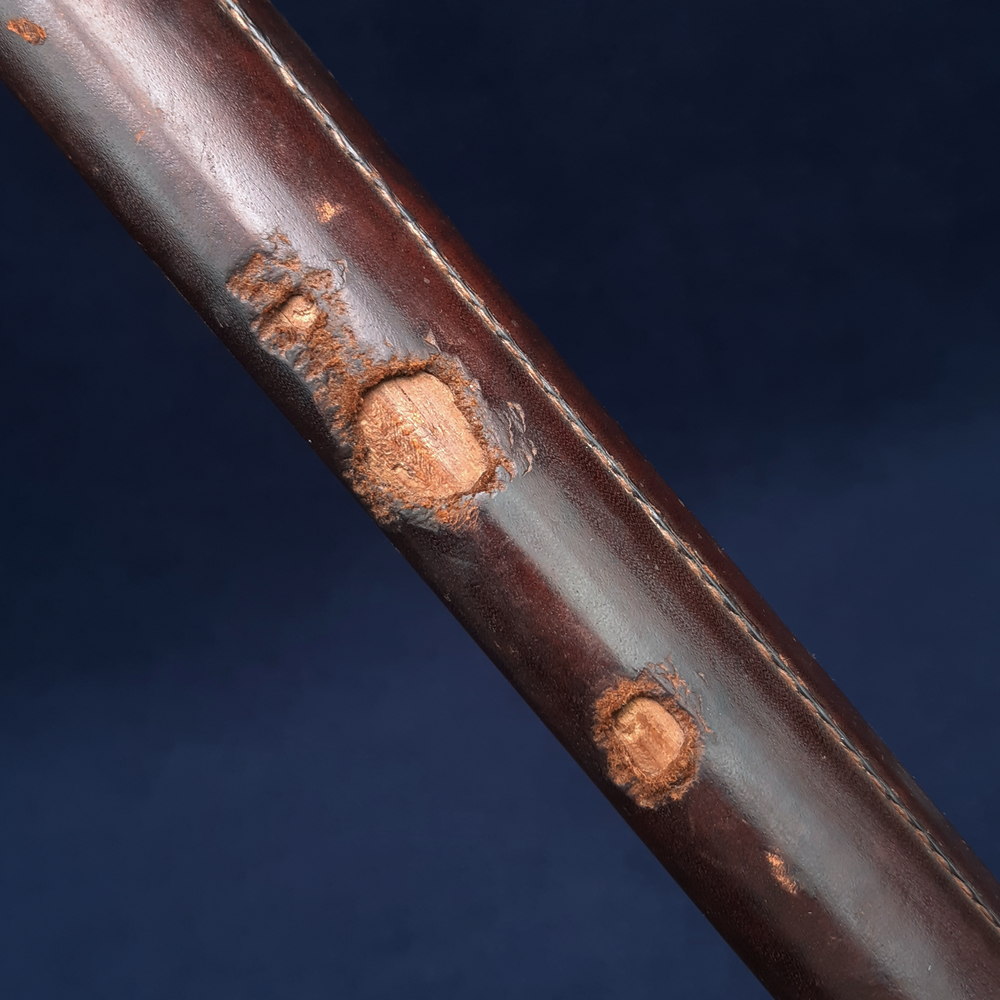
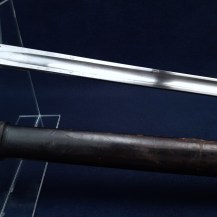
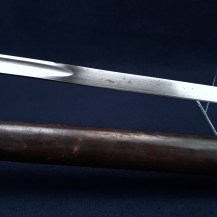
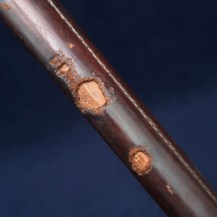
The blade has scattered very light patination and a few small spots of dark patination with pitting. Its edge is sharp with an intact tip and no edge damage. The outside of the guard has cloudy light patination with some small spots of pitting at its edges. The inside of the guard has some light scratching, speckled light patination and small spots of pitting at its edges. The backstrap and pommel has some small spots of moderate patination. The wire binding of the grip is all present and tight, slight compression to one loop, the shagreen of the grip has light handling wear and a couple of scattered lost scales. The sword Is solidly peened with no movement to any parts, the blade rings when struck. The steel sections of the scabbard have spotted light to moderate patination, in places with light pitting. The leather of the scabbard has some spots of surface abrasion, as well as a couple of lost patches on one edge exposing the wood core. All of its stitching is intact.
