

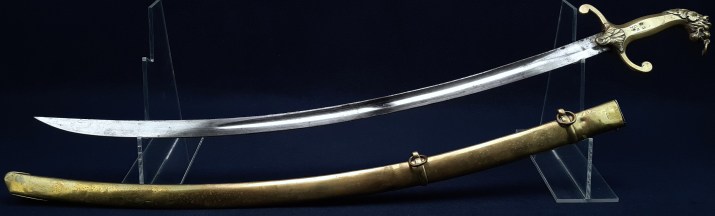
British Bandsman's Sword of the Cambridgeshire Militia, Circa 1833
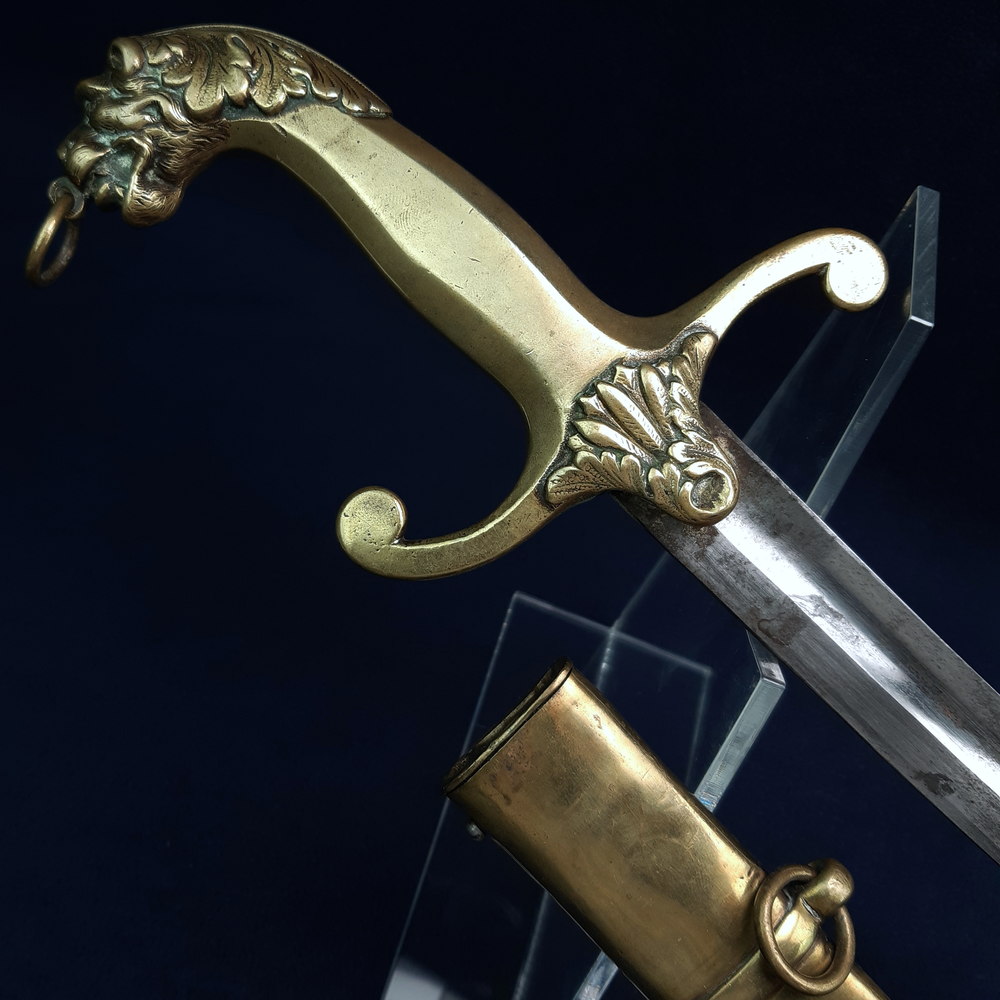
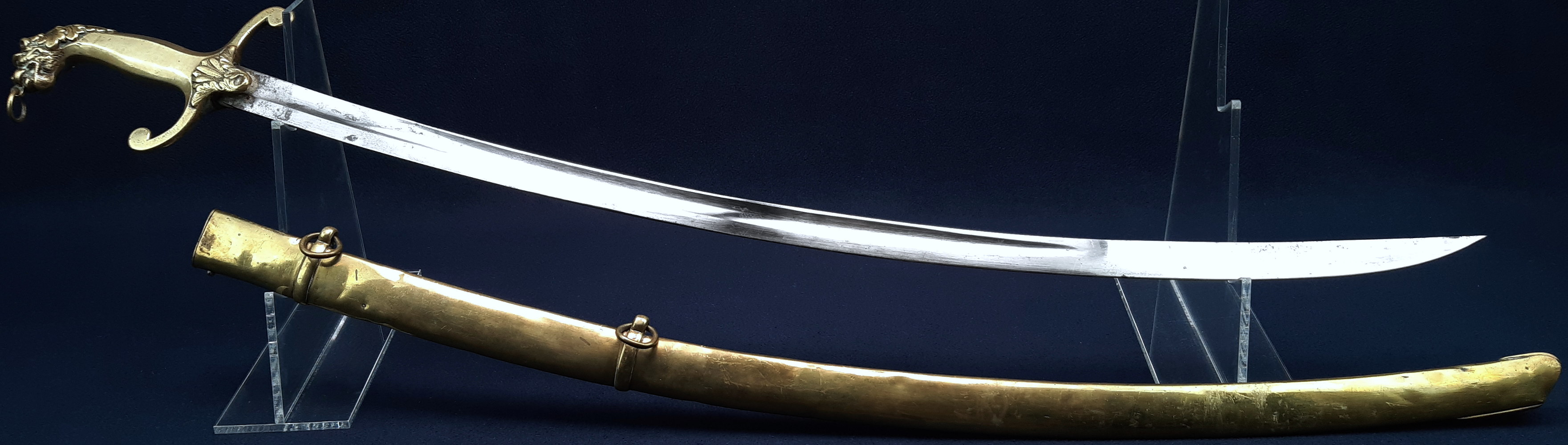
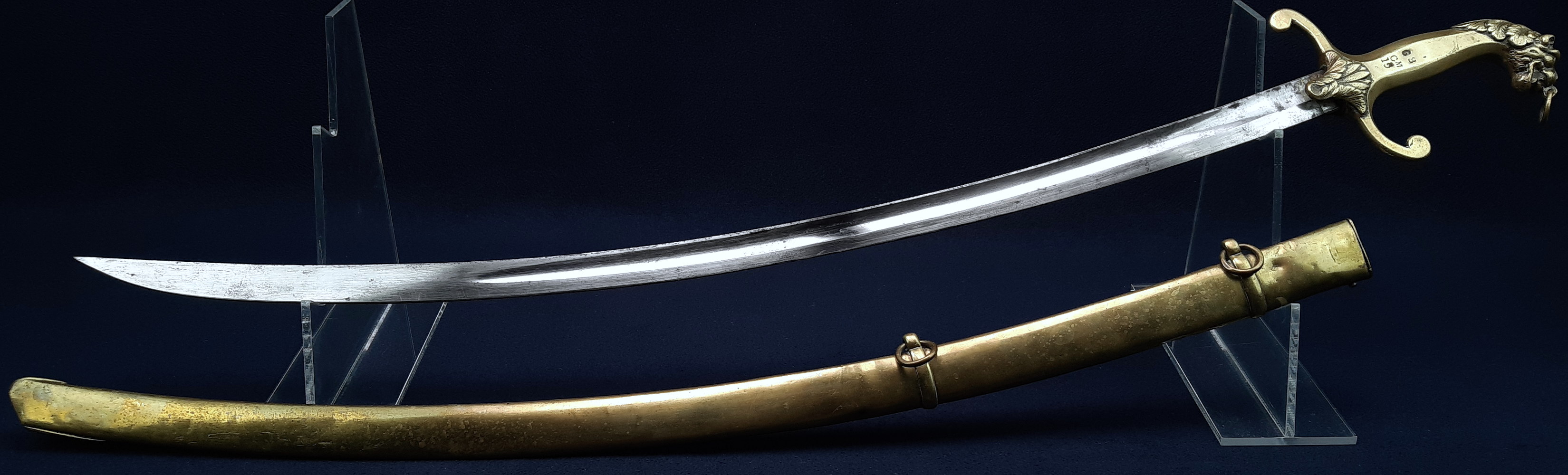
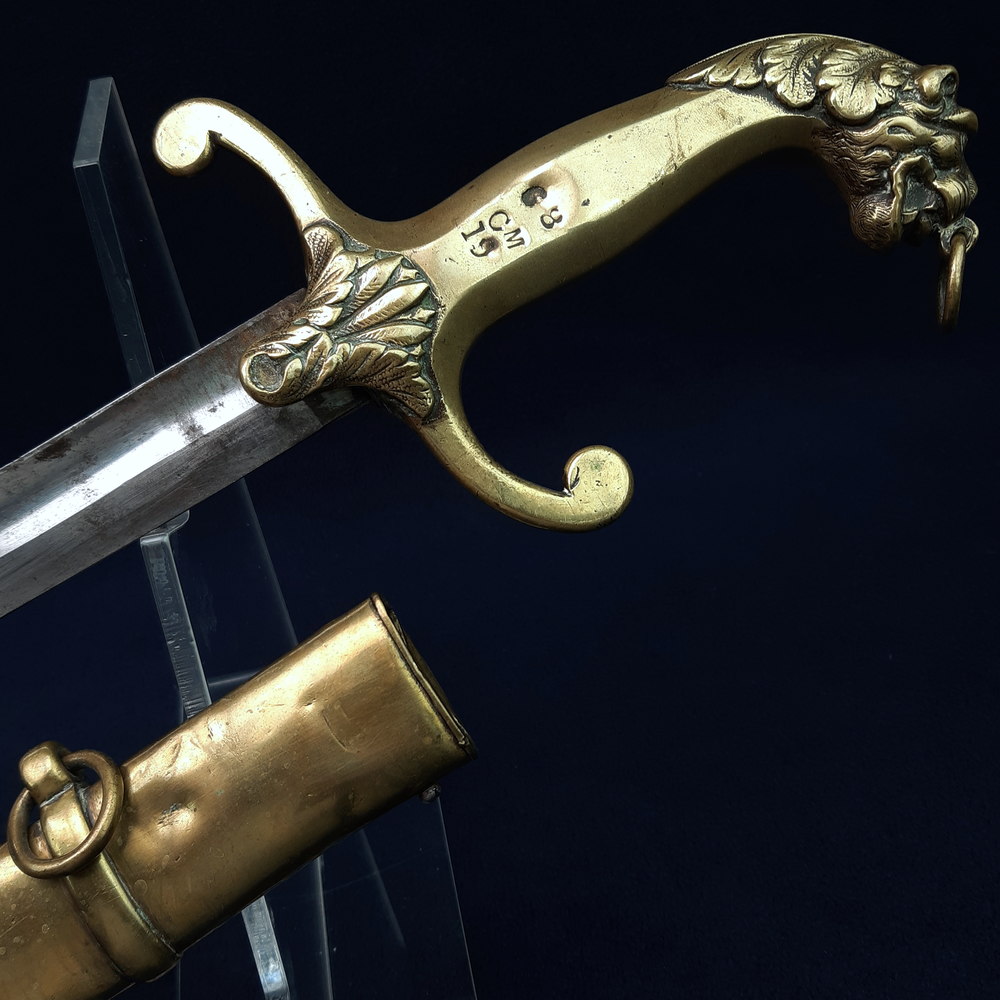
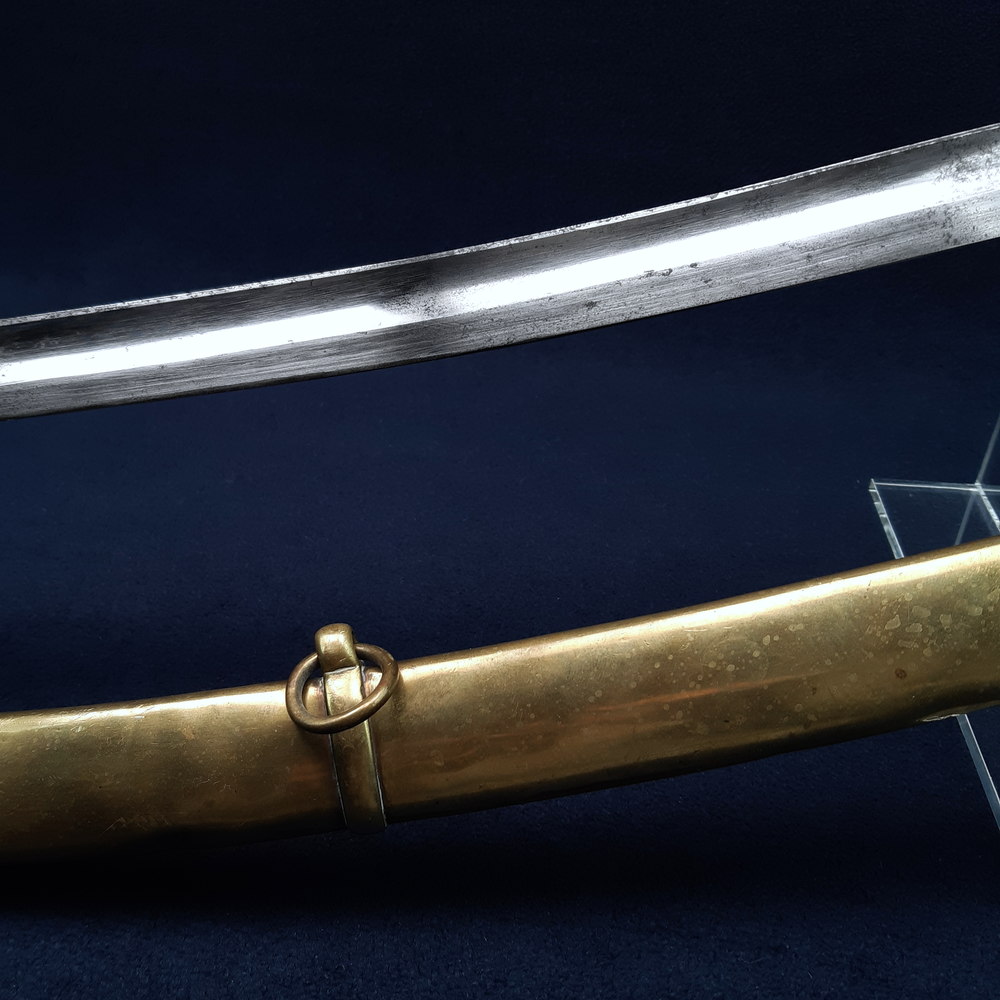
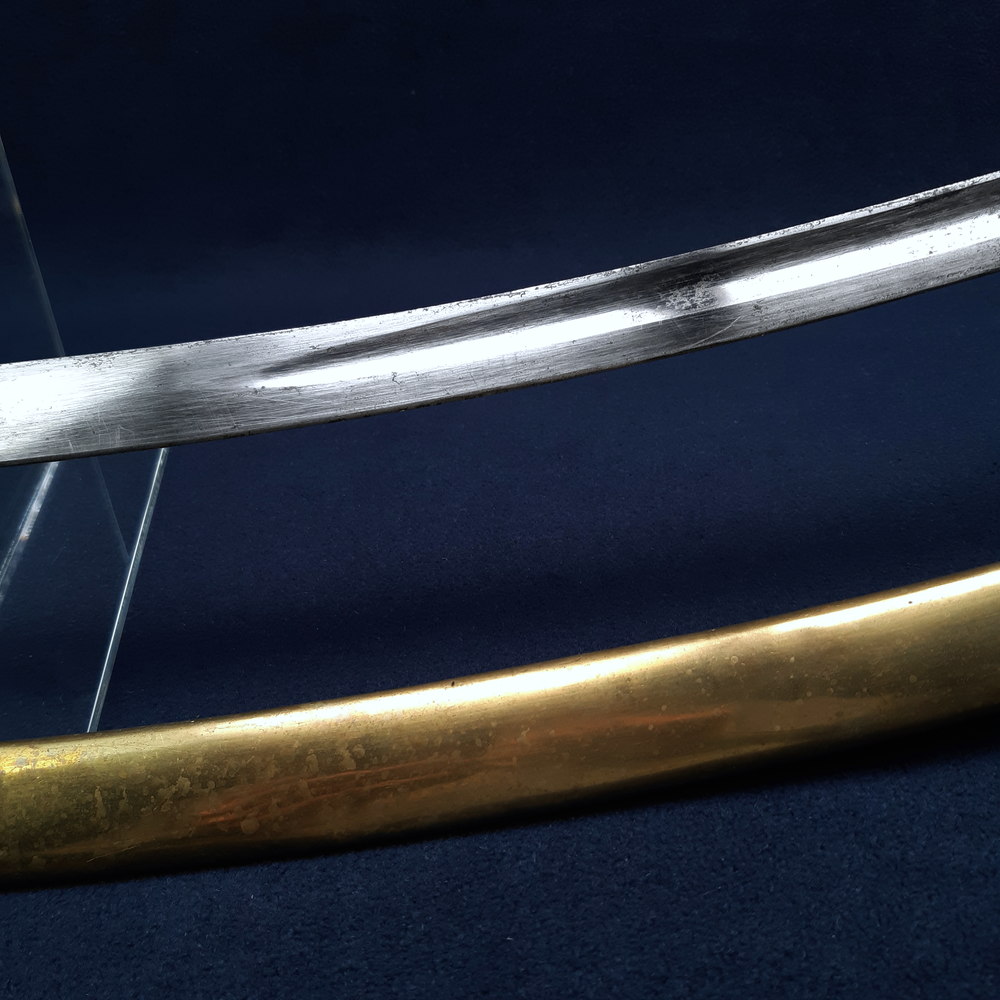
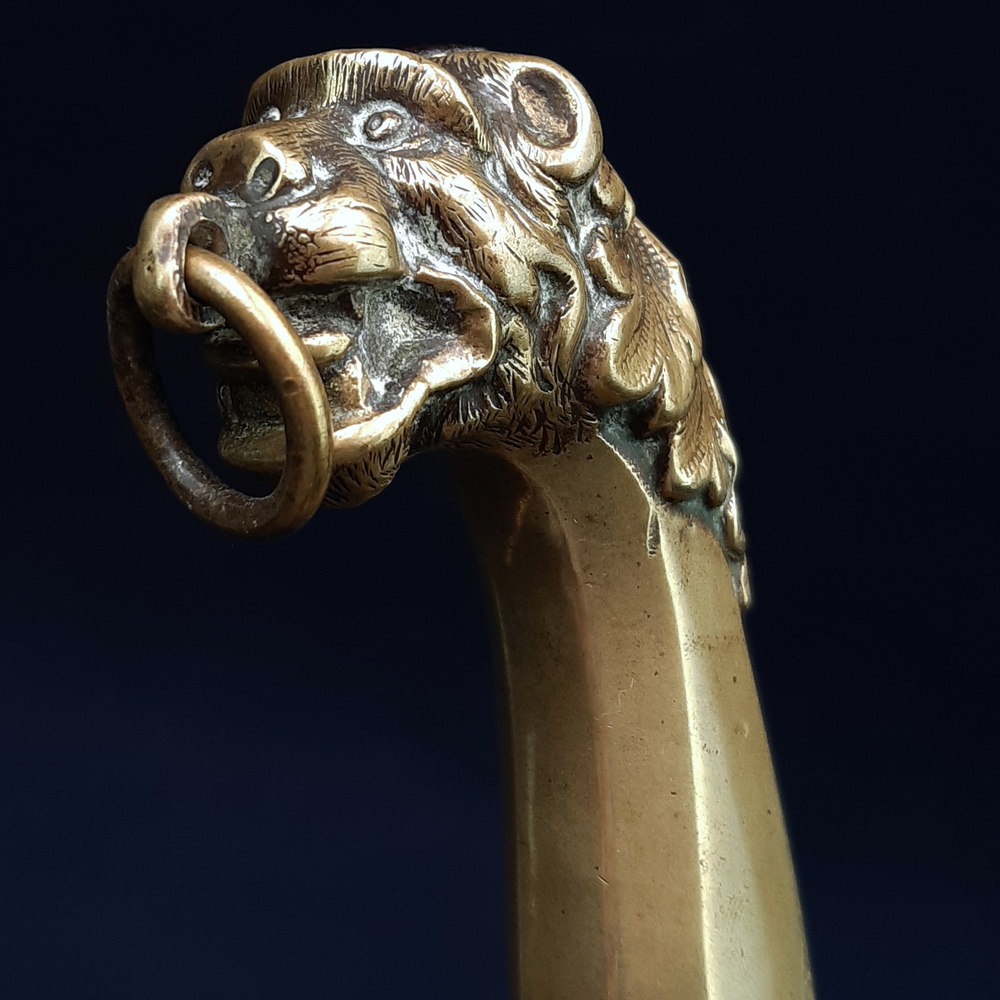
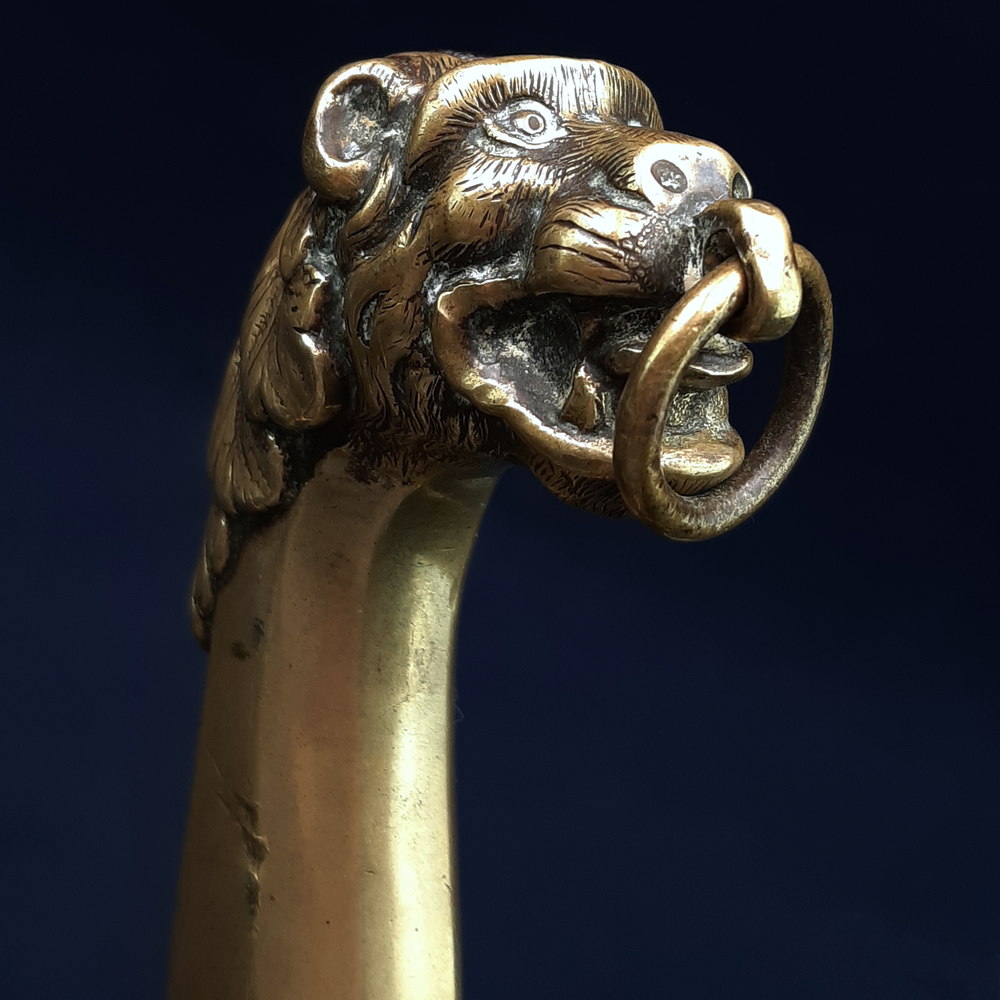
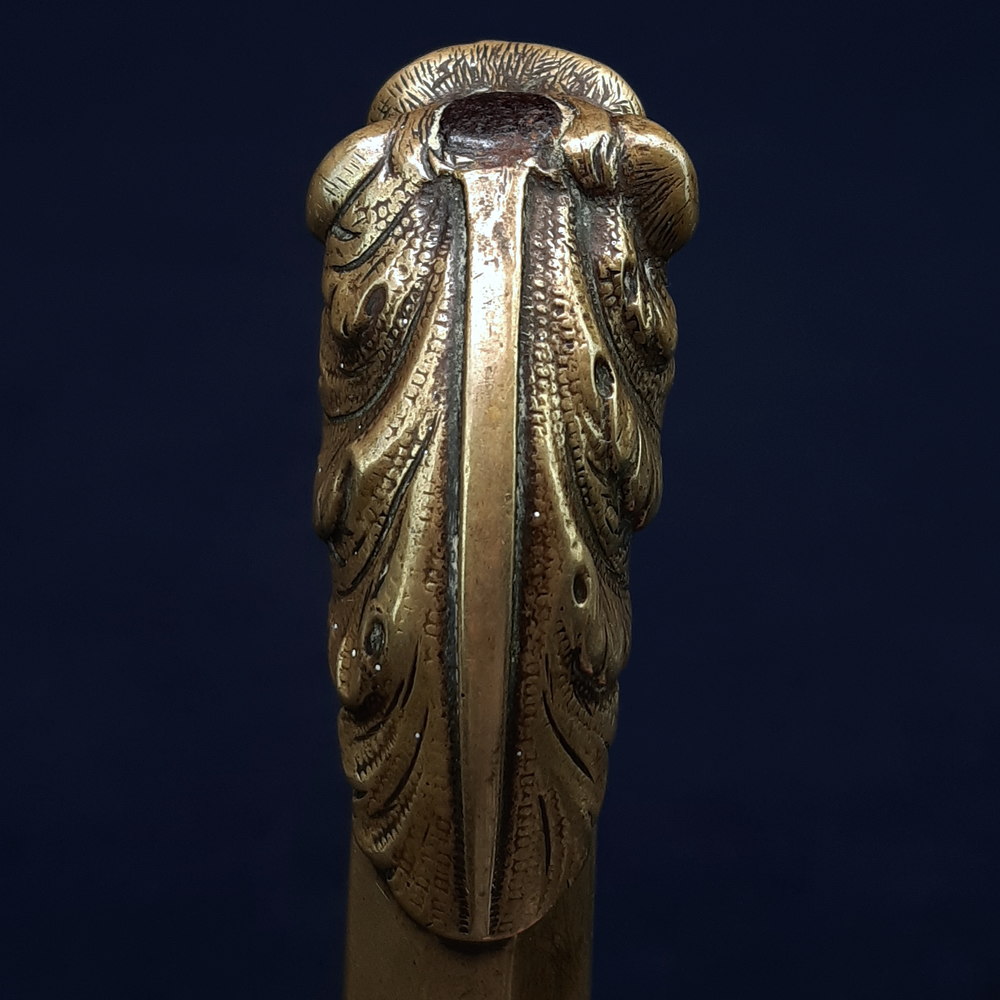
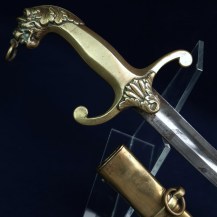
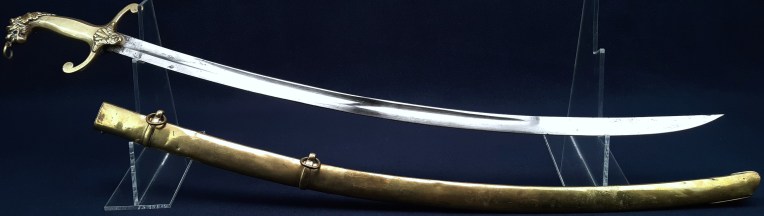
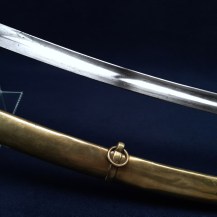
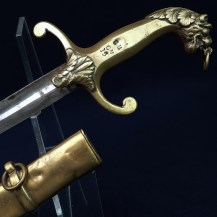
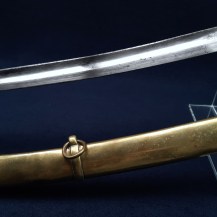
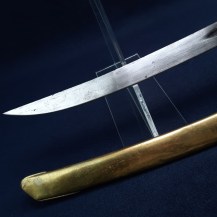
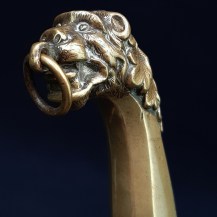
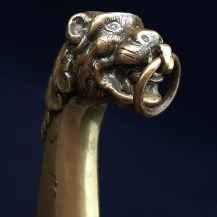
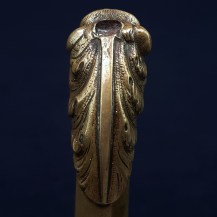
Curved blade with single fuller and hatchet point, single-piece cast brass mameluke-style hilt featuring a lion’s head pommel with eyelet and ring, a smooth faceted grip, recurved quillons with comma-shaped finials, and langets cast with a mirrored floral motif, perhaps acanthus leaves. Brass scabbard with two hanging rings and two steel screws securing the throat piece. Blade 28¼ inches in length, 1 inch wide at the shoulder, the sword 33½ inches overall.
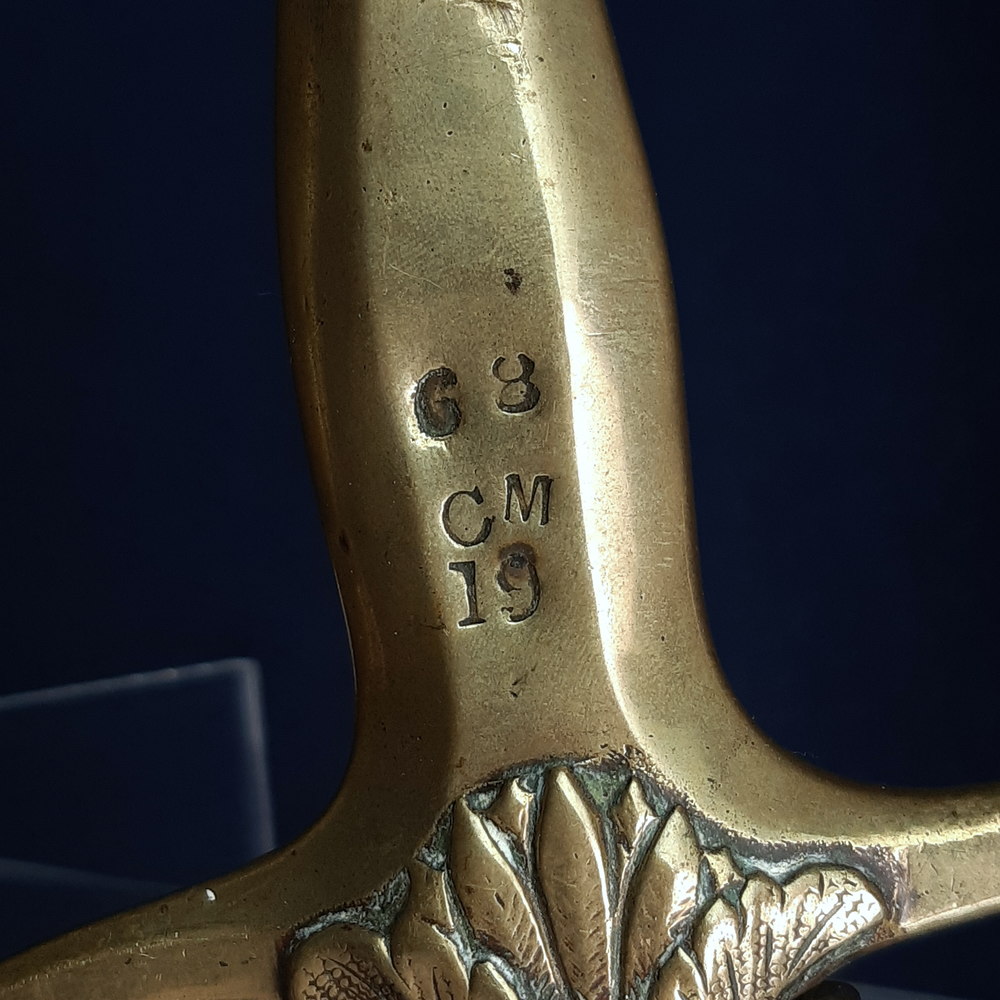
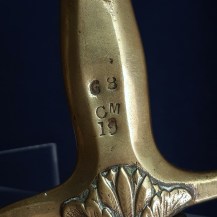
The grip is stamped on one side with ‘68’ over ‘CM’ over ‘19’. This seems to follow the form of a unit mark. Other examples exist which are also marked 68 / CM / [number] including an example I acquired together with this one, available here – that being marked 68 / CM / 5. As the last digit changes but the others do not it seems clear that 68 CM is a unit and the last digits a weapon number.
There were a number of British units in the 19th century which might have used the abbreviation ‘CM’, including the Cambridgeshire Militia, Cardiganshire Militia, Cornwall Militia and Cumberland Militia. However, when lots were drawn by the King for the order of precedence of the militia regiments in 1833 the Cambridgeshire Militia was ranked 68th.
Most militia took little notice of their official numbering but the Cambridgeshires certainly did as ‘68’ was placed on their shako. This numbering coincides nicely with the period of these swords and remained in place until the end of the militia system in 1908. This puts it clearly above the other possibilities and I think we can be reasonably confident therefore that this sword was number 19 issued to the band of the Cambridgeshire Militia some time after 1833.
There was no standard pattern for the ornamental swords carried by military bands in the eighteenth and early 19th centuries. Each regiment was responsible for equipping its band as it saw fit, the expense generally paid for by its officers. Nonetheless bands were often well equipped as regiments took great pride in their music and sought to outdo each other in their pageantry. Composed of a mixture of enlisted men and paid civilian musicians, military bands often performed for the public, becoming a cultural fixture and a useful means of outreach between military and civilians, a tradition which continues to this day.
Despite their non-standard procurement there was a common style to the British band sword (with considerable variation): a short, usually curved, mameluke-style sword with brass fittings and a pommel in the form of an animal head, most often a lion.
The Royal Armouries collection contains a great number of British bandsman’s swords which the Armouries curators have grouped into types based on the form of their hilts – under their system this sword would be a ‘Type G’. See Royal Armouries item IX.7246 for more discussion of this Type and bandsman’s swords generally (also IX.1067, although this is a variant with a hilt made of steel rather than brass).
Dating bandsman’s swords can be tricky, but as noted this example’s unit mark means it must date from after 1833. The first standardized Pattern of band sword was introduced in 1856, which would have prompted the decline of non-standard types, and the Royal Armouries date their examples of this type between 1800-1860, so 1833-c1860 seems a reasonable date range for this piece.
For more examples of the ‘Type G’ see Robson’s Swords of the British Army, Revised Edition, page 259 (item 225), which he dates to circa 1820, or Withers’s British Military Swords page 78, or Wilkinson-Latham’s British Cut & Thrust Weapons, page 43.
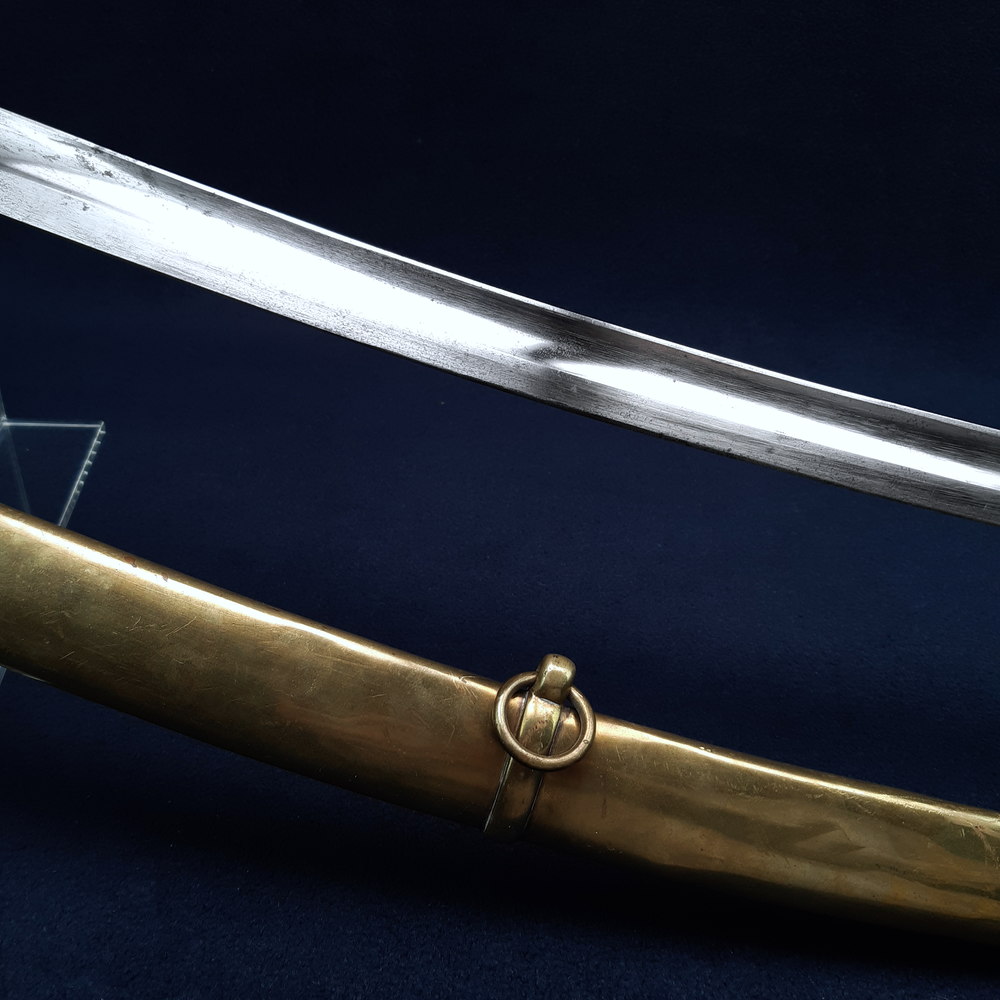
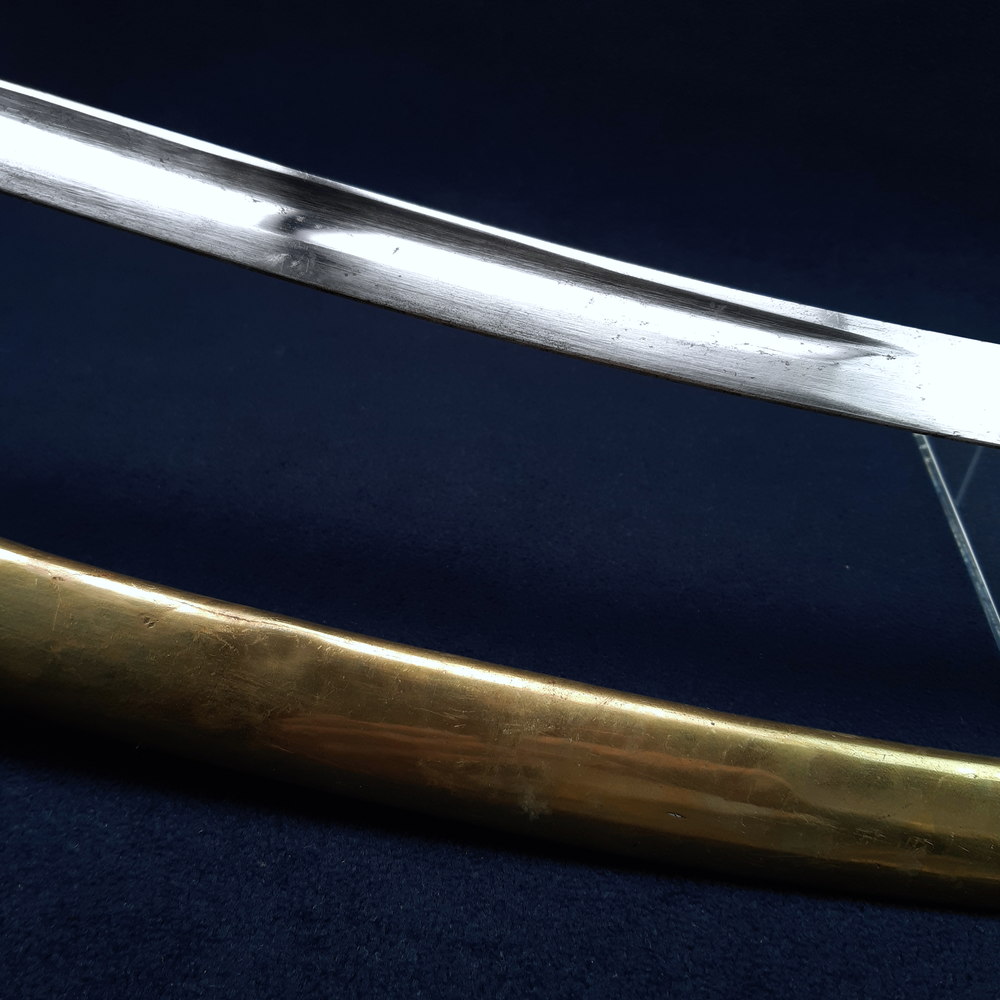
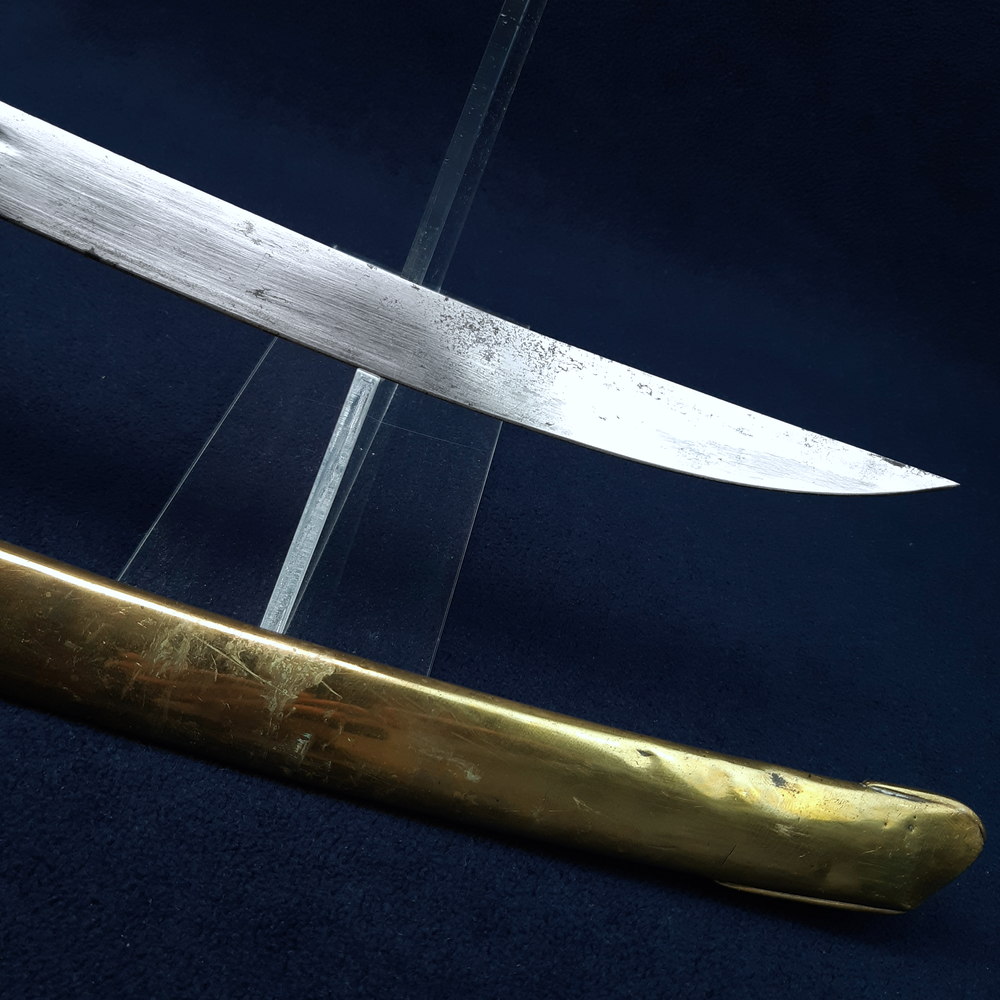
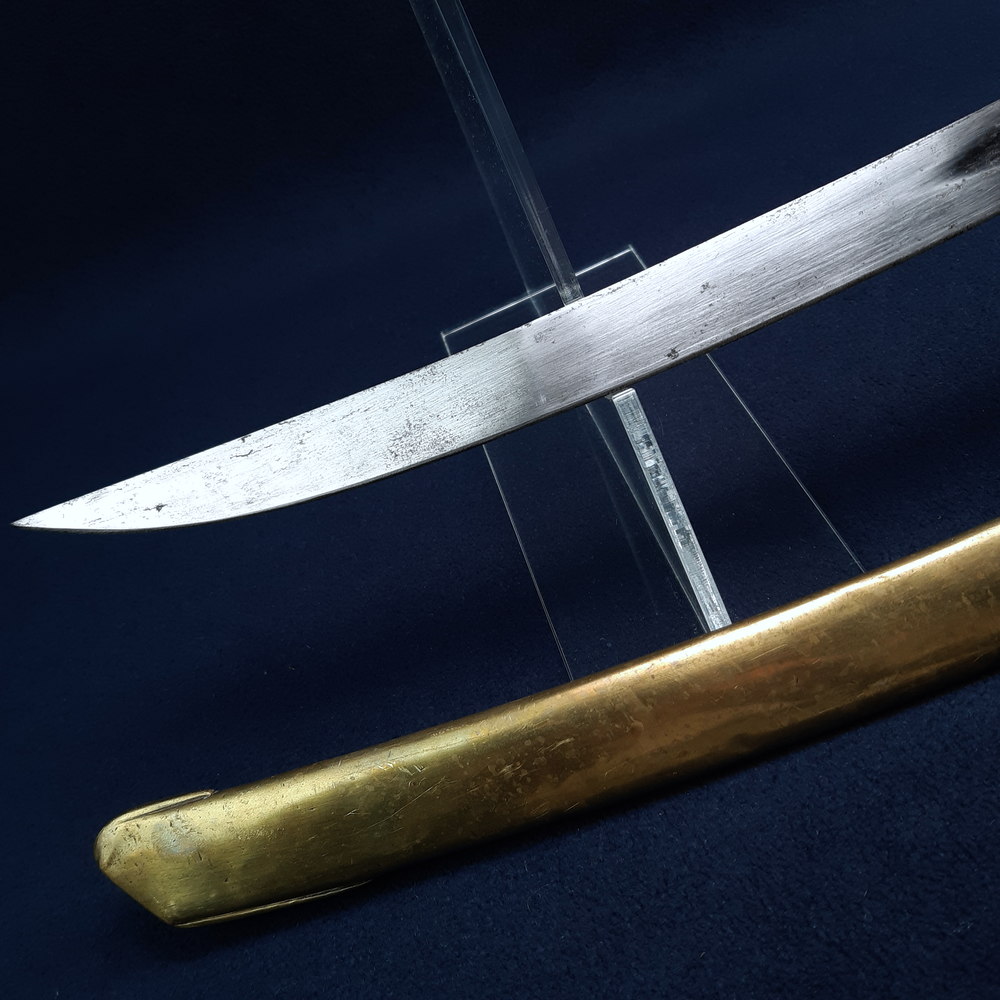
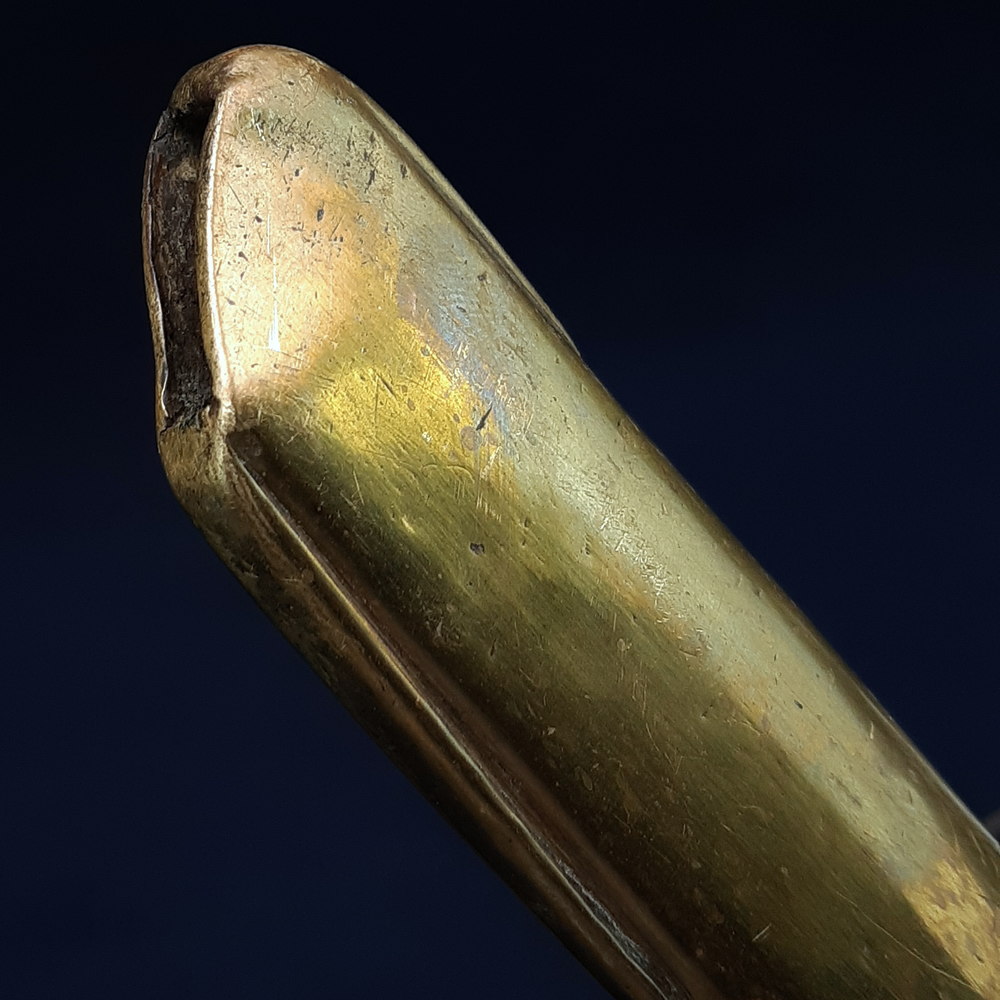
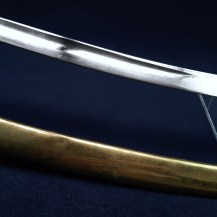
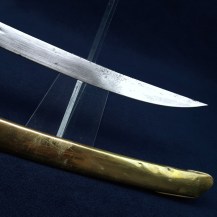
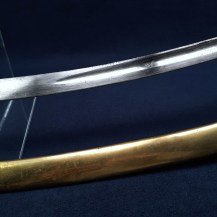
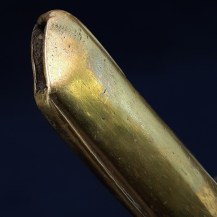
The blade is sharp with its edge and tip undamaged. Its surface is bright with quite a high polish, some areas of frosting, one patch of cleaned light pitting and a few small spots of moderate patination as well as polishing and grinding marks. The brass hilt, grip and pommel have light patination and a little verdigris in recesses, the grip has some small scrapes on the side with the unit mark. The brass scabbard has an even light patina with a number of small dents, particularly along the leading edge, none of which interfere with sheathing and drawing. Some scuffing and light scratching to the scabbard, particularly in the lower section. One of the steel screws securing the throat piece has been lost. The end section of the scabbard’s shoe has been lost leaving it open (pictured).
