

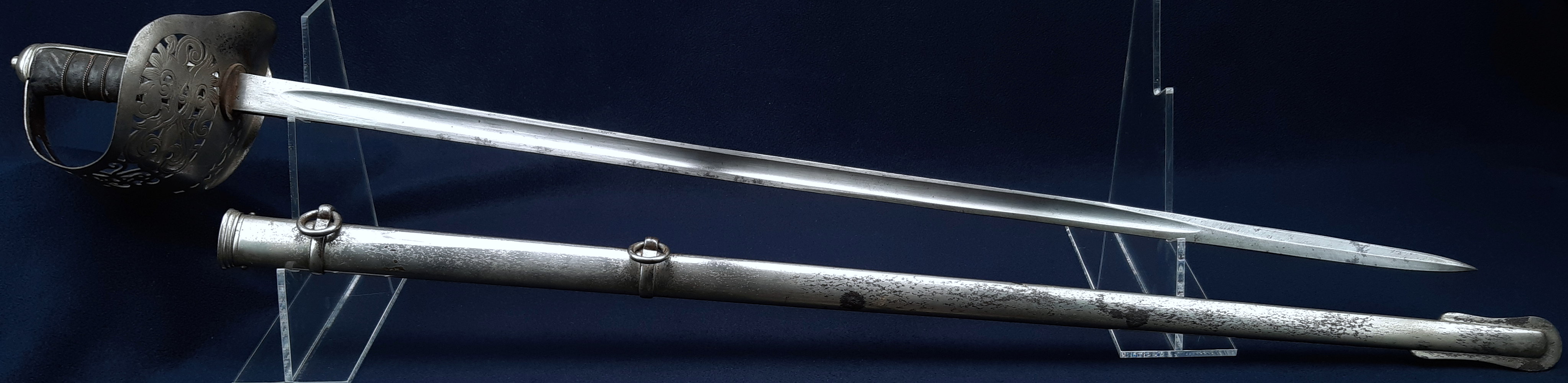
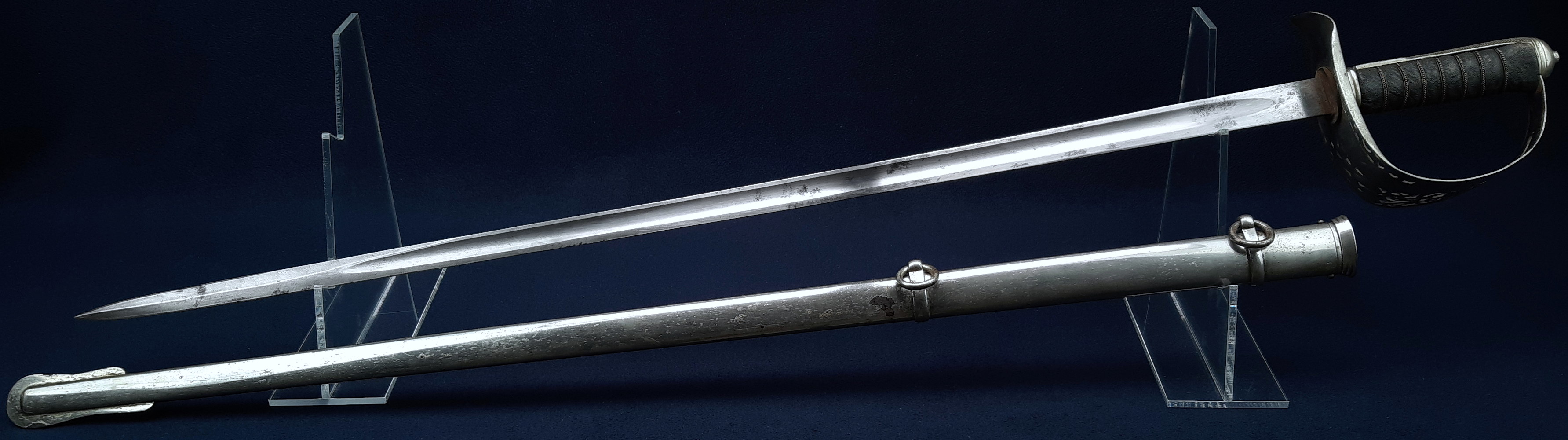
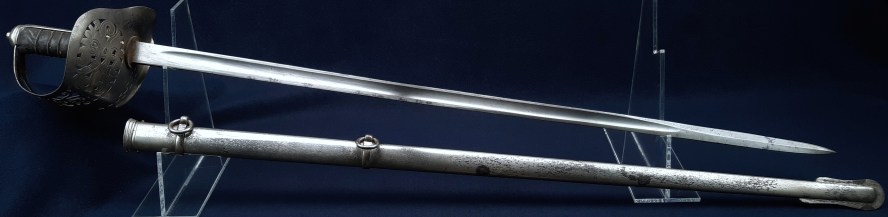
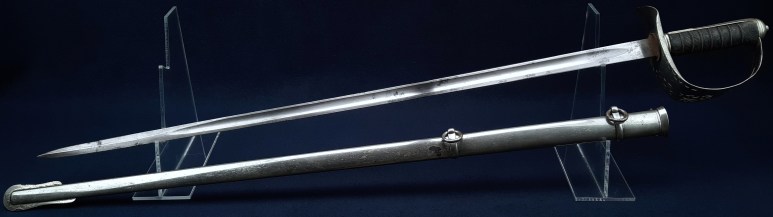
British 1905 Pattern Infantry Staff Sergeant’s Sword, 1912 Rehilt and Conversion for George V
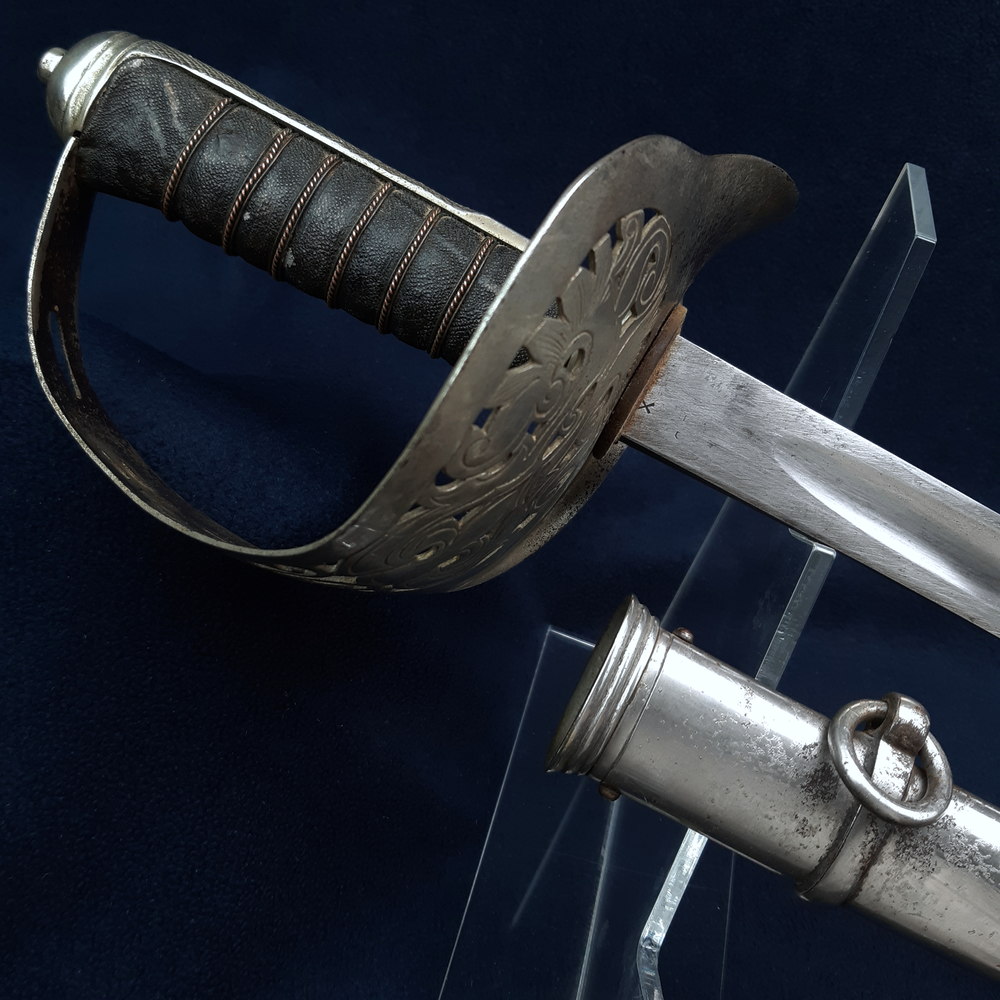
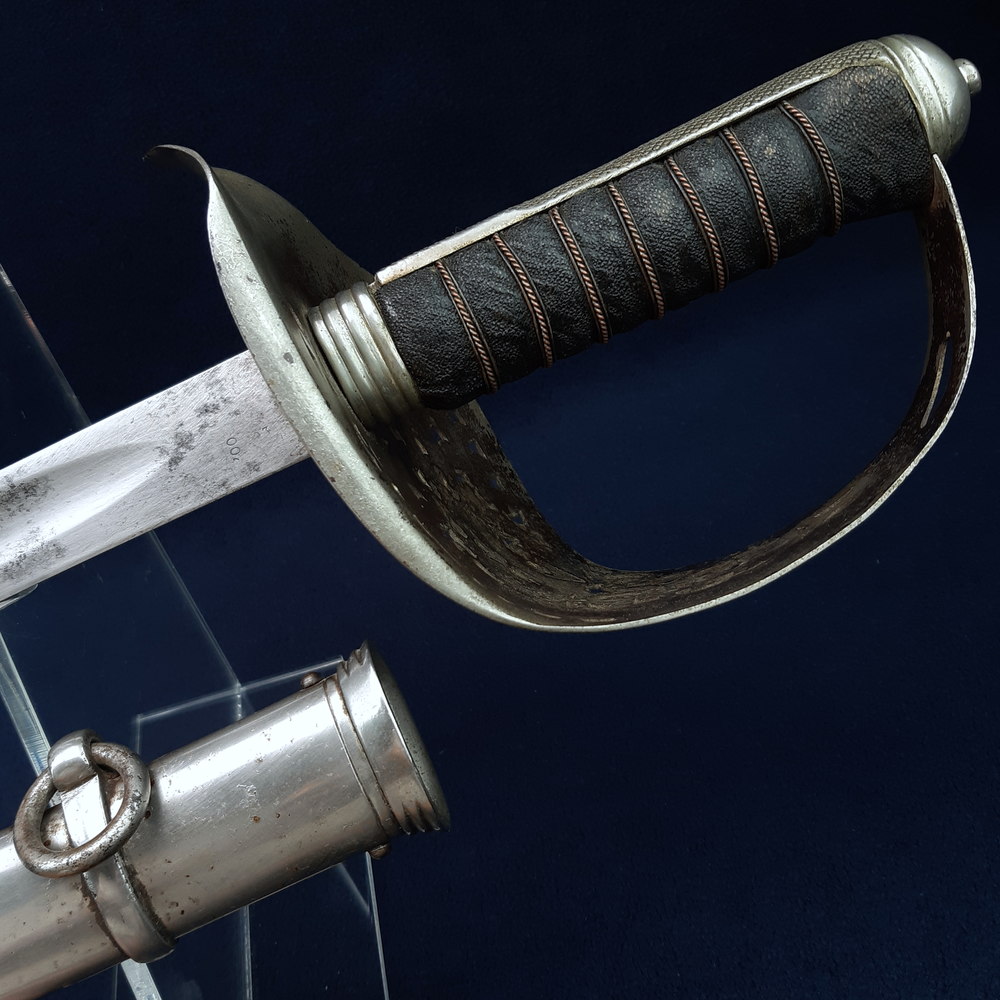
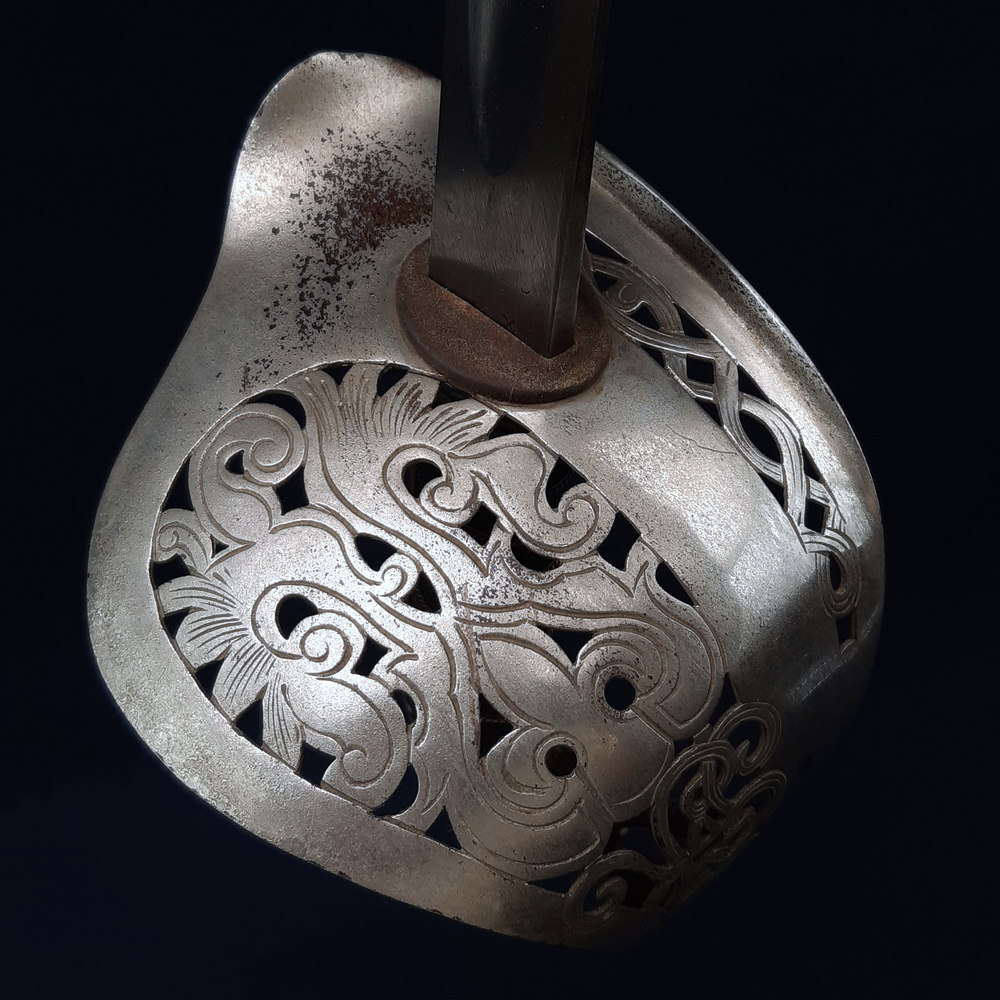
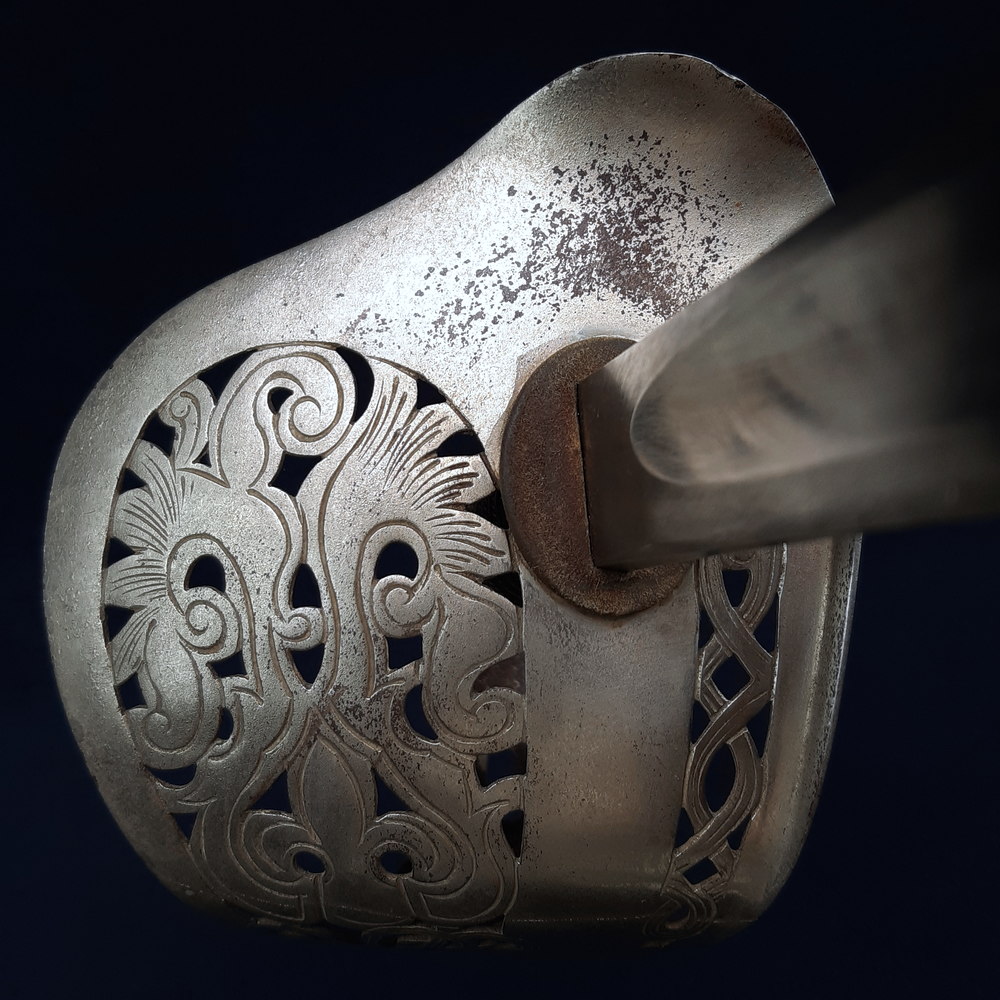
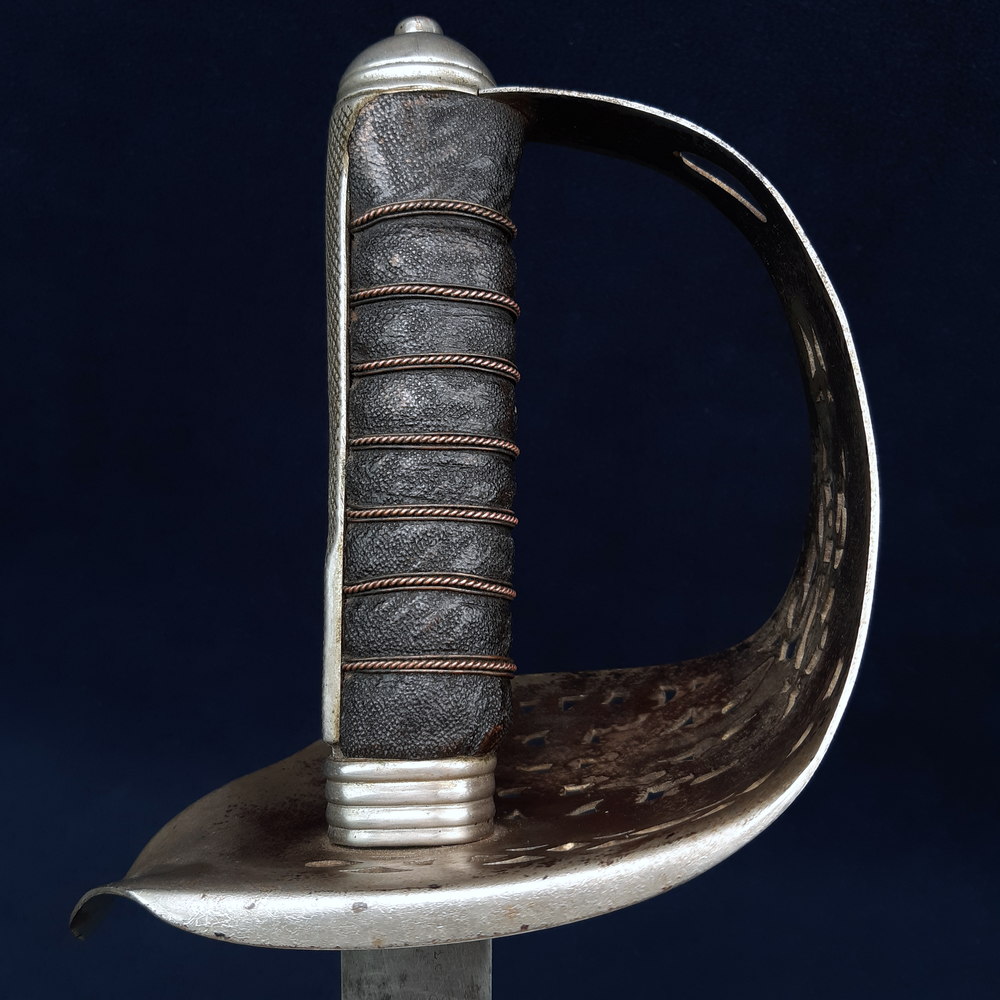
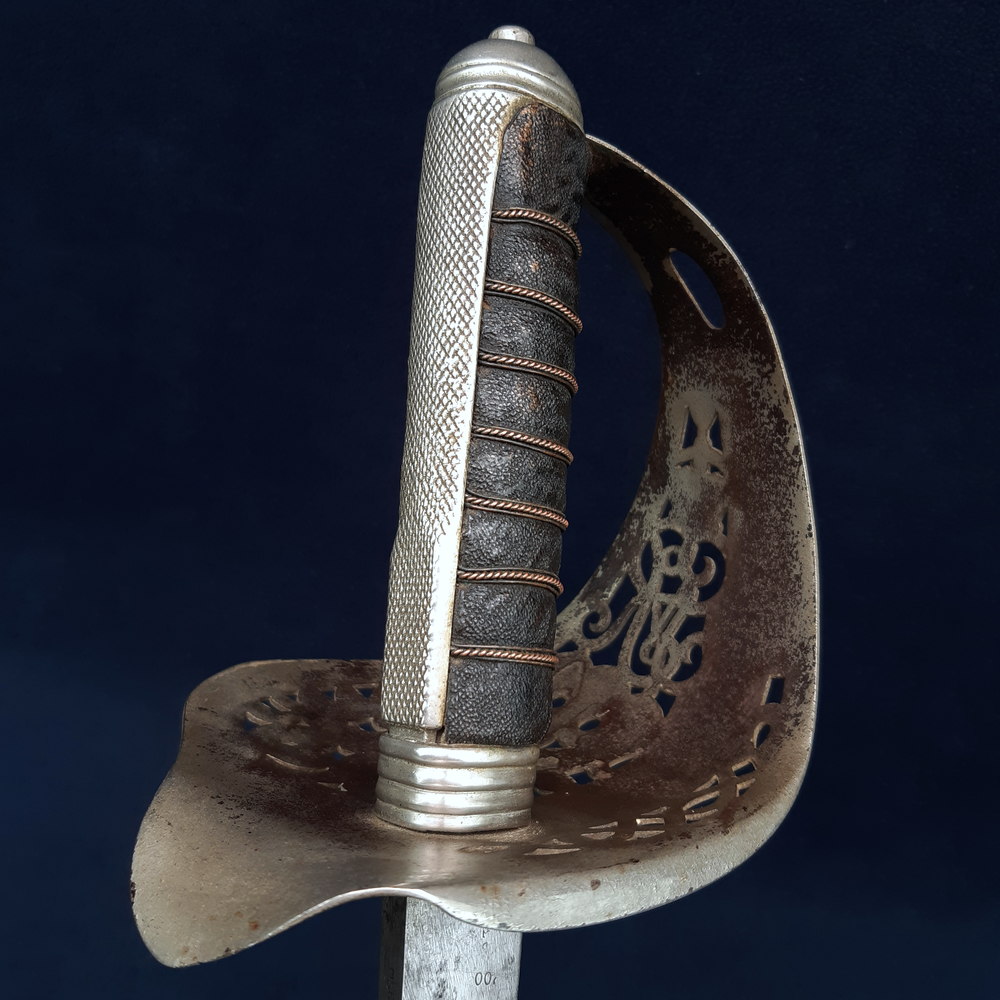
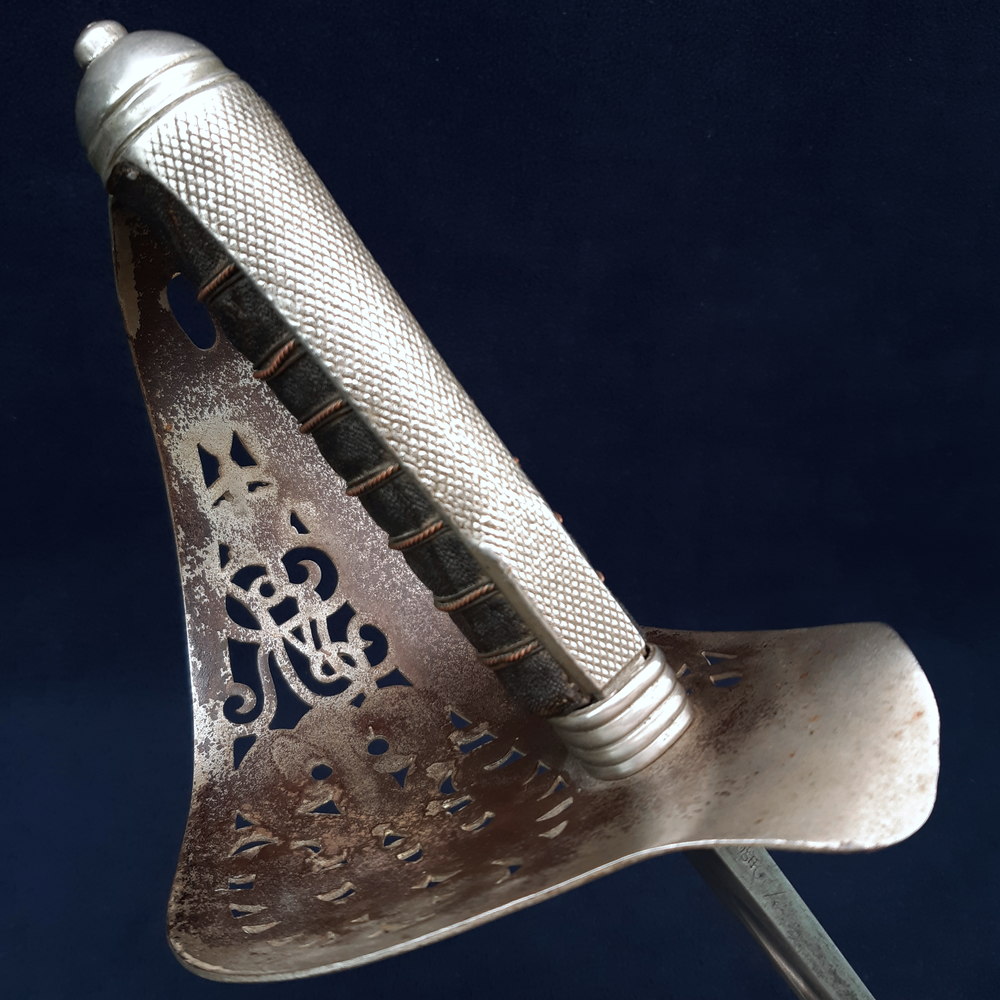
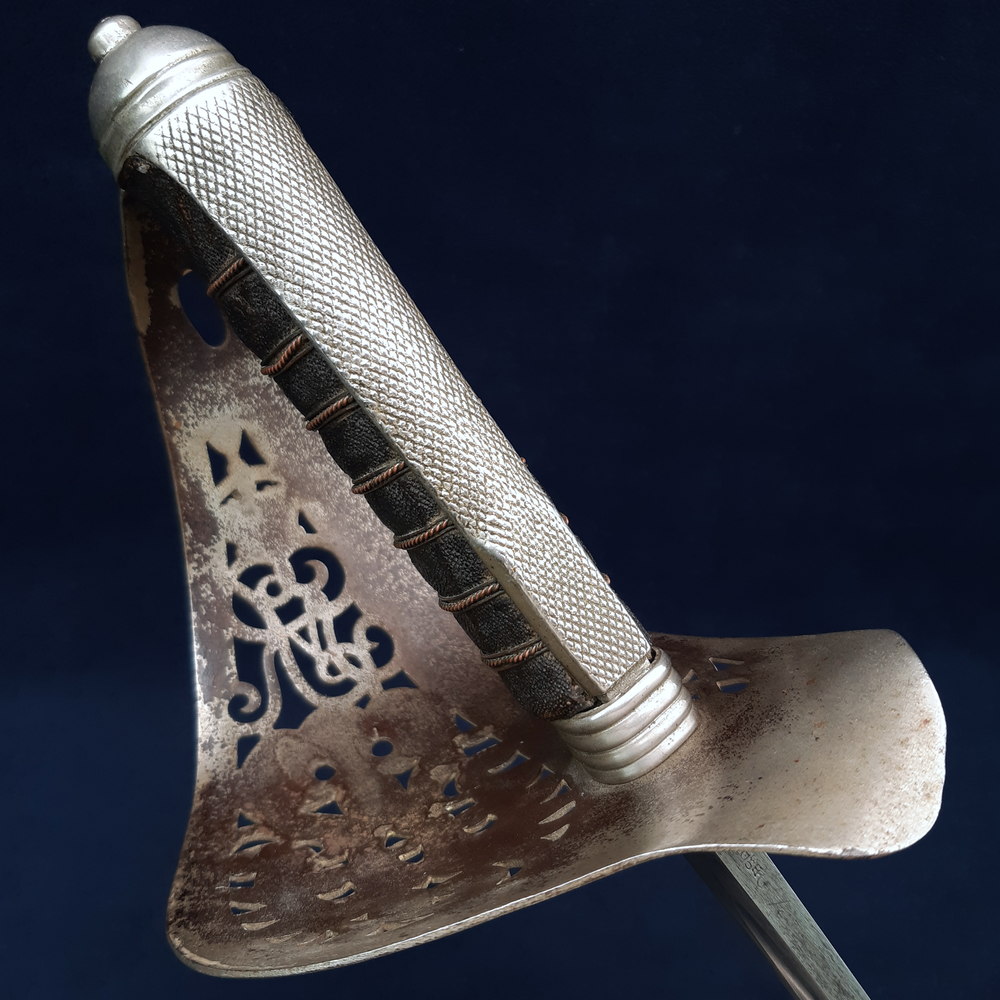
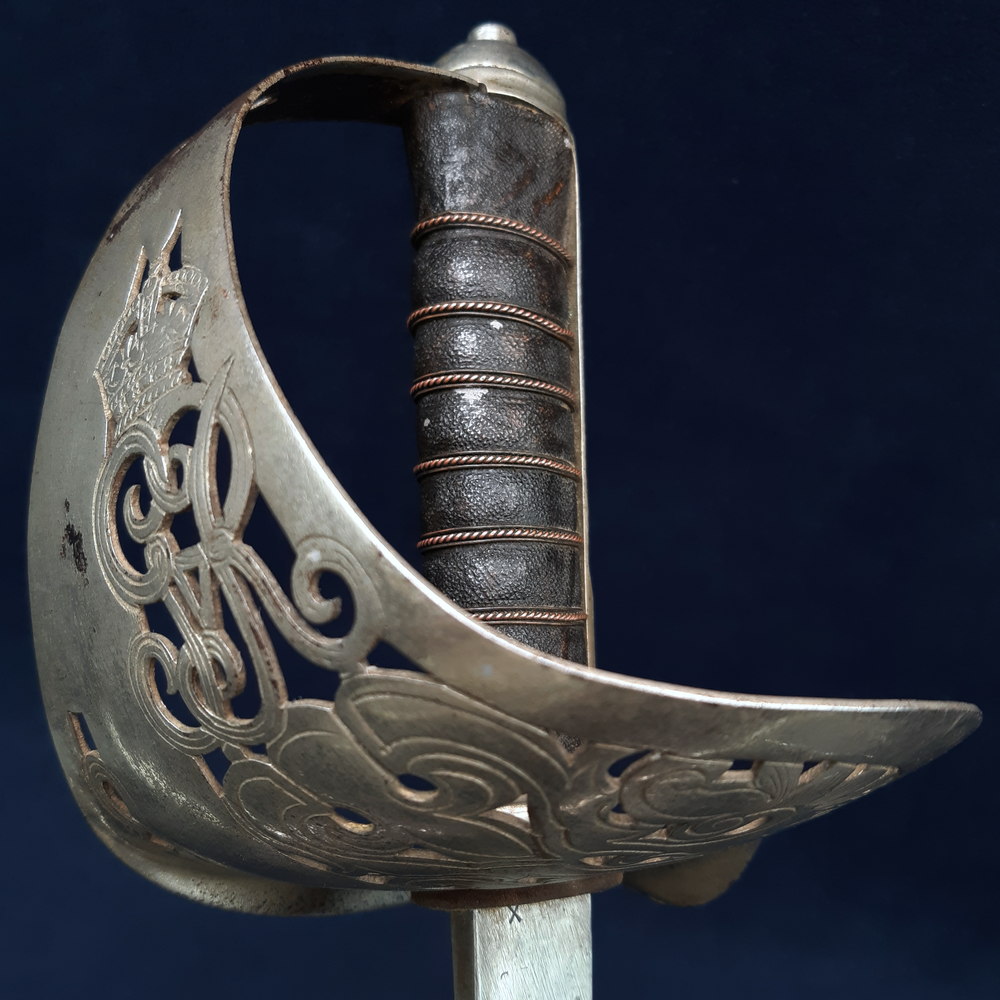
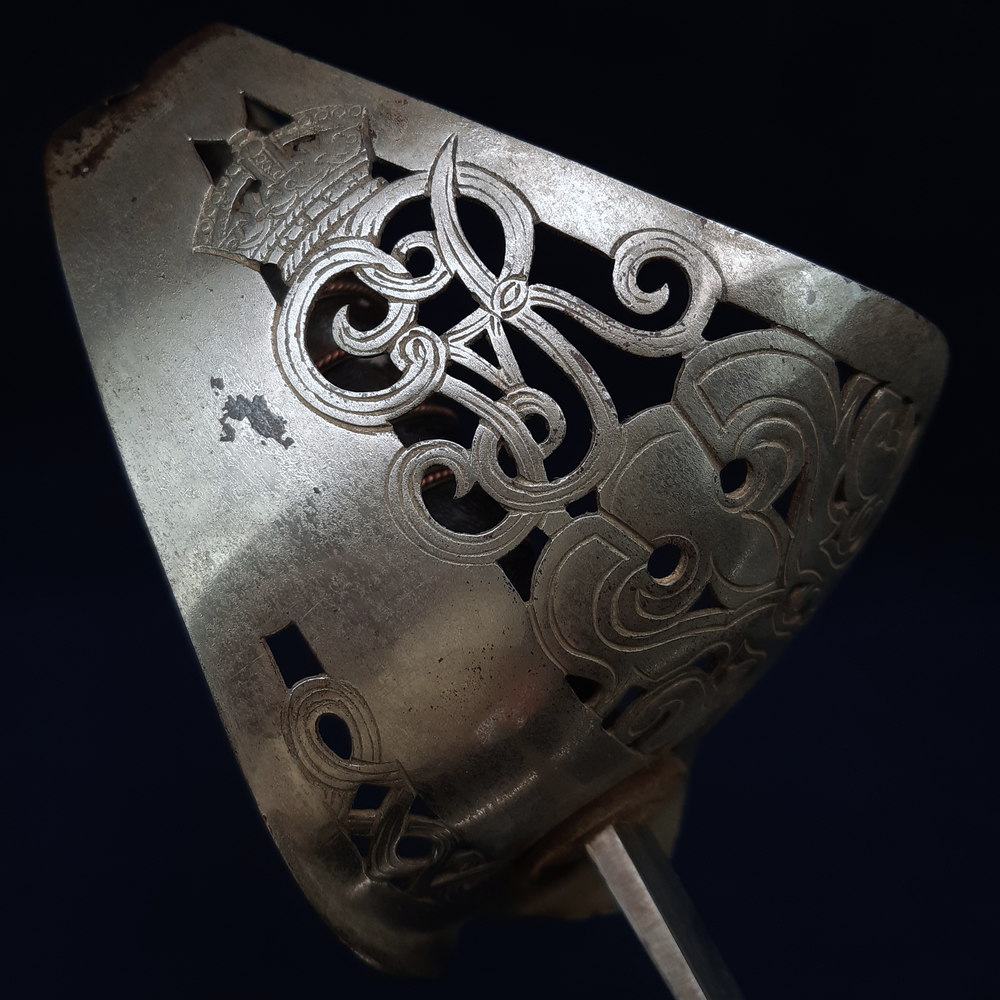
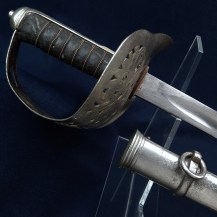
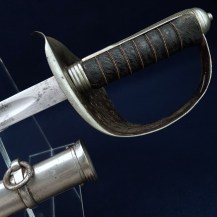
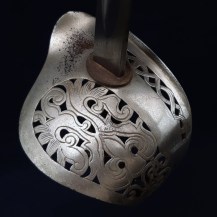
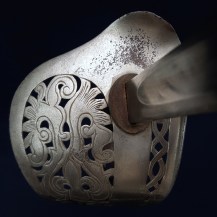
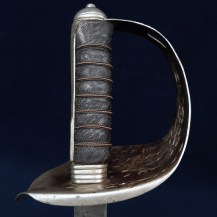
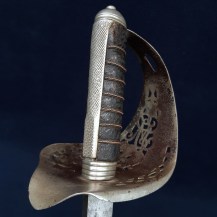
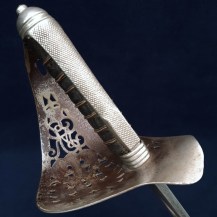
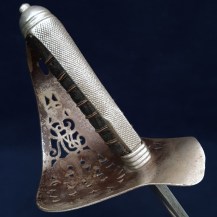
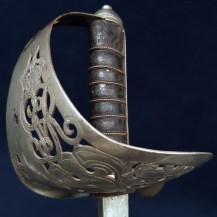
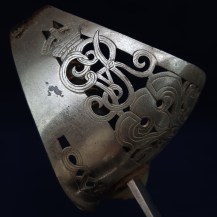
Straight single-fullered spear-pointed blade. Nickel-plated steel hilt of the 1897 Pattern infantry design, with pierced decoration including the crown and cypher of King George V. Ribbed ferrule and fully chequered steel backstrap, integral oval pommel with tang button, these parts non-ferrous and probably German silver (copper-nickel-zinc alloy). Wire-bound black shagreen grip, brown leather washer. Blade 32½ inches in length, the sword 38½ inches overall. Nickel-plated steel infantry parade scabbard with two hanging rings.
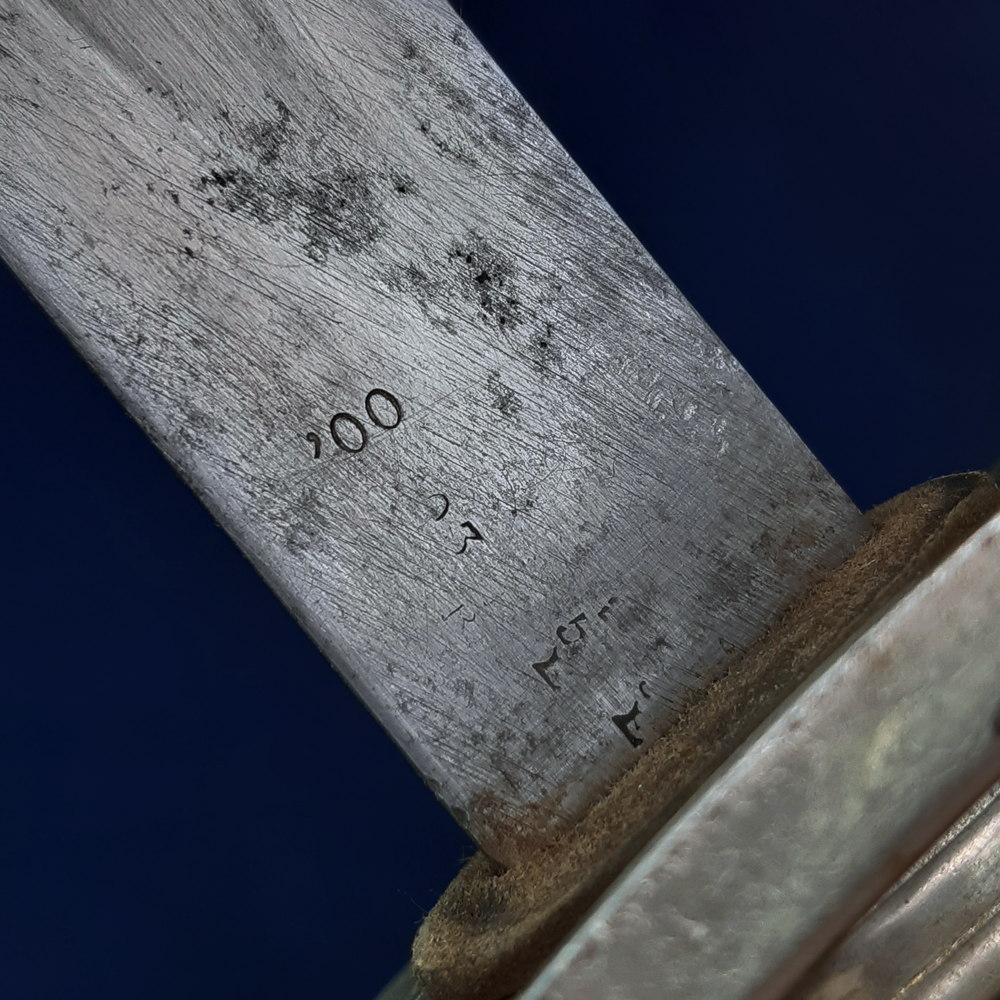
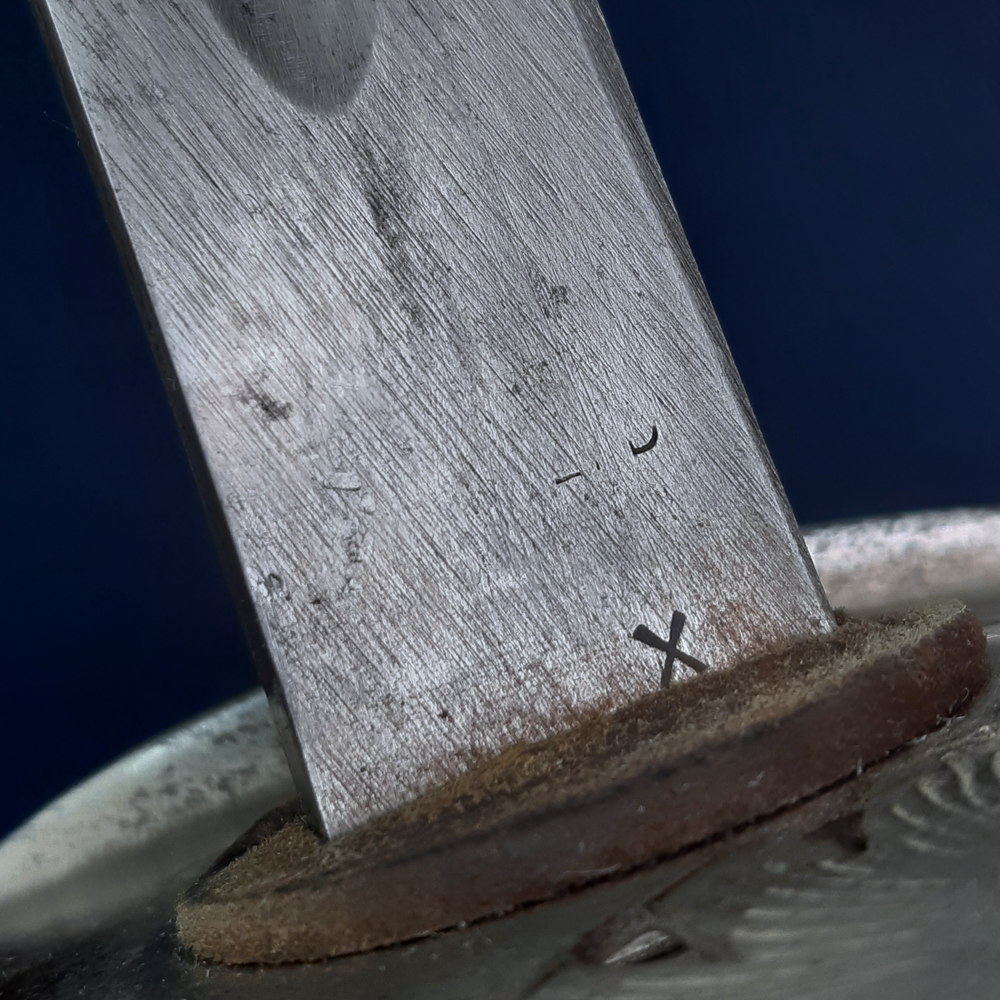
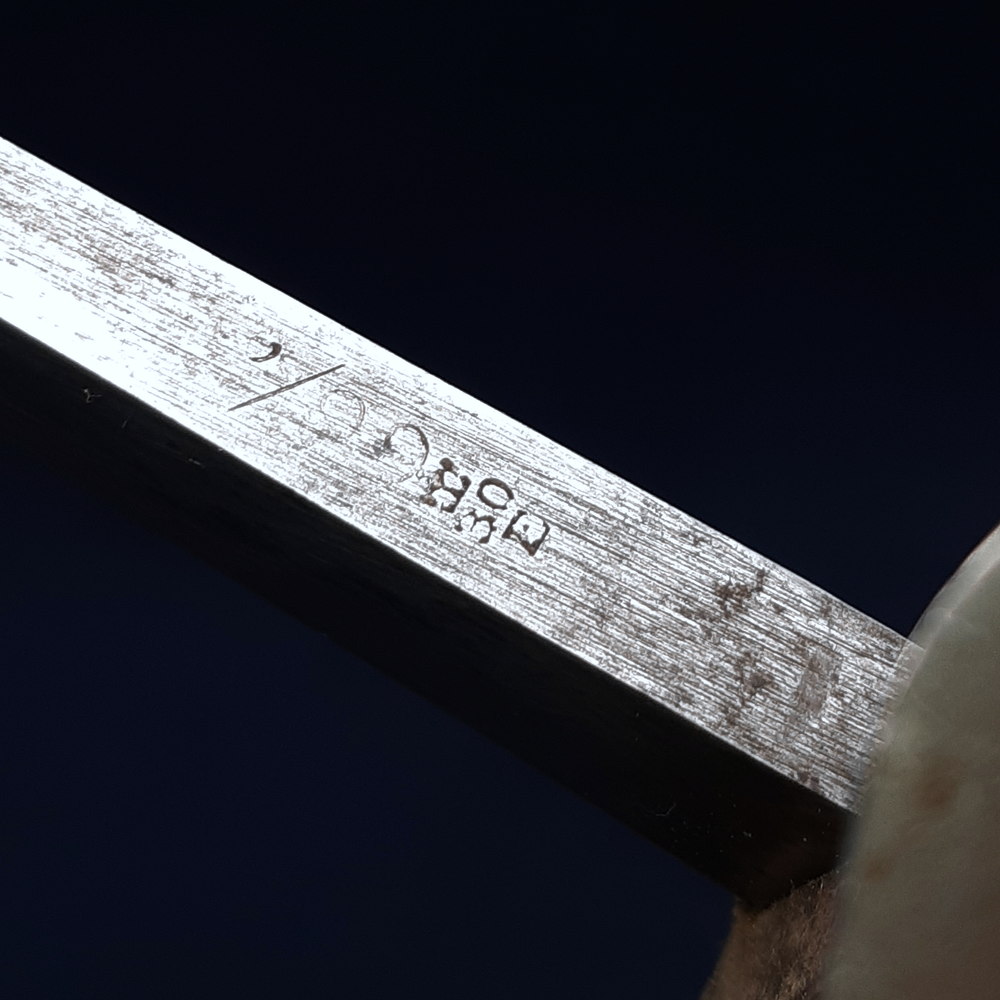
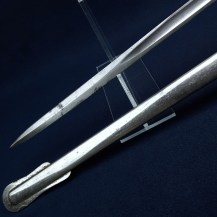
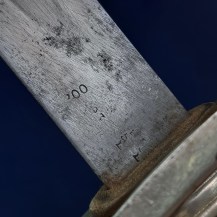
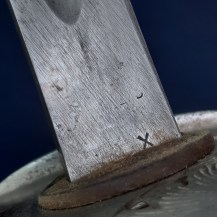
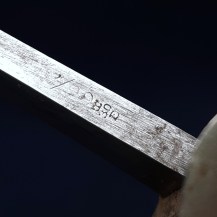
The blade is stamped at the forte on one side with the manufacture date ’00, an issue stamp ’03, and two crown inspection stamps with ‘E’ for Enfield. The other side is stamped with an ‘X’ indicating that the blade passed a manufacturer’s bending test, and another mark, mostly erased by grinding – by comparison with other examples this is probably the remnant of the maker’s mark EFD, indicating the Royal Small Arms Factory at Enfield. The spine of the blade is stamped with /99, indicating the pattern, and another Enfield crown inspection stamp.
Unlike officers who privately purchased and owned their own swords, staff sergeants were issued their swords from regimental stores like a musket or bayonet, and the swords remained government property.
The 1905 Pattern staff sergeant’s sword was unusual in that it was manufactured using surplus 1899 Pattern cavalry trooper’s sword blades, which is thought to have been done to replace swords lost in the Boer War without too much expenditure. As originally produced the 1905 comprised of an unmodified 1899 Pattern blade fitted with new slab grips secured with rivets and an 1897 type infantry hilt bearing the cypher of Edward VII.
In 1912 both the 1898 and 1905 Pattern staff sergeant’s swords were officially rehilted to replace the old royal cypher with that of King George V. Having encountered and stocked multiple examples like this one, it is clear to me that other modifications were carried out to many of the 1905 Pattern swords beyond simply replacing the hilt, these modifications tending to bring them closer in form to the infantry officer’s sword (much like the 1898 Pattern sergeant’s sword, which was already a doppelganger of the officer’s model).
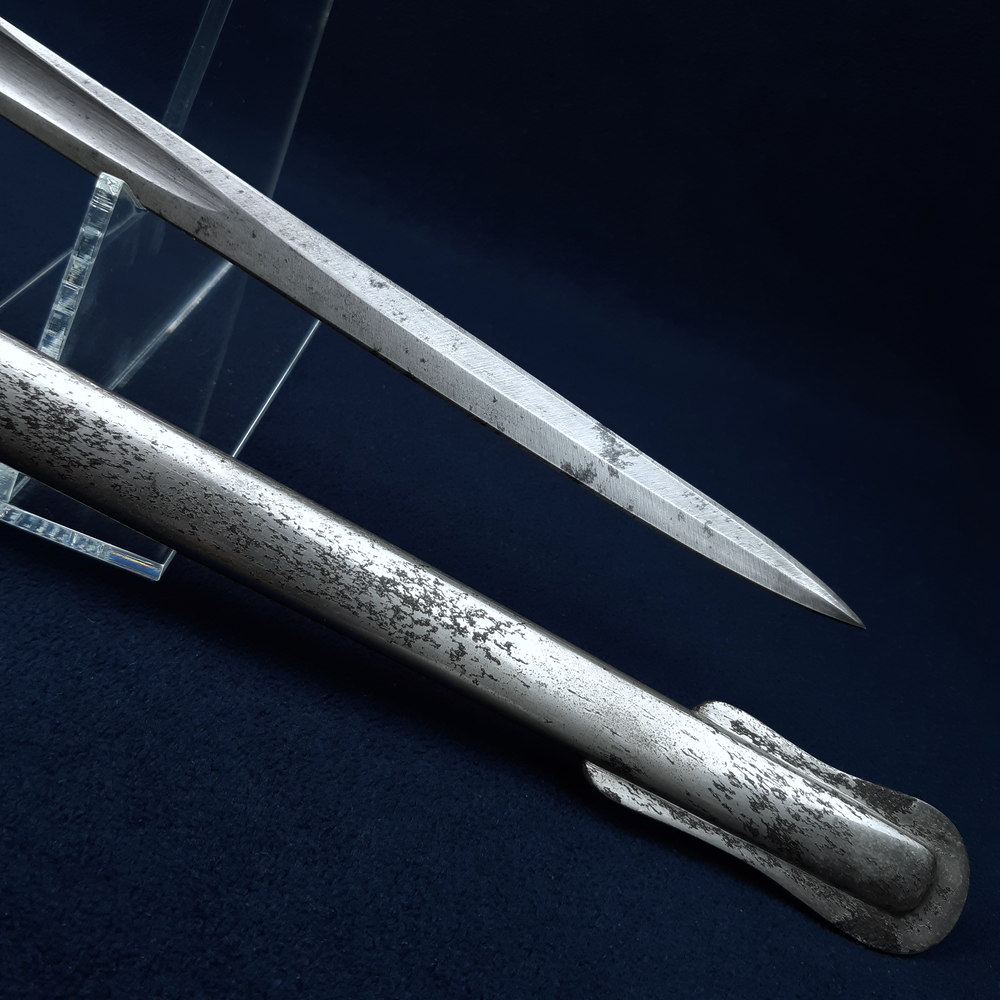
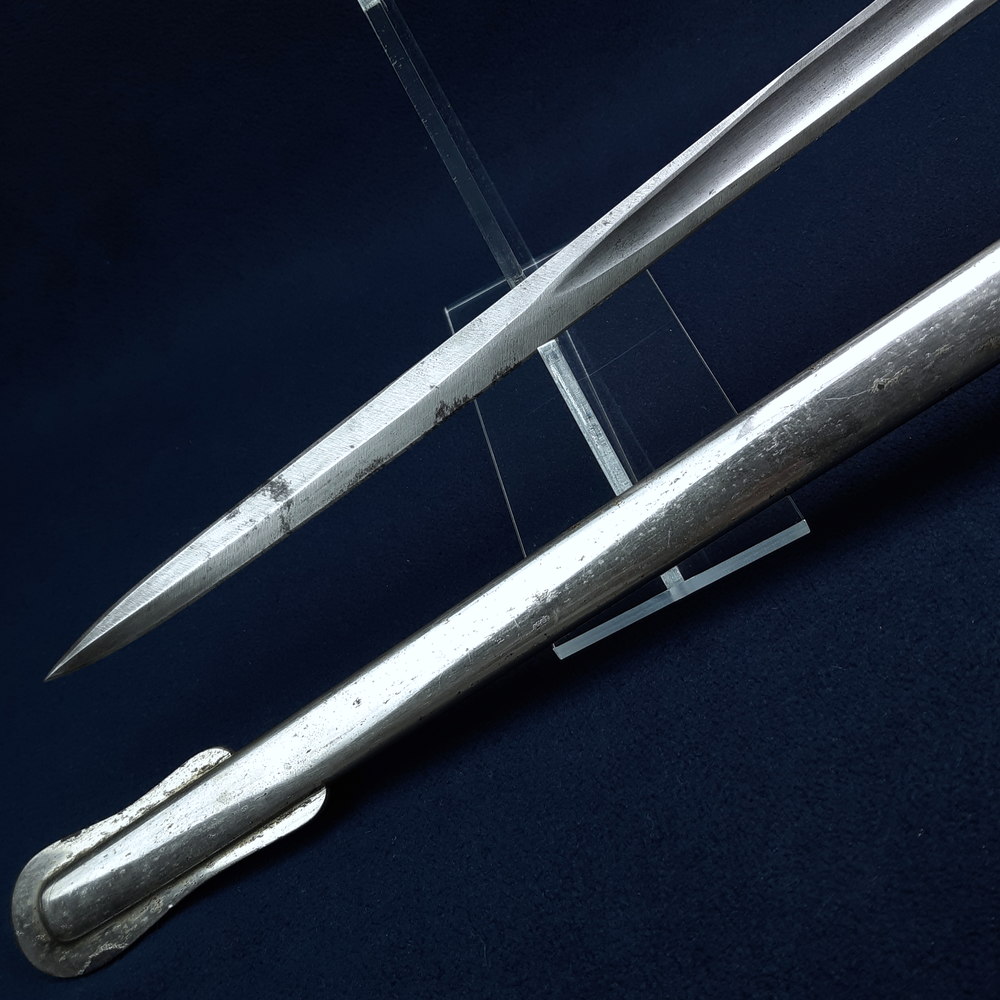
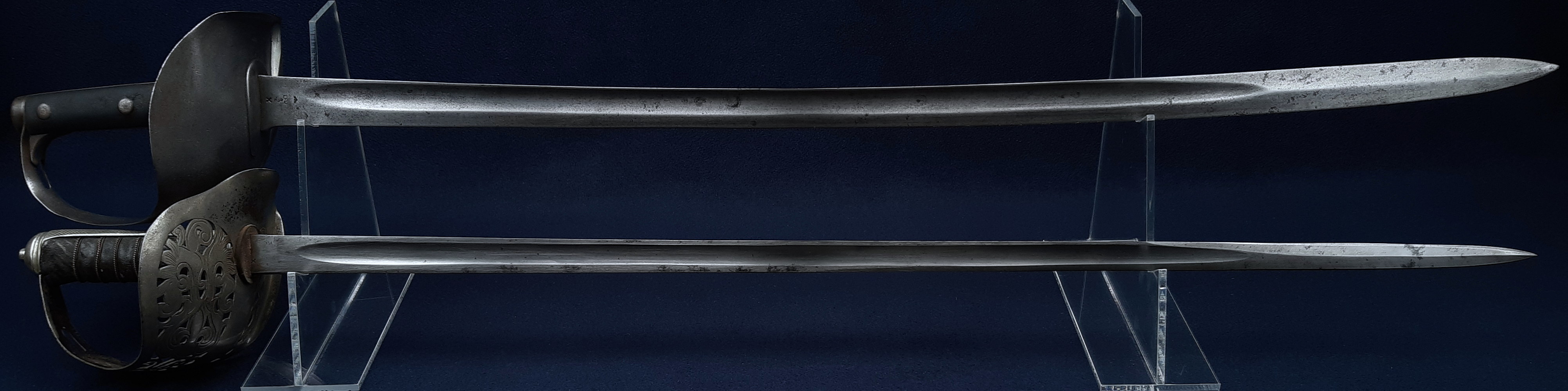
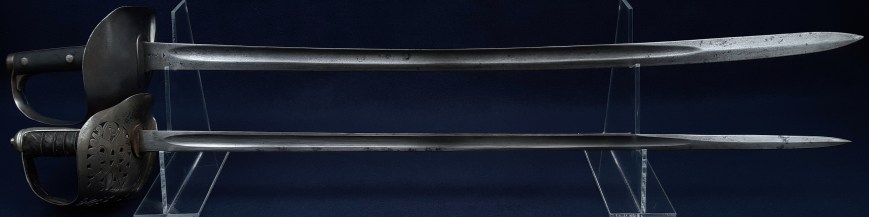
This example is typical. Its blade has been reduced in length by trimming the tip, and narrowed in both width and thickness by grinding the faces, belly and false edge such that it now fits in an infantry scabbard, a significant change compared to the cavalry type. For comparison:
Original 1899 Pattern cavalry blade:
Curved, 33½ inches in length, 1.45 inches wide at the shoulder (due to a flare at the base designed to add strength there specifically), 1.05 inches wide at the midpoint (16.75 inches from shoulder), 0.36 inches thick at the shoulder, 0.275 inches thick at the midpoint
This sword’s blade:
Straight, 32½ inches in length, 1.03 inches wide at the shoulder, 0.76 inches wide at the midpoint (16.75 inches from shoulder, ignoring shortening for a more direct comparison), 0.3 inches thick at the shoulder, 0.18 inches thick at the midpoint
After this reshaping, which would have required complete reprofiling of the tip, the blade has been sharpened and mounted with its new hilt plus a new infantry-style shagreen grip and a standard infantry backstrap. The grip is very distinctive on these swords as it is quite crude compared to contemporary equivalents, lacking for instance grooves for the wire. Possibly the tang is wider than standard requiring something bespoke yet easily fabricated.
Even with a few manufacturing shortcuts, why the military went to such effort to convert these is an interesting question. My thought is that the 1912 sword would have stood out less on parade than the 1905 Pattern, which needed a larger scabbard and distinctive riveted grip to fit its cavalry blade. Rehilting swords for a new monarch may have become an opportunity for the Army to ‘fix’ the odd-looking and cumbersome 1905 Pattern into something that looked less makeshift, at minimal cost.
This rehilt & conversion type is not found in lists of official patterns, but the change is extensive enough that perhaps we ought to consider the 1912 Sergeant’s sword worth noting as a distinct model for collecting purposes. Its features are consistent and it helps explain why the 1905 Pattern staff sergeant’s sword is quite rare today.
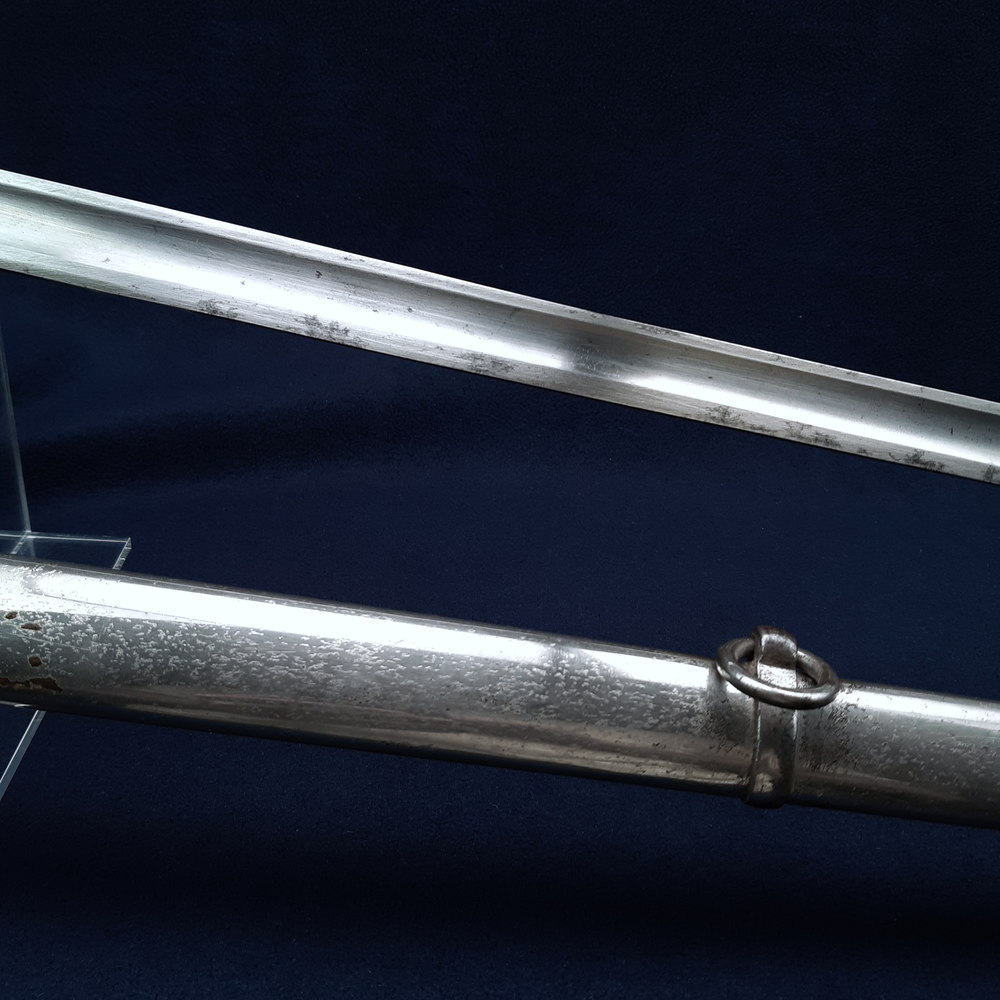
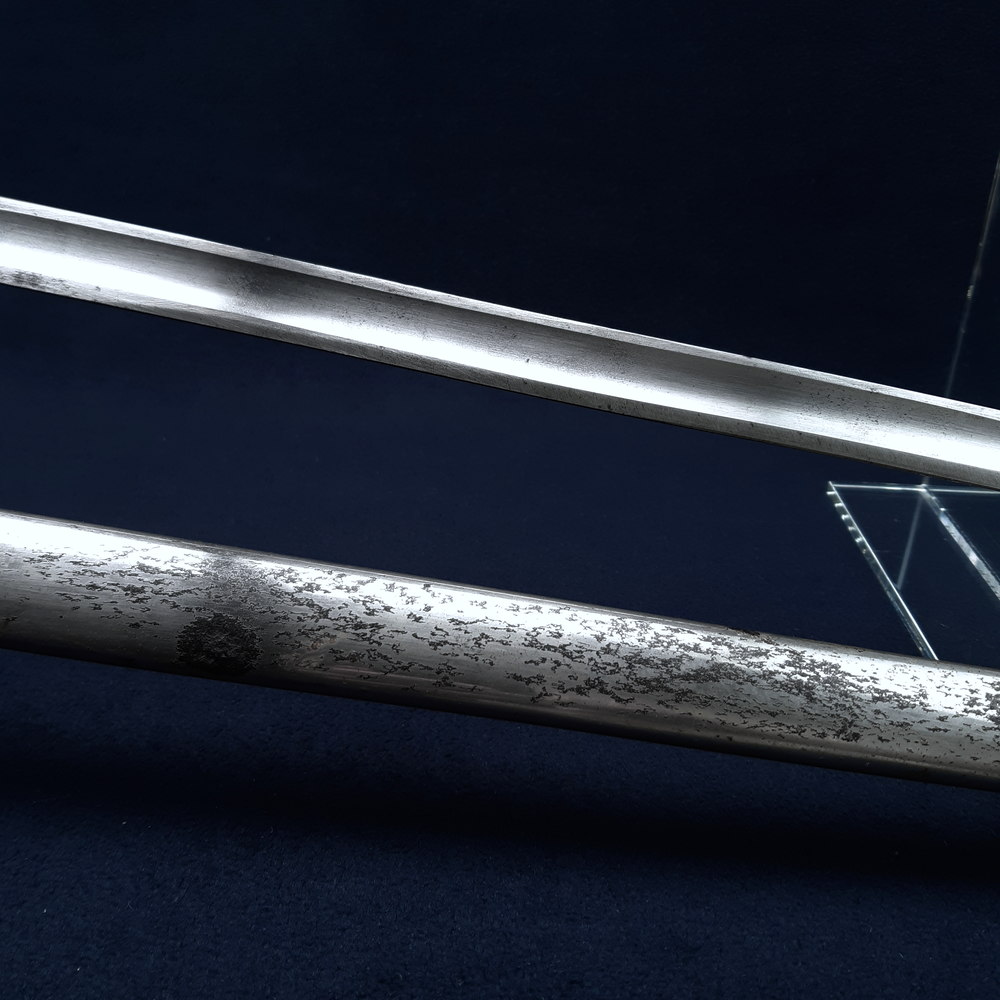
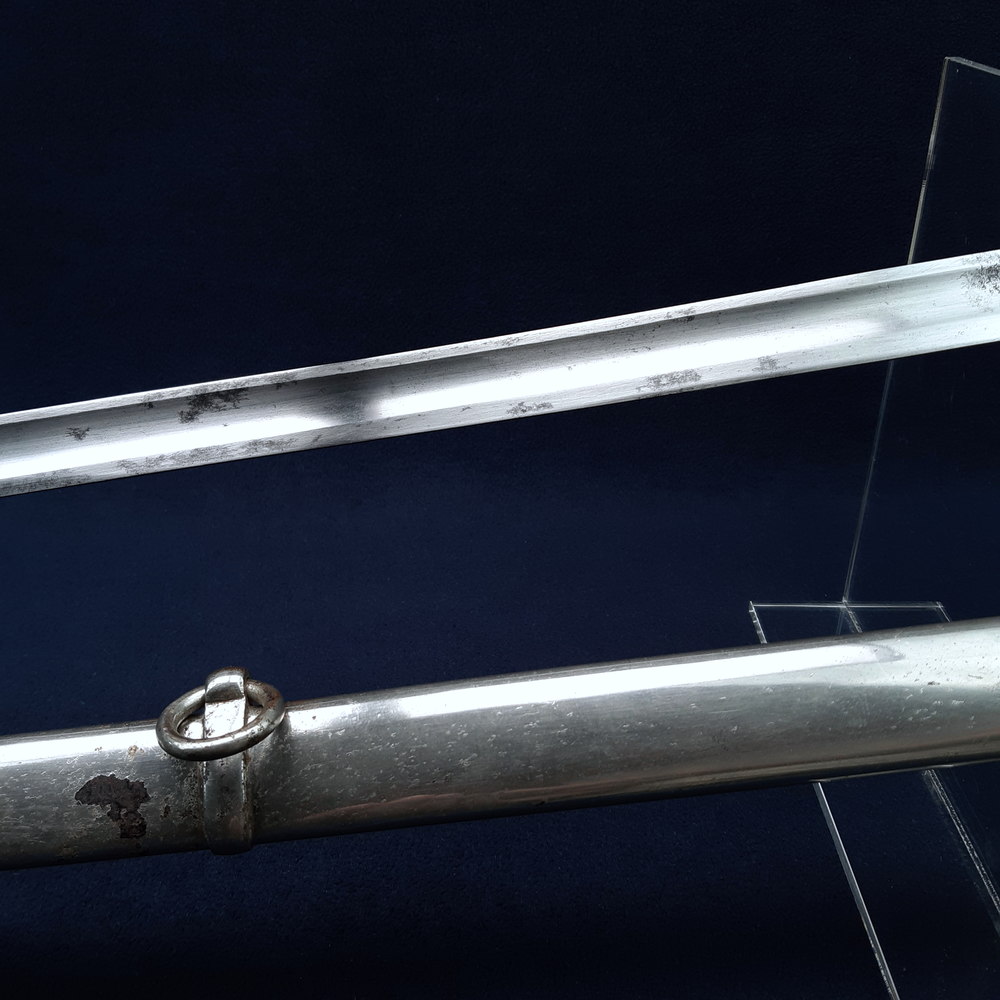
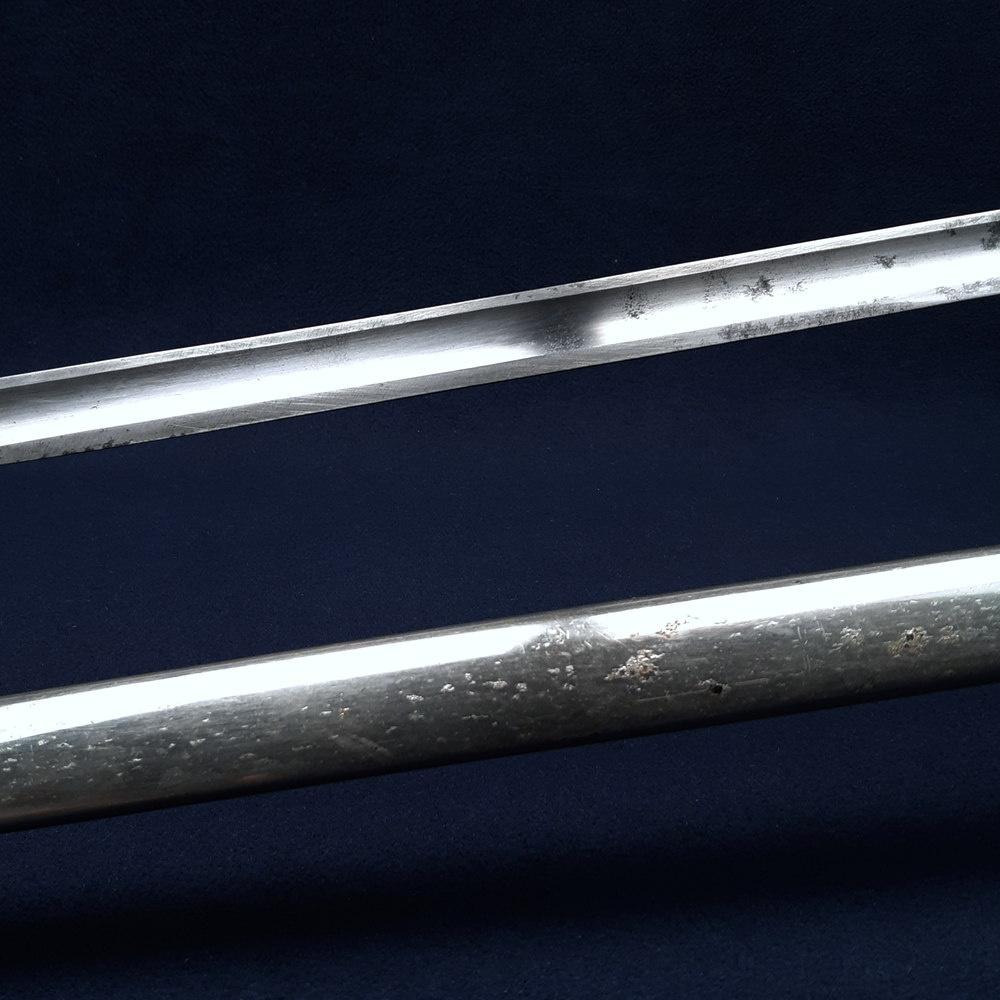
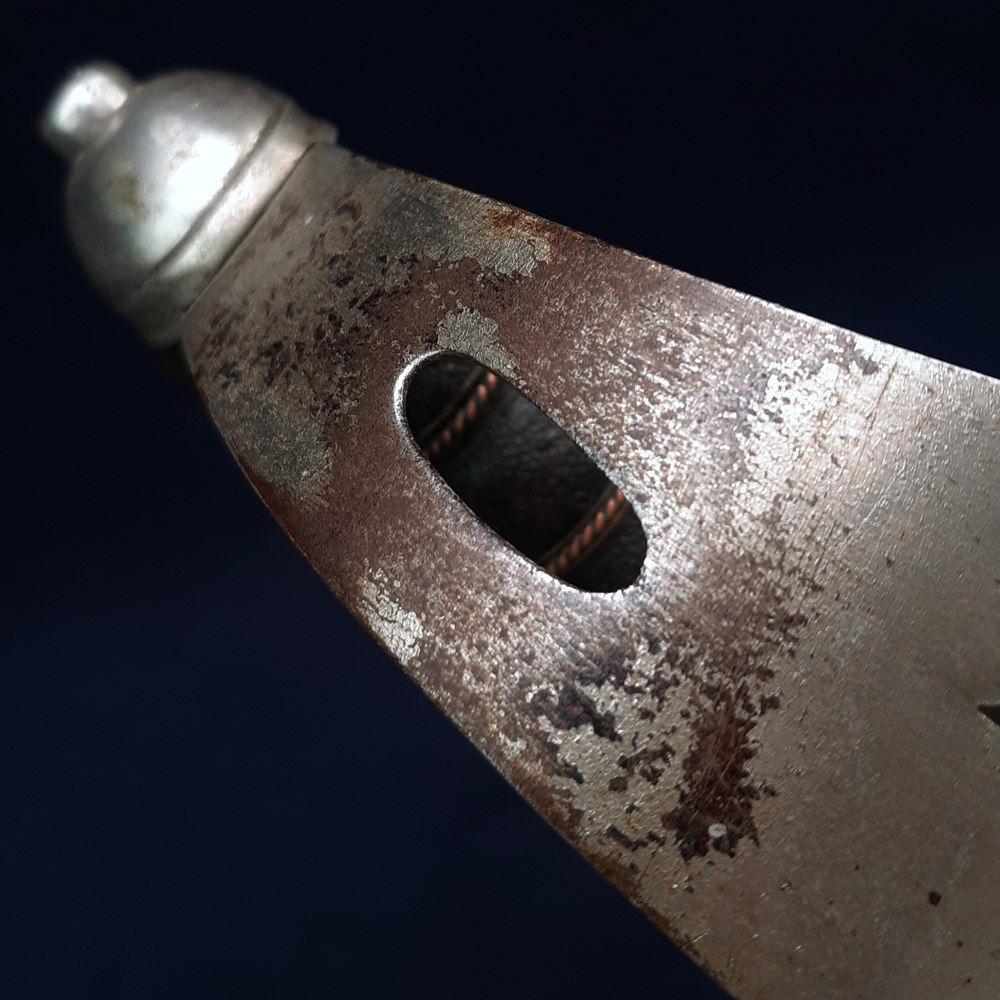
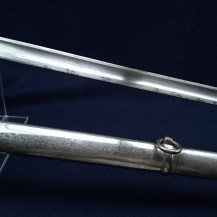
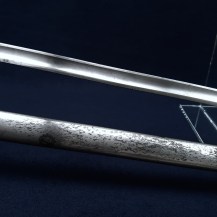
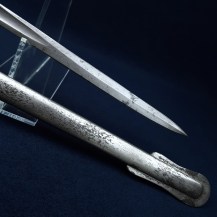
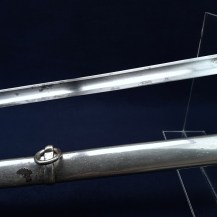
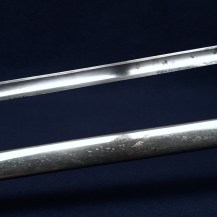
The blade has visible grinding and sharpening marks to its faces from its conversion, with no apparent effort to put on a polish. Some examples have plated blades but not this one. The edge is, as mentioned, sharp along about 4.5 inches of the false edge and 13 inches of the true edge, with no edge damage and an intact tip. Some spots of moderate patination and a few tiny areas of light cleaned pitting on one side. The hilt and scabbard are all nickel-plated, with some wear and flaking to the plating exposing dark patinated steel, quite extensive in high-friction areas like the inside of the guard and around the sword knot slit.
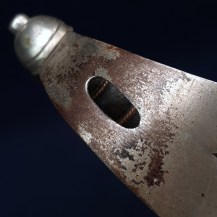
The alloy backstrap and ferrule are bright and clean with only a tiny patch of verdigris on the pommel. The backstrap does not completely fit into the ferrule, and the ferrule itself is slightly misaligned, but despite these the sword is well peened, completely solid in the hand with no movement to any part, and the blade rings when struck. The shagreen of the grip is all intact with light handling wear, its wire binding is all present with slight movement to all loops. The blade sheaths and draws fully and smoothly, its scabbard is free of dents.
