

British 1845 Pattern Military Store Department Officer’s Sword of Colonel Herbert James Mills CB, MID, Anglo-Egyptian War and First Suakin Expedition
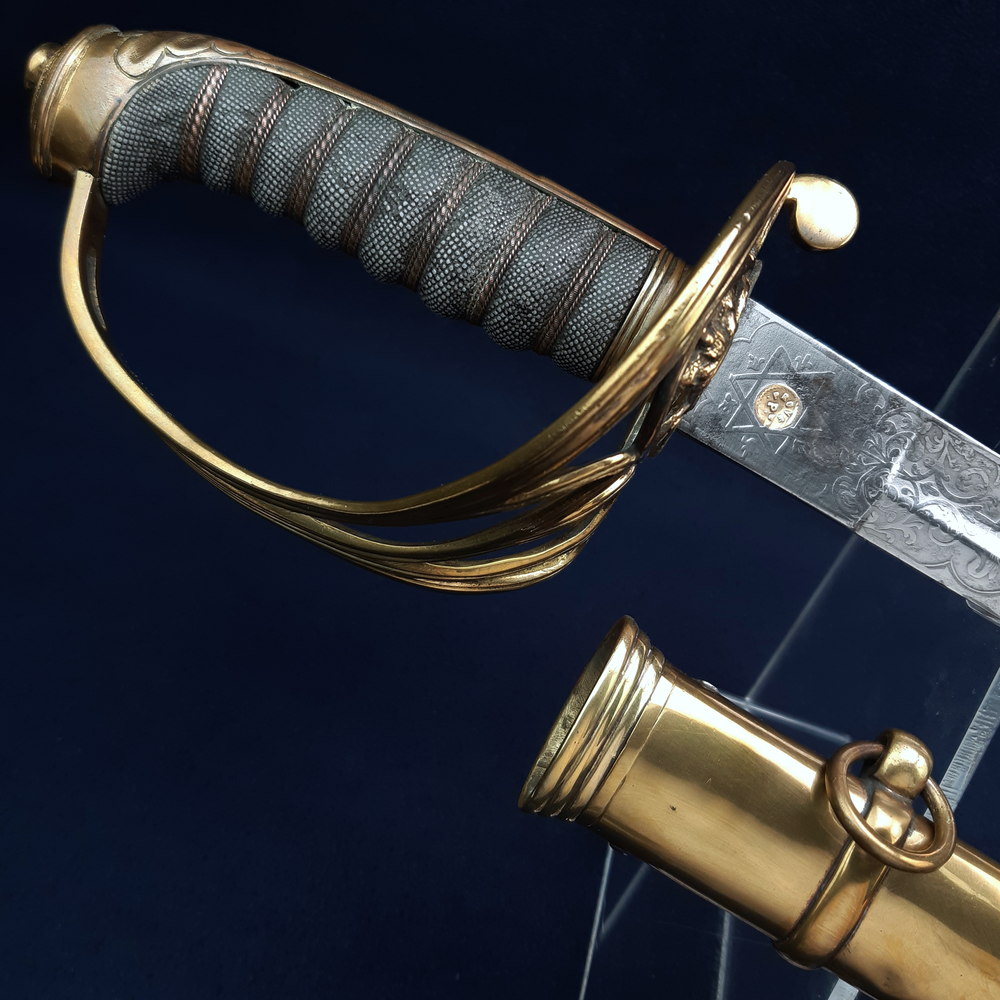
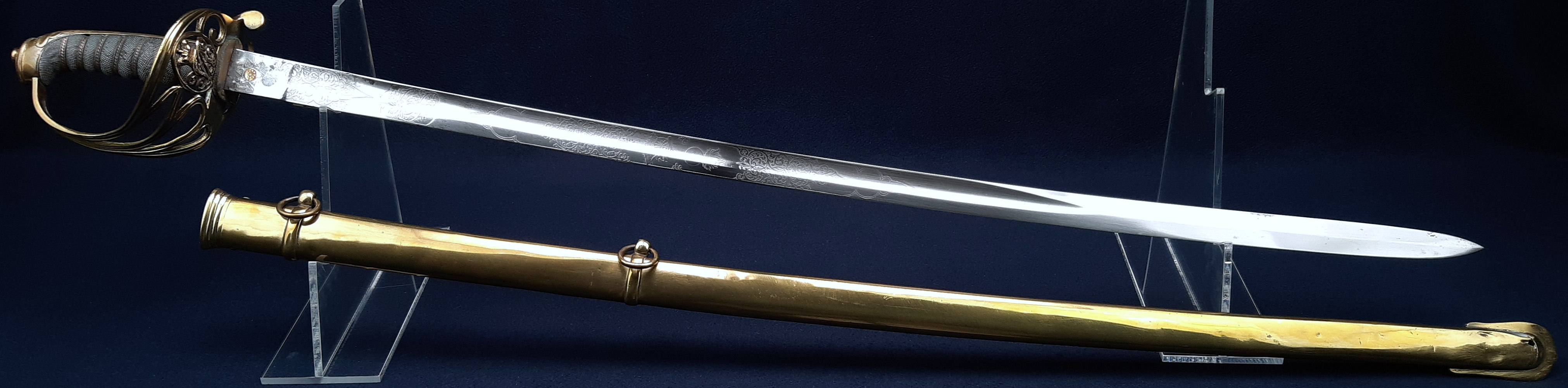
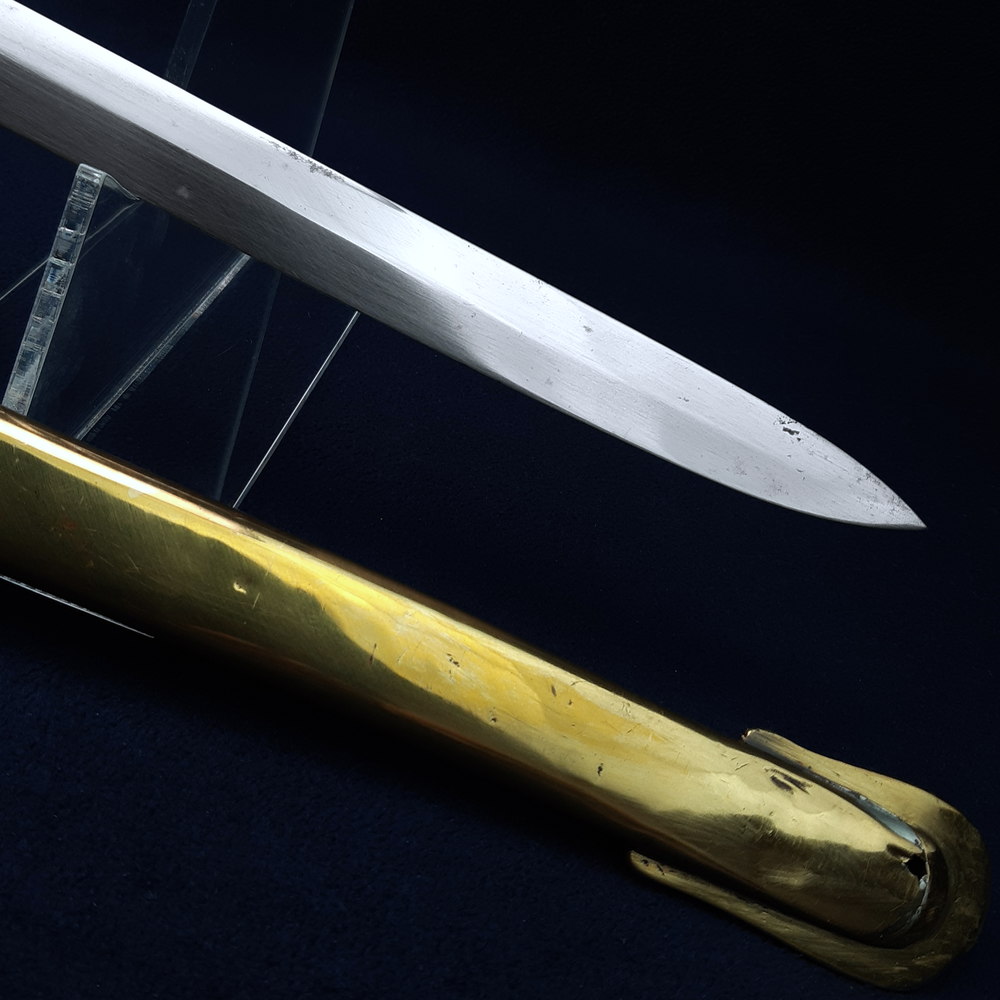
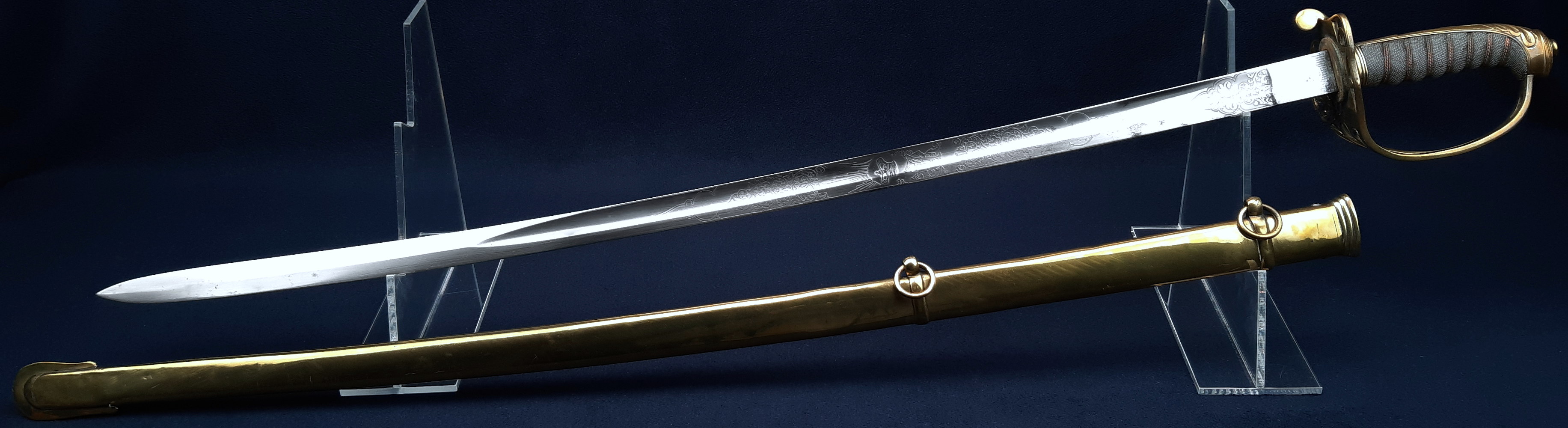
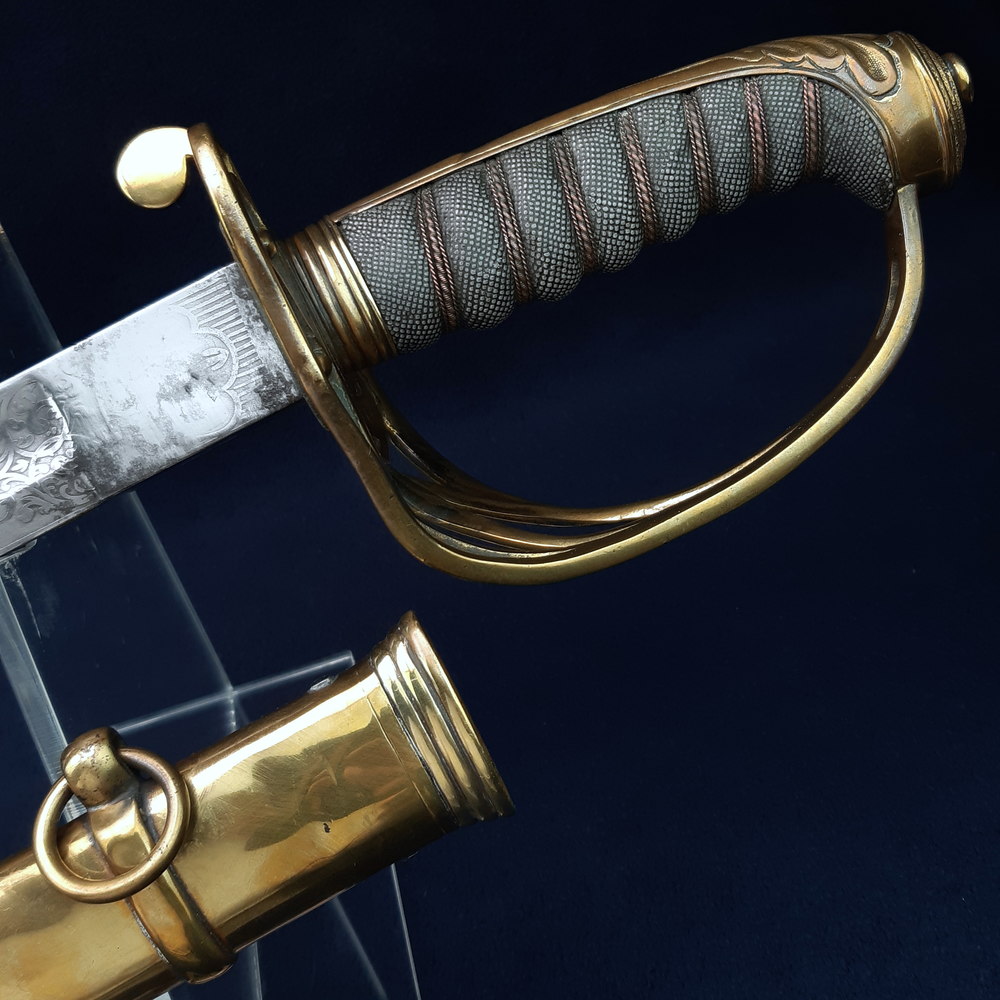
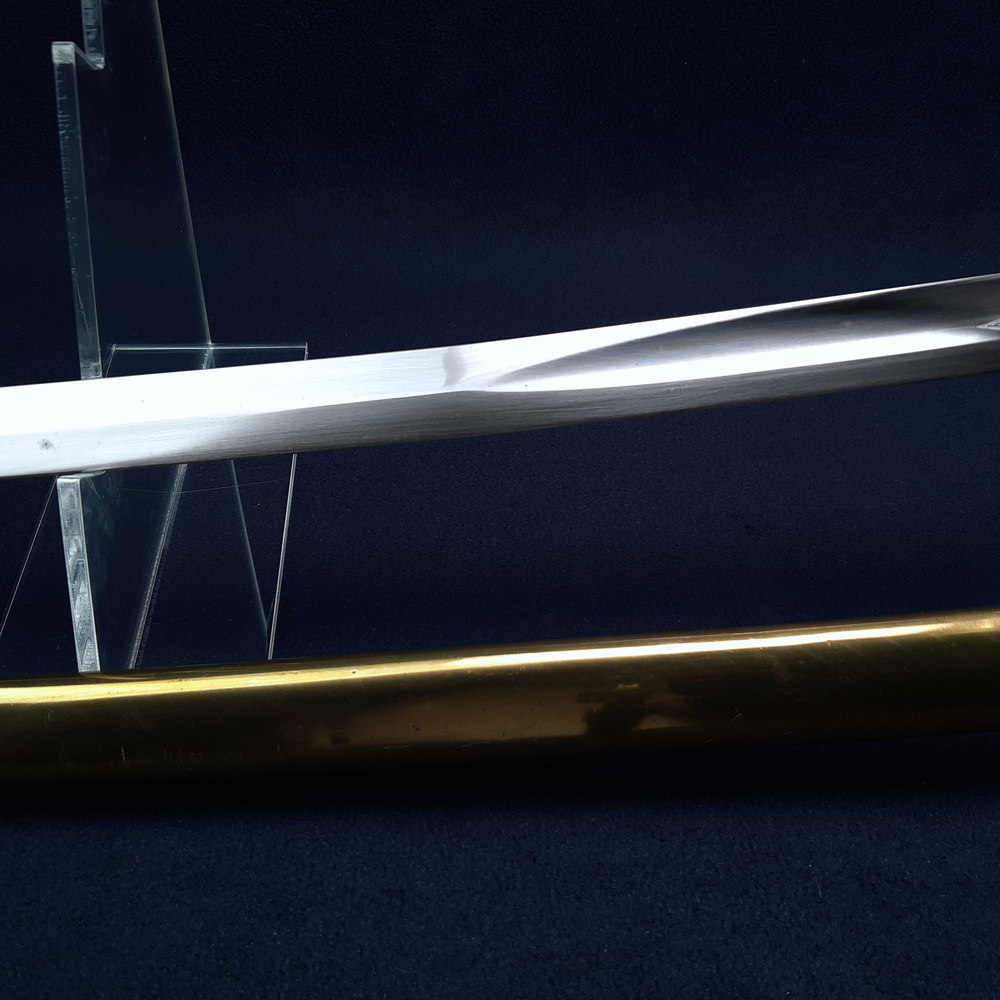
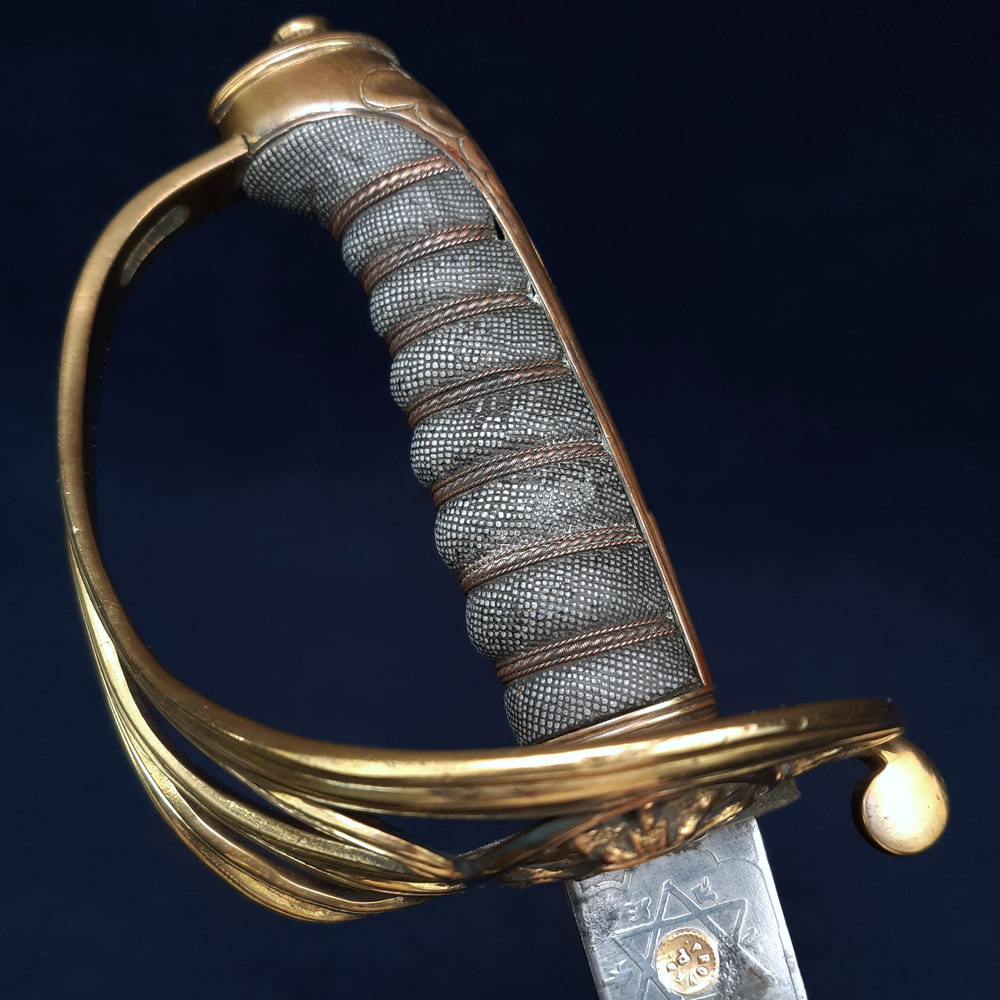
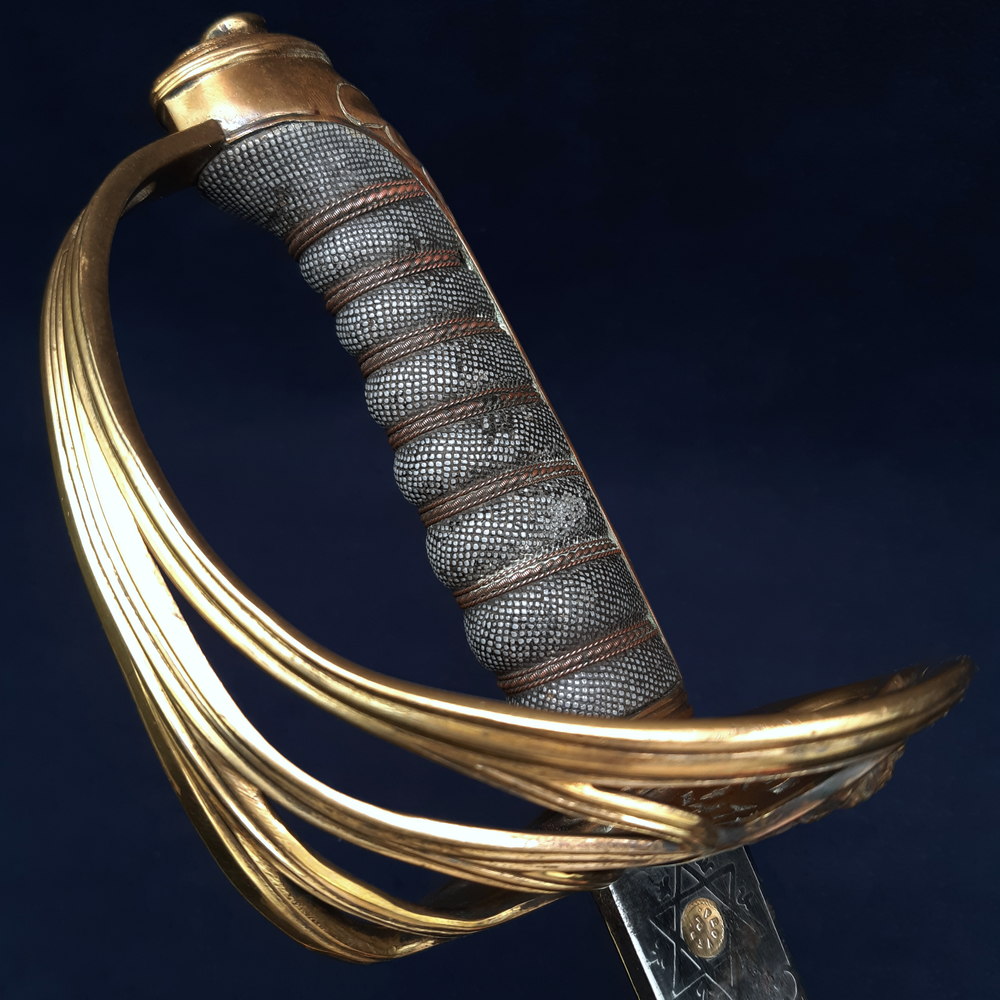
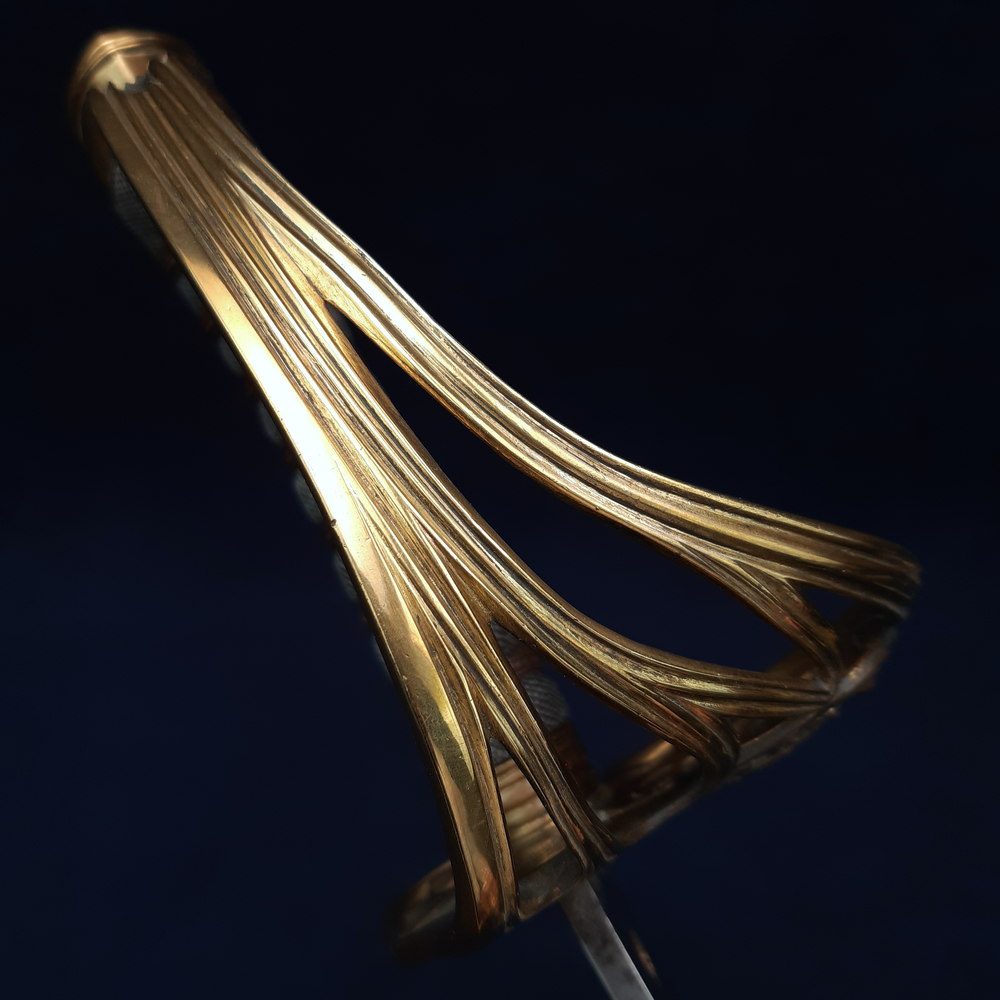
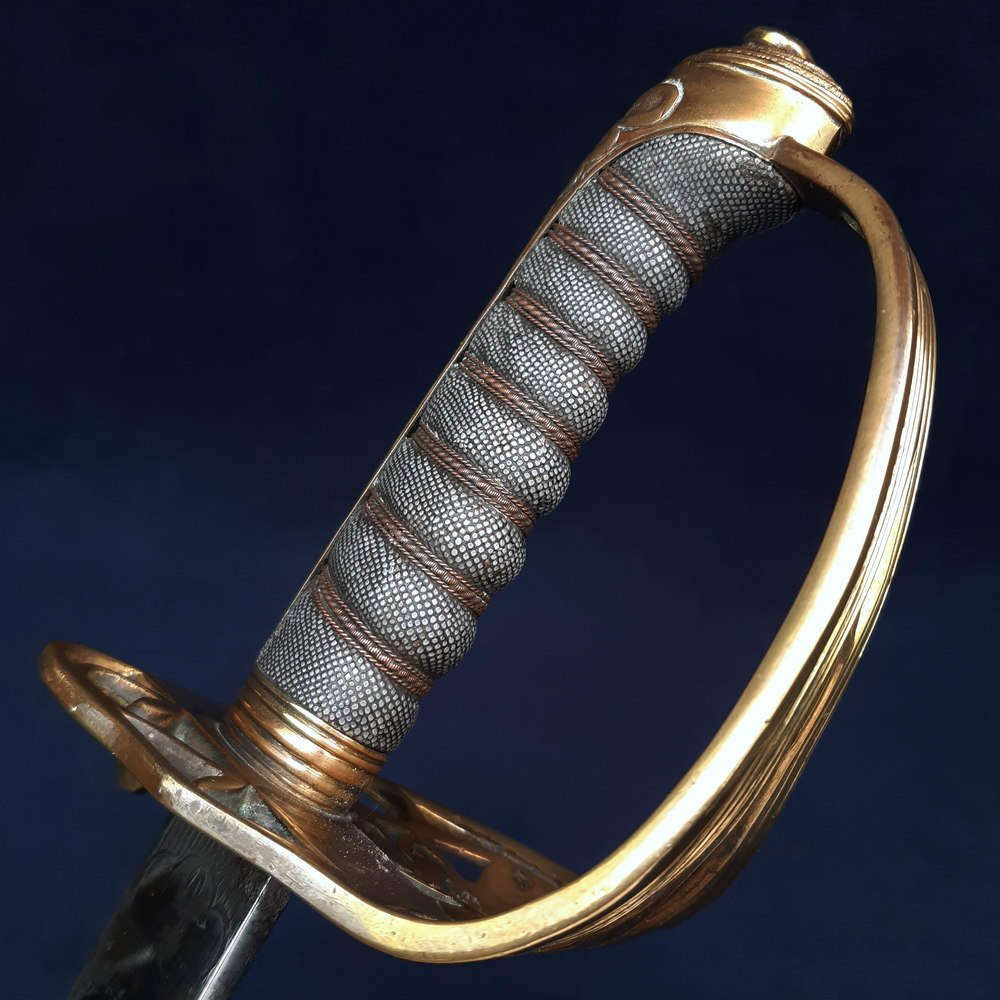
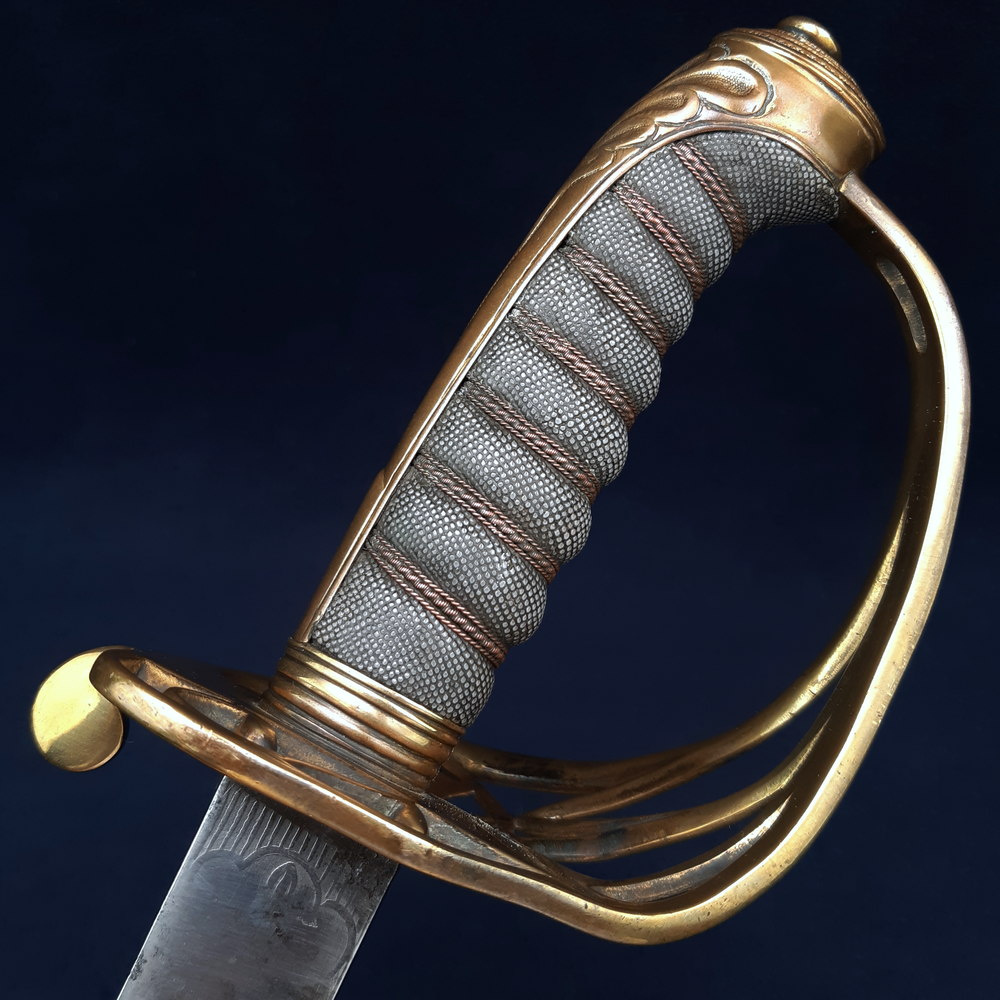
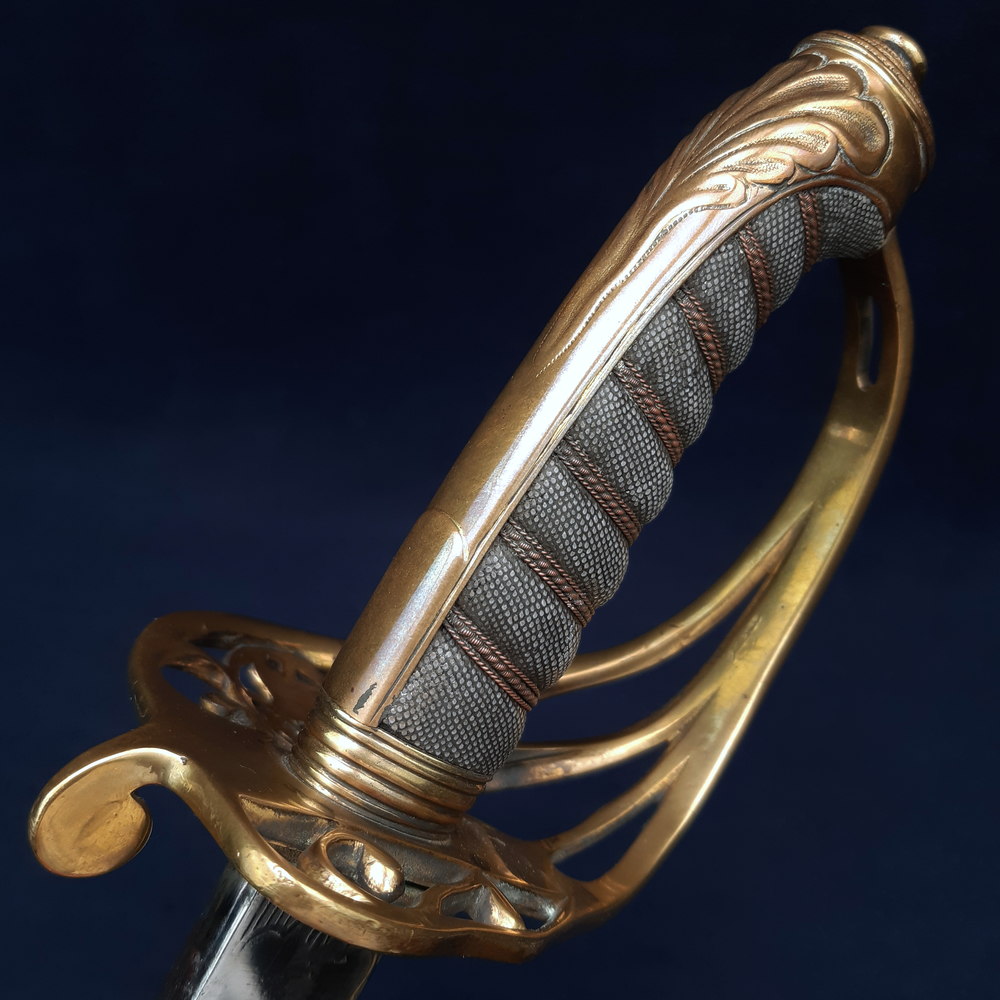
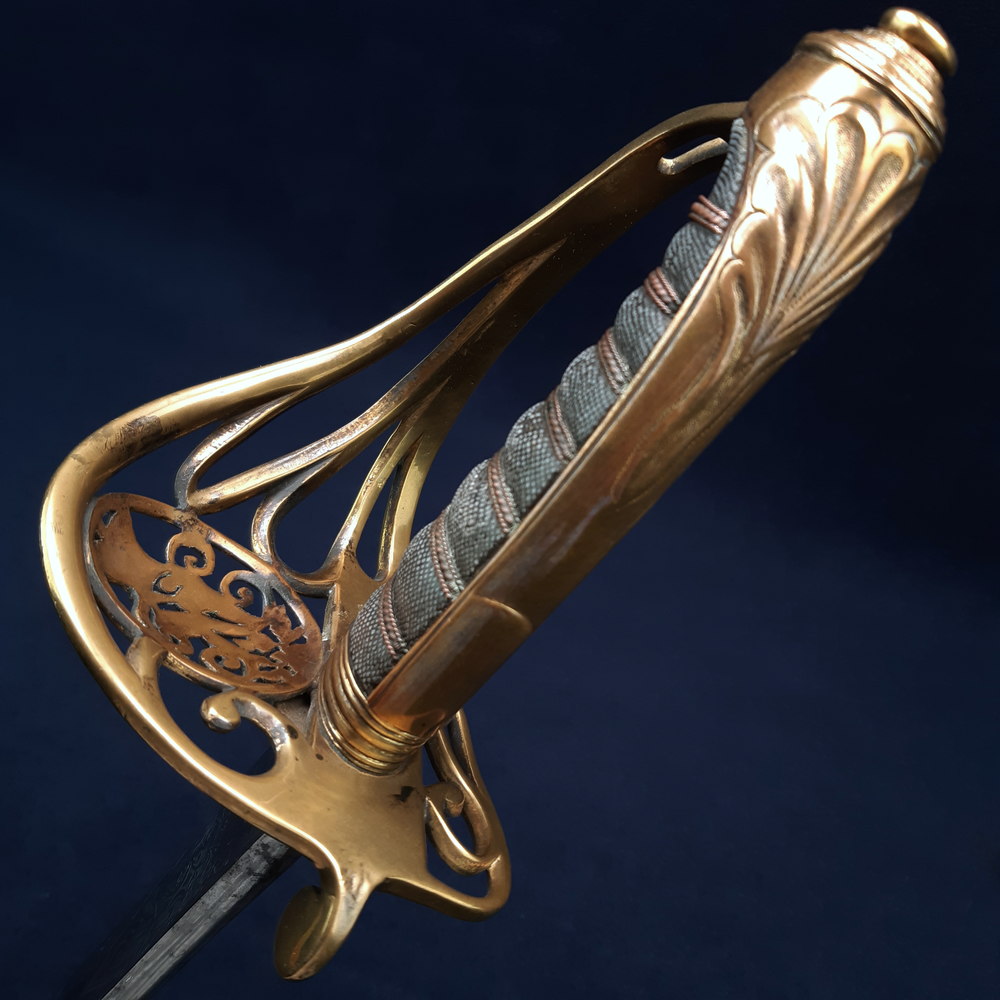
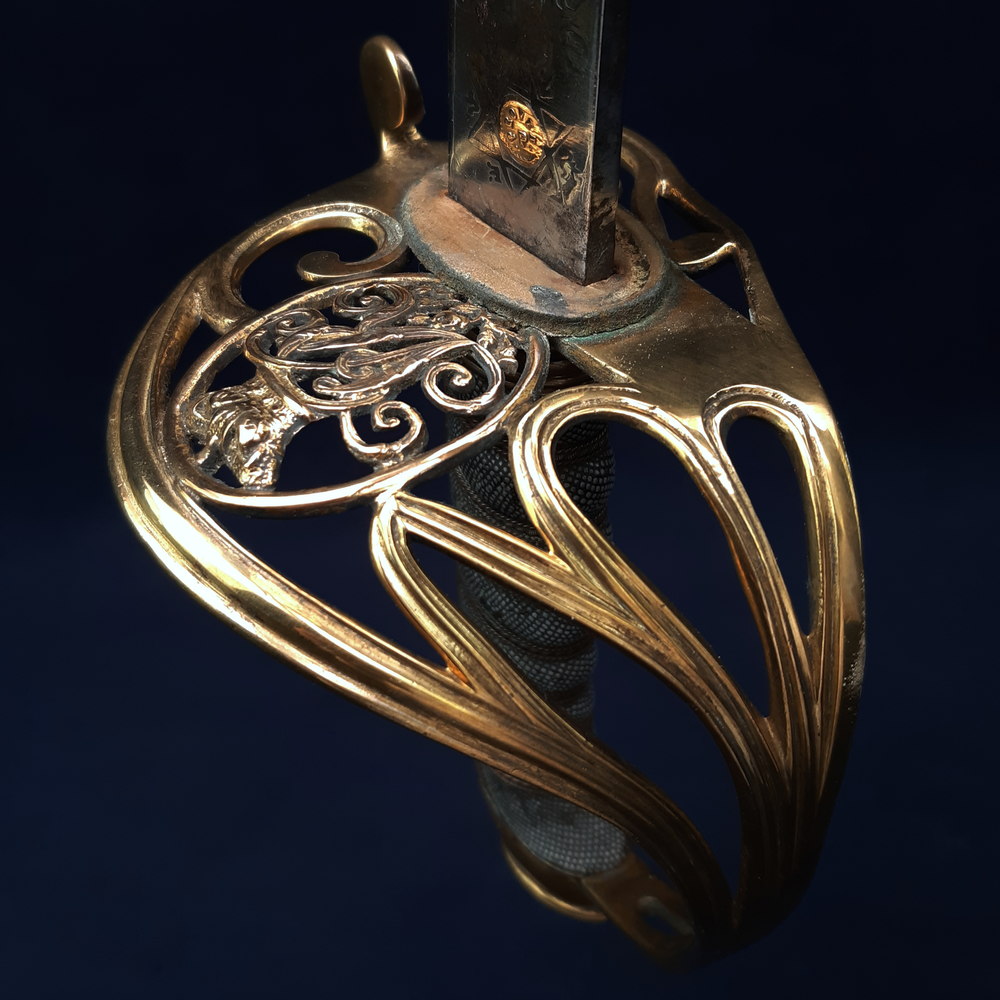
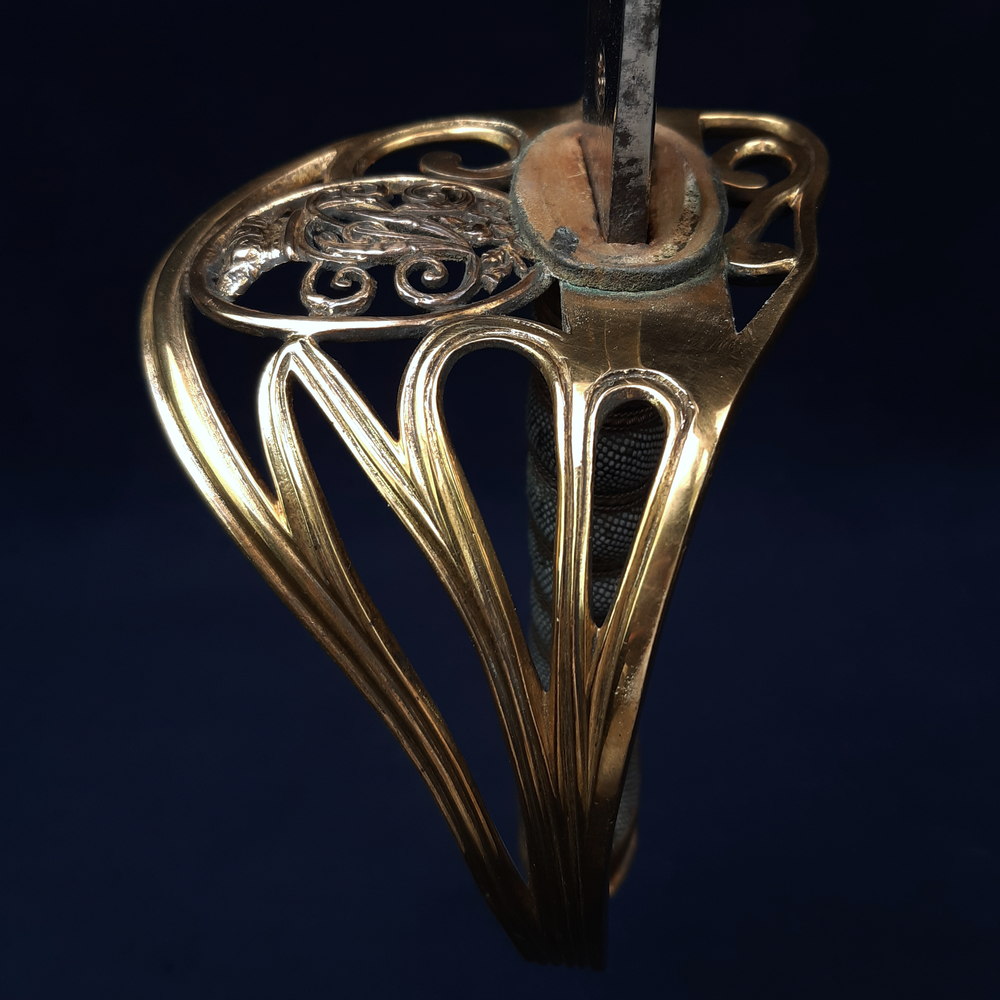
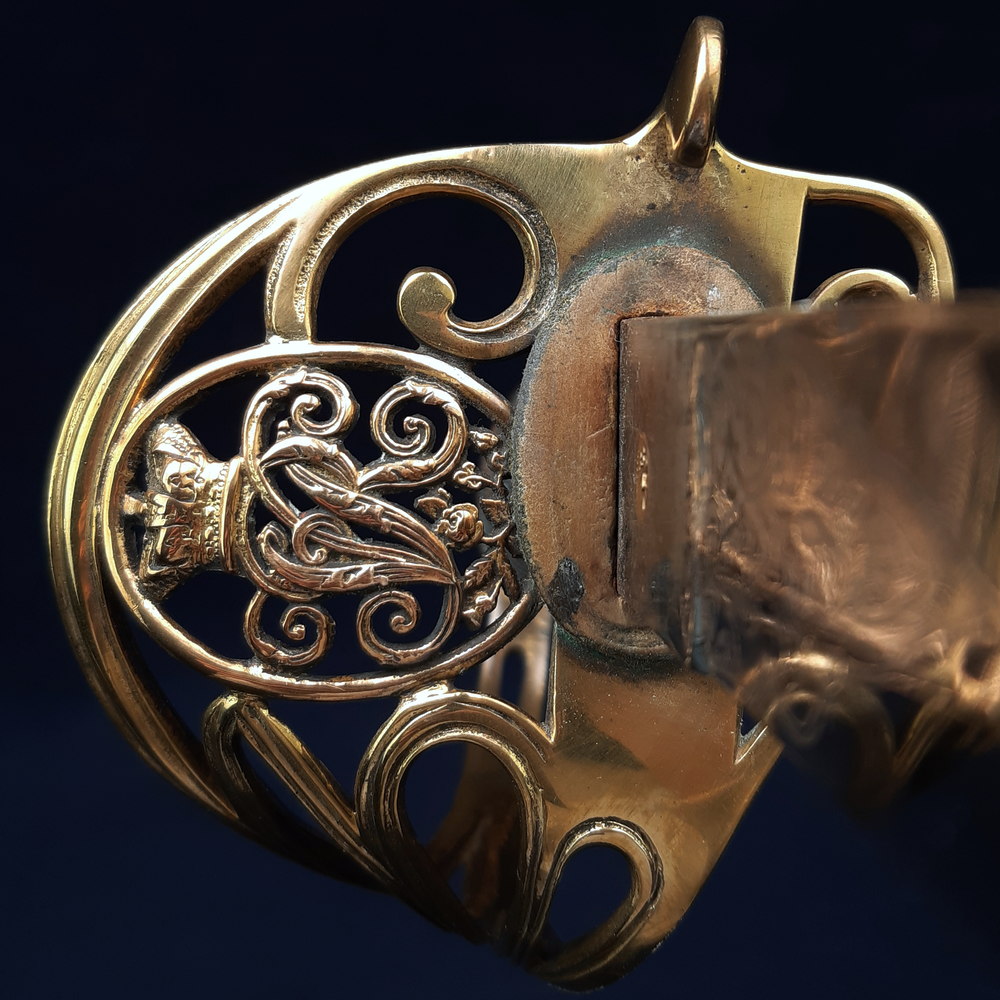
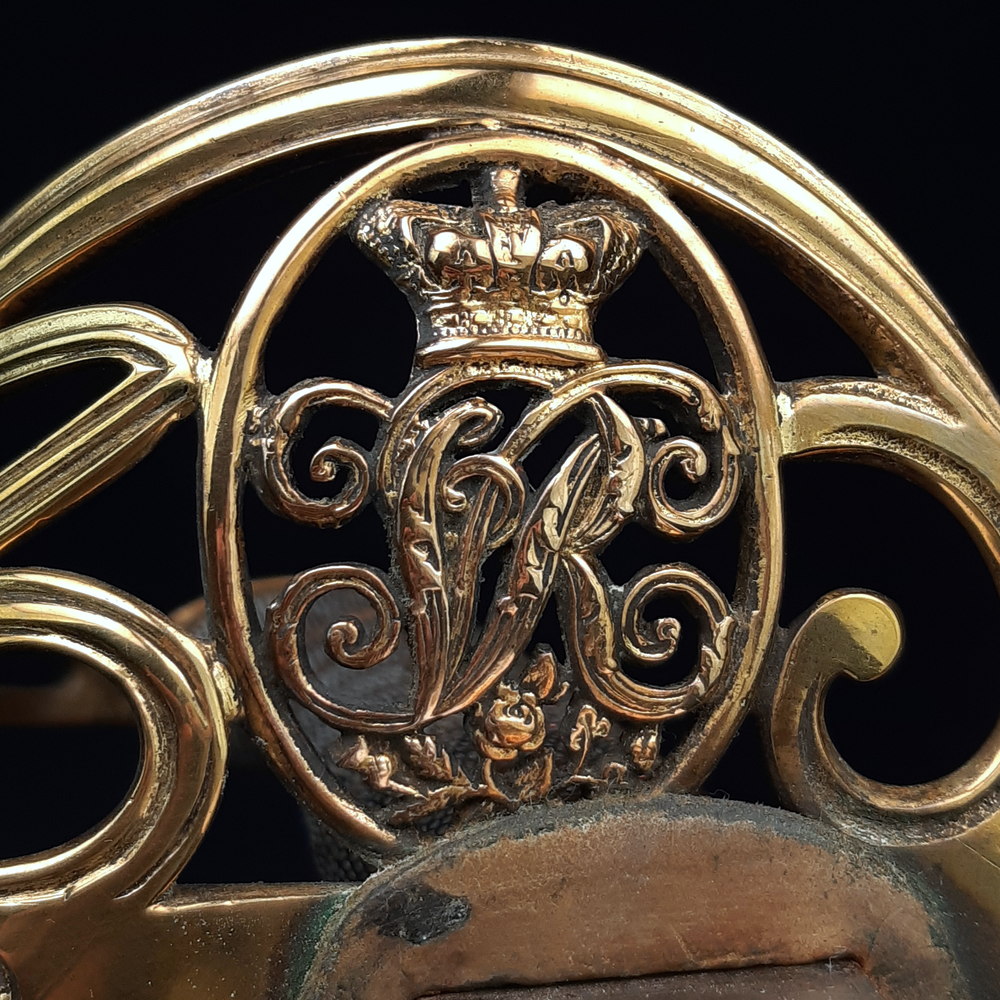
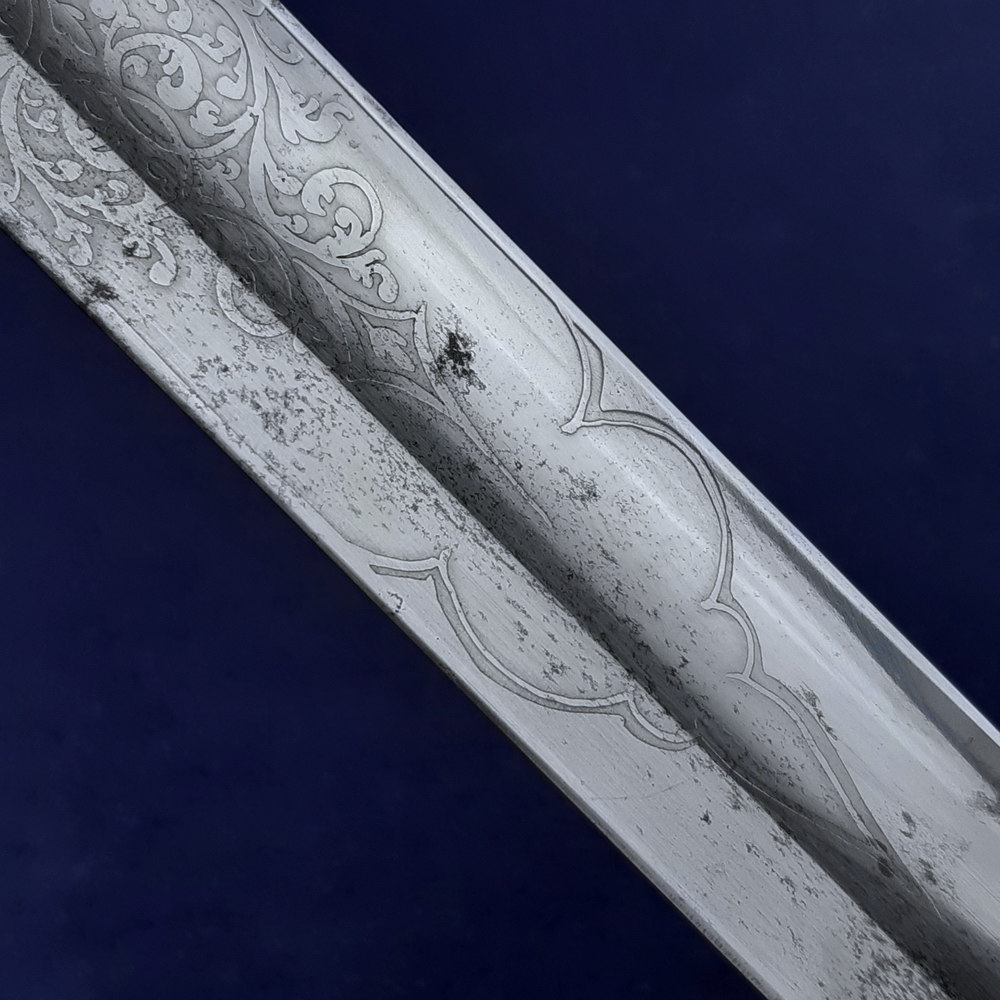
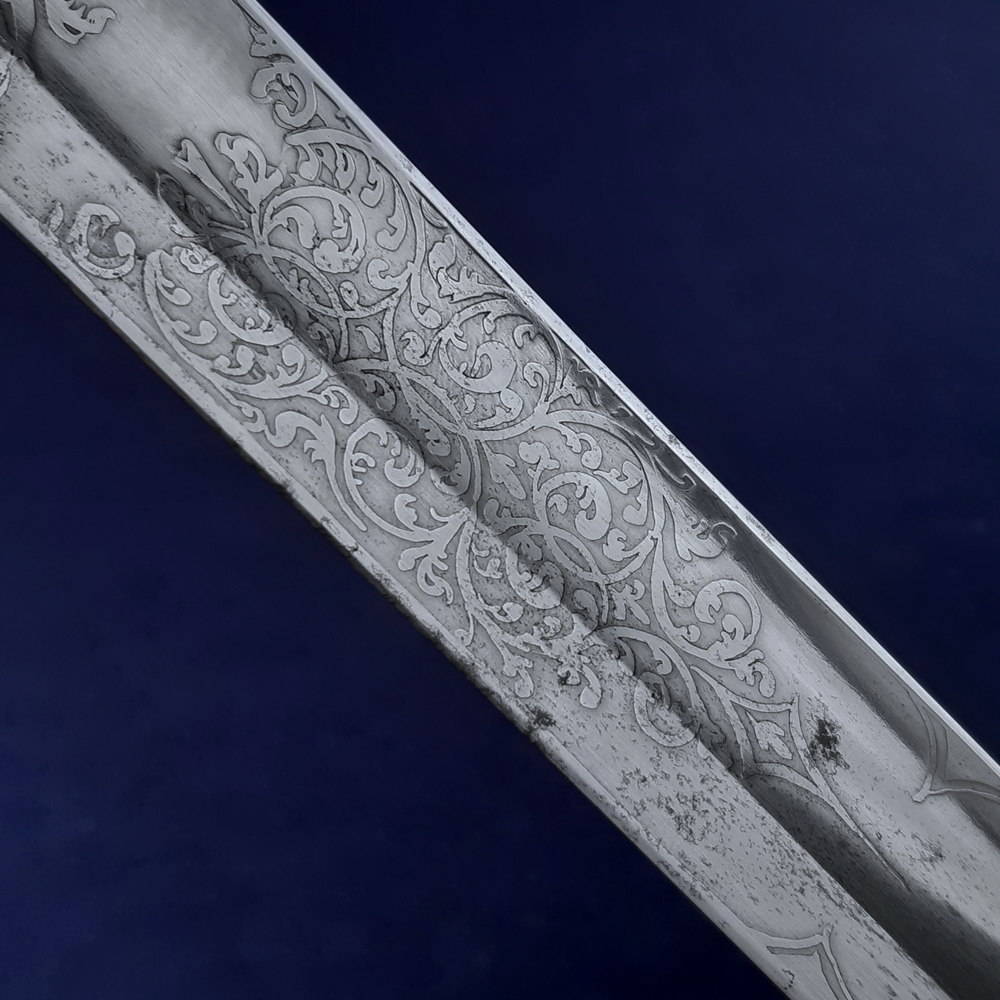
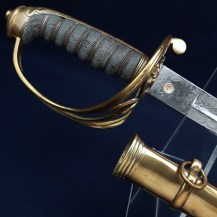
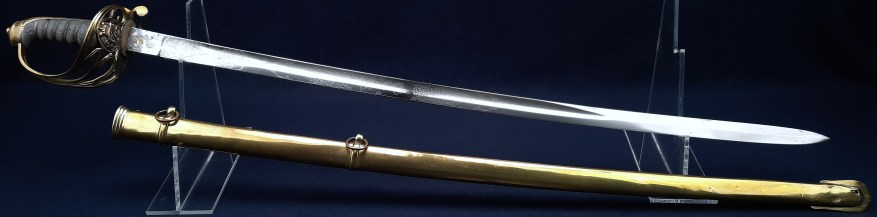
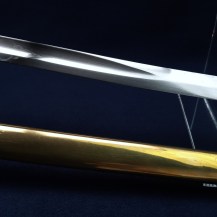
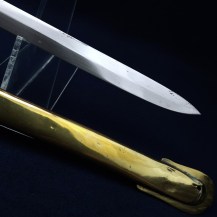
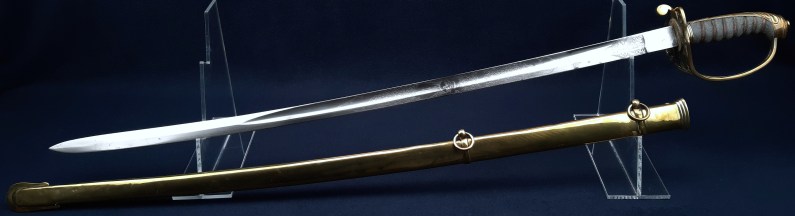
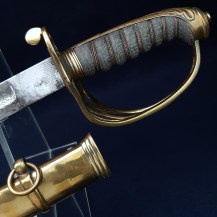
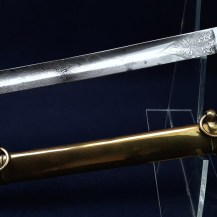
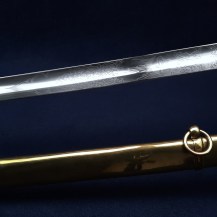
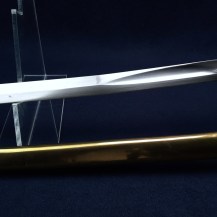
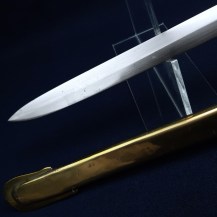
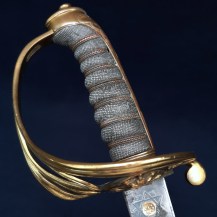
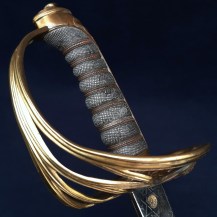
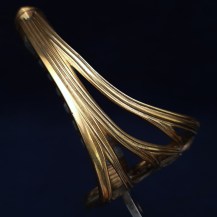
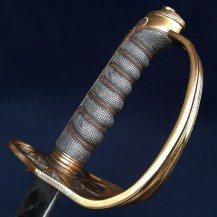
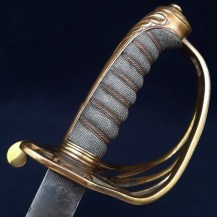
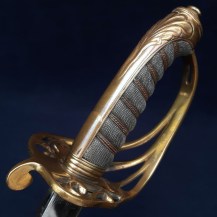
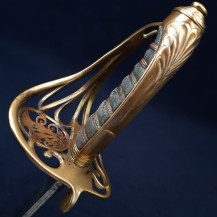
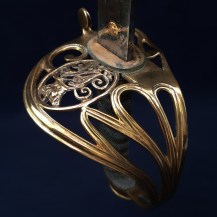
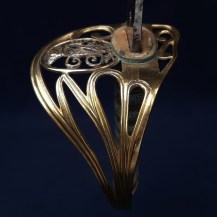
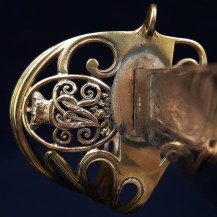
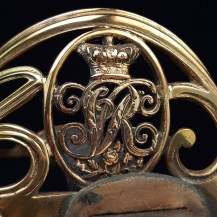
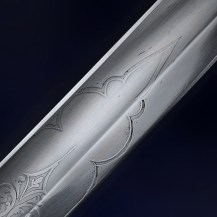
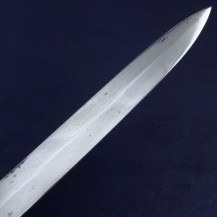
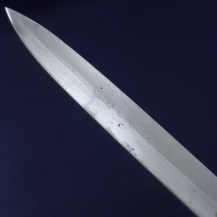
Curved single fullered blade with spear point. Distinctive pierced gilt brass ‘Gothic’ hilt with crown and cypher of Queen Victoria within an oval, small quillon. Brown leather washer. Ribbed brass ferrule, smooth brass backstrap with cast acanthus motif, integral stepped pommel cap, brass tang button, grip of black shagreen over wood bound with wire. Brass scabbard with two hanging rings. Blade 32¼ inches in length past the washer, 1.15 inches wide at the shoulder, the sword 38 inches overall.
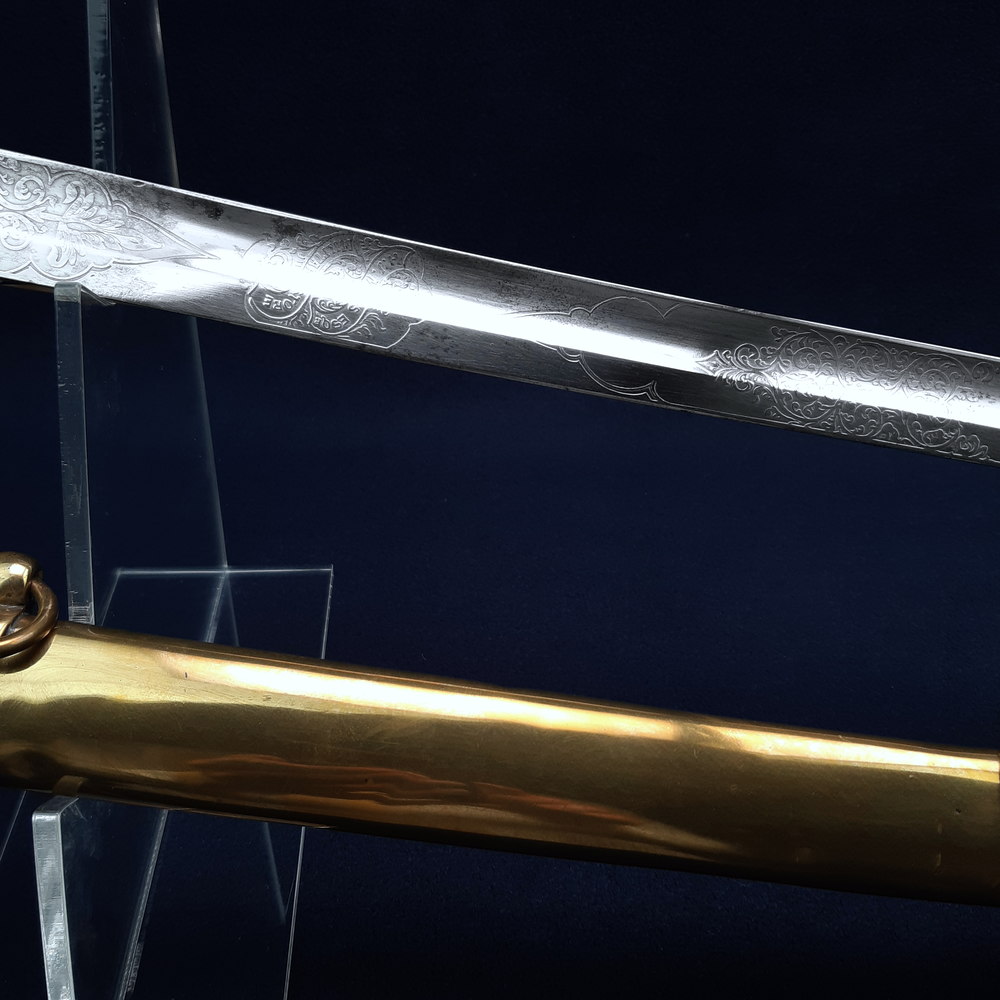
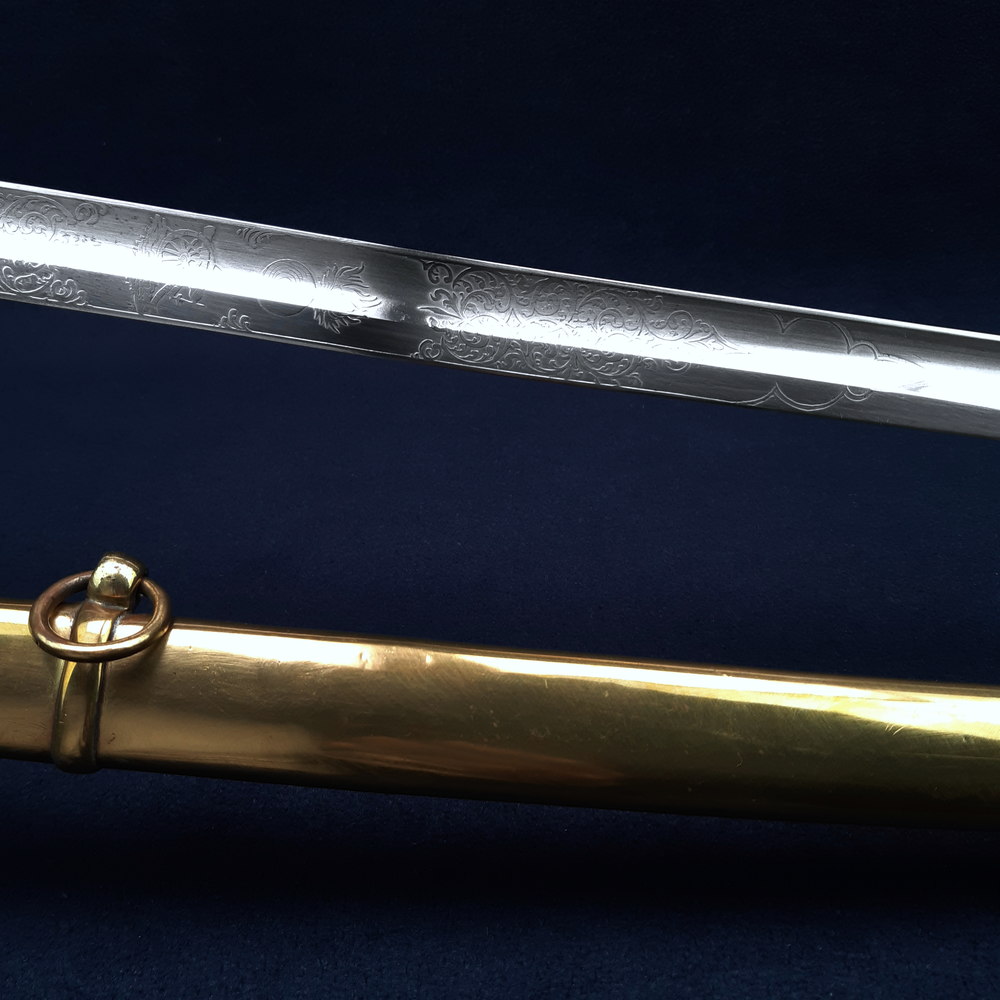
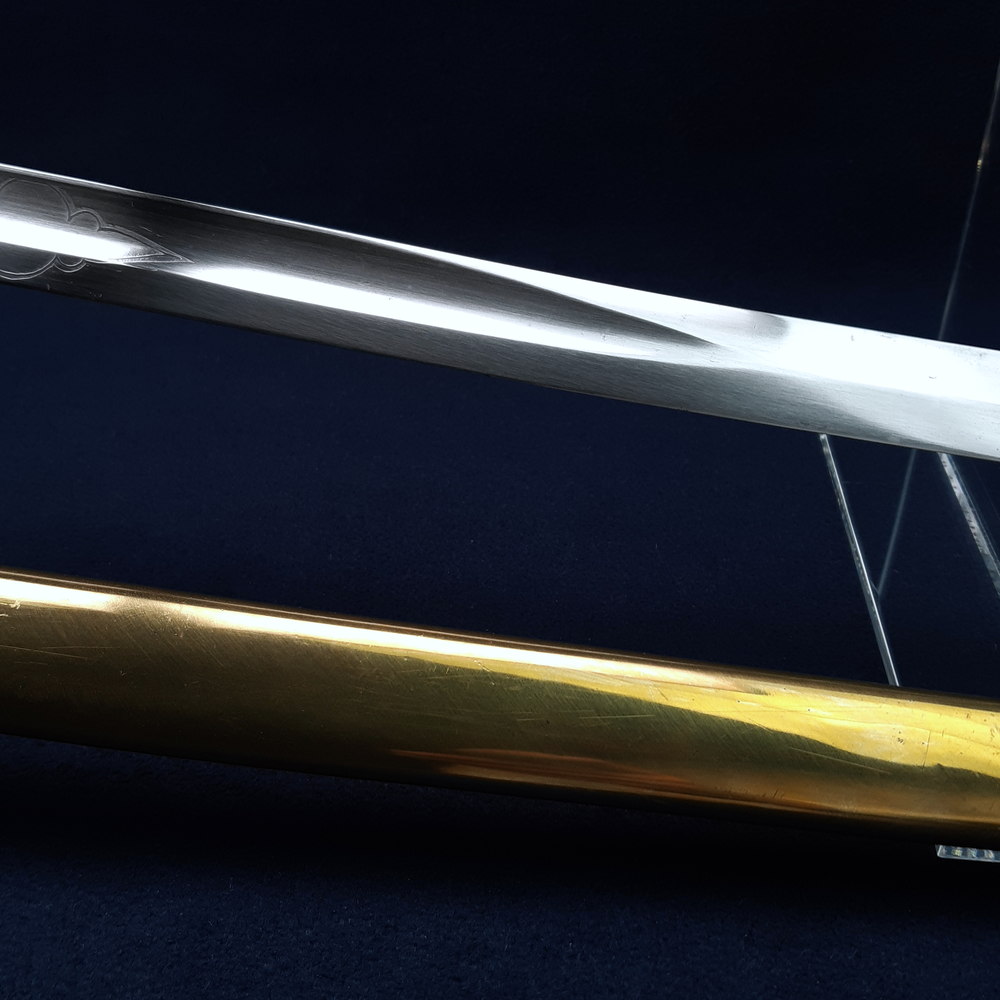
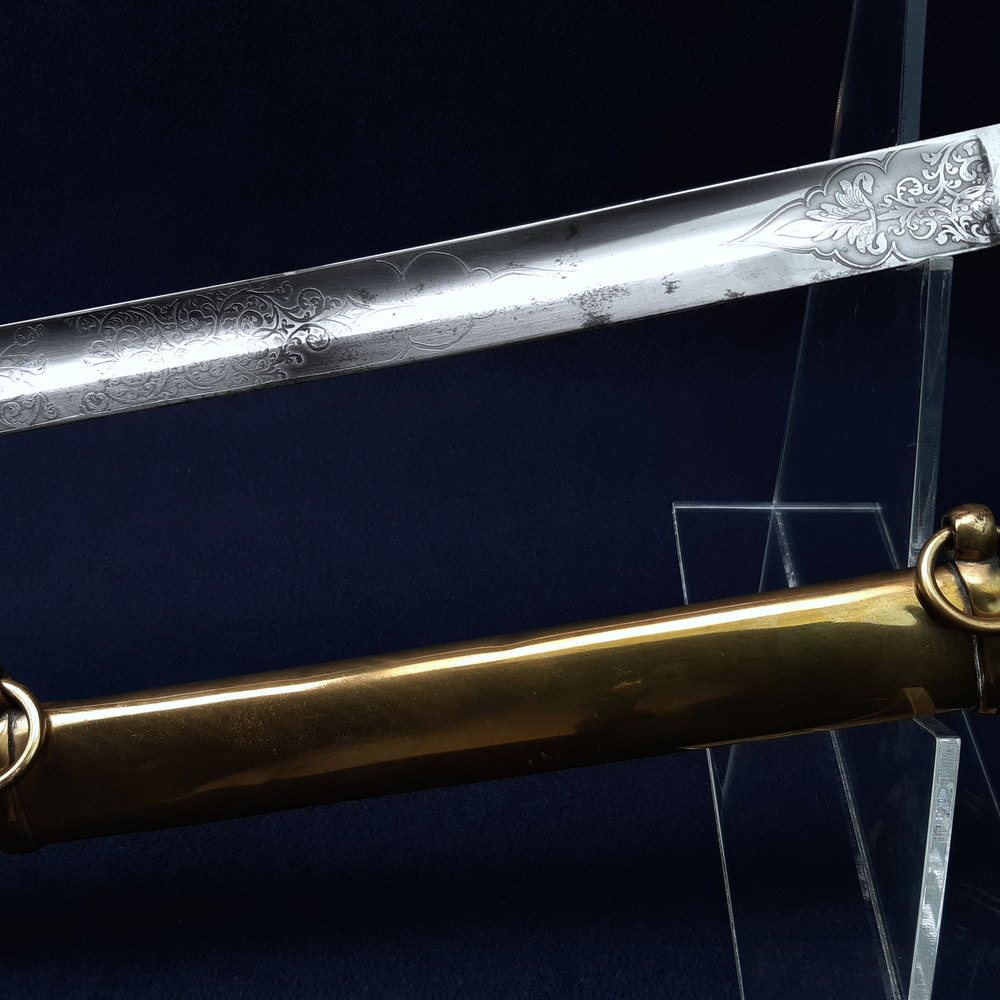
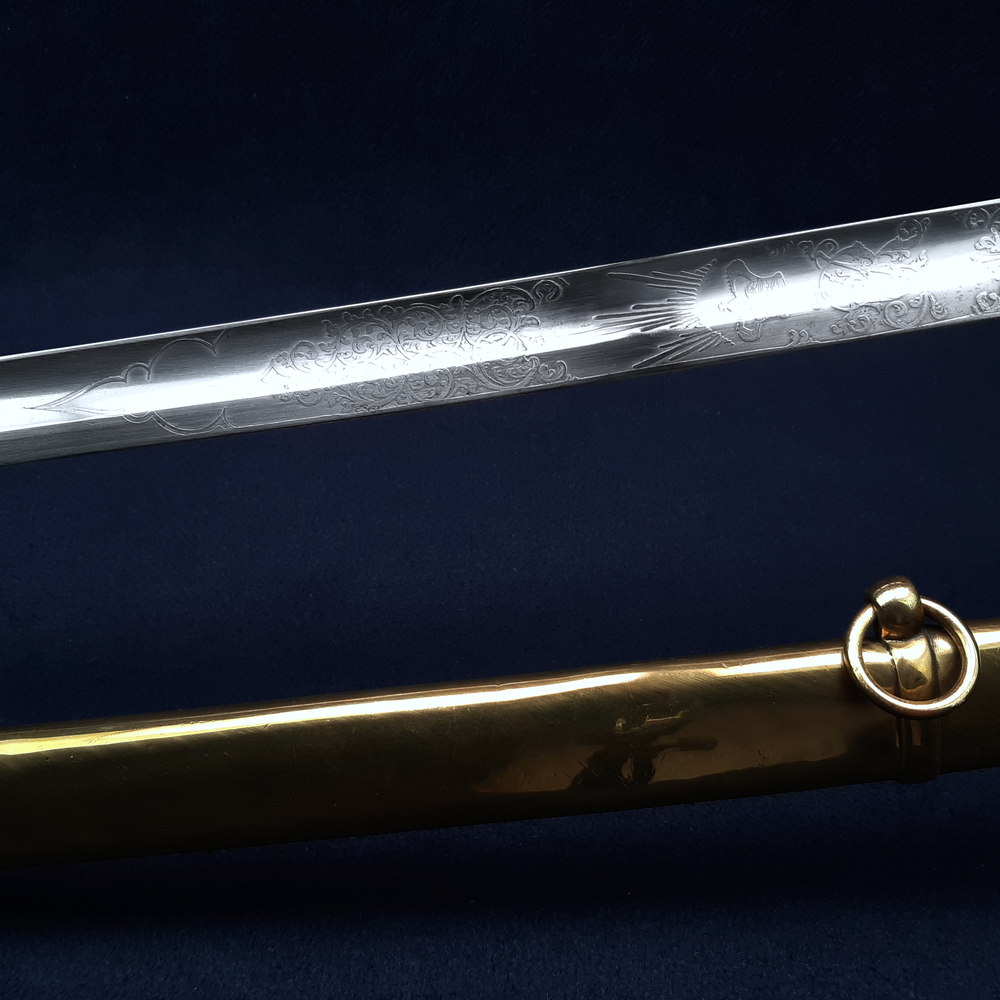
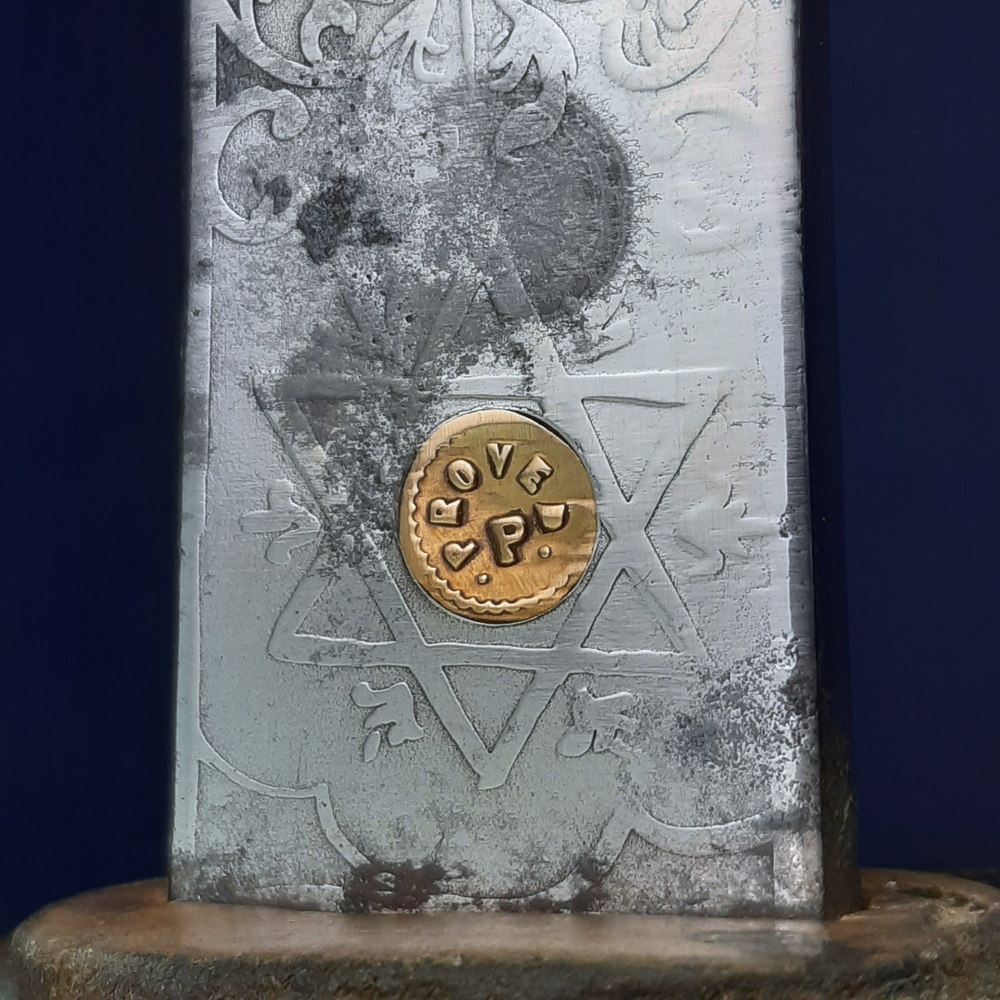
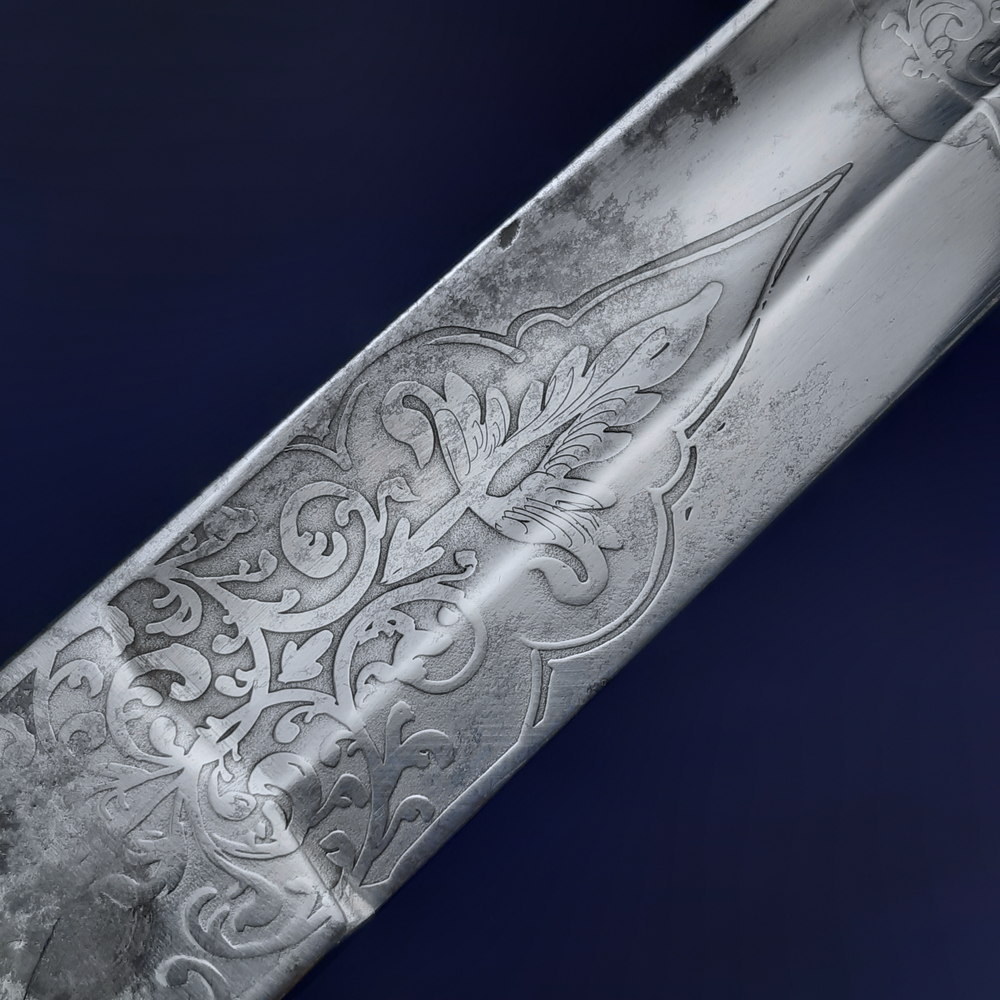
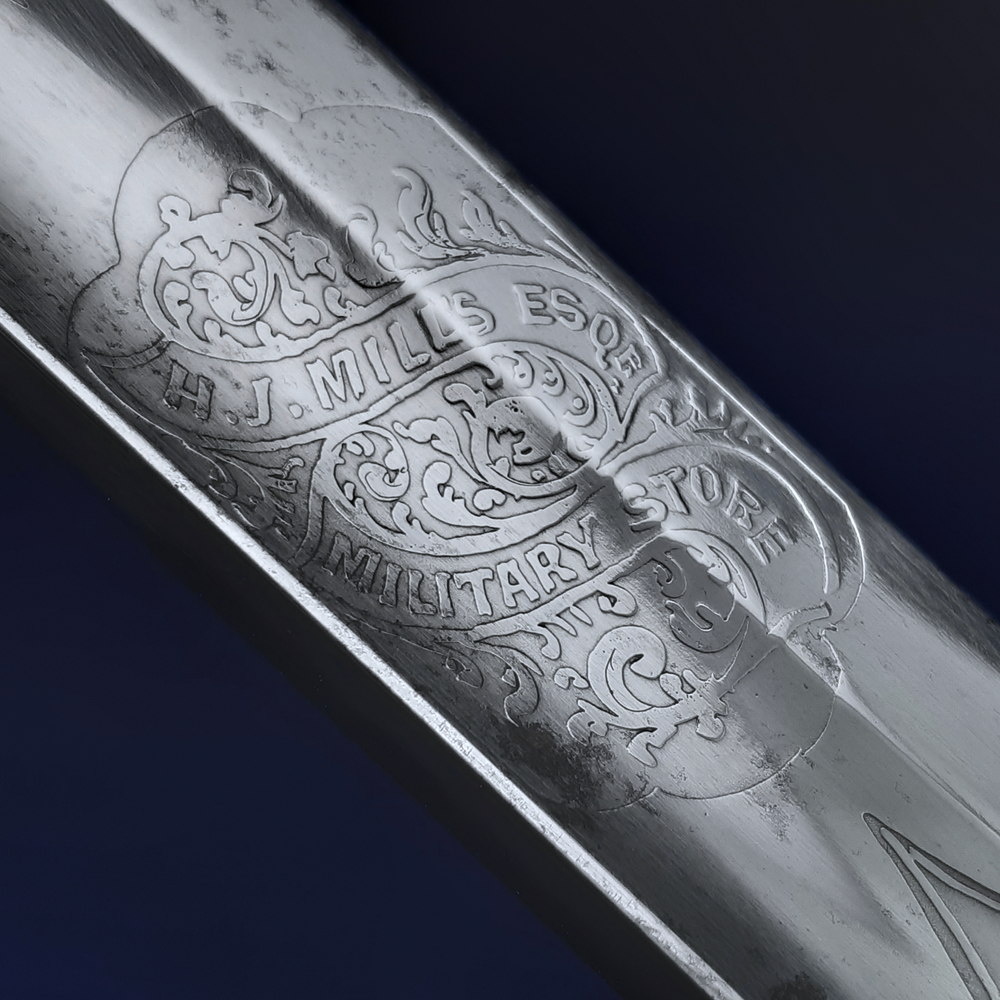
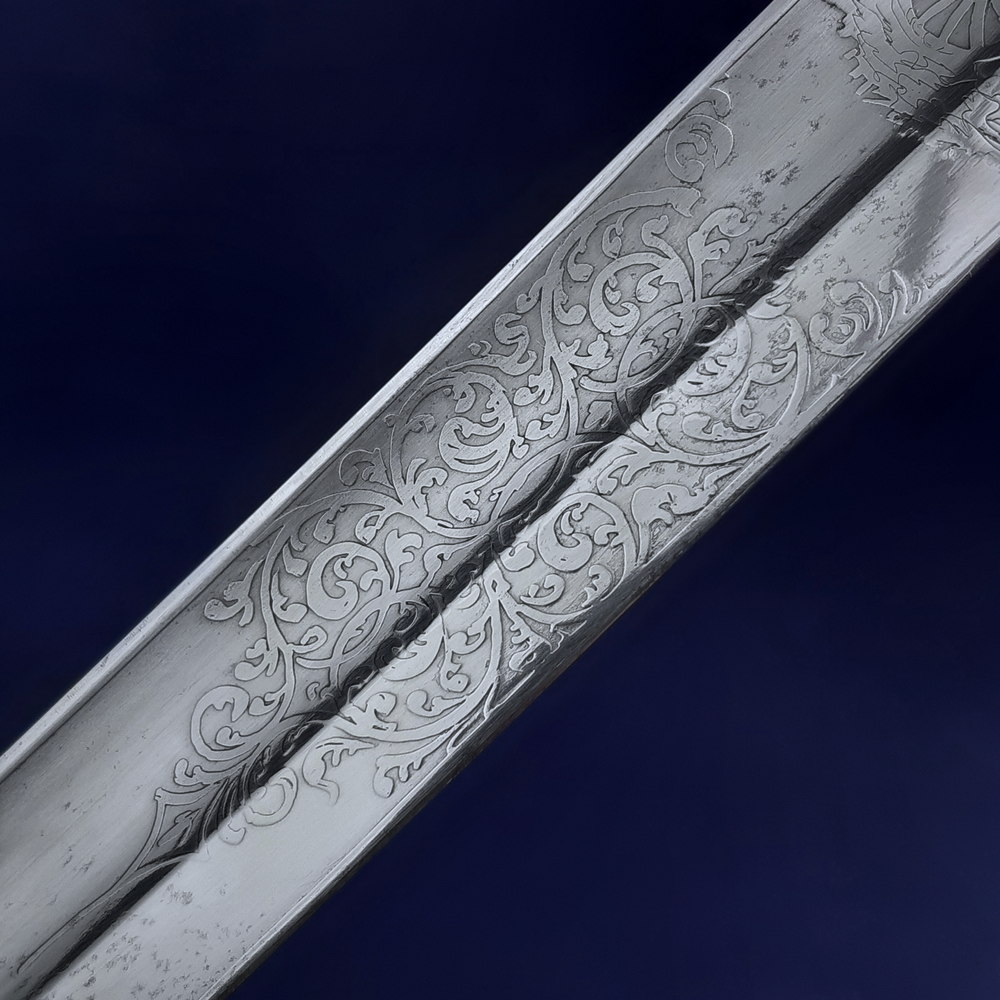
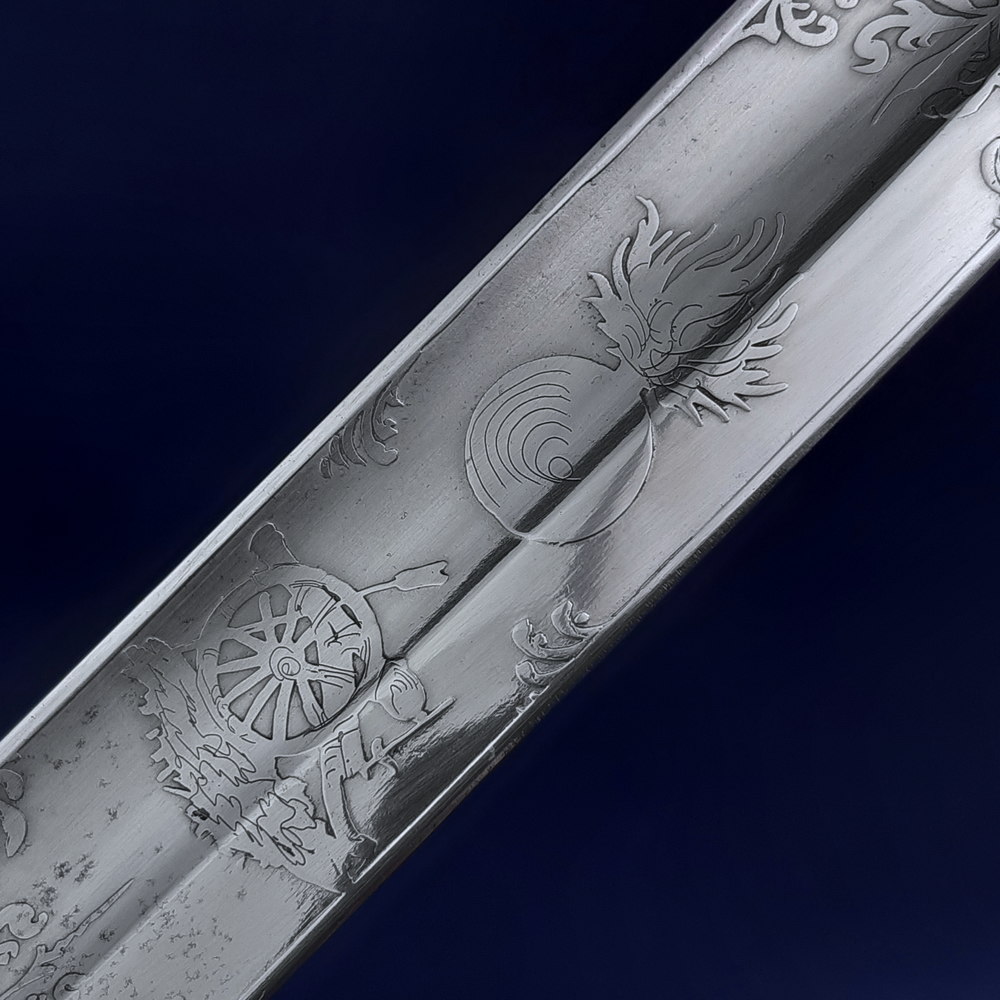
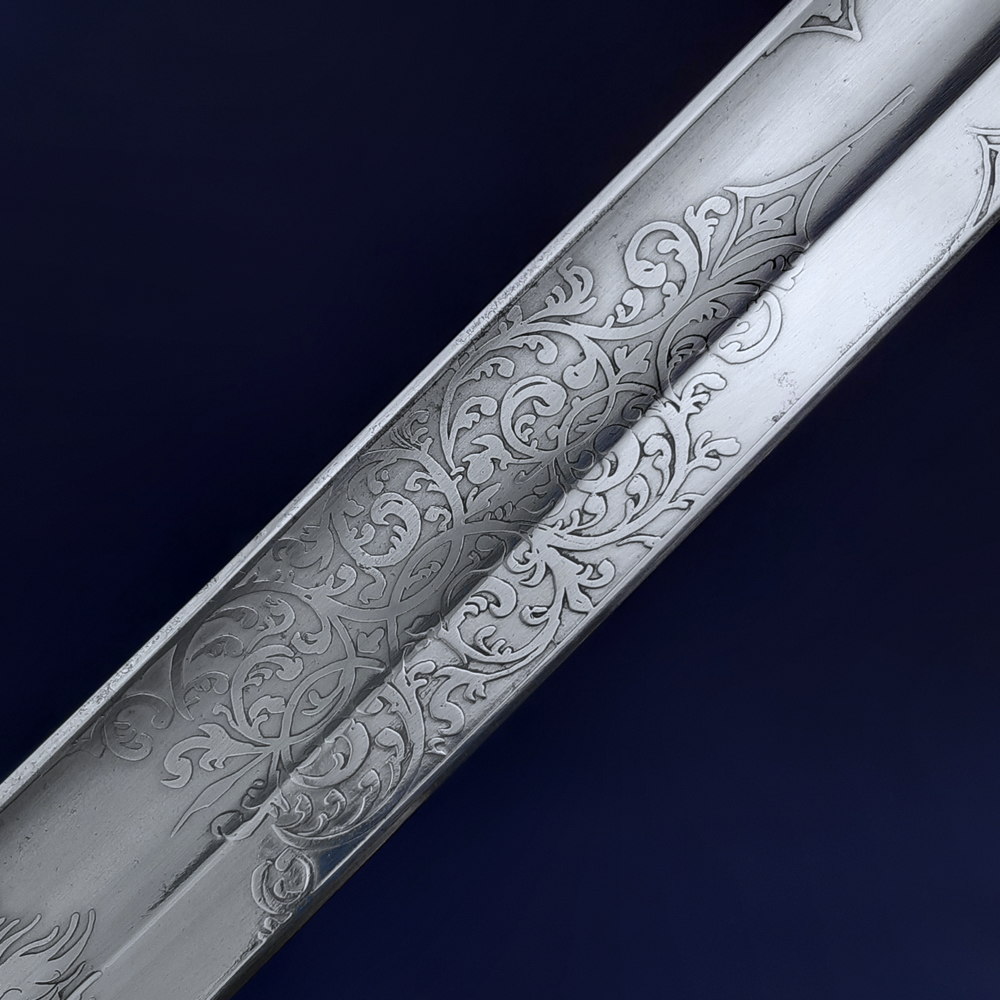
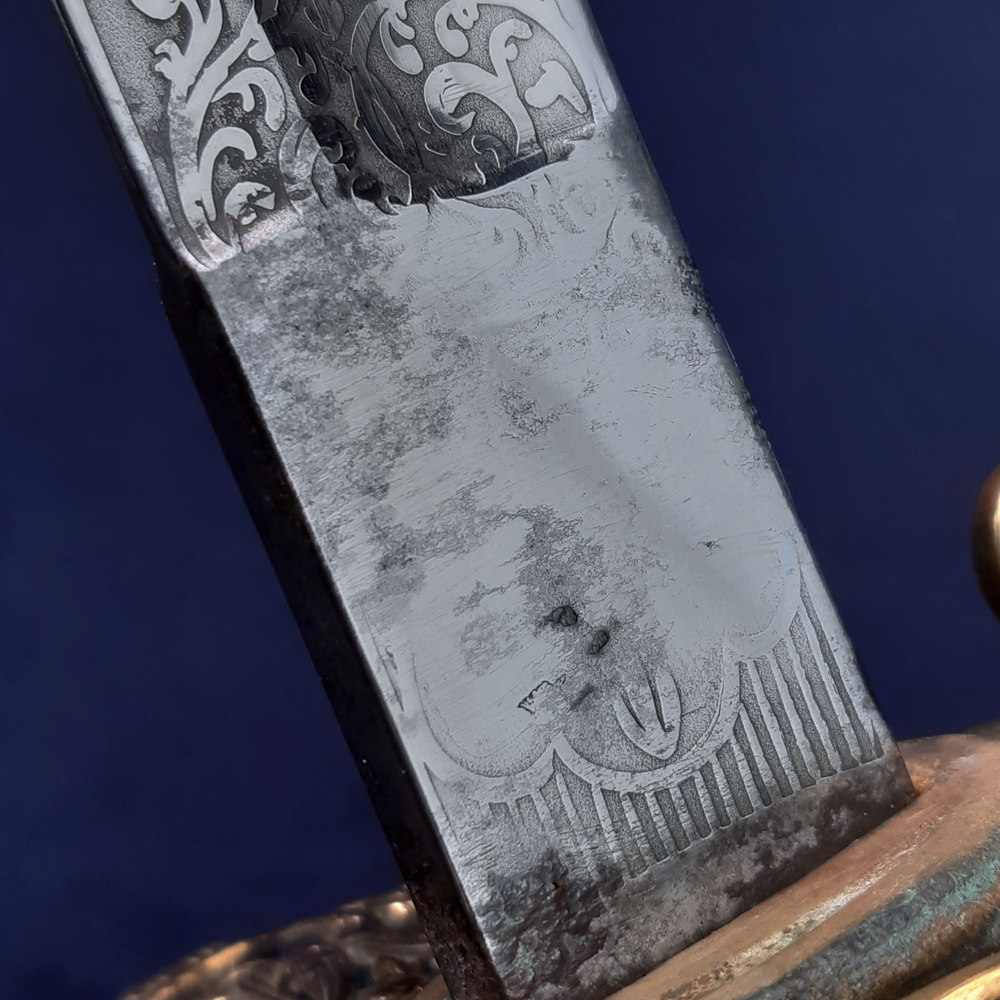
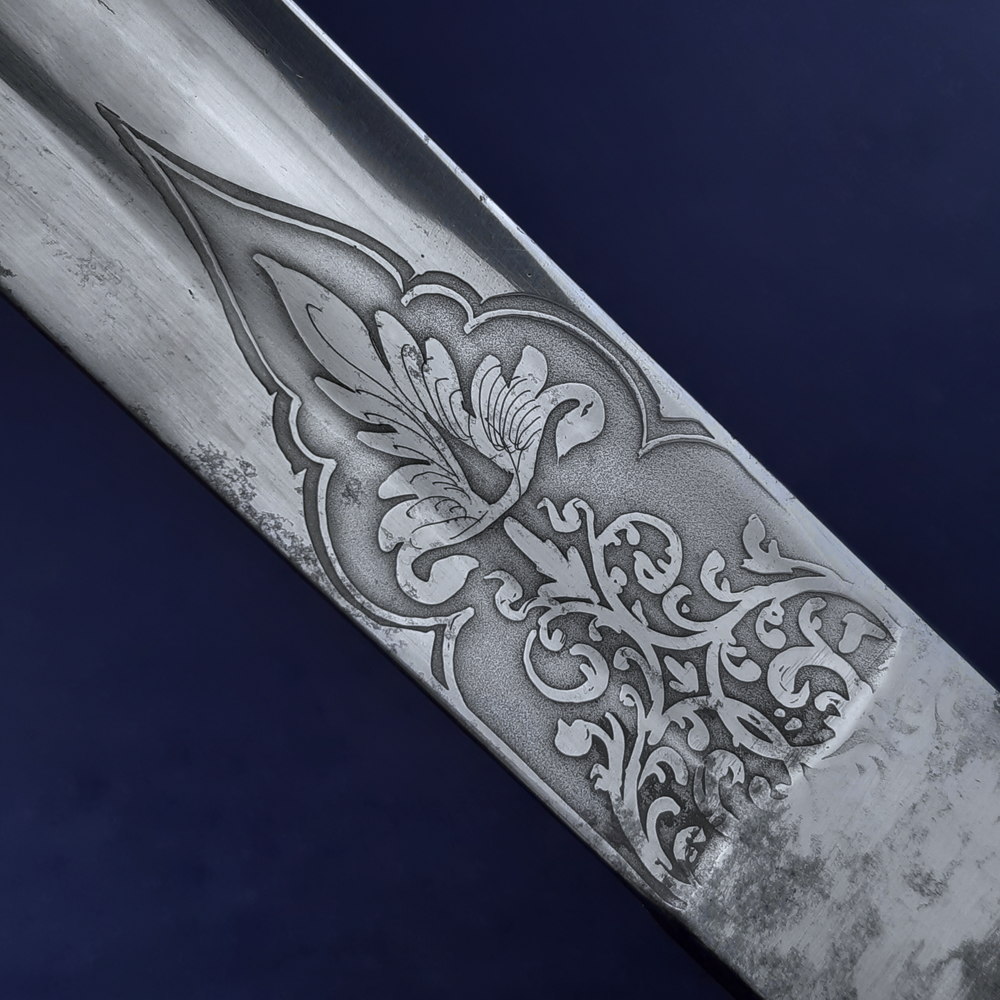
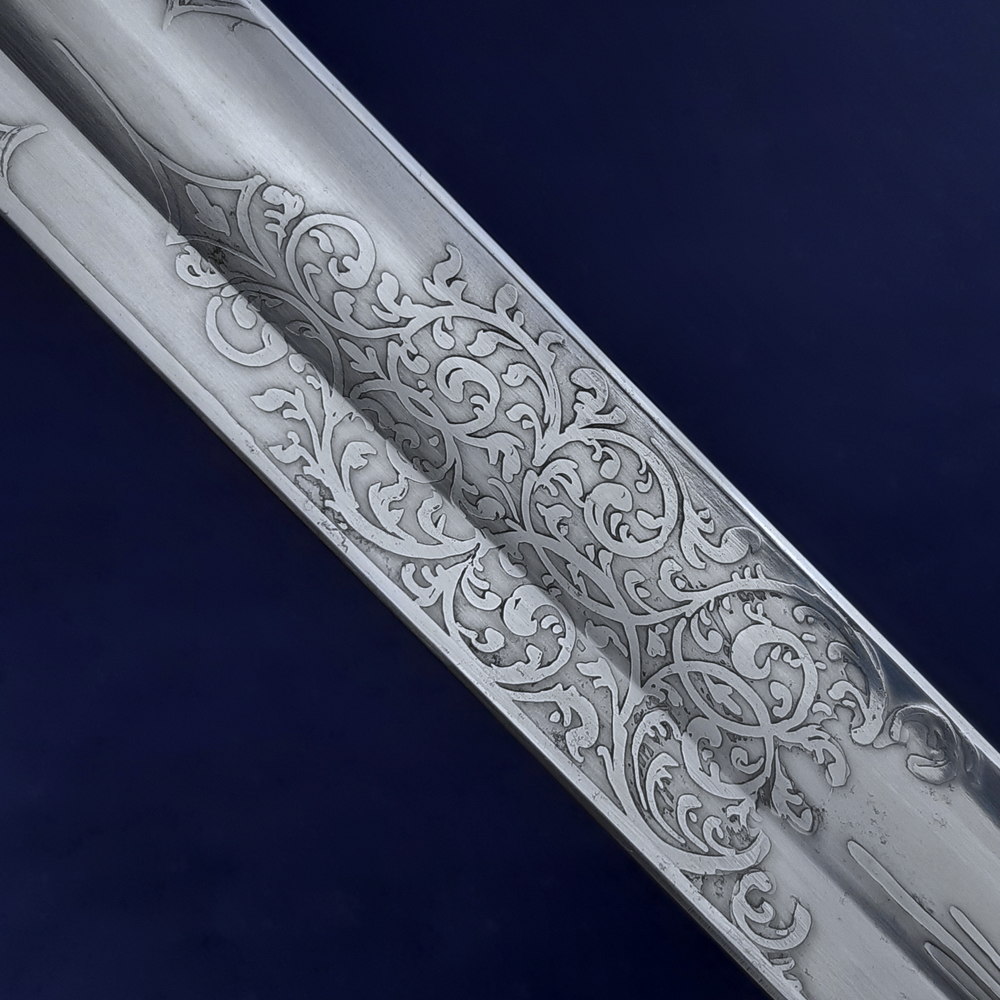
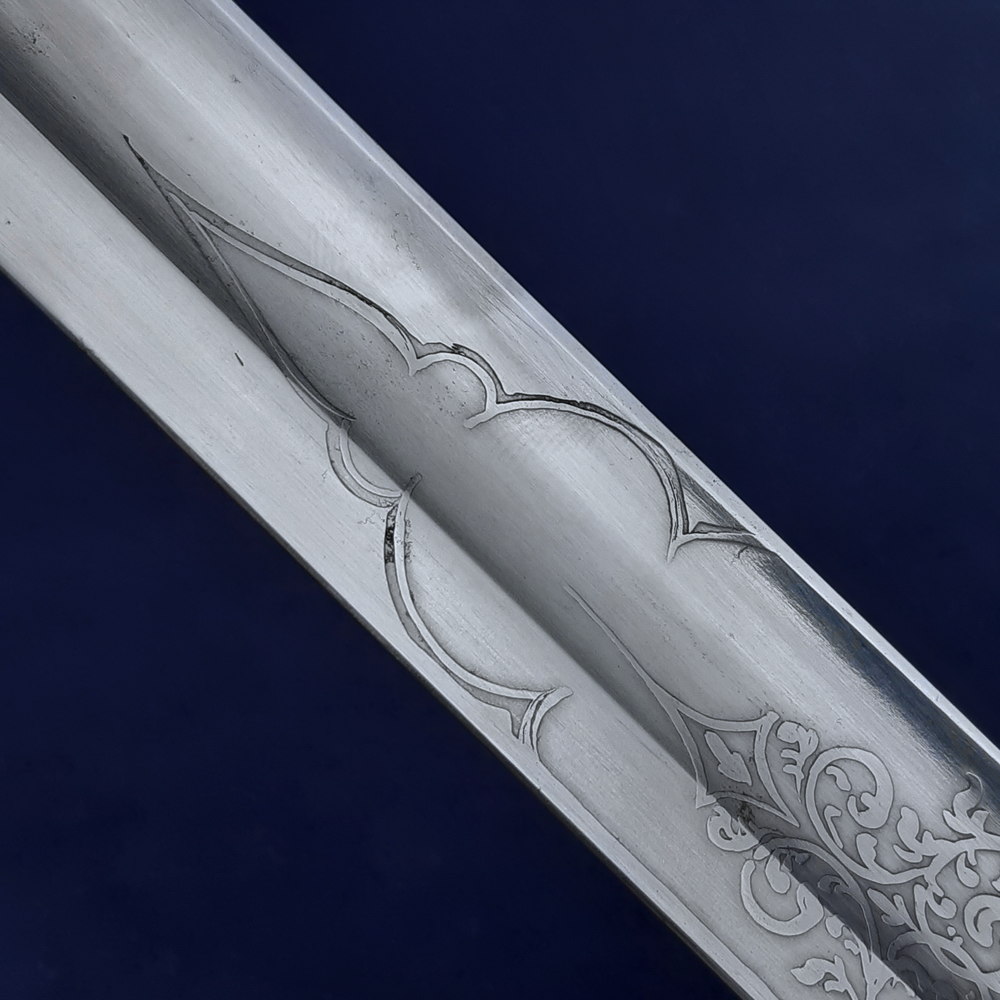
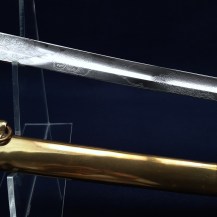
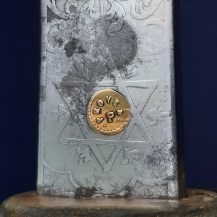
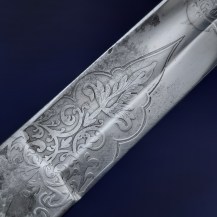
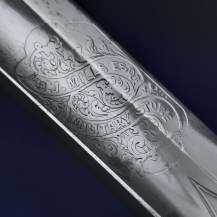
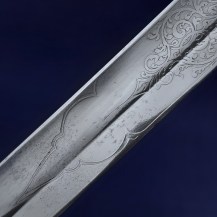
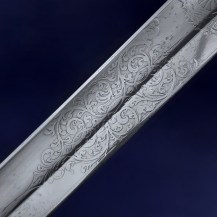
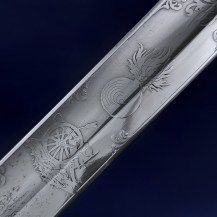
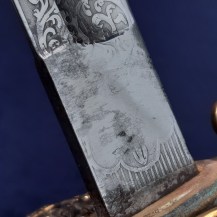
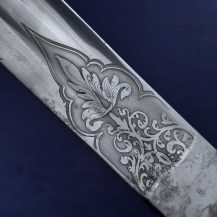
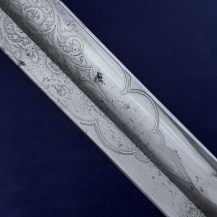
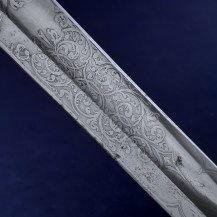
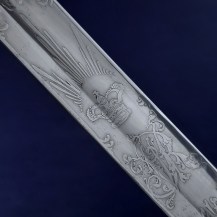
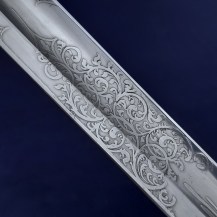
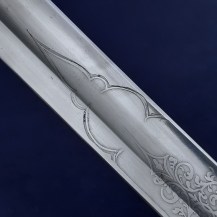
The blade is set at the ricasso on one side with a brass proof slug stamped with ‘PROVED P’, the slug surrounded by an etched six-pointed star. The blade is further etched on that side with the custom etched name of the owner ‘H. J. MILLS ESQ. MILITARY STORE’ in ornamental scrollwork, as well as a flaming bomb, a cannon, and foliate motifs.
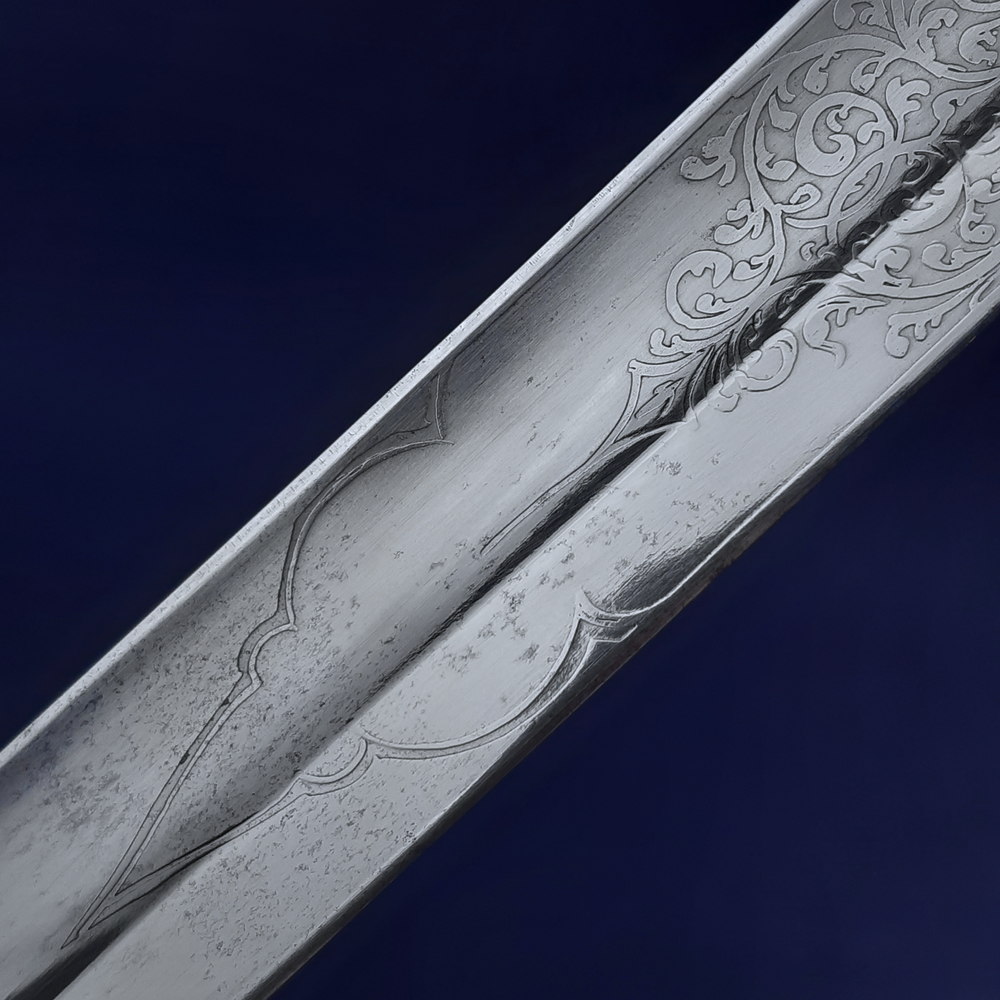
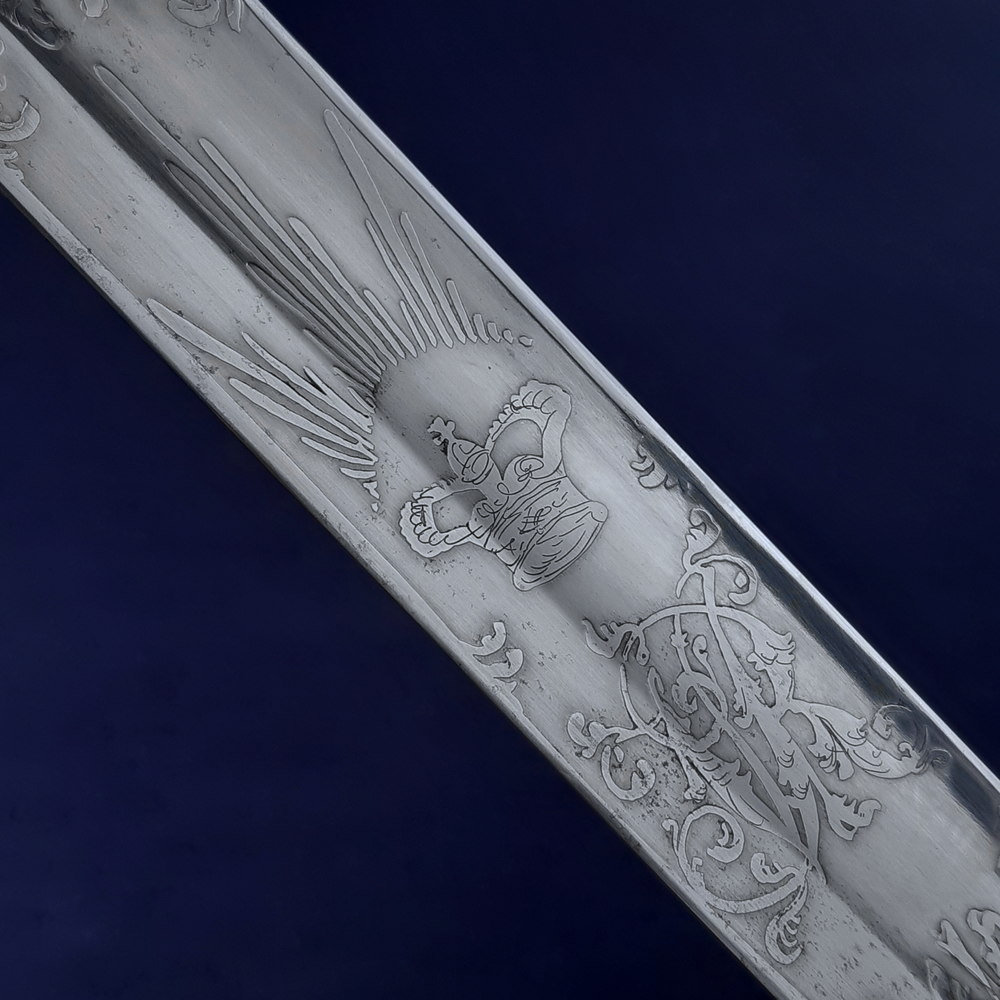
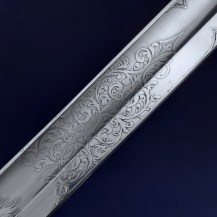
The ricasso of the other side is blank although there are traces of a previous mark which has been removed by polishing. That side is further etched with the crown and cypher of Queen Victoria and identical foliate motifs.
Herbert James Mills was born in 1837 to John Mills and Louisa Hubbard. He joined what was then called the Military Store Department in December 1858 and this sword was probably purchased at that time as part of his new uniform.
The Military Store Department was formed in 1857 to perform some of the functions of the Board of Ordnance, which was abolished after the catastrophic logistical failures of the Crimean War and its duties taken over by the War Office. The MSD took responsibility for supply of weapons, munitions, and standard military equipment. When first established, it was an officer-only unit, but this was expanded over time with the addition of a Corps of Armourer-Sergeants in 1858 to supply skilled non-commissioned personnel, then subordinate Military Store Clerks in 1861, and the Military Store Staff Corps, a permanent workforce of rank-and-file, in 1865.
Its transport and supply role was taken over by the new Army Service Corps in 1869, and its officer corps, including Herbert, merged into the Control Department in 1870. This became the Ordnance Stores Department in 1875, the Army Ordnance Department in 1894, the Royal Army Ordnance Corps in 1919 and finally the modern Royal Logistic Corps in 1993.
At the time Herbert joined, the Military Store Department possessed a unique five-tier civil-military rank structure. Its personnel were considered civil officers of the War Office under the Secretary of State rather than military officers, but to clarify their seniority, uniform, and allowances they were granted a corresponding honorary military rank: Herbert would have joined as a ‘Deputy Assistant Superintendent of Stores’ with honorary rank of Lieutenant, for instance. The fact that he is titled ‘Esquire’ on his sword may be a reference to his technically non-military rank.
Robson notes that officers of the various stores departments which came under the Control Department carried the standard infantry officer’s sword, even when they did not technically hold such a commission. He also writes that they followed the infantry in using brass scabbards for officers of field rank, while lower-ranked officers carried a steel scabbard. The brass scabbard on this example may therefore have been purchased later in Herbert’s career.
Herbert served in Canada from 1869 to 1874 and in the Anglo-Egyptian War of 1882-84, for which he was Mentioned in Dispatches and was awarded the Egyptian honours of the Khedive's Bronze Star and the Order of the Medjidie, 3rd Class.
Herbert then served as the Senior Ordnance Officer to Major-General Sir Gerald Graham in the First Suakin Expedition of 1884. This military expedition was part of the wider Mahdist War in Sudan, a conflict which had been ongoing since 1881, when Sudanese religious leader Muhammad Ahmad bin Abdullah had declared himself to be the Mahdi or messiah of Islam and amassed an army of followers with which he challenged the rule of the Khedivate of Egypt over Sudan.
From 1882 Egypt was effectively administrated by the British as a result of the Anglo-Egyptian War so the rapidly spiralling situation in the Sudan, which threatened multiple Egyptian garrisons stuck in increasingly hostile territory, became their problem. One such garrison was Tokar near the Red Sea coast, besieged by the forces of the local Mahdist commander Osman Digna, considered the best of the Mahdi’s generals. An Egyptian expedition of 3,500 gendarmerie, commanded by British ex-officer Valentine Baker, had been slaughtered attempting to relieve Tokar on the 4th February 1884, gifting Osman prestige and captured weapons, and the British government felt forced to intervene directly.
Graham had just returned to Cairo from a journey up the Nile accompanying the ill-fated General Gordon when he was tasked on the 12th February with succeeding where Baker had failed. His primary objective was to relieve Tokar and if he could not, to take any steps necessary to secure the strategic Red Sea ports, which would probably require crushing Osman’s forces until they posed no further threat. Holding these ports, most critically Suakin, would allow Egyptian forces an additional evacuation route and maintain an important link in the sea lanes between Britain and its Empire.
Graham was assigned a force assembled from British troops available nearby: his pick of three battalions from the Egypt Command (he selected the King’s Royal Rifles, Black Watch and Gordon Highlanders) plus battalions of the Royal Irish Fusiliers and York & Lancaster Regiment diverted while on their way home from India, and a battalion of Royal Marines. The 10th and 19th Hussars were his cavalry, plus 100 mounted infantry, 26th Company Royal Engineers and two batteries of Royal Artillery. Herbert was still in Egypt at this time so was probably one of the more senior Ordnance officers on hand to organise the logistics of this operation.
The Suakin Expedition was as ambitious as it was risky. Tokar could have fallen at any time so speed was of the essence in both deployment and operations, but the force still had to be capable of defeating a determined, numerous, well-led enemy on arrival. The coastal region of Sudan was hostile in the extreme: a humid desert covered by dense thorn scrub, slowing overland advances and providing ample cover for ambush. Publicity around the mission was high and politicians required nothing less than resounding victory, yet assigned Graham only a single brigade. Knowing these constraints Graham ordered baggage to be light, enough to sustain an operation of only three weeks. There was very little margin for error: Graham’s force was disciplined and agile but lacked reserves of manpower or materiel.
The force of 4,000 men and 14 guns reached Suakin by sea on the 18th February. Graham did not attempt to march any further than he had to in the intense heat and of the region. He opted instead to move by sea from Suakin to a coastal lagoon at Trinikat, a good landing site which allowed his men to rapidly march about 15 miles inland to Tokar. Baker had tried the same thing but in poor order with ill-disciplined men.
Upon arriving at Trinikat on the 24th February it was discovered that Tokar had fallen, but Graham was ordered to push on regardless. With less urgency the force moved carefully inland and engaged around 10,000 Mahdists at the site of the Egyptians’ defeat, El Teb, on the 29th February.
Hand-to-hand combat in the Sudan was commonplace and vicious. The Mahdists were fearless and aggressive fighters, relying on use of cover to get their massed infantry as close as possible to the enemy. Their few riflemen would soften up enemy defences with rapid fire, followed promptly by a shock charge of melee infantry in wedge formation, armed with spears and the long straight swords now referred to as kaskara. The trained British response to this threat was to form the trusted infantry square and bring heavy fire on their attackers, but the Mahdists disregarded casualties and successfully reached melee range on many occasions, British officers fighting with their swords and revolvers while regular infantry used their bayonets.
El Teb was an interesting variation of this pattern with the British assaulting a prepared Mahdist position in a hilltop village, which had trenches and even some modern artillery captured from the fort at Tokar, manned by Egyptian captives. The British infantry brigade formed a large hollow square protecting their baggage and ammunition (loaded onto camels) in the centre, with Garner and Gatling machine guns at the corners. Herbert was present that day and as the senior Ordnance officer would have been inside the square directing the supply of ammunition to the Royal Artillery and Royal Naval detachments manning the artillery and machine guns respectively.
Rather than remaining static this large square advanced steadily around the flank of the Mahdist position, pausing only to destroy the artillery with their own. Keeping the formation together over uneven ground was difficult but it combined offence and defence very effectively, and the Mahdist fighters were unable to break into the square as it encroached on their positions despite good use of terrain to get close to the oncoming British. Accounts suggest they attacked in small groups (sometimes still in the hundreds) rather than one wave, which prevented the machine guns mowing them down en masse but diminished the impact of their charges. The British finally overran the Mahdist position and broke up the square to clear out the remaining trenches. British casualties were light at 28 killed, mainly among the cavalry which made an unwise charge, while 825 Mahdist bodies were counted on the field and some accounts estimate their full losses as 2,000 killed.
After mopping up the fallen fort at Tokar Graham’s force moved back to Suakin, from which they struck out at Mahdist forces at the village of Tamai in another successful battle, at which I do not believe Herbert was present. This marked the first defeat of the rampant Mahdist movement and Graham urged the government to let him press on and open a route toward Khartoum where his comrade Gordon was now besieged, but the campaign was ordered to be ended and he withdrew. Graham would be sent back to Suakin only a year later with a much stronger force for a rematch with Osman, as the conflict in the Sudan escalated and the British were drawn into a full-scale war.
The tactical success of the Suakin Expedition despite its many constraints was a testament in large part to the competence of logistics officers like Herbert, which allowed an outnumbered combined-arms force to fight at its full effectiveness. Herbert was Mentioned in Dispatches twice for his services to the Expedition.
He returned to England after the Expedition and moved to administrative roles, becoming Assistant to the Director of Artillery at the War Office from 1886-1891. He was created a Companion of the Order of the Bath (C.B.) in 1887, most likely in recognition of his Suakin service, and promoted to his highest rank of Deputy Commissary General of Ordnance in 1888, which came with the honorary rank of Colonel. He was then Senior Ordnance Officer for the Southern District from 1891-1894.
Herbert died at his home in Maida Vale in 1927, aged 91. He had six children, the eldest of which was Horace Mills (1864-1941), an actor, singer & dramatist well-known in the early 20th century.
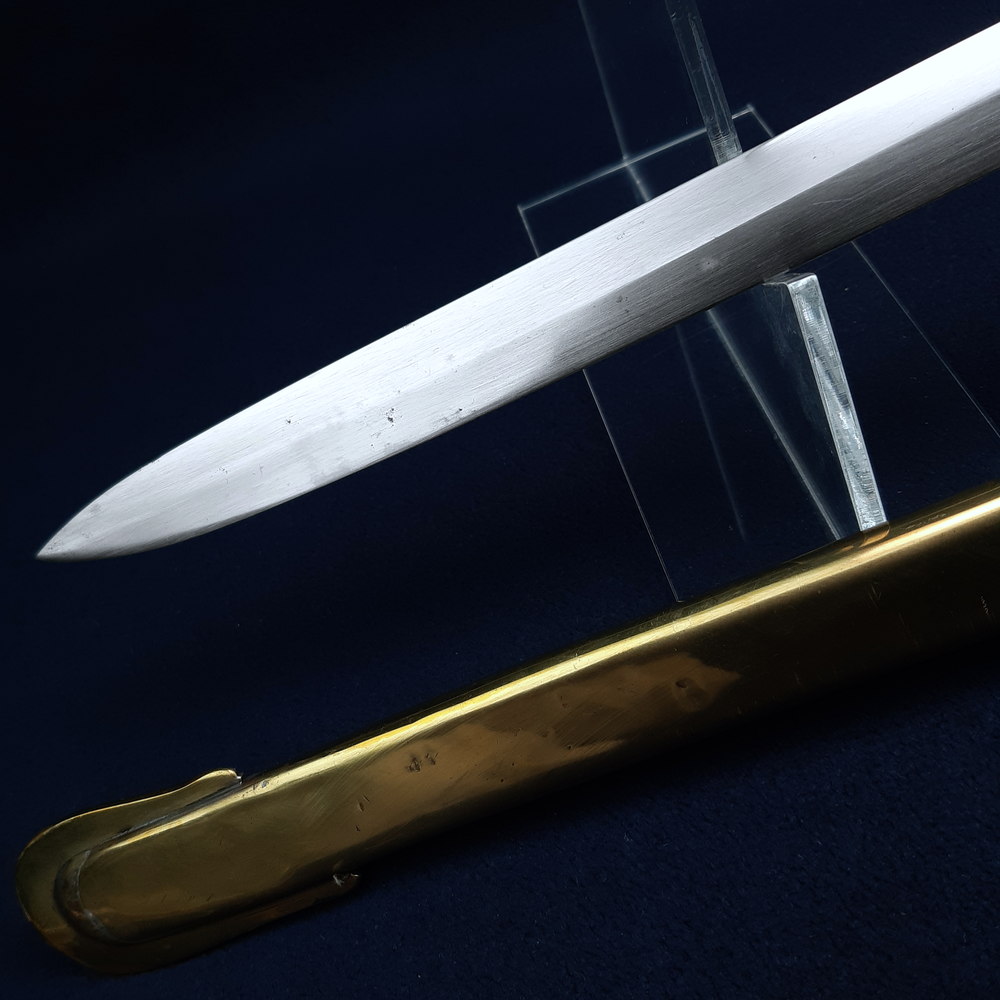
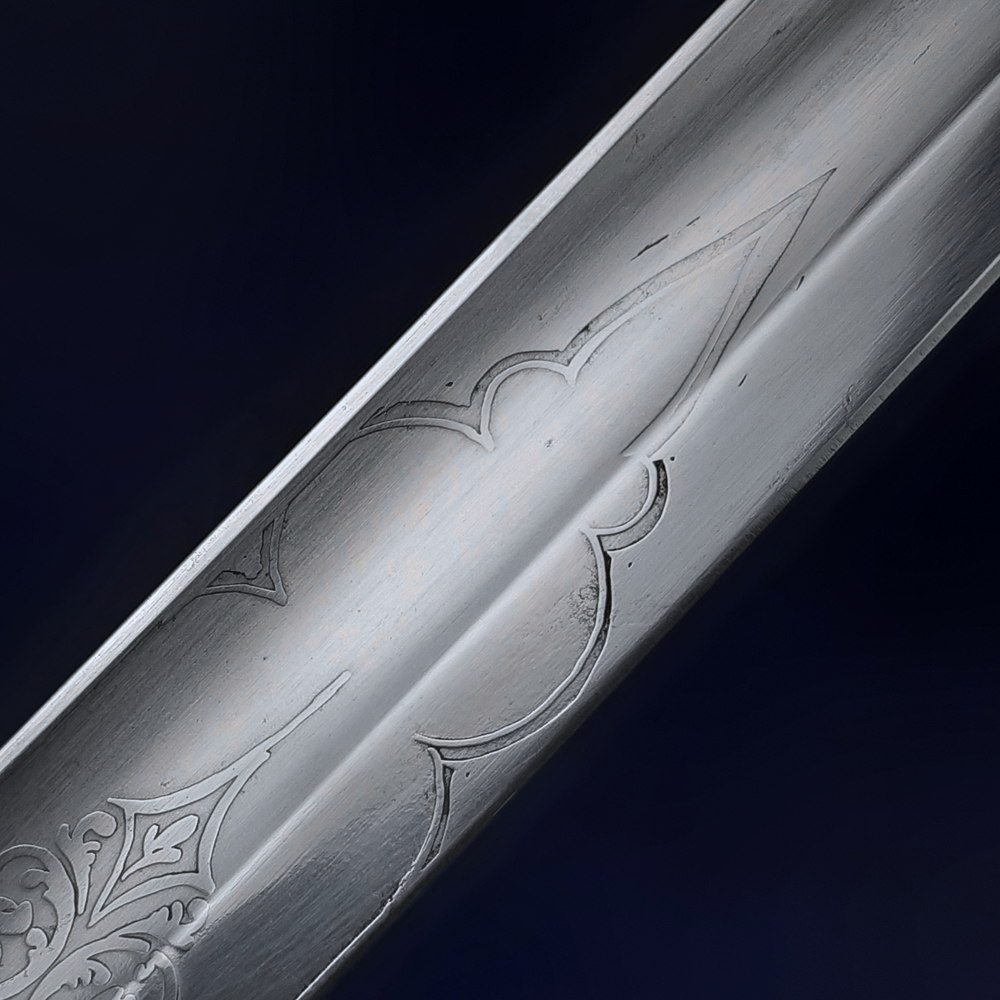
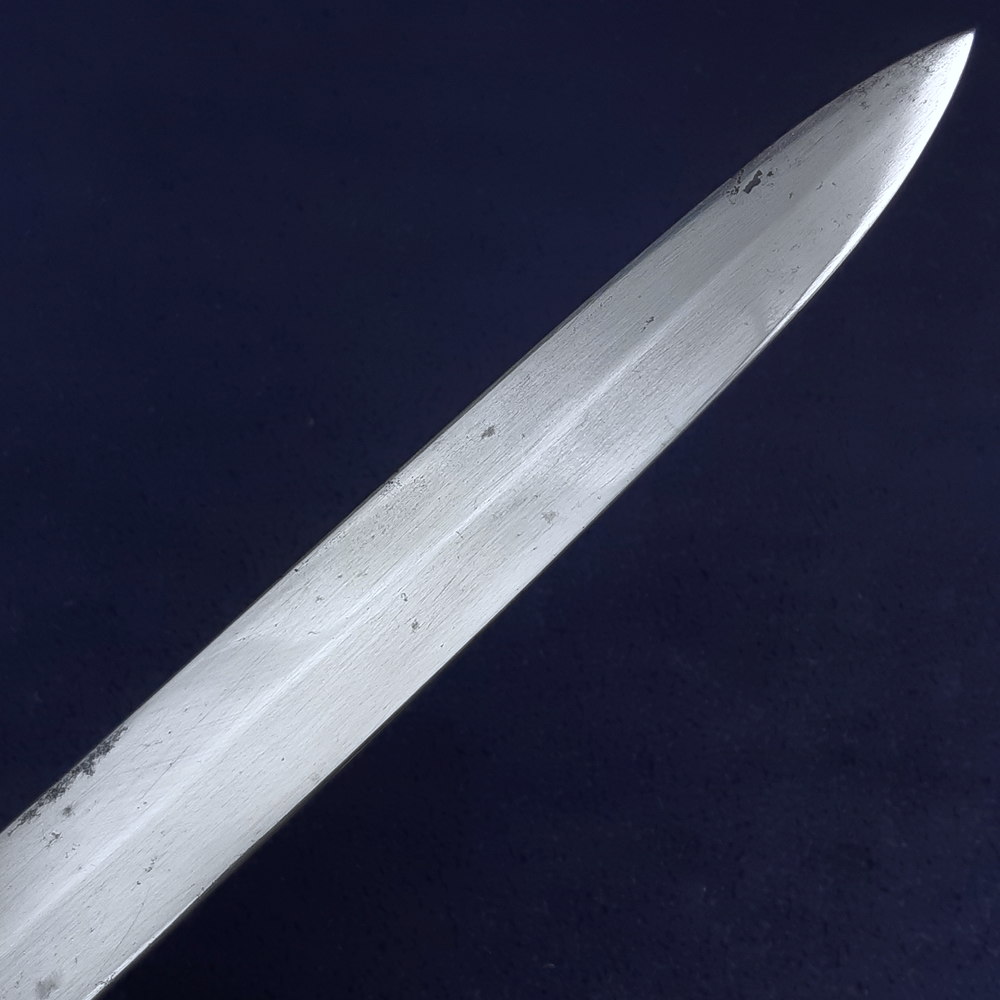
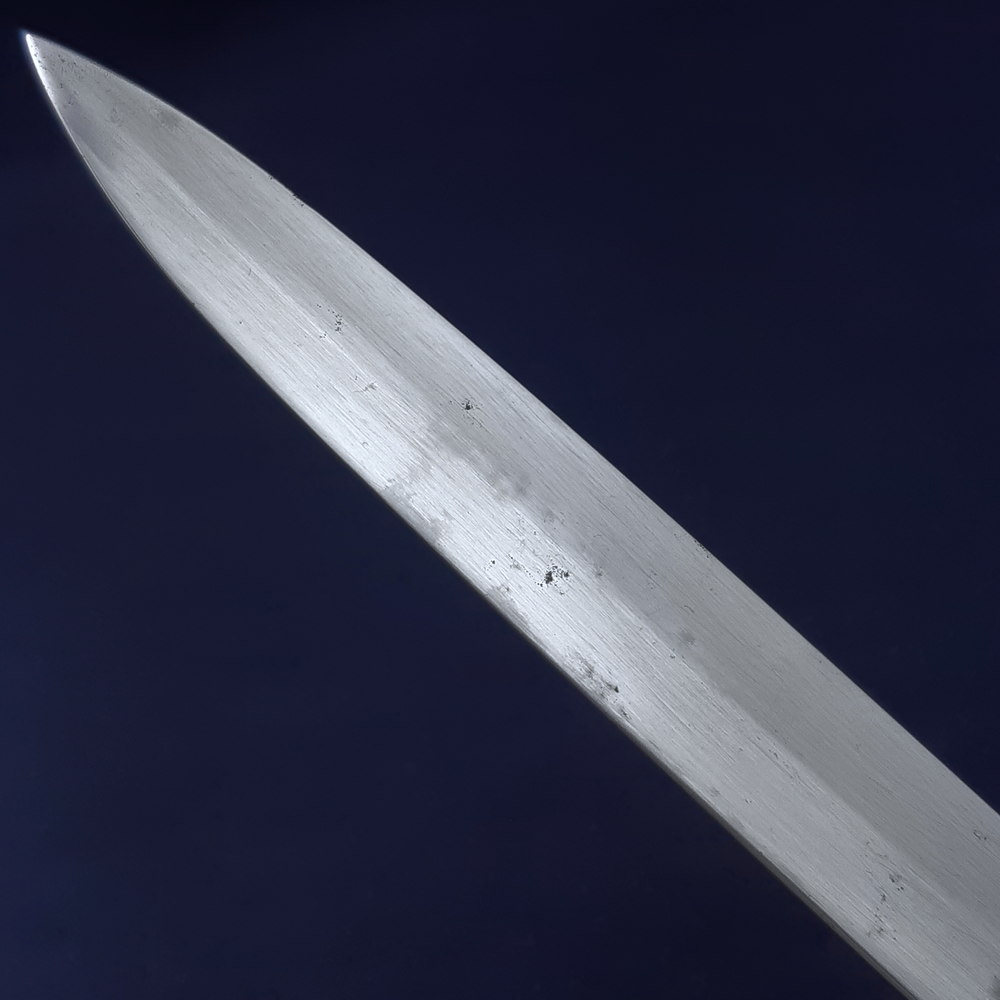
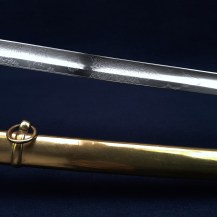
The blade is generally very bright and clean with a near mirror polish, with some spots of frosting and light patination, and some tiny spots of light pitting on the spine and next to the proof slug. The etching is crisp and clear. The edge of the blade is undamaged, it feels a little sharp in places but I am not sure that it has been truly field sharpened, there are no visible grinding marks to that effect and the tip is definitely unsharpened. The outer bar on the short side of the guard (protecting the thumb when held) is slightly bent inwards as though it has taken a blow on that side. The brass parts of the hilt and scabbard have a moderate patina. The wire binding of the grip is all intact with only fractional movement to the wire loops, the shagreen of the grip has some light handling wear and small patches of scale loss on one side. Fractional side to side movement to the ferrule, the sword is otherwise firm in the hand and solidly peened, the blade rings when struck.
The scabbard has a good light patina with some spots of scratching and frosting (heavier at the chape end), plus a number of small and shallow dents, the most notable being along the spine and at the chape. None of these interfere with sheathing and drawing, which is smooth. At the chape end the shoe is soldered/brazed in place and there is a crack and small hole in the silver filler metal used for this on one side, possibly due to an impact as there is a small dent next to the hole. The shoe remains firmly attached. a couple of small dents on the throat and chape pieces. The throat piece retains both of its steel screws.
