

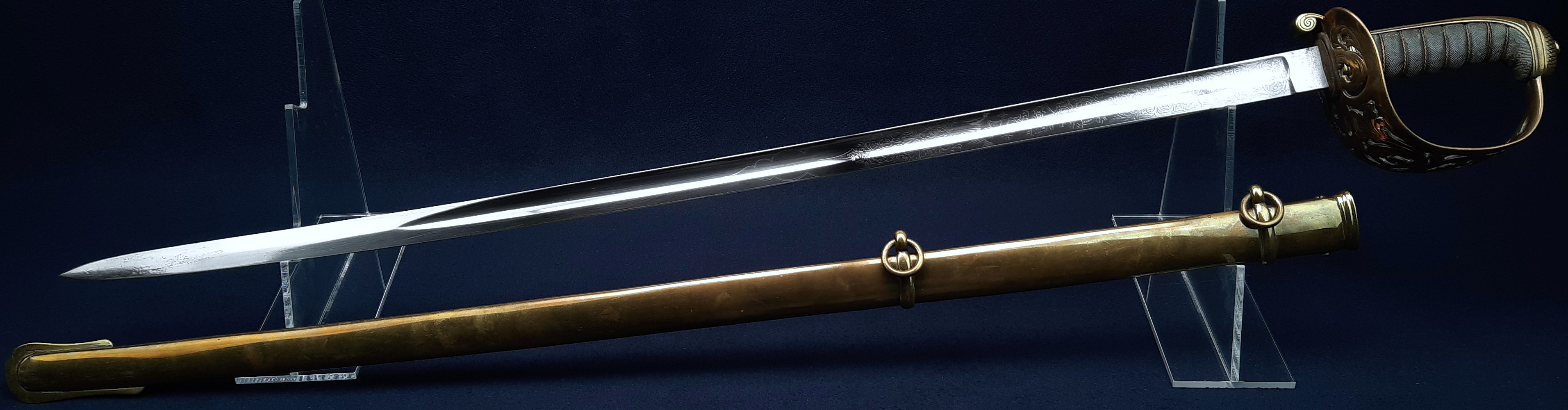
British 1857 Pattern Royal Engineers Officer's Sword by Price & Co
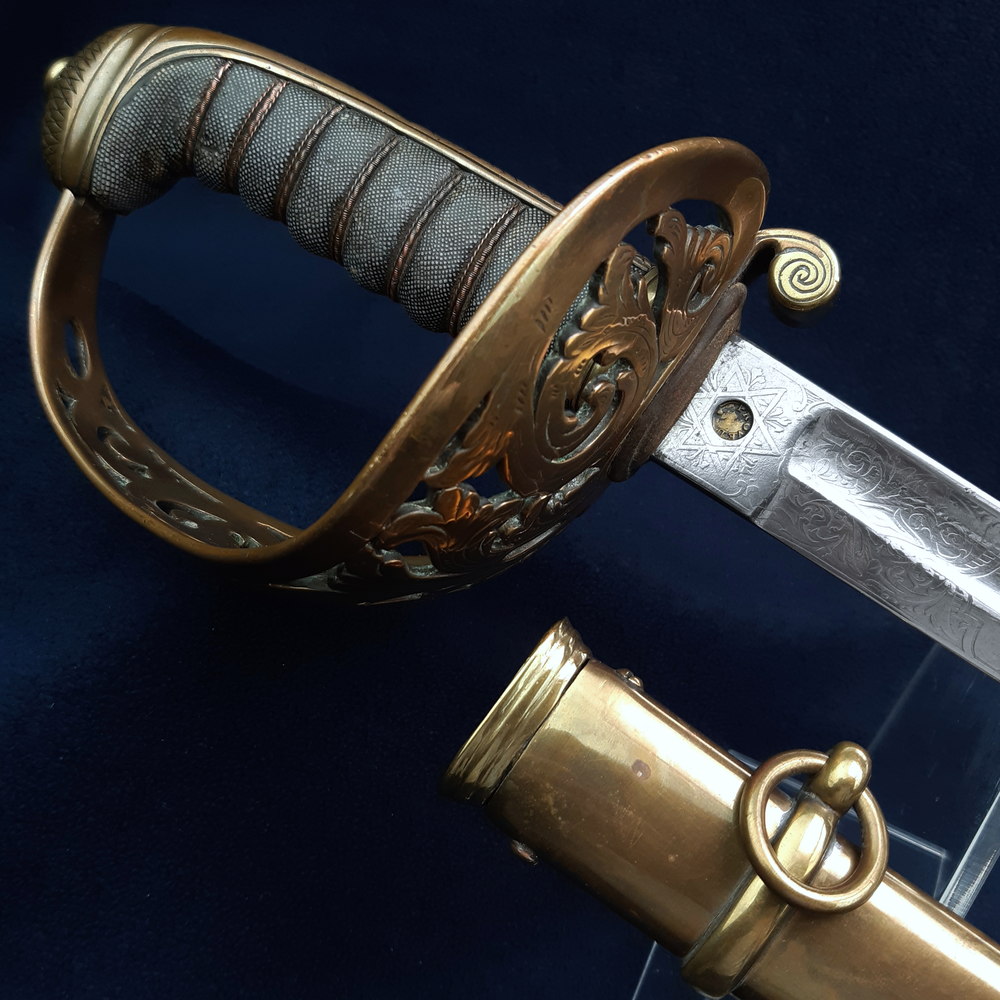
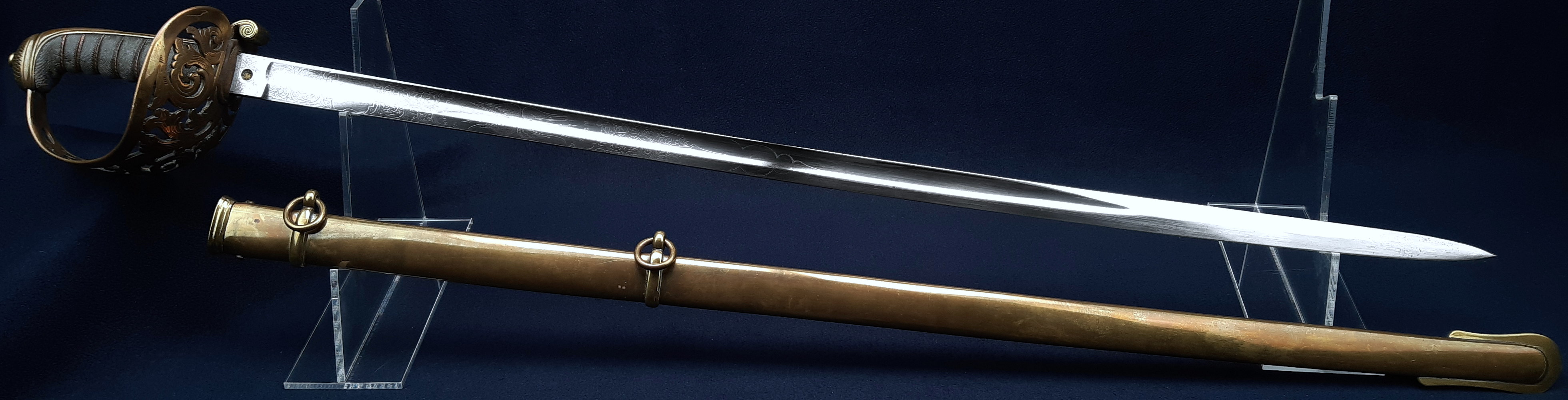
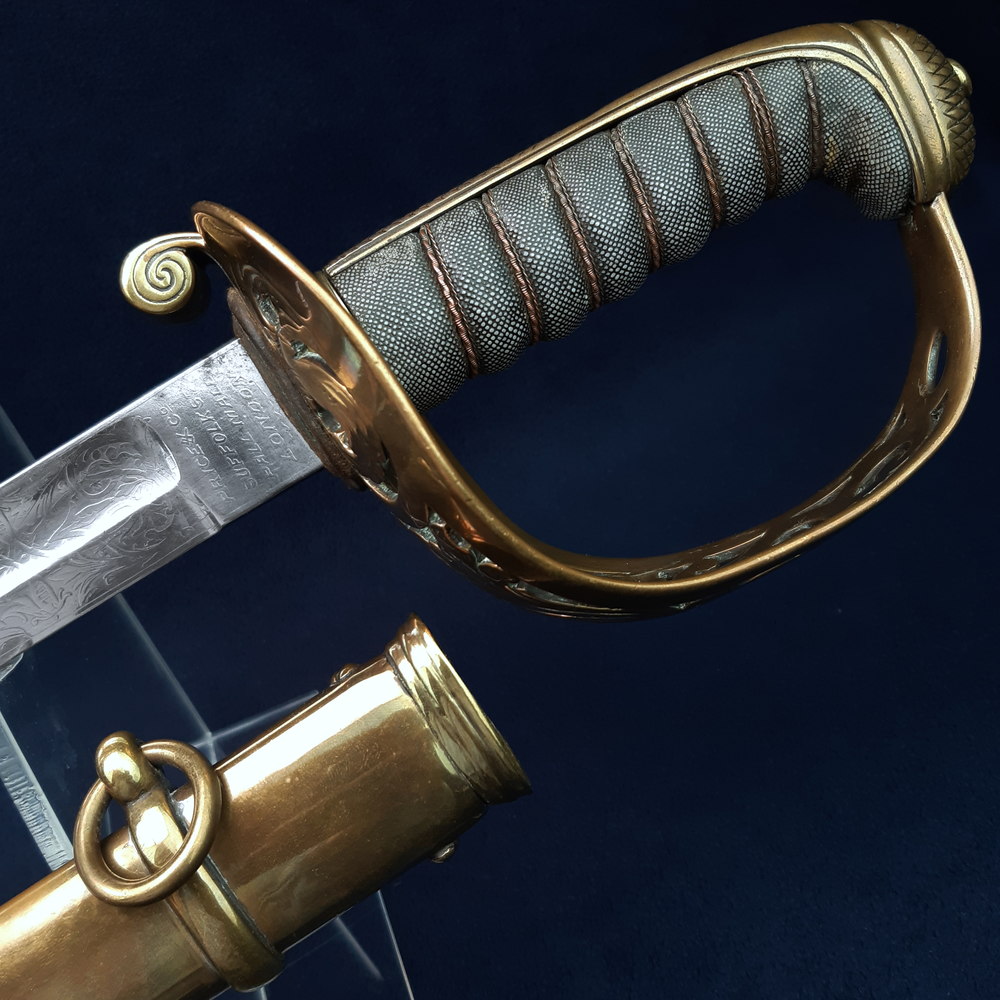
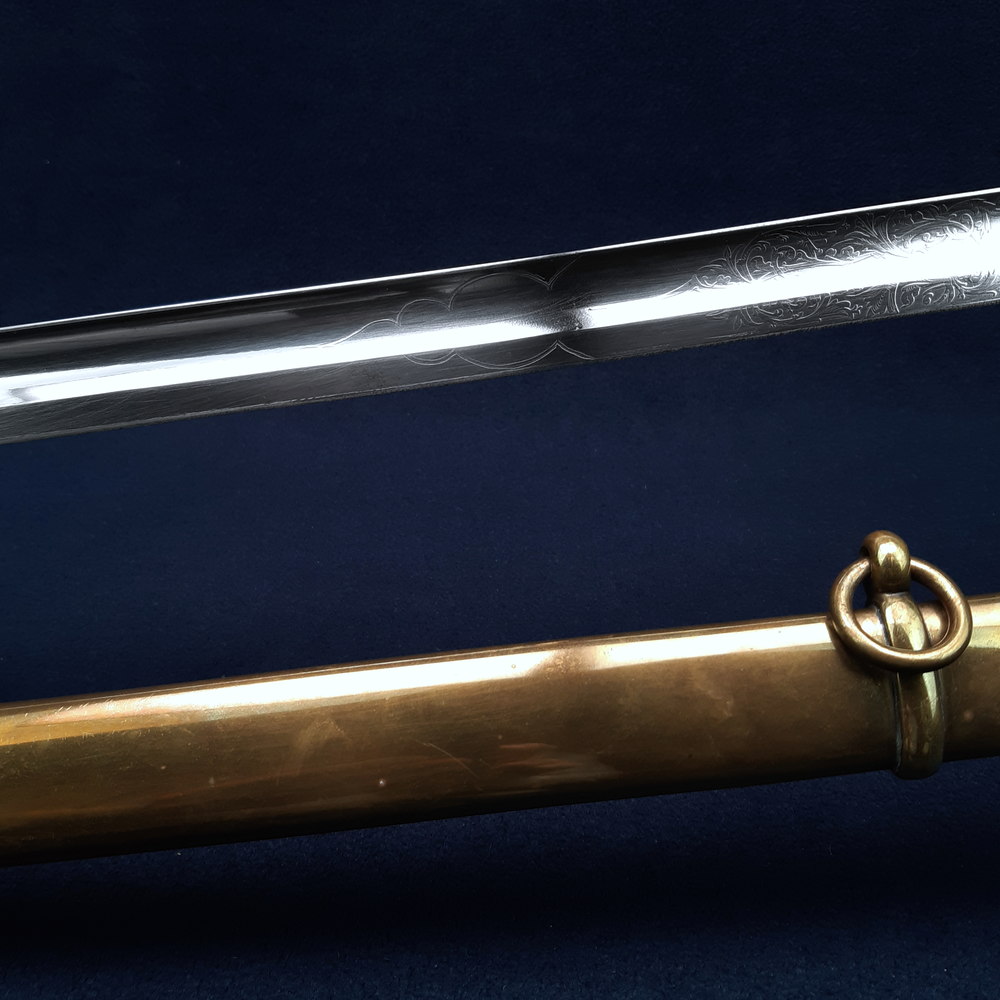
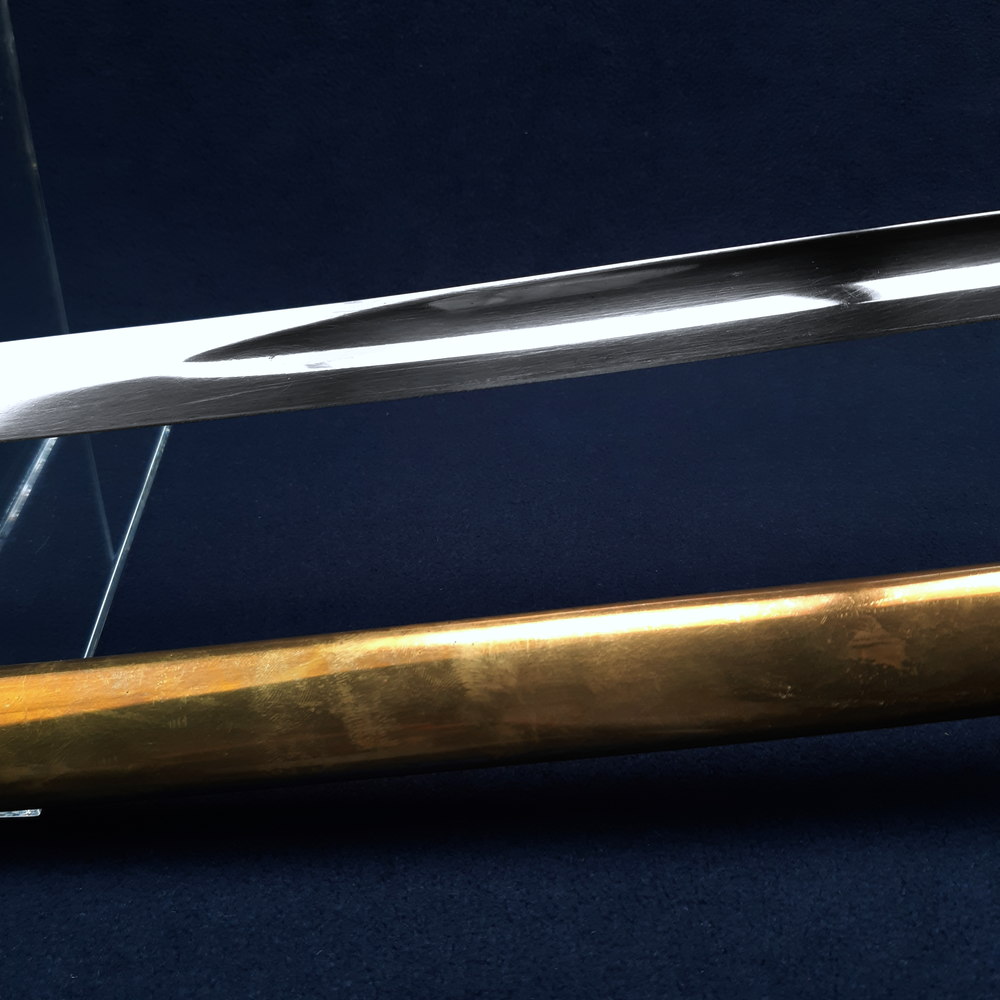
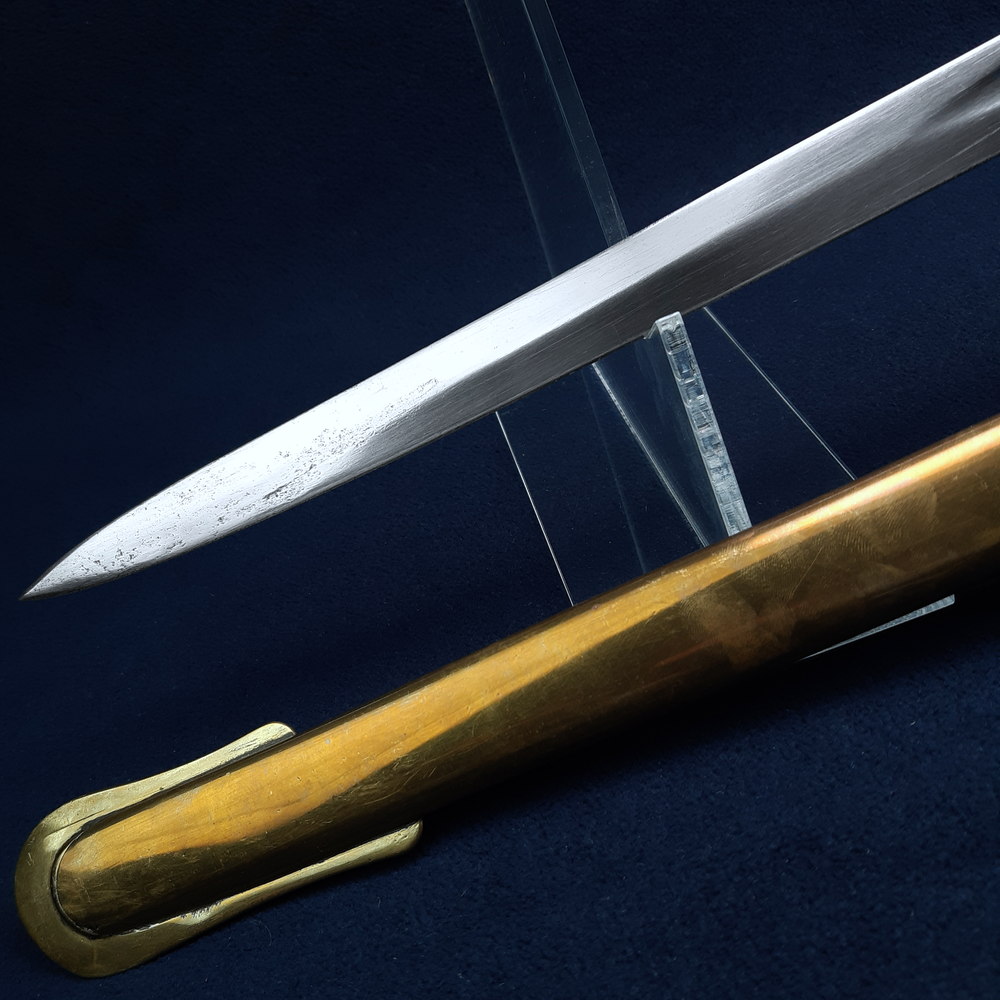
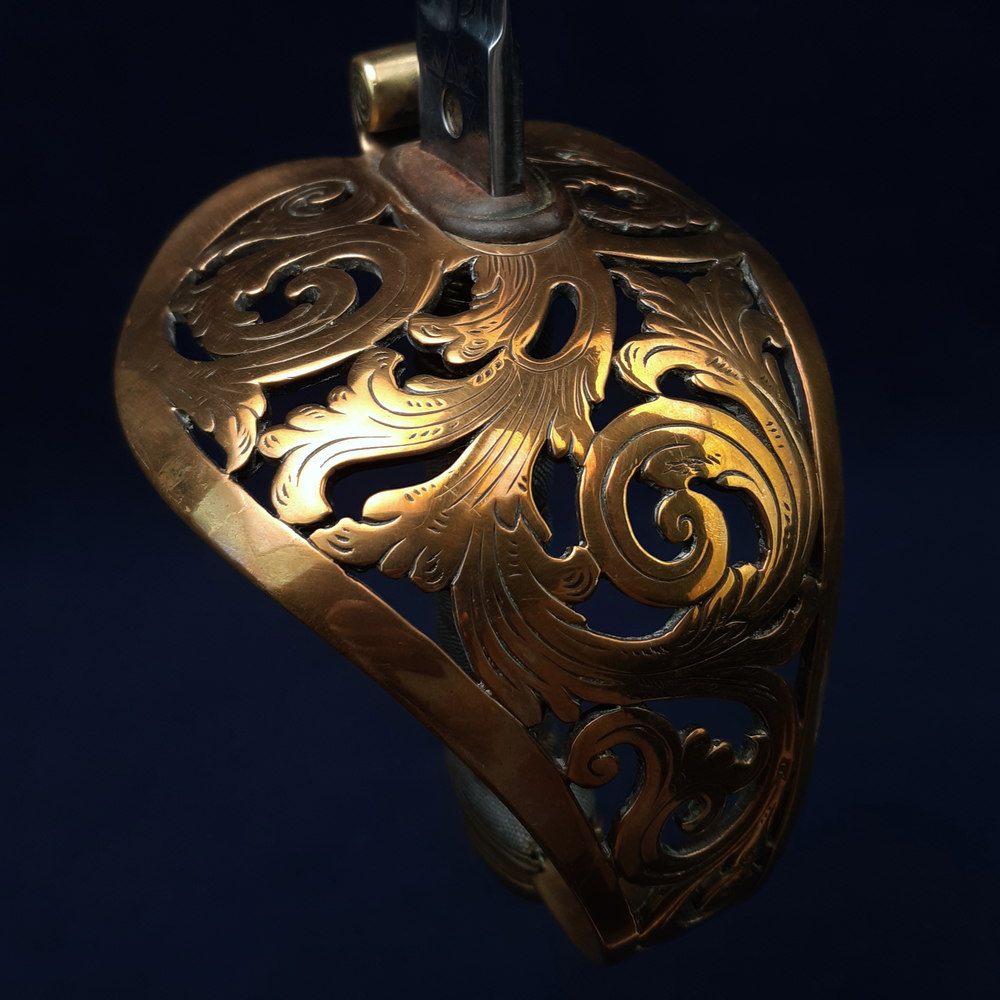
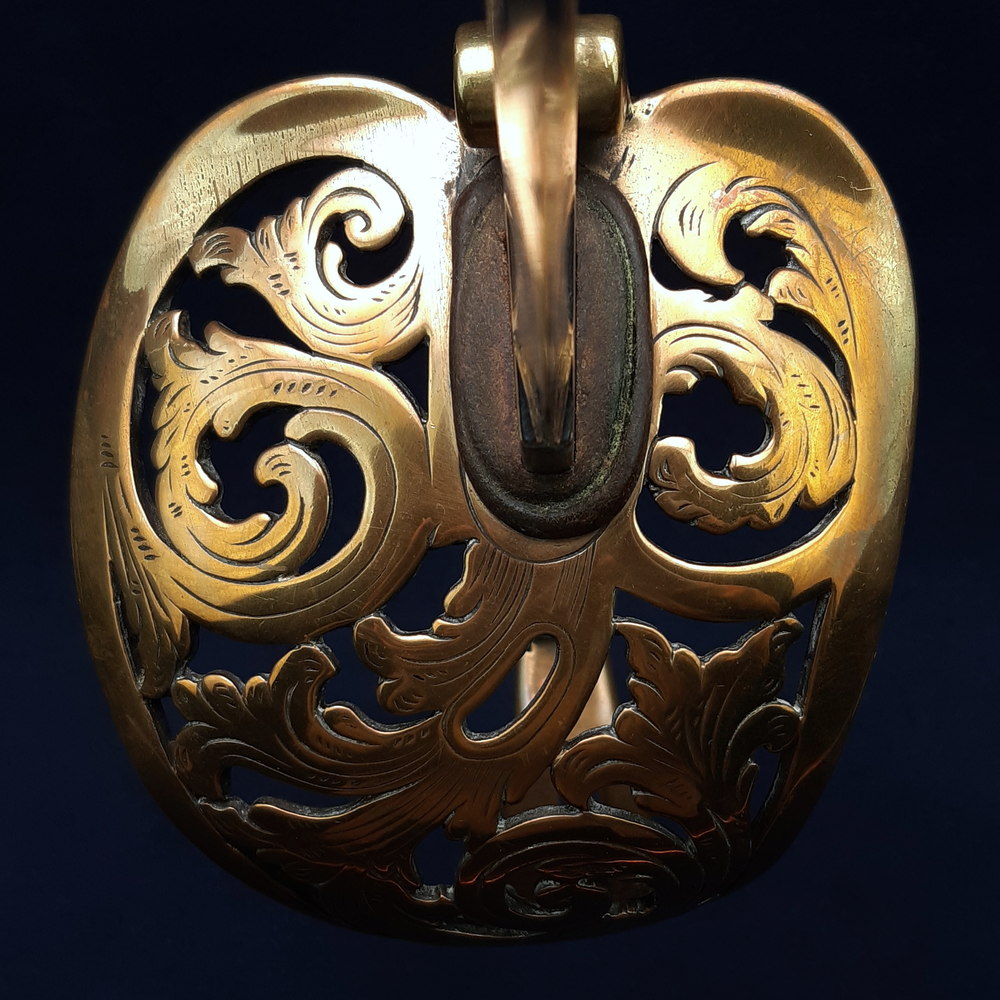
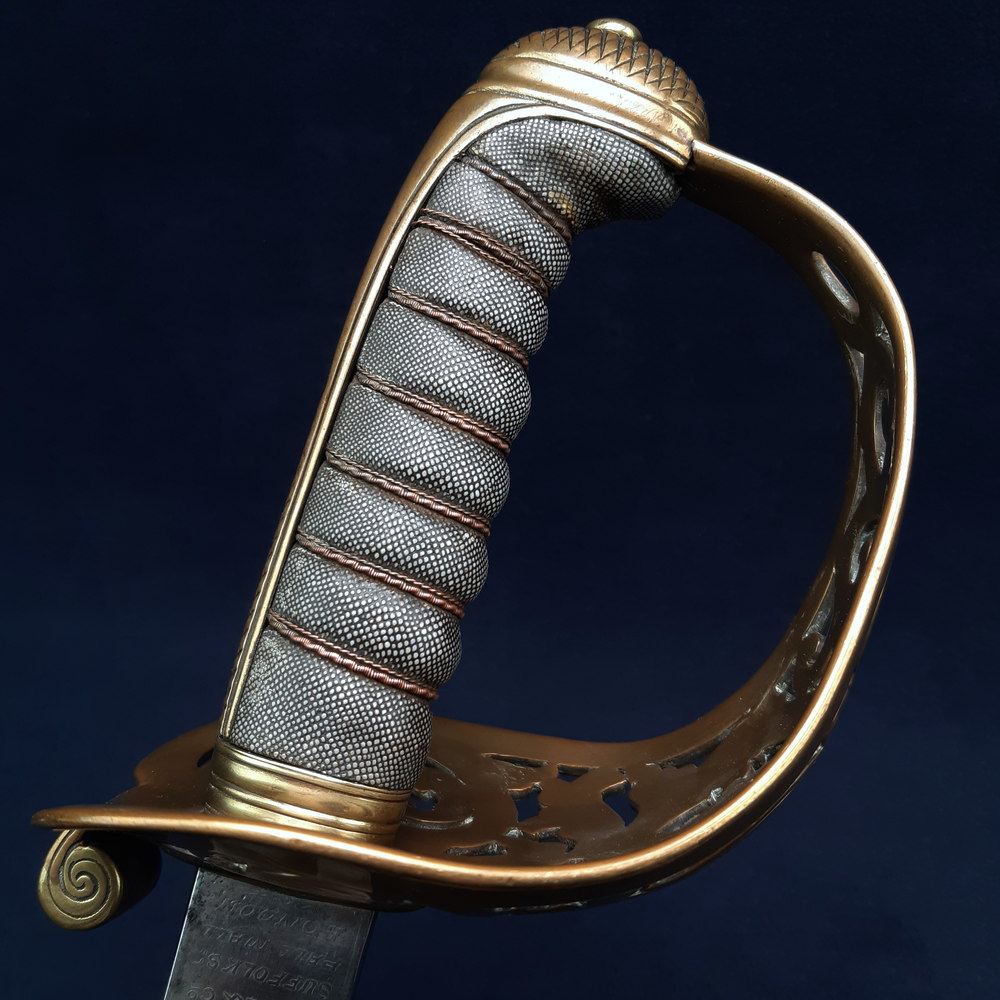
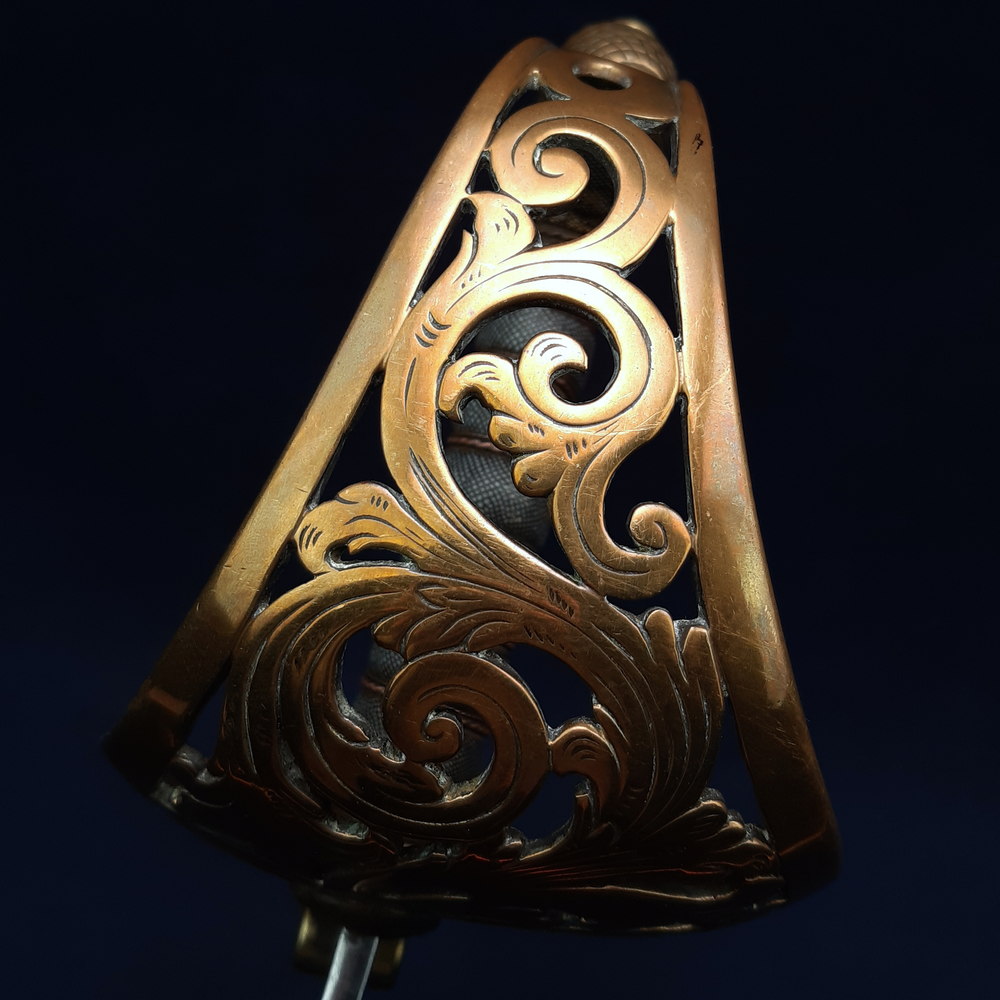
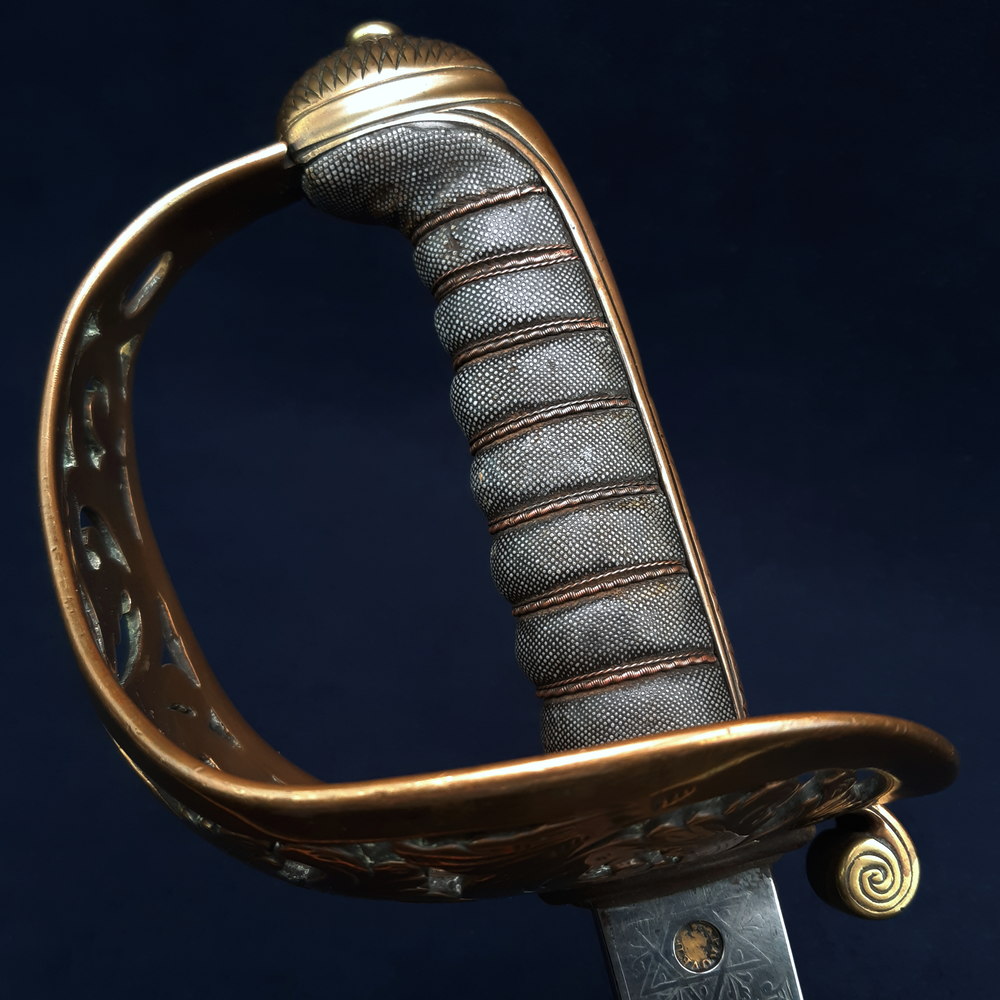
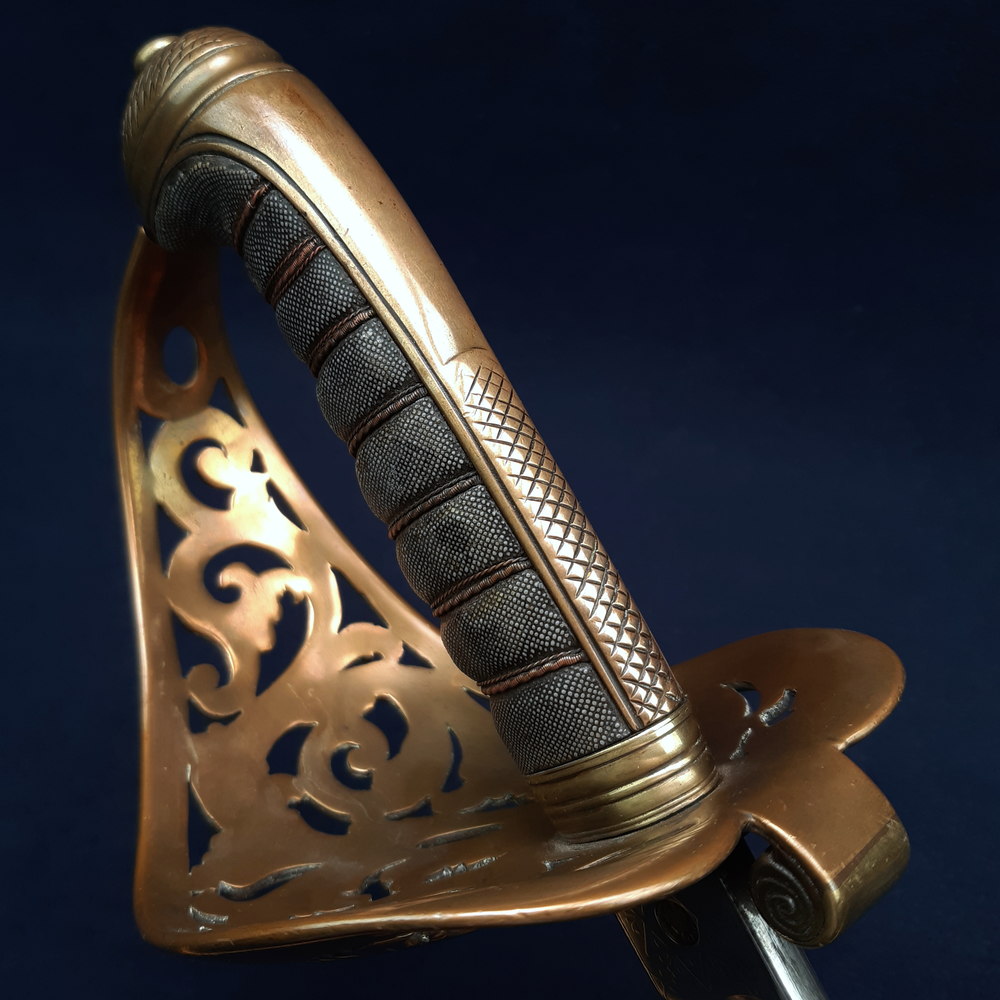
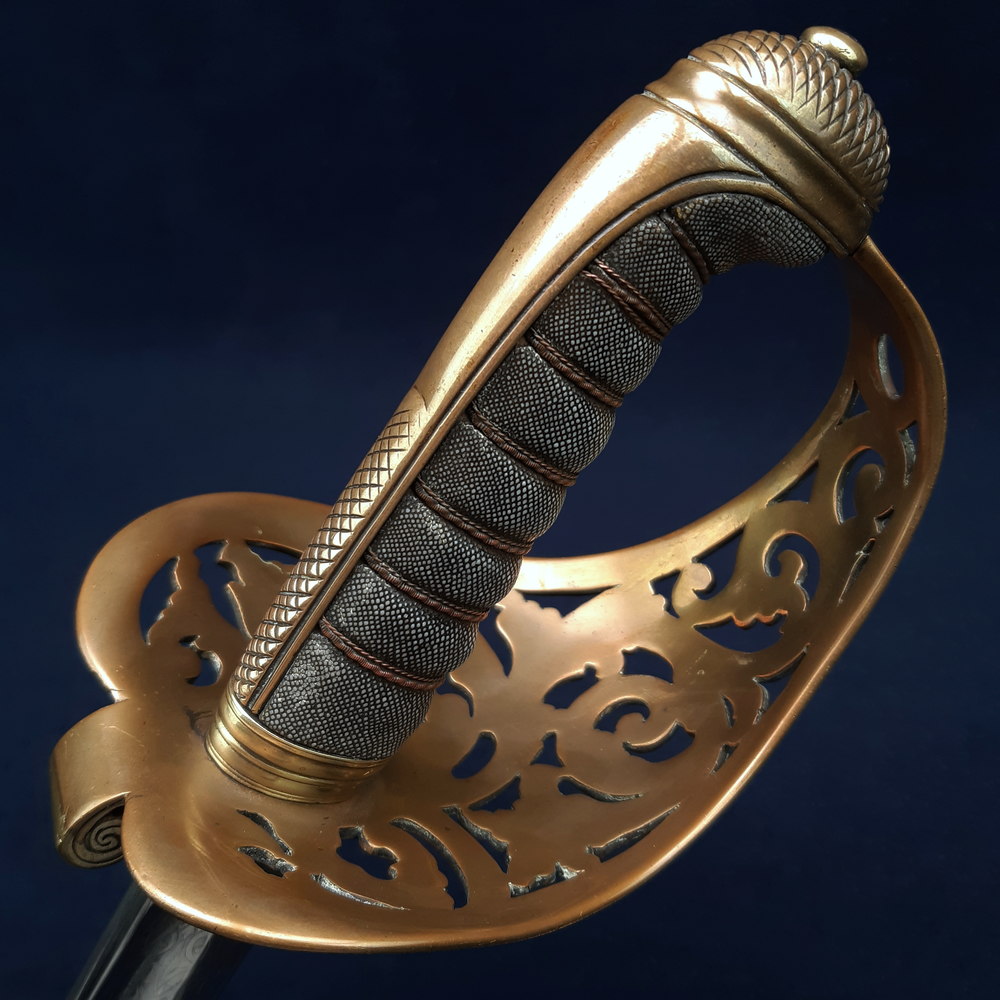
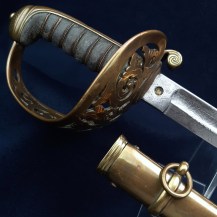
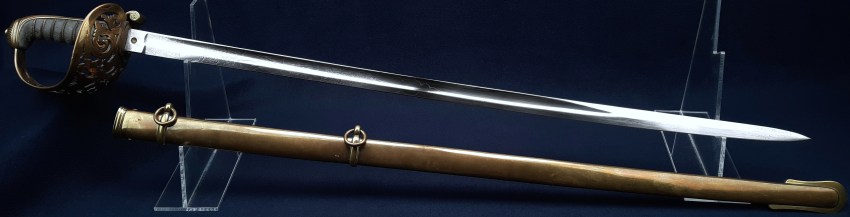
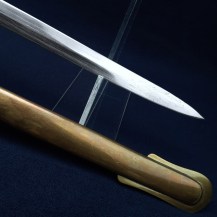
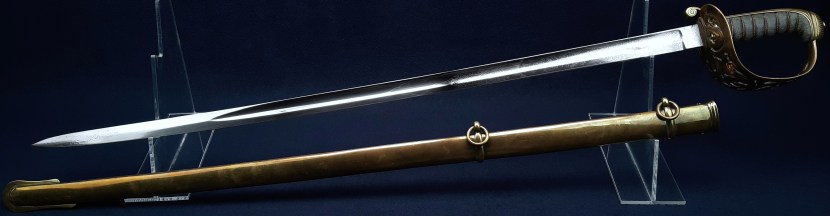
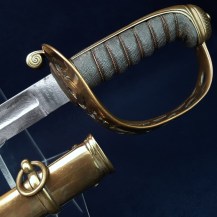
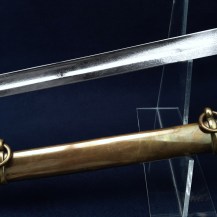
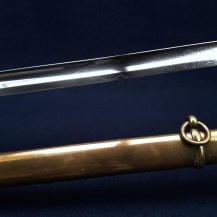
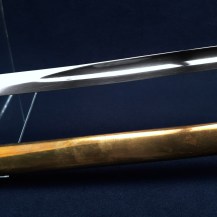
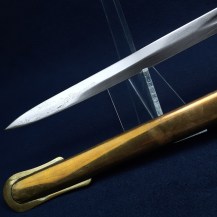
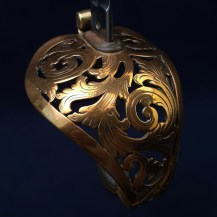
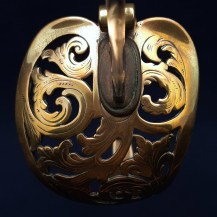
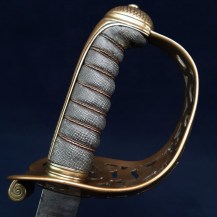
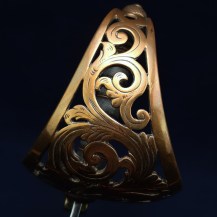
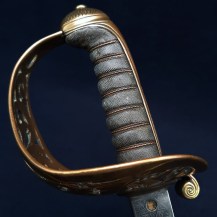
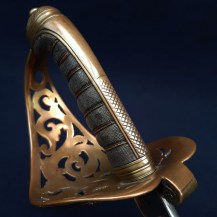
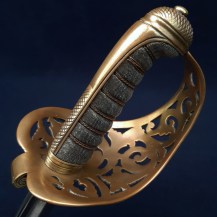
Curved single fullered blade with spear point. Pierced brass hilt with scrolled acanthus leaf decoration, small forward-curving quillon with cylindrical finial. Brown leather washer. Ribbed brass ferrule, smooth brass backstrap with chequered thumb rest, integral chequered oval pommel cap, brass tang button, grip of black shagreen over wood bound with wire. Brass scabbard with two hanging rings. Blade 32½ inches in length, 1.15 inches wide at the shoulder, the sword 38½ inches overall.
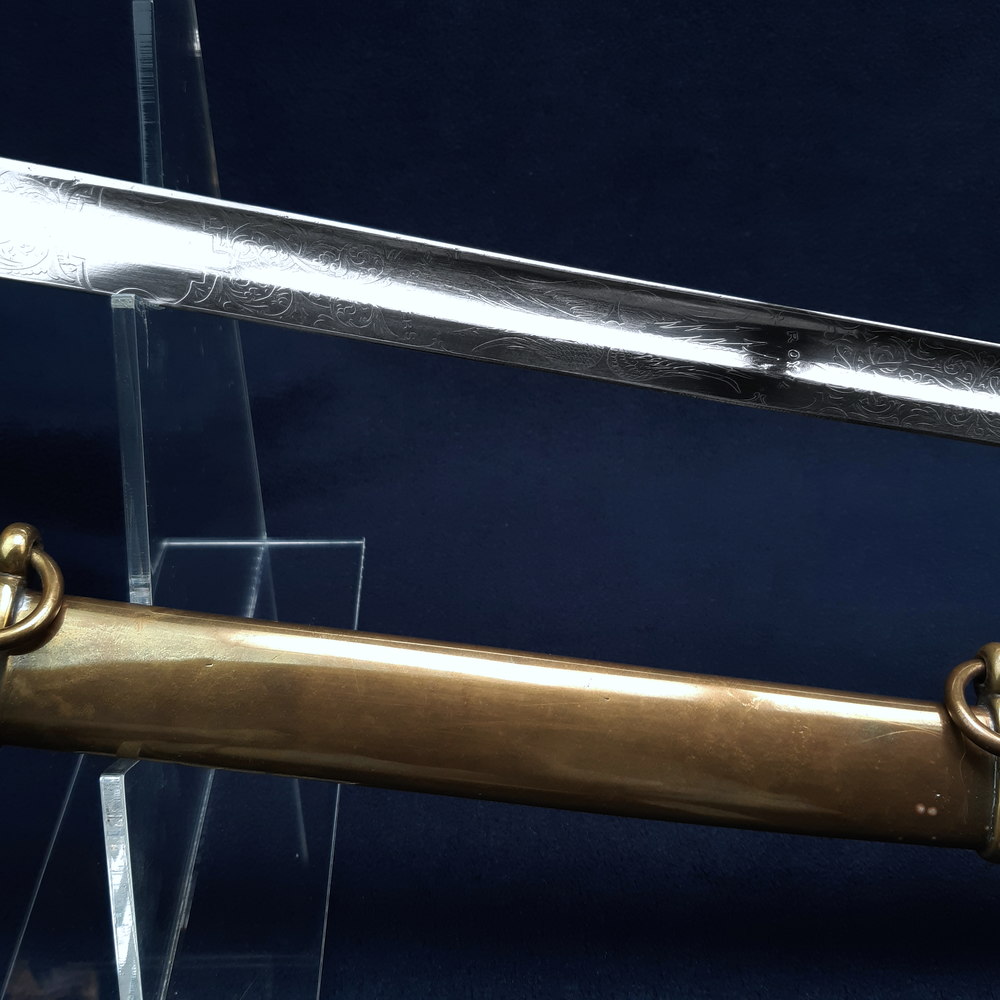
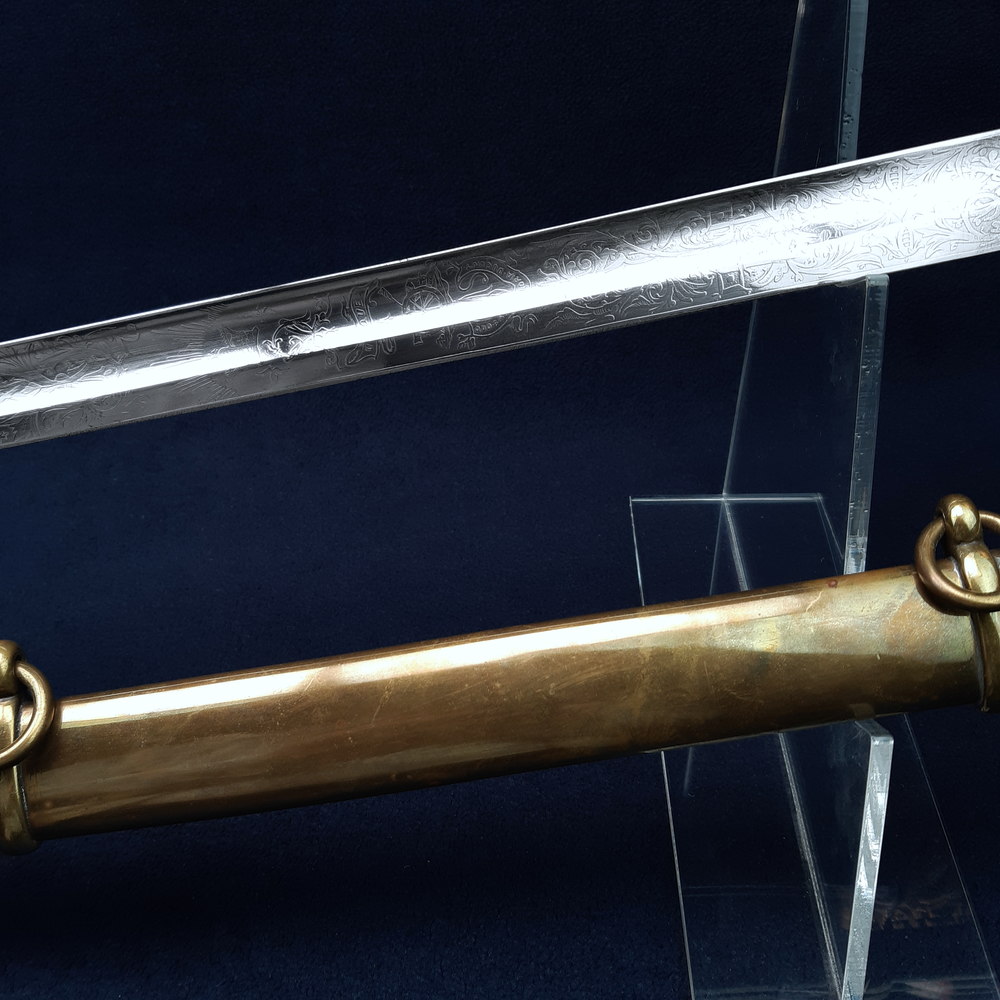
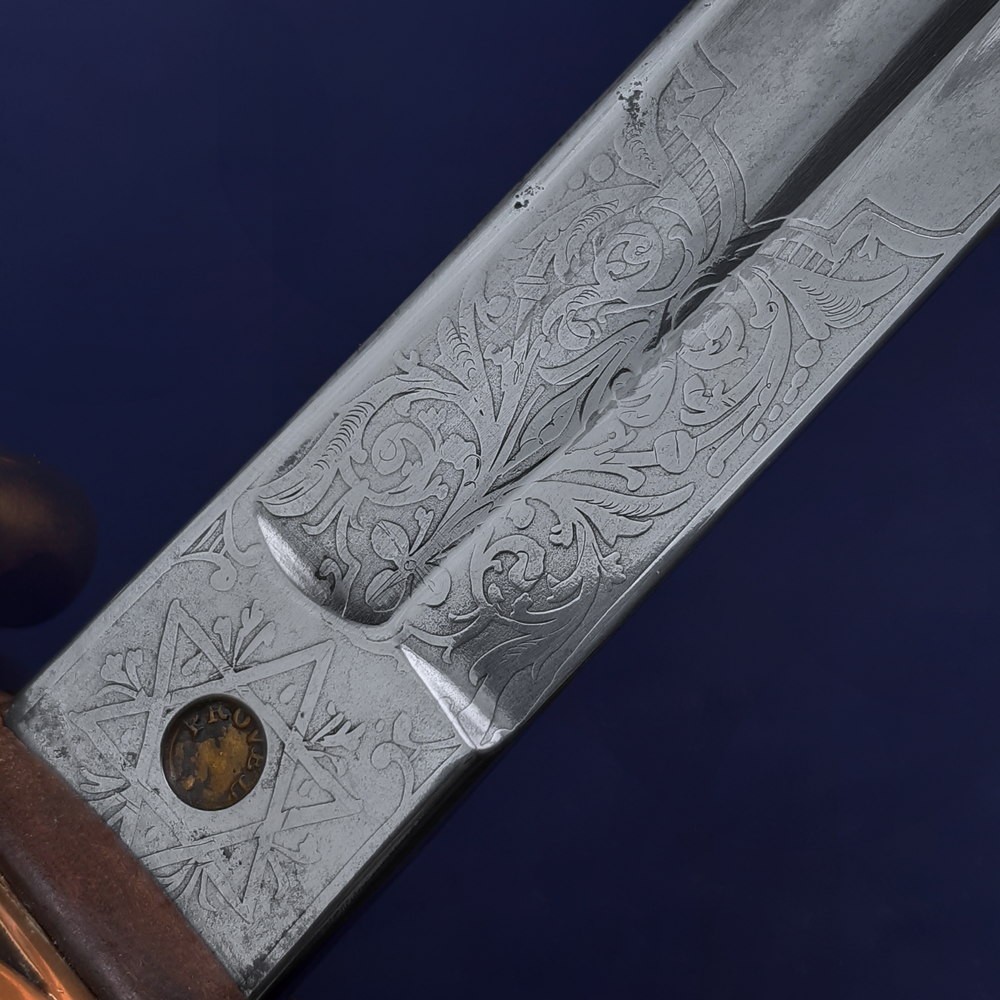
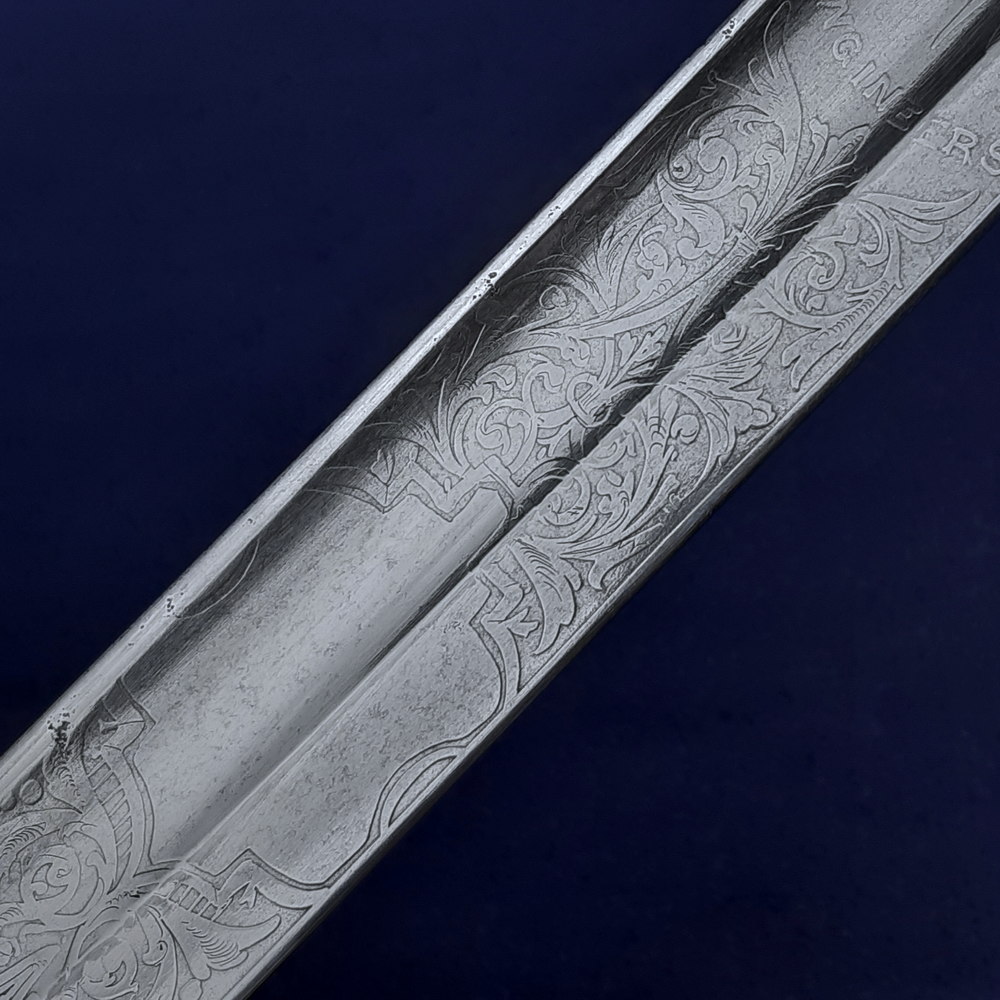
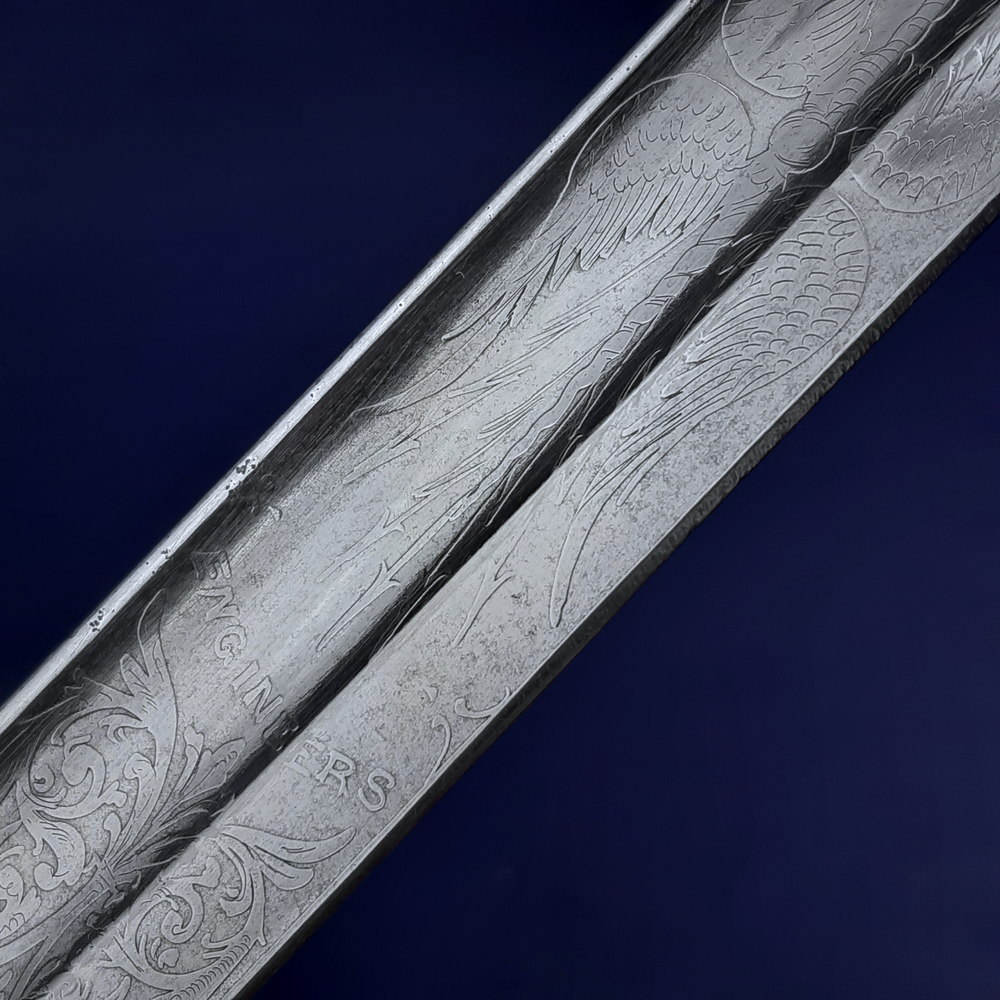
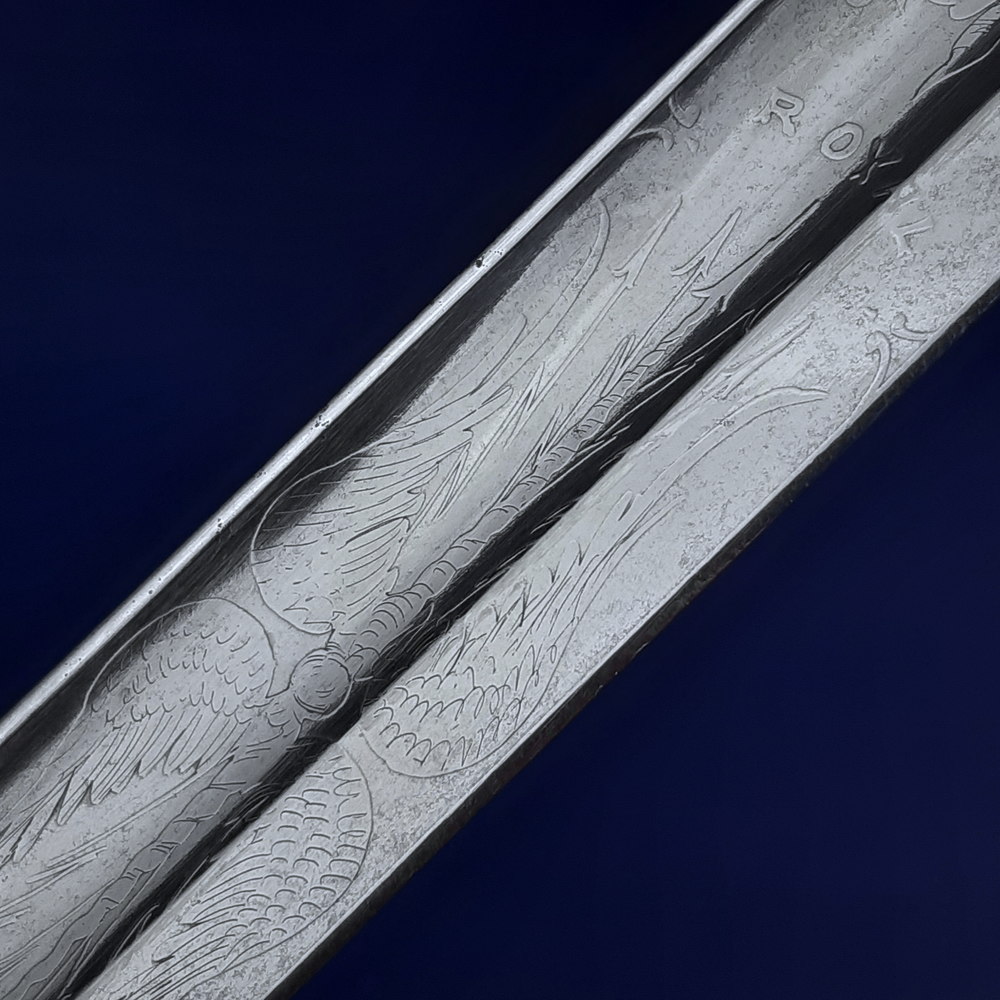
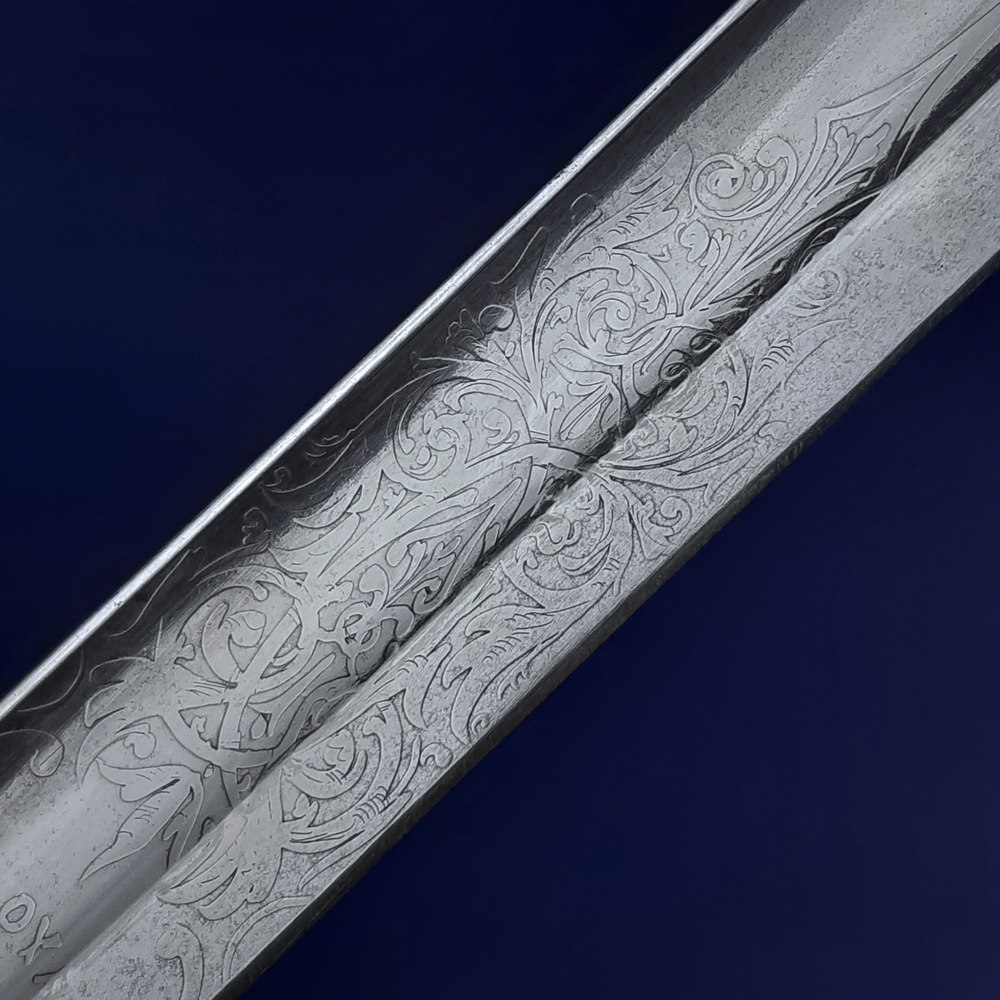
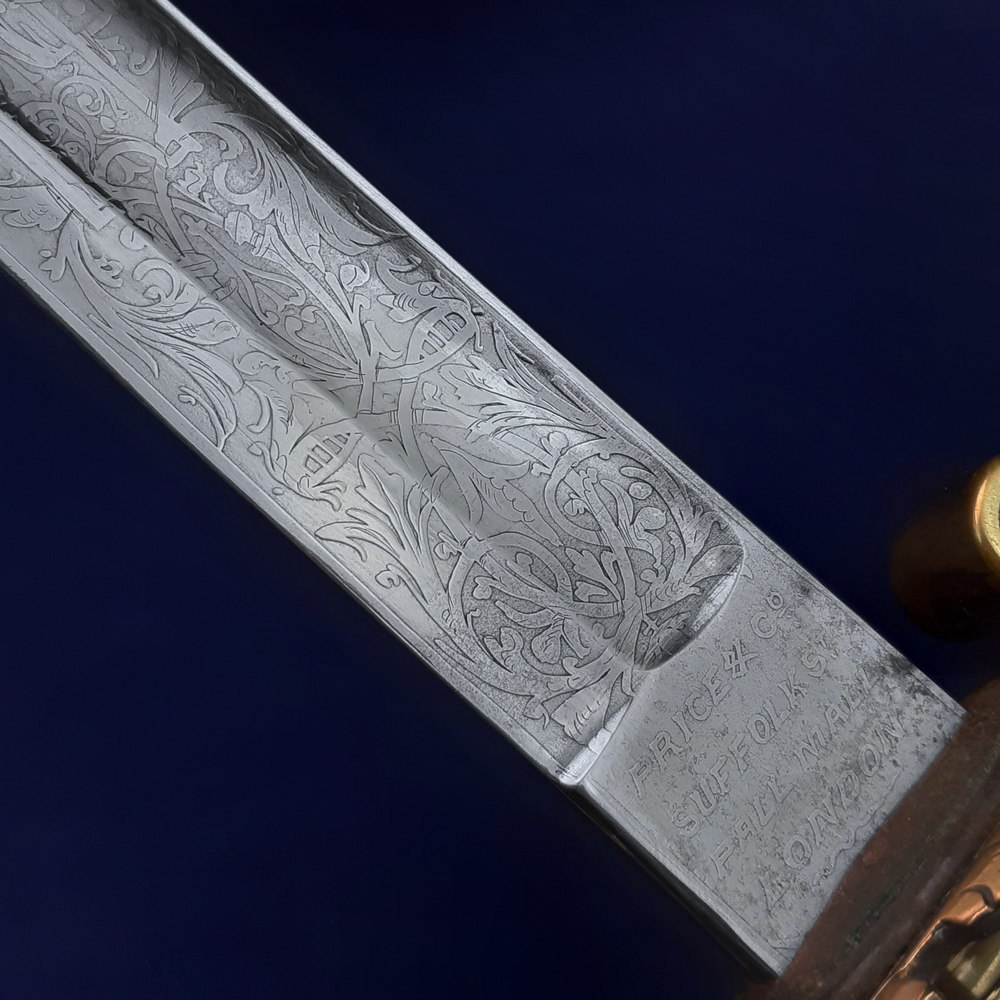
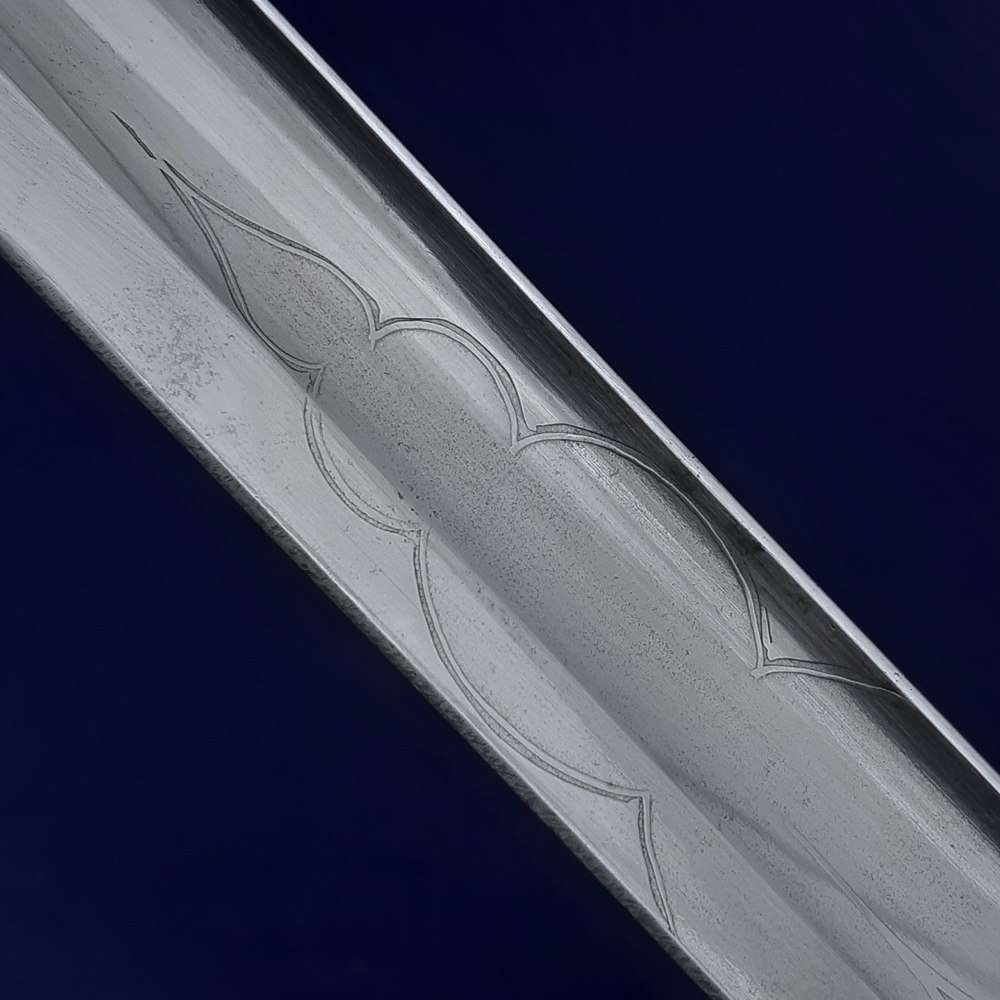
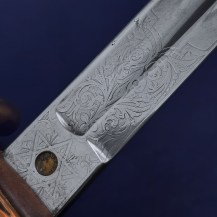
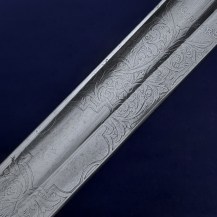
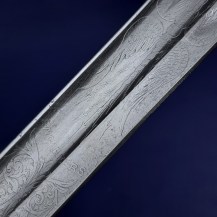
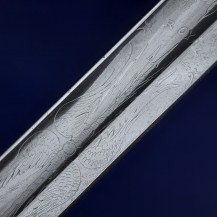
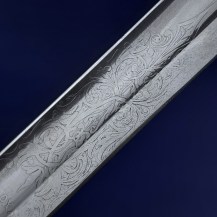
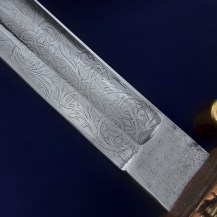
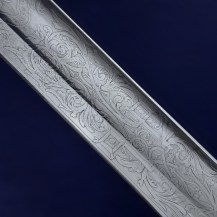
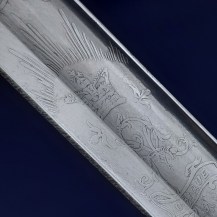
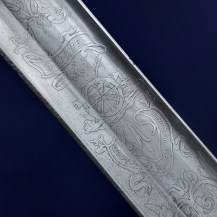
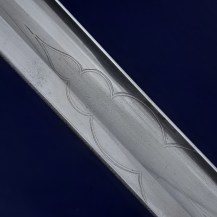
The blade is set at the ricasso on one side with a brass proof slug stamped with ‘PROVED’, the slug surrounded by an etched six-pointed star. The blade is further etched on that side with ‘ROYAL ENGINEERS’, paired wings & lightning bolts, a cartouche for the optional etching of the owner’s name, which has been left blank, and foliate motifs with geometric elements.
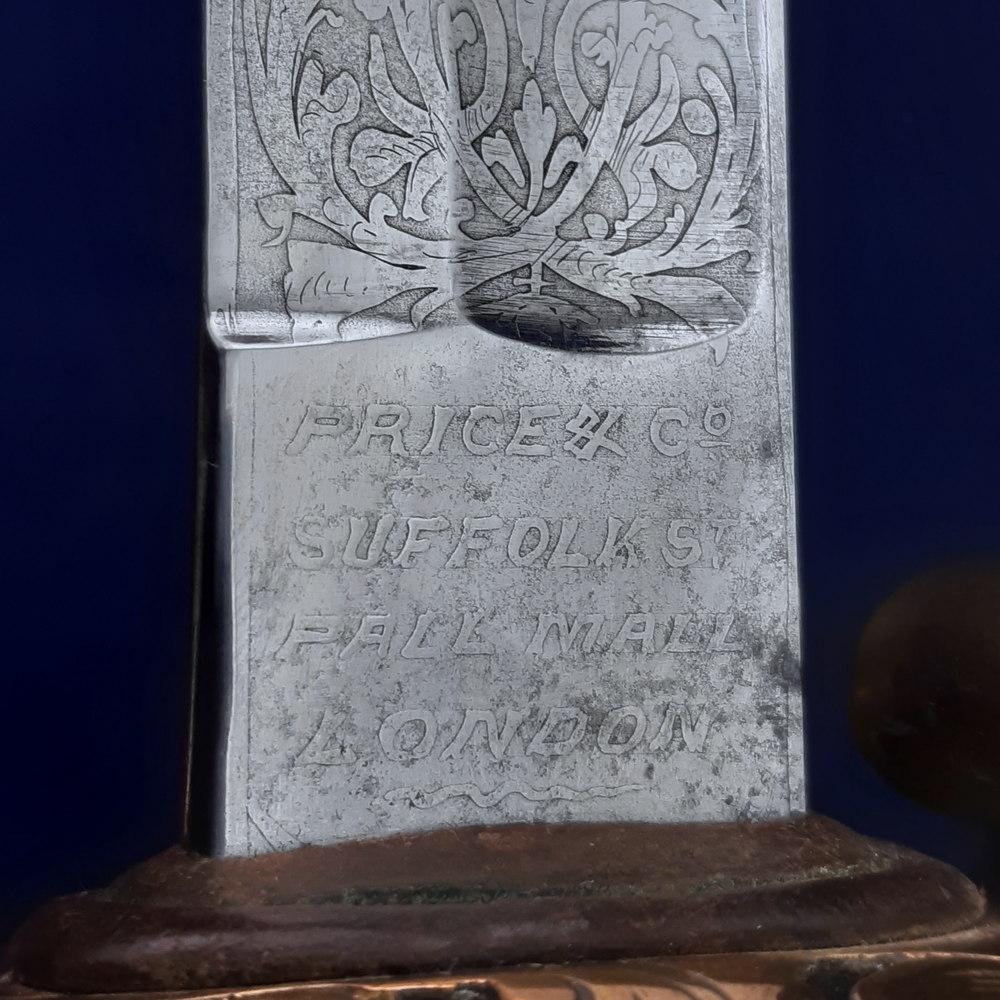
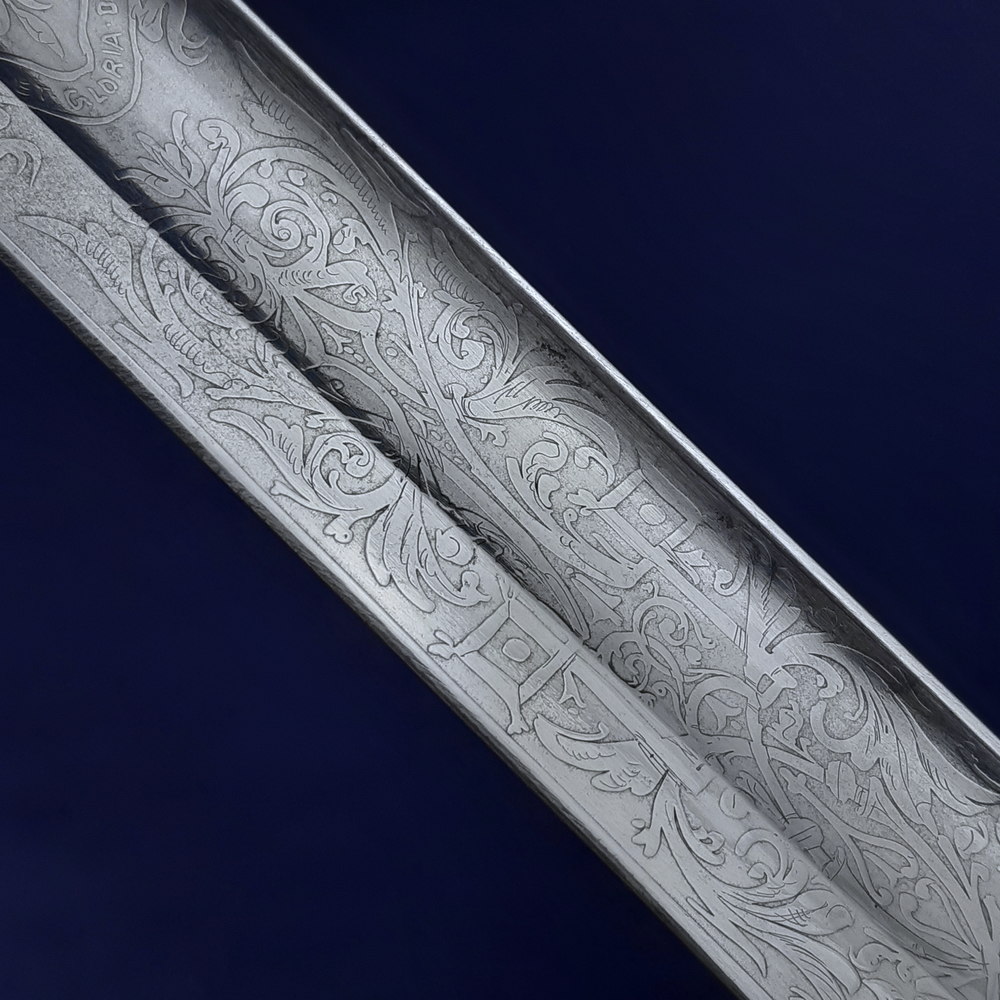
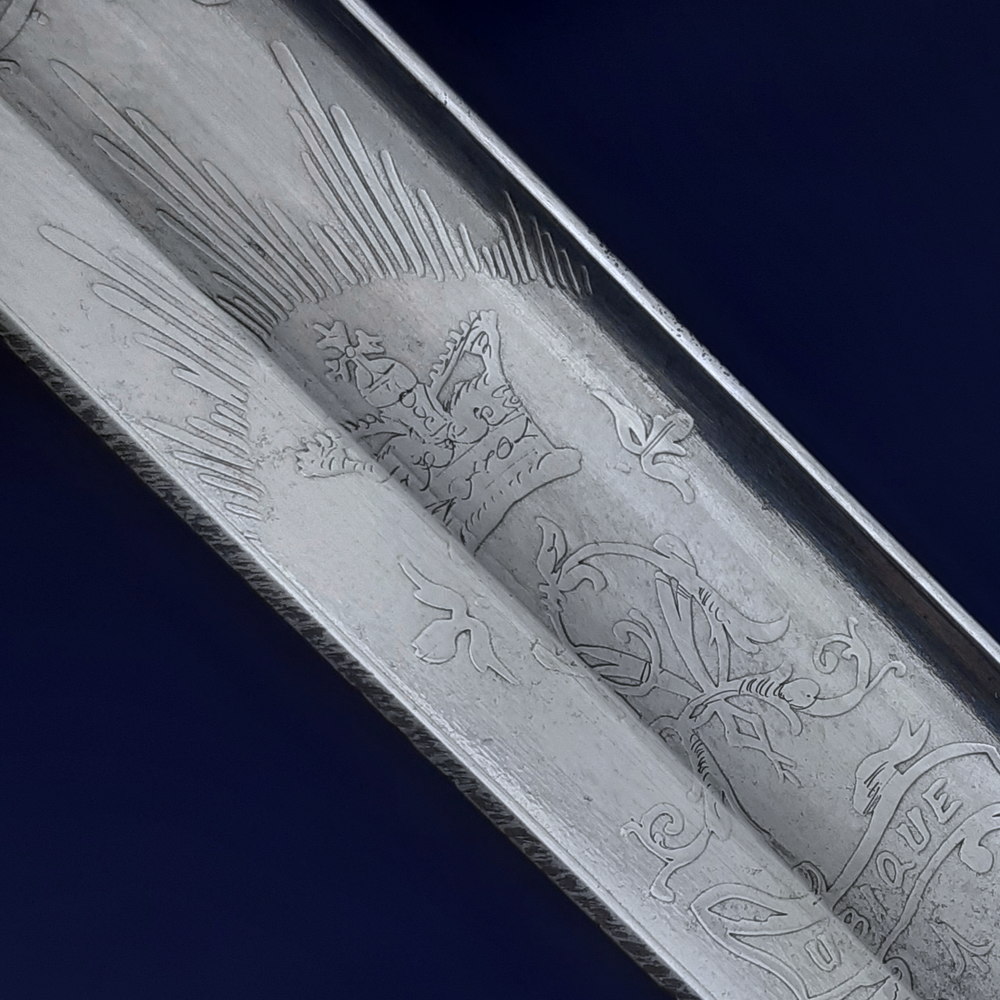
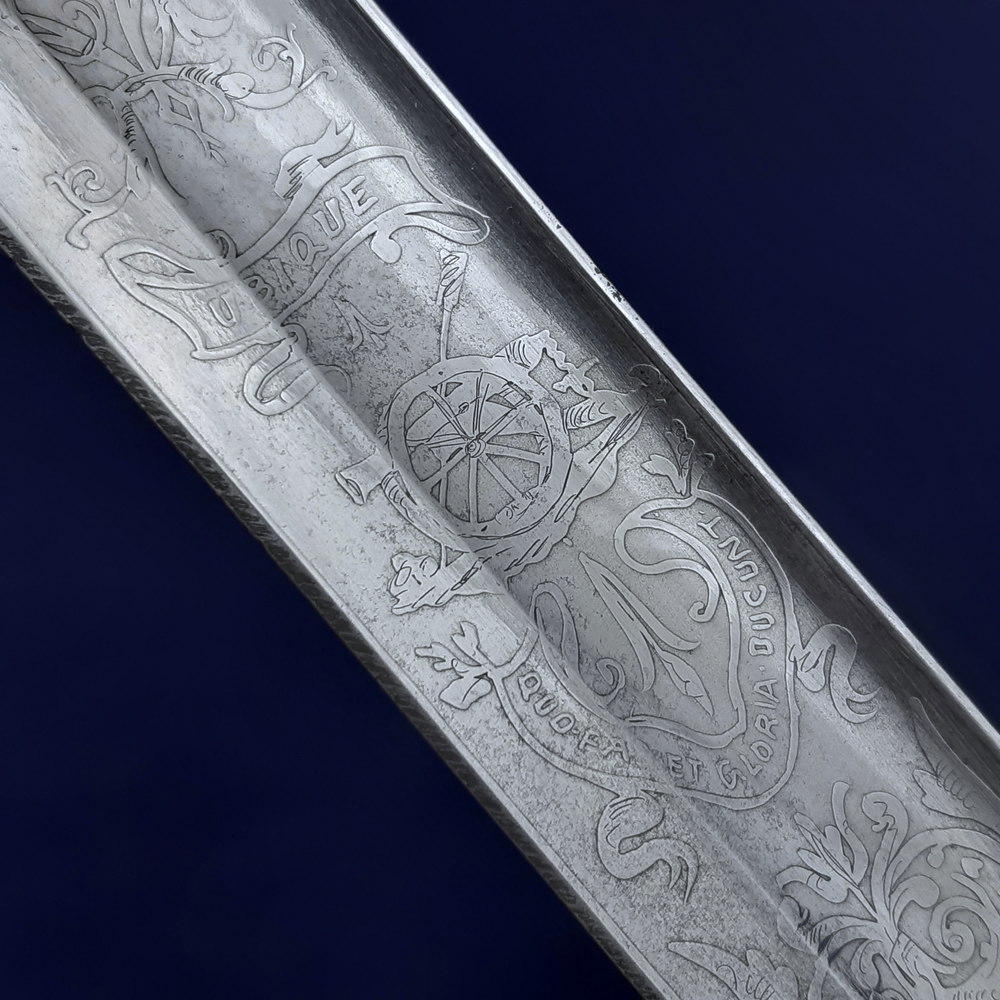
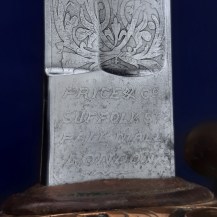
The ricasso of the other side is etched with the retailer’s mark ‘PRICE & CO SUFFOLK ST PALL MALL LONDON’. That side is further etched with the crown and cypher of Queen Victoria (alternate form with a centred V and backdrop R), a cannon, ‘UBIQUE’ and ‘QUO FAS ET GLORIA DUCUNT’, the split mottoes of the Royal Engineers, Ubique (Everywhere) also being the regiment’s sole, universal battle honour, and identical foliate motifs with geometric elements.
Thomas Price & Co was a firm of Military & General Tailors trading from 6 Suffolk Street off Pall Mall, London. Like many such tailors shops Price would have ordered its swords from a manufacturer, with their own branding added to the blades. These would then have been sold to an officer together with his uniform. The tailor’s shop at 6 Suffolk Street was previously that of George Pate Cooper. Thomas Price and another tailor were partners of Cooper’s and this partnership was dissolved in 1856: this may have been when Price took over and I can find no mention of Cooper’s business after that date. Price is still listed at that address as of 1861 and I can find a reference to him owning Price & Co as of 1867, so he was probably trading under Price & Co at the same address that whole time. By 1871 the company was called Price, Whittaker & Co. with new partner Thomas Earl Whittaker. The retailer’s name on the sword does not mention Whittaker so this example probably dates from 1857-1871. Price, Whittaker & Co. was still trading as of 1880, but I am unsure when it ceased. The building is today part of the Embassy of the Philippines.
Introduced in 1857 to replace the 1822 Pattern infantry officer’s sword, this was the first and only sword pattern that was unique to the Royal Engineers rather than a standard infantry type. Earlier examples all have brass scabbards while steel scabbards were introduced for field officers in 1874. In 1892 a new straight blade shape was introduced for the infantry and some Engineer officers chose to purchase 1857 Pattern swords which incorporated the new blade, even though it was not mandatory. Engineers continued this way until the 1900 Dress Regulations, which confirmed that they should adopt the 1897 Pattern infantry officer’s sword (although the changeover may have happened in practice before that date). Officers who already possessed the 1857 were permitted to wear it until it needed replacement, however, which meant that 1857 Pattern swords continued to be worn by some officers through the Boer War period and as late as 1914.
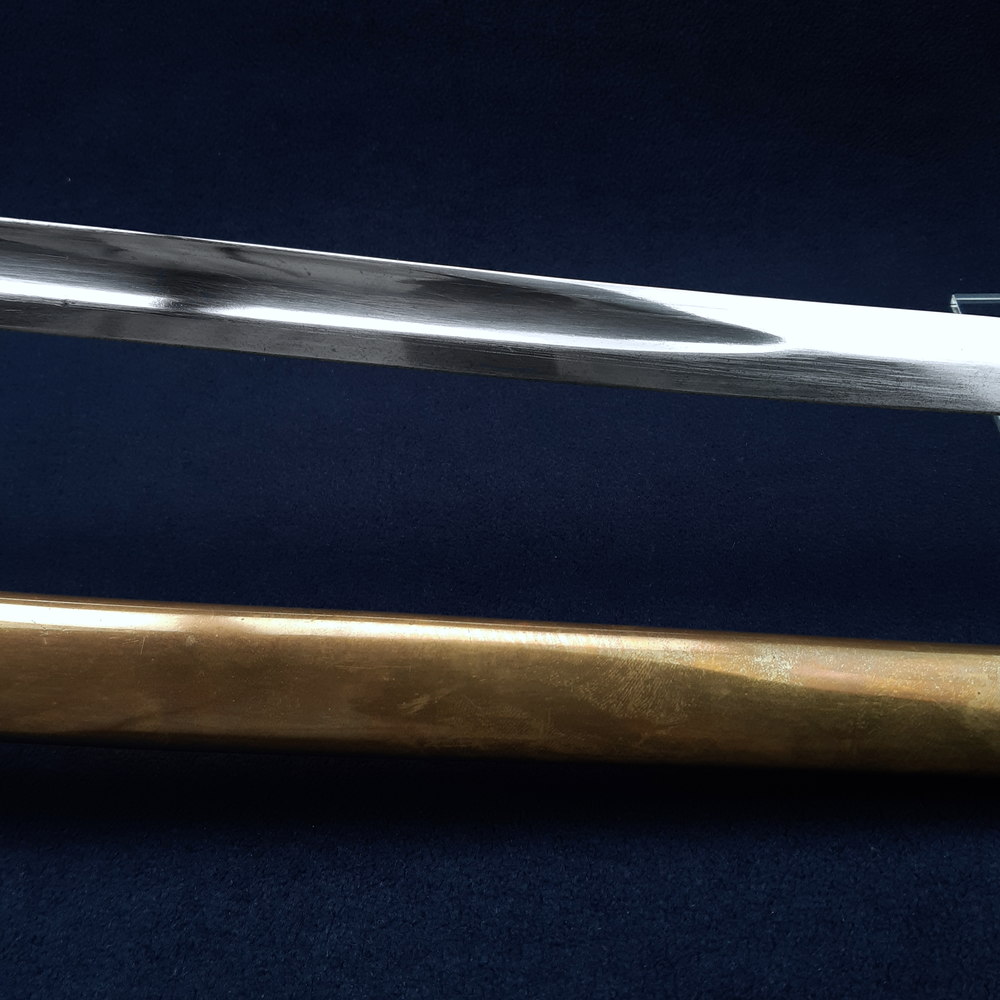
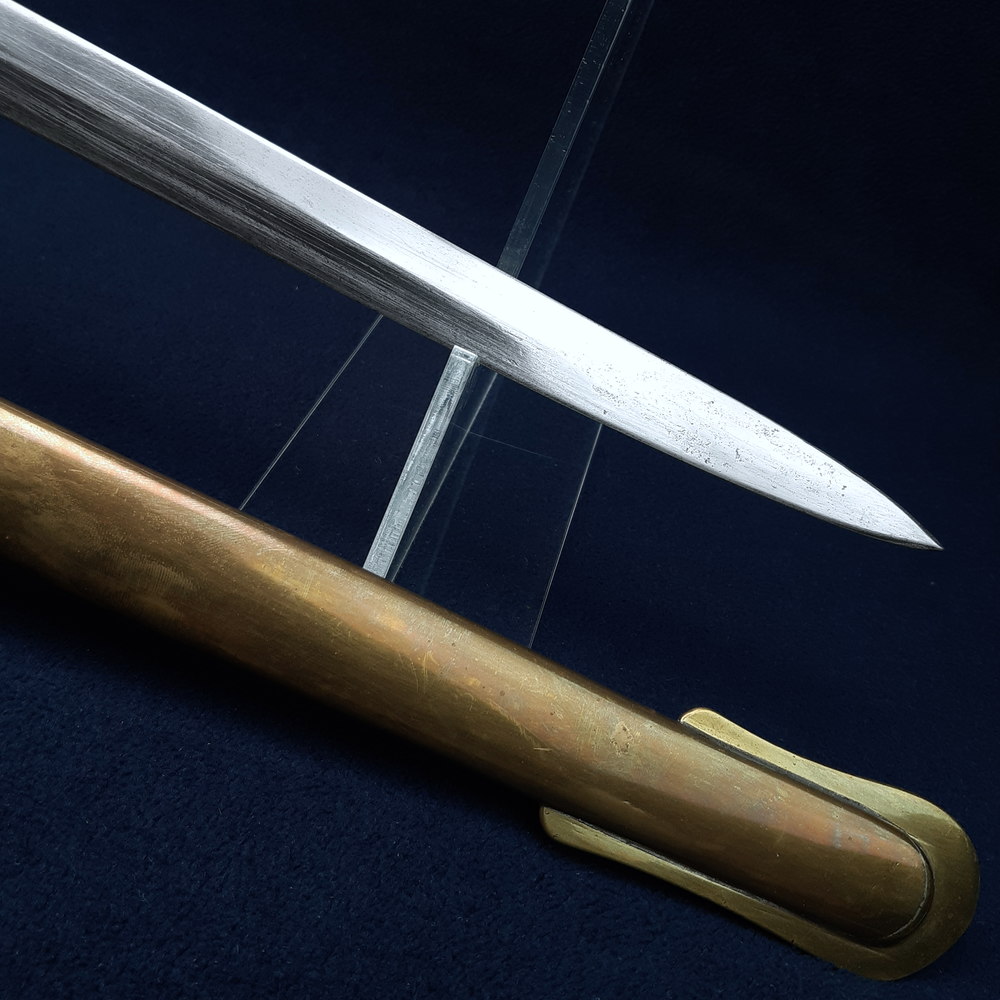
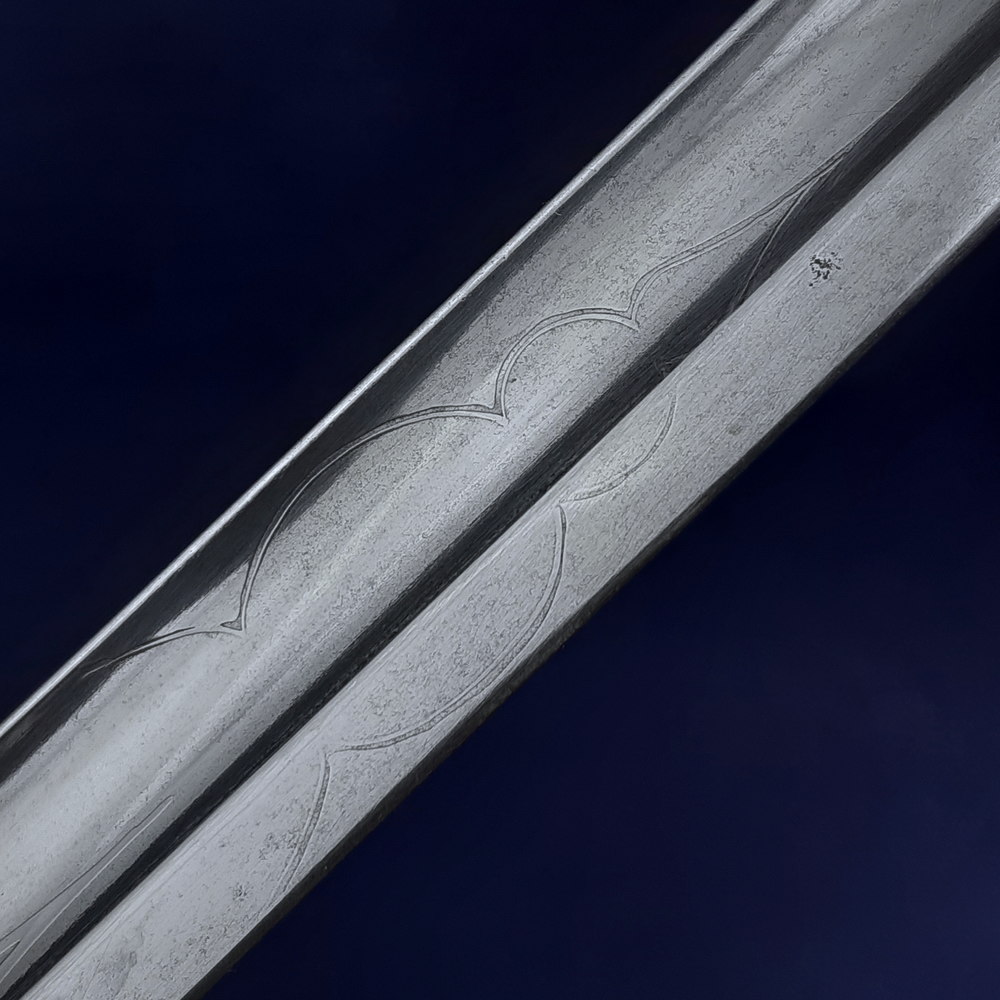
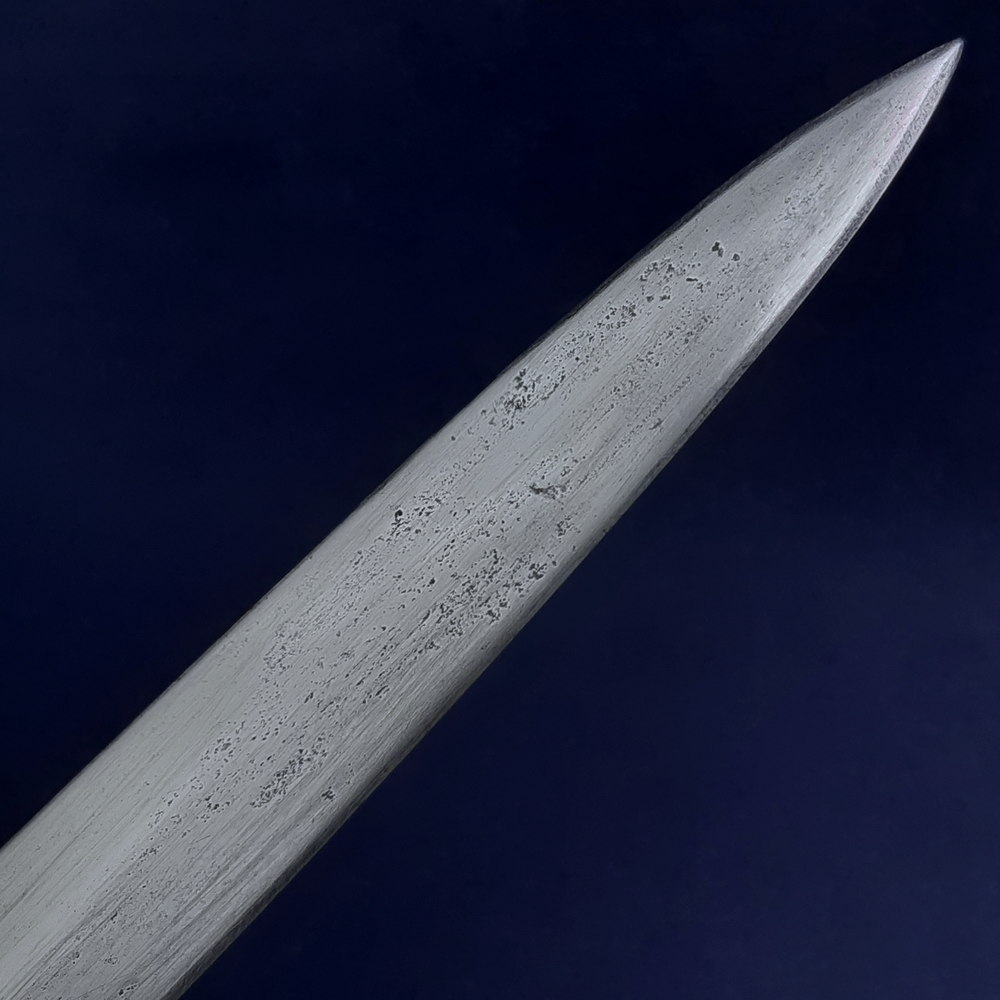
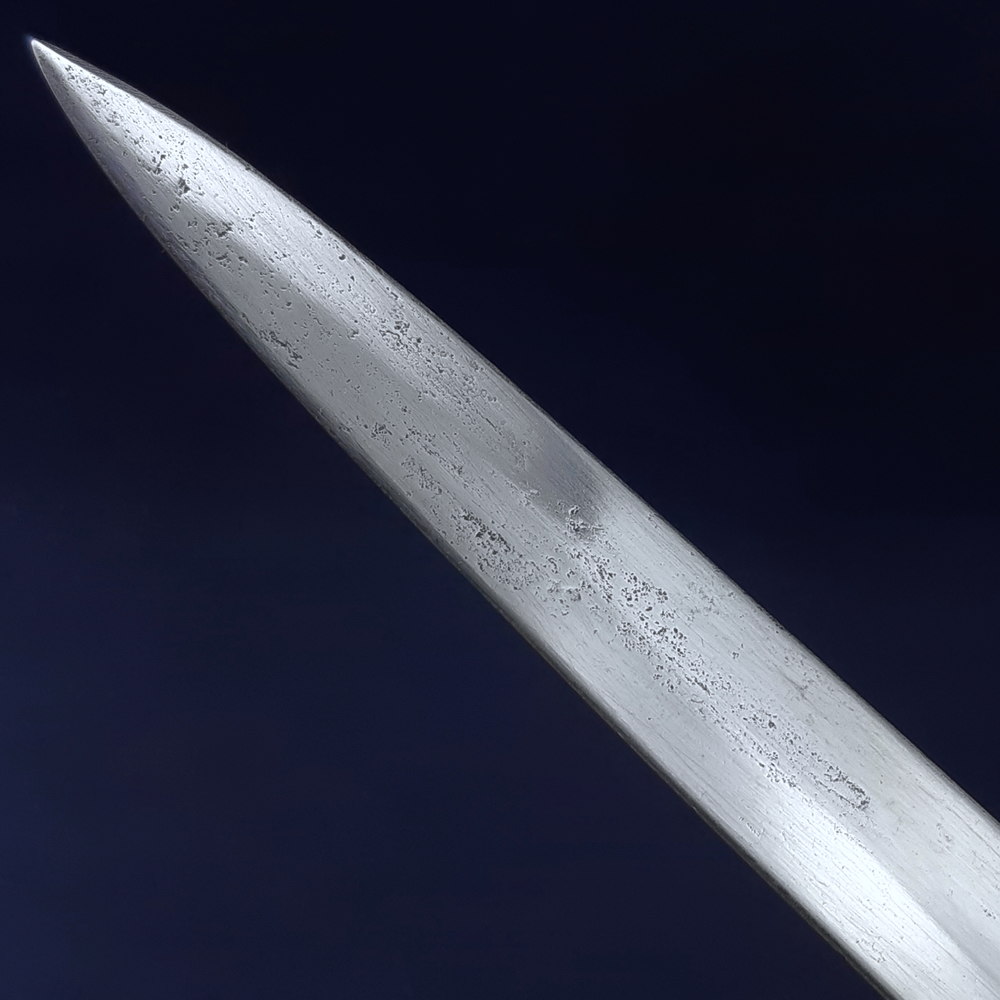
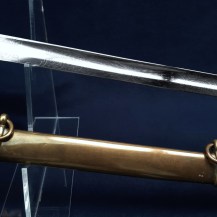
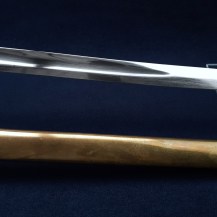
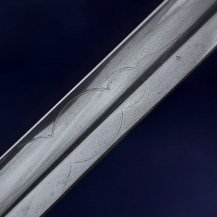
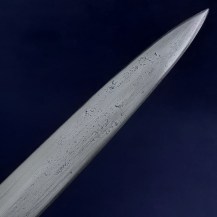
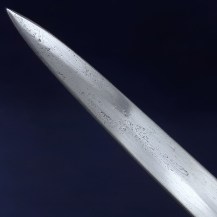
The blade is bright with a mirror polish, with a few tiny spots of cleaned light pitting, areas of more noticeable cleaned pitting around the tip. The blade has evidently been repolished at some point although the etching remains very crisp and clear: perhaps only the tip was refinished.
Both true and false edges of the blade have been sharpened, with some tiny nicks to the true edge. The tip is intact and sharp. The brass parts of the hilt and scabbard have a moderate patina. The wire binding of the grip has some losses: one of both of the minor, untwisted wires are missing from most of its loops although the major twisted one remains, with fractional movement to the loops. The shagreen of the grip has some light handling wear, a ripple where the grip flares to meet the pommel cap, and one small patch of scale loss on one side. Fractional side to side movement to the ferrule and the backstrap, the sword is otherwise firm in the hand and solidly peened, the blade rings when struck.
As mentioned, the all-brass scabbard has a moderate patina with a few tiny spots of darker patination, many tiny scratches and areas of frosting, both of these heavier at the chape end. It is free of dents and sheathing and drawing of the sword is smooth. At the chape end the shoe is soldered/brazed in place and there is a tiny crack next to this join on one side. The shoe remains firmly attached. The throat piece retains both of its screws.
